WEBVTT
00:00:06.190 -->
00:00:09.154Welcome to the Send Parenting Podcast.
00:00:09.154 -->
00:00:20.425I'm your neurodiverse host, dr Olivia Kessel, and, more importantly, I'm mother to my wonderfully neurodivergent daughter, alexandra, who really inspired this podcast.
00:00:20.425 -->
00:00:36.737As a veteran in navigating the world of neurodiversity in a UK education system, I've uncovered a wealth of misinformation, alongside many answers and solutions that were never taught to me in medical school or in any of the parenting handbooks.
00:00:36.737 -->
00:00:45.435Each week on this podcast, I will be bringing the experts to your ears to empower you on your parenting crusade.
00:00:45.435 -->
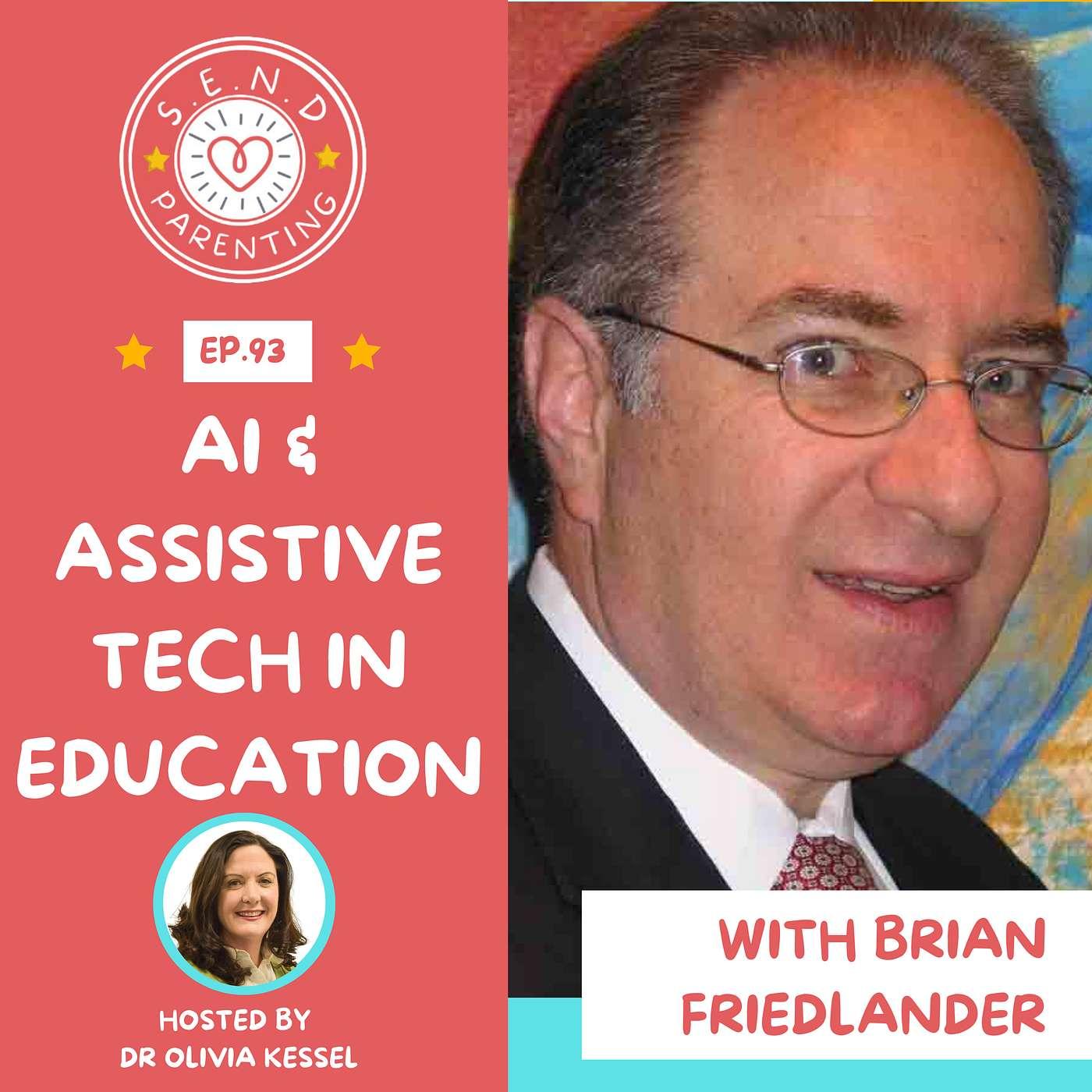
00:00:53.973In this episode, we will be speaking with Brian Freelander, an assistive technology consultant.
00:00:53.973 -->
00:01:09.411His background includes being a school psychologist as well as a retired professor of education at the College of St Elizabeth in Morristown, new Jersey, where he coordinated graduate programs in special education and taught graduate courses in assistive technology.
00:01:10.159 -->
00:01:19.030Brian has taught thousands of educators how to use assisted technology and how to apply it in terms of special education.
00:01:19.030 -->
00:01:26.766He's co-authored Co-Teaching in Technology and author of Assisted Technology, what Every Educator Needs to Know.
00:01:26.766 -->
00:01:34.153In addition, he's written books called Emotionally Intelligent Parenting and Raising Emotionally Intelligent Teenagers.
00:01:34.153 -->
00:01:43.147His background is super interesting and this is a really interesting discussion on what technology is out there that we can use with our neurodiverse children.
00:01:43.147 -->
00:01:47.518It's really worth listening to there that we can use with our neurodiverse children.
00:01:47.518 -->
00:01:48.400It's really worth listening to.
00:01:49.920 -->
00:01:50.260So welcome, brian.
00:01:50.260 -->
00:01:56.272It is an absolute pleasure to have you on the Send Parenting podcast because you have a really interesting hats that you've had in your work history.
00:01:56.272 -->
00:02:03.143You've been a school psychologist, so you understand neurodiverse children and you understand the challenges that they have at school.
00:02:03.143 -->
00:02:09.794And then you also have the hat as being a professor of assisted technology and being an assisted technology consultant.
00:02:09.794 -->
00:02:18.384So I'm really excited today to talk about how these kind of two worlds intertwine and collide and how actually the magic can happen.
00:02:18.384 -->
00:02:22.140So I'm really excited to have you share with us your expertise.
00:02:22.140 -->
00:02:29.794But let's start first with your journey and how you've trodden this road from school psychologist to where you are today.
00:02:30.500 -->
00:02:32.026Yeah, it's great to be here.
00:02:32.026 -->
00:02:38.026I started out my career as a school psychologist and I was always interested in technology.
00:02:38.026 -->
00:02:57.623And while I was in my first position I went to a conference that was sponsored by Apple Computer and a couple Bud and Dolores Hagen were there presenting on the topic of assistive technology, which at the time I didn't know a lot about.
00:02:57.623 -->
00:03:22.580And it was just one of those moments when I realized, sitting in the room, that eventually this technology would be the technology that would kind of level the playing field for students with disabilities and I just became just really interested, engaged and passionate about what this technology could do to assist students.
00:03:22.580 -->
00:03:35.925And then, as I was working in the schools it was at the time when we called it inclusion Our school districts were bringing back students with a wide range of abilities and disabilities.
00:03:35.925 -->
00:03:48.085But a lot of the students who were returning back to the neighborhood schools had significant motor disabilities and so I became the in-house expert to help them gain access just to the computer.
00:03:48.085 -->
00:03:52.878So I've worked with a lot of kids who had Down syndrome.
00:03:52.878 -->
00:04:10.828I work with a lot of kids who had cerebral palsy, and so because access was the first step in the field and I just got really excited with the potential and where the technology was going At the beginning I've been in the field for close to 40 years is when I started.
00:04:10.948 -->
00:04:14.502There were no courses, it was more like a hobby.
00:04:14.502 -->
00:04:21.404You know, you go to, you try to find and look for conferences, and well, you know, every time you went you saw the same group of people.
00:04:21.404 -->
00:04:26.721So that became my community and I just try to learn as much as we can.
00:04:26.721 -->
00:04:29.165And it was before the days of the internet.
00:04:29.165 -->
00:04:38.091So one of my friends and mentor, richard Wonderman unfortunately he passed away a couple years ago he was very involved in the field.
00:04:38.091 -->
00:04:52.521He actually, when Apple came out with the laser printer, he actually printed up a newsletter and would send it out through the mail to share information about new products, conferences, and so it was quite a journey.
00:04:52.521 -->
00:04:53.624I mean it's hard.
00:04:53.624 -->
00:05:00.322I mean, for those of us that have been in the field, it's amazing to see what's possible now and now.
00:05:00.322 -->
00:05:15.507It always has been the issue and the problem is getting the information out to educators and to parents and to students about what's possible with the technology today and it's just very exciting.
00:05:15.507 -->
00:05:17.987I mean it's more exciting now than it's ever been.
00:05:18.649 -->
00:05:32.983No, I agree, because where it's an absolute must, where you have a child with cerebral palsy or you have someone who is almost more severely disabled who really needs the technology, they have access or they can get support to it.
00:05:32.983 -->
00:05:37.860But where I still think there needs to be more integration is okay.
00:05:37.860 -->
00:05:45.584Let's integrate this technology into mainstream for kids that are already going to school.
00:05:45.584 -->
00:05:49.581They're neurodiverse, they have a neurodivergent condition.
00:05:49.581 -->
00:05:52.367School is challenging.
00:05:52.367 -->
00:05:54.192School is not built for everyone.
00:05:54.192 -->
00:05:56.425It's built for a very specific model of child.
00:05:57.348 -->
00:06:06.084For the longest time, schools here in the United States didn't really think assistive technology was for students with learning disabilities or neurodiversity.
00:06:06.084 -->
00:06:15.271They just thought it was for students who had sensory you know, either sensory issues, blindness, hearing impairment or, you know, physical disabilities.
00:06:15.271 -->
00:06:26.752So it's taken a long time for even schools to realize that you know these are technologies that are here for students, you know, with a wide range of abilities and disabilities.
00:06:27.519 -->
00:06:31.430Yeah, I'd say we are still on a journey as well in the UK in terms of that as well.
00:06:31.430 -->
00:06:35.363I think we've talked before.
00:06:35.363 -->
00:06:36.607As a school psychologist.
00:06:36.607 -->
00:06:47.632You've seen some of the behavioral issues that happen when you have a neurodiverse child, and then you've also talked to me about some of the successes that assisted technology has provided.
00:06:47.632 -->
00:06:48.913Can you share some of those stories?
00:06:49.341 -->
00:06:59.036Sure, I mean, I tend to work with a lot of students who have been diagnosed with dyslexia or dysgraphia, and probably dysgraphia comes up quite a bit.
00:06:59.036 -->
00:07:00.199And for those of us-.
00:07:00.259 -->
00:07:02.007Can you describe for my listeners dysgraphia?
00:07:02.459 -->
00:07:19.175So dysgraphia generally, most people see dysgraphia as impacting on a student's handwriting or penmanship, but it goes much deeper than that in terms of their ability actually to express themselves, oftentimes in writing and using language.
00:07:19.175 -->
00:07:50.834But the presenting problem is the student can't read their handwriting, teachers can't read their handwriting, and so we need to look for, you know, technology and I've seen and worked with a lot of students with scrapia who oftentimes also present with behavioral issues, because when the teacher says, okay, take out your notebook, it's time to write about, they basically become a behavior problem because they would rather be asked to leave the classroom than to have to display the fact that this is really challenging for them.
00:07:50.834 -->
00:07:52.725Huge anxiety, huge anxiety too.
00:07:52.725 -->
00:08:02.269And the other thing too is a lot of these students are really bright, they have good ideas, but there's that disconnect between what they have up here and what they can put on the paper.
00:08:02.269 -->
00:08:10.199So, like I said, they'd rather be, you know, a behavioral issue and just kind of ask to be left and they wind up in the principal's office.
00:08:10.199 -->
00:08:23.526And I've seen, when we give the students the right tools you know a lot of times for the school districts that were using iPads, we're able to teachers were able to take pictures of, you know, the worksheet and the students could type on it.
00:08:23.526 -->
00:08:29.610Or now, especially, with voice typing, students can now use their voice, and so it's made a real big difference.
00:08:29.610 -->
00:08:48.725I would say that with the introduction of artificial intelligence and voice typing, that has been a really big factor in allowing students to really show what they're capable of doing and to be able to share their ideas without the need for that motor component, you know.
00:08:48.725 -->
00:08:50.409So that's been really big.
00:08:50.450 -->
00:08:52.081But you know again a couple of things.
00:08:52.081 -->
00:09:10.070Students who are neurodiverse oftentimes are very frustrated in their learning, and what assistive technology can do is reduce the frustration, make them more efficient, allow them to show what their capabilities are really and their thoughts, and also it increases independence.
00:09:10.070 -->
00:09:13.386A lot of students who have neurodiversity.
00:09:13.386 -->
00:09:45.385They tend to be dependent on their teacher, a paraprofessional, their parents, and this allows them to be as independent as possible, which is really important to give them the agency so that they can begin to see themselves as I'm a learner, I have good ideas, I'm competent, and it's because a lot of kids with neurodiversity issues tend to have also poor self-concepts, because they're spending the entire day in an environment that doesn't bring out their best, and so it's important to provide them with tools.
00:09:45.385 -->
00:09:57.613So that's my sort of psychological bent, and I think that both educators and parents need to look at it not only from the learning, but its impact on the person's agency and how they feel about themselves.
00:09:58.159 -->
00:09:58.923Yeah, it's amazing to me.
00:09:58.923 -->
00:10:17.024I mean, I've had a CEO of one of the dyslexic charities on the podcast and he said you know, we're seeing kids who have low self-esteem at age six because they can't read, you know, and that has a knock-on effect on everything you know, you not being able to have that confidence you know, and I think it's important too.
00:10:17.159 -->
00:10:27.586I mean, I think sometimes schools you know, feel that you know these are tools that students don't need until they're in the fourth grade, and that's really not.
00:10:28.360 -->
00:10:31.691Tell my listeners what age fourth grade is, because they'll have no idea what fourth grade is.
00:10:32.481 -->
00:10:38.427A nine year old here in the United States and you know that's not really the case.
00:10:38.427 -->
00:10:39.409That's not really the case.
00:10:39.409 -->
00:10:41.484I mean, these kids are frustrated for the first.
00:10:41.484 -->
00:10:46.994You know three years, you know whatever, but when you're reading that book, spot hit the ball, you know yeah.
00:10:46.994 -->
00:10:50.224Yeah, so it doesn't make a difference and so you know it really is.
00:10:50.224 -->
00:11:00.044You know, unfortunately it's short-sighted on the educator's part not to look at how these technologies can help early on, even in the first grade.
00:11:00.105 -->
00:11:04.402You know I would encourage parents to utilize it.
00:11:04.402 -->
00:11:07.203You know, utilize these technologies as early as possible.
00:11:07.203 -->
00:11:26.437It's common knowledge that if you ignore a problem and it progresses, it becomes more hard to deal with, and then you have all the psychological, as well as the actual, inability to do something.
00:11:26.798 -->
00:11:27.240Right, I mean.
00:11:27.240 -->
00:11:31.491So, you know, giving students, you know, access to even audio books at an early age.
00:11:31.491 -->
00:11:45.565And it increases language capabilities, you know, and it allows students to build their vocabulary and their understanding of words and usage, which is important we used to have, like I think it was called Leapfrog.
00:11:45.585 -->
00:11:46.466Have you heard of Leapfrog?
00:11:46.466 -->
00:11:48.291Yeah, yes, and it's just amazing.
00:11:48.291 -->
00:11:49.032I mean it's a pen.
00:11:49.032 -->
00:11:49.913My daughter could use it.
00:11:49.913 -->
00:11:54.466It would read the story to her, so she didn't actually have to read the story, she could use the pen to read it.
00:11:54.466 -->
00:11:59.203It was just a really fun way to learn and to engage.
00:11:59.825 -->
00:12:01.647Yeah, that I mean it was pretty popular.
00:12:01.647 -->
00:12:07.672Some districts actually in the United States they would have it in their kindergarten classes for the kids to interact with.
00:12:07.672 -->
00:12:12.157I don't see it as much now, but it was a really interesting technology.
00:12:13.659 -->
00:12:18.111Yeah, exactly it is interesting.
00:12:18.111 -->
00:12:25.220What are your thoughts in terms of how this needle is going to move, in terms of technology getting accepted more in schools?
00:12:25.220 -->
00:12:29.912At an earlier age and at different parts of the journey in education.
00:12:30.679 -->
00:12:32.423I mean I think you know what I mean.
00:12:32.423 -->
00:12:37.033What happened during COVID was a big impetus.
00:12:37.033 -->
00:12:46.081All of a sudden, you know, districts were buying literally thousands and thousands of laptop computers, providing them to students so they can do the virtual learning.
00:12:46.081 -->
00:12:59.868So the tech you know the hardware is, is is in place to make things happen now and a lot of the schools, at least here in the United States and I'm sure in the UK, they now have the wifi infrastructure to.
00:13:00.048 -->
00:13:04.005You know well maybe not, I wouldn't say that it's everywhere in the UK.
00:13:04.005 -->
00:13:04.628Actually it's.
00:13:04.628 -->
00:13:10.267You know, there's so many I don't know if you have this in the US but there's firewalls, there's excuses why it doesn't work.
00:13:10.267 -->
00:13:20.942There's, you know, I've tried to, you know, implement some technology in some of my local schools and actually Wi-Fi was one of the biggest problems, you know, which is sad.
00:13:21.221 -->
00:13:22.322Yeah, the schools in the US.
00:13:22.322 -->
00:13:33.114They did get a lot of federal money to build on the infrastructure of their schools, so they should have pretty reliable Wi-Fi.
00:13:33.114 -->
00:13:42.804I'm not saying it's perfect in every case, so I think from a hardware perspective, everything is there.
00:13:42.825 -->
00:13:50.575The school districts are using the Google Docs, Google Classroom and also Microsoft.
00:13:50.575 -->
00:13:58.312So, between both, both companies offer tremendous accessibility features in their operating system.
00:13:58.312 -->
00:14:22.073Can you take us a little bit through those, Because I don't know if all my listeners will know areas for that?
00:14:22.073 -->
00:14:36.273Microsoft has spent a tremendous amount of money building the immersive reader, which provides text-to-speech support and also voice typing.
00:14:36.273 -->
00:15:01.784I was actually working with someone, actually an adult, yesterday and we were working in Microsoft Windows 11 and I, you know, turned on the voice dictation feature and he was able to dictate into any note field in the browser, and so for him that was really key.
00:15:01.904 -->
00:15:06.072In the past you would have had to use a proprietary program.
00:15:06.072 -->
00:15:09.816You know, like Dragon NaturallySpeaking, do a lot of training, and this is just.
00:15:09.816 -->
00:15:15.672I think, whether you're using Google or Microsoft, even Apple, all of them have voice typing built in.
00:15:15.672 -->
00:15:20.912All of them have text-to-speech, which are at least probably the two most important components for students.
00:15:20.912 -->
00:15:37.033You know have neurodiverse, and years ago that was, you know, they were individual applications, you had to purchase them, and now you can do that right within Word, right within Google Docs or any word processor, on the Apple platform as well.
00:15:37.720 -->
00:15:39.466Yeah, and I mean you can do it with WhatsApp, you can do.
00:15:39.466 -->
00:15:40.519I mean it's, you know it's.
00:15:40.519 -->
00:15:45.789It's just incredible now, like you know it's, you know it's, it's just incredible now, like what you know it's, you know it's, it's phenomenal, I mean it's.
00:15:45.789 -->
00:16:01.041It's been life-changing really for my daughter because, like the earlier scenario you said, very creative mind, full of imagination, getting that down, writing fine motor big problem, which is a huge problem in many neurodiverse conditions, and you know.
00:16:01.041 -->
00:16:02.542So it got lost in translation.
00:16:02.542 -->
00:16:10.304There was no, there was no connection, but now, with dictation, she's able to express that creativity in a way she couldn't do before.
00:16:10.826 -->
00:16:16.248I've also been using some new voice technology.
00:16:16.248 -->
00:16:38.198I've actually been using voice notes with some students and with voice notes it uses AI, but what it allows the student to do is hit the record button and it just lets the student do a brain dump, get all our ideas down, and then, when they're done, they click done and then the AI transcribes everything for them and cleans it up a bit.
00:16:41.342 -->
00:16:42.405It doesn't add anything to it.
00:16:42.426 -->
00:16:53.272But what I found is for some students sometimes the voice typing gets in the way because, you know, maybe a word is not accurate, they say something, it puts the wrong word and it just kind of stops them in the track.
00:16:53.272 -->
00:16:57.652So this basically, they're just, you know, recording their voice.
00:16:57.652 -->
00:17:00.870They don't see anything until after what they're all done.
00:17:00.870 -->
00:17:02.888Then they can edit, go back and edit.
00:17:02.888 -->
00:17:06.522They're all done, then they can edit, go back and edit.
00:17:06.522 -->
00:17:15.648But I've sometimes found that this strategy could be helpful for certain students that get stuck because it didn't put the exact word that they said or you know, and so that can be like just another strategy.
00:17:15.648 -->
00:17:28.366And, like in microsoft, word has the transcribe feature which basically does that they can hit instead of voice dictation they can do transcribing and then it just records it and then it processes it.
00:17:28.728 -->
00:17:29.971Really, I didn't know that.
00:17:29.971 -->
00:17:34.431Yes, yes, so where you just go on Word and you hit, there's a button for transcribe on Word.
00:17:35.201 -->
00:18:01.491You'll see the microphone which says dictate, and then underneath it is transcribe, so you can either transcribe voice or if you have an audio file, like maybe from a digital audio recorder, it will transcribe audio as well, out of type, because you have to watch it.
00:18:01.491 -->
00:18:06.394And then you have to say, put a period here, return here, and so it's, it's slow, it again.
00:18:06.394 -->
00:18:10.337It stops that from the brain out and it navigates that.
00:18:10.377 -->
00:18:18.313Yeah, I think I think teachers and or parents um need to approach even voice typing strategically too.
00:18:18.313 -->
00:18:26.407It's a it's a challenging, it's cognitively a very challenging task, and so it's a lot easier to respond to.
00:18:26.407 -->
00:18:36.006Let's say, a question that your teacher asks in Google Classroom like what's the color of grass, it's easy to say the color of grass is green.
00:18:36.006 -->
00:18:41.740But try to write a research paper with your voice is another dimension.
00:18:41.740 -->
00:18:49.425Even though the voice typing is easy, you need to have organizational skills and outline, you need to have information in front of you.
00:18:49.425 -->
00:18:59.333So teachers need to break down that process for voice typing because it's cognitively demanding in another way.
00:18:59.333 -->
00:19:18.314I mean I would find it hard to write a research paper at the top of my head without maybe having some index cards or notes or outline, and so teachers need to really help students and model for them how to use voice typing when they're doing more extensive writing activities.
00:19:18.835 -->
00:19:19.655And how do they do that?
00:19:19.655 -->
00:19:21.287Because teachers don't know how to do that either.
00:19:21.287 -->
00:19:22.900There are no programs.
00:19:22.900 -->
00:19:26.669That's what I've found very frustrating with this technology is there aren't.
00:19:26.669 -->
00:19:28.781You know there's lots of touch typing programs.
00:19:28.781 -->
00:19:31.530There's lots of touch typing programs that deal with kids that are neurodiverse.
00:19:31.530 -->
00:19:32.000You know there's.
00:19:32.000 -->
00:19:43.989You know there's lots of programs out there for that, but there aren't programs that really help not only kids but parents, who don't know how to do it, and teachers to actually be able to help support their children Right.
00:19:44.750 -->
00:19:56.211I mean years ago I attended one of the AT conferences and there were two teachers that have a very systematic approach to teaching voice typing.
00:19:56.211 -->
00:19:58.507I will see if I can get you that PDF.
00:19:59.088 -->
00:20:03.010Yeah, that would be great and I can include it on the link to this podcast because that would be super helpful.
00:20:03.010 -->
00:20:12.571But then, like you said, that organization of the material right, and this is where kind of AI comes in and other technologies, like we had on the podcast a couple weeks ago.
00:20:13.354 -->
00:20:34.188I think I've got the pronunciation right now, but you know there's my neurodiversity shining its lovely light yeah, it's a ao is a great um, a great mind mapping application and um.
00:20:34.188 -->
00:20:46.886I've been I've been mind mapping for a really long time, been very involved in that community and when ao added the ai it was like it was AI, it was unbelievable, a really fantastic feature.
00:20:46.886 -->
00:20:56.009I know I spoke to you last week about that blank page paralysis For kids that I work with.
00:20:56.009 -->
00:21:06.174Oftentimes they have to write a paper on some topic and they just for the life of themselves, they just can't come up with ideas.
00:21:06.756 -->
00:21:15.640And having a oa with the ai it allows them to quickly build a mind map which is, you know, basically those that may not be familiar.
00:21:15.640 -->
00:21:23.762You have your central idea around there and then you have kind of bubbles that go around um clockwise with different.
00:21:23.762 -->
00:21:37.287So if a student was writing about, let's say, global warming, that's a central idea you could have AOA, use the AI and it would generate big ideas around the mind map.
00:21:37.287 -->
00:21:39.663So the student now has something to work with.
00:21:39.663 -->
00:22:03.950Aoa can also add you know, explain some of the ideas, you can add additional ideas, but at least it gives the students some things like to begin to think about or say, oh, I like to write about this and write about that and because it's in a mind map, you can also students can see it in an outline and they can also organize, reorganize the information and also add images if that's helpful for them.
00:22:04.575 -->
00:22:09.247And then they can export that into Word, which then they can use the dictation with that organization.
00:22:09.247 -->
00:22:27.145So I'm kind of you know, from what we've been talking about in terms of the kind of limitations of dictation, if you combine it with something else that maybe helps with the deer and headlight syndrome and also the organizational and where do I start and how do I then they kind of work well together.
00:22:27.375 -->
00:22:39.676Right, because you can then take that mind map, turn it into an outline, bring it into Microsoft Word, google Docs or any word processor, and then you could add later that the voice typing on top of that.
00:22:39.676 -->
00:22:48.049Also, aoi does have the ability to use just audio recording, so students can just again do a brain dump.
00:22:48.049 -->
00:22:54.941It doesn't have the transcription, but it's basically they can attach their ideas to the map and go back.
00:22:54.941 -->
00:23:12.887This could be another way for them to basically get that out and store it in the mind map, which is a really nice feature.
00:23:12.887 -->
00:23:30.190So tools like this can make a big difference in helping students to organize, and a lot of times again, some special education teachers have used mind maps as a pre-writing activity before the student sets off and opens up a word process.
00:23:30.394 -->
00:23:38.229So the first part of the process is do the brainstorming, do the organizing and then start the writing process after that.
00:23:38.229 -->
00:23:43.358So I mean that could be a really good strategy for students that have challenges, for students that have challenges.
00:23:43.358 -->
00:24:11.244And as far as AI Khan Academy recently released, it's called Khanmigo Writing Coach, and so it uses AI to actually it's like having a tutor looking over your shoulder, giving you examples and basically giving you feedback based upon what you're writing, and so it was just released.
00:24:11.244 -->
00:24:32.656So some teachers are signing up to you know, utilize this tool that they can then push out to their students, and their students write in Conmigo and again they're provided with you know feedback all along the process, which is really Well, you'll have to send me the link for that as well, because I think I can use that in my writing.
00:24:35.141 -->
00:24:35.342I was.
00:24:35.342 -->
00:24:35.701Actually.
00:24:35.701 -->
00:24:38.708I was talking to one of my colleagues.
00:24:38.708 -->
00:24:47.594I was working with one of her, with her son, and I showed this to her, and she's a professor, and she goes with one of her, with her son, and I showed this to her and she's a professor and she goes.
00:24:47.594 -->
00:24:53.605I think I'm going to use this with my doctoral students, but, uh, yeah, so I mean, that's how a I think those are the real.
00:24:53.605 -->
00:24:53.926That's really.
00:24:53.926 -->
00:25:01.847You know two ways that AI can really make a difference in that giving students feedback, giving them some jumping off points, some ideas.
00:25:01.847 -->
00:25:13.740Um, you know to write, you know you know to write about, which is really important, because oftentimes, opening up, you know, a blank word processor is just not going to do it for these kids.
00:25:13.740 -->
00:25:19.520They really need, they need more supports, and those are certainly some supports that could be really helpful.
00:25:20.123 -->
00:25:30.141Yeah, and from my perspective and I think from your perspective it sounds like as well, the earlier we can implement these solutions for kids to use, the better it will be.
00:25:30.141 -->
00:25:54.923So I know that a lot of these solutions tend to come up in university, both in the UK and in the US as well, and are less used in primary and secondary school or high school and elementary school, as you would say, in the US, and I think there needs to be a shift where we start using these earlier on and get kids used to them, not just neurodiverse kids either.
00:25:54.923 -->
00:25:56.307This is the way of the future.
00:25:57.876 -->
00:26:00.904Yeah, I guess we do a little backwards here.
00:26:00.904 -->
00:26:12.386So in the United States, students with special needs, the school districts go out and purchase the equipment, the training between pre-K and grade 12.
00:26:13.188 -->
00:26:16.884And then once which would be like reception to our end of secondary.
00:26:17.315 -->
00:26:25.324Right, and then once students go off to university or college, they're on their own in terms of purchasing any equipment they may need.
00:26:25.324 -->
00:26:34.305So during the time they're in that pre-K through high school, the school districts provide the equipment and the training and the support.
00:26:34.305 -->
00:26:41.377In the UK yours is post-secondary through the DSA, so it's a little bit different focus.
00:26:41.377 -->
00:26:50.150So it's a little bit different focus, but yeah, so schools, students in the United States are, for the most part, supported.
00:26:50.150 -->
00:26:58.400Districts will spend money on software hardware training to give students access.
00:26:58.400 -->
00:27:02.489These are students who have what we call IEPs, individual Educational Programs and special ed.
00:27:02.489 -->
00:27:06.542And that's where I've come into.
00:27:06.542 -->
00:27:07.817I've, I've, I've.
00:27:07.817 -->
00:27:16.080Over the years I do assistive technology evaluations to a lot of the school districts in my, in my area.
00:27:16.080 -->
00:27:25.328So I go in and evaluate the students' needs and then I do training with the teachers, parents and the student to get them up to speed on the technology.
00:27:25.954 -->
00:27:28.865And I guess here's where we have educational healthcare plans, where you can.
00:27:28.865 -->
00:27:34.237You know you can get you know that your child needs a computer or stuff like that, but the problem is it's not.
00:27:34.237 -->
00:27:39.949I don't think it's so you know, it's not as accessible.
00:27:39.949 -->
00:27:46.733I went to our mainstream school around the corner and I was like you know, can I give my child a laptop to bring in Because she struggles so much writing?
00:27:46.733 -->
00:27:49.744And they said, well, you have to get an EHCP first.
00:27:49.744 -->
00:27:57.781She couldn't just use it in the classroom, and that process can take anywhere between a year to two years to get you know, even if you get it, so it's a bit clunky.
00:27:58.061 -->
00:28:00.884What I'd like to see is every student being empowered with this.
00:28:00.884 -->
00:28:02.505You know, because it's going to it's.
00:28:02.505 -->
00:28:09.349You know sometimes, I think, the neurodivergent children and there's been books written about it that they're the canary in the mine.
00:28:09.349 -->
00:28:17.123But actually by supporting and enabling them, then they can pull up the neurotypical children too to have the same access to these things.
00:28:17.123 -->
00:28:18.575Because this is how the world works.
00:28:18.575 -->
00:28:20.679This is going to be a game changer.
00:28:20.679 -->
00:28:23.942It's going to go beyond, I think, what our imaginations can hold in the future.
00:28:24.324 -->
00:28:47.936And I think too I mean, I think you know the other impact that AI is having is really we've been talking about differentiation in special ed for years, and now it is very possible for a teacher to take, either, like you know, a concept like photosynthesis and deliver that concept at different reading and conceptual levels using AI very quickly and then pushing it.
00:28:47.936 -->
00:28:58.688You know pushing, you know you know some text for you know at a certain level, to certain kids in, let's say, Google Classroom or the learning management system.
00:28:58.688 -->
00:29:02.494So the differentiation is now very feasible.
00:29:02.494 -->
00:29:14.123I mean it does take a little bit of time, but I mean you know teachers can put those uh, you know, paragraphs you know to you know, together, um, and develop them very, very quickly with ai now.
00:29:14.123 -->
00:29:25.571So there's no reason why teachers couldn't differentiate um a science curriculum or social studies curriculum, super interesting, I hadn't even thought about that yeah yeah yeah, it is pretty, it's pretty amazing.
00:29:25.612 -->
00:29:34.784And then you know you, you have like certain services like magic school AI or diff it AI, that are.
00:29:34.804 -->
00:29:35.484What are those things?
00:29:35.484 -->
00:29:36.326They sound magical.
00:29:38.396 -->
00:29:54.086So these are, these are really focused tools for teachers to do that differentiation, to, to, to develop a quiz on a particular topic, um, you know, and activities that that are at the students level.
00:29:54.086 -->
00:29:55.596So one of them is diff.
00:29:55.596 -->
00:29:59.222It that I've been working with the d-i-f-f-i-t?
00:29:59.222 -->
00:30:13.402Um and what it allows you to do is, you know, like I said, you could say, you know, develop materials, develop materials on photosynthesis for a student who's reading at the fourth grade level, and it will just go out and do it.
00:30:13.402 -->
00:30:16.843And then you could say, do the same thing as a student at the ninth grade level.
00:30:16.843 -->
00:30:23.406Or you know the 10th grade level, and you know it increases the complexity of what it returns.
00:30:23.406 -->
00:30:30.122And then you can also say create activities or language development activities around it, and quizzes and tests as well.
00:30:30.315 -->
00:30:37.325Quizzes, tests, even slide decks so students can begin to understand the material.
00:30:37.325 -->
00:30:42.945So I mean these are really powerful tools and they will get more powerful as generative AI.
00:30:42.945 -->
00:30:48.636The underpinnings of that get even larger in terms of the databases.
00:30:50.280 -->
00:31:05.807That's phenomenal, because so many children parents that I know of and children that I know of who are struggling in school, who just sit there, basically, and are expected to be quiet, not have any behavioral issues, and the lesson is just going over their head.
00:31:05.807 -->
00:31:13.906They have no idea, they are not engaged and they're expected to sit there for six, seven hours a day not understanding, and that's causing a lot of problems.
00:31:13.926 -->
00:31:34.358So if you were able to access the concept of photosynthesis in a way that's digestible to each individual student, wow you know, even you know, and some of them are capable of returning images too, so it's not just text, there may be images, uh, showing the process of photosynthesis as an example.
00:31:34.358 -->
00:31:35.020So, yeah, those.
00:31:35.020 -->
00:31:36.063That's the way.
00:31:36.063 -->
00:31:41.640Ai is really going to make a difference and I think we're talking about some of uh.
00:31:41.640 -->
00:32:02.096You know, the other, the other, I guess, when talking about note-taking especially, has been impacted tremendously by ai and that a lot of the note-taking strategies are using, um, you know, audio, uh, which present, which is great, but presents an issue, uh, in the public schools at the college level.
00:32:02.096 -->
00:32:08.535Here it's not as much an issue, but a lot of public schools will not allow audio recordings in the school.
00:32:08.535 -->
00:32:15.788So our technology has gotten far ahead of our policies and so that needs to be really kind of looked at.
00:32:15.788 -->
00:32:24.865But we're seeing tremendous improvements in the ability to take audio and transcribe it in real time.
00:32:24.904 -->
00:32:30.451I've been working with a small digital recorder that can do.
00:32:30.451 -->
00:32:42.883It can audio record and it does transcription on the device without access to Wi-Fi, so that you could, you know, a student can go in and they don't have to be worried about how good the Wi-Fi is in the school building.
00:32:42.883 -->
00:32:48.505They just hit the record button and it records the audio and it also records the.
00:32:48.505 -->
00:33:06.309You know it transcribes the audio and then when you're done, let's say at the end of the day, you plug the recorder into your computer and you can actually access the audio file or the text file with the transcript, and then you can do what you want.
00:33:06.974 -->
00:33:11.266Which is brilliant, because otherwise you're spending the whole time trying to write down what's being said.
00:33:11.266 -->
00:33:20.154You're missing, then you're falling behind, so then you can't hear what they're saying next, and then, if you're like me, then you look at your writing at the end of the day and it doesn't make any sense, right?
00:33:20.654 -->
00:33:24.577And then another device called Plod Notes.
00:33:24.577 -->
00:33:27.259It's actually another digital audio recorder.
00:33:27.259 -->
00:33:56.157It connects to your smartphone, android or iPhone, it records the audio and then it uses AI to basically provide a transcript, a summary of audio, the transcript, and also, if in the um, you know, in the course of you know recording, there were any actionable tasks, it will actually pull out tasks.
00:33:56.157 -->
00:34:04.837Well, um, and this is all done, you know, with a very, very small audio device, um, and connection to your uh smartphone.
00:34:04.837 -->
00:34:15.123So this is some fascinating technology, and I've been using digital pens for a long time.
00:34:15.123 -->
00:34:25.219I actually use them myself for taking notes, because everything is searchable, I can transcribe it, I can also record audio as well.
00:34:25.239 -->
00:34:26.492So I've been using and a digital pen.
00:34:26.492 -->
00:34:27.916Is that a pen that you write with?
00:34:27.916 -->
00:34:28.539That's digital.
00:34:29.530 -->
00:34:32.420Yeah, so it's a pen that's digital.
00:34:32.420 -->
00:34:42.760I'm actually writing on paper, the paper has a watermark and the pen actually has a camera at the tip of the pen, behind the pen.
00:34:42.971 -->
00:34:48.510Oh, so it's real paper that you're using I'm using real paper and then it transfers anything I write.
00:34:48.510 -->
00:34:51.677It scans basically the page.
00:34:51.677 -->
00:35:06.476It transfers everything I write to my iPhone in the app and then, once it's in the app, I can tag it, I can search it, I can transcribe it and I can also record audio with my notes as well.
00:35:06.476 -->
00:35:16.081So for me, because I'm doing a lot of clinical work with students or talking to parents or interviewing them, I do everything using the digital pen.
00:35:16.081 -->
00:35:30.422The beauty of it is I can search my handwriting so that if I get a phone call and someone says, do you remember you saw Jim Smith, I could just type, go to notes, type in Jim Smith and it searches in my handwriting.
00:35:30.583 -->
00:35:35.320Oh, wow, versus what I do is I write in these notebooks and then I can never.
00:35:35.320 -->
00:35:37.949I mean, I might spend an hour trying to find what I wrote.
00:35:37.969 -->
00:35:56.835Yeah, and then I mean, if you want to take it, even on a project called, you know, project blue, you could tag your notes and then you can search by, you know, you could filter them by project blue, so then when you're done you see all your notes in that.
00:35:56.835 -->
00:35:59.599So I've been using that um for a long time.
00:35:59.599 -->
00:36:22.143If, if I was, um, if I was starting out now I mean this works really well because I got the audio recording I probably and this could be also good for students as well I'd probably move over to some of the e-ink technology that you might see on a Kindle Scribe or a Remarkable 2 ink pad or a Books note.
00:36:22.143 -->
00:36:29.746So these are basically e-ink.
00:36:29.846 -->
00:36:38.443For those of you that may not be familiar, it's what kindle uses in, you know, in their kindle readers, you know, um, they have long battery life.
00:36:38.443 -->
00:36:41.856They tend to be, um, you know, easy to write on.
00:36:41.856 -->
00:36:46.887So you're writing with a uh stylus, uh, and the writing experience is second to none.
00:36:46.887 -->
00:36:47.882It feels like you're writing on a stylus and the writing experience is second to none.
00:36:47.882 -->
00:36:49.324It feels like you're writing on paper.
00:36:50.150 -->
00:36:50.773So let me just.
00:36:50.773 -->
00:36:53.460Let me just pause you there for one second, just so that I can get this in my head.
00:36:53.460 -->
00:36:56.960So, basically, you've got a tablet which is like a Kindle or an iPad.
00:36:56.960 -->
00:37:07.155You've got a special stylized pen and you're writing on it like it's a notebook, but it's an electronic notebook instead of paper, which is what the previous example was.
00:37:07.155 -->
00:37:09.056You're writing on paper with a pen.
00:37:09.056 -->
00:37:09.617That's doing it.
00:37:09.697 -->
00:37:15.503Okay, yes, but it uses the eating technology, which is a lot easier on your eyes.
00:37:15.684 -->
00:37:36.601It has a long battery life and many of these are more distraction-free because some of them depending on which model you can't really do anything else but sort of take notes or annotate or read PDFs.
00:37:36.601 -->
00:37:37.463So it's a great technology.
00:37:37.463 -->
00:37:44.271You can store literally thousands of pages of notes, you can annotate them, it's like a notebook, but with all the bells and whistles, and then can you export that to your computer if you wanted to send an email or if you wanted to put in a Word document.
00:37:44.632 -->
00:38:07.543Yeah, so you can export them as, um, you know pdf text files, um, and again, depending on the model you have, um, there's, there's a way to get them out into you know microsoft word or open up an adobe acrobat, things of that sort, um, so that you know that's, that would, that's the sort of the next I, I would say the next technology that's what you're going to be asking for for Christmas, is it, Brian?
00:38:07.543 -->
00:38:10.800No, I have all of them.
00:38:13.150 -->
00:38:15.579Might be what I'm asking for for Christmas, yeah.
00:38:18.010 -->
00:38:32.210Fortunately or unfortunately, I'm always on the bleeding edge of technology, so I'll take a chance on it and kick the tires to see how it can be used and integrated into working with kids with neurodiversity.
00:38:32.210 -->
00:38:37.302I think this would be a great tool for high school and college students.
00:38:37.302 -->
00:38:42.001For students that have a lot of difficulty organizing paper, this is ideal.
00:38:42.001 -->
00:38:49.284So all their reading material if they can get it in an EPUB or PDF format, they can bring it into this device.
00:38:49.284 -->
00:38:56.204They can go into class and have unlimited number of pages you know that they can utilize.
00:38:56.909 -->
00:38:59.759And they don't have to find them, to bring them home or get lost.
00:38:59.759 -->
00:39:00.260I mean, it's….
00:39:00.992 -->
00:39:04.235So it becomes their library, it becomes their, you know….
00:39:04.951 -->
00:39:07.898Of course they can also lose the device.
00:39:07.898 -->
00:39:09.702Is it backed up on some sort of cloud?
00:39:10.269 -->
00:39:11.594Yeah, so they're all.
00:39:11.594 -->
00:39:13.920They're all backed up, connected, depending upon.
00:39:13.920 -->
00:39:15.635You know which device you have.
00:39:15.635 -->
00:39:17.079You can back them up.
00:39:17.079 -->
00:39:25.322You can also, in many cases, bring in documents from OneDrive, google Drive into the devices or back up into those devices.
00:39:25.322 -->
00:39:26.432So that's nice.
00:39:26.432 -->
00:39:29.702But I just I mean just to show you, I mean, the creativity.
00:39:29.750 -->
00:39:38.141I just got a device from the folks from Boogie Board and they came out a couple of years ago but they just updated.
00:39:38.141 -->
00:39:41.952It's called the Blackboard Smart Notebook and what it is.
00:39:41.952 -->
00:39:51.230It's a boogie board that utilizes a digital pen, almost like the e-ink, except it's using their boogie board technology.
00:39:51.230 -->
00:39:54.760And so what you do is you take notes on the boogie board with the smart pen.
00:39:54.760 -->
00:40:09.851It's a digital pen, except the stylus is not an ink cartridge, it's actually like a piece of hard plastic plastic.
00:40:09.851 -->
00:40:16.228And so you get an image on the boogie board and then all you do is you tap on the corner and it sends your handwritten notes to an app on your Android or iPhone.
00:40:16.228 -->
00:40:29.503So, again, a less expensive solution, but one that kind of makes note taking paperless, because you can organize, search on your phone for your notes and tag your notes with colored tabs and things like that.
00:40:29.503 -->
00:40:35.199So it's kind of interesting and it's a much less expensive device than an e-ink.
00:40:37.869 -->
00:40:40.298Out of curiosity, what are the costs of these devices?
00:40:43.496 -->
00:40:45.969So I would say plus or minus, depending upon the.
00:40:45.969 -->
00:40:50.081Kindle Drive is probably somewhere around $375.
00:40:50.081 -->
00:40:56.043Okay, the Remarkable is probably about $400.
00:40:56.043 -->
00:41:00.902The Books is also somewhere in that range.
00:41:00.902 -->
00:41:07.224And then just an example the Boogie Board Smart Notebook 2.0 is like $149.
00:41:07.224 -->
00:41:09.331Significantly less the.
00:41:09.331 -->
00:41:11.342The boogie board smart notebook 2.0 is like $149 with the pen.
00:41:11.342 -->
00:41:27.657So you know, and, and then with the, with the new smart notebook, you can also, if you don't want the digital pen, you can use your um, basically your smartphone, to to take a, to scan it with your camera instead of a pen, um, so that that comes in, I think about around $50, um $50 price range.
00:41:27.657 -->
00:41:32.934So I mean lots of interesting ways to take notes.
00:41:32.934 -->
00:41:38.992And again, you would need someone to kind of help assess what it is that you want to accomplish.
00:41:38.992 -->
00:41:58.300But I think for students whose handwriting is good, where they don't need the audio component, but they have, let's say, attention deficit disorder or have executive function disorder, where organization of paper is an issue, the e-ink devices could be really a fantastic way to go.
00:41:59.163 -->
00:41:59.744Absolutely.
00:41:59.744 -->
00:42:08.603And just also a question to me, because you work with these companies Like one thing that's going to happen with neurodiverse people and children as well, is they're going to lose those pens.
00:42:08.603 -->
00:42:12.717So can you get, can you replace the pen, can you ensure the pen?
00:42:12.717 -->
00:42:14.541You know what I mean, cause that's that's going to happen.
00:42:14.541 -->
00:42:22.815Luckily, like so, my daughter, like her school's a Microsoft school and they have the Microsoft pens, but they've got some sort of cheaper alternative that Microsoft sends sells them.
00:42:22.856 -->
00:42:28.844They're like 20 pounds, right, so I think I've bought five of them already because they go the way of her water bottles.
00:42:30.317 -->
00:42:36.621I wish some of these devices had air tags attached to them Exactly, but they don't.
00:42:36.621 -->
00:42:43.057They're all replaceable, like everything else At a cost.
00:42:43.057 -->
00:42:49.851At a cost it's not pennies For some of the E-ink devices.
00:42:49.851 -->
00:43:17.929They they use the uh, wacom um technology, so they use it, and wacom uses a technology called emr electromagnetic resonance and so, uh, you could buy any one of third-party pens that take advantage of the EMR standard, so I can work with an EMR pen on a Kindle, scribe or Remarkable.
00:43:18.931 -->
00:43:50.664So it's not a proprietary technology, which is nice, and so you can often find EMR pens at a much lower price point than maybe something like that, which is brilliant, because then you can have one at school, you can have one at home, you can have one in the backpack, I mean what's nice about that technology is like for example, pilot makes the Dr Grip pens you know you like kind of have a really nice grip and so Pilot made a Dr Grip EMR pen.
00:43:50.869 -->
00:43:56.960So now you know, if you have a student that has, you know, needs a little bit more support for writing, you can use that.
00:43:56.960 -->
00:43:57.882There are thinner pens.
00:43:57.882 -->
00:44:10.034Even Lamy, the pen company you know who's known for the Safari, came out with an EMR pen that has their you know noted, you know pencil grip.
00:44:10.255 -->
00:44:11.438Yeah, that kind of triangle thing.
00:44:12.489 -->
00:44:12.731You can find.
00:44:12.731 -->
00:44:24.041You know you can find whatever kind of pen that you know feels good in your hands as well, and you can also change the feel of the writing by changing the nibs.
00:44:24.041 -->
00:44:26.914There's a whole range of different nibs.
00:44:26.914 -->
00:44:28.378They give you a little bit different feel.
00:44:28.719 -->
00:44:35.534on the e-ink devices, what about, like as my daughter, because she's she's concentrating so hard, she presses really hard?
00:44:35.534 -->
00:44:36.155Will it break?
00:44:36.155 -->
00:44:37.699Break the, the, the device?
00:44:38.201 -->
00:44:45.295No, I mean, but she probably one where she's going to be replacing nibs more often because, you know, just putting a lot of pressure on them.
00:44:45.315 -->
00:44:48.903You know, on the yeah, and we'd have to have one that has a cheaper version of the pen.
00:44:49.309 -->
00:44:52.960Yeah, I mean it's it, it, if you have a chance, I mean, try it.
00:44:52.960 -->
00:44:55.677The writing experience is is it's unbelievable?
00:44:55.677 -->
00:44:56.619It really is.
00:44:56.619 -->
00:44:58.851And plus, you know it's, you know you can erase it.
00:44:58.851 -->
00:45:02.516You can, you can, you can share, you can annotate PDFs.
00:45:02.516 -->
00:45:06.860I mean it's a really nice writing experience.
00:45:06.860 -->
00:45:10.824It's also a nice reading experience because you don't have that backlit lighting.
00:45:10.824 -->
00:45:32.657It's very calming on your eyes and if you're focused and you're using it, then you're not being distracted by notifications and email.
00:45:32.657 -->
00:45:33.378You know, because it but uh, so it is.
00:45:33.400 -->
00:45:35.726It is exciting to see these technologies, you know, find a foothold, um, you know, in the assistive tech industry.
00:45:35.726 -->
00:45:41.762What's exciting for me is that, you know, years ago you had tech, you had companies that they were just assistive technology companies.
00:45:41.762 -->
00:45:54.210Now you have companies developing just products for consumers that can find a place in the assisted tech marketplace, which is really exciting.
00:45:54.210 -->
00:45:55.972I think I shared with you.
00:45:56.074 -->
00:46:31.123I'm using a new digital pen technology called Xnoteai, and this also uses basically a physical pen with ink on paper, and so, for example, you're in a math class, you're writing out math equations, you write it and then basically, it sends the contents of what you wrote to the Xnote app and then, using AI, it will transcribe it and then you can actually use ChatGPT to say can you solve the problems that I wrote on page four?
00:46:31.123 -->
00:46:36.802And it will go out and solve those problems that you wrote from your classroom notes.
00:46:36.802 -->
00:46:49.306Or again, if you're in a science class and you wrote down photosynthesis, you can then ask the note in a sense tell me more about photosynthesis or what's the process.
00:46:49.306 -->
00:46:59.197And so it's now we're taking our physical notes and augmenting it with um, you know ai, which is really so then you can learn from it.
00:46:59.217 -->
00:47:03.614When you're at home and you're looking at these letters and numbers and you're like what, the what does that mean?
00:47:03.614 -->
00:47:06.130And then you can actually get an explanation of what it means right.
00:47:06.150 -->
00:47:07.536or you can say you know, you know you're in a science, does that mean?
00:47:07.536 -->
00:47:09.039And then you can actually get an explanation of what it means Right.
00:47:09.039 -->
00:47:18.315Or you can say, in a science social studies class you could just put the key concepts, because when you go back to it you can use AI and say could you explain what photosynthesis is to me again?
00:47:18.315 -->
00:47:23.190And it will then show you the text and then you can copy and paste that wherever you want.
00:47:23.190 -->
00:47:27.943So it's kind of exciting, the merging of these different technologies.
00:47:27.969 -->
00:47:29.494It's going to change the way we educate.
00:47:29.494 -->
00:47:30.317It's going to change.
00:47:30.317 -->
00:47:34.478It really is going to change a lot and it's going to break down a lot of barriers, in my opinion.
00:47:34.478 -->
00:47:49.784But then you get to the stage and I know we've been talking for quite some time, but I'd really like to get your opinion on this is then you get to the stage where, let's say, a kid know, got all the right equipment, knows how to use it, and then boom, they go into an exam and all of that is taken away.
00:47:49.784 -->
00:47:54.179You know.
00:47:54.179 -->
00:47:56.365So how do exams and how does you know?
00:47:56.365 -->
00:47:57.690That's a whole other podcast, probably.
00:47:59.432 -->
00:48:00.454I mean I could speak to.
00:48:00.454 -->
00:48:07.565You know, in the United States if a student has an IEP, there will be testing, which would be an EHCP.
00:48:07.565 -->
00:48:09.112Here there will be testing.
00:48:09.112 -->
00:48:13.623You know, there will be a portion of the IEP where it has testing accommodation.
00:48:13.623 -->
00:48:27.826So typically the big accommodations here are allowing the teacher to read the questions aloud to the students, taking the test in a non-distracting environment and also extending the time.
00:48:28.025 -->
00:48:33.262Those would be Similar here, but then you also get some deductions from your overall score here.
00:48:33.710 -->
00:48:36.077We do not penalize for that.
00:48:36.077 -->
00:48:50.755And then if the student was using certain assistive technology during the course of the school year and they have experience using it when they take the end-of-year statewide tests, they're allowed to use those technologies.
00:48:50.755 -->
00:49:00.291So, for example, if a student has been using voice typing to do their written work during the course of the school year, they can use that or word prediction.
00:49:00.291 -->
00:49:02.693So that's K-12.
00:49:02.693 -->
00:49:14.106At the college level, similar kinds of accommodations, usually extra time, non-distracting environment and oftentimes possibly readers.
00:49:14.650 -->
00:49:30.485But I've been again working with some of these companies, been working with an Israeli company called ScanMarker and we came out with a ScanMarker exam pen so that students can actually read the material on their own.
00:49:30.485 -->
00:49:45.221It looks like a personal highlighter with text-to-speech and supports Bluetooth and so students can listen to the question, you know, discreetly as many times as they want, using high-quality text-to-speech, high quality text to speech.
00:49:45.221 -->
00:49:53.250So there's a lot of different ways we can support students even in the test, in testing scenarios, with assistive technology as well.
00:49:53.250 -->
00:50:08.195But it's important for parents to write it into the IEP or your documents and make sure that you know it's followed through and that you know teachers are aware and so that they can it's a really interesting point.
00:50:08.469 -->
00:50:16.559I'll have to find another guest who's got the experience in the UK and what isn't allowed, but I would imagine it's probably pretty similar and it has to be in your EHCP.
00:50:16.559 -->
00:50:22.920But I'll have to follow up on that because that is really important, because that can make the difference between passing and not passing.
00:50:23.422 -->
00:50:24.804Absolutely, absolutely.
00:50:24.804 -->
00:50:27.536And so, yeah, I mean, so we do.
00:50:27.536 -->
00:50:35.114I mean, I think for the most part most students do get the accommodations, but I mean I would like to see, you know, students be more independent around their.
00:50:35.114 -->
00:50:39.744You know, even in examination, you know environments.
00:50:40.769 -->
00:50:44.572Yeah, and I think you know, exams probably need to change too, because why do we need to memorize things?
00:50:44.572 -->
00:50:45.596That's a whole nother.
00:50:45.596 -->
00:50:46.880That's a whole nother topic.
00:50:46.920 -->
00:50:51.317But you know, everything we've talked about today really what we needed to learn in school.
00:50:51.317 -->
00:51:00.293You know, battle of Hastings 1066, the only date I remember actually visited it over the summer holidays a great place to visit if you're in England, hastings, um.
00:51:00.293 -->
00:51:03.000But you know there's no, there's no need for that anymore.
00:51:03.000 -->
00:51:12.632So you know, we need to start thinking of different ways to assess people's intelligence, assess what they're capable of, and it's not just memorizing and regurgitating anymore.
00:51:13.273 -->
00:51:16.862And also produce, you know, students that are lifelong learners.
00:51:16.862 -->
00:51:18.311I think that's you know.
00:51:18.311 -->
00:51:19.414That's the important.
00:51:19.414 -->
00:51:23.222I mean you know again, I think you know the statistics.
00:51:23.222 -->
00:51:31.764I probably have learned you know 10 times as you know much, you as much since I graduated, got my doctorate than I did while I was in school.
00:51:31.764 -->
00:51:33.728And boy have things changed.
00:51:33.728 -->
00:51:57.835So it's really important that our schools consider the students with neurodiversity and get them engaged and find their strengths and their interests so that they become lifelong learners, whatever they decide to do, because when they get out of school things are going to change at a really rapid pace and they have to keep up.
00:51:58.759 -->
00:52:15.152Yeah, I mean I had to learn how to podcast and edit and my medical degree gave me no help with that whatsoever me no help with that whatsoever.
00:52:15.193 -->
00:52:19.889I'm retired from my teaching at the university, but I live in a 55 and over community and, thank God I'm technologically sophisticated.
00:52:19.889 -->
00:52:22.376I mean, my neighbors are ringing my doorbell.
00:52:22.376 -->
00:52:24.260Can you take a picture and send it here?
00:52:24.260 -->
00:52:31.141I mean, the world has really become digital, and I, I mean even those people who recently retired.
00:52:31.141 -->
00:52:34.835I mean, if you can't use a smartphone, you're really at a disadvantage.
00:52:34.835 -->
00:52:41.398So I mean it's really important, um, for, you know, the students we work with today, to keep them engaged.
00:52:41.398 -->
00:52:45.376And you know, you know keep, so that they, they want to keep current and, uh, you know, do what they need to.
00:52:45.376 -->
00:52:47.748You know, and I, so that they, they want to keep current and, uh, you know, do what they need to.
00:52:48.110 -->
00:52:56.672You know, and I mean I love of learning and I think you know neurodiverse students are really good at this because they will not pay attention to stuff that doesn't interest them, which is why school is so difficult.
00:52:56.672 -->
00:53:01.311But if they're interested in something, boy, the hyper-focus kicks in and they go into it.
00:53:01.311 -->
00:53:04.335And that's why you see so many multimillionaires who are neurodiverse.
00:53:04.335 -->
00:53:10.965Because they have a passion, they learn everything about it and they go places that nobody ever imagined could happen before.
00:53:11.851 -->
00:53:14.519And teachers need to take advantage of that and run with it.
00:53:14.519 -->
00:53:18.818If technology helps, then go for it.
00:53:18.818 -->
00:53:19.739That's the way to do it.
00:53:20.442 -->
00:53:21.231Absolutely Well.
00:53:21.231 -->
00:53:22.516Thank you so much, brian.
00:53:22.516 -->
00:53:30.034Now I ask all of my guests if they can give me three top takeaway tips that you would give to parents who are looking at.
00:53:30.034 -->
00:53:31.778You know, assisted technology.
00:53:31.778 -->
00:53:33.603Um, what, what three top?
00:53:33.603 -->
00:53:35.715It doesn't have to be for parents, it could be for children.
00:53:35.715 -->
00:53:37.690Like what three top tips would you give to them?
00:53:39.132 -->
00:53:45.619Um, I would say that you know as a parent, uh, you know you're, you know you know your child best and you know advocate.
00:53:45.619 -->
00:53:47.521You know advocate for them.
00:53:47.521 -->
00:53:56.338Turn to experts who can help you and guide you to find the right technology to meet the needs of your student.
00:53:56.338 -->
00:54:12.038And then I would say, you know, work with your school to learn how you can take advantage of some of these technologies so they can be integrated into your child's school program.
00:54:12.699 -->
00:54:16.431I think those are great tips and you've mentioned a lot today it has been.
00:54:16.431 -->
00:54:20.362I mean, I've learned a lot, but I'm sure that everyone listening also is like me.
00:54:20.362 -->
00:54:21.313I don't remember what he said.
00:54:21.313 -->
00:54:22.155I remember a boogie board.
00:54:22.155 -->
00:54:23.650I remember something along this line.
00:54:23.650 -->
00:54:34.909Could you please provide me with all of the links and then I will provide that in the podcast notes and then I'll also give a link to you too, because you provide consulting as well for people.
00:54:34.909 -->
00:54:44.971Even though you're based in the US, you work with a lot of UK firms, and if parents want to reach out to you to get some consulting, that's a potential as well isn't it Just?
00:54:45.753 -->
00:54:54.860I've been working with um, a company called adventito, and they're a both a reseller distributor and also they.
00:54:54.860 -->
00:55:09.983They train uh educators on the use of various assistive technologies, and so I know that they do a lot of really uh great good work and and also um, so I'll provide information about them as well.
00:55:10.570 -->
00:55:31.123That's fantastic Because, I mean, part of the reason I started this podcast is to empower parents, and I know, in my journey with my daughter I started in Dragonfly, then I went to Google, then I went to Microsoft and to be able to cut through some of that and to find these solutions and then to start implementing them at you know, at home first, and then seeing or finding the right educational setting that can support you in that journey.
00:55:31.123 -->
00:55:32.733It's a game changer.
00:55:32.733 -->
00:55:34.079You know, it's a game changer.
00:55:34.489 -->
00:55:35.916You know, just don't give up.
00:55:35.916 -->
00:55:40.400I mean, you know, sometimes it takes some time to find the exact right tools.
00:55:40.400 -->
00:55:46.780But you know, unfortunately, a lot of the tools today are, you know, not the hardware but the software.
00:55:46.780 -->
00:55:49.847A lot of the tools today are, you know, not not the hardware but the software.
00:55:49.847 -->
00:55:53.864A lot of them have trials, so you can trial a lot of this before you actually commit to a subscription, which is really nice.
00:55:53.864 -->
00:55:56.842And a lot of the software you don't even have to install because it's web-based.
00:55:56.842 -->
00:56:00.641So that's another, you know, another exciting component of it.
00:56:00.641 -->
00:56:05.501You know, years ago it was CD-ROMs and all that stuff, and we've done away with that.
00:56:05.501 -->
00:56:10.038We made it a lot easier to try and kick the tires before you commit.
00:56:10.699 -->
00:56:11.463Yeah, that's great.
00:56:11.463 -->
00:56:12.614Well, thank you so much, brian.
00:56:12.614 -->
00:56:13.496Thank you for joining us.
00:56:13.496 -->
00:56:15.615Excellent, it's great to be here.
00:56:15.615 -->
00:56:17.115Thank you for listening.
00:56:17.115 -->
00:56:18.375Zen Parenting Tribe.
00:56:18.375 -->
00:56:31.498If you enjoyed this episode, I'd be super interested to know if you would find value in having a live webinar with Brian where he can demonstrate some of the technology that he talked about and introduced in this episode today.
00:56:31.498 -->
00:56:56.619Please reach out to me either on any of the social media handles that we have, which is Send Parenting on Instagram, linkedin, facebook and TikTok, or you can reach me by email at ol dot Kessel, k-e-s-s-e-l at S-E-N-D parentingcom, or through the website, which is S-E-N-D parentingcom.
00:56:56.619 -->
00:57:06.719Next week, we will be joined by Dr Naomi Fisher and Eliza Fricker, and they are going to talk to us about their new book when the Naughty Step Doesn't Work.
00:57:06.719 -->
00:57:21.657Spoiler alert I have read it already and it is fabulous, and I'm really looking forward to our discussion unpicking how we can manage as parents and how we can help our children, especially those that are more pressure sensitive than others.
00:57:21.657 -->
00:57:23.402So stay tuned next week for that interesting discussion.