
ABOUT THIS EPISODE
Introduction
In this inspiring episode of Script Your Future, we interview Dr. Sabrina Russ, a dedicated participant in NCPA Foundation's Pathways to Pharmacy Ownership Program. With over 25 years of pharmacy experience, Dr. Russ shares her evolution from chain pharmacy work to independent consulting, and now to opening her own collaborative pharmacy practice in Columbia, South Carolina. Her story demonstrates the power of persistence, mentorship, and community support in overcoming the challenges of pharmacy ownership. From navigating skeptical bankers to finding the right contractors, Dr. Russ offers candid insights into the realities of becoming an independent pharmacy owner in today's challenging healthcare landscape.
Interview
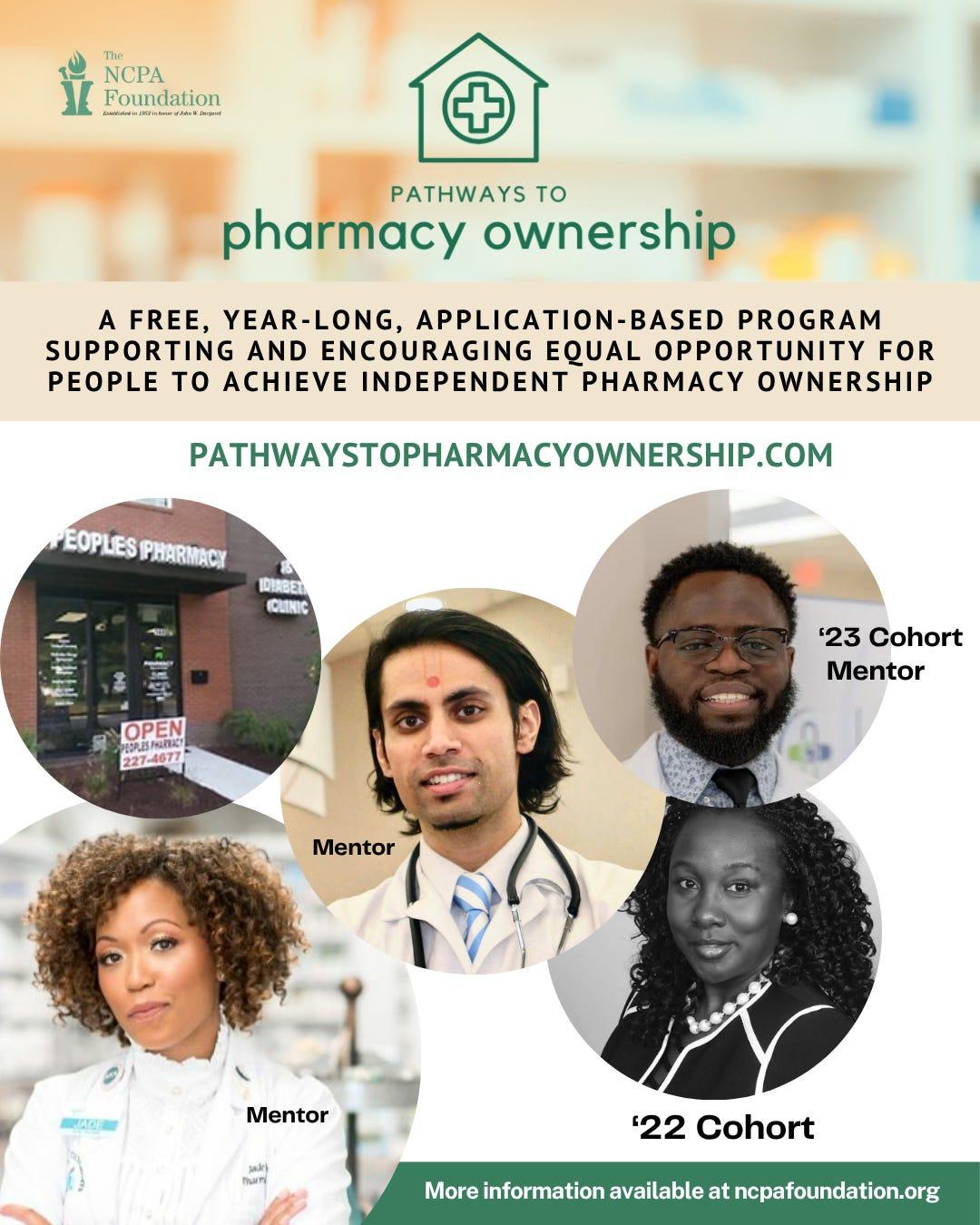
Sonja Pagniano: Hi, this is Sonja Pagniano with the Script Your Future podcast. I'm so excited today to be joined by Dr. Sabrina Russ. Dr. Sabrina Russ is part of the NCPA Foundation Pathways to Pharmacy Ownership Program. The Pathways to Pharmacy Ownership Program is a free year-long application-based program supporting and encouraging independent pharmacy ownership among individuals who historically have not had equal opportunity to attain pharmacy ownership. These participants gain access to pharmacy owner mentors, webinars, and self-directed activities focused on essential business principles as they relate to pharmacy ownership. We are so excited to have you here today, Dr. Russ. Where are you calling in from?
Dr. Sabrina Russ: Hi, it's a pleasure to be here. I am calling from Columbia, South Carolina.
Sonja: And how is it down there right now? I know we're in the middle of July. So very hot.
Dr. Russ: Yes. Thank you.
Sonja: Have you always lived in that area? What initially drew you to pharmacy and being where you are now?
Dr. Russ: Yeah. So actually, my dad was military. So originally from North Carolina, still have a lot of family there. I was born at the military base. There's Fort Bragg, but I've got a lot of family that still live in that Raleigh area. So being military, we traveled all over the world. But my dad got stationed at Fort Jackson, South Carolina as a drill sergeant back in the mid 80s. So I've been here in South Carolina ever since then. So this has been home for over 30 plus years.
So my journey really started because just growing up as a child, I really was very fascinated about how I can keep my family healthy naturally without medication. I didn't think about the connection of medication at that time, but I always wanted to see how I can keep my family healthy. And then also learning about how I can use, how we use food as medicine. I was fascinated about that aspect of it.
And so… but then didn't really think much of that part of it. Just went on and said, okay, going to pharmacy school, I was like, well, I like the science behind it, being able to help people. I know that sounds really cliche, you know, how you get into it, but you know, being out of school over 25 years, just letting pharmacists or newer pharmacists coming out know that your career will actually, it will change. It will evolve.
You know, being in my own practice as a solo practitioner, as a consultant, which started like in the early 2000s, I just wanted to figure out ways that I could just work with people one-on-one, how to teach them about medication safety. And I was seeing that a lot when I worked in the chains, grocery store chain at the time when I first got out of pharmacy school. And so I felt like I really want to be able to help people and talk with them more one-on-one without feeling rushed. Because sometimes in a retail setting, I mean, it's so busy now, busier now than it was back then. But I was like, maybe I can figure out a way to work with people one-on-one.
So I connected with my state pharmacy association and they connected me with another pharmacist who was doing, he had an independent pharmacy, but he was also doing consulting. OK, in addition. So he became my mentor and he took me under his wings and he was a geriatric pharmacist. So he's like, you know, I really think you should consider getting some additional certification, becoming board certified in geriatrics. So I did that. And then I just started this meeting with family and friends about medication concerns they had and it just started from there meeting more people interacting with providers and things like that who will want me to sit down and go through their medications because they just didn't have time this is like we're talking like what 2007, 2008 at this point and then I finally collaborated with the family practice office that I'm with now and about 17 years now. And so we've really had that collaboration. But yeah, so it just really evolved over time.
And I even started before I even got into pharmacy school, just going back to my journey, I started in an independent pharmacy. That was like my first pharmacy job. I worked at McDonald's for a couple of years when I was in college, pre-pharmacy. And then I was like, I want to get some more experience in pharmacy. And I was hired on as a student intern in an independent community pharmacy. They no longer exist today but they had the soda fountain all of the traditional what we would think of as the old school - yeah absolutely so that's kind of where I got my, you know, introduction to the pharmacy space and in into independent community pharmacy at that time so that's a little bit about my journey
Sonja: Wow. Yeah. You're so right, though. I think a lot of pharmacists are currently evolving in their journey and they're all realizing that actually the scope of what you can do with your pharmacy license is… there's a lot of stuff you can get into. And depending on where your passion lies, depending on the people that are around you that you can support, it is actually really exciting. But it's a matter of following that path wherever it is leading you, right?
Dr. Russ: Absolutely, yeah. Yeah, it was more of, it's like thinking outside the box now, even being an independent consultant pharmacist… The way that I see a lot of the younger pharmacists that are coming out, I say maybe within the past five to 10 years that are coming out and they're so innovative. So it's more open now, you know, to see more pharmacists branch into that space than when I started out, you know, in the early mid 2000s. So, which is exciting. But absolutely there, you know, your pharmacy degree is really a foundation to other things.
Sonja: Yeah. Well, tell us about what led you to discovering our Pathways to Pharmacy Ownership Program and what made you decide to apply to it?
Dr. Russ: Well, I actually started attending the McKesson NCPA Ownership Workshops. I attended three of them. And this is like, I think it was like 2017, 2018, and then the virtual online course that was in 2020. But some of the earlier ones, the first or the second one, they will always do like a questionnaire and say how they can improve. And so I was like, man, you know, you're attending those courses. It's like power packed in those three days. And it's so much information. And it can be, you know, seem a little overwhelming. That's why I went back so many times.
I always recommend that, oh, you know, if you have like a mentor, maybe pharmacists who, you know, that are owners that they can come back and talk with us or have them as speakers, you know, in addition to the professionals to share their own personal journeys and things like that. And I even tried connecting either the 2017 or 2018 workshop. I tried to connect with the independent pharmacy owner and, of course, busy. They're so busy. They're all busy. But we connected briefly. And so she encouraged me, you know, along the journey and things like that. and sharing with her path. But I would always put down, can you guys do something, have those mentors or come back, those pharmacy owners come back and talk. I think that would be very beneficial.
So around 2020, whenever the first cohort came about, for the ownership program. I can't remember. It was like 2021 or 2022, but I had gotten an email because I stayed on the email list. And so, so I ended up and I said, this would be really, really good. You know? And so I didn't, I think I missed the deadline or something like that. And that's why I didn't apply and then just got busy with everything else. And then I think I got another email again. And then that's when I just said, okay, I'm gonna go ahead and apply for this. So, Very glad I did.
Sonja: Yeah. Well, I'm excited to hear more about your experience. So you're part of a select cohort. We invite up to 20 pharmacists annually to be chosen for this program. What's the experience been like so far? So you've had the in-person ownership workshop experience. How has this experience been? I know we're a little bit over halfway now. So I'd love to hear from you about that.
Dr. Russ: Yeah, I think it's been great. You know, it's, I love how they split it up where you have the mentor, who is the pharmacy owner that comes and talks with us, and they're just open for like an hour, hour and a half or so, just the questions and... I love that part of it because and then the fact they're so open to share as well. You don't have to worry about because it's not a CE. You don't have to worry about, oh, I can't say this thing. You know, so I like that. I love that part of it, too. So I like the fact that these pharmacy owners are taking time out of their busy schedules to talk with us. And it says a lot. And it's very encouraging because hopefully I would like to do that as well. Once, you know, I get open and everything back because it's encouraging to see like you can make it regardless of what your obstacles are. You can make it. And then just to hear the ups and the downs of the journey. Not just focusing on the starlight, oh, I've arrived, but just being able to ask them those real questions like, “What are some of the challenges that you had to overcome?” “What sacrifices did you have to make?” “What barriers did you have to overcome to get to where you are?” So I like having that personal time with them.
And then also how they pair up the actual industry professionals as well to ask us or to answer various questions and do their PowerPoint presentations, especially the one we just had. It was really good. Oh, man. But they didn't feel rushed. Like they went on and continued. In spite of a lot of the questions, they still finished their PowerPoint presentation. So they didn't shortchange us. They made sure that we got everything we needed. I was like, oh, man, I know it's going a little longer, but they might. But it was so valuable. Cause they were like, I think it was like a little under 15. We were already at time and I'm like, oh man, I didn't put it off. Like there's still 15 more things. Yeah.
Sonja: They committed to it.
Dr. Russ: They did. They committed and all of them have been really, really great.
And I like the fact that they allow us to get their contact information. And as well as the pharmacy owners as well, because that really allows you to go ahead to reach out to someone. I think it was dealing with the one with the we talked about the insurance. pharmacies and the insurance liability insurance that topic I had to reach out to that person so it's really nice to actually say hey I'm one of the you know the members of pathways to pharmacy ownership and that I because… I know they get bombarded various professionals the pharmacy owners they get bombarded but the fact that they share the information the pharmacy owners share their cell phone numbers email addresses you know, the professionals share their, you know, emails and phone numbers. That makes a difference because, you know, you can get lost in the shuffle and I'm sure they get bombarded all the time with questions. So having that one-on-one personal connection with them is very, very vital.
Sonja: Yeah, I think in one of my last podcast episodes, the person I interviewed [Jay Phipps]; he talked about how, even though pharmacy owners are all over the US, you could pick up the phone and talk to someone like in a totally different state. And they’re willing to help you with whatever it is. And I do think there's something really unique about that in the profession where everyone's ready to collaborate and help out. And I think you can't be scared either of reaching out, you know?
Dr. Russ: Right. It's good to put yourself out there too. That's true. Very true. And I've still got many that I got to call and reach out to. I'm like, okay, I'm going to come back to this person. But yeah, absolutely.
Sonja: Well, speaking about mentorship, who's someone that you've maybe connected with as a mentor during this that's been beneficial to your journey?
Dr. Russ: You know I have I've got a few people that I've been reaching out to and I'm still reaching out and on that journey of finding I guess it's more like maybe the right fit because like I say everybody's a lot of pharmacy owners are so busy and things like that but I do have a couple of people about three different contacts currently. One person he used to own his own pharmacy but he works for another company now and then the other two individuals have their own. One is in long term care and one is an independent community pharmacy. So I do have some local resources. It's a matter of, you know, getting that time in with them and working together. But I do have that. But I am searching still searching as well for some more mentors because I'm learning that is, you know, one person doesn't have it all.
Sonja: It's kind of like a village, like you're making your own village of independent pharmacy.
Dr. Russ: Yeah, exactly. It is like a village. You have one that's more expertise in one area than another. So that's what I'm learning. So especially what I like about the Pathways Ownership Program is that it's really helped me to see not just learning the different areas like PCSO, different topics and stuff, but It's like, oh, I really need to key in on that more. Maybe I can find someone that can really just take me on their wings and kind of educate me more. Because it's almost like you need to have some kind of foundation. I think one of the speakers might have said that the other night. You need to know have a general knowledge of the various topics, dealing with contracting and PSAOs. And so it's almost like by the time you go and talk to them, you need to have a foundation and not just expect them to be like, can you explain this to me?
Sonja: Like the foundations of like a Google search on PSAOs.
Dr. Russ: Yes. Yes. To have understanding and find a pharmacy, a pharmacy owner that can help you with that before you make that contact, or whatever, whatever the case may be, but that's what I'm on. Cause even with the insurance part that we had talked about when the person came and talked about that and I was like man I feel like I need a template so I can kind of go through and understand each section of you know your insurance policy and go back through the video again you know I feel I need to study that part and make sure I understand it because nobody could you have to be able to be in a position where you're going to be making some very important decisions
And you don't want to be reliable, like on someone who just reviews them for legal purposes, because just because something is legal, doesn't make it the best fit either. So like to your point, you having your own good understanding of those topics is so key. And I hope that we're, we're providing that information in the program too, to kind of help at least guide you to resources.
Sonja: Yeah. Yeah, that's the key. Yeah. Having those resources available is the key because and I hope so, too, that the participants and going forward that not just take this all in as a bunch of information, as a bunch of knowledge, but really use it as an assessment tool to kind of gauge where you are, where you need to improve on. And especially if you didn't have anyone that you might maybe a family member that could have took you under their wings and taught you or somebody you might have grew up working in an independent pharmacy or as a student and somebody kind of, you know, mentioned you along the way. I didn't have that.
Sonja: So you're someone like that.
Dr. Russ: Like this is just fresh, fresh, you know, all new for me. And it's taken so many— It's taken a lot of years because it's a lot of years of preparation. You know, you can't just show up one day, but it's so much to be learned. And so I do hope that, you know, current members of the program and going forward, that they really do use this as an assessment to kind of gauge, okay, hmm…I'm a little deficient in this area. I need to take time to really…yeah, yeah, absolutely.
Sonja: That's very insightful. I'm glad you shared that. It really gives me a bit more perspective too on how we can also ask the question to the participants of like, how has this been valuable to you? And making sure that the way we pose the question gives us a good assessment of that. Because I think sometimes we're not good at asking questions.
Dr. Russ: I think we're not, you're right. Yeah. Because that's… it's very important to kind of gauge where you are because we're all, we're all inundated with so much information all the time, but this program, you know, you all are giving us this information who pharmacists that are vetted, you know, professionals that are vetted. So it's like, we're trusting, you know, the information that we're getting that is a good resource for us because it's not easy… because I must say before this program and you know I also work with the consultant company as well a pharmacy broker company and if it wasn't for you know you guys and a company like this one I'm a part of.
I tried it on my own pharmacy ownership and - oh my gosh - my own bank for, I mean, all the stories, it was a hot mess, a nightmare. You think, you think you're just sitting there, even though going through all those workshops, you're sitting there getting information. Oh yeah, I got it. It's not that easy. It is not that easy. No.
Sonja: When you apply it to real world, like situations.
Dr. Russ: When you get it, when you start walking it out, like when I tried to some years ago, try to like meet with the bank, trying to like do my own, you know, it's like my, some of the different like business plans and things like that on my own. And — eh mm— it was horrible because it makes a difference being industry specific.
You know, when you work with someone who knows your industry and I'm telling you with…When I was trying to meet with bankers and things like that. And it was, you have to do so much explaining. They don't understand the industry.
Sonja: They don't understand the business at all. That's why it's so vital to have banks like Live Oak Bank. Byline Bank is one. There's like at least two or three other ones that are pretty common in the industry.
Dr. Russ: Yeah. Yeah. And you don't have to…you bypass all that because it's very discouraging. I had one banker that laughed at me. He literally laughed at me. I can't even remember why he laughed. But he laughed at me when I showed him my business plan. And especially, and I really want to say this too, because just the general public, they're seeing what's going on in the pharmacy industry. And so, you know, they-
Sonja: Oh, sure. So, yeah, if they're not- Yeah. They're probably like, why are you doing this?…
Dr. Russ: Yes; And this was back when I was doing on my own, this particular bank. This is like 2017. Like, right after I would go to a McKesson ownership meeting that I was like, oh, yeah, I'm motivated again. And so, yeah, but this one particular bank, I think it was like 2017, 2018. And I think it was something to that point that-
Oh, man, how do you know it's going to survive? You know, you know, things like that. So you you have you may have those obstacles that they don't know the industry. They don't know about the clinical services and how you have to diversify your services and and all of that stuff. I even had. There was a particular location I was looking at at one time. Unfortunately, it was a prior pharmacy owner. He had been around for about 30 years and he passed away. His son, who was not a pharmacist, owned it. They didn't diversify, but I remember talking to that son and the son was like, no, we're going to have to shut it down. And he said, I hope you know, he kind of laughed too. I hope you know what you're doing. Cause it's just not like it used to be. I was like, well, yeah, you know, you're hearing stuff like that. And so I was like, yeah, it, you know, you've got to do different things.
You can't just depend on one revenue. You have any business. Especially in these times. And so I have reached out when they closed up, I have reached out to the landlord of that property. And that person kind of laughed and was very cynical. She was like, well, I hope you know what you're doing because that's not a good field to go into.
Sonja: That's so demoralizing to hear that message over and over and in different years. Like, it sounds like it wasn't even all in the same year. It was like at different points of your journey.
Dr. Russ: Different points. Yeah, it was.
And so I was, but you know what you have inside of you, like that makes you different than any other pharmacy like yeah the big chains are closing down things like that; but you know what I'm learning also on this journey it's like independent pharmacists I feel like we don't get the respect that we should.
And I'm trying to figure that one out. But, you know, in spite of studying pharmacy and being a pharmacist for 26 years, it's like, you know, independent pharmacy owners are resilient. Many of them. And I know, unfortunately, you do have some that close down, but it's like if they're closing down, you need to find out why. Like that particular pharmacy owner where the pharmacy owner passed with the son. What is the real reason? Because a lot of times you're right. Like it is from not adapting to the changes in the market. It's seeing a decline of certain types of patients and not doing the marketing and the effort to get the other ones in that you need to help out your business.
Sonja
Dr. Russ: Absolutely. Absolutely. And you know, you have to look at that. Yeah. Yes. You have you have to look at that. And I would encourage, you know, potential pharmacy owners. That's kind of something that I've been doing now is really taking this time anywhere from like five to 15 hours a week. There there is something to be worked on or something you can be doing, like taking this time and finding out what is the market like. What is the consumer spending like? Those consumer spending habits are changing. And they change so fast now. Yes. You could be used to it for one quarter and be like, oh, yeah. And the next quarter is probably the same. But it's not like things are changing so fast. Very, very rapidly. And, you know, I do some PRN work for a chain. Now, and I heard someone, a colleague say that this particular chain, you know, they're scrambling because it's like if they don't do vaccinations, you know, they know that's where the revenue stream is coming in at. Doing outcomes MTM is where the money is coming in at. And so it's like, OK. They know. The media may not know that. They just hear, oh, this chain is shut down, whatever, whatever, and creating pharmacy deserts. But we have to look at it as opportunities. Like I say, yeah, they're creating pharmacy deserts. That's why it's independent. I'm coming in right in that same spot. And I am because people, the need is still there.
Sonja: Exactly. It isn't like the need goes away. Sometimes it just moves to a different geography because now people are traveling further or to a different place. That's right. And I'm sure if they had a closer resource that they would go there instead of. Yeah. Yeah. Absolutely. Yes, absolutely. Right.
Well, so you did attend the pharmacy ownership workshop a couple of times, right? That's what you said. Three. OK, so three times. So when I interviewed Joshua, it was also like he did it twice, I think. OK. So when you went to that workshop, How did that kind of prepare you for practical realities of it, of ownership? And then as part of this program, you get to go again. So this will be what, your fourth time? Yes. So what do you hope to gain from your fourth time attending RxO Ownership Workshops?
Dr. Russ: Yeah, I was saying, you know, we're going those first couple of times. Well, I have to say it did give me a good. I don't even know what I want to say. Foundation is the word yet. At that point, it was just introducing me to the world of independent ownership because it was terminology I had never really heard of before that. I was like, oh, what is that? you know, financing, how that all works, marketing. It just opened up a new world that I just never knew anything about. It's almost like it was its own language that I had to learn. So even though I was a pharmacist, but pharmacy ownership has its own language.
Sonja: Well, and it's not really taught in school, right? Like, did you have any kind of business classes?
Dr. Russ: I did not. We had one class that dealt with pharmacy management. And because, you know, of course, as for any, I guess, students that may be watching this, that, you know, you're kind of put into that management role when you are a pharmacist. And so they talk a little bit on that. The program that I participated in at my school, I don't think, they even offered ownership because I think it was more clinical focused, you know. And that's even very common now. Like there's a lot more clinical focused and you're going to probably work at the hospital pharmacy type of thing.
Sonja: Right, right. And that's it. When I came out with my bachelor's, I went back and got my PharmD. But when I got my bachelor's, it was like hospital retail, you know. Okay, yeah. It's still very common, yeah. Yeah, yeah. Yeah.
Dr. Russ: So, but yeah, so I was just like, you know, it was just the exposure to it because I can't even say it was a foundation at the time, but it was the exposure to the language of pharmacy ownership. So this time around, of course, I had, well, I'm in a different position because, you know, I'll be, well, moving more towards my opening date. So You know, so I think it's a different I'm listening with a different intent, I guess, when I go this time around, because it's like, OK, I learned. I believe our ownership, the pathways is kind of like bridging that gap from when I was in the artist ownership workshop before and then kind of where I am now, if that makes sense. It's like it's bridging the gap. It's like it's putting the pieces together. Yeah. Yeah. Like what you're saying, because it's in like more of a condensed type of a format, it is a lot more intense. And so like to your point, if you don't have some kind of a foundation even to start.
When you attend it you are gonna feel like you've missed a few things because you'll be thinking back I'm like… okay like I know they covered this but like man am I not very knowledgeable on that or like- oh yeah- this part of my business I thought I had it figured out but okay I need to like go get a consultant or some assistance or something because clearly like that part's not ready yeah but you don't know that though well I didn't know that though…
I didn't know until, well, maybe it did in a subtle way. The RX Ownership Workshop prepared me for, well, maybe it did… I need some help. I'm gonna have to get a consultant because how would I else have known? So that's true. Yeah, yeah, yeah. I didn't make that connection, but that's true, yeah.
Sonja: Yeah, so I'm excited for you to go to it again and give us feedback on it because I think you have such a unique perspective having gone a couple of times and in different iterations of your journey. It'll be really interesting to see how after our program, what that does for you too with that. So I can't wait to hear about it.
Dr. Russ: Absolutely, absolutely.
Sonja: So like you said, you're in the midst of getting your first pharmacy opened. That's so, so exciting. So walk us through where you're at in the process right now. And what are the major milestones that you're working toward?
Dr. Russ: So right now I am way too close on my loan, my funding. And so that should be within the next few weeks. So, so then that, now that when, when that happens, I think I'm going to have a little small celebration. It's been a process because they do tell you, and again, thank God for my pharmacy broker consultant company that I'm working with because they're there to really hold my hand and and make sure I don't panic too much. Like, why is this taking too long? Why is the bank asking me all these questions? So they're really a very good, I love the company that I'm working with because they really have taken on that hand-holding approach because I need you to hold my hand through this process because I am clueless. So it's comforting to know that I'm working with someone who has so much experience in this area where they have, you know, resources available that they recommend.
You can always like, you know, for example, have your own bank, but they have relationship with a few banks. And so they can kind of tailor based on your situation, who they recommend that you connect with and help you with your SBA or your business plan that SBA is going to be looking at and the bank's going to be looking at. So they have a lot of tools already that relieves a lot of time and stress. Believe me. So, so I'm just thankful for that. So, once I get open, you know, it's, it's usually takes about once your loan closes, maybe another six to eight months could be more, could be less to get open because, Gosh, you know, there's so much going on in the pharmacy space now and a lot of transition, a lot of moving parts. So hopefully it won't be too much long after that. But when you're going through like the actual loan approval process, they tell you that that process can take 60 to 90 days in itself. OK, now in an ideal situation. But in my case, I just share this. I had to find my own like contractor my own general contractor because we had somebody it's a long it's a long long story but I'm not gonna for another day but yeah so I had to find another contractor and that took about almost six months for me to find the right contractor!
Sonja: Oh my God. Yeah. Does the bank have to approve the contractor that you're using?
Dr. Russ: They have to approve like the contractor's contract. Okay. So it's up to it. Well, they do have certain criteria they do. They have, you know, be licensed. So they debate does have certain criteria. I think the criteria is from the SBA itself. Yeah, so there are certain criteria that they standards that they do require and everything. So but the process with the, you know, finding the right general contractor, because I had to find someone who would fit my budget, had someone I really wanted someone with the knowledge of. I mean, finding and building, you know, your own your pharmacy itself or build out because I'm doing a build out. So I'm in within a space. I have a space leased to me from the medical office. And so I have to build that space out because I had to learn what that was. Yeah. Yeah. Yeah, so I wanted someone to have that experience because it's a lot of coordination of meetings. I had to do interviews. I even came up with like a spreadsheet of questions you need to ask to help you to learn how to find the right contractor.
Sonja: Oh, yeah. I mean, they recommend to do that even for your personal home. So I can only imagine that sort of business.
Dr. Russ: Yeah, I didn't know that but now i know well I've personally had some crazy experiences with contractors so it's really good to do your homework it's really good to be thorough it is absolutely good questions because you just never know yeah and all those things take time and that's why i say give yourself between five to 15 hours a week to do that and I actually had to work with a someone else to kind of help me along the way, like a coordinator, I'm drawing a blank on the topic, but someone else that had to come along to help, a project manager.
Sonja: I was gonna say like a project person, yeah.
Dr. Russ: Yes, a project person. A good friend of mine, colleague, her husband was in the process of getting his certification, so he had to take on a project for so many hours. And thank God they were there. I mean, that was so valuable. That saved a lot of time. But that's something I'm kind of putting together some type of little newsletter or blog or something to just kind of help people along the way. This is the stuff you don't really learn about. But, and everybody's different. Like you might find a contractor or your landlord might have somebody that fits the qualifications and boom, that's it, you know? And so, but yeah, that, those are things that you have to really prepare for and everything. So it could, I mean, this process, I really started this process like October of 2024.
Sonja: Okay. So we're coming up on 12 months of- Almost 12 months. And that's because-
Dr. Russ: Yeah. And that's because I had to, we had a, the landlord did have someone with that they were not they didn't meet the qualifications as far as the contracting so that's kind of why because it was moving quick then you know but unfortunately that happened so i had to like well I guess I have to do this on my own so so that took a lot of extra time but I'm glad it took that time even though at first it was i was getting like stressed out i know it's so frustrating and yeah it was frustrating like I don't understand but…But I learned so much. I said, I don't want anybody to go through what I went through.
Sonja: Yeah. So tell us a little bit more about the collaborative pharmacy practice you're opening. I understand you're going to be collaborating with other health care professionals.
Dr. Russ: Yes. So basically in that practice, there is one medical doctor and then he has one nurse practitioner, but they're going to be working or hiring a second nurse practitioner. And then also in his office, he has a dietician in there and he has a counselor in there. And then he has someone else who helps with Medicare, having patients to be enrolled in Medicare Part D. And you'd be surprised, all those different factors, plus they have a care coordinator, a care navigator, he has that person in there. All of those individuals play a role in whole person care. Because you'd be surprised, I know the big thing now is those social determinants of health.
Sonja: Oh, yes, yes.
Dr. Russ: Yes, and so having each of these individuals and everybody's focusing on their specific area of specialty, so it doesn't have to pull you as a pharmacist or the providers in so many different directions. You can just refer them in-house like, hey, if someone's having problems with getting food or money for food or transportation, and all that can play a part on them getting their medications or coming to their doctor's appointments regularly. Well, we have, you know, our care coordinator here that can help you with that. You know, they're having issues with their Medicare Part D plan and it's not covering their drugs. Well, we have somebody that can help you with that. So it is so nice to have like a one stop shop.
Sonja: No, that's amazing.
Dr. Russ: Yeah. And convenience. And so and one good thing about this provider that he's really into like holistic care and preventative medicine. And so that's like right down my alley as a health and wellness coach. And so having, you know, the services that I'll be offering along with having a dietitian, you know, we all, you know, looking at ways we can just collaborate together, just trying to, you know, focus on preventative care, reduce those healthcare calls, help the patient understand and educate patients, things like that. So we're really, really excited.
Sonja: No, that sounds so cool, like and very innovative in today's health care space. I think that's kind of where everybody's trying to go. And you're very fortunate to have all those different kinds of resources all in one spot. That's going to make a huge difference for patients.
Dr. Russ: Oh, yeah, they're so excited. The providers, they're telling patients, hey, we're going to have a pharmacy, because they hear it all the time, the frustrations of what's going on in the pharmacy world. They complain to their doctors. They're not staying open. You don't know when they're open or when they're closed. I can't get my refills. I can't get my long wait times and they're rude. And, and that's because they're stressed out. Yeah. You know, it's like, so it's like, you know, preparing myself to provide like, you're going to be very, very busy. So I hope you have enough staff. You're going to be very, very busy. So yeah. So we're excited.
Sonja: No, that's incredible. I'm so excited for you and for the community.
Dr. Russ: Thank you. One of the things as well is my goal is to really educate the public about the role of pharmacist, because I still feel like we're the missing piece. Like we're being ignored, like, hello, we can help you with medication adherence with your patient. You know, so they're so used to the public and the community are so used to seeing pharmacists in that one role, you know, working in that dispensing role. but I, you know, want to really educate the public and let them know that we are educators. We're there to, educate those patients. You know, this is our specialty. And like I say, a lot more pharmacists are getting into health coaching, functional medicine, which is my long-term goal. but preventative care and we're there, we're there to do those and provide those services for these patients. And so, I think that the public really needs to know that we're, I believe, are still a very underutilized resource, not just for patients, but for health care providers and a health care system.
Sonja: Absolutely. So where can people follow your journey and connect with you?
Dr. Russ: Well, as right now, they can go to my consulting website, which is www.spspharmacy.com, or I'm on LinkedIn. you know, Sabrina Russ or Simplicity Pharmacy Services and Wellness Center Inc. That's my consulting company. That's on LinkedIn too. So you can reach out to me there. And I love for you to connect because when we launch our campaign for the health and wellness coaching got a lot of good ideas. Would love to have, you know, pharmacist colleagues be a part of that journey as well with me. But those are the places.
Sonja: It's an exciting time for you. It is. A lot of moving pieces. Well, do you have one last piece of advice for anybody who might be listening?
Dr. Russ: Oh, yeah, I sure do.
So I just want to say that just you know, keep the journey alive, keep moving forward. When you're getting those no's, whether it be like a, you know, something from a bank saying, no, we can't fund you, you know, turn on this podcast and listen to my story.
Connect, network, you know, work with and partner with a consultant, somebody that knows the path to make it easier for you. Consult with and, you know, people who can really encourage you. You got to stay motivated. Even listening to podcasts like this, you know, hearing the stories, because I'm on YouTube all the time, listen to different people I like to follow to hear their stories and not just focusing on the good time, but like people who are really transparent and you can know their journey, their struggles and how they overcame them. You know, always connect to me, you know, I'll be glad that we can connect and We can do a quick Zoom if you want to feel like you're feeling discouraged and things like that. But surround yourself around positivity and motivating people. And you will make it to that process. I guarantee it.
Sonja: Well, that's very inspirational. And I hope people take the advice and surround themselves with nothing but positivity and learning from those who have overcome challenges because there is nothing more inspiring or motivating than knowing someone potentially has it worse than you do. And they got through their stuff and you will too. And with support and connection, we can make that possible.
Dr. Russ: That's right.
Sonja: Well, thank you, Dr. Russ. Thanks for joining us on our podcast.
Dr. Russ: Thank you for having me.
The Pathways to Pharmacy Ownership Program application is open. The deadline to apply for the program is October 31st, 2025. Visit pathwaystopharmacyownership.com to learn more.
Episode Summary
Dr. Sabrina Russ takes us through her remarkable journey from a military family background to becoming a geriatric-certified consultant pharmacist, and now to opening her own pharmacy within a collaborative medical practice. She discusses how attending multiple NCPA Ownership Workshops laid the foundation for her understanding of pharmacy ownership, and how the Pathways to Pharmacy Ownership Program has been instrumental in bridging the gap between learning and implementation.
Key highlights include her experiences with discouraging encounters with traditional banks and landlords who questioned the viability of independent pharmacy, the importance of working with industry-specific consultants and lenders, and the value of building a "village" of mentors with different expertise. Dr. Russ emphasizes how the program's combination of pharmacy owner mentors and industry professionals has provided both practical knowledge and emotional support throughout her journey.
Get full access to NCPA Foundation Newsletter at ncpafoundation.substack.com/subscribe