

00:00:05
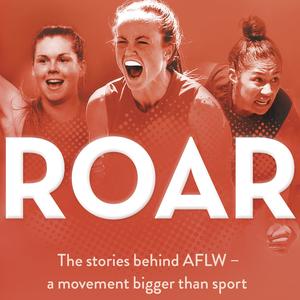
Speaker 1: Approach a production. This is episode five of Raw I'm Sam Lane. Eight senior afl W coaches, two of them women, were paid from a four hundred thousand dollar pool for each AFLW club football department. The general terms of coaches employment differed greatly and so did their pay packets. Evidently, it's estimated the top earning coach was on a package of around one hundred thousand dollars a split in afl and AFLW budget, but the lowest paid were on forty thousand dollars salary. Sacrifice was not limited to AFLW players. To lead Adelaide, the aflw's first premiership coach, be Goddard, took paid leave from her full time employer, the Australian Federal Police. This enabled her to live a football dream, but losing income to do so is an ideal in anyone's book. Godard has advocated several times for AFLW coaches being employed full time, including when she won the twenty seventeen Football Woman of the Year before a full house at a major afl Grand Final week function. The landscape, particularly for senior and assistant women coaches in the afl W, is being monitored, including by some already calling a red flag for other reasons.
00:01:59
Speaker 2: I'm seeing senior afl W coaches just getting their mates in.
00:02:04
Speaker 1: Says one senior AFL club employee.
00:02:07
Speaker 2: Women will never get there unless we're prepared to invest in them. There are two women as senior coaches in AFLW, and if that's left unchecked, we'll see history repeat and that aside, clubs actually aren't being smart going man heavy in AFLW. It's a different ballgame coaching women the way we interact, the way we think. Some male coaches simply try to pick up the men's game and put the template on the women's game. I'm convinced that won't work, says.
00:02:35
Speaker 1: Another with prominent AFLW involvement.
00:02:39
Speaker 3: I fear that AFL is starting to become a man's world in terms of leadership. I fear we've created a woman's competition for women to play in and men to manage. The AFL settled on a very simple eight week fixture for year one, with the unusual cutthroat scenario of the top two qualifying for one winner takes all duel for the premiership in the name of see what we create. Road testing the league wanted to trial as much as it could. Games were played in out of the way locations like Mandarra, an hour's drive south of Perth. In Melbourne, the Demon's home was Casey Fields, about an hour from the city and club headquarters between Carlton's Prince's Park and the Western Bulldogs. Witten Oval Retro was a clear winner. Though no longer hosts of elite men's games, they felt just right for AFLW. With heritage oozing from its slattered bench seats. Wittnoval drew a total of thirty two thousand, five hundred and two spectators over four games and was particularly telegenic under lights. Adelaide's Norwood Oval was an equally perfect AFLW home. A pulsating audience of ten thousand, six hundred and seventy six jammed in to watch Adelaide host Brisbane in what was a Grand Final preview in round five. The Lions even received a classic opposition welcome. Sledging from the crowd surprised some players, but it told Brisbane coach Craig Stazovich, who was exposed to far worse as a Collingwood player, that AFLW had truly landed. Official AFL figures recorded the total attendance for twenty nine games in the afl w's first season as one hundred and ninety six thousand, five hundred and fifty an average of six seven hundred and eighty eight per game. Deciding the best start time.
00:04:46
Speaker 1: For the competition was after the Australian Open and Big Bash when it had clear air. The AFL scheduled standalone AFLW games and tested doubleheaders with men's preseason matches. It considered a final series, but opted to finish the season at round one of the men's competition. Surprisingly, it will not expand beyond a single final. In twenty eighteen, AFLW match start times were a weekly mashed that, again, while useful test case material in the league's postseason review, were far from ideal for many spectators. The broadcast arrangements for television, however, were a genuine coup for the AFL. Every AFLW match was televised pre to air on Saturday nights on the seven network, a mix between Channel seven and seven Mate and the rest on pay television on Fox Sports. Broadcasters covered production costs and the AFL footed the bills to get every venue telecast ready. Each game was broadcast on radio between ABC Grandstand, twenty four hour Sports Station eleven sixteen sen and Ostereo. Juggernaut took despite its reputation as Land of the Jock website. AFL dot com dot Au also live streamed all matches. Records show that five point six million watched on television across the season, three point nine million on free to air and one point seven million on PATB. Unsurprisingly, television ratings for AFLW began and ended with a bang, with the peaks achieved during the first and final matches of the season. The metropolitan average for that lockout opening game was almost ten percent higher than the home and away average for Men's AFL in twenty sixteen. The AFLW Grand Final rated higher than any Saturday afternoon men's home and away game in twenty sixteen, though at that time Channel seven broadcast them on ninety minute delay. Importantly, as everyone drew breath after the opening night that left season producers convinced that something very special had just gone to air, ratings declined but remained steady. The scheduling of the AFLW Grand Final was contentious on two fronts. First, its location and second its timing, which was before the men's AFL All Queensland Q clash between Brisbane and the Gold Coast Sons. Being curtain raiser to a men's AFL game carried more than a hint of poor cousin baggage. Women, however, won the day both in eyewitness support and in television ratings. Fifteen thousand, six hundred and ten screened the house down at metric On Stadium as Adelaide won by six points. The official attendance for the Brisbane Lions Gold Coast Sunclash almost directly afterwards was twelve thousand, seven hundred and ten. Retired AFL player Brent Steaker, one of Stacevich's AFL w lieutenants at Brisbane, was not the only one who raised an eyebrow as he left the ground. As the men's game was just gearing up, fans were already departing on mass, indicating what they came for. Former Western Bulldogs CEO David Stephenson had made a prediction along these lines when it was still brave and unfashionable to do so. In March twenty sixteen, the ex Nike executive forecast that new sponsors even multinationals would flock to women's football. Stephenson's point was that a women's league promised to deliver new markets to the AFL and he was right. In the league season review, a crowning duel of the afl W was how rapidly and genuinely the new competition had engaged supporters who did not identify as AFL fans. People bought Western Bulldog's afl W memberships, declaring themselves as followers of rival men's teams. The Bulldogs signed three new main sponsors for its AFLW side mission. Foods, the major sponsor of the dogs men's teams, was sincerely disappointed to miss out, as Priceline the Pancake Parlor and Bob je t Martz won the club's afl W deals. In late twenty seventeen, the Bulldogs were working on plans for the biggest capital project in the club's history, a major redevelopment of Witnoval, the Dogs home for over one hundred and forty years, and more major development of their home in Ballarat Eureka Stadium. Both were being undertaken in partnership with the Victorian government, and both were only possible because of women's football, the demand and boom potential for mass community events through AFLW and VFLW, particularly.
00:10:18
Speaker 4: Every way you measure it. Support and strength of the club increased as a consequence of our women's Tongue.
00:10:26
Speaker 1: Bulldog's president Peter Gordon says.
00:10:29
Speaker 4: Corporate support increased, government support increast, social media followings and participation increased, and membership increast esen And and Hawthorne supporters signed up as Western Bulldogs AFLW members in order to follow AFLW and show their support for AFLW.
00:10:52
Speaker 1: Melbourne sold three hundred foundation memberships for its AFLW side at two hundred and fifty dollars apart, within forty eight hours of offering them.
00:11:03
Speaker 4: That surprised me.
00:11:04
Speaker 1: Demon C Peter Jackson admits.
00:11:07
Speaker 4: It also had an impact in that sponsors were calling us about getting involved.
00:11:12
Speaker 1: I Select initially signed as the inaugural major sponsor of the Demon's AFLW team, and by May twenty seventeen, after the AFLW season, upgraded to be co principal sponsor of the men's team for twenty seventeen and twenty eighteen.
00:11:31
Speaker 4: They came to us through us having a woman's.
00:11:33
Speaker 1: Team, Jackson says David Matthews, gws CEO, says.
00:11:40
Speaker 5: It has introduced new corporate supporters to our club and the code, such as Katie Page at Harvey Norman.
00:11:45
Speaker 1: But even bigger than partnering with the retail colossus is his next observation.
00:11:51
Speaker 4: It has made us a complete club competition.
00:11:54
Speaker 1: Premier's Adelaide described AFLW as profitable for the club work, skill and employment provider and retailer Harris scaff sponsored sport for the first time through women's football. The Crow's capped AFLW membership at five hundred and sold out rapidly at times during the season.
00:12:18
Speaker 3: Mainstream media interest in some of the club's digital metrics rivaled that of the men's program.
00:12:24
Speaker 1: Adelaide chairman Rob Chapman says mining giant BHP Billeton has signed on to sponsor the AFLW Crows in season two. At the seven network sales executives were inundated by interested client sponsors before an AFLW point had even been scored at clubs. The financial Act centers on capping spending on AFLW. The afl IMPOSED AFLW Football Department CAB limited outlay to four hundred thousand dollars per teen in twenty seventeen, a figure that club CEOs think is way too small. The AFL reported that twelve point eight million minutes of AFLW were viewed online in season one, with live streaming the most popular way people engaged. The high point was a peak of two point eight million minutes over matches in round two. The AFLW awards at the end of the season were not telecast, but an audience of twenty one thousand watched through the AFL website. Facebook was the most popular social media platform the AFLW one one hundred and twenty two thousand, eight hundred and two followers by December twenty seventeen. Twenty thousand were following at AFL Women's on Twitter by then, and fifty six thousand, four hundred on Instagram. A point of reference is the Gold Coast Suns Instagram account. The expansion club that joined the AFL competition six years before the AFLW started, had fifty nine thousand, seven hundred followers in late twenty seventeen, only around three thousand more than at AFL Women's. By the end of the first season in March, the AFL could boast almost two hundred thousand followers of AFLW on social media. Six months earlier, the grand total was zero. The AFL reported that women constituted sixty seven percent of the at AFL women's Instagram following, sixty eight percent of aflw's Facebook legion, and fifty one percent of its Twitter fan base. Interestingly, in terms of images, research shows that audiences were engaged less by players in heavy combat mode and more by high five moments, when teams embraced, celebrated, or at the end of games formed victory circles to belt out their club song. This was the good stuff, the great stuff behind the curtain. Not everything was so shining, although as a collective the players, clubs and DAFL keipped on in good faith. The see what we create message looked ever more genius when speed Humps presented. The integration of women's teams in male settings was not seamless. Far from it, actually, though it's hardly surprising given they were a foreign implantation in historically male territory at very short notice. Positives outweighed negatives overwhelmingly, but there were gaffs and oversights, bad and even ugly. Many kinks were minor and speedily resolved. Adelaide's team, for instance, highlighted the absence of sanitary bins in toilets they were allocated at the Crow's Westlake's headquarters. Other mishaps, however, were considerably more offensive and some could not be Undone. Fremantle's historic AFLW debu was tainted by what felt like nothing short of a slap in the face to the Dockers women's team from the top of the club's tree. The aflw's first Saturday night fixture, telecast free to air nationally, was at Whittnoval. While it didn't cause a repeat of the lockout just twenty four hours earlier, the buzzing ground brim with ten one hundred spectators. Friends and family members of players had organized flights from outposts of Western Australia and local accommodation to get to Melbourne's western suburbs. Missing, however, were Fremantle's new president Dale Alcock and the Dockers' CEO, Steve Rossich. By the time this filtered back to the docors, afl W camp defeated on debut by thirty two points. Players, coaches and their support teams weren't alone in dismay. The gross oversight was noted on the night by attendees from AFL House and then executive Simon Lethlen promptly lodged disapproval directly with the Fremantle hierarchy. After the event, no good reason for the no show of Frio's top brass was conveyed. The contrast could not have been greater in the Western Bulldogs contingent, as club president Peter Gordon served hot food to fans from the food tent. After the final siren heralded the Bulldogs women's first win and the throng cleared, the Boss sat down with his wife Kerry in the empty Noble cafeteria. He ripped the top of a bottle of wine and toasted what he said had been one of his favorite games ever at the History Seat ground. The veteran football administrator had only recently overseen his men's side achieve a drought breaking premiership, but he was deadly serious. A new breed of bulldog had triumphedn debous and Gordon could not wipe the smile off his face, Lingering angst about Fremantle's Round one fail and insuing blunders was properly flushed out in post AFLW season reviews both at the club and beyond. The issues were not with Fremantle's men's players. Reports of their welcome to the AFLW crew were full of praise, but while the Docker's home base was redeveloped through twenty sixteen and twenty seventeen, the sides had to make do with substandard change room and training facilities. At a midweek session during the first winners season, Frio's AFLW cohort did its best to ignore nightfall and the fact that inadequate temper lighting was arranged at a training venue. All of this feedback and more was relayed to the afl Fremantle will do much better all round in AFLW in twenty eighteen behind closed doors. Its hierarchy has already vowed to enlightened by some truth telling conversations. When the afl W side regrouped for its second preseason in late November twenty seventeen, it was noted and appreciated instantly that honor rolls for the women's team were fresh features of the club's home base. Little touches count to cast Fremantle as a lone ranger, however, would be unfair. Every club had hiccups of varying degrees with the arrival of AFLW squads. Change rooms for the dedicated use of the Carlton and Giants AFLW teams, for instance, were not complete when no side started their first preseasons. A request from another AFLW team about whether the women could use the men's locker rooms when they were not on the premises was rejected. Apparently the leadership group of that men's team said sorry, but it just wouldn't work. It wasn't great when Carlton had to switch change rooms at halftime of their game against Melbourne at Prince's Park once the men's side took it over for their preseason scratch match. Nor was it great when before the same game, Debbie Lee arrived early to survey the afl W demons assigned area to prepare. Lee was struck not only by the sight and smell of the away rooms, but by a sticker plastered on the door at the entrance.
00:20:57
Speaker 4: I'm not your mother, your wife or your girlfriend.
00:21:00
Speaker 3: Clean up your own mess.
00:21:01
Speaker 1: She ripped it off, screwed it up and bindit. Melbourne's women's players were spared the iyesaw. Fremantle produced another operational howler in round three, traveling for its game against Greater Western Sydney with the wrong match uniforms. The dock has incurred a ten thousand dollar fine from the AFL, half of it suspended and with two teams wearing predominantly white gws changed into different colored shorts at quarter time. Eddie maguire's absence from the first game of AFLW raised more eyebrows and generated more headlines than that uniform malfunction and the Round one muck up by Fremantle's bosses. The Magpie president was in Adelaide for a pay television commitment anchoring coverage of the final bout between Box arrivals Danny Green and Anthony Mundine. The job had been booked before the AFLW fixture was set, but McGuire suffered backlash all the same. The AFL didn't like the Collingwood boss being an absentee, but ultimately accepted why it happened. There is no question McGuire's absence deflated the players who had been so shaffed when after the first AFL W draft, the AFL's most high profile president phoned the group from overseas when it gathered at Magpie headquarters. The image of afl W overwhelmingly has been one of sheer delight, but the general well being of players is something to watch and easy to underestimate. With great highs and troughs, plus a new consistent stream of criticism, even if constructive, being an AFLW player was much more involved than some imagined. A group of two hundred women ranging from ages eighteen to thirty eight, were cannon balled onto our highly exposed stage and environment virtually overnight. They arrived largely without the sporting education and nurturing that talented young males received from their junior football ranks. Some inaugural AFLW players didn't actually like what they found. The nature of the Lightning Quick season meant it was all in when it was all on, but when it was over, the contrast was enormous. Rude reality checks hit even the best adapted and grounded characters when they returned to community clubs to resume state lead competitions. Particularly stark after sharing a slice of elite afl life was the refamiliarizing with old settings and conditions. Tellingly, the AFL Players Association, which offers in house mental health and well being services, was impressed by the level of self initiated engagement from its new membership cohort of AFL WU footballers. Gillan McLaughlin likes to call the afl W a revolution, but the terminology isn't quite right. Women's football in its uprising did not overthrow the AFL, so perhaps the word evolution is more apt, as even relatively modern leadership history of the code proofs the AFL had to evolve internally in order to recognize, polish, then properly value and display a duel it always had within its grasp. Evolution of the hierarchy at AFL house brought the AFLW one three years earlier than scheduled. That only occurred when the AFL's ruling class, still predominantly white and male, authorized, then enabled and supported that progress. This confluence of events has proved nothing short of a culture phenomenon. Already, the AFL will never look or sound the same again because of the afl W, and it cannot be governed or even broadcast the same way for the same reason. Half the population is now invited to be elite when it was previously told it could not be. When you consider the messages being sent before the afl w's lift off, this is major. The ripple effect promises to be significant. The afl changing means Australian sport changes, Australian society changes as a result of this too. Such is the code's prominence in the national psyche. Every bit is profound in a sporting and sociological sense. Has been the manner in which the AFLW has seen old prejudices overtaken by pride. In the one hundred and twenty one year existence of the v AFL turned AFL no elite male player has ever declared himself to the world as gay. The first afl W season in rainbow colored contrast, was booke nded by powerful statements of same sex love. Magpie Penny calleder Reid and Demon Mia Ray Clifford told the story of their partnership after round one years earlier. Football was the medium that sparked their romance. In the AFLW pre season, Adelaide recruit Eron Phillips, the elite basketballer daughter of Port Adelaide champion Greg, spoke about her American wife Tracy garn and their twins. It was meaningful at the time, but even more so at season's end, when Phillips was crowned Best of Field in the first AFLW Premiership team and voted the league's best performer at the AFLW Awards.
00:27:00
Speaker 3: I declaire the winner at the twenty seventeen IFLW than their parent villep of the Aline Bootblay.
00:27:08
Speaker 1: Look at this brownlow metal dinner equivalent. Philip's gong led her to place a memorable kiss on the lips of her spouse. The afl had never projected a shop front window like it. Football functions tended to thrust women in the spotlight, but typically for the purpose of dissecting fashion. Debbie Lee, who in playing prime would have rivaled Philips for best Player, is better placed than most to describe the significance of Philip's complete comfort in her sexuality.
00:27:44
Speaker 6: The Aaron Phillips and Tracy Kiss moment I think summed up the AFLW season.
00:27:50
Speaker 1: Says Lee, who returns to the Western Bulldogs in twenty eighteen as general manager of women's football at age forty three. Lee is happy to share publicly that she is gay and raising a son she carried mac with her partner, but it moves her to tears to admit that for decades she did everything humanly possible to conceal her sexuality, and that as a woman's football coach and VWFL president, she subtly encouraged other players to follow suit. Lee thought hiding her sexuality and same sex relationships was best for women's football.
00:28:31
Speaker 6: In Aaron's place, would I have done what she did in twenty seventeen, I hope, so, she says, But in two thousand and five, no way.
00:28:40
Speaker 1: Her eyes well as the words come from her mouth.
00:28:44
Speaker 6: For ten or fifteen years, I couldn't be myself because I thought it made everything harder. What's even worse is that I encourage players not to disclose his sexuality or behave in a way that showed they were this way inclined. This is one thing I regret, but at the time I felt that this would just create another battle we didn't need to encounter. It's sad, it's an indictment on the industry. I just hope that people can look at the AFLW from this year and draw courage from it.
00:29:16
Speaker 1: A modern respected club football boss asked informally at the twenty seventeen AFLW Awards. If he could envisit ja male player kissing his partner at a Brownlow Medal count as Phillips did, just shook his head, not because he didn't wish for that kind of freedom existing in Eliteman's footy, but because he couldn't see the day when it would. The number of AFLW figures who have felt comfortable sharing same sex relationships since Philip's Awards night Embrace of her Wife has risen noticeably. The twenty seventeen AFL Brownlow Medal Night was the event that Collingwood marquee player Molana Hope chose for her public coming out, attending with girlfriend Isabella Carlstrom and talking openly about it for the first first time in an AFL setting. In an autobiography published on the eve of the maiden AFLW season, however, Hope said she was not gay. Many who knew of her relationship history were confused by the statement published in the book. Some felt worried and even angry about it. Lee, Katie Brennan, and Beck Goddard had not spoken publicly about their same sex relationships and sexuality until interviews for this book. In mid twenty seventeen, at the time of the AFL's second theme Pride Match, AFLW player and Collingwood team operations boss for season one, Met Hutchins spoke about her fiancee, Steph. Their partnership was widely known among the women's football fraternity, but publicly Hutchins had only ever been ambiguous about her relationship details. The thirty five year old spoke about the sense of relief and freedom she felt once she had made her plan to marry her longtime girlfriend perfectly clear. This too, is an evolving picture.
00:31:17
Speaker 5: There is still an understandable undercurrent of fear among some of the same sex attracted AFLW players.
00:31:23
Speaker 1: Shiloh Curtis says.
00:31:25
Speaker 5: There is still a level of caution about how and when and where they express their sexuality and with whom. This is new territory, so they don't know how sponsors, the media, fans, and even their AFL clubs are going to receive it. They're unsure.
00:31:39
Speaker 1: A liberating place for women, the AFLW is also a revelation for many men. Male coaches have confided that they feel relieved to have found women's football and a sense of freedom to take the armor off. Privately, Some say how refreshing women's football environments are compared to men's, which have a habit of breeding power Annoyer and Digo Mania in unhealthy Doses. Coaches love the sponge approach so many women players bring to training and meetings. They love the openness they find and the inclination of many to share rather than hide vulnerabilities. David Matthews says he has never received more thank you notes than in the six month period covering the AFLW preseason to the Giant's last game. They were all sent to him from grateful women players.
00:32:39
Speaker 6: Lee relates, it's just so different to the men's game.
00:32:43
Speaker 1: She says, smiling.
00:32:45
Speaker 6: They'll say out of nowhere to a guy in the men's program, you've had your haircut. It's not a big deal, but they notice and may say it. I think many male coaches enjoy coaching women and girls because they are so willing to learn and have an appetite to get better. Us women we love information. They also ask questions all all the time. They want to know more and they want to understand. It's part of the beauty of this women's footy meeting men's Footy.
00:33:13
Speaker 1: It's gold. Sincere thanks to people featured in this episode for their time, commitment and encouragement. Peter Gordon, Peter Jackson, Dave Matthews, Debbie Lee, Shiloh Curtis and Rob Chapman. This was recorded in Melbourne, Victoria with the traditional owners of the land of the Warundry people of the Cooler Nation, and I pay my respects to a Rundery elders past and present. This series would not have been possible without the generous philanthropic backing of Ian Darling and the Shark Island Institute
Speaker 1: Approach a production. This is episode five of Raw I'm Sam Lane. Eight senior afl W coaches, two of them women, were paid from a four hundred thousand dollar pool for each AFLW club football department. The general terms of coaches employment differed greatly and so did their pay packets. Evidently, it's estimated the top earning coach was on a package of around one hundred thousand dollars a split in afl and AFLW budget, but the lowest paid were on forty thousand dollars salary. Sacrifice was not limited to AFLW players. To lead Adelaide, the aflw's first premiership coach, be Goddard, took paid leave from her full time employer, the Australian Federal Police. This enabled her to live a football dream, but losing income to do so is an ideal in anyone's book. Godard has advocated several times for AFLW coaches being employed full time, including when she won the twenty seventeen Football Woman of the Year before a full house at a major afl Grand Final week function. The landscape, particularly for senior and assistant women coaches in the afl W, is being monitored, including by some already calling a red flag for other reasons.
00:01:59
Speaker 2: I'm seeing senior afl W coaches just getting their mates in.
00:02:04
Speaker 1: Says one senior AFL club employee.
00:02:07
Speaker 2: Women will never get there unless we're prepared to invest in them. There are two women as senior coaches in AFLW, and if that's left unchecked, we'll see history repeat and that aside, clubs actually aren't being smart going man heavy in AFLW. It's a different ballgame coaching women the way we interact, the way we think. Some male coaches simply try to pick up the men's game and put the template on the women's game. I'm convinced that won't work, says.
00:02:35
Speaker 1: Another with prominent AFLW involvement.
00:02:39
Speaker 3: I fear that AFL is starting to become a man's world in terms of leadership. I fear we've created a woman's competition for women to play in and men to manage. The AFL settled on a very simple eight week fixture for year one, with the unusual cutthroat scenario of the top two qualifying for one winner takes all duel for the premiership in the name of see what we create. Road testing the league wanted to trial as much as it could. Games were played in out of the way locations like Mandarra, an hour's drive south of Perth. In Melbourne, the Demon's home was Casey Fields, about an hour from the city and club headquarters between Carlton's Prince's Park and the Western Bulldogs. Witten Oval Retro was a clear winner. Though no longer hosts of elite men's games, they felt just right for AFLW. With heritage oozing from its slattered bench seats. Wittnoval drew a total of thirty two thousand, five hundred and two spectators over four games and was particularly telegenic under lights. Adelaide's Norwood Oval was an equally perfect AFLW home. A pulsating audience of ten thousand, six hundred and seventy six jammed in to watch Adelaide host Brisbane in what was a Grand Final preview in round five. The Lions even received a classic opposition welcome. Sledging from the crowd surprised some players, but it told Brisbane coach Craig Stazovich, who was exposed to far worse as a Collingwood player, that AFLW had truly landed. Official AFL figures recorded the total attendance for twenty nine games in the afl w's first season as one hundred and ninety six thousand, five hundred and fifty an average of six seven hundred and eighty eight per game. Deciding the best start time.
00:04:46
Speaker 1: For the competition was after the Australian Open and Big Bash when it had clear air. The AFL scheduled standalone AFLW games and tested doubleheaders with men's preseason matches. It considered a final series, but opted to finish the season at round one of the men's competition. Surprisingly, it will not expand beyond a single final. In twenty eighteen, AFLW match start times were a weekly mashed that, again, while useful test case material in the league's postseason review, were far from ideal for many spectators. The broadcast arrangements for television, however, were a genuine coup for the AFL. Every AFLW match was televised pre to air on Saturday nights on the seven network, a mix between Channel seven and seven Mate and the rest on pay television on Fox Sports. Broadcasters covered production costs and the AFL footed the bills to get every venue telecast ready. Each game was broadcast on radio between ABC Grandstand, twenty four hour Sports Station eleven sixteen sen and Ostereo. Juggernaut took despite its reputation as Land of the Jock website. AFL dot com dot Au also live streamed all matches. Records show that five point six million watched on television across the season, three point nine million on free to air and one point seven million on PATB. Unsurprisingly, television ratings for AFLW began and ended with a bang, with the peaks achieved during the first and final matches of the season. The metropolitan average for that lockout opening game was almost ten percent higher than the home and away average for Men's AFL in twenty sixteen. The AFLW Grand Final rated higher than any Saturday afternoon men's home and away game in twenty sixteen, though at that time Channel seven broadcast them on ninety minute delay. Importantly, as everyone drew breath after the opening night that left season producers convinced that something very special had just gone to air, ratings declined but remained steady. The scheduling of the AFLW Grand Final was contentious on two fronts. First, its location and second its timing, which was before the men's AFL All Queensland Q clash between Brisbane and the Gold Coast Sons. Being curtain raiser to a men's AFL game carried more than a hint of poor cousin baggage. Women, however, won the day both in eyewitness support and in television ratings. Fifteen thousand, six hundred and ten screened the house down at metric On Stadium as Adelaide won by six points. The official attendance for the Brisbane Lions Gold Coast Sunclash almost directly afterwards was twelve thousand, seven hundred and ten. Retired AFL player Brent Steaker, one of Stacevich's AFL w lieutenants at Brisbane, was not the only one who raised an eyebrow as he left the ground. As the men's game was just gearing up, fans were already departing on mass, indicating what they came for. Former Western Bulldogs CEO David Stephenson had made a prediction along these lines when it was still brave and unfashionable to do so. In March twenty sixteen, the ex Nike executive forecast that new sponsors even multinationals would flock to women's football. Stephenson's point was that a women's league promised to deliver new markets to the AFL and he was right. In the league season review, a crowning duel of the afl W was how rapidly and genuinely the new competition had engaged supporters who did not identify as AFL fans. People bought Western Bulldog's afl W memberships, declaring themselves as followers of rival men's teams. The Bulldogs signed three new main sponsors for its AFLW side mission. Foods, the major sponsor of the dogs men's teams, was sincerely disappointed to miss out, as Priceline the Pancake Parlor and Bob je t Martz won the club's afl W deals. In late twenty seventeen, the Bulldogs were working on plans for the biggest capital project in the club's history, a major redevelopment of Witnoval, the Dogs home for over one hundred and forty years, and more major development of their home in Ballarat Eureka Stadium. Both were being undertaken in partnership with the Victorian government, and both were only possible because of women's football, the demand and boom potential for mass community events through AFLW and VFLW, particularly.
00:10:18
Speaker 4: Every way you measure it. Support and strength of the club increased as a consequence of our women's Tongue.
00:10:26
Speaker 1: Bulldog's president Peter Gordon says.
00:10:29
Speaker 4: Corporate support increased, government support increast, social media followings and participation increased, and membership increast esen And and Hawthorne supporters signed up as Western Bulldogs AFLW members in order to follow AFLW and show their support for AFLW.
00:10:52
Speaker 1: Melbourne sold three hundred foundation memberships for its AFLW side at two hundred and fifty dollars apart, within forty eight hours of offering them.
00:11:03
Speaker 4: That surprised me.
00:11:04
Speaker 1: Demon C Peter Jackson admits.
00:11:07
Speaker 4: It also had an impact in that sponsors were calling us about getting involved.
00:11:12
Speaker 1: I Select initially signed as the inaugural major sponsor of the Demon's AFLW team, and by May twenty seventeen, after the AFLW season, upgraded to be co principal sponsor of the men's team for twenty seventeen and twenty eighteen.
00:11:31
Speaker 4: They came to us through us having a woman's.
00:11:33
Speaker 1: Team, Jackson says David Matthews, gws CEO, says.
00:11:40
Speaker 5: It has introduced new corporate supporters to our club and the code, such as Katie Page at Harvey Norman.
00:11:45
Speaker 1: But even bigger than partnering with the retail colossus is his next observation.
00:11:51
Speaker 4: It has made us a complete club competition.
00:11:54
Speaker 1: Premier's Adelaide described AFLW as profitable for the club work, skill and employment provider and retailer Harris scaff sponsored sport for the first time through women's football. The Crow's capped AFLW membership at five hundred and sold out rapidly at times during the season.
00:12:18
Speaker 3: Mainstream media interest in some of the club's digital metrics rivaled that of the men's program.
00:12:24
Speaker 1: Adelaide chairman Rob Chapman says mining giant BHP Billeton has signed on to sponsor the AFLW Crows in season two. At the seven network sales executives were inundated by interested client sponsors before an AFLW point had even been scored at clubs. The financial Act centers on capping spending on AFLW. The afl IMPOSED AFLW Football Department CAB limited outlay to four hundred thousand dollars per teen in twenty seventeen, a figure that club CEOs think is way too small. The AFL reported that twelve point eight million minutes of AFLW were viewed online in season one, with live streaming the most popular way people engaged. The high point was a peak of two point eight million minutes over matches in round two. The AFLW awards at the end of the season were not telecast, but an audience of twenty one thousand watched through the AFL website. Facebook was the most popular social media platform the AFLW one one hundred and twenty two thousand, eight hundred and two followers by December twenty seventeen. Twenty thousand were following at AFL Women's on Twitter by then, and fifty six thousand, four hundred on Instagram. A point of reference is the Gold Coast Suns Instagram account. The expansion club that joined the AFL competition six years before the AFLW started, had fifty nine thousand, seven hundred followers in late twenty seventeen, only around three thousand more than at AFL Women's. By the end of the first season in March, the AFL could boast almost two hundred thousand followers of AFLW on social media. Six months earlier, the grand total was zero. The AFL reported that women constituted sixty seven percent of the at AFL women's Instagram following, sixty eight percent of aflw's Facebook legion, and fifty one percent of its Twitter fan base. Interestingly, in terms of images, research shows that audiences were engaged less by players in heavy combat mode and more by high five moments, when teams embraced, celebrated, or at the end of games formed victory circles to belt out their club song. This was the good stuff, the great stuff behind the curtain. Not everything was so shining, although as a collective the players, clubs and DAFL keipped on in good faith. The see what we create message looked ever more genius when speed Humps presented. The integration of women's teams in male settings was not seamless. Far from it, actually, though it's hardly surprising given they were a foreign implantation in historically male territory at very short notice. Positives outweighed negatives overwhelmingly, but there were gaffs and oversights, bad and even ugly. Many kinks were minor and speedily resolved. Adelaide's team, for instance, highlighted the absence of sanitary bins in toilets they were allocated at the Crow's Westlake's headquarters. Other mishaps, however, were considerably more offensive and some could not be Undone. Fremantle's historic AFLW debu was tainted by what felt like nothing short of a slap in the face to the Dockers women's team from the top of the club's tree. The aflw's first Saturday night fixture, telecast free to air nationally, was at Whittnoval. While it didn't cause a repeat of the lockout just twenty four hours earlier, the buzzing ground brim with ten one hundred spectators. Friends and family members of players had organized flights from outposts of Western Australia and local accommodation to get to Melbourne's western suburbs. Missing, however, were Fremantle's new president Dale Alcock and the Dockers' CEO, Steve Rossich. By the time this filtered back to the docors, afl W camp defeated on debut by thirty two points. Players, coaches and their support teams weren't alone in dismay. The gross oversight was noted on the night by attendees from AFL House and then executive Simon Lethlen promptly lodged disapproval directly with the Fremantle hierarchy. After the event, no good reason for the no show of Frio's top brass was conveyed. The contrast could not have been greater in the Western Bulldogs contingent, as club president Peter Gordon served hot food to fans from the food tent. After the final siren heralded the Bulldogs women's first win and the throng cleared, the Boss sat down with his wife Kerry in the empty Noble cafeteria. He ripped the top of a bottle of wine and toasted what he said had been one of his favorite games ever at the History Seat ground. The veteran football administrator had only recently overseen his men's side achieve a drought breaking premiership, but he was deadly serious. A new breed of bulldog had triumphedn debous and Gordon could not wipe the smile off his face, Lingering angst about Fremantle's Round one fail and insuing blunders was properly flushed out in post AFLW season reviews both at the club and beyond. The issues were not with Fremantle's men's players. Reports of their welcome to the AFLW crew were full of praise, but while the Docker's home base was redeveloped through twenty sixteen and twenty seventeen, the sides had to make do with substandard change room and training facilities. At a midweek session during the first winners season, Frio's AFLW cohort did its best to ignore nightfall and the fact that inadequate temper lighting was arranged at a training venue. All of this feedback and more was relayed to the afl Fremantle will do much better all round in AFLW in twenty eighteen behind closed doors. Its hierarchy has already vowed to enlightened by some truth telling conversations. When the afl W side regrouped for its second preseason in late November twenty seventeen, it was noted and appreciated instantly that honor rolls for the women's team were fresh features of the club's home base. Little touches count to cast Fremantle as a lone ranger, however, would be unfair. Every club had hiccups of varying degrees with the arrival of AFLW squads. Change rooms for the dedicated use of the Carlton and Giants AFLW teams, for instance, were not complete when no side started their first preseasons. A request from another AFLW team about whether the women could use the men's locker rooms when they were not on the premises was rejected. Apparently the leadership group of that men's team said sorry, but it just wouldn't work. It wasn't great when Carlton had to switch change rooms at halftime of their game against Melbourne at Prince's Park once the men's side took it over for their preseason scratch match. Nor was it great when before the same game, Debbie Lee arrived early to survey the afl W demons assigned area to prepare. Lee was struck not only by the sight and smell of the away rooms, but by a sticker plastered on the door at the entrance.
00:20:57
Speaker 4: I'm not your mother, your wife or your girlfriend.
00:21:00
Speaker 3: Clean up your own mess.
00:21:01
Speaker 1: She ripped it off, screwed it up and bindit. Melbourne's women's players were spared the iyesaw. Fremantle produced another operational howler in round three, traveling for its game against Greater Western Sydney with the wrong match uniforms. The dock has incurred a ten thousand dollar fine from the AFL, half of it suspended and with two teams wearing predominantly white gws changed into different colored shorts at quarter time. Eddie maguire's absence from the first game of AFLW raised more eyebrows and generated more headlines than that uniform malfunction and the Round one muck up by Fremantle's bosses. The Magpie president was in Adelaide for a pay television commitment anchoring coverage of the final bout between Box arrivals Danny Green and Anthony Mundine. The job had been booked before the AFLW fixture was set, but McGuire suffered backlash all the same. The AFL didn't like the Collingwood boss being an absentee, but ultimately accepted why it happened. There is no question McGuire's absence deflated the players who had been so shaffed when after the first AFL W draft, the AFL's most high profile president phoned the group from overseas when it gathered at Magpie headquarters. The image of afl W overwhelmingly has been one of sheer delight, but the general well being of players is something to watch and easy to underestimate. With great highs and troughs, plus a new consistent stream of criticism, even if constructive, being an AFLW player was much more involved than some imagined. A group of two hundred women ranging from ages eighteen to thirty eight, were cannon balled onto our highly exposed stage and environment virtually overnight. They arrived largely without the sporting education and nurturing that talented young males received from their junior football ranks. Some inaugural AFLW players didn't actually like what they found. The nature of the Lightning Quick season meant it was all in when it was all on, but when it was over, the contrast was enormous. Rude reality checks hit even the best adapted and grounded characters when they returned to community clubs to resume state lead competitions. Particularly stark after sharing a slice of elite afl life was the refamiliarizing with old settings and conditions. Tellingly, the AFL Players Association, which offers in house mental health and well being services, was impressed by the level of self initiated engagement from its new membership cohort of AFL WU footballers. Gillan McLaughlin likes to call the afl W a revolution, but the terminology isn't quite right. Women's football in its uprising did not overthrow the AFL, so perhaps the word evolution is more apt, as even relatively modern leadership history of the code proofs the AFL had to evolve internally in order to recognize, polish, then properly value and display a duel it always had within its grasp. Evolution of the hierarchy at AFL house brought the AFLW one three years earlier than scheduled. That only occurred when the AFL's ruling class, still predominantly white and male, authorized, then enabled and supported that progress. This confluence of events has proved nothing short of a culture phenomenon. Already, the AFL will never look or sound the same again because of the afl W, and it cannot be governed or even broadcast the same way for the same reason. Half the population is now invited to be elite when it was previously told it could not be. When you consider the messages being sent before the afl w's lift off, this is major. The ripple effect promises to be significant. The afl changing means Australian sport changes, Australian society changes as a result of this too. Such is the code's prominence in the national psyche. Every bit is profound in a sporting and sociological sense. Has been the manner in which the AFLW has seen old prejudices overtaken by pride. In the one hundred and twenty one year existence of the v AFL turned AFL no elite male player has ever declared himself to the world as gay. The first afl W season in rainbow colored contrast, was booke nded by powerful statements of same sex love. Magpie Penny calleder Reid and Demon Mia Ray Clifford told the story of their partnership after round one years earlier. Football was the medium that sparked their romance. In the AFLW pre season, Adelaide recruit Eron Phillips, the elite basketballer daughter of Port Adelaide champion Greg, spoke about her American wife Tracy garn and their twins. It was meaningful at the time, but even more so at season's end, when Phillips was crowned Best of Field in the first AFLW Premiership team and voted the league's best performer at the AFLW Awards.
00:27:00
Speaker 3: I declaire the winner at the twenty seventeen IFLW than their parent villep of the Aline Bootblay.
00:27:08
Speaker 1: Look at this brownlow metal dinner equivalent. Philip's gong led her to place a memorable kiss on the lips of her spouse. The afl had never projected a shop front window like it. Football functions tended to thrust women in the spotlight, but typically for the purpose of dissecting fashion. Debbie Lee, who in playing prime would have rivaled Philips for best Player, is better placed than most to describe the significance of Philip's complete comfort in her sexuality.
00:27:44
Speaker 6: The Aaron Phillips and Tracy Kiss moment I think summed up the AFLW season.
00:27:50
Speaker 1: Says Lee, who returns to the Western Bulldogs in twenty eighteen as general manager of women's football at age forty three. Lee is happy to share publicly that she is gay and raising a son she carried mac with her partner, but it moves her to tears to admit that for decades she did everything humanly possible to conceal her sexuality, and that as a woman's football coach and VWFL president, she subtly encouraged other players to follow suit. Lee thought hiding her sexuality and same sex relationships was best for women's football.
00:28:31
Speaker 6: In Aaron's place, would I have done what she did in twenty seventeen, I hope, so, she says, But in two thousand and five, no way.
00:28:40
Speaker 1: Her eyes well as the words come from her mouth.
00:28:44
Speaker 6: For ten or fifteen years, I couldn't be myself because I thought it made everything harder. What's even worse is that I encourage players not to disclose his sexuality or behave in a way that showed they were this way inclined. This is one thing I regret, but at the time I felt that this would just create another battle we didn't need to encounter. It's sad, it's an indictment on the industry. I just hope that people can look at the AFLW from this year and draw courage from it.
00:29:16
Speaker 1: A modern respected club football boss asked informally at the twenty seventeen AFLW Awards. If he could envisit ja male player kissing his partner at a Brownlow Medal count as Phillips did, just shook his head, not because he didn't wish for that kind of freedom existing in Eliteman's footy, but because he couldn't see the day when it would. The number of AFLW figures who have felt comfortable sharing same sex relationships since Philip's Awards night Embrace of her Wife has risen noticeably. The twenty seventeen AFL Brownlow Medal Night was the event that Collingwood marquee player Molana Hope chose for her public coming out, attending with girlfriend Isabella Carlstrom and talking openly about it for the first first time in an AFL setting. In an autobiography published on the eve of the maiden AFLW season, however, Hope said she was not gay. Many who knew of her relationship history were confused by the statement published in the book. Some felt worried and even angry about it. Lee, Katie Brennan, and Beck Goddard had not spoken publicly about their same sex relationships and sexuality until interviews for this book. In mid twenty seventeen, at the time of the AFL's second theme Pride Match, AFLW player and Collingwood team operations boss for season one, Met Hutchins spoke about her fiancee, Steph. Their partnership was widely known among the women's football fraternity, but publicly Hutchins had only ever been ambiguous about her relationship details. The thirty five year old spoke about the sense of relief and freedom she felt once she had made her plan to marry her longtime girlfriend perfectly clear. This too, is an evolving picture.
00:31:17
Speaker 5: There is still an understandable undercurrent of fear among some of the same sex attracted AFLW players.
00:31:23
Speaker 1: Shiloh Curtis says.
00:31:25
Speaker 5: There is still a level of caution about how and when and where they express their sexuality and with whom. This is new territory, so they don't know how sponsors, the media, fans, and even their AFL clubs are going to receive it. They're unsure.
00:31:39
Speaker 1: A liberating place for women, the AFLW is also a revelation for many men. Male coaches have confided that they feel relieved to have found women's football and a sense of freedom to take the armor off. Privately, Some say how refreshing women's football environments are compared to men's, which have a habit of breeding power Annoyer and Digo Mania in unhealthy Doses. Coaches love the sponge approach so many women players bring to training and meetings. They love the openness they find and the inclination of many to share rather than hide vulnerabilities. David Matthews says he has never received more thank you notes than in the six month period covering the AFLW preseason to the Giant's last game. They were all sent to him from grateful women players.
00:32:39
Speaker 6: Lee relates, it's just so different to the men's game.
00:32:43
Speaker 1: She says, smiling.
00:32:45
Speaker 6: They'll say out of nowhere to a guy in the men's program, you've had your haircut. It's not a big deal, but they notice and may say it. I think many male coaches enjoy coaching women and girls because they are so willing to learn and have an appetite to get better. Us women we love information. They also ask questions all all the time. They want to know more and they want to understand. It's part of the beauty of this women's footy meeting men's Footy.
00:33:13
Speaker 1: It's gold. Sincere thanks to people featured in this episode for their time, commitment and encouragement. Peter Gordon, Peter Jackson, Dave Matthews, Debbie Lee, Shiloh Curtis and Rob Chapman. This was recorded in Melbourne, Victoria with the traditional owners of the land of the Warundry people of the Cooler Nation, and I pay my respects to a Rundery elders past and present. This series would not have been possible without the generous philanthropic backing of Ian Darling and the Shark Island Institute
