WEBVTT
00:00:01.443 -->
00:00:04.613Hello, I'm Caroline Baldwin and welcome to Retails.
00:00:04.613 -->
00:00:07.181This week, I sat down with Oliver Spark.
00:00:07.181 -->
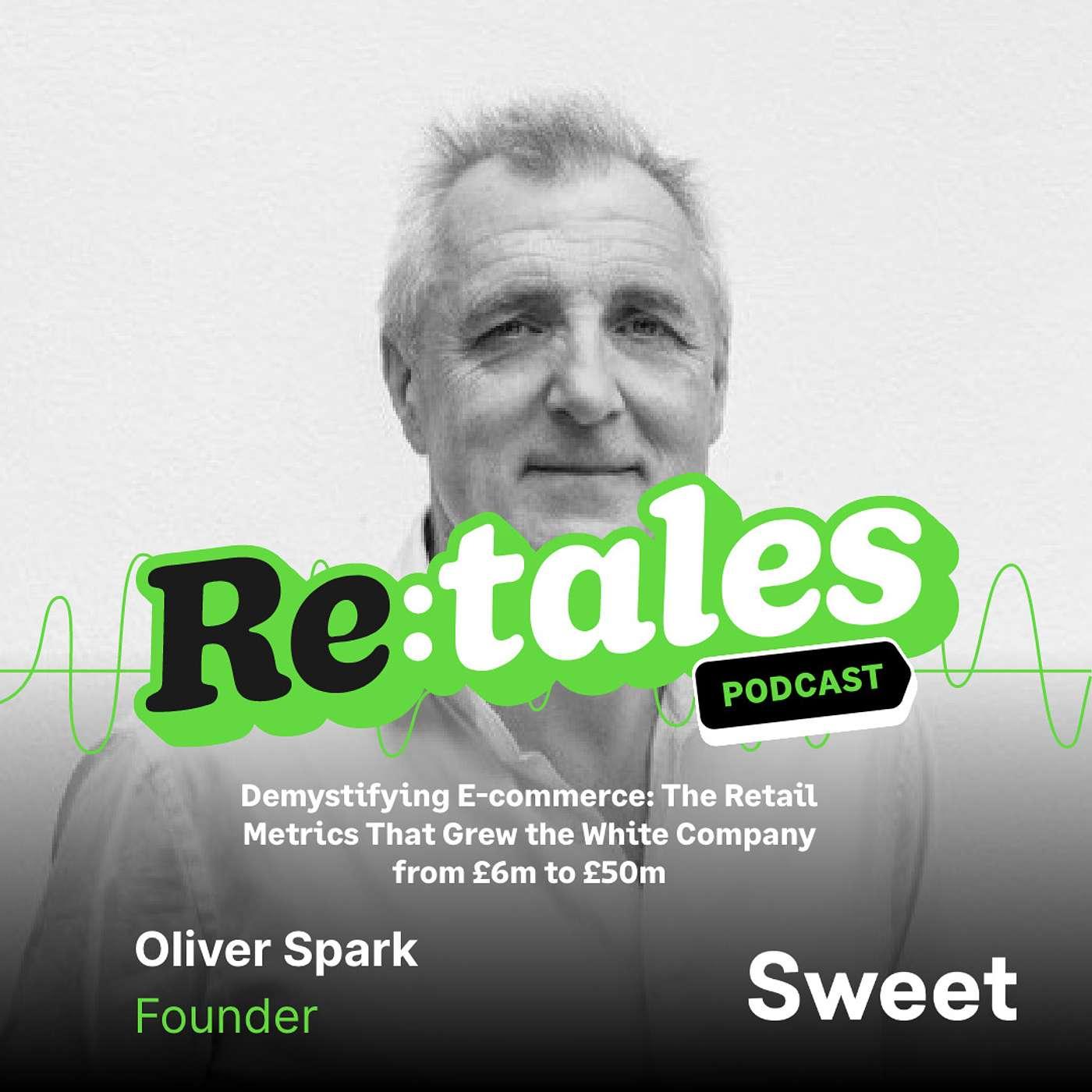
00:00:14.894He's the founder at Sweet Analytics and he ran the white company for over six years, growing them from a six to 50 million pound business over that time.
00:00:14.894 -->
00:00:26.580This episode is really worth your time because Oliver's philosophy on customer metrics is really fascinating and he's talking about the key numbers every e-commerce entrepreneur should be focusing on.
00:00:26.580 -->
00:00:38.066We also discussed the challenges and parallels between retail and technology businesses and how Oliver's personal journey, including his battle with leukemia, shaped his approach to data-driven decision-making.
00:00:38.066 -->
00:00:48.524A my personal favorite part of the interview was how he explained that merchandisers and marketeers really do need to be best of friends, and you should always be thanking your merchandiser.
00:00:48.524 -->
00:00:50.509So enjoy the episode.
00:00:50.509 -->
00:00:53.101And from Bright Pearl, this is Retails.
00:00:57.100 -->
00:01:08.453Welcome to Retails e-commerce growth stories, where we unveil captivating tales of triumph, hard-earned lessons and the secrets to success in retail and e-commerce.
00:01:08.453 -->
00:01:20.971Join us as we sit down with e-commerce titans, disruptive challenger brands and industry experts to explore winning strategies, market and leadership insights, and future-shaping trends and innovations.
00:01:20.971 -->
00:01:29.963From AI to venture capital, global expansion to automation these powerful conversations will fuel your growth trajectory.
00:01:29.963 -->
00:01:33.691We believe every story contains valuable lessons.
00:01:33.691 -->
00:01:37.545Retails is your ultimate destination to uncover them.
00:01:37.545 -->
00:01:40.691Now to our host, caroline Baldwin.
00:01:42.060 -->
00:01:51.811My guest today is Oliver Spark, an experienced multi-channel retailer and founder of Suite Analytics, a game-changing platform for customer and marketing analytics in the retail industry.
00:01:51.811 -->
00:02:02.612Oliver's experience stems from scaling the white company from a £6 million business to a £50 million business and his deep understanding of the crucial numbers driving e-commerce success.
00:02:02.612 -->
00:02:11.669With a background in finance and private equity, Oliver brings a unique perspective to the table, having experienced both triumph and failure in the retail industry.
00:02:11.669 -->
00:02:13.742Oliver Spark, welcome to Retails.
00:02:13.742 -->
00:02:14.764How are you doing today?
00:02:15.247 -->
00:02:16.790I'm very well, caroline, nice to see you.
00:02:17.300 -->
00:02:19.223Nice to see you, too Nice to see you.
00:02:19.223 -->
00:02:24.521Talk to me a little bit about your journey to Suite Analytics.
00:02:24.521 -->
00:02:28.371I've read here that it came about as a life-changing event.
00:02:28.371 -->
00:02:41.306Having battled with leukemia in 2015, which I'm so sorry you had to go through but from the perspective of that point in your career, how do you feel that this experience influenced your decision to create your business?
00:02:41.306 -->
00:02:42.870Tell us a little bit about your story.
00:02:43.379 -->
00:02:48.217Yeah, it was definitely the formative thing for me doing a startup.
00:02:48.217 -->
00:02:51.145I'd done a number of other businesses over time.
00:02:51.145 -->
00:03:00.314I probably spent the previous 20 years being a retailer and then I did unfortunately have leukemia and that obviously puts a bit of a slowdown on life.
00:03:00.314 -->
00:03:03.906I had the year and a bit off recovering from that.
00:03:03.906 -->
00:03:13.115I suppose, like many people, when they slightly look over the parapet, you start thinking about a few other things and what I might do differently.
00:03:13.115 -->
00:03:22.484One of the things I thought about was I've always quite liked what I really liked doing in life is driving businesses.
00:03:23.006 -->
00:03:26.878I originally started my career right back at the beginning as an accountant.
00:03:26.878 -->
00:03:29.467I was at Price World House.
00:03:29.467 -->
00:03:32.879I've been an accountant, I've been a marketer, I've been a retailer.
00:03:32.879 -->
00:03:43.685I felt that those things I'd learned across that period particularly had given me a particular set of experience.
00:03:43.685 -->
00:03:59.009The real trigger for me deciding to do sweet analytics was there being one business that had very much come to what I was referred to as the middle-class mail order pack, which was white company Tiriot, bowdoin, sweaty, all of us.
00:03:59.009 -->
00:04:07.050They were the people who came and taught us how to use data better.
00:04:07.050 -->
00:04:08.611From that being honest, I wasn't an agency.
00:04:08.611 -->
00:04:09.453I had always loved.
00:04:09.453 -->
00:04:14.763I slightly, stupidly or inadvertently, thought I could do a better job.
00:04:14.763 -->
00:04:17.403That's what set me off into doing sweet.
00:04:19.047 -->
00:04:19.468Amazing.
00:04:19.468 -->
00:04:22.536Tell our audience a little bit about Sweet and what you're doing there.
00:04:22.685 -->
00:04:25.050Yeah, so we work for SMEs.
00:04:25.050 -->
00:04:31.752We are in is a customer marketing analytics platform, so we effectively I mean, what are we trying to do?
00:04:31.752 -->
00:04:32.995We're we really?
00:04:32.995 -->
00:05:00.045I think I probably understand that not every retailer or every brand is as interested in numbers as I am, and so, effectively, in Sweet, we're trying to make it really easy for you to get to the numbers that really matter and to be able to do that really simply, and then, from that again, we're wanting to really make people understand which bits matter so that, effectively, they can make better decisions and grow their businesses faster.
00:05:00.045 -->
00:05:08.555I'm really conscious that quite a lot of people want to be sort of told what to do rather than to dig through every.
00:05:08.555 -->
00:05:13.857I may think my dashboard is beautiful, but actually it's getting to what you do.
00:05:13.857 -->
00:05:15.884That's really the key thing for most retailers.
00:05:17.129 -->
00:05:21.062Yes, and retail has been talking about data for many, many years.
00:05:21.062 -->
00:05:22.911But it's all well and good saying you need the data.
00:05:22.911 -->
00:05:35.608It's about getting getting the right data and then using that data in the most appropriate way, and I have down here that your philosophy is unless you understand your customer metrics, you don't know how to run your business, which clearly comes from experience, right?
00:05:35.608 -->
00:05:37.464So tell me a little bit about that experience.
00:05:38.187 -->
00:05:40.651Yeah, I suppose, and that really did begin at the white company.
00:05:40.651 -->
00:05:48.326So and it came from you know me actually having a very simple objectives when I joined as MD of the white company, I had to.
00:05:48.326 -->
00:05:49.810I had a five year deal.
00:05:49.810 -->
00:06:06.870I had to grow the white company at 40% a year and I got rewarded in equity for growing top line and I got rewarded in bonuses for growing profits and as the two disciplines of life, understanding that how those two interplay is is pretty crucial.
00:06:06.870 -->
00:06:20.079So you know, even I could do my spreadsheet that went six times, 1.4 times, 1.45 times, and I don't think I really understood what I had to do in order to achieve that.
00:06:20.565 -->
00:06:38.017And it was only when, after about a year and a bit, where we had a consultant called Jim Fulton, who's a well-known consultant in America, he produced you know what at that point called the magic spreadsheet, because it was finally when I understood how a business, an econ business, grew.
00:06:38.805 -->
00:07:06.747And so that was the sort of penny drop moment for me that you know, unless you understood how your customers, you know you're recruited, and the key questions I always ask people is you know, do you know how many new customers you need to recruit in order to achieve your goal, because that is the number one number, because that then drives probably how much marketing money you have to spend and it also drives what the future profitability of your business is depending on.
00:07:06.747 -->
00:07:09.192You know how those customers repeat or not.
00:07:09.192 -->
00:07:15.514So that was the you know, but I, to be honest, I couldn't have done what I did without that spreadsheet.
00:07:15.514 -->
00:07:18.170We have it in our platform now as they're called the growth model.
00:07:18.170 -->
00:07:26.490But you know, I really I don't really understand, understanding about it, but I really don't understand how people think they can grow if they don't understand what those metrics are.
00:07:28.033 -->
00:07:30.447That's really interesting and when you're at the White Company.
00:07:30.447 -->
00:07:38.240In the early 2000s you did increase the business from 6 million to 50 million, so you were clearly acquiring a few new customers over that period, correct?
00:07:38.240 -->
00:07:40.548It was a really interesting time of growth.
00:07:41.250 -->
00:07:44.425Yes, I mean, and I think you know, what was really important was that.
00:07:44.425 -->
00:07:51.273You know, having a customer forecasting model doesn't solve your problems, it just makes you aware of what the challenges are.
00:07:51.273 -->
00:08:01.050So, you know, my issue was that I, you know, first year I could recruit enough customers and I, you know we could do that, and I could do that at the amount we could afford.
00:08:01.050 -->
00:08:12.233And then I hit a ceiling where I couldn't, you know, at that point we could recruit 75,000 customers and I could recruit them at a loss, because I understood how quickly I got the money back over that.
00:08:12.233 -->
00:08:21.350But you know, I then had a problem because, you know, if I couldn't recruit more customers, then you then have to start asking yourself what other metrics can you move?
00:08:22.494 -->
00:08:25.384And particularly, you know, for us, you know, there are only two metrics.
00:08:25.384 -->
00:08:26.971It's, you know, average order value.
00:08:26.971 -->
00:08:31.230How much can I get them, a customer, to spend, and then how often can I get them to spend?
00:08:31.230 -->
00:08:35.567And once you, you know, begin to just ask questions around those three metrics.
00:08:35.567 -->
00:08:41.744That's really how, in my opinion, you can work out how to grow a business.
00:08:41.744 -->
00:08:54.260And our problem was that, you know, when I did my spreadsheet and I kept out at 75,000, then we had to start, you know, pulling the other levers in order to make the business grow.
00:08:54.260 -->
00:09:00.402And you know, those other levers, just at very sort of top line, are product and channel.
00:09:00.402 -->
00:09:02.296They were the first ones we went for.
00:09:03.442 -->
00:09:07.991And at that point in the business, which lever was it that really helped catapult that growth?
00:09:10.244 -->
00:09:11.426It was both those two.
00:09:11.426 -->
00:09:12.408So product was key.
00:09:12.408 -->
00:09:20.461So if you think you're a bed linen business, you have great average order values and you generally have rather lower repeat rates than you need.
00:09:20.461 -->
00:09:22.726So that's a good bit to have a business.
00:09:22.726 -->
00:09:25.251But we were fortunately popular for what we did.
00:09:25.251 -->
00:09:31.761So what we really did to change those metrics the bit of how much more value could we get from each of those.
00:09:31.761 -->
00:09:34.032We introduced additional product categories.
00:09:34.032 -->
00:09:43.342So that was baby, that was gift, that was eventually coding, and obviously those additional product categories changed those other fundamental metrics.
00:09:43.825 -->
00:09:48.820So that was the first lever that we pulled and we didn't always get it right.
00:09:48.820 -->
00:09:53.006We did garden furniture and that was an absolute disaster.
00:09:53.006 -->
00:10:06.229So what I think is really important about the product lever is that you really understand your consumer needs to understand why have I got permission to sell to X to them?
00:10:06.229 -->
00:10:09.881Because otherwise they don't understand where the fit is with the brand.
00:10:09.881 -->
00:10:10.943And we were lucky.
00:10:10.943 -->
00:10:13.971We got that sort of development to the fit really well.
00:10:13.971 -->
00:10:15.942So that worked really well.
00:10:16.583 -->
00:10:26.854So product lever was the first one for changing the numbers and then the second was channel and that really that was very different then from what it is now.
00:10:26.854 -->
00:10:29.000At that point.
00:10:29.000 -->
00:10:37.826We were early internet, we were a mail order catalogue and those are lovely direct channels, but we hadn't done shops.
00:10:37.826 -->
00:10:56.573And the real penny drop moment for me was there was a very successful business in America called William Sonoma and someone came over from William Sonoma was speaking at a conference and they told us that if you had one channel, you got $180, you had two channels, you got $240, and three channels, you got $360.
00:10:56.573 -->
00:11:03.081And that was a hallelujah moment for me because that said, right, well, what do I need to do to get more value out of these customers?
00:11:03.081 -->
00:11:04.884Is I need to give them more channels.
00:11:04.884 -->
00:11:12.729So we started opening shops and so that was the lever that really we really drove and really made a difference to that.
00:11:13.210 -->
00:11:20.201But I suppose in the current market, having moved on to it into a more digital no digital first stage, it's the same thing.
00:11:20.201 -->
00:11:27.167You've got channel levers and now it may be Amazon rather than you know, rather than the shops, but it's exactly the same principle.
00:11:27.167 -->
00:11:30.833You need to be thinking about what channels can you add?
00:11:30.833 -->
00:11:37.352And the blurring of marketing channels and shopping channels is getting ever, ever more blurred.
00:11:37.352 -->
00:11:40.748So in the States, you can have Instagram, you can shop, you can TikTok shop.
00:11:40.748 -->
00:11:43.020So channel is the other point.
00:11:43.020 -->
00:11:46.410More channels you offer people, the more they'll shop, and that's really important.
00:11:47.221 -->
00:11:50.576And those are the levers that you would need in today's market, as you say.
00:11:50.576 -->
00:11:57.929Going back to the metrics, Do you think you would be looking at different metrics today that if you're at the white company right now then you would have back then, or would they still be the same?
00:11:58.801 -->
00:12:06.211The fundamental metrics never change and I suppose that's really being rather old-fashioned about these things, but you know it is the same old things.
00:12:06.211 -->
00:12:07.658Can I have more customers?
00:12:07.658 -->
00:12:08.721Can I get them to shop more?
00:12:08.721 -->
00:12:11.388Can I get them to spend more when they do shop?
00:12:11.388 -->
00:12:15.224So you know, none of that changes in that as a fundamental.
00:12:15.224 -->
00:13:05.649So of course there are a whole range of other metrics that matter, but those fundamentals don't change and you know, related to that, you've got customer lifetime, value and cost to our customer, and those are the absolute fundamental metrics that you know all businesses really need to have a grasp of, in my opinion to the right funding options for your business and attracting investors.
00:13:06.139 -->
00:13:07.222Retails has you covered.
00:13:07.222 -->
00:13:10.409Secure your spot now at brightpolecom.
00:13:10.409 -->
00:13:12.884Forward slash retails dash takeover.
00:13:12.884 -->
00:13:16.673Spaces are limited, so act fast and we will see you there.
00:13:16.673 -->
00:13:22.830So you've now gone into a technology business.
00:13:22.830 -->
00:13:23.673Talk to me.
00:13:23.673 -->
00:13:28.765What are the similarities that you've seen between the retail world and the tech startup world?
00:13:29.989 -->
00:13:34.604Gosh, I suppose it's a bigger jump than I probably realized when I started.
00:13:34.604 -->
00:13:42.743When I started sweet, I think I'd never done true startup and I think you know it's.
00:13:42.743 -->
00:13:45.369It's a very different world doing a true startup.
00:13:45.369 -->
00:13:46.731You've got no momentum.
00:13:46.731 -->
00:13:49.804So you know, if you don't get out of bed there's no business.
00:13:49.804 -->
00:13:58.892I started it with a with a partner and you know again, you know how people react to to a startup is very different.
00:13:58.892 -->
00:14:00.383He found it very difficult.
00:14:00.383 -->
00:14:07.243He had worked for Google, he was used to big company, clever people and you know that just wasn't.
00:14:07.243 -->
00:14:10.332You know, startup environment wasn't what he was used to.
00:14:10.332 -->
00:14:14.846So I started it with two of us and then then I became a sole founder.
00:14:14.846 -->
00:14:21.847But I think it's, I think, the challenges of any business at different stages.
00:14:21.847 -->
00:14:24.120It doesn't really matter if it's a retail or a tech business.
00:14:24.120 -->
00:14:38.673There are a whole lot of different, different challenges, but I think the biggest challenge is is really about proper startup compared to businesses at various sizes and I've done business at various different sizes, but startups definitely the hardest.
00:14:39.816 -->
00:14:43.807So, yeah, that's a lean mentality and quick, agile thinking.
00:14:43.807 -->
00:14:49.265So what are some of the new skills that you've mastered in the process of setting up this technology startup?
00:14:49.746 -->
00:14:49.988Go ahead.
00:14:49.988 -->
00:15:01.684I think survival, without being sort of over sort of thing I've had sweet for five years now, like other businesses.
00:15:01.684 -->
00:15:12.706We've had funding challenges, we've had crises, we've survived crises and I think it goes back to the real thing is just knowing you can't give up.
00:15:12.706 -->
00:15:32.847I'd done one other startup early on in my career where I did it as a sort of side gig and I think the real learn for me is that unless you're 100% focused and the precipice is just over the step or two away, it's just so much you don't have to face it.
00:15:32.847 -->
00:15:46.182And I think solving the problem comes from having that absolute sort of fear of failure and the sort of no bottom that comes with a startup and that's just very different from other.
00:15:46.182 -->
00:15:52.687When you work for a big business, the photocopier works, the computer works, all that happens.
00:15:52.687 -->
00:15:54.038It doesn't when you go to startup.
00:15:55.014 -->
00:15:56.761Those things you really do take for granted.
00:15:56.761 -->
00:16:04.065I suppose there was some comfort in the fact that you are still selling to retailers, so you haven't left your previous world completely behind.
00:16:04.065 -->
00:16:08.546Talk to me a little bit about seeing your clients and how it is being on this side of the conversation.
00:16:09.015 -->
00:16:14.182Yeah, I think I'd never been agency side in inverted commas, so that's definitely different.
00:16:14.182 -->
00:16:32.427I suppose I hadn't realised that people didn't return my phone calls and that everyone didn't want to speak to me, when perhaps I've been lucky enough always to generally work for businesses where I'm CEO or whatever and one has that luxury of things.
00:16:32.427 -->
00:16:35.744And it's quite different when you get the other side.
00:16:35.744 -->
00:16:42.721Fortunately I had enough friends and network to get us going, so that does make a difference.
00:16:42.721 -->
00:16:46.687But I think the real difference is you learn very quickly.
00:16:46.687 -->
00:16:58.126Having been lucky to be on brand side where people want to talk to you, it's well different when you're on agency side and it's definitely a harder gig.
00:16:59.495 -->
00:17:04.644It's a tough skin, definitely needed, but also having that insight must be really important.
00:17:04.644 -->
00:17:09.154And talking of that insight, you've had non-executions before in search.
00:17:09.154 -->
00:17:16.579I'd love to get your opinion, potentially for people out there that are thinking of doing something similar, that with your retail experience.
00:17:16.579 -->
00:17:27.563If you wanted to join a retail business as a non-executor, or potentially even a co-founder, what kind of questions would you be asking of that business to assess if it is the right fit for you?
00:17:28.015 -->
00:17:43.788Yeah, I think the non-exec role is really interesting one and a difficult one, and I know lots of people want to transition into that and I think it's a I mean, I've had it both from a sort of operator side and from a non-executor side.
00:17:43.788 -->
00:17:56.424I think you have to be really clear about what you want from the non-exec, because most of us have only got about five things that we know, and if you've got some non-exec, they've used them up after about three board meetings.
00:17:56.424 -->
00:18:16.227So I think it's you have to be really clear what a non-exec can bring to you, and particularly what you see that as an ongoing thing, because otherwise you can have people and it's very nice they come to your board meeting, but unless they're truly adding value, I think so.
00:18:16.227 -->
00:18:30.365I think anyone who's really contemplating and I may not have given the most helpful insight there into maybe a slightly putting off type thing, but I know and I have my own board et cetera it's really clear that we you don't just want to.
00:18:30.365 -->
00:18:31.954So I want people to turn up to a board meeting.
00:18:31.974 -->
00:18:41.782You want people who are going to add some value, and I think anyone thinking about going down a non-exec route needs to be really clear about what value can they add in the short term?
00:18:41.782 -->
00:18:47.541And then, really, what is their ongoing thing and sometimes they're ongoing can be mentoring.
00:18:47.541 -->
00:18:48.865It can be support for the founder.
00:18:48.865 -->
00:18:50.800There are lots of soft things.
00:18:50.800 -->
00:19:02.307It's not just ideas and things like that I think the non-exec can bring, but I think it is really important to do both sides to really get to understand what they want.
00:19:02.307 -->
00:19:08.099If the founder just wants someone to talk to lucky non-exec, that's great and then maybe they've got that relationship.
00:19:08.099 -->
00:19:09.580But I think it's certainly.
00:19:09.580 -->
00:19:13.925I think what you both want is the question I would really be asking.
00:19:15.519 -->
00:19:17.124And what has that role brought to you?
00:19:17.124 -->
00:19:22.196What have you learned from that position rather than being involved in the business like an MD at White Company?
00:19:24.039 -->
00:19:27.945I think it's just, it's also that bit of just not being, you know, in charge.
00:19:27.945 -->
00:19:45.492You know, as a non-execute you can very nicely turn up and you can suggest all sorts of ideas and whether they follow them or not, and I think the other actually the bigger if I'm sorry, I'm being slightly critical of non-execute but the biggest fault in non-execute is to be able to throw in an idea which sounds very clever and you know.
00:19:45.492 -->
00:19:52.000And then actually you know the day-to-day running of the business that you know either does or doesn't fit in with that.
00:19:52.000 -->
00:19:57.612And there's a particular topic close to my world which is marketing attribution.
00:19:58.401 -->
00:20:07.275And you know marketing attribution, I think you know every non-execute wants to ask the marketing director, you know, can you justify your marketing spend?
00:20:07.275 -->
00:20:10.288And you know that's a really good question.
00:20:10.288 -->
00:20:28.440But unless you actually understand what tools, what things can happen in order to answer that question, then it's a very clever question, leaving with the marketing director of a problem who probably goes to their agency because marketing director, would you respect, probably can't answer, the agency certainly has no answer.
00:20:28.440 -->
00:20:36.835So they then suggest whatever the latest platform that allows everybody to feel good about themselves but actually to make no better decisions.
00:20:36.835 -->
00:20:45.575So I think you know for any non-execute, it's really important to you know, really be sensitive to what the what the exact team can actually do and deliver.
00:20:46.826 -->
00:20:49.880So you've touched on marketing attribution being very close to your heart.
00:20:49.880 -->
00:21:05.160Let's talk a little bit about customer acquisition a bit more, and you are an expert in brand building and I'd love to understand what are some of the most important dimensions of creating a brand that can drive long term success, particularly in retail, but also you're doing it right now with sweet analytics.
00:21:05.160 -->
00:21:09.150So, in terms of brand building, what are the most important metrics?
00:21:10.064 -->
00:21:13.689I think it's those two it's customer lifetime value and cost to acquire a customer.
00:21:14.059 -->
00:21:23.540So, going back to the same fundamental model that I talked about at the beginning, you know if you Don't understand what the lifetime value of it is, so you know.
00:21:24.041 -->
00:21:30.307For instance, you know you may be able to have a brand that has an average order value I'm talking about Ecom here of 30 pounds.
00:21:30.307 -->
00:21:40.375I personally I don't like brands that have an Iov of less than about 50 pounds because it just doesn't leave enough in the P&L for people to invest in marketing properly.
00:21:40.375 -->
00:21:54.413But you know that's OK if you then have a great repeat rate, and so what really matters is that you are making your decisions at marketing investment level on customer lifetime value, not on average order value.
00:21:54.413 -->
00:22:13.009But you know, the worst type of business is a low Aov, low repeat, because it just doesn't allow you enough marketing money to scale fast and unfortunately there are very few businesses that don't need marketing money poured in the pot to go faster so that and cost to acquire a new customer.
00:22:13.009 -->
00:22:20.673You know you really do have to know how much money you can afford to spend and how much money you are spending.
00:22:20.673 -->
00:22:22.946Both of those are absolutely key.
00:22:23.980 -->
00:22:31.452Have you got any examples maybe some custom acquisition strategies that have worked really well for you in the past, and examples day to day?
00:22:32.760 -->
00:22:32.961Of course.
00:22:32.961 -->
00:22:34.980I suppose, as you say, I sit in two worlds.
00:22:34.980 -->
00:22:44.450I sit and look at other people's e-commerce businesses all the time and then I try and run my own SaaS business off the back of that.
00:22:44.450 -->
00:22:55.791I suppose you know, taking my own SaaS world as the start point of that, I think you know I speak to a number of founders.
00:22:55.791 -->
00:23:00.652I'm lucky enough to have some shared investors with other SaaS businesses.
00:23:00.652 -->
00:23:28.570I have a quite good network of other SaaS businesses and all of us are trying the same things and whether that's email outreach or LinkedIn or paid advertising or networking or events or even doing podcasts, you know there is just no I've took my own word there just isn't a magic answer and you just, I think, helping, you know, talking to each other, picking up little techniques.
00:23:29.050 -->
00:23:36.907You know just making that 10 percent change or small change can make a big difference To how, how your you know your own metrics go.
00:23:36.907 -->
00:23:58.147But you know, even my SaaS business, you know I've got a board meeting next week and everyone I know is wanting to discuss, you know, what are we doing with our free product and why are we recruiting people at such a low revenue when actually surely guys it's, you know much easier to to recruit much bigger customers and I think often you know businesses like mine face that challenge.
00:23:58.147 -->
00:24:00.814You know where and where in the funnel.
00:24:00.814 -->
00:24:08.231So there are lots of small businesses and it'd be great, you know, if I could get thousands of small businesses paying me a small amount of money, then that's hallelujah.
00:24:08.231 -->
00:24:15.842Or maybe I should be going a bit further off the pyramid and getting fewer, spending more, and that's an equation I think all you know.
00:24:15.842 -->
00:24:21.929All SaaS businesses definitely I know that face and particularly whether you want to have a free model or not have a free model.
00:24:23.751 -->
00:24:26.201And let's get into discussing inventory.
00:24:26.201 -->
00:24:32.039So what were some of the biggest inventory management challenges that you faced over the years and how have you addressed them?
00:24:32.039 -->
00:24:35.920It's such a tricky topic for retailers, especially at the moment.
00:24:36.430 -->
00:24:36.932Yeah, I think.
00:24:36.932 -->
00:24:43.869I mean inventory is the absolute backbone of any e-com brand and I spoke.
00:24:43.869 -->
00:24:47.298One good thing about running a SaaS business is one doesn't have inventory in the same way.
00:24:47.298 -->
00:24:49.472So that's an absolute joy.
00:24:49.472 -->
00:24:59.939But I think, even going back to my white company experience, I was very lucky the white company had already bought into this concept of merchandisers.
00:24:59.999 -->
00:25:13.246Merchandising and merchandisers are the absolute backbone of any retail business and they're the least thanked, because when you're out of stock you bang them on the head.
00:25:13.246 -->
00:25:17.380When you're overstocked you bang them on the head and you never thank them when they get the right amount of stock.
00:25:17.380 -->
00:25:20.655So it's a really thankless task.
00:25:20.655 -->
00:25:26.452But I cannot express how expensive it is to getting your inventory wrong.
00:25:26.452 -->
00:25:28.741Sometimes we even a sweet.
00:25:28.741 -->
00:25:36.722We don't take clients on from a marketing perspective because we go, to be honest, you're so all over the place on merchandising and product strategy.
00:25:36.722 -->
00:25:43.982Get that right before you want to talk about marketing, because otherwise it's just not.
00:25:43.982 -->
00:25:48.278You're not aligned, and I was very lucky.
00:25:48.299 -->
00:26:05.373I was lucky that those disciplines were in before I arrived, and so that's something I've always taken with me because it's really hard and getting out of stock when you're long is difficult and I think there's some really interesting challenges at the moment.
00:26:05.693 -->
00:26:24.153Pay digital algorithmic bidding is probably likely to drive peaks because it likes to maximize in on what's working and that certainly doesn't necessarily work to your stock profile.
00:26:24.614 -->
00:26:32.982So I think there's a really interesting challenge and I've recently come up with this idea and this may or may not be useful, but I really don't.
00:26:32.982 -->
00:26:43.991If I was going back to that point where you never thanked the merchandiser, you never thanked the merchandiser, but they're actually not responsible for some of the key drivers.
00:26:43.991 -->
00:26:46.979That actually mean whether they bought the same thing.
00:26:46.979 -->
00:26:57.836So I think if I was responsible for a retailer again, I would make the merchandise responsible for paid digital, because then they could be responsible for both sides.
00:26:57.836 -->
00:27:04.175And I think that I sort of look back at my career and I think, god, that feels a bit unfair.
00:27:04.175 -->
00:27:20.316You give all the money to one person who's not responsible and you beat up the other one, and then their own levers are on a Monday when they go down the spreadsheet and you haven't sold any yellow t-shirts is we're going to put a 30% discount on, and then it's really tough.
00:27:20.316 -->
00:27:23.923But I don't think there's alignment between marketing and merchandise.
00:27:24.730 -->
00:27:37.878That's really interesting, especially today, when tomorrow something could go completely viral on TikTok about a certain handbag at a high street retailer that they hadn't really thought was going to be a big, big seller.
00:27:37.878 -->
00:27:44.981And then they're suddenly out all across the country and everyone's kicking themselves and beating the merchandise, are over the head and it's such a thankless roll.
00:27:44.981 -->
00:27:47.137That's a really interesting point.
00:27:47.198 -->
00:27:50.973I think it's a thankless roll, but when those kind of luck moments, you just have to go.
00:27:50.973 -->
00:27:58.939Well, maybe I'm unlucky, but just on day to day, most merchandising decisions are taken six months beforehand.
00:27:58.939 -->
00:28:05.859Someone's given you some number they made up and they haven't really concentrated on very much at the time, and I think it's.
00:28:05.859 -->
00:28:19.987And then you have to, as a merchandiser, work out whether it's going to be blue or yellow, and I think it's a really, really tough job which probably doesn't get enough focus or often sorry, not often doesn't.
00:28:19.987 -->
00:28:25.522Obviously, clearly, many people do this very well but often doesn't get sufficient focus.
00:28:26.509 -->
00:28:34.209So the key takeaway here for me is always thank you, merchandise, I'm guessing, and making sure that keep them happy, maybe you come from that background, I don't know.
00:28:34.229 -->
00:28:44.553But yes, it's their key Because, again, your stock is money and it's no good if your warehouse is full up with stuff you can't sell.
00:28:45.654 -->
00:28:53.320No, of course, and Oliver, we're coming to the end of our conversation at the moment, so I would love it if we could just do a quick rapid fire round.
00:28:53.320 -->
00:28:58.020So make sure you're kind of stretched and limbered and ready to answer questions quickly, if you think.
00:28:58.020 -->
00:28:59.294Exactly so.
00:28:59.294 -->
00:29:01.804Number one Netflix or Disney Plus.
00:29:01.804 -->
00:29:03.971What's being played most in your household at the moment.
00:29:04.231 -->
00:29:06.435Netflix, definitely Netflix.
00:29:06.936 -->
00:29:09.803And what do you do to stay mentally and physically fit?
00:29:09.803 -->
00:29:14.924Appellate on Appellate on Nice, nice, morning or evening.
00:29:15.125 -->
00:29:16.048Morning has to be morning.
00:29:16.048 -->
00:29:18.055No chance of doing evening done by the evening.
00:29:19.540 -->
00:29:22.371And talking of mornings, what is your Sunday morning guilty pleasure?
00:29:24.896 -->
00:29:25.538Playing tennis.
00:29:25.538 -->
00:29:28.003I play a lot of tennis, so that's always less.
00:29:29.166 -->
00:29:33.676And if you had the attention of the Prime Minister for five minutes, what would you ask them for?
00:29:35.820 -->
00:29:42.686I would ask them for more help for small startup businesses, being rather in the filing line of that.
00:29:42.686 -->
00:29:49.762Actually, there's some great schemes R&D credits and all sorts of great schemes but I think you know I now employ 20 people.
00:29:49.762 -->
00:29:52.159You know, before I started this I employed no one.
00:29:52.159 -->
00:29:59.230Jobs are created out of, you know, people doing startups and so anything I think the government do to help those kind of things.
00:29:59.230 -->
00:30:01.877I think I'd be banging that drum today.
00:30:02.820 -->
00:30:03.603Most definitely.
00:30:03.603 -->
00:30:10.340And going back to metrics, what if you had to just choose the one metric for retailers to obsess over right now, today?
00:30:10.340 -->
00:30:11.262What would that be?
00:30:11.890 -->
00:30:12.953Customer lifetime value.
00:30:14.538 -->
00:30:19.252And finally, what is the one thing you know today that you wish you'd known at the beginning of your career?
00:30:20.536 -->
00:30:28.980The startup is really rewarding and really tough, and it's probably a lot easier doing it when you're 25 than when you're 55.
00:30:30.266 -->
00:30:32.410Oliver, it's been a pleasure speaking with you today.
00:30:32.410 -->
00:30:33.951Thank you so so much for your time.
00:30:34.971 -->
00:30:35.931Great, I hope that was helpful.