
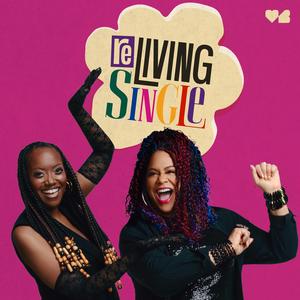

00:00:04
Speaker 1: Hi, Erica.
00:00:05
Speaker 2: Girl, what's going on? Where are you? I'm in Puerto Rico.
00:00:10
Speaker 1: I want to tell you that you are looking absolutely gorgeous. Your skin is skinning.
00:00:15
Speaker 2: You look wonderful.
00:00:17
Speaker 1: What's your secret?
00:00:18
Speaker 2: You know, it's rest in mind of my business is my secret. And you look good too, Kim. You do. So why are you calling me?
00:00:24
Speaker 1: OK, so I've been thinking.
00:00:25
Speaker 2: Let me just say no right now. No. Don't say no. Don't say no.
00:00:30
Speaker 1: Just listen.
00:00:30
Speaker 2: Just listen up. OK.
00:00:33
Speaker 1: You know how the fans are always asking us all the living single questions, right? Like, you know, is there ever going to be a reboot?
00:00:40
Speaker 2: Is Max and Kyle's baby on Instagram or has it been abducted by aliens?
00:00:46
Speaker 1: So I was thinking instead of answering the same questions over and over and over again. Yeah. Why don't we tell our story, how Living Single got started, all the backstage stories?
00:00:57
Speaker 2: Well, I don't know, girl.
00:00:58
Speaker 1: No, Erica, Erica, come on. The fans would love it. The fans would love it. And we would get to talk about the process and our approach to comedy.
00:01:06
Speaker 2: Yeah, and how there was a strategy that great writers, great writers, crew craftsmanship went into that.
00:01:13
Speaker 1: Yes, we could record it in one quick, simple episode. We could just do that anyway.
00:01:18
Speaker 2: You know if we're not going to do it then we need a set we need some lighting whatever we do we're not doing any corny introductions or you know what the show is and all that because if we don't do this let's do it for us let's let's do it for the people i'm starting to feel it.
00:01:32
Speaker 1: I knew you'd come around do your hair get dressed and let's do this i got just the place to do it yes let's do it okay so how much are we telling girl.
00:01:43
Speaker 2: I don't know, because loose lips sink ships.
00:01:46
Speaker 1: All right, well, we got to give the people something.
00:01:48
Speaker 2: Where do we begin?
00:01:49
Speaker 1: Well, at the beginning, of course.
00:01:52
Speaker 2: Right, but we both know the beginning is never the beginning.
00:01:55
Speaker 1: So there's the story before the story. So we just tell that story, and then we'll get into the story.
00:02:01
Speaker 2: Okay, I'm with it. So how do you think we're going to do it? Because I don't want to stand here the whole time.
00:02:05
Speaker 1: Oh, okay. It's a candid conversation with family and friends. You know what we need?
00:02:10
Speaker 2: Where have I heard that before? Oh. Oh. Oh. What? Red table. It's a little red. It's reddish. You've got to be kidding me.
00:02:19
Speaker 1: Candid conversation between friends and family. That was the tagline. And that's what we're going to do. We're friends and family. So this is perfect.
00:02:25
Speaker 2: See? But since you started the Living Single journey, you've got to begin. I mean, so you started way before us. And yeah, so spotlight's on you.
00:02:35
Speaker 1: Oh, I did not know that you literally met the spotlight. That's a little bright. That's a little bright.
00:02:38
Speaker 2: You can't take the pressure.
00:02:39
Speaker 1: Can't take the pressure.
00:02:40
Speaker 2: Okay. It's 1993.
00:02:41
Speaker 1: It is a couple of years after I have been.
00:02:47
Speaker 2: Released.
00:02:48
Speaker 1: Let go. Fired. Fired from In Living Color. Fired from my first job in Living Color. And so I've been, you know, just out there in the world still doing stand-up. I had a couple of holding deals. You know, that's when they give talent money to not do anything while they develop something for you, and then nothing gets developed.
00:03:04
Speaker 2: So you were in purgatory.
00:03:05
Speaker 1: I was in the purgatory of waiting to work again.
00:03:09
Speaker 2: Okay. That's the life of an actor, performer, comedian.
00:03:12
Speaker 1: It's how it goes.
00:03:13
Speaker 2: Okay.
00:03:13
Speaker 1: Right. And I get a phone call one day.
00:03:16
Speaker 2: Let's reenact it.
00:03:18
Speaker 1: Oh, it's my manager, Sinclair. My manager's name was Sinclair. Go figure. Hey, Sinclair.
00:03:24
Speaker 2: Hey.
00:03:25
Speaker 1: Yeah, just sitting around. I'm not doing nothing.
00:03:27
Speaker 2: A meeting? Yeah.
00:03:29
Speaker 1: Warner Brothers. I'm in. And so we go to Warner Brothers to a meeting. I meet with Les Moonves. At the time, it was still called Lorimar, Lorimar Productions.
00:03:39
Speaker 2: That's right. I remember that. And Les Moonves was the president of Lorimar.
00:03:42
Speaker 1: And so I go up to Warner Brothers and this is, you know, I've been taking meetings all along. So like, OK, another meeting. And in this meeting, the executives and Les say that they want to do a show called about women, about black women, about their friendships and relationships and career and sex and, you know, all the things. And they mentioned a very pivotal scene inside of Jungle Fever, affectionately termed the war council scene. So it's a bunch of women sitting around talking about men and what they're doing, what they're not doing right.
00:04:11
Speaker 2: And these are the people at Warner Brothers who have mentioned this scene. And you were in the room with Sinclair, just you and Sinclair.
00:04:16
Speaker 1: Just Sinclair and I, just in this room and all the executives.
00:04:19
Speaker 2: I love this.
00:04:20
Speaker 1: So it's proof that our culture, you know, matters and our culture influences. And they knew that that film and that scene in particular, these women talking was magical. And so I said- I I'd love to do something like that. But if the show is about bashing men, I'm not interested. Now, I realize now that that scene wasn't so much about just bashing men. It was like understanding what men are doing.
00:04:43
Speaker 2: But you were already setting boundaries and telling them what would go down. And that speaks to your integrity and also speaks to how consequential you were already in the world because they called you because you had stood out. on Living Color. So let's just give props to that badass.
00:04:58
Speaker 1: Thank you, thank you. Even though I've been fired. That's a story for another day.
00:05:00
Speaker 2: No, but guess what?
00:05:01
Speaker 1: Right, but that's nice to know.
00:05:02
Speaker 2: Better days coming.
00:05:02
Speaker 1: But I was talent that was sort of being, you know, courted in other places and nothing had landed. So that's nice to know. And it's a nice position to be in to go, like, we may want to create something for you. And I was like, that's great. But if it's about bashing men, I'm not. No, thank you. They were like, OK, got it. Got it. And then they said, by the way, what do you think of Queen Latifah? I was like, I love Queen Latifah. Oh, my goodness. She's amazing. And she and I had just met backstage at a at an award show. And it's interesting. She was in her mirror this way and I was in my mirror this way in the makeup room. And we both turned around. I was like, oh, my goodness, I love you. She said, oh, my goodness, we watched Living Color on our tour bus. And I was like, oh, my goodness, I've been such a fan. And I'm from Brooklyn. You from Newark.
00:05:46
Speaker 2: Hey, girl.
00:05:47
Speaker 1: Reflections of.
00:05:48
Speaker 2: Already the universe is starting to create.
00:05:51
Speaker 1: Yeah, the magic.
00:05:52
Speaker 2: That's the magic. Okay.
00:05:53
Speaker 1: Nice hug. And so I flashed to that moment like, oh my goodness, I love her. And okay, would you like to work with her? I was like, who wouldn't want to work with the queen? This is amazing. I don't even know what this is yet, but I'm a yes. I didn't know that they were having meetings with her at the same time. So they must've said, what do you think of Kim Coles? And she signed off on me.
00:06:12
Speaker 2: Okay, got it.
00:06:12
Speaker 1: So we both approved of each other.
00:06:14
Speaker 2: I love it.
00:06:16
Speaker 1: And I requested that we have somebody black. Like, can we get someone black to create the show? That would be awesome.
00:06:24
Speaker 2: This is a very unique thing because you're talking about the showrunner who's going to just not ideate and develop. But you're also saying we need a certain point of view.
00:06:33
Speaker 1: We need a certain point of view.
00:06:34
Speaker 2: Already still flexing, saying I ain't going to bash. And we need somebody who can tell our story.
00:06:41
Speaker 1: But what's interesting is I wasn't aware that I was flexing at the moment. I just was like, I'm in a space where I'm just going to ask for what I want. I wasn't even aware of the power of that. I didn't walk in like a boss, like I want this and I want that. I was like, it would be really nice if we could get somebody black.
00:06:57
Speaker 2: Kim, that just says you were already a boss. You didn't walk in like a boss. It's in your DNA.
00:07:01
Speaker 1: I understand that now, but I wasn't thinking that.
00:07:03
Speaker 2: But you know who you are when no one's looking.
00:07:05
Speaker 1: Absolutely.
00:07:06
Speaker 2: No one was looking. You didn't even know you were flexing, but you wasn't flexing. That's just your Tuesday. That's Tuesday.
00:07:11
Speaker 1: That's a Tuesday.
00:07:13
Speaker 2: Come on, queen.
00:07:14
Speaker 1: But it's like, if you can ask the question, and this is important to know, because I think that we have this expectation or this desire to be a particular way, not knowing that just being ourselves... is enough sometimes. I didn't know that I couldn't ask for it. So I was just like, why not? Latifah and I were at the same agency. We were both at William Morris. And so it was understood that this was going to be what they call a package. So because you have two, at least two pieces of the pie that are at the same agency, why not keep, try to keep that going.
00:07:45
Speaker 2: If you can. And that's what a package deal is, is that's when an agency has maybe a star and in this case two. And so they start to design the project around existing talent that they represent.
00:08:00
Speaker 1: Right, that way they get to come in with their power, right? So we were given a list of writers who were in the William Morris family. And on that list was Yvette Denise Lee. Each of us met with her separately Latifah and I talked and said, I like her. I like her too. And Yvette was chosen as the one that could have this opportunity to create the show. And she had been at Hanging with Mr. Cooper and she had been.
00:08:28
Speaker 2: With- Different World. Right, right. Yeah, she's been doing it. Right.
00:08:32
Speaker 1: And it was the right time. And young and smart.
00:08:34
Speaker 2: From Stanford.
00:08:35
Speaker 1: Right.
00:08:36
Speaker 2: Philly. She'd had many lives before and also had built her power and reputation. So these are These, again, powerful forces coming together, doing their own. I love it.
00:08:47
Speaker 1: And again, young, younger than me. You know, I was older than all of y'all, actually, which is fun to experience. I was like, I didn't I don't think I had myself together 23, 24 like y'all did.
00:08:57
Speaker 2: So I think you did, Kim, because you wouldn't have been in that room with power unless you had been building when you were in your 20s.
00:09:04
Speaker 1: I get that.
00:09:04
Speaker 2: Again, I just need to give you.
00:09:06
Speaker 1: I'll take the flowers.
00:09:07
Speaker 2: I'm just saying.
00:09:08
Speaker 1: It's important to know I wasn't thinking that at the time.
00:09:10
Speaker 2: I know.
00:09:10
Speaker 1: So I'm not putting it down. I'm just saying that it's important to know that I didn't even know what I had.
00:09:15
Speaker 2: I understand.
00:09:15
Speaker 1: And imagine if I did, then who knows?
00:09:17
Speaker 2: You would have been a demon. I'm glad you didn't know. Keep me humble. Yeah.
00:09:22
Speaker 1: And I'm also saying this to other people who are, you know, growing and learning and building like you don't even know what you what you already have. And so might as well own it and enjoy it.
00:09:33
Speaker 2: Michelle Obama wrote Becoming Becoming. Right. You are in a state of becoming.
00:09:37
Speaker 1: Of course.
00:09:37
Speaker 2: Yes. I love it.
00:09:39
Speaker 1: But I wanted to really make this delineation that I really didn't even know what I didn't know that I already had.
00:09:46
Speaker 2: Right. And so now you've got three powerful people in this room who have built some things beforehand to be in that room. And y'all are starting to do a show.
00:09:57
Speaker 1: And so sitting with Yvette and helping to shape who this character Sinclair, like I said, my manager's name was Sinclair. So spelled differently and really developing who she would be, that she was going to be joyful and light and childlike and a little ditzy, a little of this and all the things. And Latifah was on her end creating her character. And who do I think this is and who... She's an entrepreneur. The magazine's name is going to be Flavor and all these other pieces. And Yvette was also creating all the other characters and all the other pieces that would fit beautifully together. And we know that her vision was powerful female relationships.
00:10:35
Speaker 2: Well, let's talk about a little bit about Latifah to the Khadija character, because she is an entrepreneur. That's linking into Latifah, who she is. She was making something like Latifah's making music.
00:10:50
Speaker 1: Music and movies and a boss.
00:10:53
Speaker 2: Dana was a boss.
00:10:54
Speaker 1: The first of her kind. That day that I met her backstage of that award show, I said to her, I want to be a queen. And she was like, you are a queen. Like she got mad at me.
00:11:05
Speaker 2: So, oh my goodness, I want to be a queen. What?
00:11:07
Speaker 1: You are a queen. She's a powerhouse and has always, you know, from as far as long as we've known her, has always been a powerhouse and has that beautiful balance of power. strong femininity and there's a softness in her. And, you know, we got to see it every day because we worked.
00:11:22
Speaker 2: And played with her. She's the baby of the bunch.
00:11:24
Speaker 1: She really is. She really is the baby of the bunch. There is a sensitivity.
00:11:28
Speaker 2: Yes. Very sensitive. Pisces. Yeah.
00:11:31
Speaker 1: There it is.
00:11:31
Speaker 2: Lord have mercy. Yeah. There it is. There it is. So she's locking into that for Khadija because Khadija is going to be that.
00:11:37
Speaker 1: She's going to be strong and powerful and sensitive in all the things at the same time.
00:11:40
Speaker 2: So you got the three of y'all. You're a William Morris package.
00:11:43
Speaker 1: We're now a William Morris package.
00:11:44
Speaker 2: And now you start thinking about the rest of the cast and the rest of the characters.
00:11:48
Speaker 1: I remember Yvette telling me about Regine and who she was thinking about for Regine. And she said, Kim Fields. And I was like, oh, wow. That's interesting because we had only seen Kim as a child star. I mean, only and ever. And we know that she's growing up.
00:12:07
Speaker 2: And she'd begun doing some other roles.
00:12:09
Speaker 1: No, the public hadn't really gotten a chance to fall in love with her as a grown woman.
00:12:14
Speaker 2: But this is already an icon.
00:12:16
Speaker 1: Every little black girl wanted to be Kim Fields.
00:12:18
Speaker 2: Exactly.
00:12:18
Speaker 1: Right. And she did it so well and she had kept her integrity and kept her energy.
00:12:24
Speaker 2: Mental capacity and everything, which is no small thing. And people attribute it to the business, but it's also to the child, the DNA. It's, you know, something within her that's sort of, you know, the spine of her can take that type of pressure.
00:12:37
Speaker 1: And her mother, you know, Chip Fields didn't play any games whatsoever.
00:12:41
Speaker 2: So she gets it through DNA and everything.
00:12:44
Speaker 1: So I know that she was thinking of her all along. And I was like, oh, this is fun. So I don't know what the casting situation was for Kim. And Kim will come and tell us if she ever comes to visit. Yeah, we got to have her again. Yeah, we got to have her. And so it just all felt good until... It didn't feel good. So Yvette turned on scripts. We were falling in love with what this is going to be. And we got a call saying the final script that was turned in is not what we want it to be.
00:13:08
Speaker 2: Okay, so wait a minute. Okay. Y'all about to lose the show.
00:13:11
Speaker 1: We're about to lose the show because there was a script that was turned in that was not to Warner Brothers' show. Or Fox's liking. It just wasn't what they wanted.
00:13:22
Speaker 2: Wow.
00:13:22
Speaker 1: And they're like, we've run out of time. We've given her notes. She's addressed some of the notes, but it's still not where we need it to be. We're going to have to go. And Latifah and I got on the phone and said... I'm willing to extend my deal if you are. I like this girl, I love this idea, I wanna play and she felt the same way. What do we need to do? And so we requested that William Morris extend our deal so that Yvette would have time to get another script in to get it done.
00:13:49
Speaker 2: Because extending your deal is no small thing. That means that they can grab more time for you. You're exclusive to them. Right. So that means you just can't go shopping anywhere. So you are, in fact, not only investing your time, but you're also taking yourself off the market.
00:14:03
Speaker 1: For a little while longer.
00:14:04
Speaker 2: For a little while longer.
00:14:04
Speaker 1: Because you could go back into the pool, like, well, off to the next show. I want to say we extended our deal just another two weeks or another month. It wasn't a long time, but it was enough so that Yvette could... get another chance to write. So there was another writer.
00:14:18
Speaker 2: A showrunner, and that's an important distinction.
00:14:21
Speaker 1: Yeah.
00:14:22
Speaker 2: So let's say, what is the distinction?
00:14:24
Speaker 1: So you have writers and executive producers, and then you have showrunners. And just as the name sounds, it's someone who is experienced or is being given the opportunity to run the show. That means you are the head honcho. You are running the entire experience. You're going to hire everyone. You're going to oversee the writers. You may write yourself. This is the person.
00:14:47
Speaker 2: Who's really- The buck stops with them.
00:14:49
Speaker 1: And Yvette had not yet had experience as a showrunner. She had had experience as a writer and she was well-loved and well-received.
00:14:55
Speaker 2: An executive producer also, too.
00:14:56
Speaker 1: But not yet as a showrunner.
00:14:58
Speaker 2: Yeah.
00:14:58
Speaker 1: It was decided. that if we give her a showrunner who has experience, who has knowledge, who can come in and just oversee everything, and I'm using that word, I'm using that word, oversee the entire project. If we give her someone who will be by her side through this process, then we'll give it another shot.
00:15:18
Speaker 2: When it's actually about their level of their anxiety, but all they say, okay, let's have an insurance plan, someone who's done it. It takes maybe the pressure a little bit off of Yvette to feel, hey, you know, you've got somebody who's done it and been in the thick, and you hope that the two will get along. You hope. So who was it?
00:15:34
Speaker 1: It was a man named Tom Anderson. Sweet white. White guy.
00:15:39
Speaker 2: As, by the way, most showrunners and writers were.
00:15:42
Speaker 1: Absolutely.
00:15:43
Speaker 2: Yeah.
00:15:43
Speaker 1: And so we got Tom Anderson. Now here's the beauty. And we know that this could go terribly wrong. Now we've got this guy who doesn't fully understand the vision, maybe, who can't fully get into the experience of what these black women want to say. He's a dude. He's a white guy. It's all the things, all the things. However... He understood that Yvette had the vision and Yvette understood it. And he had faith in her and said, I'll be here. I'll be here if you need me. You can ask me whatever questions. And, you know, we'll have to talk to Yvette and find out what happened between the two of them. But whatever it was, he understood his position and he understood the assignment and he let her go. Do what she needed to do. And if you remember, he was there in the beginning and then we kind of never saw him again.
00:16:27
Speaker 2: That's real.
00:16:28
Speaker 1: He was there making sure his hand was there, making sure maybe reviewing the script.
00:16:32
Speaker 2: I bet you he still gets paid on every residual.
00:16:33
Speaker 1: Oh, you know he does because he came in as the showrunner.
00:16:35
Speaker 2: Well, that was a great deal.
00:16:36
Speaker 1: He gets a check.
00:16:37
Speaker 2: Can I get in on that? Can I?
00:16:38
Speaker 1: Shoot. Let me come in and be.
00:16:40
Speaker 2: The actress and be like, you know, I've been here, y'all. You're going to see me fade out and I'm going to still get paid.
00:16:45
Speaker 1: So the most generous thing that he could do is lend his name and his expertise and his vision or whatever he helped her on. Because sure enough, the next script was accepted. And this is the pilot script. And this is what we're going to shoot now. And I think Yvette would say that she's grateful to him for coming in and having that conversation. to go, let me still cook. Let me be over, I'm still going, let me cook. And he understood, let me let her cook.
00:17:11
Speaker 2: Because I know she worked very hard on this script. She tells a story about it being something that she labored over and didn't even sleep for days. So she put it out and then boom.
00:17:20
Speaker 1: She knew what was at stake too. And we all did. We all did. And so that's the beginning of the beginning.
00:17:26
Speaker 2: Right. So you've got another person coming in from William Morris. This package is John Hinton.
00:17:30
Speaker 1: Right. John was a standup and John Hinton was really getting a lot of attention because he was funny and cute and had his own way with words. And then he had done the Johnny Carson show, the Tonight Show, and had just done so well on the show, so well that Johnny Carson invited him over to the sofa.
00:17:51
Speaker 2: It's a big deal.
00:17:51
Speaker 1: It's a big deal for Johnny Carson to say... You are amazing.
00:17:55
Speaker 2: Kingmaker says to new comedian, come over. Now everyone, like you, the spotlight's on him. And that's already telling people this is a talent to watch.
00:18:06
Speaker 1: I do think that John got cast, but I think it was a happy coincidence that he was also part of William Morris.
00:18:12
Speaker 2: But what about his character?
00:18:13
Speaker 1: Listen, here's the beauty about creating a show is that you get to set the worlds that they're in and set the worlds in the future. So we know that Sinclair and Khadijah are cousins. Sinclair is going to move from Minnesota and come work and live with her cousin. We know that Khadijah is a business owner and, you know, she's struggling to make it and make it big. She's got some success and there's more to have. There's more to come. We know that there's this best friend that she knew back in New Jersey whose name is really Regina, but now she calls herself Regine and she's going to be, you know, very bougie and she's going to want to date. She's going to want to meet a man. She wants to meet a man. And we know that we're going to give you a love interest and he's going to be a guy named Overton. By the way, Kyle... Bowser is Yvette Lee Bowser's husband. She names Kyle Barker after him. And guess what Kyle Bowser's best friend's name is?
00:19:09
Speaker 2: Overton.
00:19:09
Speaker 1: There's a real Overton.
00:19:11
Speaker 2: Got it.
00:19:11
Speaker 1: Right?
00:19:12
Speaker 2: And so she gave.
00:19:13
Speaker 1: Him a best friend, Overton. And so we know that this is going to be your love interest. And so we're going to set it up now. So it's all the worlds that you're creating in that moment and all the worlds that you're opening space for. And of course, then you come along and we're going to talk about that.
00:19:25
Speaker 2: Now I'm in the hot seat.
00:19:26
Speaker 1: Now you're in the hot seat. Somebody put the spotlight on her.
00:19:30
Speaker 2: You know, I have an inner glow. You do? Yes, I do. All right. Well, a lot different. You're there from the conception. I'm there as work for hire. If you haven't been there to develop, so they're not developing around you. You're there as a hired gun. So I think of myself as a samurai. masterless samurai. You go around looking for jobs and you have this weapons and skill sets and you're just asking whether they need them or not. And if they do, then you take out your wares and you stay, you know, as long to do the job and then you go on your way. And you go on a journey. And that's what a journeyman actor is, by the way.
00:20:06
Speaker 1: Most actors. Most actors. I've only had a handful of opportunities that were like, this doesn't happen very often. Most of the time, I'm a samurai, too. I'm sharpening my sword.
00:20:15
Speaker 2: Well, that's definitely what I am. So I'm coming in from... New York, except I'm living there. The thing I did before coming to LA for pilot season, which is the season that you come in to audition for new pilots, new shows, is I had been in Jamaica doing a series called Going to Extremes, a one hour show for ABC. We were doctors and we had a fictitious island named Jantique. And in Jantique, I played this character named Cheryl, who was this Boston bougie girl who was a doctor. And I dressed in all the great clothes, but I didn't, I shaved my hair completely off, had just, you know, a natural with very close fade. I was, Ooh, I was looking fly. Cause I just come off of the Cosby show and I'd done the pilot while I was doing the last year of the Cosby show. Everybody knew that the Cosby show was ending in year eight and I had played the character of cousin Pam. So just a couple of quick notes on cousin Pam. I'd been acting since I was 14, discovered at New Freedom Theater, had already done many, uh, series, television series, a lot of things back in the day, especially when you were a particular age, a teenager, you were doing, uh, ABC, uh, afterschool specials. Um, you know, they did a lot of like TV series, like, um, George Washington, The Forging of a Nation. I played Oney, the slave. Patty Duke played Martha Washington. These are huge roles to get. The first role I got was My Little Girl. My Little Girl for Merchant Ivory. Merchant Ivory was an English company that did really highbrow stuff like Helena Bonham Carter, you know, this type of stuff. And they were doing this film. And it got me in, got my sad card, got me going. I'd won it out of hundreds of girls that had shown up for this audition. It was an open call. I just happened to be in a six-week program. And in the fifth week, that movie came to town. And I came in. I was second in line, 5 o'clock in the morning. Did tons of auditions, screen tests. They gave me the role. Boom. There I did it. It came out. Got me on my way doing all these other parts. I finished girls high. I was in Philadelphia High School for girls. My mother had an appointment with an agent. The agent, Gersh, at the time, and they said, we don't represent teenagers. The only other teenager they had was Michael J. Fox. Wow. And they took me, too.
00:22:44
Speaker 1: Okay.
00:22:44
Speaker 2: They said, we think Erica has something. I mean, that's something, right? That's huge. My mother tells that. My mother was like, that's fine. But no smut. She has to stay in school because she told him, I'm not going to be on set with her. I actually have five other children. I'm working two jobs. You know, she had my father, who was a preacher, who was also sick, bleed, you know, a lot. She was like, no, I cannot.
00:23:06
Speaker 1: Did they have all the rules in place then? There was a teacher on set and all that stuff back then?
00:23:10
Speaker 2: Yeah, they did. But it was still kind of a little loosey goosey. Like we had a tutor on set, that type of thing. You go in and out and you didn't even realize how fame starts to distort people. people's version of you. They start to project onto you things and you got to live through that so they can find out who you really are. And teachers, that's the first time I saw that teachers could play your hate. I loved my time at Philadelphia High School for Girls. It's responsible for partly who I am. Freedom Theater is very responsible for like the spine. They were like, y'all come from, you know, kings and queens. You ain't got the right to be tired. You know, like suck it up. Like that suck it up thing you have. That's the suck of the thing that you have. Well, okay, the suck of the thing I have.
00:23:54
Speaker 1: I'm like, what? But now I didn't know where it came from. I was like, why is she being so mean?
00:23:59
Speaker 2: Because Philly is hardcore, too. Let's get it straight. Philly is hardcore. So I come from Arizona. I'm in Philly. I'm having all this stuff come in. And why is that important? Because that's also building the Max character. The Max character doesn't exist outside of Eric Alexander. You know, I'm coming in the door and they're hiring me to play somebody or something I don't know. Remember, I'm Masterless Samurai. So by the time I get there coming off of Cousin Pam, by the way, the biggest show in the world is The Cosby Show. To get... A role on that is like, it's one in a trillion.
00:24:34
Speaker 1: Didn't Camille found you?
00:24:35
Speaker 2: Yeah.
00:24:35
Speaker 1: Bill's wife said, you need to go see this girl.
00:24:38
Speaker 2: That's what I was told. I was doing an off-Broadway play. I'd been doing off-Broadway plays. I'd gone around the world with the Royal Shakespeare Theater doing something called the Mahabharata, which was a nine-hour play. We went around the world. We did the movie in Paris. Je parlais en français, you know, un petit peu. Fantastique. And we come back and everybody's like, you need to keep, I said, I want to go to the Bouffes du Nord in Paris and study with y'all. They said, no, go to the Public Theater in New York. Please. That's where the best stuff is being done. Turns out when I got there, I got cast in a play by the great Joseph Papp, his last play, The Forbidden City. The Forbidden City is headlined by the great Gloria Foster. Gloria Foster, Achille Prince, and Frankie Faison. Oh. Yes. Gloria Foster is one of the best friends of Camille Cosby. And what I was told later on, and I don't know, I'm just saying, allegedly, she came, saw the play, and came home and said to her husband, Bill Cosby, you need to go see Gloria in this play and this girl. The girl was me. I don't think he ever came. What I heard is- He trusted his wife. Well, the thing is, I had gone many times to audition for the Cosby show. Everyone had. That was one of the only games in town. That and I think there was Roseanne and then there was Law and Order. Like if you were young again, there was not many things to, you know. I was there.
00:25:52
Speaker 1: You remember.
00:25:54
Speaker 2: It was like a drought. So I'd gone before but never gotten a role. Promised. Suddenly I get a call one day, can you be at Mr. Cosby's house? And two hours later. And I got there and he made up the role right in front of me. So there's this girl and her name is Pam and she's Claire's cousin, Pam, and makes it up. It says, as far as I'm concerned, you play the role. And in our writers, they'll have their, you know, their thoughts, but you play the role. And that's how I got the role with The Cosby Show. And this has been my life. I've been a series of discoveries from very powerful people who've said you, you, you, you. I wanted to be a scientist. I didn't even accept that I was an actor until I was in my 40s. It just was something I did. Wow. In my mind on the side. Wow. Yeah. Until I got to do the thing I really wanted to do. I started thinking I wanted to be a writer and producer then because I realized I didn't have much power as an actor and I didn't like that. So my first three roles that I got coming out of, first was foster child, prostitute, and slave. So I said, I've got to.
00:27:01
Speaker 1: Hold on. Foster child, prostitute, slave.
00:27:04
Speaker 2: Prostitute and a slave.
00:27:05
Speaker 1: First three roles.
00:27:06
Speaker 2: Wow. And happy to get them. Of course. But if people want to know where we were at, that's a lot of what you played. So I started thinking about writing, producing, but that would come later. Got the Cosby Show. That ended. did going to extremes for ABC, that didn't get picked up, go for pilot season, and then start auditioning. This is one of several auditions, living single. It doesn't have any particular place in my mind. I go in and I audition. And I've gone in an audition for something called Mantis as well. And both of them want me to come back. I'm going to callbacks for both of them. And then it gets to a point where they make you decide how to position them.
00:27:45
Speaker 1: Explain callbacks to people so they understand.
00:27:47
Speaker 2: So you go in for an initial audition and that's when they call you and they're just having people roll through.
00:27:52
Speaker 1: Lots and lots of people.
00:27:53
Speaker 2: If you get a callback, that means... what it sounds like, called back. They want you, they're interested in you. But there's still a shootout. It's a shootout, like a gunfight. There's other people. You are not competing against them. You are just doing yourself. But you don't know who they're going to pick. There could be three or four. And back in the day, you could go for three, four, five, six, seven callbacks. Many. They were doing that partly to test pressure. You know, you pressure test people. You also sometimes, you know, chemistry test. Chemistry test. Also, they don't know. They don't know. They just keep having you back.
00:28:27
Speaker 1: A lot of people just want to see you. And it could be somebody says, I like her and I like her. Well, bring her back in.
00:28:31
Speaker 2: Yeah, dance, puppet, dance, puppet. You can feel like that, like you getting dragged around. Well, you know what? They put me through it.
00:28:39
Speaker 1: And you're doing this on two shows, Living Single and this Mantis.
00:28:42
Speaker 2: Mantis, yes. The Nights of Ramey Brothers, I think, are doing Mantis. And I had just done Going to Extreme with Carl Lumley, who was the lead. He was going to be, come on. Carl Lumley. Carl Lumley, the great Carl Lumley. Please. So I was like, I'm going to be... the lowest lane on this sci-fi show. That's what I'm going to do. I'm going to do this sci-fi show. And they make you pick. So they put the positioning in. You've got to make a deal. First position and second position. I put Living Single, second position, Mantis in first. If I did not get chosen in Mantis on the final callback, I had to audition. for living single. That's the deal.
00:29:19
Speaker 1: Or you had to audition or you had to take the deal?
00:29:21
Speaker 2: No, I had to, meaning they made the deal before you go in the room. They want to know they can afford you. They want to know that you're going to take it. You sign that deal and you sort of set yourself up.
00:29:29
Speaker 1: A lot of people don't know that too, that you actually signed the deal before the final yes happened.
00:29:34
Speaker 2: Yes. And you sometimes- It's kind of onerous if you think about it.
00:29:37
Speaker 1: Your next five years or like your salary is negotiated. Now you go and you renegotiate, but people don't know that you have to sign that deal before the final audition.
00:29:46
Speaker 2: You're the only person who doesn't know anything about what's going on who signs their life away for six years. Five to six years before knowing anything or anyone. So I did. I went in and I stumbled over my feet. I did what I think is a horrible audition.
00:30:00
Speaker 1: At Mantis.
00:30:00
Speaker 2: At Mantis. That was back in the day when they had a ton of people in the room. That didn't bother me. I thought I'm a stage actor. I know. In fact, when I feel energy, I'm like, good. Let's do this. Right? You know what I mean? I can transpose their adrenaline, their energy, and press off some of mine to them in the space. Right. but then also coming to myself because I know they're watching. So there's a little bit of sort of like, you got to be a little bit of an exhibitionist. Like, okay, watch this. Well, they watched me trip on my feet, make a fool of myself. And I was feeling down. I came out of that and I was like horrified. I cried and cried. I was with my boyfriend, Richard Lyons at the time. He was like, don't worry E, get it together. You need to go back. And now you put it all into the next audition, which I had to do the next day. They were both Fox shows. Wow. Yes. But one was the other one for Warner Brothers as a production company. So now the Fox people would see me again, but with Warner Brothers in the room at the same time, still all filled up. But I was like, whatever happened then, you got to let it go. Put on your little suit that I have. And it was a Shaka King suit I got from Brooklyn. And I did the max thing. I already had my braids and my locks in that new lock. I think you have Deborah Herbe and we got it going. And I did it and ended up getting the role. During that time, they kept us in a hotel because often you didn't have a place to stay in. We were bumping around people's houses and whatnot. And I stayed even with Sam Jackson, a friend, and LaTanya Jackson, who I did a play with off Broadway. You know, at some point, I think Sam Jackson was Bill Cosby's stand-in. Not when I was there, but you know, the Jacksons had taken me in, all that. I was at a hotel and that's where I met TC. We were both auditioning. And TC was from Chicago. We had just met and TC was full of energy and we just loved each other. That's where we met. I got the show. He got the show. And then I think it was a weekend and there we were at the table read. So you got to know, again, our mentality is we're going to do this show and we may not be back. We're not bonded. We're not bonded to anybody in the room. We're bonded to each other. We don't even know all the dynamics that you're talking about with the package deal, nothing. We don't find that till years later, that type of affinity. The reason I say that is because we do the pilot reading. And I think somebody has told me this. That they thought I didn't have enough energy at the pilot reading and they wanted to get rid of me. One of the huge executives.
00:32:33
Speaker 1: How did they not even give us a chance? Like, I don't believe that you didn't have energy. I don't remember that.
00:32:38
Speaker 2: Girl, do you believe that I didn't have energy? No. Exactly. That's not even. So I know it's a lie. But what they wanted was a different person. So they use that opportunity to say, I think she's looking a little lackluster. I think we got to get rid of Erica Alexander. But what they did not know is that Les Moonves had hired me in a miniseries called Common Grounds. years ago and was trying to get me in a deal at Lorimar. And my agents didn't let him because they said, Erica doesn't have as many opportunities. We can't lock her in an exclusive deal for Lorimar to develop.
00:33:07
Speaker 1: So you would have been the third wheel if you had said yes to that deal.
00:33:10
Speaker 2: It could have been possible. Wow. But I don't know if he would see me that way because I'm very dramatic. Common Ground was pure drama. Okay. Okay. Yeah. Very hardcore about Boston busing. Anyway, the point is, there I was, and he stuck up for me. And I heard that he called him out and said, if you say anything about Eric Alexander, again, I'm going to kick your ass. And if you, I'm going to fight you. He said, no one ever said anything bad about you ever again in the room, because they knew Les Moves had your back. Now, we're talking about very complicated men who in future years, you know, we hear stories. Right. This is how it went down. I'm just laying out what it is. And these are the people who defended me when I wasn't in the room, who created ways for me when I wasn't in the room, who gave me jobs. And that has to be told, too. So I didn't know that happened. All I know is I went on to be. The Maxine Shaw character, not knowing who she was. I met Yvette Lee, met all of y'all. We did it again. We did it. And then we went home. I went back home to New York.
00:34:14
Speaker 1: And just waited for the pickup.
00:34:15
Speaker 2: Waited for the pickup. And the pickup wouldn't come till summer. This is all March. So we got me cast. And there's TC. Now, we can both tell that story. I know that TC came in and he did his thing. He's coming off fresh, doing movies.
00:34:28
Speaker 1: Living large.
00:34:28
Speaker 2: Living large. He's a legitimate movie star, you know, with Lisa Arendelle, who was a star. Shout out to Lisa. These are all our friends. Please. Please. TC must have done a great job. We're going to have to have him come in to tell us exactly what went down. He's a consummate professional. And what he had coming in the door was style.
00:34:49
Speaker 1: Please.
00:34:49
Speaker 2: Walking in the room. He didn't know that the blueprint had style, too. But it must have been in the script a bit. He was playing a stockbroker. So he came in dressed stylish. you know, to impress as a professional. He came in with his twists already. Very much the Chicago person. Everybody knows Chicago people all think they politicians. They come in.
00:35:09
Speaker 1: They know how to talk. They know how to walk. They know how to press the flesh.
00:35:12
Speaker 2: Yeah, building community. Saying, we're going to go out for dinner. That's TC in the flesh. And that's who he was during the show. And so I imagine that besides sort of bonding personally, that that's to this day how we see each other as outsiders. By the way, I want to say, it's no small thing. Y'all are all light-skinned and we were dark. Well, y'all were also in a package deal that we weren't.
00:35:36
Speaker 1: Right, but that doesn't mean that you were. If you felt like outsiders, you weren't outsiders for long.
00:35:40
Speaker 2: Let's just say it's hard to get repped by these agencies and be dark.
00:35:45
Speaker 1: Is it really?
00:35:46
Speaker 2: Come on, don't act. You acting light-skinned now.
00:35:50
Speaker 1: Don't do that, Erica. Don't do that.
00:35:52
Speaker 2: I'm being funny.
00:35:53
Speaker 1: I'm sensitive. I'm going to tell you. Okay, you being funny.
00:35:55
Speaker 2: I am sensitive. Come on now, you can't get sensitive on that.
00:35:58
Speaker 1: I'll tell you why I'm sensitive.
00:35:58
Speaker 2: Is it really hard being dark-skinned? Is that what you're saying?
00:36:02
Speaker 1: That's not what I'm saying. That's what I'm saying.
00:36:03
Speaker 2: You said it's hard being dark-skinned and getting into the agencies. That's what I mean. It is. No, but listen, it was also people say that even being a music business that the light-skinned people are pushed. I get that. There's the same thing. Now, by the way, not if you're a man. Actually, it was the opposite if you're a man. For dark-skinned actors, it was harder for light-skinned actors to avail themselves. Let's be real. But for the women, caramel and light was preferred.
00:36:30
Speaker 1: I understand that.
00:36:31
Speaker 2: Well, I'm just telling the truth. So you have to understand, coming.
00:36:33
Speaker 1: In, we were outsiders.
00:36:34
Speaker 2: But we didn't ever treat you like you were outsiders. No, no, that's never the case.
00:36:38
Speaker 1: I'm always sensitive to that because I have a mother who's brown-skinned and was the darkest one of her sisters and grew up in the South and is aware of the contrast. And it was like, I see you as chocolatey deliciousness. And I'm going to tell you something else about you, NTC. It's because of you that we ever even won an Emmy once. We didn't win any Emmys for our acting or our writing. Our lighting dude, I asked him, I was like, Brian, I was like, what's going on? He says, no, when Erica or TC come, they have a special light to illuminate their skin. I'm hooking them up. He won Emmys because of your skin color. So I'm like, it's beautiful. And I, sometimes when I hear you talk about it, I feel like, is it?
00:37:18
Speaker 2: No, don't take it on Kim. I I talk about it freely because it's my journey.
00:37:22
Speaker 1: I got it.
00:37:23
Speaker 2: And I have to speak up for me and TC in that way to say that we're also outsiders in that way. And it's not outsiders because- But not from us. No, it's just how it is. If you come in and everyone sort of has whatever, you just sort of wink at each other like, and it happens. Even inside of black people. Communities, we have colorism. We didn't create this really hardly designed perception. We're inside of it. So we're protective of each other in that way because we also know that there may be some of that preferential treatment coming, not from y'all, but it's just what the business is.
00:38:00
Speaker 1: Thank you for giving me that other layer because I'm not- I absorb you.
00:38:06
Speaker 2: Okay.
00:38:06
Speaker 1: I'm not aware of that because immediately I don't see it that way. Like I said, I- grew up in a household with a mother who's brown skin and was very, you know, the contrast was talked about and all the things. In fact, my summers were the best because I would get extra money to go to the beach and get brown like a berry like her. And then we would compare arms like, look, you brown like me.
00:38:25
Speaker 2: And yet there's people walking around like me with bleach creams. Right. And that's what we're talking about. And so that's got to speak to hopefully why the 90s was successful. I talk about it a lot because I'm dark skinned. I'm not even the darkest skinned person in the room. But I talk about it because somebody needs to talk about it to say that we carry the burden in the room of not just our talent, but of the race. The race is in a conversation that's colorism, too. Not because we created it, because we're in these United States. And one of the things that they could do is separate us. separate us with this, not this conversation, but distinguish us different. And that's not your fault. I just love the fact that that's our family. We put it together and we come in as equals. But I'm saying our mindsets also can be different, me and TC. Okay. That's all. And that don't have nothing to do with the love and the treatment we got from anybody. And the respect that you receive for your talent and for your skin color. Let me be clear about that.
00:39:27
Speaker 1: Okay, good.
00:39:28
Speaker 2: Yeah. Because I would never... want that you to feel that that was the case. Yeah. Okay. But I hear you. So, Kim, we have a lot of ingredients out there, you know, some good stuff happening. You've told us the beginning of the beginning. Love that. I'm telling you how I'm coming in. But there was a whole thing going on in this industry that was new and it was going on with Fox.
00:39:49
Speaker 1: Fox. So we have a brand new network.
00:39:52
Speaker 2: Yeah.
00:39:52
Speaker 1: So we all grew up. I grew up with the three ABC, NBC, CBS network. And then we have this brand new network that's new and different and, you know, deciding what their tone was going to be, what their brand was going to be.
00:40:07
Speaker 2: They had a Fox strategy.
00:40:08
Speaker 1: Right.
00:40:08
Speaker 2: They had to have a strategy because to come in with ABC and CBS and NBC, you're talking about, they had to come in and build from someplace else.
00:40:17
Speaker 1: And so they built with communities that... Had not been seen. So, yes, you had Cosby on NBC. But I think that Fox decided to go young, to go urban, to go black, to go Latino. You know, they decided to go a whole other direction.
00:40:35
Speaker 2: And for a lot of people, urban is a... Right.
00:40:38
Speaker 1: Urban means black.
00:40:39
Speaker 2: So they're going with the marginalized communities. Right. That's where you can build.
00:40:43
Speaker 1: Also, because the strategy changed at some point. And we'll get to that in a moment. I remember auditioning for In Living Color. And I remember the energy was this is a new network. This is going to be doing new things. It's going to be you can be black. You can be urban. You could be all these things. And it was expected that this new place was going to be a place for us.
00:41:06
Speaker 2: Right.
00:41:06
Speaker 1: And I don't think I was aware of it then. It was, you know, having some distance from it to really understand, see that and understand that. And so it was.
00:41:16
Speaker 1: It was.
00:41:18
Speaker 2: Colorful.
00:41:19
Speaker 1: Colorful, energetic, and they were tapping into hip hop.
00:41:23
Speaker 2: So that's actually the key part is because they're recognizing that hip hop is not a thing that's going to go away. In fact, they're digging into a whole... All the way. Not a genre, but generations that are now going to be raised on this. Right.
00:41:35
Speaker 1: And even... So that on In Living Color, you know, we had a DJ, we invited hip hop artists to come and perform. You know, it's a variety show, but not done the old school way, done this whole new way. And I remember it being the hottest thing, like, and the numbers were raising. And in fact, we shot the pilot for In Living Color and the show didn't get picked up for like a year or so. People had made bootleg tapes, like you could go up to Harlem and buy a song. Somebody said, I saw you on this show.
00:42:06
Speaker 2: Living Color on the bootleg. Buying the tapes in front.
00:42:10
Speaker 1: Of the Apollo Theater.
00:42:11
Speaker 2: Because I was performing at the Apollo.
00:42:13
Speaker 1: Somebody said, I saw you on a show. Like, what show? Living Color? Like, how did you get in Living Color? You know what? They were bootlegging and selling on the street.
00:42:20
Speaker 2: I wonder if that was part of the weighing strategy to say, we're going to make sure this goes.
00:42:23
Speaker 1: Maybe so.
00:42:23
Speaker 2: Let's put it out there and make sure we drive audiences.
00:42:25
Speaker 1: That would be a good question.
00:42:26
Speaker 2: That's excellent.
00:42:27
Speaker 1: They have people talking about it.
00:42:28
Speaker 2: Living Color was one of those things that just changed everything. And in fact, I heard recently that they, we wouldn't even have halftime if Living Color, they played it at halftime and they got more ratings than the football game.
00:42:41
Speaker 1: During the Super Bowl.
00:42:42
Speaker 2: That's when they realized that that marketing position was there.
00:42:45
Speaker 1: Because it was played on TV. Fox, I think that season playing on. And so we created like some sketches or some. So the break was this halftime show with this.
00:42:54
Speaker 2: Everybody tuned in for that. Even more so than the show. Yeah. That's culture. Our culture driving demand.
00:43:02
Speaker 1: You're welcome.
00:43:03
Speaker 2: So this Fox strategy for them. was to build and create content for marginalized communities that may have been missing outside of the traditional networks. That's right. And we helped build a whole business plan.
00:43:18
Speaker 1: A whole business plan.
00:43:19
Speaker 2: Yeah.
00:43:20
Speaker 1: And shows were created that spoke to that audience. And that audience felt as if they had a place they could go that was just for them.
00:43:28
Speaker 2: It's so ironic that, you know, the amount of black and brown talent that came out of that time.
00:43:36
Speaker 1: And then the strategy changed. And I remember when Living Single got canceled, a new network president was brought in and he decided that he wanted to take it a different direction. And it didn't work right away. It didn't work at all because now you're like wreck it, scratch, scrap. We're going to go in a different direction. It's like, no, we built this. We built this city.
00:43:55
Speaker 2: But everybody was kind of going that way because what happened was the segregation of TV. And frankly, on our watch, that's why we talk about, at least I talk about, the difference between a so-called black show and a show with a black cast. Up until that point, I didn't think anyone described a show as a black show until Fox.
00:44:18
Speaker 1: I think that's possible.
00:44:19
Speaker 2: I never said Jefferson was a black show. I never said what's happening... Was a black show. Was a black show or any of that. You just said, even Sanford and Son was a black show. That was a show with, you know, the great... Red Fox. Red Fox.
00:44:35
Speaker 1: And Wanda Page in them.
00:44:36
Speaker 2: Then suddenly, no, that's a black show. Why is that distinguished? Why is that problematic, I say? Because if you are suddenly in a space where somebody can create a narrative around you, they can also create... that landscape to have drought, to say we don't have to support that show because the Black people are watching. It's a Black show.
00:45:01
Speaker 1: I hear what you're saying about, you know, then you segregate and you give it a title and you're right, it then marginalizes or categorizes it as one thing. You're right. I don't think Sanford and Son was ever called a Black show. But I think that something happened when that title became started being used, I think our communities began to go, we have ownership on this. This is our show. We have the, you know, to this day when people go, I still watch Living Single, you belong to us. So I think there's, there's one part that's, setting aside. And there's a part that then becomes, we, we get, you're, you're special because you belong.
00:45:40
Speaker 2: I understand that. But they, they said that about Cosby show. No one ever called that a black show. They said that about Will Smith, meaning they owned it. I do think there's a place.
00:45:48
Speaker 1: Returned, but we know that the Cosby show, you know, here's the thing about the Cosby show and, and Will Smith show is that we know that it had a wide, wide audience. And we know that we had a wide, wide audience. So someone determined, call it a black show because, I think that that meant that black folks got to go, this is uniquely ours. Y'all can have it too.
00:46:08
Speaker 2: But black folks didn't pick it. That's what I'm saying. Executives picked it. It is an executive's decision. an executive decision to set and say, if it's a black show, we will only give it that much money. We will only give it this much marketing, only this promotion. I have no problem with calling it a black show if I didn't think that that stemmed the tide of concerted effort to promote, invest, and market. But that's where my criticism comes because I see... I saw the difference. I was on the number one show in the world. That will never happen again like it happened. And I got to see that. That's unique in the world. But I also got to see being on the number one so-called black show and what the difference was in their minds was to me night and day.
00:46:56
Speaker 1: However, I understand that you're talking NBC, bigger budgets. You have Bill Cosby, who, you know, at the time, one of the biggest, biggest, biggest stars Ever. Right. And then you've got Fox, who my complaint about Fox is that, yes, they you know, they they had a strategy, but they also didn't put the money into the show. So we didn't have the same anything that the network shows had. Here's what Fox would do, though, is really interesting. So you had to have a certain number of hours on per week in order to be considered a network network. So they were the fourth network when it was convenient for them. Like, oh, we're the fourth. We're coming in. We're the baby. We're the brand new network. And then when you would want more money, more resources, they would go, oh, well, we don't really have the same number of hours as NBC. And they would say, we really don't have that. same advertising. We really don't have the same. So they were a network when it worked for them and they were not like, oh, we're just the baby network.
00:47:52
Speaker 2: Yeah.
00:47:52
Speaker 1: We're the next new guys coming in. Oh, we're just it. So they played, that was also part of their strategy. So we don't have the budget. So you're comparing, you know, NBC to Fox.
00:48:02
Speaker 2: Let me just compare then Fox to Fox. There's X-Files. Right. And there's also Ally McBeal. I can assure you that when we went on those tours, those press tours, when we got off the tour, they kept going. I went up to one of the promotions and said, why aren't we going to Preoria and all these other places? And they had no explanation. This is one of the ways that I started to learn about the back half of not only of marketing, but then later on syndication, where I started asking questions and saying, what goes into all of that? And there really is more than just a strategy past our initial showing. There's where they promote. Oh, 100%. And to try to get people to know that, as we say, people love Living Single all over.
00:48:50
Speaker 1: But they didn't want to spend the money to sell it.
00:48:52
Speaker 2: To send us there and sell it and to promote because they thought it was a market that wouldn't be receptive. That never filled the people's minds when they were doing it. I'm not saying it didn't happen. I'm saying that when you're on NBC, you're on NBC right after Archie Bunker. They needed that same audience to stay there and lock in. So they made sure that the people knew about it. And that's all I'm saying. When you start to segregate, you start to pick and choose the winners and you are... to pick where they win. And that right there is death in business. That's just a conversation about business overall. But that's also a type of thinking that still was penetrating and starting to displace our power.
00:49:36
Speaker 1: What I love about living single and what I will say over and over and over again is that we had a wide range of audience and ages and people. People sitting down to watch it together.
00:49:49
Speaker 2: That would be listening to this too. So we got to give props because we were there because of that. Right. Didn't matter whether it was recognized or not. We were number one.
00:49:58
Speaker 1: It was recognized.
00:49:59
Speaker 2: It was number one. Number one and also beloved in many households.
00:50:04
Speaker 1: Very much so.
00:50:04
Speaker 2: And I'm grateful for that because I think that our audience found us.
00:50:09
Speaker 1: They did. And his was interesting. He said, if we can give them a little bit of budget and they go to number one, then they're fine. It's like, what would have happened if we had been given the big bucks? And to hear the salaries that were happening over on the other lot or with the other shows, it's disheartening at best with our little... Raggedy trailers. You know, we had trailers out in the middle of a parking lot and, you know, surrounded like the OK Corral with a bunch of feral cats on this lot. And, you know, a brush that hadn't been cleared in years. And we made magic. We made magic. Amazing. And our first craft service guy, you know, it was a bunch of eggs and I think in a vat of vinegar or something. I was like, that's craft services. And it changed. And we made it better. And we made it work. And we made magic. And I'm proud of that.
00:50:59
Speaker 2: I'm proud of it, too.
00:51:00
Speaker 1: And it lasts to this day.
00:51:01
Speaker 2: And I like reminiscing with you about it. I love reminiscing. I wouldn't want to do this with anybody else. I wouldn't want to do this with anybody else. Because we just had so much fun. I think we should do this more, don't you think?
00:51:11
Speaker 1: You think we should?
00:51:11
Speaker 2: I think so.
00:51:12
Speaker 1: You think we should do this again?
00:51:13
Speaker 2: Yeah, like a rewatch.
00:51:14
Speaker 1: Like, watch the show.
00:51:16
Speaker 2: Well, re-watch the show.
00:51:17
Speaker 1: Re-watch the show.
00:51:18
Speaker 2: Yeah.
00:51:18
Speaker 1: And talk about it.
00:51:20
Speaker 2: Talk about it and add some of the, you know, the... The color.
00:51:23
Speaker 1: The color, yeah. Behind the scenes. Give people a look behind the curtain. I think I'm down.
00:51:27
Speaker 2: Okay. Okay. Re-living single.
00:51:30
Speaker 1: Re-living single. Like a living single re-watch podcast where we re-live the show with the people. We can re-live it.
00:51:36
Speaker 2: All right.
00:51:37
Speaker 1: I like that.
00:51:38
Speaker 2: Yes, yes.
00:51:38
Speaker 1: It's a show they won't ever let us forget.
00:51:40
Speaker 2: No, they won't let us forget it.
00:51:43
Speaker 1: I like the red tape because we get to share all the stuff, but you don't like the red tape?
00:51:46
Speaker 2: Well, you know, that's not our vibe. That's not our vibe. You know what? More props to it. Right. You know, it seems to stimulate.
00:51:52
Speaker 1: It does. It does. What?
00:51:54
Speaker 2: Conversation. Agitate and stimulate conversation. We need to get our own vibe here. Okay. All right. So, yeah, we need a little something different.
00:52:00
Speaker 1: A little something different.
00:52:01
Speaker 2: Ooh.
00:52:01
Speaker 1: Okay. What about....
00:52:09
Speaker 2: Nice.
00:52:09
Speaker 1: Nice. Nice, cushy seats.
00:52:11
Speaker 2: Cushy. What about... Logo!
00:52:15
Speaker 1: Yeah!
00:52:15
Speaker 2: That's what we needed.
00:52:16
Speaker 1: All right.
00:52:17
Speaker 2: All right.
00:52:17
Speaker 1: It's official now. Oh, and we can't begin anything without....
00:52:23
Speaker 2: Oh. Come on. You see my chair? I see you.
00:52:26
Speaker 1: I see you. Go get it. Go get it. Go get it.
00:52:28
Speaker 2: Get it.
00:52:29
Speaker 1: Get it.
00:52:29
Speaker 2: Get it. Get it. Welcome to Reliving Single, the official, unofficial Rewatch Podcast.
00:52:38
Speaker 1: Reliving Single is hosted by Erica Alexander and me, Kim Coles. Reliving Single is a production of Heartbeat in association with Color Farm Media. Executive produced by Kevin Hart, Jeff Clannigan, Eric Eddings, Leslie Guam, Erica Alexander, and Ben Arnon. This show is produced by Kim Coles. Amber Watson is our senior producer. Our associate producer is Kenny Jackson. Our video editor is Shannon Joy Rogers. Our sound engineers are Eric Hicks and Cedric Wilson. Production supervision by Razak Boykin. Additional production support from Alex Atkins and Z Taylor. And a special thanks to Dr. E.J. Johnson.
