

ABOUT THIS EPISODE
What if passing the test is not enough?
In reliability engineering, we often place a great deal of confidence in laboratory validation. We test, measure, analyze, and document. And when the product passes, we naturally assume it is ready for the field.
But what happens when a product passes the lab test and still fails in the hands of the customer?
Today, we are going to explore the gap between laboratory reliability testing and actual field performance.
It is a gap that can be costly, frustrating, and sometimes difficult to explain.
Products can perform well under controlled test conditions, yet still experience unexpected failures when exposed to real users, real environments, real service conditions, and real-world variability.
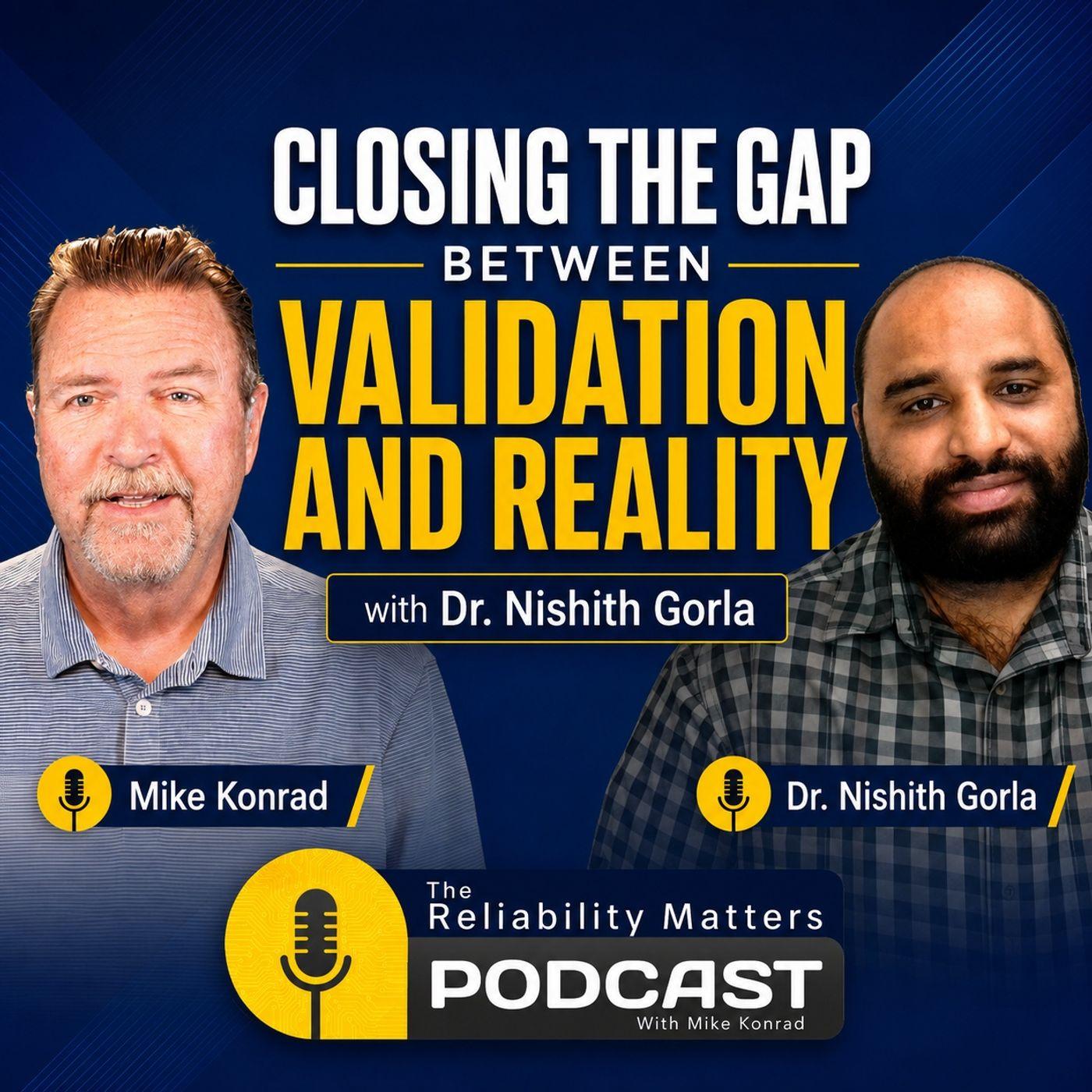
My guest today is Dr. Nishith Kumar Reddy Gorla of CORE ITS LLC.
Dr. Gorla’s work focuses on system-level reliability testing, field reliability alignment, reliability growth, and test-to-field correlation for complex products.
His recent paper, “System-Level Test Case Design for Field Reliability Alignment in Complex Products,” looks at why traditional reliability test methods may miss important field failure modes.
More importantly, it proposes a broader approach to test case design that considers not just the product design, but also actual use conditions, field failure data, end-user behavior, service procedures, manufacturing variation, consumables, and product interfaces.
This is an important conversation because reliability is not simply about passing a test. It is about understanding how a product behaves in the real world, where variables interact, users behave unpredictably, environments change, and failure mechanisms may not appear until the system is challenged in realistic ways.
If you design, build, test, specify, or depend on complex products, this discussion should be especially relevant.
Today, we will talk about why products sometimes pass in the lab but fail in the field, how better system-level test cases can improve field correlation, and what reliability professionals can do to create test methods that more accurately reflect real-world performance.
Dr. Gorla's Article:
https://www.reliabilitymatterspodcast.com/article-1-gorla
In reliability engineering, we often place a great deal of confidence in laboratory validation. We test, measure, analyze, and document. And when the product passes, we naturally assume it is ready for the field.
But what happens when a product passes the lab test and still fails in the hands of the customer?
Today, we are going to explore the gap between laboratory reliability testing and actual field performance.
It is a gap that can be costly, frustrating, and sometimes difficult to explain.
Products can perform well under controlled test conditions, yet still experience unexpected failures when exposed to real users, real environments, real service conditions, and real-world variability.
My guest today is Dr. Nishith Kumar Reddy Gorla of CORE ITS LLC.
Dr. Gorla’s work focuses on system-level reliability testing, field reliability alignment, reliability growth, and test-to-field correlation for complex products.
His recent paper, “System-Level Test Case Design for Field Reliability Alignment in Complex Products,” looks at why traditional reliability test methods may miss important field failure modes.
More importantly, it proposes a broader approach to test case design that considers not just the product design, but also actual use conditions, field failure data, end-user behavior, service procedures, manufacturing variation, consumables, and product interfaces.
This is an important conversation because reliability is not simply about passing a test. It is about understanding how a product behaves in the real world, where variables interact, users behave unpredictably, environments change, and failure mechanisms may not appear until the system is challenged in realistic ways.
If you design, build, test, specify, or depend on complex products, this discussion should be especially relevant.
Today, we will talk about why products sometimes pass in the lab but fail in the field, how better system-level test cases can improve field correlation, and what reliability professionals can do to create test methods that more accurately reflect real-world performance.
Dr. Gorla's Article:
https://www.reliabilitymatterspodcast.com/article-1-gorla
English
United States
TRANSCRIPT 🔗
Are you the producer of this podcast?
Add a podcast transcript
Need Audio-to-Text?
Transcribe with Listen411 in Just 60 Seconds
SEARCH PAST EPISODES
Search past episodes of Reliability Matters.
OTHER EPISODES IN THIS PODCAST
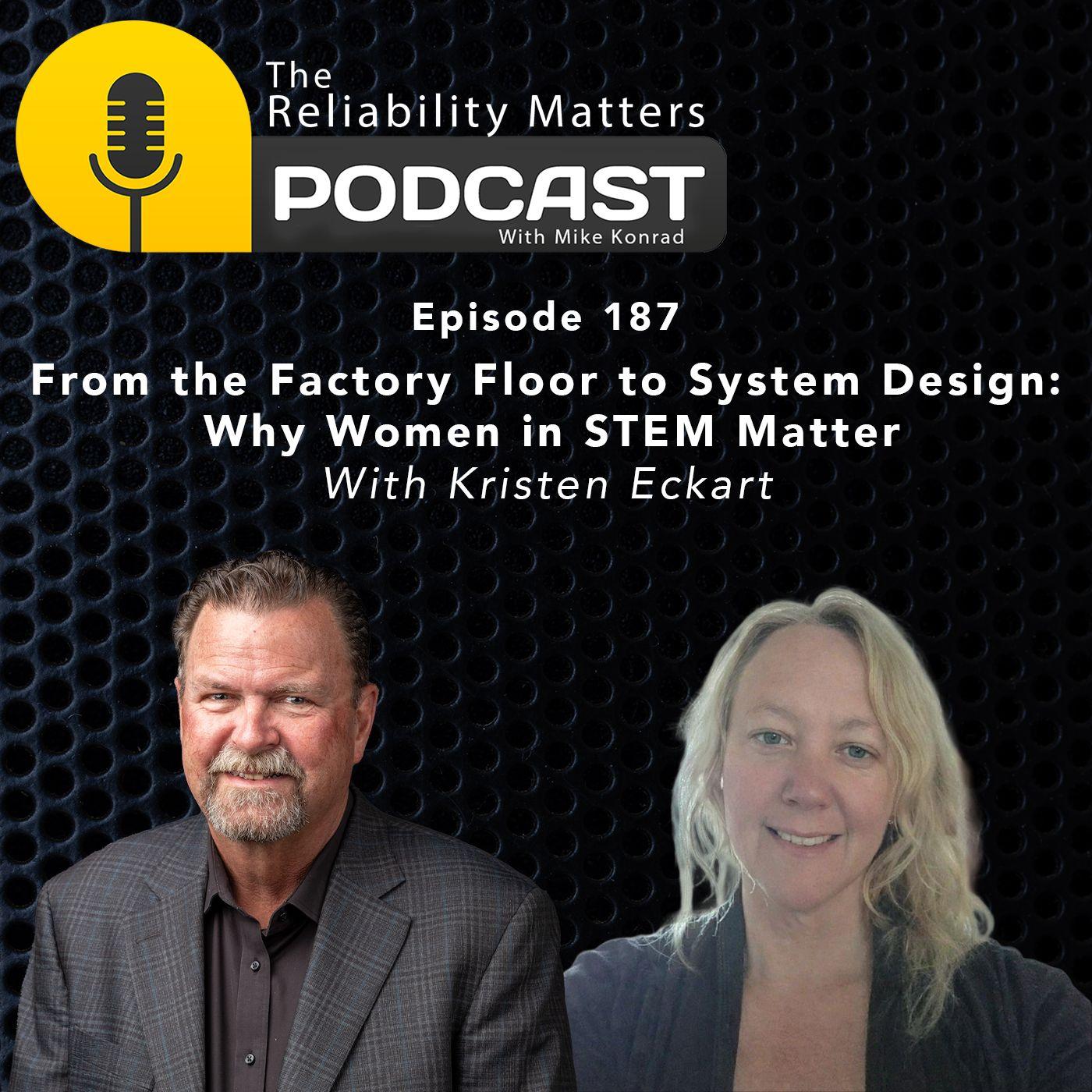
When we talk about reliability, we usually focus on materials, processes, test methods, and standards. But what if one of the most overlooked reliability risks is who is not at the table when engineering decisions are made?Today’s episode focuses on women in STEM, Science technology engineering and…
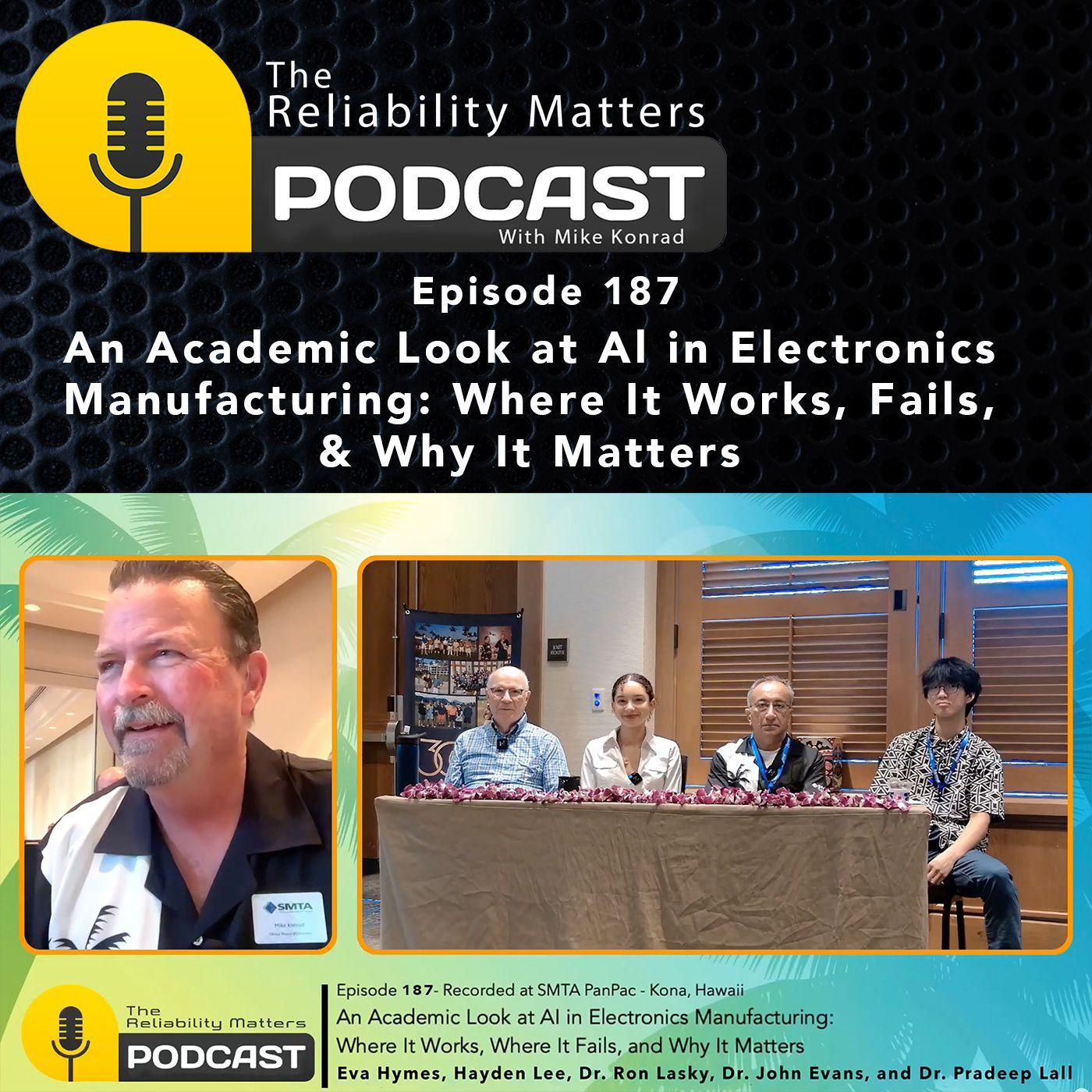
Artificial intelligence is being promoted as the next revolution in electronics manufacturing, but what happens when the people evaluating it aren’t traditional AI experts, aren’t software vendors, and aren’t selling anything? Today’s conversation brings together engineers and professors who live a…
If a $26,000 drone repair can be done in the field—but policy says it has to be shipped back to the manufacturer, do you really have a reliability problem… or a repair access problem?Today on the show, I’m joined by William Santos, International Sales Manager at ABI Electronics and a global advocat…
What if your factory could predict failures before they happen, capture decades of human expertise, and make better decisions than ever before—without replacing the people who run it?Today’s guest sits right at the intersection of innovation and industry. Bryan DeBois, Director of Industrial AI at …
Today, we’re going to explore a topic that doesn’t always get the attention it deserves, but has a direct impact on product quality and long-term reliability.I’m joined by Mehdi Nahali, founder of PCB Revision Control PRO. His platform is designed to replace spreadsheets, emails, and disconnected s…
Disclaimer: The podcast and artwork embedded on this page are from Mike Konrad, which is the property of its owner and not affiliated with or endorsed by Listen Notes, Inc.
EDIT
Thank you for helping to keep the podcast database up to date.
