WEBVTT
00:00:08.051 -->
00:00:10.597Welcome to the Optimistic Voices podcast.
00:00:10.597 -->
00:00:12.221I'm your host, laura Horvath.
00:00:12.221 -->
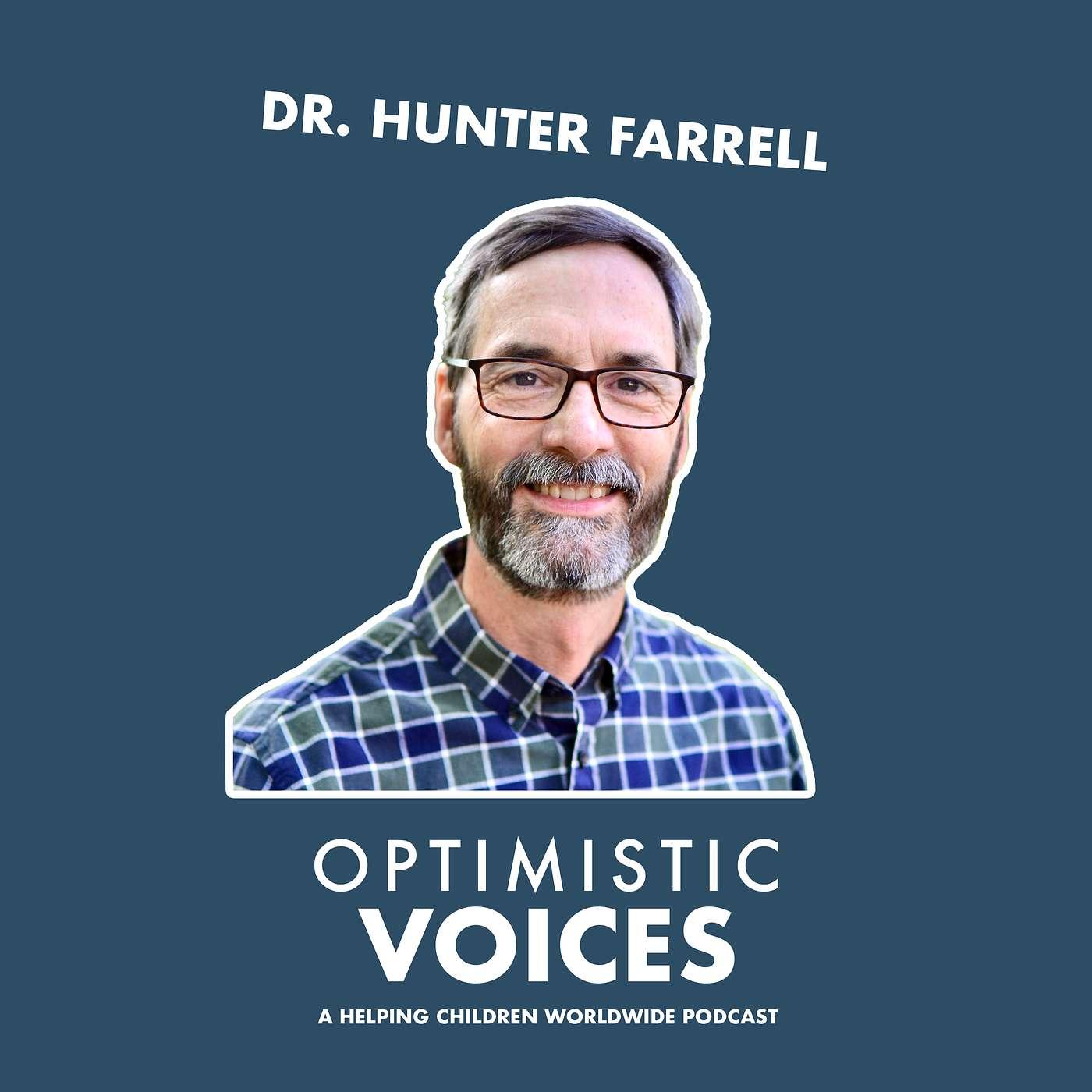
00:00:24.902In this episode, I'm going to be talking to Dr Hunter Farrell, who is the co-author of Freeing Congregational Mission A Practical Guide for Companionship, cultural Humility and Co-Development.
00:00:24.902 -->
00:00:30.501So a little bit of background on why we're talking about the things we're going to be talking about today.
00:00:30.501 -->
00:00:38.091We're focusing in this episode on mission, on short-term mission specifically, and some stats I want to share with you.
00:00:38.091 -->
00:00:48.790We have some mission strategies that I think Dr Farrell would characterize as being made in our own image, and I just want to share some stats with you that will help you frame this a little bit.
00:00:48.790 -->
00:01:03.173Us Christians spend between three and a half and five billion with a B dollars annually to send more than 1.6 million people on short-term mission in places all over the world.
00:01:03.173 -->
00:01:24.605On top of that, more than three billion dollars, again with a B, is donated annually to child sponsorship programs, which we're going to talk about in a later episode or in a separate episode and 46%, according to Hunter's book, 46% of Presbyterian Church Congregational Mission Leaders in 2014 sponsored a child.
00:01:24.605 -->
00:01:30.560So we're actually, in full disclosure, going to record two different topics today with Hunter.
00:01:30.560 -->
00:01:34.013One is on short-term mission, the other is on child sponsorship.
00:01:34.013 -->
00:01:36.822You're going to get those in two different episodes.
00:01:36.822 -->
00:01:45.355You'll hear the one on child sponsorship first and then later this year you'll get to hear the recording on short-term mission.
00:01:45.355 -->
00:01:48.522So without further ado, let me introduce our guest.
00:01:49.730 -->
00:01:56.402Dr Hunter Farrell is a doctor of anthropology and the director of the Pittsburgh Theological Seminary's World Mission Initiative.
00:01:56.402 -->
00:02:05.876He's worked for more than 30 years as a missionary director of world missions for the Presbyterian Church in the US and is a professor of mission and intercultural studies.
00:02:05.876 -->
00:02:12.200I first heard him speak on the Think Orphan podcast, which most of you know has become Think Global, do Justice.
00:02:12.200 -->
00:02:20.034And I have to tell you as soon as the show is over.
00:02:20.034 -->
00:02:20.456I ordered the book.
00:02:20.456 -->
00:02:20.878I have devoured it.
00:02:20.899 -->
00:02:21.763I think I've read it a couple of times.
00:02:21.763 -->
00:02:32.414I would be embarrassed to show him my copy, because it's all dog-eared and notated and highlighted and questions written in the margins and all the things that you're not supposed to do to books.
00:02:32.414 -->
00:02:48.899And then I've bought multiple copies and I've given them to church leaders and mission senders that are looking for ways to update or grow their short-term missions or how to frame those short-term missions in the era, kind of, of when helping hurts.
00:02:48.899 -->
00:02:50.842And what do we do now?
00:02:50.842 -->
00:03:04.325If that's the situation, if that's something we need to take a look at, and I think by and large these are folks who just generally want to do missions better, but they just struggle with what that means and how that should look.
00:03:04.867 -->
00:03:37.740The other section of the book that I found really helpful was a section on child sponsorship, and, as many of the regular listeners know, hww has been working for more than five years now to transition from our child sponsorship model to one that supports the work being done by skilled social workers on the ground to help families move to independence through a dedicated donor program that probably looks similar to a sponsorship program to the donor but is connecting to the program on the ground very differently than it used to when it was connecting a donor to an individual child.
00:03:37.740 -->
00:03:42.076So we're going to talk about that in our child sponsorship episode, all right.
00:03:42.076 -->
00:03:46.033So welcome to Optimistic Voices, hunter, it's thrilling to have you here.
00:03:46.735 -->
00:03:47.639Thanks so much, Laura.
00:03:47.639 -->
00:03:48.300Great to be here.
00:03:49.169 -->
00:03:49.450Good.
00:03:49.450 -->
00:03:54.443Did I get anything wrong in your bio or anything you want to update us on?
00:03:54.443 -->
00:03:55.031Are we good?
00:03:55.832 -->
00:03:57.358No, no, this is great.
00:03:57.358 -->
00:03:59.021I'm excited about the conversation.
00:03:59.890 -->
00:04:00.652Good, Okay.
00:04:00.652 -->
00:04:03.703Well, let's tackle short-term mission first.
00:04:03.703 -->
00:04:09.493In your book you've described the current state of short-term mission as sometimes as selfie missions.
00:04:09.493 -->
00:04:11.717Can you say more about what you mean about that?
00:04:12.298 -->
00:04:13.258Yeah, thanks.
00:04:13.258 -->
00:04:28.693It came about as I was involved in kind of just talking with folks, research in the people who become in what I call the missionscape, the place where US Christians engage in God's mission.
00:04:28.693 -->
00:04:38.581In that space, the primary decision makers of you know, 50 years ago used to be the mission agencies, the Catholic mission order superiors.
00:04:38.581 -->
00:04:40.916You know those kind of the executives, the elites.
00:04:40.916 -->
00:04:45.112Nowadays it's folks like you and me and the people who are listening to this podcast.
00:04:45.112 -->
00:04:54.521It's folks who bring their best to the table, try to do their best with limited knowledge, experience and are just trying to be faithful in their space.
00:04:54.521 -->
00:05:06.460So one of the things we saw was there is an increasing critique of short-term mission, of the ways that congregations do mission, of this strategy, of that strategy, but nobody was actually providing them with any tools.
00:05:06.460 -->
00:05:08.857How can they do it better?
00:05:08.857 -->
00:05:10.637So that's what we tried to do in the book.
00:05:11.391 -->
00:05:25.977The selfie mission concept itself comes out of the experience of talking with we interviewed or spoke with more than 1,400 mission leaders from mainline Protestant, evangelical and Catholic congregations.
00:05:25.977 -->
00:05:28.772What we found really surprised us.
00:05:28.772 -->
00:05:42.627Really surprised us, and that term self-emissions comes from one of the folks who said you know, it seems like we've moved from, you know, changing the world to changing ourselves.
00:05:42.627 -->
00:05:52.803There's just been a shift there, and it coincides with a massive cultural movement that I think we're all familiar with.
00:05:52.803 -->
00:05:53.946We're increasingly individualistic.
00:05:53.946 -->
00:06:19.583We've gotten to a place, though, that I think that the strategies that we engage in, the activities we do and call mission, our grandparents wouldn't even recognize, Because, for them, there was a sense of self-sacrifice, there was a sense of giving one's best and doing it in a common space, doing it together, and now we're doing it more individualistically, and an increasing concern of ours is how will this change us?
00:06:19.583 -->
00:06:21.292In other words, how will it help us?
00:06:21.292 -->
00:06:30.252And I think that this, it, shifts the course of our mission decision-making, and so we try to raise it up as a major concern now.
00:06:31.653 -->
00:06:34.896That's making something resonate in the back of my head that we used to say.
00:06:34.896 -->
00:06:51.578We haven't said this in many, many years, but we used to say when we would send a mission team you're going to be more blessed like you personally are going to be more blessed by doing this than the people you're going to serve in mission with, and it's almost like we were sort of creating that.
00:06:59.070 -->
00:06:59.692Yeah, and to be sure there's.
00:06:59.692 -->
00:07:01.177There's an ounce of truth in every problem, right and so for sure.
00:07:01.177 -->
00:07:03.183We all know that and that's what, in a sense, keeps us coming back.
00:07:03.183 -->
00:07:16.020The problem is it that's a, that's a, it's a brilliant marketing strategy because people will come back and buy, you know, sign up for the experience, if they know that they're going to get a lot out of it.
00:07:16.020 -->
00:07:24.985And so I want to say there's a deep mutuality in God's mission and we can't stop the movement of the spirit.
00:07:24.985 -->
00:07:25.833It's going to happen.
00:07:26.375 -->
00:07:32.459Even in those cases where you've got a highly trained you know US physicians doing a medical mission.
00:07:32.459 -->
00:07:35.778They parachute in, do the work and then come out.
00:07:35.778 -->
00:07:48.239Even in that, where the power dynamic is extremely differentiated, you've got some very powerful people who know all the answers in a sense, and folks then who are just there to receive, passively, services.
00:07:48.239 -->
00:07:52.539There will still be transformational moments for those US physicians.
00:07:52.539 -->
00:08:03.379They will be touched by an act of kindness, hospitality, an openness, vulnerability, all these soft emotions that somehow soften their hearts too.
00:08:03.379 -->
00:08:05.764So we don't want to, I don't want.
00:08:05.764 -->
00:08:07.498I'm not condemning that, it's just.
00:08:07.498 -->
00:08:17.609That's the way the spirit works in human relationships, but it is, it's not something that I think we should sell, as the first point, the primary goal of short-term missions.
00:08:17.630 -->
00:08:19.815Yeah, yeah, to your point.
00:08:19.815 -->
00:08:24.895You also talk about and please correct my pronunciation if I get this wrong you talk about Missio Dei.
00:08:24.895 -->
00:08:27.340What is that?
00:08:27.340 -->
00:08:31.116What does that mean in terms of definition and also what does that mean in practice?
00:08:31.798 -->
00:08:32.500Sure, sure.
00:08:32.500 -->
00:08:40.778Well, the Missio Dei, I mean, is literally Latin for the mission of God, and I think it comes about as a corrective.
00:08:40.778 -->
00:08:52.186Karl Barth is one who begins using that term more frequently in the 1950s, post-war Germany and brings it to the United States.
00:08:52.186 -->
00:08:56.012So we see it increasingly.
00:08:56.012 -->
00:09:03.995I think for the first 500 years of church history it was clearly the mission of God, right Beginning with Constantine, 5th century.
00:09:03.995 -->
00:09:12.277The church becomes established and Christendom begins and grows and the church loses that cutting edge.
00:09:12.277 -->
00:09:16.213It becomes empowered as opposed to disempowered.
00:09:17.316 -->
00:09:28.992During that time I think there's a shift and we begin to think about the mission of the church and, by extension, in our individualistic society Hunter's mission, laura's mission, right.
00:09:28.992 -->
00:09:40.471And so I've heard people stand up and say I'd like you to support me in my mission and like, okay, great, and how does your mission connect with what God's doing in that particular place?
00:09:40.471 -->
00:09:42.958And how would you know, is the second question.
00:09:42.958 -->
00:10:00.730Sometimes you get folks with great intentions who will go to a place and engage in a mission, but it's probably theirs unless they're engaging in specific practices that help them attune what they want to do with what God is already doing in that place.
00:10:00.730 -->
00:10:07.572So that's the focus of the mission the Missio Dei or the mission of God or yeah, is really just to shift the frame.
00:10:07.572 -->
00:10:13.543Rather, it's not about me and my mission, but it's about the committee meeting.
00:10:14.090 -->
00:10:27.965When a mission like a typical United Methodist Church, when folks get together to make decisions, it used to be about what I thought and we would all kind of look to get our cause funded.
00:10:27.965 -->
00:10:32.154I think it's a different space now.
00:10:32.154 -->
00:10:43.576We're inviting people in that moment to discern what God is doing in the place that they're intending to help, and to do so they need to be talking to a lot of people in that place.
00:10:43.576 -->
00:10:52.012They've got to spend some time, they've got to rub elbows with folks, have some shared meals, share dreams, and so I think that's a very different space.
00:10:52.012 -->
00:11:02.737So I like that concept of the mission of God or the Missio Dei because it pushes Hunter Farrell out of the spotlight and allows the spirit to be where it belongs right there.
00:11:03.579 -->
00:11:05.603Yeah, yeah, and I think to your point.
00:11:05.603 -->
00:11:13.816I mean, I think a lot of the way we look at mission, even short-term mission, and a lot of folks we send in mission have this sort of project focus.
00:11:13.816 -->
00:11:34.162So their concept of the mission is I'm, I'm um, I'm going to do, I'm going to go in short-term mission and I'm working on this project to um help train teachers in the local schools or you know whatever, and and that feels like a concrete thing, I got my hands around it, I know what I'm doing, you know, I understand that.
00:11:34.162 -->
00:11:44.537But if you're, if you're constantly then asking yourself okay, but the mission of God in that place is that everybody, all of his children there, get educated or whatever it is.
00:11:44.537 -->
00:11:48.653You think that you know that is then you got to be talking to the people on the ground.
00:11:48.653 -->
00:11:50.215But how does that happen and what?
00:11:50.215 -->
00:11:59.151What is the obstacles to that and how best can you know a person coming for two weeks address that or help you address that?
00:11:59.151 -->
00:11:59.511Um?
00:11:59.511 -->
00:12:01.335And I think that's really important.
00:12:01.937 -->
00:12:11.000We, um our shift in in short-term mission grew out of we used to send teams to visit the orphanage and love on the orphans.
00:12:11.000 -->
00:12:13.965You know, to visit the orphanage and love on the orphans.
00:12:13.965 -->
00:12:24.921You know that whole thing and over the years, what our mission sending person now says, my colleague Yasmin says, is this is a 25-year mission, this is an allyship.
00:12:24.921 -->
00:12:29.072We've been in mission with our partners, our allies, in Sierra Leone for 25 years.
00:12:29.072 -->
00:12:37.013Your two-week chunk is a moment in this long-term relationship and it's an important moment.
00:12:37.013 -->
00:12:49.065I don't mean to minimize it, you know, by the fact that it's a piece in time or whatever, but just the sense that you're not, it's not a kind of standalone project thing.
00:12:49.065 -->
00:12:54.562It's part of this much bigger thing that you get to sort of plug into.
00:12:57.115 -->
00:12:58.840And some of the pushback that we both hear.
00:12:58.840 -->
00:13:02.230I think Laura and your listeners will be familiar with.
00:13:02.230 -->
00:13:12.359There's a pushback to that because not only are we highly individualistic and the negative and the negative shadow of that is it's all about me.
00:13:12.359 -->
00:13:24.633And if I'm just a brick in a beautiful structure that is going to bring blessing to many, that's not quite as sexy, you know, that's just not as appealing to me If I'm just a brick.
00:13:24.633 -->
00:13:27.060Gee, I wanted to be the answer.
00:13:27.060 -->
00:13:28.122Come on, give me a break.
00:13:29.730 -->
00:13:34.011There's a challenge that there's also and you name it well in our culture, us culture.
00:13:34.011 -->
00:13:34.934We're moving.
00:13:34.934 -->
00:13:48.394There's evidence that suggests that we're becoming more and more short-term focus and less concerned with long-term consequences, and so it's literally harder for our minds to get our minds around.
00:13:48.394 -->
00:14:02.035You know hard for us to grasp the fact that this issue, you know, the training of teachers in this community, kids' nutrition in this community, safe water for this this is a long-term, this is a marathon and not a sprint.
00:14:02.035 -->
00:14:30.894So could we reframe this in ways that may be not so gratifying to me in the short term, but maybe the first spiritual discipline I'm called to do is to engage in some delayed gratification to say, okay, I'll set my need aside just for a moment and allow the spirit to work, and that I think that can be really helpful and, again, blessing for all of us, for those kids, for sure, but also for me, because I really need to work on that spiritual discipline, quite frankly.
00:14:31.437 -->
00:14:33.509Yeah, I think that's such a good point.
00:14:33.509 -->
00:14:39.576I can't tell you and I guess you probably hear this question all the time too but what would I do if I went in mission?
00:14:39.576 -->
00:14:40.339What would I do?
00:14:40.339 -->
00:14:41.120What would I do?
00:14:41.120 -->
00:14:46.022There's so much focus on the activity that's going to take place.
00:14:46.022 -->
00:15:07.987I think people have a really hard time hearing and understanding the importance of just relationship and connection and that you, that you sit with people and you listen to them and you hear what they do and you encourage them and you pray with them and and all of that.
00:15:07.987 -->
00:16:24.742And there is this sense somehow that I think Americans have maybe more than just Americans, that if there's not some sort of concrete activity, some measurable impact, you know within my two-week frame that it's somehow not worth as much.
00:16:24.742 -->
00:16:26.451Yeah.
00:16:27.232 -->
00:16:32.323And I think that's a hard one, but I've watched again for many cultural reasons.
00:16:32.323 -->
00:16:43.886There's also, I mean, and there's some great images I'll send you a couple that just kind of embody and artistically represent what's going on in the back of our minds.
00:16:43.886 -->
00:16:48.303I mean us bringing light and love and blessing to the nations.
00:16:48.303 -->
00:16:49.746I mean that's pretty strong.
00:16:49.746 -->
00:16:53.180In the way that I was brought up, I mean, it's such a strong narrative.
00:16:53.180 -->
00:16:58.877I find that it's really difficult for folks to move past that.
00:16:58.877 -->
00:17:14.198What I want to celebrate, though, and a reason for a lot of excitement to me, is to see some really innovative leaders, and among them I'll name a United Methodist Church pastor in Baton Rouge, louisiana.
00:17:15.078 -->
00:17:27.322Ashley Goad had noticed that her congregation's work was increasingly focused on things that kind of sold well, things that people would sign up for.
00:17:27.322 -->
00:17:47.124In other words, the market had taken control of the mission committee room, and they were slowly moving towards the most popular, where you get the biggest crowd, the most money, rather than doing what was most effective, most helpful, greatest blessing to communities, and so she switched the script.
00:17:47.124 -->
00:17:53.312As she walked into the committee room, she said let's change the plumb line.
00:17:53.312 -->
00:17:54.115Do we all agree?
00:17:54.115 -->
00:18:11.966We say in our statement that our primary objective in our mission as a church, in this First Presbyterian Church, first United Methodist Church in Baton Rouge, they have a stated goal to empower their partners around the world.
00:18:11.966 -->
00:18:20.724And so if that's the plumb line, then suddenly every mission decision, every discussion is shaped differently.
00:18:20.724 -->
00:18:25.826She just changed that kaleidoscope and now we're seeing all new colors, which is okay.
00:18:26.196 -->
00:18:30.787What is it that they need to be empowered to do the work of God in their place?
00:18:30.787 -->
00:18:32.501Wow, that's a different question.
00:18:32.501 -->
00:18:34.863We need a lot of information.
00:18:34.863 -->
00:18:36.079We got to start talking to them.
00:18:36.079 -->
00:18:37.565What are their initiatives?
00:18:37.565 -->
00:18:39.254What makes them laugh and cry?
00:18:39.254 -->
00:18:42.646What do their mothers stay up late at night worrying about?
00:18:42.646 -->
00:18:44.536Them laugh and cry.
00:18:44.536 -->
00:18:46.340What do their mothers stay up late at night worrying about?
00:18:46.340 -->
00:18:49.948That becomes our central concern and that gets us so much closer to the Missio Dei, to the mission of God.
00:18:50.148 -->
00:18:56.835You know, we're on a solid, solid pathway, then yeah, we did and I think we stumbled into this accidentally.
00:18:56.835 -->
00:19:16.650But we shifted from missions when we had an orphanage and we supported an orphanage that sent teachers I was one of them to the orphanage in the summer, taught summer school to the kids that lived in the orphanage for two weeks, you know, every year, thinking that was going to help move the needle for them educationally when they went back to school in the fall.
00:19:16.650 -->
00:19:21.884Of course, that didn't have any impact really, you know, measurable impact in any way.
00:19:21.884 -->
00:19:24.836We didn't know anything about Sierra Leone education system, we didn't know.
00:19:24.836 -->
00:19:33.724You know it was kind of a silly thing looking back as we shifted in the orphanage, you know we transitioned and all that and we started looking at well, now our missions need to shift.
00:19:33.724 -->
00:19:37.746We launched this thing we call the Teachers Learning Collaborative.
00:19:37.746 -->
00:19:53.809We started by sending American teachers to the orphanage to teach the kids for two weeks in the summer, thinking that was going to help them in school, which of course, is ridiculous, because what is two weeks of teachers from a completely different educational system coming to teach kids in a Sierra Leonean system going to do?
00:19:54.335 -->
00:19:59.342And when the orphanage transitioned and we realized we had to also transition our entire short-term mission model.
00:19:59.342 -->
00:20:13.224We asked our allies on the ground what would be the most helpful and they said well, you know, it really wasn't super effective to do tutoring for 40 kids two weeks out of every year, but what would be really effective is if teachers could just sit down together and talk about how to teach.
00:20:13.224 -->
00:20:18.479Well, and they specifically did not want American teachers to come and teach Sierra Leonean teachers how to teach.
00:20:18.479 -->
00:20:32.621They wanted just a space for teachers to sit together and talk about things like how do you get kids to want to learn and what do you do when they misbehave, and brainstorm those things together and just talk about.
00:20:32.621 -->
00:20:37.777You know, just like picture a bunch of people who just love teaching.
00:20:37.777 -->
00:20:41.144You know a bunch of teaching nerds sitting around a table just talking about teaching.
00:20:41.144 -->
00:20:44.637And it was so successful.
00:20:44.637 -->
00:20:51.119It was so successful that then in a subsequent year, the Sierra Leonean teacher said well, you know what we want to design?
00:20:51.119 -->
00:20:57.342A teacher training curriculum that we can teach our friends, our colleagues, and we want you to help us design that.
00:20:57.342 -->
00:21:01.879So the Americans helped create that curriculum, but they didn't bring stuff from America.
00:21:01.879 -->
00:21:06.969They just asked questions of the Sierra Leonean teachers as they put that curriculum together.
00:21:06.969 -->
00:21:20.402So it's a Sierra Leonean curriculum for teacher training that gets taught to other Sierra Leonean teachers and when I talk to the American teachers about the impact that has or how they feel about that, it is that sense you were saying about.
00:21:20.482 -->
00:21:22.740Well, I'm just a brick in the wall, like it's not me.
00:21:22.740 -->
00:21:29.204I haven't done any big, shiny, wonderful thing, I'm just this little cog in the wheel.
00:21:29.204 -->
00:21:52.836But the impact that my little input is having, my piece is having, is impacting the children of those first Sierra Leonean teachers classes and the teachers they train in their kids in their classes, like the ripple effects go far, far further and so, like I said, we stumbled into that.
00:21:52.836 -->
00:21:55.505But I think it's a lot like what you're talking about with Pastor Goad.
00:21:56.536 -->
00:21:57.538Very much so, laura.
00:21:57.538 -->
00:21:58.803And just think about it.
00:21:58.803 -->
00:22:07.284In my experience, the whole focus of the mission story that comes out of that encounter right of your experience, the whole focus of the mission story that comes out of that encounter right of your teacher, the development of curriculum.
00:22:07.284 -->
00:22:10.998When those folks come back they share with their churches.
00:22:10.998 -->
00:22:11.800What's the story?
00:22:11.800 -->
00:22:16.018I wish you could have met my colleague so-and-so, a teacher in Sierra Leone.
00:22:16.018 -->
00:22:18.043Here's her context, this is her work.
00:22:18.043 -->
00:22:22.442And so suddenly they're direct reporters on God's mission in the world.
00:22:22.442 -->
00:22:24.227And that is so powerful.
00:22:24.227 -->
00:22:30.855When a congregation hears that story they say how can we help that happen Not only in Sierra Leone but here in our own neighborhood?
00:22:30.855 -->
00:22:43.901And suddenly, you know, those far cast seeds began to bloom and provide blessing for teachers and students in Sierra Leone but also come back and change the way we understand what God's doing in the world, in our own neighborhood.
00:22:45.363 -->
00:22:46.384Yeah, that's right.
00:22:46.384 -->
00:22:55.282So you write in the book about a theology of companionship and I just I found that phrase so appealing.
00:22:55.282 -->
00:22:58.349Can you say what is that?
00:22:58.349 -->
00:22:59.236What does that look like?
00:22:59.838 -->
00:23:02.423Yeah well, companionship.
00:23:02.423 -->
00:23:14.507I love the word, and both in the Methodist Church, presbyterian Church, catholic Church, a bunch of churches, we use the word accompaniment but I like thinking about people as companions.
00:23:14.507 -->
00:23:34.628So a theology of companionship is a theology that grows out of that space where we break bread together Again, the Latin etymology of the word companion with bread compang, and so there's a sense when you and I sit to eat.
00:23:34.628 -->
00:23:40.205That's a space of vulnerability, it's a space of intimacy, of sharing.
00:23:40.205 -->
00:23:50.845I know what former President Biden and Putin never sat down to a meal together because they right arch enemies.
00:23:50.845 -->
00:23:52.430There's all kinds of stuff going on.
00:23:52.430 -->
00:23:58.743The optics would be horrible because they need to pose as adversaries.
00:23:58.743 -->
00:24:07.342If Biden were to have done that, you know, maybe Putin might say to him I'm sorry, president Biden, you have a little spinach between your teeth.
00:24:07.342 -->
00:24:11.564I mean, there is that space of suddenly we're in a very different place.
00:24:11.564 -->
00:24:25.461Right, we're opening ourselves up, we're allowing ourselves to be more vulnerable with the other, and that precisely, and I think that's such a part of you know, jesus' ministry in the Gospels we see so clearly, he was always eating.
00:24:25.461 -->
00:24:33.264He's always hanging out with people eating, having fun, talking, and you know someone saying oh Jesus, you've got something between your teeth.
00:24:33.264 -->
00:24:33.946Can you imagine?
00:24:33.946 -->
00:24:36.263This is the, you know, the vaulted son of God.
00:24:36.263 -->
00:24:41.144And yet there's a space of intimacy and that empowers the people around him.
00:24:41.144 -->
00:24:44.836It empowers him, people around him, it empowers in him and in his relationship.
00:24:44.836 -->
00:24:48.320He'll ask people questions like what do you want me to do for you?
00:24:48.320 -->
00:24:53.884To the person born blind, and it's like duh Jesus, what do you think he wants you to do for him?
00:24:53.884 -->
00:24:57.506It's obvious he says no, let's, let's have him tell the story.
00:24:57.506 -->
00:24:58.727Let's, let's, let's ask him.
00:24:58.727 -->
00:25:06.633And that space, companionship, it brings out, I think, our most authentic selves.
00:25:06.633 -->
00:25:17.425It creates a space where relationships can be developed and it changes what typically I mean in our Western kind of, in the United States and Canada.
00:25:17.845 -->
00:25:19.367A lot of times we frame mission.
00:25:19.367 -->
00:25:21.551Almost the image is a help desk.
00:25:21.551 -->
00:25:24.615We try to understand, even though we've never been there.
00:25:24.615 -->
00:25:26.504We try to understand what do they need?
00:25:26.504 -->
00:25:29.636We'll even imagine you know, work hard to imagine what they need.
00:25:29.917 -->
00:25:35.596And then we'll take it out in Ziploc bags and you know, excess baggage allowance, all this stuff.
00:25:35.596 -->
00:25:39.061We take it out and in a sense we kind of dump it.
00:25:39.061 -->
00:26:00.586You know, maybe we'll help them implement, maybe we'll help them build or whatever, but in the final analysis, I mean, I've talked to so many folks in global South neighborhoods who, after the short-term mission trip team has come and gone, they look at the toothbrushes they were given as gifts and they say to themselves what's this about?
00:26:00.586 -->
00:26:01.528What are they telling us?
00:26:01.528 -->
00:26:04.064Do they think we need to brush our teeth?
00:26:04.064 -->
00:26:05.437Wait, that's not the problem.
00:26:05.437 -->
00:26:22.063So I do think there's a place there, yeah, for engaging, not in a help desk mode, but around a round table where we each share our strengths, to be sure, but also our weaknesses and our brokenness, and I think that's a more honest relationship.
00:26:22.624 -->
00:26:36.663Yeah, I'm really struck by that because I think that thing you say about that's a place of vulnerability and intimacy and a place of relationship, and that help desk image is really helpful to me because I think we do approach short-term mission that way.
00:26:36.663 -->
00:26:40.723You know, we're just sat behind the desk and people come up and, well, what do you need?
00:26:40.723 -->
00:26:51.798You know, well, I think you need a well, we'll dig you a well.
00:26:51.798 -->
00:26:55.987And um, there is this kind of transactional thing um, that happens and that's easier relationships harder and messier and riskier.
00:26:56.007 -->
00:27:10.394Um, in a lot of ways, and I I would love to to reframe for people we send or people considering going on short-term mission, for us to reframe short-term mission in that way, like you know, do you, are you brave enough to risk that?
00:27:10.394 -->
00:27:13.743Are you brave enough to just be in relationship with people?
00:27:13.743 -->
00:27:25.037Because I do think that's a big deal and I think you know we have allies in the global South who will talk very much about what's important to them is the relationship piece.
00:27:25.037 -->
00:27:41.408They spend a lot of time in our 25 year mission serving the relationship between us and making sure that the relationship is good between us, because we spend so much time talking about what we're going to do and what are the outcomes and what are the impacts and whatever.
00:27:41.408 -->
00:27:55.869And what we're realizing is that we need to flip it upside down and we need to let the relationship be the lead and we need to stop worrying so much about checking the task list boxes, because that's kind of not why we're there.
00:27:55.869 -->
00:27:57.258Why do you think?
00:27:57.258 -->
00:27:58.383Go ahead?
00:27:58.815 -->
00:27:59.615No, I'm just thinking.
00:27:59.615 -->
00:28:01.757I mean an example in teaching.
00:28:01.757 -->
00:28:03.218You and I both are teachers.
00:28:03.218 -->
00:28:16.227As a teacher, it's easier for me, it's not so messy for me to fill the hour of instruction time with my wisdom, know exactly what all those students need of what my material is about.
00:28:16.227 -->
00:28:33.001But I package as best I can and I just fill the room with it for 60 minutes and at the end, okay, and don't forget to do the assignment next, whatever.
00:28:33.001 -->
00:28:38.716It's a little more daring and it scares me, to be honest, if I, what if?
00:28:38.716 -->
00:28:44.628With greater vulnerability and a trusting of the Holy Spirit, I only prepared 30 minutes worth.
00:28:45.195 -->
00:28:47.243You know I go in there and I hear some ideas.
00:28:47.243 -->
00:28:49.180Where do these ideas take you?
00:28:49.180 -->
00:28:50.304Awkward silence.
00:28:50.304 -->
00:28:51.954I'm feeling anxiety.
00:28:51.954 -->
00:29:02.607I want to fill the room with you, know movement and action and right answers, but at that moment I've just created the perfect space for real learning.
00:29:02.607 -->
00:29:04.662This is deep learning that's going to occur.
00:29:05.277 -->
00:29:09.435They begin to think, well, wait, you said this, but that doesn't work in this situation.
00:29:09.435 -->
00:29:11.141Or how about here's an exception?
00:29:11.141 -->
00:29:11.763Or how about this?
00:29:11.763 -->
00:29:22.489That can be the best learning that happens and they'll remember that far longer than they'll remember any rehearsed litany of stuff that I might share.
00:29:22.489 -->
00:29:24.362So I think that's an example.
00:29:24.362 -->
00:29:42.238If we allow that, what if, as we send a mission team someplace, if you know, their first days are spent just waiting, you know, just listening to how the conversation develops as they begin to share some common experiences.
00:29:42.258 -->
00:30:05.826And I think, the ways that you all had a common tasks in this, in this other particular group, a specific group looking at sharing curriculum, um, you know, developing a curriculum together, um, sometimes, if you have a common task, rather than facing each other and just trying to, you know how do we sing Kumbaya again, I mean it's, it's really awkward if we, particularly in cross-cultural relationships, just to face each other and focus on the relationship.
00:30:05.826 -->
00:30:12.765But if we can together be engaged and we're walking together on the road, we become companions.
00:30:12.765 -->
00:30:24.826We'll share meals and then someone in the afternoon session says you know, you know, madama, my friend, that I had lunch with shared an insight that I wonder if you'd be willing to share that with the whole group.
00:30:24.826 -->
00:30:30.888Well, Madama shares her insight and that changes the direction of our project together.
00:30:30.888 -->
00:30:34.406Right, but it's done differently because we're on that road together.
00:30:34.406 -->
00:30:36.442So I think, I think that can be a powerful space.
00:30:37.175 -->
00:30:38.817It's funny because I used to think about that.
00:30:38.817 -->
00:30:39.218That was.
00:30:39.218 -->
00:30:42.724I taught high English for many years and that was what.
00:30:42.724 -->
00:30:49.325What I learned about working with adolescents is that if you asked questions or try to have conversations eye to eye, face to face, they found that really uncomfortable.
00:30:49.325 -->
00:30:57.067But if you could work on something together, even if you're just playing a game together side by side, they would open up in in very deep ways.
00:30:57.067 -->
00:31:11.221Or driving Like my, when my kids were teenagers, you know driving in the car, that's when the deep conversations happened, because we're all focused on getting somewhere, when it sort of takes the pressure off somehow and you have this sense of journeying together.
00:31:11.221 -->
00:31:12.265I think that's really important.
00:31:13.035 -->
00:31:31.018I've talked a little bit about my experiences in American traveling and short-term mission in the early days and what that looked like and that put me in the early days squarely in the role of teacher to students, with my allies in Sierra Leone were in the role of students and so that put me kind of in a power differential.
00:31:31.018 -->
00:31:31.742It's pretty obvious.
00:31:31.742 -->
00:31:53.028I think it's one we still use, even those of us that have tried to transit, you know, to a more aware short-term mission approach, and this may be a little bit better than I flew to a country and I painted a wall and took a job away from a local painter, but it's still creating this posture of superiority where one person's a giver and the other person's a passive receiver.
00:31:53.028 -->
00:32:00.377Something that really struck me in your book was the way that you point out that Jesus was engaged in mission from a position of weakness.
00:32:00.377 -->
00:32:05.862I mean specifically from a position of weakness, not even equality, and can you talk about that a little bit?
00:32:08.206 -->
00:32:27.628Yeah, I think one of the biggest challenges to our mission today is the fact, the way that we US folks engage in mission is that we engage from a position of power and so we go with all of our supplies, we stay in a safe place Maybe it's a hotel that our partners could never stay in, you know, on a nightly charge, et cetera.
00:32:27.628 -->
00:32:34.566We kind of surround ourselves in order to play that help desk role so that we can.
00:32:34.566 -->
00:32:35.567This is for their own good.
00:32:35.567 -->
00:32:38.843We got to help them and so we stay in this hotel.
00:32:38.843 -->
00:32:40.280We work in this way.
00:32:40.280 -->
00:32:45.507We take our equipment that they can't get repaired If we were to leave.
00:32:45.507 -->
00:32:59.608You know, even the simplest of machinery, good chance they can't get it repaired after we leave, and so those what we call inappropriate technology fixes are not being very helpful.
00:32:59.688 -->
00:33:01.459So what is that about?
00:33:01.459 -->
00:33:05.857I think so much in the gospel narrative and the way that Paul.
00:33:05.857 -->
00:33:17.629I think Paul is a very helpful apostle to us as we try to think missionally, because he experienced this transformation from a rather powerful person with Roman citizenship.
00:33:17.629 -->
00:33:21.001He was of the Pharisees.
00:33:21.001 -->
00:33:27.259The quote in the third chapter of Philippians, or second chapter of Philippians, goes into detail.
00:33:27.259 -->
00:33:29.067He just walks through his whole pedigree.
00:33:29.067 -->
00:33:32.940He was a very powerful person in his own context, right.
00:33:32.940 -->
00:33:53.898Despite that, he, at you know, in Acts 9, goes through a massive transformation where he realizes that it is not about what he does in the world, but God's graciousness, a gracious attitude towards him despite his unworthiness, and that has some profound effects.
00:33:53.898 -->
00:33:59.477I think all of us, if we were to share our testimony, it would go a little like that.
00:33:59.477 -->
00:34:04.096We realized we came to recognize scales, fell from our eyes, to use that language.
00:34:04.096 -->
00:34:18.239We came to recognize our dependence, our weakness, our brokenness, and oftentimes our testimonies are filled with tears because it takes us to a place of deep authenticity where we recognize truly who we really are.
00:34:18.460 -->
00:34:25.277In the scheme of things, unfortunately, think about the ways, the postures, the attitudes that we take into short-term mission.
00:34:25.277 -->
00:34:33.820It's almost like that insecure teacher like me who needs to fill the space with my stuff, my ideas.
00:34:33.820 -->
00:34:54.780And so you see folks who may have been a wallflower in the committee room at First Methodist Church, wherever Topeka, kansas but they get into that space and suddenly they're, you know, they're full of ideas and engage in leadership in ways that you're like wow, and you think that's great.
00:34:54.780 -->
00:35:07.838But are we missing out on something when we don't follow in the footsteps of Jesus, who consistently engages in mission from a place of powerlessness.
00:35:07.838 -->
00:35:18.132There's lots of historical you know pieces to this how mission got away from mission, from a spirit of weakness.
00:35:18.693 -->
00:35:52.363I remember there's a painting in Ethiopia I saw it in Addis Ababa and it's in the Ge'ez language, the ancient language of the Ethiopian Orthodox Church, which goes back to the early centuries of the Christian tradition and it shows a picture of Jesus washing the feet, and then there's Peter and a line of all you know, all 12 disciples right In a line, all seated, and in the Gase language it says behold the God-man who even washes feet.
00:35:52.363 -->
00:36:12.688And I think to me that encapsulates so much of the power of the gospel is when we have that moment of authenticity, when we set aside our pedigree and our resume and all the goodies that we bring, the things that we have and can do, all of our titles and all that, and open our hands.
00:36:12.688 -->
00:36:16.928The open hands become a very powerful space.
00:36:16.928 -->
00:36:23.004And in fact in Western Ethiopia there's a proverb that says we can only embrace with empty hands.
00:36:23.144 -->
00:36:30.155We're going to have to set a lot aside for us to be able to embrace our neighbor and begin to love our neighbor, even as Christ loves us.
00:36:30.155 -->
00:36:33.037Yeah, I think we're touching at some kind of the epicenter, I would say.
00:36:33.037 -->
00:36:59.081I think we're touching at some kind of the epicenter, I would say, of the challenge to us as American Christians, because we're kind of carrying on this mission of Christendom, which got hijacked, I believe, in the colonial era, during the imperial era and the colonial eras, and I think we have to right the ship, we have to set it back on this course, which is mission from a space of powerlessness.
00:36:59.101 -->
00:37:20.922Yeah, I found that really really moving, that piece of it, and I do think there is this like what I'm striving for is this posture of both humility and courage, because what you're describing, that class, that 60-minute class where I only have 30 minutes I have to tell you in the teacher brain, in my skull right now, that my teacher brain is going no, no, no, no, no, no, no.
00:37:20.922 -->
00:37:24.499We got to have at least, even if we don't look at that second, 30 minutes.
00:37:24.499 -->
00:39:58.975It's got to be there just in case, because you know it'll be chaos if nothing happens, because it's scary to be open-handed, to just go with open hands and not have something that you could say, okay, well, in the absence of anything, I brought this right Just in case.
00:39:58.975 -->
00:40:01.445That's a scary place.
00:40:01.445 -->
00:40:07.376But you know, the thing that I find really powerful in that is Jesus.
00:40:08.638 -->
00:40:18.234As you point out in the book, he reached the people on the margins, he focused on the people on the margins and he didn't just focus on helping them, he gave them agency.
00:40:18.234 -->
00:40:30.546People that in the society would have, you know, the powerful people in society would have said, well, they can't, because they, you know they're blind or they're crippled or you know they can't, they have no agency.
00:40:30.546 -->
00:40:35.106And so things were done for them and Jesus just saw them differently.
00:40:35.106 -->
00:40:41.809Jesus just saw them as people who, of course, have agency and they just needed, you know, to access that.
00:40:41.809 -->
00:40:47.771And I just find that really powerful, that sense of agency that is missing in the way we approach short-term missions.
00:40:47.771 -->
00:40:49.736How can we do that?
00:40:49.796 -->
00:40:54.240better is missing in the way we approach short-term missions.
00:40:54.240 -->
00:40:55.164How can we do that better?
00:40:55.164 -->
00:41:05.932So in the book we talk a lot about this concept of co-development and try to lift up the fact that, you know, jesus creates, he sees others as colleagues in healing.
00:41:05.932 -->
00:41:19.400You know, the man born blind, the woman with a hemorrhage, all of these things, and he recognizes the power that is in them in a way that you know, I wonder.
00:41:19.881 -->
00:41:22.989I think the 12-step programs do this very well.
00:41:22.989 -->
00:41:27.625They recognize it is up to you, you and your dependence on the higher power.
00:41:27.625 -->
00:41:29.288You're going to have to make the choice.
00:41:29.288 -->
00:41:37.265So to see someone as having the I mean talk about power here.
00:41:37.265 -->
00:41:40.315Laura, you pick up the paintbrush, you paint the portrait.
00:41:40.315 -->
00:41:42.893How would you color this in?
00:41:42.893 -->
00:41:47.235That's remarkable power Jesus was consistently giving to someone.
00:41:47.235 -->
00:41:58.795So I think that for us we call that co-development and it's a sense of deep mutuality in human change, recognizing the fact that I don't really know what you need.
00:41:58.795 -->
00:42:04.134You're going to have to determine that and you're going to have to make the choices to take the steps to get there.
00:42:04.134 -->
00:42:16.506Maybe as a partner I can, as your companion in mission, I could remove barriers and suggest some tools, maybe offer some tools, but ultimately, every day you're going to have to get up and decide to do that thing.
00:42:17.608 -->
00:42:21.397Yeah, you have a couple of quotes that I kind of copied down from your book.
00:42:21.397 -->
00:42:24.012What you do for us without us is not for us.
00:42:24.012 -->
00:42:31.616I think it's really powerful and that's something I share with my allies on the ground and they're like yes, because we know what we want our programs to do.
00:42:31.616 -->
00:42:35.126We, we have a vision for what we want.
00:42:35.126 -->
00:42:40.059You know where we want this to head, and and and all that.
00:42:40.059 -->
00:42:46.130And then the other thing that you had said was I cannot develop you Like I can.
00:42:46.130 -->
00:42:47.652Like you're saying, I provide you tools.
00:42:47.652 -->
00:42:49.254I can, you know, bridge you to resources.
00:42:49.254 -->
00:42:54.784I can, you know, connect you to maybe somebody who you know knows something that I don't know, or whatever.
00:42:54.784 -->
00:42:59.373There are things that I can, can help with, but I can't get you all the way there.
00:42:59.484 -->
00:43:16.499Like I cannot develop you and, by the same token, they can't develop us, right, Right, no, but I mean, I think most of us come into marriage with a hidden agenda of you know, I think I can change my spouse and make my spouse a better person.
00:43:16.499 -->
00:43:24.899They don't know it, but they need this, and I think my spouse, my wife, came into our relationship with a little bit of a hidden agenda to change me too.
00:43:26.566 -->
00:43:30.436So you know, 40 years into marriage, we have to ask ourselves how's that working for us?
00:43:30.436 -->
00:43:34.594In fact, we're not doing real well developing each other.
00:43:37.405 -->
00:43:39.593Hunter's still got a long list of what he needs to work on.
00:43:39.593 -->
00:43:49.539But to the extent what she has done is by providing me with as a mirror, she's helped me to see myself with new eyes and given me courage to address that.
00:43:49.539 -->
00:43:51.552So right there, that's.
00:43:51.552 -->
00:43:53.410That's like, that is life changing.
00:43:53.410 -->
00:43:59.411But the the former mode of where I come in and say, okay, I think she needs to work on this, that and the other.
00:43:59.411 -->
00:44:15.873If this doesn't work in something and you know, I've known her intimately for 40 years, 40 plus years how much less could I do this for a teacher in Sierra Leone who might not bet it's just like it boggles the the hubris of us assuming that we know what they can do it.
00:44:15.873 -->
00:44:19.210It's just like wow, really.
00:44:19.632 -->
00:44:25.817What makes you think that Right, yeah, based on our two week drop in, you know a year or whatever.
00:44:25.817 -->
00:44:27.810No, it's a really good analogy.
00:44:27.810 -->
00:44:35.248As I said, this is our 25th anniversary, so this is the 25th anniversary of our partnership.
00:44:35.248 -->
00:44:41.028That's a marriage, that's a long-term relationship and I'm thinking I'm married 30 plus years.
00:44:41.309 -->
00:44:54.098I'm not going to be specific but by the same token, yes, we did come in with our little hidden agendas in our laundry list and that's not how it works and you end up in a long-term marriage like that as a mirror, as a foil for one another.
00:44:54.098 -->
00:45:07.090But I think we also would say that we've changed each other for the better just by being in relationship for 30 plus years and the things that we've learned together and the way that we mirror each other to each other.
00:45:07.090 -->
00:45:18.167I think that we, that we have, um, I hope, evolved individually into better people and I think there is a space for that in allyship and a long-term you know, mission relationship.
00:45:18.167 -->
00:45:26.104When you have a long-term mission partner, like HCW has or whatever that that, if you are in true relationship, there is the ability for that to happen.
00:45:26.104 -->
00:45:34.311But I think it's more organic and spiritual and you know, not like, I've got this checklist and we're on number 10 now, right.
00:45:35.714 -->
00:45:38.106Yeah, Do we get to number 11 before the end of the week please?
00:45:38.868 -->
00:45:41.013I just can't send it.
00:45:41.013 -->
00:45:48.610Yes, so anyway, any last words on short-term mission before I ask the very last question for this episode.
00:45:51.775 -->
00:45:55.546I do think one thing that I just want to say a word to folks.
00:45:55.546 -->
00:45:58.311I would never condemn short-term mission.
00:45:58.311 -->
00:46:08.892I think of course, there's a lot of challenge to it and all of us could make a laundry list of the things that aren't good about short-term mission.
00:46:08.892 -->
00:46:17.236Having said that, short-term mission also provides a remarkably powerful space of mutual transformation.
00:46:17.236 -->
00:46:31.255It gets us in the same room with people that we care about but don't know very well, and it allows them to do the same with us, and that in itself could be really, really powerful.
00:46:31.255 -->
00:46:35.209So we never condemn short-term mission in our book.
00:46:35.209 -->
00:46:48.116We love it, but there's a lot we need to do and if we're going to take someone on a short-term mission trip or we're going to facilitate that or send people or whatever, we need to make sure that it's the right kind of short-term mission trip.
00:46:48.116 -->
00:46:59.910So we focused a big section of the book on that, got to recognize the power, the potential power, of that experience, because it's a liminal space, it's a space, it's a.
00:46:59.910 -->
00:47:05.827You know I'm no longer in my living room and I'm not quite in the living room of you know, my partners in Sierra Leone.
00:47:05.827 -->
00:47:06.848I'm in a space.
00:47:06.848 -->
00:47:11.354They're acting differently as I walk in the room, right, so we call it a third space.
00:47:11.354 -->
00:47:19.090It's a liminal space, but anthropologists for about a century have looked carefully at these liminal spaces in life.
00:47:19.090 -->
00:47:23.805And pilgrimages are a liminal space, wedding ceremonies are a liminal space.
00:47:23.805 -->
00:47:29.790You can name them and folks will know more about this probably than I'm suggesting.
00:47:29.790 -->
00:47:34.234But those liminal spaces are deeply transformative.
00:47:34.234 -->
00:47:38.377They change the ways that we proceed and make decisions.
00:47:39.138 -->
00:47:43.722And short-term mission holy cow, that's a big liminal space.
00:47:43.722 -->
00:47:55.501It's about, you know, 10 days or two weeks of a liminal space, which is remarkable because usually we don't, you know, except for a pilgrimage, and how many of us go on a two-week pilgrimage?
00:47:55.501 -->
00:47:57.146We don't really engage that long in a liminal space.
00:47:57.146 -->
00:48:03.131It's intense and people come back exhausted and we always scratch our heads and say, why is everybody so tired?
00:48:03.131 -->
00:48:05.018You know they just painted a wall, whatever.
00:48:05.580 -->
00:48:07.965But it's because they're in a space.
00:48:07.965 -->
00:48:19.940They're looking again at their most deeply held values, their deepest dreams, and they're looking at them through a different lens.
00:48:19.940 -->
00:48:22.532And that, right there, that is a gift of the Spirit.
00:48:22.532 -->
00:48:24.311So let's never throw that out.
00:48:25.324 -->
00:48:31.852Rather, what are the ways that we can transform that space, and maybe, in fact, just that framing?
00:48:31.852 -->
00:48:34.057What if we understood it as a pilgrimage.
00:48:34.057 -->
00:48:52.826What if we understood it, as we're going to be on the road together with our colleagues in Sierra Leone or wherever the place is, and we don't know exactly where God's leading us, but we're looking to God intently and leaning on each other as partners to be able to walk this road together.
00:48:52.826 -->
00:49:06.649Well, that, and just like you've mentioned with traveling with family or a teenager or just about anybody get on the road together and all of us could tell stories of how a relationship changed because we traveled together.
00:49:06.649 -->
00:49:09.714I think that's really, really important.
00:49:09.714 -->
00:49:20.975So, again, I hope churches don't, you know, adopt this kind of the scholarly criticism of short-term mission, which has been fairly brutal, but rather use it in positive ways.
00:49:21.016 -->
00:49:27.905Yeah, yeah, that's the best defense for keeping short-term mission that I think I've heard in years.
00:49:27.905 -->
00:49:42.856I really, really appreciate that and it's bringing me back to this image of Jesus for three years hanging out with people, eating and breaking bread with people and traveling with His disciples.
00:49:42.856 -->
00:49:50.532That just I kind of have goosebumps because I'm making that connection.
00:49:50.532 -->
00:49:58.713He showed us how to do this, how to be in mission together, in companionship, and that's just so powerful, Hunter, thank you.
00:49:58.713 -->
00:50:06.036I have one last question to ask for this episode, and that is what keeps you optimistic or hopeful about short-term missions.
00:50:07.418 -->
00:50:10.855Oh yeah, well, I think it's the power of that space, the transformative power of the space of short-term missions.
00:50:10.855 -->
00:50:14.407Oh yeah, well, I think it's the power of that space, the transformative power of the space of short-term mission.
00:50:14.407 -->
00:50:23.171There's a Congolese fable about a young girl named Ngalula who is she's the daughter of the village healer.
00:50:23.171 -->
00:50:25.014He is the father.
00:50:25.014 -->
00:50:43.519Her father is the man who does a lot of the healing and she's been you around and he's taken her on trips and they've gone out to the forest and she knows which is the right route for this ailment and how to lower fever, and what these leaves can do in a tea boiled and then cooled and served to the person.
00:50:43.519 -->
00:50:48.136And she's picked this up through her relationship with her father, right.
00:50:49.025 -->
00:50:59.727Well, time comes when her father's not there and a fever breaks out in the village and all of a sudden all these kids are getting sick and a couple of kids die.
00:50:59.767 -->
00:51:14.088I mean, it's a dire situation and Nalula, you know, at first panics, but finally she realizes she has everything she needs in her hands, right Within the village, within the forest, the space around her.
00:51:14.088 -->
00:51:21.770They have what they need and so I hope that folks can begin to recognize you want to transform your church.
00:51:21.770 -->
00:51:35.720Get on the road together, let's travel, let's engage with partners who are different from us, maybe racially different or economically different in our own town, or maybe different in terms of deep culture, cultural differences globally.
00:51:35.720 -->
00:51:49.512But whatever that is, as you get on the road with folks, you begin to read the gospels with new eyes and you look into your own heart and see your own plans for life with new eyes, and that can be powerfully transformative.
00:51:49.512 -->
00:51:58.690So I think that space itself, laura, just gives me a lot of hope and I hope people don't let go of it but continue to be blessed and bless others in it.
00:52:00.574 -->
00:52:01.315That's perfect.
00:52:01.315 -->
00:52:02.397Thank you so much.
00:52:05.564 -->
00:52:06.466Thanks for listening.
00:52:06.466 -->
00:52:14.099If you enjoyed this episode, please subscribe, share it with others, post about it on social media or leave a rating and review.
00:52:14.099 -->
00:52:25.054To catch all the latest from us, you can find us at Helping Children Worldwide on Instagram, linkedin, twitter and Facebook Hashtag Optimistic Voices Podcast.