

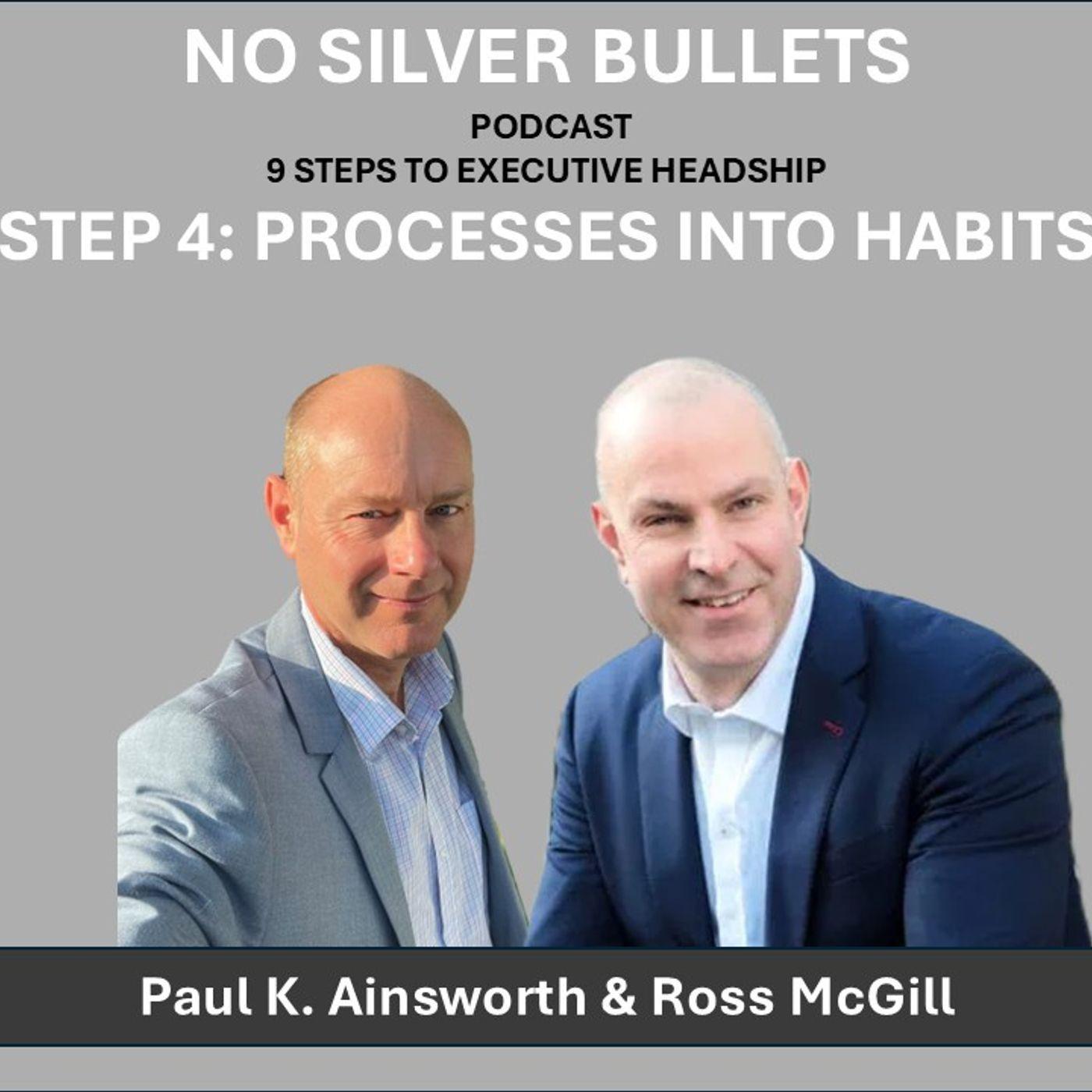
Paul Ainsworth: We all recognise that as the voice of Ross McGill, the UK's most influential teacher. If there was one person I wanted to share advice with executive head teachers on developing teaching across schools, it was Ross. So please listen to his thoughts on Step Forward and Nine Steps to Executive Headship. Hi, I'm Paul Ainsworth and welcome to the No Silver Poets podcast. And in this series, we are focusing on the nine steps to executive headship. I am delighted to be joined by Ross McGill, who is globally, not just nationally, but globally known as Teacher Toolkit. He's taught for 26 years in London secondary schools, including 20 years as school leader. And we all know was featured in the Sunday Times, 500 most influential people in Britain in 2015. episode was recorded in March 2026. Please like, subscribe and share with your colleagues. as we listen to more of Ross's excellent advice. Ross works with teachers and schools worldwide, enhancing teaching and learning, reducing workload and improving teacher mental health. He's the author of 12 books on education and his most recent being The Guide to Feedback, which was published in 2024. I think it's a great read. You need to get a copy if you've not seen it. I'm especially pleased to have his expertise in improving teaching and learning for our discussion today. So good afternoon, Ross.
Ross: afternoon Paul, thank you for having me, thank you for that lovely welcome. Book 13 is done now, so it's out in a few months time.
Paul Ainsworth: There we go. So that'd be one for all teachers and leaders to get a copy of. So today we're going to focus our conversation on step four, which is turning processes into habits. And we're going to look mainly at teaching and learning. So Ross, let's jump in. What does turning processes into habits mean in your work with schools? Can you give us some examples of where you help head teachers with that?
Ross: Yeah, so my first thought, ⁓ turning it into habits, about routines. And if we think about all of our collective better understanding of working memory, has to start habits form through repetition and routines. in the classroom, every single day, teachers are doing a lot of things automatic. screen on, register, those kind of things. But then we get into pedagogical principles. And then I might start to do thumbs up, thumbs down and mini whiteboards and things like that. And then they become a routine. And then day to day, things get in the way, behaviour, workload, and things like that. And then these good routines either are automated and habitual, but maybe not across the school, or they get lost along the way or I forget the power and impact that they might have. So that's where I think ⁓ great schools are doing some brilliant things because they keep these routines coherent, clear, consistent. And I guess some of these ideas are misconstrued as you've got to do it this way or this is the hymn sheet and it's live or die by it and those kind of things. you know, what I see on my travels is a lot of schools who have a hymn sheet when they bring their teachers together to collectively talk about teaching, learning to share complex problems and they do that in not just an autonomous way, but a supportive and challenging way, they can start to unpick these problems, look at... know, case studies with their own children, their own data, those kind of things, and start to see this is how to do it. But in PE, it looks like this. And in maths within the same school, it might look like that. And that's what I see happening in schools where teaching learning is a little bit more happier, autonomous and getting good outcomes. So where I help. kind of school leaders especially is helping them see that kind of macro level. So across the whole, you you're kind of learning walks across the school, but also breaking it down into that MISO level. So that's the department year team level and in the micro level day to day and approaching those three layers across the academic year, across, you know, two, three, four, five year school plan in that kind of multi-layered approach in terms of Discussions, implementation, ideas, know, show and tell those kind of, I guess, all the components that make everything work together as well as the action plan on paper. So I guess the habits for me, put simply, is routines, but the challenges, what are the routines? How do you form habits in a profession that's exhausting? And when stress, as we know, increases our ability to use these routines, it kind of falls by the wayside.
Paul Ainsworth: In terms of that hymn sheet Ross that you were talking about, what type of things might be on there that you've seen, both the good and the bad?
Ross: Well, I think the easiest thing to talk about is probably Barak Rosenshine's principles because they're quite synonymous, popular with lots of people. So Rosenshine for People That Know was published in 1982. And I guess you can see how long it takes for research to ripple through. I cognitive load theory, think late 80s, early 90s, think as well. So 30, 40 years before we get access. I guess it's more access to journals, better use of social media and the internet and things like that. So it's taken a long time for everyone to discover the Rosenshine's principles. Originally were six, then 10, then 17. A lot of schools initially got very excited, came up with a policy or a hymn sheet. Later on, that hymn sheet might have become a checklist for observation. So that would be the ugly side of using research. And maybe bad examples would be, well, we've done it, we've ticked the box, we had an inset on it and we've moved on and forgotten about it. And I guess what I saw when I discovered the Rosenshine principles, maybe 2010 was a lot of skills using them. But again, I ticked the box and not done much. It hadn't really changed or influenced our practice. So one thing I had done for myself was to interrogate them, look at practical examples alongside each of the 17 principles, but then try and simplify into a habit. So you've got 17 principles, the challenge for me, can I quote them all? No, can't, but I've interrogated them to simplify them and I'd describe them in these four words, explain, question, practice, feedback. And I've got a slide that you can share in the podcast notes where you can see my 17 principles and how I've shaped them into 10 and then shaped them down to four. And now that four, the four principles or those four keywords stick because they're underpinned by these 17 research recommendations. And I think that's the difference between having a hymn sheet but know what it looks like practically guided by research but also interrogated by the teacher, the team, the whole school that does change habits and builds routines. And I think that's the difference. And schools that put teaching learning at that priority and keep it there, I think that's the difference it can make.
Paul Ainsworth: think that's really kind of really wise advice Ross that don't just invent it yourself. You you don't need to come up with a hymn sheet, go to the research and you're right, Rosenshine's principles is always a really good place to start. And there's lots of other things aren't there out there on the, you know, whether it's EEF or different other research organisations. So I know that you spend time, you know, providing support to schools and groups of schools in kind of implementing a teaching and learning approach. So whether that's Rosenshine principles or, you know, more recently your guide to feedback that you kind of might work with, with schools to kind of introduce those ideas. So what's your advice? I'm thinking about a colleague who's taken over a couple of schools. They're their teachers together and they're looking to implement something across their two schools, whether it's Rosenshine principles or whether it's a new guide to feedback. What type of advice would you give that colleague in working? with those two groups of schools or those two groups of teachers.
Ross: So like any advice for a new leader is get in and listen and observe and walk and talk around the building for a good term at least. There's a field of research called implementation science. And when you look in the education kind of sector, how long does it take to see a difference from policy publication to changing habits? And kind of rule of thumb, I think the EEF have actually got a piece of guidance on this published somewhere. about 18 months to four years. So you think about any school leader action plan, if you want to see the entire year group, year seven or 11, sorry, year seven or year one go through the school, kind of five year action plan, would probably be the wise thing to do. And I would say, well, your teaching learning plan needs to be five years too. And it reminds me of a head teacher I spoke with last year. They called me and said, Ross, I read your book, Mark Plan Teach, five years ago. I'm now ready to bring you in. And I can't measure or track that as a business, but I know these conversations are had. And you can kind of see an example of how someone has to think strategically about the things they want to do over time. And we all know culture takes a long time to change or influence. So my advice to a head teacher would be, you know, get your plans on paper, but again, approach it from these three levels. You're macro, meso, myso, macro, meso, micro levels. So your micro is your classroom day to day. So tomorrow, everyone's gonna start doing this. So meet and greet kids at the door. There's an easy fix. Let's do that all month. That's a quick, easy, impactful thing to do that makes a big difference to relationships, behaviour, those kind of things. And you can then sustain that for the rest of the year. You can remind, this got off to a great start, let's keep doing it. you kind of, good leadership, kind of pretend, know. In secret, I want these things to keep going. So I'm going to keep reminding, but I'm going to introduce another one very discreetly at that micro level. Now we're to do mini whiteboards. The English department will be doing this. Here's them talking about it in CPD. Here's a quick video. Let's all try this. you know, there might be another little initiative, but at that MISO level, department year team level, there's teaching and learning as an item, reoccurring item at the start on every department meeting. Maybe I then deploy my deputy head academic lead to ensure that they are interrogating the heads of departments. So in my leadership experiences, I might have been in charge of every head of department across the school. So your second short might be 15 people. So it's a lot of meetings to be had, you know, maybe a big meeting at the end of each week where you have everyone together in a room so you can least control those conversations. the culture, the documentation going in and out across the school at that level. So there's another way that you can influence, know, minds and hearts and those kinds of things. And then your action plan, that kind of macro level, what's going on globally. So this is where your quality assurance things happen, your data collections, your routines, and then me as a head teacher, how I have to influence my school leaders. because they'll all have their different remit and responsibilities and some of them might not care about the classroom at all because the reason they've got themselves into leadership might be because they don't really want to be in the classroom anymore. So how do I make sure that if I'm a busy school leader and teaching learning is not my role that even if I'm in charge of safeguarding when I turn up to teach my four, five, six, ten lessons a week, my lessons are the best they can be and I take them a priority too. So it's
Paul Ainsworth: Thank
Ross: You know, so little things you can do around the table. Leadership is right. So what did you see around the school this week? Let's talk about teaching and learning and you have a reoccurring item. So it might be behaviour this week. Next week it might be curriculum. Next week it might be the mini whiteboards. And it's just constantly having that agenda rippling through the culture at all different levels. And I guess you have these things become routines eventually over time. And again, the challenge will be that when they become habitual, they're either inherent as part of your DNA or when things go wrong, off-stead calls and you have to start firefighting, that these tools and habits fall by the way. So, yeah, I've got a few documents I can share. I've showed you one or two before we came on the call that might give people a little bit of a kind of visual strategy of what these things might look like, the things that I do to support. schools and head teachers across the country.
Paul Ainsworth: That macro, MISO and micro models are really good ones for executive head teachers to think about. So that macro level, that might be their documentation that they're putting together across the two schools, as you said, those action plans. Whereas those, that MISO, you you described it of talking to deputy head academic, it might be in an executive scenario, you're talking to your two teaching and learning leads maybe together to kind of, you know, reconfirm what's trying to be achieved. And then that micro is all those individual classrooms across those two or three sites that you're working with.
Ross: Yeah, you can have, you can approach that macro, you can approach that at all different levels. So for example, a micro might be a skill. The Mito might be a local authority or a trust, and then the macros across the entire country. And then back to the classroom, always view every classroom as three groups of students. You've got the students that can fly. So you tell them what to do and off they go, can't wait. You've got the kids that have a misconception.
Paul Ainsworth: Bye. Yeah.
Ross: You clarify it off the go and then you've got the kids that need a bit more support and might struggle. So it's a good way to look at macro, meso, micro at all levels. It's a good way to widen your perspective. Even if you're just a teacher watching this podcast thinking, all right, how can I approach my classroom in a different way? Or maybe my department. yeah, good tips there.
Paul Ainsworth: So one of the things that whenever I train executive heads or work with them, they're always asking me around how much consistency should I have? How much consistency should I have from classroom to classroom? And how much consistency should I have from school to school? So if you were asked that question, know, what type of consistencies would you recommend? Where do you think they should try and build that? And how should they try and build it?
Ross: So. Yeah, I've I've grappled with the word consistency since 2014. In probably earlier 2011 when I started to be in charge of teaching and learning across a large secondary school. I guess it came to fruition. I guess a kind of eureka moment for me in 2017 leading a large school, Ofsted inspection, those kind of things. Thinking right 110 teachers around the school consistency. No matter what method I tried, no matter what quality assurance document, no matter what school leader went off somewhere, I never ever, ever achieved consistency. No matter how good I was, my team was, the teachers were, our results and things like that, the nuance of teaching learning is everyone does it slightly differently with year one or year six or year 11 or maths, PE, science. So the question is not consistency. I think it goes back to the Hymn Sheet and I define it as coherence. When I join a school, here's our hymn sheet. So to be clear when you join the school, this is our coherent way of trying to achieve successful outcomes or strong teaching in the classroom. Of course, we want you to do mini whiteboards. Of course, we want you to do retrieval practice. And yes, outside in the playground teaching PE, soccer, you might do it at the end of a lesson because kids have got change. You've taught your lesson and it's a good way to settle them down before you go out for class. But in other traditional subjects, you mask your history where kids come in and sit down, yet retrieval straight off at the start and things like that. So you have to be a bit more... Nuance in your approach to your hymn sheet your your desire to seek consistency because you won't always get it if you have I guess a poor proxy a way of trying to measure it so if I want retrieval practice happen at the start of every lesson then you know I might not see it at the start of PE because the kids are getting changed and then what I start to impose on the drama that aren't the PE teachers the math teachers is I guess It's the tail wagging the dog syndrome, isn't it? Because I'm there and I want you to do it at that time. I guess the just mentioned the Hawthorne effect for people. I changed my behaviors because I'm being observed. Then it's where we, you know, crunch data and gather bits and numbers for kids. The assessment drives your curriculum decision rather than the other way around. No different to teaching and learning. I want to see retrieval happen at a certain time. You've got retrieval driving your teaching and learning culture and agenda rather than the other way around. Retrieval is a great component of your teaching and learning mission. yeah, it's coherence is the word I would advocate, not consistency, because you're never going to get consistency and it needs to be adapted between schools, subjects, classrooms and things like that. guess a contention someone might ask me is, well, what are our agreed
Paul Ainsworth: Mm.
Ross: principles or hymn sheets or non-negotiables. And that's where we get into the kind of pedagogical differences or great techniques. You go back to great teaching and learning research and it tends to, know, Rosenshine's for example, and it will always say these kind of C key similar recommendations. I mean, one of them is guided practice. Well, what does guided practice look like in year one or in drama year 10? It's going to have some certain cues and commands and recommendations, but how I do it practically with year one or year 10 in drama will require some teacher expertise here. And that's the difference. So I think consistency, particularly for quality assurance, sets us up to fail because it leads us to poor evaluation methods or it leads us to all have the observation checklist or the work scrutiny guidance form. And then I go in, going back to that old Ofsted critique I did a few years ago, we're looking for rather than looking at. And when we think about good research methods, I'm reminded of something from my supervisor. If you try to evaluate everything, you go an inch deep and a mile wide. So you have a weak evaluation across the board. Whereas if I just look at retrieval practice in the first five minutes of every lesson, I have ⁓ an inch wide approach, but a mile deep. So it allows me to narrow my perspective, but go deeper. If that's something I want to try and achieve across the school that retrieval practice happens at the start, but by saying at the start, sets me up to fail. And that's that consistency headache. Whereas if I say instead, I want retrieval practice to happen in every lesson, I've reduced the kind of objection, but I still want that great pedagogical trick to happen in the lesson, but it's going back to here and I might come and test it. at a certain time to see these things are happening. So I hope that makes sense.
Paul Ainsworth: think it does. And I think it's highlighted something really well that if you're trying to get that if you were trying to get the consistency in one school and you've highlighted the challenges around certain subject areas, if you then try and do that across two schools, making it even more difficult. So that idea of looking at what I would maybe describe as the component parts of a lesson that you want to occur and you want to occur, you know, effectively. So we go back to the ⁓ kind retrieval. You know, across our two schools, we believe retrieval is an important part of our lessons. That's an important component. Don't mind whether you do it at the start or the end or that kind of thing. You do that. Where's the most appropriate place in the lesson? But across our group of schools, we're going to look at really effective retrieval practice that's been researched and we know it makes impact. That's a better way of building that coherence across your two schools rather than, you know, blind consistency.
Ross: Yeah, and you know, I'm trying to think of other scenarios, I suppose, know, petrol prices, they're different all over the country, aren't they? it's the same product. We know petrol is good and bad for the environment. We need it to make our cars work and things like that. You get different ways of selling it, different ways of pricing it, you know, those kind of things. Maybe it's not a very good analogy to link to teaching and learning, but you can have some principles, but... If I'm teaching in Bristol or teaching on the coast or up on a mountain or in a tiny primary school, I need to adapt it to suit those kids because they all have a different brain. These teachers, because they all have a different environmental ⁓ ⁓ the culture of the school because the brand values are this and the brand values are that. ⁓ ⁓ translates in your ideas to suit, you know, if you're a mat leader with. 5 or 50 schools, whatever it might be, you have to, can have your agreed principles, but they must translated ⁓ to suit the flavour of your school. think that's the best way to it. ⁓
Paul Ainsworth: One of the things I always think about about improvement when I think of your books Ross is what I call the upside down staircase where you kind of work on one thing in the month one and then work on, know, to could you explain that to kind of our listeners, you know, around how you use that model? So I think that could be something that could be really effective for executive heads in being able to keep pace or keep on track with the improvement work that they're
Ross: Yeah.
Paul Ainsworth: they're doing. So if you related that maybe to the feedback book, which was the most recent one, I can picture that staircase in my head.
Ross: Yeah. So, ⁓ I kind of share implementation plans. Essentially, they are the calendar year, but looking at it through an academic lens. The examples I provide are just examples. They're often a eureka moment for most school leaders because it allows them to just see as a plan, whether it's adaptive teaching, cognitive science, whatever the topic is, how it might roll out through the year through a quality assurance lens. or a workload lens or a CPD agenda lens and many other lenses. And it just allows you to look strategically about here's the trajectory that we're on. Here's one or two things that might work there, but ⁓ we forgot we got a kind of block there with reports or parents, even as we need to just move that over there. And I guess it allows you to see strategically what's happening at any given point and bringing in lots of different stakeholders, you know, not just the head teacher or the teaching learning leader. leading those things, but multiple people. So again, maybe in the podcast, share a little example of one of those plans so people can see what it looks like. guess for me, when we describe eureka moments, we suddenly think we've had a brainwave, don't we? But actually when I think about brain anatomy, it's just your neurons connecting in a new pathway where you believe you've had a brand new idea. But actually what it is is these thoughts have been rippling through your neurons. for a long time before they reveal themselves in a new pathway. So for me, when I first published the implementation plan, I thought I had this eureka moment, but actually it had been bubbling away for years in lots of other incarnations. Now it's just something that I always share in all my documents because it allows people to see my day-to-day life as a teacher, school leader, nine months of academic year, how would this fit in and what would the components look like? And I guess going back to that kind of up... down staircase model. When it doesn't work there, it moves there and things that, or it might stretch over two months or a term rather than squeezing it in. just for context, the plans I share, my books traditionally are 10 chapters. So squeezing these 10 chapters into nine months of the academic year with a bit of space for holidays and things, it just an easy way of sharing the plan. But going back to that implementation science, stretch it out over a couple of years, 18 months to four years. gives people a bit more breathing time to think, right, if we're trying to achieve X, Y, Z, let's just make this the priority for this term. If it doesn't work, we revisit it. And it reminds me of my Mark Plan Teach work because for me and my teaching staff, it was a three year journey. we would, so each chapter of the book was a CPD item and it would easily be a couple of hours twilight after school, know, Wednesday night we'd stop at 2.30 and we'd have it inset till 4.30. And it was this item and it was introduced next week. It was a show and tell next week. It was an evaluation of and then an introduction to a new idea. So that kind of three week cycle carried on for three years until it took us three years to of course, we talked about other topics along the way, but for us to then revisit the first item of the 30 techniques and that's how Mark Plantich came to be. And then as a byproduct of it all inside it was our teaching learning policy. I thrashed it out into a book. and then living it in schools all around the world, I started to, part of the work was to gather people's policies to see what they're trying to achieve also. And then I guess that macro level for me was, I'm starting to see people write about Rosenshine I'm starting to people have checklists and things. I gathered globally, a macro level, all these different policies, so I started to see what schools were trying to achieve and where things were going wrong. And I guess, in the Guide to Feedback book that you've read, can see how a lot of schools talk about feedback, they talk about verbal feedback, they don't know what verbal feedback looks like as a technique, or they never use the phrase feed up or feed forward, etc. So you start to see right away can help and how things fit in and what it might look like in terms of taking a school, whatever stage of their journey they're at, how you can set them off in that kind of three pronged approach, macro, meso and micro. So yeah.
Paul Ainsworth: We go back to eureka moments Ross. can remember one of my eureka moments was with you when we were doing a piece of work together on moving from monitoring and evaluation to the world of development. So it's really easy for executive heads to kind of get sucked into monitoring. You go into your school, you monitor it, you leave your school, you go to the school and you monitor it.
Ross: Yes. Yes.
Paul Ainsworth: it's the development bit that's been missed off. So I know we've spoken before about how do we get to that focusing on the development, how do we get to that focusing on the improvement when you're kind of that busy colleague and working across two sites ⁓ What's the advice there?
Ross: I guess. Well, I've got a local pig farm near me, Porkus, they do brilliant bacon and sausages. And I'm using the weighing the pig analogy. I can come and weigh those pigs ⁓ as as I want, but I won't make them fatter. What I need to do behind the scenes is grow them, feed them and whatever else. ⁓ So to the classroom, I need to train my teachers. I need to show them what to do. I need to send them off on a conference, get a guest speaker in books, resources, podcasts. Well, I've a pig farm near me, Porkus, and they do brilliant and sausages. And I'm using the weighing the pig analogy. I can come and weigh those pigs as much as I want, but won't make them fatter. What I need to do behind the scenes is grow them, feed them and whatever else. So back to the classroom, I need train my teachers. I need to show them what to do. I need to send them off on a conference, get a guest speaker in books, resources, podcasts. and everything. And occasionally I'll go in and look at an observation or a work scrutiny and I'll weigh what is happening. But if I allow my weighing to happen more frequently than my growing, then I've got a problem. and everything. And occasionally I'll go in and look at an observation or a work scrutiny and I'll weigh what is happening. But if I allow my weighing to happen more frequently than my growing, then I've got a problem. going back to that monitoring and developing, I guess that's the best analogy that I can give. And again, the important thing about the weighing the pig is you've got to use the right tools to weigh it. know, are we going to weigh its trotters? Are we going to weigh the entire pig? Are we going to weigh it after one month or three months? What kind of pigs are they? You know, so you've got so many parameters. So going back to all qualitative research or quantitative research is you've got to define your metrics. So again, that inch deep, mile wide, is it an ⁓ inch wide and a mile deep? And if we're looking at observations, are we looking at everything or are we just going to look at retrieval practice in the first five minutes of lesson? So a pinprick focus. particularly when we are weighing the pig is really essential. But also I think less of it, of course it's an important component, but less of it's probably unhelpful. Sorry, too much of it's probably unhelpful. So choosing those times when quality assurance will happen and how it will happen in particular is just as important as the majority of time you spend growing or developing the teacher, not the pig.
Paul Ainsworth: Yeah, and that's a really good model, isn't it? That make sure that improvement activity outweighs the quality assurance. So when you're, you know, when you're being that executive head and you're thinking I need to, I'm quality assurance, I'm quality assuring every week, are you making sure there's some improvement work going on every week? What's that focus there? I think that's a really good balance for those colleagues to keep in their, to keep in their minds.
Ross: Yeah. I mean, how much effort do we spend on the works through to your deep dives and learning walks and things like that? Probably a lot. So let's let's give you another scenario. Let's put all the members of staff into the staff meeting after school for an hour. What is everyone's collective salaries? You know, it's 80 % of the school budget at least. So right, let's weigh it. The academic year, 190 years, know, 25, 32 hours working week. We could cost that single staff meeting. How much is going to cost? What impact would that have?
Paul Ainsworth: Mmm. Mmm.
Ross: if we want to actually measure things that we do. So you can't think about all these activities we do to keep teachers on their toes. The cost impact of me doing deep dives that actually might be a poor... I'm not saying don't do these things, but doing them well is important. And doing them well that nurtures teachers to open their doors to let people in because they can trust the reliable tools, they can trust that there's always something to be improved because we work.
Paul Ainsworth: Hmm.
Ross: in a business that involves humans and we make mistakes and relationships are involved and everyone's brains different and things like that. We need to improve our our evaluation methods. We also probably need to think carefully about what it is we are measuring, but we should also think about the impact that they have or the value they have. I can tell you 10 or 15 different ways I've tried to look at work scrutiny.
Paul Ainsworth: Hmm.
Ross: but I can't tell you one confident way any of them impacted on teacher practice. That's quite depressing, isn't it? I came up with all types of methods to give to my leadership teams how to evaluate work scrutiny, how to go off and look at three, five, seven kids books in a class, uninvited, invited, planned, unplanned, whole school samples in an office on their own or in class, and not once. apart from the odd little conversation, was there any way of genuinely, reliably evaluating that it made a difference other than the way in the pig, the looking at the books? Which is quite sad, isn't it?
Paul Ainsworth: I think. Yeah, definitely. I think there's what you said there about that trust, you know, kind of walking in and out of classrooms. I think that's something that exec heads need to bear in mind. And if you're only in that school, you know, one or two days a week, are you making sure that you're spending as much time building trust with those colleagues as kind of walking into their classrooms? Because otherwise you're going to be seen as a threat and that's not going to help people do their best. So think that's a really important thought.
Ross: Yeah. ⁓ when ⁓ I go to one or two conferences and I'm doing inset days and you know, some things really stand out. I've worked with some heads who sit in their office on an inset day, speak through the tannoy to their staff or everyone's in the room for their MAT conference, but the CEO is tuning in remotely. whether they're committed to some other meeting, well why have it on the same day, or geographically it's too far. I don't know what the reasons are, I'm not sure there will be reasons, these... If I was a CEO operating in that model, then I probably wouldn't get involved at that MISO level or the micro level because it would be maybe something that would be unhelpful. challenge, you know, not being a CEO. So I wouldn't know, I wouldn't be able to give advice here, but I guess that's my perceptions of what I see on my travels. ⁓ doesn't feel right. And I suspect the staff are thinking that too. And sometimes they do say that to me privately. ⁓ maybe, you know, that approach needs a rethink, but I'm probably talking about big schools here, big, versus more, you know, you've got a lot of different MAT models. I've got two or three quite close to me here. They're local, regional.
Paul Ainsworth: Mmm.
Ross: So you can get around, there's one or two that are all across the country. I guess they have a different challenge, don't they? ⁓ Particularly if you think about regional disparities and things, then straight away, well, I can't have the same policy translated in the same way in this part of the country compared to the other. you trust people to get on with it, and they're the experts, and they'll understand their kids more than anything. But I guess there are some good... habits, principles, bits of leadership advice we can all use regardless of our setting that would help us work more effectively with our young people.
Paul Ainsworth: Well, thanks so much, Ross, know, kind of giving us those ideas. You know, if you are looking at developing, teaching and learning in your in your school or in your kind of federation, then obviously Ross's previous 12 books are great places to start. Go and tell us a little bit about Book 13 and how it's progressing. Give us a bit of a sneak preview.
Ross: ⁓ great. I've written the second draft. So it's now with, I think it's the copy editor. So they put that all in the kind of first version of the PDF with loads of graphics, which is quite exciting stage. Then it's kind of last chance saloon to check it all before it goes to print. So what we March now, so it'll go off on September 26. I took a year off writing the last one. So ⁓ I knocked this one out quite quickly because I think I spent 18 months, two years, looking at MRI scans. So MRI scans, whilst they're not a tool we can use in the classroom, I guess I'm saying is they have an important place in teaching and learning. Because the last 4,000 years, we've got lots of written evidence about brain, know, going back to Egyptians where they pulled the brain through your nose, to MRI scans now where we've learned more in the last 50 years than we have in 4,000 years. I guess MRI stands for Magnetic resonance image, it looks at brain anatomy and structure, but then you've got something called fMRI, which looks at the blood flow, f stands for functional. And what I'm trying to test, and there are probably just less than a thousand laboratory studies in classrooms out there, not classroom studies, laboratory. And if I do the finger wag, I can see how it changes your blood flow. when we talk about attention span, engagement, looking at the window, neurodivergent, ADHD, whatever. I can start to see what pedagogical techniques, mini whiteboards, thumbs up, thumbs down, make a difference to your blood flow stroke attention span. And I think, I don't think we'll ever get to a place where we've got concrete answers, but I like to think this is getting us a little bit closer to having some more information to guide us all that actually. This might be controversial, but maybe cold call isn't good after all. Maybe it increases stress. Maybe it actually pushes the blood to different parts of her brain, know, the amygdala, the flight or flight and all those kinds of things. And actually it looks on the surface that I'm enjoying myself and it's routine and habit and I've got to do it. And I've been kind of tuned in to stand up and cold call. But actually the MRI says the complete difference. Anyway, that's just a provocation because I've got a Marmite view to Coldcall. I believe it works. However, there is research out there that I have blogged about at Coldcall. Actually, if I say I want to opt out, it might actually be good for student processing. Anyway, the book looks at MRI scans and it looks at ⁓ blood flow versus pedagogical techniques. So did you know, for example, teachers weren't like this? And I certainly didn't like this, but chewing gum, as we know, activates all your saliva, activates all your blood flow in your brain. So we all know that kids for their GCSE's drink water and bananas before they go into the exam. What if school leaders gave all the kids a bit of chewing gum to chew during the exam?
Paul Ainsworth: and that is a real classic activity in a primary school for year six sats. Have a sweet on the table, you're not allowed to start the paper until you've unwrapped the sweet
Ross: I rest. I bet you schools that are doing the sweets or the chewing gum be really interesting to look at their exam scores. That's all I'll say.
Paul Ainsworth: We'll leave it. We'll leave it there. lastly, before we go, Ross, how do school leaders book you to lead one of your sessions in their schools or MAT leaders? Because I know that they're fun.
Ross: ⁓ that's very kind. Teachertoolkit.co.uk. You can't miss the website. It's bright. I'm not on brand today. I'm in blue, not red. ⁓ Teacher training page on there. Book me in. I'm cheap as chips. There's no place I won't go. No job is too small.
Paul Ainsworth: Thank And there's an offer for every school leader or mat leader. So thanks so much Ross for sharing your thoughts on my step four and nine steps to executive headship turning process into habits. I would strongly advise listeners to look at Ross's books if you haven't done so already. They provide great guidance for teachers, great guidance for leaders. And if you get the opportunity to listen to Ross speaking in the flesh in person, don't miss out. Thanks so much for your time this afternoon, Ross.
Ross: Cheers, Paul. Bye everyone, thank you.
Ross: afternoon Paul, thank you for having me, thank you for that lovely welcome. Book 13 is done now, so it's out in a few months time.
Paul Ainsworth: There we go. So that'd be one for all teachers and leaders to get a copy of. So today we're going to focus our conversation on step four, which is turning processes into habits. And we're going to look mainly at teaching and learning. So Ross, let's jump in. What does turning processes into habits mean in your work with schools? Can you give us some examples of where you help head teachers with that?
Ross: Yeah, so my first thought, ⁓ turning it into habits, about routines. And if we think about all of our collective better understanding of working memory, has to start habits form through repetition and routines. in the classroom, every single day, teachers are doing a lot of things automatic. screen on, register, those kind of things. But then we get into pedagogical principles. And then I might start to do thumbs up, thumbs down and mini whiteboards and things like that. And then they become a routine. And then day to day, things get in the way, behaviour, workload, and things like that. And then these good routines either are automated and habitual, but maybe not across the school, or they get lost along the way or I forget the power and impact that they might have. So that's where I think ⁓ great schools are doing some brilliant things because they keep these routines coherent, clear, consistent. And I guess some of these ideas are misconstrued as you've got to do it this way or this is the hymn sheet and it's live or die by it and those kind of things. you know, what I see on my travels is a lot of schools who have a hymn sheet when they bring their teachers together to collectively talk about teaching, learning to share complex problems and they do that in not just an autonomous way, but a supportive and challenging way, they can start to unpick these problems, look at... know, case studies with their own children, their own data, those kind of things, and start to see this is how to do it. But in PE, it looks like this. And in maths within the same school, it might look like that. And that's what I see happening in schools where teaching learning is a little bit more happier, autonomous and getting good outcomes. So where I help. kind of school leaders especially is helping them see that kind of macro level. So across the whole, you you're kind of learning walks across the school, but also breaking it down into that MISO level. So that's the department year team level and in the micro level day to day and approaching those three layers across the academic year, across, you know, two, three, four, five year school plan in that kind of multi-layered approach in terms of Discussions, implementation, ideas, know, show and tell those kind of, I guess, all the components that make everything work together as well as the action plan on paper. So I guess the habits for me, put simply, is routines, but the challenges, what are the routines? How do you form habits in a profession that's exhausting? And when stress, as we know, increases our ability to use these routines, it kind of falls by the wayside.
Paul Ainsworth: In terms of that hymn sheet Ross that you were talking about, what type of things might be on there that you've seen, both the good and the bad?
Ross: Well, I think the easiest thing to talk about is probably Barak Rosenshine's principles because they're quite synonymous, popular with lots of people. So Rosenshine for People That Know was published in 1982. And I guess you can see how long it takes for research to ripple through. I cognitive load theory, think late 80s, early 90s, think as well. So 30, 40 years before we get access. I guess it's more access to journals, better use of social media and the internet and things like that. So it's taken a long time for everyone to discover the Rosenshine's principles. Originally were six, then 10, then 17. A lot of schools initially got very excited, came up with a policy or a hymn sheet. Later on, that hymn sheet might have become a checklist for observation. So that would be the ugly side of using research. And maybe bad examples would be, well, we've done it, we've ticked the box, we had an inset on it and we've moved on and forgotten about it. And I guess what I saw when I discovered the Rosenshine principles, maybe 2010 was a lot of skills using them. But again, I ticked the box and not done much. It hadn't really changed or influenced our practice. So one thing I had done for myself was to interrogate them, look at practical examples alongside each of the 17 principles, but then try and simplify into a habit. So you've got 17 principles, the challenge for me, can I quote them all? No, can't, but I've interrogated them to simplify them and I'd describe them in these four words, explain, question, practice, feedback. And I've got a slide that you can share in the podcast notes where you can see my 17 principles and how I've shaped them into 10 and then shaped them down to four. And now that four, the four principles or those four keywords stick because they're underpinned by these 17 research recommendations. And I think that's the difference between having a hymn sheet but know what it looks like practically guided by research but also interrogated by the teacher, the team, the whole school that does change habits and builds routines. And I think that's the difference. And schools that put teaching learning at that priority and keep it there, I think that's the difference it can make.
Paul Ainsworth: think that's really kind of really wise advice Ross that don't just invent it yourself. You you don't need to come up with a hymn sheet, go to the research and you're right, Rosenshine's principles is always a really good place to start. And there's lots of other things aren't there out there on the, you know, whether it's EEF or different other research organisations. So I know that you spend time, you know, providing support to schools and groups of schools in kind of implementing a teaching and learning approach. So whether that's Rosenshine principles or, you know, more recently your guide to feedback that you kind of might work with, with schools to kind of introduce those ideas. So what's your advice? I'm thinking about a colleague who's taken over a couple of schools. They're their teachers together and they're looking to implement something across their two schools, whether it's Rosenshine principles or whether it's a new guide to feedback. What type of advice would you give that colleague in working? with those two groups of schools or those two groups of teachers.
Ross: So like any advice for a new leader is get in and listen and observe and walk and talk around the building for a good term at least. There's a field of research called implementation science. And when you look in the education kind of sector, how long does it take to see a difference from policy publication to changing habits? And kind of rule of thumb, I think the EEF have actually got a piece of guidance on this published somewhere. about 18 months to four years. So you think about any school leader action plan, if you want to see the entire year group, year seven or 11, sorry, year seven or year one go through the school, kind of five year action plan, would probably be the wise thing to do. And I would say, well, your teaching learning plan needs to be five years too. And it reminds me of a head teacher I spoke with last year. They called me and said, Ross, I read your book, Mark Plan Teach, five years ago. I'm now ready to bring you in. And I can't measure or track that as a business, but I know these conversations are had. And you can kind of see an example of how someone has to think strategically about the things they want to do over time. And we all know culture takes a long time to change or influence. So my advice to a head teacher would be, you know, get your plans on paper, but again, approach it from these three levels. You're macro, meso, myso, macro, meso, micro levels. So your micro is your classroom day to day. So tomorrow, everyone's gonna start doing this. So meet and greet kids at the door. There's an easy fix. Let's do that all month. That's a quick, easy, impactful thing to do that makes a big difference to relationships, behaviour, those kind of things. And you can then sustain that for the rest of the year. You can remind, this got off to a great start, let's keep doing it. you kind of, good leadership, kind of pretend, know. In secret, I want these things to keep going. So I'm going to keep reminding, but I'm going to introduce another one very discreetly at that micro level. Now we're to do mini whiteboards. The English department will be doing this. Here's them talking about it in CPD. Here's a quick video. Let's all try this. you know, there might be another little initiative, but at that MISO level, department year team level, there's teaching and learning as an item, reoccurring item at the start on every department meeting. Maybe I then deploy my deputy head academic lead to ensure that they are interrogating the heads of departments. So in my leadership experiences, I might have been in charge of every head of department across the school. So your second short might be 15 people. So it's a lot of meetings to be had, you know, maybe a big meeting at the end of each week where you have everyone together in a room so you can least control those conversations. the culture, the documentation going in and out across the school at that level. So there's another way that you can influence, know, minds and hearts and those kinds of things. And then your action plan, that kind of macro level, what's going on globally. So this is where your quality assurance things happen, your data collections, your routines, and then me as a head teacher, how I have to influence my school leaders. because they'll all have their different remit and responsibilities and some of them might not care about the classroom at all because the reason they've got themselves into leadership might be because they don't really want to be in the classroom anymore. So how do I make sure that if I'm a busy school leader and teaching learning is not my role that even if I'm in charge of safeguarding when I turn up to teach my four, five, six, ten lessons a week, my lessons are the best they can be and I take them a priority too. So it's
Paul Ainsworth: Thank
Ross: You know, so little things you can do around the table. Leadership is right. So what did you see around the school this week? Let's talk about teaching and learning and you have a reoccurring item. So it might be behaviour this week. Next week it might be curriculum. Next week it might be the mini whiteboards. And it's just constantly having that agenda rippling through the culture at all different levels. And I guess you have these things become routines eventually over time. And again, the challenge will be that when they become habitual, they're either inherent as part of your DNA or when things go wrong, off-stead calls and you have to start firefighting, that these tools and habits fall by the way. So, yeah, I've got a few documents I can share. I've showed you one or two before we came on the call that might give people a little bit of a kind of visual strategy of what these things might look like, the things that I do to support. schools and head teachers across the country.
Paul Ainsworth: That macro, MISO and micro models are really good ones for executive head teachers to think about. So that macro level, that might be their documentation that they're putting together across the two schools, as you said, those action plans. Whereas those, that MISO, you you described it of talking to deputy head academic, it might be in an executive scenario, you're talking to your two teaching and learning leads maybe together to kind of, you know, reconfirm what's trying to be achieved. And then that micro is all those individual classrooms across those two or three sites that you're working with.
Ross: Yeah, you can have, you can approach that macro, you can approach that at all different levels. So for example, a micro might be a skill. The Mito might be a local authority or a trust, and then the macros across the entire country. And then back to the classroom, always view every classroom as three groups of students. You've got the students that can fly. So you tell them what to do and off they go, can't wait. You've got the kids that have a misconception.
Paul Ainsworth: Bye. Yeah.
Ross: You clarify it off the go and then you've got the kids that need a bit more support and might struggle. So it's a good way to look at macro, meso, micro at all levels. It's a good way to widen your perspective. Even if you're just a teacher watching this podcast thinking, all right, how can I approach my classroom in a different way? Or maybe my department. yeah, good tips there.
Paul Ainsworth: So one of the things that whenever I train executive heads or work with them, they're always asking me around how much consistency should I have? How much consistency should I have from classroom to classroom? And how much consistency should I have from school to school? So if you were asked that question, know, what type of consistencies would you recommend? Where do you think they should try and build that? And how should they try and build it?
Ross: So. Yeah, I've I've grappled with the word consistency since 2014. In probably earlier 2011 when I started to be in charge of teaching and learning across a large secondary school. I guess it came to fruition. I guess a kind of eureka moment for me in 2017 leading a large school, Ofsted inspection, those kind of things. Thinking right 110 teachers around the school consistency. No matter what method I tried, no matter what quality assurance document, no matter what school leader went off somewhere, I never ever, ever achieved consistency. No matter how good I was, my team was, the teachers were, our results and things like that, the nuance of teaching learning is everyone does it slightly differently with year one or year six or year 11 or maths, PE, science. So the question is not consistency. I think it goes back to the Hymn Sheet and I define it as coherence. When I join a school, here's our hymn sheet. So to be clear when you join the school, this is our coherent way of trying to achieve successful outcomes or strong teaching in the classroom. Of course, we want you to do mini whiteboards. Of course, we want you to do retrieval practice. And yes, outside in the playground teaching PE, soccer, you might do it at the end of a lesson because kids have got change. You've taught your lesson and it's a good way to settle them down before you go out for class. But in other traditional subjects, you mask your history where kids come in and sit down, yet retrieval straight off at the start and things like that. So you have to be a bit more... Nuance in your approach to your hymn sheet your your desire to seek consistency because you won't always get it if you have I guess a poor proxy a way of trying to measure it so if I want retrieval practice happen at the start of every lesson then you know I might not see it at the start of PE because the kids are getting changed and then what I start to impose on the drama that aren't the PE teachers the math teachers is I guess It's the tail wagging the dog syndrome, isn't it? Because I'm there and I want you to do it at that time. I guess the just mentioned the Hawthorne effect for people. I changed my behaviors because I'm being observed. Then it's where we, you know, crunch data and gather bits and numbers for kids. The assessment drives your curriculum decision rather than the other way around. No different to teaching and learning. I want to see retrieval happen at a certain time. You've got retrieval driving your teaching and learning culture and agenda rather than the other way around. Retrieval is a great component of your teaching and learning mission. yeah, it's coherence is the word I would advocate, not consistency, because you're never going to get consistency and it needs to be adapted between schools, subjects, classrooms and things like that. guess a contention someone might ask me is, well, what are our agreed
Paul Ainsworth: Mm.
Ross: principles or hymn sheets or non-negotiables. And that's where we get into the kind of pedagogical differences or great techniques. You go back to great teaching and learning research and it tends to, know, Rosenshine's for example, and it will always say these kind of C key similar recommendations. I mean, one of them is guided practice. Well, what does guided practice look like in year one or in drama year 10? It's going to have some certain cues and commands and recommendations, but how I do it practically with year one or year 10 in drama will require some teacher expertise here. And that's the difference. So I think consistency, particularly for quality assurance, sets us up to fail because it leads us to poor evaluation methods or it leads us to all have the observation checklist or the work scrutiny guidance form. And then I go in, going back to that old Ofsted critique I did a few years ago, we're looking for rather than looking at. And when we think about good research methods, I'm reminded of something from my supervisor. If you try to evaluate everything, you go an inch deep and a mile wide. So you have a weak evaluation across the board. Whereas if I just look at retrieval practice in the first five minutes of every lesson, I have ⁓ an inch wide approach, but a mile deep. So it allows me to narrow my perspective, but go deeper. If that's something I want to try and achieve across the school that retrieval practice happens at the start, but by saying at the start, sets me up to fail. And that's that consistency headache. Whereas if I say instead, I want retrieval practice to happen in every lesson, I've reduced the kind of objection, but I still want that great pedagogical trick to happen in the lesson, but it's going back to here and I might come and test it. at a certain time to see these things are happening. So I hope that makes sense.
Paul Ainsworth: think it does. And I think it's highlighted something really well that if you're trying to get that if you were trying to get the consistency in one school and you've highlighted the challenges around certain subject areas, if you then try and do that across two schools, making it even more difficult. So that idea of looking at what I would maybe describe as the component parts of a lesson that you want to occur and you want to occur, you know, effectively. So we go back to the ⁓ kind retrieval. You know, across our two schools, we believe retrieval is an important part of our lessons. That's an important component. Don't mind whether you do it at the start or the end or that kind of thing. You do that. Where's the most appropriate place in the lesson? But across our group of schools, we're going to look at really effective retrieval practice that's been researched and we know it makes impact. That's a better way of building that coherence across your two schools rather than, you know, blind consistency.
Ross: Yeah, and you know, I'm trying to think of other scenarios, I suppose, know, petrol prices, they're different all over the country, aren't they? it's the same product. We know petrol is good and bad for the environment. We need it to make our cars work and things like that. You get different ways of selling it, different ways of pricing it, you know, those kind of things. Maybe it's not a very good analogy to link to teaching and learning, but you can have some principles, but... If I'm teaching in Bristol or teaching on the coast or up on a mountain or in a tiny primary school, I need to adapt it to suit those kids because they all have a different brain. These teachers, because they all have a different environmental ⁓ ⁓ the culture of the school because the brand values are this and the brand values are that. ⁓ ⁓ translates in your ideas to suit, you know, if you're a mat leader with. 5 or 50 schools, whatever it might be, you have to, can have your agreed principles, but they must translated ⁓ to suit the flavour of your school. think that's the best way to it. ⁓
Paul Ainsworth: One of the things I always think about about improvement when I think of your books Ross is what I call the upside down staircase where you kind of work on one thing in the month one and then work on, know, to could you explain that to kind of our listeners, you know, around how you use that model? So I think that could be something that could be really effective for executive heads in being able to keep pace or keep on track with the improvement work that they're
Ross: Yeah.
Paul Ainsworth: they're doing. So if you related that maybe to the feedback book, which was the most recent one, I can picture that staircase in my head.
Ross: Yeah. So, ⁓ I kind of share implementation plans. Essentially, they are the calendar year, but looking at it through an academic lens. The examples I provide are just examples. They're often a eureka moment for most school leaders because it allows them to just see as a plan, whether it's adaptive teaching, cognitive science, whatever the topic is, how it might roll out through the year through a quality assurance lens. or a workload lens or a CPD agenda lens and many other lenses. And it just allows you to look strategically about here's the trajectory that we're on. Here's one or two things that might work there, but ⁓ we forgot we got a kind of block there with reports or parents, even as we need to just move that over there. And I guess it allows you to see strategically what's happening at any given point and bringing in lots of different stakeholders, you know, not just the head teacher or the teaching learning leader. leading those things, but multiple people. So again, maybe in the podcast, share a little example of one of those plans so people can see what it looks like. guess for me, when we describe eureka moments, we suddenly think we've had a brainwave, don't we? But actually when I think about brain anatomy, it's just your neurons connecting in a new pathway where you believe you've had a brand new idea. But actually what it is is these thoughts have been rippling through your neurons. for a long time before they reveal themselves in a new pathway. So for me, when I first published the implementation plan, I thought I had this eureka moment, but actually it had been bubbling away for years in lots of other incarnations. Now it's just something that I always share in all my documents because it allows people to see my day-to-day life as a teacher, school leader, nine months of academic year, how would this fit in and what would the components look like? And I guess going back to that kind of up... down staircase model. When it doesn't work there, it moves there and things that, or it might stretch over two months or a term rather than squeezing it in. just for context, the plans I share, my books traditionally are 10 chapters. So squeezing these 10 chapters into nine months of the academic year with a bit of space for holidays and things, it just an easy way of sharing the plan. But going back to that implementation science, stretch it out over a couple of years, 18 months to four years. gives people a bit more breathing time to think, right, if we're trying to achieve X, Y, Z, let's just make this the priority for this term. If it doesn't work, we revisit it. And it reminds me of my Mark Plan Teach work because for me and my teaching staff, it was a three year journey. we would, so each chapter of the book was a CPD item and it would easily be a couple of hours twilight after school, know, Wednesday night we'd stop at 2.30 and we'd have it inset till 4.30. And it was this item and it was introduced next week. It was a show and tell next week. It was an evaluation of and then an introduction to a new idea. So that kind of three week cycle carried on for three years until it took us three years to of course, we talked about other topics along the way, but for us to then revisit the first item of the 30 techniques and that's how Mark Plantich came to be. And then as a byproduct of it all inside it was our teaching learning policy. I thrashed it out into a book. and then living it in schools all around the world, I started to, part of the work was to gather people's policies to see what they're trying to achieve also. And then I guess that macro level for me was, I'm starting to see people write about Rosenshine I'm starting to people have checklists and things. I gathered globally, a macro level, all these different policies, so I started to see what schools were trying to achieve and where things were going wrong. And I guess, in the Guide to Feedback book that you've read, can see how a lot of schools talk about feedback, they talk about verbal feedback, they don't know what verbal feedback looks like as a technique, or they never use the phrase feed up or feed forward, etc. So you start to see right away can help and how things fit in and what it might look like in terms of taking a school, whatever stage of their journey they're at, how you can set them off in that kind of three pronged approach, macro, meso and micro. So yeah.
Paul Ainsworth: We go back to eureka moments Ross. can remember one of my eureka moments was with you when we were doing a piece of work together on moving from monitoring and evaluation to the world of development. So it's really easy for executive heads to kind of get sucked into monitoring. You go into your school, you monitor it, you leave your school, you go to the school and you monitor it.
Ross: Yes. Yes.
Paul Ainsworth: it's the development bit that's been missed off. So I know we've spoken before about how do we get to that focusing on the development, how do we get to that focusing on the improvement when you're kind of that busy colleague and working across two sites ⁓ What's the advice there?
Ross: I guess. Well, I've got a local pig farm near me, Porkus, they do brilliant bacon and sausages. And I'm using the weighing the pig analogy. I can come and weigh those pigs ⁓ as as I want, but I won't make them fatter. What I need to do behind the scenes is grow them, feed them and whatever else. ⁓ So to the classroom, I need to train my teachers. I need to show them what to do. I need to send them off on a conference, get a guest speaker in books, resources, podcasts. Well, I've a pig farm near me, Porkus, and they do brilliant and sausages. And I'm using the weighing the pig analogy. I can come and weigh those pigs as much as I want, but won't make them fatter. What I need to do behind the scenes is grow them, feed them and whatever else. So back to the classroom, I need train my teachers. I need to show them what to do. I need to send them off on a conference, get a guest speaker in books, resources, podcasts. and everything. And occasionally I'll go in and look at an observation or a work scrutiny and I'll weigh what is happening. But if I allow my weighing to happen more frequently than my growing, then I've got a problem. and everything. And occasionally I'll go in and look at an observation or a work scrutiny and I'll weigh what is happening. But if I allow my weighing to happen more frequently than my growing, then I've got a problem. going back to that monitoring and developing, I guess that's the best analogy that I can give. And again, the important thing about the weighing the pig is you've got to use the right tools to weigh it. know, are we going to weigh its trotters? Are we going to weigh the entire pig? Are we going to weigh it after one month or three months? What kind of pigs are they? You know, so you've got so many parameters. So going back to all qualitative research or quantitative research is you've got to define your metrics. So again, that inch deep, mile wide, is it an ⁓ inch wide and a mile deep? And if we're looking at observations, are we looking at everything or are we just going to look at retrieval practice in the first five minutes of lesson? So a pinprick focus. particularly when we are weighing the pig is really essential. But also I think less of it, of course it's an important component, but less of it's probably unhelpful. Sorry, too much of it's probably unhelpful. So choosing those times when quality assurance will happen and how it will happen in particular is just as important as the majority of time you spend growing or developing the teacher, not the pig.
Paul Ainsworth: Yeah, and that's a really good model, isn't it? That make sure that improvement activity outweighs the quality assurance. So when you're, you know, when you're being that executive head and you're thinking I need to, I'm quality assurance, I'm quality assuring every week, are you making sure there's some improvement work going on every week? What's that focus there? I think that's a really good balance for those colleagues to keep in their, to keep in their minds.
Ross: Yeah. I mean, how much effort do we spend on the works through to your deep dives and learning walks and things like that? Probably a lot. So let's let's give you another scenario. Let's put all the members of staff into the staff meeting after school for an hour. What is everyone's collective salaries? You know, it's 80 % of the school budget at least. So right, let's weigh it. The academic year, 190 years, know, 25, 32 hours working week. We could cost that single staff meeting. How much is going to cost? What impact would that have?
Paul Ainsworth: Mmm. Mmm.
Ross: if we want to actually measure things that we do. So you can't think about all these activities we do to keep teachers on their toes. The cost impact of me doing deep dives that actually might be a poor... I'm not saying don't do these things, but doing them well is important. And doing them well that nurtures teachers to open their doors to let people in because they can trust the reliable tools, they can trust that there's always something to be improved because we work.
Paul Ainsworth: Hmm.
Ross: in a business that involves humans and we make mistakes and relationships are involved and everyone's brains different and things like that. We need to improve our our evaluation methods. We also probably need to think carefully about what it is we are measuring, but we should also think about the impact that they have or the value they have. I can tell you 10 or 15 different ways I've tried to look at work scrutiny.
Paul Ainsworth: Hmm.
Ross: but I can't tell you one confident way any of them impacted on teacher practice. That's quite depressing, isn't it? I came up with all types of methods to give to my leadership teams how to evaluate work scrutiny, how to go off and look at three, five, seven kids books in a class, uninvited, invited, planned, unplanned, whole school samples in an office on their own or in class, and not once. apart from the odd little conversation, was there any way of genuinely, reliably evaluating that it made a difference other than the way in the pig, the looking at the books? Which is quite sad, isn't it?
Paul Ainsworth: I think. Yeah, definitely. I think there's what you said there about that trust, you know, kind of walking in and out of classrooms. I think that's something that exec heads need to bear in mind. And if you're only in that school, you know, one or two days a week, are you making sure that you're spending as much time building trust with those colleagues as kind of walking into their classrooms? Because otherwise you're going to be seen as a threat and that's not going to help people do their best. So think that's a really important thought.
Ross: Yeah. ⁓ when ⁓ I go to one or two conferences and I'm doing inset days and you know, some things really stand out. I've worked with some heads who sit in their office on an inset day, speak through the tannoy to their staff or everyone's in the room for their MAT conference, but the CEO is tuning in remotely. whether they're committed to some other meeting, well why have it on the same day, or geographically it's too far. I don't know what the reasons are, I'm not sure there will be reasons, these... If I was a CEO operating in that model, then I probably wouldn't get involved at that MISO level or the micro level because it would be maybe something that would be unhelpful. challenge, you know, not being a CEO. So I wouldn't know, I wouldn't be able to give advice here, but I guess that's my perceptions of what I see on my travels. ⁓ doesn't feel right. And I suspect the staff are thinking that too. And sometimes they do say that to me privately. ⁓ maybe, you know, that approach needs a rethink, but I'm probably talking about big schools here, big, versus more, you know, you've got a lot of different MAT models. I've got two or three quite close to me here. They're local, regional.
Paul Ainsworth: Mmm.
Ross: So you can get around, there's one or two that are all across the country. I guess they have a different challenge, don't they? ⁓ Particularly if you think about regional disparities and things, then straight away, well, I can't have the same policy translated in the same way in this part of the country compared to the other. you trust people to get on with it, and they're the experts, and they'll understand their kids more than anything. But I guess there are some good... habits, principles, bits of leadership advice we can all use regardless of our setting that would help us work more effectively with our young people.
Paul Ainsworth: Well, thanks so much, Ross, know, kind of giving us those ideas. You know, if you are looking at developing, teaching and learning in your in your school or in your kind of federation, then obviously Ross's previous 12 books are great places to start. Go and tell us a little bit about Book 13 and how it's progressing. Give us a bit of a sneak preview.
Ross: ⁓ great. I've written the second draft. So it's now with, I think it's the copy editor. So they put that all in the kind of first version of the PDF with loads of graphics, which is quite exciting stage. Then it's kind of last chance saloon to check it all before it goes to print. So what we March now, so it'll go off on September 26. I took a year off writing the last one. So ⁓ I knocked this one out quite quickly because I think I spent 18 months, two years, looking at MRI scans. So MRI scans, whilst they're not a tool we can use in the classroom, I guess I'm saying is they have an important place in teaching and learning. Because the last 4,000 years, we've got lots of written evidence about brain, know, going back to Egyptians where they pulled the brain through your nose, to MRI scans now where we've learned more in the last 50 years than we have in 4,000 years. I guess MRI stands for Magnetic resonance image, it looks at brain anatomy and structure, but then you've got something called fMRI, which looks at the blood flow, f stands for functional. And what I'm trying to test, and there are probably just less than a thousand laboratory studies in classrooms out there, not classroom studies, laboratory. And if I do the finger wag, I can see how it changes your blood flow. when we talk about attention span, engagement, looking at the window, neurodivergent, ADHD, whatever. I can start to see what pedagogical techniques, mini whiteboards, thumbs up, thumbs down, make a difference to your blood flow stroke attention span. And I think, I don't think we'll ever get to a place where we've got concrete answers, but I like to think this is getting us a little bit closer to having some more information to guide us all that actually. This might be controversial, but maybe cold call isn't good after all. Maybe it increases stress. Maybe it actually pushes the blood to different parts of her brain, know, the amygdala, the flight or flight and all those kinds of things. And actually it looks on the surface that I'm enjoying myself and it's routine and habit and I've got to do it. And I've been kind of tuned in to stand up and cold call. But actually the MRI says the complete difference. Anyway, that's just a provocation because I've got a Marmite view to Coldcall. I believe it works. However, there is research out there that I have blogged about at Coldcall. Actually, if I say I want to opt out, it might actually be good for student processing. Anyway, the book looks at MRI scans and it looks at ⁓ blood flow versus pedagogical techniques. So did you know, for example, teachers weren't like this? And I certainly didn't like this, but chewing gum, as we know, activates all your saliva, activates all your blood flow in your brain. So we all know that kids for their GCSE's drink water and bananas before they go into the exam. What if school leaders gave all the kids a bit of chewing gum to chew during the exam?
Paul Ainsworth: and that is a real classic activity in a primary school for year six sats. Have a sweet on the table, you're not allowed to start the paper until you've unwrapped the sweet
Ross: I rest. I bet you schools that are doing the sweets or the chewing gum be really interesting to look at their exam scores. That's all I'll say.
Paul Ainsworth: We'll leave it. We'll leave it there. lastly, before we go, Ross, how do school leaders book you to lead one of your sessions in their schools or MAT leaders? Because I know that they're fun.
Ross: ⁓ that's very kind. Teachertoolkit.co.uk. You can't miss the website. It's bright. I'm not on brand today. I'm in blue, not red. ⁓ Teacher training page on there. Book me in. I'm cheap as chips. There's no place I won't go. No job is too small.
Paul Ainsworth: Thank And there's an offer for every school leader or mat leader. So thanks so much Ross for sharing your thoughts on my step four and nine steps to executive headship turning process into habits. I would strongly advise listeners to look at Ross's books if you haven't done so already. They provide great guidance for teachers, great guidance for leaders. And if you get the opportunity to listen to Ross speaking in the flesh in person, don't miss out. Thanks so much for your time this afternoon, Ross.
Ross: Cheers, Paul. Bye everyone, thank you.
