
00:00:00
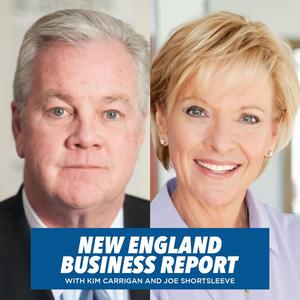
Speaker 1: This is the New England Business Report with Joe Shortsleeve and Kim Kerrigan, a weekly round up and discussion of the top business news impacting our New England economy.
00:00:09
Speaker 2: And good morning and welcome to the New England Business Report. On this Sunday morning, July the twenty sixth, Joe shortslive here along with the Kim Kerrigan and Kim. Good morning to you, Good morning.
00:00:21
Speaker 3: To you, Joe, on this fine Sunday morning.
00:00:24
Speaker 2: Yeah, you know what, today is our last show in July.
00:00:28
Speaker 3: No time is flying, that is for certain.
00:00:31
Speaker 2: Next week August the second. We got five shows in August. You know, it got me thinking a little bit about the summer and two angles. One just the personal angle, but to the business angle. I mean, I think at this point in the summer, I'm pretty surprised that things have really gone. I mean, all the good news about you know, World Cup and the tall Ship and the two hundred and fiftieth anniversary and the Red Sox gave us a pretty good July too. I mean, yeah, would you agree.
00:00:56
Speaker 3: Absolutely, Yeah, it's been I've heard people saying, oh and over I wish every summer could be like this. It's been a great summer thus far. We'll see how. You know July was a good one. Let's see how August shakes. With gas prices escalating and and you know, war continuing and now terriffs starting to be placed everywhere, that does make you a little bit nervous for the business community.
00:01:21
Speaker 2: Yeah, personally, I think we did pretty well this summer. I'm sitting there going is it an eight or nine? I mean, that's why I'm arguing, Lily.
00:01:29
Speaker 3: Yeah, but there's more summer, Joe, don't count it out. We have another month.
00:01:34
Speaker 2: Don't listen to Joe's mother. It's not the Halloween yet.
00:01:40
Speaker 3: Although I have seen Halloween decorations in the stores, no, yes, yes, saw them this week. Almost went to the manager and said, get that down now.
00:01:50
Speaker 2: I want you to know.
00:01:53
Speaker 3: Yes, I was in a Marshall's and there was the whole back of the store was all Halloween decorations, which means Christmas is just about two minutes away.
00:02:03
Speaker 2: Thank you for that, right now, folks, add on this beautiful July morning. Hey, great show. Today we're going to be talking with the deputy editor of the State House News Service, one Colin Young, a regular visitor of the program. He's busy up there on that Beacon Hill because the ende of the legislative session is coming on July the thirty first. Normally, Kim, it's a hard stop and it's like, okay, guys, you can't do anything else until January. But they've changed the rules a little bit. Yeah, and he'll explain to us why things are a little different up there this year.
00:02:35
Speaker 3: So why is it that up there on Beacon Hill the thirty first of July sneaks up on him every year like it's a different date?
00:02:41
Speaker 2: Yeah, why is It's amazing? And not only that, but they leave it to a quarter to twelve, you know, you know, and it's like, what why It's like back in college days, you know, cramming for an exam, you know. But also he's going to talk about the ballot questions for the fall and I guess they're right night right now, they're down to nine. So he'll outline those as well, and then Doug Banks of the Boston Business Journal he'll be along as well. There are some fun headlines on the BBJ this week. Liberty Mutual debuts fuzzy yellow puppet mascot to join Limu the EMU.
00:03:18
Speaker 3: He's Liberty. He's Bibberty.
00:03:21
Speaker 2: Anyway, a lot of we can talk to talk about that as well.
00:03:24
Speaker 3: Second half of the show. Just when you thought those gas prices were declining, boom situation in the Middle East, it escalates and so do your gas prices. We're going to be joined by Mark shield Drop from Triple A Northeast for an update and oil and gas prices and what Mark thinks the fall is going to hold. Unfortunately, boy, in the last week we have seen gas prices go up ten cents. You know, it's just insane, it's just craziness. We knew that the World Cup brought a bunch of wonderful fans and great opportunities to the area. We just talked about that and how terrific it's been. But there's been so businesses that have really gashed in and one of those is the beer industry. You know, the scott said you drank them out of beer, but that was not an exaggeration they did. And you know, beer's been a declining industry because people have been drinking, you know, these different kinds of hard drinkers, hard liquors in a can. You know, each one of these beer companies has one. Well, now maybe there's a push for the beer industry again. So Dan Canary's going to join this. He's the co founder of Harpoon Brewery as well as the co founder and president of Barrel One Collective.
00:04:36
Speaker 2: Yeah, I mean, apparently during the World Cup, and this is a story out of ESPN talks about emergency deliveries of beer.
00:04:44
Speaker 3: I know.
00:04:46
Speaker 2: You got a police escort with that too, I mean.
00:04:50
Speaker 3: But we did not want the We did not want the Tartan Army to be upset.
00:04:55
Speaker 2: But you know, the other stat that falls out falls up right behind that is that beer consumption has fallen steadily for a decade in Canada, the US, and Europe. So we'll talk to Dan Canary about that as well.
00:05:09
Speaker 3: But first, this morning this week marks the end of the legislative session up there on Beacon Hill, and we are joined by the deputy editor of the State House News Service, Colin Young. He's gonna talk to us a little bit more about what we can anticipate. Colin. Here, we are at the end of the session, a little bit different this year than in other years, but it does seem like they always push things off to the very end.
00:05:29
Speaker 4: That's right, Kim, you know, no matter what changes, things always stay the same up here on the If it's July and an even numbered year, it's busy up here. This year is no exception, and like you said, things are a little bit different this go around.
00:05:45
Speaker 5: The old way of doing.
00:05:46
Speaker 4: Things was that July thirty first was the deadline for the House and Senate to actually pass bills and get them onto the Governor's desk, because after the thirty first they weren't allowed to hold formal votevoting sessions for the rest of the year.
00:06:03
Speaker 5: Under the new rules the.
00:06:04
Speaker 4: House and Senate have adopted, they can hold formal sessions for the remainder of the year, but only for certain things, and one of those categories are things that get put into negotiations by July thirty first, So this year it's more of a scramble to start negotiations than it is to wrap them up.
00:06:24
Speaker 6: But it still means that there's plenty of work to do.
00:06:28
Speaker 4: Each branch is looking at what the other has passed so it can maybe match up on some things and get compromise talks started.
00:06:36
Speaker 2: Well, Colin, what does start negotiations mean and does what's hanging in the balance So what.
00:06:44
Speaker 4: They technically have to do is create a conference committee for bills by July thirty first. That's three representatives, three senators.
00:06:52
Speaker 6: And they're the ones who.
00:06:53
Speaker 4: Hash out the compromise that will, ultimately, if they reach one, be voted on and sent to the Governor's And there's already about half a dozen of these negotiating panels working and they're talking about major issues. We've got a group going on energy, affordability, immigrant protections, child welfare, data privacy, cell phones and schools, and social media regulation just for a couple and then there are big, big issues that we're expecting to go into those conference committee talks over the next week by the thirty first. That includes a massive economic development bill.
00:07:35
Speaker 6: And also legislation that deals.
00:07:37
Speaker 4: With the campaign finance and of ballot questions.
00:07:42
Speaker 3: Talk about that economic bill and what's in it in why this is so important up there on Beacon Hill.
00:07:48
Speaker 4: Yeah, So this is one that the House and Senate generally pass every session, every two year session, and it's a massive bill, four hundred ish million dollar of borrowing, and this is money that gets spread out all around the state, some of it for specific local projects in basically every district of the state, and then some of it for major statewide initiatives.
00:08:14
Speaker 6: You know, we're going to be.
00:08:15
Speaker 4: Looking closely at exactly how the House and Senate land on regulation for artificial intelligence in this bill.
00:08:24
Speaker 6: That's one of.
00:08:25
Speaker 4: The major points of contention here. And another one is housing policy. The branches didn't do a standalone housing build this session, but they've loaded this one up with a ton of housing policy, including in the Senate version an ability to have duplexes on any single family zoned lot statewide. So they've really loaded up with a ton of policy, and that I think will make it one that might take a little while for the House and Senate to reach a compromise on, just because there's so much to untangle.
00:08:58
Speaker 2: Magaing with the w edit of the State House Service Colin Young, Okay, Colin. On that topic, there's a lot of conversation about the fun agenda. Now is that part of this legislation and what is it?
00:09:09
Speaker 4: It's right, that's part of the Senate Economic Development Bill started out as a group of ten amendments that senators offered. They said it was based on all the fun they had around the World Cup in the America to fifty all the celebrations that were in and around Boston this summer.
00:09:29
Speaker 6: They said they want to keep the.
00:09:30
Speaker 4: Party going, so they've proposed things like allowing for later last call, permanently, allowing for earlier alcohol sales on Sunday mornings, and a local option that would allow municipalities to adopt happy hour and revive that which has not been allowed in Massachusetts for forty years or so. They see this as a way crucially to keep young people in Massachusetts. With such high cost of living here, young people often can't stay here if they're born and educated here, they often have to go somewhere else to be able to afford a house. So they see this as one way to entice young people to stay in Massachusetts by making the state a bit more fun.
00:10:17
Speaker 3: But over there on the house side, they're not crazy about this idea.
00:10:21
Speaker 6: They are not.
00:10:22
Speaker 4: House speaker Ron Mariana never had trouble finding fun. I really think that fun is the state's problem in the same way.
00:10:32
Speaker 5: You know.
00:10:32
Speaker 4: He also said that he remembers when the state did have happy hour and the problems with that that led to the state getting rid of it, prohibiting it.
00:10:42
Speaker 6: So I think that one especially could be a heavy lift to get the House.
00:10:47
Speaker 4: To agree on happy hour and even some of these other loosening of alcohol laws. That's another reason I think this Economic Development bill might be one that is under negotiate into the fall.
00:11:01
Speaker 2: Yeah, talking to Colin Young, deputy editor of the State House News Service. You know, I've been around long enough Colin to remember why they did away with happy hour, And it was some horrific car crashes that happened, so at the time, that was really the momentum behind changing the rules there. Okay, let's move to the fall. Let's talk about the ballot questions. I'm hearing we have nine nine, yes, nine questions. So save some time, folks when you go to vote.
00:11:29
Speaker 6: That's right, you're going to need the time.
00:11:31
Speaker 4: The ballot could be three pages long, you know, two sided pages and everything, so it may take a while in the ballot box this November.
00:11:40
Speaker 2: What's in there?
00:11:42
Speaker 4: So the nine questions really run the gamut. Number one would apply the public records law to the state legislature and the governor's office.
00:11:52
Speaker 7: There are questions on.
00:11:55
Speaker 4: Doing away with democratic and Republican primaries and moving us towards what sometimes called called a jungle primary with all candidates in the same contest.
00:12:04
Speaker 6: There's a question that would limit how much tax.
00:12:07
Speaker 4: Revenue if the state could collect each year with mechanisms to give some of that back to taxpayers if the state exceeds the limit, and then we also have to repeal questions on the ballot Questions eight and nine. Eight would repeal the twenty sixteen legalization of adult use marijuana, and question nine would repeal the twenty twenty four gun control law that passed up here on Beacon Hill.
00:12:32
Speaker 3: And which one of these is going to be the one that you know, we all are turning the channel because we see so many commercials and it's just an inundates of Joe you know what I'm talking about, right, We've all.
00:12:42
Speaker 7: Been there.
00:12:44
Speaker 2: Not No wait, we got to get Kim Kerrigan up there on Big and All.
00:12:48
Speaker 5: You know what I mean?
00:12:50
Speaker 6: These ads that just.
00:12:51
Speaker 4: You know, fill all the time during commercials and football games especially.
00:12:57
Speaker 6: It could be any number.
00:12:59
Speaker 4: There's a lot of well resourced groups behind these questions. I wouldn't be shocked to see it be one of the two election related questions. Elections and voting is such a hot topic right now.
00:13:12
Speaker 6: Especially nationally that.
00:13:15
Speaker 4: I wouldn't be surprised to see those get quite a lot of attention this fall.
00:13:19
Speaker 2: Yeah, I Colin, there are also is movement I understand to limit the number of ballot questions that can actually appear in the fall. Is that correct?
00:13:28
Speaker 6: Yeah, there's been some talk up here about that.
00:13:30
Speaker 5: I think that's something.
00:13:31
Speaker 6: To keep our eye on next legislative session.
00:13:35
Speaker 4: Democrats appear hate the ballot question process because it frankly goes around the legislature, and they have been floating ways of changing it, making it a little bit harder to get questions onto the ballot and also making it a little bit more transparent about who is actually supporting these questions. Next session, we're going to hear about maybe some some even bigger ideas for ways to reform this process.
00:14:05
Speaker 2: Yeah, but colin also allows them to sidestep issues that they don't really want to deal with, right.
00:14:11
Speaker 3: Exactly, that's right.
00:14:13
Speaker 4: Advocates who bring questions to the ballot say, you know, we wouldn't be doing this if the legislature itself had already acted on this issue. You know, they just the legislature and advocates just do not see eye to eye on this one.
00:14:28
Speaker 7: At all.
00:14:29
Speaker 4: You know, many advocates say, if the legislature was as active as we'd like, we wouldn't need this process. Uh. And the legislature sees it as you know, advocates trying to go over their head and make laws without.
00:14:43
Speaker 3: Them, like giving back tax dollars, for example, do that, and do that, Kim Colin, Young Colin, thanks so much for being a part of the show. We've got lots more conversations coming up about that ballot before we actually all see it in the fall. All right, you don't come in your way, folks. Doug Banks, he's the executive editor of the Boston Business Journal. He will join us. This is the New England Business Report.
00:15:15
Speaker 1: Kim and Joe will explore more business news that impacts our New England economy when they return.
00:15:23
Speaker 2: Hi, I'm Joe Shortzley, host of the New England Business Report on WRKO. I recently sat down with Mike Marshall of Martial Wealth Management. Here's what he shared.
00:15:31
Speaker 1: Well.
00:15:32
Speaker 8: With a three to five year time horizon before retirement, the focus shifts totally from accumulating the assets, who optimizing, protecting and transitioning the assets. At this point where you're so close to retirement. Every decision you make now will directly affect your income, taxes, your income, and your legacy. You need to build a formal retirement income plan. The last thing you want to do is run out of money if you are not working with a professional team of advisors and you yourself for accountable for the results. At Martial Wealth, we make ourselves accountable for the results of our clients.
00:16:05
Speaker 2: If you're serious about protecting your estate and building retirement income, I suggest you call Mike today eight five, seven, three, four, two ten thirty or Martialwealth dot Com.
00:16:14
Speaker 9: Advisory services offered through Capital Analysts or Lincoln Investment Registered Investment Advisors. Securities offered through Linkeln Investment Broker Dealer Member FINRA, SIPC, Lincoln Investment dot Com, Marshal Wealth Management and the above firms are independent and not affiliated.
00:16:24
Speaker 10: It's gonna be a subarusenter subru Summer is finally here. Buggle up for an unforgettable summer and a trusted twenty twenty six SUPERU Horster or Porster Hybrid. Buy with US low as one point nine percent financing for up to thirty six months, or lease for as low as two seventy nine per month with forty two seventy eight do it signing with standard symmetrical all wheel drive, active super safety features and a flexible, roomy.
00:16:53
Speaker 11: Interior for your cargo.
00:16:55
Speaker 10: The twenty twenty six Forester delivers Superu's trusted mix of capability, safety and versatility. Make this summer US SUBERU Summer in the trusted twenty twenty six SUPERU Forrester or Forester Hybrid. Buy with US low as one point nine percent financing for up to thirty six months, or Lee's for as low as two seventy nine per month with forty two seventy eight do it signing four complete details visit Subaru of New England dot.
00:17:22
Speaker 2: Com and welcome back to the New Engle Business Report on this Sunday morning, July the twenty six. Yeah, summer is moving. Time not to check some headlines on the Boston Business Journal with the executive editor, one Doug Banks. Doug, thanks for joining us this morning. I really enjoyed the headlines you selected this week. I got a real kick out of them. Hopefully we have time to get them all in, but let's start with this one from Liberty Mutual. Liberty Mutual debuts fuzzy yellow puppet mascot to join Limu, the EMU and Doug. So tell us about this.
00:17:56
Speaker 12: So, you know, I think selling insurance is not the most easy thing to do. You're selling something that's not actually a physical product. If you think about it, like what distinguishes you know, an all State from a Farmer's from a Liberty Mutual. We don't really know, right, I mean, at the end of the day, you're watching TV, you're here in the radio, and you've got this this sort of challenge to figure out what it is that you're actually buying. So Liberty Mutual has first had Limu, Emo and Doug. That was the character they created eight years ago, and now what they've done is create this new one called Liberty Bibberty and playoff of some of their more recent commercials with that name. It's a fuzzy yellow creature made with by Jim Henson's Creature Shop, and the idea is to just keep their insurance company their brands top of mind when people are shopping for insurance, and using a fuzzy yellow muppet basically is most what they wanted to do. One of the reasons why they chose it to Maren helping our reporter talk to their chief marketing officer was so that they could do real life sort of show. You know, they can bring the creature to sort of activate brand activations at events and in person things. So you know, who doesn't love a fuzzy ball of yellow, right listen.
00:19:11
Speaker 3: I think a mascot is brilliant, and especially in a world like this, like you said, where it all sort of runs together and we all know Doug and the you know and the Limu, and so I think it's great good for them. When does the debut. By the way, it just started this past week, so there you go.
00:19:27
Speaker 12: Watch and I caught one on one of the networks just a couple of days ago, so it absolutely got to learn out now and you can see them online as well.
00:19:34
Speaker 3: Hey, you guys got a cover story this week that I think is so great because this is something that I have taken note of because I go to marketplace on a regular basis because I live up here on the North Shore Open air boom. This whole idea that mauls are all moving outdoors, it seems like it's taken a little bit Doug, but this has really taken off.
00:19:53
Speaker 12: Huh yeah, so I didn't realize. So our retail reporter Isabelle Hart, was looked at these open air tail areas. So you mentioned Market Street in Lynnfield. The very first one was Derby Street in Hingham, which opened in two thousand and four. I mean it's been twenty two years, which I couldn't believe. But then there's a legacy place in Dedham.
00:20:13
Speaker 7: And you know, if you think back twenty.
00:20:15
Speaker 12: Years ago, there was no guarantee that these outdoor retail marketplaces were going to be successful. We saw malls starting to die. We continue to see malls really struggling, the indoor malls. But in New England it's not like the weather is really cooperating, like I really want to be walking around in a Our idea was really like a strip mall. Right, we've had strip malls for years. You don't really want to walk around in the cold. But what these places have done is created sort of lifestyle centers. So it's not just about you go in there to shop at a grocery store, although they often are anchored by a high end grocery store like a Whole Foods, but they're also doing other things. They got a yoga studio, they got the cafes, they've got the ice cream places, you've got you know, they've got all kinds of stuff, and it's honestly, it's not even just high end. We are seeing the Rentham outlets also doing really well. They just opened seven new retail spots down in the Rentham Outlets and they've also opened i think three restaurants and a beer garden, so they had not had restaurants there before, but they're they're going as well. So these places are they're they're flying like ninety five some one hundred percent capacity, so no no spaces and you know, years after COVID, this is a pretty big success.
00:21:31
Speaker 2: Yeah, so can we finally say it the malls are dead?
00:21:33
Speaker 12: I wouldn't say the malls are dead, but they're not the malls that you would expect if you look at like some of you know, the Liberty Mall up on the North Shore and the Avers, it's there's not a lot of stores there, but there's a church running out of there. Northeast Dark is doing some doing a lot of their programming out of there. They're using the indoor malls for different things that aren't aren't shopping anymore, so they're shopping at the indoor mall. Yes, probably dead, but those other malls are being used for other things.
00:21:58
Speaker 3: So dug Another headline grabbed my attention. Boston University paid large pilot deal in city history. So what's going on there with BU?
00:22:08
Speaker 12: So as you as we all know, there's a lot of colleges and universities in the City of Boston. We also probably know that those are nonprofit organizations. They don't pay taxes. So what they do is they pay payments in lieu of taxes or pilots. And they really started with the City of Boston in sort of contract, you know, structured form in twenty twelve under Mayor Menino. The last time they had negotiated was in twenty nineteen. And so this past week BU and the City of Boston agreed to what is essentially the largest payment in lieu of taxes or a pilot agreement in the city's history, with one hundred and four million dollars over the next five years. So BU is going to pay the city six point seven million for this past fiscal year twenty twenty six, which just ended in June. Another eight point three million a year for the next four years in up till fiscal twenty thirty. Now, this is because universities, while they give a lot back to us, they give us their students and they you know, they take up a lot of real estate. That real estate could be used for tax purposes if it was a commercial entity. And of course they do use fire, they do use police services, they're using city services. So this is sort of an opportunity for the colleges to give back to the city for a lot of the city services.
00:23:20
Speaker 7: That they're using.
00:23:21
Speaker 12: And you know, this is a good example of a school like bu which obviously takes up a ton of real estate right downtown over long come av really sort of working with the city in partnership. We've seen other schools do it as well. Northeastern signed up pilot for fifty million in cash and community benefits over the next five years. Wentworth Institute also signed a pilot recently, so not unusual to sign it, but when it's the biggest one and it's you know, over one hundred million dollars for five years, it was a big definitely a big headline and good and good for the city at a time when office building as we know the office building revenue it was going down, and so the city's looking for revenue wherever it can get it.
00:24:03
Speaker 2: Doug Banks, Executive Editor the BBJ, is our guest. Another headline caught my attention, of course, Cape Cod three Cape Cod towns top of the state's hottest housing market rankings. I have to tell you I read this.
00:24:17
Speaker 12: One, Doug, Yeah, I think a lot of people did too. So the Business Journal is our parent company. We look at data using a weighted formula. So it's not just pricing, but it's also sales momentum, so how houses are selling and how often and so for the second quarter, the town of Harwich, the zip code zero two six four five was the hottest housing market in the state. It had an average sale of one point one million dollars. It's sales momentum carried it over a number of other places. And what's interesting is Howich's a pretty small town. There's not a ton of sales. But this past quarter they saw a bunch and they all happened to us. They must have been down near the water because it was all over, you know. The median price was over a million dollars. In fact, it was ranked fifteenth in the entire country for the second quarter, and the average price jumped up over a quarter million dollars, so that was big. The second second hottest market was east Ham which had a one point three million dollar medium price, and then next door to Harwich was Brewster number three and that was five hundred and sixty seven thousand dollars, so, you know, a little bit less, but high sales momentum and still top one hundred in the nation. So we saw lot going on on the cape this quarter.
00:25:34
Speaker 3: Absolutely well, let me ask you, kind of stepping away from the headlines that you sent us, but I want to ask you, because we haven't had a chance to chat with you for a bit. World Cup, what'd you think? Because you are a huge soccer fan. I know you were in the stadium a few times. Did you enjoy it and did it live up to what you had hoped it would be. I don't know if it was what we anticipated, but what we hoped.
00:25:56
Speaker 12: Yeah, that's a really great way to put a kim. It was not what we anticipated because what was going on all of the lead up was pretty chaotic. It was a lot of disorganization, but at the end of the day, I think we lucked out with a country like Scotland and they're crazy fans coming. I think that it was a huge success. I think you're seeing it now with the I don't know if you saw the viral traffic cone that was brought over and the sister city partnerships that were forming. I think that Boston acquitted itself very well. I think if you look at the marketing of our city versus the you know, over fourteen fifteen other cities in North America that hosted, I think Boston came out on top from a marketing standpoint. I think Boston was ranked number one among international visitors for the time that they had here. So Boston could not have done better in terms of how it all ended up. We absolutely could have done better in the run up to get there, and so I think we in many ways lucked out. But I think it really was a success. The games I went to absolutely just just super fun. The fans, there was no political tensions, just everybody there was have a good time. It was a really really great month month and a half in the city of Boston and our region, and yeah, super successful. And then having the tall ships come immediately on the heels of that brought it in another million people. I thought we had a really it was a really successful summer so.
00:27:13
Speaker 2: Far, no doubt about it. All right. He's Doug Banks, executive editor of the Boston Business Journal. Thanks so much for joining us on this Sunday morning. And a little later in the program, we're gonna be talking with Dan Canary, president and co founder of Barrel One Collective. Of course the founder. They are the folks that came up with Harpoon Ale and we're going to talk about what the World Cup did for beer prices.
00:27:33
Speaker 1: Kim and Joe. We'll explore more business news that impacts our New England economy when they returned. The New England Business Report on w RKO is brought to you in part by super U of New England. Feel the freedom of a brand new twenty twenty four Subaru featuring symmetrical all wheel drive suparof New England dot Com.
00:27:51
Speaker 3: Welcome back everybody to put the England Business Report. Good to have you with us on this Sunday morning in July. Still come on your way this half hour. Gas prices back above four dollars a gallon, then no end insight mark shield drop from Triple A Northeast is going to join us to discuss that. But first, this is a time when we like to, you know, talk about some of the headlines that grabbed our attention. And this is one, Joe, that will not surprise you at all that this grabbed my attention. This was in the Boston Globe, but it was actually written by a New York Times writer. You're freezing in your office building. Here's why, now, Joe. You know, you and I worked together at Bloomberg. Whether it was December or it was one hundred degrees in August, I was wrapped in a blanket every single day, I don't matter what.
00:28:41
Speaker 2: You didn't have a space heater under your desk though, right.
00:28:43
Speaker 3: I did not, only because Bloomberg wouldn't allow it, because I believe if I remembered, yeah, oh yeah, I mean I think I even brought one, you know, and then they said no, no, no, you can't do it. All right, So why is it that these office buildings, and by the way, I'm not the only one who complains about this. They go into office buildings it's one hundred degrees outside and you get inside and you're just shivering, and it's so interesting because they said that one of the biggest reasons is because, of course, to save money at night all these huge office buildings, the air conditioning gets turned way way up, so that when people start to come into the buildings at seven o'clock in the morning, automatically the temperature goes way way down and it stays there, so there's no consistency in the building. Now, the whole idea here is that they're saving money. But are they saving money because you have to keep heating cooling heating cooling all the time. And the writer here for the New York Times, some eyes, the answer is no, they're not saving money. They that this is a ruse. It's also that you can't evenly heat a building. So no doubt everywhere that I sat in a building, I was always sitting under the air conditioning vent.
00:29:52
Speaker 2: Well. And there is your explanation, folks. Let's see another business headline. And you know, Kim, I think you actually predicted this.
00:30:01
Speaker 3: I know exactly what you're going to say, and yes I did.
00:30:04
Speaker 2: All right, go ahead, what am I going to say?
00:30:05
Speaker 3: You're going to say that they're going to keep the fun time after the World Cup? And I said, when we I said, that'll never go back.
00:30:13
Speaker 2: Yeah, Governor mar here, he wants bars and clubs to be able to stay open later. Looking at the State House, a news service, they passed a law briefly allowing to extend last call for an hour beyond their license limit during the World Cup until three am, and allowed for public consumption districts through July thirty one. But the governor is now saying, I use the World Cup as an experience, as an opportunity to say we should extend a bar hours, which we did. And the governor says that, she says she's glad to see that, and she wants it to continue. And I'm sitting here going she been talking to Tim Kim Kerrigan. I mean exactly what you said.
00:30:51
Speaker 3: You know, I think I said it at the time. It's like a tax. Once a tax has been loving, it never comes away. They just find another way to present it or whatever the case. I don't actually think this is a bad thing. I really don't, I think, and I think, you know, it's going to be up to the individual business owners to make the decision as to whether it is a good thing for them. And I think there are places in Boston this will be a really good thing.
00:31:14
Speaker 2: Yeah, I know, on this whole bit that people talk about and now they're debating it in the state Senate. You know, Boston not being a fun city that we're boring. I mean, okay, all right, does this make us a fun city? I mean, does this make it, you know, less boring?
00:31:28
Speaker 5: Yeah?
00:31:29
Speaker 3: I think I think it'll be great for the college kids, that's for darn sure. They're gonna think, you hear, a much more fun city. I think that. I really have not heard much from Have you heard much from the police union, like how they feel about it? I haven't heard much from them about it.
00:31:43
Speaker 2: No, I don't. Yeah, I'm sure they're not delighted with that. I mean, but hey, here we go, and you know, the pendulum is swinging the other direction. I'm Joe Shure, host of the New England Business Report on WRKO. I recently sat down with Mike Marshall of Martial Wealth Management. Here's what he shared.
00:32:07
Speaker 1: Well.
00:32:07
Speaker 8: With a three to five year time horizon before retirement, the focus shifts totally from accumulating the assets to optimizing, protecting, and transitioning the assets. At this point where you're so close to retirement, Every decision you make now will directly affect your income, taxes, your income, and your legacy. You need to build a formal retirement income plan. The last thing you want to do is run out of money if you are not working with a professional team of advisors and you yourself are accountable for the results. At Martial Wealth, we make ourselves accountable for the results of our clients.
00:32:40
Speaker 2: If you're serious about protecting your estate and building retirement income, I suggest you call Mike today eight five, seven, three, four, two ten thirty or Martialwealth dot Com.
00:32:49
Speaker 9: Advisory services offered through Capital Analysts or Lincoln Investment Registered Investment Advisors. Securities offered through Lincoln Investment Broker Dealer, Member fin SIPC, Lincoln Investment dot Com, Martial Wealth Management, and the above firms are independent and not affiliated.
00:33:00
Speaker 13: It's gonna be a Subaru Summer.
00:33:03
Speaker 10: Subaru Summer is finally here. Buckle up for an unforgettable summer and a trusted twenty twenty six Subaru Hoister or Forester or hybrid. Buy with US low as one point nine percent financing for up to thirty six months, or lease for as low as two seventy nine per month.
00:33:20
Speaker 11: With forty two seventy eight do it signing.
00:33:23
Speaker 10: With standard symmetrical all wheel drive, active Subaru safety features, and a flexible, roomy interior.
00:33:29
Speaker 11: For your cargo. The twenty twenty six Forester.
00:33:32
Speaker 10: Delivers Supru's trusted mix of capability, safety and versatility. Make this summer a Subru summer in the trusted twenty twenty six Subaru Forester or Forester or Hybrid. Buy with US low as one point nine percent financing for up to thirty six months, or lease for as low as two seventy nine per month with forty two seventy eight do it signing. For complete details, visit Subaru of New England dot com.
00:34:01
Speaker 3: Ah Well, Joe, no doubt about gas prices. They are on the rise once again, surging over four dollars a gallon on the national level as well as here in Massachusetts. In fact, we're sort of keeping track, it seems, with the national increase. You know, they dipped for a bit there, ye, back down in the three dollars, you know, but in the.
00:34:21
Speaker 2: Three prices are actually coming down absolutely.
00:34:26
Speaker 3: All of that, of course, because of the alleged ceasefire between the US and Iran, which clearly is over Markshield Drop is the senior spokesperson for Triple A Northeast and he joins US now and always has some insight on this mark. Just when you thought it was safe, right, boom, here we are again.
00:34:43
Speaker 11: What happened?
00:34:44
Speaker 7: Yeah, here we go again.
00:34:46
Speaker 14: What happened is that we're back to escalation and tensions between the United States and Iron. The straight up almost is effectively closed again, and we're seeing oil prices climb. So oil prices have risen pretty sharply the past weekend. Brent crude is closing in one hundred barrels one hundred dollars a barrel today, and domestic cruit is above ninety again, and that's a pretty sharp increase from what we were looking at, you know, just looking at just before the fourth of July holiday, domestic crud was just under seventy dollars a barrel and Brent was pretty much the same, and we were enjoying much lower prices. So we're just at a point where we're in the heart of the summer driving season, domestic supplies a gasoline or tightening, and the war impact is rearing its head once again. So not good time to be filling up at the pump, that's for sure. You can still spend under four dollars a gallon if you shop around, but that average above four dollars. Right now as we're speaking, it's at four oh nine, and it could potentially continue to increase in the coming days and weeks of the situation in the Middle East doesn't start to cool off.
00:35:56
Speaker 2: Mark, are there other pressure points here on gas and oil price is or it kind of feels like it's just one hundred percent straight of hormuves in Iran.
00:36:06
Speaker 7: You know, there's a number of different factors. I think the big one certainly is the war impact.
00:36:10
Speaker 14: You know, markets priced in an expectation that we would have a resolution of the conflict a.
00:36:16
Speaker 7: Few weeks even before that cease far and.
00:36:19
Speaker 14: Reopening of the straight of Hormoness announcement occurred earlier before the real start of the summer driving season, and so that's part of the reason why we saw prices go down even a.
00:36:30
Speaker 7: Bit before we got that deal.
00:36:33
Speaker 14: You know, markets, I think are kind of expecting that we are going to start to see things cool off. As part of the reason why oil hasn't shot back up to one hundred and ten dollars a barrow yet, but as time continues on it doesn't get resolved, you know, that's going to keep some pressure on, just from the realization that this could last longer. So the war impact is certainly the great one, but really it's domestic supply and the overall constraint of supplies around the world. It's been really interesting to watch how this play has played out in particularly, you know, looking at China demand. China's really cut back on their demand over the past few months, and that's really something that wasn't really expected. So early on in the conflict, people were talking about one hundred and fifty to two hundred dollars barrel oil. What they weren't anticipating was the sharp drop in Chinese demand.
00:37:26
Speaker 7: Also, significant releases.
00:37:27
Speaker 14: From strategic reserves around the world have really helped serve as a major buffer, and we've seen that here in the United States as well. You know, the inventory of the Strategic Petroleum Reserve right now is at the lowest level since March nineteen eighty three. The administration released about five million barrels last week, ten millions so far this month, and we still have about seventy million or so more barrels that are set to be released based on the pledge of one hundred and seventy two.
00:37:55
Speaker 7: Million earlier this year.
00:37:58
Speaker 14: And I think demand is certain factor in driving pricing, and for gasoline here has been pretty strong. You know, we've had a fairly strong summer driving season. We're trending below last year just a little bit, but we're not seeing a sharp drop off that would maybe help ease some pressure on prices, and domistic supplies are pretty tight currently. We've got about two hundred and eleven million barrels of gasoline and storage here. Last year we had two hundred and thirty one and the five year averages two twenty eight. So that tightening supply, we had a lot of question marks about the future.
00:38:34
Speaker 5: You know.
00:38:34
Speaker 14: Really, I think all together is the main reason why we're seeing the prices climb. But that said, I think the release of the reserves and less demand globally.
00:38:46
Speaker 7: Has really kept the lid.
00:38:47
Speaker 6: On the prices.
00:38:48
Speaker 14: Believe it or not, things could be much worse, even though they don't look too good right now.
00:38:52
Speaker 3: When we first had the escalation, they're in the strait and Brett price is shot up. Then we started to come down. Did it come down as you had anticipated, because a lot of people believed that it would take a long time for it to come down. If it starts to come down again, how long do you think it'll take?
00:39:10
Speaker 14: You know, I think it'll be a similar pattern that we've seen, because we've had a couple cooling off periods with optimism, only for helps to get dashed and then we saw a peak of about five dollars and I'm sorry, four dollars and fifties cents a.
00:39:24
Speaker 7: Gallon in late May and then start to tick down.
00:39:29
Speaker 14: So I think we would see similar you know, we may see prices continue to climb as long as this continues. If we get the announcement of renewed negotiations and we begin to see progress in getting cargoes in and out of the strait of Hormos, we'll probably see prices kind of start taking down a penny or two a day over time, very gradually. Markets are at a point now where they need to see some long term stability, especially with what we've seen with the tenuous nature of the negotiations and any sort of piece deal. So I think markets maybe a little bit hands off at this point. So we're seeing less interest in volume in the futures contracts for oil and gas in particular, in part because when there's this volatility uncertainty, people don't want to lose their shirt. You know, it's not going to be that things can turn around. So it's very difficult to hedge when prices are volatile. But I think we would see prices gradually tick down to a certain level. But we're not going to see the bottom fallout anytime soon. I think we need a lot more time of stability before prices really can start to get back to a more normal level.
00:40:43
Speaker 2: Right, Yeah, talking with the Mark shield Drop, he of course is the senior spokesperson for Triple A New England. Now, Mark you track travel, right, So I guess I'm wondering and all this chatter about gas prices, what effect has the price had on travel? And here in England or in distance people are traveling.
00:41:03
Speaker 7: Yeah, it's been kind of interesting.
00:41:05
Speaker 14: So there has been an impact on travel, but travel is still pretty strong. We're seeing a little bit less air travel when you look at TSA data compared year over year, we.
00:41:16
Speaker 7: Are seeing slightly less gasoline demand year over year. Our travel business is still doing well.
00:41:22
Speaker 14: People are still determined to travel, but they're definitely much more cost conscious when prices are higher, so a lot more shopping around. We're seeing some behavior change where people are planning shorter trips, or they're scaling back their trips a little bit by maybe not taking that guided tour when they're on vacation instead just kind of figuring things out for themselves, or they're shopping by price, so they're calling a travel agent saying, you know, here's my budget, where can we go, and then our travel agents figure out what works within that budget, rather than picking the destination and then making that trip happen. That way kind of flipping the process on its head. So people are cutting back as much as they can, but they're not quite giving up travel necessarily.
00:42:11
Speaker 7: So we're still.
00:42:11
Speaker 14: Seeing near record levels of folks taking vacations and driving. So it's busy out there, but certainly there has been an impact. However, as we were heading into the July fourth holiday, prices were on a down trend, so that spurred some maybe some enthusiasm for traveler. People felt like they've been through the worst in terms of the high prices, and so now they're willing to spend a little more with the expectation that prices will probably keep taking down right now, folks looking at flights, it's kind of a big question mark. I'm in that position myself looking at fall and winter airfare. I'm not sure if prices are going to go down or if they're going to actually start climbing once again.
00:42:55
Speaker 7: So trying to time.
00:42:56
Speaker 2: The best.
00:42:59
Speaker 14: Time to book a flight or lock in an accommodation is really difficult right now. So some of that anxiety or uncertaintyes certainly is having an impact overall. But you know, it seems like folks are going to make travel happen no matter what, at least until their credit cards are maxed out and they just can't anymore.
00:43:16
Speaker 7: But we're not there quite yet.
00:43:17
Speaker 3: Well, Mark, thank you so much for being a part of the show today. No doubt we will be chatting with you again very soon. This is a story that we'll have legs heading into the fall, all right, Still come in your way, world cut came just in time for one industry. We're going to tell you which one when we come back.
00:43:31
Speaker 1: You are listening to the New England Business Report on the Voice of Boston w RKO six 't eighty. Joe and Kim will be right back.
00:43:40
Speaker 13: It's gonna be a super U suns counting ouster Awesummer.
00:43:49
Speaker 11: No super U Summer is finally here.
00:43:52
Speaker 10: Hit the road and the trusted all new twenty twenty six super U Outback ye with zero point nine percent financing for up to forty eight months or lease for just three oh five per month for thirty six months with forty three.
00:44:04
Speaker 11: Oh four do it signing. The all new Subaru.
00:44:07
Speaker 10: Outback is built for bold getaways with standard symmetrical all wheel drive, upgraded advanced Subero safety features and lasting value for years of reliable adventure by the twenty twenty six out that with zero point nine percent financing for up to forty eight months or lease for just three oh five per month with forty three oh four do it signing. Make this summer a Subru Summer in the all new twenty twenty six Subrew Outback. For complete details, visit Subru of New England dot com.
00:44:36
Speaker 13: It's gonna be a super little s.
00:44:40
Speaker 5: Hi.
00:44:40
Speaker 2: I'm Joe Shortzleey, host of the New England Business Report on WRKO. I recently sat down with Mike Marshall of Martial Wealth Management. Here's what he shared well.
00:44:48
Speaker 8: With a three to five year time horizon before retirement, the focus shifts totally from accumulating the assets who optimizing, protecting and transitioning the assets. At this point, will you so close to retirement every decision you make now will directly affect your income, taxes, your income, and your legacy. You need to build a formal retirement income plan. The last thing you want to do is run out of money. If you are not working with a professional team of advisors, then you yourself are accountable for the results. At Martial Wealth, we make ourselves accountable for the results of our clients.
00:45:21
Speaker 2: If you're serious about protecting your estate and building retirement income, I suggest you call Mike today eight five, seven, three, four, two ten thirty or Martialwealth.
00:45:30
Speaker 9: Dot Com Advisory services offered to Capital Analysts or Lincoln Investment Registered Investment Advisors securities offered through Lincoln Investment Broker Dealer Member fin SIPC, Lincoln Investment dot Com, Martial Wealth Management and the above firms are independent and not affiliated and welcome.
00:45:41
Speaker 2: Back to the New ENGO Business support. On this Sunday morning, July the twenty sixth, you know, Kim, one of the headlines that came out of the World Cup had to do with beer consumption. You know, a lot of good things happen, you know, with the World Cup, but beer consumption, I guess was one of them, and I guess the beer industry certainly need it. So we dialed up Dan Canary. He's the president and co founder of Barrel One Collective. There, of course the folks who came up with Harpoon and Harpoon Ale, and we welcome Dan to the program. So Dan, let's start with the headlines here. The good news FIFA World Cup has been a bonanza for beer sales in the United States.
00:46:21
Speaker 5: Tell us, well, you know it was. It really was a great story. Talk about a happy hangover. I mean, I think all of us around Boston are walking around with a smile on our face because of what we witnessed in June and early July with the Tartan Army and all these wonderful visitors from overseas. It was very localized, and obviously there was an overall boost from people just watching these games and bars and restaurants and at home with friends over six week period. But the host cities, you know, did particularly well, and I don't think any city did better than Boston because we looked out getting our beloved.
00:46:54
Speaker 3: Scots, the Tartan Army. You know, when they first did a right and they said, well, we ran out of beer on the plane, I thought, oh boy, we could be in for some trouble. But they were a very happy group.
00:47:08
Speaker 5: They sure were, and it was infectious. You know. I was. We were having to celebrate our fortieth anniversary like the week that they were, the main week or two they were in town right in the middle of that. So I was visiting a bunch of our wonderful old accounts downtown, Beacon Hill, et cetera. And people weren't saying like I've never had I've been in this business for twenty or thirty years. I've never had a week like we just had. And it was happy. The weather was nice, people were smiling. You know, one thing we've always talked about. I've talked to you guys about this for years. You know, beer is the social lubricant, the beverage it should and when it's used properly, bring people together around the table, around a campfire, whatever it is. And we saw that time and time again and start singing and carrying on, and it just reminded people how much more fun it is being together enjoying good time versus just being alone.
00:47:56
Speaker 2: With your phone and talking with a Dan Canary. Of course, the co founder of Barrel One Collective. Okay, this all is happening against the backdrop of US beer consumption of falling steadily over a decade. Looking at a story here from ESPM, like the same thing going on in Canada and Europe. So what does Barrel One Collective do about that?
00:48:18
Speaker 5: Well, we keep making great beer. That's where we start because we don't think beer is going away. We've been as human beings drinking it for thousands of years and it plays an essential role. It's all natural ingredient. Before you know, Hodge malt on our nie. But I think you know, yes, the pie is growing smaller. At the same time, the number of breweries and distilleries and binaries has been exploding. So that's the economic fundamentals are not great. And I think one thing that's been going on, and you can see this from the shopping experience, is that you know our TD ready to drink market, you know, the cocktails in a can, the high noons. The surf sides, et cetera. Have kind of changed the game, and they're in the beer cooler, and they're also similar enough four or five six percent alcohol, So they are beverages of moderation. And you know one thing that in the beer business, it used to be you learned how to like beer because it was really your beverage of choices. You were learning to drink in moderation, hopefully, And I think an issue that we have is we're not just we're not creating enough beer consumers because folks like sweet beverages even though they say they don't. It's not great for your help, and they drink them sweet and they don't come into the beer aisle as often as they used to. So it's a macro problem that we face as an industry, and I think collectively we've going to remind people of the health benefits of modern consumption. But an all natural product, you know what you're getting when you buy a beer, and so those four ingredients, if you're buying some of these other things that are mixed up in a lab someplace, you actually have no idea what's exactly in that beverage. So we go to remind people of that.
00:49:50
Speaker 3: But Dan, as beer makers, you guys have sort of added to this RTD thing because and I get it, because you know, if you can't beat them, join them. But it seems, yeah, every brewery's got their own ready to drink that's right when we do.
00:50:07
Speaker 5: Too, and you're making these products and you're trying to compete against you know, again those high News Sunrise et cetera, because that's where so many of the consumers seem to be going. But again, I think we keep cutting the pie up and so it just makes it more challenging to figure out exactly where where the bulls or the puck is going. And then we're chasing. We're chasing more than we used to, and that's kind of never a comfortable places as a business owner.
00:50:37
Speaker 2: I'd say Dan Canary is our guest. Dan, I think the last time you were on this program, we were chatting about your role in the Governor's Business Advisory Counsel about the status of business here in the state of Massachusetts. I assume you're still doing that and any conclusions that you've drawn as of late.
00:50:56
Speaker 5: You know, we had the third meeting of the Overall Council on Tuesday, Lieutenant Governor was there. It was kind of the initial report of the six subcommittees, and I'm going to tell you I was incredibly impressed with the amount of work that has been done. Each committee came to the table with you know, five or six recommendations and they were like substantial recommendations, and we're now going to go back reflect on those, prioritize fine to do more research, et cetera. But we're hoping to come out with some you know, get the governor something that's fall and then wrap up by the end of the year. But yeah, I think all voices have been heard. You know, we face a number of challenges here in the componalth affordability being very very high on the list where those housing, energy or whatever. And we're we're going to come up with some recommendation. We hope we'll move the needle of bit in the positive direction, but very constructive conversations, you know, all encompassing, and we've gotten one hundred percent consensus. No, but that's never your goal. Your goal is to go with the best recommendation, but after get a good input from from good, smart will intentioned people. And I think we've done that.
00:52:05
Speaker 3: So, Dan, by your estimation, what is the state of business in Massachusetts at this point?
00:52:12
Speaker 5: You know, I would say overall it's it's positive, but it's nervous. I think, you know, there's certain industry doing okay. There are certain industries kind of in a little bit of ore a trend friend period, whether it's commercial real estate or life sciences or whatever, or craft throwing kind of going through periods of uncertainty. We're trench from maybe consolidation, whereas you know, certain other aspects of defense sector, et cetera are doing a little bit better k one of computing, et cetera. So I think it's a little bit uncertain. We've had We've had a pretty positive thirty year run here in Massachusetts. A lot of you know, good decisions, that hard work has been done in the past several decades to make us one of the strongest, most prosperous parts of the country in the world. But I think we looked down, we look ahead ten twenty thirty years, and it's like we've got to make some good decisions now about that. You know, the sur tax was passed, traumatic change in the tax structure, you know, and that increased costs for businesses and so folks, we're looking at all of those things, but the affordability on me. I have four kids in their thirties and all that. You know, it's like buying a house here. I talked to my friends from other parts of the country. Your kids are buying houses, bars, and I'm like, you know, it's two and three times when folks are paying in Columbus, Ohio or other parts of the country, and salaries are not two to three times. So you know, we've got we've got a structural problem that's a real challenge. And I hope that we're going to We're making some progress towards some of those things, but building more housing, making regular permitting easier, et cetera, et cetera.
00:53:39
Speaker 2: I guess yeah, that's kind of what I'm getting at here. And I know that your committee is still at work and we're all waiting the details of those recommendations, But can you take us inside one or two that are near and dear to you?
00:53:51
Speaker 5: You know, I probably shouldn't do that. You know, we've agreed, we're still controversial and we don't want stuff to get nitpicked. But I was say this, we know the way that we set up the subcommittee structure was to really take a very broad look. And this is not just like let's make it easier for business owners to make a lot of money. We have union folks in the room. We're talking about affordability, mobility, access, et cetera, et cetera. This is a broad, race based approach to how do we, you know, improve the competitiveness of the commonwealth so we keep generating or generate more in higher paying jobs. Tie in the higher ed tector community college sector with the employer community. You know, take a look at the taxes, regulatory you know situation, like all the licensure for people that you know, Secrepaila has already gotten at to like the LLC fees which on the highest in the country to start a business at five hundred bucks, which may not sound like a lot of money to some people, but you're starting out a mom and pop business. It adds up. So it's a real broad based approach to it. And I hope that at the end of the day that we're able to bring enough folks on board that they agree that most of these sons should move forward. You'll see that that's above my pay grid.
00:55:03
Speaker 3: Well, Dan let's bring this full circle and before we go here, just want to ask you, what do you hope the outcome for the beer industry might be after such a successful World Cup in so much exposure.
00:55:15
Speaker 5: I hope that and we've heard this conversation, whether it's creating these fund zones in cities, like letting the bars stay open a little bit later. That's one end of it, which is fine. I'm too well to care about the bars being open until three again. But I really hope that people witnessed the joy of folks having fun together and said, you know what, that's just something I should make a little bit higher priority in my life. And like get it, going out and enjoying a beer or two with friends is one of the most enjoyable things you can do. And you know they talk about the overall health major to look thing they talk about is loneliness and especially if you get older and so building building relationship, increasing your friend group. You know that beer can be a part of that, which it has been for thousands of years. I'd like people to kind of, you know, consider that when they're making the choices about how they're spending their time, and only that glow will continue for us. An fore the way we have a partnership now that were the wonderful breweries to its brewery in Edinburgh, and we're talking about trying to make Saint Andrew's Day a big day here in the city of Boston. So stay for that.
00:56:21
Speaker 2: That's great, sounds like a great idea. He's Dan Canary. He's the president and co founder of Barrow One Collective. Thank you very much for joining us on the New England Business Report.
00:56:31
Speaker 13: It's gonna be a Subaru Summer.
00:56:34
Speaker 11: Subaru Summer is finally here.
00:56:37
Speaker 10: Bugle up for an unforgettable summer and a trusted twenty twenty six Subaru Forster or Porster Hybrid. Buy with US low as one point nine percent financing for up to thirty six months, or lease for as low as two seventy nine per month with forty two seventy eight do it signing with standard symmetrical all wheel drive, active super safety features and a flexible the interior for your cargo.
00:57:01
Speaker 11: The twenty twenty six Forester.
00:57:03
Speaker 10: Delivers Superu's trusted mix of capability, safety and versatility. Make this summer US super of Summer in the Trusted twenty twenty six Supero Forester or a Forester Hybrid. Buy with US low as one point nine percent financing for up to thirty six months, or lease for as low as two seventy nine per month with forty two seventy eight do it signing four complete details visit Subroo of New England dot com.
00:57:31
Speaker 3: Well, Joe, that's going to do it for this edition of the New England Business Report on this Sunday morning. Everybody will join us next week when we chat with the CFO of the red hot Boston Red Sox about the season, how it's turned around, and what they anticipate might be happening in the fall.
00:57:49
Speaker 7: Fall ball.
00:57:50
Speaker 3: Wouldn't that be nice?
00:57:51
Speaker 2: Chetouldn't that'd be great? Nothing better than October baseball.
00:57:54
Speaker 3: That's coming up next Sunday eight am right here on the Voice of Boston WRAO AM six eighty
Speaker 1: This is the New England Business Report with Joe Shortsleeve and Kim Kerrigan, a weekly round up and discussion of the top business news impacting our New England economy.
00:00:09
Speaker 2: And good morning and welcome to the New England Business Report. On this Sunday morning, July the twenty sixth, Joe shortslive here along with the Kim Kerrigan and Kim. Good morning to you, Good morning.
00:00:21
Speaker 3: To you, Joe, on this fine Sunday morning.
00:00:24
Speaker 2: Yeah, you know what, today is our last show in July.
00:00:28
Speaker 3: No time is flying, that is for certain.
00:00:31
Speaker 2: Next week August the second. We got five shows in August. You know, it got me thinking a little bit about the summer and two angles. One just the personal angle, but to the business angle. I mean, I think at this point in the summer, I'm pretty surprised that things have really gone. I mean, all the good news about you know, World Cup and the tall Ship and the two hundred and fiftieth anniversary and the Red Sox gave us a pretty good July too. I mean, yeah, would you agree.
00:00:56
Speaker 3: Absolutely, Yeah, it's been I've heard people saying, oh and over I wish every summer could be like this. It's been a great summer thus far. We'll see how. You know July was a good one. Let's see how August shakes. With gas prices escalating and and you know, war continuing and now terriffs starting to be placed everywhere, that does make you a little bit nervous for the business community.
00:01:21
Speaker 2: Yeah, personally, I think we did pretty well this summer. I'm sitting there going is it an eight or nine? I mean, that's why I'm arguing, Lily.
00:01:29
Speaker 3: Yeah, but there's more summer, Joe, don't count it out. We have another month.
00:01:34
Speaker 2: Don't listen to Joe's mother. It's not the Halloween yet.
00:01:40
Speaker 3: Although I have seen Halloween decorations in the stores, no, yes, yes, saw them this week. Almost went to the manager and said, get that down now.
00:01:50
Speaker 2: I want you to know.
00:01:53
Speaker 3: Yes, I was in a Marshall's and there was the whole back of the store was all Halloween decorations, which means Christmas is just about two minutes away.
00:02:03
Speaker 2: Thank you for that, right now, folks, add on this beautiful July morning. Hey, great show. Today we're going to be talking with the deputy editor of the State House News Service, one Colin Young, a regular visitor of the program. He's busy up there on that Beacon Hill because the ende of the legislative session is coming on July the thirty first. Normally, Kim, it's a hard stop and it's like, okay, guys, you can't do anything else until January. But they've changed the rules a little bit. Yeah, and he'll explain to us why things are a little different up there this year.
00:02:35
Speaker 3: So why is it that up there on Beacon Hill the thirty first of July sneaks up on him every year like it's a different date?
00:02:41
Speaker 2: Yeah, why is It's amazing? And not only that, but they leave it to a quarter to twelve, you know, you know, and it's like, what why It's like back in college days, you know, cramming for an exam, you know. But also he's going to talk about the ballot questions for the fall and I guess they're right night right now, they're down to nine. So he'll outline those as well, and then Doug Banks of the Boston Business Journal he'll be along as well. There are some fun headlines on the BBJ this week. Liberty Mutual debuts fuzzy yellow puppet mascot to join Limu the EMU.
00:03:18
Speaker 3: He's Liberty. He's Bibberty.
00:03:21
Speaker 2: Anyway, a lot of we can talk to talk about that as well.
00:03:24
Speaker 3: Second half of the show. Just when you thought those gas prices were declining, boom situation in the Middle East, it escalates and so do your gas prices. We're going to be joined by Mark shield Drop from Triple A Northeast for an update and oil and gas prices and what Mark thinks the fall is going to hold. Unfortunately, boy, in the last week we have seen gas prices go up ten cents. You know, it's just insane, it's just craziness. We knew that the World Cup brought a bunch of wonderful fans and great opportunities to the area. We just talked about that and how terrific it's been. But there's been so businesses that have really gashed in and one of those is the beer industry. You know, the scott said you drank them out of beer, but that was not an exaggeration they did. And you know, beer's been a declining industry because people have been drinking, you know, these different kinds of hard drinkers, hard liquors in a can. You know, each one of these beer companies has one. Well, now maybe there's a push for the beer industry again. So Dan Canary's going to join this. He's the co founder of Harpoon Brewery as well as the co founder and president of Barrel One Collective.
00:04:36
Speaker 2: Yeah, I mean, apparently during the World Cup, and this is a story out of ESPN talks about emergency deliveries of beer.
00:04:44
Speaker 3: I know.
00:04:46
Speaker 2: You got a police escort with that too, I mean.
00:04:50
Speaker 3: But we did not want the We did not want the Tartan Army to be upset.
00:04:55
Speaker 2: But you know, the other stat that falls out falls up right behind that is that beer consumption has fallen steadily for a decade in Canada, the US, and Europe. So we'll talk to Dan Canary about that as well.
00:05:09
Speaker 3: But first, this morning this week marks the end of the legislative session up there on Beacon Hill, and we are joined by the deputy editor of the State House News Service, Colin Young. He's gonna talk to us a little bit more about what we can anticipate. Colin. Here, we are at the end of the session, a little bit different this year than in other years, but it does seem like they always push things off to the very end.
00:05:29
Speaker 4: That's right, Kim, you know, no matter what changes, things always stay the same up here on the If it's July and an even numbered year, it's busy up here. This year is no exception, and like you said, things are a little bit different this go around.
00:05:45
Speaker 5: The old way of doing.
00:05:46
Speaker 4: Things was that July thirty first was the deadline for the House and Senate to actually pass bills and get them onto the Governor's desk, because after the thirty first they weren't allowed to hold formal votevoting sessions for the rest of the year.
00:06:03
Speaker 5: Under the new rules the.
00:06:04
Speaker 4: House and Senate have adopted, they can hold formal sessions for the remainder of the year, but only for certain things, and one of those categories are things that get put into negotiations by July thirty first, So this year it's more of a scramble to start negotiations than it is to wrap them up.
00:06:24
Speaker 6: But it still means that there's plenty of work to do.
00:06:28
Speaker 4: Each branch is looking at what the other has passed so it can maybe match up on some things and get compromise talks started.
00:06:36
Speaker 2: Well, Colin, what does start negotiations mean and does what's hanging in the balance So what.
00:06:44
Speaker 4: They technically have to do is create a conference committee for bills by July thirty first. That's three representatives, three senators.
00:06:52
Speaker 6: And they're the ones who.
00:06:53
Speaker 4: Hash out the compromise that will, ultimately, if they reach one, be voted on and sent to the Governor's And there's already about half a dozen of these negotiating panels working and they're talking about major issues. We've got a group going on energy, affordability, immigrant protections, child welfare, data privacy, cell phones and schools, and social media regulation just for a couple and then there are big, big issues that we're expecting to go into those conference committee talks over the next week by the thirty first. That includes a massive economic development bill.
00:07:35
Speaker 6: And also legislation that deals.
00:07:37
Speaker 4: With the campaign finance and of ballot questions.
00:07:42
Speaker 3: Talk about that economic bill and what's in it in why this is so important up there on Beacon Hill.
00:07:48
Speaker 4: Yeah, So this is one that the House and Senate generally pass every session, every two year session, and it's a massive bill, four hundred ish million dollar of borrowing, and this is money that gets spread out all around the state, some of it for specific local projects in basically every district of the state, and then some of it for major statewide initiatives.
00:08:14
Speaker 6: You know, we're going to be.
00:08:15
Speaker 4: Looking closely at exactly how the House and Senate land on regulation for artificial intelligence in this bill.
00:08:24
Speaker 6: That's one of.
00:08:25
Speaker 4: The major points of contention here. And another one is housing policy. The branches didn't do a standalone housing build this session, but they've loaded this one up with a ton of housing policy, including in the Senate version an ability to have duplexes on any single family zoned lot statewide. So they've really loaded up with a ton of policy, and that I think will make it one that might take a little while for the House and Senate to reach a compromise on, just because there's so much to untangle.
00:08:58
Speaker 2: Magaing with the w edit of the State House Service Colin Young, Okay, Colin. On that topic, there's a lot of conversation about the fun agenda. Now is that part of this legislation and what is it?
00:09:09
Speaker 4: It's right, that's part of the Senate Economic Development Bill started out as a group of ten amendments that senators offered. They said it was based on all the fun they had around the World Cup in the America to fifty all the celebrations that were in and around Boston this summer.
00:09:29
Speaker 6: They said they want to keep the.
00:09:30
Speaker 4: Party going, so they've proposed things like allowing for later last call, permanently, allowing for earlier alcohol sales on Sunday mornings, and a local option that would allow municipalities to adopt happy hour and revive that which has not been allowed in Massachusetts for forty years or so. They see this as a way crucially to keep young people in Massachusetts. With such high cost of living here, young people often can't stay here if they're born and educated here, they often have to go somewhere else to be able to afford a house. So they see this as one way to entice young people to stay in Massachusetts by making the state a bit more fun.
00:10:17
Speaker 3: But over there on the house side, they're not crazy about this idea.
00:10:21
Speaker 6: They are not.
00:10:22
Speaker 4: House speaker Ron Mariana never had trouble finding fun. I really think that fun is the state's problem in the same way.
00:10:32
Speaker 5: You know.
00:10:32
Speaker 4: He also said that he remembers when the state did have happy hour and the problems with that that led to the state getting rid of it, prohibiting it.
00:10:42
Speaker 6: So I think that one especially could be a heavy lift to get the House.
00:10:47
Speaker 4: To agree on happy hour and even some of these other loosening of alcohol laws. That's another reason I think this Economic Development bill might be one that is under negotiate into the fall.
00:11:01
Speaker 2: Yeah, talking to Colin Young, deputy editor of the State House News Service. You know, I've been around long enough Colin to remember why they did away with happy hour, And it was some horrific car crashes that happened, so at the time, that was really the momentum behind changing the rules there. Okay, let's move to the fall. Let's talk about the ballot questions. I'm hearing we have nine nine, yes, nine questions. So save some time, folks when you go to vote.
00:11:29
Speaker 6: That's right, you're going to need the time.
00:11:31
Speaker 4: The ballot could be three pages long, you know, two sided pages and everything, so it may take a while in the ballot box this November.
00:11:40
Speaker 2: What's in there?
00:11:42
Speaker 4: So the nine questions really run the gamut. Number one would apply the public records law to the state legislature and the governor's office.
00:11:52
Speaker 7: There are questions on.
00:11:55
Speaker 4: Doing away with democratic and Republican primaries and moving us towards what sometimes called called a jungle primary with all candidates in the same contest.
00:12:04
Speaker 6: There's a question that would limit how much tax.
00:12:07
Speaker 4: Revenue if the state could collect each year with mechanisms to give some of that back to taxpayers if the state exceeds the limit, and then we also have to repeal questions on the ballot Questions eight and nine. Eight would repeal the twenty sixteen legalization of adult use marijuana, and question nine would repeal the twenty twenty four gun control law that passed up here on Beacon Hill.
00:12:32
Speaker 3: And which one of these is going to be the one that you know, we all are turning the channel because we see so many commercials and it's just an inundates of Joe you know what I'm talking about, right, We've all.
00:12:42
Speaker 7: Been there.
00:12:44
Speaker 2: Not No wait, we got to get Kim Kerrigan up there on Big and All.
00:12:48
Speaker 5: You know what I mean?
00:12:50
Speaker 6: These ads that just.
00:12:51
Speaker 4: You know, fill all the time during commercials and football games especially.
00:12:57
Speaker 6: It could be any number.
00:12:59
Speaker 4: There's a lot of well resourced groups behind these questions. I wouldn't be shocked to see it be one of the two election related questions. Elections and voting is such a hot topic right now.
00:13:12
Speaker 6: Especially nationally that.
00:13:15
Speaker 4: I wouldn't be surprised to see those get quite a lot of attention this fall.
00:13:19
Speaker 2: Yeah, I Colin, there are also is movement I understand to limit the number of ballot questions that can actually appear in the fall. Is that correct?
00:13:28
Speaker 6: Yeah, there's been some talk up here about that.
00:13:30
Speaker 5: I think that's something.
00:13:31
Speaker 6: To keep our eye on next legislative session.
00:13:35
Speaker 4: Democrats appear hate the ballot question process because it frankly goes around the legislature, and they have been floating ways of changing it, making it a little bit harder to get questions onto the ballot and also making it a little bit more transparent about who is actually supporting these questions. Next session, we're going to hear about maybe some some even bigger ideas for ways to reform this process.
00:14:05
Speaker 2: Yeah, but colin also allows them to sidestep issues that they don't really want to deal with, right.
00:14:11
Speaker 3: Exactly, that's right.
00:14:13
Speaker 4: Advocates who bring questions to the ballot say, you know, we wouldn't be doing this if the legislature itself had already acted on this issue. You know, they just the legislature and advocates just do not see eye to eye on this one.
00:14:28
Speaker 7: At all.
00:14:29
Speaker 4: You know, many advocates say, if the legislature was as active as we'd like, we wouldn't need this process. Uh. And the legislature sees it as you know, advocates trying to go over their head and make laws without.
00:14:43
Speaker 3: Them, like giving back tax dollars, for example, do that, and do that, Kim Colin, Young Colin, thanks so much for being a part of the show. We've got lots more conversations coming up about that ballot before we actually all see it in the fall. All right, you don't come in your way, folks. Doug Banks, he's the executive editor of the Boston Business Journal. He will join us. This is the New England Business Report.
00:15:15
Speaker 1: Kim and Joe will explore more business news that impacts our New England economy when they return.
00:15:23
Speaker 2: Hi, I'm Joe Shortzley, host of the New England Business Report on WRKO. I recently sat down with Mike Marshall of Martial Wealth Management. Here's what he shared.
00:15:31
Speaker 1: Well.
00:15:32
Speaker 8: With a three to five year time horizon before retirement, the focus shifts totally from accumulating the assets, who optimizing, protecting and transitioning the assets. At this point where you're so close to retirement. Every decision you make now will directly affect your income, taxes, your income, and your legacy. You need to build a formal retirement income plan. The last thing you want to do is run out of money if you are not working with a professional team of advisors and you yourself for accountable for the results. At Martial Wealth, we make ourselves accountable for the results of our clients.
00:16:05
Speaker 2: If you're serious about protecting your estate and building retirement income, I suggest you call Mike today eight five, seven, three, four, two ten thirty or Martialwealth dot Com.
00:16:14
Speaker 9: Advisory services offered through Capital Analysts or Lincoln Investment Registered Investment Advisors. Securities offered through Linkeln Investment Broker Dealer Member FINRA, SIPC, Lincoln Investment dot Com, Marshal Wealth Management and the above firms are independent and not affiliated.
00:16:24
Speaker 10: It's gonna be a subarusenter subru Summer is finally here. Buggle up for an unforgettable summer and a trusted twenty twenty six SUPERU Horster or Porster Hybrid. Buy with US low as one point nine percent financing for up to thirty six months, or lease for as low as two seventy nine per month with forty two seventy eight do it signing with standard symmetrical all wheel drive, active super safety features and a flexible, roomy.
00:16:53
Speaker 11: Interior for your cargo.
00:16:55
Speaker 10: The twenty twenty six Forester delivers Superu's trusted mix of capability, safety and versatility. Make this summer US SUBERU Summer in the trusted twenty twenty six SUPERU Forrester or Forester Hybrid. Buy with US low as one point nine percent financing for up to thirty six months, or Lee's for as low as two seventy nine per month with forty two seventy eight do it signing four complete details visit Subaru of New England dot.
00:17:22
Speaker 2: Com and welcome back to the New Engle Business Report on this Sunday morning, July the twenty six. Yeah, summer is moving. Time not to check some headlines on the Boston Business Journal with the executive editor, one Doug Banks. Doug, thanks for joining us this morning. I really enjoyed the headlines you selected this week. I got a real kick out of them. Hopefully we have time to get them all in, but let's start with this one from Liberty Mutual. Liberty Mutual debuts fuzzy yellow puppet mascot to join Limu, the EMU and Doug. So tell us about this.
00:17:56
Speaker 12: So, you know, I think selling insurance is not the most easy thing to do. You're selling something that's not actually a physical product. If you think about it, like what distinguishes you know, an all State from a Farmer's from a Liberty Mutual. We don't really know, right, I mean, at the end of the day, you're watching TV, you're here in the radio, and you've got this this sort of challenge to figure out what it is that you're actually buying. So Liberty Mutual has first had Limu, Emo and Doug. That was the character they created eight years ago, and now what they've done is create this new one called Liberty Bibberty and playoff of some of their more recent commercials with that name. It's a fuzzy yellow creature made with by Jim Henson's Creature Shop, and the idea is to just keep their insurance company their brands top of mind when people are shopping for insurance, and using a fuzzy yellow muppet basically is most what they wanted to do. One of the reasons why they chose it to Maren helping our reporter talk to their chief marketing officer was so that they could do real life sort of show. You know, they can bring the creature to sort of activate brand activations at events and in person things. So you know, who doesn't love a fuzzy ball of yellow, right listen.
00:19:11
Speaker 3: I think a mascot is brilliant, and especially in a world like this, like you said, where it all sort of runs together and we all know Doug and the you know and the Limu, and so I think it's great good for them. When does the debut. By the way, it just started this past week, so there you go.
00:19:27
Speaker 12: Watch and I caught one on one of the networks just a couple of days ago, so it absolutely got to learn out now and you can see them online as well.
00:19:34
Speaker 3: Hey, you guys got a cover story this week that I think is so great because this is something that I have taken note of because I go to marketplace on a regular basis because I live up here on the North Shore Open air boom. This whole idea that mauls are all moving outdoors, it seems like it's taken a little bit Doug, but this has really taken off.
00:19:53
Speaker 12: Huh yeah, so I didn't realize. So our retail reporter Isabelle Hart, was looked at these open air tail areas. So you mentioned Market Street in Lynnfield. The very first one was Derby Street in Hingham, which opened in two thousand and four. I mean it's been twenty two years, which I couldn't believe. But then there's a legacy place in Dedham.
00:20:13
Speaker 7: And you know, if you think back twenty.
00:20:15
Speaker 12: Years ago, there was no guarantee that these outdoor retail marketplaces were going to be successful. We saw malls starting to die. We continue to see malls really struggling, the indoor malls. But in New England it's not like the weather is really cooperating, like I really want to be walking around in a Our idea was really like a strip mall. Right, we've had strip malls for years. You don't really want to walk around in the cold. But what these places have done is created sort of lifestyle centers. So it's not just about you go in there to shop at a grocery store, although they often are anchored by a high end grocery store like a Whole Foods, but they're also doing other things. They got a yoga studio, they got the cafes, they've got the ice cream places, you've got you know, they've got all kinds of stuff, and it's honestly, it's not even just high end. We are seeing the Rentham outlets also doing really well. They just opened seven new retail spots down in the Rentham Outlets and they've also opened i think three restaurants and a beer garden, so they had not had restaurants there before, but they're they're going as well. So these places are they're they're flying like ninety five some one hundred percent capacity, so no no spaces and you know, years after COVID, this is a pretty big success.
00:21:31
Speaker 2: Yeah, so can we finally say it the malls are dead?
00:21:33
Speaker 12: I wouldn't say the malls are dead, but they're not the malls that you would expect if you look at like some of you know, the Liberty Mall up on the North Shore and the Avers, it's there's not a lot of stores there, but there's a church running out of there. Northeast Dark is doing some doing a lot of their programming out of there. They're using the indoor malls for different things that aren't aren't shopping anymore, so they're shopping at the indoor mall. Yes, probably dead, but those other malls are being used for other things.
00:21:58
Speaker 3: So dug Another headline grabbed my attention. Boston University paid large pilot deal in city history. So what's going on there with BU?
00:22:08
Speaker 12: So as you as we all know, there's a lot of colleges and universities in the City of Boston. We also probably know that those are nonprofit organizations. They don't pay taxes. So what they do is they pay payments in lieu of taxes or pilots. And they really started with the City of Boston in sort of contract, you know, structured form in twenty twelve under Mayor Menino. The last time they had negotiated was in twenty nineteen. And so this past week BU and the City of Boston agreed to what is essentially the largest payment in lieu of taxes or a pilot agreement in the city's history, with one hundred and four million dollars over the next five years. So BU is going to pay the city six point seven million for this past fiscal year twenty twenty six, which just ended in June. Another eight point three million a year for the next four years in up till fiscal twenty thirty. Now, this is because universities, while they give a lot back to us, they give us their students and they you know, they take up a lot of real estate. That real estate could be used for tax purposes if it was a commercial entity. And of course they do use fire, they do use police services, they're using city services. So this is sort of an opportunity for the colleges to give back to the city for a lot of the city services.
00:23:20
Speaker 7: That they're using.
00:23:21
Speaker 12: And you know, this is a good example of a school like bu which obviously takes up a ton of real estate right downtown over long come av really sort of working with the city in partnership. We've seen other schools do it as well. Northeastern signed up pilot for fifty million in cash and community benefits over the next five years. Wentworth Institute also signed a pilot recently, so not unusual to sign it, but when it's the biggest one and it's you know, over one hundred million dollars for five years, it was a big definitely a big headline and good and good for the city at a time when office building as we know the office building revenue it was going down, and so the city's looking for revenue wherever it can get it.
00:24:03
Speaker 2: Doug Banks, Executive Editor the BBJ, is our guest. Another headline caught my attention, of course, Cape Cod three Cape Cod towns top of the state's hottest housing market rankings. I have to tell you I read this.
00:24:17
Speaker 12: One, Doug, Yeah, I think a lot of people did too. So the Business Journal is our parent company. We look at data using a weighted formula. So it's not just pricing, but it's also sales momentum, so how houses are selling and how often and so for the second quarter, the town of Harwich, the zip code zero two six four five was the hottest housing market in the state. It had an average sale of one point one million dollars. It's sales momentum carried it over a number of other places. And what's interesting is Howich's a pretty small town. There's not a ton of sales. But this past quarter they saw a bunch and they all happened to us. They must have been down near the water because it was all over, you know. The median price was over a million dollars. In fact, it was ranked fifteenth in the entire country for the second quarter, and the average price jumped up over a quarter million dollars, so that was big. The second second hottest market was east Ham which had a one point three million dollar medium price, and then next door to Harwich was Brewster number three and that was five hundred and sixty seven thousand dollars, so, you know, a little bit less, but high sales momentum and still top one hundred in the nation. So we saw lot going on on the cape this quarter.
00:25:34
Speaker 3: Absolutely well, let me ask you, kind of stepping away from the headlines that you sent us, but I want to ask you, because we haven't had a chance to chat with you for a bit. World Cup, what'd you think? Because you are a huge soccer fan. I know you were in the stadium a few times. Did you enjoy it and did it live up to what you had hoped it would be. I don't know if it was what we anticipated, but what we hoped.
00:25:56
Speaker 12: Yeah, that's a really great way to put a kim. It was not what we anticipated because what was going on all of the lead up was pretty chaotic. It was a lot of disorganization, but at the end of the day, I think we lucked out with a country like Scotland and they're crazy fans coming. I think that it was a huge success. I think you're seeing it now with the I don't know if you saw the viral traffic cone that was brought over and the sister city partnerships that were forming. I think that Boston acquitted itself very well. I think if you look at the marketing of our city versus the you know, over fourteen fifteen other cities in North America that hosted, I think Boston came out on top from a marketing standpoint. I think Boston was ranked number one among international visitors for the time that they had here. So Boston could not have done better in terms of how it all ended up. We absolutely could have done better in the run up to get there, and so I think we in many ways lucked out. But I think it really was a success. The games I went to absolutely just just super fun. The fans, there was no political tensions, just everybody there was have a good time. It was a really really great month month and a half in the city of Boston and our region, and yeah, super successful. And then having the tall ships come immediately on the heels of that brought it in another million people. I thought we had a really it was a really successful summer so.
00:27:13
Speaker 2: Far, no doubt about it. All right. He's Doug Banks, executive editor of the Boston Business Journal. Thanks so much for joining us on this Sunday morning. And a little later in the program, we're gonna be talking with Dan Canary, president and co founder of Barrel One Collective. Of course the founder. They are the folks that came up with Harpoon Ale and we're going to talk about what the World Cup did for beer prices.
00:27:33
Speaker 1: Kim and Joe. We'll explore more business news that impacts our New England economy when they returned. The New England Business Report on w RKO is brought to you in part by super U of New England. Feel the freedom of a brand new twenty twenty four Subaru featuring symmetrical all wheel drive suparof New England dot Com.
00:27:51
Speaker 3: Welcome back everybody to put the England Business Report. Good to have you with us on this Sunday morning in July. Still come on your way this half hour. Gas prices back above four dollars a gallon, then no end insight mark shield drop from Triple A Northeast is going to join us to discuss that. But first, this is a time when we like to, you know, talk about some of the headlines that grabbed our attention. And this is one, Joe, that will not surprise you at all that this grabbed my attention. This was in the Boston Globe, but it was actually written by a New York Times writer. You're freezing in your office building. Here's why, now, Joe. You know, you and I worked together at Bloomberg. Whether it was December or it was one hundred degrees in August, I was wrapped in a blanket every single day, I don't matter what.
00:28:41
Speaker 2: You didn't have a space heater under your desk though, right.
00:28:43
Speaker 3: I did not, only because Bloomberg wouldn't allow it, because I believe if I remembered, yeah, oh yeah, I mean I think I even brought one, you know, and then they said no, no, no, you can't do it. All right, So why is it that these office buildings, and by the way, I'm not the only one who complains about this. They go into office buildings it's one hundred degrees outside and you get inside and you're just shivering, and it's so interesting because they said that one of the biggest reasons is because, of course, to save money at night all these huge office buildings, the air conditioning gets turned way way up, so that when people start to come into the buildings at seven o'clock in the morning, automatically the temperature goes way way down and it stays there, so there's no consistency in the building. Now, the whole idea here is that they're saving money. But are they saving money because you have to keep heating cooling heating cooling all the time. And the writer here for the New York Times, some eyes, the answer is no, they're not saving money. They that this is a ruse. It's also that you can't evenly heat a building. So no doubt everywhere that I sat in a building, I was always sitting under the air conditioning vent.
00:29:52
Speaker 2: Well. And there is your explanation, folks. Let's see another business headline. And you know, Kim, I think you actually predicted this.
00:30:01
Speaker 3: I know exactly what you're going to say, and yes I did.
00:30:04
Speaker 2: All right, go ahead, what am I going to say?
00:30:05
Speaker 3: You're going to say that they're going to keep the fun time after the World Cup? And I said, when we I said, that'll never go back.
00:30:13
Speaker 2: Yeah, Governor mar here, he wants bars and clubs to be able to stay open later. Looking at the State House, a news service, they passed a law briefly allowing to extend last call for an hour beyond their license limit during the World Cup until three am, and allowed for public consumption districts through July thirty one. But the governor is now saying, I use the World Cup as an experience, as an opportunity to say we should extend a bar hours, which we did. And the governor says that, she says she's glad to see that, and she wants it to continue. And I'm sitting here going she been talking to Tim Kim Kerrigan. I mean exactly what you said.
00:30:51
Speaker 3: You know, I think I said it at the time. It's like a tax. Once a tax has been loving, it never comes away. They just find another way to present it or whatever the case. I don't actually think this is a bad thing. I really don't, I think, and I think, you know, it's going to be up to the individual business owners to make the decision as to whether it is a good thing for them. And I think there are places in Boston this will be a really good thing.
00:31:14
Speaker 2: Yeah, I know, on this whole bit that people talk about and now they're debating it in the state Senate. You know, Boston not being a fun city that we're boring. I mean, okay, all right, does this make us a fun city? I mean, does this make it, you know, less boring?
00:31:28
Speaker 5: Yeah?
00:31:29
Speaker 3: I think I think it'll be great for the college kids, that's for darn sure. They're gonna think, you hear, a much more fun city. I think that. I really have not heard much from Have you heard much from the police union, like how they feel about it? I haven't heard much from them about it.
00:31:43
Speaker 2: No, I don't. Yeah, I'm sure they're not delighted with that. I mean, but hey, here we go, and you know, the pendulum is swinging the other direction. I'm Joe Shure, host of the New England Business Report on WRKO. I recently sat down with Mike Marshall of Martial Wealth Management. Here's what he shared.
00:32:07
Speaker 1: Well.
00:32:07
Speaker 8: With a three to five year time horizon before retirement, the focus shifts totally from accumulating the assets to optimizing, protecting, and transitioning the assets. At this point where you're so close to retirement, Every decision you make now will directly affect your income, taxes, your income, and your legacy. You need to build a formal retirement income plan. The last thing you want to do is run out of money if you are not working with a professional team of advisors and you yourself are accountable for the results. At Martial Wealth, we make ourselves accountable for the results of our clients.
00:32:40
Speaker 2: If you're serious about protecting your estate and building retirement income, I suggest you call Mike today eight five, seven, three, four, two ten thirty or Martialwealth dot Com.
00:32:49
Speaker 9: Advisory services offered through Capital Analysts or Lincoln Investment Registered Investment Advisors. Securities offered through Lincoln Investment Broker Dealer, Member fin SIPC, Lincoln Investment dot Com, Martial Wealth Management, and the above firms are independent and not affiliated.
00:33:00
Speaker 13: It's gonna be a Subaru Summer.
00:33:03
Speaker 10: Subaru Summer is finally here. Buckle up for an unforgettable summer and a trusted twenty twenty six Subaru Hoister or Forester or hybrid. Buy with US low as one point nine percent financing for up to thirty six months, or lease for as low as two seventy nine per month.
00:33:20
Speaker 11: With forty two seventy eight do it signing.
00:33:23
Speaker 10: With standard symmetrical all wheel drive, active Subaru safety features, and a flexible, roomy interior.
00:33:29
Speaker 11: For your cargo. The twenty twenty six Forester.
00:33:32
Speaker 10: Delivers Supru's trusted mix of capability, safety and versatility. Make this summer a Subru summer in the trusted twenty twenty six Subaru Forester or Forester or Hybrid. Buy with US low as one point nine percent financing for up to thirty six months, or lease for as low as two seventy nine per month with forty two seventy eight do it signing. For complete details, visit Subaru of New England dot com.
00:34:01
Speaker 3: Ah Well, Joe, no doubt about gas prices. They are on the rise once again, surging over four dollars a gallon on the national level as well as here in Massachusetts. In fact, we're sort of keeping track, it seems, with the national increase. You know, they dipped for a bit there, ye, back down in the three dollars, you know, but in the.
00:34:21
Speaker 2: Three prices are actually coming down absolutely.
00:34:26
Speaker 3: All of that, of course, because of the alleged ceasefire between the US and Iran, which clearly is over Markshield Drop is the senior spokesperson for Triple A Northeast and he joins US now and always has some insight on this mark. Just when you thought it was safe, right, boom, here we are again.
00:34:43
Speaker 11: What happened?
00:34:44
Speaker 7: Yeah, here we go again.
00:34:46
Speaker 14: What happened is that we're back to escalation and tensions between the United States and Iron. The straight up almost is effectively closed again, and we're seeing oil prices climb. So oil prices have risen pretty sharply the past weekend. Brent crude is closing in one hundred barrels one hundred dollars a barrel today, and domestic cruit is above ninety again, and that's a pretty sharp increase from what we were looking at, you know, just looking at just before the fourth of July holiday, domestic crud was just under seventy dollars a barrel and Brent was pretty much the same, and we were enjoying much lower prices. So we're just at a point where we're in the heart of the summer driving season, domestic supplies a gasoline or tightening, and the war impact is rearing its head once again. So not good time to be filling up at the pump, that's for sure. You can still spend under four dollars a gallon if you shop around, but that average above four dollars. Right now as we're speaking, it's at four oh nine, and it could potentially continue to increase in the coming days and weeks of the situation in the Middle East doesn't start to cool off.
00:35:56
Speaker 2: Mark, are there other pressure points here on gas and oil price is or it kind of feels like it's just one hundred percent straight of hormuves in Iran.
00:36:06
Speaker 7: You know, there's a number of different factors. I think the big one certainly is the war impact.
00:36:10
Speaker 14: You know, markets priced in an expectation that we would have a resolution of the conflict a.
00:36:16
Speaker 7: Few weeks even before that cease far and.
00:36:19
Speaker 14: Reopening of the straight of Hormoness announcement occurred earlier before the real start of the summer driving season, and so that's part of the reason why we saw prices go down even a.
00:36:30
Speaker 7: Bit before we got that deal.
00:36:33
Speaker 14: You know, markets, I think are kind of expecting that we are going to start to see things cool off. As part of the reason why oil hasn't shot back up to one hundred and ten dollars a barrow yet, but as time continues on it doesn't get resolved, you know, that's going to keep some pressure on, just from the realization that this could last longer. So the war impact is certainly the great one, but really it's domestic supply and the overall constraint of supplies around the world. It's been really interesting to watch how this play has played out in particularly, you know, looking at China demand. China's really cut back on their demand over the past few months, and that's really something that wasn't really expected. So early on in the conflict, people were talking about one hundred and fifty to two hundred dollars barrel oil. What they weren't anticipating was the sharp drop in Chinese demand.
00:37:26
Speaker 7: Also, significant releases.
00:37:27
Speaker 14: From strategic reserves around the world have really helped serve as a major buffer, and we've seen that here in the United States as well. You know, the inventory of the Strategic Petroleum Reserve right now is at the lowest level since March nineteen eighty three. The administration released about five million barrels last week, ten millions so far this month, and we still have about seventy million or so more barrels that are set to be released based on the pledge of one hundred and seventy two.
00:37:55
Speaker 7: Million earlier this year.
00:37:58
Speaker 14: And I think demand is certain factor in driving pricing, and for gasoline here has been pretty strong. You know, we've had a fairly strong summer driving season. We're trending below last year just a little bit, but we're not seeing a sharp drop off that would maybe help ease some pressure on prices, and domistic supplies are pretty tight currently. We've got about two hundred and eleven million barrels of gasoline and storage here. Last year we had two hundred and thirty one and the five year averages two twenty eight. So that tightening supply, we had a lot of question marks about the future.
00:38:34
Speaker 5: You know.
00:38:34
Speaker 14: Really, I think all together is the main reason why we're seeing the prices climb. But that said, I think the release of the reserves and less demand globally.
00:38:46
Speaker 7: Has really kept the lid.
00:38:47
Speaker 6: On the prices.
00:38:48
Speaker 14: Believe it or not, things could be much worse, even though they don't look too good right now.
00:38:52
Speaker 3: When we first had the escalation, they're in the strait and Brett price is shot up. Then we started to come down. Did it come down as you had anticipated, because a lot of people believed that it would take a long time for it to come down. If it starts to come down again, how long do you think it'll take?
00:39:10
Speaker 14: You know, I think it'll be a similar pattern that we've seen, because we've had a couple cooling off periods with optimism, only for helps to get dashed and then we saw a peak of about five dollars and I'm sorry, four dollars and fifties cents a.
00:39:24
Speaker 7: Gallon in late May and then start to tick down.
00:39:29
Speaker 14: So I think we would see similar you know, we may see prices continue to climb as long as this continues. If we get the announcement of renewed negotiations and we begin to see progress in getting cargoes in and out of the strait of Hormos, we'll probably see prices kind of start taking down a penny or two a day over time, very gradually. Markets are at a point now where they need to see some long term stability, especially with what we've seen with the tenuous nature of the negotiations and any sort of piece deal. So I think markets maybe a little bit hands off at this point. So we're seeing less interest in volume in the futures contracts for oil and gas in particular, in part because when there's this volatility uncertainty, people don't want to lose their shirt. You know, it's not going to be that things can turn around. So it's very difficult to hedge when prices are volatile. But I think we would see prices gradually tick down to a certain level. But we're not going to see the bottom fallout anytime soon. I think we need a lot more time of stability before prices really can start to get back to a more normal level.
00:40:43
Speaker 2: Right, Yeah, talking with the Mark shield Drop, he of course is the senior spokesperson for Triple A New England. Now, Mark you track travel, right, So I guess I'm wondering and all this chatter about gas prices, what effect has the price had on travel? And here in England or in distance people are traveling.
00:41:03
Speaker 7: Yeah, it's been kind of interesting.
00:41:05
Speaker 14: So there has been an impact on travel, but travel is still pretty strong. We're seeing a little bit less air travel when you look at TSA data compared year over year, we.
00:41:16
Speaker 7: Are seeing slightly less gasoline demand year over year. Our travel business is still doing well.
00:41:22
Speaker 14: People are still determined to travel, but they're definitely much more cost conscious when prices are higher, so a lot more shopping around. We're seeing some behavior change where people are planning shorter trips, or they're scaling back their trips a little bit by maybe not taking that guided tour when they're on vacation instead just kind of figuring things out for themselves, or they're shopping by price, so they're calling a travel agent saying, you know, here's my budget, where can we go, and then our travel agents figure out what works within that budget, rather than picking the destination and then making that trip happen. That way kind of flipping the process on its head. So people are cutting back as much as they can, but they're not quite giving up travel necessarily.
00:42:11
Speaker 7: So we're still.
00:42:11
Speaker 14: Seeing near record levels of folks taking vacations and driving. So it's busy out there, but certainly there has been an impact. However, as we were heading into the July fourth holiday, prices were on a down trend, so that spurred some maybe some enthusiasm for traveler. People felt like they've been through the worst in terms of the high prices, and so now they're willing to spend a little more with the expectation that prices will probably keep taking down right now, folks looking at flights, it's kind of a big question mark. I'm in that position myself looking at fall and winter airfare. I'm not sure if prices are going to go down or if they're going to actually start climbing once again.
00:42:55
Speaker 7: So trying to time.
00:42:56
Speaker 2: The best.
00:42:59
Speaker 14: Time to book a flight or lock in an accommodation is really difficult right now. So some of that anxiety or uncertaintyes certainly is having an impact overall. But you know, it seems like folks are going to make travel happen no matter what, at least until their credit cards are maxed out and they just can't anymore.
00:43:16
Speaker 7: But we're not there quite yet.
00:43:17
Speaker 3: Well, Mark, thank you so much for being a part of the show today. No doubt we will be chatting with you again very soon. This is a story that we'll have legs heading into the fall, all right, Still come in your way, world cut came just in time for one industry. We're going to tell you which one when we come back.
00:43:31
Speaker 1: You are listening to the New England Business Report on the Voice of Boston w RKO six 't eighty. Joe and Kim will be right back.
00:43:40
Speaker 13: It's gonna be a super U suns counting ouster Awesummer.
00:43:49
Speaker 11: No super U Summer is finally here.
00:43:52
Speaker 10: Hit the road and the trusted all new twenty twenty six super U Outback ye with zero point nine percent financing for up to forty eight months or lease for just three oh five per month for thirty six months with forty three.
00:44:04
Speaker 11: Oh four do it signing. The all new Subaru.
00:44:07
Speaker 10: Outback is built for bold getaways with standard symmetrical all wheel drive, upgraded advanced Subero safety features and lasting value for years of reliable adventure by the twenty twenty six out that with zero point nine percent financing for up to forty eight months or lease for just three oh five per month with forty three oh four do it signing. Make this summer a Subru Summer in the all new twenty twenty six Subrew Outback. For complete details, visit Subru of New England dot com.
00:44:36
Speaker 13: It's gonna be a super little s.
00:44:40
Speaker 5: Hi.
00:44:40
Speaker 2: I'm Joe Shortzleey, host of the New England Business Report on WRKO. I recently sat down with Mike Marshall of Martial Wealth Management. Here's what he shared well.
00:44:48
Speaker 8: With a three to five year time horizon before retirement, the focus shifts totally from accumulating the assets who optimizing, protecting and transitioning the assets. At this point, will you so close to retirement every decision you make now will directly affect your income, taxes, your income, and your legacy. You need to build a formal retirement income plan. The last thing you want to do is run out of money. If you are not working with a professional team of advisors, then you yourself are accountable for the results. At Martial Wealth, we make ourselves accountable for the results of our clients.
00:45:21
Speaker 2: If you're serious about protecting your estate and building retirement income, I suggest you call Mike today eight five, seven, three, four, two ten thirty or Martialwealth.
00:45:30
Speaker 9: Dot Com Advisory services offered to Capital Analysts or Lincoln Investment Registered Investment Advisors securities offered through Lincoln Investment Broker Dealer Member fin SIPC, Lincoln Investment dot Com, Martial Wealth Management and the above firms are independent and not affiliated and welcome.
00:45:41
Speaker 2: Back to the New ENGO Business support. On this Sunday morning, July the twenty sixth, you know, Kim, one of the headlines that came out of the World Cup had to do with beer consumption. You know, a lot of good things happen, you know, with the World Cup, but beer consumption, I guess was one of them, and I guess the beer industry certainly need it. So we dialed up Dan Canary. He's the president and co founder of Barrel One Collective. There, of course the folks who came up with Harpoon and Harpoon Ale, and we welcome Dan to the program. So Dan, let's start with the headlines here. The good news FIFA World Cup has been a bonanza for beer sales in the United States.
00:46:21
Speaker 5: Tell us, well, you know it was. It really was a great story. Talk about a happy hangover. I mean, I think all of us around Boston are walking around with a smile on our face because of what we witnessed in June and early July with the Tartan Army and all these wonderful visitors from overseas. It was very localized, and obviously there was an overall boost from people just watching these games and bars and restaurants and at home with friends over six week period. But the host cities, you know, did particularly well, and I don't think any city did better than Boston because we looked out getting our beloved.
00:46:54
Speaker 3: Scots, the Tartan Army. You know, when they first did a right and they said, well, we ran out of beer on the plane, I thought, oh boy, we could be in for some trouble. But they were a very happy group.
00:47:08
Speaker 5: They sure were, and it was infectious. You know. I was. We were having to celebrate our fortieth anniversary like the week that they were, the main week or two they were in town right in the middle of that. So I was visiting a bunch of our wonderful old accounts downtown, Beacon Hill, et cetera. And people weren't saying like I've never had I've been in this business for twenty or thirty years. I've never had a week like we just had. And it was happy. The weather was nice, people were smiling. You know, one thing we've always talked about. I've talked to you guys about this for years. You know, beer is the social lubricant, the beverage it should and when it's used properly, bring people together around the table, around a campfire, whatever it is. And we saw that time and time again and start singing and carrying on, and it just reminded people how much more fun it is being together enjoying good time versus just being alone.
00:47:56
Speaker 2: With your phone and talking with a Dan Canary. Of course, the co founder of Barrel One Collective. Okay, this all is happening against the backdrop of US beer consumption of falling steadily over a decade. Looking at a story here from ESPM, like the same thing going on in Canada and Europe. So what does Barrel One Collective do about that?
00:48:18
Speaker 5: Well, we keep making great beer. That's where we start because we don't think beer is going away. We've been as human beings drinking it for thousands of years and it plays an essential role. It's all natural ingredient. Before you know, Hodge malt on our nie. But I think you know, yes, the pie is growing smaller. At the same time, the number of breweries and distilleries and binaries has been exploding. So that's the economic fundamentals are not great. And I think one thing that's been going on, and you can see this from the shopping experience, is that you know our TD ready to drink market, you know, the cocktails in a can, the high noons. The surf sides, et cetera. Have kind of changed the game, and they're in the beer cooler, and they're also similar enough four or five six percent alcohol, So they are beverages of moderation. And you know one thing that in the beer business, it used to be you learned how to like beer because it was really your beverage of choices. You were learning to drink in moderation, hopefully, And I think an issue that we have is we're not just we're not creating enough beer consumers because folks like sweet beverages even though they say they don't. It's not great for your help, and they drink them sweet and they don't come into the beer aisle as often as they used to. So it's a macro problem that we face as an industry, and I think collectively we've going to remind people of the health benefits of modern consumption. But an all natural product, you know what you're getting when you buy a beer, and so those four ingredients, if you're buying some of these other things that are mixed up in a lab someplace, you actually have no idea what's exactly in that beverage. So we go to remind people of that.
00:49:50
Speaker 3: But Dan, as beer makers, you guys have sort of added to this RTD thing because and I get it, because you know, if you can't beat them, join them. But it seems, yeah, every brewery's got their own ready to drink that's right when we do.
00:50:07
Speaker 5: Too, and you're making these products and you're trying to compete against you know, again those high News Sunrise et cetera, because that's where so many of the consumers seem to be going. But again, I think we keep cutting the pie up and so it just makes it more challenging to figure out exactly where where the bulls or the puck is going. And then we're chasing. We're chasing more than we used to, and that's kind of never a comfortable places as a business owner.
00:50:37
Speaker 2: I'd say Dan Canary is our guest. Dan, I think the last time you were on this program, we were chatting about your role in the Governor's Business Advisory Counsel about the status of business here in the state of Massachusetts. I assume you're still doing that and any conclusions that you've drawn as of late.
00:50:56
Speaker 5: You know, we had the third meeting of the Overall Council on Tuesday, Lieutenant Governor was there. It was kind of the initial report of the six subcommittees, and I'm going to tell you I was incredibly impressed with the amount of work that has been done. Each committee came to the table with you know, five or six recommendations and they were like substantial recommendations, and we're now going to go back reflect on those, prioritize fine to do more research, et cetera. But we're hoping to come out with some you know, get the governor something that's fall and then wrap up by the end of the year. But yeah, I think all voices have been heard. You know, we face a number of challenges here in the componalth affordability being very very high on the list where those housing, energy or whatever. And we're we're going to come up with some recommendation. We hope we'll move the needle of bit in the positive direction, but very constructive conversations, you know, all encompassing, and we've gotten one hundred percent consensus. No, but that's never your goal. Your goal is to go with the best recommendation, but after get a good input from from good, smart will intentioned people. And I think we've done that.
00:52:05
Speaker 3: So, Dan, by your estimation, what is the state of business in Massachusetts at this point?
00:52:12
Speaker 5: You know, I would say overall it's it's positive, but it's nervous. I think, you know, there's certain industry doing okay. There are certain industries kind of in a little bit of ore a trend friend period, whether it's commercial real estate or life sciences or whatever, or craft throwing kind of going through periods of uncertainty. We're trench from maybe consolidation, whereas you know, certain other aspects of defense sector, et cetera are doing a little bit better k one of computing, et cetera. So I think it's a little bit uncertain. We've had We've had a pretty positive thirty year run here in Massachusetts. A lot of you know, good decisions, that hard work has been done in the past several decades to make us one of the strongest, most prosperous parts of the country in the world. But I think we looked down, we look ahead ten twenty thirty years, and it's like we've got to make some good decisions now about that. You know, the sur tax was passed, traumatic change in the tax structure, you know, and that increased costs for businesses and so folks, we're looking at all of those things, but the affordability on me. I have four kids in their thirties and all that. You know, it's like buying a house here. I talked to my friends from other parts of the country. Your kids are buying houses, bars, and I'm like, you know, it's two and three times when folks are paying in Columbus, Ohio or other parts of the country, and salaries are not two to three times. So you know, we've got we've got a structural problem that's a real challenge. And I hope that we're going to We're making some progress towards some of those things, but building more housing, making regular permitting easier, et cetera, et cetera.
00:53:39
Speaker 2: I guess yeah, that's kind of what I'm getting at here. And I know that your committee is still at work and we're all waiting the details of those recommendations, But can you take us inside one or two that are near and dear to you?
00:53:51
Speaker 5: You know, I probably shouldn't do that. You know, we've agreed, we're still controversial and we don't want stuff to get nitpicked. But I was say this, we know the way that we set up the subcommittee structure was to really take a very broad look. And this is not just like let's make it easier for business owners to make a lot of money. We have union folks in the room. We're talking about affordability, mobility, access, et cetera, et cetera. This is a broad, race based approach to how do we, you know, improve the competitiveness of the commonwealth so we keep generating or generate more in higher paying jobs. Tie in the higher ed tector community college sector with the employer community. You know, take a look at the taxes, regulatory you know situation, like all the licensure for people that you know, Secrepaila has already gotten at to like the LLC fees which on the highest in the country to start a business at five hundred bucks, which may not sound like a lot of money to some people, but you're starting out a mom and pop business. It adds up. So it's a real broad based approach to it. And I hope that at the end of the day that we're able to bring enough folks on board that they agree that most of these sons should move forward. You'll see that that's above my pay grid.
00:55:03
Speaker 3: Well, Dan let's bring this full circle and before we go here, just want to ask you, what do you hope the outcome for the beer industry might be after such a successful World Cup in so much exposure.
00:55:15
Speaker 5: I hope that and we've heard this conversation, whether it's creating these fund zones in cities, like letting the bars stay open a little bit later. That's one end of it, which is fine. I'm too well to care about the bars being open until three again. But I really hope that people witnessed the joy of folks having fun together and said, you know what, that's just something I should make a little bit higher priority in my life. And like get it, going out and enjoying a beer or two with friends is one of the most enjoyable things you can do. And you know they talk about the overall health major to look thing they talk about is loneliness and especially if you get older and so building building relationship, increasing your friend group. You know that beer can be a part of that, which it has been for thousands of years. I'd like people to kind of, you know, consider that when they're making the choices about how they're spending their time, and only that glow will continue for us. An fore the way we have a partnership now that were the wonderful breweries to its brewery in Edinburgh, and we're talking about trying to make Saint Andrew's Day a big day here in the city of Boston. So stay for that.
00:56:21
Speaker 2: That's great, sounds like a great idea. He's Dan Canary. He's the president and co founder of Barrow One Collective. Thank you very much for joining us on the New England Business Report.
00:56:31
Speaker 13: It's gonna be a Subaru Summer.
00:56:34
Speaker 11: Subaru Summer is finally here.
00:56:37
Speaker 10: Bugle up for an unforgettable summer and a trusted twenty twenty six Subaru Forster or Porster Hybrid. Buy with US low as one point nine percent financing for up to thirty six months, or lease for as low as two seventy nine per month with forty two seventy eight do it signing with standard symmetrical all wheel drive, active super safety features and a flexible the interior for your cargo.
00:57:01
Speaker 11: The twenty twenty six Forester.
00:57:03
Speaker 10: Delivers Superu's trusted mix of capability, safety and versatility. Make this summer US super of Summer in the Trusted twenty twenty six Supero Forester or a Forester Hybrid. Buy with US low as one point nine percent financing for up to thirty six months, or lease for as low as two seventy nine per month with forty two seventy eight do it signing four complete details visit Subroo of New England dot com.
00:57:31
Speaker 3: Well, Joe, that's going to do it for this edition of the New England Business Report on this Sunday morning. Everybody will join us next week when we chat with the CFO of the red hot Boston Red Sox about the season, how it's turned around, and what they anticipate might be happening in the fall.
00:57:49
Speaker 7: Fall ball.
00:57:50
Speaker 3: Wouldn't that be nice?
00:57:51
Speaker 2: Chetouldn't that'd be great? Nothing better than October baseball.
00:57:54
Speaker 3: That's coming up next Sunday eight am right here on the Voice of Boston WRAO AM six eighty