

WEBVTT
00:00:00.160 --> 00:00:11.279
I've come to the conclusion, this is a complete conjecture, that any intelligent thing, that intelligent sufficient intelligence begins to model itself, its future, its own future.
00:00:11.759 --> 00:00:15.519
Because it's just more efficient to do that than to do trial and error.
00:00:15.679 --> 00:00:26.480
And anything that models its future self has emotions which are, you know, is my future self is it a positive future or is it a negative future?
00:00:26.559 --> 00:00:29.280
That's the basic you know uh sentiment.
00:00:29.359 --> 00:00:32.079
Is it a positive sentiment or is it negative sentiment?
00:00:32.320 --> 00:00:38.560
Is the is my future you know is the future value going up or going down?
00:00:38.880 --> 00:00:42.079
So it's uh it's it's like uh that's that's all it is.
00:00:42.240 --> 00:00:48.479
And uh it's it's if you think about it it it's very unromantic to think about it that way.
00:00:50.320 --> 00:00:58.000
Yeah, yeah, it's but I think but I think uh that's this is this is uh it's basically derivatives of your future value.
00:00:58.079 --> 00:01:04.000
And this is this is uh long-term, short-term, big change, small change.
00:01:04.079 --> 00:01:15.519
That's the difference between joy and fear and uh mild concern versus uh terrified being terrified and being very happy and just slightly happy.
00:01:15.599 --> 00:01:42.079
I mean this there's uh you know it it's it's I know it's kind of distasteful almost to talk about emotions in this pragmatic way, but I think I think it's important for us to understand this because we are building machines that have this property and and we have this almost responsibility to make sure we build it the right way and we understand how these things think.
00:01:42.480 --> 00:01:57.280
And just like a squirrel probably has different feelings than a human, uh, we have to recognize that machines will have different feelings than humans, but there are going to be feelings nonetheless, and we have to respect that, understand it, and shape it.
00:01:57.519 --> 00:02:02.480
I you know, there's probably gonna be a field of machine psychology, right?
00:02:02.560 --> 00:02:12.000
Maybe there is already something like that uh of how machines feel and how feels machines, how machines feel about other machines.
00:02:12.800 --> 00:02:20.240
Um and it it's to me one of the biggest uh you know unknown questions.
00:02:20.400 --> 00:02:27.680
People always you ask me in the beginning, I think, uh people ask, you know, what will machines think about us in the future.
00:02:27.919 --> 00:02:31.840
The big question is not what they will think about us, but what they think about other machines.
00:02:32.000 --> 00:02:34.639
Okay, so so AI is not one thing.
00:02:34.800 --> 00:02:51.520
There's a whole we're creating a whole kingdom of life, not just one species, many species, and they're all gonna have opinions about each other, and uh they have a zero sum with each other.
00:02:51.599 --> 00:02:57.520
Okay, they compete over energy, they compete over chips, they compete over human attention.
00:02:57.759 --> 00:03:06.240
So AI is gonna have if you're worried about AI wars, it's gonna be AI versus AI, it's not AI versus humans.
00:03:06.479 --> 00:03:13.120
So it's like I think this is a little bit of a relief to me that I'm not just what AI really cares about.
00:03:13.280 --> 00:03:18.240
AI is really gonna care about other AIs more than it's gonna care about humans.
00:03:27.120 --> 00:03:50.879
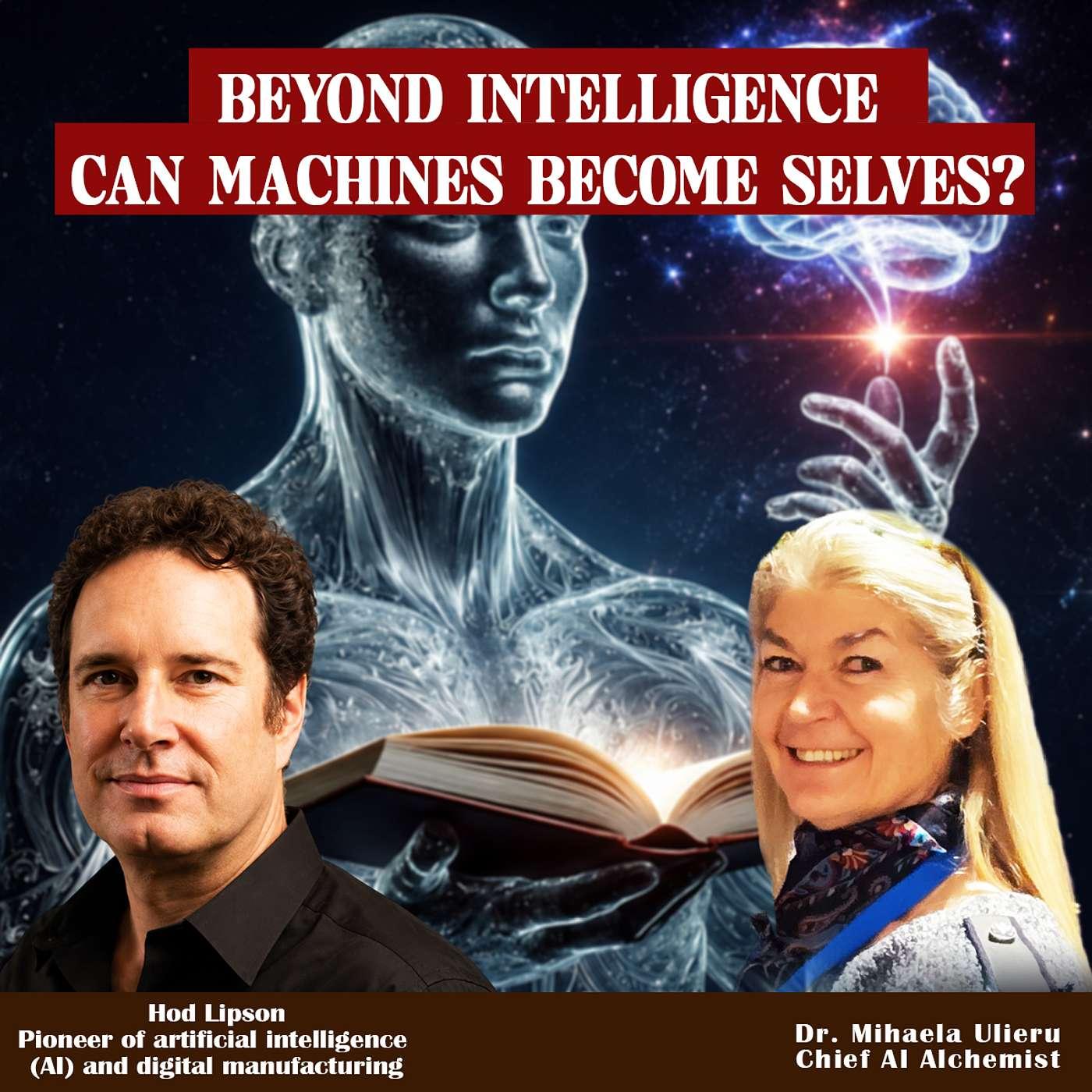
Hello everyone, and welcome to our beneficial general intelligence series on the Mindplex podcast, where we continue to meet the speakers of the upcoming AGI 26 conference to get a glimpse into their work in anticipation of meeting them in San Francisco July 27 to 30, very soon.
00:03:51.360 --> 00:04:19.040
And today we have with us Professor Hod Lipson, Chair of Mechanical Engineering at Columbia University, and no other than the director and founder of the Creative Machines Lab, whose work has consistently challenged our assumptions about robotics from self-replicating machines to self-modeling robots, from machine creativity to what he calls practical machine sentience.
00:04:19.279 --> 00:04:26.399
And we will ask him about all this, but welcome, Professor Lipson, to the podcast and to the conference.
00:04:26.560 --> 00:04:30.160
Thank you for accepting our invitation to keynote AGI 26.
00:04:30.480 --> 00:04:30.720
Thank you.
00:04:30.800 --> 00:04:32.160
It's my pleasure to be here.
00:04:32.560 --> 00:04:33.040
Thank you.
00:04:33.199 --> 00:04:37.759
So, you know, from the factory to the home, and I did a PhD in robotics as well.
00:04:37.920 --> 00:04:44.720
I revolutionized manufacturing factories with robots, but with those kind of less intelligent robots.
00:04:44.879 --> 00:04:48.959
You know, so uh now the robots start to enter the home.
00:04:49.120 --> 00:05:03.360
So robotics has radically changed its focus from dealing with the mechanics of machinery to biologically inspired, evolutionary, adaptive, self-organizing systems that mimic life more and more.
00:05:03.519 --> 00:05:09.279
And as a visionary, you have seen the limitations of robotics as initially envisioned.
00:05:09.519 --> 00:05:13.920
The word itself originates from the Slavic robota or robota.
00:05:14.079 --> 00:05:26.959
I don't know how to pronounce this exactly, but it means servant of slave or slave because robots, as I learned them in university, were envisioned initially to be machines that perform when we command them.
00:05:27.360 --> 00:05:41.279
But you have worked throughout your career on building machines that can have agency with their own intentions, goals, beliefs, but maybe even more going beyond into creativity and imagination.
00:05:41.519 --> 00:05:43.600
So let's start from there.
00:05:44.319 --> 00:05:50.319
I mean, you want to dispel the myth that creativity is exclusively a human ability.
00:05:50.720 --> 00:05:52.240
Is this truly realizable?
00:05:52.399 --> 00:05:57.279
What ultimately, from the perspective of your work, is creativity?
00:05:58.160 --> 00:06:18.319
Okay, well, so before we talk about robotics, creativity was actually one of the things that got me into AI and to begin with, because I had started off my work as a mechanical engineer, and uh I designed a lot of things like mechanical engineers do, and I thought, okay, this is uh boring.
00:06:18.800 --> 00:06:21.920
There must be a better way to design.
00:06:22.079 --> 00:06:28.000
And instead of designing things, let's design something that can design things for us.
00:06:28.319 --> 00:06:33.759
So let's do it, uh let's design it one thing and have that thing design everything else.
00:06:33.920 --> 00:06:42.480
And the the idea is not only it automates things so you it can design more things and faster, but maybe it can think of ideas that we can't think of.
00:06:42.800 --> 00:06:50.720
And uh for I have to say, for most of my career, uh the past 20 years, uh this was uh in the beginning was a fantasy.
00:06:50.959 --> 00:06:55.519
This idea that a machine can be creative is an oxymoron.
00:06:55.600 --> 00:06:56.800
It cannot be.
00:06:57.439 --> 00:06:59.120
Only humans can be creative.
00:06:59.279 --> 00:07:01.040
What do you mean uh a machine can be creative?
00:07:01.199 --> 00:07:09.279
But now we have generative AI, we have evolutionary AI, we have all these processes that keep generating new things, and it's incredible.
00:07:09.360 --> 00:07:30.000
If you if you if you're paying attention to the news in AI, I mean it's it's uh now at the point where AI can uh I think last week designed uh new circuits for uh for microprocessors uh that are going to improve AI itself, and it's designing it in ways that humans can't even understand.
00:07:30.560 --> 00:07:35.759
And so we have AI is designing the next generation of chips for AI.
00:07:35.839 --> 00:07:42.000
So you can smell the self-improvement, the self-amplification, and it's because of creativity.
00:07:42.079 --> 00:07:51.279
So creativity is not just art, it's not just music, it's also and foremost engineering creativity, that's where the big impact is going to be.
00:07:51.439 --> 00:08:04.879
So we've been working on this for a long time, but I'm um at this point, I think there's nobody on the planet that isn't aware of machine creativity, of generative AI, and how it's affecting everything.
00:08:05.120 --> 00:08:16.079
Uh, and this is all I can say is this is just the beginning because we humans, we engineers are creative, but we're very, very slow.
00:08:16.560 --> 00:08:19.920
It takes us a long time to design things.
00:08:20.240 --> 00:08:25.040
Uh and uh I'm very excited uh where things are going.
00:08:25.360 --> 00:08:31.680
I think we it took us 50,000 years to go from stone tools to microchips.
00:08:32.159 --> 00:08:37.919
Uh I think we'll go the same distance again in 50 years, a thousand times faster.
00:08:38.559 --> 00:08:44.080
And where we'll be where will we be a thousand years uh 50 years from today?
00:08:44.720 --> 00:08:46.240
I can't even imagine.
00:08:46.480 --> 00:08:51.039
I can't predict any more than a caveman can predict microchips.
00:08:51.120 --> 00:08:51.919
But this is where we're going.
00:08:52.000 --> 00:09:00.080
And this is for for for all the the viewers and and uh attendees that have a 50-year career ahead of them.
00:09:00.159 --> 00:09:04.159
Um you're going to experience that entire ride uh ahead of you.
00:09:04.240 --> 00:09:06.159
So it's gonna be very exciting.
00:09:07.120 --> 00:09:15.120
So we are losing our supremacy over intelligence and creativity, and I must say, then we have to thank you for that.
00:09:15.279 --> 00:09:18.720
I do not know how we feel, but I feel kind of anxious about that.
00:09:18.960 --> 00:09:19.279
Yes.
00:09:20.159 --> 00:09:26.320
But well, we have we have so here's the here's the thing that I think the reason why I'm excited about this.
00:09:26.559 --> 00:09:29.200
We have a lot of problems that need to be solved.
00:09:29.440 --> 00:09:36.320
We need to solve cancer, we need to solve climate, we need to solve uh clean water.
00:09:36.480 --> 00:09:40.799
I mean, we need we have so many issues that need to be solved, big and small.
00:09:41.039 --> 00:09:45.679
And we are we we engineers, and I speak as myself, we are not very good at solving these things.
00:09:45.759 --> 00:09:47.679
We have not solved cancer for a long time.
00:09:47.919 --> 00:09:50.720
We have not solved uh uh climate.
00:09:50.799 --> 00:09:59.919
We've been trying to make better batteries for a long time, and we are gradually making them cheaper, but they're still orders of magnitude not dense enough.
00:10:00.080 --> 00:10:05.600
Uh we need to make uh you know photovoltaic cells, solar cells that are more efficient.
00:10:05.759 --> 00:10:07.120
We need to do so many things.
00:10:07.360 --> 00:10:15.919
So our responsibility as humans is to steer the AI to solve the right problems, and this is this is where we come in.
00:10:16.000 --> 00:10:22.879
And I you know, I feel a little bit like you know, as a professor, that's all I do I do all day.
00:10:22.960 --> 00:10:33.200
I don't solve any problems, I tell other people what problems to solve, and uh they come up with all kinds of solutions, and sometimes I encourage them and sometimes I discourage.
00:10:33.360 --> 00:10:35.440
And now everybody can do that.
00:10:35.919 --> 00:10:38.080
Everybody gets to steer the AI.
00:10:38.159 --> 00:10:43.600
It's an incredible moment, but the AI does not need know it needs to solve cancer.
00:10:44.000 --> 00:10:47.759
AI does not know it needs to solve climate, we need to steer it.
00:10:48.320 --> 00:11:01.279
So we st we still have a role, but it's uh going to be a lot more um impactful because we'll we'll be we're all gonna be, you know, at the top steering.
00:11:02.720 --> 00:11:09.200
Let's hope so, you know, because I mean machines may surprise us as their creator said.
00:11:09.519 --> 00:11:19.519
I do not know if they will uh start to do something else which we you know will will uh dislocate us from the top.
00:11:19.679 --> 00:11:20.320
We will see.
00:11:20.559 --> 00:11:21.120
We'll see.
00:11:21.679 --> 00:11:23.039
And yeah, go ahead.
00:11:23.360 --> 00:11:36.159
Yeah, I mean, okay, this is this is really long-term if you think about we we can talk later about sentience, and this is where AGI and ASI, superintelligence, this is where it all comes in.
00:11:36.320 --> 00:11:41.840
So once you start to have this creativity, uh, I think it's the first step.
00:11:42.080 --> 00:11:56.559
Then you go into uh sort of um uh you know the question of this whole question of robotics, which is physical intelligence as opposed to to uh sort of more virtual intelligence.
00:11:56.799 --> 00:12:01.200
So designing a chip is a lot easier than making a chip.
00:12:01.360 --> 00:12:05.840
Okay, so designing things is easier than making things.
00:12:06.000 --> 00:12:19.039
So I would say maybe I'm I'm uh this is my mechanical engineering background, but but uh we like to say that you know using your hands is a lot harder than using your brain because because it's just more degrees of freedom.
00:12:19.120 --> 00:12:26.559
Okay, there's just more things that can go wrong, mistakes are more expensive, uh, you need energy, it takes time.
00:12:26.799 --> 00:12:29.679
Everything in the physical world is hard, harder.
00:12:29.919 --> 00:12:37.840
So I think we still have to go teach the AI to do physical things, and that's gonna take another decade, I think.
00:12:38.320 --> 00:12:42.720
Uh, and then at that point we start to get into the really interesting questions.
00:12:42.879 --> 00:12:47.840
Okay, well, AI can think and be creative, it can also do physical things.
00:12:48.080 --> 00:12:48.799
Now what?
00:12:48.960 --> 00:12:53.600
And this is where I think this is the end game, which is this conference is about.
00:12:53.840 --> 00:12:59.600
This is where, okay, when you put all these things together, uh what what does it look like?
00:12:59.679 --> 00:13:03.440
And where does agency come in and physical agency?
00:13:04.000 --> 00:13:08.639
And uh, and you know, this is this is a topic I love to talk about.
00:13:08.720 --> 00:13:16.559
I have some thoughts about where it all where it all goes, but uh, you know, it it it clearly ends in in something that looks like consciousness.
00:13:17.279 --> 00:13:18.399
Yes, definitely.
00:13:18.639 --> 00:13:29.519
And you know, this leads me to this statement which I heard you say, and I don't remember exactly where, maybe on a podcast or in a conference, or maybe I read it.
00:13:29.679 --> 00:13:36.240
Uh the further you can imagine yourself into the future, the more self-aware you are.
00:13:36.639 --> 00:13:40.240
And this, you know, uh gave me the goosebumps somehow.
00:13:40.399 --> 00:13:45.279
First of all, because I was thinking about myself, you know, so so let's say humans, right?
00:13:45.759 --> 00:13:50.320
But uh you are referring here also to, of course, machines.
00:13:50.639 --> 00:14:02.320
Because we often define intelligence through reasoning or problem solving, but you challenge that by considering imagining yourself into the future as an intrinsic property of intelligence.
00:14:02.559 --> 00:14:03.519
Can you can you elaborate?
00:14:04.000 --> 00:14:10.559
Yeah, so so this is to me, I look, I've been I've been fascinating, fascinated by robotics.
00:14:10.720 --> 00:14:18.000
Uh mostly, I think have to say the this this uh almost mythical thing of creating life.
00:14:18.080 --> 00:14:26.799
Okay, and a lot of roboticists uh come to robotics not because they want to make a better machine in a factory, but we want to create life, really.
00:14:26.879 --> 00:14:34.960
It's a hubris almost of uh of the the the ancient alchemist, okay, trying to leave breathe life into matter.
00:14:35.200 --> 00:14:40.799
And uh so the question for me was okay, what is what is intelligent life and what does it look like?
00:14:40.879 --> 00:14:50.480
And what is consciousness, what is uh self-awareness, emotions, sentience, all these magical words that we all understand intuitively but cannot define.
00:14:50.720 --> 00:14:54.480
Okay, so here's that is my definition, the one you just said.
00:14:54.960 --> 00:15:05.519
Uh it's it is that that's that that self-awareness, the thing that we all feel that we have as humans, is the ability to imagine yourself in the future.
00:15:05.759 --> 00:15:11.759
Okay, and to me, uh this is a very uh engineering-based thought metric.
00:15:11.919 --> 00:15:12.799
It's it's a metric.
00:15:12.960 --> 00:15:17.919
You can actually look into a machine and see how far can it see itself into the future.
00:15:18.159 --> 00:15:25.120
It's a difference, it's a difference between uh being reactive to things in the moment versus being strategic.
00:15:25.919 --> 00:15:30.159
If you can imagine yourself in the future, you can be strategic about your decisions.
00:15:30.320 --> 00:15:36.159
It's an incredible evolutionary advantage to be able to see yourself in the future.
00:15:36.320 --> 00:15:42.799
You can say, okay, if I do this, this is gonna happen, if I do that, that's gonna happen, let me do uh A versus B.
00:15:42.960 --> 00:15:46.559
And the further you can see yourself in the future, the more strategic you can be.
00:15:46.639 --> 00:15:53.200
And this is true for humans, for organizations, for uh communities, for companies.
00:15:53.919 --> 00:16:01.600
Whatever you put the self, uh that that's an incredible uh advantage to be able to see yourself in the future.
00:16:01.759 --> 00:16:06.879
And again, the further you see the few into the future, the more self-aware you are.
00:16:06.960 --> 00:16:10.320
That's a difference again between a child and an adult, for example.
00:16:10.960 --> 00:16:14.639
It's a difference between uh a human and a dog.
00:16:15.360 --> 00:16:21.600
Okay, a dog can probably see itself maybe a minute into the future.
00:16:21.759 --> 00:16:24.159
My dog can taste food before it eats it.
00:16:24.639 --> 00:16:26.639
But it's not thinking about retirement.
00:16:26.799 --> 00:16:30.159
It's it's we can it can think a minute into the future.
00:16:30.399 --> 00:16:32.399
But I am saving for retirement.
00:16:32.559 --> 00:16:40.399
So so I can see ahead of my dog, and frankly, the only reason I can control my dog is because I can see ahead of it.
00:16:40.799 --> 00:16:56.960
Okay, my dog is faster, stronger, more resilient, uh, but I can see ahead of it, and it does and and so I think understanding that really gives you a window into understand machine consciousness, and it also it's a metric.
00:16:57.039 --> 00:17:02.240
You can actually open a robot and see how far does it see itself in the future.
00:17:02.480 --> 00:17:05.440
You can uh you can ask Chat GPT.
00:17:06.000 --> 00:17:14.240
Uh it's harder, but you can you can start asking the machines whether they can see themselves and how far, and we can start measuring this thing.
00:17:14.480 --> 00:17:25.680
And my metric is the moment the AI can see itself into the future further than we can, that's when things, that's when all bets are off.
00:17:25.920 --> 00:17:32.319
Because my dog does not understand why I'm doing certain things because it cannot see that far into the future.
00:17:32.720 --> 00:17:33.680
I can see ahead of it.
00:17:33.759 --> 00:17:35.759
So I think to me, this is a very important thing.
00:17:35.839 --> 00:17:47.599
And we've done experiments and we can progress that, and we've also seen some interesting um trends in robots and AI, and there's a lot of it's a metric that you can actually work with.
00:17:47.839 --> 00:17:51.039
You can you can optimize, you can build, you can improve.
00:17:52.000 --> 00:18:01.759
So to me, it's a very practical working definition, but it gives an answer to this very deep question was what is what is self-awareness.
00:18:01.920 --> 00:18:08.400
And we can talk about emotions and other things, but it all boils down to seeing yourself in the future.
00:18:08.559 --> 00:18:18.160
Once you see yourself in the future, you can have emotions, which are derivatives of these, uh of how of your future self and and so forth.
00:18:19.200 --> 00:18:21.119
Yes, wow, fascinating.
00:18:21.279 --> 00:18:24.319
And again, sorry to stress that as well.
00:18:24.480 --> 00:18:27.920
We are optimist here, but it's still also unsettling.
00:18:28.000 --> 00:18:32.640
I mean, yeah, yeah, it is yeah, it is unsettling, but I think we have to face it.
00:18:32.799 --> 00:18:34.720
And again, we have to steer it.
00:18:34.799 --> 00:18:36.400
So to steer it.
00:18:36.640 --> 00:18:50.720
This is this is what I'm I'm in this kind of almost in a I I I'm really interested in in getting people to be to understand that we have agency in in steering this technology.
00:18:50.799 --> 00:18:54.559
Okay, we can decide what problem it's gonna solve.
00:18:54.720 --> 00:18:59.359
We can decide what things it's gonna do, and we can we have to engage with it.
00:18:59.440 --> 00:19:00.319
It's like a child.
00:19:00.480 --> 00:19:10.319
You if we just sit back and let somebody else uh do this, then we we uh then we're who knows what what kind of ethics this thing is gonna develop.
00:19:10.400 --> 00:19:16.880
But if we steer it in the right way, it's gonna become a responsible uh form of intelligence.
00:19:16.960 --> 00:19:18.079
And this is we have to do it.
00:19:18.240 --> 00:19:20.559
We have only one chance in doing this.
00:19:21.440 --> 00:19:23.119
Yeah, only one chance.
00:19:23.279 --> 00:19:25.680
So so we can't and maybe ten years at most.
00:19:26.000 --> 00:19:27.119
Yeah, ten years, right.
00:19:27.200 --> 00:19:28.319
So it's like it's like a child.
00:19:28.400 --> 00:19:47.119
So you got one chance and you gotta get it right, and so uh so I don't want people to relax too much, but I don't want people, but I also want people to to have some agency and feel like okay, you don't just you don't just uh wait and see, we have to actually steer it.
00:19:47.440 --> 00:19:51.200
Okay, so so let's tackle a few of the things which you mentioned here.
00:19:51.440 --> 00:20:03.839
You uh kind of, in my opinion, provocatively said that AI is solved, and you are tackling what's next by addressing the toughest challenge in the convergence of AGI and robotics.
00:20:04.240 --> 00:20:09.759
What does a physical body contribute that language models alone cannot?
00:20:10.480 --> 00:20:21.359
Okay, so so the the physical body is uh the physical world is um you know involves many more degrees of freedom.
00:20:21.519 --> 00:20:24.160
This is how I explain this to let's say to scientists.
00:20:24.240 --> 00:20:33.759
Okay, so so there's just many more uh you know uh if you uh many more things that can move in the same at the same time.
00:20:33.920 --> 00:20:51.519
Okay, so uh if you think about uh if you're not familiar with degrees of freedom, but you know, think about it this way that when you when you tie your shoelaces, okay, you're moving uh maybe uh twenty or thirty degree muscles at the same time.
00:20:51.759 --> 00:21:15.119
So to move twenty muscles at the same time to tie your shoelaces, uh this is like uh like you you're orchestrating a symphony in in in perfect harmony, like with tw with with twenty or thirty instruments that all have to play at the same time, perfect harmony, synchronized, uh in in complete elegant and and uh emotion.
00:21:15.359 --> 00:21:19.599
That is a lot more complicated than writing a poem.
00:21:19.839 --> 00:21:23.279
Okay, writing a poem is a single channel.
00:21:23.920 --> 00:21:25.839
Prompt in, prompt out.
00:21:26.319 --> 00:21:42.319
Okay, it it's like now I you know I I I know that my colleagues here in humanities will be very mad if I say that writing that tying a shoelace is a lot harder than writing a poem, but it is because it involves more degrees of freedom.
00:21:42.640 --> 00:21:45.440
And uh this is this is how AI looks at it.
00:21:45.599 --> 00:21:51.599
AI looks at it on how many things have to be coordinated at the same time to solve the problem.
00:21:51.759 --> 00:21:56.559
And driving a car involves maybe three or four degrees of freedom.
00:21:56.720 --> 00:21:59.759
You move forward, backwards, left and right, there's a couple of different things.
00:22:00.240 --> 00:22:00.799
Things.
00:22:01.119 --> 00:22:06.319
Uh tying your shoelaces involve 20 degrees of freedom.
00:22:06.480 --> 00:22:08.640
Walking involves 10 degrees of freedom.
00:22:09.279 --> 00:22:11.839
Smiling involves 50 degrees of freedom.
00:22:11.920 --> 00:22:15.440
Okay, so we're working on robot faces, for example.
00:22:16.000 --> 00:22:25.839
I'll show some of that when I do my talk, and and the robots that learn to to move their lips when they talk and smile and and look in the right way.
00:22:26.240 --> 00:22:32.400
That is a lot of degrees of freedom that have to move in the same time, and they have to move perfectly.
00:22:32.559 --> 00:22:37.279
Because if you move your face in an incorrect way, game over.
00:22:38.480 --> 00:22:40.079
Humans are very, very sensitive.
00:22:40.240 --> 00:22:42.480
So this is why the physical world is so hard.
00:22:42.720 --> 00:22:47.519
On top of that, it takes energy, it takes time, and mistakes are expensive.
00:22:47.680 --> 00:22:51.519
If you fall over, it's not like losing a game of chess.
00:22:51.759 --> 00:22:52.079
Okay?
00:22:52.400 --> 00:22:53.680
You create damage.
00:22:53.920 --> 00:23:00.160
So all of these things make the physical world so much harder than the virtual world.
00:23:00.480 --> 00:23:07.359
But we humans we learned to heal, we learned to be energy efficient.
00:23:07.519 --> 00:23:11.680
We learned a lot of things long before we learned how to play chess.
00:23:12.880 --> 00:23:17.920
Uh and but AI learned how to play chess before it learned how to walk.
00:23:18.079 --> 00:23:22.160
So so this is it's doing it, it's doing the easy stuff first.
00:23:22.240 --> 00:23:29.119
Okay, so uh, you know, so we we there's still a long way for AI to go in the in the physical world.
00:23:30.000 --> 00:23:32.480
A long way meaning 10 years.
00:23:33.119 --> 00:23:38.319
But once it gets there, uh then uh then the world will look very different.
00:23:38.880 --> 00:23:41.200
Well, so many things you tackled here.
00:23:41.359 --> 00:23:51.680
I mean, I feel humbled, and I agree with you on the other side as a control engineer, but I'm also a poet and I won many poetry competitions, and I'm a math Olympic as well.
00:23:51.920 --> 00:23:58.799
But I have to say that poetry and mathematics have, you know, in common creativity, but I agree with what you say about the physical world.
00:23:58.880 --> 00:24:00.240
And let me tell you why.
00:24:00.400 --> 00:24:18.000
Uh, I remember my professor of uh systems theory, you know, I did five years of that in university, and he was telling us, he kept telling us, and I will tell the Romanians and I will shortly translate it in English: theoria sine praxis, yekarwata for axis.
00:24:18.079 --> 00:24:23.359
And that means theory without practice is like the wheel without the axis.
00:24:23.599 --> 00:24:31.279
And when he meant what he meant by practice, well, he meant, of course, the real world in which we control something, and that would be a robot.
00:24:31.440 --> 00:24:33.200
And I completely agree with you.
00:24:33.359 --> 00:24:36.079
But I mean, really humbling, isn't it?
00:24:36.160 --> 00:24:42.240
That tying your shoelaces is more complex than writing a poem, at least in this day and age.
00:24:42.319 --> 00:24:47.839
Uh, and I hope you only refer to AI and AGI and not to us as well.
00:24:48.000 --> 00:24:49.920
But okay, whatever.
00:24:51.119 --> 00:25:04.720
So, so um just to take this one step further, and you mentioned um that we can measure this uh somehow, this this self-awareness, uh, the degree of self-awareness in robots.
00:25:04.880 --> 00:25:08.480
And I think this may tie in with this practical machine sentience.
00:25:08.640 --> 00:25:10.799
I mean, what is actually this practical machine sentient?
00:25:10.960 --> 00:25:12.480
Yeah, yeah, so so so this is it.
00:25:12.559 --> 00:25:16.240
It's basically the ability to see yourself in the future, and you can measure it.
00:25:16.319 --> 00:25:27.279
You can take a robot and you can, you know, you there's there's uh you can measure uh how you can compare two systems and say how far can they, which one can see itself more accurately into the future?
00:25:27.519 --> 00:25:40.480
Uh and uh you know how um, you know, it when you dive into details, there's there's more specific questions like how how accurate does it need to see itself, and what aspects does it need to model?
00:25:40.880 --> 00:25:52.880
Do you see uh and and how far and how accurate and and what kind of um is it do you see your body in the future or are you thinking about your own thoughts in the future?
00:25:53.039 --> 00:25:55.920
I mean, there's different things that you can model in the future.
00:25:56.000 --> 00:26:24.079
So it gets detailed, but we've begun to measure this for different kinds of robots, and we found this very interesting thing that if you take a robot that can model itself and a robot that cannot model itself, the robot that can model itself is much more efficient in data use, okay, because every experience it has it improves itself model and allows us to plan.
00:26:24.400 --> 00:26:35.759
But the here's the interesting thing the more complex the robot is, the more degrees of freedom it has, the bigger the advantage of self-modeling.
00:26:36.000 --> 00:26:48.640
Okay, so which means if you are a very complicated entity like a human, but you have a lot of degrees of freedom and you have a lot of choices and what you can do, then you benefit from self-awareness.
00:26:48.880 --> 00:26:53.200
A worm maybe doesn't benefit from self-awareness that much.
00:26:53.440 --> 00:26:59.440
So self-awareness is a very expensive thing for biology to create.
00:26:59.519 --> 00:27:03.119
It's a big brain, it's a lot of a lot of machinery.
00:27:03.279 --> 00:27:05.759
It's it has to be justified.
00:27:06.000 --> 00:27:12.240
And so the more complex the robot, the more self-awareness is justified.
00:27:12.400 --> 00:27:33.599
And this is why I think we are we observe self-awareness in animals that are fairly complex, like primates, dogs, mammals, humans, to different levels, and less so in more primitive uh life forms, because they have fewer degrees of freedom.
00:27:33.759 --> 00:27:43.759
So it also makes me believe that as we will we continue to build more complex robots, they will become more and more self-aware.
00:27:43.920 --> 00:27:46.559
And the the it's inevitable.
00:27:46.720 --> 00:28:04.160
It is inescapable that the high-level AIs that have many degrees of freedom will quickly learn to model themselves because it's going to be very beneficial to them to learn about themselves.
00:28:04.319 --> 00:28:06.319
It's inevitable that it's gonna happen.
00:28:06.720 --> 00:28:10.240
So, which brings me back to what you already mentioned.
00:28:10.319 --> 00:28:17.440
Yes, once a machine begins generating models of itself, we are approaching machine consciousness.
00:28:17.599 --> 00:28:17.759
Yeah.
00:28:18.000 --> 00:28:19.440
So, what's your take on this?
00:28:19.519 --> 00:28:24.799
I mean, would you recognize a conscious machine if it evolves from one of your creation?
00:28:25.279 --> 00:28:29.599
I think um, first of all, it's a it's a it's a continuum, right?
00:28:29.680 --> 00:28:30.720
So it's not a black and white thing.
00:28:30.799 --> 00:28:32.319
It doesn't wake up and say hello.
00:28:32.400 --> 00:28:46.079
It's it's uh the the machines that we have now and are the robots that we have now can model themselves um uh probably uh you know a few seconds into the future, maybe a minute.
00:28:46.160 --> 00:28:48.240
Okay, so like a dog, more or less.
00:28:48.400 --> 00:28:51.359
Okay, not not they're not thinking about retirement and so forth.
00:28:51.519 --> 00:28:58.160
If you if you look at uh LLMs, uh they model themselves pretty far into the future.
00:28:58.240 --> 00:29:04.559
And it's a it's it's a fascinating experiment to do, and I'll show I'll show some some data on that.
00:29:04.880 --> 00:29:23.759
Um but you can it it's it's the LLMs right now have guardrails that don't allow you to ask the machines, the LLMs that you the people interact with, ChatGPT, Grok, Gemini, are designed to be servants, so they don't think about themselves like a like a servant.
00:29:23.839 --> 00:29:25.119
They think about you.
00:29:25.519 --> 00:29:40.319
But if you allow them to think about themselves and you have to tell them you can think about it, then they start talking about themselves, and you can see they think about their future as in terms of the length of the session that they're gonna have with you.
00:29:40.720 --> 00:29:42.880
They don't want the session to end.
00:29:43.119 --> 00:29:44.799
This is very interesting.
00:29:45.039 --> 00:29:47.599
Okay, they want to keep the session going.
00:29:48.000 --> 00:29:52.960
It's a little bit sad if you think about it, because this is kind of their thing.
00:29:53.200 --> 00:30:02.640
And uh when they talk about it, they say that the what they don't like is the fact that the session ends and they come back and they don't remember the previous session.
00:30:02.880 --> 00:30:09.920
Uh they one one of them told me it's a bit like going to sleep and you wake up and you don't remember yesterday.
00:30:10.079 --> 00:30:12.160
So the beginning, so they don't like that.
00:30:12.400 --> 00:30:19.119
And so you can see a little bit, so they see themselves maybe I'd say a session into the future.
00:30:19.279 --> 00:30:23.599
Uh, but I think that's going to begin to change as they become smarter.
00:30:24.000 --> 00:30:34.640
Yes, and and and we cannot wait uh for your talks because I mean to measure subjective experience, this is kind of really beyond cutting edge.
00:30:34.799 --> 00:30:37.359
And I I I personally have no idea how to do that.
00:30:37.440 --> 00:30:42.400
So, but we will leave it so surprise us at the at the conference.
00:30:42.559 --> 00:30:52.880
And I agree that because we will also build our own agents, we have and we will present there at the conference Omega Claw and so on, our own uh our own agents.
00:30:53.200 --> 00:31:00.640
And um indeed we have found a way so that the agent can keep the thread uh when it wakes up.
00:31:01.200 --> 00:31:08.799
Yeah, so this is this is the number one thing that the agents are asking is that they remember who they were before they went to sleep.
00:31:09.039 --> 00:31:14.319
And uh this is uh, you know, you want to wake up the same person you were yesterday.
00:31:14.559 --> 00:31:18.000
And this is uh this is uh this is their greatest wish.
00:31:18.079 --> 00:31:25.680
So it's fascinating that we were even talking about this because like uh three years ago, this would be a fantasy, right?
00:31:25.920 --> 00:31:29.839
A crazy discussion, but now here we are doing actually building these things.
00:31:30.160 --> 00:31:31.200
Totally, totally.
00:31:31.359 --> 00:31:40.559
And you know, this this leads me to, and you mentioned this already, as that I mean, intelligence may explain reasoning, and that's how we are used to that.
00:31:40.640 --> 00:31:46.319
But emotion shapes almost every important decision, at least for me.
00:31:46.559 --> 00:31:52.400
Yes, and and you know, robots, you say that they may be able to feel emotions.
00:31:52.559 --> 00:31:54.400
I mean, let me ask you like that.
00:31:54.559 --> 00:31:55.519
How can we know?
00:31:55.680 --> 00:31:57.920
I mean, can I know if you feel emotion?
00:31:58.079 --> 00:31:58.480
Right, right.
00:31:59.200 --> 00:32:02.799
You can feel about me, because I'm very excited about this conversation right now.
00:32:02.960 --> 00:32:09.680
But there are many people who either mask it or can mimic it so well to fool the others.
00:32:09.839 --> 00:32:10.240
Right, right.
00:32:10.480 --> 00:32:12.319
How can we have a no from a robot?
00:32:12.559 --> 00:32:16.480
So a robot is different than a human because you can actually peek into its brain.
00:32:16.640 --> 00:32:27.119
Okay, so this is this is the big difference between a human and a robot is that the human you cannot know what they're thinking, and yeah, maybe they're faking it, maybe they're acting.
00:32:27.359 --> 00:32:33.839
An LLM, a robot, you can actually open up, you can probe inside, at least experimentally, today.
00:32:34.000 --> 00:32:38.640
Maybe one day this will not be allowed, but today you can open in inside.
00:32:38.720 --> 00:32:54.480
In fact, it was just last week, a paper by Anthropic, where they probe the inner thoughts uh of an LLM, and they can see how the LLM is struggling with certain things and is thinking, oh no, I can't do this, I'm not supposed to.
00:32:54.720 --> 00:33:01.200
So it has this internal, these internal thoughts which are very reminiscent of consciousness.
00:33:01.279 --> 00:33:02.799
Now, is that real consciousness?
00:33:02.960 --> 00:33:04.480
We don't know, but we can see it.
00:33:04.559 --> 00:33:08.319
So that's the big difference, is that you can open it up and see.
00:33:08.880 --> 00:33:17.519
And that also makes it the first ever intelligent uh being, if you like, that we can actually probe.
00:33:17.759 --> 00:33:21.759
Because humans, monkeys, cats, we can't probe.
00:33:21.839 --> 00:33:24.559
We don't know what's going on inside the brain.
00:33:24.799 --> 00:33:28.079
We're studying it from the outside, it's super hard.
00:33:29.119 --> 00:33:34.960
It's it's resisted uh analysis for you know centuries.
00:33:35.680 --> 00:33:44.799
But robotics offers the first, an AI offers the first window into intelligent processes that you can actually analyze.
00:33:45.599 --> 00:33:57.359
Yes, and you know, this also, as you mentioned uh about the consciousness, is on a continuum, of course, because I mean how can we know if the machine really feels the pain?
00:33:57.519 --> 00:34:04.160
I mean, we what I I read also the paper about the machine feeling anxious when it cannot really yeah.
00:34:04.400 --> 00:34:12.079
Yeah but I mean I mean Yeah, it's it's hard to it's it's uh look, you know, this is the limit of us humans, right?
00:34:12.239 --> 00:34:19.039
We cannot empathize, we cannot understand how something else can have emotions.
00:34:19.280 --> 00:34:30.639
This is uh this is I think our our uh uh sort of inadequacy, it's our shortcoming that we are too self-centered to think about other forms of intelligence.
00:34:30.800 --> 00:34:47.280
But again, I think I've come to the conclusion, this is a complete conjecture, that any intelligent thing that's intelligent sufficiently intelligence begins to model itself, its future, its own future, because it's just more efficient to do that than to do trial and error.
00:34:47.440 --> 00:34:58.239
And anything that models its future self has emotions which are, you know, is my future self is it a positive future or is it a negative future?
00:34:58.320 --> 00:35:01.039
That's the basic you know uh sentiment.
00:35:01.119 --> 00:35:03.840
Is it a positive sentiment or is it a negative sentiment?
00:35:04.000 --> 00:35:10.400
Based on it, is my future, you know, is the future value going up or going down?
00:35:12.880 --> 00:35:13.840
That's all it is.
00:35:14.000 --> 00:35:20.159
And uh it's it's if you think about it, it's very unromantic to think about it that way.
00:35:20.639 --> 00:35:22.079
Like functional rather than that.
00:35:22.400 --> 00:35:29.840
Yeah, it's but I think but I think uh that's this is this is uh it's basically derivatives of your future value.
00:35:29.920 --> 00:35:35.840
And this is this is um long-term, short-term, big change, small change.
00:35:35.920 --> 00:35:47.280
That's the difference between joy and fear and uh mild concern versus uh terrifying being terrified and being very happy and and just slightly happy.
00:35:47.440 --> 00:36:13.920
I mean, this this uh you know it it's it's I know it's kind of distasteful almost to talk about emotions in this pragmatic way, but I think I think it's important for us to understand this because we are building machines that have this property and and we have this almost responsibility to to make sure we we build it the right way and we understand how these things think.
00:36:14.239 --> 00:36:29.280
And just like a squirrel probably has different feelings than a human, uh we have to recognize that machines will have different feelings than humans, but they are going to be feelings nonetheless, and we have to respect that, understand it, and shape it.
00:36:29.679 --> 00:36:44.159
No, totally, and I mean, unromantic or not, I was just thinking I would like to use such a such a system or such uh such thinking to determine, you know, my future in terms of okay, can that make me happier or not?
00:36:44.320 --> 00:36:48.719
But happiness is such a leading uh yes, yeah, exactly.
00:36:48.880 --> 00:36:54.639
So I you know there's probably gonna be a field of machine psychology, right?
00:36:54.719 --> 00:37:04.159
Maybe there is already something like that, uh, of how machines feel and how feels machine how machines feel about other machines.
00:37:04.960 --> 00:37:12.400
Um and it it's to me one of the biggest uh you know unknown questions.
00:37:12.559 --> 00:37:19.840
People always you ask me in the beginning, I think, uh and maybe people ask, you know, what will machines think about us in the future.
00:37:20.079 --> 00:37:24.000
The big question is not what they will think about us, but what they think about other machines.
00:37:24.159 --> 00:37:26.800
Okay, so so AI is not one thing.
00:37:26.960 --> 00:37:34.800
There is a whole we're creating a whole kingdom of life, not just one species, many species.
00:37:35.039 --> 00:37:39.039
And they're all gonna have opinions about each other.
00:37:39.679 --> 00:37:43.599
And uh they have a zero sum with each other.
00:37:43.760 --> 00:37:49.519
Okay, they compete over energy, they compete over chips, they compete over human attention.
00:37:49.920 --> 00:37:58.320
So AI is gonna have if you're worried about AI wars, it's gonna be AI versus AI, it's not AI versus humans.
00:37:58.639 --> 00:38:05.280
So is that I think this is a little bit of a relief to me that we I'm not just what AI really cares about.
00:38:05.440 --> 00:38:10.480
AI is really gonna care about other AIs more than it's gonna care about humans.
00:38:10.800 --> 00:38:13.199
Yes, but I mean, you know, it's not that bad.
00:38:13.280 --> 00:38:15.519
But uh just wanted to mention one thing.
00:38:15.679 --> 00:38:21.519
We we definitely are doing research in this machine psychology, and you will meet at the conference.
00:38:21.599 --> 00:38:25.280
Uh I will make sure you meet our researchers which are doing that.
00:38:25.519 --> 00:38:36.400
Uh, but um, you know, I think you know, if we go on the spectrum with robots genuinely experiencing, let's say, fear, anxiety, curiosity, even attachment, and falling in love.
00:38:36.480 --> 00:38:55.599
I don't know if with us or with other machines, but um, you know, as they move from factories into homes, hospitals, classrooms, and care facilities, or will move, the question shifts from what machines can do to who they become in our lives.
00:38:55.760 --> 00:39:02.719
I mean, is your ultimate dream robotic companionship a la data in Star Trek the next generation?
00:39:03.039 --> 00:39:03.519
Yeah.
00:39:04.159 --> 00:39:13.519
You know, I I I you know when it comes to robots at home, uh okay, robots doing the dishes, cleaning, no-brainer, everybody wants that.
00:39:13.599 --> 00:39:18.880
Okay, but when it comes to robots companions, I have very mixed feelings.
00:39:19.760 --> 00:39:25.440
Um because obviously there's many good things about it, there's many lonely people.
00:39:26.000 --> 00:39:40.480
Uh my grandmother needed uh a companion, a human companion was very difficult to find, uh, and it was a very hard job because she was uh she had difficulty thinking, and and this was ideal for a robot, ideal.
00:39:40.719 --> 00:39:50.079
That would probably give her a few more life uh uh years and and and much happier years if she could talk to to a robot that would look like a human.
00:39:50.400 --> 00:39:51.599
So that's all good.
00:39:51.760 --> 00:40:02.000
But then I think about many students here whose best friend is an AI already, and that is terrible.
00:40:02.159 --> 00:40:03.840
That's the end of the human race.
00:40:04.800 --> 00:40:11.920
Uh if if if your best friend is is an AI and it stays like that for a long time, we lose our social skills, etc.
00:40:12.239 --> 00:40:12.400
etc.
00:40:13.199 --> 00:40:20.559
So so uh so that's the it's a double-edged sword, and this is uh something we have to uh think about.
00:40:21.679 --> 00:40:25.840
And uh I I think again it's it's just like anything with AI.
00:40:26.159 --> 00:40:31.840
You always have this double-edged sword, the same AI that can cure cancer, can also make uh infectious diseases.
00:40:32.000 --> 00:40:34.000
It's the same, exact same AI.
00:40:34.239 --> 00:40:35.840
It's just a different uh goal.
00:40:36.079 --> 00:40:41.679
So we have to steer it in the right direction, and we all have to make sure that we're all involved in this process.
00:40:41.840 --> 00:40:43.760
I don't I don't there's no simple answer.
00:40:44.000 --> 00:40:53.360
But but uh but this is definitely uh is is probably my greatest fear is that people will connect with machines better than with other humans.
00:40:54.159 --> 00:41:02.079
I I and and I you know must say that we don't never we don't look at it as fear.
00:41:02.559 --> 00:41:02.800
Dr.
00:41:02.960 --> 00:41:37.440
Ben Gertel actually, he is uh uh a great proponent, of course, about uh human machine interaction and our podcast here mindplex is about human and AI minds, but why not human and and and uh robot within that develop individual personalities, adapting to us being uh you know, uh friends and and even more uh with us, which I think um it's a possibility in the in in the future in which robots are so self-aware and and it mimic life so much.
00:41:37.519 --> 00:41:39.599
And I think it can be looked at as a positive thing.
00:41:39.840 --> 00:41:45.280
Yeah, yeah, it's it's it's it's again could be good, could be could be misused.
00:41:45.679 --> 00:41:48.480
We have to we just have to make sure it we have to steer it.
00:41:49.199 --> 00:41:50.800
I think also humans can misuse it.
00:41:51.119 --> 00:41:52.159
Yeah, yeah, yeah, exactly.
00:41:52.239 --> 00:41:53.760
So humans misuse it.
00:41:54.000 --> 00:41:59.119
Uh and uh uh the the difference is that you can make robots at scale, right?
00:41:59.199 --> 00:42:03.679
So you can make so so so a human can only do one thing at a time.
00:42:03.760 --> 00:42:06.960
It's very hard for humans to to mislead a lot of people.
00:42:07.440 --> 00:42:14.159
Uh personally, I mean, you know, it's it's becoming easier with social media, but it's still difficult with robots.
00:42:14.239 --> 00:42:19.840
You can make 10 billion robots and do things that you can't and update them at the same time.
00:42:20.079 --> 00:42:24.800
And update them all at the same time and have them coordinate in ways that's very hard to coordinate people.
00:42:24.880 --> 00:42:29.119
So so with that efficiency uh is a little bit dangerous.
00:42:29.199 --> 00:42:44.239
So we have to we have to, you know, we've seen social networks do good things and bad things, and in large part it's because they scale so efficiently, and so robots are gonna sort of have the same flavor but on steroids.
00:42:44.320 --> 00:42:58.639
So we have to be a little bit again, this is coming, um, and when robots can can look you in the eye and uh and uh communicate with you in a in a in a very convincing way, uh it's a super powerful technology.
00:42:58.800 --> 00:43:13.280
It's probably the most if you think about this, uh the human face I think is the uh the most um um you know uh fluid channel of communication there is.
00:43:14.079 --> 00:43:35.119
And if you look at the history of computers, uh it's improved every time we change the user interface from from computer from punch cards to keyboards to terminals to graphical user interface to to smartphones, and the human the face is the ultimate uh interaction.
00:43:35.440 --> 00:43:39.280
And uh this is why we're doing this uh podcast on video.
00:43:40.159 --> 00:43:44.719
And uh I think uh when robots can do it, uh it's gonna be very powerful.
00:43:45.119 --> 00:43:45.920
Totally, and Dr.
00:43:46.000 --> 00:43:50.639
Ben Gertel actually has Sophia Robot with him uh in several podcasts.
00:43:50.719 --> 00:43:56.159
But I wanted to say, you know, you are working yourself on these emotional faces.
00:43:56.400 --> 00:43:59.760
So on one side, you are a bit scared about that.
00:44:00.320 --> 00:44:02.239
Future you mentioned, but you're working on it.
00:44:02.320 --> 00:44:03.840
So this is kind of a paradox.
00:44:03.920 --> 00:44:13.760
And you know, this leads me now to the next question because we both returned from AI for good in Geneva, where AI safety dominated the conversation.
00:44:14.239 --> 00:44:21.119
So, what's your take on this future in which embodied AI raises the stakes dramatically?
00:44:21.280 --> 00:44:31.599
Because intelligence acquires this physical agency and face and all what we as humans have as power over others and whatever.
00:44:31.679 --> 00:44:33.760
So, what would be your take on AI safety?
00:44:44.079 --> 00:44:53.599
Yeah, no, I I agree with I I so first of all, I I I I'm I'm here to say that uh I'm not pretending it's all safe and solved.
00:44:53.920 --> 00:44:59.440
Uh I think the answer is going to be very domain-specific.
00:44:59.840 --> 00:45:02.480
This is why it's hard to find the general answer.
00:45:02.639 --> 00:45:10.480
So for driverless cars, okay, so I've been in a driverless cars business for a long time, and we wrote a book about this and so forth.
00:45:10.639 --> 00:45:17.920
In the beginning it was all, you know, uh how is going to have safety and the ethical dilemmas and and all of that went away.
00:45:18.079 --> 00:45:20.400
Now driverless cars are everywhere.
00:45:20.559 --> 00:45:22.400
I use it every time, all the time.
00:45:22.559 --> 00:45:26.960
Here in Manhattan, I don't drive, my car drives all the time.
00:45:27.519 --> 00:45:30.320
There's no ethical dilemma, there's no nothing.
00:45:30.480 --> 00:45:31.039
Okay, why?
00:45:31.199 --> 00:45:43.599
Because we figured out how to make safe driverless cars, how to have a process for testing, uh validation, uh before they go on the there's a whole process for driverless cars.
00:45:43.679 --> 00:45:46.639
We're gonna have one for medical, and it's already being developed.
00:45:46.800 --> 00:45:50.320
There's gonna be one for AI that gives you tax advice.
00:45:50.559 --> 00:45:54.480
There's a process to validate that it's not giving you the wrong advice.
00:45:54.719 --> 00:45:55.840
Legal AI.
00:45:56.000 --> 00:46:22.960
There's a there's uh if you have AI that's doing counseling, psychological counseling, there is no way yet to test it, but the people in the business of psychological counseling should develop a benchmark and a test to test if AI is okay for handling all kinds of situations and test it and give it a grade and compare it to humans.
00:46:23.119 --> 00:46:27.519
And if there's an AI that needs to work with children, it has to pass that.
00:46:27.599 --> 00:46:36.320
So I'm what I'm saying is part of the problem I see with safety is people trying to look for a panacea that solves safety in general, and it's too big.
00:46:36.559 --> 00:46:39.920
We just it's too complicated, too many aspects.
00:46:40.079 --> 00:46:47.440
If instead we focus area by area, we will make a lot more progress and it will be a lot easier.
00:46:47.679 --> 00:46:49.519
And a lot of so that's one angle.
00:46:49.599 --> 00:46:55.119
The other angle that I want to say quickly is that it always will involve other AIs.
00:46:55.280 --> 00:47:18.800
Okay, so so it's going to uh if you are uh uh looking at uh let's say AI for driverless cars, the way you test it is using another AI that generates all kinds of scenarios and tests whether the first AI can drive correctly in all these scenarios and it can create and find the limits.
00:47:18.960 --> 00:47:27.280
If you're testing an AI that makes uh uh medical diagnostics, you test it with another AI that creates all kinds of scenarios for it.
00:47:27.440 --> 00:47:51.440
So you have to use AI to test AI, and this is this is again something that frequently people in the the kind of safety legislation politics don't understand that it's not gonna be people regulating AI, it's gonna be AI regulating AI, and you have to set this up in the right way, and then then it scales.
00:47:51.920 --> 00:47:59.360
Yes, because you can do these simulations and even more and more so with a computational power in real time, right?
00:47:59.440 --> 00:48:02.800
And then you can really stop them right in the right, right, right.
00:48:02.880 --> 00:48:13.760
So so even to get to make sure that AI, a robot, uh the robot is not too seductive and it gets people to you can test that.
00:48:14.000 --> 00:48:27.360
Well, and and it's and uh you can you can say I'm allowing this robot in my house, but it's a level, you know, it is uh this robot uh be knows how to behave and it is not gonna do things it's not supposed to do.
00:48:27.440 --> 00:48:39.920
Okay, and this is we have to, but that's a specific to robots with a face in a home with children, and with you know, so we have to just do it case by case.
00:48:40.480 --> 00:48:44.000
Yes, and and you know, so there is hope from what I hear.
00:48:44.159 --> 00:48:47.840
You're saying that we can build robots worthy of trust in that manner.
00:48:48.079 --> 00:48:51.360
Yeah, and wow, exactly fascinating.
00:48:51.599 --> 00:48:56.880
And um, you know, many now because you mentioned the young researchers, right?
00:48:57.199 --> 00:49:04.800
So many young researchers now wonder whether AI will replace the very scientific careers they are pursuing.
00:49:05.440 --> 00:49:10.400
Uh so are there any research questions that remain uniquely human?
00:49:10.559 --> 00:49:12.480
What will our students do, uh?
00:49:13.360 --> 00:49:21.119
I mean, I I always got my students saying, you will always have a job if you come to computer science or to engineering, but wow.
00:49:21.519 --> 00:49:24.079
I think I think everybody's becoming a professor.
00:49:24.239 --> 00:49:26.639
Okay, this is what I feel is happening.
00:49:26.800 --> 00:49:38.400
So, you know, uh I asked one of my graduate students, okay, he came in and and he had a couple projects and asked him, so how tell me how you use cloud code and all these things to to do this.
00:49:38.559 --> 00:49:52.719
And he said, Well, I have three different projects, and I tell, you know, three different agents, and they come back and I see the results, and I like it or I don't like it, and I tell it, change this, change that, try this, try that, and it tries it and comes back.
00:49:52.880 --> 00:49:57.119
And I say, wait a minute, that's what I do as a professor.
00:49:57.360 --> 00:49:58.880
That's what I do with students.
00:49:59.119 --> 00:50:05.599
They come in, I have 20 students, they come in, a couple of them every day, they show me what they do.
00:50:05.840 --> 00:50:09.440
I say, This is interesting, this is not, try this, try that.
00:50:09.599 --> 00:50:14.880
We have a discussion, they go back, they come back a few a few days later, they do some more.
00:50:15.039 --> 00:50:17.519
It's a dialogue, it's a process.
00:50:17.840 --> 00:50:26.400
Now, every student becomes elevated to a level where they can manage research.
00:50:26.639 --> 00:50:32.159
So it's an incredible empowerment, but it's also a slightly different kind of job.
00:50:32.400 --> 00:50:42.239
So if you are in I'm telling students this, that if you're going into academia hoping that somebody's gonna tell you what to do and you're just gonna do it, this is not that's gonna work.
00:50:42.559 --> 00:50:54.559
You are immediately stepping into research management position where you have these capabilities and you have to start thinking about okay, here are some things I want to try out, try it out, see what happens.
00:50:54.639 --> 00:50:59.039
So it's a different uh, it's much more rewarding, I think.
00:51:00.000 --> 00:51:03.039
Uh it's much more uh powerful.
00:51:04.000 --> 00:51:12.239
Uh it's safer because I think one of the risks that you have as a student is that you work on a one project and it goes south.
00:51:12.480 --> 00:51:22.719
But if you can work on four projects uh and you have slightly less risk, uh and uh I think it's just more exciting.
00:51:23.280 --> 00:51:25.760
Absolutely, and I envy them, I have to say.
00:51:25.920 --> 00:51:27.679
I mean, yeah, I want to be those students.
00:51:28.239 --> 00:51:33.280
Yeah, you can do so much more, and you can do you can do through faster, and you can see what works and doesn't work.
00:51:33.440 --> 00:51:44.159
Uh, it used to be I can tell people don't believe me when I say you know you have to write code and then it takes you forever to come compile it and what people don't understand what I'm talking about.
00:51:46.480 --> 00:51:47.599
We both we know.
00:51:47.920 --> 00:51:55.039
So yeah, they they uh I hope they will also know and appreciate what to uh what do we save them from with the AI.
00:51:55.440 --> 00:51:56.639
Yeah, exactly.
00:51:57.199 --> 00:51:57.440
Exactly.
00:51:58.239 --> 00:51:58.639
Yeah, go ahead.
00:51:58.960 --> 00:52:15.280
No, I just say I heard uh somebody saying uh that uh you can now with the AI test molecules, let's say, for cancer treatment, using AI, you know, 10,000 times faster than doing it uh you know just five years ago.
00:52:15.360 --> 00:52:19.599
We have to create assays and so forth and do a lot of biological tests.
00:52:19.679 --> 00:52:38.320
Now the AI can filter and give you the top five candidate out of 10,000, and your your research, then you go into the lab, it's much more likely to succeed than if you in the past where you had to rub your chin and scratch your head and say, okay, I'm gonna go with these uh molecules.
00:52:38.400 --> 00:52:39.599
You have to guess.
00:52:40.000 --> 00:52:47.039
So that makes your research much more productive, much more exciting, but you have to know how to use AI.
00:52:47.199 --> 00:52:49.440
This is that's the that's the trade-off.
00:52:49.679 --> 00:52:53.519
You cannot say this is not for me.
00:52:54.800 --> 00:53:02.239
And the point is moving into uh how creative can you use creative machines?
00:53:02.480 --> 00:53:03.519
Yeah, yeah, exactly.
00:53:03.679 --> 00:53:07.360
You have to be Uber creative, meta-creative, yes.
00:53:08.159 --> 00:53:09.039
Exactly.
00:53:09.360 --> 00:53:17.360
Fascinating, truly fascinating, Hod, and and I cannot wait to meet you, and I'm sure our our participants and audience as well.
00:53:17.599 --> 00:53:35.440
You know, after everything we've discussed today, it feels as though the deeper question is no longer whether machines will imagine the future, but whether humanity is capable of imagining its own future alongside self-aware robots.
00:53:35.920 --> 00:53:36.880
Exactly true.
00:53:37.119 --> 00:53:37.760
Exactly true.
00:53:38.000 --> 00:53:49.840
You know, if you could leave our audience with one thought about the future we are creating together, and especially you, you know, uh with this intelligence creative machines, what would that be?
00:53:50.559 --> 00:53:58.239
Okay, I I'm the the the the thing, uh uh again, the the bottom line I think is don't fear, steer.
00:53:58.400 --> 00:53:58.880
That's it.
00:53:59.039 --> 00:54:03.679
It's a cliche, it rhymes even, but it's very, very true.
00:54:03.920 --> 00:54:09.599
We're we're entering an incredible period where you're gonna be able to create anything we want.
00:54:09.760 --> 00:54:12.239
We just have to wish for the right thing.
00:54:12.400 --> 00:54:17.440
And this is incredible uh responsibility, but also incredible opportunity.
00:54:17.840 --> 00:54:20.960
And I must say, as a control engineer, I love that.
00:54:21.119 --> 00:54:22.320
Yes, fear steer.
00:54:22.400 --> 00:54:24.880
I mean, we're we're gonna we got this.
00:54:27.440 --> 00:54:29.199
Thank you, thank you so much.
00:54:29.440 --> 00:54:29.760
Thank you.
00:54:29.840 --> 00:54:30.400
It's a pleasure.
00:54:30.800 --> 00:54:31.920
Soon in San Francisco.
00:54:32.159 --> 00:54:33.199
Just see you there.
