

[Music]
Abby: Welcome to Matters of Experience, a podcast produced by Lorem Ipsum, an experience design company headquartered in New York City. Our podcast explores the creativity, innovation and psychology driving designed experiences and encounters. If you're new, a hearty welcome. And to our regular listeners, thank you for tuning in and supporting our conversation. My name, if you don't know it, is Abigail Honor.
Brenda: Hello, this is Brenda Cowan.
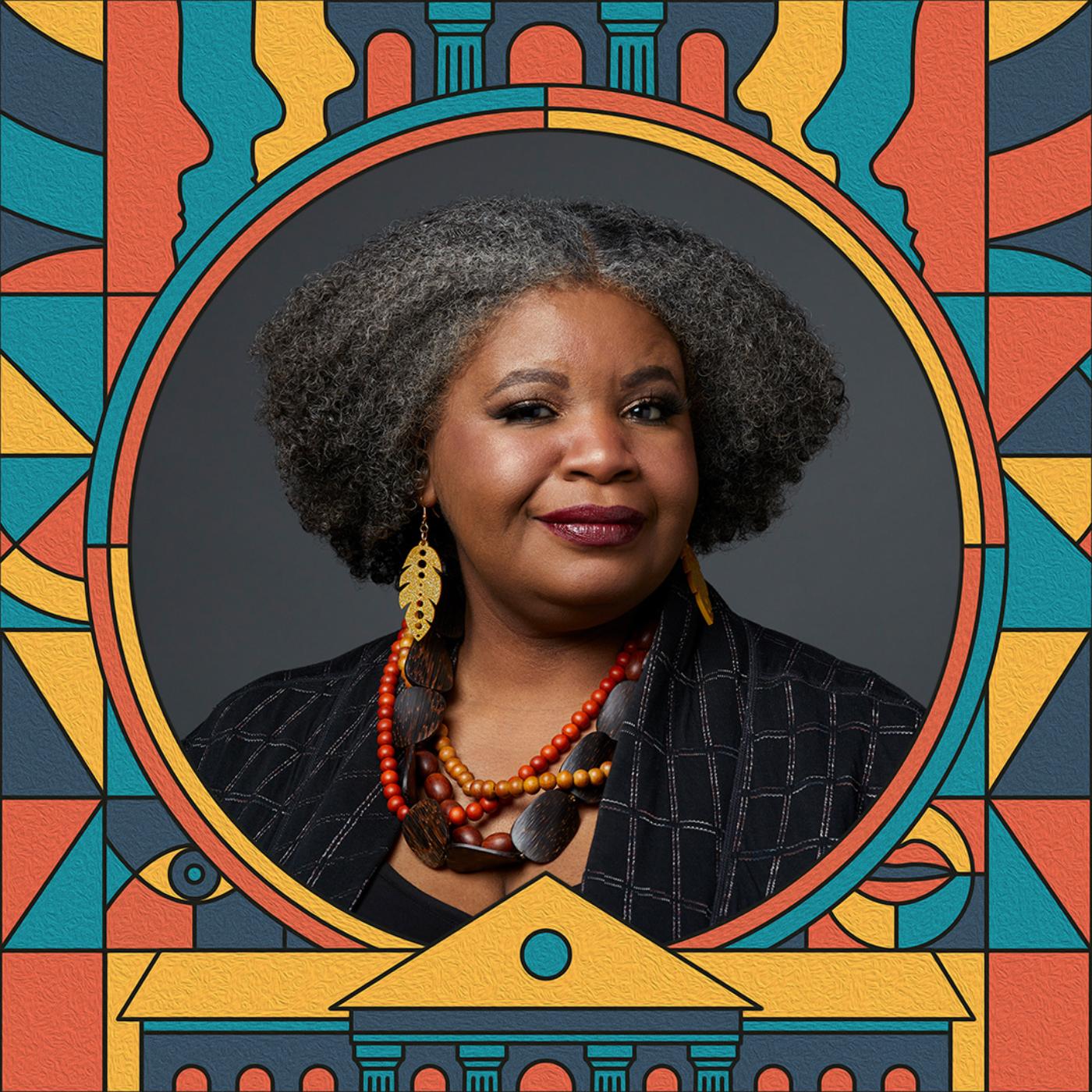
Abby: Today we're speaking with Dori Tunstall, distinguish design anthropologist, celebrated author, visionary organizational design leader—can't wait to hear about that—consultant, and coach. She is a pathbreaker of progressive approaches that challenge conventional design paradigms that exclude and harm indigenous cultures.
With a global career encompassing an Associate Professor of Design Anthropology at the University of Illinois at Chicago and Swinburne University in Australia, respectively, Dori made history as the first Black and Black female Dean of basically anywhere in the world at OCAD University in Toronto, Canada. Go Canada!
Her accomplishments have been recognized with numerous prestigious awards, which I am not about to list because we'll be here the entire show, but most recently, the 2022 Sir Misha Black Award for Distinguished Service to Design Education. Dori, a huge welcome.
Dori: I am so excited to be in conversation with you, Abigail and Brenda.
Brenda: Oh, Dori, we're so happy that you're here. So, before we focus in on your incredible work with design, advocacy, and leadership, tell us what attracted you to cultural justice work in the first place?
Dori: I was born into it. I grew up in Indianapolis, Indiana. I am multi-generational African American, so, you know, like 7 to 10 generations that we can trace our family heritage in the United States and thus being culturally African American, which is a kind of hybrid mix of African, European and indigenous cultures, there's an innate sense of attunement to cultural justice in which cultures get to be expressed, which cultures are repressed, which cultures you’re forced to assimilate to in order to survive. And it also brings, again, these opportunities for wonderful, you know, global celebration of culture and just my innate desire to understand how people think, how people move in the world has, you know, just deepened my, both my scholarship and my practice, right, around trying to understand culture and what it is and what it can mean to people.
Abby: Were your mom and dad involved in that sort of work? Tell me a little bit more about the influences that drew you into this sort of line of work.
Dori: I mean, I was born, I mean, you know, in 1972, in the 70s, so this is when you had the first introduction of like, Black History Month. So, my family was definitely involved with that.
There were always, you know, like there was always art around us. You know, I had cousins and uncles and stuff who were artists, so that was always encouraged. I talk about like how I became a designer is like, I have this book and volume number 11 is Make and Do. So, at the age of 10, I went through every single exercise in that book, which is like, you know, how to make stamps out of potatoes and build houses out of cardboard, so creative expression and an understanding of black culture was something that my family deeply, deeply advocated for and wanted to make sure that we were closely connected to.
Brenda: So, thinking about that and thinking about this incredible, you know, resume that you have today, I'm curious, was your journey, was it, like, fluid or were there a lot of unexpected turns and changes along the way that were unanticipated?
Dori: Yes. I always say that I'm like the queen of the zag. And I'll give just like, really quick examples, so there's a story that was told: at the age of 6, I said I was going to go to Harvard, and it was a thing that first my family's response was like, you go, girl. Right? Like so there was something there that they actually felt that they could encourage me to do that.
So, I applied to Harvard University, but I encountered Bryn Mawr College, which is an all-women’s college, and it's one of the Seven Sisters. And for me, the claim to fame is like, that's where Katharine Hepburn graduated. So, I got into Harvard, but I zagged in the sense of going to Bryn Mawr College.
That was like one of my first zags, and I've never worked harder in my life intellectually than I did as an undergraduate at Bryn Mawr College, right, and making decisions to go from biochemistry to anthropology, like, I wouldn't have done that. I wouldn't have the environment to feel I could choose that pathway if I had gone to Harvard because there's always a preconceived notion of like the pathway you're choosing if you've chosen to go to Harvard, right?
Abby: So, is that what happened when you left university then? You graduated with your fancy science degree and then you zigged.
Dori: No, I didn't get it. So, the other zag is that my junior year, I was supposed to decide whether I was going to be a biochemistry double major or go into anthropology. I took anthropology classes because physical anthropology is the first course that you take. And so, I was like, oh, I'm interested in anatomy and etc., etc. and I took a medical anthropology class because I was like, I'm a global person, and so I really want to understand how medicine works across the world. And I fell in love with the subject matter.
And so, I just kept taking more anthropology classes, and I decided that anthropology got me closer to why I wanted to do neurosurgery, which is I wanted to understand how people think. And in anthropology, you learn how people think, but you learn how people think in the way that they think. And I get to understand how people think in the way that they want you to understand how they think. Right? And so that was the other big zag, was then.
So, I ended up with a degree in anthropology. My family freaked out because they thought they were going to have to, like, carry me financially for the rest of their lives. They were like, what do you do with that? And then I went to Stanford and got my Ph.D. there. But then the other zag, right, is that I went into high tech consulting at Sapient/E-Lab, and that was on a totally different trajectory. But then when they saw my salary, they were fine.
Brenda: I'm a parent of a young person who just got an undergrad in fine arts, you know, and I'm just like, baby, you just got to do what you got to do. You got to follow your heart. And she's now going into art therapy.
Dori: I mean, you know, the, you know, my family is very much like working class, right? And so, like those questions of like, the sacrifices, let's say, that are made to set you on a pathway where you're like, okay, she's going to Harvard in ten years or whatever, right? I understand deeply the anxiety because the intent is, again, if you're working class, you want your children to be upwardly mobile, right? And so, this idea of, okay, how many zeros is it, is also a marker for them of like, okay, we've done a good job. Right? We've set them up for independence. We've set them up for potentially intergenerational wealth. And we created you know like a possibility model for everyone else in the family.
Abby: Yeah, the family and the community. The community modeling that happens when somebody gets so far, like, I think it inspires other people and other people's kids
So, moving from the early, very impressive years to your most recent accomplishment, so we’re going to talk about this extraordinary book titled Decolonizing Design: A Cultural Justice Guidebook, where you have a powerful take on the role and responsibility of designers and cultural leaders to really take action towards amending social and societal injustices through design. Tell us what decolonizing means to you and why this is your current passion.
Dori: Decolonization is about reestablishing indigenous sovereignty as the land, meaning, like, there's practice we do, like a land acknowledgment, right? So, I'm on the land of Tongva, Chumash, Tataviam peoples here in, you know, Los Angeles. So there's that recognition of and the rematriation of the land back to those communities
And then it's dismantling all of these structures that have been put in place to maintain this hierarchy that has put Europeans and their descendants at the top, African Americans or African peoples at the bottom, and then everyone else trying to figure out how they fit in between. So, decolonization is that process, right, of reckoning, it's acknowledging the harms that have been done and then making the true actions of amends to redress those harms.
Abby: Do you think we can ever right the wrongs of the past completely?
Dori: Yes. Luckily, being in, like, California, you begin to see that happen, right? Like you have 100,000 acres have been rematriated to the Shasta Indigenous Nations. And again, whatever people's fears are about that, like, nothing happens. The Indigenous communities continue to remain generous, right, in their approach to reconciliation.
Brenda: You know, in talking about decolonization efforts, I'm curious, Dori, if you could talk to us a little bit about how it is that in your experience, organizations, institutions have been falling short over the years, and I recognize this is probably a massive, I know it's a massive question, but I'm curious if there are any specific missteps or lack of steps that you've encountered.
Dori: Well, in the book, I try to talk about it in two very personal ways. The first chapter is Putting Indigenous First, and it's really about the story of my own humility that I had to cultivate in terms of working with Indigenous communities and Indigenous faculty and the sense of recognizing that, whatever struggle, civil rights struggle that I may have, right, as African American, there's a different struggle that in some ways holds first precedence, right, over redressing for that. And it expresses itself in, really, ways, so again, like asking to be in partnership, I do a lot of work around cultural appropriation and misappropriation, and the heart of that, the grievances around that that, why didn't you just ask to be in community with us, to be sharing with us? Right, like we would have done it in collaboration.
And again, amends are being done. Like Ralph Lauren and the Polo brand just started their third collection with Naiomi Glasses, whose, Diné designers have, they've done three collections to go, this is the last one. Equal credit. Right? Give back to the community, not just the individual. Again, her name is plastered all over, everywhere. I’m assuming paid very, very well and continuous. Right? Like it just wasn't a one off. And again, like, if you talk 20, 30 years ago, Ralph Lauren was like cultural appropriator number one. 2020, had a reckoning, changed the way their business worked, to success, right, because I'm upset because it came out yesterday and it's like it's almost all sold out.
Brenda: You know, you’re reminding me, just, it's like a personal side note, but the whole idea of humility, and especially when working with, with Indigenous folks and I was working on a project with the Smithsonian, the Museum of the American Indian, and I was learning about and working with Haudenosaunee and folks from the Iroquois Confederacy. And I kept slipping up, using the right language to talk about, you know, is it the Iroquois Confederacy? Is it the Haudenosaunee, and how do I get this just right in the exhibition work that I was doing? And I kept getting corrected by one of the Haudenosaunee women who was working with us. And I just kept saying thank you because she didn't make me feel stupid. She didn't make me feel ashamed. And at any rate, I just remember feeling gratitude. A really warm combination of humility and gratitude.
Dori: The two things that I always mess up in my relationships with Indigenous people, but other community, cultural communities as well, is, one: is being present. There's a lot of trauma, right, that is very close in Indigenous communities, which is very triggering because African Americans have experienced like, again, same types of trauma, different timelines, like I say, like the, if you think of the residential school, you're talking about people's parents and grandparents, right, in terms of like, how close the harm is. Whereas even if we're talking about like Jim Crow and a lot of those things, it's something that I think of in terms of like my great grandparents. And so, to even have like that generation of difference means the trauma affects you in a different way, right? So, the thing I talk about is like having to be present in their joy and in their grief and in their anger because that’s, that demonstrates I care, right, it demonstrates that I understand them as peoples and I'm present for whatever they're feeling.
The other thing and I still fail with this one and it's, it's hard, it's not hardwired, it just takes a lot more practice, is that like, I am the queen of productivity, I am the queen of the Gantt chart. And it's how I think, like when I think of an idea, I already have, like what the strategy needs to be and you know, what are the operations. So, it's like, the moment the idea comes, I'm like, okay, these are the next steps, which is great. It means like, this is why I get to lead a lot of stuff, right? But it also means that if people are not operating under that same sense of time and task, which many of my Indigenous colleagues and more importantly, Indigenous processes of decision making does not fit within a Gantt chart, then I end up actually causing harm to a lot of my indigenous relationships, because I'm so trapped in this idea that there's a time frame in which this needs to happen.
And again, I appreciate what you're saying, because I would say it took me a moment to realize that the act of calling out is an act of love. It is saying, I want to be in good relations with you. So, I'm going to tell you what's going on.
Brenda: You know, I have a question; we've been hearing about making amends, right, we've talked about that a little bit. And I'm really curious, you know, in your work, you talk about how it is that we need to make amends far beyond DEAI. Can you tell us what you mean by that?
Dori: So, the way in which DEAI is normally framed is around hiring. And in the book, I talk about the fact that, like, the way in which hiring is generally done is that they're looking for a super token, which is, again, an individual, you know, who has an extraordinary resume, again, from structurally marginalized identities, whose talents are so desired by institutions that they're willing to kind of put aside any aversions they have to those identities in order to access those talents. And, you know, I've consulted with enough academic institutions and they're all like, who's the super token? Right? Like, who's the Indigenous Ph.D. from MIT that we can recruit to come to our, you know, I don’t know, backwater institution in order to make us feel like we're decolonizing. Again, important and necessary. But it has to be done in a context that leads to success.
So, first of all, the person is in isolation, which, you're structurally setting them up to be manipulated by the institution and actually not bring about change, right? So, you need to hire for critical mass, bring in five people a year so that they can begin to build a pocket of culture from which they can draw the strength to challenge every institutional thing that you have in terms of how it's not working for the identities that they embody.
And that means then you're talking about like, you know, everything from like, yes, the hiring process, but you're also talking about, okay, what are the ways in which courses might be assigned, the workload might be assigned? What are the ways in which recruiting is done? What counts as work? Does all this community engagement count as work. So, you're changing all of these sort of structures that exist within the institution so that they will feel free to contribute all of who they are to the institution and connect the institution to those communities that you're wanting to embrace. Right?
Abby: Did you realize all this, like on your journey? Have you lived all of these situations?
Dori: Yeah.
Abby: Right, that's what it feels like.
Dori: Well, and the notion of the super token came because people kept asking me, what does it feel like to be the first Black and Black female, and I said, well, it's bittersweet because on the one hand, there is sweetness because you've broken through a particular type of barrier. Right? And people are inspired by that. Like there are young people who start crying just from meeting you because you've opened up possibilities for them. Right?
But it's also bitter because you think of like, who are all the people that were rejected? By the system. So that it takes you in 2016 to be the first. So, my answer to that is like well it's complicated because I'm a super token. Again, in terms of the meritocracy game, I'm exceeding expectations. That is a barrier, right? Because then people say, oh, we would hire more X, Y and Z if they were like Dori. Well, Dori's not even like Dori. So, the responsibility of a person who's a super token is actually to dismantle all of those structures that put them in that position of being a super token.
Brenda: That is a really tall order.
Dori: It is. I mean, this, you know, again, why my second book is The Super Tokens: The First, and the Only is as I went on tour for the last, you know, year and a half or so, people come up to me and were sharing their stories of being a super token. And first of all, they were thanking me for the term because they had a way to explain the tensions between what they were feeling in their career of, on the one hand, exceptional performance, but on the other hand, constantly failing disrespected. Right? And/or rejected by their institution. So, the idea in some ways of the second book is really to be able to embrace their stories and to draw from them what individuals and institutions need to learn, so that those experiences of those super tokens are not so painful.
And it's a reminder for super tokens themselves of like what their role was supposed to be, because one of the things, the hard conversations that I'm having right now, let's say, with the Black community, is that, you know, our trajectory in terms of how we've been structured is for us to want to join the institution. Right? We are super excited because Kamala Harris is about ready to join this super institution, right? Like President of the United States. And that's what you're taught. Your purpose is to infiltrate these institutions. But that is not enough, right? And that's the part where it's like, it is more than DEI, because it is not enough. You actually have to be engaged with dismantling empire, dismantling oppression.
And when you’re a super token, sometimes, again, your everyday struggle to exist in the institution in ways that you're so focused on survival in the institution that you're not focused on liberation. So, there's also the reminder that if you are in an institution as a super token, you're not there just to join. You're there to create structures of liberation by dismantling and reassembling the institutions and in a way that is more just, more fair, more equitable.
Brenda: You know, we've talked, and the word liberation has come up a number of times. And I'm so taken with your message about humility and being informed when working with others, with being a partner and ally. And you talk about how we can experience liberation in not being afraid, right, to say no to something that could harm you. When we're able to manage the vulnerability and the humility required to do this, we can foster connection and joy. I've heard you speak about this in other forums, and you term this liberatory joy. Tell us, how can we all exercise liberatory joy in our work?
Dori: There's a workshop that I give, and I've given it twice, quite successfully, which is Designing a Pathway for Liberatory Joy. And in it, I ask people to first know thyself. So, I ask people to identify their positionality vis-à-vis structures of oppression. Then, decide on something they want to say no to, but feel they can’t. Once they've kind of sketched out like a pathway of like what, what would it mean to say yes to that thing? Imagine what like a positive outcome would be of saying yes to that thing you want to say no to. And then what are the systems that you have to, like, engage with in order to be able to get to that yes.
All it is, is just setting up a methodology to begin to say, like, no to the things that I want and need to say no to, so that I can say yes to the things that are going to bring me closer together to myself, closer to communities that I love and find nurturance with, closer to whatever higher purpose, right, that sparks my imagination and my commitment. And to say, you know, when I say liberation is saying no to that which might harm you, it becomes really clear, as we're hyper aware of the things that might harm us. So, all of a sudden, and then people begin to think is like, can I say no to that? Can I say no to that job? Can I say no to that housing situation? Can I say no to that policeman? Right, all of a sudden you begin to accumulate all the things that are actually oppressing you, and then you figure it out: what's your pathway to liberation?
And you can't do it as an individual. You feel so overwhelmed if you're trying to achieve liberation as an individual. So, it is only by trying to connect with others to others, right, that we, we create the conditions in which everyone can say yes to that which affirms them and nurtures them. And connection to me is joy, like, why we love music is because it connects us. You can have a bunch of people all moving in sync because the rhythm gives them a point of connection to one another, right?
Brenda: Well, I say yes to you, Dori, and I say yes to this moment that the three of us have.
Abby: Yes, I say yes too, this was incredible. Thank you, Dori, so much for sharing your zigzagging pathway with us today and sort of opening my mind and hopefully the listeners minds, liberating us all en masse.
Dori: Thank you so much again. It's such a pleasure and you are such wonderful interlocutors, so let me know anytime you want to do it again.
Brenda: Oh my gosh, well this, this does beg for a sequel, I must say, because I feel we've only just scratched the surface. So—
Abby: So maybe, maybe after your next book tour.
Dori: Yes.
Abby: We'll see you at the end of that. Thanks to everyone who tuned in today. If you like what you heard, please subscribe for more episodes of Matters of Experience where you listen to podcasts. Make sure to leave a rating and a review and share with a friend. We'll see you next time.
Brenda: Thank you so much everyone!
[Music]
Producer: Matters of Experience is produced by Lorem Ipsum Corp and recorded at Hangar Studios. Tune in next time for more fun discussions about experience design.
