
ABOUT THIS EPISODE

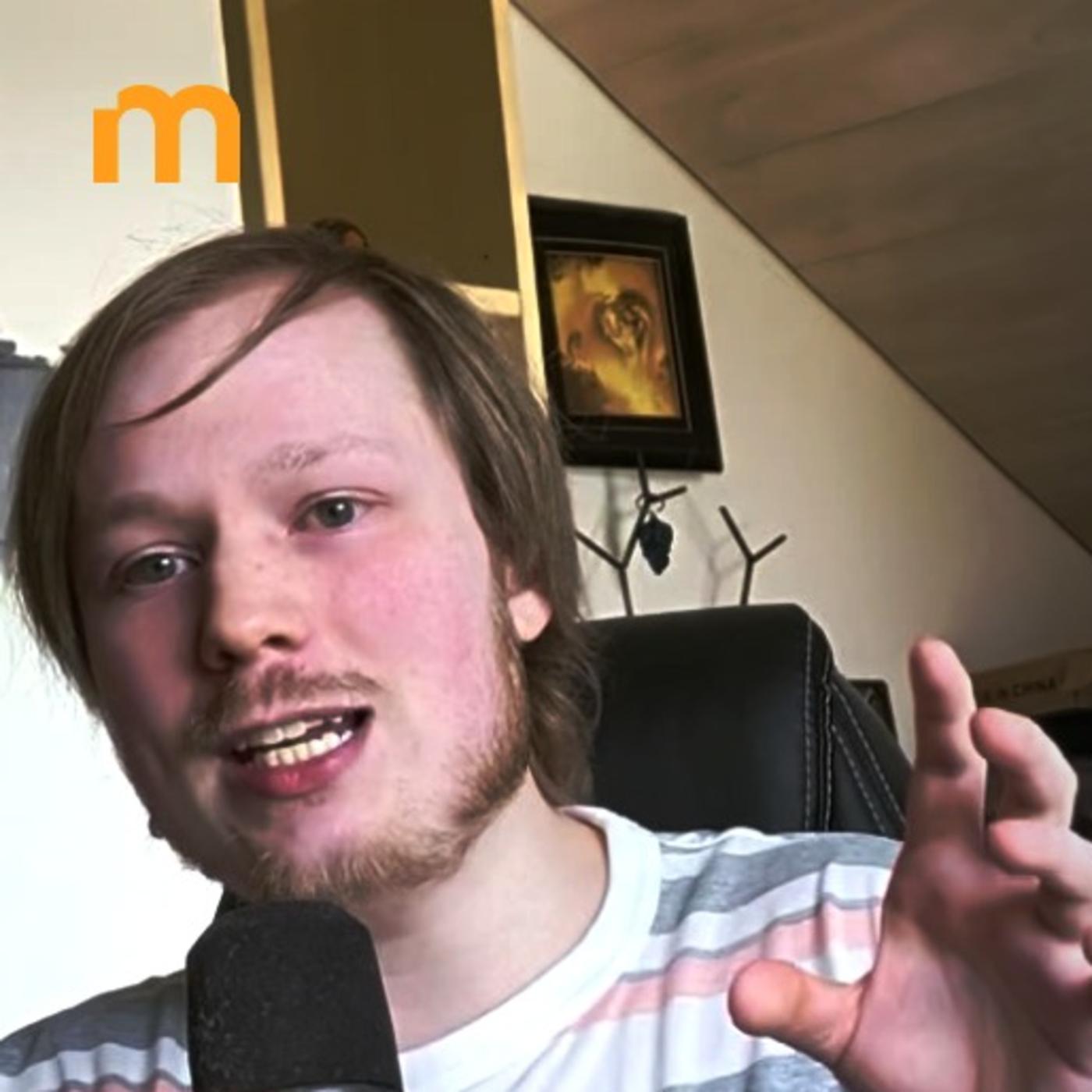
Michael Tomasello is a developmental psychologist who spent twenty years at the Max Planck Institute in Germany putting children and great apes into the same experiments, and is now back at Duke University. His book The Evolution of Agency asks what it takes for a living thing, or a machine, to act for its own reasons.
SPONSOR:
---
Cyber Fund built the Monastery to help founders ship products that were impossible a year ago.
Apply now: https://cyber.fund
---
His answer starts with unpredictability. Where the environment is predictable, nature builds the behaviour in; where it isn't, it builds a decision maker. Tim and Tomasello test that on a dumb traffic light, a thermostat and a robot vacuum, then follow the line to humans: reptiles running simple control loops, a squirrel that imagines itself falling and takes another branch, and great apes that go looking for more information before they commit.
The second half is about shared agency. Humans form joint goals, attend to the same things together, and learn that one object can be seen from different perspectives. Children who lose the sound on a video call invent gestures and turn them into conventions. Large language models, Tomasello argues, started at the endpoint and skipped that infrastructure. On the way: the stag hunt, why lying only works among cooperators, whether capital is an agent, why a Turing test isn't close to sufficient, and Dennett's intentional stance.
TABLE OF CONTENTS:
0:00 Cold open: agency begins with unpredictability
0:29 Michael Tomasello and The Evolution of Agency
0:59 From chimpanzees to two-year-olds
2:05 Agents exist because the world is unpredictable
3:56 Defining agency: control loops, will and causal power
7:19 Sponsor: Cyber Fund
7:55 How would you make a traffic light smart?
9:57 Thermostats, robot vacuums and what is missing
11:32 Could a machine have more agency than we do?
16:26 Darwin, emergence and the limits of learning
21:04 Selfish genes, Chomsky and where goals come from
24:17 Modules, emotions and nature's finger on the scale
28:25 Why Tomasello avoids the word intelligence
32:06 Four levels of agency: reptiles, squirrels, great apes
37:04 Shared agency, joint attention and perspective
42:25 Why language models do not create conventions
44:08 The stag hunt and conventions as coordination devices
47:41 Perspective, grammar and why discourse matters
53:12 Pointing and building agents from the bottom up
55:44 Money, presidents and status functions
59:26 Lying, gullibility and the dark side of cooperation
1:01:27 Is capital an agent? Emergence and the invisible hand
1:04:48 Acting like an agent: the intentional stance
1:06:16 Closing
BOOK:
Michael Tomasello, The Evolution of Agency: Behavioral Organization from Lizards to Humans (MIT Press, 2022)
https://mitpress.mit.edu/9780262047005/the-evolution-of-agency/
KEY REFERENCES:
[11:41] Benjamin Recht, The Irrational Decision (Princeton UP, 2026) https://doi.org/10.1515/9780691272467
[28:07] Mark Solms, The Hidden Spring (Profile Books, 2021) https://profilebooks.com/work/the-hidden-spring/
[37:42] Michael Tomasello, The role of roles in uniquely human cognition and sociality (2020) https://doi.org/10.1111/jtsb.12223
[38:15] Cheng, Gao, Tomasello & Kushnir, The Agency Gap (CogSci 2026) https://escholarship.org/uc/item/8mv6v0s1
[38:59] Tomasello, Melis, Tennie, Wyman & Herrmann, Two Key Steps in the Evolution of Human Cooperation (2012) https://doi.org/10.1086/668207
[40:28] Michael Tomasello, The Normative Turn in Early Moral Development (2018) https://doi.org/10.1159/000492802
<truncated, see rescript/YT>
SUPPORT MLST:
Patreon: https://www.patreon.com/mlst
Discord: https://discord.gg/HNnAwSduud