WEBVTT
00:00:00.380 -->
00:00:19.269Hi and good morning, good afternoon for the people watching this first episode of season one of the virtual lighting design community thoughts leaders podcast, vlog, vlog cast I don't know how to say it, but anyway, we are here.
00:00:19.269 -->
00:00:24.830I'm going to talk of the art of lighting design.
00:00:24.830 -->
00:00:55.240I'm going to talk of the art of lighting design and for doing so it's a little bit to give you an insight in what we feel is the difference between a creative lighting design and a more engineered lighting design maybe, which you could expect from the installer side or engineering firms that are a little bit more concerned about the technical part of lighting than the artistic side of lighting.
00:00:55.240 -->
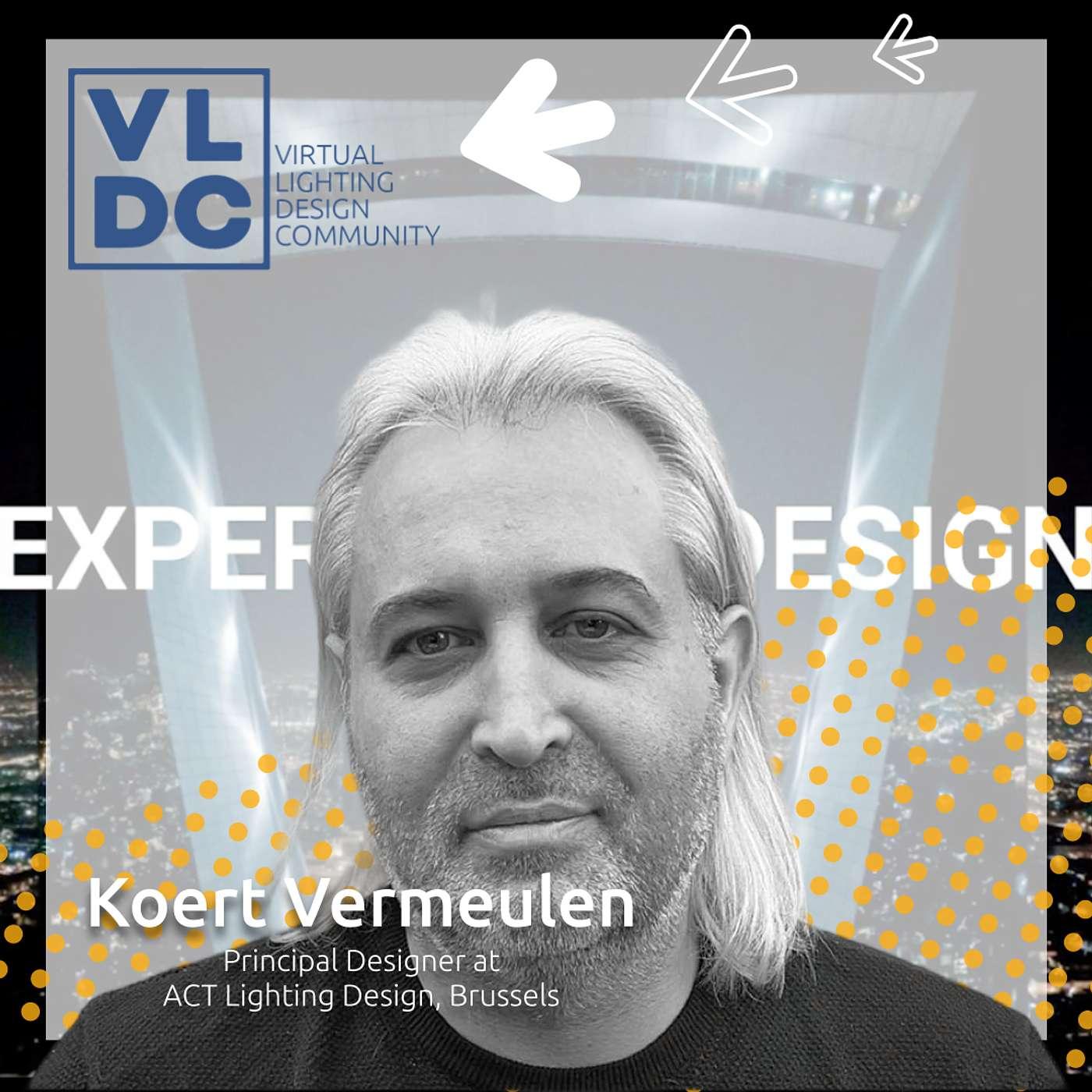
00:00:57.969My name is Kurt Vermeulen.
00:00:57.969 -->
00:01:08.314I run a company called ACT-LD or ACT Lighting Design, based in Brussels, belgium, that is for sure.
00:01:08.314 -->
00:01:11.948We are a middle-sized company.
00:01:11.948 -->
00:01:21.314I think we have 22 people running here around being creative and trying to always be on the top of our toes.
00:01:21.314 -->
00:01:39.186Be on the top of our toes and in this particular talk, I'm going to go deeper a little bit in this first part about why ACT-LD, what we do is what we do, and also afterwards I'm going to talk a little bit about how we create.
00:01:39.186 -->
00:01:53.924I'm just going to say, with a conceptual design I'm not going to schematic designing or design development is also a very important part of all the um phases that you have to go through to make your lighting design an actual reality.
00:01:53.924 -->
00:02:07.204But I thought in this talk I would really concentrate on that conceptual thinking part, recreate exceptional experiences at the intersection of design, arts and innovation.
00:02:07.204 -->
00:02:15.883This you can find on our website, which is an easy thing to actually say, a little bit more difficult to actually put it into practice.
00:02:16.800 -->
00:02:38.318And we started out as an entertainment lighting design firm, quickly branched out already in the year 2000 around that, into the architectural field, and actually those two are mixed together today in what we call experience design, which is a bit broader than the pure lighting design that we're used to walking into.
00:02:38.318 -->
00:02:41.463It all starts a little bit with our expertises.
00:02:41.463 -->
00:02:44.429We are an experience design studio.
00:02:44.429 -->
00:02:49.663We really need to stress that a little bit because, like I said, we started from lighting.
00:02:49.663 -->
00:02:58.706We are now fully into experience design with a much wider spectrum of fields of expertise that we are touching today than we were doing before.
00:02:58.706 -->
00:03:00.540It goes from.
00:03:00.540 -->
00:03:32.793Of course, lighting is still the most important part, but we also, you know, design and follow through on the video, on the sound, on the music, of course, set design or scenography, special effects, sophisticated control systems and interactive systems, or what we also call public engagement or customer engagement elements that we try to also mix so that those reality in the digital world actually are able to mix into one another.
00:03:32.793 -->
00:03:35.782How we start with that?
00:03:36.243 -->
00:03:40.913The most notable thing that we do is storytelling.
00:03:40.913 -->
00:03:57.942Storytelling we want to create worlds and stories that actually connect, to inspire the audience that we apply to, and whatever technology that we have, it always has to be in function actually of that storytelling element that we do.
00:03:57.942 -->
00:04:35.427In our multidisciplinary approach, approach, we're also a company that really goes from a concept complete to operation, because it's we also feel that only at the end of this process, um, we're only finally being able to, you know, put the finer touches on, uh, all of these things at the end, when we are doing the programming, we are doing the uh, the focusing of the lighting, uh, and you know, we are putting all the scenes together so that people are actually enjoying, uh, or being captivated, but what we felt is the thing that we needed to do.
00:04:35.427 -->
00:04:42.846So our expertise is and this is just a little bit of a of a big background that we actually do.
00:04:42.846 -->
00:04:47.250We kind of separated it in a few elements.
00:04:47.250 -->
00:04:55.855We got a high level creative design, which starts with creative direction, goes into lighting design, scenography and content creation.
00:04:55.855 -->
00:05:13.612These are actually the elements that we feel is mostly on the storytelling part, or we could even say that these kind of things need a scenario almost to be able to happen and to become made to life.
00:05:15.560 -->
00:05:29.910The second level is the creative design itself, where I want to include music or composing, not to be on the second level but at the first level, above it.
00:05:29.910 -->
00:05:34.531But we don't have composers actually inside our company.
00:05:34.531 -->
00:05:39.952We usually always outsource or we work with partners in that respect.
00:05:39.952 -->
00:06:16.312But everything that has to do with the visual elements that comes next to this high level part aquatic design, special effects design, audio and video systems and interaction design are for us at that second level, technical design itself, which comes with system engineering, show control systems, technical direction, also pre-visualization and programming and production and project management.
00:06:16.312 -->
00:06:18.079Otherwise we wouldn't be able to get there actually.
00:06:18.079 -->
00:06:32.855So, going over this overall presentation of the way we work at ACPOD and we have this innovation lab that actually helps us a lot with being on the cutting edge of the project deliveries that we want to do.
00:06:34.680 -->
00:06:52.096The second part of this presentation is about to show you how we collaborate internally, how we brainstorm, how we brainstorm and how we are getting to a conceptual design at the end of the road, where we both say okay, or we both.
00:06:52.096 -->
00:06:56.189We are multiple people in office, but the team says okay, we're all happy about what this works.
00:06:56.189 -->
00:07:06.031In that respect, I want to be clear about one thing Brainstorming is a very good thing, but you have to do it in the right kind of way.
00:07:06.031 -->
00:07:14.533We have been trying a lot along the years to do this one, this one or the other one.
00:07:14.533 -->
00:07:37.189In the end, the one that we were capable of maintaining a high level of creativity, but also a personal satisfaction level for the people that are working in there, is to have brainstormings with not more than four, but at least two, ideally three people actually in the team itself.
00:07:37.189 -->
00:07:43.971We felt that when you have more than those people, it's flooded.
00:07:43.971 -->
00:08:05.459People were afraid to share things that maybe were a good idea, afraid for failure, and when you don't have enough people, yeah, then you get satisfied quickly enough about what you are hearing or what you are saying yourself that you can't really go much further than that.
00:08:05.459 -->
00:08:15.648So for us, the team that works on the conceptual design, is three ideal maximum core category people that actually work together on this.
00:08:16.350 -->
00:08:21.762So Miro is not a program that we only started working with during the pandemic.
00:08:21.762 -->
00:08:50.884It was something that we've already been using, actually before, because it gives us this possibility to work both remotely but also in the same office on a kind of infinity desktop canvas into which you can place whatever you like into it and use it as a virtual brainstorming tool.
00:08:50.884 -->
00:10:12.947What you used to be thinking about and doing in an office, sitting around the table, pushing yellow notes or whatever on the board and pushing those ideas outside, is now essentially what you can do here on this collaboration tool, and the good thing about it is the memory that it has for me, because on a project like this, which you actually now you only see maybe 20% I'm just going through the whole document a little bit and show you how we can work with these things together is the fact that at the end, with this infant canvas, we are able to go from one to the other, but we never forget what we actually have put together here and we can always go back to where we came from in the beginning, to be able to make sure that what we have as a reference, or what we thought about maybe a month ago, is still always available, because we have felt that 22 people in the office and multiple years of that is one of the most important things to be able to understand how to keep your knowledge together.
00:10:12.947 -->
00:10:30.710The knowledge base is one of our deepest concerns at the moment on how to really keep the knowledge that we produce, maybe with a small team of four people, and to be able to share that outside to the other people around us.
00:10:30.710 -->
00:10:36.284So I'm now going to just go quickly into a few of these details.
00:10:36.284 -->
00:10:49.565I mean, as you've seen already, we're talking here about a Bebouche life history roll, for which we have been doing quite some work over the last two months.
00:10:49.565 -->
00:10:55.630But it all starts and that's a great thing way you can zoom actually in.
00:10:55.630 -->
00:10:57.976Oh yeah, this is what you call the trash bin.
00:10:57.976 -->
00:10:58.557That's okay.
00:10:59.480 -->
00:11:32.126Uh is all the elements that that we find online and that gives us quite a little bit of let's go back uh information that could be nice, could be possible to actually understand this or not, but in here, one of the first things that we see that we've done was talk about the storyline, and we made a little work about that.
00:11:32.126 -->
00:11:53.282That storyline is to understand what the bush would mean for us, um, what we feel that we should uh, hide, uh and and put into the light in this kind of thing, and so this kind of storyline was the first basis actually put into it, the inspiration behind it.
00:11:53.282 -->
00:11:57.607Um, I'm not going to go into too much detail, I'm just going to go quickly over.
00:11:57.607 -->
00:12:00.730That is something that most of you are used to.
00:12:00.730 -->
00:12:11.890You go online or you go into your library and you're putting some stuff together that you feel that are beautiful, or there are things that you could actually put in there.
00:12:11.890 -->
00:12:17.436Put in there.
00:12:17.475 -->
00:13:01.128I come here to the problems to solve, because a lot of our talks which we usually do, at least on a project like this, where we have five, six weeks to you know, to start from concept is we have at least one meeting with all of us together during each couple of hours of the week, in which the artistic director or creative director is there, which in this case is me, and then the two or three people that are there, and sometimes we even involve maybe a fifth person into this process because sometimes we feel we just want to have a third look or a third eye on some of the things that we're doing.
00:13:01.128 -->
00:13:13.171But those problems that we need to solve are as important as all the other ones, as the storytelling that we need to also put together.
00:13:13.171 -->
00:13:15.480We also talk about the stakeholders.
00:13:15.480 -->
00:13:54.381At that moment, who is actually working in there, and what I'm showing now is actually because that was the good thing about this project here is that we saw the project of last year, which was not developed by us but which we have visited, and we put also into our brainstorm to hear all those elements a little bit together, to make sure that we always understood what are those things that worked from last year, what were the things that didn't work, important places that we felt that was there and in this respect, we just go on week after week.
00:13:54.381 -->
00:13:56.971We keep everything that we have actually in there and in this respect, we just go on week after week.
00:13:56.971 -->
00:14:01.422We keep everything that we have actually in there.
00:14:01.422 -->
00:14:18.071And so here I see a thing that was done, the elements, people were responsible for the task, how it was actually named and what I really love about that, and maybe, if you see my background here behind me.
00:14:19.696 -->
00:14:43.371I am one that kind of likes to work with elements around me, the proverbial atelier d'artiste where you come in and you have lots of paintings and lots of stuff that's hanging around and paint brushes everywhere, and you know, um, that, for me, is a creative environment.
00:14:43.371 -->
00:14:56.465That one is, for me, an environment that stimulates and that actually puts me somewhere where I would like to go um and in in my house where I'm actually taping this presentation here.
00:14:56.465 -->
00:15:02.658Well, there's not a wall, that is free, everything.
00:15:02.658 -->
00:15:15.024I've got art on the walls, I've got books lying around everywhere, I've got small little sculptures, I've got lighting systems around me, all the things that I think is important for me to be able to, you know, to be stimulated.
00:15:15.024 -->
00:15:18.677I keep that around me, all the things that I think is important for me to be able to, you know, to be stimulated.
00:15:18.677 -->
00:15:42.846I keep that around me, and that's actually what I found in this presentation, in this kind of methodology of working, is where you know that amassment of information actually helps me to really, you know, be creative and make the right decisions, and I can always go back to something that I've seen before, which I think is one of the most important elements that we have.
00:15:42.846 -->
00:15:53.919So I'm not going to bore you or maybe it's not boring you but I'm going to get you to all the elements that we have put together.
00:15:53.940 -->
00:16:15.582All the elements that we have put together I think I made my points about how we actually, you know, make a concept from, you know, from a brainstorm, to a conceptual design point of view, the storyline, what you see here, that we have maybe, that's, maybe good to see.
00:16:15.582 -->
00:17:02.399This is one of the storylines with which we started out, in which we based a lot of our things and which was then subsequently ignored completely at the end of our work that we have done on this presentation, because, although we have developed this into quite some detail, when we went finally on slides for the second time and we had the new um kind of parkour that we had to walk through um, the, the, the, the time, the, the, the, the thematic of time, was no longer possible in using the dog only, and that is also something that I think is important.
00:17:02.399 -->
00:17:34.246If we talk about um, how to conceptualize um, don't be afraid of change the, what you feel at some point into your presentation, or I mean in your conceptual development, if at some point you are saying, you know, don't try to always keep the thing that you thought of in the beginning, you know, if it doesn't work, just, you know, ignore it, come up with another one.
00:17:34.246 -->
00:17:37.891And that is exactly what we have done here.
00:17:37.891 -->
00:18:01.723When we understood that the locations that we originally had from the year before were all going to change, and it went into a completely new kind of location specification which we said listen, we cannot longer play that past, present and future timeline anymore, and so we have to get rid of this.
00:18:01.723 -->
00:18:07.144So what I want to say about that is don't be afraid actually to do this.
00:18:07.144 -->
00:18:17.826Then what we are, just to finish this actually off, we have not a problem problem in actually doing this kind of work.
00:18:17.826 -->
00:18:41.519And then at some point we have a conceptual lining here that comes together, which we you know the zoning itself, the picture of the actual location of our work, the visual of the element that we think we need to go to, or the reference element that we have, and the notes into this.
00:18:41.519 -->
00:18:58.553And this is the kind of last work that we do in this collaboration tool until we finalize the whole project together into the final step.
00:18:59.394 -->
00:19:01.142And I'm just going into that last part.
00:19:01.142 -->
00:19:05.806I mean, what you can see here is we did that work twice.
00:19:05.806 -->
00:19:19.364One was on the old parkour that we did and the one on the new one, and by then we were so well in first with all the elements that we wanted to do that.
00:19:19.364 -->
00:19:27.315From here onwards it went straight into the whole strategy that is actually put together in this slide here.
00:19:27.315 -->
00:19:36.549Now, all that work that we've done at MyRobot is never lost on just one project.
00:19:36.549 -->
00:19:43.806A lot of times we can actually use what we have done there and extrapolate that into other projects also.
00:19:43.806 -->
00:20:08.007That's why I don't mind on some occasions to go quite deep and more than the hours are actually allowed, on that reflection of the story and on the reflection of the internal work that we put into that, because a lot of times we can actually recuperate ideas that we developed into new projects.
00:20:08.375 -->
00:20:09.419That's an important part.
00:20:09.419 -->
00:20:32.685At the end, the document that we actually bring out to our clients is something like this Quite a, you know, 20, 30 pages, 32 pages of the essence of that six weeks long process that we actually went through.
00:20:32.685 -->
00:20:47.790That's a shame sometimes that we need to be very concise and very precise with what we show, what we don't want to show.
00:20:47.790 -->
00:21:28.501The choices that we have made are maybe 1% of all the things that we actually developed together into this thing, but it is up to us to make that decision and to show to our client what our end decision is, and not to show what the process is in that part, because why would you hire a lighting designer if it was not for having someone who professionally decides what is the best solution for that project?
00:21:28.501 -->
00:21:29.064That is dead.
00:21:29.806 -->
00:21:51.162As the last part in this presentation, I want to talk about the project of Chariot, which is a pure architectural project, which I thought was also an interesting way of actually finalizing this presentation on the art of lighting and to show how this storytelling and these elements actually come together in a pure architectural form.
00:21:51.162 -->
00:22:02.247Um, site analysis, uh, is a main part of the first element that you actually do when you're doing your work for this.
00:22:02.247 -->
00:22:04.383I don't think I'm saying something new about that.
00:22:04.383 -->
00:22:09.506During that site analysis, we look at accesses and connections.
00:22:09.506 -->
00:22:23.818There is the complete project overview and I think that Miro for this, again, I'm really pushing forward and if you want 25% discounts on your next Miro thing, go to our website and ask for the coupon.
00:22:23.818 -->
00:22:27.286I'm joking, but I do love Miro.
00:22:27.286 -->
00:22:40.284But this kind of overview where we have the plan and we see all the elevations, we see all the visuals and all come together, for me that that is golden.
00:22:40.284 -->
00:22:48.419This works for me so well to understand what the site is about, especially when it's not built yet you haven't been able to visit it.
00:22:48.419 -->
00:22:51.326This kind of overview is, for me, golden.
00:22:51.366 -->
00:22:59.276To be able to go forward the keywords is something that also comes from the analysis.
00:22:59.276 -->
00:23:15.750A lot of times we take it out of the presentation from the client or the developer, or some of them we create ourselves, but it's a really important part of what we then would define at the end of this road as the vision and the goals.
00:23:15.750 -->
00:23:44.261Vision and the goals and, in this particular part, the iconic destination, the evening experience together with the day experience, flexibility and the multiple views of the different spaces that we have, the use of dynamic lighting to be evolving over time, and data collection, scalability and reusability and, of course, at the end of the day, that's the human-centric design or that social interaction, engagement that needs to be followed through.
00:23:44.261 -->
00:23:45.826And this is actually the.
00:23:45.826 -->
00:23:53.617You know, this is our main part that we use at the end of the day, to go over and to see how we can actually obtain these kind of things.
00:23:53.617 -->
00:23:59.178The architectural concept is, of course, something that we get from the architect itself.
00:23:59.178 -->
00:24:00.861We do an interpretation of that.
00:24:00.861 -->
00:24:13.368We also have to check sometimes if these kind of things actually work, but it's an information that is absolutely necessary for us to be able, you know, to go forward with these kind of elements.
00:24:13.674 -->
00:24:15.557I'm just showing you a little bit of slides.
00:24:15.557 -->
00:24:34.286The slides, the way I'm walking through, which is much different than the one that we did for the Bruges Light Festival, is because Miro let's us also almost use it like a PowerPoint or like a Prezi presentation moment.
00:24:34.286 -->
00:24:39.319You can put them into kind of slides and then you can just walk through them, actually beginning to the end.
00:24:39.319 -->
00:24:47.661Sorry, I went material technics again, not from us, come from the client, from the, from the architect or some, is coming from us.
00:24:47.661 -->
00:25:40.932But here I think we come to one of the most important slides that we develop from that brainstorming and from that analysis and stuff like that, which is really the high level concept, where the canopy environment for us was one of the most important elements as a communication tool and so on, and how we actually bring that up environment, we go further with this and we use then this first part of the whole concept development into a more strategic, actionable way of working.
00:25:40.932 -->
00:26:00.307So those first visions and goals are now really put into four strategies, which is attract, experience, engage and linger, and these four elements are then actually used along the way all the time to get to where we need to be.
00:26:00.307 -->
00:26:13.102We know for whom we are designing, which is quite an important part, and then actually that creative proposal is actually put into motion where we go through it.
00:26:13.102 -->
00:26:37.558But it's maybe just good to just look at this overview that we have here, because, again, when you're not engaged in this project day to day like sometimes I am and you're only getting it to see once a week, to see where we are, the fact of being able to have this kind of overview, for me again that is one of the most important things.
00:26:38.862 -->
00:26:50.166This creative proposal that goes over the vertical and horizontal elements, that also gets those four strategies always looking alive and see how we actually get there.
00:26:50.166 -->
00:26:53.163That is for me a very important element.
00:26:53.163 -->
00:27:01.923Like I said, vertical elements we show how we want to attract, how we see the lighting hierarchy actually working.
00:27:01.923 -->
00:27:12.970There we go to volumes and geometry enhancements and that is more for the engagement parts.
00:27:12.970 -->
00:27:18.068Vertical continuity we are looking at horizontal elements.
00:27:18.068 -->
00:27:29.786Now I don't want to show you here exactly what the concept is, and I'm selling this project to you, so I go over them a little bit more quickly, but you see at least what are the main elements.
00:27:29.786 -->
00:27:34.145The result of what we've done is not that important in my presentation.
00:27:35.415 -->
00:27:37.921Access points we look at urban furniture.
00:27:37.921 -->
00:27:42.147We look at possible art installations, whether they are permanent or non-permanent.
00:27:42.147 -->
00:27:48.707We look at the squares and how we can actually and the access points and how we can go from there.
00:27:48.707 -->
00:27:56.347We look at the overall functional lighting and we make a strategy for those kind of things.
00:27:56.347 -->
00:28:33.143We look at the squares, the boulevards and, of course, the canopy icon where in this particular case we give him three different options Looking at really as an item, a big element you know, 45 meters high, 30 meters in diameter, a really big element, or maybe to go over a very smaller element, which is the one here in the middle, or to use the complete canopy and to use it as a screen above the people which we can then project to the other thing.
00:28:33.143 -->
00:28:36.778So that kind of elements.
00:28:36.778 -->
00:28:39.243We kind of sorry that went a little bit too quick.
00:28:39.243 -->
00:28:52.486So those kind of elements are we then trying to make our client understand, mostly through reference images, sometimes through visuals, depends where we are in our project.
00:28:53.634 -->
00:29:11.326And the last part not the last part, but the three elements that were missing so far in our design strategy was engage and linger, and that has a big part to do with how we generate content.
00:29:11.326 -->
00:29:34.635This is a thing where we with ACP we have been working on quite a lot to be able to get to a kind of content generation system that works 24 hours a day and where we have lots of different content that actually needs to be developed, to be put together, whether it's curated, user-defined or data-generated content.
00:29:34.635 -->
00:29:59.366I think we stole from Tapio his sentence about the ambient communication tool, but that's okay because actually in this project we were going to use the Scandal technologies media server or ambient communication tool anyway to bring it in there.
00:29:59.366 -->
00:30:09.345We are looking at different uses of the space over the seasons, whether it's permanent or non-permanent.
00:30:09.345 -->
00:30:16.442Those are elements we also looked into and we have strategies that go with it.
00:30:17.304 -->
00:30:29.105And then we also come to this engagement element how to engage and keep your public together in both the digital and the reality world.
00:30:29.105 -->
00:30:37.508So we have this interaction strategy, which is both based on physical elements, interactive consoles and app integration.
00:30:37.508 -->
00:30:48.925Interactive consoles and app integration we looked at the water features and urban furniture and how they would be able to be used in this interaction element.
00:30:48.925 -->
00:31:00.616And then, of course, the permanent or non-permanent art installations, experiential activations or seasonal events that will also be part of the element.
00:31:00.616 -->
00:31:15.248An element that comes to mind a lot of the times is the empty shop problem, which usually gets sprayed on paint to make it not look empty from the inside.
00:31:15.248 -->
00:31:29.541We feel that it's sometimes a very good attraction point in which we can put a non-permanent installation as an art installation which is not that costly and at least it engages your audience to go further.
00:31:29.541 -->
00:31:38.339So how to go further with the engage and lingering elements is through the experience, results and the canopy itself.
00:31:38.339 -->
00:32:24.926So that was actually the end of that overall thinking process that we went into, and the next couple of slides is again this compression of all those ideas and all those elements together into what we would call then, of course, our creative strategy, to be shared with the client and but also to make him understand that everything that that we have done is actually put in into a few words that we sometimes also refer to as the CEO short version, and because they don't want to spend more time than 15 minutes or 20 minutes on something like this, and we know, and we know how to to deal with that also.
00:32:24.926 -->
00:32:43.436So, uh, this kind of five or six slides together is that kind of ceo compressed presentation where we try to put as much as all the elements together that we have presented and all within a very, very tight timeline.
00:32:43.436 -->
00:32:54.621This is the end of the presentation, episode one, season one, the Art of Lighting Design for the VLDC Virtual Lighting Design Community.
00:32:55.476 -->
00:32:56.400I hope you enjoyed it.
00:32:56.400 -->
00:33:03.585I hope I didn't share too much of our internal kitchen here, otherwise I get slapped by my partners.
00:33:03.585 -->
00:33:11.546But you know, you don't share, you don't care, and that's an expression that is sometimes used.
00:33:11.546 -->
00:33:27.823If there's any more questions about this, I am easily to be joined on any of the social media, whether it's Instagram or Facebook or LinkedIn.
00:33:27.823 -->
00:33:38.490Facebook, I don't like that much, but LinkedIn and Instagram are my two favorite ones, if not just by the regular email, which is still available and easy to find on the internet.
00:33:38.490 -->
00:33:40.803I'm not hidden in that much respect.
00:33:40.803 -->
00:33:49.349Thank you so much, vldc, sharon Martin and Katia, for also having me in this presentation.
00:33:49.349 -->
00:33:54.743I always feel that what you're doing for the community is grand.
00:33:54.743 -->
00:34:01.700We were missing this kind of view on how to communicate about our industry, which we love so much.
00:34:01.700 -->
00:34:05.307So thank you again and I'll see you next time.
00:34:05.307 -->
00:34:05.910Bye-bye.