

ABOUT THIS EPISODE
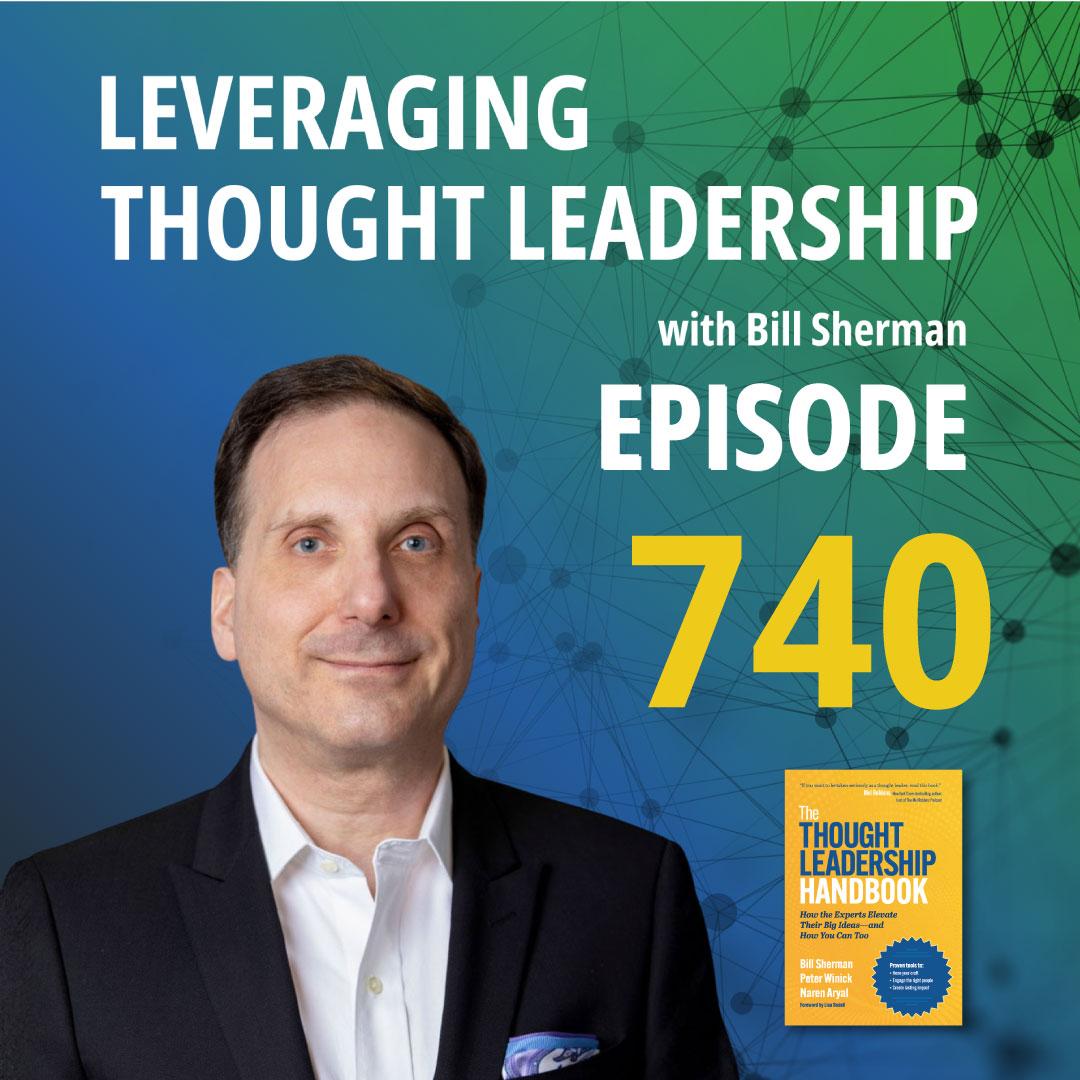
What does it take for a corporate scientist with zero direct reports to land on a list dominated by business school professors and bestselling authors? That's the question Jayshree Seth had to answer for herself when she was named to the Thinkers50 Radar in 2025 — and her answer became a framework. In her third appearance on the show, Jayshree Seth, 3M's Chief Science Advocate and now-published trilogy author, returns to catch listeners up on a remarkable stretch: a Thinkers50 keynote, a panel alongside Amy Edmondson, an HBR collaboration on trust and AI, and the release of her third book, The Heart of Science: Engineering Blueprint. The conversation moves through several of Jayshree's signature acronym-driven frameworks. There's METRICS-OPTICS-RUBRICS-ENERGETICS, born from reflecting on how she — an engineer with no traditional management credentials — ended up on a list built for management thinkers. There's the "three Cs" that block innovation: copy-pasting, catchphrositis, and cherry-picking, delivered as her Thinkers50 keynote. And there's VIABLE, her personal-branding framework built around voice and visibility, image and impact, backstory and behaviors, and experience and exposure. Beyond the frameworks, this is a conversation about the mechanics of building a reputation from inside a technical role. Jayshree traces the specific chain of relationships — a mention in David Epstein's book Range, an introduction to Rita McGrath, an eventual collaboration with Amy Edmondson on psychological safety and "intelligent failure" applied to human-AI trust — that turned an internal 3M scientist into an external voice cited in Harvard Business Review and Fast Company. Bill and Jayshree also dig into what it means to write a book for three different audiences at once — emerging thought leaders, established experts, and Hall of Fame-level veterans — and why friction in that process is often a sign you're doing it right. The episode closes with a reflection on responsibility: once you have an audience, thought leadership isn't a hobby, it's a discipline that has to coexist with a full-time job. If you've ever wondered whether your expertise "counts" as thought leadership because it didn't come with a traditional credential, this one's for you. Three Key Takeaways: • Being different can be your competitive advantage, not a liability. Jayshree's METRICS-OPTICS-RUBRICS-ENERGETICS framework argues that outsiders to a field — like an engineer among management thinkers — don't need to conform to existing rubrics. Changing the measurement, the framing, and the energy you bring can alter who gets to lead a conversation. • Reaching out to "inaccessible" experts is a discipline, not a gamble. Jayshree's collaborations with Amy Edmondson, Rita McGrath, and others didn't start with credentials — they started with cold outreach after reading an article or hearing a podcast. The lesson: most thought leaders are more accessible than they appear, and it's okay if they say no. • A personal brand for thought leadership rests on delivery, not image. Her VIABLE framework (voice/visibility, image/impact, backstory/behaviors, experience/exposure) puts the emphasis on tangible results and consistent values over aesthetics — visibility only amplifies a brand that already has substance behind it. This episode isn't just an interview — it's a live example of the ideas in Bill's brand-new book, The Thought Leadership Handbook, co-written with Peter Winick and Naren Aryal. Jayshree's journey — from in-house corporate scientist to Thinkers50 Radar honoree — is practically a case study for the book's core idea: that thought leadership follows identifiable patterns, not luck. In fact, the book itself draws on more than 700 conversations from this very podcast, and organizes those stories into five thought leadership "avatars" — Jayshree's path as an In-House Expert turned public voice fits right into that framework. If her VIABLE branding model resonated with you, the Handbook goes deeper into exactly how experts like her make that leap from personal effort to public influence. Pick up The Thought Leadership Handbook: How the Experts Elevate Their Big Ideas — And How You Can Too, by Bill Sherman, Peter Winick, and Naren Aryal, wherever books are sold — including Amazon, Barnes & Noble, and Amplify Publishing Group's website.
English
United States
IN THIS EPISODE
TRANSCRIPT 🔗
Are you the producer of this podcast?
Add a podcast transcript
Need Audio-to-Text?
Transcribe with Listen411 in Just 60 Seconds
SEARCH PAST EPISODES
Search past episodes of Leveraging Thought Leadership.
OTHER EPISODES IN THIS PODCAST

Ask professionals at the world's biggest companies whether they have a plan for their own learning and growth, and Bill Hoogterp says the answer is almost never yes. He built LifeHikes around that gap, and in this episode he shows how a happy accident turned into a scalable model.
Bill's career re…

What if the one thing you've spent your career building, your expertise, is about to become the least valuable thing you own?
In this episode of Leveraging Thought Leadership, Peter Winick sits down with Jack Myers, a media ecologist, futurist, and author of Your Third Brain: Powering a Future of …

Companies are hiring neurodivergent talent to build their algorithms, power their hedge funds, and design their AI. Then they lose those people, and nobody can explain why.
In this episode, Peter Winick sits down with Caroline Maguire, social-emotional learning expert and author of Why Will No One…

A leader stands up in the middle of a 200-person workshop, slams his hand on the table, and says out loud what everyone in the room is feeling: I can't do great work here anymore. That moment helped start Pause: How to Lead Brilliant Work in a Busy World, and it's where this conversation gets inter…

Publishers turned it down. They said there was no data and no market for a "wisdom book." Twenty-five years and roughly 700,000 copies later, The Trusted Advisor is still on consultants' shelves, and "trusted advisor" has become so common that many people use the phrase without knowing where it cam…
Disclaimer: The podcast and artwork embedded on this page are from Peter Winick and Bill Sherman, which is the property of its owner and not affiliated with or endorsed by Listen Notes, Inc.
EDIT
Thank you for helping to keep the podcast database up to date.
