

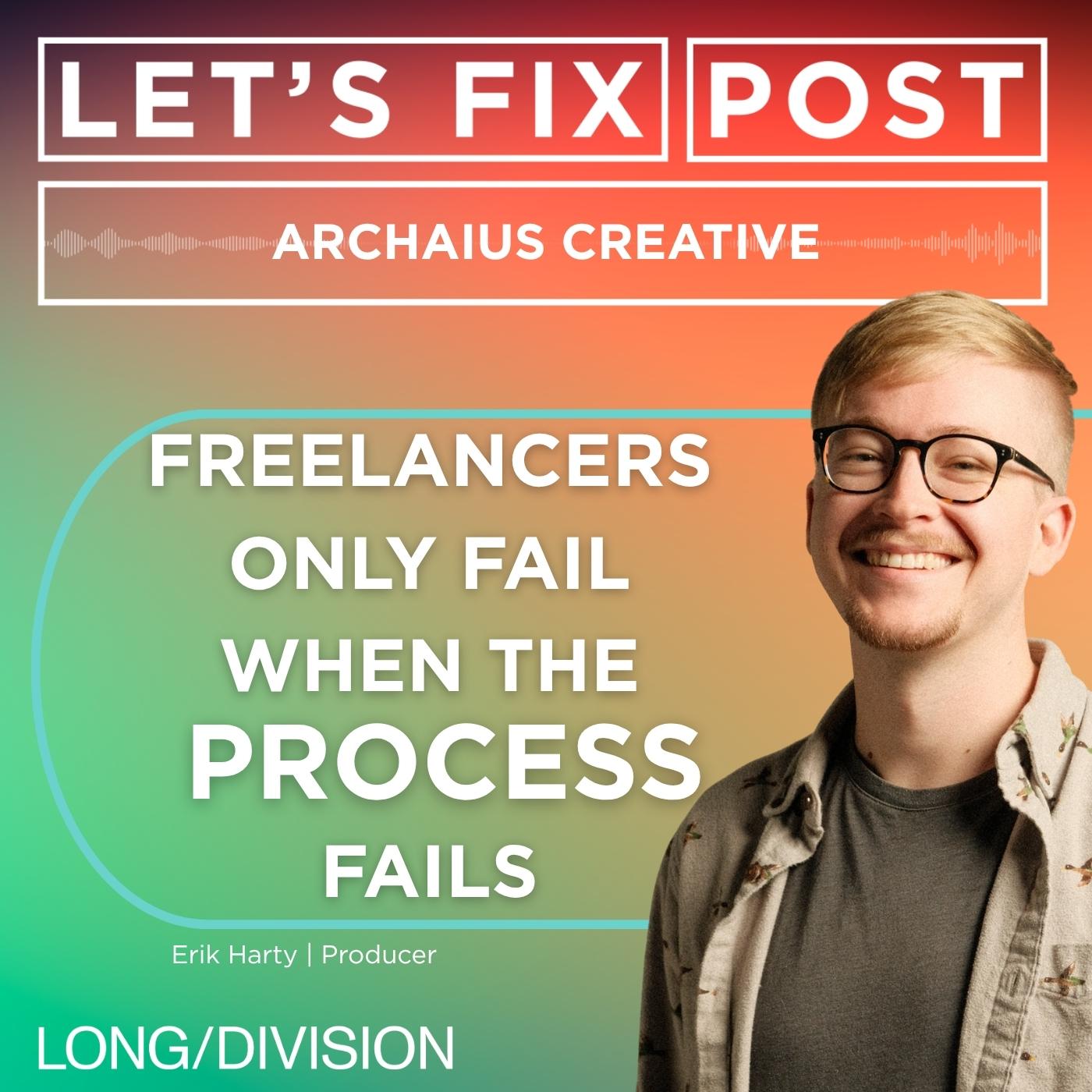
speaker-0: Some of the best folks aren't interested in being tied down to a 9-5 Monday through Friday commitment. So if you want to engage with them, you have to be willing to go the freelancer route.
speaker-1: I've been surprised at times where I'm like, you mean this whole huge company is running off a creative department of like three people?
speaker-0: come in and essentially allow them to plus up what they could do in house.
speaker-1: I feel like what we're seeing is a lot more production lists projects. You amass a lot of content and that gets kind of dripped and repurposed.
speaker-0: It's part of what's exciting to me. Each team is different depending on the needs of their customers, their clients or their marketing goals. We can kind of meet them where they're at. Typically the clearer picture you have, the less money you'll spend trying to fix it later.
speaker-1: Editing is such an art that you can't distill it into a system and a process. think maybe that's the question.
speaker-0: In-house teams at Brand seeing us as competition or potential like threat to their job when it really couldn't be further from the truth. You know, we're here to help. We're not here to replace you or take away your job.
speaker-1: Welcome to Let's Fix Post, a show about making post-production smoother, smarter, and more collaborative for creative teams and editors alike. Hit subscribe now so that you don't miss future episodes. Today I'm chatting with my good friend Eric Hardy, founder of the Los Angeles-based production company Long Division. What's really interesting about Eric's approach is how he positions his team as an augmentation for in-house brand departments. He fills that specific gap for companies that have internal teams but need to level up for ambitious campaigns that exceed their own bandwidth or technical know-how. In our conversation today, we dive into the importance of cultural baselines, the invisible rules or onboarding systems that help keep a remote team from drifting off course. We talk about why establishing clear boundaries around working hours isn't just about logistics, it's about protecting the creative energy of the entire team. We also pull back the curtain on post-production budgeting. Eric breaks down how to use day rates and markups to build a transparent financial map and why knowing your market rate is the most important homework you can do before the first conversation even starts. Whether you're a brand manager or a creative lead, Eric's insights on defining success upfront will save you in high course correction costs later. I really enjoyed our conversation and I hope that you do too. Let's get into it. Eric, I'm so happy that we were able to line up, hanging out and recording it this time. ⁓ I feel like we've gotten to some really deep and interesting conversations just about like, you know, nature of the industry and different problems that we see or different solutions and more recently talked about where we think it's going with everyone's favorite topic AI. So ⁓ I definitely want to revisit some of the conversation and go a little deeper in terms of like what we chatted about previously. Before that, I think it'd just be good to cover a few other bases about who you are, what you're up to, and then ⁓ how post shows up in your life. So I guess with that, just give us the elevator intro of you and Long Division.
speaker-0: Yeah. Well, thanks so much for having me. Yeah. My name's Eric Hardy. I run a production company called Long Division. We're based in Los Angeles, but we work all over the place. We are a production company that's a little unique in that we serve primarily as like an augmentation for in-house brand teams. So we've kind of done it all. We've done traditional commercial spots, you know, big omni-channel, multi-platform campaigns. stills campaigns, UDC, all that kind of stuff. And the corner that we've kind of carved out for ourselves is working with teams, brands specifically that have in-house production teams where we come in and essentially allow them to plus up what they can do in-house. So these days we're working mostly brand direct. We used to do more work with agencies, but yeah, it's a little bit about who we are and what our niche is in this big wide world.
speaker-1: I always I was really interesting every time we chat about like who your typical client Target clients are I think you pinpointed it's like it's usually people that have some degree of an in-house team like if if they don't Then you usually will pass them by in your prospecting right like can you like why it seems so counterintuitive?
speaker-0: Yeah, I mean, I wouldn't say that we would rule a brand out that doesn't have an in-house team. It's just that at this point in our trajectory, we're most useful for brands that have an in-house team. ⁓ And yeah, it is kind of counterintuitive, I think, to some degree. ⁓ And a challenge that we do encounter sometimes is in-house teams at Brands seeing us as competition or potential threat to their job, ⁓ when it really couldn't be further from the truth. ⁓ Where we found success is basically coming in and not trying to replace what any of those folks are doing during their day-to-day, but coming in and basically saying, OK, great. You guys have a studio on site, and you're doing all kinds of social content or Many of our clients also do like thought leadership or kind of like educational content for whatever their vertical is. And so a lot of times that's kind of what the in-house team is focusing on is, is doing that kind of like constant, content pipeline. But then they may say, Hey, we need to do like a big TV or a big like digital campaign. And either we don't have the bandwidth to do it ourselves or. what we want to do is so ambitious, we just don't have the resources or the know-how to do it ourselves. And so that's where we can come in and, you know, some clients prefer to kind of handle it in a traditional way where basically they're just handing it off to us to be completely self-sufficient and we're executing whatever the brief is, you know, with touch points to make sure they're involved and have an opportunity to provide feedback and make sure that we're meeting their needs and staying, you know, within the confines of looking. of what they're looking to do. ⁓ Other brands, you know, it may be something where we're so integrated that it's possible their lead in-house producer is the director on the shoot and we're just like the production apparatus around them. know, it can look a million different ways. Again, we're flexible and kind of modular basically to allow us to adapt to the unique needs of each brand. And it's part of what's exciting to me about the current landscape of of marketing and in-house content production is that each team is different. And depending on the needs of their customers, their clients, or their marketing goals, they're structured differently, and we can kind of meet them where they're at.
speaker-1: feel like that's really similar to how we operate a lot of the times where it's like, there's no perfect hand that the other person is holding. To when they lay down their cards, it's like, ⁓ we have like a perfect match. You know, it's it's about kind of navigating some of the different shapes that creative teams have, especially on like enterprise or like a corporate level where it's like, I've I've been surprised at times where I'm like, you mean, this whole huge company is running off a creative department of like, three people. And, and it's like, yeah, bandwidth, and then skill gap, for sure. I think, ⁓ come up in our world, too. But like, has there been a situation where there was a bit more initial pushback from like the creative team and the, know, the, the internal, the director, whoever is like, No, we're bringing in long division to come help, like any tactics that they used, or kind of ways that they presented your collaboration in a way that made the internal team more agreeable or like not seeing you in such a threatening light.
speaker-0: That's really good question. ⁓ I'm not sure that I can think of a specific example and it's honestly because typically our way into a client relationship is through those people on their in-house content team rather than, you know, sometimes it is through a creative director or a CMO or a VP of marketing. But I think just kind of instinctively we've been more apt to target the people that we'll be working most closely with as our way in. And so. I think just from the get-go, that helps kind of like tear down those walls and allow them to see that we're here to help. We're not here to replace you or take away your job.
speaker-1: Yeah, I mean, I think I just am pressing more also for my own ⁓ benefit, because like I said, I feel like we're in a similar boat where it's like, we're kind of coming in with this very ⁓ on the surface, it's like a very specialized skill set with like post, right? Like we do post, we do the back end, the editing, but we also have abilities on the pre production side. So script writing, like voiceover casting, AI voiceover generation, stuff like that. And that starts to, I feel like, creep into a more full service type of scope. so I just always curious about the dynamic of like how that is perceived, you know, from the internal team. But ⁓ I think knowing that you're working most closely with the people who it would affect, and they may even be the ones that initiate the conversation of saying, you know, putting up their hand and saying like, we need help with this, because we don't have the bandwidth, ⁓ I assume is probably one of the most natural and best ways it could go over. So just curious how that has shaped for taking shape for you. But ⁓ speaking on teams, like what is your like team makeup ⁓ on a given project? But I'm just curious, like what goes into that staffing process. And I think, ⁓ particularly when it comes to post, like, you know, how is that staffed and usually handled?
speaker-0: So we do end to end full pipeline, whatever you want to call it. We can come in and we can lead ⁓ creative, script writing, concepting, storyboarding, that kind of thing. That's honestly a place sometimes where the in-house team kind of guides what they need from us by saying, hey, we're going to handle creative. don't. We're interested in your input and feedback, but we specifically need to take care of that ourselves before we come to you. that's like one example to your earlier question of like how the engagement is kind of shaped. Sometimes brands are very precious about that and that's great. Sometimes they're like, we don't know or we don't have the bandwidth to handle creative and so we can also do that. So we can come in really early in the creative stage. Then obviously once we finalize creative, What keeps us the busiest is actually producing the content. So executing it, bringing it to life, bridging the gap between creative and production, carrying things through pre-production into production. And then we also handle posts. So we do, like I said, the whole pipeline. And so the team makeup is different, you know, depending on whether we're doing a full cycle engagement or there are a lot of clients we have that have us just do production or creative in production. Again, I think since we're partnering largely with brands that do have in-house teams, one of the things that they like to do, either to save money or to save time or a variety of other reasons, will produce the content, but then they'll handle post in-house. And so a project looks different if that's how we're approaching it versus us carrying it through post. And then it also just depends on the scale of the project. We could be doing a small testimonial style kind of branded doc thing where the shooting crew is like five to 10 people, or we could be doing like a big TV commercial with 50 plus people, you know, on set. Starting from the creative phase, usually it's a really small process. Typically we've brought in like a director or a creative director. ⁓ and it's typically them and myself working with the client team to take their creative through and, ⁓ help develop the project in a way that's going to meet their needs. When we get into production, like I said, it really varies depending on the type of project. Could be five people, could be 50 people. And then when we get to post on a smaller project, we will assemble a freelance team in-house. On larger projects, we're sometimes engaging with third-party post houses. Like if there's a really complicated... need that we need to accomplish. Let's say there's a lot of VFX, or there's animation, or there's a particular colorist that the client would like to have do the color for the final spots. There's several different ways or different reasons that we might engage with the post-house. But on smaller projects, we're typically building the team on a freelance basis under long division. And then bigger projects sometimes we're When we go to an external, like third party post house, we're still overseeing it from a creative perspective. We're kind of serving as like the client representative. ⁓ but then we're able to maximize the resources by taking advantage of this post house with their expertise.
speaker-1: That's really interesting to hear because I wondered the different avenues that you go down and what the trigger points are for deciding them. Right. ⁓ Certainly I would imagine and maybe you could kind of push back or or couple down on this is like like the budget. Obviously, it's like which route are you going to go? And I think I'm mostly just I'm kind of narrowing in on post. So budget is going to dictate one of the routes there, whether. I assume there are certain team members in the production or pre-production phase that could also double as the editor and kind of carry through some of those creative visions because they help shape those from the beginning. Or like you're saying, assembling a team of freelancers like a temporary hire, right? Essentially, right?
speaker-0: Yeah, basically a project tire.
speaker-1: Yeah, which is, is that pretty common in your space?
speaker-0: You mentioned earlier that sometimes people in the pre or production phase could double as a role in post. It's not super common that we're doing that. It's not unusual that the director on a project is doing their own cut of the edit as kind of a first pass. It's not common that they're serving as the actual editor for a project for like the offline editorial, but oftentimes they are either doing their own cut or working really closely hand in hand with the offline editor to essentially, you know, give the client their like, You know, this is my intention based on what we've done so far. And then, you know, there's all kinds of different reasons why the edit may need to change with client feedback. But that's essentially the director saying, like, here's the purest version of my vision, you know, that you hired me to bring to life. You know, now you can do with it what you will. From there, we typically, again, depending on the scale of the project, oftentimes there's an editor and an assistant editor. Those folks for us are typically freelance hires. We're usually going to an outside post house if there's a specialty need. But for basic editorial or stills retouching, motion design, stuff like that, we usually handle that kind of thing in-house with a freelance team that's brought on for the duration of the project. Or in some cases, during busy seasons, we'll bring folks on for longer and they'll bounce from one project to another.
speaker-1: Yeah, that makes sense. I feel like what we're seeing is a lot more production lists projects where like we're utilizing archival footage or like stuff that's been banked. I know that you and I have talked about a couple projects that you'll do where it's like you amass a lot of content and that gets kind of dripped and repurposed and like utilized throughout that season until the next big shoot. So I can imagine that there are creative directors or like in house creatives at a brand. right that are now in the position of also fulfilling like essentially your role as the producer to kind of string together this team or decide which avenue to go down when it comes to post in looking at the differences between like freelancers and post houses. I assume there's a lot. And so the first one I was kind of curious about was systems and how the process goes like benchmarks for communication or benchmarks for hitting certain deliverable phases or ⁓ how reviews are done, like just all the ecosystem of like, like the actual doing of the edit is the same, right? I would assume you know, you're using one of the big NLEs, and you're cutting stuff together. But it's all of the systems around getting that done that I would imagine change. So correct me if I'm wrong, they're the same. But like, how does that look? ⁓ Maybe first through like a freelancer perspective, if you're assembling team, are you the one that's creating or implementing these systems and having them follow suit or do they do the freelancers usually come prepackaged with like this is how I do things.
speaker-0: Yeah, it's a really great question. mean, a big key to our success is the fact that we have our own systems and they're robust and tried and true. you know, honestly, regardless of whether we're working with a freelance team or like a third party post house, the process is fairly similar. The main difference is just that like a post house would come with their own set of like systems and processes. And the conversation is more about making sure that those mesh with ours, whereas freelance hires can kind of just slot into the way that we like to work. And so typically when we're looking at a freelance hire, a big thing is making sure that their experience and their portfolio aligns well with what we're looking to do. At this point, we have a pretty deep network, but it's also important that people come recommended and you know that they're going to be able to deliver a really great product and also be timely. good communicator, all of those kinds of things. We don't typically dictate too much what software tools people are using for the actual editorial work. It's more about just making sure that we can get the end product that we need. ⁓ I mean, we do have some tools that we use all the time that everyone on the post team is using, like we're communicating over Slack and doing reviews through Frame.io and things like that. ⁓ Sometimes... Client teams will take project files at the end of a job. And in that case, it can be important to be like, the client in-house team only uses Premiere. So we need to make sure that everything we're doing is going to be compatible with their back end. But for the most part, we're not typically dictating that kind of stuff. It is more just about like, these are the tools we use for communication. These are the review tools that we use. And this is the schedule. This is how it's structured. these are going to be the communication touch points.
speaker-1: That's interesting that they're like, I guess by and large the same, then at the same time, you like different post house versus freelancer. then you said that also the post house will come with their own system. So it's kind of not the same, I guess, in that there are.
speaker-0: But I'd say the biggest difference is just like, you know, when we're building a freelance team, we can essentially just establish what the workflow and like use of their time is going to be. Whereas when we're going to a post-house, the main additional consideration is just like the people that we're working with are not just working on our project, they're working on other people's projects too. And so it's just a little bit more of like a scheduling kind of whack-a-mole situation. And they may also just be less flexible in terms of like, if we need a little bit more time for the client to review, that doesn't necessarily mean that they can for sure, like if you're a day late on your feedback, that doesn't mean that they can turn around your notes a day later and maybe a week later or, you know, things like that. It's just less flexible.
speaker-1: I see. Yeah. How do they usually communicate that to you? Because I feel like that's been a thing with us, because as I guess we fall more obviously into like the post house side of things being a team, I think maybe there's just some growth to be had on our side in this of like, yeah, if you miss your deadline window to reply for things, we're not going to scramble and get it all done on like, you know, any at an equivalent delay, right? You delayed one day. So now the V1 is or v2 is delayed one day. So that sounds like what you're speaking to where it's like, if you miss it by one day, the offset may be a week. So how is that usually communicated?
speaker-0: So when we're building out a post schedule for a freelance team we've created, what we're doing is we're building out a really clear schedule with the client team and establishing milestones where they'll give us feedback, milestones where they can expect to see versions from us. And then, of course, on the back end, we have internal deadlines and stuff like that. for example, if a client deadline is tomorrow at 5 PM, the editor is not going to give us their final cut. at 5 p.m. tomorrow. We're going to be getting it sooner, we're going to be reviewing it, and oftentimes doing some internal back and forth before it's client ready. We're building a really clear schedule with the client that lays out, again, clear expectations for when they need to be providing us notes, when they can expect to see something that we're going to need their feedback on. And so when we're engaging with a post house, it's really similar. Essentially, as they're quoting things out for us, they're quoting them out based on the number of days that they're going to work on the project. And the engagement or what we're hiring them for is to give us the deliverables that we've requested by working on the dates that we've agreed to. And so essentially, if we miss a window and we end up outside of that schedule, they'll do their best to work with us. But essentially, it's just saying, Hey, you blocked off these days now that we're outside of these days. I can't make any specific promises. So sure, if we miss a deadline, maybe they'll be able to turn it around for us the next day. Maybe it'll be a week. You it just kind of just depends on how busy they are or the particular editor or colorist or whoever that we're working with, how busy their schedule is specifically.
speaker-1: And that goes over fine with the clients too or?
speaker-0: It really just comes down to really clear communication upfront. And so when we're going through the process of working with a post-house, again, there's always a reason for it. And it's typically that there's some specialty need. And so when we start exploring that with the client, as we're scoping out the project in the beginning, we talk about that. And we talk about, do you have a large number of stakeholders that need to weigh in who cannot all commit to looking at this within a timely manner, or because you have a big team, do we need to have a long feedback window? And so rather than saying, you're going to take a look at this and get us a response within 24 to 48 hours, maybe you need to sit with it for a week so that you have time to grow all of your stakeholder feedback. Again, whether we have a freelance team built out or whether we're working with a post house, that conversation is kind of the same. But if we do start looking at working with a third party to handle some aspect of post, We're just really clear with an upfront that like we'll do our best, but if, if schedule, if deadlines are missed, they're just going to be less flexible. And so it's just a trade-off. And as long as they know about that upfront, it's okay. As long as it's not a surprise later down the road, you know, things happen, but especially if we've set that expectation upfront, you know, people are good about sticking to it and you know, we're understanding when something happens and they've put us behind that we're just going to do our best to, to adapt.
speaker-1: Yeah, that makes sense. So I feel like I've kind of like picked on the client a little bit here. Like when the client drops the ball, how do things go? So to be even handed, I guess I'll admittedly say that my experience working with freelancers is pretty limited. And the times that I have weren't great. So so obviously, I don't work with those specific people in mind as well. But I think I've also kind of put freelancers on this shelf in my mind of like, chaos, and like low accountability. I'm sure that that you know, there's a lot of bias built into that there's just like, you know, my very limited experience with it. But I think a big part of what we at least at our company try to kind of lean into is that, like we don't work with freelancers on our editing staff, like all of our team members are employees. And I think for me, it's like this certain level of control, right? Like, because with a freelancer, at least in California, you can't like tell them how to do the job. or like where to be at a certain time. And I know that you're you're approaching it differently in terms of like you're staffing them for a period of time. So where you that you know, you would if they're w two, then you know, you're overcoming that hurdle. But I'm just thinking people that are in a position they're also they've been assembling a freelancer team or maybe that has been the way that's worked best for their budget or like if they have infrequent needs and whatnot, just for whatever reason. of going freelancer over like an internal hire or a B2B like a post house? Have you ever encountered needing to wrangle people or has there has it been stressful having, you know, the freelancers are disparate? Maybe they maybe in your case, they do know each other or have worked together before as part of a network. But I think I just always look at different freelancers. Like if you had a colorist freelancer, an editor freelancer, an audio engineer, and emotion design, like it's a there's a lot in post. And if they're all running their own gig and have other clients as freelancers, then I could see that being hectic. So very long-winded question, but like do with that what you will.
speaker-0: Yeah, yeah, no, it's I mean, it's a really good question. It is a challenge, you know, not having the same team day in day out comes with its own set of issues for sure. Maybe I'll start with the reason why we don't have a full time post team in house. And that's essentially just again, to keep us modular and keep us adaptable to different client needs. The other reason too is while it can definitely be a gamble. working with freelance folks that you don't have an established relationship with. Part of what we're able to do by being so modular is tap into a really high performing strata of professionals and specialists who aren't interested in a full-time job. That's kind of the catch-22 with a lot of these roles. And it's true of production and the creative phase as well, is that some of the best folks out there just... aren't interested in being tied down to a nine to five, you know, Monday through Friday commitment. And so if you want to engage with them, you have to be willing to go the freelancer route. And like you kind of said, like I'm using the term freelancer, but oftentimes they are a W2 employee. just a short term or a temporary hire. ⁓ But maybe to the bigger question you're asking, which is how we manage the freelance process. ⁓ Essentially, it's just necessitated us having a robust vetting system, to be honest. It's really just what it comes down to. ⁓ We have all kinds of systems in place to make sure that we're delivering ⁓ great end product, and we're doing it in a timely manner on a clear schedule. But in addition to that, to make sure we're able to do that, we also have to have a really robust vetting system and a really robust but concise onboarding system. to make sure that when people are brought on, they're caught up to speed really quick and they know what the expectations are. I totally hear what you're saying about, and I'm not surprised to hear that you've had a negative experience working with freelancers because I think even if you have really great people, assembling a new team for every project is just a lot of extra work to make sure that that goes smoothly. And it requires an investment in processes to make sure that it happens smoothly. If let's say you're hiring a freelancer to solve like a bandwidth problem or plug like, you know, a hole in your system, like a leak or whatever, and you're doing it kind of in a shoehorned last minute way, you know, maybe it'll go great. But also that's like a prime opportunity for it to be a headache because again, it's an afterthought as opposed to something that you built into your approach in the beginning.
speaker-1: Yeah, I love that what you mentioned there about like having systems and processes that they plug into because that to me seems pretty integral to making it work is like, definitely, I would imagine right, everyone's gonna freelancer is going to come with their own like, this is how I usually do it. Like if you know, if no one's gonna call the shot on how the folders are to be organized, or like, like what NLE to use or what I don't know, review platform, project management tools, whatever, right? Like this is how I default, but to be able to have them be adaptive to some sort of standardized way so that you're not now managing like, I'm talking to this person on Slack, I'm texting this person, I'm emailing this person, and then the client has me in their Asana. Like, I mean, maybe that is true, but like, I just think you as the team, you as the hub, bringing the system, I think would be important. So ⁓ two last questions on this and then I have like a lot more. This might be a two parter. We'll see. But so just still looking at the freelancer side. ⁓ You mentioned ⁓ two things one, I guess, take them in your order that you want. So one was like a really robust onboarding system. Like, if you could just give like broad strokes of what those checkpoints are like the basis to cover when onboarding a new freelancer into your system, I think that'd be super helpful. And then Second part, our second question is like, you've mentioned ⁓ Slack and you mentioned Frame.io, like, I don't know, any other tools or systems like we use teamwork.com for our project management, like any other things that you've found work well, ⁓ maybe to bridge the gap, freelancer to client, or maybe you keep those separate, I'm not sure. But ⁓ those are my two like kind of questions on this point.
speaker-0: Yeah, I'll just go in the order you asked, I guess. So I'm not going to like give away the recipe per se, the secret sauce recipe, but I mean, I think for one, we do just have as part of our own boarding process, if you're new to working with long division, the first page is just a little bit about us. And it's not just like, oh, this is who we've worked for. This is what we do, blah, blah, blah. But it is also just like who we are culturally, how we like to work.
speaker-1: Sure. Yeah.
speaker-0: One of the really big things for us is like, we feel like people do their best work when they're empowered to work as much as possible using the tools and the methods that they like to use. And then also it's really important to us that we're mitigating after hours work or weekend work, anything like that. That kind of thing does happen sometimes on crazy turnaround projects. But let's say for example, if someone's going to be expected to work on a weekend, like that's information that's brought to them. at the start. And so it's not like a surprise request that someone's pressuring them into. You know, it's like, just a heads up, this is going to be a really fast turnaround thing. And, you know, we're going to get the footage on Tuesday and we have to deliver Monday. we're big on, for one, trying to avoid that type of project just altogether. And then two, you know, like establishing really clear working hours so that people have time to rest and do other things and come back the next day rejuvenated. Communicating with people outside of our typical working hours is like a really, really big no-no unless it's absolutely necessary. And so that's something that's kind of, you know, communicated throughout the team. There's like a top sheet kind of page with information about us and things like that and just how we like to work. You know, we typically have a schedule built out and if there are any mandatories, like we're going to hand over project files to the client at the end of this. So we need to be working in this particular program where we need to We need to make sure that we have these particular versions with all of these different, you know, string outs and all these different ways so that when we hand it over to them, it's all kind of plug and play for whatever they need to do. I guess the short answer is just that we give them a lot of information upfront and make the expectations really clear upfront. And then we interview people at the start of every job. So whether it's a post producer or an editor, colorist, assistant editor, VFX, whatever it is, if it's something we haven't worked before, there's always an interview. And that's also a chance for us to kind of get to know them, them to get to know us and feel if it's going to be a good fit culturally, but obviously as well, just if the skill set and their availability aligns with what we're looking to do. So that's a little bit about the onboarding process. As far as tools go, Slack for communication is, you know, it's the OG and it's what we use constantly for every stage of the process. Project management happens inside a sauna. ⁓ and then reviews are on frame IO. We typically don't have our team engaging with the client team directly. ⁓ like an editor wouldn't, would never be talking to the client. mean, the editor would see client notes on frame IO, but there's basically always at least one post producer. That's kind of the mid point again, depending on the needs of the client. Sometimes that post producer is also inside the client's project management tool. If that's helpful for them, or if that's the type of relationship we have with the client. But all of that kind of like login tracking project managing stuff, that's never getting put on an editor. If we're doing any of that for the client at all, it's being handled by a post producer. So just kind of keeps the channels clear.
speaker-1: So you're not even personally doing that either. That would be falling on the post producer.
speaker-0: Yeah, on smaller projects I do occasionally, but more often than not, yeah, it's a separate post producer that we've brought on to handle that.
speaker-1: that's super helpful and I love that like a big part of the onboarding is the cultural element like you mentioned like setting up all these boundaries essentially right around not only for their own protection but like everybody else on the team right like we'll do similar things where it's like I mean as an employee team it's like okay Monday through Friday nine to five sort of a deal we have flexibility because everyone's remote but it is very much like if you Find yourself needing to clock time on something outside of normal hours. Like just be self-sufficient. Like don't, don't go bother your supervisor on a Sunday afternoon or anything like that. So I think that just having that like cultural baseline as part of the onboarding process, I thought the onboarding you'd say, okay, well we give them an email address and then they sign the HR paperwork or whatever. I think that that's great. That's the secret. Don't give that away.
speaker-0: all happens to you.
speaker-1: Okay, and then I guess, like speaking a little more broadly, and this could be like for, for either Avenue, ⁓ post house or freelancer, who typically in your team, makeup will drive like the creative vision for a video and then like, how is that then communicated to the editor? And so there were two examples that I checked out that kind of made me think in this way from your work. So one being ⁓ the Bank of America, Mia's story, it's a pretty short piece, maybe 90 seconds. And there's three different music tracks used in there at like really pivotal, like, you know, poignant moments that drive the story forward. And so I'm just, I don't know, I always try to reverse engineer, like, where did that decision come from? Because I think, you know, certain editors, when you look at like a 90 second, you're like, cool, that's like one song or whatever, and, and not getting too boxed in, ⁓ while also not trying to like over engineer it right like just leave there's some there's so much of the creative process is just like in the moment it felt right to do this. So just kind of curious where like that sort of ⁓ a vision originates how that decision gets made because I at least know on the back end sometimes there's like licensing considerations with three multiple songs now you're like tripling the budget. If that's how you know if it's used in broadcast or different way paid social or stuff like that. And then the second example I saw was in a simple practice video where there were like these cool like motion graphics that come up of like kind of scheduling overlays or like a text message overlay. ⁓ And it seems like pretty it's clean, like it's the style is like on point, it totally fits the branding. So I was like, I wonder if that's like the client driving that in terms like here's our brand guide, it adheres to this or the motion designer just. like come up with I don't know just so those were the two that kind of came to me where I was like, I wonder how these decisions get made in your world. Yeah.
speaker-0: good choices because those are two different scenarios. For the Bank of America one, that project was a lot of fun. And it was honestly great working with Mia, the subject of that piece, and the Bank of America team. So for that project, they wanted to highlight Mia, who's a small business owner that uses Bank of America. And they really wanted to wrap things around. the details of her actual story. know, obviously Bank of America is funding this project and they intend to use it for marketing and advertising purposes. So it needs to fit their needs to that in that sense. they wanted to lean into, you know, what was true of her story and her experience as a small business owner. A lot of things were actually just kind of dictated by her and the reality of her situation. You know, like we're filming in her restaurant, we're asking her a set of questions that ⁓ were put together jointly by the director who, John Wong directed that one. The questions were developed by him in conjunction with the brand team and then presented to Mia. And if I recall correctly, she had an opportunity to review and you know, if there were questions she didn't want to answer or if there were questions that she thought might be better to ask, you know, she had input on that. But that project was definitely very much in that like branded doc space where, you know, we have a plan going in, but also you this is a real person with a real life and in real things that happen. so we structured the shoot around, you know, being adaptable to that for the post side of things that actually is a situation where the director did the offline edit as well. So John both directed and edited that one. and I think that that's where a lot of the strength in the piece comes from, because he was able to preserve, you know, his vision throughout and, Just as a side note, John is also a very strong editor, and so I think it worked well that he cut that one. For the music tracks, I don't know exactly how we ended on three separate ones. I believe they all came from music libraries. They weren't original compositions or anything like that, so it wasn't. Those were creative choices that John made, and the final piece that you see went through the client review process. As far as the creative on that project, we had a brief to start with, and then it was driven by John and informed by the actual subject of the piece.
speaker-1: So not a whole lot of like, is this okay? Like we're all aligned on this before hitting go. It's like, it sounds like John was kind of cut loose to, you know, interpret the creative brief that he helped shape in the editing room. And if that meant he felt three songs worked, then that's kind of where that came from. Yeah, I'm always just curious, like how engineered these things are. And I'm a little like frustrated whenever they're like, it was just creative, the spark of creativity, the muse that came in and I'm like, no, I want to distill it down to something that like is systematized. I mean, that's just, that's just so true for creative, like editing is such an art, right? I mean, all of film is such an art that you can't distill it into a system and a process in some of these moments. But I think maybe that's the question I'm on. It's like, where, what bucket can I put these things in?
speaker-0: Yeah, yeah, mean, for that piece, like we had a pretty clear brief. It was one of a series that they were doing with customers all around the country. And so we knew pretty clearly what they wanted to accomplish. The task that John had was marrying those goals with, you know, the truth of the subject's story. And so we did several pre-interviews with her to learn about her and kind of suss out, you know, what ideas we had would fit. with her experience and what wouldn't, and then again, to get her input on other things we hadn't thought of or didn't know about. But like we did go into the shoot with like, based on talking to her, we went into the shoot with like an outline of the things that we wanted to get and the things that we wanted to cover. So it wasn't purely spontaneous. We had, you know, kind of a plan and because of the outline, it also makes it fairly straightforward when we do jump into the edit because unless we haven't been able to shoot. what was in our outline. The outline essentially is kind of like the first rough paper draft in a way.
speaker-1: Yeah, and being able to take that and elevate it beyond what's on the paper, right, and just not and bring in some of those editing tricks. Like I know he had like a lot of sound design, a lot of like cutting like we got to make sure and link this one. If you're with that, because I just think it's such an awesome piece and complemented by the story like that, you know, not even to mention the story of what's being talked about in the narrative. But yeah, some of the pauses and the breaths and the pacing of that quick. Yeah, I mean, I could I could just dissect that whole thing, but I think it was great. And so I'm always just curious. Yeah. Where are those decisions? How about simple practice and those motion graphics?
speaker-0: Which one specifically are you thinking about?
speaker-1: So this is the more ways to thrive. And it's kind of like these glassy panes that are moving over the screen. And there's, you know, different indicators of like which insurance they're enrolled in. There's a scheduler that pops up. And it's just like really, I don't know, the motion is all really cohesive and clean. So it doesn't scream like template to me. I know that there are template versions of this, and maybe it's just a really good one. But ⁓ Yeah, I just again curious, like, where does some of those design choices come from? Because I always think motion graphics is like sky's the limit, right? Until we haven't even talked about AI, we probably won't even today. But ⁓ it's like AI is removing a lot of the ⁓ excuses and editing or a lot of the like, ⁓ boundaries where it's like, ⁓ I can't cut this together because they didn't say it that way. It's like, ⁓ there's there's an AI for that. Now. They did say it, even if they never did. But I always I feel like motion graphics has always been like, I don't know what how crazy can you dream up? It's going to be it's also blue sky. So like having it grounded somewhere, I think is always seems like the first thing to establish. Right. So I don't know how did that one go?
speaker-0: Good choices here because these are two totally different approaches. So Simple Practice is a brand that has a pretty robust in-house team. And so for this particular project, their senior producer was also the director. Believe it or not, most of those motion elements were all created loosely prior to the shoot by their in-house post team. They have a pretty robust in-house creative team and video slash editorial team. And they do have a really robust, essentially like brand guidelines from a graphics, colors, design perspective. So I don't know that those were templatized, but if they weren't, were, by the time we saw the brief, those pieces were all mostly put together. We were kind of shooting with them in mind. And I think they're able to do that because they do a lot of this kind of stuff in-house. And so they have a lot of those assets that they're making all the time. And I think they have pretty clear guidelines for what something floating on screen needs to look like. So it's pretty, I think, pretty quick for them to put something like that together.
speaker-1: That's good to know. But I think that brands and you could probably assume agree to this is like brands will come on a varying spectrum of how prepared they are with guidelines or like to have pre built graphics seems like pretty far on one side of the spectrum. Like, yeah, here use these versus, ⁓ you know, on the smaller side would be like, you know, a startup that doesn't even have a look yet. So maybe something maybe backing out of that. far extreme, how do you most usually communicate motion graphic like direction to a motion graphics artist if it's not as ⁓ thoroughly supplied as it was in that example?
speaker-0: Really what it comes down to is, you we work with the client team to develop, you know, a mood and feel. So maybe they can be like the symbol practices example where they have a really like clear established set of like looks and ways that they like things to be. If they don't, that's a process that we can walk them through ⁓ creating, you know, whether it's for the brand as a whole or whether it's just for an individual project. If motion design is going to be a part of the ad deliverables, then one phase of the process will be to work with them. Looking at other reference materials and talking about what their needs are going to be, part of the process will be to develop a look and feel with them. And so by the time we've brought a motion designer on, there is a clear brief for the motion designer. And that's not to say that we lock them into a situation where they have no creative freedom, but we do come to them with a brief so they can understand the world that we're trying to live in. and then they can work from there.
speaker-1: That's great. I always think that like inspiration pieces or like references and details about what they liked about it. You know, was it the pacing? Was it the color? Was it the mood? I'm thinking like video in general. so you're saying that you'll someone will source some inspo pieces when it comes to graphics. I assume that either static or motion and then ⁓ kind of gain consensus there before, you know, putting in the hard work of adding the motion to it or creating them. I'm trying to think like how that translates to, you know, again, someone like ⁓ a brand manager at a corporation or a marketing director that needs to suddenly get motion graphics done by a freelancer, by a post-op, by somebody and kind of like where the onus lives on taking charge, like how, how equipped do they need to be versus leaving it to the motion graphics artist to source the, you know, guide the process.
speaker-0: Yeah. I mean, I think it just comes down to how much control you want, you know, and, know, I think typically the clearer picture you have going into an engagement of what you want, the, the less money you'll spend trying to fix it later. Yeah. ⁓ so, you know, I think in general, the more prepared you can be or the clearer you can be on what it is you're looking for, even if that clarity is just saying, I don't know, I need a creative professional to help walk me through it. Even if that's what the clarity means for you, think just having that clarity going in is the best way to minimize excessive spending, headache, schedule delays, just general frustration.
speaker-1: Yeah, so you're saying I have to know what I want, or at least know that I don't know what I want. I can't think that I know what I want. But I really don't know. Yeah, I think that and like, I'll know it when I see it, or I know what I don't like, like some of the the toughest positions to be in, I think as the creative hearing that as guidance or like lack thereof, little bit of a pivot shift here. I think this would probably be last topic here. You brought up budgeting and you know, it'll cost more to fix something down the road. How do you usually budget for post? Like, do you look to the partner you're bringing in to quote you out on things or do you already know in your mind from experience what rates should be? ⁓ And then you balance that against timeline. Like, I'm just curious from a producer perspective. I think a big part of your role is the budget, right? So like, maybe it's this like, because I haven't had to deal with it, seems a lot simpler. But like on the production side, I'm like, ⁓ they have their day rate, and they have their travel, and whether they bring their gear or have to rent it, like, that's probably as simple as that world is. I'm probably way off on that. But like, that's how production budget looks from where I sit.
speaker-0: did step out.
speaker-1: But then when I get into post, and I'm needing to quote something out, I'm like, all right, let's play 20 questions. Like, you know, I got to figure out all these things about scope and timeline and deliverable, blah, blah, blah. So how does that how do you tackle that in your
speaker-0: Honestly, it's just very similar to the description you gave for production. know, it's looking at whatever the need is. yeah, maybe we're just doing a photo shoot. Maybe there's no video at all. It's just stills. And so what we're going be doing is editing and potentially retouching the stills. So we look at, for one, how many photos they need or want. And then based on that, we work out a schedule and then... For stills retouching, it's often like a per image thing. And then we just kind of know how many images someone can do in a day or roughly. If there's any like intense retouching or compositing they want to do, you know, again, same thing kind of per image. For video post-production, you know, we look at what are all the pieces that we need. If it's just a straightforward, like we do the offline editorial, then we do like color, sound, maybe motion graphics, then we're done. That's a different scope than if we need to include any animation or any really complex motion design or VFX, things like that. ⁓ But based on all of those pieces of the puzzle, it is just about using our experience to guide how much time we would need to do those things. And then it is basically just budgeted more or less around day rates, including the markup that we need to make in order to get a profit off of what we're doing. But it's basically kind of a similar concept. It's just how many people, how long do we need them, and how long are they going to take to get this done? And then also just kind of having on the table, if we need to keep going beyond the initial scope we've identified, what kind of costs can the client expect in that scenario too? So we're not surprising them with anything. Let's say we get through a certain number of revisions and they're They're still not happy. You know, maybe we feel like we've hit a wall and what they're looking for is just not something that can be done without shooting additional material. Or maybe we agree, like there's still room to experiment or play. You know, we can, we can talk about what it'll cost to like keep going, you know? ⁓ but the short answer to your question is that it is actually similar. It's it's day rates and you know, if there's hard costs involved in any of the things that we're going to be doing, what are those plus our markup to make it work? So.
speaker-1: makes me feel like I'm doing it wrong. I feel like a lot of the stuff we end up working on, we, we do end up productizing for them to where it's like, okay, here's like a repeatable thing. And so we kind of want to drill down on some, some standard issued budgeting things. But there's been like more situations and not where there's not a whole lot we can borrow from the previous, you know, a completely different client with a completely different project. It's not like we have a menu. Right, like where it's all take this one. It's like the client comes with like this bag of all sorts of weird stuff. And one of them, they don't even know what it is. And they're like, make sense of this. And I'm like, okay, I got to figure out how to quote this out. Yeah, that is kind of an interesting difference there. So do you go to the freelancer with a budget? And then do you go to a post house with a budget? And then they tell you yes or no, or what they can do or push back? Or do you give them the specs? and then they tell you what the costs are.
speaker-0: So for one, I'll say like what I just described to you, that's kind of the backend of how we're budgeting for this. Depending on the circumstances, that's not always exactly how it's being presented to the client, particularly on like a really big engagement. Like one example I'll give, one of our clients went through a rebrand and they had a huge library of like thought leadership and educational content. We were working on an entirely separate campaign for them and they were like, hey, we've got like 500 hours of stuff that we need to replace logos and graphics and stuff on. Can you do that as well? And in a situation like that, it was less about like, okay, well the personal into this many days and this blah, blah, blah. It was more just like building out essentially a structure where, okay, this is gonna take us this many months and we're just bringing on a dedicated editor for you for this thing. And, you know, we'll see how it goes and we'll reevaluate whether we need to extend or whether we want to end early based on. it goes. There's a variety of situations that dictate how we'll present the costs to the client, but on the back end, it's just a day rate plus hard costs kind of conversation. As far as going to the freelancers or post-house, we essentially just know what market rates are for everyone. so some editors have a higher going rate than others, but typically the people that we're working with, we know where they're at on the rate spectrum. And so that part of the conversation is kind of like pre-filled in before we engage. Or if we don't know, then yeah, we go to them and we say, this is what we've got. And, you know, it becomes a conversation from there. For the post houses, it's similar. You know, we have an idea of like what a reasonable budget is. Sometimes their rate card is higher than what we have. And, you know, in a situation like that, we essentially just let them know what we have and then they could decide whether or not they're going to agree to that. Or maybe they'll agree to it with some caveats like, you get one less round of revisions or, ⁓ I you asked for like an in-person color session, but we can only make your budget work if you really do a remote one, you know, things like that. The crucial ingredient is, knowing what a reasonable cost and timing expectation is for things before you're engaging with someone.
speaker-1: Mm-hmm. Yeah, and how that would likely impact, you know, the time needed or the sense of urgency. Like this needs to be done over the weekend, like you said, or whatever.
speaker-0: Yeah, and that's always more expensive, you know, the rush fee.
speaker-1: Totally. ⁓ Well, cool. Well, I don't think we're going to talk about the robots today. So I think the short answer is they're coming for all our jobs. ⁓ No, but I think, yeah, I think that would be great to get to in its own conversation. But this has been super helpful just in highlighting kind of the different avenues of post. I know we didn't talk about like an in-house hire, but I think knowing that what the more commonly tread paths, I would say from my perspective, are the freelancer. and the part the B2B post house sort of have so I think kind of sussing out some of the differences there is super helpful. think a parting thought would be like some advice if you had it. What what would be the advice you would offer for again, I just keep picturing like a creative lead within a brand who is acting as the producer, right essentially in your role and is needing to decide between assembling a freelance team and you know, the pros and cons that come with that or going to be to be post house route pros and cons that come with that. ⁓ I don't know, maybe like top three variables, ⁓ you would advise someone to consider to choose which path to go down.
speaker-0: I think just in general, if you don't know, you know, there's no shame in asking. And especially when you're reaching out to someone, whether it's a freelancer or a post-house, especially if you're like upfront with the fact that you don't know, you know, it's, I think that that goes a long way. And more often than not, you'll find people are willing to like work with you and, and, you know, help you. As far as maybe top three variables. I think it always comes down to time and money.
speaker-1: Is that one and two or is that number one?
speaker-0: Maybe we can make that number one, we'll those two together. The logistical limitations. ⁓ That's something to consider is what you have to work with in terms of your resources, your time and money. How much clarity do you have on what it is that you're looking to do? Like, have you been tasked with something that's like, totally new to you? Have you been tasked with accomplishing something that doesn't really have clear guidelines for success? You know, all of these things.
speaker-1: Okay.
speaker-0: Knowing where you're at going into the process is really important. Like knowing where you are, having clarity on all that stuff is really important. And then I think maybe the third thing I would say is considering what would make the project a success for you personally. Because I think it could be really easy to be reactive to what other people are asking of you or telling you to do, depending on whatever the structure of your team is. And you can kind of go through this process that can be really busy and crazy and you get down to the end and then maybe you have like mixed feelings about the result. I think a lot of times that can come from not really being clear with yourself about what you're looking for out of it, going into it. So you get to the end and it's done and you don't know whether it was a success or not because you didn't really clearly define for yourself what that would be upfront. So yeah, those are three variables I would consider.
speaker-1: That's great. Yeah, I mean, I think like just that last one is like, having the personal stake or like kind of personal ramifications of the choice. I, usually will think like, ⁓ my advice in that light is kind of like decide what role you want to play in it, right? Like, I would see that as with assembling a freelancer, like you're like, I'm the producer, right? But if you're ⁓ working b2b, then it's like, I'm the client, or I'm the partner, or something. And then like an in house hire, you're like, I'm the manager slash producer, you know, so it's just like, kind of, I think in terms of like, what hat you want to wear, but I think what success looks like for you is kind of a derivative of that, where it's like, you know, what, am going to feel at the end of this? How do I want to feel, given the journey I was just on and creating it or helping co create it?
speaker-0: Yeah, definitely.
speaker-1: Well, I appreciate all the thoughts, Eric. What are some of the best ways someone could check out your work or follow you and stay in touch with you in long division? Yeah.
speaker-0: So I'm always happy to connect on LinkedIn, just my name, Eric Hardy. And then, yeah, to see our work, you can visit our website, which is longdivision.film.film. So those are the best ways to connect.
speaker-1: Yeah, again, so thankful that you were able to join me here and many more conversations. sure to come. think every time we hang out, we should just record it. Then we'd have two in the can at this point, but, you here we are. But thank you, man. I really appreciate it.
speaker-0: recorded moving forward Yeah, thanks for having me. I enjoyed it.
speaker-1: Thanks for joining Eric and I in our conversation. It's rare to find someone who speaks so clearly about the cultural nuances of onboarding freelancers. Specifically, the balance between empowering new team members and ensuring they understand the impact of adhering to established systems. My biggest takeaway was Eric's advice on defining success for yourself. In the complexity of post-production, if you don't clearly define what a win looks like before the first frame is cut, you'll end up reactive and frustrated by the result, even if the technical execution is perfect. To learn more about Eric's work, you can find him and his team at Long Division. We'll be sure to include his contact information in the show notes. As always, you can find more resources for streamlining your own post production workflow at our website. Don't forget to hit subscribe. This has been Let's Fix Post.
