
ABOUT THIS EPISODE

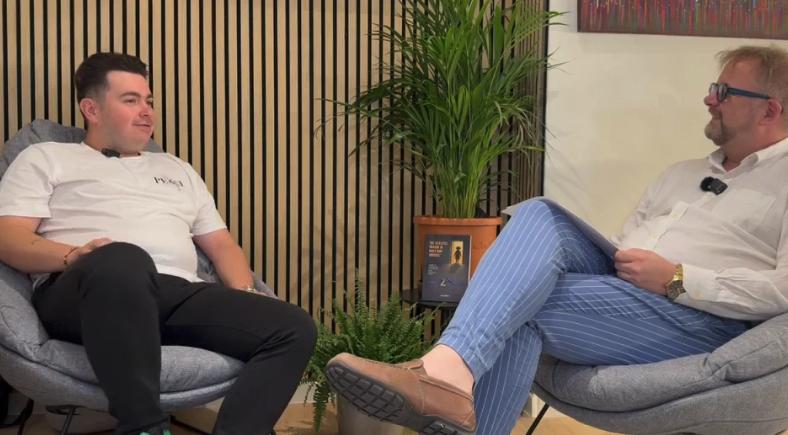
Curiosity Is the Base of Everything | Marie in conversation with Karl Mortier, International Visual Storyteller and Master of Ceremonies
Recorded at the International Sketchnote Camp (ISC) in Verona, with European Visual Practitioners (EVP).
Who She is
Marie is a professional graphic recorder based in Nuremberg, Bavaria. Alongside client work she teaches sketchnotes, flipcharts and visual storytelling, visualising processes and strategies across many sectors. Karl Mortier calls that variety a talent stack: skills pulled out depending on who is in the room.
Industrial Design as a Foundation
Her strongest skills, by her own account, are structuring and abstracting, straight out of studying industrial design. There you understand the problem, abstract it, structure it, and only then design. The question she carried through was how to reduce something to the maximum and still give people an emotion. She started sketching in her twenties, and moving into graphic recording the same principle applied. The bridge she built ran from designing products to creating content and communication for humans.
Why She came to Verona
She wanted to see how facilitators and recorders from other countries work: how they see the world, how they handle transformation. And because, in her words, these are funny people with warm hearts.
Curiosity as Professional Infrastructure
Marie is not sentimental about it. Curiosity is the base of everything in the field. Four clients in a month means a different graphic recording every week. Digital and AI come up often, but so do universities, science and culture. That demands switching fast and never being bored by anyone's content: asking what they are doing, deciding it is interesting even when it sits outside your own field, and finding what you can learn.
Karl Mortier turns the idea around. Practitioners are not only curious, they make others curious. He calls it contaminating with curiosity. Marie recognises it in the feedback loop: she is curious about the information, people are curious about the result, then surprised. So that is how we are, and that is how you see us.
The Biggest Smile
Asked what she likes most, the answer is short. Make people smile. The biggest one came from a project on making inner cities more liveable, in her own hometown, where a large shopping mall stands empty. A city-initiated cultural project ran a two-day co-creation event with music and dancing, and five graphic recorders talked to whoever walked up. Everyone came, rich and poor.
What struck her was the gratitude: my idea is heard, my opinion is made visible. The moment she keeps is a homeless woman who talked about older people with walkers and kerbs that are too high, and suggested ramps. Someone with nothing of her own, thinking about others, because she watches them every day. Drawing for children lands the same way: children are honest, and the impact shows in how they leave.
Feeling Involved, Seen and Heard
Karl Mortier names the two words underneath the story: involvement and emotion. Marie agrees this is the great part of the work and pushes further. It belongs far more in public and government communication, bringing ordinary people together rather than staying inside business.
She was proud of that project, and specific about why. Not because she thinks she is a great sketcher, but proud of the people around her and their ideas. We need communities, she says, because we all hang on machines. What she loves is the craftsmanship of working by hand.