WEBVTT
00:00:00.560 -->
00:00:13.039Hello, I'm Steve Brachmann, and welcome to IP Innovators, where we profile the careers of leading patent professionals and explore how AI and patent technology reshape intellectual property practice.
00:00:13.039 -->
00:00:21.039This podcast is brought to you by Deep IP, the go-to AI patent platform for demanding law firms and in-house IP teams.
00:00:21.039 -->
00:00:30.239Fully integrated into your workflow, Deep IP is setting the standard for how patents are drafted, reviewed, and managed from idea to enforcement.
00:00:30.879 -->
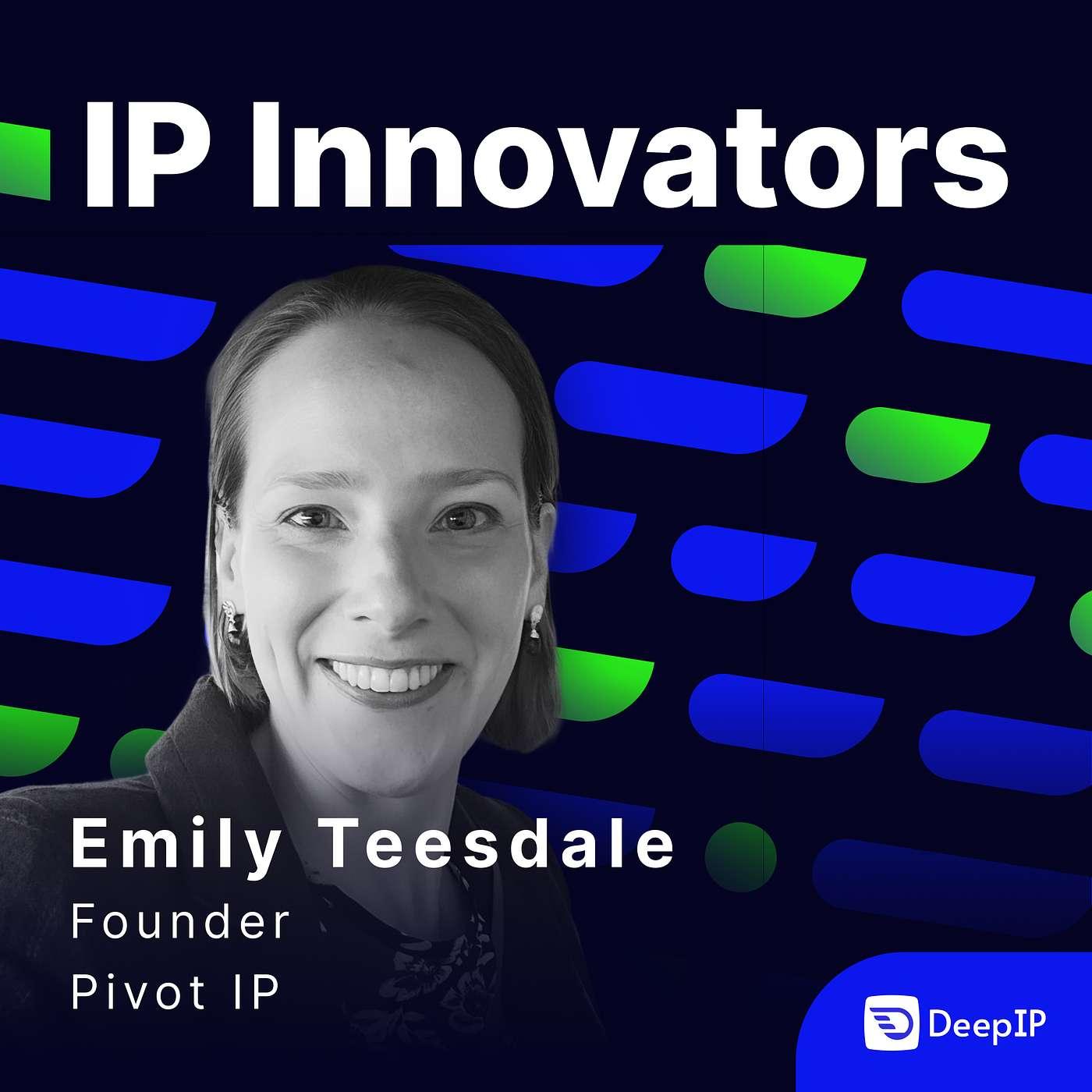
00:00:36.880Today on IP Innovators, I am joined by Emily Teesdale, founder of Pivot IP.
00:00:36.880 -->
00:00:39.039Emily, thank you for joining us today.
00:00:39.520 -->
00:00:39.920Thank you.
00:00:39.920 -->
00:00:40.960It's a pleasure to be here.
00:00:40.960 -->
00:00:41.840Thanks for having me.
00:00:42.240 -->
00:00:43.039Absolutely.
00:00:43.039 -->
00:00:51.200So if you can take us through and give us a little sense of how did you get into this wonderful world of patent law.
00:00:52.799 -->
00:00:58.640So my background is in engineering, in mechanical engineering, I did uh an aeronautical engineering degree.
00:00:58.640 -->
00:01:08.480And the route in the UK from a science or engineering degree is to then effectively learn how to be a patent attorney as a trainee.
00:01:08.480 -->
00:01:14.319So you work for a patent attorney firm and you take some exams while you're working.
00:01:14.319 -->
00:01:15.599So I took that route.
00:01:15.599 -->
00:01:27.519And the reason I went into patent law is because I got, I didn't want to be just an engineer, I wanted to be a bit more strategic and looking at different things.
00:01:27.519 -->
00:01:29.599And patent law just really appealed to me.
00:01:29.599 -->
00:01:39.680I liked the exposure to different technologies, so still using that technological side of my brain, but also looking at the law side.
00:01:39.680 -->
00:01:47.920And also language is a really important part of pattern law, how you you know, how you describe things, what words you use, and actually that's very, very important.
00:01:47.920 -->
00:01:50.640So I like the combination of those three things.
00:01:50.640 -->
00:02:04.959So I uh was a trainee patent attorney, I've uh then qualified, I'm a UK chartered and European patent attorney, and I've now been in the IP world for over 20 years, which makes me feel very old.
00:02:04.959 -->
00:02:09.919Um so I I worked in private practice um initially.
00:02:09.919 -->
00:02:15.680I was also a partner in one of um the firms there, and one of the private practice firms.
00:02:15.680 -->
00:02:18.240Um, but lastly, I moved in-house.
00:02:18.240 -->
00:02:23.840So I worked for Airbus in the UK to see a big aircraft manufacturer.
00:02:23.840 -->
00:02:32.000Um, and then after that role, I worked uh heading up the IP function of another aerospace company called GKN Aerospace.
00:02:32.000 -->
00:02:47.120They're another big aerospace company, but you might not have heard of them, but they're global and a big sort of tier one supplier to people like Airbus, Boeing, and also engine manufacturers, as well as various other things within the aerospace industry.
00:02:47.120 -->
00:02:50.879Um, so that's my sort of background when I was employed.
00:02:50.879 -->
00:02:55.919Um, since then I have founded Pivot IP, as you mentioned.
00:02:55.919 -->
00:03:01.360Um, and what I do there is I'm effectively an IP strategy consultant.
00:03:01.360 -->
00:03:17.680So my role at GKN was heading up that IP function for a big engineering company, but there are smaller engineering companies who don't need somebody full-time, um, but they do need somebody to help them guide them with their IP strategy, and that's where I come in.
00:03:17.680 -->
00:03:22.719So I work as a either as a project-based approach or as a fractional basis.
00:03:22.719 -->
00:03:28.560So I could come in one day or two days a week to help these smaller engineering companies with their IP strategy.
00:03:28.560 -->
00:03:35.680And this is kind of interesting because my background in private practice, you know, I can really bring a difference.
00:03:35.680 -->
00:03:49.199So, what I'm not trying to do is to replace perhaps that company already has some existing um patent attorneys helping them out with their inventions and drafting and prosecuting those patent applications, what I bring is something quite different to that.
00:03:49.199 -->
00:03:54.639That's the strategy side, which we can come on to talk about, I think, in a in a bit more detail later.
00:03:54.960 -->
00:03:55.759Absolutely.
00:03:55.759 -->
00:03:58.000Uh, but I'm kind of interested.
00:03:58.000 -->
00:04:13.039So, when you're working at Airbus in these uh previous aerospace firms, or maybe it was in private practice like you described it, where did you come into this idea that businesses could use a fractional head of IP?
00:04:13.039 -->
00:04:19.120Uh, where did you see that issue kind of develop and how did you decide to step in and uh solve a problem?
00:04:19.920 -->
00:04:20.480Yeah.
00:04:20.480 -->
00:04:26.160Uh so there's not many people who actually do what I do on that kind of basis, that fractional basis.
00:04:26.160 -->
00:04:34.639But there are many, many uh companies who, you know, get to a certain size where they have their own in-house IP department.
00:04:34.639 -->
00:04:48.639Um, but you you scale that down, you get sort of, you know, at what point you get a smaller company, they just can't justify having uh, let alone a team, they can't even really justify having a full-time employee working on IP for them.
00:04:48.639 -->
00:04:58.959Um, and what they do is they use external counsel as their patent attorneys, but there's this whole uh strategy side that's missing, and that's what I want to provide.
00:04:58.959 -->
00:05:12.800So it's effectively doing the role I did at GK in Aerospace, this head of IP, IP strategy role, taking that full responsibility for everything to do with IP, but doing that for smaller companies.
00:05:12.800 -->
00:05:25.680So effectively working internal, really getting to know their business, knowing where they want to go, and helping them get there, using IP as you know, a tool and a business asset to do that.
00:05:26.079 -->
00:05:36.399So coming from a corporate in-house context, like you were with Airbus, and then moving to Pivot IP, you work with companies in a lot of different contexts.
00:05:36.399 -->
00:05:46.480Uh what kind of environments are you involved with with your clients that might not look like uh where you came from an Airbus?
00:05:47.439 -->
00:05:52.399Yeah, so Airbus and GK N Aerospace are very uh obviously they're aerospace companies.
00:05:52.399 -->
00:05:55.759I work generally in anything to do with mechanical engineering.
00:05:55.759 -->
00:06:00.720Um, so there's that side of it in terms of the broader technology that I work with.
00:06:00.720 -->
00:06:07.279Um, in terms of the kind of work that I do for clients, it's sort of similar.
00:06:07.279 -->
00:06:14.639It obviously has differences because working for a smaller company rather than bigger companies, but in terms of what I'm doing, it's very similar.
00:06:14.639 -->
00:06:29.839Um, so for example, um we talked about companies having external patent attorneys who are helping them with obtaining and uh you know obtaining their patent rights, but there's the strategy side, which is what I concentrate on.
00:06:29.839 -->
00:06:34.000So that's things like working out what your business objectives are.
00:06:34.000 -->
00:06:36.000Are you looking to go into a new market?
00:06:36.000 -->
00:06:38.160You're looking to grow, looking to get investment.
00:06:38.160 -->
00:06:39.680What is it you're actually trying to do?
00:06:39.680 -->
00:06:44.480What's your 5-year, 10-year, even 20-year aim looking forward?
00:06:44.480 -->
00:06:46.480Where do you want your business to be going?
00:06:46.480 -->
00:06:49.920And let's look at how we get there from an IP point of view.
00:06:49.920 -->
00:07:00.639One, how we help those business objectives, but also how we get the IP to run alongside it, supporting it and making sure we're not running into any risks.
00:07:00.639 -->
00:07:17.279So, for example, just taking a uh, you know, just one example, if uh a company wants to move into a new market or perhaps they want to move down the supply chain, so they're they're dealing with um technology that otherwise their supplier would have been providing, how do you do that?
00:07:17.279 -->
00:07:31.839Because that company will have been relying on for probably quite some years that technology of that supplier, they've got that existing relationship with that supplier, which you know they're not always aligned in terms of what those two companies are trying to do.
00:07:31.839 -->
00:07:49.439So, how do you actually effectively encroach on your supplier's market in a way where you're not misusing their IP and how you actually protect your own IP to give you that market share and that monopoly of any new technology that you develop in that area?
00:07:49.439 -->
00:07:51.120So there's a lot around that.
00:07:51.120 -->
00:08:00.399If you think about just that one example of where you're wanting to move to in the market, there's lots of IP issues around that and how you manage them.
00:08:00.399 -->
00:08:06.000Um, so that's something that you know external patent attorneys haven't been involved in.
00:08:06.000 -->
00:08:14.079You know, I was that role myself, you know, it's a little bit siloed from an internal uh company's perspective.
00:08:14.079 -->
00:08:20.959You don't get that insight in quite the same way, you're not really guiding what's happening.
00:08:20.959 -->
00:08:24.639Um, another one to think about is collaborations.
00:08:24.639 -->
00:08:34.799So a lot of engineering companies, and this applies not just in the engineering industry, but engineering especially do lots of collaborations between different engineering companies.
00:08:34.799 -->
00:08:41.519You know, it could be supplier and customer, it could be um, you know, a different kind of relationship.
00:08:41.519 -->
00:08:49.200Often there they collaborate with academic institutions as well, and you have you know that research type uh collaboration going on.
00:08:49.200 -->
00:09:01.519But in all of these kind of collaborations, you really need to be thinking forward about what you want to do with the IP in the future and making sure those collaborations are set up in the right way.
00:09:02.799 -->
00:09:03.039Right.
00:09:03.039 -->
00:09:24.960And we use the word collaboration, and that is the proper word to use because we're working together on creating these new developments, but there's this other side to the coin where we're ending up with intellectual property rights and uh figuring out where that bests uh and who has the right to practice what.
00:09:24.960 -->
00:09:31.759Uh, are there any other common issues that come up in the course of your work uh like that?
00:09:32.559 -->
00:09:34.399Yeah, that that comes up a lot.
00:09:34.399 -->
00:09:40.559It's very, very important, like I said, to get those terms of those collaboration agreements right in the first place.
00:09:40.559 -->
00:09:43.120Everyone wants these projects to go well.
00:09:43.120 -->
00:09:47.600We want the engineers to work well and smoothly and effectively together.
00:09:47.600 -->
00:09:55.279We want to be developing this technology together so that both companies can then go off and do what they want to do afterwards.
00:09:55.279 -->
00:10:07.120But what I would say is you do have to bear in mind that this is a collaboration between two companies that do have quite often different business objectives.
00:10:07.120 -->
00:10:15.440You know, they are not a single entity, they don't have the same mission in mind of where they want to go, and sometimes they can conflict.
00:10:15.440 -->
00:10:29.279So making sure the collaboration is set up to allow for that, that you know, it has those different aims in mind and it's already thought about, it's effectively future-proofing what these companies want to do.
00:10:29.279 -->
00:10:31.840So that's sort of one thing to think about.
00:10:31.840 -->
00:10:48.159Um, one of the other things to think about is when you collaborate with another company, you invariably get access, at least in the collaboration and possibly afterwards, you get access to certain information of that of that collaboration partner.
00:10:48.159 -->
00:11:00.720So, for example, you could be a company who wants to produce a landing gear strut, and you team up with a company who specializes in the process for producing metallic alloys.
00:11:00.720 -->
00:11:09.440So they look at the temperature, the pressure, all the other kind of method steps that go into the processing to produce the metal itself.
00:11:09.440 -->
00:11:24.080You then might be working with them to test the strength of those materials, look at them under microscope, see how they uh react in testing when you're actually making them to the shape that you want, all of those different things.
00:11:24.080 -->
00:11:30.879That's a collaboration where you're taking technology from one company with technology from another.
00:11:30.879 -->
00:11:40.000As part of that, you might get access to information about how that metallic alloy has been produced.
00:11:40.000 -->
00:11:47.759So let's say they they produce three different alloys and you know some of the process steps to make those three different alloys.
00:11:47.759 -->
00:11:54.240After that collaboration has finished, that information is still probably sitting in your company.
00:11:54.240 -->
00:12:00.480It's on a computer system somewhere on somebody's somebody's either network or somewhere else saved.
00:12:00.480 -->
00:12:08.799But it's very important to make sure that actually you're not just having it sit there and being used as if it's your company information.
00:12:08.799 -->
00:12:15.200So you do need to be aware that under what agreement did you get that information?
00:12:15.200 -->
00:12:18.799So here we're talking about a collaboration, it could be an NDA.
00:12:18.799 -->
00:12:31.919Um, you know, you've received that confidential information under some contract, and making sure that you um effectively toe the line in terms of what that contract allows you to do with that information.
00:12:31.919 -->
00:12:34.480Now that sounds very simple, it's not rocket science.
00:12:34.480 -->
00:12:39.200You've got information under a contract, you need to honor what you've said in that contract.
00:12:39.200 -->
00:12:46.799But in terms of when you're working within a company, you know, engineers, when they've got access to the information, they want to use it.
00:12:46.799 -->
00:12:50.320That's a wonderful natural trait of engineers.
00:12:50.320 -->
00:13:08.559So there's a large part of actually an awareness point, you know, making engineers aware of this and actually helping them, really supporting them and in enabling them to use the information in the right ways, but only in the right ways, and and not falling foul of those agreements.
00:13:08.559 -->
00:13:14.559Um you know, if you get it wrong, it can be quite it can be quite bad.
00:13:14.559 -->
00:13:15.279So, you know...
00:13:16.159 -->
00:13:17.039And expensive, yeah.
00:13:17.600 -->
00:13:25.200Yeah, so let's say you you did misuse that information, you you had an engineer who used that information for a purpose they shouldn't have done.
00:13:25.200 -->
00:13:41.679And perhaps the uh metallic alloy manufacturing company, you know, sort of suspects that, you know, if they take you to court and litigate against you, you know, there's a whole sort of discovery um or disclosure process.
00:13:41.679 -->
00:13:45.279And, you know, it actually will come out that that has happened.
00:13:45.279 -->
00:13:49.360So how do you ensure that you're working the right way?
00:13:49.360 -->
00:13:51.759You can't just assume people won't find out.
00:13:51.759 -->
00:13:57.360And if you look at the sort of trend in litigation, um, this is happening more and more.
00:13:57.360 -->
00:14:06.159There are there are bigger and bigger, you know, damage payments on cases where misuse of confidential information is is the main issue of the case.
00:14:06.720 -->
00:14:07.039Yeah.
00:14:07.039 -->
00:14:24.960So when you come in and you're fractional head of IP for a business and you're trying to help them avoid these kind of issues, uh, can you talk about a couple of practices that uh you advise, things that a lot of companies might not be thinking about doing on the regular?
00:14:25.679 -->
00:14:26.960Yeah, absolutely.
00:14:26.960 -->
00:14:48.720Um, I mean, the first thing I want to do when I come in is to really get to know the company and what they're trying to do, understand their business, how they work, you know, the sort of team structure, how much they collaborate, all of those kind of things, trying to get an idea of who they are, what makes them tick, what kind of risks they're running, are they making the most of their sort of IP opportunities as well.
00:14:48.720 -->
00:14:56.080But in terms of practical examples of what I do, I'd say one of the biggest ones actually is raising the awareness.
00:14:56.080 -->
00:15:03.840So, you know, like I said, letting engineers know what it is they should and shouldn't be doing and why it's important.
00:15:03.840 -->
00:15:07.120Um, that is a really, really big point.
00:15:07.120 -->
00:15:24.879So talking about this confidential information and the risk of misusing that information, you know, one of the biggest ways to reduce that's that risk is, you know, education and awareness of everyone who's dealing with that information so they know what they can and cannot do.
00:15:24.879 -->
00:15:26.639That is a really, really big one.
00:15:26.639 -->
00:15:32.639And it's an incredibly low-cost way of massively reducing the risk that you're exposed to.
00:15:32.639 -->
00:15:35.279So I would say that's a really key one.
00:15:35.279 -->
00:15:41.039Um, the second one we talked before about collaborations and getting those contract terms right.
00:15:41.039 -->
00:15:54.080I would say it's very, very important that you have uh some kind of process going forward where that review of those terms is really thought about and thought about early.
00:15:54.080 -->
00:16:10.960So you're not going into a collaboration with another company, you know, a week before the collaboration wants to start, they send you their um their template document that they want you to sign, and you have no idea what it is you really are trying to achieve or what you're looking for in that contract.
00:16:10.960 -->
00:16:18.000So making sure that the IP strategy around collaborations is really brought in early.
00:16:18.000 -->
00:16:22.879And I'd say the third one is supporting the project teams.
00:16:22.879 -->
00:16:49.519So that's not just teams working in a collaboration, but it's also just the internal project teams as well, really helping them work in the right way, think about um IP strategically so that they are bringing ideas to you at the right time, they're thinking in the right kind of ways, they're not running risks that they're not aware of, they're not wasting opportunities without realizing the consequences of what they're doing.
00:16:49.519 -->
00:16:57.360So, again, the education piece is part of that, but it's also just supporting them, the project teams as they're working as well.
00:16:58.799 -->
00:17:06.960When you see collaborations between IP partners break down, is it typically because of competing interests?
00:17:06.960 -->
00:17:15.519Do you see any other common threads as to uh why collaboration and communication tends to break down?
00:17:16.880 -->
00:17:19.039Yeah, interesting question.
00:17:19.039 -->
00:17:32.799I think it goes back to the point I said earlier that fundamentally often, it's it's not always the case, but often these companies do have somewhat competing interests.
00:17:32.799 -->
00:17:37.680And I would say I'd say a couple of reasons things break down.
00:17:37.680 -->
00:17:42.240One is that the collaboration hasn't been set up in the right way.
00:17:42.240 -->
00:17:55.920In other words, it hasn't really thought about what these companies are trying to do long term, and it's sort of shoehorned the situation in where it doesn't really work very well.
00:17:55.920 -->
00:18:07.279So it might be that one of the companies realizes perhaps part way through the collaboration that actually this collaboration isn't going to give them what they want at the end of the process.
00:18:07.279 -->
00:18:19.279And that really can be quite a toxic kind of relationship because you know their motivation for getting this technology to work just sort of disappears.
00:18:19.279 -->
00:18:26.559So I'd say that's one reason why these collaborations can can not work so well if they've not been set up in the right way.
00:18:26.559 -->
00:18:32.000Um sort of a look related note, sometimes interests change of companies.
00:18:32.000 -->
00:18:37.440They want to move in a different direction, they're simply not interested in that technology anymore.
00:18:37.440 -->
00:18:48.720Um, and hopefully the collaboration agreement has been set up either to well, you it can go either way, it can require the teams to carry on working together to a certain point.
00:18:48.720 -->
00:18:56.720But what I'd recommend is is more having, you know, an overall balance between the two companies of saying, is this still working for us?
00:18:56.720 -->
00:18:58.079Is this still where we want to go?
00:18:58.079 -->
00:19:00.559And having those sort of checkpoints in there.
00:19:00.559 -->
00:19:09.119Um, you know, you you can go either way with it, but you need to have thought carefully about when those checkpoints and those commitment points are.
00:19:09.119 -->
00:19:21.119Because if you've got a company that is having to carry on and they're not really wanting to, and it doesn't, you know, suit their interests, it's just very hard to get things to work properly.
00:19:21.119 -->
00:19:30.880Um, I would say perhaps the third example is where the relationship between the companies changes.
00:19:30.880 -->
00:19:35.359So, in the example I gave earlier, I talked about a supplier and a customer.
00:19:35.359 -->
00:19:50.559And if a customer is, you know, actually wanting to move and slightly encroach in that supplier's space, that's a really kind of big conflict between those two, and the existing relationship is going to change quite dramatically.
00:19:50.559 -->
00:19:59.920Um now that affects collaborations between those two companies in the future, but it also does sort of affect the dynamics of the existing collaboration.
00:19:59.920 -->
00:20:21.680So, you know, the best in the world you want the collaboration to be set up to allow for where both companies want to go, but sometimes the relationship and the collaboration just simply breaks down because actually they're wanting to move in quite different directions or they have quite competing, conflicting uh wants and needs.
00:20:21.920 -->
00:20:22.559Yeah.
00:20:22.559 -->
00:20:27.200Almost like you need to take a relationship audit, uh, kind of like we talk.
00:20:27.200 -->
00:20:33.279We talk about IP audits, but it's you know, test the corporate relationship every once in a while to see if things have changed.
00:20:33.279 -->
00:20:45.519Do you have any recommendations for IP professionals who might be thinking, like, do I need to reassess uh changing conditions with my partners?
00:20:46.640 -->
00:20:47.359Um yeah.
00:20:47.359 -->
00:20:56.559So if you're if you're an engineering company and you you're in a collaboration and it and it's not working for you, um, you need to look at what the collaboration agreement says.
00:20:56.559 -->
00:21:03.200You know, there's no sort of magic bullet or or you know answer I can give that's the same in each situation.
00:21:03.200 -->
00:21:10.720So let's say you're an engineering company, you are in a collaboration, you realize it's not working for you for whatever reason.
00:21:10.720 -->
00:21:40.720Um I would say the first thing to do is to get somebody like me involved, take a look at your agreement, actually see what it says, what are um you know the ways that the collaboration agreement allows for getting out of that situation or adjusting the situation and seeing what it says and fundamentally um following that if that's the right course, obviously you're in a relationship with the partner you're collaborating with, they might have changed their mind, they might have different views as well.
00:21:40.720 -->
00:21:49.519So if the relationship is good and it's you know a question about how you approach this, but it might be that actually you renegotiate that collaboration.
00:21:49.519 -->
00:21:51.759Perhaps it's not working for both of you.
00:21:51.759 -->
00:22:01.359Perhaps they can see it doesn't make sense for you to carry on, and perhaps you're not required to carry on, but carrying on in a slightly different way might suit both parties.
00:22:01.359 -->
00:22:12.480So there is no one size fits all, but it's fundamentally seeing what the agreement says, seeing the situation you're in, the situation your partner is in, and just working out the best way forward from there.
00:22:13.839 -->
00:22:17.920So your work, you've seen collaboration in a lot of different contexts.
00:22:17.920 -->
00:22:26.160You've seen in large corporations, you've seen them across uh different companies, probably much smaller in scope.
00:22:26.160 -->
00:22:41.359Can you talk about uh different issues with silos that you've seen in these different contexts and how those can impact uh corporate ability to collaborate on these IP projects?
00:22:41.839 -->
00:22:49.680Yeah, so I would say the kind of different silos, as far as I see them, kind of fall into three different kinds of groups.
00:22:49.680 -->
00:22:55.119I would say the first silo is, or first sort of set of silos is within a company.
00:22:55.119 -->
00:23:05.200So you might have the sales team, the procurement team, the uh technology teams, the legal teams, the IP teams if you're big enough, or or just the IP person, me.
00:23:05.200 -->
00:23:08.480Um, you know, they're all different teams within a company.
00:23:08.480 -->
00:23:13.119They all have slightly different aims, what they're trying to get out of this project.
00:23:13.119 -->
00:23:23.920So the legal team and the IP team are largely about managing risks and just trying to make sure that we're not running into anything that we don't want to be.
00:23:23.920 -->
00:23:29.359The engineering teams just want to get started on the technology, you know, the sales and the...
00:23:29.359 -->
00:23:30.079They've got work to do.
00:23:29.849 -->
00:23:30.559Yeah, exactly.
00:23:30.559 -->
00:23:31.440They want to get going.
00:23:31.440 -->
00:23:32.960I love that about engineers.
00:23:32.960 -->
00:23:38.559Um, and you've got the sales and the procurement team who, you know, also have kind of conflicting aims.
00:23:38.559 -->
00:23:44.640They want to make sure that um they're able to buy or sell the technology in the right kind of way going forward.
00:23:44.640 -->
00:23:48.400So you've got these conflicting needs to a certain extent.
00:23:48.400 -->
00:23:53.599Largely speaking, you're all working under the same company banner, you're all working towards the same aim.
00:23:53.599 -->
00:24:03.039So I would say with those kind of silos, it's all about just communication, really communicating very well between those teams.
00:24:03.039 -->
00:24:08.400So there's no point, uh, a legal or an IP person saying, no, you can't do X, Y, and Z.
00:24:08.400 -->
00:24:09.839That's not very helpful.
00:24:09.839 -->
00:24:13.519What they need to be doing is saying, look, I've identified this risk.
00:24:13.519 -->
00:24:22.319What I know about the project, which should be a lot of knowledge, they should know the project quite well, is to say, look, this is a big risk because of this reason.
00:24:22.319 -->
00:24:25.839This is what we want to do, this might stop us doing it.
00:24:25.839 -->
00:24:35.119So before they put the brakes on, as it were, um, and say, look, we need to renegotiate this clause, um, they're actually really explaining why.
00:24:35.119 -->
00:24:41.920And so everyone within the company is on the same page about what they're trying to achieve and how and what they need to get there.
00:24:41.920 -->
00:24:49.519So to me, communication is really key and also understanding, you know, what the other teams are trying to trying to do.
00:24:49.519 -->
00:24:52.319So, you know, there is no point.
00:24:52.319 -->
00:25:00.000I I get really cross when I see um legal teams being effectively what I call business prevention units.
00:25:00.000 -->
00:25:02.559You know, they say, no, no, no, there's a risk here.
00:25:02.559 -->
00:25:03.759We can't do that.
00:25:03.759 -->
00:25:06.000Well, there's a risk in not doing anything.
00:25:06.000 -->
00:25:09.119So that that attitude is just not helpful.
00:25:09.119 -->
00:25:22.559So you need to understand the business, understand what you think which risk is worth doing, and explaining it to people, and including the C-suite, so they can make the choice on what risks they want to take and which ones they don't.
00:25:22.559 -->
00:25:31.200Um, and making that as smooth as possible relies on communication and uh understanding of the different kinds of priorities that are going on.
00:25:31.200 -->
00:25:34.319So that's probably the first group of silos that I see.
00:25:34.319 -->
00:25:38.880That's should be relatively easy to work with.
00:25:38.880 -->
00:25:57.359Um, the second one that I see a lot, which I sort of mentioned before, and I've been on both sides of it, is that interaction between external counsel, and that could be patent attorneys, trademark attorneys, or IP solicitors potentially if you're involved in litigation, and the in-house team.
00:25:57.359 -->
00:26:07.200And again, you're working for uh different companies, one's the the in-house, the engineering company, and one's the provider, the service provider.
00:26:07.200 -->
00:26:22.880Um, and you could argue that they have conflicting interests because the service provider wants to get paid for the work they're doing and the company wants to get good value for money from those services, but fundamentally you'll you should be working towards the same aim.
00:26:22.880 -->
00:26:27.279So, again, I don't see that silo as a big issue.
00:26:27.279 -->
00:26:34.720I would say there um you know, that service provider should be trying to do the best job for their client.
00:26:34.720 -->
00:26:40.480The client and the customer should be providing the right kind of information to allow them to do that.
00:26:40.480 -->
00:26:47.440So allow them to understand the business, understand where you're wanting to go to the extent that they need to know that for what they're doing.
00:26:47.440 -->
00:27:01.039And with that arrangement, um, you know, speaking relatively um bluntly, you know, at any time that that relationship isn't working, that company can say, look, I'm sorry, I want to move to a different service provider.
00:27:01.039 -->
00:27:11.920So largely speaking, that arrangement should be based on trust, and both sides should take the effort to build up that trust and really get to know each other.
00:27:11.920 -->
00:27:18.319So again, I don't see that silo that shouldn't be a big issue, that that communication.
00:27:18.319 -->
00:27:26.000It's just thinking about it carefully about what information um, you know, your external counsel should and and and needs to know.
00:27:26.000 -->
00:27:39.920The third silo, which we've touched on before, is is probably the biggest one, this this separation between one company and another when they're collaborating.
00:27:39.920 -->
00:27:45.359And here, yes, everyone wants to get together and develop technology.
00:27:45.359 -->
00:27:51.359So, more and more uh technology, you can't just develop it on your own in-house.
00:27:51.359 -->
00:27:53.440You do need help from other companies.
00:27:53.440 -->
00:27:57.359That might be because you're looking to move into a different area.
00:27:57.359 -->
00:28:01.680Um, it might be just there's much more, more and more cross-technology going on.
00:28:01.680 -->
00:28:06.799So if you think about an example from years back, Nokia made phones.
00:28:06.799 -->
00:28:08.880Um, this is a very old example, you know.
00:28:08.880 -->
00:28:12.240Nokia don't really, I guess I've seen a Nokia phone in a long time.
00:28:12.240 -->
00:28:16.720It has Nokia using yeah, they used to make phones, that's what they did.
00:28:16.720 -->
00:28:19.200And then the phones starting having cameras on them.
00:28:19.200 -->
00:28:24.160So fundamentally, they're needing to get that technology expertise from elsewhere.
00:28:24.160 -->
00:28:26.880So those kind of examples they happen more and more.
00:28:26.880 -->
00:28:31.039Um, there's so many technologies now that really are cross-industry.
00:28:31.039 -->
00:28:42.000If you think about additive manufacturing, 3D printing, and AI and data processing and data storage, all of these things, so many different industries need to know.
00:28:42.000 -->
00:28:47.920So there is fundamentally going to be collaboration between these different um technology areas.
00:28:47.920 -->
00:28:53.200So that area of siloing is a really big one.
00:28:53.200 -->
00:29:01.359Like I've I've touched on, those companies are teaming up to develop the technology, that's a great thing, but they do have conflicting interests.
00:29:01.359 -->
00:29:16.799So, like I said before, making sure that those collaborations are set up to allow for that to understand that and to still allow both companies to do what they need throughout the project, let the project run smoothly, but also after the project as well.
00:29:16.799 -->
00:29:20.480So taking, let's take that Nokia camera example.
00:29:20.799 -->
00:29:21.119Sure.
00:29:21.759 -->
00:29:23.920Uh, so let's say Nokia teamed up.
00:29:23.920 -->
00:29:25.839This is a total hypothetical example.
00:29:25.839 -->
00:29:37.440I don't know how how this was in practice, but let's say um Nokia teamed up with Kodak, let's say to help them put cameras on their phones.
00:29:37.440 -->
00:29:59.039Um, and let's say they sign a collaboration agreement, and that collaboration agreement said, we're going to develop phone cameras together, and at the end of the agreement, Kodak will own all of the IP in the camera, and Nokia will own all of the IP in how that camera is integrated into the phone.
00:29:59.039 -->
00:30:09.039You fast forward five years after that collaboration has ended, for example, and Nokia want to sell phones with those cameras on the phones.
00:30:09.039 -->
00:30:16.160If they don't have access to that Kodak IP, they can't do that without Kodak's help.
00:30:16.160 -->
00:30:23.680So even after this collaboration, they're then tied to Kodak in a way that's actually very unhelpful.
00:30:23.680 -->
00:30:28.720So, you know, Kodak could say, no, we just don't want to license that IP to you.
00:30:28.720 -->
00:30:34.559Or they could say, Well, we'll sell you the cameras, we'll make them for you, we'll sell them to you.
00:30:34.559 -->
00:30:37.759Um, but you know, we're the only ones who can sell them to you.
00:30:37.759 -->
00:30:40.240So we can sell them to whatever price we like.
00:30:40.480 -->
00:30:40.960Right.
00:30:41.599 -->
00:30:47.920So you're in this situation where you're tied to your supplier in that way that's actually very unhelpful.
00:30:47.920 -->
00:30:57.920Whereas what, you know, rewind the clock, if you're trying to negotiate that collaboration agreement, the person from Nokia, I would hope, would be thinking, right, what do we want to do?
00:30:57.920 -->
00:31:02.000What do we want to be doing in 5 years' time, 10 years' time, etc.?
00:31:02.000 -->
00:31:04.880Do we want to still be tied to Kodak in that way?
00:31:04.880 -->
00:31:06.559And I would say probably no.
00:31:06.559 -->
00:31:28.640So you need to make sure that that collaboration agreement is set up in a way that enables that objective to be able to make, you know, get other people to make for you those cameras, put them on your phones without being beholden to Kodak in a way that doesn't suit your business need and your business objective of where you want to go.
00:31:28.960 -->
00:31:29.440Right.
00:31:29.440 -->
00:31:34.559And I'm sure with technology cycles being even more even quicker nowadays, yeah.
00:31:34.559 -->
00:31:50.079We're talking about advanced technologies now, and I know that you work with companies of all types, but artificial intelligence is impacting every sector.
00:31:50.079 -->
00:31:58.400Where have you seen it impact the companies that you're helping with, and then also the type of work that you're doing?
00:31:59.039 -->
00:32:00.480Yeah, it's a good question.
00:32:00.480 -->
00:32:05.599I mean, AI and IP is a huge topic with many different aspects to it.
00:32:05.599 -->
00:32:17.680Um, from my point of view, I think one of the ways that I see AI helping my kind of work is all of that work to do with collaborations and helping to get them to work in the right way.
00:32:17.680 -->
00:32:23.119So there are many AI kind of legal review tools that exist.
00:32:23.119 -->
00:32:31.759They can identify if you if you put a contract in, they can identify some of the risks that they spot or perhaps some non-standard clauses.
00:32:31.759 -->
00:32:44.079If you're a bigger company and you have a um a sort of set template that you use for collaborations, you know, it can do a compare and contrast and tell you where perhaps somebody somebody else's template differs from yours.
00:32:44.079 -->
00:32:49.680Um, it can do some initial drafts of documents, uh NDA agreements, etc., etc.
00:32:49.680 -->
00:33:06.160And it can even do very, very clever things where if you have enough historical data, so again, this is kind of for bigger companies, if you have enough historical data, that AI can kind of predict what that counterparty might uh object to.
00:33:06.160 -->
00:33:13.119And it could also help you to say, well, look, in the past, these are the kind of compromise positions that worked with that party.
00:33:13.119 -->
00:33:21.039So it can really help you to make that kind of uh collaboration agreement drafting and negotiation process a bit smoother.
00:33:21.039 -->
00:33:21.599Yeah.
00:33:21.599 -->
00:33:34.240Um I would say uh I have two thoughts on AI, and they're one that I think anyone who doesn't use AI as a tool is really missing a trick.
00:33:34.240 -->
00:33:39.759You know, AI is progressing so fast, yeah, it can be incredibly helpful.
00:33:39.759 -->
00:33:41.759Um, there's also the ethical point.
00:33:41.759 -->
00:33:55.119If you're charging for two hours of your time to do something that AI could have saved a lot of time to do, then I would say that's not an entirely ethical, not really acting in your client's best interest at that point.
00:33:55.119 -->
00:34:06.160So I think there is a real need and requirement for lawyers just in general to really be thinking about hey, I how AI can help.
00:34:06.160 -->
00:34:18.559But I think the other side of it is there is still a lot of human judgment that comes into it, that human experience, AI cannot replicate in the same way.
00:34:18.559 -->
00:34:32.639So the example I gave, it can highlight some non-standard clauses, or you know, it can spot some things that you might want to look at, but you still need to at least think about is there anything else the AI is missing?
00:34:32.639 -->
00:34:37.440And also, how do you want to solve that that um kind of anomaly?
00:34:37.440 -->
00:34:42.159Like, is this a technology where that difference really matters?
00:34:42.159 -->
00:34:48.159Does the relationship between the parties mean that it's something you really want to, you know, stick to?
00:34:48.159 -->
00:34:50.159You don't want to back down.
00:34:50.159 -->
00:34:56.400You know, it's all about the client, you know, not the client relationship, sorry, the relationship between those two collaboration partners.
00:34:56.400 -->
00:35:02.159If you are nitpicky on a certain clause, is that really helping the collaboration and the relationship in general?
00:35:02.159 -->
00:35:08.800So you do have to be very pragmatic and really think about the bigger aim of what you're trying to achieve.
00:35:08.800 -->
00:35:12.159And AI just simply cannot do that at this stage.
00:35:12.159 -->
00:35:15.039Um, so there my my thoughts on IA.
00:35:15.039 -->
00:35:23.440Yes, absolutely use it, but know its limitations and add value where your human judgment really makes a difference.
00:35:24.400 -->
00:35:38.559Specific to the type of collaborations that we've been talking here today, are there anything about AI tools that can help companies uh smooth out some of the issues that we've explored?
00:35:39.920 -->
00:35:41.119Yeah, I mean, definitely.
00:35:41.119 -->
00:35:55.440I think that the sort of tools I mentioned before about helping get the collaboration agreements in the right place, you know, helping sort of draft, review um those kind of clauses, definitely they're they're they can be really helpful.
00:35:55.440 -->
00:36:08.159Um there's also um I think there's a certain amount of AI that can sort of help within the project as well, you know, helping the projects to run smoothly, kind of helping to log some of the IP.
00:36:08.159 -->
00:36:10.480I'm sure there are tools out there to do that.
00:36:10.480 -->
00:36:16.719Whether they're um, I don't know if they're AI, but I if they're not already, I'm sure they will be in a few years' time.
00:36:17.039 -->
00:36:26.079And isn't the line kind of blurry between, you know, computer algorithm or algorithm enhance, um, AI powered.
00:36:26.079 -->
00:36:30.400It kind of depends on the marketing team that you're getting it from sometimes.
00:36:30.400 -->
00:36:31.840Yeah, yeah, definitely.
00:36:32.000 -->
00:36:33.039I think that that's true.
00:36:33.039 -->
00:36:38.719To me, definitely that line of what's very clever computing, what's AI is uh Right, right.
00:36:38.800 -->
00:36:41.599It's it's difficult for us to decipher sometimes.
00:36:41.599 -->
00:36:55.440Uh so we're getting to the end of our time here today, and I always like to close up our episodes by getting a little sense of the person behind the IP legal career.
00:36:55.440 -->
00:37:06.559Uh so is there anything that Emily Teesdale does uh hobby-wise or just to find personal zen outside of the wonderful world of patents?
00:37:07.519 -->
00:37:12.559Uh I mean, great though IP is yes, I do have a life outside of IP.
00:37:12.559 -->
00:37:16.800Um I guess the big thing about me is I love to travel.
00:37:16.800 -->
00:37:18.320I really, really love to travel.
00:37:18.320 -->
00:37:24.000And it's not about how many countries you've been to, but to put it in perspective, I've been to about 70.
00:37:24.000 -->
00:37:27.039So I do do a lot of traveling.
00:37:27.039 -->
00:37:29.519Um uh yeah, I just love it.
00:37:29.519 -->
00:37:35.760I love I love trying new foods, kind of experiencing new cultures, just seeing amazing things.
00:37:35.760 -->
00:37:38.400I've yeah, I've been to some amazing places.
00:37:38.400 -->
00:37:41.760I'd say some of my favorites are Japan.
00:37:41.760 -->
00:37:44.960I just think Japan is an absolutely fabulous country.
00:37:44.960 -->
00:37:58.880Um, New Zealand is stunning and beautiful, and I also really love Costa Rica, like the the kind of nature that you have there and the kind of different landscapes is is also amazing.
00:37:58.880 -->
00:38:06.880Um, one of the other things I've I've done is I volunteered at an animal sanctuary in Namibia, so I got to do some absolutely incredible things.
00:38:06.880 -->
00:38:15.360I fed baby baboons, I took cheetahs for a walk, you know, the the world is just such an amazing place.
00:38:15.360 -->
00:38:33.920Um, and I think especially, you know, current climate, it's it's sometimes um hard to kind of see the positive, but I like thinking about all the different places I've I've traveled and the different experiences, and probably invariably that the people that you meet is actually one of the highlights.
00:38:33.920 -->
00:38:43.840And I think it does prove to you that people are generally good, you know, very, very good people, and we're actually very, very similar.
00:38:43.840 -->
00:38:52.239Um, I like to look at actually sometimes the similarities between people and you know, we all have fundamental human needs.
00:38:52.239 -->
00:38:56.480Um, we're actually more similar than we are different, and I like I like to remember that.
00:38:56.639 -->
00:38:58.719Yeah, that's great.
00:38:58.719 -->
00:39:03.360Especially, like you said, uh that's always a good reminder to have.
00:39:03.360 -->
00:39:08.639And uh a quick scope of the evening news will tell you why that's a good reminder to have.
00:39:08.800 -->
00:39:10.639So yeah.
00:39:10.800 -->
00:39:14.639So, Emily, thank you so much for taking the time to speak with us today.
00:39:15.119 -->
00:39:17.280It's been an absolute pleasure, really has.
00:39:17.280 -->
00:39:18.320Thank you for having me.
00:39:18.559 -->
00:39:19.280Sure thing.
00:39:19.280 -->
00:39:22.639Well, for IP innovators, I'm Steve Brachmann.
00:39:22.639 -->
00:39:24.000Happy patenting.