WEBVTT
00:00:02.319 -->
00:00:04.080Just waiting for my desk.
00:00:04.080 -->
00:00:07.360Wait for the window.
00:00:07.360 -->
00:00:14.480I got a dusty house.
00:00:14.480 -->
00:00:20.160There's a lot of traffic.
00:00:20.160 -->
00:00:22.960If you listen, you can hear it.
00:00:22.960 -->
00:00:25.920If you listen, you can hear it.
00:00:25.920 -->
00:00:29.280S-A-A-Q.
00:00:29.280 -->
00:00:32.640Just waiting for my license.
00:00:32.640 -->
00:00:34.240Waiting for the case.
00:00:34.399 -->
00:00:35.280Here we are, everyone.
00:00:35.280 -->
00:00:41.359Back, another episode ifitbeyourwill podcast, what a mouthful sometimes, even from me.
00:00:41.359 -->
00:00:44.320Today I am not reaching very far.
00:00:44.320 -->
00:00:52.399You might have noticed I've been reaching out to a lot of my locals, which means Montreal artists, artists in Quebec as well.
00:00:52.399 -->
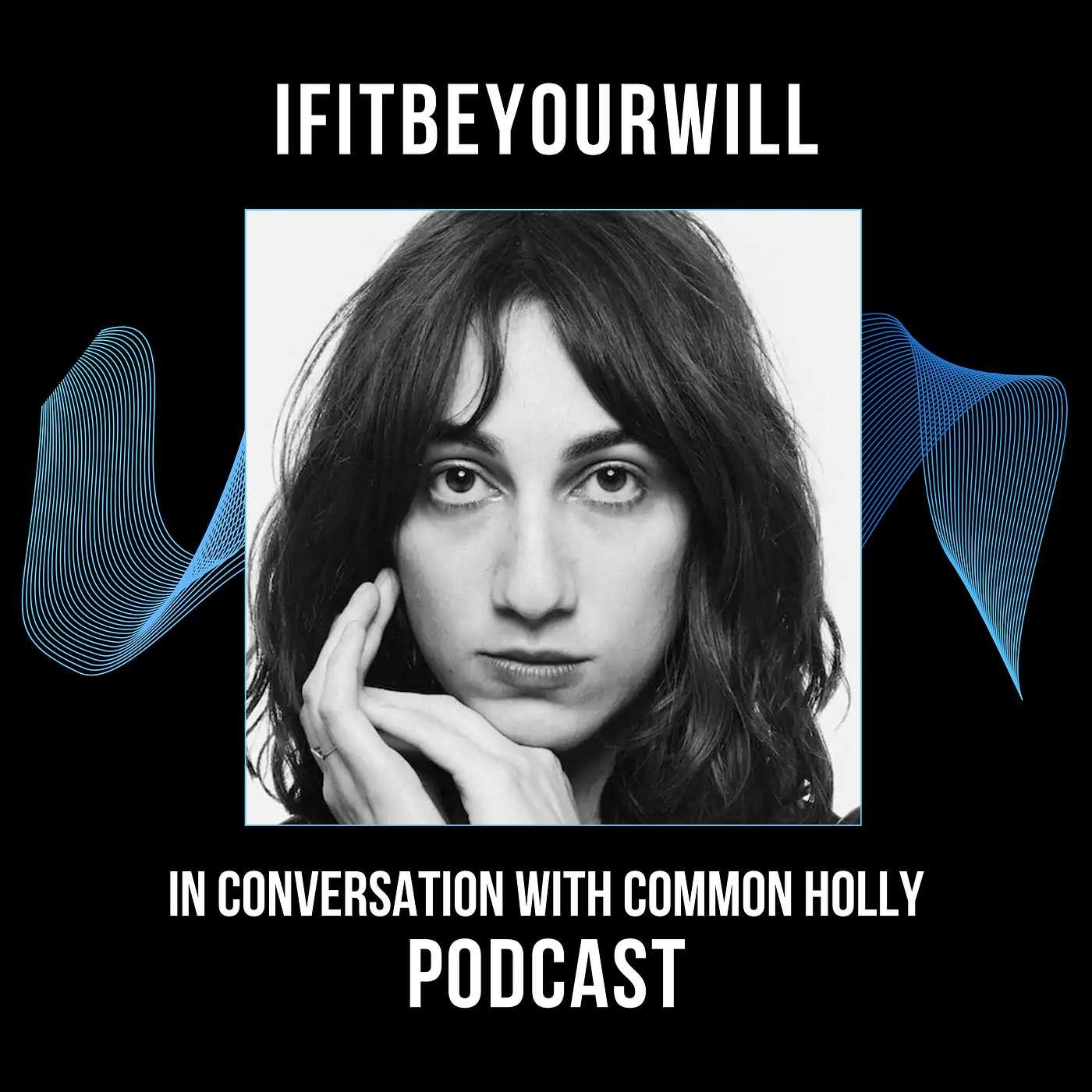
00:01:01.920And I have Common Holly, Brigitte Naggar, who's the Common Holly, who just had a couple of really great albums come out recently.
00:01:01.920 -->
00:01:10.319An EP just came out in February, um, which is called They Will Draw Hills Around Our Heads, which was dropped in February.
00:01:10.319 -->
00:01:18.560And it has this really uh close connection to another record that she just put out in 2025 in June called Anything Glass.
00:01:18.560 -->
00:01:29.840We're going to talk about her process, the writing of these two records, and we'll definitely find out what's coming down the pipe with Common Holly as well.
00:01:29.840 -->
00:01:32.719So, Bridget, thanks so much for hopping on here today.
00:01:33.359 -->
00:01:34.879I'm glad to be here.
00:01:36.000 -->
00:01:40.879So, Bridget, I like to begin these with a little jot down memory lane.
00:01:40.879 -->
00:01:45.519What was it that brought you to music?
00:01:45.519 -->
00:01:48.159What in in those early years?
00:01:48.159 -->
00:01:53.120What was the attraction to it that got you to where you are now?
00:01:53.439 -->
00:01:54.079Hmm.
00:01:54.079 -->
00:01:54.879Mm-hmm.
00:01:54.879 -->
00:01:57.280Yeah, this is a jot down memory lane.
00:01:57.280 -->
00:02:03.200Uh if I'm thinking back, it sort of started with dance.
00:02:03.200 -->
00:02:23.759I was very serious about dance for a lot of my childhood, and I think I connected really closely to music through movements, and then I kind of transitioned out of dance and more into music over time, starting with piano.
00:02:23.759 -->
00:02:32.080And then I abandoned piano, went towards guitar, kind of following my dad's lead, and got into some choirs.
00:02:32.080 -->
00:02:40.879And I think the more I go through it, the more I realize that the instrument is not actually that important for me.
00:02:40.879 -->
00:02:45.280It's always just been kind of a channel through which to speak.
00:02:45.280 -->
00:02:46.719So yeah.
00:02:47.120 -->
00:02:47.599Right.
00:02:47.599 -->
00:02:57.439And in those early years when you were starting to say to yourself that you wanted to write your own and you know, maybe perform as well.
00:02:57.439 -->
00:03:00.639How did you come to your sound?
00:03:00.639 -->
00:03:07.680Like what helped build that in your mind as to this is the direction that I I would like to go towards?
00:03:07.680 -->
00:03:13.199Was there like an encounter with collaborators or you just started doing it?
00:03:13.199 -->
00:03:16.000Can you fill those gaps a bit?
00:03:16.319 -->
00:03:16.960Mm-hmm.
00:03:16.960 -->
00:03:17.840Okay.
00:03:17.840 -->
00:03:30.639Well, if I go back to kind of the origin point of songwriting, I know I was listening a lot at the time to fellow Canadian female singer-songwriters.
00:03:30.639 -->
00:03:33.759I'm thinking of Emily Haynes, I'm thinking of Vice.
00:03:33.759 -->
00:03:38.000This was their kind of heyday when I was growing up into music.
00:03:38.000 -->
00:03:40.639And so learning a lot of their music.
00:03:40.639 -->
00:03:56.719And then, I don't know, becoming an adolescent, having a lot of feelings and not knowing what to do with them, I found that music was a really important kind of sublimation path.
00:03:56.719 -->
00:04:11.120So I stole away to my bedroom and kind of very quietly started putting some of those emotions into sound and didn't let anyone hear that for quite a while.
00:04:11.120 -->
00:04:21.279It was a it was a pretty big leap for me to performance and performance of music has never really felt that natural to me.
00:04:21.279 -->
00:04:27.040I think I'm more of a quiet to secret music kind of person.
00:04:27.439 -->
00:04:28.319Right, right.
00:04:28.319 -->
00:04:47.839I I mean I I I hear that in your music, the you know, it's very fragile at times and um very quiet and intimate, and it does feel like you're um bearing getting stuff out um so that you can also that you can deal with it.
00:04:47.839 -->
00:05:02.639But in in that process, I think that you open it up to everybody else that has these uh similar feelings, uh which I have always appreciated that artists can tap into those kinds of um feelings that are hard to put words to.
00:05:02.639 -->
00:05:10.319And then when you have some words with this music that are blend together, it it really starts to make sense.
00:05:10.319 -->
00:05:17.279Um I'm I'm curious, like because it is a very fr you know, you're bearing yourself.
00:05:17.279 -->
00:05:31.439Um and I've always find this fascinating of singer songwriters that have uh the capacity to then take these intimate songs that you know, as you said, sometimes they're just they're processes of you dealing with something.
00:05:31.439 -->
00:05:43.680Where does the shift come where you know it's that quiet, like let me go into my room and and you know, meditate and and write to I I want to share these.
00:05:43.680 -->
00:05:53.279I you know, I want to have the capacity to be able to come and share these thoughts and feelings that I know other people have because they're universal, you know, we're all human in the end.
00:05:53.279 -->
00:05:58.720Um could you talk a little bit about that, where that switch started to happen for you?
00:06:00.560 -->
00:06:08.800Yeah, somehow as unnatural as it is to perform, the idea of sharing was extremely natural.
00:06:08.800 -->
00:06:14.079And so maybe that started collaboratively.
00:06:14.079 -->
00:06:30.560If I think back to, for example, first encountering my co-producer Devin Bates, you know, there was this immediate kind of um chemistry that we had both as friends and as collaborators.
00:06:30.560 -->
00:06:48.879And I think having the possibility of like making something that could be shared and then connecting to other people through that making was yeah, I don't know, maybe the most magical part of this whole thing, the most important part of this whole thing.
00:06:48.879 -->
00:07:03.120And then I think maybe I didn't realize until later that when you write music, which it does feel quite personal, does feel quite relatable, there's a kind of connecting there too, even to people that you may never encounter.
00:07:03.120 -->
00:07:07.279There's something you're putting out that people can respond to.
00:07:08.399 -->
00:07:09.199Interesting.
00:07:09.199 -->
00:07:11.839And you've been collaborating with Devin for a long time.
00:07:11.839 -->
00:07:17.279Like I s he he produced your first, let me get the name right, playing house, right?
00:07:17.279 -->
00:07:20.079Was that your first in 2017?
00:07:20.399 -->
00:07:20.800Yeah.
00:07:21.040 -->
00:07:26.319And he's been with you through this whole voyage so far of releasing records with you.
00:07:26.720 -->
00:07:27.439That's right.
00:07:27.439 -->
00:07:28.240Yeah.
00:07:28.240 -->
00:07:29.279Yeah.
00:07:29.279 -->
00:07:30.800How do I explain it?
00:07:30.800 -->
00:07:34.959I think we just like found each other through the mist.
00:07:34.959 -->
00:07:48.240And, you know, there was a point somewhere down the line where I experimented with working with different producers just to kind of see, and and that in a way almost reaffirmed my wish to just work with Devin.
00:07:48.240 -->
00:07:52.160Something about his production style.
00:07:52.160 -->
00:07:55.759It's like there's no ego in it at all.
00:07:55.759 -->
00:07:59.360He's so much in service of the artist.
00:07:59.360 -->
00:08:08.879And you hear that with all the artists he works with Jean-Michel Blame, Jeremy Deutscher, Everly Lux, like there's a real collaboration.
00:08:08.879 -->
00:08:14.079And so you can hear him in the music, but you really hear the voice of the artist.
00:08:14.079 -->
00:08:16.879And I think I really appreciated that.
00:08:16.879 -->
00:08:21.519And the more I work with him, the more I learn to be my own producer as well.
00:08:21.519 -->
00:08:25.279There's a kind of affirmingness to his work.
00:08:25.680 -->
00:08:26.399Amazing.
00:08:26.399 -->
00:08:31.839And has your process together um solidified more and more?
00:08:31.839 -->
00:08:39.519I mean, I guess it's a pr pretty logical question that you've you've you've maintained this relationship because it works so well.
00:08:39.519 -->
00:08:44.720Um has has how you guys record together changed over time?
00:08:44.720 -->
00:08:46.960Like the process itself?
00:08:46.960 -->
00:09:01.759I had read uh an article a while ago that said that uh your process used to be very long, like it took time and and um and that as you've been growing as an artist, uh you're able to kind of speed it up.
00:09:01.759 -->
00:09:12.080And at the same time, your music also seems to have uh been, I don't want to say sped up, but you know, has more of a a sonic overtone to it.
00:09:12.080 -->
00:09:17.279Um have you found that that evolution is is uh happening?
00:09:17.279 -->
00:09:26.799Has has the production side of things become easier as as the more you do this and maybe describe a little bit of how that's happened?
00:09:27.120 -->
00:09:27.600Mm-hmm.
00:09:27.600 -->
00:09:28.960Oh, definitely.
00:09:28.960 -->
00:09:44.320I think just kind of by virtue of working with the same person or some of the same people for a really long time, you do kind of develop habits and automatic ways of doing things.
00:09:44.320 -->
00:09:53.360And when we first started, I mean, we were both kind of learning a language, uh, you know, what's common holy, and then also learning how to work with each other.
00:09:53.360 -->
00:10:00.240And, you know, neither of us had so much experience writing, producing music.
00:10:00.240 -->
00:10:06.159And so, you know, we would sit in his little bedroom studio and kind of tweak things and go, is that right?
00:10:06.159 -->
00:10:06.639Maybe not.
00:10:06.639 -->
00:10:07.840Okay, let's try something else.
00:10:07.840 -->
00:10:08.399Is that right?
00:10:08.399 -->
00:10:09.360Maybe not.
00:10:09.360 -->
00:10:15.039And then over the years, I mean, he's definitely risen, you know, in the ranks as a producer.
00:10:15.039 -->
00:10:28.240I have been able to get grants, you know, through time, and that helps with getting studio time, getting finding a studio you like, which in my case is Danderand, also in Montreal.
00:10:28.240 -->
00:10:36.559Um, working with musicians over time that you develop a relationship with also changes the process.
00:10:36.559 -->
00:10:44.559You know, we're all building a shared language, and so there's something automatic that starts to form there.
00:10:44.879 -->
00:10:45.840Right, right.
00:10:45.840 -->
00:10:52.559And I love that you keep bringing community into this because I think it's a huge part of Montreal scene.
00:10:52.559 -->
00:11:06.080You know, this new movie where Mile in Kicks that has just recently hit the shelves and kind of paints this you know, gritty indie scene of early 2000s.
00:11:06.080 -->
00:11:08.399Uh does that respond to you community?
00:11:08.399 -->
00:11:13.039Like, I guess my question is what does the Montreal indie scene mean to you?
00:11:13.039 -->
00:11:18.159Um and how has it helped form Common Holly and the sound?
00:11:18.159 -->
00:11:24.159Because I know you collaborate a ton with like, you know, some amazing people, amazing artists out there.
00:11:24.159 -->
00:11:30.960Um could you paint that picture a little bit of that Montreal scene and in the collaboration that tends to happen within it?
00:11:31.360 -->
00:11:37.519Yeah, I don't think I knew when it first started happening what I was really getting into.
00:11:37.519 -->
00:11:43.919And maybe now looking back on 2011, 2016, 2020.
00:11:43.919 -->
00:11:56.080I mean 2020 was a big year for the world, but um till now, I think the longer, the longer I'm in the scene, the more I come to appreciate it.
00:11:56.080 -->
00:12:02.960Um, I have musical relationships with people that are, you know, 15 years old now.
00:12:02.960 -->
00:12:20.639And um, just recently my close friend and collaborator Tanya Ayer hosted a house show for her birthday and you know, 15 of Montreal's best, you know, performed in this intimate way with a string quartet who were a house band.
00:12:20.639 -->
00:12:29.519And you know, I have a monthly jam band with Ali from Adalia, with Cedric Noel, with different guests who come in.
00:12:29.519 -->
00:12:51.840And so I think we're all bouncing off of each other and we're all helping each other make new things, and we're all supporting each other, and that's even becoming more clear kind of after the pandemic, how important this community is, how important it is to keep making things and keep sharing things.
00:12:52.159 -->
00:12:52.879Absolutely.
00:12:52.879 -->
00:12:58.000And it it seems like a very, as you say, like it's just it's beyond the music as well.
00:12:58.000 -->
00:13:04.799It's like at the human level, these relationships where, you know, music or not, they're gonna be a part of your fabric.
00:13:04.799 -->
00:13:19.840But the fact that they can all they also write and perform and you know walk in the same uh, you know, pathways that together, it seems like we're starting to get this real great buzz again, I find in Montreal.
00:13:19.840 -->
00:13:25.919Like it kind of ebbs and flows over time, but there's so much good music coming out of Montreal right now.
00:13:25.919 -->
00:13:27.039It's it's insane.
00:13:27.039 -->
00:13:27.919Yeah.
00:13:27.919 -->
00:13:30.639Do you feel that when you're performing in Montreal?
00:13:30.639 -->
00:13:44.080Do you feel the the love is there in the crowd, that that the support is there, that it's a little less intimidating or less scary as it might have been previously?
00:13:44.320 -->
00:13:44.960Hmm.
00:13:44.960 -->
00:14:06.159I feel a renewed appreciation for live music for the Montreal scene that maybe at one point we lost I think I don't know if we got too cool or something too big for our britches, but there was a bit of a blasé attitude that was there.
00:14:06.159 -->
00:14:26.639And maybe this is idealistic of me, but after the pandemic, I don't know, we were all able to reorient in a way and kind of work out, you know, what's meaningful and what's important, and also just to recognize how much like brilliant creativity comes out of Montreal and how many different types of music there are.
00:14:26.639 -->
00:14:36.639There's a big folk scene, there's a big post-punk scene, there's you know, great alternative rock scene, there's there's all kinds of stuff happening here, jazz, everything.
00:14:37.519 -->
00:14:38.799Yeah, no, I love it.
00:14:38.799 -->
00:14:39.679I love it.
00:14:39.679 -->
00:14:46.879And I guess I I I want to talk a little bit about your lead latest EP and the record that came out in 2025.
00:14:46.879 -->
00:14:49.279How did how did how did those?
00:14:49.279 -->
00:14:55.919I mean, I kind of bunched them together because I just feel like they're friends, they're very intimately closely.
00:14:55.919 -->
00:14:59.279Were those recorded all in the same shot?
00:14:59.279 -->
00:15:02.559Um you know the EP and the LP?
00:15:03.600 -->
00:15:06.639Um, almost all in the same shot.
00:15:06.639 -->
00:15:19.120So a couple of the songs from the EP were recorded for the album originally, and then were cut from the album just because they didn't kind of fit as well as some of the others.
00:15:19.120 -->
00:15:27.440And then I went back into studio for a day and recorded three songs really fast to make the EP.
00:15:27.440 -->
00:15:31.600But I I agree there's a there's a companionship between them.
00:15:31.600 -->
00:15:38.240They belong to the same kind of era of common holly, so it makes sense that they fit together.
00:15:38.799 -->
00:15:59.200Yeah, I think I felt too like there's a couple of nods as you said, these might have been the three or the two songs that you recorded, but like the the last song Dyson just seems like old common holly, and I'm like just kind of an older recording style of and then the ending kind of brings you into the new fold a bit, you know.
00:15:59.200 -->
00:16:10.559I just um some of the songs really are they feel like uh you're showing your transition or your d your evolution in you as a songwriter.
00:16:10.559 -->
00:16:14.960Um and how did these songs come together?
00:16:14.960 -->
00:16:19.519Because I mean, this the last album you put out was playing house, right?
00:16:19.519 -->
00:16:21.519That was in 2017.
00:16:22.159 -->
00:16:26.799So there was playing house, and then there was When I Say to You Black Lightning.
00:16:27.200 -->
00:16:28.159Right, right.
00:16:28.159 -->
00:16:33.279And then you had a a little bit like there's a a four-year period in there.
00:16:33.279 -->
00:16:41.279Um was that where most of these songs were written in in that period, or are some of these songs you're reaching further back than that?
00:16:42.399 -->
00:16:44.159Yeah, that's a good question.
00:16:44.159 -->
00:16:49.360I'm sure that at least some of them were older than four years old.
00:16:49.360 -->
00:16:50.799Can I remember which?
00:16:50.799 -->
00:16:51.519No.
00:16:51.519 -->
00:17:08.000But it's true that, and this is something I hear at times, there is like a old common holly, new common holly kind of distinction, which is not always as clear to me as it is to other people's.
00:17:08.000 -->
00:17:20.559I mean, I'm even curious kind of what you're hearing when you hear Dyson versus the newer stuff, or but yeah, all of most of it happened in that four, five, six year period.
00:17:20.880 -->
00:17:21.279Right.
00:17:21.279 -->
00:17:26.000And what was your process like putting these songs together?
00:17:26.000 -->
00:17:30.000Um, like what how do you approach songwriting as an artist?
00:17:31.359 -->
00:17:37.279Um increasingly I take my cues from the instrument.
00:17:37.279 -->
00:17:48.480And so, for example, for anything glass, I kind of return to the piano for the first time since those piano lessons I referred to earlier.
00:17:48.480 -->
00:18:05.680And I feel like what comes out of the instrument kind of informs the direction of the song, and um sometimes I'll kind of have a feeling and write a poem from it and then turn that into lyrics.
00:18:05.680 -->
00:18:09.680So, for example, they will draw halos a around our heads.
00:18:09.680 -->
00:18:22.480That was a poem, and you can kind of hear it as maybe more formless, it wasn't really written as a song, but then it found its way into melody and into the song.
00:18:22.960 -->
00:18:23.599That's cool.
00:18:23.759 -->
00:18:24.480That's cool.
00:18:24.480 -->
00:18:31.200And I mean, so I mean, the record's been out for a little bit and the EP just came out in in March, right?
00:18:31.200 -->
00:18:32.880No, February, sorry.
00:18:32.880 -->
00:18:37.759How are people receiving it the way you intended?
00:18:39.440 -->
00:18:51.039I was kind of surprised both times with the album and with the EP that my favorite song ended up seeming to be the most popular with people.
00:18:51.039 -->
00:19:05.599I think maybe before now, I've always assumed that people would connect more with, let's say, the more accessible or more poppy songs, or sometimes it's the songs I write the fastest.
00:19:05.599 -->
00:19:12.480And this time around, I noticed that it's almost like my taste and the audience's taste aligned.
00:19:12.480 -->
00:19:24.079And I find that really useful to know because it it shows me that I can like just go with what I like the most and what what connects with me the most.
00:19:24.079 -->
00:19:33.200Not that I'm doing this for audience perception, but it is useful to know what connects with me, connects with other teamingly.
00:19:33.920 -->
00:19:45.119That's a cool realization to come to as well, that you know, you you're tapped into your listeners a bit, you know, like in that sense that you have similar thoughts to what they had.
00:19:45.119 -->
00:19:46.640Because that's not always like that.
00:19:46.640 -->
00:19:53.200Um he might have an intention of a song and it might miss the mark or it might exceed the mark.
00:19:53.200 -->
00:19:54.960I mean, it it it just depends.
00:19:54.960 -->
00:19:58.480Um well this has been really great chat.
00:19:58.480 -->
00:20:00.640I have one final question for you.
00:20:00.640 -->
00:20:15.279Uh what uh can we anticipate from Common Holly throughout the rest of this year and any new EPs or singles that are um in the works that you can obviously mention?
00:20:15.279 -->
00:20:18.240What what what's coming down the pipe with Common Holly?
00:20:19.759 -->
00:20:20.799It's a good question.
00:20:20.799 -->
00:20:28.960I've got two out-of-town shows coming up, one in June and one in September.
00:20:28.960 -->
00:20:33.119That's gonna be Toronto and then a festival in Rotterdam.
00:20:33.119 -->
00:20:36.960So I'll do a little maybe a little Europe uh situation.
00:20:36.960 -->
00:20:43.279Um yeah, it's it's all I guess my approach at this point is very organic.
00:20:43.279 -->
00:20:51.680So if things come up that are aligned with me, then I'll do them, but I'm not pushing harder than makes sense for where I'm at now.
00:20:51.680 -->
00:21:04.319And um in terms of writing and releasing, I'm always writing, so I'm sure there will be more releases, but I don't have anything uh marked out at this stage.
00:21:04.319 -->
00:21:12.240What I will say is that um the more space and time that I have, the more I'm finding myself learning different instruments.
00:21:12.240 -->
00:21:35.119So I wouldn't be that surprised if there's an all-vocal album or EP or cello-based album or EP or yeah, I think I think it can take any form coming up, but certainly what you've heard in the last year is maybe a more stabilized version of Common Holly.
00:21:35.119 -->
00:21:38.640So maybe there's something reliable there too.
00:21:39.039 -->
00:21:39.599Amazing.
00:21:39.599 -->
00:21:40.480I love it.
00:21:40.480 -->
00:21:48.160Well, I I really appreciate your time today, Brigitte, and your words and your thoughtful thoughtful reflections on your music.
00:21:48.160 -->
00:21:55.119I wish you all the best with new music and your trip to Amsterdam to the Netherlands.
00:21:55.119 -->
00:21:56.160Good luck.
00:21:56.160 -->
00:21:59.039Um, that's at the uh Left of the Dial Festival, right?
00:21:59.039 -->
00:21:59.839That you'll Yeah.
00:21:59.839 -->
00:22:14.559And uh we'll definitely keep you on on our radar and uh people if you get a chance to go and see home and hold we do it on a record.
00:22:14.559 -->
00:22:19.039Support our they needed.
00:22:19.039 -->
00:22:21.200Um all the best, Bridget.
00:22:21.200 -->
00:22:24.640And um I hope uh our pass across again sometime.
00:22:25.119 -->
00:22:26.240Me too, Grant.
00:22:26.240 -->
00:22:26.960Thank you.
00:22:29.680 -->
00:22:37.279With the art pressed out of you, you mingle with nothing.
00:22:37.279 -->
00:22:50.720They'll pipe ideas into your head like a bag of frosting because it looks open.
00:22:50.720 -->
00:23:20.880Can decide if you wanna be the small that they made you having learned it so well, let them cup you in their hand, slow, lower you in a soft wool bed rolling around and around until you roll off the end and you fall on your head.
00:24:45.279 -->
00:24:46.319Make a be?
00:24:53.440 -->
00:24:55.279What will you let?