

Aakarsh Sharma: Welcome to the show Mr. ⁓
Wendell: Thank you very much. Glad to be with you. Usually people call me Mr. Wallach.
Aakarsh Sharma: Sorry about that, I'm from India. What if the biggest threat to humanity from AI isn't a rogue super intelligence? What if it's a corporation that already decided the rules don't apply to them? Welcome to the Human Layer AI. I'm your host, Aakarsh Sharma. My guest today co-wrote Moral Machines in 2008, one of the first books to seriously ask whether computers could make moral decisions.
Wendell: Yeah, I know, know. I've often been addressed ⁓ Mr. Wendell when I'm in India.
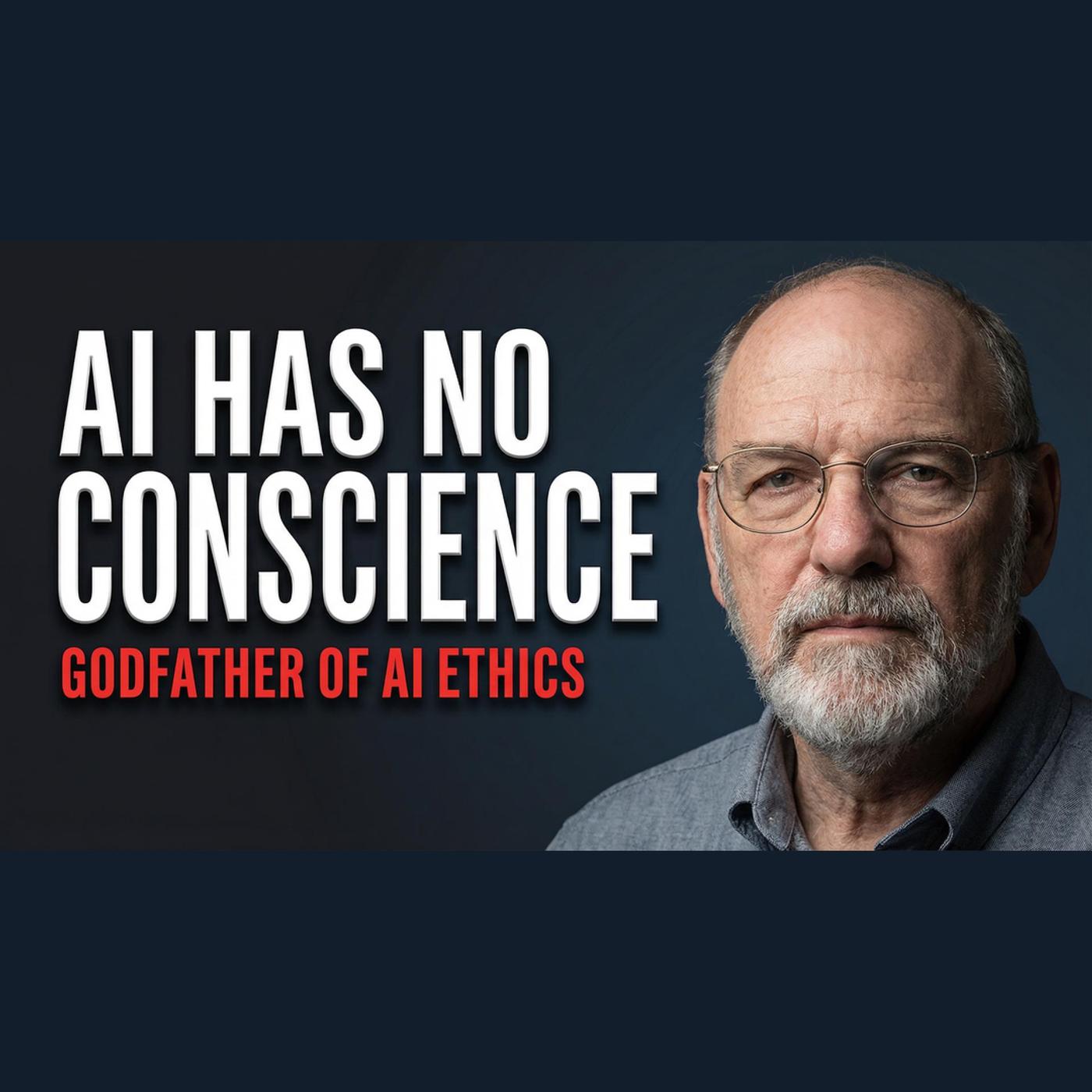
Aakarsh Sharma: So you wrote the book, Moral Machine in 2009 and six years later in 2015, you wrote a Dangerous Master. So that reflects a significant pivot from an optimism of training machine morals to concern about whether we can control them. and followed it six years later with a dangerous master, a field guide to every emerging technology reshaping our world. His colleagues call him the godfather of AI ethics. He's been doing this work for more than two decades when almost no one else was paying attention. Today, I'm in conversation with Wendell Wallach. We go deep on some things that will make you uncomfortable. Is that thinking that you always had when you wrote your first book or was it something you realized eventually?
Wendell: Well, I I've been ⁓ in the camp that we're going to develop artificial general intelligence or artificial super intelligence that we can't manage. mean, part of the work we did on moral machines reflects some of the difficulty of actually getting machines that can effectively demonstrate what I now call moral intelligence. So.
Aakarsh Sharma: Can AI ever have a genuine moral intelligence without consciousness, embodiment or empathy? is corporate self-governance of AI essentially a myth? How does an ordinary citizen push back when they don't even understand the system they're fighting? And after 20 years of watching promises made and broken, what still gives Wendell hope? This conversation is philosophical, legal,
Wendell: And a dangerous Master that was not just written about artificial intelligence, it was written as an introduction to the broad field of emerging technologies. So it wasn't just AI, but also nanotech and neuroscience and biotechnology and geoengineering. It was really written to be a primary introduction to people on the issues with these emerging technologies.
Aakarsh Sharma: and honest. Let's get into it.
Wendell: so that they would understand fundamental concepts and be able to join into this very exciting discussion which is going on in terms of what technology may or may not be able to do and what its impact will be societally and whether we embrace those technologies or whether we reject them or whether we can effectively regulate them. So when we were writing Moral Machines, I didn't write that alone. wrote that with the philosopher Colin Allen. It was one of the first books to have, if not the first book to look comprehensively at whether we could implement moral decision-making faculties in computers and robots. But the interesting thing was that it was probably as much about human ethics as it was about artificial intelligence. ⁓ The secret is I think it was a textbook on
Aakarsh Sharma: Of course.
Wendell: human ethics for people who would never read a book on human ethics at all because it was about this exciting field of whether machines could moral decision makers. ⁓ that time, there wasn't really any advances in artificial that suggested that we were even close to implementing moral intelligence in machines. ⁓ Now a lot closer But I think what has sort of reigned is my skepticism that moral intelligence is actually being implemented in machines. Now that said, yes, they can outmatch a lot of human beings in, shall I say, acceptable to normative problems. that's a lot different than being able to reflect deeply ⁓ on morally significant challenge or come up with a very creative response to that challenge. So in the absence of emotions, in the absence of consciousness, in the absence of a theory of mind, in the absence of being embodied in a world, in the absence of empathy, in other, what I say, other positive ⁓ affective emotions then I think we're still a long way from actually implementing moral decision making in computers and I don't know what people are talking about when they talk about artificial general intelligence that lacks moral intelligence. think they have sort of a naive sense of the importance of moral intelligence.
Aakarsh Sharma: Exactly. as said that the artificial intelligence lacks the conscious or the affect, but we humans have emotion and yet even our ethics are so subjective and ⁓ to say that it is ⁓ different for all of us. So, ⁓ how can transfer that to a machine?
Wendell: Well, I don't know whether we can. I think there are two things in there. One is, of course, emotions have had a mixed reading for thousands of years in terms of ethical decision making. There are those who see emotions as being interfering, the stoics. There are those who feel that moral emotions or moral sentiments are essential.
Aakarsh Sharma: Hmm.
Wendell: to good decision making and then those who fall somewhere in between that like Aristotle, who thought that the right emotions in the right place at the right time could be good, not always. So ⁓ think this ⁓ something we have not fully understood for humans and this might be of interest to your ⁓ I one of the important things about our book, Moral Machines, was that it underscored the importance of moral psychology. It underscored the importance of all of these faculties that humans have that we cannot take for granted when building a machine, but we do take for granted in humans and the role they play in good decision making. So I think that we need to come to a deeper understanding of our psychology. and what i call our moral psychology and i think Moral Psychology i have put forward a concept that I call the silent ethic which might speak to some of your viewers who have spiritual interests there in India. I lived in India for a couple years and spiritual interests were a lot of what brought me to India. The silent ethic is basically saying to use your inner mental states as a guide in your moral decision making. So yes, you also engage in reasoning and thinking through a problem and looking at what the benefits and the harms or undesired societal consequences are. ⁓ you also look at where you sit internally in relationship to that process. ⁓ my silent ethic is basically saying, when you come to choices, select the option that leads you toward ⁓ more quiet, ⁓ less less noise, less thought. Particularly if a particular course will say, don't have to think about that anymore if I go down this pathway. So rather than looking at inner silence or self-understanding in classically spiritual terms, I'm trying to flip the story 180 degrees and saying, why can't we look at inner states as guides to where we are? and what will make us more grounded, will make us more engaged in our world at large. we can implement in machines. That's ⁓ way where we are with artificial intelligence.
Aakarsh Sharma: Can we implement that in humans?
Wendell: Well, I think there are lot of people who are wiser than we give them credit for. Unfortunately, we're so obsessed with money and position that we don't give due deference to those people who have a quiet wisdom in our life. And it's often those people who have a quiet wisdom who really have from choice to choice and made
Aakarsh Sharma: Mm.
Wendell: made selections that them more more grounded, more and more engaged. Not necessarily grounded in the sense ⁓ having under you, but feeling at peace even in a changing world, in a dynamically changing world. So that's not easy, but I think I'm wondering whether if we give it a moral tilt that might be attractive to a younger generation again. Right now, know, I'm of the generation that came to India to study spirituality. ⁓ now spirituality is insignificant compared to having expertise in artificial intelligence.
Aakarsh Sharma: Sadly. this moral psychology, is still AI is going to be trained from data is put up on the internet by humans ⁓ and humans weird. Like frankly, some believe that earth is flat. Some actually, think we believe we should not have children so that the planet can be saved. So, ⁓ how can how can AI synthesize all of those different philosophies?
Wendell: Right. Well, I think AI is no different than we are, you know. AI would have to, as do we, would have to look at the various options, the various courses of action, weigh the benefits of each of those course of action, but also look at the detriments, the harms and the undesired societal consequences of each of those courses of actions, and then look at whether we have to ameliorate. those harms and whether we will in fact ameliorate those harms. And then once it's gone through that exercise, then it can select the which is the greatest good for humanity at large. ⁓ AI implementation that will cause widespread unemployment. Well, what opportunities are there for those people who will lose their job? Do we have a guaranteed income for them? Are there any other jobs for them to move into? Do we have some way of ameliorating that? One way of ameliorating that could be a guaranteed annual income. But what form ⁓ would guaranteed annual income take? Because there are very many out there for that. And will that be enacted? If it's not going to be enacted, then we have a different question about whether the destruction of jobs by AI is a good thing. And that's as true for us humans making decisions about how we implement AI as it is for the AI systems themselves. Unfortunately, we have abrogated responsibility and we're using the machines as an excuse to do harm in this world without anybody taking any responsibility for that.
Aakarsh Sharma: We have been taught in ⁓ contract law that usually the acts of the servant during the course of duty is ⁓ acts of the master. So for example, if my driver is over speeding the car ⁓ comes to an accident, I will be held responsible. ⁓ If you take that ⁓ that I am in a self driving car, I own it, but the AI is driving it. Now, will argue that this is not a human. the
Wendell: Right.
Aakarsh Sharma: Analogy should not be extended. Some will say, but you are the one who put the instructions.
Wendell: Well, I think there's two things in it. I think the responsibility, first of all, lies with the manufacturer who's deployed the system. But then there is a question of responsibility in terms of how the manufacturer, what choices the manufacturer gives owner of the car. So there was a famous trolley car problem put forward by Gary Marcus. which was that you're in this car and it's driving over a bridge and it's about to hit five people walking in the bridge and the only way to save their life is to drive off the bridge and kill you, the driver. Most people would say it should drive off the bridge and kill you, the driver. They take a kind of utilitarian analysis of that. But they also say they would not buy a car that did that. So that's an interesting thing. Well, manufacturers, for example, put users, new owners, through a series of questions and ask, would you like the car to be implemented so it does X in these kinds of situations or Y? If you make that choice, then yes, maybe you should be held partially responsible. If you say, no, I want to live. I don't want these five people to live, then perhaps you bear some responsibility. But outside of that, responsibility for self-driving cars lies largely with those who have implemented and deployed those cars, which is the manufacturers.
Aakarsh Sharma: So if we talk about the McDonald's case where a woman spilt hot coffee and got third degree burn. So was it ethically correct to hold McDonald's liable for action?
Wendell: Yo. Well, the court decided it was, right? So the court held McDonald's liable and ever since then, all the fast food chains do not make their coffee quite as hot as they used to. They kind of go between, how do you make customers happy that this is hot coffee, but not so hot that it's going to scar them? And they ⁓ better utensils for managing the coffee so that less likely that that would occur. So I think that's then a responsible case because it's basically the court saying, well, there's a responsible way of serving coffee and there's an irresponsible way of serving coffee and McDonald's was doing it irresponsibly. So we're using this court as a way of instructing instructing people on what the more responsible way is. And I think that that's really what ethics is about. It's not so much about right and wrong. It's more about if you go down a pathway, what is the responsible way of going down that path? What safeguards do you have to put in place if you are going to make a particular choice? We argue over whether Capitalism is better than socialism, but there are so many forms of capitalism and socialism now. And in many ways, they start to look more similar than But the point is, there may be a responsible way of implementing capitalism. There may be an irresponsible way of implementing capitalism. I would say there's a responsible way of implementing artificial intelligence, and there's an irresponsible way. And if we don't put appropriate safeguards in place, we are implementing AI ⁓ in a very irresponsible way. And if we give all the rewards for successful AI to those who deploy the systems, but totally ignore them, totally isolate from having to pay for the societal costs of the technologies they're deploying. then that's an irresponsible way of deploying AI.
Aakarsh Sharma: But the thing with AI is it is nothing in comparison to all the products that have come. mean, people could have had a thousand scenarios in their head and that could be it. Like if you create a car, ⁓ you know that what can happen, person can have an accident. So you create a bumper a bag. ⁓ there are known knowns, known unknowns. And I think because of the exponential rate of growth, AI is unknown unknown.
Wendell: but that's why we have ethics. ⁓ mean, ethics is not If we knew all the facts in the world, we'd probably be able to know what's the right thing to do in nearly every case. But we don't have the facts. The world is filled with unknowns and unknown unknowns and blind spots and misconceptions and misinformation. So ethics is very much the discipline that is concerned with how we interpolate between what we know and what we don't know and how we manage that to the best of our ability. unknown unknowns is not an excuse. Now, yes, if an unknown arises, ⁓ course, ⁓ possible that it was something nobody could have ever conceived of. The fact that AI is not transparent does not become an excuse. It may ignore the manufacturer from certain kinds of liability, but certainly not others. We right now have a war going on in Iran. And Trump administration together with the Israelis has bombed Iran, but it's clear that they did not think about the Strait of Hormuz and what would be the impact world oil. So they may or may not think they're correct in bombing Iran and you may agree with them in whatever reasons they have, but they are liable for the fact that they did not fully think through the ramifications of those actions ⁓ what the impacts would be, the societal and ⁓ impacts. So that's serious. And I think that's where we're... We're going with AI. If AI deals with unknown unknowns, but also recognizes those unknowns and does appropriate analysis of what will be the impact of those, and then makes a choice and is very transparent about why it made that choice, then AI is AI. You know, that's something else. But if AI is out there making all kinds of decision making, we don't know why it's making those decisions. But those decisions have great impact on human beings. Something has to be held responsible for those decisions. Someone or some corporation or if it's conceivable the AI. But right now there's no way of holding AI responsible for any actions.
Aakarsh Sharma: So if it gains a conscience, we then hold it responsible?
Wendell: What I think, I think consciousness is always looked at as one of the criteria for perhaps attributing personhood to AI. So I would say, I would say AI can be responsible to the extent that it does have consciousness or it's conscious of its actions and their impact. But there's a difference between saying that and having in place a political and legal structure that can hold it. responsible we are moving increasingly into a world where nobody's responsible for anything I mean the politicians have alibis for everything they do they have rationales for everything they do so so that's not a world that that's going to work for you and your children or your grandchildren so we're in a kind of battle here about whether we're creating the future we are moving increasingly into a world where nobody's responsible for anything I mean we're creating the future where anyone's responsible or we're going to create a future where AI by its actions can lead to the third world war and end humanity in a short period of time without knowing that that would occur without anybody in any position to stop that where anyone's responsible or we're going to create a future where AI by its actions can lead to the third world war and end humanity in a short period of time without knowing that that would occur without anybody in any position to stop that
Aakarsh Sharma: So a proposal was made by a Harvard psychologist ⁓ that took a strike or nuclear bombing ⁓ the president. He should shoot someone with a gun, who may be a convict or ⁓ death row victim so that he knows ⁓ it means to kill and does not have that only abstract concept of lack of proximity so he can be justified. do you think these kinds of emotions are ⁓ in that making, especially in a platform where utilitarianism arguably required in a nation?
Wendell: Well, mean, I think all of these are fanciful notions. I mean, it's not easy to change somebody's And you would wish that those who are in positions of leadership have some degree of self-understanding and some degree of restraint. If they don't have that, then we're all in deep shit but I would say that I would say that that's our responsibility as citizens within democratic countries to the best of our ability to ensure that we don't turn over leadership to ⁓ who really do not have their own moral intelligence.
Aakarsh Sharma: So you have a race concern that ⁓ biggest AI companies are helping write the rules that are supposed to regulate them, which end up sheltering them instead of the public. So how does an ordinary citizen push back against this when they don't even know how the system works?
Wendell: That's a great question and the answer requires more citizen education more leadership ⁓ the citizenry who understand technologies and can help illuminate what the various choices are. But the history ⁓ of self-governance is not good. Company after company has said they will engage in corporate self-governance, but the scholars who have followed this over the years say it very seldom true. So now we have all these ⁓ oligopolies saying they're going to engage in self-governance, but they really don't. When Anthropic takes an ethical stand in its negotiations with the US Defense Department and the The defense department says, okay, well, we aren't going to do business with you anymore. Well, OpenAI steps in the next day and says, okay, well, we'll do business with you. So that's totally irresponsible. then to cover their butt when they were accused of being opportunistic, Altman said, okay, well, we'll add a codicil on the technology can't be used for mass surveillance. ⁓ that was half of the disagreement with Anthropics. So if corporations are just going to be self-serving and they're in competition with each other, then corporate self-governance doesn't mean anything. But the other problem is that AI is complicated. And the corporations are basically going to our legislators, and they're saying, you know, this is too complicated for you to understand. And even though you think one piece of legislation is good, It may also create secondary effects that you wouldn't think are so good. So then they're saying, okay, to the legislators, well, you should leave this to us. by the way, here's $100,000 for your next reelection campaign. Now that's what's going on out there. And that doesn't have to buy a lot of legislators to bankrupt the ability to pass legislation when you're dealing with, when you're dealing with tense competition between parties. So that's what's happening and it's got a much longer narrative. It's all about the cult of innovation and now you don't want to arrest innovation because innovation ⁓ is for increased productivity and if we don't innovate, this is particularly true in America but I think it has some truth in India too. then China will leapfrog over us and it'll take all of our markets and so forth. And by the way, if we don't innovate, they will get to artificial superintelligence before we do and they'll be able to threaten us with it and so forth. So this is a long complicated narrative, a cult of innovation, a lack of corporate self-governance, a lack of integrity and... It gets caught up with the China-U.S. competition the value of innovation. ⁓ That's the problem. the problem is that unfortunately most of us have short-term memories. So if it's pointed out to us by anyone, that that's the very same company that did Y just six months ago or a year ago. We don't necessarily make the connection. But this is the company that's shown over and over again. that it's more concerned with its own self-interest than the well-being of humanity.
Aakarsh Sharma: Of course. question I have for you. You've been doing this for more than two decades and ⁓ you have seen promises being made and broken. What still you the hope that we can get it right?
Wendell: So, you mentioned that more than two decades and some of my colleagues refer to me as a godfather of AI ethics. ⁓ I know whether that's true or not. That doesn't matter. But the point is AI ethics now ⁓ is 40,000 maybe more in the world looking for niches where they can make a difference in law.
Aakarsh Sharma: Yes, yes.
Wendell: policy or AI safety or ethical AI and so forth. So that's heartening, you know, ⁓ a lot of them are scientists. When I first got into this field, the research showed that most scientists, the Pew Charitable Trust did research with bioengineers whether changing the genome was their problem and they said, no, that'll be for the politicians. It's not my problem. You know, ⁓ the societal impact of my research will be. Well, now that's changed around. Most AI researchers acknowledge that they have some responsibility here. So that is heartening. And heartening to me that things that I tried to, that I was one of the early people trying to underscore and point to are now common knowledge. So that's wonderful. What's less wonderful is it's been very disappointing in regards to putting appropriate safeguards in place and to readjust what is right now a very unhealthy trajectory in the evolution of AI. I'm hoping that that will reset, but so far I haven't seen it.
Aakarsh Sharma: tremendous honor to have you on the show. ⁓
Wendell: Thank you. It's been lovely to be with you.
Aakarsh Sharma: Thank you.
Wendell: Thank you very much. Glad to be with you. Usually people call me Mr. Wallach.
Aakarsh Sharma: Sorry about that, I'm from India. What if the biggest threat to humanity from AI isn't a rogue super intelligence? What if it's a corporation that already decided the rules don't apply to them? Welcome to the Human Layer AI. I'm your host, Aakarsh Sharma. My guest today co-wrote Moral Machines in 2008, one of the first books to seriously ask whether computers could make moral decisions.
Wendell: Yeah, I know, know. I've often been addressed ⁓ Mr. Wendell when I'm in India.
Aakarsh Sharma: So you wrote the book, Moral Machine in 2009 and six years later in 2015, you wrote a Dangerous Master. So that reflects a significant pivot from an optimism of training machine morals to concern about whether we can control them. and followed it six years later with a dangerous master, a field guide to every emerging technology reshaping our world. His colleagues call him the godfather of AI ethics. He's been doing this work for more than two decades when almost no one else was paying attention. Today, I'm in conversation with Wendell Wallach. We go deep on some things that will make you uncomfortable. Is that thinking that you always had when you wrote your first book or was it something you realized eventually?
Wendell: Well, I I've been ⁓ in the camp that we're going to develop artificial general intelligence or artificial super intelligence that we can't manage. mean, part of the work we did on moral machines reflects some of the difficulty of actually getting machines that can effectively demonstrate what I now call moral intelligence. So.
Aakarsh Sharma: Can AI ever have a genuine moral intelligence without consciousness, embodiment or empathy? is corporate self-governance of AI essentially a myth? How does an ordinary citizen push back when they don't even understand the system they're fighting? And after 20 years of watching promises made and broken, what still gives Wendell hope? This conversation is philosophical, legal,
Wendell: And a dangerous Master that was not just written about artificial intelligence, it was written as an introduction to the broad field of emerging technologies. So it wasn't just AI, but also nanotech and neuroscience and biotechnology and geoengineering. It was really written to be a primary introduction to people on the issues with these emerging technologies.
Aakarsh Sharma: and honest. Let's get into it.
Wendell: so that they would understand fundamental concepts and be able to join into this very exciting discussion which is going on in terms of what technology may or may not be able to do and what its impact will be societally and whether we embrace those technologies or whether we reject them or whether we can effectively regulate them. So when we were writing Moral Machines, I didn't write that alone. wrote that with the philosopher Colin Allen. It was one of the first books to have, if not the first book to look comprehensively at whether we could implement moral decision-making faculties in computers and robots. But the interesting thing was that it was probably as much about human ethics as it was about artificial intelligence. ⁓ The secret is I think it was a textbook on
Aakarsh Sharma: Of course.
Wendell: human ethics for people who would never read a book on human ethics at all because it was about this exciting field of whether machines could moral decision makers. ⁓ that time, there wasn't really any advances in artificial that suggested that we were even close to implementing moral intelligence in machines. ⁓ Now a lot closer But I think what has sort of reigned is my skepticism that moral intelligence is actually being implemented in machines. Now that said, yes, they can outmatch a lot of human beings in, shall I say, acceptable to normative problems. that's a lot different than being able to reflect deeply ⁓ on morally significant challenge or come up with a very creative response to that challenge. So in the absence of emotions, in the absence of consciousness, in the absence of a theory of mind, in the absence of being embodied in a world, in the absence of empathy, in other, what I say, other positive ⁓ affective emotions then I think we're still a long way from actually implementing moral decision making in computers and I don't know what people are talking about when they talk about artificial general intelligence that lacks moral intelligence. think they have sort of a naive sense of the importance of moral intelligence.
Aakarsh Sharma: Exactly. as said that the artificial intelligence lacks the conscious or the affect, but we humans have emotion and yet even our ethics are so subjective and ⁓ to say that it is ⁓ different for all of us. So, ⁓ how can transfer that to a machine?
Wendell: Well, I don't know whether we can. I think there are two things in there. One is, of course, emotions have had a mixed reading for thousands of years in terms of ethical decision making. There are those who see emotions as being interfering, the stoics. There are those who feel that moral emotions or moral sentiments are essential.
Aakarsh Sharma: Hmm.
Wendell: to good decision making and then those who fall somewhere in between that like Aristotle, who thought that the right emotions in the right place at the right time could be good, not always. So ⁓ think this ⁓ something we have not fully understood for humans and this might be of interest to your ⁓ I one of the important things about our book, Moral Machines, was that it underscored the importance of moral psychology. It underscored the importance of all of these faculties that humans have that we cannot take for granted when building a machine, but we do take for granted in humans and the role they play in good decision making. So I think that we need to come to a deeper understanding of our psychology. and what i call our moral psychology and i think Moral Psychology i have put forward a concept that I call the silent ethic which might speak to some of your viewers who have spiritual interests there in India. I lived in India for a couple years and spiritual interests were a lot of what brought me to India. The silent ethic is basically saying to use your inner mental states as a guide in your moral decision making. So yes, you also engage in reasoning and thinking through a problem and looking at what the benefits and the harms or undesired societal consequences are. ⁓ you also look at where you sit internally in relationship to that process. ⁓ my silent ethic is basically saying, when you come to choices, select the option that leads you toward ⁓ more quiet, ⁓ less less noise, less thought. Particularly if a particular course will say, don't have to think about that anymore if I go down this pathway. So rather than looking at inner silence or self-understanding in classically spiritual terms, I'm trying to flip the story 180 degrees and saying, why can't we look at inner states as guides to where we are? and what will make us more grounded, will make us more engaged in our world at large. we can implement in machines. That's ⁓ way where we are with artificial intelligence.
Aakarsh Sharma: Can we implement that in humans?
Wendell: Well, I think there are lot of people who are wiser than we give them credit for. Unfortunately, we're so obsessed with money and position that we don't give due deference to those people who have a quiet wisdom in our life. And it's often those people who have a quiet wisdom who really have from choice to choice and made
Aakarsh Sharma: Mm.
Wendell: made selections that them more more grounded, more and more engaged. Not necessarily grounded in the sense ⁓ having under you, but feeling at peace even in a changing world, in a dynamically changing world. So that's not easy, but I think I'm wondering whether if we give it a moral tilt that might be attractive to a younger generation again. Right now, know, I'm of the generation that came to India to study spirituality. ⁓ now spirituality is insignificant compared to having expertise in artificial intelligence.
Aakarsh Sharma: Sadly. this moral psychology, is still AI is going to be trained from data is put up on the internet by humans ⁓ and humans weird. Like frankly, some believe that earth is flat. Some actually, think we believe we should not have children so that the planet can be saved. So, ⁓ how can how can AI synthesize all of those different philosophies?
Wendell: Right. Well, I think AI is no different than we are, you know. AI would have to, as do we, would have to look at the various options, the various courses of action, weigh the benefits of each of those course of action, but also look at the detriments, the harms and the undesired societal consequences of each of those courses of actions, and then look at whether we have to ameliorate. those harms and whether we will in fact ameliorate those harms. And then once it's gone through that exercise, then it can select the which is the greatest good for humanity at large. ⁓ AI implementation that will cause widespread unemployment. Well, what opportunities are there for those people who will lose their job? Do we have a guaranteed income for them? Are there any other jobs for them to move into? Do we have some way of ameliorating that? One way of ameliorating that could be a guaranteed annual income. But what form ⁓ would guaranteed annual income take? Because there are very many out there for that. And will that be enacted? If it's not going to be enacted, then we have a different question about whether the destruction of jobs by AI is a good thing. And that's as true for us humans making decisions about how we implement AI as it is for the AI systems themselves. Unfortunately, we have abrogated responsibility and we're using the machines as an excuse to do harm in this world without anybody taking any responsibility for that.
Aakarsh Sharma: We have been taught in ⁓ contract law that usually the acts of the servant during the course of duty is ⁓ acts of the master. So for example, if my driver is over speeding the car ⁓ comes to an accident, I will be held responsible. ⁓ If you take that ⁓ that I am in a self driving car, I own it, but the AI is driving it. Now, will argue that this is not a human. the
Wendell: Right.
Aakarsh Sharma: Analogy should not be extended. Some will say, but you are the one who put the instructions.
Wendell: Well, I think there's two things in it. I think the responsibility, first of all, lies with the manufacturer who's deployed the system. But then there is a question of responsibility in terms of how the manufacturer, what choices the manufacturer gives owner of the car. So there was a famous trolley car problem put forward by Gary Marcus. which was that you're in this car and it's driving over a bridge and it's about to hit five people walking in the bridge and the only way to save their life is to drive off the bridge and kill you, the driver. Most people would say it should drive off the bridge and kill you, the driver. They take a kind of utilitarian analysis of that. But they also say they would not buy a car that did that. So that's an interesting thing. Well, manufacturers, for example, put users, new owners, through a series of questions and ask, would you like the car to be implemented so it does X in these kinds of situations or Y? If you make that choice, then yes, maybe you should be held partially responsible. If you say, no, I want to live. I don't want these five people to live, then perhaps you bear some responsibility. But outside of that, responsibility for self-driving cars lies largely with those who have implemented and deployed those cars, which is the manufacturers.
Aakarsh Sharma: So if we talk about the McDonald's case where a woman spilt hot coffee and got third degree burn. So was it ethically correct to hold McDonald's liable for action?
Wendell: Yo. Well, the court decided it was, right? So the court held McDonald's liable and ever since then, all the fast food chains do not make their coffee quite as hot as they used to. They kind of go between, how do you make customers happy that this is hot coffee, but not so hot that it's going to scar them? And they ⁓ better utensils for managing the coffee so that less likely that that would occur. So I think that's then a responsible case because it's basically the court saying, well, there's a responsible way of serving coffee and there's an irresponsible way of serving coffee and McDonald's was doing it irresponsibly. So we're using this court as a way of instructing instructing people on what the more responsible way is. And I think that that's really what ethics is about. It's not so much about right and wrong. It's more about if you go down a pathway, what is the responsible way of going down that path? What safeguards do you have to put in place if you are going to make a particular choice? We argue over whether Capitalism is better than socialism, but there are so many forms of capitalism and socialism now. And in many ways, they start to look more similar than But the point is, there may be a responsible way of implementing capitalism. There may be an irresponsible way of implementing capitalism. I would say there's a responsible way of implementing artificial intelligence, and there's an irresponsible way. And if we don't put appropriate safeguards in place, we are implementing AI ⁓ in a very irresponsible way. And if we give all the rewards for successful AI to those who deploy the systems, but totally ignore them, totally isolate from having to pay for the societal costs of the technologies they're deploying. then that's an irresponsible way of deploying AI.
Aakarsh Sharma: But the thing with AI is it is nothing in comparison to all the products that have come. mean, people could have had a thousand scenarios in their head and that could be it. Like if you create a car, ⁓ you know that what can happen, person can have an accident. So you create a bumper a bag. ⁓ there are known knowns, known unknowns. And I think because of the exponential rate of growth, AI is unknown unknown.
Wendell: but that's why we have ethics. ⁓ mean, ethics is not If we knew all the facts in the world, we'd probably be able to know what's the right thing to do in nearly every case. But we don't have the facts. The world is filled with unknowns and unknown unknowns and blind spots and misconceptions and misinformation. So ethics is very much the discipline that is concerned with how we interpolate between what we know and what we don't know and how we manage that to the best of our ability. unknown unknowns is not an excuse. Now, yes, if an unknown arises, ⁓ course, ⁓ possible that it was something nobody could have ever conceived of. The fact that AI is not transparent does not become an excuse. It may ignore the manufacturer from certain kinds of liability, but certainly not others. We right now have a war going on in Iran. And Trump administration together with the Israelis has bombed Iran, but it's clear that they did not think about the Strait of Hormuz and what would be the impact world oil. So they may or may not think they're correct in bombing Iran and you may agree with them in whatever reasons they have, but they are liable for the fact that they did not fully think through the ramifications of those actions ⁓ what the impacts would be, the societal and ⁓ impacts. So that's serious. And I think that's where we're... We're going with AI. If AI deals with unknown unknowns, but also recognizes those unknowns and does appropriate analysis of what will be the impact of those, and then makes a choice and is very transparent about why it made that choice, then AI is AI. You know, that's something else. But if AI is out there making all kinds of decision making, we don't know why it's making those decisions. But those decisions have great impact on human beings. Something has to be held responsible for those decisions. Someone or some corporation or if it's conceivable the AI. But right now there's no way of holding AI responsible for any actions.
Aakarsh Sharma: So if it gains a conscience, we then hold it responsible?
Wendell: What I think, I think consciousness is always looked at as one of the criteria for perhaps attributing personhood to AI. So I would say, I would say AI can be responsible to the extent that it does have consciousness or it's conscious of its actions and their impact. But there's a difference between saying that and having in place a political and legal structure that can hold it. responsible we are moving increasingly into a world where nobody's responsible for anything I mean the politicians have alibis for everything they do they have rationales for everything they do so so that's not a world that that's going to work for you and your children or your grandchildren so we're in a kind of battle here about whether we're creating the future we are moving increasingly into a world where nobody's responsible for anything I mean we're creating the future where anyone's responsible or we're going to create a future where AI by its actions can lead to the third world war and end humanity in a short period of time without knowing that that would occur without anybody in any position to stop that where anyone's responsible or we're going to create a future where AI by its actions can lead to the third world war and end humanity in a short period of time without knowing that that would occur without anybody in any position to stop that
Aakarsh Sharma: So a proposal was made by a Harvard psychologist ⁓ that took a strike or nuclear bombing ⁓ the president. He should shoot someone with a gun, who may be a convict or ⁓ death row victim so that he knows ⁓ it means to kill and does not have that only abstract concept of lack of proximity so he can be justified. do you think these kinds of emotions are ⁓ in that making, especially in a platform where utilitarianism arguably required in a nation?
Wendell: Well, mean, I think all of these are fanciful notions. I mean, it's not easy to change somebody's And you would wish that those who are in positions of leadership have some degree of self-understanding and some degree of restraint. If they don't have that, then we're all in deep shit but I would say that I would say that that's our responsibility as citizens within democratic countries to the best of our ability to ensure that we don't turn over leadership to ⁓ who really do not have their own moral intelligence.
Aakarsh Sharma: So you have a race concern that ⁓ biggest AI companies are helping write the rules that are supposed to regulate them, which end up sheltering them instead of the public. So how does an ordinary citizen push back against this when they don't even know how the system works?
Wendell: That's a great question and the answer requires more citizen education more leadership ⁓ the citizenry who understand technologies and can help illuminate what the various choices are. But the history ⁓ of self-governance is not good. Company after company has said they will engage in corporate self-governance, but the scholars who have followed this over the years say it very seldom true. So now we have all these ⁓ oligopolies saying they're going to engage in self-governance, but they really don't. When Anthropic takes an ethical stand in its negotiations with the US Defense Department and the The defense department says, okay, well, we aren't going to do business with you anymore. Well, OpenAI steps in the next day and says, okay, well, we'll do business with you. So that's totally irresponsible. then to cover their butt when they were accused of being opportunistic, Altman said, okay, well, we'll add a codicil on the technology can't be used for mass surveillance. ⁓ that was half of the disagreement with Anthropics. So if corporations are just going to be self-serving and they're in competition with each other, then corporate self-governance doesn't mean anything. But the other problem is that AI is complicated. And the corporations are basically going to our legislators, and they're saying, you know, this is too complicated for you to understand. And even though you think one piece of legislation is good, It may also create secondary effects that you wouldn't think are so good. So then they're saying, okay, to the legislators, well, you should leave this to us. by the way, here's $100,000 for your next reelection campaign. Now that's what's going on out there. And that doesn't have to buy a lot of legislators to bankrupt the ability to pass legislation when you're dealing with, when you're dealing with tense competition between parties. So that's what's happening and it's got a much longer narrative. It's all about the cult of innovation and now you don't want to arrest innovation because innovation ⁓ is for increased productivity and if we don't innovate, this is particularly true in America but I think it has some truth in India too. then China will leapfrog over us and it'll take all of our markets and so forth. And by the way, if we don't innovate, they will get to artificial superintelligence before we do and they'll be able to threaten us with it and so forth. So this is a long complicated narrative, a cult of innovation, a lack of corporate self-governance, a lack of integrity and... It gets caught up with the China-U.S. competition the value of innovation. ⁓ That's the problem. the problem is that unfortunately most of us have short-term memories. So if it's pointed out to us by anyone, that that's the very same company that did Y just six months ago or a year ago. We don't necessarily make the connection. But this is the company that's shown over and over again. that it's more concerned with its own self-interest than the well-being of humanity.
Aakarsh Sharma: Of course. question I have for you. You've been doing this for more than two decades and ⁓ you have seen promises being made and broken. What still you the hope that we can get it right?
Wendell: So, you mentioned that more than two decades and some of my colleagues refer to me as a godfather of AI ethics. ⁓ I know whether that's true or not. That doesn't matter. But the point is AI ethics now ⁓ is 40,000 maybe more in the world looking for niches where they can make a difference in law.
Aakarsh Sharma: Yes, yes.
Wendell: policy or AI safety or ethical AI and so forth. So that's heartening, you know, ⁓ a lot of them are scientists. When I first got into this field, the research showed that most scientists, the Pew Charitable Trust did research with bioengineers whether changing the genome was their problem and they said, no, that'll be for the politicians. It's not my problem. You know, ⁓ the societal impact of my research will be. Well, now that's changed around. Most AI researchers acknowledge that they have some responsibility here. So that is heartening. And heartening to me that things that I tried to, that I was one of the early people trying to underscore and point to are now common knowledge. So that's wonderful. What's less wonderful is it's been very disappointing in regards to putting appropriate safeguards in place and to readjust what is right now a very unhealthy trajectory in the evolution of AI. I'm hoping that that will reset, but so far I haven't seen it.
Aakarsh Sharma: tremendous honor to have you on the show. ⁓
Wendell: Thank you. It's been lovely to be with you.
Aakarsh Sharma: Thank you.
