


ABOUT THIS EPISODE
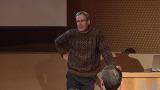
Human-like Singing and Talking Machines: Flexible Speech Synthesis in Karaoke, Anime, Smart Phones, Video Games, Digital Signage, TV and Radio Programs
This talk will give an overview of statistical approach to flexible speech synthesis. For constructing human-like talking machines, speech synthesis systems are required to have an ability to generate speech with arbitrary speaker's voice, various speaking styles in different languages, varying emphasis and focus, and/or emotional expressions. The main advantage of the statistical approach is that such flexibility can easily be realized using mathematically well-defined algorithms. In this talk, the system architecture is outlined and then recent results and demos will be presented.
Keiichi Tokuda is a Professor in the Department of Computer Science at Nagoya Institute of Technology and currently he is visiting Google on sabbatical. He is also an Honorary Professor at the University of Edinburgh. He was an Invited Researcher at the National Institute of Information and Communications Technology (NICT), formally known as the ATR Spoken Language Communication Research Laboratories, Kyoto, Japan from 2000 to 2013, and was a Visiting Researcher at Carnegie Mellon University from 2001 to 2002. He has been working on statistical parametric speech synthesis after he proposed an algorithm for speech parameter generation from HMM in 1995. He received six paper awards and two achievement awards. He is an IEEE Fellow and an ISCA Fellow.
This talk will give an overview of statistical approach to flexible speech synthesis. For constructing human-like talking machines, speech synthesis systems are required to have an ability to generate speech with arbitrary speaker's voice, various speaking styles in different languages, varying emphasis and focus, and/or emotional expressions. The main advantage of the statistical approach is that such flexibility can easily be realized using mathematically well-defined algorithms. In this talk, the system architecture is outlined and then recent results and demos will be presented.
Keiichi Tokuda is a Professor in the Department of Computer Science at Nagoya Institute of Technology and currently he is visiting Google on sabbatical. He is also an Honorary Professor at the University of Edinburgh. He was an Invited Researcher at the National Institute of Information and Communications Technology (NICT), formally known as the ATR Spoken Language Communication Research Laboratories, Kyoto, Japan from 2000 to 2013, and was a Visiting Researcher at Carnegie Mellon University from 2001 to 2002. He has been working on statistical parametric speech synthesis after he proposed an algorithm for speech parameter generation from HMM in 1995. He received six paper awards and two achievement awards. He is an IEEE Fellow and an ISCA Fellow.
English
United States
TRANSCRIPT 🔗
Are you the producer of this podcast?
Add a podcast transcript
Need Audio-to-Text?
Transcribe with Listen411 in Just 60 Seconds
SEARCH PAST EPISODES
Search past episodes of Human Language Technology Lecture Series.
OTHER EPISODES IN THIS PODCAST
Automatically extracting social meaning from language is one of the most exciting challenges in natural language understanding. In this talk I’ll summarize a number of recent results using the tools of natural language processing to help extract and understand social meaning from texts of different…
What effect does language have on people, and what effect do people have on language?
You might say in response, "Who are you to discuss these problems?" and you would be right to do so; these are Major Questions that science has been tackling for many years. But as a field, I think natural langua…

The confluence of sensing, communication and computing technologies is allowing capture and access to data, in diverse forms and modalities, in ways that were unimaginable even a few years ago. These include data that afford the analysis and interpretation of multimodal cues of verbal and non-verba…

Clarification in Spoken Dialogue Systems such as in mobile applications often consists of simple requests to “Please repeat” or “Please rephrase” when the system fails to understand a word or phrase. However, human-human dialogues rarely include such questions. When humans ask for clarification of …
Disclaimer: The podcast and artwork embedded on this page are from MIT Computer Science and Artificial Intelligence Laboratory (CSAIL), which is the property of its owner and not affiliated with or endorsed by Listen Notes, Inc.
EDIT
Thank you for helping to keep the podcast database up to date.
