

ABOUT THIS EPISODE
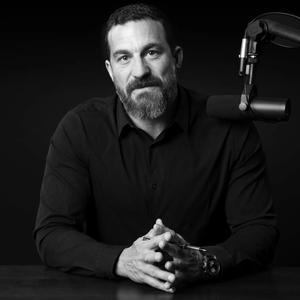
This episode my guest is Dr. Jack Feldman, Distinguished Professor of Neurobiology at the University of California, Los Angeles and a pioneering world expert in the science of respiration (breathing). We discuss how and why humans breathe the way we do, the function of the diaphragm and how it serves to increase oxygenation of the brain and body. We discuss how breathing influences mental state, fear, memory, reaction time, and more. And we discuss specific breathing protocols such as box-breathing, cyclic hyperventilation (similar to Wim Hof breathing), nasal versus mouth breathing, unilateral breathing, and how these each affect the brain and body. We discuss physiological sighs, peptides expressed by specific neurons controlling breathing, and magnesium compounds that can improve cognitive ability and how they work. This conversation serves as a sort of "Master Class" on the science of breathing and breathing-related tools for health and performance. For the full show notes, visit hubermanlab.com. Thank you to our sponsors AG1: https://athleticgreens.com/huberman LMNT: https://drinklmnt.com/hubermanlab Waking Up: https://wakingup.com/huberman Momentous: https://livemomentous.com/huberman Timestamps (00:00:00) Introducing Dr. Jack Feldman (00:03:20) Sponsors: LMNT & Waking Up (00:10:35) Why We Breathe (00:14:35) Neural Control of Breathing: “Pre-Botzinger Complex” (00:16:20) Nose vs Mouth Breathing (00:18:18) Skeletal vs. Smooth Muscles: Diaphragm, Intracostals & Airway Muscles (00:20:11) Two Breathing Oscillators: Pre-Botzinger Complex & Parafacial Nucleus (00:26:20) How We Breathe Is Special (Compared to Non-Mammals) (00:33:40) Stomach & Chest Movements During Breathing (00:36:23) Physiological Sighs, Alveoli Re-Filling, Bombesin (00:49:39) If We Don’t Sigh, Our Lung (& General) Health Suffers (01:00:42) Breathing, Brain States & Emotions (01:05:34) Meditating Mice, Eliminating Fear (01:11:00) Brain States, Amygdala, Locked-In Syndrome, Laughing (01:16:25) Facial Expressions (01:19:00) Locus Coeruleus & Alertness (01:29:40) Breath Holds, Apnea, Episodic Hypoxia, Hypercapnia (01:35:22) Stroke, Muscle Strength, TBI (01:38:08) Cyclic Hyperventilation (01:39:50) Hyperbaric Chambers (01:40:41) Nasal Breathing, Memory, Right vs. Left Nostril (01:44:50) Breathing Coordinates Everything: Reaction Time, Fear, etc. (01:57:13) Dr. Feldman’s Breathwork Protocols, Post-Lunch (02:02:05) Deliberately Variable Breathwork: The Feldman Protocol (02:06:29) Magnesium Threonate & Cognition & Memory (02:18:27) Gratitude for Dr. Feldman’s Highly Impactful Work (02:20:53) Zero-Cost Support, Sponsors, Instagram, Twitter, Supplements Title Card Photo Credit: Mike Blabac Disclaimer Learn more about your ad choices. Visit megaphone.fm/adchoices
English
United States
TRANSCRIPT 🔗
Are you the producer of this podcast?
Add a podcast transcript
Need Audio-to-Text?
Transcribe with Listen411 in Just 60 Seconds
OTHER EPISODES IN THIS PODCAST
Dr. Alan Castel, PhD, is a professor of psychology at the University of California, Los Angeles (UCLA) and one of the world's foremost experts on human memory and cognitive aging. We discuss what science actually tells us about how to improve our learning ability and memory at any age. We also disc…
Ido Portal is a world-renowned movement coach who has developed specific practices anyone can use to greatly evolve their mental and physical health, and even gain clearer self-understanding. We discuss the effects of playful movement versus exercise, discipline versus willpower, and how approachin…
Cesar Millan is a world-renowned dog behavior expert. We discuss how to adjust your energy and behavior to ensure your dog is calm and happy and always follows your lead. Cesar shares specific tools for: returning home to your dog each day, structuring their walks, and eliminating aggressive behavi…
In this Huberman Lab Essentials episode, my guest is Kyle Gillett, MD, a dual board-certified physician in family medicine and obesity medicine, and an expert in hormone optimization. We discuss science-based tools for optimizing male hormones across the lifespan, including the role of bloodwork, n…
In this Huberman Lab Essentials episode, I explain the biology and psychology of obsessive-compulsive disorder (OCD) and describe the neural circuitry behind repetitive "thought-action loops," including why compulsive actions actually strengthen the underlying obsessions rather than relieve them. I…
Disclaimer: The podcast and artwork embedded on this page are from Huberman Lab, which is the property of its owner and not affiliated with or endorsed by Listen Notes, Inc.
EDIT
Thank you for helping to keep the podcast database up to date.
