
ABOUT THIS EPISODE

Big Feelings Friday is here, and we are going to talk about NAMING THEM. Shout out to Sutton from the Real Housewives of Beverly Hills for this epic pop culture moment - NAME ‘EM!
I stopped an Instagram scroll last week, which almost never happens.
The post was about Dr. James Gross, a psychologist at Stanford who has spent three decades studying emotion regulation. That is the science of what we actually do with our feelings once they arrive. His work has quietly reshaped how researchers understand the way emotions move through our thoughts, our choices, our relationships, and our bodies.
One line in the post stopped me cold.
“The naming was not a distraction from the emotion.”
I have been sitting with that sentence for days.
What the research actually says
When you name what you are feeling out loud, you activate the language centers of your brain. That activation engages your prefrontal cortex, the calm, thinking, decision-making part of you. And an engaged prefrontal cortex turns down the volume on your amygdala, the alarm system that has been screaming since the phone call, since the diagnosis, since the morning everything changed.
The intensity drops. Not because you buried the feeling. Because your brain finally processed it through language.
Matthew Lieberman’s team at UCLA found the same thing in what they call affect labeling. People looked at emotionally charged images. The ones who named what they were feeling showed measurably less amygdala activity than the ones who stayed silent. Within seconds.
Seconds.
Naming is not avoidance. It is not talking around the pain. It is a direct intervention, and your nervous system responds to it faster than almost anything else we have.
Why suppression costs you so much
Now the flip side, and this is the part I wish someone had handed me years ago.
Suppression, actively trying not to feel the thing, requires your prefrontal cortex to hold the amygdala down by force. That is metabolically expensive. It burns through the exact cognitive resources you need for clear thinking and good decisions.
Suppression does not lower the emotional intensity at all. It only stops the emotion from being seen. Underneath, the stress response keeps running. Your body is still in it. You are just performing fine while your system pays the bill.
I know that performance intimately.
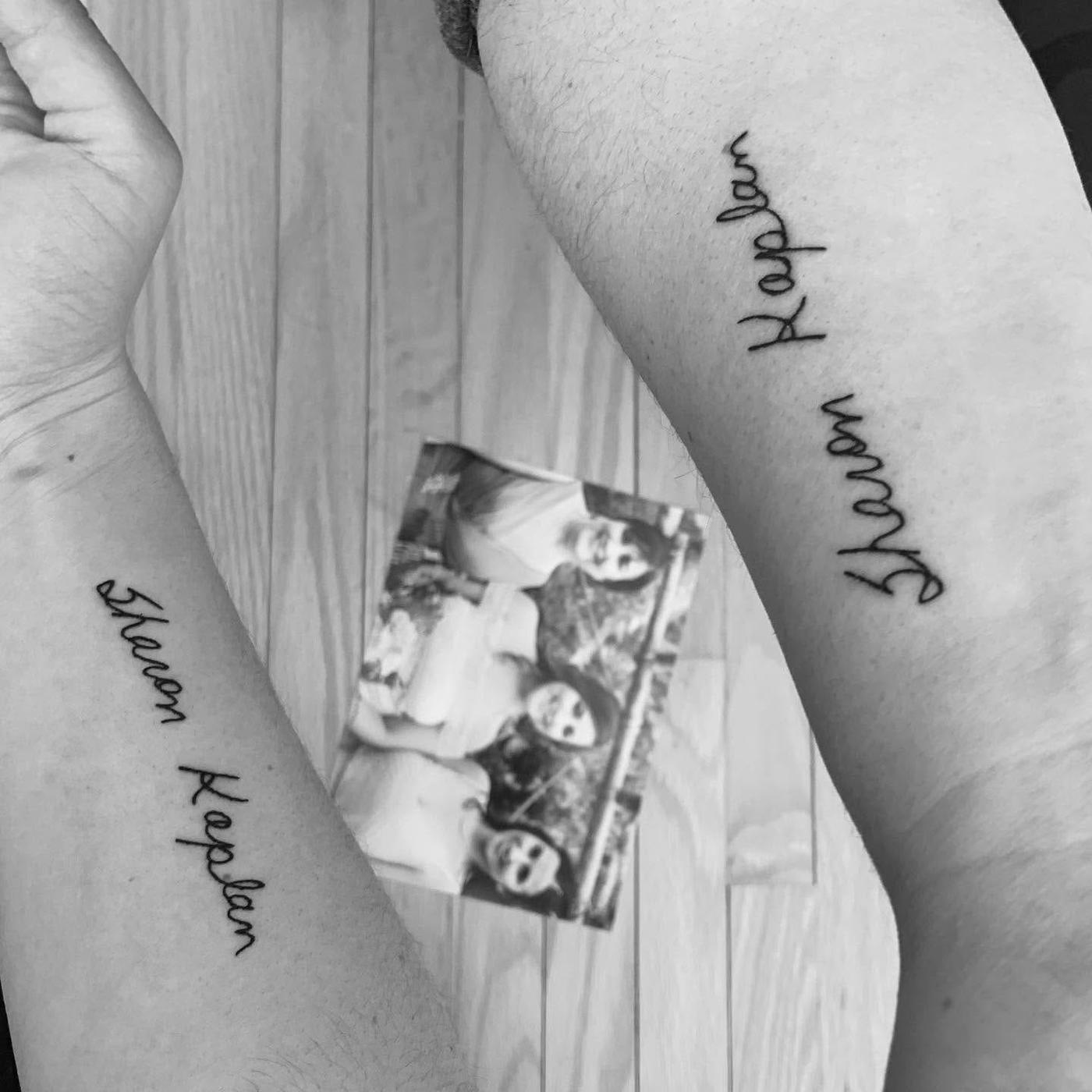
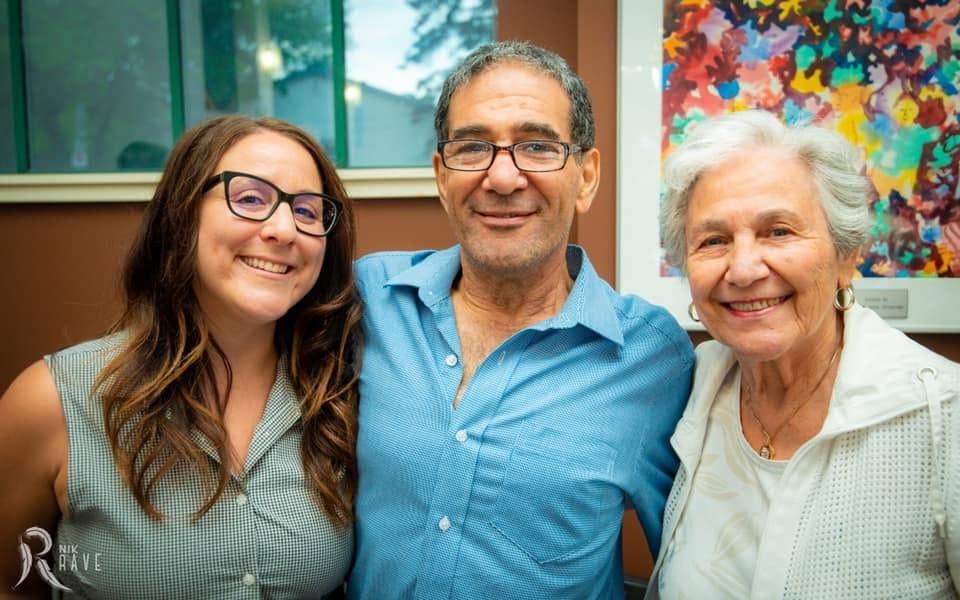
I know what it is to walk into a room and say I am doing okay when I am not remotely okay. I know what it is to hold a grief so heavy you cannot say its name, and then wonder why you are exhausted by two in the afternoon. I have lost my mom. I have lost both of my parents. I have carried loss I could not find words for.
I used to call that white-knuckled composure strength. It was not strength. It was cost. I was spending everything I had to keep a feeling quiet, and the feeling never once agreed to leave.
What this has to do with bouncing forward
You have heard me say this before: Resilience is not bouncing back. There is no back. What you've lived through changes you forever, and no amount of pretending returns you to who you were before.
Resilience is bouncing forward. It is building a life that has room for what happened.
And you cannot build around something you refuse to name.
This is why I keep saying that we have a resilience muscle. Every single time you tell the truth about what you are feeling, out loud, in real words, you are doing a rep. Not a metaphorical one. A neurological one. You are training your brain to move through the feeling instead of bracing against it.
Suppression is not a rep. Suppression is holding the weight in the air indefinitely and calling it a workout.
Try this today
You do not need a therapist’s office or a journal or an hour alone to do this specific thing. You need one sentence and a voice.
Say it out loud. Not in your head. Out loud.
I am feeling grief right now. I am feeling terrified. I am feeling angry and I do not have anywhere to put it. I am feeling relieved, and I feel guilty for feeling relieved.
Get specific. Sad is a country. Lonely, abandoned, aching, homesick for a person who is gone- those are addresses. The more precise the word, the more your brain has to work with.
Then, and only then, see if there is another angle. Researchers call this cognitive reappraisal: finding a more balanced way to look at the same situation. Not lying to yourself. Not gratitude as a bandage. Just asking, honestly, is there another true thing here alongside the hard thing.
Name first. Reframe second. In that order, always. You cannot reframe a feeling you have not admitted to having.
The permission part
If nobody has said this to you lately, let me:
You are allowed to say the hard thing out loud. You are allowed to stop managing everyone else’s comfort with your composure. You are allowed to be a person who feels things at full volume in a world that keeps asking you to turn it down.
The feeling is not the problem. The silence around it is what is costing you.
So say it. To a friend, to your dog, to your steering wheel in a parking lot at nine at night. Your brain is listening either way, and it has been waiting for the words.
Feel it to heal it. The science just caught up to what grief always knew.
XX Blair
P.S. If this landed, share it with someone who has been saying they are fine for a little too long.
P.P.S. I am booking keynotes and workshops for fall and winter, into 2027. Interested in having me speak at your event or to your organization? Let’s talk: blair@blairkaplan.ca.
Where’s Blair?
* September 8-10, Champneys Tring, UK
Often dubbed the “Glastonbury for business,” this two-day outdoor networking event is for founders and entrepreneurs. It features keynotes, startup finals, and wellness programming, running 9–10 September 2026 at Champneys, Tring, Hertfordshire. Get a special rate because you are in my inner circle.
* January 3-9, 2027, Marrakech, Morocco
Join me and Happy Grieving for the Morocco Grief Retreat to kick off 2027. Grief can make the world feel small. Morocco does the opposite: it fills the senses without demanding anything from you. The souks, the spices, the calls to prayer, life continuing everywhere, in colour.
And then there’s the stillness to balance it: a traditional hammam to let your body release what it’s been holding, pottery in the medina, a full day in the Agafay Desert where the horizon gives your thoughts somewhere to go. Daily grief workshops thread it together, always optional, always held by facilitators who have walked the path of loss themselves. Learn more and book your spot.
* January 23-24, 2027, The Westin Lake Las Vegas Resort & Spa
Join me at Camp Manifest this January. Rekindle the carefree joy of camp days—bonfires, group games, laughter under the stars—reimagined for adults with an intuitive, soul-nourishing twist. Step away from the noise of everyday life and step into a sacred space designed just for you. At Camp Manifest, you’ll be guided through a powerful journey of self-discovery, healing, and intention-setting alongside an intimate group of like-minded women. Over the days, you’ll reconnect with yourself, deepen your intuition, and leave with renewed energy to manifest the life you truly desire.
How We Navigate Grief is a reader-supported publication. To receive new posts and support my work, consider becoming a free or paid subscriber.
Thanks for reading How We Navigate Grief! This post is public so feel free to share it.
This is a public episode. If you'd like to discuss this with other subscribers or get access to bonus episodes, visit howwenavigategrief.substack.com/subscribe