

WEBVTT
1
00:00:00.031 --> 00:00:29.056
They start talking about me like I'm not a human in the room. They're not even using my name. They're referring to me as like the patient. And that sort of ticked me off too because I'm a people-based person. So I didn't feel very human. The bedside manner didn't feel great. And so as they're telling me this is what's going to happen to her, I'm like, no, that's not going to happen to me. Knowing me as you do, I am oppositionally defiant in a lot of ways. And in that moment, just thought, I'm not going to let this team of doctors or anybody tell me who I am, who I'm going to become.
2
00:00:29.630 --> 00:00:37.375
Welcome to Hitting the Ceiling, the show for entrepreneurs and leaders who refuse to let a ceiling become the end of their story.
3
00:00:38.152 --> 00:01:03.498
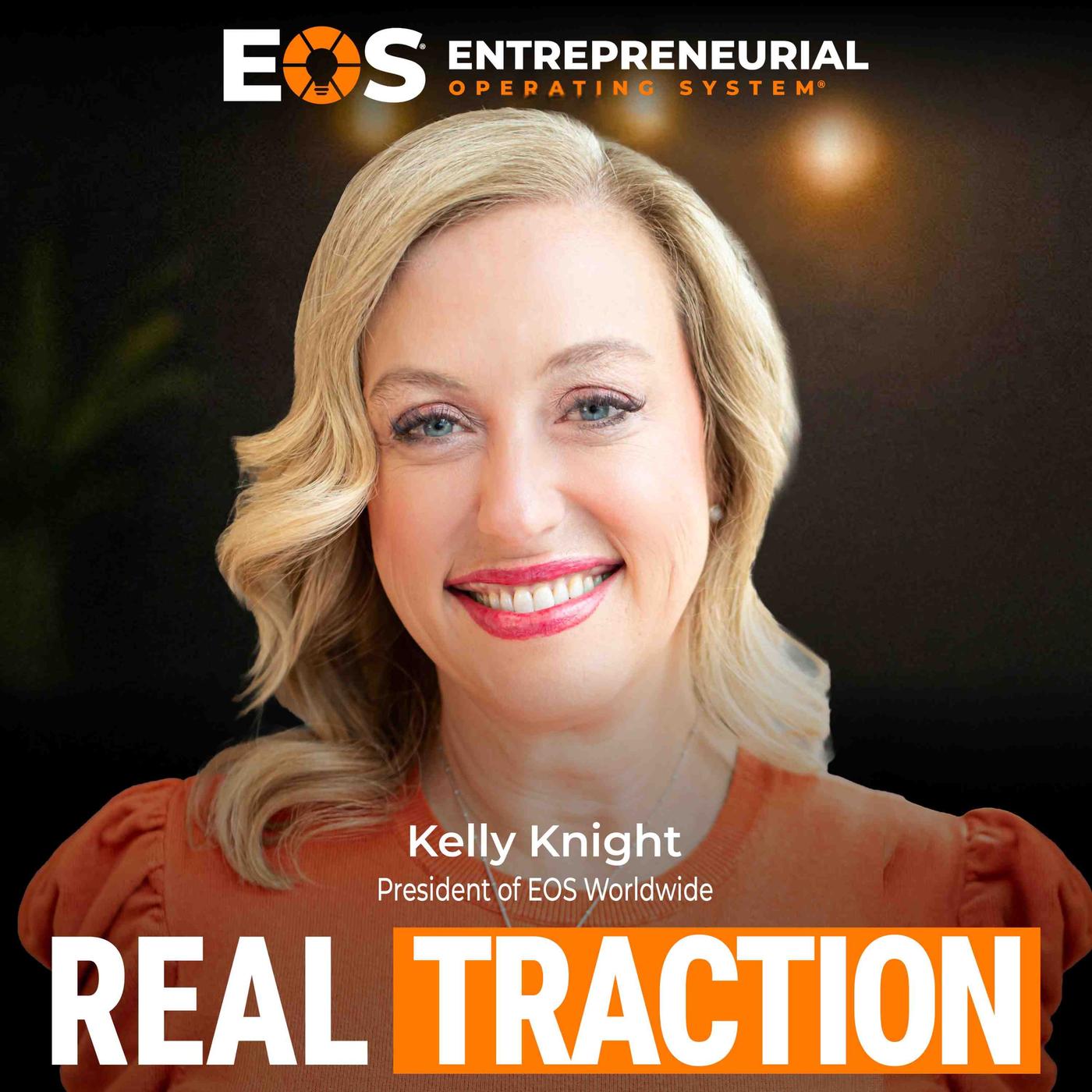
Kelly Knight's story starts long before EOS Worldwide. At 12 years old, she was told by a team of doctors that severe scoliosis would eventually put her in a wheelchair. She saw the weight of that news hit her mother, but the moment did something different inside Kelly. It sparked a quiet refusal to let someone else define what her life would become. That same refusal shows up in the way she leads. As president,
4
00:01:03.498 --> 00:01:20.407
and integrator of EOS worldwide, Kelly carries the tension of bringing clarity, accountability, and heart to a company built to help entrepreneurs get unstuck. Welcome to Hitting the Ceiling, Kelly Knight. It's great to be with you, Mark. This is going to be fun today.
5
00:01:20.457 --> 00:01:38.581
It is. It is. So kind of thinking about that 12 year old Kelly, that probably the beginnings of oppositionally defiant Kelly, maybe just a little bit. What about that moment made you feel like, no, I don't think so.
6
00:01:38.699 --> 00:01:57.447
Well, the tee up is this. Okay, so we had moved to Kentucky. And back in the day, the way that they would test for scoliosis was during the schools. You'd all go into the school and you'd line up and they would do the test. And then they would call you back if there was a curvature of the spine. Well, we moved from Michigan.
7
00:01:57.751 --> 00:02:14.626
to Kentucky for my dad's business. And so they lost track of me for a couple of years until we returned back to our home in Michigan where they then found me and I ended up at the doctor's office. And so I did not think this was that big of a deal. It's pretty routine to go in for a little checkup.
8
00:02:14.626 --> 00:02:35.348
Except for the fact that there were a team of like 12 to 15 doctors that all walk in at the same time. And that's when I saw my mom's face because as an adult, she knew from experience when you see a team come in like that, it's probably a teaching hospital, but there's probably also something serious that they're being taught.
9
00:02:35.872 --> 00:02:49.777
I just saw her face. Well, at the same time, I'm like, what gives? Why are all these people walking in here? But they put it up, the x-rays up, and they're talking about it. They're measuring my curvature, which was 35 degrees. Kind of not good.
10
00:02:50.283 --> 00:03:15.663
And, but they start talking about me like I'm not a human in the room. They're not even using my name. They're referring to me as like the patient and, you know, very technical language. And that sort of ticked me off too, because I'm a people-based person. So I didn't feel very human. The bedside manner didn't feel great. And so as they're telling me, this is what's going to happen to her. I'm like, that's not, no, that's not going to happen to me.
11
00:03:15.663 --> 00:03:33.415
And so it just, yeah, and Mark, you're exactly right. Knowing me as you do, I am oppositionally defiant in a lot of ways. And in that moment, just thought, I'm not going to let this team of doctors or anybody tell me who I am, who I'm going to become. And I was faced with a choice to wear what was called the Boston bucket brace.
12
00:03:33.415 --> 00:03:49.362
For a period of two years, you know, 22 hours a day, you would basically take it off to exercise and shower and put it back on. Or you could have surgery where a metal pole was put in your back. But in either case, they said, you're very likely by the age of 30 to be in a wheelchair. But in that moment, Mark.
13
00:03:49.362 --> 00:04:13.578
whatever it was, I said, No, I'm not. And no, I won't. And so I just did the thing, the protocol and all the different treatments. And, you know, by God's grace, I am obviously past 30 and still walking and still kicking it. So anyway, that was a it was a monumental moment. And why I was that way? Why I reacted that way? I don't know. But it tells you a little bit about my personality.
14
00:04:13.662 --> 00:04:40.763
the most shocking thing about that is you're over 30. 29 forever. 29 forever. That's what my grandmother used to say. Every birthday was her 29th birthday. Yeah. So, I mean, how much of that, that 12 year old still exists today as we run this business, as we,
15
00:04:40.763 --> 00:05:07.342
go through growing EOS and taking it to every corner of the earth? How much is 12 year old Kelly still hanging around? Oh, 100%. I mean, has she evolved? Of course. But I mean, that's still fighter kind of personality for believing in the greater good for believing in things that are bigger than just me as an individual still exists for me. And so that's the really amazing thing about EOS is,
16
00:05:07.342 --> 00:05:36.518
We say we help entrepreneurs get everything they want from their business, and we do. But the unexpected great is that we really change people's lives. And so when I reflect on today what you and I do together, Mark, it's what you know. We talk about it. It's the three Ps to protect, preserve, and perpetuate everything that's made U.S., what I say, good and holy. It just naturally changes the way that teams work together, creating team health.
17
00:05:37.025 --> 00:06:02.810
entrepreneurs are able to get out of hitting their own ceiling and the five frustrations that they may be facing so that they can live a life that they love, which I know is a big part of your personal core focus is helping a million people or more to do that. So being able to do that with you is really rewarding and it gives me purpose in my life and something for you and I that's actually evolved into a mission that we believe EOS has become.
18
00:06:03.130 --> 00:06:27.177
Yeah. I mean, it is a cause. It is a movement helping massive numbers of people get more of what they want from their business. And it's just, it's super fun. I mean, to see all these aha moments that people experience, that implementers experience helping their clients and just couldn't be more grateful for the opportunity to go and do that.
19
00:06:27.177 --> 00:06:51.595
What I wanted to do is share a little bit about your story as really the first employee at EOS Worldwide prior to you. It was Gino and Don and a few contractors, right? So Gino Wickman, our founder, the author of the book Traction, and Don Tinney, his business partner. Yeah.
20
00:06:51.595 --> 00:07:10.850
And when did you become integrator and walk the listener through? Because I think it's an interesting story because a few things, and I'd like your opinion on this, which is since we teach what it is that we teach, how to run a truly great company.
21
00:07:10.850 --> 00:07:36.820
The world looks at EOS Worldwide as a business and holds it to a much, much higher standard as a result of what it is that we do and what it is that we teach. And when we look at the broader world of business operating systems, of really what people would consider our competition, they don't really have businesses. Right.
22
00:07:37.563 --> 00:07:58.640
They have a book or two and maybe they have some licensing program, but they don't really have businesses that anyone can observe out in the wild. And here you and I are running this company very much in the open. You know, we are building in public, if you will. We're leading in public.
23
00:07:58.640 --> 00:08:21.556
And we are certainly not perfect in everything that we do. And then we hear about it a lot from like 30 different stakeholders and then some, right? So being the very first employee, did you understand that that was true when you became the first employee and integrator of EOS Worldwide?
24
00:08:21.826 --> 00:08:47.240
No, I really did not. So for context and perspective for the audience is I was brought in to be part of the succession plan for Gino Wickman and Don Tinney. So Gino Wickman, the original founder, creator of all things EOS, had already passed the baton, the torch, as visionary from himself over to Mike Payton.
25
00:08:48.218 --> 00:09:10.342
And then it was Don Tinney, his business partner, the original integrator. Then it became Don's turn to pass the torch. He too, both of them, wanted to go and pursue other passions. They had no interest in scaling the business. It was going to require doing things that they weren't really interested in. They're really both entrepreneurs like that very early stage startup.
26
00:09:10.814 --> 00:09:38.793
piece. So at that time, they were looking for the missing puzzle piece integrator to match Mike Payton, the new visionary. So they were hoping when they went in search of this right fit person to replace Don Tinney, which is very big shoes to fill. If you know, Don Tinney is just the most wise, incredible human. And so there's, that's no easy task. They, they, you know, Don and Payton went to the implementer community and said, Hey, do you know who,
27
00:09:38.978 --> 00:10:08.611
might fit this description to be the integrator and also went out to the marketplace. We hired Mike Frommelt at the time, who was a recruiter in Minneapolis, a client of Mike Payton's and said, hey, can you help us find some of these? So they scoured the marketplace, looked into the community to say, who do we know that runs on EOS? Ideally looking for someone to come in who already knows EOS, the tools, the model, the process. It could be a little bit
28
00:10:08.780 --> 00:10:09.927
much to their, uh,
29
00:10:10.315 --> 00:10:40.302
disappointment maybe at the time. They just couldn't find the right person. They could not find the right person from the EOS ecosystem, so to speak. But lo and behold, Mike Fraumelt, as good as a recruiter as he was, he found candidates and brought those in. And I happened to be one of the final two candidates. So my coming in was having had no experience with EOS at all. Interestingly, the only exposure I had had to EOS was reading the book Rocket Fuel, which
30
00:10:40.302 --> 00:10:57.768
I think you might be an integrator. But that was really it. So it's important to understand I had no experience. I was not an implementer, had not run a business on EOS. I was just similar enough in the business model that I had come from, which was being an operator of,
31
00:10:58.747 --> 00:11:18.102
a financial industries firm that served advisors that served clients. Well, similarly, we serve implementers who have clients. So there was a similarity at that time of the business model that felt good enough that it made sense and felt obviously like core values and other things that we hire for were in alignment.
32
00:11:18.102 --> 00:11:33.982
But anyway, at that time that I was hired, I really had no clue exactly how far reaching, how wide the legs are and how impactful EOS really is. All I knew at the time, 10 years ago now, August will be my 10 year anniversary here.
33
00:11:33.982 --> 00:11:50.080
as the integrator of EOS, all I really knew what was in traction, what was on the website, what was in social media, which doesn't really capture the magnitude of the impact that EOS makes in people's lives genuinely beyond the business.
34
00:11:50.755 --> 00:12:06.955
So it was years probably, Mark, of listening to implementers tell their stories about they themselves living their EOS life, doing what they love with people they love, making a huge difference, being compensated appropriately with time to pursue other passions.
35
00:12:08.086 --> 00:12:36.014
and also telling their story about their clients doing the same. And, you know, the stories that I would hear about how it would transform families who hadn't spoken or shared a holiday dinner together in a decade. And suddenly the feel of what EOS really is, is so much more than helping entrepreneurs get what they want from their business. That's good enough, by the way, if a company helps you do that, that's good enough. But yeah,
36
00:12:36.014 --> 00:12:51.995
The really unintended abilities of being able to communicate well as families and truly IDS, identify, discuss, and solve issues at the root and make them go away forever. There's just a lot to that that has such a texture and feel that.
37
00:12:51.995 --> 00:13:11.401
It's just pretty amazing, the stories and the impact that EUS makes. So no, it was a long time for me to really ingrain in me and my DNA just how impactful what EUS is, and also the enormity of that responsibility, which you and I, being business partners for six years now, right?
38
00:13:11.401 --> 00:13:28.310
six years. Being on that journey together is really amazing because every day we get up, we're really humbled by the opportunity to serve in some very small way to perpetuate that to the
39
00:13:28.495 --> 00:13:52.711
You're replacing Don as the integrator. You're meeting implementers for the first time. You're hearing these stories. And in 2016, I came into the community in 2014 and EOS was not really particularly well known. It was sort of this hidden secret that the people who are in the, like, if you know, you know, kind of thing.
40
00:13:52.711 --> 00:14:13.670
Right. But very few people knew. Not really. And it continues to this day to create this entire movement where one entrepreneur passes the book traction to another entrepreneur. They refer their implementer to people that they think could use some help and get what they want.
41
00:14:13.670 --> 00:14:42.880
And I'm sure it wasn't really obvious to you at that moment in time what exactly you were getting yourself into. I'm curious to know what your, like, just raw impression was of the EOS implementer community at your first QCE. Just take me back. You've never seen these humans before. Just open and honest, real and raw. What was your first impression?
42
00:14:43.015 --> 00:15:10.927
First impression is that these humans are even better than were described to me. Because what you need to understand is that was my first day. I mean, that was my first week. Hey, we're going to not pay you until you show up at QCE. We're going to save a few dollars. I was actually still planning to finish out some time with my prior company before joining EOS. But Gino...
43
00:15:10.927 --> 00:15:22.250
And when I love this about him, he's so bold. He's like, I just need you there. I can't have you missing this corridor because it would be a whole other 90 days later. So I said, okay, okay. And he said, wait, you just, you aren't going to believe.
44
00:15:22.604 --> 00:15:50.195
these people and he's describing our core values and our culture. And I'm thinking, I feel like I'm walking into drinking purple Kool-Aid while orange Kool-Aid in our case, oftentimes in life, Mark, things are described so much better than you actually end up experiencing them. It was a joy to walk in and say, Whoa, Gina was 100% right. Don was right. Peyton was right. These people are extraordinary. And it just felt like the most warm,
45
00:15:51.528 --> 00:15:59.257
encouraging group of people, first of all, to welcome me like they did, given that I was replacing, you know, a hero, Don Tinney. But
46
00:15:59.543 --> 00:16:23.708
so accomplished. These are groups of humans that could go do anything that they want in the world, anything. They have capabilities that far exceed anything that I had ever seen in any other circle that I had run in. And I felt like I was pretty lucky. I'd been in the financial services industry. I'd seen a lot of really incredible things, but these people are so good-hearted, generous, abundance-minded, help first,
47
00:16:23.708 --> 00:16:41.866
Genuine care and concern. These are all things that I would use to describe these people because in any other industry, implementers would be competitors with one another. Not like that in our community. Everyone is collaborative and helpful. And if you're in a crisis, you help each other out. You don't take advantage of someone's downfall.
48
00:16:41.866 --> 00:17:09.541
So it was evident. All of that was very evident right off the bat. That did not take me long to learn. Highly ambitious. The other thing I noticed was the real and raw and vulnerable. People were really going hard at issues, but there was some personal. It was just about the issue and it was about teaching and iron sharpens iron. And that's what our quarterly collaborative exchanges are, is an opportunity to get together and to become more.
49
00:17:09.541 --> 00:17:28.694
warrior shaped become the best of the best, the best implementer in the world, not in a competitive way, but in a we all boats rise in high tide kind of way. And so that was observed without any hesitation at all. So it was just a really, really cool thing, again, because how often is something better than described? Almost never.
50
00:17:28.694 --> 00:17:45.383
Yeah, almost never. And from my perspective, I always joke, as you know, which is I was either with my people for the first time or accidentally joined a cult because and to explain that.
51
00:17:45.383 --> 00:18:11.793
from my perspective, coming from pharma and biotech, coming from a very scarcity-minded world broadly as an entrepreneur, and then going to QCE. So it started off with my bootcamp, which was in Gino's office in Livonia, Michigan, this little tiny conference space with a big whiteboard.
52
00:18:12.400 --> 00:18:32.009
And I read the book. So it was like, oh, I just met a famous person. Like, this is amazing. He just came off a sabbatical and, you know, like, okay, this is interesting. So I'm sitting there and I, of course, have no intention of becoming an implementer. I just wanted to use the tools in my own company. So I go through the process, kind of go through the motions.
53
00:18:32.701 --> 00:18:53.322
And then you go to QCE and people are yelling at each other and like doing all these, like they are just direct with one another. And in those days you had to stand up and you had to give your, uh, your story in front of everyone. And now we don't do that anymore because there's just too many people.
54
00:18:53.322 --> 00:19:16.677
But you had to give your story. And there was a tradition, a part of the culture, which was everyone would tear off a piece of their notepad, write feedback on your story and how it was. And there was about 60 people at the time. And you would sit there and you couldn't move. And there was eight boot campers at the time.
55
00:19:17.690 --> 00:19:46.816
every person gave you feedback on your story and you sat there with a massive pile of little shards of paper on your story, good or bad or different. I mean, just total open, honest feedback on how you're doing. And I'm like, Oh, this is so weird. This is so weird, but it's amazing. And I love it because it's just that perpetual,
56
00:19:47.407 --> 00:20:14.305
growth oriented, that grow or die mentality is unusual in the world. The ability to give and get feedback quickly, regularly, so that you can be the best version of yourself as fast as you possibly could imagine is definitely a unique culture. Now there's some components of that to just based on our size or you don't get a pile of paper, but,
57
00:20:14.305 --> 00:20:42.757
after you give your story. But maybe we should bring that back. Everyone get the, you know, the docket gold legal pad and drop notes on each other. I agree. I mean, it is really such a gift because in the world that we live in, people don't really go there giving you what you really need to become your best because there's fears associated with that. Yeah.
58
00:20:42.959 --> 00:20:52.679
A lot of people want to be kind. I don't want to hurt someone's feelings. It might hurt them too much. We're projecting and all those kinds of things. But the reality is, is when you become...
59
00:20:53.641 --> 00:21:18.312
accustomed to it, when you get into an environment where it is healthy and trusting, and you know that when you're being given that feedback, it is because that other person wants desperately for you to become the best version of yourself. They want that for you. And that's born out of love and care. That's not anything other than that. So our community is so much like that. It can feel though, when you first walk in,
60
00:21:19.105 --> 00:21:45.397
almost like hitting a wall because you're not used to it. The world doesn't operate that way. So it sometimes does take some acclimation, but when done with consistency, you recognize on the flip side, Oh, this is so much better. Why aren't we all like that? And then that there in lies Mark where we go out and we begin to behave that way with other people because we can see the benefits to it. So for you, when you were looking at your stack, what did you think? Did you think this is the coolest thing or,
61
00:21:45.397 --> 00:22:09.612
This is, you know, I love this. Or were you awkward by it when you thought, what is these little scraps of paper? What were you thinking? Well, I mean, I didn't know what was happening to me. First of all, I'm like, what is going on? Like, this makes no sense to me. You know, going through the stack, like, okay, you know, you could get a little sharper on this point, a little sharper on that point. Some of it was just encouragement, like great story. And then I pull out one that said, I have a lead for you.
62
00:22:09.612 --> 00:22:36.916
and signed Sue Hawks. I was like, what? She's giving me a lead? Like, she's my competition. One, why is my competition helping me get better? Why is my competition giving me business? And who are these people? And how can I become more like that? Because this is just a better way to live. It was a couple years later, so we were much bigger. But when you came to the first QCE,
63
00:22:37.068 --> 00:23:06.093
Now I'll give you the community's impression of you when you first showed up to QC. I can only imagine. Well, I think it's only fair. She's very polished and professional and we're not really polished or professional. I wonder if she's gonna be a fit. So you've got, you and I actually now both get this feedback. I think someone has called us shiny people before.
64
00:23:07.105 --> 00:23:34.308
Which is very funny because you and I think we're like the most ordinary people, not shiny, not polished really at all. That's the funny thing. We would like to think we've professionalized the business over time because it requires it to grow and scale and all of that. But yeah, I'm not surprised that the community felt that way or even sometimes does feel that way. What fears do you think that gave the community at the time?
65
00:23:34.527 --> 00:23:45.698
I don't know that it was any fear that created in the community. It was just more like, oh, this person is different than the rest of us.
66
00:23:46.137 --> 00:24:12.192
They're not wrong. Yep. Just generally speaking, at that time, again, 60 implementers, I think there might have been three, maybe four female implementers in the community out of 60. So very few women in the community. Most of them were standing on the chair type people. Yeah.
67
00:24:12.192 --> 00:24:37.015
Like CJ Dubé, our good, good friend, I think the first time I ever saw her is she was literally standing on a chair yelling at somebody. Sue is very strong and everything else. And then we're like, oh, she's polished compared to. I seen it in the shoes of implementers at the time. It feels like such an odd combination because, you know, here we have Don Tinney.
68
00:24:38.213 --> 00:25:02.378
he's like Yoda. He's very wise and fatherly and gentle and peaceful and all of that. And here I show up and I'm just very different. And so it, I'm sure it must've just for that reason alone, much less the fact that the females in the community, I look different than that. So it's really understandable and change is just hard. You know, when you're,
69
00:25:02.918 --> 00:25:18.325
Loving your leaders. And Gino and Don, let's face it, they're legends at EOS. So anytime that Peyton took over, I took over, you took over, it's just new. It takes time to kind of settle into how to lead people.
70
00:25:18.325 --> 00:25:43.013
an amazingly dynamic community of freedom, autonomous-based entrepreneurs. And now we've got nearly 1,000 of them. So it just requires a different kind of energy as we grow and as we get bigger to harness that energy for good and towards everything that we have in our business plan. So it's been a really interesting ride, but I can only imagine back then.
71
00:25:43.013 --> 00:26:11.279
Yeah, for sure. And I guess the other impression that people had, I'm two years in at that time, we didn't really think of it as a real business. Like EOS Worldwide just didn't seem like a company. It just seemed like this random place we would go to once a quarter and we would talk about the content and helping clients. And we all felt like we had our own business and EOS Worldwide really wasn't a business. I mean, Gino and Don's numbers, they would report them every quarter.
72
00:26:11.279 --> 00:26:38.650
with their session work, just the same as everybody else. Rocket Fuel wasn't a book that even was out yet. And so like all these different things, it was just so at the beginning stages. And we didn't even know you were the first full-time employee. We just thought they had no people. Like, really? I mean, you didn't have any people. So it was like for us, it was just really barely a business. And now it was sort of like, oh, okay, so this is going to be something. Yeah.
73
00:26:38.650 --> 00:26:55.981
And, you know, so then, and even in the transition between Gino to Mike Payton as the second visionary, we just kind of all shrugged as a community, like, okay, just one implementer saying another implementer is now visionary, like, okay.
74
00:26:55.981 --> 00:27:24.331
Okay. Again, not really a business to speak of in, in those days, but it was a lot of fun. And it was obviously creating because of that impact that the product itself has had in the world and was having then it was yes, not very well known, but it was certainly growing. There was no conference. There was nothing like that. There was just this book that was beginning to take off, of course, being traction.
75
00:27:24.331 --> 00:27:53.153
I want to fast forward two years later. You are the integrator and Mike Payton is the visionary. And Gino says, Hey, Kelly, I'm going to sell the business. And he starts that process of selling the business, which of course, again, two years earlier from 2018, we didn't even know it was a business. They shared some revenue and profit, but we just thought that was Gino's session fees. Yeah.
76
00:27:53.896 --> 00:28:13.117
That is a ceiling of sorts, right? You are running this company. The founder is still heavily involved. You have a visionary partner in Mike Payton, and the founder says, I'm done. I'm out.
77
00:28:14.703 --> 00:28:32.641
Kind of take us through what went through your mind, how you kind of mastered the five leadership abilities or certainly strengthened them through that process. And maybe some of the things that EOS Worldwide did differently than most of the rest of the world.
78
00:28:32.827 --> 00:28:57.565
in that process and maybe share some things that you would have done differently if you could do it again which yeah we're about to do it again so we're always doing it again because it's a call that's what happens in life we know that so so really it was nine months after I started as integrator that Gino announces that we're going to be going to the marketplace because he tells everyone which was very
79
00:28:58.628 --> 00:29:23.992
you know, not normal, I guess you could say. Most people don't tell the whole world that this is what they're going to go do. But he did that at that time, of course, telling our leadership team first. And then nine months later, it was done. So within 18 months of my starting end to end, it was done. But when he shared it with me, it was one of those moments where I thought, wow, we are really going to be transitioning founders now.
80
00:29:24.059 --> 00:29:48.359
materially out of the business, even as owners. We'd already passed the baton in terms of visionary integrator seats, but the not being part of the owner's box was really, I think, not a huge concern, but it was something that it made me feel like, does this mean that our culture will change? Like all these things that I was really just getting my legs, my seed legs underneath myself at that time. Yeah.
81
00:29:48.359 --> 00:30:10.043
Is this going to be hard to do from that perspective? Yeah, at that point, I was having navigation meetings, Mark, which you and I've talked a lot about with Gino, which was once per month, I would travel to his session room where he would meet with his clients as he implemented EOS for them. I would meet him there once a month, the second Wednesday of the month for half day.
82
00:30:10.043 --> 00:30:28.927
And these navigation meetings were really originally designed because Gino said, listen, I want to make you a world-class integrator, the best of the best at what you do. And so in order to do that, we're going to have these meetings where he's mentoring me, he's shaping me, he's teaching, guiding, all of that.
83
00:30:28.927 --> 00:30:50.999
over and over and over again. So that had already been happening, and he committed to do that and fully did do that for five years. Imagine, I say to so many people, if I wanted to be mentored by Gino Wickman, he never would have done it, but for I was the integrator of his company. So the huge blessing in those early days, Mark, is
84
00:30:50.999 --> 00:31:09.494
My learning the five leadership abilities was literally born out of this relationship that I had with Gino and also Don Tinney and also Mike Payton, because all three of them really have shaped my understanding of EOS from my earliest time of being the integrator.
85
00:31:09.848 --> 00:31:34.908
It's a testament to being able to understand how to, you know, how do you start to simplify the business? How do you delegate? How do you predict? How do you systematize? How do you structure the business? Those are the five leadership abilities. And so I can't say at that time when the company was sold, Mark, that I certainly did not have that mastered because we say it is a path to mastery. Yeah.
86
00:31:34.908 --> 00:32:02.718
But what I did have was the confidence of having spent a year and a half with these three incredible mentors, including Gino, who really was the one who infused probably the most of those kinds of teachings into me with the hope that I would still have access to him to test out real world situations. So on those Wednesdays, once per month, when I would come, I would bring all of my real world challenges, my issues, the things that worked well or that I thought worked well that maybe Gino would say, well, I don't know.
87
00:32:02.887 --> 00:32:23.542
Let's think about that. But it was just an amazing transformative period of time. And I think that that inflection point where he says, we're going to sell the company and then we do sell the company recognized in me my own individual hitting the ceiling where, wow, like I have a little bit of a safety net because I know they're there for me if I need them.
88
00:32:23.542 --> 00:32:37.649
But it's a whole new world. It was sort of like, you know, buckle up, buttercup, let's go. This is a whole new thing with new stewards to the business, which is private equity. So this was the first time that private equity entered U.S.,
89
00:32:37.784 --> 00:33:06.134
We had been a founder-led organization. So that just inherently creates a different kind of relationship. It's not bad, it's just different. So you're building those relationships and then also trying to help new owners to learn EOS too. Because even though they were, I would say EOS familiar, they too were getting their sea legs underneath themselves. So imagine everybody's kind of individually and as an organization hitting the ceiling all at the same time.
90
00:33:06.134 --> 00:33:18.908
So what do you do when you eat an elephant? Well, you take one bite at a time. And that's where we began to prioritize the most important things first. And then just began to chip away at them.
91
00:33:19.837 --> 00:33:38.905
always looking to balance the community needs because we know people first. When you get the culture thing right, when you get the people thing right, most of the other things work themselves out. We say that 82% of all issues that entrepreneurial companies face are people-based, culture-based. Well, EOS Worldwide is no different.
92
00:33:38.905 --> 00:34:02.767
And so that was what was, I think, the greatest risk in my mind at the time. And were you still the only employee when that process started? No, no, I was not. But one of the things that the audience might not know is one of the kind of like straw that broke the camel's bag right before Gino announces that he's taking EOS to the marketplace to be sold was my coming to him saying, yeah, Gino, we like.
93
00:34:03.188 --> 00:34:19.068
we need some infrastructure here. We're going to need a handbook. And he was like, oh, a handbook. I'm really done now. I knew he was going to do this. It was not really the handbook, but it maybe might have been the one last little cherry on top that he's like, okay. Oh, yes. Yeah.
94
00:34:19.068 --> 00:34:43.132
I remember vividly I was sitting behind Gino at a QCE and he stands up and he's like, we have to have a handbook. I'm out. So because I had come with a handbook, it was because we now actually had people. We really had had very fractional, almost kind of like stay-at-home moms that were just contributing and helping in what ways they could because they were busy at home too with little kids. Yeah.
95
00:34:43.132 --> 00:35:03.567
But doing great work, exactly what was needed at that time in an early stage organization. But it became, you know, we need a full-time finance person and we need a full-time operations person. And so that was that transformation over a period of time. So yes, at the time that the company was sold, we had about 100 employees.
96
00:35:04.310 --> 00:35:21.472
40 maybe EOS implementers at the time. And I'm going to say it was about maybe 10 employees at that point because we were ramping up. We actually got a marketing leader. We hadn't had one of those at all. That was Marissa Smith, who is now actually an EOS implementer today. So...
97
00:35:21.472 --> 00:35:39.275
kind of keep everybody in the family. When you're not on the team, we tend to become an implementer or something too. So pretty much. Yeah. Right. We're still really small. So just doing, it was sort of still at that point, a little bit of like all hands on deck. We're more organized. We have our seats. We have the accountability charts.
98
00:35:39.275 --> 00:36:09.127
beginning to expand. We're getting more clear on roles, more clear on process. We are our baton handoffs. Just how do we work more in alignment with one another? So that was really, in the sense that you were just saying, Mark, implementers didn't always really feel like it was a business. It was more like a peer group and a community. There's a lot of truth to that because certainly it was a business, not to diminish where the company had been at that point, but it wasn't
99
00:36:09.380 --> 00:36:24.095
and structured to grow and to become into its next best version. It was sort of like the seedling that needs to now sprout to become the plant that blooms. So that's still where we were at, even at the time, in my opinion, that we were selling the company.
100
00:36:24.230 --> 00:36:52.478
Yeah, and nine months in for Gino to announce, hey, we're going to sell this thing. You're employee number one. There's relatively no infrastructure. There's intellectual property at the core. There's the books in the implementer membership model. Then, okay, time to go. I mean, it's pretty miraculous that anybody would buy this thing.
101
00:36:52.478 --> 00:37:08.307
Well, we were really small at the time, but the brilliance of what Gina and Don were able to do is to create something of amazing value. What has value in the world is always able to be transferred, in my opinion, in some way, and it was highly profitable.
102
00:37:08.662 --> 00:37:32.152
So it was high quality revenue with high quality margins with repeating activity. So you can take something very small. I mean, it's a great testament to listeners out there who may feel like, is my business really a business? Well, this can give you an encouragement that of course it is. And if you put your energy into build something that you believe in that adds value in the world.
103
00:37:33.046 --> 00:37:57.363
great things can happen and you can take it to that next level. And you don't have to be the one to do it. That was a beautiful thing is that Gino and Dodd knew that for their baby, EOS, to become what they believed it could be in the world, they actually had to let it go. What a hard thing to do. What a really, really hard thing to do when you love something so much you let it go. Hard. Yeah, that's really difficult.
104
00:37:57.363 --> 00:38:16.482
And one thing in those days that I really admire, and we've basically been able to revert back to the days of the small giant. When I started, we didn't do state of the companies and we got the VTO. We saw it for 15 seconds and then we'd pass it in.
105
00:38:16.482 --> 00:38:38.150
And then eventually, by the time you arrived there, we would go through a state of the company where we've been, where we are, where we're going. And we would see the revenue and the profit. And I always admired that small giant nature, the low revenue, high margins, 50, 60 percent margins.
106
00:38:38.150 --> 00:38:50.755
And for me at that time, I'm running, I'm an implementer and I'm running an engineering firm, you know, 300 people or so, not even close to those types of margins.
107
00:38:51.667 --> 00:39:08.896
And it was very like, wow. And I think, you know, I joke often that if I see another LinkedIn post or if I write another LinkedIn post that says something about scaling, I might just puke in a bucket. Uh-huh.
108
00:39:08.896 --> 00:39:31.711
And what always got me with the sort of the small giant approach is it doesn't really feel like an obsession with scaling. So answer two questions for me. Just generally speaking, you've seen all the posts, you've seen the obsession with scaling. What does that even mean to you?
109
00:39:31.711 --> 00:39:45.008
And how would you encourage people to think about it a little bit differently, given the context of how EOS has been built and what you can possibly accomplish without or with a different mindset?
110
00:39:45.295 --> 00:40:04.060
Yeah. So, I mean, I get the hesitation. Language does matter. So when you hear words like leverage and monetize and scale and all of this stuff, it can just make you cringe almost because it feels sort of icky. Like this isn't part of, you know, building a business with heart. It feels sort of cold. But
111
00:40:04.060 --> 00:40:31.077
If you kind of can just strip away the language component to it and just simply think about what is the most efficient way, what's the best way to take whatever your mission, cause, passion, whatever it is that you do to the world in a way that makes you feel good, that makes you feel proud, that makes you feel like you've made a difference. Almost every entrepreneur that I meet, you and I spend a lot of time at Strategic Coach and in peer groups and things like that, where we
112
00:40:31.077 --> 00:40:47.345
we see just how passionate entrepreneurs are about making a huge difference. Even with AI and all the great tools that we have in the world, people still, they're great tools and we should use them for what they're used for. But it's really about...
113
00:40:47.345 --> 00:41:03.511
you know, staying focused on what you believe in and are better at than anyone else on the face of the planet. So anyway, scaling to me just means what's the most efficient way to get where you want to go, where you want to take your dream to. That might involve technology. It might involve people.
114
00:41:03.511 --> 00:41:25.448
It might involve different kinds of systems or networks. That's really all it means. And how to do that in a way that isn't cumbersome and tedious and one by one, but in some cases, one too many. And that just sometimes means rethinking your business model or rethinking your reach or how you get to people that you can impact. That's all. It's not all about the money. Is that what you're saying? Yeah.
115
00:41:26.326 --> 00:41:44.264
No, I mean, here's the thing. So I mean, we're in business, most of us, I mean, certainly there's nonprofits that run on EOS, but most EOS run companies are for profit. So yes, of course, dollars play a role in it, but very little, even when you're achieving your goals, is it ever about the money.
116
00:41:44.787 --> 00:42:08.767
I mean, it just isn't. Not the satisfaction. The money pays the bills. The money helps you put your kids through college and retire and build great lives and be able to give back to others. But it's the satisfaction of doing something that you really believe in, that feeds your cup and your soul, that you're really good at and you love to do. And that's where the satisfaction comes in. So the good news with EOS is that
117
00:42:08.767 --> 00:42:34.501
It's the pathway to both. It helps. You don't have to choose. You can get both. Might not always be at the same time. You might not always get the money and the satisfaction. Nothing usually coincides perfectly at the same time. But you really can get everything that you want from your business and your life by running on EOS. And we've just seen time and time and time again how that's true. And of course, that's what keeps us really motivated.
118
00:42:34.855 --> 00:42:58.582
Yeah, certainly does. And as I said, it's a lot of fun to see all the aha moments that occur, the gratitude. You know, for me, when I was full-time as an implementer, it was always shocking to me. Yes, there's lots and lots of cash flow. But every session, it wasn't, yeah, the cash is really great. But at the same time...
119
00:42:58.835 --> 00:43:22.105
the clients would come to me and say, look, you saved my business. You saved my marriage. I have more energy. I'm just in better shape, all these different types of things. And, you know, thank you. Thank you. Thank you. And it's just such a rare occurrence where people feel genuinely appreciated and people are grateful for them. And then of course, on the receiving end of that,
120
00:43:23.303 --> 00:43:44.549
Which is like, I didn't really do anything. I kind of just followed the EOS process and said the things I was supposed to say. And now you kind of think I'm a hero and I did nothing. Like I just said the words and all of a sudden, you know, you're getting more of what you want. Because it is a proven system. It does work and sounds probably pretty corny, but it's the truth.
121
00:43:44.549 --> 00:44:01.036
No, it really is true. And all too often though, I do hear implementers say just what you said. I didn't do anything. I just was, I was just in the room. Like that also diminishes it because the work of an implementer is so pure and it's so meaningful.
122
00:44:01.036 --> 00:44:25.454
The reason why it feels that way to you is because it's just what you're really great at and you love to do, but it's still great, impactful, hard work. And it's not quite as easy as I think sometimes it might look. Right? There's a lot of hard work that goes into becoming a great U.S. implementer. It requires a lot of reps and at-bats. And yet, at the end of the day, when you've done that hard work, it usually is about three years of success.
123
00:44:26.011 --> 00:44:45.839
being in front of potential clients or customers and helping them, entrepreneurs, to get what they want from their business and just learning EOS over and over and over again. But I think implementers should feel really good about the work that's being done, and it isn't by chance that you become one and a successful one. You're born to do it, I think.
124
00:44:45.839 --> 00:45:15.826
Well, a couple of couple of things. I read a definition of intelligence the other day. And the definition was one's ability to get what they want is the definition of intelligence. So if you have the ability to get what it is that you want, you are intelligent.
125
00:45:15.927 --> 00:45:40.666
Well, it's the first time I've heard that definition, even though Mark, you and I talk every single day. So, you know, it's kind of hard to catch me surprised because you're always sharing your insights and the things that you're reading and whatnot. But anyway, a fraction, a portion. This one's new. So this one's new. And this was like weeks ago. So I guess I'm holding back. I guess so. I guess I'm playing catch up.
126
00:45:40.666 --> 00:46:06.282
No, I've not heard that before. It is interesting. When you dissect words, it's funny how the superficial, I guess, immediate reaction to how you might define something just based upon how it's loosely used in the world is vastly different than even if you look it up in Webster's or look it up online. So I'm thinking, I don't know. I think that there's certainly something to that, you know, getting what you want for yourself. If you figure out how to do that, you're intelligent. Yeah.
127
00:46:06.670 --> 00:46:31.055
Is it feels limiting to me though, if I'm being honest, because the, is it really just about getting what you want for yourself? Unless the getting what you want for yourself includes things that help others. I hope that's the extension of it, but I don't know. I don't know what to think about that. I think it's, I think it's possible that it's that. I think it might be, might be limiting and maybe oversimplifying intelligence.
128
00:46:31.713 --> 00:46:57.059
And the way I took it is, again, I'm having a hard time arguing with it because like, well, yeah. Like who cares if you can do massive amount of math in your head? Like who cares if you do calculus in your head? Who cares if you can memorize Shakespeare and be able to regurgitate it back? Like who cares? Like it actually means nothing. Is it going to help someone?
129
00:46:57.143 --> 00:47:20.161
Probably not. The act in of itself has no really any utility to it. But the ability to get what you want and help others get what they want by whatever means necessary, within the bounds of the law and so forth, to me is probably...
130
00:47:20.161 --> 00:47:46.047
the best definition of intelligence. And then I want to then kind of fold that in on itself around what it is and why, why EOS works, why we get so much gratitude from it. And well, we get so much satisfaction from ourselves, but we also get a lot of gratitude coming back and appreciation coming back towards us for what it is that we do.
131
00:47:46.874 --> 00:48:14.009
And then I just wanna say that we probably experienced that because we help other people get a whole lot smarter. They become more and more intelligent by these simple disciplines and tools. It's like getting stronger by going to the gym and lifting weights. We're taking them to the dojo, we're taking them to the gym in their session rooms and we're teaching them these simple disciplines and they emerge smarter.
132
00:48:14.009 --> 00:48:25.703
Therefore, they just have a bigger capacity to get what it is that they want from their business for themselves and for the people that they care about.
133
00:48:26.328 --> 00:48:49.160
I definitely believe that. I think there is that measure of intelligence because knowledge and intelligence are two different things. But when you don't know, you don't have the tools, as an example, because we have a model, we have a toolbox, we have a process. When you just don't have access to it, you can't tap into that to use it for your experience to become intelligent.
134
00:48:49.598 --> 00:49:14.168
intelligent. So it does connect those dots for me as you're describing it. And it makes complete sense to me that plenty of entrepreneurs in our target market are those that are the plumber next door. These are not necessarily people who have gone to college or been highly educated, but they're super smart to begin with, but they might not have the intelligence that they need to get where they want to go, to get what they want.
135
00:49:14.962 --> 00:49:34.351
based on their knowledge and their tool set. So we bridge that gap. We take people who have raw material for being great, and we just equip them with the right stuff so that they can get what they want. I liked that definition in just this mere fact that it's just so practical.
136
00:49:35.532 --> 00:49:57.740
And we probably over index on book knowledge or theoretical knowledge and EOS in and of itself is real world, simple, practical tools. And it's not theory, it's experience only to help people get what it is that they want. So that's right. Yeah.
137
00:49:58.094 --> 00:50:18.428
That's why I bring that up in just terms of also thinking about the byproduct of using these tools. For us using these tools, implementing EOS in our own company, being EOS, teaching other people to then teach other people to do the same thing.
138
00:50:18.428 --> 00:50:36.620
And how your ultimate, your life is generally better. You've got, I mean, it's never problem free, but you have all the tools necessary to have clarity, to have focus, to live a life of meaning.
139
00:50:36.620 --> 00:51:01.780
because I do think the way you do anything is the way you do everything. And you're constantly, you can, it's almost that you can't, you can't train on these tools for your business and gain the disciplines in the business without it positively impacting your life personally for the good, because you're just getting smarter. You're getting more and more intelligent. You're getting more and more skills to get what it is that you want.
140
00:51:01.983 --> 00:51:31.632
100% I totally, totally believe that. I mean, you've been here for 1415 years, I've been here for 10 years, my life is measurably better, meaningfully better as a result of having the intelligence that I have today that I didn't have before, for sure, hands down. And I don't, you know, I really don't think that if I had continued doing what I was doing for 10 years, I would have had that same experience to be able to have what I have today. So
141
00:51:31.885 --> 00:51:39.142
It's kind of cool to think about how something so simple can be so impactful in a world that is filled with more and more and more.
142
00:51:39.698 --> 00:52:07.441
you know, it's just exploding in all different facets. There's everything is commoditized and vying for our attention. We have the attention of a goldfish, don't we, Mark? We've nine seconds or less or less. In an attention based economy, how do we take things that are simple to really give people the grounding to, to get traction? No pun intended, but that is really key is it can't be complicated. It can't be tedious. It's,
143
00:52:07.441 --> 00:52:12.031
And people want to see results pretty quick. And that's fortunately what the U.S. is able to do.
144
00:52:12.200 --> 00:52:41.258
Yeah, I think just based on the attention economy, all the noise, but the pure simplicity of simple tools persistently getting you what you want and then filtering out all the things that don't help you get what you want. You know, we talk about social media and all the technology distractions and all those different types of things that exist out in the world.
145
00:52:41.849 --> 00:53:05.828
are they helping me get what I want? Well, they might get you some short-term dopamine hits and maybe that is what you want, but it's probably not good for you. We want all kinds of things that are probably not good for us. But at the same time, I just think it's a discipline that is really useful. It's just useful in every aspect of your life. So speaking of intelligence,
146
00:53:07.786 --> 00:53:34.786
Do you think that artificial intelligence is true intelligence, given the definition? This is a great philosophical question. You could argue it a couple of different ways. One is AI is born out of things that already exist. So it's not necessarily new because it's pulling from data and from insights that have already been put out of the ether into the internet and the world.
147
00:53:36.558 --> 00:53:41.165
And yet how we use it, I think, can be intelligent work.
148
00:53:41.519 --> 00:54:09.397
it's creating the pathway to gaining intelligence if used the right way and used with discernment. You know, it's something you and I talk a lot about Mark, you know, because we use Clawed AI quite a bit and what we're doing as a leadership team here at EOS. But we've also seen where AI goes incredibly off track. If you don't have the right prompt and you're not actually reviewing what's coming out, you might end up with a different outcome or a different story that could lead to,
149
00:54:09.397 --> 00:54:20.213
an organization off track. So it's to me, AI is paired with a person's unique capabilities is
150
00:54:21.142 --> 00:54:42.016
maybe the platinum standard of today and the future, independent of that human ingenuity and creativity that we as humans have, we're still, last time I checked, we're still breathing and we're kind of here. Hopefully we're still here for a reason, not going to be replaced by bots. Who knows? Maybe I'm a bot right now and you'll never know. I might be living in the matrix. You might be.
151
00:54:42.016 --> 00:55:08.678
Right. Are we going to get a blue pill, red pill? I don't know. Anyway, so to me, I think that there's intelligence that can be born out of AI as a tool, but I'd still like to think that it really is that combination, that rare combination of being able to use a tool really well, along with the human capacity for thinking and growth and empathy and care. That is what actually intelligence in our world looks like today.
152
00:55:09.303 --> 00:55:34.733
So we're still living. I mean, until, you know, until we no longer exist on this planet, there's still our people who are living that are going to have ideas and our capabilities to do wonderful things. We can't even imagine yet because they haven't occurred. They haven't been created yet. And so, you know, people is still a really important component, regardless of the tools that are out there and the tools that will continue to be to grow and change.
153
00:55:34.733 --> 00:56:04.720
Even as AI changes and that's changing literally on a daily basis, I still don't see it replacing people. There's still going to need to be that heartfelt component, that steady beat of the drum in any organization that is moving people together in sync towards a common good. And, you know, the day that we don't need that is kind of going to be a sad day for me. I hope that day never comes because I think that's, you know, why are we here? We're purpose-driven humans.
154
00:56:04.720 --> 00:56:33.222
the best is yet to come of what we're capable of doing before we just don't know what it is yet. Yeah. And you are 29. So it's going to be a long time before, you know. If I could be 29, I mean, I'd be 29 forever for hundreds of years. Yes, you could. You could. As we kind of move to a last part of our conversation, since, as I said, we do build the business in public in a lot of ways, whether we like it or not,
155
00:56:33.222 --> 00:57:01.960
What do you see is where we as EOS worldwide are hitting the ceiling now? And what leadership ability do you think we need to work on in order to break through it? So you and I talk about this quite a bit. I think my integrator perspective more recently has been a little bit surprised that our flywheel, the combination of what EOS is at its core is comprised of books or content,
156
00:57:01.960 --> 00:57:27.037
The second component of that is implementers. And then a third component of that is what we call the academy and online learning, asynchronous learning platform. So the combination of those three have always been the case. We have had those since the very inception. For 25 years, you know, it's had some combination of those three. And while it continues to organically perpetuate, it does sometimes feel like,
157
00:57:27.577 --> 00:57:52.130
the amazing impact we're making isn't as the flywheel isn't flying or accelerating in a way that I might expect that it could. So I think for us, there's a little bit of reflection of what is causing a bottleneck? What's restricting that flywheel or our business plan? And just knowing that if we go back to really all five of the leadership abilities are going to be important here, Mark, I agree.
158
00:57:52.130 --> 00:58:14.371
very rarely think of, I mean, I do think of them each as their own unique component to how we break through the ceiling. But I also think that they work. It's much like Legos. They work well when you think of them all together. So simplifying the business has been important for the last 18 months. We've been working really hard to go back to the basics. We had lost our way when
159
00:58:14.371 --> 00:58:29.693
where we were doing too many things and it wasn't part of our core focus, which is helping entrepreneurs live their ideal lives. Entrepreneurs get what they want from their business. That's been our last few years. That's been what we've been focused on. But we strayed from that.
160
00:58:30.065 --> 00:58:57.942
because we're designed as an organization to really serve the implementer and provide intellectual property so that other people can go and take it into the world. And our niche, our new niche, right, is one of the three Ps that you have coined for a long, long time. And we said, you know what, this is what we actually do because we're,
161
00:58:57.942 --> 00:59:17.517
It's what we do. So you want to share what the three Ps are? Yeah. So our new niche referring to the three Ps is to protect, preserve, and perpetuate EOS to the world. That's what we do better than anybody else on the face of the planet. And so to the extent that we're enabling...
162
00:59:17.888 --> 00:59:45.226
our network effects and our community and our target market to do that with us. That's really where, you know, we see being able to not only sit, have having simplified the business last 18 months, but being able to really get that kind of growth and that acceleration in helping entrepreneurs everywhere in the world, every corner of the world to get what they want. And we're really focusing on our implementer community and,
163
00:59:45.226 --> 01:00:02.776
the IP behind it, garnering the support of all of our licensees, our community, our partners to do that, and to go international. So international has been a big part of what we've been doing. So, Mark, I think of the five, that's certainly one that's really important is to stay focused.
164
01:00:02.776 --> 01:00:25.642
to be simple, to not get ourselves distracted. And to the degree that we can do that consistently, that will really be a big part of our future. But delegating is important, making sure that we stop doing the things that we don't necessarily need to do anymore at all. Sometimes delegating can be confused with, well, I have to take this thing and give it to someone else. Now it could be technology that ends up doing it for us, a system.
165
01:00:25.642 --> 01:00:54.464
It could be that we just no longer need to do it anymore. It's Christmas ham. We used to do it that way. We actually don't need to do that thing at all. So delegating and elevating is an important part. We at EOS talk a lot about predicting. Predicting can be short-term and predicting can be long-term. So let's anticipate what could go wrong. What are the risks? What could come in the way? What could intersect our staying focused? Let's look to avoid those things and embrace those and double down on the things that we do well.
166
01:00:54.464 --> 01:01:13.853
And then systematizing structure is about process and people. So do we have the right core processes to deliver on our marketing strategy? Do we have the right core processes to deliver on our commitments with the quality and the care that we want? And then structure is about the people plan and the accountability chart.
167
01:01:14.275 --> 01:01:36.702
Sometimes you've got to turn that accountability chart upside down to reverse accountability chart because you just got too big and you really got to strip things down. So sometimes it's not always about building its addition by subtraction, which is a Shannon Waller quote at Strategic Coach. But those are the things that we've been focused on and certainly encourage other organizations to think about so that.
168
01:01:37.765 --> 01:02:02.673
The degree that you get really focused on these five kind of all the time as an integrator, I'm obsessed about those five. We're very imperfect with them. We are like every other entrepreneurial organization running on EOS. When you had said earlier, Mark, that the world looks at us and maybe thinks, oh, they are EOS worldwide running on EOS. They should be better at all these things. Perfect, in fact. Yeah.
169
01:02:02.673 --> 01:02:16.021
Yeah, no, definitely not. No, we make a lot of mistakes. And so sometimes there's the truth serum that an integrator needs to own that says enough is enough. We got to really go back to the five all the time.
170
01:02:16.561 --> 01:02:45.012
Yeah, and when I look at this and I think about our 2024 to 2025, we were building software, we were persistently hitting the ceiling, we saw a ceiling coming that was not going to be penetrable. So we start the process of going back to the basics and simplifying the business.
171
01:02:45.012 --> 01:03:02.005
And the result of that and knowing that it was coming is between 2024 and 2025, we didn't grow the requisite 20 plus percent year over year that EOS Worldwide has been growing for the last 20 years between 40 and 20 percent.
172
01:03:02.005 --> 01:03:22.981
And now, though, we are seeing the benefits of that simplification where we are back to growing 20 percent year over year and will probably continue growing 20 percent year over year as far as we can tell. Now, we probably will hit the ceiling again. We inevitably will hit the ceiling again.
173
01:03:23.892 --> 01:03:42.826
at all kinds of different levels and it might not be at the company level. But just to your point, systemizing as we go global, as we think about over a thousand implementers in the next couple of quarters here.
174
01:03:42.826 --> 01:04:08.695
thinking about regionalizing the business, putting it down to the smallest component parts, systemizing that, simplifying even further all along the way. It is a persistent journey. It is something that you can never like, oh, I'm just going to hit status quo. I'm going to do the same thing and then I'm going to wait until I hit the ceiling again. Then I'm going to go figure it out for the first time. But it is a just a persistent journey.
175
01:04:08.695 --> 01:04:38.598
discipline. And you don't always know where you should be focusing. You don't always know. Well, we don't. The good news is we have tools that really help us to stay focused. So it's, you know, the integrator is really responsible for the operating system. That's, we're responsible for it. If it's not getting done and done with consistency, it's the integrator you should be looking at, you're pointing the finger at, because that's the huge, massive responsibility that needs
176
01:04:39.104 --> 01:05:02.476
It is entrepreneurial if you treat it the right way. It is as important to know how to do those things as casting vision. We know vision without traction is hallucination, but it's easy to get caught up in, well, we did that systematized thing not that long ago. We did the accountability chart refinement a couple quarters ago even.
177
01:05:02.476 --> 01:05:27.839
Sometimes that's still not enough. You can't rely on the fact of, well, I'll revisit that in one year because that's what you did before. Sometimes what you did before worked then, but you've outgrown it. And sometimes there's a frequency or a pulse around how often you need to use the tools that can get missed. And that certainly happened for me sometimes where I've really had to be more intentional about, you know,
178
01:05:27.839 --> 01:05:51.869
You know, I keep the VTO with me, not because I don't know what's on it, but I keep it printed by me because it's a visual reminder of the massive responsibility that it is to get to make sure that that becomes reality. So if we continue to stay intentional in the world that we live in, stay focused, there really isn't anything we can't do. Lots of things are possible if we keep those things in mind.
179
01:05:52.223 --> 01:06:11.967
Awesome. All right, Kelly, I have a sense that we could probably go for a few more hours, but in order to not bore our listeners, we should conclude here. So thanks again. And just as you said to everybody, stay focused. That's right. Thanks, everybody. Thanks, Mark. See ya.
180
01:06:12.625 --> 01:06:39.575
All right. So thinking about my conversation with Kelly, with Kelly Knight, starting with simplify. Kelly points to us worldwide, getting back to the basics after chasing too many things outside of its core focus. And the team had to strip away distractions and return to what they do best, helping entrepreneurs get what they want from their businesses.
181
01:06:39.575 --> 01:06:55.201
And the three Ps became that simple filter to protect, preserve, and perpetuate EOS to the world. As far as delegate goes, for Kelly, delegation is not just giving work to another person.
182
01:06:55.201 --> 01:07:24.057
Sometimes it means technology, building a system, or deciding the task doesn't need to exist anymore. Her point is really simple. Don't keep doing something just because we've always done it that way. Next is predict. Kelly sees predict as looking ahead before problems become bigger. And that means spotting risks and bottlenecks, distractions, and anything that could slow the mission down.
183
01:07:24.057 --> 01:07:46.012
EOS Worldwide's current ceiling is about figuring out why the flywheel is not moving as fast as it could and addressing that before it becomes a bigger issue. In terms of Systemize, Kelly connects Systemize to making sure the right processes are in place to deliver with quality, consistency, and care.
184
01:07:46.012 --> 01:07:58.111
She also makes it clear that systems cannot set it and forget it. They can't be just set it and forget it. As the company grows, the processes have to get revisited over and over again.
185
01:07:58.347 --> 01:08:20.200
And then structure, Kelly ties structure to the people plan and accountability chart. As EOS worldwide grows, the structure has to evolve as well. Sometimes the answer is not adding more. It is stripping the structure down and getting clearer on seats and making sure that the right people are carrying the right responsibilities.
186
01:08:20.538 --> 01:08:49.327
If this conversation gave you something to think about, I'd love to keep that going. I write a newsletter called Clarity Break Thoughts, where I share simple ideas, questions, and reminders to help you step back, think clearly, and lead with more intention. You can subscribe at eosworldwide.com slash claritybreakthoughts. Again, that's eosworldwide.com slash claritybreakthoughts.
1
00:00:00.031 --> 00:00:29.056
They start talking about me like I'm not a human in the room. They're not even using my name. They're referring to me as like the patient. And that sort of ticked me off too because I'm a people-based person. So I didn't feel very human. The bedside manner didn't feel great. And so as they're telling me this is what's going to happen to her, I'm like, no, that's not going to happen to me. Knowing me as you do, I am oppositionally defiant in a lot of ways. And in that moment, just thought, I'm not going to let this team of doctors or anybody tell me who I am, who I'm going to become.
2
00:00:29.630 --> 00:00:37.375
Welcome to Hitting the Ceiling, the show for entrepreneurs and leaders who refuse to let a ceiling become the end of their story.
3
00:00:38.152 --> 00:01:03.498
Kelly Knight's story starts long before EOS Worldwide. At 12 years old, she was told by a team of doctors that severe scoliosis would eventually put her in a wheelchair. She saw the weight of that news hit her mother, but the moment did something different inside Kelly. It sparked a quiet refusal to let someone else define what her life would become. That same refusal shows up in the way she leads. As president,
4
00:01:03.498 --> 00:01:20.407
and integrator of EOS worldwide, Kelly carries the tension of bringing clarity, accountability, and heart to a company built to help entrepreneurs get unstuck. Welcome to Hitting the Ceiling, Kelly Knight. It's great to be with you, Mark. This is going to be fun today.
5
00:01:20.457 --> 00:01:38.581
It is. It is. So kind of thinking about that 12 year old Kelly, that probably the beginnings of oppositionally defiant Kelly, maybe just a little bit. What about that moment made you feel like, no, I don't think so.
6
00:01:38.699 --> 00:01:57.447
Well, the tee up is this. Okay, so we had moved to Kentucky. And back in the day, the way that they would test for scoliosis was during the schools. You'd all go into the school and you'd line up and they would do the test. And then they would call you back if there was a curvature of the spine. Well, we moved from Michigan.
7
00:01:57.751 --> 00:02:14.626
to Kentucky for my dad's business. And so they lost track of me for a couple of years until we returned back to our home in Michigan where they then found me and I ended up at the doctor's office. And so I did not think this was that big of a deal. It's pretty routine to go in for a little checkup.
8
00:02:14.626 --> 00:02:35.348
Except for the fact that there were a team of like 12 to 15 doctors that all walk in at the same time. And that's when I saw my mom's face because as an adult, she knew from experience when you see a team come in like that, it's probably a teaching hospital, but there's probably also something serious that they're being taught.
9
00:02:35.872 --> 00:02:49.777
I just saw her face. Well, at the same time, I'm like, what gives? Why are all these people walking in here? But they put it up, the x-rays up, and they're talking about it. They're measuring my curvature, which was 35 degrees. Kind of not good.
10
00:02:50.283 --> 00:03:15.663
And, but they start talking about me like I'm not a human in the room. They're not even using my name. They're referring to me as like the patient and, you know, very technical language. And that sort of ticked me off too, because I'm a people-based person. So I didn't feel very human. The bedside manner didn't feel great. And so as they're telling me, this is what's going to happen to her. I'm like, that's not, no, that's not going to happen to me.
11
00:03:15.663 --> 00:03:33.415
And so it just, yeah, and Mark, you're exactly right. Knowing me as you do, I am oppositionally defiant in a lot of ways. And in that moment, just thought, I'm not going to let this team of doctors or anybody tell me who I am, who I'm going to become. And I was faced with a choice to wear what was called the Boston bucket brace.
12
00:03:33.415 --> 00:03:49.362
For a period of two years, you know, 22 hours a day, you would basically take it off to exercise and shower and put it back on. Or you could have surgery where a metal pole was put in your back. But in either case, they said, you're very likely by the age of 30 to be in a wheelchair. But in that moment, Mark.
13
00:03:49.362 --> 00:04:13.578
whatever it was, I said, No, I'm not. And no, I won't. And so I just did the thing, the protocol and all the different treatments. And, you know, by God's grace, I am obviously past 30 and still walking and still kicking it. So anyway, that was a it was a monumental moment. And why I was that way? Why I reacted that way? I don't know. But it tells you a little bit about my personality.
14
00:04:13.662 --> 00:04:40.763
the most shocking thing about that is you're over 30. 29 forever. 29 forever. That's what my grandmother used to say. Every birthday was her 29th birthday. Yeah. So, I mean, how much of that, that 12 year old still exists today as we run this business, as we,
15
00:04:40.763 --> 00:05:07.342
go through growing EOS and taking it to every corner of the earth? How much is 12 year old Kelly still hanging around? Oh, 100%. I mean, has she evolved? Of course. But I mean, that's still fighter kind of personality for believing in the greater good for believing in things that are bigger than just me as an individual still exists for me. And so that's the really amazing thing about EOS is,
16
00:05:07.342 --> 00:05:36.518
We say we help entrepreneurs get everything they want from their business, and we do. But the unexpected great is that we really change people's lives. And so when I reflect on today what you and I do together, Mark, it's what you know. We talk about it. It's the three Ps to protect, preserve, and perpetuate everything that's made U.S., what I say, good and holy. It just naturally changes the way that teams work together, creating team health.
17
00:05:37.025 --> 00:06:02.810
entrepreneurs are able to get out of hitting their own ceiling and the five frustrations that they may be facing so that they can live a life that they love, which I know is a big part of your personal core focus is helping a million people or more to do that. So being able to do that with you is really rewarding and it gives me purpose in my life and something for you and I that's actually evolved into a mission that we believe EOS has become.
18
00:06:03.130 --> 00:06:27.177
Yeah. I mean, it is a cause. It is a movement helping massive numbers of people get more of what they want from their business. And it's just, it's super fun. I mean, to see all these aha moments that people experience, that implementers experience helping their clients and just couldn't be more grateful for the opportunity to go and do that.
19
00:06:27.177 --> 00:06:51.595
What I wanted to do is share a little bit about your story as really the first employee at EOS Worldwide prior to you. It was Gino and Don and a few contractors, right? So Gino Wickman, our founder, the author of the book Traction, and Don Tinney, his business partner. Yeah.
20
00:06:51.595 --> 00:07:10.850
And when did you become integrator and walk the listener through? Because I think it's an interesting story because a few things, and I'd like your opinion on this, which is since we teach what it is that we teach, how to run a truly great company.
21
00:07:10.850 --> 00:07:36.820
The world looks at EOS Worldwide as a business and holds it to a much, much higher standard as a result of what it is that we do and what it is that we teach. And when we look at the broader world of business operating systems, of really what people would consider our competition, they don't really have businesses. Right.
22
00:07:37.563 --> 00:07:58.640
They have a book or two and maybe they have some licensing program, but they don't really have businesses that anyone can observe out in the wild. And here you and I are running this company very much in the open. You know, we are building in public, if you will. We're leading in public.
23
00:07:58.640 --> 00:08:21.556
And we are certainly not perfect in everything that we do. And then we hear about it a lot from like 30 different stakeholders and then some, right? So being the very first employee, did you understand that that was true when you became the first employee and integrator of EOS Worldwide?
24
00:08:21.826 --> 00:08:47.240
No, I really did not. So for context and perspective for the audience is I was brought in to be part of the succession plan for Gino Wickman and Don Tinney. So Gino Wickman, the original founder, creator of all things EOS, had already passed the baton, the torch, as visionary from himself over to Mike Payton.
25
00:08:48.218 --> 00:09:10.342
And then it was Don Tinney, his business partner, the original integrator. Then it became Don's turn to pass the torch. He too, both of them, wanted to go and pursue other passions. They had no interest in scaling the business. It was going to require doing things that they weren't really interested in. They're really both entrepreneurs like that very early stage startup.
26
00:09:10.814 --> 00:09:38.793
piece. So at that time, they were looking for the missing puzzle piece integrator to match Mike Payton, the new visionary. So they were hoping when they went in search of this right fit person to replace Don Tinney, which is very big shoes to fill. If you know, Don Tinney is just the most wise, incredible human. And so there's, that's no easy task. They, they, you know, Don and Payton went to the implementer community and said, Hey, do you know who,
27
00:09:38.978 --> 00:10:08.611
might fit this description to be the integrator and also went out to the marketplace. We hired Mike Frommelt at the time, who was a recruiter in Minneapolis, a client of Mike Payton's and said, hey, can you help us find some of these? So they scoured the marketplace, looked into the community to say, who do we know that runs on EOS? Ideally looking for someone to come in who already knows EOS, the tools, the model, the process. It could be a little bit
28
00:10:08.780 --> 00:10:09.927
much to their, uh,
29
00:10:10.315 --> 00:10:40.302
disappointment maybe at the time. They just couldn't find the right person. They could not find the right person from the EOS ecosystem, so to speak. But lo and behold, Mike Fraumelt, as good as a recruiter as he was, he found candidates and brought those in. And I happened to be one of the final two candidates. So my coming in was having had no experience with EOS at all. Interestingly, the only exposure I had had to EOS was reading the book Rocket Fuel, which
30
00:10:40.302 --> 00:10:57.768
I think you might be an integrator. But that was really it. So it's important to understand I had no experience. I was not an implementer, had not run a business on EOS. I was just similar enough in the business model that I had come from, which was being an operator of,
31
00:10:58.747 --> 00:11:18.102
a financial industries firm that served advisors that served clients. Well, similarly, we serve implementers who have clients. So there was a similarity at that time of the business model that felt good enough that it made sense and felt obviously like core values and other things that we hire for were in alignment.
32
00:11:18.102 --> 00:11:33.982
But anyway, at that time that I was hired, I really had no clue exactly how far reaching, how wide the legs are and how impactful EOS really is. All I knew at the time, 10 years ago now, August will be my 10 year anniversary here.
33
00:11:33.982 --> 00:11:50.080
as the integrator of EOS, all I really knew what was in traction, what was on the website, what was in social media, which doesn't really capture the magnitude of the impact that EOS makes in people's lives genuinely beyond the business.
34
00:11:50.755 --> 00:12:06.955
So it was years probably, Mark, of listening to implementers tell their stories about they themselves living their EOS life, doing what they love with people they love, making a huge difference, being compensated appropriately with time to pursue other passions.
35
00:12:08.086 --> 00:12:36.014
and also telling their story about their clients doing the same. And, you know, the stories that I would hear about how it would transform families who hadn't spoken or shared a holiday dinner together in a decade. And suddenly the feel of what EOS really is, is so much more than helping entrepreneurs get what they want from their business. That's good enough, by the way, if a company helps you do that, that's good enough. But yeah,
36
00:12:36.014 --> 00:12:51.995
The really unintended abilities of being able to communicate well as families and truly IDS, identify, discuss, and solve issues at the root and make them go away forever. There's just a lot to that that has such a texture and feel that.
37
00:12:51.995 --> 00:13:11.401
It's just pretty amazing, the stories and the impact that EUS makes. So no, it was a long time for me to really ingrain in me and my DNA just how impactful what EUS is, and also the enormity of that responsibility, which you and I, being business partners for six years now, right?
38
00:13:11.401 --> 00:13:28.310
six years. Being on that journey together is really amazing because every day we get up, we're really humbled by the opportunity to serve in some very small way to perpetuate that to the
39
00:13:28.495 --> 00:13:52.711
You're replacing Don as the integrator. You're meeting implementers for the first time. You're hearing these stories. And in 2016, I came into the community in 2014 and EOS was not really particularly well known. It was sort of this hidden secret that the people who are in the, like, if you know, you know, kind of thing.
40
00:13:52.711 --> 00:14:13.670
Right. But very few people knew. Not really. And it continues to this day to create this entire movement where one entrepreneur passes the book traction to another entrepreneur. They refer their implementer to people that they think could use some help and get what they want.
41
00:14:13.670 --> 00:14:42.880
And I'm sure it wasn't really obvious to you at that moment in time what exactly you were getting yourself into. I'm curious to know what your, like, just raw impression was of the EOS implementer community at your first QCE. Just take me back. You've never seen these humans before. Just open and honest, real and raw. What was your first impression?
42
00:14:43.015 --> 00:15:10.927
First impression is that these humans are even better than were described to me. Because what you need to understand is that was my first day. I mean, that was my first week. Hey, we're going to not pay you until you show up at QCE. We're going to save a few dollars. I was actually still planning to finish out some time with my prior company before joining EOS. But Gino...
43
00:15:10.927 --> 00:15:22.250
And when I love this about him, he's so bold. He's like, I just need you there. I can't have you missing this corridor because it would be a whole other 90 days later. So I said, okay, okay. And he said, wait, you just, you aren't going to believe.
44
00:15:22.604 --> 00:15:50.195
these people and he's describing our core values and our culture. And I'm thinking, I feel like I'm walking into drinking purple Kool-Aid while orange Kool-Aid in our case, oftentimes in life, Mark, things are described so much better than you actually end up experiencing them. It was a joy to walk in and say, Whoa, Gina was 100% right. Don was right. Peyton was right. These people are extraordinary. And it just felt like the most warm,
45
00:15:51.528 --> 00:15:59.257
encouraging group of people, first of all, to welcome me like they did, given that I was replacing, you know, a hero, Don Tinney. But
46
00:15:59.543 --> 00:16:23.708
so accomplished. These are groups of humans that could go do anything that they want in the world, anything. They have capabilities that far exceed anything that I had ever seen in any other circle that I had run in. And I felt like I was pretty lucky. I'd been in the financial services industry. I'd seen a lot of really incredible things, but these people are so good-hearted, generous, abundance-minded, help first,
47
00:16:23.708 --> 00:16:41.866
Genuine care and concern. These are all things that I would use to describe these people because in any other industry, implementers would be competitors with one another. Not like that in our community. Everyone is collaborative and helpful. And if you're in a crisis, you help each other out. You don't take advantage of someone's downfall.
48
00:16:41.866 --> 00:17:09.541
So it was evident. All of that was very evident right off the bat. That did not take me long to learn. Highly ambitious. The other thing I noticed was the real and raw and vulnerable. People were really going hard at issues, but there was some personal. It was just about the issue and it was about teaching and iron sharpens iron. And that's what our quarterly collaborative exchanges are, is an opportunity to get together and to become more.
49
00:17:09.541 --> 00:17:28.694
warrior shaped become the best of the best, the best implementer in the world, not in a competitive way, but in a we all boats rise in high tide kind of way. And so that was observed without any hesitation at all. So it was just a really, really cool thing, again, because how often is something better than described? Almost never.
50
00:17:28.694 --> 00:17:45.383
Yeah, almost never. And from my perspective, I always joke, as you know, which is I was either with my people for the first time or accidentally joined a cult because and to explain that.
51
00:17:45.383 --> 00:18:11.793
from my perspective, coming from pharma and biotech, coming from a very scarcity-minded world broadly as an entrepreneur, and then going to QCE. So it started off with my bootcamp, which was in Gino's office in Livonia, Michigan, this little tiny conference space with a big whiteboard.
52
00:18:12.400 --> 00:18:32.009
And I read the book. So it was like, oh, I just met a famous person. Like, this is amazing. He just came off a sabbatical and, you know, like, okay, this is interesting. So I'm sitting there and I, of course, have no intention of becoming an implementer. I just wanted to use the tools in my own company. So I go through the process, kind of go through the motions.
53
00:18:32.701 --> 00:18:53.322
And then you go to QCE and people are yelling at each other and like doing all these, like they are just direct with one another. And in those days you had to stand up and you had to give your, uh, your story in front of everyone. And now we don't do that anymore because there's just too many people.
54
00:18:53.322 --> 00:19:16.677
But you had to give your story. And there was a tradition, a part of the culture, which was everyone would tear off a piece of their notepad, write feedback on your story and how it was. And there was about 60 people at the time. And you would sit there and you couldn't move. And there was eight boot campers at the time.
55
00:19:17.690 --> 00:19:46.816
every person gave you feedback on your story and you sat there with a massive pile of little shards of paper on your story, good or bad or different. I mean, just total open, honest feedback on how you're doing. And I'm like, Oh, this is so weird. This is so weird, but it's amazing. And I love it because it's just that perpetual,
56
00:19:47.407 --> 00:20:14.305
growth oriented, that grow or die mentality is unusual in the world. The ability to give and get feedback quickly, regularly, so that you can be the best version of yourself as fast as you possibly could imagine is definitely a unique culture. Now there's some components of that to just based on our size or you don't get a pile of paper, but,
57
00:20:14.305 --> 00:20:42.757
after you give your story. But maybe we should bring that back. Everyone get the, you know, the docket gold legal pad and drop notes on each other. I agree. I mean, it is really such a gift because in the world that we live in, people don't really go there giving you what you really need to become your best because there's fears associated with that. Yeah.
58
00:20:42.959 --> 00:20:52.679
A lot of people want to be kind. I don't want to hurt someone's feelings. It might hurt them too much. We're projecting and all those kinds of things. But the reality is, is when you become...
59
00:20:53.641 --> 00:21:18.312
accustomed to it, when you get into an environment where it is healthy and trusting, and you know that when you're being given that feedback, it is because that other person wants desperately for you to become the best version of yourself. They want that for you. And that's born out of love and care. That's not anything other than that. So our community is so much like that. It can feel though, when you first walk in,
60
00:21:19.105 --> 00:21:45.397
almost like hitting a wall because you're not used to it. The world doesn't operate that way. So it sometimes does take some acclimation, but when done with consistency, you recognize on the flip side, Oh, this is so much better. Why aren't we all like that? And then that there in lies Mark where we go out and we begin to behave that way with other people because we can see the benefits to it. So for you, when you were looking at your stack, what did you think? Did you think this is the coolest thing or,
61
00:21:45.397 --> 00:22:09.612
This is, you know, I love this. Or were you awkward by it when you thought, what is these little scraps of paper? What were you thinking? Well, I mean, I didn't know what was happening to me. First of all, I'm like, what is going on? Like, this makes no sense to me. You know, going through the stack, like, okay, you know, you could get a little sharper on this point, a little sharper on that point. Some of it was just encouragement, like great story. And then I pull out one that said, I have a lead for you.
62
00:22:09.612 --> 00:22:36.916
and signed Sue Hawks. I was like, what? She's giving me a lead? Like, she's my competition. One, why is my competition helping me get better? Why is my competition giving me business? And who are these people? And how can I become more like that? Because this is just a better way to live. It was a couple years later, so we were much bigger. But when you came to the first QCE,
63
00:22:37.068 --> 00:23:06.093
Now I'll give you the community's impression of you when you first showed up to QC. I can only imagine. Well, I think it's only fair. She's very polished and professional and we're not really polished or professional. I wonder if she's gonna be a fit. So you've got, you and I actually now both get this feedback. I think someone has called us shiny people before.
64
00:23:07.105 --> 00:23:34.308
Which is very funny because you and I think we're like the most ordinary people, not shiny, not polished really at all. That's the funny thing. We would like to think we've professionalized the business over time because it requires it to grow and scale and all of that. But yeah, I'm not surprised that the community felt that way or even sometimes does feel that way. What fears do you think that gave the community at the time?
65
00:23:34.527 --> 00:23:45.698
I don't know that it was any fear that created in the community. It was just more like, oh, this person is different than the rest of us.
66
00:23:46.137 --> 00:24:12.192
They're not wrong. Yep. Just generally speaking, at that time, again, 60 implementers, I think there might have been three, maybe four female implementers in the community out of 60. So very few women in the community. Most of them were standing on the chair type people. Yeah.
67
00:24:12.192 --> 00:24:37.015
Like CJ Dubé, our good, good friend, I think the first time I ever saw her is she was literally standing on a chair yelling at somebody. Sue is very strong and everything else. And then we're like, oh, she's polished compared to. I seen it in the shoes of implementers at the time. It feels like such an odd combination because, you know, here we have Don Tinney.
68
00:24:38.213 --> 00:25:02.378
he's like Yoda. He's very wise and fatherly and gentle and peaceful and all of that. And here I show up and I'm just very different. And so it, I'm sure it must've just for that reason alone, much less the fact that the females in the community, I look different than that. So it's really understandable and change is just hard. You know, when you're,
69
00:25:02.918 --> 00:25:18.325
Loving your leaders. And Gino and Don, let's face it, they're legends at EOS. So anytime that Peyton took over, I took over, you took over, it's just new. It takes time to kind of settle into how to lead people.
70
00:25:18.325 --> 00:25:43.013
an amazingly dynamic community of freedom, autonomous-based entrepreneurs. And now we've got nearly 1,000 of them. So it just requires a different kind of energy as we grow and as we get bigger to harness that energy for good and towards everything that we have in our business plan. So it's been a really interesting ride, but I can only imagine back then.
71
00:25:43.013 --> 00:26:11.279
Yeah, for sure. And I guess the other impression that people had, I'm two years in at that time, we didn't really think of it as a real business. Like EOS Worldwide just didn't seem like a company. It just seemed like this random place we would go to once a quarter and we would talk about the content and helping clients. And we all felt like we had our own business and EOS Worldwide really wasn't a business. I mean, Gino and Don's numbers, they would report them every quarter.
72
00:26:11.279 --> 00:26:38.650
with their session work, just the same as everybody else. Rocket Fuel wasn't a book that even was out yet. And so like all these different things, it was just so at the beginning stages. And we didn't even know you were the first full-time employee. We just thought they had no people. Like, really? I mean, you didn't have any people. So it was like for us, it was just really barely a business. And now it was sort of like, oh, okay, so this is going to be something. Yeah.
73
00:26:38.650 --> 00:26:55.981
And, you know, so then, and even in the transition between Gino to Mike Payton as the second visionary, we just kind of all shrugged as a community, like, okay, just one implementer saying another implementer is now visionary, like, okay.
74
00:26:55.981 --> 00:27:24.331
Okay. Again, not really a business to speak of in, in those days, but it was a lot of fun. And it was obviously creating because of that impact that the product itself has had in the world and was having then it was yes, not very well known, but it was certainly growing. There was no conference. There was nothing like that. There was just this book that was beginning to take off, of course, being traction.
75
00:27:24.331 --> 00:27:53.153
I want to fast forward two years later. You are the integrator and Mike Payton is the visionary. And Gino says, Hey, Kelly, I'm going to sell the business. And he starts that process of selling the business, which of course, again, two years earlier from 2018, we didn't even know it was a business. They shared some revenue and profit, but we just thought that was Gino's session fees. Yeah.
76
00:27:53.896 --> 00:28:13.117
That is a ceiling of sorts, right? You are running this company. The founder is still heavily involved. You have a visionary partner in Mike Payton, and the founder says, I'm done. I'm out.
77
00:28:14.703 --> 00:28:32.641
Kind of take us through what went through your mind, how you kind of mastered the five leadership abilities or certainly strengthened them through that process. And maybe some of the things that EOS Worldwide did differently than most of the rest of the world.
78
00:28:32.827 --> 00:28:57.565
in that process and maybe share some things that you would have done differently if you could do it again which yeah we're about to do it again so we're always doing it again because it's a call that's what happens in life we know that so so really it was nine months after I started as integrator that Gino announces that we're going to be going to the marketplace because he tells everyone which was very
79
00:28:58.628 --> 00:29:23.992
you know, not normal, I guess you could say. Most people don't tell the whole world that this is what they're going to go do. But he did that at that time, of course, telling our leadership team first. And then nine months later, it was done. So within 18 months of my starting end to end, it was done. But when he shared it with me, it was one of those moments where I thought, wow, we are really going to be transitioning founders now.
80
00:29:24.059 --> 00:29:48.359
materially out of the business, even as owners. We'd already passed the baton in terms of visionary integrator seats, but the not being part of the owner's box was really, I think, not a huge concern, but it was something that it made me feel like, does this mean that our culture will change? Like all these things that I was really just getting my legs, my seed legs underneath myself at that time. Yeah.
81
00:29:48.359 --> 00:30:10.043
Is this going to be hard to do from that perspective? Yeah, at that point, I was having navigation meetings, Mark, which you and I've talked a lot about with Gino, which was once per month, I would travel to his session room where he would meet with his clients as he implemented EOS for them. I would meet him there once a month, the second Wednesday of the month for half day.
82
00:30:10.043 --> 00:30:28.927
And these navigation meetings were really originally designed because Gino said, listen, I want to make you a world-class integrator, the best of the best at what you do. And so in order to do that, we're going to have these meetings where he's mentoring me, he's shaping me, he's teaching, guiding, all of that.
83
00:30:28.927 --> 00:30:50.999
over and over and over again. So that had already been happening, and he committed to do that and fully did do that for five years. Imagine, I say to so many people, if I wanted to be mentored by Gino Wickman, he never would have done it, but for I was the integrator of his company. So the huge blessing in those early days, Mark, is
84
00:30:50.999 --> 00:31:09.494
My learning the five leadership abilities was literally born out of this relationship that I had with Gino and also Don Tinney and also Mike Payton, because all three of them really have shaped my understanding of EOS from my earliest time of being the integrator.
85
00:31:09.848 --> 00:31:34.908
It's a testament to being able to understand how to, you know, how do you start to simplify the business? How do you delegate? How do you predict? How do you systematize? How do you structure the business? Those are the five leadership abilities. And so I can't say at that time when the company was sold, Mark, that I certainly did not have that mastered because we say it is a path to mastery. Yeah.
86
00:31:34.908 --> 00:32:02.718
But what I did have was the confidence of having spent a year and a half with these three incredible mentors, including Gino, who really was the one who infused probably the most of those kinds of teachings into me with the hope that I would still have access to him to test out real world situations. So on those Wednesdays, once per month, when I would come, I would bring all of my real world challenges, my issues, the things that worked well or that I thought worked well that maybe Gino would say, well, I don't know.
87
00:32:02.887 --> 00:32:23.542
Let's think about that. But it was just an amazing transformative period of time. And I think that that inflection point where he says, we're going to sell the company and then we do sell the company recognized in me my own individual hitting the ceiling where, wow, like I have a little bit of a safety net because I know they're there for me if I need them.
88
00:32:23.542 --> 00:32:37.649
But it's a whole new world. It was sort of like, you know, buckle up, buttercup, let's go. This is a whole new thing with new stewards to the business, which is private equity. So this was the first time that private equity entered U.S.,
89
00:32:37.784 --> 00:33:06.134
We had been a founder-led organization. So that just inherently creates a different kind of relationship. It's not bad, it's just different. So you're building those relationships and then also trying to help new owners to learn EOS too. Because even though they were, I would say EOS familiar, they too were getting their sea legs underneath themselves. So imagine everybody's kind of individually and as an organization hitting the ceiling all at the same time.
90
00:33:06.134 --> 00:33:18.908
So what do you do when you eat an elephant? Well, you take one bite at a time. And that's where we began to prioritize the most important things first. And then just began to chip away at them.
91
00:33:19.837 --> 00:33:38.905
always looking to balance the community needs because we know people first. When you get the culture thing right, when you get the people thing right, most of the other things work themselves out. We say that 82% of all issues that entrepreneurial companies face are people-based, culture-based. Well, EOS Worldwide is no different.
92
00:33:38.905 --> 00:34:02.767
And so that was what was, I think, the greatest risk in my mind at the time. And were you still the only employee when that process started? No, no, I was not. But one of the things that the audience might not know is one of the kind of like straw that broke the camel's bag right before Gino announces that he's taking EOS to the marketplace to be sold was my coming to him saying, yeah, Gino, we like.
93
00:34:03.188 --> 00:34:19.068
we need some infrastructure here. We're going to need a handbook. And he was like, oh, a handbook. I'm really done now. I knew he was going to do this. It was not really the handbook, but it maybe might have been the one last little cherry on top that he's like, okay. Oh, yes. Yeah.
94
00:34:19.068 --> 00:34:43.132
I remember vividly I was sitting behind Gino at a QCE and he stands up and he's like, we have to have a handbook. I'm out. So because I had come with a handbook, it was because we now actually had people. We really had had very fractional, almost kind of like stay-at-home moms that were just contributing and helping in what ways they could because they were busy at home too with little kids. Yeah.
95
00:34:43.132 --> 00:35:03.567
But doing great work, exactly what was needed at that time in an early stage organization. But it became, you know, we need a full-time finance person and we need a full-time operations person. And so that was that transformation over a period of time. So yes, at the time that the company was sold, we had about 100 employees.
96
00:35:04.310 --> 00:35:21.472
40 maybe EOS implementers at the time. And I'm going to say it was about maybe 10 employees at that point because we were ramping up. We actually got a marketing leader. We hadn't had one of those at all. That was Marissa Smith, who is now actually an EOS implementer today. So...
97
00:35:21.472 --> 00:35:39.275
kind of keep everybody in the family. When you're not on the team, we tend to become an implementer or something too. So pretty much. Yeah. Right. We're still really small. So just doing, it was sort of still at that point, a little bit of like all hands on deck. We're more organized. We have our seats. We have the accountability charts.
98
00:35:39.275 --> 00:36:09.127
beginning to expand. We're getting more clear on roles, more clear on process. We are our baton handoffs. Just how do we work more in alignment with one another? So that was really, in the sense that you were just saying, Mark, implementers didn't always really feel like it was a business. It was more like a peer group and a community. There's a lot of truth to that because certainly it was a business, not to diminish where the company had been at that point, but it wasn't
99
00:36:09.380 --> 00:36:24.095
and structured to grow and to become into its next best version. It was sort of like the seedling that needs to now sprout to become the plant that blooms. So that's still where we were at, even at the time, in my opinion, that we were selling the company.
100
00:36:24.230 --> 00:36:52.478
Yeah, and nine months in for Gino to announce, hey, we're going to sell this thing. You're employee number one. There's relatively no infrastructure. There's intellectual property at the core. There's the books in the implementer membership model. Then, okay, time to go. I mean, it's pretty miraculous that anybody would buy this thing.
101
00:36:52.478 --> 00:37:08.307
Well, we were really small at the time, but the brilliance of what Gina and Don were able to do is to create something of amazing value. What has value in the world is always able to be transferred, in my opinion, in some way, and it was highly profitable.
102
00:37:08.662 --> 00:37:32.152
So it was high quality revenue with high quality margins with repeating activity. So you can take something very small. I mean, it's a great testament to listeners out there who may feel like, is my business really a business? Well, this can give you an encouragement that of course it is. And if you put your energy into build something that you believe in that adds value in the world.
103
00:37:33.046 --> 00:37:57.363
great things can happen and you can take it to that next level. And you don't have to be the one to do it. That was a beautiful thing is that Gino and Dodd knew that for their baby, EOS, to become what they believed it could be in the world, they actually had to let it go. What a hard thing to do. What a really, really hard thing to do when you love something so much you let it go. Hard. Yeah, that's really difficult.
104
00:37:57.363 --> 00:38:16.482
And one thing in those days that I really admire, and we've basically been able to revert back to the days of the small giant. When I started, we didn't do state of the companies and we got the VTO. We saw it for 15 seconds and then we'd pass it in.
105
00:38:16.482 --> 00:38:38.150
And then eventually, by the time you arrived there, we would go through a state of the company where we've been, where we are, where we're going. And we would see the revenue and the profit. And I always admired that small giant nature, the low revenue, high margins, 50, 60 percent margins.
106
00:38:38.150 --> 00:38:50.755
And for me at that time, I'm running, I'm an implementer and I'm running an engineering firm, you know, 300 people or so, not even close to those types of margins.
107
00:38:51.667 --> 00:39:08.896
And it was very like, wow. And I think, you know, I joke often that if I see another LinkedIn post or if I write another LinkedIn post that says something about scaling, I might just puke in a bucket. Uh-huh.
108
00:39:08.896 --> 00:39:31.711
And what always got me with the sort of the small giant approach is it doesn't really feel like an obsession with scaling. So answer two questions for me. Just generally speaking, you've seen all the posts, you've seen the obsession with scaling. What does that even mean to you?
109
00:39:31.711 --> 00:39:45.008
And how would you encourage people to think about it a little bit differently, given the context of how EOS has been built and what you can possibly accomplish without or with a different mindset?
110
00:39:45.295 --> 00:40:04.060
Yeah. So, I mean, I get the hesitation. Language does matter. So when you hear words like leverage and monetize and scale and all of this stuff, it can just make you cringe almost because it feels sort of icky. Like this isn't part of, you know, building a business with heart. It feels sort of cold. But
111
00:40:04.060 --> 00:40:31.077
If you kind of can just strip away the language component to it and just simply think about what is the most efficient way, what's the best way to take whatever your mission, cause, passion, whatever it is that you do to the world in a way that makes you feel good, that makes you feel proud, that makes you feel like you've made a difference. Almost every entrepreneur that I meet, you and I spend a lot of time at Strategic Coach and in peer groups and things like that, where we
112
00:40:31.077 --> 00:40:47.345
we see just how passionate entrepreneurs are about making a huge difference. Even with AI and all the great tools that we have in the world, people still, they're great tools and we should use them for what they're used for. But it's really about...
113
00:40:47.345 --> 00:41:03.511
you know, staying focused on what you believe in and are better at than anyone else on the face of the planet. So anyway, scaling to me just means what's the most efficient way to get where you want to go, where you want to take your dream to. That might involve technology. It might involve people.
114
00:41:03.511 --> 00:41:25.448
It might involve different kinds of systems or networks. That's really all it means. And how to do that in a way that isn't cumbersome and tedious and one by one, but in some cases, one too many. And that just sometimes means rethinking your business model or rethinking your reach or how you get to people that you can impact. That's all. It's not all about the money. Is that what you're saying? Yeah.
115
00:41:26.326 --> 00:41:44.264
No, I mean, here's the thing. So I mean, we're in business, most of us, I mean, certainly there's nonprofits that run on EOS, but most EOS run companies are for profit. So yes, of course, dollars play a role in it, but very little, even when you're achieving your goals, is it ever about the money.
116
00:41:44.787 --> 00:42:08.767
I mean, it just isn't. Not the satisfaction. The money pays the bills. The money helps you put your kids through college and retire and build great lives and be able to give back to others. But it's the satisfaction of doing something that you really believe in, that feeds your cup and your soul, that you're really good at and you love to do. And that's where the satisfaction comes in. So the good news with EOS is that
117
00:42:08.767 --> 00:42:34.501
It's the pathway to both. It helps. You don't have to choose. You can get both. Might not always be at the same time. You might not always get the money and the satisfaction. Nothing usually coincides perfectly at the same time. But you really can get everything that you want from your business and your life by running on EOS. And we've just seen time and time and time again how that's true. And of course, that's what keeps us really motivated.
118
00:42:34.855 --> 00:42:58.582
Yeah, certainly does. And as I said, it's a lot of fun to see all the aha moments that occur, the gratitude. You know, for me, when I was full-time as an implementer, it was always shocking to me. Yes, there's lots and lots of cash flow. But every session, it wasn't, yeah, the cash is really great. But at the same time...
119
00:42:58.835 --> 00:43:22.105
the clients would come to me and say, look, you saved my business. You saved my marriage. I have more energy. I'm just in better shape, all these different types of things. And, you know, thank you. Thank you. Thank you. And it's just such a rare occurrence where people feel genuinely appreciated and people are grateful for them. And then of course, on the receiving end of that,
120
00:43:23.303 --> 00:43:44.549
Which is like, I didn't really do anything. I kind of just followed the EOS process and said the things I was supposed to say. And now you kind of think I'm a hero and I did nothing. Like I just said the words and all of a sudden, you know, you're getting more of what you want. Because it is a proven system. It does work and sounds probably pretty corny, but it's the truth.
121
00:43:44.549 --> 00:44:01.036
No, it really is true. And all too often though, I do hear implementers say just what you said. I didn't do anything. I just was, I was just in the room. Like that also diminishes it because the work of an implementer is so pure and it's so meaningful.
122
00:44:01.036 --> 00:44:25.454
The reason why it feels that way to you is because it's just what you're really great at and you love to do, but it's still great, impactful, hard work. And it's not quite as easy as I think sometimes it might look. Right? There's a lot of hard work that goes into becoming a great U.S. implementer. It requires a lot of reps and at-bats. And yet, at the end of the day, when you've done that hard work, it usually is about three years of success.
123
00:44:26.011 --> 00:44:45.839
being in front of potential clients or customers and helping them, entrepreneurs, to get what they want from their business and just learning EOS over and over and over again. But I think implementers should feel really good about the work that's being done, and it isn't by chance that you become one and a successful one. You're born to do it, I think.
124
00:44:45.839 --> 00:45:15.826
Well, a couple of couple of things. I read a definition of intelligence the other day. And the definition was one's ability to get what they want is the definition of intelligence. So if you have the ability to get what it is that you want, you are intelligent.
125
00:45:15.927 --> 00:45:40.666
Well, it's the first time I've heard that definition, even though Mark, you and I talk every single day. So, you know, it's kind of hard to catch me surprised because you're always sharing your insights and the things that you're reading and whatnot. But anyway, a fraction, a portion. This one's new. So this one's new. And this was like weeks ago. So I guess I'm holding back. I guess so. I guess I'm playing catch up.
126
00:45:40.666 --> 00:46:06.282
No, I've not heard that before. It is interesting. When you dissect words, it's funny how the superficial, I guess, immediate reaction to how you might define something just based upon how it's loosely used in the world is vastly different than even if you look it up in Webster's or look it up online. So I'm thinking, I don't know. I think that there's certainly something to that, you know, getting what you want for yourself. If you figure out how to do that, you're intelligent. Yeah.
127
00:46:06.670 --> 00:46:31.055
Is it feels limiting to me though, if I'm being honest, because the, is it really just about getting what you want for yourself? Unless the getting what you want for yourself includes things that help others. I hope that's the extension of it, but I don't know. I don't know what to think about that. I think it's, I think it's possible that it's that. I think it might be, might be limiting and maybe oversimplifying intelligence.
128
00:46:31.713 --> 00:46:57.059
And the way I took it is, again, I'm having a hard time arguing with it because like, well, yeah. Like who cares if you can do massive amount of math in your head? Like who cares if you do calculus in your head? Who cares if you can memorize Shakespeare and be able to regurgitate it back? Like who cares? Like it actually means nothing. Is it going to help someone?
129
00:46:57.143 --> 00:47:20.161
Probably not. The act in of itself has no really any utility to it. But the ability to get what you want and help others get what they want by whatever means necessary, within the bounds of the law and so forth, to me is probably...
130
00:47:20.161 --> 00:47:46.047
the best definition of intelligence. And then I want to then kind of fold that in on itself around what it is and why, why EOS works, why we get so much gratitude from it. And well, we get so much satisfaction from ourselves, but we also get a lot of gratitude coming back and appreciation coming back towards us for what it is that we do.
131
00:47:46.874 --> 00:48:14.009
And then I just wanna say that we probably experienced that because we help other people get a whole lot smarter. They become more and more intelligent by these simple disciplines and tools. It's like getting stronger by going to the gym and lifting weights. We're taking them to the dojo, we're taking them to the gym in their session rooms and we're teaching them these simple disciplines and they emerge smarter.
132
00:48:14.009 --> 00:48:25.703
Therefore, they just have a bigger capacity to get what it is that they want from their business for themselves and for the people that they care about.
133
00:48:26.328 --> 00:48:49.160
I definitely believe that. I think there is that measure of intelligence because knowledge and intelligence are two different things. But when you don't know, you don't have the tools, as an example, because we have a model, we have a toolbox, we have a process. When you just don't have access to it, you can't tap into that to use it for your experience to become intelligent.
134
00:48:49.598 --> 00:49:14.168
intelligent. So it does connect those dots for me as you're describing it. And it makes complete sense to me that plenty of entrepreneurs in our target market are those that are the plumber next door. These are not necessarily people who have gone to college or been highly educated, but they're super smart to begin with, but they might not have the intelligence that they need to get where they want to go, to get what they want.
135
00:49:14.962 --> 00:49:34.351
based on their knowledge and their tool set. So we bridge that gap. We take people who have raw material for being great, and we just equip them with the right stuff so that they can get what they want. I liked that definition in just this mere fact that it's just so practical.
136
00:49:35.532 --> 00:49:57.740
And we probably over index on book knowledge or theoretical knowledge and EOS in and of itself is real world, simple, practical tools. And it's not theory, it's experience only to help people get what it is that they want. So that's right. Yeah.
137
00:49:58.094 --> 00:50:18.428
That's why I bring that up in just terms of also thinking about the byproduct of using these tools. For us using these tools, implementing EOS in our own company, being EOS, teaching other people to then teach other people to do the same thing.
138
00:50:18.428 --> 00:50:36.620
And how your ultimate, your life is generally better. You've got, I mean, it's never problem free, but you have all the tools necessary to have clarity, to have focus, to live a life of meaning.
139
00:50:36.620 --> 00:51:01.780
because I do think the way you do anything is the way you do everything. And you're constantly, you can, it's almost that you can't, you can't train on these tools for your business and gain the disciplines in the business without it positively impacting your life personally for the good, because you're just getting smarter. You're getting more and more intelligent. You're getting more and more skills to get what it is that you want.
140
00:51:01.983 --> 00:51:31.632
100% I totally, totally believe that. I mean, you've been here for 1415 years, I've been here for 10 years, my life is measurably better, meaningfully better as a result of having the intelligence that I have today that I didn't have before, for sure, hands down. And I don't, you know, I really don't think that if I had continued doing what I was doing for 10 years, I would have had that same experience to be able to have what I have today. So
141
00:51:31.885 --> 00:51:39.142
It's kind of cool to think about how something so simple can be so impactful in a world that is filled with more and more and more.
142
00:51:39.698 --> 00:52:07.441
you know, it's just exploding in all different facets. There's everything is commoditized and vying for our attention. We have the attention of a goldfish, don't we, Mark? We've nine seconds or less or less. In an attention based economy, how do we take things that are simple to really give people the grounding to, to get traction? No pun intended, but that is really key is it can't be complicated. It can't be tedious. It's,
143
00:52:07.441 --> 00:52:12.031
And people want to see results pretty quick. And that's fortunately what the U.S. is able to do.
144
00:52:12.200 --> 00:52:41.258
Yeah, I think just based on the attention economy, all the noise, but the pure simplicity of simple tools persistently getting you what you want and then filtering out all the things that don't help you get what you want. You know, we talk about social media and all the technology distractions and all those different types of things that exist out in the world.
145
00:52:41.849 --> 00:53:05.828
are they helping me get what I want? Well, they might get you some short-term dopamine hits and maybe that is what you want, but it's probably not good for you. We want all kinds of things that are probably not good for us. But at the same time, I just think it's a discipline that is really useful. It's just useful in every aspect of your life. So speaking of intelligence,
146
00:53:07.786 --> 00:53:34.786
Do you think that artificial intelligence is true intelligence, given the definition? This is a great philosophical question. You could argue it a couple of different ways. One is AI is born out of things that already exist. So it's not necessarily new because it's pulling from data and from insights that have already been put out of the ether into the internet and the world.
147
00:53:36.558 --> 00:53:41.165
And yet how we use it, I think, can be intelligent work.
148
00:53:41.519 --> 00:54:09.397
it's creating the pathway to gaining intelligence if used the right way and used with discernment. You know, it's something you and I talk a lot about Mark, you know, because we use Clawed AI quite a bit and what we're doing as a leadership team here at EOS. But we've also seen where AI goes incredibly off track. If you don't have the right prompt and you're not actually reviewing what's coming out, you might end up with a different outcome or a different story that could lead to,
149
00:54:09.397 --> 00:54:20.213
an organization off track. So it's to me, AI is paired with a person's unique capabilities is
150
00:54:21.142 --> 00:54:42.016
maybe the platinum standard of today and the future, independent of that human ingenuity and creativity that we as humans have, we're still, last time I checked, we're still breathing and we're kind of here. Hopefully we're still here for a reason, not going to be replaced by bots. Who knows? Maybe I'm a bot right now and you'll never know. I might be living in the matrix. You might be.
151
00:54:42.016 --> 00:55:08.678
Right. Are we going to get a blue pill, red pill? I don't know. Anyway, so to me, I think that there's intelligence that can be born out of AI as a tool, but I'd still like to think that it really is that combination, that rare combination of being able to use a tool really well, along with the human capacity for thinking and growth and empathy and care. That is what actually intelligence in our world looks like today.
152
00:55:09.303 --> 00:55:34.733
So we're still living. I mean, until, you know, until we no longer exist on this planet, there's still our people who are living that are going to have ideas and our capabilities to do wonderful things. We can't even imagine yet because they haven't occurred. They haven't been created yet. And so, you know, people is still a really important component, regardless of the tools that are out there and the tools that will continue to be to grow and change.
153
00:55:34.733 --> 00:56:04.720
Even as AI changes and that's changing literally on a daily basis, I still don't see it replacing people. There's still going to need to be that heartfelt component, that steady beat of the drum in any organization that is moving people together in sync towards a common good. And, you know, the day that we don't need that is kind of going to be a sad day for me. I hope that day never comes because I think that's, you know, why are we here? We're purpose-driven humans.
154
00:56:04.720 --> 00:56:33.222
the best is yet to come of what we're capable of doing before we just don't know what it is yet. Yeah. And you are 29. So it's going to be a long time before, you know. If I could be 29, I mean, I'd be 29 forever for hundreds of years. Yes, you could. You could. As we kind of move to a last part of our conversation, since, as I said, we do build the business in public in a lot of ways, whether we like it or not,
155
00:56:33.222 --> 00:57:01.960
What do you see is where we as EOS worldwide are hitting the ceiling now? And what leadership ability do you think we need to work on in order to break through it? So you and I talk about this quite a bit. I think my integrator perspective more recently has been a little bit surprised that our flywheel, the combination of what EOS is at its core is comprised of books or content,
156
00:57:01.960 --> 00:57:27.037
The second component of that is implementers. And then a third component of that is what we call the academy and online learning, asynchronous learning platform. So the combination of those three have always been the case. We have had those since the very inception. For 25 years, you know, it's had some combination of those three. And while it continues to organically perpetuate, it does sometimes feel like,
157
00:57:27.577 --> 00:57:52.130
the amazing impact we're making isn't as the flywheel isn't flying or accelerating in a way that I might expect that it could. So I think for us, there's a little bit of reflection of what is causing a bottleneck? What's restricting that flywheel or our business plan? And just knowing that if we go back to really all five of the leadership abilities are going to be important here, Mark, I agree.
158
00:57:52.130 --> 00:58:14.371
very rarely think of, I mean, I do think of them each as their own unique component to how we break through the ceiling. But I also think that they work. It's much like Legos. They work well when you think of them all together. So simplifying the business has been important for the last 18 months. We've been working really hard to go back to the basics. We had lost our way when
159
00:58:14.371 --> 00:58:29.693
where we were doing too many things and it wasn't part of our core focus, which is helping entrepreneurs live their ideal lives. Entrepreneurs get what they want from their business. That's been our last few years. That's been what we've been focused on. But we strayed from that.
160
00:58:30.065 --> 00:58:57.942
because we're designed as an organization to really serve the implementer and provide intellectual property so that other people can go and take it into the world. And our niche, our new niche, right, is one of the three Ps that you have coined for a long, long time. And we said, you know what, this is what we actually do because we're,
161
00:58:57.942 --> 00:59:17.517
It's what we do. So you want to share what the three Ps are? Yeah. So our new niche referring to the three Ps is to protect, preserve, and perpetuate EOS to the world. That's what we do better than anybody else on the face of the planet. And so to the extent that we're enabling...
162
00:59:17.888 --> 00:59:45.226
our network effects and our community and our target market to do that with us. That's really where, you know, we see being able to not only sit, have having simplified the business last 18 months, but being able to really get that kind of growth and that acceleration in helping entrepreneurs everywhere in the world, every corner of the world to get what they want. And we're really focusing on our implementer community and,
163
00:59:45.226 --> 01:00:02.776
the IP behind it, garnering the support of all of our licensees, our community, our partners to do that, and to go international. So international has been a big part of what we've been doing. So, Mark, I think of the five, that's certainly one that's really important is to stay focused.
164
01:00:02.776 --> 01:00:25.642
to be simple, to not get ourselves distracted. And to the degree that we can do that consistently, that will really be a big part of our future. But delegating is important, making sure that we stop doing the things that we don't necessarily need to do anymore at all. Sometimes delegating can be confused with, well, I have to take this thing and give it to someone else. Now it could be technology that ends up doing it for us, a system.
165
01:00:25.642 --> 01:00:54.464
It could be that we just no longer need to do it anymore. It's Christmas ham. We used to do it that way. We actually don't need to do that thing at all. So delegating and elevating is an important part. We at EOS talk a lot about predicting. Predicting can be short-term and predicting can be long-term. So let's anticipate what could go wrong. What are the risks? What could come in the way? What could intersect our staying focused? Let's look to avoid those things and embrace those and double down on the things that we do well.
166
01:00:54.464 --> 01:01:13.853
And then systematizing structure is about process and people. So do we have the right core processes to deliver on our marketing strategy? Do we have the right core processes to deliver on our commitments with the quality and the care that we want? And then structure is about the people plan and the accountability chart.
167
01:01:14.275 --> 01:01:36.702
Sometimes you've got to turn that accountability chart upside down to reverse accountability chart because you just got too big and you really got to strip things down. So sometimes it's not always about building its addition by subtraction, which is a Shannon Waller quote at Strategic Coach. But those are the things that we've been focused on and certainly encourage other organizations to think about so that.
168
01:01:37.765 --> 01:02:02.673
The degree that you get really focused on these five kind of all the time as an integrator, I'm obsessed about those five. We're very imperfect with them. We are like every other entrepreneurial organization running on EOS. When you had said earlier, Mark, that the world looks at us and maybe thinks, oh, they are EOS worldwide running on EOS. They should be better at all these things. Perfect, in fact. Yeah.
169
01:02:02.673 --> 01:02:16.021
Yeah, no, definitely not. No, we make a lot of mistakes. And so sometimes there's the truth serum that an integrator needs to own that says enough is enough. We got to really go back to the five all the time.
170
01:02:16.561 --> 01:02:45.012
Yeah, and when I look at this and I think about our 2024 to 2025, we were building software, we were persistently hitting the ceiling, we saw a ceiling coming that was not going to be penetrable. So we start the process of going back to the basics and simplifying the business.
171
01:02:45.012 --> 01:03:02.005
And the result of that and knowing that it was coming is between 2024 and 2025, we didn't grow the requisite 20 plus percent year over year that EOS Worldwide has been growing for the last 20 years between 40 and 20 percent.
172
01:03:02.005 --> 01:03:22.981
And now, though, we are seeing the benefits of that simplification where we are back to growing 20 percent year over year and will probably continue growing 20 percent year over year as far as we can tell. Now, we probably will hit the ceiling again. We inevitably will hit the ceiling again.
173
01:03:23.892 --> 01:03:42.826
at all kinds of different levels and it might not be at the company level. But just to your point, systemizing as we go global, as we think about over a thousand implementers in the next couple of quarters here.
174
01:03:42.826 --> 01:04:08.695
thinking about regionalizing the business, putting it down to the smallest component parts, systemizing that, simplifying even further all along the way. It is a persistent journey. It is something that you can never like, oh, I'm just going to hit status quo. I'm going to do the same thing and then I'm going to wait until I hit the ceiling again. Then I'm going to go figure it out for the first time. But it is a just a persistent journey.
175
01:04:08.695 --> 01:04:38.598
discipline. And you don't always know where you should be focusing. You don't always know. Well, we don't. The good news is we have tools that really help us to stay focused. So it's, you know, the integrator is really responsible for the operating system. That's, we're responsible for it. If it's not getting done and done with consistency, it's the integrator you should be looking at, you're pointing the finger at, because that's the huge, massive responsibility that needs
176
01:04:39.104 --> 01:05:02.476
It is entrepreneurial if you treat it the right way. It is as important to know how to do those things as casting vision. We know vision without traction is hallucination, but it's easy to get caught up in, well, we did that systematized thing not that long ago. We did the accountability chart refinement a couple quarters ago even.
177
01:05:02.476 --> 01:05:27.839
Sometimes that's still not enough. You can't rely on the fact of, well, I'll revisit that in one year because that's what you did before. Sometimes what you did before worked then, but you've outgrown it. And sometimes there's a frequency or a pulse around how often you need to use the tools that can get missed. And that certainly happened for me sometimes where I've really had to be more intentional about, you know,
178
01:05:27.839 --> 01:05:51.869
You know, I keep the VTO with me, not because I don't know what's on it, but I keep it printed by me because it's a visual reminder of the massive responsibility that it is to get to make sure that that becomes reality. So if we continue to stay intentional in the world that we live in, stay focused, there really isn't anything we can't do. Lots of things are possible if we keep those things in mind.
179
01:05:52.223 --> 01:06:11.967
Awesome. All right, Kelly, I have a sense that we could probably go for a few more hours, but in order to not bore our listeners, we should conclude here. So thanks again. And just as you said to everybody, stay focused. That's right. Thanks, everybody. Thanks, Mark. See ya.
180
01:06:12.625 --> 01:06:39.575
All right. So thinking about my conversation with Kelly, with Kelly Knight, starting with simplify. Kelly points to us worldwide, getting back to the basics after chasing too many things outside of its core focus. And the team had to strip away distractions and return to what they do best, helping entrepreneurs get what they want from their businesses.
181
01:06:39.575 --> 01:06:55.201
And the three Ps became that simple filter to protect, preserve, and perpetuate EOS to the world. As far as delegate goes, for Kelly, delegation is not just giving work to another person.
182
01:06:55.201 --> 01:07:24.057
Sometimes it means technology, building a system, or deciding the task doesn't need to exist anymore. Her point is really simple. Don't keep doing something just because we've always done it that way. Next is predict. Kelly sees predict as looking ahead before problems become bigger. And that means spotting risks and bottlenecks, distractions, and anything that could slow the mission down.
183
01:07:24.057 --> 01:07:46.012
EOS Worldwide's current ceiling is about figuring out why the flywheel is not moving as fast as it could and addressing that before it becomes a bigger issue. In terms of Systemize, Kelly connects Systemize to making sure the right processes are in place to deliver with quality, consistency, and care.
184
01:07:46.012 --> 01:07:58.111
She also makes it clear that systems cannot set it and forget it. They can't be just set it and forget it. As the company grows, the processes have to get revisited over and over again.
185
01:07:58.347 --> 01:08:20.200
And then structure, Kelly ties structure to the people plan and accountability chart. As EOS worldwide grows, the structure has to evolve as well. Sometimes the answer is not adding more. It is stripping the structure down and getting clearer on seats and making sure that the right people are carrying the right responsibilities.
186
01:08:20.538 --> 01:08:49.327
If this conversation gave you something to think about, I'd love to keep that going. I write a newsletter called Clarity Break Thoughts, where I share simple ideas, questions, and reminders to help you step back, think clearly, and lead with more intention. You can subscribe at eosworldwide.com slash claritybreakthoughts. Again, that's eosworldwide.com slash claritybreakthoughts.
