
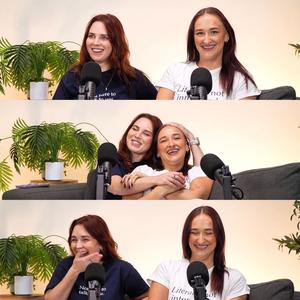


speaker-0: Welcome to HASSL'd the Big Sister Podcast by HASSL We're taking the conversations women have been having for years out of the group chat and inviting everyone in, including men. We're here to have fun, honest chats, but we'll also cover some hard topics. Don't worry, we'll give you a heads up before we do, so that you can protect your peace if you need to.
speaker-1: you
speaker-0: HASSL'd the Women's Safety Podcast. Okay, I've got one question for you. Who approved us getting mics? HASSL'd is sponsored by Pod, one of the UK's leading EV charging providers. Helping more than 300,000 customers make electric living easy, affordable, and rewarding. Pod are also a dedicated HASSL ambassador and partner in our mission to creating a safer and more equal world. I'm Natasha and I'm Carla. And buckle up because we've got a lot to say. We're so excited to have Clara Hermet with us today. She is a broadcaster, presenter, self-love and confidence coach. And you also may know her from her amazing community online. You might have seen her on BBC London Radio, Radio One Extra, and BT Spa.
speaker-2: Yeah, there's lots of places that I've been featured over the years. And now I'm here with you, so that's exciting. Yeah, welcome to
speaker-0: We are able to have you, honestly. the first thing that we want to jump straight into, we ask everyone, what's been winding you up lately?
speaker-2: Of stuff's been winding up. I'm not gonna lie. I was at Notting Hill Carnival over the weekend. It was the 60th anniversary of Notting Hill Carnival. It's somewhere that I was first taken to as a child when I was 10 years old, and I love Carnival. And I think that it is a huge celebration of Caribbean culture. It's about rebellion, resistance, it's about freedom, and it's beautiful. But there is a video that has surfaced. of one of the DJs, a very big, well-known DJ in the Soka community. Saw a girl who was, you know, like a lamppost. She was kind of a little way up the lamppost, holding onto the lamppost, kind of doing a little dance, a little bit of a twerk on the on the lamppost. I thought she looked great. And he, in front of everyone on the microphone, shouted that she needed to get down because she didn't have enough ass to shake. And he proceeded to keep going on. And he was being really it wasn't funny. It wasn't, you know, jokey. He was really body shaming her in front of the crowd. I think it totally goes against everything that that carnival is about, which essentially, and especially on Pretty Mass Day, which this was, is a is a celebration of of black women looking amazing. and that's all ages, all shapes, all sizes, and yeah, it's a real shame that that happened. He has issued an apology, although I feel like that apology may be due to some of the backlash that he received.
speaker-0: Exactly. Like is it an apology if you've basically been forced to take accountability? Because that's what you think in the you think in the moment.
speaker-2: disgusting. And that's what someone said in the comments that actually that that they felt like, no, this is a true reflection of what you think and feel. Outside of you know the the apology or not the apology, you obviously think and feel this way. And that's what came out of your mouth in the moment, you know, and that's a reflection of maybe some of the the thoughts that you hold about women and bodies and who has the right to dance and what is and what isn't sexy, etc. but for me, you know, that video of that woman Her face is out there, you know, and that's something that is gonna live on and on. He's kind of issued his apology and said sorry. and I think she will be getting a massive outpouring of love because she looked great. Yeah, yeah. That's the truth. And she was having the best time as well. so you know, I think it's just that kind of idea that all bodies are deserving of respect, of love, of appreciation, and to shame someone for their
speaker-1: for
speaker-2: body is just it's a horrible and cruel thing to do and it's just totally unnecessary. Yeah.
speaker-0: Absolutely reprehensible. Good. What's winding you up? my god, launching straight is good fun. What about you? I was gonna say you go. All right, guys. I just I'm so sad about Dolly Parton being gone. I feel like honestly, I just can't deal with the fact that we've lost such an amazing person. She was just, you know, I really looked up to her. I think most people did. The outpouring of love since she's been gone has been incredible. And looking at everything that she achieved and It was just it's such a sad week and then also, you know, Tim Curry being on as well. I just that's really ones. I'm just sitting here like, We're losing the good ones. I'm not gonna say anything else about who we're not losing.
speaker-2: I think the internet did that for us.
speaker-0: I don't need to research. but yeah, it's just it's a really sad sad week. You know.
speaker-2: I think what's you know, good in in the kind of sense of Dolly Parton is that all of the light that has been shone on the amazing things that she did throughout her life. Yeah. And also the fact that, you know, that idea that she was just herself. She was it didn't matter what people said to her about being too much or she showed up as she wanted to, as herself, covered in jewels, boobs and her hair and you know, and and she was a serious businesswoman. She supported and helped other people. And That wasn't determined by how she looked.
speaker-0: Exactly.
speaker-2: She got respect for being who who she is and for the things that she managed to achieve. And I think it's allowed us all to reflect on that and just kind of remember that, you know, we're enough as we are, right?
speaker-0: Exactly. I keep thinking, you know, what would Dolly do? Because she really would do so much. She would give so much goodness, but she would also make sure that she had that business head screwed on. She's not gonna let any man walk over her. She's just gonna go and do exactly what she needs to do to do the best thing. She also called out those who aren't doing enough. I know, that's right. That's what I love. Yeah. I love it. All right. My winding me up is a little bit more personal. I have endometriosis and I've just been flaring I feel like for over a week and I'm so over it. I'm so sick of it. It's just been constant. So I think what's winding me up is the fact that I'm in pain, the fact that there's no support, not enough support, unless you go private, which obviously not everyone has ex a access to. And I think it's just obviously I'm very grateful to work in a workplace that's very supportive of that. But I think not all workplaces are. So I think it's just been winding me up. I'm so over it.
speaker-2: It and also I think when it comes to endometriosis, that the medical profession is it it seems to be just really bad. Yeah. You know, and and and because the medical profession is really bad at dealing with it, recognising it, acknowledging it, that then that has a knock-on effect to how seriously it's taken in the workplace. Absolutely. I interviewed somebody and she was saying that sh for ten years she was trying to get the for them to do the surgery, the keyhole surgery to confirm that she had. Endometriosis and that they told her in this by the time so from when she was fifteen on, this was, because she was really aware. And in that time, at twenty-three, they said, We'll just get pregnant, you know. And it was only she got the she got the surgery because she took her boyfriend to the appointment. Yeah, he
speaker-0: That's it.
speaker-2: backed her up, at which point they then decided to take her pain seriously, which is just it's horrific.
speaker-0: I could do a whole podcast episode on this. Maybe we should. Like ten at some point. Yeah. but I also at the age of twenty two was told that I should get pregnant as well. that's I wasn't I'm like, okay, cool. So no pain for nine months 'cause what you don't get your period. And then I now have a baby. Yeah. And my pain's back. So it's like what actually is the my god, thank God. And then eighteen years. Yeah.
speaker-2: When you've got nine months off. Yeah. So much.
speaker-0: Yeah, literally. I've signed up for eighteen years. But it's it's So frustrating. I had the worst experience actually with trying to get diagnosed. And I think, yeah, like I said, I could do a whole podcast on
speaker-2: I
speaker-0: this. Yeah, probably should. thankfully got diagnosed, had my surgery, but unfortunately the pain has returned. But I yeah, had some awful experiences with some doctors. Cried in in specialist appointments, and the doctors were just like, you don't have endo. And yeah. And then obviously had the surgery and had it all removed. And I was like, hello. I do.
speaker-2: It it's wild, isn't it? I think because we have that that kind of awful stereotype of, you know, women being more emotional and et cetera, that our tears and our pain aren't seen as like as as valuable or as real. I guarantee if a man went into like a doctor's appointment or hospital appointment and started crying, they'd be you know, something must be serious wrong. I know. but
speaker-0: Sorry, I was just gonna say, it really annoys me this whole like women are so emotional and it's like, Well, most men go in angry to stuff like that. That's an emotion. But that gets taken seriously, but women's tears
speaker-2: Brush that aside. No, but if we went in angry, we'd be seen as aggressive and problematic, etc. I saw a guy did a video where he was wearing, you know, the kind of period cramp stimulator. Yes. and he wore it for a day. And at the end of it, he was just like, my god, like you know, his opinion he's I don't know how women do anything else when they're experiencing that pain. And obviously, if you have endometriosis, that pain is even worse and more severe. And there's other symptoms and other side effects.
speaker-0: I feel like every man should have to do one of them simulators. I keep seeing the childbirth ones, and I'm like, it's really scary. And then they're the pain simulators. And then they're just like, it's woman being like, I go to the gym with this level three or four pain. And then the men are like crippled over. And it's like, every man should have to try this out, see what it's like. I did a 10K once and I was on day two, a period, like the longest perhaps ever. And I told Matt and he my partner, and he was just like, but does it help like doing the exercise? And I was Yeah, a bit, but like I have to go through. Racing a 10K and also like having the worst cramps of my life. Yeah, you know, the way that most men would just feel, I'm just not gonna get raced. I'm like, I don't really have any like option because what's the point? What am I gonna let it rule my life? Yeah. I say this all the time. Amy's always like, Don't work. And I'm like, okay, one, I'm bored, like I absolutely cannot sit at home and not do anything. And also like I'm like I'm trying the balance of like trying to relax, trying to, I guess, rest so that it can pass, but also like not letting it rule my life, like trying out and Go do things, exercise, do all the things, but it's it is exhausting.
speaker-2: That balance. If you're a professional athlete as well, you know, as a female professional athlete, you will have periods and you can't decide when the Olympics is going to be, when the Commonwealth Games is going to be, when you're, you know, if you're a footballer, whatever it is that you're doing, you can't decide when those things are going to happen. So you have to find a way, I guess, to deal with that on top of you know, the fact that you are an elite level athlete and the training you have to do. So I just think that's why I I feel like Women deserve way more appreciation for the fact that they managed to achieve everything that they have and everything that they continue to, whilst also having to contend with our reproductive organs, which makes hurt.
speaker-0: my god, this could be another episode. You might have to come back for that. So I really wanted to ask you, you as we sort of mentioned in the intro, you have done all of these sort of amazing areas of the media, you know, you've presented, you've done BT Sport, and I mean you've obviously got quite a bit of insight into that just from your previous question. It's quite male-dominated spaces though. Have you how have you felt being a woman in that space?
speaker-2: So I think when I first started my presenting career, it it has always, always been kind of quite male dominated. And I was in I I worked for Grime Daily, which is now GRM Daily for quite a long time. So it was, and at that time the the Grime scene was predominantly men, you know, in front of camera and in behind the mic, like whatever it was, it was all male dominated. but to be fair, I was always respected. I feel like it within that world, I always kind of felt safe and respected and looked after. So I think that was good. But I I also think that, you know, there is this thing that happens. I've had a lot of conversations about it recently with female DJs. especially I think in certain musical genres there are more, there's now a many more, you know, female DJs, and that's been happening over a long period of time, that that there has been more women in that space. In certain musical genres, there's not. And I was speaking to a girl who's a friend of mine, Macy JD, she's an incredible DJ. And she was saying that there are certain people that have tried to book her and said that her the booking of her is contingent on her wearing a bikini. And I'm like, you would never ask a man to turn up in his wife fronts. You'd see him as a as a as a DJ. And so it's that kind of idea of like the sexualization of a woman that has seems to have to go along with her being good at something that's a bit crazy. I think BT Sport again it was it was male dominated, but I had a co-presenter, Rachel Stringer. and I don't know, I again I I think I've been quite lucky in the people that I've come across. I don't think when it comes to my workspaces that I've could experience loads of kind of sexism because I think I was there for I was there for a reason, if that makes sense. Yeah. I don't think there's enough women in any of those spaces. and it might be that, you know, I was that one woman at that time, or, you know, one of out of, I don't know, 20 pr male presenters, they needed to have one or two women. And and I was part of that. So I do think there is that kind of representation issue if you look on a, you know, a bigger scale, especially across TV and especially when it comes to sport as well, that kind of idea that women can only commentate on female sport and talk about women's sport and men can only talk about, and actually it's just all. It's just sport. Like why does it have to be woman women's football and then it's just football if it's men or women's basketball or women it's not. So yeah, I I I think I I've been in a male dominated environment for a long time. And maybe that, you know, I'm used to that, I guess, in a way, and being around a like a a lot of guys. And kind of I think because I can be quite I'm very sarcastic, I'm very dry, but I also, you know, I guess take Take I don't think take myself seriously as the right word, 'cause definitely don't. But I I think I just kind of can handle myself. And I think that's been yeah. Necessary.
speaker-0: Have you seen it change over the years? Like I mean, you're saying you may have been that one woman in at the time. Have you seen obviously more women get into the space or have you seen much change?
speaker-2: Yeah, loads of change. Loads and loads of loads. Especially, I guess, like when it comes to the the music scene, as in, you know, that kind of grime scene has grown and changed and become so much bigger. So there's more money involved, there's more platforms, there's more interest. It's become, you know, some of those artists have become international, you know, artists. And so that has all changed. But also, yes, so has the amount of people that are you know, a journalists, content creators, interviewers. And I think What's really helped with that has been, and yes, there are downsides to social media, but social media, YouTube, those platforms have really helped because talent has been able to be discovered. Yeah. There's not this official channel that you have to go through and these kind of gatekeepers anymore. It's like, I'm good at this, I'm gonna show up and just be myself. And and that sometimes can equal you getting a job. And there's now loads of women, you know, interviewing, whether it's, you know, kind of athletes or musicians or whatever, as there as there should be, and in loads of different contexts, you know, from the kind of really like serious interviews all the way down to kind of fun and jokey stuff. and I think, you know, as women, we can do all of that. Yeah. You know, we can be funny. We can we can do it all. so I think it's great to kind of see that we have that more balance and more representation. And I guess for for young women, you see more women doing that. You know that you can do it as well. And that starts to open doors and and I think that's a beautiful thing.
speaker-0: I feel like it reminds me of this like age old thing of like when women used to like wear band t shirts and they'd like, Name five songs. And I feel like women, I don't know if you've experienced it, but if women enjoy sport, it's like, name five players or when was this game or whatever? And it it's great to hear that there are more women getting into the space like that's so nice.
speaker-2: As it should Yeah. And they're they're doing like doing a great job as well. And and because for me, as that's the thing, like I'm not, I don't I have loads of sport knowledge. Yeah. So the job that I got with BT Sport was a it was a show aimed at teenagers and it was kind of like a magazine style show. So we just did little bits on every sport. And the reason I was brought in was because the interviews that I was doing with music artists, they kind of wanted me to do a similar style with athletes. And that's fine. And that's what we did. So it allowed me to use my skill set, but I didn't necessarily know loads about sport. I just have a kind of interest in people and, you know, kind of creating things that are that are fun and light and funny. And so I think that again, that's why you can have lots of different skill sets and that can appeal or apply to, you know, lots of different genres and spaces. Yeah.
speaker-0: Hundred percent. I love that you're kind of like mentioning all these other like radio DJs that are women and things like that. I mean, did you find a lot of support in other female DJs or radio presenters, or do you have a little network there or anything?
speaker-2: I actually got more support from men. I think in the early days because there wasn't so many women. Like there genuinely really wasn't loads of women at the time doing in that kind of interview space, in that radio space. There wasn't. So that wasn't the case. but I think now for me, if I meet someone who's in that space and I can kind of help support them, advise them, or just be there as a a sounding board, that's something that I think is a really important thing to do. And no, I I love seeing women win. And I think it's really exciting to see, you know, the trajectory of people's careers, et cetera. and just to watch people grow. And there's been loads of people. I met my drama when she was 16 and she first started like her career. We were both at a jump off event and we kind of got to know each other there. And it's been beautiful to watch that. Amelia with chicken shop dates, like all of these different people that have grown, like to become huge brands. And again, you know. That is that something that before them I don't think was happening as much because you had traditional T V format. So unless you were on MTV or T four, th it was so limited as to how you could show your skill set and the the the number of people that could have those jobs was limited. Whereas once YouTube started to happen and money started to be generated there, then there becomes more platforms and more opportunities. And yeah, it's lovely to see that.
speaker-0: Yes, it really is. It's absolutely incredible. I feel like, yeah, it's it's so amazing seeing so many young women take up this mantle now. another thing that I kind of wanted to go into in terms of what you are known for online, at least to us, like, you know, you're a little hero for us because we love seeing your Instagram posts about being single in your forties, not having a child and just sort of authentically, really genuinely loving your life and living your life in that way. so I mean, I'd love to know how it's been for you like posting that stuff and going against the grain of what, you know.
speaker-2: You you gotta get it right first. It's forty three, single, expired, leftover, useless, up
speaker-0: Sorry, washed up.
speaker-2: woman who hasn't fulfilled her only purpose for existing, have the children.
speaker-0: Sad with Tim. Yeah, that's it. If you want issues, we can provide you.
speaker-2: So I feel like that that it kind of happened by mistake that I did that. I made one video, I think, when I was 38, and just said, you know, like I'm single, I've never been married, I don't have kids, but I'm happy. And I got, you know, kind of a lot of love from women and so much anger and like hate from men. I was like, is
speaker-1: Whoa, what is this? This is-
speaker-2: new. And I I guess up until that point, I hadn't really experience that. I hadn't experienced it. And I hadn't even really considered it. I knew that, you know, those kind of stereotypes existed. I was aware of that, but it hadn't been directed at me necessarily. and so I was like, well, this is I found it hilarious. I think it's the first time in my life where, you know, as someone existing online, you constantly get criticism. but this criticism just didn't touch me because I'm like, it's it's insane. Yeah. Yeah. Yeah. Like what what are you actually talking about? You're crazy. And you're
speaker-0: just said how much you love your life in a video and the hate that's coming through that and it's like what
speaker-2: No, you've got that wrong because if I say in a video that I love my life, what that actually means is I'm miserable. Yeah. okay. So we're playing a game of opposite. Yeah. So would you be happy if I sit here and say I'm really miserable in my life, does that mean that I'm really happy in my life? It doesn't, it's all bonkers. It makes no sense. But what what of course, yeah, it winds up some, and I call them some men on the internet. It winds up some men, and and I have come across those same mindsets in real life as well. Yeah. but that I started to think I don't really I don't care about you. What I do care about is the fact that it unites a lot of women. And there are a lot of women out there whose life hasn't gone to plan. And you know, that's what I say about my life. I did always assume that I would get married and have a family. And that was just what I assumed because I grew up believing that's what happens to everyone, right? Like you just do that and that's how it goes. And it's just simple, it's easy and everything falls into place.
speaker-0: Heads up, we've got some serious topics coming up now. So if you want to protect your peace, please skip this section.
speaker-2: And didn't happen. So I think I lost my mum as a child. I lost my sister when I was in my late twenties. And I, after my sister died when I was 28, I was in a state because I'd never dealt with my mum's death. It was never something that my family spoke about. We didn't deal with grief. It was just, you have to get on with life. I was nine, getting on with life. And it was like I went to school,
speaker-1: cool.
speaker-2: said goodbye to my mum in the morning, I came back, I never saw her again. And to try and quantify that as a child, it's like trauma that you go through, it just was awful. So when my sister passed away after six and a half years of breast cancer, the same thing my mum died of, it was almost like my life fell apart because everything that I'd been repressing and holding onto for years was like, I'm here, so let's just deal with it. Yeah. and my life changed forever at that point. And so after a few months of feeling
speaker-1: full.
speaker-2: Just said to myself, I have to find a way to be happy. Like that's it. I don't know how to do it. I don't know how I can do it, but I'm gonna do it. Yeah. And I started reading biographies of people who had been through like far worse life experiences than mine and still managed to create like happy, healthy lives. And so that gave me the inspiration. Then I started reading loads of like self-help and spiritual books. I went to seminars, I went to different, you know, like meditation retreats and all of these different kinds of things. And it's been a gradual, like a gradual, gradual, gradual process of things getting better, of things shifting, of things changing. And yeah, I think around the age of, you know, kind of like 38, probably when I put out that video, is when everything really started to, you know, like
speaker-1: really fail.
speaker-2: real. Like I have agency. I have control. And so what if my life hasn't gone to plan? I'm alive. And what you know, I can't sit here and be miserable. I have to go and do stuff that I love and do stuff that I enjoy. And I did a solo trip at 32 for a year. Like there's lots of different things that I did that just really
speaker-1: See?
speaker-2: helped me get to the point where I'm at now. And yeah, it's just I think the the thing that I find funny is that There's an assumption that because I say that I'm happy with my life as is, I hate men. yeah. I, you know, I hate children. I hate the idea of a traditional family. Yeah. And none of that could be further from the truth. But I also love myself. Yeah. and life is short and life is precious. So if life doesn't go to plan, I'm not gonna sit at home and cry because I don't have those, you know, s I haven't ticked society's mythical boxes. I'm gonna go out there and live every piece of life that I have. And that's the message essentially that I'm sharing. So if people are offended by that, or if it triggers people, or if they get it twisted, that's absolutely fine because I think it's imperative that all women know that
speaker-1: The
speaker-2: the crux of having a happy life is not a man and children, it's your relationship with yourself. Absolutely. And once you have that right, that's it. That's that's the thing you need above and beyond all else. So
speaker-1: Yeah.
speaker-0: And the man and the children just add to your pre existing great life if that's what you want.
speaker-2: Yeah, or they take it away. And that's, you know, that's the truth. And I think that's something that, you know, I get messages from people. I know people in my own life who are in real in the relationships that we're supposed to aspire to, that we're supposed to want. And they're fucking miserable. Yeah. Yeah. You know, and people who have children, there are women who have children that they love their children and they they'll say, you know, I wouldn't change it, but if I could go back, I probably wouldn't do it. I wouldn't do it. Yeah. Because it changed everything so much. So this kind of idea that we're sold that those two things, a relationship and children, equal happiness, is not, it's not true at all. And I think it's, you know, it's and I think that's what's happening. A lot of women are now being not ashamed or feeling shame in sharing the actual truth and reality of relationships of children. But I do think that when you're in a space where you do love yourself or you have created a happy existence for yourself, when you meet someone, as soon as they start to you know, take that away or encroach on that or ruin that in any kind of way, you you understand that that's not a connection that you would ever want to uphold. Yeah. So yeah, if you can get to the place where you're happy and whole first, then of course I think the right relationship and having children can be a beautiful experience, but that's not everyone's experience.
speaker-0: Yeah, Amy and I were d actually discussing this on the train yesterday back from an event that we went to. And I think we were saying, have we always thought have we always actually wanted children? Or have we always just thought that that's actually just what we do as women? And I think as someone who was in a long-term relationship, I I'm kind of coming to terms with figuring that out at at this stage right now that I'm in of figuring out, did I really want that? Or actually was it just pushed upon me because I was in a long term relationship, I was engaged. You know, it was those are the things you are expected to do. And I think we were discussing it and we were discussing all the things of Amy's actually writing a book. well, it's been submitted. not to plug that. but there's a section in it all about, you know, the how much women do obviously when they have children compared to men. And that is just the experience obviously women are the ones that have to birth carry the child, birth the child. There's so much more to it. And I think we were discussing all the things that we it's not talked about that women have to go through and actually whether we want that. And it's okay if you do or do or
speaker-2: If you don't, or if you don't know. I wonder if though the thing is, the point is the more it's being talked about, the more women aren't having you
speaker-0: Yes, absolutely.
speaker-2: know, I think that that's the thing, isn't it? That reality. And even like my grandma, who like I absolutely loved, she, you know, she lived in a time where she didn't have a choice. Like it it wasn't, you know, it's expected, it's also societal conditioning, isn't it, from kids, yeah from a from the moment you start reading fairy tales and books and you see TV shows, even it's Peppa Pig, there's Mummy Pig, there's Daddy Pig, there's the k you know, it's like that kind of all of that is is leading us to get to that assumption that that's what we're supposed to do. and that becomes inherent and ingrained. But also, yeah, my Nan would say, you know, she didn't she didn't really want kids and she wasn't she didn't necessarily feel like she was the greatest mother. But, you know, that's what you did. She had three children. and She didn't have that choice. I'm sure she, you know, if she'd lived in this time, her life would have been very different and she would have done things very differently. And, you know, I I don't think that th that there's anything wrong with having kids. And I and I like I say, I would still love to be a mum if that opportunity arises with the right person. However, my best friend has two children. My brother has two children. And the reality of having children, it is hard. Yeah. It is brutal. It and and That's when you have a partner who is, you know, sharing some of the, you know, the load with you. But for a lot of parents or a lot of mums, you're essentially a single mum anyway. Yeah. That man's a lot of men are not doing any anything to really help. and when they do look after their kids, everyone's like, wow, isn't he such a good dad for babysitting?
speaker-0: Baby sitting to the month's night off. Dead's babysitting. We were literally discussing it earlier. It's never taken into consideration that it's like, okay, you have the kid and people talk about child rearing. But for me and lots of women that I speak to, we're like, God, we're getting to this age and we need to start like, you know, deciding whether we're having kids and stuff. It's also like You know, I've got put my body through this huge change. Yeah. like nine months first, that's just to stop. Like, you know, we're just carrying the baby. And then afterwards, it's never the same as it was. I then have this being that I've created that I have to look after. And I have said before, I'd love to be like a dad. That would be like you know. I mean, always said that the dream is to be a dad. My dream is to be a dad to not have to go through that to have this lovely little form child come and then every time that I do something above average, people are like, he is amazing. I was like
speaker-2: Then then it would seem a lot more appealing, right?
speaker-0: Then it is a more appealing. I see why there's so many men who go, I really want to have a kid, but you know, she's holding me back. And it's like, Well, it's a much bigger decision.
speaker-2: And I think they say there's something like it takes three years before you start feeling like yourself again because your hormones go through the roof. So you've then got a newborn baby, you're getting no sleep, your hormones are going through the roof. Like all of these other things are happening. You're trying to deal with the fact your body is completely changed. Yeah. And you know, you I guess a loss of I yeah, a loss of your old self, a loss of identity. And like you say, for a man, it's just like, and I've seen it firsthand in a lot of cases. As a woman, you're dealing with all of that, and then your partner starts to feel left out. Yeah, yeah. They're not getting the affection, they're not having sex anymore, they're not and and then they start acting in a way that reflects that, where they are then, you know, kind of begrudging to their partner. And like I say, I've seen it firsthand, and it's awful. It's awful. You know, as a woman, you're going through all of that, and your partner who supposedly loves you, and at that time when you need them the most. is upset because they're now not the centre of attention and and you're not having sex with them.
speaker-0: Yeah. And most of the time they were pushing for it. Yeah. And the other baby pressure to have baby number two. Yeah. Not just from the partner, but from society and every family member and friend who's like, when's the next one?
speaker-2: But I think that's it as a woman, isn't it? You you know, you can never get it right because you don't have children, then you haven't fulfilled your any purpose for existing. You have a child, or children, you end up being a single mum, then you're a used up old whore or something or whatever they call you. If you have one child, then you should have had two. If you have two, you should have had three. If you had three, you should have four. If you have four, you've too much. You know, like where does
speaker-0: Where'd where do we went?
speaker-2: Can't you can't win. Yeah. That's what people say to me. It's like the the same men who'd say the things that they say to me about not having children and, you know, I'll never know you'll never know love like it if you've never had a child. those same men are the same ones that will then, you know, say derogatory comments to single mums. Yeah. You know.
speaker-0: I actually saw a TikTok recently and it was like how to how when you're dating, how to figure out if a man is a feminist or not or how they what they believe in women's rights. and it was ask them how many kids they want. Just to just as a plain question, just to see how what their reaction is like if they go, I want a football team with children, how many children or whatever. And it's like you can really get an idea on how they see women based off of like how many kids they're expecting their partner to carry.
speaker-2: Pop out. Yeah. Get out. Pop out. Easy, light work.
speaker-0: Exactly. Have all at once.
speaker-2: And men could do men could do it just they could do it better if they did it, you know. They'd you know, they'd be able to just do it all in one go. They should imagine they'd
speaker-0: E fish in planning around.
speaker-2: just get on with it. Come on. They'd to be fair, they'd crumble. They it would never survive, but that's you know
speaker-0: Did all this stuff kind of is this what led you to becoming also a self love and confidence coach?
speaker-2: What led me to that in terms of the self-love, the confidence empowerment, is the same thing that I was talking about earlier, the the transformation of my own experience of living a life that felt chaotic, desperately miserable, just out of my control, to getting to a place where I'm like, hold on a second. And it was me that did that. And I I think for a long time I felt like it's gonna take someone's gonna have to help me. I'm gonna have to have, you know, the Someone's have to save me, someone's gonna have to come along, someone's gonna have to, and you know, that kind of understanding that none of that's true. And I'm the person that can that can change my life. And I might need help and support from professionals, you know, from people who can teach me things that I can learn from. of course, yeah, sure. But essentially it was, it was my journey, my experience, and something that I did. And I see that there's, you know, a lot of women who aren't happy in their lives and I think a lot of it comes down to our relationship with ourselves and our internal world. and by making shifts and changes in that, you don't have to necessarily have your outside experience change for your experience of the world and of life to change. And so from understanding that, I was then like, wow, I can I can teach other people this. I can show other people how to do this. And so that's why I went and did the qualifications that I did, because I felt like, you know, yes, it's great to learn from a professional, but it's sometimes it's even more helpful if that person has been through something similar. Yeah. because there's a level of relatability, empathy and compassion that I think exists in that space. that I just think is really powerful and really helpful.
speaker-0: Do you have any like if you want to share one, if you can, but like a success story out of that? 'Cause I just love hearing about like glow ups from Yeah. I was gonna ask if it seemed like transformation, I imagine you have.
speaker-2: Yeah. I mean, I think there's there's loads of of different things that have happened over the years of of working with with women. and I think some of the the best ones are just people being, you know, it it doesn't necessarily mean an outward change. So a lot of the women I work with are already successful. So whether they're succeeding in in a corporate world, whether they have their own business, but it's how they feel within it. So they might not be able to show up the way they want to in, you know, in meetings. They might be there existing in that, but massively feeling that kind of imposter syndrome. or just constantly feeling anxious and in panic and, you know, worrying that everything's gonna be taken away from them, et cetera. So I think a lot of the time it's it's just working on that mindset and that that inner dialogue, etc., to get that change so that they can enjoy where they are in their life. There's people that I've worked with who are going through kind of separations that they never thought would happen that that you know they didn't even envision and it's trying to work out who am I now. Yeah. Because I thought my whole life was going to be this. Yeah. And now I've been blindsided and it's this and I'm just completely
speaker-1: See?
speaker-2: now who am I? Yeah. and I think that rediscovery of self is something that's beautiful to see. Someone go, okay, what do I enjoy?
speaker-1: Enjoy.
speaker-2: What do I like? What is important to me? What does matter to me? And to take someone on that journey and to see them come out the other side and then go and see them start to live that. You know, like someone that I'm thinking of like relocated, started to travel more, like lots and lots and lots of things that had been put off to accommodate the relationship they were in suddenly can take priority. so I think there's just been there's just lots and lots, and very often like my clients, some of them that I've worked with for I guess maybe since twenty twenty one. still around, like they're still, you know, part of my life, or they'll still come to events, or they'll still like I'm doing a I've got a new programme now which is not just about mindset. I'm working with my fitness coach. So we're doing an eight week program that's focused on fitness and mindset. And you know, some of the people that I've worked with before are have signed up for that because it's something different. It's a it's a next evolution and it's it's really lovely.
speaker-0: Do you just work with women? Do you work with men at all?
speaker-2: Exclusively women. and I think my reason for working with women is because a lot of this is about my own personal experience and I am a woman and I feel like yes, I I'm sure I could help and support men, but my passion is helping and supporting women. and and I think because I felt I've there's l a lot of times in my life where I've felt alone, like not having my mom. There's just been that kind of missing presence of a woman who I guess could lead me a little bit. And so I think being able to, you know, provide that in any capacity for women is something that's just really important to me. That's incredible.
speaker-0: So what I wanted to ask you is you've been very open about your mastectomy online. And in a time I feel when actually I haven't seen loads of content around it, you know, you really I think created very meaningful and open for content around that. I wondered how your experience had been with sharing that online, positive, negative.
speaker-2: I think all in all, I mean positive. At the time it's been it was in twenty fifteen. So it's been eleven years now. And at the time when I did the or I had the mastectomy, I did a radio documentary with Radio One. I did a lot of video content for Newsbeat, and I did something for The Guardian, so I did a video for The Guardian. And then I believe there was a story that so there was a lot of stories in major press, so across Daily Mail, etc. And some of the comments were like, my god, what an What an idiot, you know, if I was if I had a genetic mutation for brain cancer, would I have my brain removed? No. And I'm like, God. So, and you know, I was I was younger, and I think at that time I was more vulnerable as well. So some of that stuff did, you know, that did impact me and it it did affect me. Whereas now I just feel like it it doesn't it wouldn't matter what anyone said to me. I know that my decision and my choice was the was the right choice for me. and I'm really glad that I, you know, that I did that. And and At the time I was I made a documentary actually, which is I think it's on Amazon now, because none of the broadcasters would take it. At the time, they were saying a lot of the feedback was the story's too female, which I found bonkers because my dad lost a wife and a daughter. My brother lost a mom and a sister. You know, when someone has breast cancer, which men can get as well, fair enough, at a much you know, lower percentage and and rate. But it's not just Or when women get cancer and they survive, breast cancer and survive, it's not just the woman that is impacted, it's everybody around her. But the community. That was their feedback. So, my friend Yemi, who's incredible, he we made the documentary anyway. and there was some, you know, interesting commentary. There was a someone else who was doing a piece at the time who Was like, aren't you gonna film the surgery? And he kind of said no. And they were like, Well, why? That's the money shot, which obviously is a term analogy from porn. So that was, you know, that was quite illuminating. I think there was, you know, that angle of things. And I also met with some documentary makers at the time that were like, Well, you know, what happens if once you've had this done, a man never finds you attractive again? Because that could happen. And I was like, Shall I?
speaker-1: Wow, this is still a nice
speaker-0: Like an effect of life-changing surgery. Yeah. Like, yeah, gotta think about how sexy I am, not my risk of
speaker-2: Exactly. And then on my own YouTube channel, because I had quite a male-dominated audience at that point from the Grime Daly videos, but I'd also made videos with KSI, with with his brother Deji. So, and that's kind of quite like a young male teenage audience. It was show before they go, and no boobs, no views were a lot of the comments. Yeah. so but but what I will say is that having that mastectomy. completely changed my relationship with my body for in a really positive way. So I actually had a a boob job when I was 20. and I hated my body. I'd had bulimia for years. And in the the throes of bulimia I had the boob job because I felt like the rest of my body was too big and I my boobs weren't even really like a double A cup. They were just non-existent. and I was also I guess around in the time of kind of glamour models and you know that was the the look. Yeah. so I did that
speaker-1: .
speaker-2: and and I think At the time, I was also very shy. So it it was such a confusing experience because I thought it was gonna make me this confident, yeah, you know, sexy person. But I think it made people have a certain perception of me that I, as a person, you know, couldn't live up to and didn't have the confidence to live up to. So it was all very, you know, confusing. and then when I had the mastectomy, I knew that, you know, everything was gonna change. They can't tell you what the results are gonna be. You don't know what your boobs are gonna look like. You know, I I opted to keep my nipple, but there's also a 30% chance that that will fail. There's things
speaker-1: There's all these.
speaker-2: that go into it, but I at that by the time I got to that point in my life, I was like, I don't care. Yeah. I actually don't care. What I care about
speaker-1: is
speaker-2: not having to worry or stress or have anxiety about is that a lump? Is that a lump? Is that a lump? And that's what was starting to happen. and also I think the other thing that really got me at that time is I I'm alive though. Yeah. You know, that's not gonna stop me from living my life and doing the things that I that I want to do. I'm alive and I want to still be alive. So, you know, what I thought to myself is even if, you know, they find out years down the line that having a preventive double mastectomy, which they say reduces your your risk from 85% down to I think the what the normal risk would be around twelve percent or something like that. So it's a big difference.
speaker-1: Yeah.
speaker-2: So but even if that was found out to be untrue, I think that It would change the way I think and that was more important. It would give me that, you know. So
speaker-0: Yeah, I feel like so much of femininity is obviously tied into breast. And also like the comments you were getting at the time were tying into that. They were reinforcing it. So that might I can understand why that was such a confusing time. Yeah. I feel like was there how did you, I guess, get on top of that? How did you do advice for someone who's maybe potentially in the exact position that you
speaker-2: Right. I think what happened is the the thing is, as much as that was happening, it was the first time because I think up until that point, I I was a presenter and I was making content. There was always interview content. It wasn't about my personal life. So people knew very little about me. I wasn't really sharing anything. And that was the first time where I kind of authentically shared an experience that I was going through. And it wasn't just about the mastectomies, also sharing, you know, my mum's death, my sister's death that has led me to this kind of this place and this point. And the outpouring of love that I got from people that I'd known for years and the sharing of their own stories. And this is men and women, you know, whose mums or aunties or, you know, whoever had been through it, that kind of outweighed things. And it made me and I think that was kind of the catalyst for the sharing authentically and wanting to kind of be transparent about my own experience because I realized the level of connection that you get in that. Yeah. and I and I realized how much it can help other people. So I think, yeah, it it as much as that negativity was coming in, I remember, I think I'm pretty sure it was Mr. Jam when I was at One Extra Radio One telling him about, you know, some of the things that people have said and him just giving me a massive hug and just saying, like, it's just it all y what you're doing is, you know, incredible. Forget what anyone else says. Like you're gonna be absolutely fine. Like, you know, and and I think
speaker-1: people
speaker-2: People can't do that for you if they don't know what's happening and they don't know what's going on. So once that happened, that was just really reassuring and I think it that outweighed anything else. Yeah.
speaker-0: Absolutely. I mean, we get so much hate online for everything that we do. And I think it's at first when I started at Hasslewami would try hide the negative comment. I'm I'm like the face of the brand on lots of the socials, all the social content. And she would try hide lots of the comments. And I feel like at first it definitely was hard to see, especially when they'd hit on like your own insecurity. And I'd be like, ooh, that one, that one hurt. But I feel like a hundred percent when you are making a difference and actually you're getting all that positive. Like you can people are telling you what what you've said has helped me or you know, what you're doing is incredible. I think all of that outweighs the negative every single time.
speaker-2: But also I think it's because it's those comments aren't really about you. No like and when you understand that I and I get it, and i someone once said to me, they the way that they kind of said is like, okay, if I came up to you and said, Clara, like your blue hair looks shit, like blue hair doesn't suit you, you look terrible. You wouldn't take it personally because your hair's not blue. Yeah. You know, whereas if they came up to me and said, Your your hair being ginger looks shit, it looks terrible on you, should that would hurt because yeah, I, you know, that I have ginger hair. So if there's an insecurity that you have or something you believe to be true about yourself and someone else happens to mention that, yeah, obviously that's gonna hit home because you believe it to be true. It's not really about what they've said. It's yeah, you've so but I also think for a lot of these people, they know nothing about you. And what happens is they see something, this post, it triggers something in them. And rather than being self reflective enough or introspective enough to go, why does this make me feel angry? Or why does this they you know, kind of reflect that anger back onto the trigger. Yeah. Which is you. Yeah. So it's not really ever about
speaker-0: Yeah, absolutely. Yeah. Absolutely. Couldn't agree more. I feel like we have really put you through the ring S I think that we have some fun. Let's
speaker-2: Go let's go for it.
speaker-0: have Amazing. And we're gonna move on to segment now, which Carla absolutely runs and kills. And it's our green light, red light segment. Amazing. Green light, red light is powered by Pod. One of the reasons why we love partnering with Pod is that we see firsthand the work that they do in supporting women in the workplace. Building a better world for business, and they're so genuine in absolutely everything that they do. Through Eden at Pod, their program for social change, they're stepping up to tackle some of the systemic challenges facing society today by building a representative workforce, helping their people thrive and allowing communities to grow stronger. Pod is a business that gives back and creates opportunities for all. Their mission is to power the life we love without costing the earth. And Eden at Pod is making sure that everyone is a part of that journey. Thanks again to our sponsor Pod. You can learn more about Pod and find out more about their trailblazing program for social change at podenergy.com forward slash Eden. So we're all gonna need
speaker-2: Yeah.
speaker-0: one of those. Yes. So I'm gonna ask a question. and you we're all gonna do it, basically. whether you think it's a red light or a green light, or somewhere in between, you can do both. It's a friendly relationships. Yeah. It's it's
speaker-2: We don't know what she's gonna ask.
speaker-0: excited. Okay. Someone who says I'm not a feminist. Three, two, one. That's a red light. It's a red from everyone, no. Yeah. Love that. I love when we're all on the same thing. You're also welcome to give context.
speaker-2: Because why would you not be a feminist, which simply means that you want equality for men and women? Why would you not be that? I completely
speaker-0: Great. I always say this. And it's just because there is still this very annoying subset of people which seem to think that it means that we want more rights. We want to be elevated. And I always say it's just literally we want
speaker-2: Is it that or is it that there are a lot of people out there who actually just want to go back to a time which was not that long ago where women did have less rights because it made them feel more powerful? Absolutely
speaker-0: I that as well.
speaker-2: and I think that there's that as well. It's like actually we don't like women having equality. Get back down there. Yeah. yeah.
speaker-0: More
speaker-2: No. No.
speaker-0: Absolutely not. Back in that kitchen and three more kids.
speaker-2: Yeah.
speaker-0: has is it a red light or a green light if someone has a work wife or a work husband? Three. Two Phil. One. I think it's like an amber. Maybe a red, yeah. I'm going red. I lean more red.
speaker-2: What does that what quantify cause I feel like if they're just friends and it's a bit of a joke like as in like, you know, that's that's my work wife or that's my work husband, but it's as in you're just mates at work and there's no context outside of it. Cool. But if there's, you know, this kind of like flirtation and emotional connection, yeah, then
speaker-0: Exactly green.
speaker-2: But the other one I guess is also the boundaries in your own relationship as well. You're both comfortable with. Yeah.
speaker-0: No exactly, couldn't have put it better. Okay. Red light or green light if someone Okay, let's say someone over the age of twenty five still has Snapchat. Only because I'm like who I send vlogs to my girls. Yeah, I think I'm just of okay, I'm a bit sending videos to my girls. Yeah. And I think I think. I think. Yeah.
speaker-2: Yeah. I don't know how old you are, but I think because I'm in my forties now, if I, you know, if I met somebody thing is, this is probably this is really bad actually, because this is me maybe being sexist. If it's a woman that has it, I wouldn't feel as bad, but if it's a man I'd be a bit like and and my reasoning for that is when I did have Snapchat, the reason I got rid of it is the amount of unsolicited dick pics that I got. Out of control.
speaker-0: Absolutely. Absolutely. No, I was gonna say, I feel like for women, sure. As someone who's dating, and if a man asks for my Snapchat, I'm immediately like, I'm never speaking to you again. This is it's Did you you're get unsolicited dispers?
speaker-2: What's
speaker-0: Why do you need it? Like what's this is it, you know, even on Instagram you can turn on disappearing messages and I'm like, I side eye you. Why do you need that? Like you're not a dealer. Why do you need it? What's going on?
speaker-2: I did used to do with the dick pics is because my my dad's a bit of a joker, I'd just be like, Dad, we're gonna go through these and just rate them out of ten.
speaker-1: Yeah, right.
speaker-0: When I yeah, I've been in a relationship for like nine years almost now. But back when I was single, I would give my mum and dad like Tinder, which was the most used one at the time, and I'd be like, Scroll through, let me know when you find someone and my dad was like, There's no one out there. Yeah. It's it's like
speaker-1: None of them.
speaker-2: Good enough for my daughter. Exactly.
speaker-0: Yeah. Like you're not going out with any any of none of the above. Okay. red light or green light when someone speaks highly of their ex. Three, two, one. Green. I love the gorgeous. Yes. Love this. I think we're all aligned on that one. okay. Green light or red light when a man says he prefers a more natural woman. Three, two. Do you know what? They don't even know what that means.
speaker-2: They don't know what that means. Yeah. They say that and then the girls that they follow on Instagram, you know, Kim Cow might have had Yeah, exactly, that have had work done. So what does that even mean? Just find someone that's a nice person that you get on with that you can have fun with. The rest of it just goes out the window. And I always say this as well, you know, you'll get a guy that's like, I can only I know I've experienced this over the years. I don't even want to be with a girl who's like this high that's got a big bum or who's got this. And then you see them with the person that they end up in a happy relationship with and they look nothing like that. Yeah, and I very often I think it's the same for women as well. We've like, it's gotta be over six foot, it's gotta be this, it's gotta be that. And then the person that you're most attracted to is not that at all. So who you have chemistry with is is who you have chemistry with. And if they treat you well,
speaker-0: Exactly. Uh-huh. Perfect answer. Love it. Love it. Okay, when someone has screen time over eight hours. Great.
speaker-2: Really? Yeah. Don't feel about about that. No, but I do a lot of work on my my work's on my phone. So I email on my phone, I do, you know, social stuff on my phone. So I think if you're in that kind of space, which both of you are as well, you're gonna be on there a lot more than it's like people who work in an office might be on their laptop screen. Does that still count? Yeah. But if you're talking about phone screen time, if you do a lot of work on your phone, which people on the move do, so me justifying it to myself.
speaker-0: No, mine is well over eight hours.
speaker-2: If it was eight hours of Doom Scrolling, that might you know, but I mean some of my time is doom scrolling.
speaker-0: gonna say that is the problem is that a lot of mine is and it is a lot of it is work as well. But like sometimes I catch myself and I'm like, why have I been on my phone? I'll get off my phone. okay, what's on T V It's like just get off the screens, go to something else. Get
speaker-2: Get outside.
speaker-0: a catch
speaker-1: Yeah
speaker-0: Okay. A woman keeping her surname after marriage. green light. Love that. That's so good. Love it too.
speaker-2: I if I I got married I would double barrel mine. Love
speaker-0: I like that.
speaker-2: that. I think I'd just be like we can both have we can have both of ours. What would you I don't want just yours? Yeah.
speaker-0: Would you want him to also have both
speaker-2: Yeah. Why not? Love it.
speaker-0: We said we'd make up a name. So have that I've heard of people.
speaker-2: Do it.
speaker-0: Yeah. Like it's all rubbish anyway. So we just have a really fun yeah. We thought we would just get one.
speaker-2: But I like mine, because even though I didn't used to like it growing up, now I'm just like, I think it just people are like, huh? What's your name? And they think it's like Hermit like the crab. I'm like, it's not. And also, it's I've I really messed up because my grandfather was German. But doing some research on our family, the only other people I can find with my surname French. So really it should have been pronounced Herme. which would have been so much better. It's Hermit. But now I've I've learnt to to love it, so
speaker-0: Love that. We were gonna we have always said, like, if we combined our names, that would be even better. Edwards. So combining mine with his, we could make the dickheads. So that would be really fun because this is Dickinson.
speaker-2: Can you imagine your kid going to school and being like and they have to say their name?
speaker-0: Like there's nothing wrong with the dickhead family. Okay. Look, y this will make you a tough person. Yeah, that's gonna have really good book ski.
speaker-2: Scrap. Let me know when you do that.
speaker-0: That is the end of red light, green light. That's all my questions. Love. Yeah. Red light, green light.
speaker-2: It's the prop that makes
speaker-0: It does make it it makes it makes it work. We were gonna get one which lights up, but you know, at the end of the day we're gonna kill yeah, it's good fun.
speaker-2: Yeah. Especially 'cause I got it wrong a few times. I was like.
speaker-0: Electron is it? I know, it's so good. We're now going to do our little guess again segment, which is where me or Carla have Carla or I have found a study or some research and will either give you a bit of multiple choice or let you guess what the answer might be.
speaker-2: The tests. yeah. I didn't know I was gonna have a test.
speaker-0: It's the fun one. Well not really. It's sometimes sometimes the studies are really sometimes we don't have fun with infuriating. Okay. Okay. All right. So recent Ipsos research looked at women aged 18 to 50 in Britain. What percentage said that they had either delayed having children or decided against having children in the future? And I'll give you multiple choice. A twenty-seven percent, B thirty-six percent. C forty nine percent or D sixty one percent. Does anyone want to go?
speaker-2: so eighteen to fifteen.
speaker-0: Eighteen to fifteen percentage that they'd either delayed having children or decided against having children.
speaker-2: Maybe forty seven cents that one? Have I just made that up?
speaker-0: No, you guys, it was forty-nine to the C. Is that the one? Yeah,
speaker-2: It's either that one or the the one before the third.
speaker-0: I'm gonna go B. You're gonna go B, which was pretty sex. You were dead on, it was C, forty-nine percent. And the biggest reasons actually included the cost of raising children and the cost of living, which I feel like never gets mentioned enough. and thirty percent of those, which I thought was quite amazing, just outright said that it was just because they didn't want one. They're like, I don't want one. So I'd love to know, like, do you think given this research that we're finally starting to accept that having children is just a life choice.
speaker-2: Well, I guess it is. i it is a life choice. And I think more people are free to make that life choice. Yeah. And to say it publicly and to not feel like there's something wrong with them because that's the way they feel. and and again, like when you look at kind of cost of living, when you look at how society has changed in terms of having a support system around you, it's it's really difficult. Like we've already spoken about this, but I think if I had a kid, my mum's not here. My sister's not here, you know, as in I guess those people would be probably the closest people to me, that would support me. And then then to pay for childcare. how you know, that that is excruciating. It would be so, you know, really difficult. So I think taking all of that into consideration versus the life that I'm living right now, I'm like, well, it's quite an easy choice. You know, and and it is just it's a choice, isn't it? It's not to say that one is, you know worse or better or than the other, but it is it it is a choice and it's about quality of life. And as a human, whether you're male or female, you should get to choose what makes your quality of life the best, which gives you the most joy, the most happiness. And for a lot of people, in the current climate that we live in, I think that does play into it. Then that's gonna be not to have kids and that's okay. Yeah.
speaker-0: our final part of the podcast that we always ask every guest is do you have a little bit of big sibling or big sister advice for our listeners?
speaker-2: Yes, I do. I mean, where do you want me to start? How long have we got no? I think my my biggest piece of advice is no matter like whether you're single, in a relationship, married, like whatever it is, always make sure that you are giving time and energy to your relationship with yourself, that you are giving time and energy to what's going on in your internal world, that you are asking yourself questions. You know, I find like journaling is such a powerful way of getting to know yourself because very often we're just reactive to what's coming. At us in life. We don't stop and ask ourselves questions about, you know, what makes us happy or how we feel about ourselves. What are some of the, you know, those kind of ingrained beliefs that we have that might be showing up and impacting our lives and our our energy negatively or or how or our mental health negatively. So I think prioritizing and making sure you're giving time to yourself and your inner world. is so important and so prevalent. And the sooner you start that relationship and that understanding and getting to know yourself, the more impact it's gonna have on your life in a in a positive way. Perfect.
speaker-0: fact. I love it. Well I always love big siblings. Makes me feel good. It's a great one. Yeah. Well thank you so much for coming on. Yeah.
speaker-2: Thank you for having me.
speaker-0: Thank you so much. We we've loved having you today. Thank you. And where can people find you?
speaker-2: Thank you. you can find me on Instagram at Miss Clara Hermit and everywhere else it's just Clara Hermit. C-L-A-I-R-A-H-E-R-M-E-T. I had to remember how to know my own name.
speaker-0: Amazing. Thank you so much. Thanks again for listening. Share it with your friends or literally everyone you know and follow us across all social platforms, Hassel Official and HasselPod.
speaker-1: Bye!
speaker-1: you
speaker-0: HASSL'd the Women's Safety Podcast. Okay, I've got one question for you. Who approved us getting mics? HASSL'd is sponsored by Pod, one of the UK's leading EV charging providers. Helping more than 300,000 customers make electric living easy, affordable, and rewarding. Pod are also a dedicated HASSL ambassador and partner in our mission to creating a safer and more equal world. I'm Natasha and I'm Carla. And buckle up because we've got a lot to say. We're so excited to have Clara Hermet with us today. She is a broadcaster, presenter, self-love and confidence coach. And you also may know her from her amazing community online. You might have seen her on BBC London Radio, Radio One Extra, and BT Spa.
speaker-2: Yeah, there's lots of places that I've been featured over the years. And now I'm here with you, so that's exciting. Yeah, welcome to
speaker-0: We are able to have you, honestly. the first thing that we want to jump straight into, we ask everyone, what's been winding you up lately?
speaker-2: Of stuff's been winding up. I'm not gonna lie. I was at Notting Hill Carnival over the weekend. It was the 60th anniversary of Notting Hill Carnival. It's somewhere that I was first taken to as a child when I was 10 years old, and I love Carnival. And I think that it is a huge celebration of Caribbean culture. It's about rebellion, resistance, it's about freedom, and it's beautiful. But there is a video that has surfaced. of one of the DJs, a very big, well-known DJ in the Soka community. Saw a girl who was, you know, like a lamppost. She was kind of a little way up the lamppost, holding onto the lamppost, kind of doing a little dance, a little bit of a twerk on the on the lamppost. I thought she looked great. And he, in front of everyone on the microphone, shouted that she needed to get down because she didn't have enough ass to shake. And he proceeded to keep going on. And he was being really it wasn't funny. It wasn't, you know, jokey. He was really body shaming her in front of the crowd. I think it totally goes against everything that that carnival is about, which essentially, and especially on Pretty Mass Day, which this was, is a is a celebration of of black women looking amazing. and that's all ages, all shapes, all sizes, and yeah, it's a real shame that that happened. He has issued an apology, although I feel like that apology may be due to some of the backlash that he received.
speaker-0: Exactly. Like is it an apology if you've basically been forced to take accountability? Because that's what you think in the you think in the moment.
speaker-2: disgusting. And that's what someone said in the comments that actually that that they felt like, no, this is a true reflection of what you think and feel. Outside of you know the the apology or not the apology, you obviously think and feel this way. And that's what came out of your mouth in the moment, you know, and that's a reflection of maybe some of the the thoughts that you hold about women and bodies and who has the right to dance and what is and what isn't sexy, etc. but for me, you know, that video of that woman Her face is out there, you know, and that's something that is gonna live on and on. He's kind of issued his apology and said sorry. and I think she will be getting a massive outpouring of love because she looked great. Yeah, yeah. That's the truth. And she was having the best time as well. so you know, I think it's just that kind of idea that all bodies are deserving of respect, of love, of appreciation, and to shame someone for their
speaker-1: for
speaker-2: body is just it's a horrible and cruel thing to do and it's just totally unnecessary. Yeah.
speaker-0: Absolutely reprehensible. Good. What's winding you up? my god, launching straight is good fun. What about you? I was gonna say you go. All right, guys. I just I'm so sad about Dolly Parton being gone. I feel like honestly, I just can't deal with the fact that we've lost such an amazing person. She was just, you know, I really looked up to her. I think most people did. The outpouring of love since she's been gone has been incredible. And looking at everything that she achieved and It was just it's such a sad week and then also, you know, Tim Curry being on as well. I just that's really ones. I'm just sitting here like, We're losing the good ones. I'm not gonna say anything else about who we're not losing.
speaker-2: I think the internet did that for us.
speaker-0: I don't need to research. but yeah, it's just it's a really sad sad week. You know.
speaker-2: I think what's you know, good in in the kind of sense of Dolly Parton is that all of the light that has been shone on the amazing things that she did throughout her life. Yeah. And also the fact that, you know, that idea that she was just herself. She was it didn't matter what people said to her about being too much or she showed up as she wanted to, as herself, covered in jewels, boobs and her hair and you know, and and she was a serious businesswoman. She supported and helped other people. And That wasn't determined by how she looked.
speaker-0: Exactly.
speaker-2: She got respect for being who who she is and for the things that she managed to achieve. And I think it's allowed us all to reflect on that and just kind of remember that, you know, we're enough as we are, right?
speaker-0: Exactly. I keep thinking, you know, what would Dolly do? Because she really would do so much. She would give so much goodness, but she would also make sure that she had that business head screwed on. She's not gonna let any man walk over her. She's just gonna go and do exactly what she needs to do to do the best thing. She also called out those who aren't doing enough. I know, that's right. That's what I love. Yeah. I love it. All right. My winding me up is a little bit more personal. I have endometriosis and I've just been flaring I feel like for over a week and I'm so over it. I'm so sick of it. It's just been constant. So I think what's winding me up is the fact that I'm in pain, the fact that there's no support, not enough support, unless you go private, which obviously not everyone has ex a access to. And I think it's just obviously I'm very grateful to work in a workplace that's very supportive of that. But I think not all workplaces are. So I think it's just been winding me up. I'm so over it.
speaker-2: It and also I think when it comes to endometriosis, that the medical profession is it it seems to be just really bad. Yeah. You know, and and and because the medical profession is really bad at dealing with it, recognising it, acknowledging it, that then that has a knock-on effect to how seriously it's taken in the workplace. Absolutely. I interviewed somebody and she was saying that sh for ten years she was trying to get the for them to do the surgery, the keyhole surgery to confirm that she had. Endometriosis and that they told her in this by the time so from when she was fifteen on, this was, because she was really aware. And in that time, at twenty-three, they said, We'll just get pregnant, you know. And it was only she got the she got the surgery because she took her boyfriend to the appointment. Yeah, he
speaker-0: That's it.
speaker-2: backed her up, at which point they then decided to take her pain seriously, which is just it's horrific.
speaker-0: I could do a whole podcast episode on this. Maybe we should. Like ten at some point. Yeah. but I also at the age of twenty two was told that I should get pregnant as well. that's I wasn't I'm like, okay, cool. So no pain for nine months 'cause what you don't get your period. And then I now have a baby. Yeah. And my pain's back. So it's like what actually is the my god, thank God. And then eighteen years. Yeah.
speaker-2: When you've got nine months off. Yeah. So much.
speaker-0: Yeah, literally. I've signed up for eighteen years. But it's it's So frustrating. I had the worst experience actually with trying to get diagnosed. And I think, yeah, like I said, I could do a whole podcast on
speaker-2: I
speaker-0: this. Yeah, probably should. thankfully got diagnosed, had my surgery, but unfortunately the pain has returned. But I yeah, had some awful experiences with some doctors. Cried in in specialist appointments, and the doctors were just like, you don't have endo. And yeah. And then obviously had the surgery and had it all removed. And I was like, hello. I do.
speaker-2: It it's wild, isn't it? I think because we have that that kind of awful stereotype of, you know, women being more emotional and et cetera, that our tears and our pain aren't seen as like as as valuable or as real. I guarantee if a man went into like a doctor's appointment or hospital appointment and started crying, they'd be you know, something must be serious wrong. I know. but
speaker-0: Sorry, I was just gonna say, it really annoys me this whole like women are so emotional and it's like, Well, most men go in angry to stuff like that. That's an emotion. But that gets taken seriously, but women's tears
speaker-2: Brush that aside. No, but if we went in angry, we'd be seen as aggressive and problematic, etc. I saw a guy did a video where he was wearing, you know, the kind of period cramp stimulator. Yes. and he wore it for a day. And at the end of it, he was just like, my god, like you know, his opinion he's I don't know how women do anything else when they're experiencing that pain. And obviously, if you have endometriosis, that pain is even worse and more severe. And there's other symptoms and other side effects.
speaker-0: I feel like every man should have to do one of them simulators. I keep seeing the childbirth ones, and I'm like, it's really scary. And then they're the pain simulators. And then they're just like, it's woman being like, I go to the gym with this level three or four pain. And then the men are like crippled over. And it's like, every man should have to try this out, see what it's like. I did a 10K once and I was on day two, a period, like the longest perhaps ever. And I told Matt and he my partner, and he was just like, but does it help like doing the exercise? And I was Yeah, a bit, but like I have to go through. Racing a 10K and also like having the worst cramps of my life. Yeah, you know, the way that most men would just feel, I'm just not gonna get raced. I'm like, I don't really have any like option because what's the point? What am I gonna let it rule my life? Yeah. I say this all the time. Amy's always like, Don't work. And I'm like, okay, one, I'm bored, like I absolutely cannot sit at home and not do anything. And also like I'm like I'm trying the balance of like trying to relax, trying to, I guess, rest so that it can pass, but also like not letting it rule my life, like trying out and Go do things, exercise, do all the things, but it's it is exhausting.
speaker-2: That balance. If you're a professional athlete as well, you know, as a female professional athlete, you will have periods and you can't decide when the Olympics is going to be, when the Commonwealth Games is going to be, when you're, you know, if you're a footballer, whatever it is that you're doing, you can't decide when those things are going to happen. So you have to find a way, I guess, to deal with that on top of you know, the fact that you are an elite level athlete and the training you have to do. So I just think that's why I I feel like Women deserve way more appreciation for the fact that they managed to achieve everything that they have and everything that they continue to, whilst also having to contend with our reproductive organs, which makes hurt.
speaker-0: my god, this could be another episode. You might have to come back for that. So I really wanted to ask you, you as we sort of mentioned in the intro, you have done all of these sort of amazing areas of the media, you know, you've presented, you've done BT Sport, and I mean you've obviously got quite a bit of insight into that just from your previous question. It's quite male-dominated spaces though. Have you how have you felt being a woman in that space?
speaker-2: So I think when I first started my presenting career, it it has always, always been kind of quite male dominated. And I was in I I worked for Grime Daily, which is now GRM Daily for quite a long time. So it was, and at that time the the Grime scene was predominantly men, you know, in front of camera and in behind the mic, like whatever it was, it was all male dominated. but to be fair, I was always respected. I feel like it within that world, I always kind of felt safe and respected and looked after. So I think that was good. But I I also think that, you know, there is this thing that happens. I've had a lot of conversations about it recently with female DJs. especially I think in certain musical genres there are more, there's now a many more, you know, female DJs, and that's been happening over a long period of time, that that there has been more women in that space. In certain musical genres, there's not. And I was speaking to a girl who's a friend of mine, Macy JD, she's an incredible DJ. And she was saying that there are certain people that have tried to book her and said that her the booking of her is contingent on her wearing a bikini. And I'm like, you would never ask a man to turn up in his wife fronts. You'd see him as a as a as a DJ. And so it's that kind of idea of like the sexualization of a woman that has seems to have to go along with her being good at something that's a bit crazy. I think BT Sport again it was it was male dominated, but I had a co-presenter, Rachel Stringer. and I don't know, I again I I think I've been quite lucky in the people that I've come across. I don't think when it comes to my workspaces that I've could experience loads of kind of sexism because I think I was there for I was there for a reason, if that makes sense. Yeah. I don't think there's enough women in any of those spaces. and it might be that, you know, I was that one woman at that time, or, you know, one of out of, I don't know, 20 pr male presenters, they needed to have one or two women. And and I was part of that. So I do think there is that kind of representation issue if you look on a, you know, a bigger scale, especially across TV and especially when it comes to sport as well, that kind of idea that women can only commentate on female sport and talk about women's sport and men can only talk about, and actually it's just all. It's just sport. Like why does it have to be woman women's football and then it's just football if it's men or women's basketball or women it's not. So yeah, I I I think I I've been in a male dominated environment for a long time. And maybe that, you know, I'm used to that, I guess, in a way, and being around a like a a lot of guys. And kind of I think because I can be quite I'm very sarcastic, I'm very dry, but I also, you know, I guess take Take I don't think take myself seriously as the right word, 'cause definitely don't. But I I think I just kind of can handle myself. And I think that's been yeah. Necessary.
speaker-0: Have you seen it change over the years? Like I mean, you're saying you may have been that one woman in at the time. Have you seen obviously more women get into the space or have you seen much change?
speaker-2: Yeah, loads of change. Loads and loads of loads. Especially, I guess, like when it comes to the the music scene, as in, you know, that kind of grime scene has grown and changed and become so much bigger. So there's more money involved, there's more platforms, there's more interest. It's become, you know, some of those artists have become international, you know, artists. And so that has all changed. But also, yes, so has the amount of people that are you know, a journalists, content creators, interviewers. And I think What's really helped with that has been, and yes, there are downsides to social media, but social media, YouTube, those platforms have really helped because talent has been able to be discovered. Yeah. There's not this official channel that you have to go through and these kind of gatekeepers anymore. It's like, I'm good at this, I'm gonna show up and just be myself. And and that sometimes can equal you getting a job. And there's now loads of women, you know, interviewing, whether it's, you know, kind of athletes or musicians or whatever, as there as there should be, and in loads of different contexts, you know, from the kind of really like serious interviews all the way down to kind of fun and jokey stuff. and I think, you know, as women, we can do all of that. Yeah. You know, we can be funny. We can we can do it all. so I think it's great to kind of see that we have that more balance and more representation. And I guess for for young women, you see more women doing that. You know that you can do it as well. And that starts to open doors and and I think that's a beautiful thing.
speaker-0: I feel like it reminds me of this like age old thing of like when women used to like wear band t shirts and they'd like, Name five songs. And I feel like women, I don't know if you've experienced it, but if women enjoy sport, it's like, name five players or when was this game or whatever? And it it's great to hear that there are more women getting into the space like that's so nice.
speaker-2: As it should Yeah. And they're they're doing like doing a great job as well. And and because for me, as that's the thing, like I'm not, I don't I have loads of sport knowledge. Yeah. So the job that I got with BT Sport was a it was a show aimed at teenagers and it was kind of like a magazine style show. So we just did little bits on every sport. And the reason I was brought in was because the interviews that I was doing with music artists, they kind of wanted me to do a similar style with athletes. And that's fine. And that's what we did. So it allowed me to use my skill set, but I didn't necessarily know loads about sport. I just have a kind of interest in people and, you know, kind of creating things that are that are fun and light and funny. And so I think that again, that's why you can have lots of different skill sets and that can appeal or apply to, you know, lots of different genres and spaces. Yeah.
speaker-0: Hundred percent. I love that you're kind of like mentioning all these other like radio DJs that are women and things like that. I mean, did you find a lot of support in other female DJs or radio presenters, or do you have a little network there or anything?
speaker-2: I actually got more support from men. I think in the early days because there wasn't so many women. Like there genuinely really wasn't loads of women at the time doing in that kind of interview space, in that radio space. There wasn't. So that wasn't the case. but I think now for me, if I meet someone who's in that space and I can kind of help support them, advise them, or just be there as a a sounding board, that's something that I think is a really important thing to do. And no, I I love seeing women win. And I think it's really exciting to see, you know, the trajectory of people's careers, et cetera. and just to watch people grow. And there's been loads of people. I met my drama when she was 16 and she first started like her career. We were both at a jump off event and we kind of got to know each other there. And it's been beautiful to watch that. Amelia with chicken shop dates, like all of these different people that have grown, like to become huge brands. And again, you know. That is that something that before them I don't think was happening as much because you had traditional T V format. So unless you were on MTV or T four, th it was so limited as to how you could show your skill set and the the the number of people that could have those jobs was limited. Whereas once YouTube started to happen and money started to be generated there, then there becomes more platforms and more opportunities. And yeah, it's lovely to see that.
speaker-0: Yes, it really is. It's absolutely incredible. I feel like, yeah, it's it's so amazing seeing so many young women take up this mantle now. another thing that I kind of wanted to go into in terms of what you are known for online, at least to us, like, you know, you're a little hero for us because we love seeing your Instagram posts about being single in your forties, not having a child and just sort of authentically, really genuinely loving your life and living your life in that way. so I mean, I'd love to know how it's been for you like posting that stuff and going against the grain of what, you know.
speaker-2: You you gotta get it right first. It's forty three, single, expired, leftover, useless, up
speaker-0: Sorry, washed up.
speaker-2: woman who hasn't fulfilled her only purpose for existing, have the children.
speaker-0: Sad with Tim. Yeah, that's it. If you want issues, we can provide you.
speaker-2: So I feel like that that it kind of happened by mistake that I did that. I made one video, I think, when I was 38, and just said, you know, like I'm single, I've never been married, I don't have kids, but I'm happy. And I got, you know, kind of a lot of love from women and so much anger and like hate from men. I was like, is
speaker-1: Whoa, what is this? This is-
speaker-2: new. And I I guess up until that point, I hadn't really experience that. I hadn't experienced it. And I hadn't even really considered it. I knew that, you know, those kind of stereotypes existed. I was aware of that, but it hadn't been directed at me necessarily. and so I was like, well, this is I found it hilarious. I think it's the first time in my life where, you know, as someone existing online, you constantly get criticism. but this criticism just didn't touch me because I'm like, it's it's insane. Yeah. Yeah. Yeah. Like what what are you actually talking about? You're crazy. And you're
speaker-0: just said how much you love your life in a video and the hate that's coming through that and it's like what
speaker-2: No, you've got that wrong because if I say in a video that I love my life, what that actually means is I'm miserable. Yeah. okay. So we're playing a game of opposite. Yeah. So would you be happy if I sit here and say I'm really miserable in my life, does that mean that I'm really happy in my life? It doesn't, it's all bonkers. It makes no sense. But what what of course, yeah, it winds up some, and I call them some men on the internet. It winds up some men, and and I have come across those same mindsets in real life as well. Yeah. but that I started to think I don't really I don't care about you. What I do care about is the fact that it unites a lot of women. And there are a lot of women out there whose life hasn't gone to plan. And you know, that's what I say about my life. I did always assume that I would get married and have a family. And that was just what I assumed because I grew up believing that's what happens to everyone, right? Like you just do that and that's how it goes. And it's just simple, it's easy and everything falls into place.
speaker-0: Heads up, we've got some serious topics coming up now. So if you want to protect your peace, please skip this section.
speaker-2: And didn't happen. So I think I lost my mum as a child. I lost my sister when I was in my late twenties. And I, after my sister died when I was 28, I was in a state because I'd never dealt with my mum's death. It was never something that my family spoke about. We didn't deal with grief. It was just, you have to get on with life. I was nine, getting on with life. And it was like I went to school,
speaker-1: cool.
speaker-2: said goodbye to my mum in the morning, I came back, I never saw her again. And to try and quantify that as a child, it's like trauma that you go through, it just was awful. So when my sister passed away after six and a half years of breast cancer, the same thing my mum died of, it was almost like my life fell apart because everything that I'd been repressing and holding onto for years was like, I'm here, so let's just deal with it. Yeah. and my life changed forever at that point. And so after a few months of feeling
speaker-1: full.
speaker-2: Just said to myself, I have to find a way to be happy. Like that's it. I don't know how to do it. I don't know how I can do it, but I'm gonna do it. Yeah. And I started reading biographies of people who had been through like far worse life experiences than mine and still managed to create like happy, healthy lives. And so that gave me the inspiration. Then I started reading loads of like self-help and spiritual books. I went to seminars, I went to different, you know, like meditation retreats and all of these different kinds of things. And it's been a gradual, like a gradual, gradual, gradual process of things getting better, of things shifting, of things changing. And yeah, I think around the age of, you know, kind of like 38, probably when I put out that video, is when everything really started to, you know, like
speaker-1: really fail.
speaker-2: real. Like I have agency. I have control. And so what if my life hasn't gone to plan? I'm alive. And what you know, I can't sit here and be miserable. I have to go and do stuff that I love and do stuff that I enjoy. And I did a solo trip at 32 for a year. Like there's lots of different things that I did that just really
speaker-1: See?
speaker-2: helped me get to the point where I'm at now. And yeah, it's just I think the the thing that I find funny is that There's an assumption that because I say that I'm happy with my life as is, I hate men. yeah. I, you know, I hate children. I hate the idea of a traditional family. Yeah. And none of that could be further from the truth. But I also love myself. Yeah. and life is short and life is precious. So if life doesn't go to plan, I'm not gonna sit at home and cry because I don't have those, you know, s I haven't ticked society's mythical boxes. I'm gonna go out there and live every piece of life that I have. And that's the message essentially that I'm sharing. So if people are offended by that, or if it triggers people, or if they get it twisted, that's absolutely fine because I think it's imperative that all women know that
speaker-1: The
speaker-2: the crux of having a happy life is not a man and children, it's your relationship with yourself. Absolutely. And once you have that right, that's it. That's that's the thing you need above and beyond all else. So
speaker-1: Yeah.
speaker-0: And the man and the children just add to your pre existing great life if that's what you want.
speaker-2: Yeah, or they take it away. And that's, you know, that's the truth. And I think that's something that, you know, I get messages from people. I know people in my own life who are in real in the relationships that we're supposed to aspire to, that we're supposed to want. And they're fucking miserable. Yeah. Yeah. You know, and people who have children, there are women who have children that they love their children and they they'll say, you know, I wouldn't change it, but if I could go back, I probably wouldn't do it. I wouldn't do it. Yeah. Because it changed everything so much. So this kind of idea that we're sold that those two things, a relationship and children, equal happiness, is not, it's not true at all. And I think it's, you know, it's and I think that's what's happening. A lot of women are now being not ashamed or feeling shame in sharing the actual truth and reality of relationships of children. But I do think that when you're in a space where you do love yourself or you have created a happy existence for yourself, when you meet someone, as soon as they start to you know, take that away or encroach on that or ruin that in any kind of way, you you understand that that's not a connection that you would ever want to uphold. Yeah. So yeah, if you can get to the place where you're happy and whole first, then of course I think the right relationship and having children can be a beautiful experience, but that's not everyone's experience.
speaker-0: Yeah, Amy and I were d actually discussing this on the train yesterday back from an event that we went to. And I think we were saying, have we always thought have we always actually wanted children? Or have we always just thought that that's actually just what we do as women? And I think as someone who was in a long-term relationship, I I'm kind of coming to terms with figuring that out at at this stage right now that I'm in of figuring out, did I really want that? Or actually was it just pushed upon me because I was in a long term relationship, I was engaged. You know, it was those are the things you are expected to do. And I think we were discussing it and we were discussing all the things of Amy's actually writing a book. well, it's been submitted. not to plug that. but there's a section in it all about, you know, the how much women do obviously when they have children compared to men. And that is just the experience obviously women are the ones that have to birth carry the child, birth the child. There's so much more to it. And I think we were discussing all the things that we it's not talked about that women have to go through and actually whether we want that. And it's okay if you do or do or
speaker-2: If you don't, or if you don't know. I wonder if though the thing is, the point is the more it's being talked about, the more women aren't having you
speaker-0: Yes, absolutely.
speaker-2: know, I think that that's the thing, isn't it? That reality. And even like my grandma, who like I absolutely loved, she, you know, she lived in a time where she didn't have a choice. Like it it wasn't, you know, it's expected, it's also societal conditioning, isn't it, from kids, yeah from a from the moment you start reading fairy tales and books and you see TV shows, even it's Peppa Pig, there's Mummy Pig, there's Daddy Pig, there's the k you know, it's like that kind of all of that is is leading us to get to that assumption that that's what we're supposed to do. and that becomes inherent and ingrained. But also, yeah, my Nan would say, you know, she didn't she didn't really want kids and she wasn't she didn't necessarily feel like she was the greatest mother. But, you know, that's what you did. She had three children. and She didn't have that choice. I'm sure she, you know, if she'd lived in this time, her life would have been very different and she would have done things very differently. And, you know, I I don't think that th that there's anything wrong with having kids. And I and I like I say, I would still love to be a mum if that opportunity arises with the right person. However, my best friend has two children. My brother has two children. And the reality of having children, it is hard. Yeah. It is brutal. It and and That's when you have a partner who is, you know, sharing some of the, you know, the load with you. But for a lot of parents or a lot of mums, you're essentially a single mum anyway. Yeah. That man's a lot of men are not doing any anything to really help. and when they do look after their kids, everyone's like, wow, isn't he such a good dad for babysitting?
speaker-0: Baby sitting to the month's night off. Dead's babysitting. We were literally discussing it earlier. It's never taken into consideration that it's like, okay, you have the kid and people talk about child rearing. But for me and lots of women that I speak to, we're like, God, we're getting to this age and we need to start like, you know, deciding whether we're having kids and stuff. It's also like You know, I've got put my body through this huge change. Yeah. like nine months first, that's just to stop. Like, you know, we're just carrying the baby. And then afterwards, it's never the same as it was. I then have this being that I've created that I have to look after. And I have said before, I'd love to be like a dad. That would be like you know. I mean, always said that the dream is to be a dad. My dream is to be a dad to not have to go through that to have this lovely little form child come and then every time that I do something above average, people are like, he is amazing. I was like
speaker-2: Then then it would seem a lot more appealing, right?
speaker-0: Then it is a more appealing. I see why there's so many men who go, I really want to have a kid, but you know, she's holding me back. And it's like, Well, it's a much bigger decision.
speaker-2: And I think they say there's something like it takes three years before you start feeling like yourself again because your hormones go through the roof. So you've then got a newborn baby, you're getting no sleep, your hormones are going through the roof. Like all of these other things are happening. You're trying to deal with the fact your body is completely changed. Yeah. And you know, you I guess a loss of I yeah, a loss of your old self, a loss of identity. And like you say, for a man, it's just like, and I've seen it firsthand in a lot of cases. As a woman, you're dealing with all of that, and then your partner starts to feel left out. Yeah, yeah. They're not getting the affection, they're not having sex anymore, they're not and and then they start acting in a way that reflects that, where they are then, you know, kind of begrudging to their partner. And like I say, I've seen it firsthand, and it's awful. It's awful. You know, as a woman, you're going through all of that, and your partner who supposedly loves you, and at that time when you need them the most. is upset because they're now not the centre of attention and and you're not having sex with them.
speaker-0: Yeah. And most of the time they were pushing for it. Yeah. And the other baby pressure to have baby number two. Yeah. Not just from the partner, but from society and every family member and friend who's like, when's the next one?
speaker-2: But I think that's it as a woman, isn't it? You you know, you can never get it right because you don't have children, then you haven't fulfilled your any purpose for existing. You have a child, or children, you end up being a single mum, then you're a used up old whore or something or whatever they call you. If you have one child, then you should have had two. If you have two, you should have had three. If you had three, you should have four. If you have four, you've too much. You know, like where does
speaker-0: Where'd where do we went?
speaker-2: Can't you can't win. Yeah. That's what people say to me. It's like the the same men who'd say the things that they say to me about not having children and, you know, I'll never know you'll never know love like it if you've never had a child. those same men are the same ones that will then, you know, say derogatory comments to single mums. Yeah. You know.
speaker-0: I actually saw a TikTok recently and it was like how to how when you're dating, how to figure out if a man is a feminist or not or how they what they believe in women's rights. and it was ask them how many kids they want. Just to just as a plain question, just to see how what their reaction is like if they go, I want a football team with children, how many children or whatever. And it's like you can really get an idea on how they see women based off of like how many kids they're expecting their partner to carry.
speaker-2: Pop out. Yeah. Get out. Pop out. Easy, light work.
speaker-0: Exactly. Have all at once.
speaker-2: And men could do men could do it just they could do it better if they did it, you know. They'd you know, they'd be able to just do it all in one go. They should imagine they'd
speaker-0: E fish in planning around.
speaker-2: just get on with it. Come on. They'd to be fair, they'd crumble. They it would never survive, but that's you know
speaker-0: Did all this stuff kind of is this what led you to becoming also a self love and confidence coach?
speaker-2: What led me to that in terms of the self-love, the confidence empowerment, is the same thing that I was talking about earlier, the the transformation of my own experience of living a life that felt chaotic, desperately miserable, just out of my control, to getting to a place where I'm like, hold on a second. And it was me that did that. And I I think for a long time I felt like it's gonna take someone's gonna have to help me. I'm gonna have to have, you know, the Someone's have to save me, someone's gonna have to come along, someone's gonna have to, and you know, that kind of understanding that none of that's true. And I'm the person that can that can change my life. And I might need help and support from professionals, you know, from people who can teach me things that I can learn from. of course, yeah, sure. But essentially it was, it was my journey, my experience, and something that I did. And I see that there's, you know, a lot of women who aren't happy in their lives and I think a lot of it comes down to our relationship with ourselves and our internal world. and by making shifts and changes in that, you don't have to necessarily have your outside experience change for your experience of the world and of life to change. And so from understanding that, I was then like, wow, I can I can teach other people this. I can show other people how to do this. And so that's why I went and did the qualifications that I did, because I felt like, you know, yes, it's great to learn from a professional, but it's sometimes it's even more helpful if that person has been through something similar. Yeah. because there's a level of relatability, empathy and compassion that I think exists in that space. that I just think is really powerful and really helpful.
speaker-0: Do you have any like if you want to share one, if you can, but like a success story out of that? 'Cause I just love hearing about like glow ups from Yeah. I was gonna ask if it seemed like transformation, I imagine you have.
speaker-2: Yeah. I mean, I think there's there's loads of of different things that have happened over the years of of working with with women. and I think some of the the best ones are just people being, you know, it it doesn't necessarily mean an outward change. So a lot of the women I work with are already successful. So whether they're succeeding in in a corporate world, whether they have their own business, but it's how they feel within it. So they might not be able to show up the way they want to in, you know, in meetings. They might be there existing in that, but massively feeling that kind of imposter syndrome. or just constantly feeling anxious and in panic and, you know, worrying that everything's gonna be taken away from them, et cetera. So I think a lot of the time it's it's just working on that mindset and that that inner dialogue, etc., to get that change so that they can enjoy where they are in their life. There's people that I've worked with who are going through kind of separations that they never thought would happen that that you know they didn't even envision and it's trying to work out who am I now. Yeah. Because I thought my whole life was going to be this. Yeah. And now I've been blindsided and it's this and I'm just completely
speaker-1: See?
speaker-2: now who am I? Yeah. and I think that rediscovery of self is something that's beautiful to see. Someone go, okay, what do I enjoy?
speaker-1: Enjoy.
speaker-2: What do I like? What is important to me? What does matter to me? And to take someone on that journey and to see them come out the other side and then go and see them start to live that. You know, like someone that I'm thinking of like relocated, started to travel more, like lots and lots and lots of things that had been put off to accommodate the relationship they were in suddenly can take priority. so I think there's just been there's just lots and lots, and very often like my clients, some of them that I've worked with for I guess maybe since twenty twenty one. still around, like they're still, you know, part of my life, or they'll still come to events, or they'll still like I'm doing a I've got a new programme now which is not just about mindset. I'm working with my fitness coach. So we're doing an eight week program that's focused on fitness and mindset. And you know, some of the people that I've worked with before are have signed up for that because it's something different. It's a it's a next evolution and it's it's really lovely.
speaker-0: Do you just work with women? Do you work with men at all?
speaker-2: Exclusively women. and I think my reason for working with women is because a lot of this is about my own personal experience and I am a woman and I feel like yes, I I'm sure I could help and support men, but my passion is helping and supporting women. and and I think because I felt I've there's l a lot of times in my life where I've felt alone, like not having my mom. There's just been that kind of missing presence of a woman who I guess could lead me a little bit. And so I think being able to, you know, provide that in any capacity for women is something that's just really important to me. That's incredible.
speaker-0: So what I wanted to ask you is you've been very open about your mastectomy online. And in a time I feel when actually I haven't seen loads of content around it, you know, you really I think created very meaningful and open for content around that. I wondered how your experience had been with sharing that online, positive, negative.
speaker-2: I think all in all, I mean positive. At the time it's been it was in twenty fifteen. So it's been eleven years now. And at the time when I did the or I had the mastectomy, I did a radio documentary with Radio One. I did a lot of video content for Newsbeat, and I did something for The Guardian, so I did a video for The Guardian. And then I believe there was a story that so there was a lot of stories in major press, so across Daily Mail, etc. And some of the comments were like, my god, what an What an idiot, you know, if I was if I had a genetic mutation for brain cancer, would I have my brain removed? No. And I'm like, God. So, and you know, I was I was younger, and I think at that time I was more vulnerable as well. So some of that stuff did, you know, that did impact me and it it did affect me. Whereas now I just feel like it it doesn't it wouldn't matter what anyone said to me. I know that my decision and my choice was the was the right choice for me. and I'm really glad that I, you know, that I did that. And and At the time I was I made a documentary actually, which is I think it's on Amazon now, because none of the broadcasters would take it. At the time, they were saying a lot of the feedback was the story's too female, which I found bonkers because my dad lost a wife and a daughter. My brother lost a mom and a sister. You know, when someone has breast cancer, which men can get as well, fair enough, at a much you know, lower percentage and and rate. But it's not just Or when women get cancer and they survive, breast cancer and survive, it's not just the woman that is impacted, it's everybody around her. But the community. That was their feedback. So, my friend Yemi, who's incredible, he we made the documentary anyway. and there was some, you know, interesting commentary. There was a someone else who was doing a piece at the time who Was like, aren't you gonna film the surgery? And he kind of said no. And they were like, Well, why? That's the money shot, which obviously is a term analogy from porn. So that was, you know, that was quite illuminating. I think there was, you know, that angle of things. And I also met with some documentary makers at the time that were like, Well, you know, what happens if once you've had this done, a man never finds you attractive again? Because that could happen. And I was like, Shall I?
speaker-1: Wow, this is still a nice
speaker-0: Like an effect of life-changing surgery. Yeah. Like, yeah, gotta think about how sexy I am, not my risk of
speaker-2: Exactly. And then on my own YouTube channel, because I had quite a male-dominated audience at that point from the Grime Daly videos, but I'd also made videos with KSI, with with his brother Deji. So, and that's kind of quite like a young male teenage audience. It was show before they go, and no boobs, no views were a lot of the comments. Yeah. so but but what I will say is that having that mastectomy. completely changed my relationship with my body for in a really positive way. So I actually had a a boob job when I was 20. and I hated my body. I'd had bulimia for years. And in the the throes of bulimia I had the boob job because I felt like the rest of my body was too big and I my boobs weren't even really like a double A cup. They were just non-existent. and I was also I guess around in the time of kind of glamour models and you know that was the the look. Yeah. so I did that
speaker-1: .
speaker-2: and and I think At the time, I was also very shy. So it it was such a confusing experience because I thought it was gonna make me this confident, yeah, you know, sexy person. But I think it made people have a certain perception of me that I, as a person, you know, couldn't live up to and didn't have the confidence to live up to. So it was all very, you know, confusing. and then when I had the mastectomy, I knew that, you know, everything was gonna change. They can't tell you what the results are gonna be. You don't know what your boobs are gonna look like. You know, I I opted to keep my nipple, but there's also a 30% chance that that will fail. There's things
speaker-1: There's all these.
speaker-2: that go into it, but I at that by the time I got to that point in my life, I was like, I don't care. Yeah. I actually don't care. What I care about
speaker-1: is
speaker-2: not having to worry or stress or have anxiety about is that a lump? Is that a lump? Is that a lump? And that's what was starting to happen. and also I think the other thing that really got me at that time is I I'm alive though. Yeah. You know, that's not gonna stop me from living my life and doing the things that I that I want to do. I'm alive and I want to still be alive. So, you know, what I thought to myself is even if, you know, they find out years down the line that having a preventive double mastectomy, which they say reduces your your risk from 85% down to I think the what the normal risk would be around twelve percent or something like that. So it's a big difference.
speaker-1: Yeah.
speaker-2: So but even if that was found out to be untrue, I think that It would change the way I think and that was more important. It would give me that, you know. So
speaker-0: Yeah, I feel like so much of femininity is obviously tied into breast. And also like the comments you were getting at the time were tying into that. They were reinforcing it. So that might I can understand why that was such a confusing time. Yeah. I feel like was there how did you, I guess, get on top of that? How did you do advice for someone who's maybe potentially in the exact position that you
speaker-2: Right. I think what happened is the the thing is, as much as that was happening, it was the first time because I think up until that point, I I was a presenter and I was making content. There was always interview content. It wasn't about my personal life. So people knew very little about me. I wasn't really sharing anything. And that was the first time where I kind of authentically shared an experience that I was going through. And it wasn't just about the mastectomies, also sharing, you know, my mum's death, my sister's death that has led me to this kind of this place and this point. And the outpouring of love that I got from people that I'd known for years and the sharing of their own stories. And this is men and women, you know, whose mums or aunties or, you know, whoever had been through it, that kind of outweighed things. And it made me and I think that was kind of the catalyst for the sharing authentically and wanting to kind of be transparent about my own experience because I realized the level of connection that you get in that. Yeah. and I and I realized how much it can help other people. So I think, yeah, it it as much as that negativity was coming in, I remember, I think I'm pretty sure it was Mr. Jam when I was at One Extra Radio One telling him about, you know, some of the things that people have said and him just giving me a massive hug and just saying, like, it's just it all y what you're doing is, you know, incredible. Forget what anyone else says. Like you're gonna be absolutely fine. Like, you know, and and I think
speaker-1: people
speaker-2: People can't do that for you if they don't know what's happening and they don't know what's going on. So once that happened, that was just really reassuring and I think it that outweighed anything else. Yeah.
speaker-0: Absolutely. I mean, we get so much hate online for everything that we do. And I think it's at first when I started at Hasslewami would try hide the negative comment. I'm I'm like the face of the brand on lots of the socials, all the social content. And she would try hide lots of the comments. And I feel like at first it definitely was hard to see, especially when they'd hit on like your own insecurity. And I'd be like, ooh, that one, that one hurt. But I feel like a hundred percent when you are making a difference and actually you're getting all that positive. Like you can people are telling you what what you've said has helped me or you know, what you're doing is incredible. I think all of that outweighs the negative every single time.
speaker-2: But also I think it's because it's those comments aren't really about you. No like and when you understand that I and I get it, and i someone once said to me, they the way that they kind of said is like, okay, if I came up to you and said, Clara, like your blue hair looks shit, like blue hair doesn't suit you, you look terrible. You wouldn't take it personally because your hair's not blue. Yeah. You know, whereas if they came up to me and said, Your your hair being ginger looks shit, it looks terrible on you, should that would hurt because yeah, I, you know, that I have ginger hair. So if there's an insecurity that you have or something you believe to be true about yourself and someone else happens to mention that, yeah, obviously that's gonna hit home because you believe it to be true. It's not really about what they've said. It's yeah, you've so but I also think for a lot of these people, they know nothing about you. And what happens is they see something, this post, it triggers something in them. And rather than being self reflective enough or introspective enough to go, why does this make me feel angry? Or why does this they you know, kind of reflect that anger back onto the trigger. Yeah. Which is you. Yeah. So it's not really ever about
speaker-0: Yeah, absolutely. Yeah. Absolutely. Couldn't agree more. I feel like we have really put you through the ring S I think that we have some fun. Let's
speaker-2: Go let's go for it.
speaker-0: have Amazing. And we're gonna move on to segment now, which Carla absolutely runs and kills. And it's our green light, red light segment. Amazing. Green light, red light is powered by Pod. One of the reasons why we love partnering with Pod is that we see firsthand the work that they do in supporting women in the workplace. Building a better world for business, and they're so genuine in absolutely everything that they do. Through Eden at Pod, their program for social change, they're stepping up to tackle some of the systemic challenges facing society today by building a representative workforce, helping their people thrive and allowing communities to grow stronger. Pod is a business that gives back and creates opportunities for all. Their mission is to power the life we love without costing the earth. And Eden at Pod is making sure that everyone is a part of that journey. Thanks again to our sponsor Pod. You can learn more about Pod and find out more about their trailblazing program for social change at podenergy.com forward slash Eden. So we're all gonna need
speaker-2: Yeah.
speaker-0: one of those. Yes. So I'm gonna ask a question. and you we're all gonna do it, basically. whether you think it's a red light or a green light, or somewhere in between, you can do both. It's a friendly relationships. Yeah. It's it's
speaker-2: We don't know what she's gonna ask.
speaker-0: excited. Okay. Someone who says I'm not a feminist. Three, two, one. That's a red light. It's a red from everyone, no. Yeah. Love that. I love when we're all on the same thing. You're also welcome to give context.
speaker-2: Because why would you not be a feminist, which simply means that you want equality for men and women? Why would you not be that? I completely
speaker-0: Great. I always say this. And it's just because there is still this very annoying subset of people which seem to think that it means that we want more rights. We want to be elevated. And I always say it's just literally we want
speaker-2: Is it that or is it that there are a lot of people out there who actually just want to go back to a time which was not that long ago where women did have less rights because it made them feel more powerful? Absolutely
speaker-0: I that as well.
speaker-2: and I think that there's that as well. It's like actually we don't like women having equality. Get back down there. Yeah. yeah.
speaker-0: More
speaker-2: No. No.
speaker-0: Absolutely not. Back in that kitchen and three more kids.
speaker-2: Yeah.
speaker-0: has is it a red light or a green light if someone has a work wife or a work husband? Three. Two Phil. One. I think it's like an amber. Maybe a red, yeah. I'm going red. I lean more red.
speaker-2: What does that what quantify cause I feel like if they're just friends and it's a bit of a joke like as in like, you know, that's that's my work wife or that's my work husband, but it's as in you're just mates at work and there's no context outside of it. Cool. But if there's, you know, this kind of like flirtation and emotional connection, yeah, then
speaker-0: Exactly green.
speaker-2: But the other one I guess is also the boundaries in your own relationship as well. You're both comfortable with. Yeah.
speaker-0: No exactly, couldn't have put it better. Okay. Red light or green light if someone Okay, let's say someone over the age of twenty five still has Snapchat. Only because I'm like who I send vlogs to my girls. Yeah, I think I'm just of okay, I'm a bit sending videos to my girls. Yeah. And I think I think. I think. Yeah.
speaker-2: Yeah. I don't know how old you are, but I think because I'm in my forties now, if I, you know, if I met somebody thing is, this is probably this is really bad actually, because this is me maybe being sexist. If it's a woman that has it, I wouldn't feel as bad, but if it's a man I'd be a bit like and and my reasoning for that is when I did have Snapchat, the reason I got rid of it is the amount of unsolicited dick pics that I got. Out of control.
speaker-0: Absolutely. Absolutely. No, I was gonna say, I feel like for women, sure. As someone who's dating, and if a man asks for my Snapchat, I'm immediately like, I'm never speaking to you again. This is it's Did you you're get unsolicited dispers?
speaker-2: What's
speaker-0: Why do you need it? Like what's this is it, you know, even on Instagram you can turn on disappearing messages and I'm like, I side eye you. Why do you need that? Like you're not a dealer. Why do you need it? What's going on?
speaker-2: I did used to do with the dick pics is because my my dad's a bit of a joker, I'd just be like, Dad, we're gonna go through these and just rate them out of ten.
speaker-1: Yeah, right.
speaker-0: When I yeah, I've been in a relationship for like nine years almost now. But back when I was single, I would give my mum and dad like Tinder, which was the most used one at the time, and I'd be like, Scroll through, let me know when you find someone and my dad was like, There's no one out there. Yeah. It's it's like
speaker-1: None of them.
speaker-2: Good enough for my daughter. Exactly.
speaker-0: Yeah. Like you're not going out with any any of none of the above. Okay. red light or green light when someone speaks highly of their ex. Three, two, one. Green. I love the gorgeous. Yes. Love this. I think we're all aligned on that one. okay. Green light or red light when a man says he prefers a more natural woman. Three, two. Do you know what? They don't even know what that means.
speaker-2: They don't know what that means. Yeah. They say that and then the girls that they follow on Instagram, you know, Kim Cow might have had Yeah, exactly, that have had work done. So what does that even mean? Just find someone that's a nice person that you get on with that you can have fun with. The rest of it just goes out the window. And I always say this as well, you know, you'll get a guy that's like, I can only I know I've experienced this over the years. I don't even want to be with a girl who's like this high that's got a big bum or who's got this. And then you see them with the person that they end up in a happy relationship with and they look nothing like that. Yeah, and I very often I think it's the same for women as well. We've like, it's gotta be over six foot, it's gotta be this, it's gotta be that. And then the person that you're most attracted to is not that at all. So who you have chemistry with is is who you have chemistry with. And if they treat you well,
speaker-0: Exactly. Uh-huh. Perfect answer. Love it. Love it. Okay, when someone has screen time over eight hours. Great.
speaker-2: Really? Yeah. Don't feel about about that. No, but I do a lot of work on my my work's on my phone. So I email on my phone, I do, you know, social stuff on my phone. So I think if you're in that kind of space, which both of you are as well, you're gonna be on there a lot more than it's like people who work in an office might be on their laptop screen. Does that still count? Yeah. But if you're talking about phone screen time, if you do a lot of work on your phone, which people on the move do, so me justifying it to myself.
speaker-0: No, mine is well over eight hours.
speaker-2: If it was eight hours of Doom Scrolling, that might you know, but I mean some of my time is doom scrolling.
speaker-0: gonna say that is the problem is that a lot of mine is and it is a lot of it is work as well. But like sometimes I catch myself and I'm like, why have I been on my phone? I'll get off my phone. okay, what's on T V It's like just get off the screens, go to something else. Get
speaker-2: Get outside.
speaker-0: a catch
speaker-1: Yeah
speaker-0: Okay. A woman keeping her surname after marriage. green light. Love that. That's so good. Love it too.
speaker-2: I if I I got married I would double barrel mine. Love
speaker-0: I like that.
speaker-2: that. I think I'd just be like we can both have we can have both of ours. What would you I don't want just yours? Yeah.
speaker-0: Would you want him to also have both
speaker-2: Yeah. Why not? Love it.
speaker-0: We said we'd make up a name. So have that I've heard of people.
speaker-2: Do it.
speaker-0: Yeah. Like it's all rubbish anyway. So we just have a really fun yeah. We thought we would just get one.
speaker-2: But I like mine, because even though I didn't used to like it growing up, now I'm just like, I think it just people are like, huh? What's your name? And they think it's like Hermit like the crab. I'm like, it's not. And also, it's I've I really messed up because my grandfather was German. But doing some research on our family, the only other people I can find with my surname French. So really it should have been pronounced Herme. which would have been so much better. It's Hermit. But now I've I've learnt to to love it, so
speaker-0: Love that. We were gonna we have always said, like, if we combined our names, that would be even better. Edwards. So combining mine with his, we could make the dickheads. So that would be really fun because this is Dickinson.
speaker-2: Can you imagine your kid going to school and being like and they have to say their name?
speaker-0: Like there's nothing wrong with the dickhead family. Okay. Look, y this will make you a tough person. Yeah, that's gonna have really good book ski.
speaker-2: Scrap. Let me know when you do that.
speaker-0: That is the end of red light, green light. That's all my questions. Love. Yeah. Red light, green light.
speaker-2: It's the prop that makes
speaker-0: It does make it it makes it makes it work. We were gonna get one which lights up, but you know, at the end of the day we're gonna kill yeah, it's good fun.
speaker-2: Yeah. Especially 'cause I got it wrong a few times. I was like.
speaker-0: Electron is it? I know, it's so good. We're now going to do our little guess again segment, which is where me or Carla have Carla or I have found a study or some research and will either give you a bit of multiple choice or let you guess what the answer might be.
speaker-2: The tests. yeah. I didn't know I was gonna have a test.
speaker-0: It's the fun one. Well not really. It's sometimes sometimes the studies are really sometimes we don't have fun with infuriating. Okay. Okay. All right. So recent Ipsos research looked at women aged 18 to 50 in Britain. What percentage said that they had either delayed having children or decided against having children in the future? And I'll give you multiple choice. A twenty-seven percent, B thirty-six percent. C forty nine percent or D sixty one percent. Does anyone want to go?
speaker-2: so eighteen to fifteen.
speaker-0: Eighteen to fifteen percentage that they'd either delayed having children or decided against having children.
speaker-2: Maybe forty seven cents that one? Have I just made that up?
speaker-0: No, you guys, it was forty-nine to the C. Is that the one? Yeah,
speaker-2: It's either that one or the the one before the third.
speaker-0: I'm gonna go B. You're gonna go B, which was pretty sex. You were dead on, it was C, forty-nine percent. And the biggest reasons actually included the cost of raising children and the cost of living, which I feel like never gets mentioned enough. and thirty percent of those, which I thought was quite amazing, just outright said that it was just because they didn't want one. They're like, I don't want one. So I'd love to know, like, do you think given this research that we're finally starting to accept that having children is just a life choice.
speaker-2: Well, I guess it is. i it is a life choice. And I think more people are free to make that life choice. Yeah. And to say it publicly and to not feel like there's something wrong with them because that's the way they feel. and and again, like when you look at kind of cost of living, when you look at how society has changed in terms of having a support system around you, it's it's really difficult. Like we've already spoken about this, but I think if I had a kid, my mum's not here. My sister's not here, you know, as in I guess those people would be probably the closest people to me, that would support me. And then then to pay for childcare. how you know, that that is excruciating. It would be so, you know, really difficult. So I think taking all of that into consideration versus the life that I'm living right now, I'm like, well, it's quite an easy choice. You know, and and it is just it's a choice, isn't it? It's not to say that one is, you know worse or better or than the other, but it is it it is a choice and it's about quality of life. And as a human, whether you're male or female, you should get to choose what makes your quality of life the best, which gives you the most joy, the most happiness. And for a lot of people, in the current climate that we live in, I think that does play into it. Then that's gonna be not to have kids and that's okay. Yeah.
speaker-0: our final part of the podcast that we always ask every guest is do you have a little bit of big sibling or big sister advice for our listeners?
speaker-2: Yes, I do. I mean, where do you want me to start? How long have we got no? I think my my biggest piece of advice is no matter like whether you're single, in a relationship, married, like whatever it is, always make sure that you are giving time and energy to your relationship with yourself, that you are giving time and energy to what's going on in your internal world, that you are asking yourself questions. You know, I find like journaling is such a powerful way of getting to know yourself because very often we're just reactive to what's coming. At us in life. We don't stop and ask ourselves questions about, you know, what makes us happy or how we feel about ourselves. What are some of the, you know, those kind of ingrained beliefs that we have that might be showing up and impacting our lives and our our energy negatively or or how or our mental health negatively. So I think prioritizing and making sure you're giving time to yourself and your inner world. is so important and so prevalent. And the sooner you start that relationship and that understanding and getting to know yourself, the more impact it's gonna have on your life in a in a positive way. Perfect.
speaker-0: fact. I love it. Well I always love big siblings. Makes me feel good. It's a great one. Yeah. Well thank you so much for coming on. Yeah.
speaker-2: Thank you for having me.
speaker-0: Thank you so much. We we've loved having you today. Thank you. And where can people find you?
speaker-2: Thank you. you can find me on Instagram at Miss Clara Hermit and everywhere else it's just Clara Hermit. C-L-A-I-R-A-H-E-R-M-E-T. I had to remember how to know my own name.
speaker-0: Amazing. Thank you so much. Thanks again for listening. Share it with your friends or literally everyone you know and follow us across all social platforms, Hassel Official and HasselPod.
speaker-1: Bye!
