


WEBVTT
00:00:05.819 --> 00:00:09.660
Welcome back to the podcast where we celebrate innovation for our happy planet.
00:00:09.899 --> 00:00:15.299
I am your host, Abigail Carroll, in our first face-to-face podcast recording.
00:00:15.480 --> 00:00:19.259
We are at the University of New England in their new recording studio.
00:00:19.890 --> 00:00:31.710
A visual version of this is currently being produced by my Shaw Innovation fellow Kaylee Dunlap, who has been interning for the podcast for this entire academic year in the studio.
00:00:31.710 --> 00:00:41.390
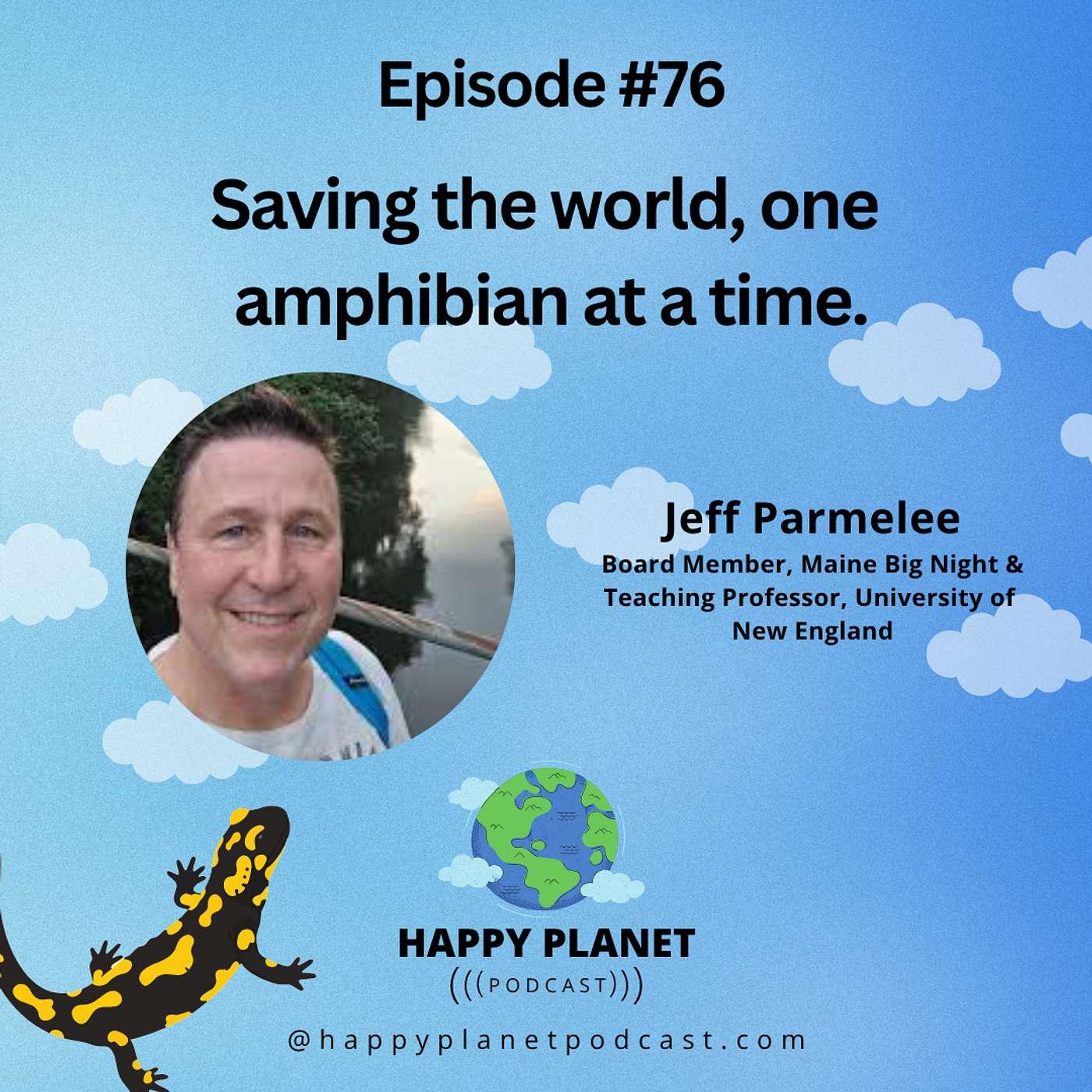
Today we are meeting with Jeff Parmley, teaching professor at the School of Biological Sciences at U E's college of Arts and Sciences.
00:00:41.750 --> 00:00:47.599
Jeff is an evolutionary biologist and ecologist interested in amphibians and reptiles.
00:00:47.929 --> 00:01:00.579
He teaches anatomy, physiology, and herpetology, which is the branch of zoology concerning reptiles and amphibians, as well as my favorite, the natural history of the Galapagos.
00:01:01.689 --> 00:01:06.840
Jeff is also on the board of Maine Big Night, which I'm gonna let him tell us about today.
00:01:07.379 --> 00:01:08.819
Welcome to the podcast, Jeff.
00:01:14.474 --> 00:01:14.984
Hello.
00:01:14.984 --> 00:01:15.164
Yes.
00:01:15.164 --> 00:01:15.884
It's nice to be here.
00:01:16.015 --> 00:01:17.634
I'm so excited to have you here.
00:01:17.685 --> 00:01:23.304
It's spring here in Maine and something very special is happening for amphibians.
00:01:23.744 --> 00:01:25.054
What is a big night?
00:01:25.539 --> 00:01:25.689
night
00:01:25.689 --> 00:01:40.489
in terms of amphibians is and it's not really one night, but in the early spring when the temperatures get up in the forties and there's the first rains, these salamanders and frogs that have been in the forest underground in, in under logs, under the leaf litter, they will.
00:01:40.804 --> 00:01:47.254
Wake up and their first thought is I need to go back to that vernal pool often to where they're actually born.
00:01:47.344 --> 00:01:58.045
They go back again and again, and they move hundreds of meters through the forest floor until they reach these vernal pools, these temporary pools, which is great for them because they don't hold fish.
00:01:58.045 --> 00:02:00.894
And so it's a safer place for amphibians to lay their eggs in their.
00:02:01.450 --> 00:02:04.609
Their larvae, and it's done en mass.
00:02:04.609 --> 00:02:08.599
There's the timing is based not on the calendar at all, but only on the weather.
00:02:08.689 --> 00:02:18.510
And so you just look when every year it changes, but, and it's so exciting to, to actually, capture that and be out there when you just see hordes of salamanders and frogs crossing the road.
00:02:18.560 --> 00:02:21.560
What kind of volume of creatures are we talking about here?
00:02:21.800 --> 00:02:27.110
If you think about this migration it's greater than, the wildebeest in the Serengeti or the caribou migrations.
00:02:27.110 --> 00:02:28.040
It's in numbers.
00:02:28.040 --> 00:02:32.630
It just imagine over the northeast, all the millions of salamanders and frogs that do this.
00:02:32.689 --> 00:02:43.340
And just for us, last year, in 2025 in the spring, our volunteers across the state measured almost 18,000 frogs and salamanders that they helped across the road.
00:02:43.400 --> 00:02:45.950
And some were dead, but, so that's a huge number.
00:02:46.130 --> 00:02:46.700
Incredible.
00:02:46.700 --> 00:02:50.610
You are here to talk about an organization called Maine Big Knight.
00:02:50.665 --> 00:02:54.325
And so tell me what Maine Big Night does on Big Night.
00:02:54.969 --> 00:02:55.300
Yes.
00:02:55.310 --> 00:03:01.310
The organization, it started in 2018 with Greg LeClaire, who is just a college student at Unity College in Maine.
00:03:01.340 --> 00:03:08.330
And he went out with his herpetology club and they helped summers across the road and then it just grew and he's been the leader of this, through the years.
00:03:08.450 --> 00:03:13.700
And we became a nonprofit with a board of directors and it's just grown exponentially.
00:03:13.820 --> 00:03:16.090
And we just get more and more just.
00:03:16.390 --> 00:03:17.050
Ordinary people.
00:03:17.050 --> 00:03:20.430
It's called citizen science, which is really, it's a really big thing now.
00:03:20.760 --> 00:03:37.300
And we really facilitate finding sites across the state where there's really critical crossing areas where we just see either a lot of death or there's a vernal pool and a forest area, and we find these sites and there's over, I think, like 600 sites across the state.
00:03:37.450 --> 00:03:43.250
And the public can go ahead and take a quick training they need to take and then they can adopt a site.
00:03:43.985 --> 00:03:48.094
It's often families and friends and they can, this is their site and they just wait for the weather.
00:03:48.485 --> 00:03:50.735
And a Facebook page is really active in the spring.
00:03:50.735 --> 00:03:54.165
Everyone's saying, oh, could it be, Monday, could it be some rains are coming.
00:03:54.765 --> 00:04:03.015
And then once they the the adopters of that site, they go out and they walk the area and they will help the frogs and salmons across the road and.
00:04:03.465 --> 00:04:19.545
And they record all the Alive and Dead and they figure out what species they are, and they just, as a phone app, it gets uploaded and it's really, the two main things are is they're helping, like they get empowered to help these frogs and salamanders and also collecting very valuable data.
00:04:19.550 --> 00:04:19.702
Yeah,
00:04:19.740 --> 00:04:20.610
Yeah, I'm sure.
00:04:20.709 --> 00:04:22.810
And this data, if you think about it, if I wanted to.
00:04:23.229 --> 00:04:27.279
Me and my scientist buddies wanted to figure out, which frogs and summers are crossing.
00:04:27.310 --> 00:04:30.009
There's no way on these few nights we could travel across the state.
00:04:30.250 --> 00:04:30.310
Yeah.
00:04:30.370 --> 00:04:37.419
But when you enlist all, all these volunteers that are going and doing it, it's the only way really to capture all this data in a short amount of time.
00:04:37.495 --> 00:04:38.394
That's incredible.
00:04:38.724 --> 00:04:47.584
And, just to put this in perspective, I read some incredible statistics about how many of these amphibians there are in our ecosystem.
00:04:47.584 --> 00:04:52.234
Can you speak to the, just the sheer volume of them around in our forests?
00:04:53.404 --> 00:04:53.524
there's
00:04:53.539 --> 00:04:54.859
not that many species.
00:04:55.009 --> 00:04:55.549
Yeah.
00:04:55.549 --> 00:04:58.879
As you go further south, and Costa Rica has 215 amphibians.
00:04:58.909 --> 00:05:03.229
And we have nine salamon or species and nine frogs.
00:05:03.229 --> 00:05:08.000
And, and the subset of those that would be crossing the road in the spring, it's probably five or six.
00:05:08.149 --> 00:05:10.129
So on the one hand, there's not that many species.
00:05:10.714 --> 00:05:12.664
Other hand, it's really good for a project like this.
00:05:12.664 --> 00:05:12.724
Yeah.
00:05:12.724 --> 00:05:18.834
'cause you can, we can really trust the data and you can train people when there's not, hundreds of species like this.
00:05:18.879 --> 00:05:20.589
But there's just a lot of amphibians.
00:05:20.995 --> 00:05:21.234
Yeah.
00:05:21.234 --> 00:05:27.904
What's exciting about individuals is they did a study in a forest in New Hampshire, and they counted all of the organisms.
00:05:27.904 --> 00:05:31.454
There's a huge study, and they found out that the biomass the amount of.
00:05:31.889 --> 00:05:32.939
Little tiny redback.
00:05:32.939 --> 00:05:39.240
Salamanders was more than all of the deer squirrels, all the birds and mammals combined.
00:05:39.779 --> 00:05:41.339
There's just so many per meter.
00:05:41.339 --> 00:05:46.259
And so they have a huge impact on nutrient cycling as prey for all kinds of animals.
00:05:46.310 --> 00:05:48.109
So what is the role of this salama?
00:05:48.109 --> 00:05:51.169
Why are we gonna work so hard to protect them or the.
00:05:51.719 --> 00:05:52.829
Frogs is part of
00:05:52.844 --> 00:05:52.935
it.
00:05:52.939 --> 00:05:53.199
Yeah.
00:05:53.204 --> 00:05:53.354
Yeah.
00:05:53.354 --> 00:05:54.044
Frogs Anders.
00:05:54.044 --> 00:05:54.284
Yeah.
00:05:54.504 --> 00:05:55.435
It's interesting you ask that question.
00:05:55.854 --> 00:05:59.174
You think, why do we can want to conserve any, any particular animal?
00:05:59.174 --> 00:06:06.810
It goes to a bigger idea of possibly why what is our role as humans and in protecting endangered species, but I think I'm digressing there.
00:06:07.109 --> 00:06:14.539
But in terms of the ecological role, these, the amphibians, they're a major source of prey for other animals and they.
00:06:15.289 --> 00:06:31.750
The spring, they, the adults go to the ponds, these ro pools, and they bring they lay their eggs and then they leave and those larvae are going to grow and they feed on the leaf matter and the algae, and then they will end up taking that biomass from the pond back onto the land.
00:06:32.019 --> 00:06:35.229
And even the salama in the on land will be burrowing.
00:06:35.229 --> 00:06:37.329
Like they have a similar function to earthworms.
00:06:37.329 --> 00:06:40.199
They're gonna help, move the move the earth in their burrows.
00:06:41.129 --> 00:06:45.560
So they're a major part of the food web and they're also important to nutrient cycling.
00:06:45.949 --> 00:06:46.789
Very interesting.
00:06:47.029 --> 00:06:50.079
And they're also good barometers of the environment
00:06:50.379 --> 00:06:50.529
yeah.
00:06:50.529 --> 00:06:55.779
You almost can talk about being the canary in the coal mine is that they are one of the most sensitive groups.
00:06:55.839 --> 00:06:58.359
And as a group, as a biologist, you look at all the groups.
00:06:58.944 --> 00:07:00.444
Freshwater fish are in trouble.
00:07:00.444 --> 00:07:16.310
And, you hear things with birds and such, but amphibians are the one group that is the most endangered worldwide because they have all kinds of stressors and the fact that they have permeable skin means that they're going to absorb toxins and pesticides so easily.
00:07:16.594 --> 00:07:22.209
And the other thing is maybe you have a bird or a mammal that lives on land, fish in the water, and Vivians need both.
00:07:22.974 --> 00:07:26.784
If only one of those isn't working, and then you're gonna have issues with that population.
00:07:26.784 --> 00:07:29.632
So you need to conserve both of these environments.
00:07:30.414 --> 00:07:31.237
So they're very sensitive.
00:07:31.334 --> 00:07:35.084
So these vernal pools are typically coastal, right?
00:07:35.185 --> 00:07:36.009
No, they're just in forest.
00:07:36.009 --> 00:07:41.154
There's any kind of lowland depression in the forest and they fill with the snow melt in the early spring.
00:07:41.495 --> 00:07:44.949
But the important thing is they, us, they dry out occasionally.
00:07:44.949 --> 00:07:46.419
They, some of them dry out every year.
00:07:46.469 --> 00:07:47.159
That they're wet.
00:07:47.189 --> 00:07:48.479
And about in July they dry out.
00:07:49.044 --> 00:07:56.784
And even if some that persist for a few years, they eventually dry out because if they don't, fish can persist and fish will eat every single, and amphibian like that.
00:07:57.144 --> 00:08:05.139
So these vernal pools, they, in the past they were thought to just hold mosquitoes and just now we really, biologists appreciate and there's, they're giving really good protection vernal pools.
00:08:05.334 --> 00:08:08.829
And that's where they're breeding, that's where they're putting laying eggs and such.
00:08:08.904 --> 00:08:13.974
Yeah, and what I'd hate to just, it's not every, it's just there's certain species that are vernal pool, they're obligate.
00:08:13.974 --> 00:08:14.634
They have to have the.
00:08:14.844 --> 00:08:14.875
Okay.
00:08:15.174 --> 00:08:17.875
And they include the beautiful yellow spotted salamander.
00:08:18.055 --> 00:08:18.444
I saw pictures.
00:08:18.564 --> 00:08:19.194
Yes.
00:08:19.194 --> 00:08:20.814
And the the wood frogs and the pees.
00:08:21.534 --> 00:08:29.709
But there are other frogs like toads and bullfrogs, which we'll use streams and The vernal pool ones are unique and like indicators of a good environment.
00:08:29.709 --> 00:08:31.885
'cause that means the forest is good, the water is
00:08:32.350 --> 00:08:35.259
And if the salamanders are going there, presumably it's good too.
00:08:35.289 --> 00:08:38.100
'cause they know how to seek out environments that are good for them,
00:08:38.149 --> 00:08:38.509
yeah.
00:08:38.509 --> 00:08:41.620
And well over time, if it's not they're not gonna have any reproduction.
00:08:41.679 --> 00:08:42.342
Yeah.
00:08:43.034 --> 00:08:44.865
So what are they doing in the winter?
00:08:46.490 --> 00:08:49.429
What's really amazing is that these.
00:08:49.954 --> 00:08:52.355
Creatures and you'll see, look on pictures on online and sites.
00:08:52.355 --> 00:08:53.254
They're just beautiful.
00:08:53.254 --> 00:08:58.995
These the frogs and the salamanders, but they're, many people live right here in Maine and never see a salamander.
00:08:59.044 --> 00:09:00.904
Maybe one's in their basement or something like that.
00:09:00.904 --> 00:09:04.865
But that's why if you go out, it has to be at night, certain times early.
00:09:05.024 --> 00:09:06.585
They're just, you can see hundreds of these.
00:09:06.585 --> 00:09:15.975
So it's just this kind of surprising and beautiful thing to, to like to witness this, these creatures that are so hidden because they spend the whole rest of their life.
00:09:16.634 --> 00:09:21.345
In the forest, in, in burrows, under leaves, under logs, and they're feeding, living their lives.
00:09:21.524 --> 00:09:26.294
But they wake up, they go to these ponds and they'll be there no more than a week or two.
00:09:26.595 --> 00:09:31.574
Then they go back they take the same hike back to their, and then they spend the whole rest of the year.
00:09:31.934 --> 00:09:35.085
And then the winter, they just need to get down below freezing.
00:09:35.634 --> 00:09:36.264
they'll hibernate.
00:09:37.254 --> 00:09:37.704
Are they're hibernated yeah.
00:09:38.274 --> 00:09:41.784
And some actually don't even, there's some that actually freeze.
00:09:41.845 --> 00:09:42.835
Do you know, like the wood frog?
00:09:42.884 --> 00:09:43.875
It freezes solid.
00:09:44.715 --> 00:09:45.345
They can freestyle.
00:09:45.345 --> 00:09:45.554
Yes.
00:09:45.554 --> 00:09:46.999
And they can come back to life.
00:09:47.684 --> 00:09:49.965
And there's a couple of our frogs that can do that.
00:09:49.995 --> 00:09:53.404
It's like this is something we try to do with humans.
00:09:53.490 --> 00:09:54.870
I've heard of a few people who wanna
00:09:55.029 --> 00:09:55.319
Yeah.
00:09:55.350 --> 00:09:55.639
Yeah.
00:09:55.639 --> 00:09:57.924
And people will freeze their heads or their whole bodies.
00:09:57.924 --> 00:10:01.875
They want to because they think I could come back in the future and maybe they've cured whatever killed me.
00:10:01.875 --> 00:10:02.804
I could see the future.
00:10:02.884 --> 00:10:06.164
There is that, but, and we're perfectly, we're really good at freezing things.
00:10:06.434 --> 00:10:07.574
It's just bringing them back.
00:10:07.605 --> 00:10:07.845
Yeah.
00:10:08.039 --> 00:10:09.000
And when you try, yeah.
00:10:09.225 --> 00:10:15.674
So you bring it back the tissues are destroyed, et cetera, but something like the wood frog it just pumps itself full of sugar.
00:10:15.735 --> 00:10:17.534
And so that's, we'd be hyperglycemic.
00:10:17.534 --> 00:10:20.054
We would go into a coma, but they can withstand these high levels.
00:10:20.054 --> 00:10:21.074
It's like an antifreeze.
00:10:21.125 --> 00:10:26.314
So the water freezes around their organs and they're solid, but it doesn't damage their cells.
00:10:26.524 --> 00:10:33.725
And if you ever see a video as they wake up their little fingers like wake up, and then they're, they start breathing and they start hopping around from being frozen solid.
00:10:35.524 --> 00:10:36.454
is in our backyards.
00:10:36.845 --> 00:10:37.144
Yes.
00:10:37.149 --> 00:10:37.340
Yeah.
00:10:37.345 --> 00:10:37.684
Yeah.
00:10:37.684 --> 00:10:38.554
It's really amazing.
00:10:38.554 --> 00:10:41.335
So the, are there nocturnal creatures?
00:10:41.335 --> 00:10:43.044
You mentioned that their skin is very thin.
00:10:43.044 --> 00:10:43.735
Is that why?
00:10:43.784 --> 00:10:44.115
Is it?
00:10:44.485 --> 00:10:46.194
That's why they need moist areas.
00:10:46.194 --> 00:10:46.254
Yeah.
00:10:46.284 --> 00:10:50.514
Because they don't have the layer of skin like mammals do, and so they dry out very quickly.
00:10:50.514 --> 00:10:53.004
So that's why they go out when it's rainy nights.
00:10:53.034 --> 00:10:53.095
Yeah.
00:10:53.245 --> 00:10:56.764
And the rest of the year they live in wet places, under the leaf litter.
00:10:56.764 --> 00:10:56.881
Yeah.
00:10:57.314 --> 00:11:02.184
How long a journey is this journey on a big night or to a series?
00:11:02.184 --> 00:11:06.355
Do they make it in a day or is this like a long, arduous pilgrimage?
00:11:06.370 --> 00:11:07.990
You're asking some very good questions, Abigail.
00:11:08.039 --> 00:11:15.809
Some of these need to be looked at more honestly, but no, but you read some papers that they looked at the average distance and it's hard also too.
00:11:16.169 --> 00:11:26.419
To you can't put a radio collar on these little things and it's very hard to actually, but if we could, I know it's really hard to follow some of these, like we can, like we looking at squirrels here, you can put a trans turtle shell, but it's not hard.
00:11:26.419 --> 00:11:27.289
It's hard to follow them.
00:11:27.289 --> 00:11:34.909
But there are people that do this look at somewhere between a hundred meters away and maybe a kilometer that's on the far side of things.
00:11:34.960 --> 00:11:37.120
But that's a good thing to know is is what's the distance?
00:11:37.120 --> 00:11:40.299
So then we can start, make these models in biology to predict.
00:11:40.794 --> 00:11:43.082
How many roads do they need to cross and such.
00:11:43.554 --> 00:11:45.245
and have they ever just not showed up?
00:11:45.754 --> 00:11:45.965
Oh yeah.
00:11:45.965 --> 00:11:51.725
They don't ne necessarily breed every year we've found But the thing is like a spotted cell can live over 20 years.
00:11:52.024 --> 00:11:52.085
Wow.
00:11:52.085 --> 00:11:54.274
Which is amazing for a small little creature like that.
00:11:54.845 --> 00:12:02.914
And the thing with amphibians too, I should just mention is that there are years that are dry years where they lay all the eggs in the pond and it dries so quickly.
00:12:02.914 --> 00:12:04.115
There's everyone dies.
00:12:05.329 --> 00:12:05.990
It's very sad,
00:12:06.004 --> 00:12:07.414
yeah, I'm gonna weep.
00:12:07.669 --> 00:12:08.299
it's getting dark.
00:12:08.509 --> 00:12:10.740
But then the point is that it, that's okay.
00:12:10.740 --> 00:12:15.329
They could even have a couple years like that, but since they live so long, all they need are a few good years.
00:12:15.389 --> 00:12:19.230
As a salamander, you just have to replace like yourself really over your lifetime.
00:12:19.649 --> 00:12:21.870
And so yeah, it's tough out there.
00:12:21.919 --> 00:12:22.429
It is.
00:12:22.429 --> 00:12:23.299
It's a tough world.
00:12:23.299 --> 00:12:24.169
Little salamander.
00:12:24.169 --> 00:12:26.419
The organization's been going for about eight years now.
00:12:26.750 --> 00:12:27.110
Yeah.
00:12:27.110 --> 00:12:28.340
But it started very small.
00:12:28.439 --> 00:12:33.309
It must be hard to track populations if there's years when they don't show and such.
00:12:33.579 --> 00:12:39.319
Are there any trends that, that this data can target that would be interesting to
00:12:39.829 --> 00:12:40.220
Yeah.
00:12:40.269 --> 00:12:43.059
The more years we get, the better trends we're gonna have.
00:12:43.059 --> 00:12:43.120
Yeah.
00:12:43.169 --> 00:12:53.120
We're looking at now, there's been four or five good years of data and we can't, we can find, luckily we go to these same sites, like families, people tend to go and year after year to these same sites.
00:12:53.120 --> 00:13:00.799
And so that's incredibly valuable data to be able to look at that and look at changes with climate change or development and that we can look at this.
00:13:01.774 --> 00:13:04.144
In the future and go back and take a look at all these things.
00:13:04.245 --> 00:13:09.134
But right now our numbers are growing exponentially because we have more people.
00:13:09.164 --> 00:13:14.024
And so really have to look at like number of amphibians per person effort, that kind of thing.
00:13:14.074 --> 00:13:15.264
But it's just too early to say.
00:13:15.274 --> 00:13:20.954
But we seem to there's many places where amphibians are doing very well, I Yeah.
00:13:21.014 --> 00:13:21.554
Yeah.
00:13:21.554 --> 00:13:21.615
Yeah.
00:13:21.750 --> 00:13:26.579
So I'm a little salamander and it's big night and I'm trying to get to a vernal pool.
00:13:26.789 --> 00:13:28.230
What are some of the hazards?
00:13:29.569 --> 00:13:34.429
The main reason for Main Big Night is that we survey roads, and that really is the big issue.
00:13:34.470 --> 00:13:34.919
Yes.
00:13:34.919 --> 00:13:38.519
Salamanders have been here for millennia going to these vernal pools, but only in the.
00:13:38.894 --> 00:13:41.085
A hundred years or so if we had these paved roads.
00:13:41.085 --> 00:13:42.284
So it's just a blip of time.
00:13:42.314 --> 00:13:50.625
Now imagine you've, you're a salamander and you've got your vernal pool, and all of a sudden there's a road with traffic and they have no adaptations for that.
00:13:50.625 --> 00:13:51.404
They're slow.
00:13:51.855 --> 00:13:55.335
Salamander may even slow down on a road because it, the asphalt tends to hold the heat
00:13:55.350 --> 00:13:55.590
little bit.
00:13:55.740 --> 00:13:57.059
So that's just working against them.
00:13:57.059 --> 00:14:03.539
And so what we see at these, like overall last year was like 20, maybe 20, 24% mortality.
00:14:03.840 --> 00:14:05.159
And it's probably a little less than that.
00:14:05.240 --> 00:14:10.120
But, overall they have very little little defenses against cars because they haven't evolved with cars.
00:14:10.120 --> 00:14:15.429
And so with more development, more traffic, more people, it's just gonna get worse and worse.
00:14:15.529 --> 00:14:16.759
Thankfully they go at night.
00:14:17.659 --> 00:14:17.870
Yeah.
00:14:17.870 --> 00:14:20.360
We think there's less traffic, so that may help going at night.
00:14:20.389 --> 00:14:20.929
That's true.
00:14:21.470 --> 00:14:25.875
And we did a study, I don't, about looking at how COVID-19 actually Oh, interesting.
00:14:25.875 --> 00:14:26.434
Helped the amphibians.
00:14:28.774 --> 00:14:30.064
It did not help us very much.
00:14:30.154 --> 00:14:30.485
One for the team.
00:14:30.590 --> 00:14:31.460
the team there, didn't
00:14:31.504 --> 00:14:31.654
Yeah.
00:14:32.404 --> 00:14:37.414
Because we noticed in 2020 and that was, remember that was the beginning of the pandemic and remember also was March, 2020.
00:14:37.495 --> 00:14:50.424
That was a big, and so that is just the time when amphibians and the year after we noticed why, it seems like the mortality was less, but of course, you need to do, luckily we had the data to, to ask that question intelligently and we did.
00:14:50.424 --> 00:14:53.799
So we looked at two years after COVID before and that 2020.
00:14:54.519 --> 00:15:00.389
And you found March, 2020, we could get data on from the DOT about traffic patterns, and then we saw it was less.
00:15:00.389 --> 00:15:02.069
And the DOT also on their website has all the.
00:15:02.894 --> 00:15:06.074
Moose, deer bear collisions, it's all available to the public.
00:15:06.074 --> 00:15:09.524
They can see how many, and you see this big drop in 2020?
00:15:09.524 --> 00:15:09.585
Yeah.
00:15:09.914 --> 00:15:10.965
Early spring 2020.
00:15:11.144 --> 00:15:13.954
And so we looked at our big night data for that year.
00:15:13.954 --> 00:15:17.504
We found that there was significantly less mortality on the roads.
00:15:17.684 --> 00:15:17.745
Yeah.
00:15:17.774 --> 00:15:18.855
So there's less being run over.
00:15:18.914 --> 00:15:19.245
Yeah.
00:15:19.424 --> 00:15:24.654
So that tells us that traffic is causing more mortality because when you take it away, we see an improvement.
00:15:25.069 --> 00:15:29.179
What are some of the animals that will pre on the little fellows
00:15:29.225 --> 00:15:30.514
when they're alive or dead on the road?
00:15:30.514 --> 00:15:30.985
Do you mean just,
00:15:31.189 --> 00:15:34.639
oh, I hadn't thought about the roadkill situation.
00:15:34.694 --> 00:15:41.169
If you go in the morning, you don't find dead amphibians because we have the crows get up early and of possums and raccoons.
00:15:41.529 --> 00:15:44.850
But their predators out in the forest would be I would say garter snakes.
00:15:44.850 --> 00:15:47.549
They, others, and snakes really like to eat them and.
00:15:48.120 --> 00:16:28.014
Birds like herons and other birds that even a robin, looking through the leaves will lead a salamander raccoons and skunks.
00:16:28.374 --> 00:16:29.694
Yeah they're a meal for a lot of
00:16:31.684 --> 00:16:35.044
I wanna jump beyond salamanders for just a moment.
00:16:35.134 --> 00:16:36.979
You worked in the Galapagos.
00:16:38.194 --> 00:16:45.654
Islands where I've, I actually had the incredible pleasure during college of being able to go with a little team and explore them.
00:16:46.134 --> 00:16:49.744
And that's where Darwin discovered the finches.
00:16:49.744 --> 00:16:56.874
And it was a the inspiration for the origin of species and the theory of natural selection, survival of the fit.
00:16:56.954 --> 00:16:57.494
Fittest.
00:16:57.644 --> 00:16:58.214
Fittest.
00:16:58.724 --> 00:17:04.789
And I'm interested in, in Maine big night because I'm interested in I.
00:17:05.269 --> 00:17:13.700
it seems when natural selection happens among other species, we're very happy to let it play out.
00:17:13.785 --> 00:17:22.085
And when humans are involved in the problem, thankfully, I think we are interested in getting involved in helping.
00:17:22.565 --> 00:17:23.974
Is there a logic to that?
00:17:23.974 --> 00:17:28.265
Is it because just the weight of our impact is so big or so fast?
00:17:28.265 --> 00:17:29.744
Or I'm just, I don't know.
00:17:29.755 --> 00:17:31.134
Is that something you can speak to?
00:17:31.464 --> 00:17:32.964
Yeah, that's, there's a lot going on there.
00:17:32.964 --> 00:17:35.815
The whole idea of extinction is a natural thing.
00:17:35.845 --> 00:17:38.605
Like 99% of the species on earth are extinct.
00:17:38.655 --> 00:17:45.164
But the thing is, we're at a period now of another mass extinction that is caused by humans, and it's clear crystal clear.
00:17:45.535 --> 00:17:52.975
This extinction is an extremely rapid, never before has we think, has it been like one organism decided to change the whole earth and cause these extinctions.
00:17:53.365 --> 00:17:59.325
So it's all, we have I think we have a responsibility to play a part in helping conserve as many species as possible.
00:17:59.325 --> 00:18:01.664
But I know you're often very optimistic.
00:18:01.670 --> 00:18:07.875
I'll have to go on the other side of things and just say that it's gonna continue with population growth and issues on the earth that are gonna cause.
00:18:08.529 --> 00:18:12.070
Species to, to get less and less in num, more and more extinctions.
00:18:12.519 --> 00:18:26.660
But my hope, my optimism here with Big Knight is that by knowing the problem and by doing what we can, and even studying the problem, now we can, at least I know a Maine in the future will have, there's gonna be more and more impacts as we develop more and more of Maine.
00:18:26.660 --> 00:18:29.240
So there's gonna be fewer salamanders, fewer frogs.
00:18:29.240 --> 00:18:31.789
But I think what we can do practically is.
00:18:32.460 --> 00:18:35.850
With that knowledge, we can start doing things proactively.
00:18:35.850 --> 00:18:40.980
And we have a project in Oro where we're gonna put, there's a culvert.
00:18:40.980 --> 00:18:46.299
So we're gonna see if we can put these underpasses to help amphibians, not have to go on top of the road.
00:18:46.299 --> 00:18:47.710
And so we're seeing that.
00:18:47.710 --> 00:18:48.519
And can there be.
00:18:49.345 --> 00:18:50.875
Things that could be done with traffic.
00:18:50.934 --> 00:18:52.345
Does signage help?
00:18:52.434 --> 00:18:55.085
Some people might, drive less on a wet spring night.
00:18:55.085 --> 00:18:55.115
I
00:18:55.174 --> 00:18:57.934
say, the salamanders might have trouble reading the signs, but,
00:18:57.980 --> 00:18:58.269
Okay.
00:18:58.269 --> 00:18:58.470
Yeah.
00:18:58.470 --> 00:18:58.830
No, yeah.
00:18:58.894 --> 00:18:59.705
I was not talking about the Sal.
00:19:00.305 --> 00:19:04.205
I was trying to influence human behavior, which is a, a very, it's a very difficult one,
00:19:04.205 --> 00:19:15.134
just outta curiosity,'cause we didn't, I meant to ask it earlier, what are the tools that the citizen scientists who are out on big night useing to help the salam maers cross those
00:19:16.799 --> 00:19:23.259
Sure they you need to be properly safe in the roads'cause you're at the roads at night and rainy night.
00:19:23.259 --> 00:19:25.420
So a reflective vest is necessary.
00:19:25.420 --> 00:19:29.450
And the lights and kids, there's some sites that are higher traffic than others.
00:19:29.450 --> 00:19:36.600
And so we, we even have a category if, family friendly, if it's, if a quiet road compared to a more busy road.
00:19:37.170 --> 00:19:45.549
But pretty much you're gonna, you're gonna walk this road slowly and you can help move the salamanders in the direction that they were going and the frogs trying to help them across.
00:19:45.730 --> 00:19:47.230
So you hold them or you just.
00:19:47.620 --> 00:19:48.880
you I pick them up and move them.
00:19:48.910 --> 00:19:49.299
Okay.
00:19:49.330 --> 00:19:54.070
Some people have a spatula or you have a laminated card.
00:19:54.070 --> 00:19:56.450
If if you, the least you can disturb them, the better.
00:19:56.509 --> 00:19:56.660
Yeah.
00:19:56.690 --> 00:20:02.769
But you can handle them as long as your hands are clean, you wash your hands, there's no perfumes or lotions and you can handle, and I kind encourage.
00:20:03.880 --> 00:20:07.570
When a kid first picks up a frog, it just, it makes a difference, I think.
00:20:07.640 --> 00:20:08.690
Yeah, it definitely does.
00:20:09.019 --> 00:20:11.390
And, but some say, you, you shouldn't touch them.
00:20:11.390 --> 00:20:13.519
Obviously the least handling would be the better.
00:20:13.820 --> 00:20:18.930
But there's, studies, people have had captive frogs and salamanders for decades and they handle
00:20:18.975 --> 00:20:21.865
I was wondering how you prevent people from taking them all home.
00:20:21.865 --> 00:20:22.555
Those little yellow
00:20:22.690 --> 00:20:22.960
are really cute.
00:20:23.154 --> 00:20:24.085
are awfully cute.
00:20:24.309 --> 00:20:24.910
Oh, I know.
00:20:24.910 --> 00:20:26.170
Yeah we, it's not.
00:20:26.904 --> 00:20:27.654
It's not our business.
00:20:27.705 --> 00:20:28.634
What they're doing out there.
00:20:28.640 --> 00:20:29.549
You wind up in the pocket,
00:20:29.924 --> 00:20:30.075
I
00:20:30.190 --> 00:20:30.640
I don't know.
00:20:30.640 --> 00:20:30.970
Yeah.
00:20:30.970 --> 00:20:35.320
And they, yeah they're not, you need a permit to actually keep these wildlife.
00:20:35.320 --> 00:20:38.289
But as a kid I had toads and aquarium and things like that.
00:20:38.289 --> 00:20:40.960
I was gonna ask how you got interested in amphibians.
00:20:40.960 --> 00:20:41.830
Oh yeah.
00:20:41.880 --> 00:20:44.279
I could have studied birds or insects or plants.
00:20:44.279 --> 00:20:49.960
I have a varied interest, but when I started graduate school and my master's, I I just had a class that I liked.
00:20:50.245 --> 00:20:55.095
We studied these jars of alcohol with fish in them and frogs and snakes.
00:20:55.095 --> 00:20:59.414
And I liked the professor and we went out in these field trips and so I said, Hey, can I work with you?
00:20:59.414 --> 00:21:13.285
And that's the, it could have been, I could have studied many different things, but and then once I got my PhD, I oh, I love, and it's a big wide group'cause reptiles, amphibians include things as different as like a crocodile and a salamander and a turtle, and a lizard, and a snake.
00:21:13.285 --> 00:21:14.125
So it's a big group.
00:21:14.423 --> 00:21:15.190
that's very cool.
00:21:15.670 --> 00:21:23.630
So I wanna talk a little bit about citizen I, it sounds like they have a really important role on main big night.
00:21:23.680 --> 00:21:25.390
But what more can people do?
00:21:25.390 --> 00:21:33.210
What can people do in their backyards, in their lives to help mitigate these, the destruction of these little guys?
00:21:33.360 --> 00:21:33.809
Sure.
00:21:33.809 --> 00:21:34.110
Yeah.
00:21:34.350 --> 00:21:34.470
Yeah.
00:21:34.470 --> 00:21:37.410
Citizen science is on many levels is just amazing.
00:21:37.410 --> 00:21:38.610
And it's a new thing for me.
00:21:38.610 --> 00:21:43.559
I it wasn't because you think, oh, how can a non-scientist collect this data that we're using to publish papers?
00:21:43.559 --> 00:21:44.220
Things like that.
00:21:44.220 --> 00:21:49.650
But a lot of studies have shown that with a little bit of training and we go over the data every season.
00:21:49.650 --> 00:21:49.710
Yeah.
00:21:50.100 --> 00:21:55.180
That we feel real confident that people, and there's all, now there's pictures taken of everything and so we can take a look at that.
00:21:55.235 --> 00:22:02.315
And you think about this main big night we talked about, I talked about having 17 or 18,000 salamanders and frogs last year.
00:22:02.565 --> 00:22:07.305
The Christmas bird count is with birds have been going on for over like a hundred years.
00:22:07.455 --> 00:22:09.875
And this year, that citizen science project, they had.
00:22:10.684 --> 00:22:19.325
83,000 volunteers and 44 million birds, so yes, this is worldwide, but that's, this is a citizen science project that has been, is just so useful.
00:22:19.325 --> 00:22:25.865
And new species, invasive species popping up these long term things and citizen science also, besides the, for me.
00:22:27.019 --> 00:22:28.309
The person doing a big night.
00:22:28.350 --> 00:22:31.390
Many of them, it's the excitement is helping them across the road.
00:22:31.390 --> 00:22:36.710
And, it's wonderful because you know that there's traffic on these roads and like you've really helped these individuals.
00:22:36.710 --> 00:22:42.880
But also that long-term data as a scientist, I'm so excited about is getting, doing that and just getting people involved.
00:22:42.880 --> 00:22:51.445
They feel like they have a role and you know that you can see policy and you can see things you don't think you can control, maybe like you enjoy wildlife.
00:22:51.475 --> 00:22:59.279
This is something that's like tangibly you can go out, collect this data that really is gonna, is adding to this database that's gonna help conserve them in the long run.
00:22:59.539 --> 00:23:01.009
It's all ages going out there.
00:23:01.235 --> 00:23:02.075
Exactly, yep.
00:23:02.134 --> 00:23:04.924
There needs to be a person that is certified that's gonna enter the data.
00:23:04.985 --> 00:23:05.045
Yeah.
00:23:05.045 --> 00:23:09.005
But other people, your friends can join, kids can join to, to do it.
00:23:09.005 --> 00:23:09.184
Yeah.
00:23:09.200 --> 00:23:11.390
So you've gotten a lot of press this year.
00:23:11.390 --> 00:23:16.519
Do you know how, what your numbers of citizen scientists joining are gonna look like?
00:23:16.625 --> 00:23:19.875
oh the Facebook group has over 8,000 people.
00:23:19.934 --> 00:23:20.235
Okay.
00:23:20.384 --> 00:23:20.955
Yeah.
00:23:20.955 --> 00:23:25.095
But then when we look at the number of certified volunteers, it's in seven, 800 range.
00:23:25.184 --> 00:23:26.055
These are certified.
00:23:26.115 --> 00:23:29.085
And then again, it's twice as many people actually go with them.
00:23:29.144 --> 00:23:29.355
Yeah.
00:23:29.355 --> 00:23:39.019
And we're talking about, and if you look at the graph I graph like participation, it is just going up and up because people find out from friends they see on social media, and they can get involved with this.
00:23:39.269 --> 00:23:43.815
It sounds like a really fun time as well as helpful and instructional.
00:23:44.335 --> 00:23:50.154
You mentioned I was optimistic and you said you weren't gonna be super optimistic, but I'm not gonna let you leave us there.
00:23:50.154 --> 00:23:50.164
Okay.
00:23:50.164 --> 00:23:50.320
Okay.
00:23:50.575 --> 00:23:52.075
So now give me the right answer.
00:23:54.085 --> 00:23:54.384
Alright
00:23:54.384 --> 00:23:56.875
no, seriously what you're seeing out there.
00:23:57.075 --> 00:24:04.815
And, with your students and, as well as out in nature and on the, with the amphibians and in other creatures that you've been observing.
00:24:05.265 --> 00:24:06.195
How bad is it?
00:24:06.615 --> 00:24:08.410
And are you hopeful at all?
00:24:08.410 --> 00:24:09.460
What brings you hope?
00:24:09.549 --> 00:24:10.029
Yes.
00:24:10.029 --> 00:24:10.269
Yeah.
00:24:10.910 --> 00:24:23.174
As a, I'm a biologist, a conservation biologist, and so when you look worldwide, it's easy to be pessimistic when population growth with the, con commit the burning of fossil fuels the eminence, climate is gonna get warmer.
00:24:23.174 --> 00:24:24.615
There's gonna, sea levels are gonna rise.
00:24:24.615 --> 00:24:27.375
There's gonna be, we're seeing it, as El Nino this year coming up.
00:24:27.375 --> 00:24:36.535
If there're more and more rapid, so it's easy to be pessimistic, but I, I really see, I guess this is that this group, like amphibians and reptiles, it's, they're not as cuddly.
00:24:36.535 --> 00:24:41.255
You don't see a lot of, people really, save the snake, save the deer and the birds.
00:24:41.434 --> 00:24:50.255
But I see more and more in the young people more embracing reptiles amphibians and embracing being good stewards and being good conservationalists.
00:24:50.335 --> 00:24:53.654
Things like, recycling every little bit is gonna help in the big picture.
00:24:53.755 --> 00:24:54.894
So that's optimistic to me.
00:24:54.894 --> 00:25:01.585
I see in people, I see greater a greater desire to be a part of the solution.
00:25:01.615 --> 00:25:05.035
And of course, there's a segment of population that you're not gonna reach and they're just, they don't.
00:25:05.545 --> 00:25:06.205
They just don't care.
00:25:06.205 --> 00:25:07.765
And that's, they're not engaged, it's frustrating.
00:25:07.765 --> 00:25:09.914
They're not engaged and it's all about, them.
00:25:09.914 --> 00:25:17.545
It's not about, that, but you get people like you and other people, my students that are just excited and they just wanna learn and they wanna make a difference.
00:25:17.644 --> 00:25:20.775
Big now, we go out year after year and the amphibians are there.
00:25:20.875 --> 00:25:27.985
We haven't seen these big declines, although we don't have enough data really to see, like a few more years to be able to see if we go to these same sites.
00:25:28.480 --> 00:25:29.710
Are the numbers declining?
00:25:29.769 --> 00:25:41.150
And even though the years vary, if you have enough years, you can start to make some conclusions and we can look at, even if the number of people varied, we can correct for that and say how many salamanders per time, per person.
00:25:41.150 --> 00:25:45.860
And I guess I don't have the data to say that they're not declining in Maine.
00:25:46.009 --> 00:25:50.535
But surely I know with the you can look around and I can see all the new.
00:25:51.965 --> 00:25:56.765
Subdivisions, the new houses, each one brings a new car, or two or three.
00:25:57.095 --> 00:26:02.875
And I know the traffic patterns are gonna get greater and greater, but I hope we, we come up with more solutions.
00:26:02.904 --> 00:26:04.404
'cause now we're taking the data from big night.
00:26:04.404 --> 00:26:05.125
We're saying, what can we do?
00:26:05.125 --> 00:26:06.865
How can we, that's the big point of it.
00:26:06.894 --> 00:26:09.455
The big piece of it is now that we know this, what can we do?
00:26:10.855 --> 00:26:13.674
I think these crossings are one, one avenue.
00:26:13.835 --> 00:26:20.215
Each one is very expensive to make, but if they're going to replace a part of the road anywhere, we'd love to have them make these crossings to prevent this death.
00:26:20.595 --> 00:26:21.615
Does signage work?
00:26:21.735 --> 00:26:26.144
Can we convince people not to drive as much on these few rainy nights?
00:26:26.144 --> 00:26:27.615
It would it make a big difference?
00:26:27.715 --> 00:26:32.184
So maybe there's solutions that haven't, we haven't come up with yet, but we're collecting the data anyway.
00:26:33.080 --> 00:26:35.059
The first part is understanding the problem.
00:26:35.585 --> 00:26:35.884
Yeah.
00:26:35.910 --> 00:26:38.400
Thank you so much, Jeff, for your time today.
00:26:38.450 --> 00:26:43.590
I feel optimistic and I'm very excited to join main big Night, one of these nights.
00:26:43.640 --> 00:26:45.289
Can you just tell us how to join?
00:26:45.370 --> 00:26:45.640
Yeah.
00:26:45.640 --> 00:26:49.120
You go to Maine big night.org and now it says how to get involved.
00:26:49.360 --> 00:26:54.880
And like I say, you simply, someone does a training, you sign a waiver and then you can, there's an interactive map.
00:26:54.880 --> 00:26:56.980
You can look near your home and say, oh, where did the sites avail?
00:26:57.670 --> 00:27:01.150
Some of them show that, oh, they invite others to come with them.
00:27:01.210 --> 00:27:10.460
So you can we can put you in touch with people like that, but you just adopt a site and yeah, it's, you can contact me too for a, I do a couple around Biddeford right on campus.
00:27:10.460 --> 00:27:10.670
Yeah.
00:27:10.730 --> 00:27:10.910
Yeah.
00:27:11.190 --> 00:27:14.059
It sounds like a whole lot of fun and and it's important work.
00:27:14.779 --> 00:27:18.509
So thank you for coming and and thank you for all you're doing in the community.
00:27:18.809 --> 00:27:19.380
Ah, it's a pleasure.
