WEBVTT
00:00:02.399 -->
00:00:03.120Goodgeist.
00:00:05.599 -->
00:00:08.320A podcast series on sustainability.
00:00:08.560 -->
00:00:12.080Hosted by Damla Eusler and Steve Connor.
00:00:12.960 -->
00:00:15.919Brought to you by the DNS Network.
00:00:22.160 -->
00:00:23.920Hello, hello everyone.
00:00:24.000 -->
00:00:34.159You are listening to Good Guys, the message on sustainability, which is brought to you by the DNS Network, the global network of agencies dedicated to making the world a better place.
00:00:34.320 -->
00:00:40.079This is Dando from Mira Agency Istanbul and This is Steve from Creative Concern in Manchester.
00:00:40.159 -->
00:00:47.200This podcast series explores global sustainability issues, how they communicated and what creativity can do to make positive change happen.
00:00:47.840 -->
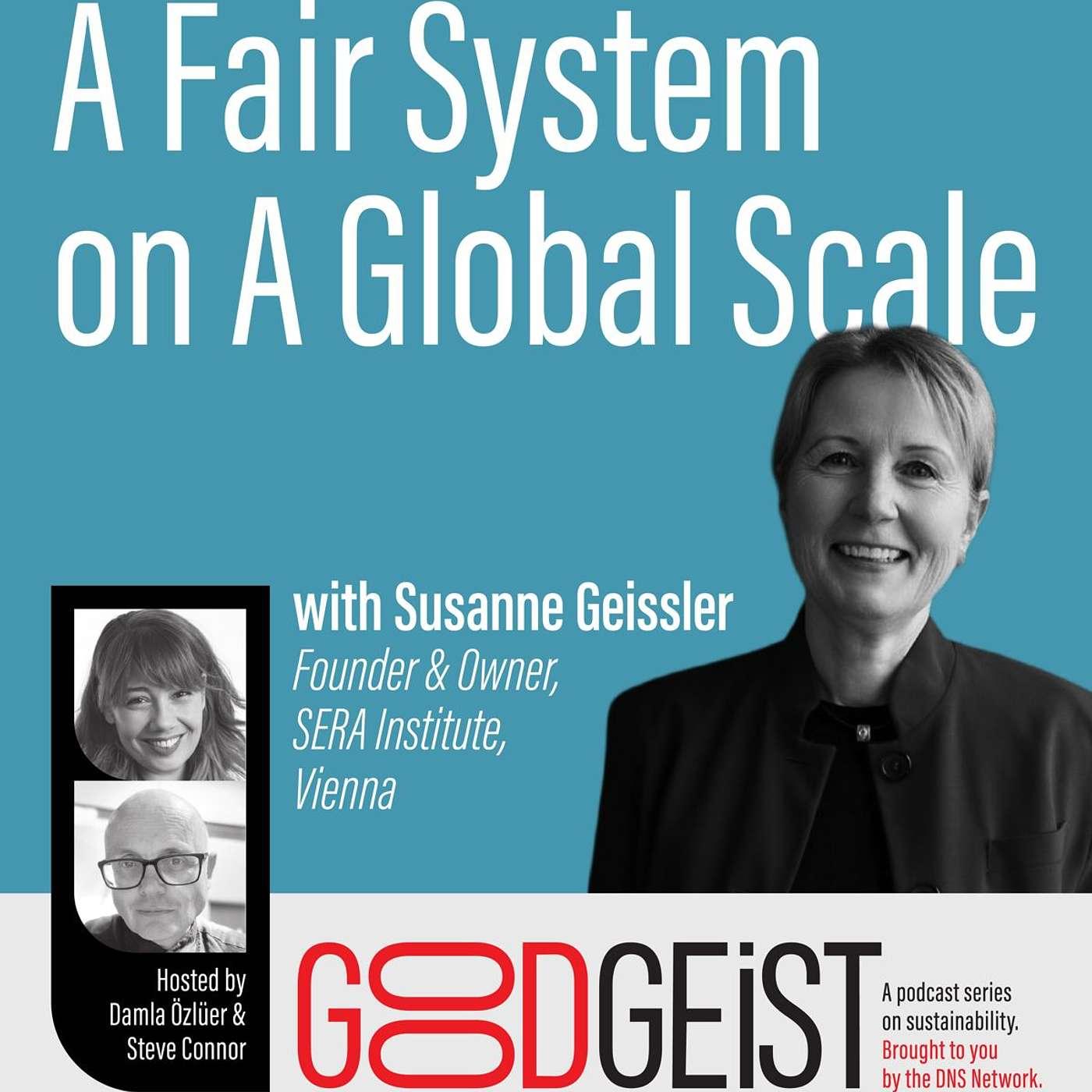
00:00:57.679So in this episode, we're going to talk to Suzanne Geisler, the founder and the owner of the Sarah Institute, Sustainable Energy and Resources Availability.
00:00:57.840 -->
00:01:02.079This is a boutique research and consulting firm based in Vienna.
00:01:02.240 -->
00:01:13.680Suzanne is an environmental engineer with a background in law and a trained energy advisor entitled to issue energy performance certificates, which is EPCs.
00:01:14.239 -->
00:01:16.640I know we'll come back to EPCs in a minute, won't we?
00:01:16.959 -->
00:01:27.599She holds a doctoral degree in sustainable construction from the University of Natural Resources and Life Sciences in Vienna, showcasing her expertise in the field of sustainable construction and energy performance.
00:01:27.760 -->
00:01:36.159Her work focuses on promoting energy efficiency and sustainability in the built environment, with that particular emphasis on EPC-related practices and concepts.
00:01:36.239 -->
00:01:41.359So, Suzanne, thank you so much for taking the time to talk to uh Dana and I on the podcast.
00:01:42.239 -->
00:01:44.000Thank you, Arnold, for this invitation.
00:01:44.079 -->
00:01:45.519I'm absolutely delighted.
00:01:45.680 -->
00:01:48.159It's an honor to be part of Goodgeist.
00:01:48.560 -->
00:01:55.040For me, Goodgeist is a combination of English and German because Geist in German means spirit.
00:01:55.200 -->
00:02:02.239So it's this positive spirit that will help us make progress on the path to sustainability.
00:02:02.799 -->
00:02:03.840Well, that's great.
00:02:04.000 -->
00:02:07.120Yeah, this is the good spirit we want to keep.
00:02:07.519 -->
00:02:10.960And we are also very happy that you're with us today, Suzanne.
00:02:11.039 -->
00:02:17.280But before diving deep into sustainable construction, we would love to hear your personal story.
00:02:17.439 -->
00:02:22.639What led you to focus on sustainable construction and energy efficiency?
00:02:23.439 -->
00:02:31.759Actually, I'm fascinated by nature and studied biology, micro biochemistry, and microbiology at the university.
00:02:32.000 -->
00:02:37.120And back then, biotech and microbiology were really cutting-edge fields.
00:02:37.280 -->
00:02:46.560But I quickly realized that it wasn't about working with nature, but rather about exploiting and controlling it for economic gain.
00:02:46.800 -->
00:03:00.800And that's why, after finishing my thesis in biotechnology, I carried on studying technical environmental protection and focused on economics, especially in the areas of renewable energy and renewable raw materials.
00:03:01.199 -->
00:03:10.960As a biologist and biochemist, I know all about the damage that fossil fuels and petrochemicals can cause, and I wanted to try something different.
00:03:11.199 -->
00:03:20.000So it was pretty obvious that the focus should be on the building sector, as it uses a lot of land, materials, and energy.
00:03:20.319 -->
00:03:25.919I've worked in various organizations, each with a different perspective on society.
00:03:26.240 -->
00:03:31.919I worked with an NGO, research institution, education, and business.
00:03:32.159 -->
00:03:35.360But I felt I was missing a bit of a global perspective.
00:03:35.439 -->
00:03:50.319And I really wanted to understand better how all these things are connected, especially the relationship between Europe and Africa, given how close they are, their colonial past and current neocolonial situation.
00:03:50.560 -->
00:03:57.439I couldn't find a job that would have allowed me to do that, and so I just made one for myself.
00:03:58.000 -->
00:04:05.280Sierra has been around since 2009 and has existed in its current legal form since 2019.
00:04:06.080 -->
00:04:06.719Amazing.
00:04:06.960 -->
00:04:09.919Do you know, Suzanne, you and I are kindred spirits?
00:04:10.159 -->
00:04:11.360I did the same thing.
00:04:11.520 -->
00:04:18.000I just made a job for myself, and 25 years later, somehow it's still going.
00:04:18.079 -->
00:04:18.959So that's amazing.
00:04:19.199 -->
00:04:20.319Yeah, that's good.
00:04:21.279 -->
00:04:35.839So when when we look at your focus areas in in at Sierra, there are the first two sort of inner efficient use of energy and natural resources in buildings, industry and agriculture, and sustainable development on site and those sorts of issues.
00:04:36.079 -->
00:04:41.279Those are those are the kind of correlations we'd expect in your in your work, Suzanne.
00:04:41.600 -->
00:04:45.439But your third is globalization and migration, which is interesting.
00:04:45.680 -->
00:04:52.560So can you tell us how this third focus is working with the first two and and why you think it's so essential?
00:04:53.040 -->
00:04:59.199Yes, so this has actually to do with the Institute's name, which is also its mission statement.
00:04:59.519 -->
00:05:08.639How can we achieve a sustainable supply of energy and resources for everyone in a peaceful manner within the current global economic system?
00:05:09.519 -->
00:05:17.120This seems to be a contradiction in itself, but we try to solve that somehow by addressing these three topics.
00:05:17.279 -->
00:05:28.480So, as you said, the first is about improvements, let's say, within the current economic system, efficient use of energy and natural resources in buildings, industry, and agriculture.
00:05:28.639 -->
00:05:32.319And here we work a lot on energy efficiency in buildings.
00:05:32.480 -->
00:05:39.360So I'm also a specialist on energy performance certificates, so energy related assessment of buildings.
00:05:39.600 -->
00:05:48.319The second section addresses the transformation within with, let's say, committed individuals and pioneers at local level.
00:05:48.480 -->
00:05:53.600So that's a section on sustainable site development, smart cities, and energy and spatial planning.
00:05:53.680 -->
00:06:00.639So this is more on, let's say, collaboration with front runners, so to speak.
00:06:00.959 -->
00:06:06.319And the third section, here we look at developments at international level.
00:06:06.399 -->
00:06:09.120So this is about globalization and migration.
00:06:09.279 -->
00:06:15.759It is, so to speak, our internal research area, which provides input for the other two sections.
00:06:16.480 -->
00:06:30.000So this research on globalization and migration has led to the conviction that we must become independent of fossil fuels and that the concept of sufficiency is essential.
00:06:30.240 -->
00:06:39.439Although this contradicts the current neoliberal economic system and therefore doesn't seem achievable in the near future.
00:06:40.560 -->
00:06:48.639Because sufficiency means avoiding the need for energy, raw materials, land, water, and other natural resources.
00:06:48.800 -->
00:06:54.399And it goes without saying that less consumption reduces the burden on the environment.
00:06:54.639 -->
00:06:57.519But the question is how will the economy cope with that?
00:06:57.759 -->
00:07:06.240So, an example in Austria, there are plans to expand wind power for renewable electricity generation.
00:07:06.800 -->
00:07:13.759But many Austrians are against this because wind turbines are so ugly, spoiler landscape.
00:07:13.920 -->
00:07:15.519So that's what they say.
00:07:15.920 -->
00:07:21.839Another example of materials, for example, from in the area of colorance.
00:07:22.079 -->
00:07:29.439Natural colorants from plants are expensive, harder to standardize, don't offer a complete color palette.
00:07:30.000 -->
00:07:35.279Petrochemicals, on the other hand, provide brilliant colors that are standardized and cheap.
00:07:35.439 -->
00:07:54.800So in Europe, we have benefited from gas and oil for our energy and material supplies, but people in many oil-producing regions die early from contaminated soil, air, water, or they are forced to leave if they can afford it, and the majority cannot.
00:07:55.120 -->
00:07:58.639So can we say it's none of our business?
00:07:58.959 -->
00:08:02.160And I say I can't say that.
00:08:02.399 -->
00:08:10.879Of course, the governments in the producing regions bear responsibility because, after all, they benefit from the businesses.
00:08:11.120 -->
00:08:19.600But our economy has been globalized for centuries, and material wealth is largely based on the exploitation of others.
00:08:19.759 -->
00:08:29.600So, in short, we cannot claim to be achieving sustainable development in Europe if it is based on the destruction elsewhere.
00:08:29.839 -->
00:08:33.519So, so this is what our research teaches us.
00:08:33.679 -->
00:08:39.679It teaches us about the global just aspect of the just transition.
00:08:40.559 -->
00:08:41.600That's great.
00:08:41.759 -->
00:08:51.679And while you have a habit of cutting through the noise and selecting the core problem when looking at the general picture, and you just did it.
00:08:52.000 -->
00:08:57.120Most of the time you state that it is the current economic system.
00:08:57.600 -->
00:08:58.799The problem is there.
00:08:59.039 -->
00:09:03.919So, what's your proposal to alter or change this system and to what end?
00:09:05.600 -->
00:09:08.879For me, the benchmark is nature.
00:09:09.279 -->
00:09:11.840Ecosystems function in cycles.
00:09:12.080 -->
00:09:16.879And for example, crude oil is not part of those cycles, it's a poison.
00:09:17.039 -->
00:09:18.399It's as simple as that.
00:09:18.559 -->
00:09:29.919Or if you want it more precisely, it's a complex mixture of toxic organic neurotoxic substances that should actually remain well distorted.
00:09:30.159 -->
00:09:42.080And the problem continues because uh the plastics made from oil show up as microplastics and all the serious issues they cause for the marine ecosystems.
00:09:42.240 -->
00:09:48.879And we could we could continue talking for hours on that on that issue.
00:09:49.120 -->
00:09:56.240So from an e from an ecosystem point of view, using crude oil doesn't make sense at all.
00:09:56.480 -->
00:09:59.039But economy-wise, it does.
00:09:59.279 -->
00:10:08.000So that means our economic system rewards the use of oil, which is destroying the living environment of many people.
00:10:08.240 -->
00:10:12.399So you would probably agree that there is something wrong with that.
00:10:12.879 -->
00:10:16.399It's not a fair system on the global scale.
00:10:16.799 -->
00:10:25.360And of course, I know that some people say life isn't fair, but I personally believe in equal opportunities for all.
00:10:26.000 -->
00:10:31.679Just like Bruno Kreisky, the former social democratic chancellor of Austria.
00:10:31.759 -->
00:10:36.559So in Austria, he is a very famous person abroad, probably not, I don't know.
00:10:36.799 -->
00:10:37.919But yeah.
00:10:38.399 -->
00:10:42.159So that's the purpose, uh, but how to get there?
00:10:42.559 -->
00:10:45.679I said previously that the goal is sufficiency.
00:10:45.840 -->
00:10:48.159That means less consumption.
00:10:48.799 -->
00:11:04.000But but the challenge is how can sufficiency be reconciled with national budgets, which are, after all, largely based on value-added tax, income tax, in other words, on consumption.
00:11:04.240 -->
00:11:13.519Not to talk about the national economies of oil-producing countries which actually rely on debt production and consumption.
00:11:14.080 -->
00:11:18.240So new tax systems have been under development since decades.
00:11:18.720 -->
00:11:29.279I remember that when I started working at the Austrian Ecology Institute in the mid-1990s, a proposal for a resource tax was being developed at the university.
00:11:29.519 -->
00:11:33.200But apparently the time was not yet right for it.
00:11:33.440 -->
00:11:45.360I think we're gradually, or more recently, rather dramatically, reaching a point where it's becoming clear that we need approaches like these, as well as other new ones.
00:11:45.679 -->
00:11:50.159But of course, I don't have a ready-made solution that covers all.
00:11:50.399 -->
00:11:53.759But we try to do something in the area of spatial planning.
00:11:54.720 -->
00:12:12.960Well, you know, that's beautifully lined up my next question, Suzanne, which is also usually it means I won't get distracted about ranting, as we say in English, about extractivist capitalism, and how the idea of infinite growth on a finite planet is crazy.
00:12:13.279 -->
00:12:14.320All of that stuff.
00:12:14.480 -->
00:12:23.440And I think, you know, I love the way you're looking at this, and and how, in particular, sufficiency, which sounds like such a reasonable thing, doesn't it?
00:12:23.600 -->
00:12:31.600Sufficiency sounds like such a common sense, normal thing, and yet it's grating against neoliberal capitalism.
00:12:31.759 -->
00:12:33.039Incredibly, isn't that?
00:12:33.519 -->
00:12:35.519Yeah, incredible, incredible.
00:12:35.759 -->
00:12:38.399Well, listen, let's talk about spatial planning, though, Suzanne.
00:12:38.879 -->
00:12:40.159It's a common thread.
00:12:40.240 -->
00:12:44.720When we talk about healthy and smart cities, spatial planning is critical.
00:12:44.879 -->
00:12:52.159So mostly when we talk about smart cities, we tend to talk about new technologies, sensors, internet of things, all those sorts of things.
00:12:52.320 -->
00:12:56.639But you emphasize local, committed people and shifting behaviors.
00:12:56.879 -->
00:13:02.240So tell us your frame on a sort of place-based, site-based, sustainable development.
00:13:02.320 -->
00:13:03.360What does it look like?
00:13:04.080 -->
00:13:04.399Yes.
00:13:04.480 -->
00:13:16.879So uh when you address the technologies, as I agree, of course, we need new technologies, but they only work when you actually put them into practice.
00:13:16.960 -->
00:13:19.519And this is where the people come in.
00:13:19.840 -->
00:13:23.759So people generally find it quite difficult to change the habits.
00:13:24.000 -->
00:13:30.720Anything unfamiliar requires extra effort, and most of the time everybody's busy dealing with day-to-day issues.
00:13:31.039 -->
00:13:52.000So if you look at the sustainable technologies available to us and which of them are actually being used, I would say that transformation is less about expanding technical capabilities and more about people's attitudes and how they work together to make use of these technologies possible.
00:13:52.240 -->
00:14:00.240So that's why we need to work together with committed people who are open to innovative solutions and committed to make a change.
00:14:00.480 -->
00:14:10.000Cooperatives and associations are great examples of this, or frontrunners among the mayors of the Austrian municipalities we're working with.
00:14:10.320 -->
00:14:16.960Nevertheless, we must succeed in enshrining such new approaches in law as well.
00:14:17.200 -->
00:14:21.519And we try to do this in our work on regional planning at local level.
00:14:21.679 -->
00:14:33.919Here we have a legal instrument of local development plans, which are usually drawn up for a 10-year period and provide the framework for everything that happens within the municipal area.
00:14:34.080 -->
00:14:48.399So we are supporting these local development plans, both in terms of content and process, with some front-runner municipalities, so that actually sustainable development plans emerge.
00:14:48.480 -->
00:14:56.960And all this is guided by the vision of putting the long-term financing of local authorities on a new footing.
00:14:57.200 -->
00:15:06.559For example, by taking into account their contributions towards achieving the energy efficiency targets and renewable energy targets.
00:15:07.519 -->
00:15:14.960So it's the end of the all talk and no action era, and we all need the action.
00:15:15.279 -->
00:15:22.559But when we always talk about the green transition, we put the emphasis on just transition.
00:15:23.360 -->
00:15:38.639But when we look at what's been going on in the last five years, we see huge geopolitical conflicts and they turn into energy wars, and the rise of an anti-everything narrative is surrounding us.
00:15:38.879 -->
00:15:45.759So, where do you think we stand as a global village in turning the odds for a better future for all?
00:15:48.320 -->
00:15:48.799Yes.
00:15:48.960 -->
00:15:58.559So regarding the wars on energy, I would like to just say that actually wars have always been fought over resources.
00:15:58.799 -->
00:16:14.720For example, centuries ago, starting with the colonization of Africa when the focus was on palm oil and rubber, and later on oil and gas and minerals, or the Congo, for example, has actually been a war zone for around 150 years.
00:16:14.879 -->
00:16:19.679But this is happening outside our bubble, so to speak.
00:16:20.000 -->
00:16:30.879So for many years I've been pointing out in my university lectures that it's unwise to make ourselves dependent on dictators for our energy supply.
00:16:31.200 -->
00:16:36.720But back then, people believed in the concept of change through trade.
00:16:36.879 -->
00:16:38.720And I think that era is over.
00:16:38.879 -->
00:16:47.759So the war in Ukraine is now very close to home for Europeans, and the war over energy is much more threatening.
00:16:48.159 -->
00:16:52.159But I believe we need justice in the global village.
00:16:53.679 -->
00:17:04.079And to achieve this, we must see ourselves as Europeans or better as global citizens who treat each other as partners.
00:17:04.240 -->
00:17:06.240I think this is essential.
00:17:07.039 -->
00:17:10.000You mentioned the anti-everything attitude.
00:17:10.160 -->
00:17:18.480I think that comes from a fear that others have more than you do, or that they want to take something away from you.
00:17:18.960 -->
00:17:25.039So I think that's a psychological phenomenon that is quite well known.
00:17:25.279 -->
00:17:34.000But the current capabilities of the media make it very easy to exploit people's usual feelings of inferiority and fears.
00:17:34.319 -->
00:17:44.400And if you read Edward Bernet's booklet on propaganda, this makes it clear how precarious the situation has become.
00:17:44.720 -->
00:17:51.119Because there are politicians who misuse insights from mass psychology for their own ends.
00:17:51.839 -->
00:18:01.279But there is also a positive aspect because media provide platforms to individuals and organizations to educate the masses.
00:18:01.519 -->
00:18:14.559For example, on history and politics, there is a great book and also a podcast by an um Gambian Swedish author about African history.
00:18:14.720 -->
00:18:18.079So if somebody is interested in that, I can really recommend it.
00:18:18.319 -->
00:18:25.359And actually, your your good guys podcast is also part of it, part of that positive puzzle.
00:18:25.599 -->
00:18:30.720So, how can we move towards this global justice I mentioned before?
00:18:31.519 -->
00:18:35.519The economic model draws on the concept of external cost.
00:18:36.000 -->
00:18:43.440So this means cost is quantified, which is paid by the public and not by the company causing this cost.
00:18:43.839 -->
00:19:02.880So 20 years ago, a series of riches projects were carried out, and the research done somehow provided or provides a basis for CO2 tax and other instruments like the CSRD and the EU taxonomy.
00:19:04.400 -->
00:19:16.319But usually the price of CO2 is based on the cost of reducing emissions because the impacts are global.
00:19:17.440 -->
00:19:24.400So you can also determine the cost of CO2 with by assessing the damages.
00:19:24.480 -->
00:19:31.680But damage costs are rather used for pollutants where a link can be established between the source and the affected region.
00:19:32.559 -->
00:19:36.880So this is not the case when you assess the external cost of CO2.
00:19:37.440 -->
00:19:54.480But if we were to consider the damage cost of raw material extraction in many parts of the world and the lost lives and destroyed ecosystems due to inhuman working conditions and pollution, how expensive would fossil fuels then be?
00:19:54.960 -->
00:19:59.599And what about the coaltain and lithium and so on?
00:20:01.119 -->
00:20:10.640So the material extraction destroys entire regions, and the tax CO2 tax cannot be applied in such cases.
00:20:11.200 -->
00:20:15.599The problem is similar devastated land and another lost generation.
00:20:16.000 -->
00:20:28.160And this is this is one of the reasons why I don't focus so much on climate, but more on resources, clean production, efficient use, circular economy, and quality of life.
00:20:28.319 -->
00:20:41.440So, in my view, the concept of external cost does not go far enough and is at best a stop gap until a better solution can be found.
00:20:41.680 -->
00:20:53.920And ultimately, one has to ask the question why are companies allowed to engage in harmful practices and sell harmful products?
00:20:56.640 -->
00:20:59.200That is an amazingly important question.
00:21:00.799 -->
00:21:13.839Well, let's talk about companies then, Suzanne, even though you've distracted me with the booklet propaganda, Nebubene, and the idea of an invisible elite that controls all of us, like an invisible government was in that booklet, wasn't it?
00:21:13.920 -->
00:21:15.039And it's really profound.
00:21:15.279 -->
00:21:28.000But if we go back to your proposition there, your question, address why is it that companies are allowed to pursue harmful practices and that consumers have to decide what to buy and what not to buy?
00:21:28.079 -->
00:21:31.039And we place that burden on the consumer.
00:21:31.200 -->
00:21:33.920Tell us about that, address that question for us.
00:21:34.480 -->
00:21:39.279I think that's really important because it concerns it concerns everything, right?
00:21:39.440 -->
00:21:43.119It's also it concerns also the basic supply of food.
00:21:43.359 -->
00:21:45.599There is such a good example.
00:21:46.000 -->
00:21:47.680I just would like to share that.
00:21:47.920 -->
00:21:52.000We have an educational program on the German television.
00:21:52.319 -->
00:21:57.519So there is a food tech a food techno technologist, a food technologist.
00:21:57.759 -->
00:21:59.759And this the the this food technology.
00:22:01.519 -->
00:22:06.160Recreates cheap, mass-produced meals sold by industry.
00:22:06.720 -->
00:22:17.200And actually, the conclusion is that the main ingredients are processed fats, carbohydrates, sugar, flavorings, and colorings, which actually make people ill.
00:22:17.440 -->
00:22:26.799So it's not a coincidence that diabetes and obesity, along with all the associated metabolic and physiological problems, are on the rise.
00:22:26.960 -->
00:22:33.279So why is it permitted to make profit from food that makes people ill?
00:22:33.680 -->
00:22:36.319And the argument is always the same.
00:22:36.480 -->
00:22:48.480So the argument is that bands are only of a limited help because if there is no social support, people will find ways to get around the bands.
00:22:48.720 -->
00:22:54.640And enforcing the laws through inspections and fines would just be far too expensive.
00:22:54.880 -->
00:22:59.759So it's all about social acceptance and social support.
00:23:00.559 -->
00:23:12.319And ultimately, this means that a change can only be achieved by working together with like-minded people and raising awareness amongst others.
00:23:12.559 -->
00:23:16.000But this can also be challenging and takes a lot of time.
00:23:16.160 -->
00:23:19.039And sometimes it's quite hard to be patient.
00:23:19.920 -->
00:23:28.480But I've learned from my own experience how long it can take for the right moment to come to put an idea into practice.
00:23:29.119 -->
00:23:45.359So when I initiated the assessment of green buildings in Austria in the late 1990s, I was surprised to discover that a similar attempt had already been made in the 1970s in response to the Club of Rome's report, The Limits to Growth.
00:23:45.519 -->
00:23:51.039But it was only decades later that the time was right for such a system to succeed.
00:23:51.279 -->
00:23:55.119And I think it's much the same in other situations.
00:23:55.839 -->
00:24:05.759And actually, when I'm running out of patience, I turn to my history book, and that quickly gives me a sense of just how short a decade actually is.
00:24:07.119 -->
00:24:09.119So that that's my method.
00:24:21.519 -->
00:24:23.279But we are out of time.
00:24:23.359 -->
00:24:25.759So here is our final question.
00:24:26.079 -->
00:24:35.759Our network, as you know, is ironically called Do Not Smile because because we need to make sustainability a subject that brings happiness into the world.
00:24:35.920 -->
00:24:40.319So what object, place or person always makes you smile?
00:24:41.039 -->
00:24:45.200When the emphasis is on always, I have a very clear answer.
00:24:45.279 -->
00:24:47.039That's my dance classes.
00:24:48.240 -->
00:24:49.359Beautiful.
00:24:49.839 -->
00:24:50.640I love it.
00:24:50.799 -->
00:24:51.200I love it.
00:24:51.359 -->
00:24:54.079And you uh so you tell it, we're gonna have to go deeper, Suzanne.
00:24:54.240 -->
00:24:55.279What kind of dance?
00:24:55.440 -->
00:24:57.039What kind of dance is it?
00:24:57.519 -->
00:24:59.119Oh, across everything.
00:24:59.279 -->
00:25:17.119So I've been dancing since I think and I I I started with four years, something like that, with classic dance, and then I just did it across the disciplines, modern jazz, but also African dance, various sections.
00:25:17.279 -->
00:25:23.759So I you know, and I just Latin dance, so I just uh select what I like and go there.
00:25:26.880 -->
00:25:27.920I think that's amazing.
00:25:28.000 -->
00:25:37.839Well, listen, Susan, it's been an absolute joy talking to you, and I'm going to uh switch off the camera in a minute and do a little dance around the room in your honour.
00:25:38.079 -->
00:25:44.000It may be, I'm thinking it may be a bit, maybe hip hop, just to really shake it up a little bit.
00:25:44.400 -->
00:25:45.279Yeah, that's awesome.
00:25:46.319 -->
00:25:50.319But no, it's been brilliant talking to you and and and really great to talk about.
00:25:50.480 -->
00:26:04.480I think I'm going to reflect not just on sufficiency, but also on your your last thoughts around historical progress and how a decade isn't really that long and the patience that we all need to achieve sustainable development.
00:26:04.640 -->
00:26:05.920So, Suzanne, thank you so much.
00:26:06.160 -->
00:26:07.759Damla, do you want to wrap it up?
00:26:08.079 -->
00:26:14.880So, thanks to everyone who has listened to our Goodgeist podcast brought to you by the Do Not Smile Network of Agencies.
00:26:15.200 -->
00:26:21.359Make sure you listen to future episodes where we'll be talking to more amazing people about how we can work together to create a more sustainable future.
00:26:21.440 -->
00:26:23.680So, Damla, Suzanne, see you soon.
00:26:24.000 -->
00:26:24.480Bye.
00:26:27.279 -->
00:26:36.960Goodgeist, a podcast series on sustainability, hosted by Damla Ozler and Steve Connor.
00:26:37.759 -->
00:26:40.720Brought to you by the DNS Network.