[Sound]: OPENING MUSIC JINGLE AND PODCAST INTRODUCTION.
TREVOR: Welcome to the Flaman Connect podcast, a podcast focused on the individual pieces that make up the larger community of people together, doing what's right and making a difference. Today's hosts, we have myself, Trevor Grinde, Regan Kunz and Mitch Flaman.
REGAN: Okay, best concert you've ever been to?
MITCH: Oh wow. Best concert I've ever been to was Poppa Roach
REGAN: Oh wow.
MITCH: Yeah, for a couple of reasons. I love Poppa Roach. But the way that guy interacts with the whole show, he just, out of the blue, just started climbing through the stands. And like, he'd pick an empty seat in an aisle and then he'd just start climbing. And then, all of a sudden, he had, there was two lights, there was like a red one and a blue one, and he split the crowd.
MITCH: So, he pulled all the kids up on stage, which was so cool. And they're like, arguably too young, they shouldn't have been at this concert, but he didn't care. He got all the kids up on stage and then he made the entire floor, half it was red and half it was blue, and he started an entire floor mosh pit. It was, and I'm standing in the stands, I'm like, how did you do that? Anyway, Poppa Roach was my favorite concert. But I've been to a lot, but that's the first one that comes to mind that was like, I'll never forget that.
REGAN: Trust your first answer.
MITCH: Yeah. Yeah. Yeah.
REGAN: Trev?
TREVOR: I think my favorite one was Meatloaf.
REGAN: Really?
TREVOR: Yeah.
MITCH: Where at?
TREVOR: It was at Northlands Coliseum.
MITCH: Oh yeah. Interesting.
REGAN: What year?
TREVOR: Oh, it was, no, I can't remember now. It was right when Welcome to the Neighborhood was released. So he was on that tour, but he, he had his daughter. He's like, my daughter needed a summer job, so I asked her to come along. So, she sang all the female parts.
MITCH: Cool.
TREVOR: She's an awesome singer.
MITCH: Cool.
TREVOR: And then Trooper was opening. So that was party band there. Like, yeah, they, yeah, no, it was awesome.
REGAN: You know what? Paradise by the Dashboard Lights comes on the radio and I will sing the whole song front to back.
TREVOR: Right? And you can't not.
REGAN: And I don't care who's in the vehicle either. It just happens.
MITCH: What about you, Reggie?
REGAN: I mean, it's, it's a close tie between my first concert, which was, I'm going to say 1996, maybe ‘95 was the ACDC Hell’s Bells Tour.
MITCH: Yeah.
REGAN: And specifically, I remember about that concert was halfway through the show, the rest of the band went in and Angus just did a guitar solo for like 15, 20 minutes, kept the crowd into it. The rest of the band went back, probably had a cocktail or two. And then they came back out and Angus just rolls into the next, next song. And it was loud as hell. We were like way up in the nosebleeds at SaskTel Center at the time. Fantastic. And the other tie to it was the Tragically Hip Farewell Tour. I went to the show at Northlands Coliseum in Edmonton. That was a very unique experience. I'm a big Tragically Hip fan, been to about 12 shows or so.
MITCH: Nice!
REGAN: But that one had a lot of emotion in it. And I mean, everybody knew it was the last time they were going to see the band live and see the county. It was fantastic.
MITCH: So I went to one, small though, like completely different scale. It was downtown in, I don't know what it was called, O'Brien's or Molson's, where Colter Wall would have just played.
REGAN: Yeah, the Odeon. (in Saskatoon)
MITCH: Yeah, yeah, yeah, yeah. And saw The Trews.
REGAN: Oh yeah.
MITCH: And it was super last minute because they're Canadian, I think. Yeah. And so they're not very big. And you kind of got to like them or not. They're going to have, you just, you know, they're going to have half a dozen songs that you're going to know for sure. And they have more. But like, it was just cool being in a small venue and where everyone in there was interested in coming to see them.
TREVOR: Yeah.
MITCH: And everyone knew every song. And it was hard to tell if he was full on stage because his eyes were closed the entire time or if he was just that into it. But that, that was another concert that I won't forget because I think I was relatively surprised at how much I enjoyed it. And I like The Trews. And after that, like, I like them even more indefinitely.
REGAN: Isn't that crazy how you go to a show and you just get tuned into the music because it takes you back to being at the show live, right?
MITCH: Yeah. Yeah.
REGAN: The Trews are good band. That's, that's a band I don't think of very often.
MITCH: No, they're pretty underrated and they never did get big. But I think they're relatively talented, like –
REGAN: Very talented.
MITCH: Yeah.
TREVOR: Okay, let's do pop quiz. Place these four crops in order of most produced. Are you ready? Potato -
MITCH: Globally?
TREVOR: Yeah.
MITCH: It's, okay. Yeah, I'm assuming it's gonna be globally.
REGAN: Yeah.
TREVOR: Potatoes, corn, wheat, rice.
REGAN: So, I mean, are we talking poundage? Are we talking land use?
MITCH: I'm just gonna go top of mind just based on volume things. I believe corn's number one, which - all my stuff's gonna be way wrong. Corn's number one, just because the way you see it get pumped out for feed and it feel like a cow must eat more than a human if I were to guess. So, corn's gonna be number one. I'm gonna go with rice as number two, just based on the population of where it needs to go. And then… It's based on yield.
REGAN: Okay.
MITCH: I'm sticking with where my train of thought is here. Then I'm gonna go with wheat, just ‘cause, and then potatoes can come last, but I'm very… I don't have anything to do with potatoes in my life really, so.
[LAUGHTER]
REGAN: Well, and I'm probably overthinking it because I'm thinking how many pounds of potatoes do you get off an acre versus pounds of corn versus pounds of wheat and rice?
MITCH: That might be where the question's going though. That's why I just thought that.
REGAN: I believe this is a bit of a trick question. So, I'm going to say, I'm gonna go rice, corn, wheat, potatoes.
TREVOR: Okay, well you guys got the last one right. Potatoes is right for the last place, for fourth. Number one was corn.
REGAN: Okay. Good.
TREVOR: Number two was wheat. And then three was rice and four potatoes.
MITCH: I almost nailed that.
TREVOR: Yeah, you were close.
REGAN: Yeah. Good job.
TREVOR: Okay. The word canola is derived from which two words?
MITCH: I'll defer because I think everyone learns that. Reggie, what do you got?
REGAN: Do you know this answer?
MITCH: Absolutely. Everybody knows this answer. Everybody knows this answer.
REGAN: Canada.
MITCH: Yes.
REGAN: And I'm gonna say linola.
TREVOR: Close. Oil.
MITCH: Oil.
TREVOR: Yeah.
JONATHAN: You guys knew that?
MITCH: Yeah. Oh, so not everybody knew that. You get a mulligan because you're not from here.
JONATHAN: I guess so.
REGAN: I've never heard that question before.
MITCH: Really? I'd like to know where I learned that. I don't know where I learned that. But when someone told me that, it was like, huh, how original.
[LAUGHTER]
MITCH: What was it called before? Rape. Oh, what's the difference? Like nothing really, not much.
REGAN: So why didn't they call it can-oila?
MITCH: Yeah, I don't know.
TREVOR: Cause it doesn't roll off your tongue.
REGAN: Not really.
MITCH: Canola?
REGAN: Can-oila.
MITCH: How original.
[LAUGHTER]
TREVOR: It's time for Now You Know. It's the part of the program where we talk to people, experts in their field, various varieties and various areas of farming. And today we're talking with Shaun Gettis, the vice president of sales from Flaman. Today we're gonna talk about grain dryers. Now grain drying has been around for a long time. A lot of growers, especially those farther north, are aware of its usefulness. Shaun, talk to us about what you've encountered when it comes to the grain dryer use cases.
SHAUN: I see a grain dryer in two different ways. One is a disaster response tool. So, all of a sudden you can't get your crop off, it's wet and you don't know what to do and it'll kind of save your butt. So, you can get it off and in the bin and dry and safe. But the way we're discovering is the people that have grain dryers are using the Morrison management tool. And in saying that, so, there's a whole bunch of things that feed into why this is a management tool for a customer.
SHAUN: So, there's one customer I know, that has had one for three years. He bought it as a disaster response tool because he just needed to get crop off. Then he discovered that he can grade up, he can go hit his derm early. When it's ready, it's ready and run it through the dryer. And then the result was he was getting a better grade. He got his crop off sooner. He bought himself a larger harvest window, didn't need that fourth combine, and the fourth man and all this stuff that goes around with that.
SHAUN: He had more time. And then that man, then the result was, is the people that are buying the grain, let's say the derm in this example, are bugging him on him. There are incentives because he's got it off early and it's grade solid and they want it. And so, he was benefiting from that as well. So, he benefited with grade. He benefited with having it off a little earlier. He benefited a manpower away. And he benefited in not needing an additional asset such as a combine or another truck maybe.
MITCH: Do you find most people purchase a dryer as disaster relief and then shift into using it as a management tool or are there people out there that buy a dryer strictly looking just to farm better and are open minded to the thought of it being a management tool and maybe opening up the beginning window of harvest as opposed to having to deal with it and window of harvest?
SHAUN: So, I think that depends. That's a loaded question.
MITCH: I'm full of loaded questions just so you know. If you give me a yes or no answer, I'm gonna be just choked. I will not ask a question that has a yes or no answer.
SHAUN: So, Mitch, in Northern, I'm just gonna talk about Saskatchewan. In Northern Saskatchewan, harvest tends to be a little bit later and a little tougher. And as you go North, you'll see more frequency of dryers in yards because they know they need it as a management tool.
REGAN: And is that because the harvest window is just that much shorter?
SHAUN: It is and the conditions are a little tougher. And as you go South, you'll see less and less. But what I'm noticing is as people discover the value of having that tool, management tool on your yard, that the migration of dryers are working South.
MITCH: Yeah.
SHAUN: And it has a lot to do again with people with machinery capacity and harvest windows.
MITCH: Is there a commodity that a dryer works best on or is there a commodity that a dryer is most commonly used for?
SHAUN: So not all dryers are the same and they do different things. But as a rule, it's your cereals that are most commonly put through a dryer. They're the easiest to manage through a dryer. You can put pulses through, you can put canola through. But as a rule, it's primarily used for cereals in Saskatchewan from what I've seen.
TREVOR: So, if someone's considering a dryer, what sort of considerations does a customer need to take into consideration when they wanna put one into their handling facility?
SHAUN: So, beyond the type of dryer, just a basic dryer itself, there's a number of things to consider. The first one is you need to know where you wanna put it and you need to know a few things. Do you have the available electricity or power to run that? As farms have evolved, their fans, there's all different things going on in a yard that can really max that out. And so, you just need to be aware of the availability of power. Most new yards have three-phase power without abundance, but some of the older yards, they're kinda tapped out. If you run in some fans, a 200 amp service isn't gonna work.
SHAUN: The next thing is fuel. So a dryer needs fuel to produce the heat. And so ultimately, if you had enough volume of natural gas, that would be the ideal situation, but we do have the alternative of using propane, which needs to be hauled in. The final thing you need to consider is how you're gonna get grain in and what you're gonna do with the grain when it goes out. And there's all different types of ways to manage that.
SHAUN: You can put a dryer in an existing site with things like a Walinga, to get rid of the Walinga blower system to distribute the grain into different bins or bucket elevators into a stack or a six-pack or however you wanna say it. Or you can very simply use EMD augers for an in and out of a wet bin into the dryer and then into a dry bin. And then there's lots of planning. Not everyone wants to do the whole smear at once. We find that people are approaching it from a phased approach.
SHAUN: So, they'll start building the foundation of their yard site and then a plan to evolve it over time as their needs change or they can afford it.
TREVOR: So yeah, so then you have to take into consideration how many bushels an hour we wanna handle, how many bins we wanna fill, and then be able to expand that for the future.
SHAUN: You bet. I was just actually talking with a farmer the other day and he had more of a simple setup and he had a 10,000 bushel wet bin. And that wet bin and his three combines a day in his area would, he could keep up. And then he'd run it through the rest of the day and, or the night, I'm sorry, and then in the morning it'd be empty.
REGAN: Right.
SHAUN: And he could get going again. So, every needs, if you're on five, six combines, you're gonna need different capacity and you're gonna have to know how you're gonna get that grain away. If you're in the middle of the harvest and you just have, if you have a 10,000-bushel bin feeding a wet bin and you have a 10,000-bushel dry bin, that's not necessarily gonna work if you don't have the capacity to get it away and you wanna continue to use a dryer.
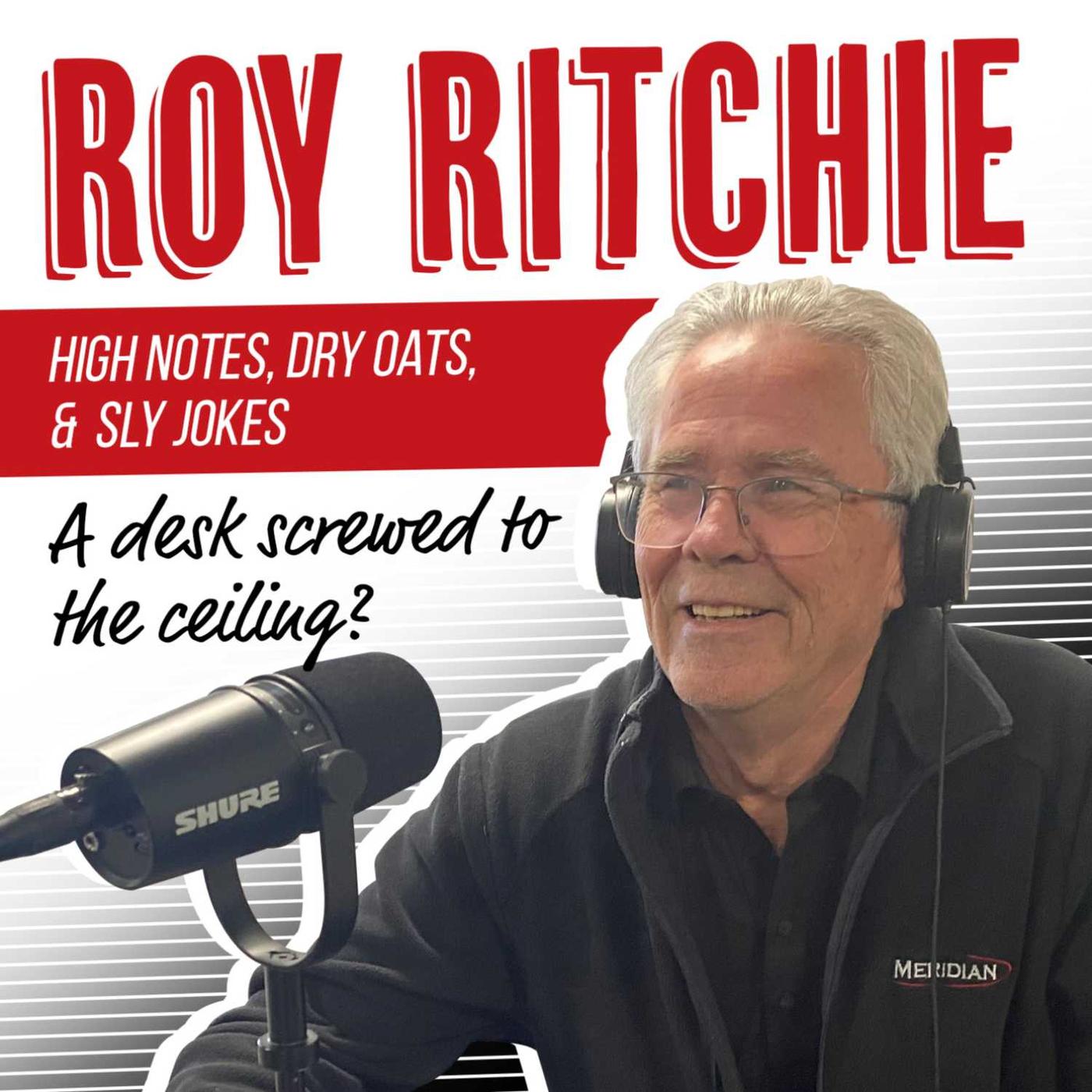
TREVOR: And there you have it. Thanks, Shaun. We're gonna move on to the last segment of our show today and that's an interview with our special guest. Our special guest today is Roy Richie. How you doing today, Roy?
ROY: Just like they say in the Old Testament, I'm fine.
[LAUGHTER]
REGAN: Well, let's maybe start back in-
ROY: Back in the beginning?
REGAN: Back in the beginning. We'll go back into your childhood. What was it like growing up for you, Roy?
ROY: Well, I grew up on a farm, seven to 18 miles away from anywhere and did a pretty good life. Drove some great cars and wrecked a few and had a lot of fun.
MITCH: What would the vintage of these cars be, Roy?
ROY: Let's just say they're older than you.
[LAUGHTER]
MITCH: Could you consider them muscle cars?
ROY: Absolutely.
MITCH: How expensive was fuel back then?
ROY: Well, all I know is that you could take a girl, go to a drive-in, fill the car up full of gas - again. After the movie, you could go to the Dog and Suds, have two meals and still have change - oh, and drink 12 beer and still have change left from 20 bucks.
[LAUGHTER]
ROY: So, does that date me?
MITCH: Well, not exactly, but you're right. That is a time in the world before I was alive.
[LAUGHTER]
REGAN: Where was Dog and Suds and was it licensed?
ROY: No, it was not licensed, but it was right across the street from the high school in Rosetown.
REGAN: In Rosetown, right on. So, whereabouts was your farm then?
ROY: We were 18 miles from Rosetown, seven miles from Zealandia and 11 miles from Harris.
REGAN: What would one of your first memories be?
ROY: I think probably moving cattle when I was young and we had to move our cattle to pastures that were about seven miles, eight miles away without big trailers that we've got now. And so we did buy horseback.
REGAN: Did you have a horse?
ROY: Absolutely. Had a couple of good ones too.
REGAN: When's the last time you rode a horse?
ROY: Last time I rode a horse? Two years ago.
REGAN: Oh yeah?
ROY: I still can do it. Don't like it, but I still can do it.
[LAUGHTER]
TREVOR: Now, you grew up with a fairly large family. How many siblings did you have?
ROY: I had six. I had three brothers and three sisters.
REGAN: And where do you fit in in the group?
ROY: Second youngest. So that meant-
REGAN: Almost the baby.
ROY: So, by the time that I needed money, all the older ones were gone.
REGAN: Yeah. And what about your parents? What's some of your earlier memories of your mom and dad?
ROY: My dad was a farmer and a cattleman. He wore a cowboy hat every single day, wherever he went. And his nickname was CPR.
REGAN: Why CPR?
ROY: My dad's name was Charles Peter Ritchie. He rode his initial CPR and it just stuck. So, when Vanity Plates came out, he got CPR ONE, before the railroad decided that they needed it. My mother was a teacher and basically homeschooled us when we couldn't make it through math in high school.
[LAUGHTER]
ROY: And hardworking individuals, hardworking family, just a little crazier on the edges.
REGAN: Do you think the hardworking is one of the traits that you gained from your parents that brought you to where you are today?
ROY: Absolutely. There was always a deep down need to be busy, to work, to be part of. And that's what came from my parents and their parents before them. Both my grandparents and my great-grandparent homesteaded in Saskatchewan in the early 1900s and have been there ever since.
REGAN: When you got in to be a teenager, were your parents fairly disciplinarian? Did you get in trouble a lot?
ROY: Oh, I was in trouble lots, but not generally there.
[LAUGHTER]
ROY: I used to drive fast so the police and I had an ongoing relationship. They would stop me and give me a ticket and I would go and pay it and then I would drive fast. And we continued that on for some time.
MITCH: I feel like you still drive fast. Like there may or may not have been a ticket in the last 365 days.
ROY: Well, I got the opportunity to try out a pretty good car and I won't tell you how fast I was going, but the muscle cars of the 60s didn't go this fast.
MITCH: So, Roy, you're sober now, right?
ROY: Yeah.
MITCH: How long have you been sober for?
ROY: 42 years.
REGAN: 42. Well done.
ROY: Yeah. I stopped when I was 24.
MITCH: So, there was a story that you once told me and this is probably, oh, I'm gonna say 15 years ago. And if it wasn't when you quit drinking, it was right before you decided to quit drinking.
ROY: I think I know the story you mean, but I went to the bar on a Thursday, late, like 10 o'clock, knowing that you can't get drunk in two hours. And the next thing I know it was Tuesday and I was a little ways away from home. I was waking up into the bright sunshine and it was like February and it was hot and I was looking up at a sign that says Houston 100 and I have no idea how I got there.
[LAUGHTER]
ROY: But my steel trap mind picked that all out. Radio said it was Tuesday. I had money in my wallet and when I phoned my boss and said I probably wouldn't be in today, he said that's okay, you're not coming back anyway and another job gone. But I went on to the Astrodome.
MITCH: It's cool. You figured while you were there, you might as well just make the best of it.
ROY: What can you do?
REGAN: Similar things like that led you to say, okay, enough's enough, I've got to quit, I've got to get my life in order.
ROY: Yeah. I did a lot of not very pleasant things in my life and it just had to stop.
REGAN: What was the hardest part of that process?
ROY: Hardest part probably was saying that I needed help to deal with it. Once I got through that part, it got better.
REGAN: In a time where it wasn't common to ask for help or not looked upon as positive.
ROY: Not at my age.
REGAN: Yeah.
ROY: There were maybe a half a dozen of us in the province that were my age or younger. That had stayed sober for any length of time.
MITCH: Good for you.
TREVOR: And at that age, there's a lot of social pressure to stay in that sort of lifestyle.
ROY: Oh yeah, yeah. When you're from a small town, like small, it's pretty easy when you drive up to the place where they have the AA meetings and get out there. Without having, look who's going now.
REGAN: Getting back into your earlier years, what's the first job you had when you got out of school or got off the farm?
ROY: I had a number of jobs that I did for winters or summers or short-term seasonal kind of work. I drove a grader for six months. I installed flooring for two years. I worked for different farmers. I did a lot of different things. I spent a winter working in the coal mines in BC. That's a terrible place to be.
MITCH: I feel like you have some stories just about that.
REGAN: I kind of want to hear more about that, actually.
ROY: I don't think I want to tell you some of those. So again, involves crossing borders.
[LAUGHTER]
REGAN: So, what path led to you to Flaman? How did you eventually end up here?
ROY: I was just getting going in farming. Had taken on quite a bit of debt when 1989 hit, ‘88 and ‘89 and the drought and couldn't get it. So, I left the farm with, I sold my share to my brother. And he continued and still does to this day. And I left and had to go somewhere else and went back to school a bit. Got some business training and by accident, I put a resume in at Flaman. Sure, agriculture, I know something about agriculture. So, I came. One of the jobs I had before, though, was working at a grain cleaning facility. It's where I learned how to set machines and run them.
ROY: And I was taught by somebody who was really, really good. And then when I came into the city, I dropped a resume off here and I don't know whether it was Warren saw it or Don saw it, but they decided that I should have a job.
MITCH: What year was that in?
ROY: That would have been in 2000.
MITCH: And how did that interview go?
ROY: Well, they, Don Flaman did my interview and decided that I could have a place to work here. And my first day of work would be the Farm Show in Regina. And so my first day of work was the 11th of June. And I climbed in my car early in the morning and drove down there and said, I said, well, what do I do when I get there? He says, go ask for Warren. And so, I shadowed him through the Farm Show, selling machinery that I didn't know anything about, different types of cleaners than I've ever seen before. And so, I learned on the job.
MITCH: Grain cleaner, specifically. You've always stuck in the grain cleaner.
ROY: Grain cleaner, specifically. I was trying to sell Jezdol grain cleaners. And that was my first taste of Flaman.
REGAN: Do you remember your first sale?
ROY: My first sales were screen sales and there were so many, no.
REGAN: Do you remember your first big sale?
ROY: I remember some of them were memorable, but I've dealt with so many really good customers over the years that have come back to me and trust me. I've become some sort of a trustworthy person in their world, dealing with cleaners, and what they do and how they work. And picking a favorite or picking a would be not realistic anyway.
REGAN: What do you think it takes to build that trustworthiness you were talking about?
ROY: It's honesty. I don't sell things to people just because they think they want it. I find out for sure that of what they're doing and then give them the options. And sometimes I didn't make a sale, but the next year they come back and see me because they trusted what I said. And I've tried to work that in my whole business life or work with customers. I try to do the best I can and be as honest as possible. And it works out. It always works out.
MITCH: Did you think 20 plus years ago you'd still be working at Flaman?
ROY: I don't know if I… all I know is that that time I really needed a job. I was married and I had a couple of, or I had one very small child and needed to be at work.
MITCH: What's something that happened in, let's say the first half or the first decade of you working at Flaman that you wouldn't get away with in the last or second decade of you working at Flaman?
[LAUGHTER]
ROY: There's a number of those. And I don't know if the statute of limitations is over on those.
[LAUGHTER]
REGAN: Yeah, you're good.
MITCH: Yeah, you're good. We won't tell Pam. Pam isn't gonna be listening.
ROY: Yeah, there's sarcastic and wit and we may have picked on people just because they were there more than anything. I remember being part of a conspiracy against another employee where we loaded his car up with a full load of old flyers so that the car wouldn't back up if you could have got in it, anyway.
ROY: It was entertaining watching him try to, and I was talking to him when he was going to his car at the end of the day and he opens the door to his car and just this mountain of paper slide out. But we didn't do that.
MITCH: Yeah, that's not on record. We didn't have security cameras back then.
ROY: There are a few things that happened.
MITCH: I feel like I remember a story where when someone left the office that night, their desk was in the office on the ground and when they got to work in the morning -
ROY: I heard, I heard that when that guy got back to work the next morning, it was screwed to the ceiling. It was kind of hard to keep his chair and work from, but it was still in the building.
MITCH: What did he think of that?
ROY: I'm pretty sure he thought it was bad and then funny. We did help him get it down. There was another time that we got another employee, I think I still have a photograph of it, when we saran-wrapped him to his chair and just kind of left him out front to view Mitch.
MITCH: If I recall that front, what's the word, like foyer? Yeah. Covered in glass, even in a minus 30 day, it's about plus 35 degrees in there. It's just from memory, though.
ROY: They rescued you.
MITCH: Yeah, they rescued me a few hours later.
ROY: There was a few things. One of my favorites was when we filled the dust drawer with water and goldfish. It's pretty easy - It's pretty easy to get it into the drawer, but it's really hard to get it out, apparently.
MITCH: I recall a time, and I won't point fingers at you, but I'm pretty sure you were quite involved.
ROY: I was never involved. I was a witness at best.
MITCH: You were always a bystander, an innocent bystander with your camera out. Was there a time something happened with like a Cadbury chocolate egg?
ROY: Oh yeah, that was... I didn't have anything to do with that one except witness. You know, Cadbury chocolate eggs are little and they're multi-colored, and a Robin's egg is little and multi-colored. If you put them in the same bowl and with someone who just comes by every time and takes a Cadbury egg, sooner or later they're going to get to the one that you want them to.
MITCH: You just gotta try not to laugh too hard so they know it was you.
REGAN: Could you imagine sticking that in your mouth and taking a chomp?
MITCH: Oh, I can imagine. Yeah. I can imagine, Reggie.
[LAUGHTER]
ROY: I didn't even hold the camera for that one.
REGAN: Okay, did you actually put this thing in your mouth?
MITCH: I have a video of this entire event happening, and in the first... I'd say the first couple seconds was like a ton of excitement until it wasn't chocolate. It was very liquid, and then there was a ton of confusion, and then there was a ton of chaos, and then it all leveled up.
ROY: It all went sideways for a while.
REGAN: For those listening, we may have already had some people pull over and dry heave out the side of their tractor or car at this point.
[LAUGHTER]
MITCH: Yeah, that was a real life thing though, and that video was probably taken on like, I don't know, a Motorola Razor, like the first phone that had a camera in it.
[LAUGHTER]
MITCH: Yeah, good times. Again, don't tell Pam.
TREVOR: Okay, just to switch gears here for a little bit. Can you talk a little bit about –
ROY: I can talk about anything.
TREVOR: Let's talk about the Flaman culture. When you first started, it was a different location, mostly different people. How has that progressed over time?
ROY: Oh, when I started with Flaman, I think there were 13 or 14 employees.
MITCH: Total or out of that location?
ROY: Total. Here in Saskatoon location.
MITCH: Oh, in the Saskatoon location, got it.
ROY: At most. There was a couple in the trailer shop, you know, Paul and Al, fixtures in Flaman. Betty and Don, of course, was here every day. And so, it was a very small, intimate family kind of a business. And you did all the jobs because there wasn't anybody else to do them. And so you ended up hooking up trailers and you ended up, you know, selling it one side and hooking up a trailer on the other. It became kind of a home away from home, a really family-oriented time. And I think that over the years, and we changed locations, like my first office was the kitchen table in a secondary location that I was working from. It wasn't a Commodore 64 computer, but it was close. And we were making screens with nibblers and a hand rivet gun or, you know, a hand stapler, putting them together. And before we used metal shears even.
ROY: And like everybody did, everybody worked. And it progressed to, I can't even tell you how long it's been since I put a staple into a frame, but it's progressed to more and more employees. And I think it was counted the other day that I had 12 or 13 different offices since I've been with Flaman. And shift gears, and it's still that way. You still shift gears to do what's necessary and be as much of a help as you can be to everybody in Flaman that needs to get something done.
ROY: Still very family-oriented. You know, there's just more people. I don't know how many employees there are in Saskatoon now.
MITCH: Well, I started a little after you, because when I got here I think there was 20-30 in the Saskatoon location, and there's over 80 now just out of here.
ROY: Yeah.
MITCH: Yeah.
ROY: It's been some significant growth.
REGAN: What have you seen change amongst customers in that span of time?
ROY: They get younger.
[LAUGHTER]
ROY: I don't know why.
REGAN: What about their process, their business? What's changed in the ag market since you've been here?
ROY: I guess when I started, the normal customer coming to see us would be 2,000 – 5,000 acres, and now we’re dealing with people who are 10,000 – 40,000 and larger. Big, big operations, and that takes some different equipment. Some different solutions. I guess it’s no surprise to anybody in the ag industry that farms are getting bigger. And uh, we just change with the times. We still go grain, still clean it, still get it to port.
TREVOR: So, you talked about solutions. And earlier on, you had mentioned talking to the customer and finding out what they need. Kind of go through that process of how you get the information you need to find that solution for the customer.
ROY: Well, my first question that I ask of anybody is what do you want the machines to do? What do you want the end product to be? Then the next one would be how much of this are we talking about? Oh, I want to clean grain at 2,000 bushels an hour, but I only got 10,000 bushels to clean. We get a very massive machine for not for, you know, to use for a couple of hours. That we try to balance that out and get down to the basics of what they want and need. Because it's not always the same. It's not always the same thing. And I won't say that I lead them to their answer.
ROY: But I've got, there's pros and cons to almost any process. And so, you lead them through and let people decide for themselves about how deep or how far they want to go into a process. And based on cost and quality. And, you know, sometimes you just say you're better off to get somebody to come in and clean that thousand bushels of grain. It's easier and cheaper for you. You know, it's one thing to I could sell them a machine, but it'll be in the fence corner before we're done. And that's not what I want. I don't ever want to overextend somebody for that.
REGAN: I'll switch gears a little bit and just ask you some off the wall questions
ROY: My elevator doesn't go all the way to the top.
[LAUGHTER]
REGAN: Just halfway there. That's all we have to do. Where's one place you'd like to go that you have never been before?
ROY: One place that I would like to go that I've never been. Austria, I think is the I think is one of the places I'd like to go.
REGAN: Why?
ROY: Oh, history and beauty and culture and, you know, there and Scotland, which is just mean, vicious and full of Scotsmen.
[LAUGHTER]
MITCH: So, which one of those two places do you have ancestors in then?
ROY: My wife's ancestors are from Germany, Austria, and my ancestors are from Scotland. And and so I'm a little drawn to both.
MITCH: So, your wife has culture and you're a little ruthless?
ROY: Well, my mother had culture and my dad was a little ruthless.
REGAN: What's your philosophy in life, Roy?
ROY: My philosophy of life. Oh, my. To be a benefit among whom we live. Without that, there is no freedom. You know, you could be your own. You know, I'm me and I'm number one and all of that. But the real the reality of life has more to do with what you can do for others than it is what you do for yourself. And I think the older I get the more I believe that.
TREVOR: Yeah, that goes really against kind of the zeitgeist right now is that everybody's out for number one. I want what I want and I want it now. And what yours describing goes directly against that.
ROY: No, you can be number one and also be a benefit to other people. It just you just have to be honest and true about what you do or how you present yourself. Because when I when I come to work, I like coming to work. And when I leave here, I like going home to my family and to everything there. And, you know, in spite in spite of the trials and tribulations of life, I still like it. And I still enjoy simple things. There's nothing quite like sitting out on the back deck in the summer and smelling the barbecue. And it's pretty simple. Pretty simple. Family and friends and just being a benefit to the to people around me.
MITCH: I could probably vouch for you on that. I don't know how many years you and I have worked together for, but it's it's over 10 by now. And I would say the one thing that like for me waking up and coming to work has always been a treat is that you always knew no matter what kind of day it was, there would be someone there, at least one person named Roy, that would help you out no matter what you had coming down the pipe in the day. It didn't matter what I had coming down the pipe or what you had coming down the pipe. We always - you were always there to support someone that needed help. And I haven't seen you waiver from that since the day I met you.
ROY: I try.
MITCH: Yeah.
REGAN: Yeah. And similar to your point, I mean, you obviously love coming to work because you're here at after seven every morning, and you're the one that puts the coffee on the coffee pot. And you kind of create this culture where even though we don't start work till eight o'clock, generally, we're all here at
7:30, at least a few of us, and we have a coffee, we have a little BS session, and then we go on with our day. And it's a great way to start the day.
ROY: Yeah, you can hardly be sarcastic without showing up here.
REGAN: Yeah, absolutely. You may have already answered this question, but I did have down written down a question is, what is an ideal weekend for you, Roy? What do you like to do?
ROY: Oh, that's changed a lot over the years. But I guess maybe the from working here year after year, the sheer amount of phone calls that come in here is staggering. And the one thing I don't want to do on the weekends is answer the phone calls. And I think that's the biggest thing that I've done. And the one thing I don't want to do on the weekends is answer the phone. And not because I don't like or I'm willing to help, but then I get tired of talking on the phone. And I think I've been, I've had a hoarse, a hoarseness in my throat since 1994. Just because that. I'd like being home. I love ball. I would go almost to the ends of the earth to watch fastball or baseball.
REGAN: When did that start?
ROY: Oh, that is if you went back, it would be the World Junior Baseball Championships that were held in Kindersley. And oh man, in the, who was there? George Bell. I think, I think one of the Alomars. Like, these kids were just young and came, were coming up and going to be somebody and to watch that high end ball was… with my dad, especially he was a, he was a ball fan. Would go anywhere to see one. And you have to be a really big ball fan to go to Hazlett to watch ball.
[LAUGHTER]
REGAN: 1984.
ROY: Yeah, it was. Yeah, we went my dad and I and lots of times.
REGAN: That's a big deal for Kindersley.
ROY: It was a big deal. Yeah.
REGAN: How did they ever land that?
ROY: Great volunteers, wonderful ball fields. And, and every little town sponsored a team.
REGAN: So, would that have been juniors would have been 16 and under?
ROY: No, that would have been 18, 19 year olds and kids that weren't - hadn't been seen by anybody. Coming out of Puerto Rico and Guatemala or Cuba and to see some of those players and watch them on TV a few years later was kind of neat.
REGAN: When you watch your son play ball and your son still plays a lot of ball, do you contain yourself in the stands?
ROY: Absolutely not.
[LAUGHTER]
REGAN: That's just something he's had to get used to?
ROY: Yeah, I think I was blessed with a couple of children that were adamant and ecstatic about doing things. My daughter was a dancer and I would go anywhere to watch her. And my son played hockey and ball and I went everywhere to watch that and I was loud. Probably embarrassing, but I believe that that's part of what a parent's duty is, is to embarrass their children a little bit to make them humble. And they know I'm there.
MITCH: If they were sitting here right now and we asked them, what's it like having your dad at a sporting event, whether it's a dance recital or a ball game, what would they say?
ROY: It's embarrassing. I don't know. I hope they look back on it and say he was there. And it's fun to watch good ball or good sports, good dance, just to see the people that they grow up to be. Because I'm proud of my children that way and how they can, how they work with themselves and how they present themselves to the world.
MITCH: So how old are your kids now?
ROY: 22 coming up and just coming up to 21.
REGAN: And what are they busy with?
ROY: Justin just got back from the U-20 fastball.
MITCH: Nice.
REGAN: Nationals?
ROY: Yeah. I know he'd have liked to have done better, but that's the way it works. And my daughter is moving to Calgary to be, work and find a little bigger audience or a little bigger bit of the world.
REGAN: What is one thing that people may misunderstand about you Roy?
ROY: Just the depth of sarcasm and wit.
[LAUGHTER]
REGAN: I thought we had a good grasp on that, but apparently not.
ROY: Well, I know that there are people who just turn their head and walk away puzzled.
[LAUGHTER]
MITCH: That's usually because you do a pretty good job of not laughing after you say something. You just walk away leaving them their puzzle.
REGAN: And everybody else is, is he serious? I don't even know.
ROY: The hysterical laughter gives you away if you're trying to be sarcastic.
REGAN: That's why you leave and go find somewhere to giggle. What are you the most thankful for, Roy?
ROY: My family, then my job, my faith. I've tried very hard in my life to be a person that I like. And I tried very hard in my life to raise children that other people like. Because I don't think it's fair that parents have to like their children. But I know that when my kids are out, they are good people.
REGAN: Well, the one thing that I'm very thankful for is to be able to show up for work and to have a coffee with you in the morning and get the opportunity to experience working with somebody that's been in this industry for 20 plus years. And we have a lot of young staff in this building, and they would all definitely mirror my sentiments. And we learn from you every day. And I think we will continue to learn from you over the course of time as long as you allow us to be living in your shadow. So, I thank you very much for that.
ROY: I think just one more thing to add is, to the young people in this organization, is I'm glad they're here too. I'm ecstatic that I don't want the things that I've taken a lifetime to learn go down the tubes because it's my end. These people are hard workers and good souls. And I'm glad if I can help.
REGAN: Absolutely. So how we want to end this podcast, Roy, is just going around the room and asking you a quick series of questions. And just what comes off the cuff is the answer we're looking for. So, are you ready?
ROY: Well, we can try.
REGAN: Okay, first question. If you had three wishes, what would you wish for?
ROY: Money, time, three more wishes.
MITCH: That works so well with the next one. If you were to throw away love or money, what would it be?
ROY: I like the answer I heard just today. If I don't answer love, it's going to cost me a lot of money.
[LAUGHTER]
TREVOR: What's the most beautiful place you've ever seen?
ROY: Oh my. The Caraunda Station in North Queensland, Australia is magnificent. Right next to the waterfall, by the way.
REGAN: What was your fondest memory of high school?
ROY: Drinking was involved, I'm sure.
MITCH: So, no memories.
[LAUGHTER]
ROY: So, no memories.
MITCH: What's your favorite TV show, Roy?
ROY: Big Bang Theory. Still is. I've switched up a decade from MASH, but...
TREVOR: What's the strangest thing in your refrigerator?
ROY: In my refrigerator? Oh.
[LAUGHTER]
TREVOR: It doesn't have to belong to you.
ROY: Right now, there is a paintbrush. How about that?
TREVOR: Strange enough.
MITCH: It'd be stranger if you ate it.
REGAN: Yeah, I know. It's the biggest barbecue brush I've ever seen!
[LAUGHTER]
ROY: Repainting the bathroom. So, you put wrap it in Saran wrap and put it in the fridge and it keeps...
REGAN: It doesn't dry up.
ROY: Yeah.
[OUTRO MUSIC STARTS TO PLAY]
TREVOR: Okay. Well, thank you for joining us today, Roy.
ROY: Oh, you're welcome. I think.
[LAUGHTER]
TREVOR: Thank you for listening to Flaman Connect. For Mitch Flaman and Regan Kunz, I'm Trevor Grinde. Join us next time. Talk to you soon.