

WEBVTT
00:00:00.560 --> 00:00:10.480
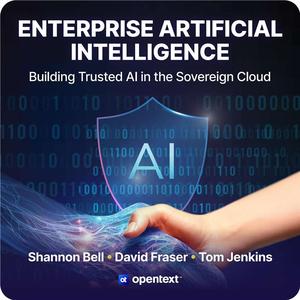
Enterprise Artificial Intelligence Building Trusted AI in the Sovereign Cloud by Shannon Bell, David Frasier, and Tom Jenkins.
00:00:10.800 --> 00:00:13.919
First publication, November 2025.
00:00:14.640 --> 00:00:17.199
Published by Open Text Corporation.
00:00:17.519 --> 00:00:27.120
Forward James Arroyo, OBE, former Director for Data, British Foreign and Commonwealth Office, and Director of the Ditchley Foundation.
00:00:27.359 --> 00:00:32.960
James Arroyo's views do not necessarily represent those of the Ditchley Foundation.
00:00:33.600 --> 00:00:45.439
We stand at a pivotal juncture in history, a time when the world's technological systems are converging, raising questions of power, trust, sovereignty, and governance.
00:00:45.759 --> 00:00:53.759
Artificial intelligence is redefining how decisions are made, how organizations operate, and how societies function.
00:00:54.000 --> 00:00:58.799
Yet progress in AI cannot be measured solely by technical capability.
00:00:59.119 --> 00:01:08.159
We must combine advances with policy clarity, ethical discipline, and a renewed understanding of what sovereignty means in the digital age.
00:01:08.400 --> 00:01:18.640
This book, Enterprise Artificial Intelligence, Building a Trusted AI in the Sovereign Cloud, addresses both the challenge and opportunity presented by AI.
00:01:18.879 --> 00:01:28.319
It recognizes that the next decade will not only be defined by who builds the largest models, but by who governs and uses data most effectively.
00:01:28.640 --> 00:01:33.519
Data is both the fuel and the foundation of modern intelligence systems.
00:01:33.760 --> 00:01:41.359
Much like energy or currency, it requires regulation, stewardship, and above all, trust.
00:01:41.760 --> 00:01:48.400
The future of AI depends on how we manage the privacy, provenance, and sovereignty of that data.
00:01:48.640 --> 00:01:58.560
This will become critical as individuals, institutions, and enterprises move to add their own personal proprietary and sovereign data to AI systems.
00:01:59.040 --> 00:02:12.159
When I served as Director for Data at the UK's Foreign and Commonwealth Office, our task was not simply to digitize the institution and define the policies that would make digital transformation sustainable for decades to come.
00:02:12.560 --> 00:02:15.039
We had to ask difficult questions.
00:02:15.439 --> 00:02:17.599
Who owns the data we rely on?
00:02:17.840 --> 00:02:19.360
Where does it reside?
00:02:19.599 --> 00:02:22.800
How is it shared, stored, and secured?
00:02:23.039 --> 00:02:25.280
How long should it be retained?
00:02:25.599 --> 00:02:35.599
Those same questions now confront every enterprise, every government, and every citizen as AI systems become more autonomous and pervasive.
00:02:35.840 --> 00:02:45.039
AI's powers of inference mean that every atom of data can potentially bring insights in aggregate combination, and that is game-changing.
00:02:45.199 --> 00:02:54.159
In conversation with leaders from technology, government, and civil society, it is becoming clear that sovereign data policy is not a technical debate.
00:02:54.319 --> 00:02:57.439
It is a question of national and economic security.
00:02:57.680 --> 00:03:06.080
In a world where the majority of data is locked behind organizational and governmental firewalls, sovereignty extends beyond mere compliance.
00:03:06.319 --> 00:03:14.319
It is about control, accountability, and the ability to act with confidence in a world of algorithmic decision making.
00:03:14.560 --> 00:03:17.680
This book makes a compelling case for that philosophy.
00:03:17.919 --> 00:03:33.280
It argues that trusted data and responsible AI are two sides of the same coin, and that to build AI that is fair, explainable, and safe, we must ensure the data it learns from is well governed, contextual, and sovereign.
00:03:33.520 --> 00:03:40.319
Without privacy and data stewardship, AI risks undermining the very institutions it seeks to empower.
00:03:40.560 --> 00:03:45.439
Without innovation, governance risks becoming a hindrance that hinders progress.
00:03:45.680 --> 00:03:51.039
The task before us is to align trust and innovation so that one strengthens the other.
00:03:51.280 --> 00:03:57.039
As you read, you'll see how the landscape of enterprise computing is being rebuilt from the inside out.
00:03:57.280 --> 00:04:05.759
Hyperscale infrastructure, sovereign clouds, and AI driven systems are forming the backbone of the digital economy's industrial grid.
00:04:05.919 --> 00:04:17.600
But real advantage will belong to those who treat data not as a neutral commodity, but as a constitutional principle, something to be protected, respected, and deployed responsibly.
00:04:17.839 --> 00:04:33.839
The book's call to action is one I can warmly endorse to move fast but to govern faster, to innovate boldly but with purpose, to ensure that every digital advance strengthens public trust rather than erodes it.
00:04:34.160 --> 00:04:38.160
That is the essence of leadership in this new era of AI.
00:04:38.720 --> 00:04:50.879
In the years ahead, the nations and enterprises that will win by embedding AI in society and encouraging widespread and deep adoption will be those that understand a simple but profound truth.
00:04:51.120 --> 00:04:59.839
AI without trusted, sovereign, and well governed data is power without responsibility and perhaps legitimacy.
00:05:00.079 --> 00:05:13.360
But when innovation and governance move in step, when privacy, accountability, and ethics are embedded in design, we can create not just intelligent systems, but intelligent societies.
00:05:13.680 --> 00:05:16.319
The cognitive computing era is here.
00:05:16.480 --> 00:05:20.560
A time where trust is the foundation and innovation is the engine.
00:05:20.720 --> 00:05:28.319
Its success will depend not on machines alone, but on our shared ability to define the principles that govern them.
00:05:28.639 --> 00:05:40.160
Enterprise Artificial Intelligence, building trusted AI in the sovereign cloud, offers a roadmap for that journey and an invitation to shape the future responsibly together.
00:00:00.560 --> 00:00:10.480
Enterprise Artificial Intelligence Building Trusted AI in the Sovereign Cloud by Shannon Bell, David Frasier, and Tom Jenkins.
00:00:10.800 --> 00:00:13.919
First publication, November 2025.
00:00:14.640 --> 00:00:17.199
Published by Open Text Corporation.
00:00:17.519 --> 00:00:27.120
Forward James Arroyo, OBE, former Director for Data, British Foreign and Commonwealth Office, and Director of the Ditchley Foundation.
00:00:27.359 --> 00:00:32.960
James Arroyo's views do not necessarily represent those of the Ditchley Foundation.
00:00:33.600 --> 00:00:45.439
We stand at a pivotal juncture in history, a time when the world's technological systems are converging, raising questions of power, trust, sovereignty, and governance.
00:00:45.759 --> 00:00:53.759
Artificial intelligence is redefining how decisions are made, how organizations operate, and how societies function.
00:00:54.000 --> 00:00:58.799
Yet progress in AI cannot be measured solely by technical capability.
00:00:59.119 --> 00:01:08.159
We must combine advances with policy clarity, ethical discipline, and a renewed understanding of what sovereignty means in the digital age.
00:01:08.400 --> 00:01:18.640
This book, Enterprise Artificial Intelligence, Building a Trusted AI in the Sovereign Cloud, addresses both the challenge and opportunity presented by AI.
00:01:18.879 --> 00:01:28.319
It recognizes that the next decade will not only be defined by who builds the largest models, but by who governs and uses data most effectively.
00:01:28.640 --> 00:01:33.519
Data is both the fuel and the foundation of modern intelligence systems.
00:01:33.760 --> 00:01:41.359
Much like energy or currency, it requires regulation, stewardship, and above all, trust.
00:01:41.760 --> 00:01:48.400
The future of AI depends on how we manage the privacy, provenance, and sovereignty of that data.
00:01:48.640 --> 00:01:58.560
This will become critical as individuals, institutions, and enterprises move to add their own personal proprietary and sovereign data to AI systems.
00:01:59.040 --> 00:02:12.159
When I served as Director for Data at the UK's Foreign and Commonwealth Office, our task was not simply to digitize the institution and define the policies that would make digital transformation sustainable for decades to come.
00:02:12.560 --> 00:02:15.039
We had to ask difficult questions.
00:02:15.439 --> 00:02:17.599
Who owns the data we rely on?
00:02:17.840 --> 00:02:19.360
Where does it reside?
00:02:19.599 --> 00:02:22.800
How is it shared, stored, and secured?
00:02:23.039 --> 00:02:25.280
How long should it be retained?
00:02:25.599 --> 00:02:35.599
Those same questions now confront every enterprise, every government, and every citizen as AI systems become more autonomous and pervasive.
00:02:35.840 --> 00:02:45.039
AI's powers of inference mean that every atom of data can potentially bring insights in aggregate combination, and that is game-changing.
00:02:45.199 --> 00:02:54.159
In conversation with leaders from technology, government, and civil society, it is becoming clear that sovereign data policy is not a technical debate.
00:02:54.319 --> 00:02:57.439
It is a question of national and economic security.
00:02:57.680 --> 00:03:06.080
In a world where the majority of data is locked behind organizational and governmental firewalls, sovereignty extends beyond mere compliance.
00:03:06.319 --> 00:03:14.319
It is about control, accountability, and the ability to act with confidence in a world of algorithmic decision making.
00:03:14.560 --> 00:03:17.680
This book makes a compelling case for that philosophy.
00:03:17.919 --> 00:03:33.280
It argues that trusted data and responsible AI are two sides of the same coin, and that to build AI that is fair, explainable, and safe, we must ensure the data it learns from is well governed, contextual, and sovereign.
00:03:33.520 --> 00:03:40.319
Without privacy and data stewardship, AI risks undermining the very institutions it seeks to empower.
00:03:40.560 --> 00:03:45.439
Without innovation, governance risks becoming a hindrance that hinders progress.
00:03:45.680 --> 00:03:51.039
The task before us is to align trust and innovation so that one strengthens the other.
00:03:51.280 --> 00:03:57.039
As you read, you'll see how the landscape of enterprise computing is being rebuilt from the inside out.
00:03:57.280 --> 00:04:05.759
Hyperscale infrastructure, sovereign clouds, and AI driven systems are forming the backbone of the digital economy's industrial grid.
00:04:05.919 --> 00:04:17.600
But real advantage will belong to those who treat data not as a neutral commodity, but as a constitutional principle, something to be protected, respected, and deployed responsibly.
00:04:17.839 --> 00:04:33.839
The book's call to action is one I can warmly endorse to move fast but to govern faster, to innovate boldly but with purpose, to ensure that every digital advance strengthens public trust rather than erodes it.
00:04:34.160 --> 00:04:38.160
That is the essence of leadership in this new era of AI.
00:04:38.720 --> 00:04:50.879
In the years ahead, the nations and enterprises that will win by embedding AI in society and encouraging widespread and deep adoption will be those that understand a simple but profound truth.
00:04:51.120 --> 00:04:59.839
AI without trusted, sovereign, and well governed data is power without responsibility and perhaps legitimacy.
00:05:00.079 --> 00:05:13.360
But when innovation and governance move in step, when privacy, accountability, and ethics are embedded in design, we can create not just intelligent systems, but intelligent societies.
00:05:13.680 --> 00:05:16.319
The cognitive computing era is here.
00:05:16.480 --> 00:05:20.560
A time where trust is the foundation and innovation is the engine.
00:05:20.720 --> 00:05:28.319
Its success will depend not on machines alone, but on our shared ability to define the principles that govern them.
00:05:28.639 --> 00:05:40.160
Enterprise Artificial Intelligence, building trusted AI in the sovereign cloud, offers a roadmap for that journey and an invitation to shape the future responsibly together.
