
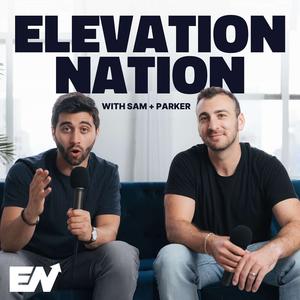

Parker Yablon: What's going on Elevation nation. We're back with two new elevators. We're going to have some fun today. We got will and grant Cohen brothers who have been building something pretty special. Grant and will obviously Baltimore guys, boys, Latin guys, Maryland guys. So we've kept in touch throughout the years. We've always talked about having them on the podcast and now we're here in 2026 jets. Welcome to Elevation Nation. We are pumped to have you.
Grant Cohen: We are excited to be here. Huge fan. Huge fan. Parker, just a little context for everyone listening. Parker and I went to the same high school with Will, but Parker and I were on the same soccer team, baseball team, went to college together, both in New York City, ⁓ know each other's families well. This is a long time coming and we're excited to be here.
Will Cohen: Thank you for having us.
Sam Panitch: I was going to say you guys are related to like three or four different elevators that have already come on the podcast already. So you guys are in the family. We're excited to make it official and welcome you to the nation. But fellas, we start every single podcast the exact same way. We have people give an elevator pitch. This is Elevation Nation. And so maybe Will, I'm going put you on the spot. You can give a pitch for both you guys as humans and then Grant's maybe an elevator pitch for what you guys are building.
Will Cohen: Fantastic. ⁓ great to meet you Sam as well. Always good to see you. Elevator pitch on behalf of Grant and I. Grant and I are connectors. We are operators. We are mission driven business leaders. We were put on this earth, but we come from a long lineage and family of entrepreneurs and business operators. So we are no shy, no people to shy away from rolling up our sleeves, getting our hands dirty, grinding in business, grinding in personal relationships and creating value. for all those that we come across whether it's investors, stakeholders, employees, the world, the environment whatsoever. So we are value creators at heart.
Parker Yablon: You were put on this earth to be value creators. I like that. We'll get into that in a bit. Grant, what about for the business?
Will Cohen: us.
Grant Cohen: Will and I's mission is relatively simple. mean, Will and I are 15 months apart. We've done everything together. Over time, we've learned how to bounce kind of ideas off each other, know what strengths belong to who and where some opportunities may lie between the both of us. But our mission is to put our heads together, also create value for everyone we work with, as well as ourselves, really through an owner operator mindset. We like to strong operations with disciplined execution, strong financial management to buy and scale businesses.
Parker Yablon: Sam's dream, can't wait to get into it. ⁓ So we'll talk a little bit of business first, but let's take a step back. Do you guys like grow up and did you have a business when you were maybe middle school, elementary school, obviously maybe lemonade stand, maybe there was something that was a little grittier. Do you guys ever do something together?
Grant Cohen: I'll take this one, Will. We never did anything together ⁓ other than dream and think of things and bounce ideas off each other. I actually had a small residential window washing business with my cousin Jack Miller who gave a little 10 second spiel on his pod. So I'm connected a little bit there entrepreneurially with the nation.
Sam Panitch: That's amazing. I love it. That's incredible that the entrepreneurship is in the blood. Like I said, we're extending the family of elevators here. So fellas, obviously now you're in this incredibly new world of entrepreneurship. But Grant, for you, it was not always entrepreneurship. In fact, you were a little more similar to Parker and myself in corporate America grinding it out. Talk to us about your time at this small little startup company called Amazon.
Grant Cohen: Yeah, so I spent almost 10 years at Amazon. ⁓ And it started when I was a ⁓ senior in college at the business school at Maryland. They a career fair. I showed up to the Amazon tent as they were advertising a role called Team Lead. That was it. There was no job description. It was just the title, Team Lead. ⁓ I loved leadership ⁓ and I said, let's go for ⁓ I was in September. They gave me an offer the next week and said I have two weeks to accept it. And as a young college student looking at all the options for me at those, at that time, the options were limited because I was just starting the career, the career hunt. ⁓ I jumped in, but 10 years at Amazon, all within warehousing supply chain, logistics, last mile consulting, coaching, and it was a grind. There was a lot learned there. I loved my time at Amazon. Like any company, you learn from really great people and not so strong people. You learn from really great operations and other operations with ⁓ different types of opportunity. If anyone who's worked at Amazon or been around that culture will tell you, it is a grueling but rewarding place to be, not only from a work perspective, but from a personal development. ⁓ Most of the skillset that I have today ⁓ came from Amazon. And I feel really lucky to have that time. But towards the end, I was yearning for an opportunity to be entrepreneurial. Will and I had this dream that has lasted decades. ⁓ And ⁓ we finally made the jump, put our heads together, created an investment thesis and criteria, and went to work. And it was a pretty interesting story there that we're excited to share.
Parker Yablon: So real quick, Grant, and then I'll go over to you, Will, we got some questions from your end. We talk on Elevationation a lot about the ⁓ shit moment. The moment, I mean, we've interviewed, 80 % of the people we interview are entrepreneurs. A lot of them have ⁓ shit moments. Man, I hate my job, I'm sitting at my desk and I'm like, what am I doing with my life? That's my ⁓ shit moment to go make something happen. Or someone's like, you know what, I wanna be a professional athlete, ⁓ shit moment. What was your? ⁓ shit moment Amazon if you had one at all.
Grant Cohen: Definitely. ⁓ The last three years of my time at Amazon, I was in a consulting role. So all of the branded vehicles that deliver Amazon packages, that's through our DSP program. Essentially, Amazon will tell the world if you are an aspiring entrepreneur and you'd like to start your own business where Amazon is your partner and customer, apply with Amazon the way you would a job. And if you're accepted, you get to launch your own... ⁓ delivery business, Last Mile Logistics. So I was on a team, what used to be 12, back in 2020, that grew to about 112 business coaches. So a team of people that were Amazon employees, where our job was to be a free coach, a free consultant for every DSP that was either in the program or was joining. And that would include launching the business with them. My moment was, I was a part of helping all of these leaders and entrepreneurs create their team culture within their team that they all started from scratch. ⁓ And just being a part of that, influencing a group of entrepreneurs, a group of leaders in an environment that is just so demanding, which is Amazon, demanding for all the right reasons, I will say, from a safety and quality perspective. Being a part and watching other leaders build their own team culture from scratch, the connection they made with their team, their people, and how they did it. ⁓ really made me kind of tell myself the time is now. I want to do this. This is part of my purpose is to build culture. And that was it.
Parker Yablon: Love it. All right, well, I know you were kind of in a different position. You were, guess, the CEO of a pretty cool company. I'll let you talk a little bit more about that mission. What happened? How'd you end up here? Let's talk us through it.
Will Cohen: Yeah. So I began, you know, right out of college, I was in management consulting, you know, in like a private equity-ish space. And I left that and got recruited to join, formerly a private equity group that had just purchased a electronics recycling company. I was supposed to join sort of in a part-time kind of see what's going right, what's going wrong. The investment in its initial stage was not performing perfectly. We're not performing super strongly. So I was, I joined to give an assessment and help out and see what we could make things good. And by the end of my sort of initial tenure, the chairman of the board asked me, what would your vision for the business be? What do you think we're doing right? What are we doing wrong? What would you do? And I gave my answer, which was a pretty stark, complete overhaul of the entire business model, going from just a traditional metals recycling business, like literally scrapping metals, to a sustainability focused business. that was eliminating recycling by focusing on reuse, refurbishment, parts harvesting, know, keeping used technology in life rather than assisting it through its end of life. And the mission was really attractive to the board of directors and they said, fantastic, you're now CEO. And they moved on from the CEO before me, I was 25 years old. We had about 100 employees, we had three facilities across the United States, fleet of trucks, drivers, all that stuff. What that business did, which was such an unbelievable experience, was it collected used laptops, servers, desktops, just used technology from large companies who would go through their refresh cycles and they would get rid of their old stuff of their employees and get new stuff. And our company was, it was a data security company at heart, know, where FedEx, Coca-Cola, Johns Hopkins, know, whoever ⁓ were getting rid of and refreshing their technology. First and foremost, you have to make sure that this company's information is taken care of and sanitized properly. But what happens after that? And our whole thesis of a company was these massive organizations who are claimed to be and are large social contributors and care about not only the environment but social causes and whatnot. They would love to tell a story about how their trash became someone else's treasure, about how not only is a company like ours just recycling the equipment properly, but is actually keeping those devices in life, affording access to technology. to individuals in the United States and across the world who never had access to it. ⁓ And my sort of ⁓ shit moment in that world was very, very blunt. I was sitting in our facility, actually the first week that I took over the business it had like... I don't even know if I'm like allowed to say some of these things, but it had like $15,000 in the bank and payroll was at Friday. So like this, this thing was really, really not doing great. And I remember staying in the facility for like over the full weekend, selling whatever was not bolted to the ground to try and, you know, do whatever we need to do to get by. Thankfully we had a great run after that. This was like very early on. we had, we ran the business for seven more years and eventually sold it to a larger strategic. and had a good outcome overall. But in that first moment while we were figuring out, how can we even make this thing survive, let alone completely change the entire foundation of the company, I was sitting in our facility watching all this working technology, you know, go through the normal process that it had been through its previous, you know, life at this company and a working laptop go and just get shredded, getting completely, like literally shredded in a shredder and all the parts flying everywhere. ⁓ And the metals would go here and the precious metals separately would go to this other place. And I was like, that is a working laptop. Why is that being shredded? We grew up in Baltimore, 40 % of inner city kids in Baltimore don't even have access to internet, let alone access to a completely working laptop to work on. It was also shortly before this period was shortly before COVID. So the world of COVID just further elevated the digital divide as they call it in our space, the people access to technology and those who don't have access to technology. So we completed that whole brand transformation business model overhaul really in about two years in 2021-ish. And then we're fortunate enough to grow the business. I think in our last year, we donated 200,000 pieces of technology, laptops, phones, and whatnot. So have some unbelievably cool stories from there. My second oh shit moment was although that exit could have been a lot greater, for everyone involved. Creating value for others was a big wake-up call for myself and the need to create value for myself was sort of a big, create more value for myself was also an O-shift moment of, you know, this was a great, great story but now let's create some value for myself, my family, and those involved in my life.
Sam Panitch: Well, you guys aren't cool at all. This is going to be a horrible conversation. mean, guys, that's first off kudos to you both on your incredible backgrounds and success thus far. ⁓ Will specifically on your front, I was a sustainability minor at Maryland, something very near and dear to my heart. think the digital divide is something that has not spoken of enough and quite familiar and actually a big ⁓ pillar in one of the areas that EY where Parker and I work full time is pretty invested in. So I love that you guys are working in that space.
Will Cohen: You
Sam Panitch: ⁓ I gotta ask you a question. Parker and I were young adults graduate from the real world into the real world from Maryland. Get these big fancy jobs, but like they're not that big and fancy. We're staff one at a giant consulting firm. Think by 25, we were probably senior ones. So we got one promotion. You were a CEO of a company, dude. Like Can you act like how does that even happen? I know you said the board was impressed. Like I impressed a couple of people in calls to no one tried to make me a CEO. Parker and I had to pretend that we were a real business, grab podcast mics and make a LinkedIn profile. Like how did you become an actual CEO of a company with people? And how did you get people who were much more senior than you to listen? I imagine you were battling imposter syndrome that entire time.
Will Cohen: Without question, mean, going from a first job out of college of being just like, you know, everyone, a consultant, you know, out of college, like it seems like so many people just do that. And it's such this boilerplate job at first. And people find their niche, no knock on that at all. But I was kind of just that standard consultant where I was in a turnaround practice actually, that was dedicated on going into companies and that were not working. Cause you know, you're not doing a turnaround of something that is working. And so for the first three years, When I was a turnaround manager at this, you know, consultant manager, I was just a sponge in the corner. And I was half listening to what the meeting was about and what problems are they solving there. But the other half, which I think really was a good ⁓ foundation for kind of my leadership style and being comfortable in a room of 100 people or whatever, was watching how the CEO who was my boss, we would go on these interim turnaround engagements, watching how he was commanding a room. Watching how he was addressing problems not only from okay. Here's a problem Let's find the solution, but how is he encouraging and engaging with the other people in the room to? Drive them to think creatively or how is he engaging diversity of thought across multiple? divisions of a company to Not look at problems in such a vacuum, but look at the repercussions of solving a problem some way How does that affect other areas of the business? So I think just looking business holistically in addition to just learning like the tactical side of a company, financials, know, services, stuff like that, was really, really helpful in my time. But you can only prepare so much when you're first taking that jump. I'm sure every entrepreneur will say this, that... You just gotta dive in. You gotta fail to learn to grow and no one does it perfectly. I've certainly made mistakes in my journey. I'm probably gonna make a lot more growing up, but thankfully I have a much smarter and more handsome brother alongside me this time to help eliminate a lot of those mistakes or potential for mistakes.
Parker Yablon: Alright, Grant, let's hear you guys step into this new chapter. Obviously, over the years, ever since you were young, you were dreaming, thinking about what is this thing that Will and Grant can do together. Walk us through how that started to come to life for us.
Grant Cohen: Yeah, what a segue. Man, I gotta like touch myself up here, make sure I'm living up to it. So, you know, this journey really started shortly after ⁓ Will had his exit with this company, where after decades of us to kind of dreaming and thinking of this being something that we wanted to do, Will came to me and said like, the time is now. You know, I've had this experience doing what I'm doing. You've had experience doing, you know, what you've been doing. kind of worked as much as we could, as much as we wanted to on the corporate side while ⁓ developing the skill set and the tools that we need to go make this happen. I looked at him and I said, are we really doing this? And he goes, we gotta go for it, let's go. So I took a week off of work at Amazon. Will rented a WeWork in New York City where we were both living at the time. We locked ourself in that room. We built an investment thesis, an investment criteria Everything from the first thought of are we buying something or are we starting something? We made a very quick decision to go down the route of acquisition and kind of the ⁓ &A place Yeah, you know, we're just not built like that it takes a different there are pros and cons of both but but we quickly Maybe on day one learned that that was just not the path we wanted to go down. So We turned our head to the acquisition ⁓
Sam Panitch: Smart choice. Building this shit is hard. Smart choice.
Grant Cohen: thought. We built a criteria from size, revenue numbers, location, industry. Industry was everything that Will and I had done, ⁓ as well as newer or hot industries that we thought would be a good opportunity to jump into. Built this investment criteria, we brought our dad and our whole family in on it as we were kind of picking up some rhythm and momentum. My dad specifically who has 50 plus years, maybe 40 plus years of being an entrepreneur. It was very quick and easy to say, I want to be a part of this, like bring me in. ⁓ Our family came in as well, all providing different insight and different ⁓ perspectives. And that's what kicked off really a two and a half year journey. we... ⁓ We're doing a lot of searching for businesses ourselves. ⁓ We bought on a business broker. That business broker went through, find on market opportunities as well as off market opportunities. So that broker and Will and I were also just Googling using AI to find any company that met our criteria that was not for sale, where we would give them a call, ⁓ deliver our pitch and our spiel and kind of asked, have you ever thought about selling this business? across and it was really just a complete grind. mean, two and a half years, we probably evaluated 150 deals. That's post ⁓ NDA, right? So that's real ⁓ evaluation of businesses. We probably got out of the batter's box with about 15, ⁓ made it to first base on the majority of them, rounded second base with some of them, almost slid into home plate with this deal. It was a raw dog food manufacturing company. in Baltimore. When I tell you almost sliding into home plate, we were weeks away from the deal being closed, from the deal closing, and the deal fell apart, a decision made by the seller. ⁓ The money was raised, this was a 20 million dollar deal, the money was raised, ⁓ the seller was rolling some equity. ⁓ Obviously our family was putting up some equity as well. We had bank debt and in the bottom of the ninth inning it didn't happen, which was a whole Another learning experience is how do you kind of unravel ⁓ this deal and this process that you've made after you've gotten the bank to sign up for some debt, after you've rallied a group of investors to come in and put their own cash in. Shortly after that, you know, that happened, my daughter was actually born January 11th. We got an email that that deal fell through January 13th. So I'm still in the hospital with my wife and my daughter. The deal was to close February 1st. So two days after, you know, we're still figuring out this new part of life. My parents were in town because they came to visit, you know, my wife and I and our daughter. We all get this email while we're in the hospital together and just had a moment where, ⁓ it was. I can't even explain it, but shortly after that, we brought ourselves together again, hit the business development side of what we were doing pretty hard. I we were using tools, we had our own CRM. So this was Will's full-time job for a little bit as well. So Will dedicated his every day, all day to this while I was trying to find as much time outside of my work at Amazon to contribute and to get us through the finish line. So in April, 2025, we found this company Quality Warehouse and Distribution, which is the company we acquired October 1st. Will led the due diligence process, an incredible job. He's doing 80 hours a week, not only on site, but also just back in his apartment, really handling everything from financial due diligence. ⁓ due diligence of all the equipment, deep diving the customers, ⁓ just going really beyond elbow deep on it. And October 1, the deal closed and since then we've been operating the business all day, every day. mean, part of our thesis and our criteria was if we go and do this and we buy something, we leave everything behind us and we jump in with two feet, be true owner-operators, get in there, spend 80 plus hours a week in the business on site as much as we can and you know we're here Monday to Friday building a culture, building processes, living and breathing this business as the number one priority in our lives and luckily we have. a really great support system behind both of us who have encouraged us to kind of chase this dream. Well, we're out of the batter's box. We already slid into home plate. You know, this is the second inning of what we're doing. Yeah. And now it's time to go, you know, it's time to operate and build and scale and put our money where our mouth is and, and yeah.
Sam Panitch: Yeah, you're safe now. Yeah. It's incredible guys. I mean, I wanna hit on you just mentioned your support system, Grant, and your origin story here. I wanna go back to that hospital room two days after your daughter was born. It's a family business. The family's there. Everybody's with you celebrating such a joyous moment. When you're in family businesses or with really close friends, and Parker and I go through this too, you have these moments of life that you want to share with the people that you love, but then you have this friction that inevitably happens in entrepreneurship and business with family also involved. And so I imagine there was a moment, and I've just been picturing this in my mind, tell me if you want a different way, where you're passing around your daughter, your parents are holding her. You're smiling. One of the most joyous moments of life and like someone's pocket buzzes. And like, then you start whispering. How did the vibe in the room shift? And I want to talk about your mindset and get a little more vulnerable and deep here. Did you have to kind of put the phone away and say like, life is bigger than this grind that we've been on. Look at my daughter and I just have to put that aside for now. Or did it actually, hopefully your daughter won't listen to this like. Did it actually piss you off? And we're like, fuck, I want to get out of here and like solve the problem.
Grant Cohen: Yeah, honestly, it was a mix of everything. mean, it's a moment where you read or you hear something, like your body freezes, you feel your pulse everywhere in your body, your heart drops, you you probably feel this huge anxiety shock. ⁓ I mean, everything from the money that we put into the deal, the lawyer fees and any type of other kind of cash we put in just to get this thing to where it was gone. That was thought number one. Thought number two was the taste of really being able to do this and in the absolute last minute. And at that point, it was about two years since we were on this journey. Just all getting taken away, just losing that opportunity that you've always wanted to build a team, have employees, build culture, create a mission statement and core values with the people within your team. All that kind of just slipped right away. ⁓ this from a support system perspective, I'm very lucky and blessed to have a wife and family ⁓ that support the decisions that I make. ⁓ Obviously they're made together, but in that moment, my wife understood the magnitude of what happened and allowed kind of the family to huddle outside of the room that she was in with our daughter Lenny and had a huge ⁓ Just upset, frustrating, breakdown, fuck, fuck, fuck. How did this happen? How did we get here? Where do we go from here?
Sam Panitch: Nurses and doctors are probably staring at you guys like, the fuck is wrong with this family? Like, what are they upset about? know? they wanted a boy!
Grant Cohen: Yeah. We're not letting this guy leave here with the baby. Yeah. He's got to get his shit together before he's walking out with this two-day old ⁓ But yeah, it was just a mix of everything really ⁓ Now here's just a piece that this is probably the first time I'm sharing this not probably definitely really with anybody this deal was a Business that we were gonna buy in Baltimore So we're from Baltimore as you guys know Part of our commitment and part of our investment kind of thesis and criteria would were there all day every day both of us ⁓ and this taking on this, ⁓ getting ready to do this, to buy this business in Baltimore was going to require a lot of time away from the family. ⁓ So there was a moment where, you know, within those 24 hours afterwards of when we found out this thing was just not happening, where I felt a sense of relief. a sense of relief knowing that I would be here for Sammy, my wife, I would be here for Lenny. And from the support system perspective, Sammy was game for it. She was down for me just to do what made me happy and to chase this dream with Will and my family. I she really championed the idea of us going to make this happen. And for that, you know, all of us really love her and support her, but. In that moment, knowing that I wasn't going to spend that much time away from my family, this new piece of life that was me, like my blood, something that I created was a little bit of a relief for me. yeah, first time ever sharing that here, but we are being vulnerable with one another. I want to.
Parker Yablon: Hey, talk about mission and pillar. A pillar of elevation nation is vulnerability in every episode. That is something that we're always bringing to the table. So we're sliding into home. get a point on the board. You guys acquire this business, not in Baltimore. You can finally celebrate. I'm sure there was a very large celebration when you guys acquired quality warehouse and distribution, but I wanna like know Will, from your perspective, take the business aside. You don't know what's gonna happen later this evening. You don't know what's gonna happen tomorrow. The world goes up, it goes down and everything in between. What is the goal? Why do you put so much effort and you wake up every day and you feel this energy? to say, know what, I'm gonna give my best to this and try to make something happen, whether it's at work, with family, with your life, whatever it might be. I'm really curious.
Will Cohen: you Yeah, I think ultimately the one word answer to that is to be fulfilled, to live a life that is fulfilling. And what does fulfillment mean to each individual person can be a thousand different things, whether it's, you know, personal fulfillment, whether it's relationship fulfillment, familial fulfillment, monetarily fulfilled. There's a million different things, but I think for Grant and myself, as well as the rest of our family who are involved, but not nearly as old as us I think we just love this shit like we just love going to work and grinding like we're here a lot but not because it's like damn we have to be in the office or something but I think we just love doing it and not only love doing the work itself but I think one thing and I'll tie this back to my days before this company and the other one before that was we talked about changing the mission of the business or just completely overhauling the foundation of the business model, what it does, and moving from just a metal scrapper to a sustainability and social impact focused company. We were a B Corp. We were one of the first, I think, 750 B Corps in the world. There's over like 3,000 now and it's like a two-year wait list. Seeing the employees, you know, when you can bridge the gap in what your employees are doing, like literally what their job is, to why they're doing that job, and have that wrapped around there's a purpose to what we're doing, and to seeing the energy shift and the mindset change of your people to rally around your vision and your goals as a business owner and a business leader is so empowering but it also leaves you with a sense of I need to make this successful not only for myself not only for my family and and our family and our pockets and the financial side of things but for the people who are here every day who also want this to succeed so I think the reason reason why we do this ultimately is to be fulfilled, but it's a little bit of drops in all of those buckets. Like I would obviously be remiss if I was going to sit here and say it's all about the people and it's nothing about the money. Like there's no question we want to build wealth for our family so that we can provide a foundation of life or a quality of life that we're proud to be a part of that we can also give value back to our communities and to the people that have assisted us and been with us throughout the journey. It's not a selfish monetary side. It's a again value creation for everyone who's there. But I think just again in summary we just love it. I want to add one thing to what Grant was saying in the before story because Sam I think you'll be interested in this and like
Parker Yablon: Mm.
Will Cohen: Why did we start this all in all? I think one thing that a lot of people will see and can resonate with is like the baby boomer generation, our parents' generation, where there are just a lot of business owners, a lot of entrepreneurs, it was almost born to that degree mainstream wise, but the baby boomer generation is getting... was gonna say older, I'm trying to think of a better word to say older, but we'll just call it older. They are getting older. Mature, I was gonna say mature too, but. So the baby-rooted generation is, it is.
Sam Panitch: More mature and grey.
Parker Yablon: It's a matter of a fact by the way, I'm just saying we're all getting older every day so
Will Cohen: Well, I mean, as a matter of fact, mean, everything that we do, like entrepreneurship is about calculated risk. Calculated risk is a function of fact. It's a function of numbers and data. Numbers and data are not emotional. You know, they just tell you black and white what the truth is and what the not truth is. But one of the reasons why we started this was the baby boomer generation getting a lot older. And we know and have seen in a lot of our research that there is an overwhelming amount of businesses. that have been ran incredibly successfully by older business owners and entrepreneurs who might have kids that don't want the business, might not have kids, but don't have a succession plan. And so where Quality Warehouse sits for the Cohen family office, if you will, is it's almost sort of a foundational investment that's very different from... the human grade raw dog food manufacturing business, could have been a significantly scalable opportunity, like hugely scalable. We were jazzed up about that. This one's obviously very different. We talk about import, export, warehousing. We haven't dove into too much about what quality is, but I guess the two second is it's a logistics business that focuses on import and export, warehousing and transportation to and from the ports. You know, when you think about that sounds boring as shit. It is boring as shit, but it's been here for a hundred years in the past and it'll be here for 100 years in the future. The United States is the largest economy in the world, will always be receiving product into the ports of New York and New Jersey, and it will always be exporting product out of the ports of New York and New Jersey. ⁓ we view this business, which was ran by two 80 year olds and a 90 year old, literally. The nine year old was the sharpest nine year old Grant and I probably have ever come across. He's just an absolute beast. And they had zero succession plan. And the timing was right and we had an advantageous deal process, we'll put it along those words, don't know how to say it, differently where we feel like we won on the deal per se. I think not only a lesson to us, but a lesson to maybe if you have an older audience who's listening to this, you need to be thinking way ahead of where your business is today. I think these business owners were just living in today and... gave us an incredible opportunity to take their business. yeah, so I thought Sam, that might be interesting to you to hear more about why.
Sam Panitch: No, it is interesting. It's fascinating. And I'm glad you gave that background because you're right. We skipped over it because it is something Parker and I have talked about multiple times on the pod because it's a dream of ours. And we've had on other acquisition entrepreneurs. We've talked about this baby boom, you know, generation that's retiring. And hopefully it was a win win. Of course, you guys got great, you know, terms on the deal. But Those guys should be on a beach in Florida living their best lives. So I hope they're able to now live out their dreams of we built a successful business. time for our retirement years. And that's what's really interesting about this new wave. And it's not even new. mean, I feel like Parker and I are now. to pass the prime to even get in on one of these deals. ⁓ But I think there's a lot of opportunity there. I was going to make a poor joke that what is the application process to get into the Cohen family office? Because I absolutely love any sisters available or anything. Parker's already married, so he can't get in there. You guys are doing incredible work. And I think it's so cool that you have entrepreneurship in your family's blood. It's so important, I think, to have people around you that get it because one of the things Parker and I talked about and the purpose behind Elevation Nation, and I'll say this, we talk proudly about our Judaism, like a lot of the people we grew up with were doctors, lawyers, businessmen in some aspect. And like, that's kind of what they expected of their kids. And so to have families that entrepreneurship was the norm, like you're living the dream. I'm very lucky myself. My dad's an entrepreneur. So it was very normal for me to be like, yo dad, I'm starting Elevation Nation, man. We're just doing this thing. And so having that support system around you, I think is so important. I'm proud of the work that you guys have done. It's truly remarkable. You guys should be proud of where you're at now and where you are going with the business. I want to move us into our next segment here just to be conscious of time and you guys spend enough hours at the office here. So we'll get you home in a reasonable hour. We call this our rapid fire section. This is where we got some quick hitting questions for you guys. So this is going to be interesting because we got both of you to answer these. In business, there's ⁓ strengths and weaknesses. Of course, we talked about that earlier. I want to know who is the more ruthless negotiator? Who are you sending in the room with the sharks?
Grant Cohen: Without a doubt Will Cohen Will is a savage. mean to your point earlier Sam like The point of a negotiation is to win most negotiations have done the right way both parties will lose the negotiation That's just the way it works. But Will is By far the best negotiator. I've seen I mean we've we've gone we've done this a ton of times together, but Will has ⁓
Will Cohen: Yeah. ⁓
Grant Cohen: not only a ruthless mentality, but he has the data to back it up and I wish anyone luck in an argument with Will. As long as he goes and informed, you're getting killed.
Sam Panitch: Well, we got to hire you. I was going to say we got to hire you for our pitches for Elevation Nation and our speaking tour, because I make in Parker's great compared to like I'm so nice if someone's like, ⁓ it's not in our budget. I'm like, well, we can still come talk for free. Like we're happy to and Parker's like, what the fuck are you doing, man? I love it.
Will Cohen: I think our parents...yeah. Yeah ⁓ We talk about this because you know when you're also in a family business there's a lot of conversations of who's participating in what functions and what roles are, who is who responsible for. And so it's not just Grant and I as 50 50, you know, there's five of this Cohen family members. So the five of those Cohen family members have different involvements in the business and those different, different involvements, whether that be work wise, whether it be monetarily wise and all this journey, there's yield different, you know, uh, value to what's being created here. And so it needs discussion. My parents, we talk about this all the time. say that we, or I guess more so I, have sort of been negotiating with them for 33 years, which I guess is true. For better and for worse, for sure.
Parker Yablon: Ha, fair. Hey Will, when you're buying lunch for the staff, what's like the go-to lunch that people love?
Will Cohen: Yep. Yes, sir. ⁓ okay, so we're talking... ⁓ a strong blue collar type workforce here. So I'm not gonna, we're not talking caviar and you know, anything like that. The team loves Chick-fil-A. They love pizza. They love pretzels. know, Grant leads a lot of the operational side here. So he can talk to a lot better than I can, but we have a structure where if the team is safe for certain benchmarks, safe meaning no one in our facility or our employees are getting hurt,
Parker Yablon: Who doesn't?
Will Cohen: None of the equipment is getting damaged. None of our drivers or like customers drivers who are coming here. So a safety metric that the company has which a lot of the safety infrastructure is built out in the warehouse. Grant could probably talk for three hours about this because this is where he's unbelievably strong. We have incentive programs for all of our staff and food of course is one of the largest incentives for anyone. I don't care who you are. can't say otherwise. So we know exactly what the guys love to ⁓ love to eat because they work to eat.
Parker Yablon: Fair. mean, Chick-fil-A signed me up. Alright, I got one more question for you, Bomb in the ninth inning. Parker Yablon behind the plate. What pitch you throwing on the mound? Two strikes.
Grant Cohen: Righty or lefty? And what's the count?
Parker Yablon: It's like let's go three two count. We got a righty, you know big hitter. What we throwing?
Grant Cohen: I'm going four seamer in the bottom corner. Well if it's a righty it's going to be the bottom right hand corner. I'm going to tie him up, make his knees buckle a little bit as he tries to react quickly to hit this one.
Parker Yablon: for Seymour. Fun fact, Elevationation, Grant was the pitcher, I was the catcher. I feel like Grant used to shug me off like, yeah, no, I got the pitch. I got the pitch. I'm feeling this one. And you know what? It was fun. It was a good time. Good, good, good time.
Grant Cohen: It was a good time.
Sam Panitch: Love it. It's a good relationship. All right. I got at least a couple more rapid fires because they're not that rapid and I have more questions. Yeah, I'm interested. So when acquiring a business, right? mean, well, you did that you were like 25 and just taking over a business. So I guess there's no big deal for you. But when you're going in, there's a lot of legacy things, unwritten rules, tribal knowledge that you're the outsider that you got to learn. So I'm curious, what is the biggest tradition that stayed?
Grant Cohen: I'm hungry, we're ready for them.
Will Cohen: Thank
Sam Panitch: that people love that they were like, Cohen brothers, don't you fucking touch this versus you listen to problems you want to make the place better. You want to show that you're investing. What's the biggest thing that you improved? So both of those.
Will Cohen: I'm so glad you asked this because I wanted to make a comment to something you said earlier about I feel like Parker and I are maybe past the time. So legacy infrastructure in this business serves as an unbelievable strength. I'm not going to say a weakness, but it was such an unbelievable opportunity for us to introduce AI, to introduce technology, to not just automate functions, but make what we do a lot stronger. But it starts with understanding why we do things a certain way. My favorite phrase when I was in the turnaround world and in my last, when we start, we see you over the last company, even in Grant in my first 90 days here, was asking people, why do we do things like this? And the answer that we got most common, which we got jazzed up about hearing, that's the way we've always done it. Well, is that the right way to do it or is that just the way we've always done it? There are some things here of quality, like the port logistics operations that Grant and I, it's gonna take us a long time to learn. There is the average employee here by the way has been here About over 15 years. It's incredibly it feels like it's been a family business That's not owned by family, but that we were a family acquiring what sort of already is a family business The average customer has been here for over 12 years 11 to 12 years so the tenants that this company have of doing no pun intended quality service both externally to its customers and building really sticky relationships relationships but also internally and allowing grant night to come in and add our twist on the culture and to build a deeper level of mission vision and values and the line the people towards our holistic goals so that Everyone here feels like we are all winning together where we are all losing together. There is no hierarchy where someone wins someone lose We own every outcome as a team and we strive for greatness win lose or I guess there's no draw but you know winner winner lose together here, so Sam, would encourage you, you are absolutely not too late to get into any of this world. mean, the push of AI, especially in the business we just talked about, right? Like old business, legacy infrastructure, there is so much shit that's done here on paper that it would actually blow your mind of how old the infrastructure is. There's a lot of good in there. You got to sift through why things are the way they are to find the opportunity. But there are so many businesses out there that I'm sure could use an incredible amount of upgrading, updating, just the level of grinding commitment that you guys have put into Elevation Nation, NEY, but also into those businesses too. So don't sell yourself short at all.
Grant Cohen: I'm going to piggyback on that a little bit and I'm going to go two different ways here. I'm going to answer Sam's question for me for a second and then I'm going to kind of ⁓ jump in and talk about something else, which is I think one of the ways, as Will mentioned, like we have incredible employee tenure here. Our leadership team general manager has been here almost 30 years. Started working here when he was 19. He's almost 50 now. ⁓ The operations manager that works underneath him has been here for 20 years, also started as a kid. Same thing on our transportation and dispatch side. Not only have they done things kind of a specific way as long as they've been here, but one of the really great opportunities or processes that we did that allowed us to earn trust, really sink our teeth in and all walk out of that room feeling like we're, we've just marked the start of something brand new was an exercise that we did with our dad. who's done this with a hundred different companies during his executive and leadership coaching kind of seminars that he does, which is we created a mission statement for the company and core values. And we did it with the entire team. Every single employee within the company participated in that. And it started, these were hours long sessions. I mean, this was many, many, many hours of work put together, brainstorming, starting with ⁓ maybe 10 verbs, right? Everyone talked through it. What are our favorites? What work what don't work? All right. Now, let's vote got it down to 25 had another conversation Hey Parker. Hey Sam, you voted for this. You didn't vote for that Tell me why and we just whittled them down and down and down until we got to a mission statement And core values that every person in the company felt like their footprint in and that's important, you know being from From Amazon. We obviously had leadership principles as a company and sometimes they were brought up in some kind of corny leadership force situations but in the right ways really did drive engagement and buy-in and having seen that kind of at a bigger company that I was a part of also having a huge passion for leadership and people ⁓ I knew we had to do it. early on and we did it really well. As I mentioned, within the mission statement, which we will put on the walls everywhere and our core values that will be defined within the warehouse, ⁓ maybe even, you know, what's the word, spray painted on the forklift, scripted with a stencil, just really cool engagement stuff. Like the whole team will feel that kind of within their. But I want to pivot for saying, because this is a really important thing for me to say, because I've been thinking a lot about.
Parker Yablon: Hell yeah. Totally.
Grant Cohen: if there's anything for me to share with not only you guys but the audience and I am not in the business of mentorship or advising but Sam you you you kind of made that comment of like can I get there can I do that absolutely absolutely Will and I are just people and we're people that have one really large thing in common and that is an incredibly strong and like dedicated mental fortitude and ability to work through any problem, an ability to find the right way to look at things, change your perspective, analyze the good and the bad. And if there's any people that believe in that more than Will and I do it to you guys. That was the number one recipe for us to get through that two and a half year slug of a process to get through the finish line. The amount of challenges, wins, dinners that we had together, really upset drinks at the bar. where we had to just kind of drink it out together, we persevered through that mental fortitude because that is a long time to work on a goal and maybe not get there. Luckily we did, but you guys as the preachers of that are more than capable. If you've got that skill you can make this happen.
Parker Yablon: Sam, I didn't tell you we were gonna send a check to Grant for the plug of mental fortitude. But, I mean, that is exactly why we believe it's so important. And when we talked about it at first, it was like, ah, it's this thing that we talk about, we talk about, we talk about, no. We've interviewed over 250 people. 85 % of those are entrepreneurs.
Grant Cohen: It's true. I swear it really is
Parker Yablon: There's a reason why these people continue to elevate. Life goes like this. It goes up and down and everything in between, regardless of who the hell you are. The ones who make things happen, the ones who continue to elevate, are the ones who push through it all. Who take on a problem and say, you know what, I got this. They don't look at the problem and say, shit. They might say, oh shit, I gotta think about this for a little bit, or, you know what, this sucks. But instead of sitting in their sock, They put a step forward and they make something happen of it, knowing who they are, what they want out of their life, and what inspires them. That's what we're on a mission to do. And I'm so glad that you guys see that so clearly and the importance of having a mindset like that, especially in the world of business. It's so critical. So yeah, you guys send me the address. We're going to send that check for you.
Sam Panitch: Parker and I have show notes and we have our questions in there and we kind of message back and forth to make sure we're on the same page. And I was like, Parker, how much did you make Grant to say that? That was a great plug. I appreciate you guys doing your research. The sentiment obviously ⁓ means a lot to us and it's something we preach, of course, to people in business, but I think the most important people that need to hear this message and the majority of our audience are young people. There's a lot of young people out there that are feeling lost about who they are. Very bleak about their future. Depressed because all they do is sit and scroll on social media. Stressed out because they went and they got this, you know, big four big degree four year college degree and now can't get a job because the job market shit. They're scared of AI. God only knows what's going on in the world. Right. Like there's a lot of stress out there. And I think for you guys just showing that your mindset of mental fortitude, knowing who you are at your core, your brother's strengths and your weaknesses, what you guys want, that criteria that made sense for buying a business, but more importantly, for the life that you all wanted to live as the Cohen family. And then your fuel, what actually is driving you towards success. It's beautiful that you have been able to take that mindset and turn it into something incredible. I'm excited for us now to be connected with you all. Parker and I, I'm going to invite ourselves here. We've never been to a warehouse. before might be a cool place to film some content with y'all if we can get to Jersey at some point
Parker Yablon: ⁓ man, we could have some fun. ⁓
Grant Cohen: 1 million percent.
Sam Panitch: I promise I won't drive a forklift. I don't have my forklift license, but I will put on a hard hat. ⁓ But no, it's just so impressive what you guys have done. So honored that we got to have you both finally officially welcomed into Elevation Nation. You guys know how we end every single episode. We want to know your mental motto. That's a phrase, a quote, a slogan that embodies who you both are at your cores and how you live your lives. And I know we've grouped you guys together as a duo for a lot of this and Parker and I joke that or at least I joke that we're like a married couple as well so people think we have the same thoughts but you guys are individual human beings so I want both of your individual mental mottos. let's start with you man what is your mental motto?
Will Cohen: Yeah, I mean, think firstly, I have to give a shout out to our dad, Grant, my dad, because the amount when I was thinking through this, the amount of different options that I've had are incredible because of how he's taught us throughout our years. mean, Grant hinted at the exercise that he did with us as a company. These are exercises he's done with us as a family as well. He's given us exercises where we have almost relatively I because he's been living the mental model world for however old he is, 65. I probably shouldn't know that, but 60-ish years. Anyway, my mental model that I am going to choose is one that he would, of course, know because he can't. from him as well and it goes along the lines of creating value but treating others with respect and whatnot. is called, it is, what's the right way to say this, when someone gets something for nothing, someone gets nothing for something. took me a while actually when I first heard this to really think about it and get deep and introspective with it. But when someone gets nothing for something and that can be in the ways of you go into a store and you steal something or you take credit for someone else's idea or work or whatever it may be. Someone on the other hand is getting nothing for something for having done that work for having put their time in. And so the core that I look at that quote is is don't cut corners. Treat everyone from a lens of equality equality and value. across the board and you know just it sounds stupid but just you know just be a good guy don't take advantage of the world around you you know put out good energy and good things will follow and happen to you.
Sam Panitch: a beautiful mental motto. Mine is a live curiously don't curiously live. So I like the kind of juxtaposition of mental mottos there. Gotta get people thinking, you know, Parker's is in a different language. So people need to think about it. Boys Latin rubbed off on him a little too much. ⁓ Grant. I know. Yeah, now you got a new one. You made it simpler in a language people can understand.
Will Cohen: Bye.
Parker Yablon: Well, that's the old school one. You know that. We got a new one. Yeah, we got a new one. Alright Grant, bless here.
Grant Cohen: Yeah, I am an operator like at heart my whole time at Amazon even well before that like I'm just an operator. So one of the things that I always said got it from someone can't remember who but it's one of the ways we operate here and it's explained in our mission statement is plan the work and then work the plan. Right? Be disciplined. ⁓ Execute what you planned all along. If you go in prepared and you spend the right amount of time ⁓ creating that plan and preparing and being thoughtful when it's time to go execute you just work the plan. Right? Nothing should surprise you. Everything. It's like an organized kind of symphony when it is time to operate. That goes into the way that we we plan our labor here, the way that we create ⁓ our budget for the company that goes into like when I wake up the morning shift. My time with Lenny, my daughter, is 7 a.m. to 8 a.m. And every single night I have a plan like I'm going to wake up. I'm going to put her bottle in the warmer. I'm going to get her out of her crib, I'm going to change her, we're going to go downstairs, I'm going to feed her, we spend our 30 minutes together, drop her off at daycare and I'm off to work. But if you're not building a plan, when it's time to execute, how do you go do that? Plan the work, work the plan.
Parker Yablon: Sam insides like this is so me. Yeah, he's like he's like freaking out He's like I can see him especially because you know We're trying to get Sam to post more on social and he's like got this whole plan like dude just post He's like dude. I got to create the plan first Work the plan Sam. I'm holding you accountable to that boys What a fun hour it was so cool Just to hear your mindset through it all Obviously catching up hearing the stories
Sam Panitch: Like, this is my guy right here.
Parker Yablon: both at Amazon and Will at the company that you became the CEO for at 25 years old. And then what you're doing to spend your days doing something meaningful and creating value for yourself and of course value for others. And obviously as someone who's grown up with you too through the years, I'm with Sam in the same, like I'm proud. I'm proud to know you guys. It's really freaking cool to see the elevation. and what's incredible about it is I know you guys are just getting started. So it's gonna be really cool to see when we have you back, possibly in a year, six months, whatever it might be. Maybe there'll be another business. Maybe there'll be a couple more businesses. Maybe something else will happen. That's what Elevation Nation's all about. Grant, Will, welcome to Elevation Nation. Just thank you. Thank you, thank you, thank you.
Will Cohen: Thank you so much, Barker and Sam. And maybe the check size you send Grant might have to be a little bit larger on the next time. ⁓ Now we... yeah.
Grant Cohen: No thank you guys. Next episode 2 is over here. We'll set up in the warehouse, we'll get the videos rolling, it'll be sweet.
Will Cohen: Yeah, can't wait.
Sam Panitch: I love it. Until next week, Elevation Nation, peace.
Grant Cohen: We are excited to be here. Huge fan. Huge fan. Parker, just a little context for everyone listening. Parker and I went to the same high school with Will, but Parker and I were on the same soccer team, baseball team, went to college together, both in New York City, ⁓ know each other's families well. This is a long time coming and we're excited to be here.
Will Cohen: Thank you for having us.
Sam Panitch: I was going to say you guys are related to like three or four different elevators that have already come on the podcast already. So you guys are in the family. We're excited to make it official and welcome you to the nation. But fellas, we start every single podcast the exact same way. We have people give an elevator pitch. This is Elevation Nation. And so maybe Will, I'm going put you on the spot. You can give a pitch for both you guys as humans and then Grant's maybe an elevator pitch for what you guys are building.
Will Cohen: Fantastic. ⁓ great to meet you Sam as well. Always good to see you. Elevator pitch on behalf of Grant and I. Grant and I are connectors. We are operators. We are mission driven business leaders. We were put on this earth, but we come from a long lineage and family of entrepreneurs and business operators. So we are no shy, no people to shy away from rolling up our sleeves, getting our hands dirty, grinding in business, grinding in personal relationships and creating value. for all those that we come across whether it's investors, stakeholders, employees, the world, the environment whatsoever. So we are value creators at heart.
Parker Yablon: You were put on this earth to be value creators. I like that. We'll get into that in a bit. Grant, what about for the business?
Will Cohen: us.
Grant Cohen: Will and I's mission is relatively simple. mean, Will and I are 15 months apart. We've done everything together. Over time, we've learned how to bounce kind of ideas off each other, know what strengths belong to who and where some opportunities may lie between the both of us. But our mission is to put our heads together, also create value for everyone we work with, as well as ourselves, really through an owner operator mindset. We like to strong operations with disciplined execution, strong financial management to buy and scale businesses.
Parker Yablon: Sam's dream, can't wait to get into it. ⁓ So we'll talk a little bit of business first, but let's take a step back. Do you guys like grow up and did you have a business when you were maybe middle school, elementary school, obviously maybe lemonade stand, maybe there was something that was a little grittier. Do you guys ever do something together?
Grant Cohen: I'll take this one, Will. We never did anything together ⁓ other than dream and think of things and bounce ideas off each other. I actually had a small residential window washing business with my cousin Jack Miller who gave a little 10 second spiel on his pod. So I'm connected a little bit there entrepreneurially with the nation.
Sam Panitch: That's amazing. I love it. That's incredible that the entrepreneurship is in the blood. Like I said, we're extending the family of elevators here. So fellas, obviously now you're in this incredibly new world of entrepreneurship. But Grant, for you, it was not always entrepreneurship. In fact, you were a little more similar to Parker and myself in corporate America grinding it out. Talk to us about your time at this small little startup company called Amazon.
Grant Cohen: Yeah, so I spent almost 10 years at Amazon. ⁓ And it started when I was a ⁓ senior in college at the business school at Maryland. They a career fair. I showed up to the Amazon tent as they were advertising a role called Team Lead. That was it. There was no job description. It was just the title, Team Lead. ⁓ I loved leadership ⁓ and I said, let's go for ⁓ I was in September. They gave me an offer the next week and said I have two weeks to accept it. And as a young college student looking at all the options for me at those, at that time, the options were limited because I was just starting the career, the career hunt. ⁓ I jumped in, but 10 years at Amazon, all within warehousing supply chain, logistics, last mile consulting, coaching, and it was a grind. There was a lot learned there. I loved my time at Amazon. Like any company, you learn from really great people and not so strong people. You learn from really great operations and other operations with ⁓ different types of opportunity. If anyone who's worked at Amazon or been around that culture will tell you, it is a grueling but rewarding place to be, not only from a work perspective, but from a personal development. ⁓ Most of the skillset that I have today ⁓ came from Amazon. And I feel really lucky to have that time. But towards the end, I was yearning for an opportunity to be entrepreneurial. Will and I had this dream that has lasted decades. ⁓ And ⁓ we finally made the jump, put our heads together, created an investment thesis and criteria, and went to work. And it was a pretty interesting story there that we're excited to share.
Parker Yablon: So real quick, Grant, and then I'll go over to you, Will, we got some questions from your end. We talk on Elevationation a lot about the ⁓ shit moment. The moment, I mean, we've interviewed, 80 % of the people we interview are entrepreneurs. A lot of them have ⁓ shit moments. Man, I hate my job, I'm sitting at my desk and I'm like, what am I doing with my life? That's my ⁓ shit moment to go make something happen. Or someone's like, you know what, I wanna be a professional athlete, ⁓ shit moment. What was your? ⁓ shit moment Amazon if you had one at all.
Grant Cohen: Definitely. ⁓ The last three years of my time at Amazon, I was in a consulting role. So all of the branded vehicles that deliver Amazon packages, that's through our DSP program. Essentially, Amazon will tell the world if you are an aspiring entrepreneur and you'd like to start your own business where Amazon is your partner and customer, apply with Amazon the way you would a job. And if you're accepted, you get to launch your own... ⁓ delivery business, Last Mile Logistics. So I was on a team, what used to be 12, back in 2020, that grew to about 112 business coaches. So a team of people that were Amazon employees, where our job was to be a free coach, a free consultant for every DSP that was either in the program or was joining. And that would include launching the business with them. My moment was, I was a part of helping all of these leaders and entrepreneurs create their team culture within their team that they all started from scratch. ⁓ And just being a part of that, influencing a group of entrepreneurs, a group of leaders in an environment that is just so demanding, which is Amazon, demanding for all the right reasons, I will say, from a safety and quality perspective. Being a part and watching other leaders build their own team culture from scratch, the connection they made with their team, their people, and how they did it. ⁓ really made me kind of tell myself the time is now. I want to do this. This is part of my purpose is to build culture. And that was it.
Parker Yablon: Love it. All right, well, I know you were kind of in a different position. You were, guess, the CEO of a pretty cool company. I'll let you talk a little bit more about that mission. What happened? How'd you end up here? Let's talk us through it.
Will Cohen: Yeah. So I began, you know, right out of college, I was in management consulting, you know, in like a private equity-ish space. And I left that and got recruited to join, formerly a private equity group that had just purchased a electronics recycling company. I was supposed to join sort of in a part-time kind of see what's going right, what's going wrong. The investment in its initial stage was not performing perfectly. We're not performing super strongly. So I was, I joined to give an assessment and help out and see what we could make things good. And by the end of my sort of initial tenure, the chairman of the board asked me, what would your vision for the business be? What do you think we're doing right? What are we doing wrong? What would you do? And I gave my answer, which was a pretty stark, complete overhaul of the entire business model, going from just a traditional metals recycling business, like literally scrapping metals, to a sustainability focused business. that was eliminating recycling by focusing on reuse, refurbishment, parts harvesting, know, keeping used technology in life rather than assisting it through its end of life. And the mission was really attractive to the board of directors and they said, fantastic, you're now CEO. And they moved on from the CEO before me, I was 25 years old. We had about 100 employees, we had three facilities across the United States, fleet of trucks, drivers, all that stuff. What that business did, which was such an unbelievable experience, was it collected used laptops, servers, desktops, just used technology from large companies who would go through their refresh cycles and they would get rid of their old stuff of their employees and get new stuff. And our company was, it was a data security company at heart, know, where FedEx, Coca-Cola, Johns Hopkins, know, whoever ⁓ were getting rid of and refreshing their technology. First and foremost, you have to make sure that this company's information is taken care of and sanitized properly. But what happens after that? And our whole thesis of a company was these massive organizations who are claimed to be and are large social contributors and care about not only the environment but social causes and whatnot. They would love to tell a story about how their trash became someone else's treasure, about how not only is a company like ours just recycling the equipment properly, but is actually keeping those devices in life, affording access to technology. to individuals in the United States and across the world who never had access to it. ⁓ And my sort of ⁓ shit moment in that world was very, very blunt. I was sitting in our facility, actually the first week that I took over the business it had like... I don't even know if I'm like allowed to say some of these things, but it had like $15,000 in the bank and payroll was at Friday. So like this, this thing was really, really not doing great. And I remember staying in the facility for like over the full weekend, selling whatever was not bolted to the ground to try and, you know, do whatever we need to do to get by. Thankfully we had a great run after that. This was like very early on. we had, we ran the business for seven more years and eventually sold it to a larger strategic. and had a good outcome overall. But in that first moment while we were figuring out, how can we even make this thing survive, let alone completely change the entire foundation of the company, I was sitting in our facility watching all this working technology, you know, go through the normal process that it had been through its previous, you know, life at this company and a working laptop go and just get shredded, getting completely, like literally shredded in a shredder and all the parts flying everywhere. ⁓ And the metals would go here and the precious metals separately would go to this other place. And I was like, that is a working laptop. Why is that being shredded? We grew up in Baltimore, 40 % of inner city kids in Baltimore don't even have access to internet, let alone access to a completely working laptop to work on. It was also shortly before this period was shortly before COVID. So the world of COVID just further elevated the digital divide as they call it in our space, the people access to technology and those who don't have access to technology. So we completed that whole brand transformation business model overhaul really in about two years in 2021-ish. And then we're fortunate enough to grow the business. I think in our last year, we donated 200,000 pieces of technology, laptops, phones, and whatnot. So have some unbelievably cool stories from there. My second oh shit moment was although that exit could have been a lot greater, for everyone involved. Creating value for others was a big wake-up call for myself and the need to create value for myself was sort of a big, create more value for myself was also an O-shift moment of, you know, this was a great, great story but now let's create some value for myself, my family, and those involved in my life.
Sam Panitch: Well, you guys aren't cool at all. This is going to be a horrible conversation. mean, guys, that's first off kudos to you both on your incredible backgrounds and success thus far. ⁓ Will specifically on your front, I was a sustainability minor at Maryland, something very near and dear to my heart. think the digital divide is something that has not spoken of enough and quite familiar and actually a big ⁓ pillar in one of the areas that EY where Parker and I work full time is pretty invested in. So I love that you guys are working in that space.
Will Cohen: You
Sam Panitch: ⁓ I gotta ask you a question. Parker and I were young adults graduate from the real world into the real world from Maryland. Get these big fancy jobs, but like they're not that big and fancy. We're staff one at a giant consulting firm. Think by 25, we were probably senior ones. So we got one promotion. You were a CEO of a company, dude. Like Can you act like how does that even happen? I know you said the board was impressed. Like I impressed a couple of people in calls to no one tried to make me a CEO. Parker and I had to pretend that we were a real business, grab podcast mics and make a LinkedIn profile. Like how did you become an actual CEO of a company with people? And how did you get people who were much more senior than you to listen? I imagine you were battling imposter syndrome that entire time.
Will Cohen: Without question, mean, going from a first job out of college of being just like, you know, everyone, a consultant, you know, out of college, like it seems like so many people just do that. And it's such this boilerplate job at first. And people find their niche, no knock on that at all. But I was kind of just that standard consultant where I was in a turnaround practice actually, that was dedicated on going into companies and that were not working. Cause you know, you're not doing a turnaround of something that is working. And so for the first three years, When I was a turnaround manager at this, you know, consultant manager, I was just a sponge in the corner. And I was half listening to what the meeting was about and what problems are they solving there. But the other half, which I think really was a good ⁓ foundation for kind of my leadership style and being comfortable in a room of 100 people or whatever, was watching how the CEO who was my boss, we would go on these interim turnaround engagements, watching how he was commanding a room. Watching how he was addressing problems not only from okay. Here's a problem Let's find the solution, but how is he encouraging and engaging with the other people in the room to? Drive them to think creatively or how is he engaging diversity of thought across multiple? divisions of a company to Not look at problems in such a vacuum, but look at the repercussions of solving a problem some way How does that affect other areas of the business? So I think just looking business holistically in addition to just learning like the tactical side of a company, financials, know, services, stuff like that, was really, really helpful in my time. But you can only prepare so much when you're first taking that jump. I'm sure every entrepreneur will say this, that... You just gotta dive in. You gotta fail to learn to grow and no one does it perfectly. I've certainly made mistakes in my journey. I'm probably gonna make a lot more growing up, but thankfully I have a much smarter and more handsome brother alongside me this time to help eliminate a lot of those mistakes or potential for mistakes.
Parker Yablon: Alright, Grant, let's hear you guys step into this new chapter. Obviously, over the years, ever since you were young, you were dreaming, thinking about what is this thing that Will and Grant can do together. Walk us through how that started to come to life for us.
Grant Cohen: Yeah, what a segue. Man, I gotta like touch myself up here, make sure I'm living up to it. So, you know, this journey really started shortly after ⁓ Will had his exit with this company, where after decades of us to kind of dreaming and thinking of this being something that we wanted to do, Will came to me and said like, the time is now. You know, I've had this experience doing what I'm doing. You've had experience doing, you know, what you've been doing. kind of worked as much as we could, as much as we wanted to on the corporate side while ⁓ developing the skill set and the tools that we need to go make this happen. I looked at him and I said, are we really doing this? And he goes, we gotta go for it, let's go. So I took a week off of work at Amazon. Will rented a WeWork in New York City where we were both living at the time. We locked ourself in that room. We built an investment thesis, an investment criteria Everything from the first thought of are we buying something or are we starting something? We made a very quick decision to go down the route of acquisition and kind of the ⁓ &A place Yeah, you know, we're just not built like that it takes a different there are pros and cons of both but but we quickly Maybe on day one learned that that was just not the path we wanted to go down. So We turned our head to the acquisition ⁓
Sam Panitch: Smart choice. Building this shit is hard. Smart choice.
Grant Cohen: thought. We built a criteria from size, revenue numbers, location, industry. Industry was everything that Will and I had done, ⁓ as well as newer or hot industries that we thought would be a good opportunity to jump into. Built this investment criteria, we brought our dad and our whole family in on it as we were kind of picking up some rhythm and momentum. My dad specifically who has 50 plus years, maybe 40 plus years of being an entrepreneur. It was very quick and easy to say, I want to be a part of this, like bring me in. ⁓ Our family came in as well, all providing different insight and different ⁓ perspectives. And that's what kicked off really a two and a half year journey. we... ⁓ We're doing a lot of searching for businesses ourselves. ⁓ We bought on a business broker. That business broker went through, find on market opportunities as well as off market opportunities. So that broker and Will and I were also just Googling using AI to find any company that met our criteria that was not for sale, where we would give them a call, ⁓ deliver our pitch and our spiel and kind of asked, have you ever thought about selling this business? across and it was really just a complete grind. mean, two and a half years, we probably evaluated 150 deals. That's post ⁓ NDA, right? So that's real ⁓ evaluation of businesses. We probably got out of the batter's box with about 15, ⁓ made it to first base on the majority of them, rounded second base with some of them, almost slid into home plate with this deal. It was a raw dog food manufacturing company. in Baltimore. When I tell you almost sliding into home plate, we were weeks away from the deal being closed, from the deal closing, and the deal fell apart, a decision made by the seller. ⁓ The money was raised, this was a 20 million dollar deal, the money was raised, ⁓ the seller was rolling some equity. ⁓ Obviously our family was putting up some equity as well. We had bank debt and in the bottom of the ninth inning it didn't happen, which was a whole Another learning experience is how do you kind of unravel ⁓ this deal and this process that you've made after you've gotten the bank to sign up for some debt, after you've rallied a group of investors to come in and put their own cash in. Shortly after that, you know, that happened, my daughter was actually born January 11th. We got an email that that deal fell through January 13th. So I'm still in the hospital with my wife and my daughter. The deal was to close February 1st. So two days after, you know, we're still figuring out this new part of life. My parents were in town because they came to visit, you know, my wife and I and our daughter. We all get this email while we're in the hospital together and just had a moment where, ⁓ it was. I can't even explain it, but shortly after that, we brought ourselves together again, hit the business development side of what we were doing pretty hard. I we were using tools, we had our own CRM. So this was Will's full-time job for a little bit as well. So Will dedicated his every day, all day to this while I was trying to find as much time outside of my work at Amazon to contribute and to get us through the finish line. So in April, 2025, we found this company Quality Warehouse and Distribution, which is the company we acquired October 1st. Will led the due diligence process, an incredible job. He's doing 80 hours a week, not only on site, but also just back in his apartment, really handling everything from financial due diligence. ⁓ due diligence of all the equipment, deep diving the customers, ⁓ just going really beyond elbow deep on it. And October 1, the deal closed and since then we've been operating the business all day, every day. mean, part of our thesis and our criteria was if we go and do this and we buy something, we leave everything behind us and we jump in with two feet, be true owner-operators, get in there, spend 80 plus hours a week in the business on site as much as we can and you know we're here Monday to Friday building a culture, building processes, living and breathing this business as the number one priority in our lives and luckily we have. a really great support system behind both of us who have encouraged us to kind of chase this dream. Well, we're out of the batter's box. We already slid into home plate. You know, this is the second inning of what we're doing. Yeah. And now it's time to go, you know, it's time to operate and build and scale and put our money where our mouth is and, and yeah.
Sam Panitch: Yeah, you're safe now. Yeah. It's incredible guys. I mean, I wanna hit on you just mentioned your support system, Grant, and your origin story here. I wanna go back to that hospital room two days after your daughter was born. It's a family business. The family's there. Everybody's with you celebrating such a joyous moment. When you're in family businesses or with really close friends, and Parker and I go through this too, you have these moments of life that you want to share with the people that you love, but then you have this friction that inevitably happens in entrepreneurship and business with family also involved. And so I imagine there was a moment, and I've just been picturing this in my mind, tell me if you want a different way, where you're passing around your daughter, your parents are holding her. You're smiling. One of the most joyous moments of life and like someone's pocket buzzes. And like, then you start whispering. How did the vibe in the room shift? And I want to talk about your mindset and get a little more vulnerable and deep here. Did you have to kind of put the phone away and say like, life is bigger than this grind that we've been on. Look at my daughter and I just have to put that aside for now. Or did it actually, hopefully your daughter won't listen to this like. Did it actually piss you off? And we're like, fuck, I want to get out of here and like solve the problem.
Grant Cohen: Yeah, honestly, it was a mix of everything. mean, it's a moment where you read or you hear something, like your body freezes, you feel your pulse everywhere in your body, your heart drops, you you probably feel this huge anxiety shock. ⁓ I mean, everything from the money that we put into the deal, the lawyer fees and any type of other kind of cash we put in just to get this thing to where it was gone. That was thought number one. Thought number two was the taste of really being able to do this and in the absolute last minute. And at that point, it was about two years since we were on this journey. Just all getting taken away, just losing that opportunity that you've always wanted to build a team, have employees, build culture, create a mission statement and core values with the people within your team. All that kind of just slipped right away. ⁓ this from a support system perspective, I'm very lucky and blessed to have a wife and family ⁓ that support the decisions that I make. ⁓ Obviously they're made together, but in that moment, my wife understood the magnitude of what happened and allowed kind of the family to huddle outside of the room that she was in with our daughter Lenny and had a huge ⁓ Just upset, frustrating, breakdown, fuck, fuck, fuck. How did this happen? How did we get here? Where do we go from here?
Sam Panitch: Nurses and doctors are probably staring at you guys like, the fuck is wrong with this family? Like, what are they upset about? know? they wanted a boy!
Grant Cohen: Yeah. We're not letting this guy leave here with the baby. Yeah. He's got to get his shit together before he's walking out with this two-day old ⁓ But yeah, it was just a mix of everything really ⁓ Now here's just a piece that this is probably the first time I'm sharing this not probably definitely really with anybody this deal was a Business that we were gonna buy in Baltimore So we're from Baltimore as you guys know Part of our commitment and part of our investment kind of thesis and criteria would were there all day every day both of us ⁓ and this taking on this, ⁓ getting ready to do this, to buy this business in Baltimore was going to require a lot of time away from the family. ⁓ So there was a moment where, you know, within those 24 hours afterwards of when we found out this thing was just not happening, where I felt a sense of relief. a sense of relief knowing that I would be here for Sammy, my wife, I would be here for Lenny. And from the support system perspective, Sammy was game for it. She was down for me just to do what made me happy and to chase this dream with Will and my family. I she really championed the idea of us going to make this happen. And for that, you know, all of us really love her and support her, but. In that moment, knowing that I wasn't going to spend that much time away from my family, this new piece of life that was me, like my blood, something that I created was a little bit of a relief for me. yeah, first time ever sharing that here, but we are being vulnerable with one another. I want to.
Parker Yablon: Hey, talk about mission and pillar. A pillar of elevation nation is vulnerability in every episode. That is something that we're always bringing to the table. So we're sliding into home. get a point on the board. You guys acquire this business, not in Baltimore. You can finally celebrate. I'm sure there was a very large celebration when you guys acquired quality warehouse and distribution, but I wanna like know Will, from your perspective, take the business aside. You don't know what's gonna happen later this evening. You don't know what's gonna happen tomorrow. The world goes up, it goes down and everything in between. What is the goal? Why do you put so much effort and you wake up every day and you feel this energy? to say, know what, I'm gonna give my best to this and try to make something happen, whether it's at work, with family, with your life, whatever it might be. I'm really curious.
Will Cohen: you Yeah, I think ultimately the one word answer to that is to be fulfilled, to live a life that is fulfilling. And what does fulfillment mean to each individual person can be a thousand different things, whether it's, you know, personal fulfillment, whether it's relationship fulfillment, familial fulfillment, monetarily fulfilled. There's a million different things, but I think for Grant and myself, as well as the rest of our family who are involved, but not nearly as old as us I think we just love this shit like we just love going to work and grinding like we're here a lot but not because it's like damn we have to be in the office or something but I think we just love doing it and not only love doing the work itself but I think one thing and I'll tie this back to my days before this company and the other one before that was we talked about changing the mission of the business or just completely overhauling the foundation of the business model, what it does, and moving from just a metal scrapper to a sustainability and social impact focused company. We were a B Corp. We were one of the first, I think, 750 B Corps in the world. There's over like 3,000 now and it's like a two-year wait list. Seeing the employees, you know, when you can bridge the gap in what your employees are doing, like literally what their job is, to why they're doing that job, and have that wrapped around there's a purpose to what we're doing, and to seeing the energy shift and the mindset change of your people to rally around your vision and your goals as a business owner and a business leader is so empowering but it also leaves you with a sense of I need to make this successful not only for myself not only for my family and and our family and our pockets and the financial side of things but for the people who are here every day who also want this to succeed so I think the reason reason why we do this ultimately is to be fulfilled, but it's a little bit of drops in all of those buckets. Like I would obviously be remiss if I was going to sit here and say it's all about the people and it's nothing about the money. Like there's no question we want to build wealth for our family so that we can provide a foundation of life or a quality of life that we're proud to be a part of that we can also give value back to our communities and to the people that have assisted us and been with us throughout the journey. It's not a selfish monetary side. It's a again value creation for everyone who's there. But I think just again in summary we just love it. I want to add one thing to what Grant was saying in the before story because Sam I think you'll be interested in this and like
Parker Yablon: Mm.
Will Cohen: Why did we start this all in all? I think one thing that a lot of people will see and can resonate with is like the baby boomer generation, our parents' generation, where there are just a lot of business owners, a lot of entrepreneurs, it was almost born to that degree mainstream wise, but the baby boomer generation is getting... was gonna say older, I'm trying to think of a better word to say older, but we'll just call it older. They are getting older. Mature, I was gonna say mature too, but. So the baby-rooted generation is, it is.
Sam Panitch: More mature and grey.
Parker Yablon: It's a matter of a fact by the way, I'm just saying we're all getting older every day so
Will Cohen: Well, I mean, as a matter of fact, mean, everything that we do, like entrepreneurship is about calculated risk. Calculated risk is a function of fact. It's a function of numbers and data. Numbers and data are not emotional. You know, they just tell you black and white what the truth is and what the not truth is. But one of the reasons why we started this was the baby boomer generation getting a lot older. And we know and have seen in a lot of our research that there is an overwhelming amount of businesses. that have been ran incredibly successfully by older business owners and entrepreneurs who might have kids that don't want the business, might not have kids, but don't have a succession plan. And so where Quality Warehouse sits for the Cohen family office, if you will, is it's almost sort of a foundational investment that's very different from... the human grade raw dog food manufacturing business, could have been a significantly scalable opportunity, like hugely scalable. We were jazzed up about that. This one's obviously very different. We talk about import, export, warehousing. We haven't dove into too much about what quality is, but I guess the two second is it's a logistics business that focuses on import and export, warehousing and transportation to and from the ports. You know, when you think about that sounds boring as shit. It is boring as shit, but it's been here for a hundred years in the past and it'll be here for 100 years in the future. The United States is the largest economy in the world, will always be receiving product into the ports of New York and New Jersey, and it will always be exporting product out of the ports of New York and New Jersey. ⁓ we view this business, which was ran by two 80 year olds and a 90 year old, literally. The nine year old was the sharpest nine year old Grant and I probably have ever come across. He's just an absolute beast. And they had zero succession plan. And the timing was right and we had an advantageous deal process, we'll put it along those words, don't know how to say it, differently where we feel like we won on the deal per se. I think not only a lesson to us, but a lesson to maybe if you have an older audience who's listening to this, you need to be thinking way ahead of where your business is today. I think these business owners were just living in today and... gave us an incredible opportunity to take their business. yeah, so I thought Sam, that might be interesting to you to hear more about why.
Sam Panitch: No, it is interesting. It's fascinating. And I'm glad you gave that background because you're right. We skipped over it because it is something Parker and I have talked about multiple times on the pod because it's a dream of ours. And we've had on other acquisition entrepreneurs. We've talked about this baby boom, you know, generation that's retiring. And hopefully it was a win win. Of course, you guys got great, you know, terms on the deal. But Those guys should be on a beach in Florida living their best lives. So I hope they're able to now live out their dreams of we built a successful business. time for our retirement years. And that's what's really interesting about this new wave. And it's not even new. mean, I feel like Parker and I are now. to pass the prime to even get in on one of these deals. ⁓ But I think there's a lot of opportunity there. I was going to make a poor joke that what is the application process to get into the Cohen family office? Because I absolutely love any sisters available or anything. Parker's already married, so he can't get in there. You guys are doing incredible work. And I think it's so cool that you have entrepreneurship in your family's blood. It's so important, I think, to have people around you that get it because one of the things Parker and I talked about and the purpose behind Elevation Nation, and I'll say this, we talk proudly about our Judaism, like a lot of the people we grew up with were doctors, lawyers, businessmen in some aspect. And like, that's kind of what they expected of their kids. And so to have families that entrepreneurship was the norm, like you're living the dream. I'm very lucky myself. My dad's an entrepreneur. So it was very normal for me to be like, yo dad, I'm starting Elevation Nation, man. We're just doing this thing. And so having that support system around you, I think is so important. I'm proud of the work that you guys have done. It's truly remarkable. You guys should be proud of where you're at now and where you are going with the business. I want to move us into our next segment here just to be conscious of time and you guys spend enough hours at the office here. So we'll get you home in a reasonable hour. We call this our rapid fire section. This is where we got some quick hitting questions for you guys. So this is going to be interesting because we got both of you to answer these. In business, there's ⁓ strengths and weaknesses. Of course, we talked about that earlier. I want to know who is the more ruthless negotiator? Who are you sending in the room with the sharks?
Grant Cohen: Without a doubt Will Cohen Will is a savage. mean to your point earlier Sam like The point of a negotiation is to win most negotiations have done the right way both parties will lose the negotiation That's just the way it works. But Will is By far the best negotiator. I've seen I mean we've we've gone we've done this a ton of times together, but Will has ⁓
Will Cohen: Yeah. ⁓
Grant Cohen: not only a ruthless mentality, but he has the data to back it up and I wish anyone luck in an argument with Will. As long as he goes and informed, you're getting killed.
Sam Panitch: Well, we got to hire you. I was going to say we got to hire you for our pitches for Elevation Nation and our speaking tour, because I make in Parker's great compared to like I'm so nice if someone's like, ⁓ it's not in our budget. I'm like, well, we can still come talk for free. Like we're happy to and Parker's like, what the fuck are you doing, man? I love it.
Will Cohen: I think our parents...yeah. Yeah ⁓ We talk about this because you know when you're also in a family business there's a lot of conversations of who's participating in what functions and what roles are, who is who responsible for. And so it's not just Grant and I as 50 50, you know, there's five of this Cohen family members. So the five of those Cohen family members have different involvements in the business and those different, different involvements, whether that be work wise, whether it be monetarily wise and all this journey, there's yield different, you know, uh, value to what's being created here. And so it needs discussion. My parents, we talk about this all the time. say that we, or I guess more so I, have sort of been negotiating with them for 33 years, which I guess is true. For better and for worse, for sure.
Parker Yablon: Ha, fair. Hey Will, when you're buying lunch for the staff, what's like the go-to lunch that people love?
Will Cohen: Yep. Yes, sir. ⁓ okay, so we're talking... ⁓ a strong blue collar type workforce here. So I'm not gonna, we're not talking caviar and you know, anything like that. The team loves Chick-fil-A. They love pizza. They love pretzels. know, Grant leads a lot of the operational side here. So he can talk to a lot better than I can, but we have a structure where if the team is safe for certain benchmarks, safe meaning no one in our facility or our employees are getting hurt,
Parker Yablon: Who doesn't?
Will Cohen: None of the equipment is getting damaged. None of our drivers or like customers drivers who are coming here. So a safety metric that the company has which a lot of the safety infrastructure is built out in the warehouse. Grant could probably talk for three hours about this because this is where he's unbelievably strong. We have incentive programs for all of our staff and food of course is one of the largest incentives for anyone. I don't care who you are. can't say otherwise. So we know exactly what the guys love to ⁓ love to eat because they work to eat.
Parker Yablon: Fair. mean, Chick-fil-A signed me up. Alright, I got one more question for you, Bomb in the ninth inning. Parker Yablon behind the plate. What pitch you throwing on the mound? Two strikes.
Grant Cohen: Righty or lefty? And what's the count?
Parker Yablon: It's like let's go three two count. We got a righty, you know big hitter. What we throwing?
Grant Cohen: I'm going four seamer in the bottom corner. Well if it's a righty it's going to be the bottom right hand corner. I'm going to tie him up, make his knees buckle a little bit as he tries to react quickly to hit this one.
Parker Yablon: for Seymour. Fun fact, Elevationation, Grant was the pitcher, I was the catcher. I feel like Grant used to shug me off like, yeah, no, I got the pitch. I got the pitch. I'm feeling this one. And you know what? It was fun. It was a good time. Good, good, good time.
Grant Cohen: It was a good time.
Sam Panitch: Love it. It's a good relationship. All right. I got at least a couple more rapid fires because they're not that rapid and I have more questions. Yeah, I'm interested. So when acquiring a business, right? mean, well, you did that you were like 25 and just taking over a business. So I guess there's no big deal for you. But when you're going in, there's a lot of legacy things, unwritten rules, tribal knowledge that you're the outsider that you got to learn. So I'm curious, what is the biggest tradition that stayed?
Grant Cohen: I'm hungry, we're ready for them.
Will Cohen: Thank
Sam Panitch: that people love that they were like, Cohen brothers, don't you fucking touch this versus you listen to problems you want to make the place better. You want to show that you're investing. What's the biggest thing that you improved? So both of those.
Will Cohen: I'm so glad you asked this because I wanted to make a comment to something you said earlier about I feel like Parker and I are maybe past the time. So legacy infrastructure in this business serves as an unbelievable strength. I'm not going to say a weakness, but it was such an unbelievable opportunity for us to introduce AI, to introduce technology, to not just automate functions, but make what we do a lot stronger. But it starts with understanding why we do things a certain way. My favorite phrase when I was in the turnaround world and in my last, when we start, we see you over the last company, even in Grant in my first 90 days here, was asking people, why do we do things like this? And the answer that we got most common, which we got jazzed up about hearing, that's the way we've always done it. Well, is that the right way to do it or is that just the way we've always done it? There are some things here of quality, like the port logistics operations that Grant and I, it's gonna take us a long time to learn. There is the average employee here by the way has been here About over 15 years. It's incredibly it feels like it's been a family business That's not owned by family, but that we were a family acquiring what sort of already is a family business The average customer has been here for over 12 years 11 to 12 years so the tenants that this company have of doing no pun intended quality service both externally to its customers and building really sticky relationships relationships but also internally and allowing grant night to come in and add our twist on the culture and to build a deeper level of mission vision and values and the line the people towards our holistic goals so that Everyone here feels like we are all winning together where we are all losing together. There is no hierarchy where someone wins someone lose We own every outcome as a team and we strive for greatness win lose or I guess there's no draw but you know winner winner lose together here, so Sam, would encourage you, you are absolutely not too late to get into any of this world. mean, the push of AI, especially in the business we just talked about, right? Like old business, legacy infrastructure, there is so much shit that's done here on paper that it would actually blow your mind of how old the infrastructure is. There's a lot of good in there. You got to sift through why things are the way they are to find the opportunity. But there are so many businesses out there that I'm sure could use an incredible amount of upgrading, updating, just the level of grinding commitment that you guys have put into Elevation Nation, NEY, but also into those businesses too. So don't sell yourself short at all.
Grant Cohen: I'm going to piggyback on that a little bit and I'm going to go two different ways here. I'm going to answer Sam's question for me for a second and then I'm going to kind of ⁓ jump in and talk about something else, which is I think one of the ways, as Will mentioned, like we have incredible employee tenure here. Our leadership team general manager has been here almost 30 years. Started working here when he was 19. He's almost 50 now. ⁓ The operations manager that works underneath him has been here for 20 years, also started as a kid. Same thing on our transportation and dispatch side. Not only have they done things kind of a specific way as long as they've been here, but one of the really great opportunities or processes that we did that allowed us to earn trust, really sink our teeth in and all walk out of that room feeling like we're, we've just marked the start of something brand new was an exercise that we did with our dad. who's done this with a hundred different companies during his executive and leadership coaching kind of seminars that he does, which is we created a mission statement for the company and core values. And we did it with the entire team. Every single employee within the company participated in that. And it started, these were hours long sessions. I mean, this was many, many, many hours of work put together, brainstorming, starting with ⁓ maybe 10 verbs, right? Everyone talked through it. What are our favorites? What work what don't work? All right. Now, let's vote got it down to 25 had another conversation Hey Parker. Hey Sam, you voted for this. You didn't vote for that Tell me why and we just whittled them down and down and down until we got to a mission statement And core values that every person in the company felt like their footprint in and that's important, you know being from From Amazon. We obviously had leadership principles as a company and sometimes they were brought up in some kind of corny leadership force situations but in the right ways really did drive engagement and buy-in and having seen that kind of at a bigger company that I was a part of also having a huge passion for leadership and people ⁓ I knew we had to do it. early on and we did it really well. As I mentioned, within the mission statement, which we will put on the walls everywhere and our core values that will be defined within the warehouse, ⁓ maybe even, you know, what's the word, spray painted on the forklift, scripted with a stencil, just really cool engagement stuff. Like the whole team will feel that kind of within their. But I want to pivot for saying, because this is a really important thing for me to say, because I've been thinking a lot about.
Parker Yablon: Hell yeah. Totally.
Grant Cohen: if there's anything for me to share with not only you guys but the audience and I am not in the business of mentorship or advising but Sam you you you kind of made that comment of like can I get there can I do that absolutely absolutely Will and I are just people and we're people that have one really large thing in common and that is an incredibly strong and like dedicated mental fortitude and ability to work through any problem, an ability to find the right way to look at things, change your perspective, analyze the good and the bad. And if there's any people that believe in that more than Will and I do it to you guys. That was the number one recipe for us to get through that two and a half year slug of a process to get through the finish line. The amount of challenges, wins, dinners that we had together, really upset drinks at the bar. where we had to just kind of drink it out together, we persevered through that mental fortitude because that is a long time to work on a goal and maybe not get there. Luckily we did, but you guys as the preachers of that are more than capable. If you've got that skill you can make this happen.
Parker Yablon: Sam, I didn't tell you we were gonna send a check to Grant for the plug of mental fortitude. But, I mean, that is exactly why we believe it's so important. And when we talked about it at first, it was like, ah, it's this thing that we talk about, we talk about, we talk about, no. We've interviewed over 250 people. 85 % of those are entrepreneurs.
Grant Cohen: It's true. I swear it really is
Parker Yablon: There's a reason why these people continue to elevate. Life goes like this. It goes up and down and everything in between, regardless of who the hell you are. The ones who make things happen, the ones who continue to elevate, are the ones who push through it all. Who take on a problem and say, you know what, I got this. They don't look at the problem and say, shit. They might say, oh shit, I gotta think about this for a little bit, or, you know what, this sucks. But instead of sitting in their sock, They put a step forward and they make something happen of it, knowing who they are, what they want out of their life, and what inspires them. That's what we're on a mission to do. And I'm so glad that you guys see that so clearly and the importance of having a mindset like that, especially in the world of business. It's so critical. So yeah, you guys send me the address. We're going to send that check for you.
Sam Panitch: Parker and I have show notes and we have our questions in there and we kind of message back and forth to make sure we're on the same page. And I was like, Parker, how much did you make Grant to say that? That was a great plug. I appreciate you guys doing your research. The sentiment obviously ⁓ means a lot to us and it's something we preach, of course, to people in business, but I think the most important people that need to hear this message and the majority of our audience are young people. There's a lot of young people out there that are feeling lost about who they are. Very bleak about their future. Depressed because all they do is sit and scroll on social media. Stressed out because they went and they got this, you know, big four big degree four year college degree and now can't get a job because the job market shit. They're scared of AI. God only knows what's going on in the world. Right. Like there's a lot of stress out there. And I think for you guys just showing that your mindset of mental fortitude, knowing who you are at your core, your brother's strengths and your weaknesses, what you guys want, that criteria that made sense for buying a business, but more importantly, for the life that you all wanted to live as the Cohen family. And then your fuel, what actually is driving you towards success. It's beautiful that you have been able to take that mindset and turn it into something incredible. I'm excited for us now to be connected with you all. Parker and I, I'm going to invite ourselves here. We've never been to a warehouse. before might be a cool place to film some content with y'all if we can get to Jersey at some point
Parker Yablon: ⁓ man, we could have some fun. ⁓
Grant Cohen: 1 million percent.
Sam Panitch: I promise I won't drive a forklift. I don't have my forklift license, but I will put on a hard hat. ⁓ But no, it's just so impressive what you guys have done. So honored that we got to have you both finally officially welcomed into Elevation Nation. You guys know how we end every single episode. We want to know your mental motto. That's a phrase, a quote, a slogan that embodies who you both are at your cores and how you live your lives. And I know we've grouped you guys together as a duo for a lot of this and Parker and I joke that or at least I joke that we're like a married couple as well so people think we have the same thoughts but you guys are individual human beings so I want both of your individual mental mottos. let's start with you man what is your mental motto?
Will Cohen: Yeah, I mean, think firstly, I have to give a shout out to our dad, Grant, my dad, because the amount when I was thinking through this, the amount of different options that I've had are incredible because of how he's taught us throughout our years. mean, Grant hinted at the exercise that he did with us as a company. These are exercises he's done with us as a family as well. He's given us exercises where we have almost relatively I because he's been living the mental model world for however old he is, 65. I probably shouldn't know that, but 60-ish years. Anyway, my mental model that I am going to choose is one that he would, of course, know because he can't. from him as well and it goes along the lines of creating value but treating others with respect and whatnot. is called, it is, what's the right way to say this, when someone gets something for nothing, someone gets nothing for something. took me a while actually when I first heard this to really think about it and get deep and introspective with it. But when someone gets nothing for something and that can be in the ways of you go into a store and you steal something or you take credit for someone else's idea or work or whatever it may be. Someone on the other hand is getting nothing for something for having done that work for having put their time in. And so the core that I look at that quote is is don't cut corners. Treat everyone from a lens of equality equality and value. across the board and you know just it sounds stupid but just you know just be a good guy don't take advantage of the world around you you know put out good energy and good things will follow and happen to you.
Sam Panitch: a beautiful mental motto. Mine is a live curiously don't curiously live. So I like the kind of juxtaposition of mental mottos there. Gotta get people thinking, you know, Parker's is in a different language. So people need to think about it. Boys Latin rubbed off on him a little too much. ⁓ Grant. I know. Yeah, now you got a new one. You made it simpler in a language people can understand.
Will Cohen: Bye.
Parker Yablon: Well, that's the old school one. You know that. We got a new one. Yeah, we got a new one. Alright Grant, bless here.
Grant Cohen: Yeah, I am an operator like at heart my whole time at Amazon even well before that like I'm just an operator. So one of the things that I always said got it from someone can't remember who but it's one of the ways we operate here and it's explained in our mission statement is plan the work and then work the plan. Right? Be disciplined. ⁓ Execute what you planned all along. If you go in prepared and you spend the right amount of time ⁓ creating that plan and preparing and being thoughtful when it's time to go execute you just work the plan. Right? Nothing should surprise you. Everything. It's like an organized kind of symphony when it is time to operate. That goes into the way that we we plan our labor here, the way that we create ⁓ our budget for the company that goes into like when I wake up the morning shift. My time with Lenny, my daughter, is 7 a.m. to 8 a.m. And every single night I have a plan like I'm going to wake up. I'm going to put her bottle in the warmer. I'm going to get her out of her crib, I'm going to change her, we're going to go downstairs, I'm going to feed her, we spend our 30 minutes together, drop her off at daycare and I'm off to work. But if you're not building a plan, when it's time to execute, how do you go do that? Plan the work, work the plan.
Parker Yablon: Sam insides like this is so me. Yeah, he's like he's like freaking out He's like I can see him especially because you know We're trying to get Sam to post more on social and he's like got this whole plan like dude just post He's like dude. I got to create the plan first Work the plan Sam. I'm holding you accountable to that boys What a fun hour it was so cool Just to hear your mindset through it all Obviously catching up hearing the stories
Sam Panitch: Like, this is my guy right here.
Parker Yablon: both at Amazon and Will at the company that you became the CEO for at 25 years old. And then what you're doing to spend your days doing something meaningful and creating value for yourself and of course value for others. And obviously as someone who's grown up with you too through the years, I'm with Sam in the same, like I'm proud. I'm proud to know you guys. It's really freaking cool to see the elevation. and what's incredible about it is I know you guys are just getting started. So it's gonna be really cool to see when we have you back, possibly in a year, six months, whatever it might be. Maybe there'll be another business. Maybe there'll be a couple more businesses. Maybe something else will happen. That's what Elevation Nation's all about. Grant, Will, welcome to Elevation Nation. Just thank you. Thank you, thank you, thank you.
Will Cohen: Thank you so much, Barker and Sam. And maybe the check size you send Grant might have to be a little bit larger on the next time. ⁓ Now we... yeah.
Grant Cohen: No thank you guys. Next episode 2 is over here. We'll set up in the warehouse, we'll get the videos rolling, it'll be sweet.
Will Cohen: Yeah, can't wait.
Sam Panitch: I love it. Until next week, Elevation Nation, peace.
