


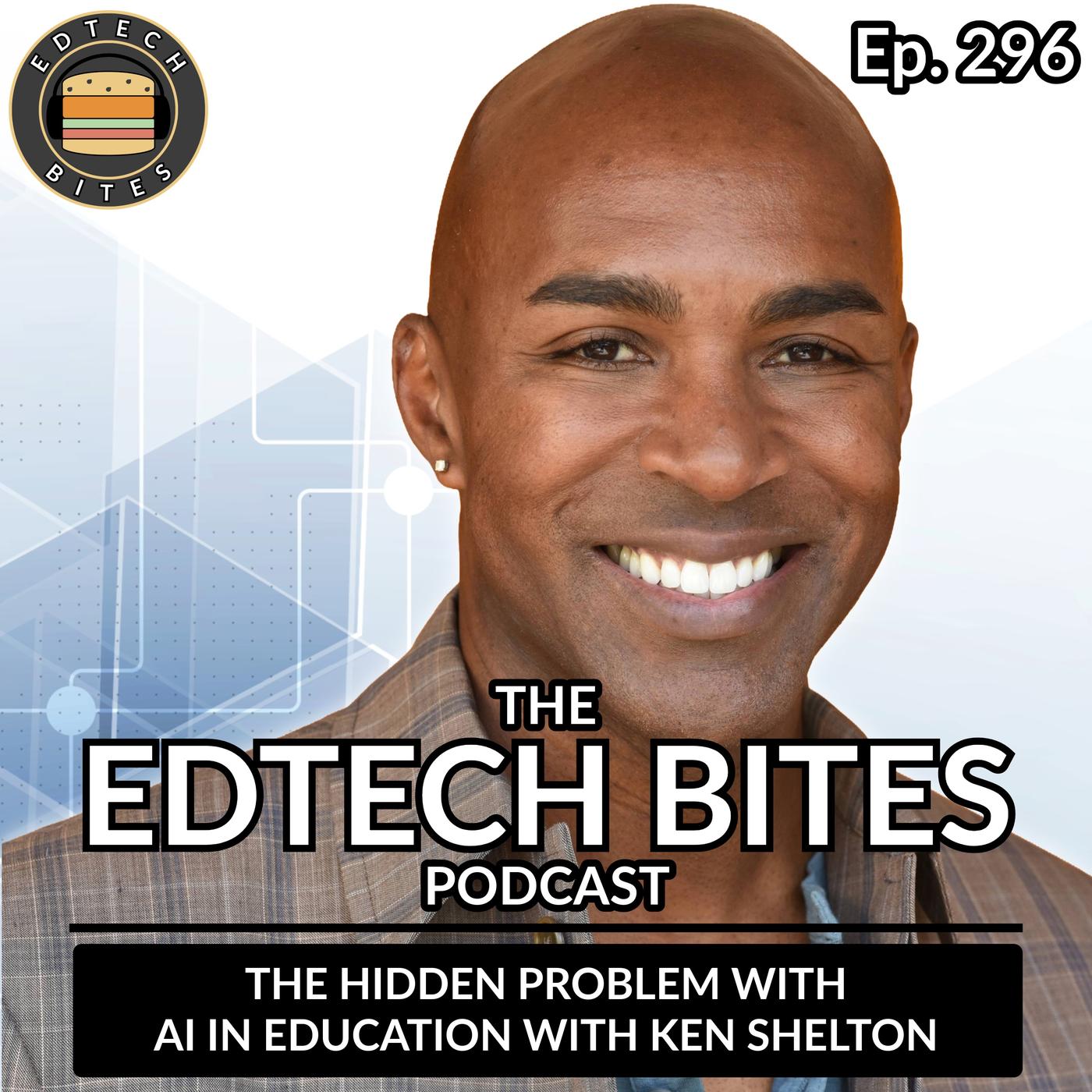
speaker-0: Ever feel like everyone's talking about AI literacy but nobody actually agrees on what means? In this episode, I sit down with Ken Shetland to unpack the confusion, challenge some popular ideas, and get real about how schools are using AI right now. Plus, a quick heads up, I'm kicking off a Teacher Appreciation Week giveaway from May 4th through May 8th with a prize every single day. More details are coming soon, so make sure you're following the website and socials. Let's get right into the conversation right after a quick word from our sponsor. Are your students dealing with broken headsets, poor audio quality, or unreliable microphones at moments that matter the most? TWT Audio was built for educators by educators, designing headsets specifically for real classroom environments, durable enough to last, and comfortable for all-day use. With over 5 million headsets and headphones sold, schools trust TWT because they just work, delivering consistent performance while simplifying technology. Instead of replacing cheap headsets year after year, invest in a solution that schools nationwide trust every day. TWT Audio, hear the difference.
speaker-1: Hi, I'm Ken Shelton. I'm an educator based in Los Angeles. I am an independent consultant, advisor, speaker, and also a bestselling author of one book and soon to be hopefully two more books. The book right now is The Promises and Perils of AI in Education, Ethics and Equity Adventure with Check.
speaker-0: All right, welcome to the show man, how you doing? Yeah, we've crossed paths many times you you name the conference We've probably crossed paths. We have I've probably sat in one of your keynote and I have sat through a couple of your keynotes in that But now we actually get the an opportunity to talk Age
speaker-1: Yeah, good to be here, I'm great. Not on stage. Right. Not on stage and not over the loud music at a social function. Yeah. What? Now we exactly. Exactly. Now we get to hang out and chop it up. Yes, we will. I'm looking forward to it.
speaker-0: However, we will be breaking bread tonight. Absolutely. episodes being recorded live at McCall. I'm going to take back the word life. You could be listening to this in 2027, 2028, but on site at McCall in Grand Rapids, Michigan. First time here. So you, I didn't realize you're from California, LA born and raised in San Diego.
speaker-1: Yes. ⁓ okay. Uh-oh. Uh-oh. Uh-oh. This episode might be Dodgers-Podgers rivalry.
speaker-0: I think it will, but I have to give it up to the Dodgers. That World Series was no...
speaker-1: ⁓ No ⁓ it was awesome. That was no joke. Let's be real. They paid for that team, so they better, better be no joke. Yeah. Now I grew up a Dodger fan and it's funny because there were a number of Padres and ended up becoming Dodgers like Steve Garvey. Yep. But and by the way, we did not steal the Chargers from you all. You can blame the Spanos family on that.
speaker-0: Absolutely. 2016 when that happened it was just an uproar people were burning their chargers. You don't you don't play for them like you don't have to burn stuff. It's no Yeah, we're here to discuss some hot topics, man, some hot takes. And I know that you have ⁓ some very interesting insight that you bring to the table, no pun intended. But ⁓ the first thing I'd like to bring up is this term that gets thrown around quite a bit. And I'll be honest, I use it quite a bit too. It's one of those terms that just, it's like the word rigor. It just comes out, know, ⁓ rigor and things like that. So AI looters. Yeah. Okay. When I say that word, what comes to mind? I know that you might have a couple of cringe-worthy moments with it in that, talk to us about what comes to mind when you hear the term AI looters.
speaker-1: Yeah, so for the audience, prior to answering your question, yes, there's rigor, there's personalization, there's individualization, there's personified, there's differentiation, there's universal design, yes. So to answer your question, I think a couple of things. So one, we get inundated with terms and terminology in education. And ⁓ it can increase the likelihood of what I like to call ⁓ term fatigue. Yeah, there's either an acronym for everything or there's, you know, a term for everything. And you hear AI literacy all the time. And what it runs the risk of doing, which I will share in just a second here, what it runs the risk of doing is debasing literacy. And so every time I hear the term, I always follow up with how is it defined? And can you provide a contextual example? because in the end I can use terms, but terms outside of context are just words and they have no value and they carry no meaning. think about it in the context of language acquisition. I can give you a bunch of words. So if I were in a classroom and I had the, know, back when I, early in my career when I was forced to use the textbook, so there's a little Easter egg there. they would tell us, you know, you have to have a word wall. So you put the words up on the wall. Yeah. And my question, you know, once I became, once I developed a higher degree of self-advocacy around what I was doing for the betterment of the students that I was teaching, as I'd say literally, what pedagogical and language acquisition purpose does putting a bunch of words up on a wall serve? Because if I'm going to learn the words because they're on the wall, then I'm going to fill my wall with a foreign language that I want to learn because I'm just going to learn it. Is it magically through osmosis? It's words. mean nothing if you don't context, context, context, context, context. So I hear that all the time with AI literacy and I watch the look on people's faces when I ask them, great, I understand AI literacy, but how do you define it? And the whole idea around why I'm sharing this is because AI literacy, your definition of AI literacy should map to your definition of digital literacy that should map to your definition of literacy and why literacy matters. So AI literacy for me is knowing, understanding, and using AI in smart and safe ways. It helps people understand how AI works, how it helps or hurts others, and how it can impact the world around us. That's how I define AI literacy. Okay, you see it's not just going, it's not limiting my use to functional skills. It's understanding that different systems work differently, that they are designed by humans. And I have a graph that I usually share, is acumen fluency and bias. My acumen around AI literacy, I understand that... Large language models that I know Chad, GPT, Claude, and Jim and I and Deepsea are all large language models, but they work differently. It's like cars. They have four wheels and an engine, but they work differently. Fluency, the convergence of my comfort, my confidence, and my competence in using the system that I chose, and the system I chose was for a specific purpose. Bias, all of these systems are constructed by humans. and they use human created data, which means they are all susceptible to the biases of the data that's selected, the algorithms that are written by humans, and what data it prioritizes in its response. See, all that connects to my AI literacy definition. ⁓
speaker-0: Okay, we've been recording for six minutes and we're getting deep. Okay, we're in 12 feet right now. So you took that word literacy and you tied it back to how does AI literacy deal with, ⁓ I'm trying to do justice to how you framed it.
speaker-1: I dive into the deep end right from the beginning.
speaker-0: but how we interact and then how you basically brought it back to the root word of literacy. Correct. How we use this, what we do with them, how students interact with them and that. So when I think of the word literacy and how it's currently being tossed around is PII.
speaker-1: Yeah, let's let's hold on hold that let's go back to that okay
speaker-0: ⁓ prompting versus chat bots, what to do, what not to do, the do's and do nots. When I think of the word AI literacy currently in education 2026, that's immediately what comes to mind. Okay, you said we're going to come back to PII. Okay. Help me redefine it in a way that makes sense to you and me based on
speaker-1: Yes.
speaker-0: your definition of AI literacy.
speaker-1: So again, acumen fluency bias. Fluency bias. So let's go back to, let's just, let's keep it as simplistic as possible here, because I think sometimes simplicity is the ultimate sophistication, and that's a Leonardo da Vinci quote. Prompting. So first of all,
speaker-0: document bias. Okay.
speaker-1: Part of the literacy is understanding that a prompt in a large language model or image generator should not be the same syntax in a Google search. So knowing that difference is in alignment with my definition of AI literacy. Even something like that. Like if I type in whatever I type in, for example, a chat GPT or a Claude, if I type that same thing into a Google search, I'm not going to get what I want because they're different systems.
speaker-0: It's versa. Google is when you Google something you're usually a little bit more vague and in your
speaker-1: I mean you could be specific, but the way I always explain to folks is Google search is you're asking Google to find something for you and LLM is asking it to do something for you. So even something like that. So that's one part. The next part is the prompt itself. What are you communicating and how clear, concise, and unambiguous are you communicating it? Because the way large language models work, the more blanks I leave, the more the system will fill in those blanks, henceforth bias. Yes. So you see, that's the literacy aspect. It's well, what system I using it's it's for example, it's why does Ken go to Claude for things like coding instead of strategy BT? Because I know from using those systems extensively, Claude tends to be better at that, even though they're both LLMs. And yeah, you can use strategy BT for coding, but I know it tends to be better. ⁓ Why is it that I use ⁓ Nano, Banana or Firefly primarily for image generating versus something like Jadgbtd? Because they tend to be better.
speaker-0: Why do you Google Maps versus Apple Maps?
speaker-1: I use both. Okay. All right. These both idea. It's the same idea same idea Yeah, and so to your point, let's go back to the prompt So now there's those parts, but then let's go to you know, the particulars What language am I using in this prompt that will get it to do what I want and the quality of what I write? so this is my hat tip to all the English language arts teachers and writing writing teachers that are listening. Do not let anybody try to tell you that AI will take your job or place your job or that your job isn't important. In fact, my argument is learning how to effectively write is actually even more important now because the AI literacy part. I'll just say this. Your results are going to be vastly different if I ask you to shorten, condense. condensed with 100 % fidelity. All three of those are going to give me three completely different results in a large language model. If I ask it to ⁓ analyze versus interrogate, see, or if I want it to help me prepare for a debate, I may give it a roll. But what people don't understand at the moment is that you can layer rolls. So for example, I might say, You know, you are you are helping me prepare for debate. So you are a debate coach, a speech and linguistic expert and a content area expert around and I would specify the content that I'm debating. See what I just did? I layered the persona.
speaker-0: rather than take on the role of a coach that is prepping.
speaker-1: Correct. Correct. again, connecting to AI literacy, let's even do coach. So let's say you're a writing coach. Okay. So I would say, you know, you are ⁓ an English language arts teacher. Also, you're a writing coach and you have an expertise in copy editing. So I just did. Yeah. And then now, even if you want to add more layers to it, is if they're a coach, well, how do you want this coach to interact with you? Think about it.
speaker-0: You wanted to question.
speaker-1: Do you want it to question what type of questions you wanted to ask? I always say you ask thoughtful questions watch this I would say you ask thoughtful questions one at a time and Do not proceed to the next question until I confirm Understanding of the question you're asking and I'm ready to move on Okay, see what I just did like those types of things are all a component of of AI literacy for me And this is why it's important to understand how you communicate, how you write, the power of language and doing those sorts of things. But even with the coach, I hear it all. Well, it's a coach. Well, what kind of a coach is it? For example, a is it a yes, is it a drill sergeant type coach? Is it a life coach? Is it the equivalent of the the hardcore get in your face football coach? Yeah. Or the, you know, the more passive. But yeah, exactly. See all of those things impact that. Yeah.
speaker-0: Is it an assistant coach? Okay, my brain's going, man. My brain is definitely going. I haven't had my coffee, but yeah, my brain is spinning because there's a lot of things that we do. I when I sit with teachers, because I'm an instructional technology specialist, coach, whatever you want to call it, depending on the large language model. But I, I work with teachers all the time and some of the prompts that I see, I'm like, ⁓ man, that's really, really vague. It looks like you're bring your transferring your Google content, your Google knowledge over to a large language model, which is going to fill in those gaps. you said, yeah. And different models. Like you said, know, Gemini, I treat Gemini and chat GPT very, very differently in the way I write things. actually have chat bots and agents in chat GPT that I've tried to do in Gemini that just
speaker-1: It doesn't want to say
speaker-0: It doesn't work the same. No. So ⁓ because of that, I can now fluidly go back and forth the same as a child can go between an iPad and a Chromebook without missing a beat. Right. know, as an adult, an older adult, you're going from iOS to Chrome OS or something. There might be a little latency within the human to go, ⁓ shoot, that's right. I got to go here rather than there. Settings here, Bluetooth there. ⁓ So you're just learning that different way to interact with it, but I become a little bit more fluid with that with a different language models. Now, we have a lot of these conversations, at least I do, and you probably do as well with teachers. I mean, we're here at McCall and I would say the majority of the conference participants are teachers. Admin gets left out of a lot of the conversations.
speaker-1: Yes, they do
speaker-0: When we start talking about that influence, for the most part, no shots fired. But they're kind of the laggards in this. There's a lot of pushback because they're thinking about policies. They're thinking about laws. They're thinking about parents. They're thinking about board members and trustees and superintendents who they have to answer to. But AI is in our face. It's not going anywhere. Pandora's box is not going to be closed anytime soon. they're starting to now make that shift and accept the fact that AI is here and it's starting to use it. In your experience working with administrators, what types of work do you do with the administrators? What are the conversations looking sound like when you're talking to admin about things like AI policy and what it looks like for them in their districts?
speaker-1: the conversation, first of all, the conversation has to be rooted and grounded in, dependent upon the role. let's, let's differentiate. So yeah. So if it's a, if it's a, if it's a school site, school site administrator, principal, assistant principal, you know, whatever their, their, their role and their scope of influence is. It starts off with what are the goals you have at your school site? Like just that, let's just start off there. Cause I think what happens is across the board is there's this rush to make a decision. What I describe as the barren landscape of hasty decisions. It's like I made a decision because either it's popular, maybe I was coerced or pressured, or I feel pressured or something like that. And so for me, I always say, well, first thing we're going to do is we're going to slow it down. go, and usually what I explain is I'm like, you know, if you like sports, Yeah, and I played football. There's a thing that comes up often with rookies versus veterans. And what you'll find in many interviews with athletes is the veterans basically say that they their skill set was commensurate with the professional level and started to grow when the game slowed down for them. Now, of course, it doesn't actually slow down, but it's you start to, you you study more, you watch film, you work out, you run through your plays. It's one of those things where the more you do it and the more you become familiar with it, the less it just slows down. It's hard for me to describe, but I'll just say it's almost like if you if you I'll put it to you this way, I'll put it in in in more layman's terms. Let's say you're learning to cook and you and you have a recipe.
speaker-0: Took the words out of my mouth. Because that's my analogy for.
speaker-1: Perfect. So you hit me too. I love food as an analogy and a metaphor, but you're learning to cook. So you learn this recipe. Yeah. Okay. And you go through step by step. Now the first time you're like, okay, let me make sure I have all my measurements, all my ingredients, so on and so forth. Then you do it again and then you do it again. And eventually you kind of eyeball your measurements because you just know.
speaker-0: Just like grandma's recipes that were given to us. Yes. Never.
speaker-1: Correct. So the same thing applies with again with sports and that's why for anyone listening if you've ever heard a professional athlete say that the game slowed down for him it's because they built up a body of work and experiences and so my point with that with administrators is let's let's slow things down you don't you know you don't have to make a decision out of pace you want to make it out of based off of as much information as you can gain at the time and it starts off with What are the goals you have at your school site or what are the goals you have in your district? Those goals are usually outlined and specified in the strategic plan, a single site plan for student achievement, something like that. So based upon that, now we're going to start looking at things like how does your ⁓ allocation of resources, financial, digital, human, how are those in alignment with those goals? And then once you do that, now what are the learning experiences that you want teachers to provide and learners to gain that's in alignment with those goals? And then what AI platform or AI enhancement within a platform you already have is the through line or is connected to that goal. And so that's where it's missing around the whole idea around, we'll get this one, we'll get this platform, get this platform. I've been around edtech a long time and I've seen it over and over and over again. It's a recursive cycle. Shiny new thing. ⁓ we need to get on board because everybody else is. It's the bandwagon effect. And that's why my whole thing is not what we need to do is slow it down a little bit and make a more strategic, thoughtful and purposeful decision of what you acquire, why you're acquiring it. And then of course for admin. Having some sort of element of that process makes it easier for the messaging and communications. We purchased X platform because these are the goals that we have and based on a comprehensive vetting process we determined that this platform will support the students, the teachers and everyone throughout the school or the district in meeting this goal. it. See what I just did?
speaker-0: It's 100 % in alignment.
speaker-1: 100 % alignment and again, it makes the messaging, communication and ultimately the investment in the professional development and growth around it. It increases the likelihood of it being sustainable, but also it being successful. ⁓ Because if I, know, unfortunately this has happened where I work with and advise some school districts where I ask them to give me a list of the platforms they've acquired and they do it. And I say, now can you provide a list of the vetting process you went through? And sometimes they, they, they can't provide that. And it's not a flex. It's not a knock. It's then we need to, we need to of re-calibrate. Yes. It's like, I get why you bought it or why you're looking at this platform, but let's look at the purpose of What impact is that platform going to have because that's going to help with the messaging communications? I recently did and it's one of the things that I do all the time. I recently did a board study for a school district. Now does the school board need to know the particulars of what's happening in the classroom with artificial intelligence? Not really. What they do need to know is several things. So what are your expectations on how it's going to be used? How might a board policy reinforce that and build a solid foundation to build upon? How might you create a board resolution that effectively communicates the importance and the understanding of how artificial intelligence is relevant in students' lives now, and that it's in your support of the acquisition of X platform or X functionality is in alignment with the goals that are outlined in the strategic plan? So for a board, it's that kind of thing. That's why I always say my approach is always top down and bottom up. Concurrently, you do both. PD to support the teachers on what your expectations are how it's used, but also policy that provides guidance, guidelines, and guardrails around how it's being used. Concurrently, not one or the other, and not one after the other. Concurrently.
speaker-0: to meet the ultimate goal and to be in alignment with the current campus district and ⁓ curriculum and instructional goals that are going to be happening at campuses. Okay, all right. You work with a lot of school districts around the country. You've had some conversations with administrators. You've had them give you lists. How many aha moments do you get when you ask that question, now can you tell me the vetting process?
speaker-1: Exactly. Yeah. All the time. Really? Yeah.
speaker-0: Okay, how long of a list have you seen? Or have you had situations where they go, I don't even know what we have, and then you come to find out they have stuff that they didn't even realize that they've purchased because this grade level hit them up. This person from this organization hit them up, and then they got these cold call emails or what have you, and before they know it, they're kind of like our streaming services. When you get that credit card bill, you're like, I don't remember signing up for all these, but here they are.
speaker-1: There's a reason why you've seen those ads for those different apps that will scan all your subscriptions. There's a reason why. Yes. And the goal, more often than not, the goal of my consulting agreement is to do the following three things. So one, it's to what I, what I always share with, uh, with leaders is
speaker-0: and all that.
speaker-1: You know, we want to develop a process that counters the allegory of the cave. And that is I'm not in your system. So therefore I may see things that you don't see because you are embedded in this in the system. So that's number one. So that's why I do that. That's that's precisely why I asked for those things. OK. And and to be clear, it's not to play a game of gotcha. It's not it's not to guilt and shame. It's not to admonish. It's. I'm asking for things so that you're paying me to work with you and I want as comprehensive and clear of a picture as to where you are prior to us going through the process of making certain decisions that I know are likely to impact students, teachers, and others within a school or a district. And so yes, we've done that and there are many cases where when you So first of all, there's only been a couple of instances where they weren't sure how many platforms they had and those were small districts where, you know, it's not it's not their fault. It's they can't afford. They don't have the budget to have like a dedicated IT person. Got it. And so what I always say is if you can't do it, then let's figure out a way for you to get that information because ultimately that's going to inform us. And so what's happened, it's been quite revealing with ⁓ quite a few things. So what happens often are things like there's a degree of redundancy that could be eliminated. So for example, I remember with one, there were five platforms that had enough overlap of functionality and features that we condensed five down to two. And I said, well, here's what we're going to do. You can purge three of them. And then now with that cost savings and with that awareness, the next step is to ensure that the professional development opportunities that teachers have are to use the two now with a higher degree of impact and depth. Because there was enough redundancy overlap. There's no need to spend money on extra platforms.
speaker-0: There's no need in having an Android and an iPhone both in your pocket at the same time.
speaker-1: Well, unless that Android is a burner phone.
speaker-0: That's the Uber Eats phone that you see, right?
speaker-1: You don't want your wife. Yeah, that's that subscription phone that you don't want to know. but but no, so we've done that. And again, it's it's it's to recalibrate and ensure alignment. And so I've seen I want to say one of the really, really large districts that I work with, really large. I'm not going to reveal how large, but it's one of the top 10 largest in the country. OK. It narrows down to 10. Yeah.
speaker-0: Okay, that narrows it down.
speaker-1: And I'll say it wasn't the top two. for this, I have work with them, there were, if I remember correctly, there were like over 500 different apps or platforms that were used. so we had we had we had to have a standard of measurement. And so what I said was how many different platforms are used in a district at least once a week?
speaker-0: to talk to you. Okay. So now they're going through the dashboards and go.
speaker-1: Yeah, and it was holy cow. And so then it was okay. So obviously there's a lot here. So let's let's look at it through two lenses, look at it through ⁓ cybersecurity and IT infrastructure lens. And then we're look at through an instructional lens. Correct. So the first was the cybersecurity and IT lens. One dollar those first of all, I was like, how many of them fit within your single sign on protocols and platform. So let's start off with that. And so we went in for time's sake, but we went through a whole lot of those things to start identifying platforms that needed to be purged. And then there were some that weren't used once a week, but teachers, and I know what happened. Teachers went to a conference, they attended that session where they got 60 apps in 60 minutes, they went back to their classroom, and they're like, I'm gonna try all these out. And this is not a knock on the teachers, but if teachers, if you're listening, When you do that, you have to keep in mind that there's an ancillary consequence to that. And that is it can put a strain on the IT division. It can also, ⁓ it also may require students, if you want students to use it to create an account that may not fit within a single sign-on.
speaker-0: or might even not have a student data privacy agreement.
speaker-1: I haven't even gotten into data privacy terms of service. Okay, all of those certain Yeah, and so So that was one less and the other lens was what is the instructional? Impact and purpose of these platforms that are being used and again, that's where the redundancy went in where in some cases it was a platform was used because I had a special feature when in something that they already had that special feature already existed
speaker-0: User license agreements and all that.
speaker-1: but those teachers just may not have been aware of it. Henceforth, me mentioning professional development. So those are ways to, and you notice you and I aren't even really talking about AI, we're just talking about tech. The AI part still fits into this conversation, but it's the whole idea around, again, what are the goals that we have that are delineated in the strategic plan or the single site plan? What are the experiences that we want the teachers to be able to provide for the learners to gain that commensurate with? You know, however they define achievement or learning growth and then now what tech fits within that and then within that what AI Enhancement functionality or platform supports that in that order so
speaker-0: doing in my head right now? I'm putting myself in the position of a new administrator. So let's just say that I was ⁓ just hired as an administrator, building principal for a K through eight campus and for next school year. And I'm gonna start living in that world and it's gonna start trickling down to me pretty quickly. And I now have to start thinking along those lines because I'm gonna get hit up. I'm gonna have to do an audit of what we currently have and start looking at redundancy, like you said. We're talking extreme redundancy in some cases.
speaker-1: In some cases, Wow.
speaker-0: Okay, giving us a lot to think about man. Good. That's how I roll.
speaker-1: I like to be provocative of thought and action.
speaker-0: Hence why you're a featured speaker here.
speaker-1: That's why I do what I do. Some people don't like it, but no such thing as collective acceptance. So you might as well be the person you want to be.
speaker-0: Well, I know that you have some sessions going on in that, how can people connect with you, learn more, and actually maybe even try to get you for some consulting work in their particular building?
speaker-1: That would be great. So I can be found, of course, if you Google my name. I'm also in the LLMs as well. I knew that would be the case. You have a strong digital presence, you're in the LLMs. at any rate, the easiest thing is at my website, which is KennethShelton.net. Hopefully for those of you listening that our paths will cross in person at a conference. mean, like this is you and I have crossed paths at conferences, but this is awesome because we actually got to sit down and have a conversation.
speaker-0: I want to clear my calendar the rest of the day.
speaker-1: Yeah, I appreciate that. Well you and I are gonna get some more social time together. Yes Yeah, I mean I can be found on on on I use all the socials I don't use you know, it's interesting my social media use has has significantly dropped off over the last several years I don't really know why just I Don't know I just I yeah. Yeah, maybe for another recording, but I will say that I'll put it to you this way that I've now How can I put this? People sometimes ask me, how come you don't post like pictures or videos from your talks or things like that? And my response is always the same. like, I wasn't thinking about using my phone. I wanted to be mindfully present at the moment and enjoy the human interaction and that kind of time. And so I don't, I use the socials, but they don't use them heavily. ⁓ I do, I know that some folks would love to see those things, but for me it's.
speaker-0: That's why they could book you.
speaker-1: You can book me or again if you're at a conference that I'm at come and say hi. I certainly love being able to interact with people. I embrace the extrovert part of my personality, especially at
speaker-0: You definitely got it, man. And you definitely given us some things to think about now. Thinking of, ⁓ mean, we're starting to kind of come on the tail end of the school year and we're starting to come up on state testing. And right after state testing is we're starting to staff and do things for next school year. And we're starting to get hired and shifting of positions in that. You got a new ⁓ administrator. What are some pieces of advice when it comes to things like? the purchases and I hate to throw the term out there, but literacy, not only AI literacy, digital literacy, and just making sure things are in alignment.
speaker-1: Yeah, I mean, to me, it's so in my I went to UCLA. So go Bruins. OK, in my home office, I have the above the things I have up on the walls. One is the ⁓ pyramid of success. John Wooden, Lake Coast, John Wooden. OK, so for administration, what I always say is your your more sustainable approach to leadership ⁓ is all the following. So one slow and steady wins the race. OK, don't worry about making hasty decisions. You want to maximize the amount of information you have prior to decisions made. And then of course from Coach Wooden, busy does not always equal productive and don't mistake activity for accomplishment. That's why slow and steady wins the race.
speaker-0: Don't mistake
speaker-1: Yeah, don't mistake activity for
speaker-0: for accomplishment. Correct. And then busy doesn't always mean productive. Correct. Hey, you're just dropping gems on us.
speaker-1: No, those gems are from coach Witten. That's why I the pyramid of success up in my home office
speaker-0: And you kind of just skated over the fact that you brought up the allegory. Yeah. That's deep stuff right there, man. That's a lot of angst. Yeah. All right. Sounds good. Well, I appreciate you and everything you do in education. ⁓ I do have a one last million dollar question. I asked this of about 99 % of the guests. The only reason it hasn't been 100 is because sometimes I just forget. This is going to be the most difficult question you will be asked.
speaker-1: Tyro Is it a million dollars based on current currency rates or are going to factor for inflation? ⁓
speaker-0: Always current. Always current.
speaker-1: That ain't gonna get me very far. I might fill up my gas tank.
speaker-0: Yeah, million dollars. Alright, I want you to go with your gut and I'm excited to ask you as a California native as well. Corn tortilla or flour tortilla? Corn! There we go! That's what I'm... Yeah, you didn't even know...
speaker-1: I'm LA through and through man. No street tacos. You got an apple eater there on the side with the maize and then the tortilla press.
speaker-0: Let's do it. Let's do it. ⁓ my gosh, man, we got to do this more. We got to do this. All right. Sounds good.
speaker-1: You're so cow man, you know that's... No!
speaker-0: I appreciate you, man. Thank you. Enjoy the rest of your conference and we look forward to hearing more from you. All right, man. Take care. That does it for this episode. Ladies and gentlemen, if you found this episode useful, please make sure that you share it with a friend or colleague and make sure that you are subscribed to this show on your favorite podcast app and make sure that we are connected on social media. You could follow me on IGX.
speaker-1: Much appreciated, Armando, much appreciated.
speaker-0: threads and TikTok at EdTechBytes and the Facebook page at facebook.com forward slash EdTechBytes and YouTube at youtube.com forward slash at EdTechBytes. This is Gabriel Carrillo signing off and don't forget that great conversations happen when fueled by great food. Buen provecho.
speaker-1: Hi, I'm Ken Shelton. I'm an educator based in Los Angeles. I am an independent consultant, advisor, speaker, and also a bestselling author of one book and soon to be hopefully two more books. The book right now is The Promises and Perils of AI in Education, Ethics and Equity Adventure with Check.
speaker-0: All right, welcome to the show man, how you doing? Yeah, we've crossed paths many times you you name the conference We've probably crossed paths. We have I've probably sat in one of your keynote and I have sat through a couple of your keynotes in that But now we actually get the an opportunity to talk Age
speaker-1: Yeah, good to be here, I'm great. Not on stage. Right. Not on stage and not over the loud music at a social function. Yeah. What? Now we exactly. Exactly. Now we get to hang out and chop it up. Yes, we will. I'm looking forward to it.
speaker-0: However, we will be breaking bread tonight. Absolutely. episodes being recorded live at McCall. I'm going to take back the word life. You could be listening to this in 2027, 2028, but on site at McCall in Grand Rapids, Michigan. First time here. So you, I didn't realize you're from California, LA born and raised in San Diego.
speaker-1: Yes. ⁓ okay. Uh-oh. Uh-oh. Uh-oh. This episode might be Dodgers-Podgers rivalry.
speaker-0: I think it will, but I have to give it up to the Dodgers. That World Series was no...
speaker-1: ⁓ No ⁓ it was awesome. That was no joke. Let's be real. They paid for that team, so they better, better be no joke. Yeah. Now I grew up a Dodger fan and it's funny because there were a number of Padres and ended up becoming Dodgers like Steve Garvey. Yep. But and by the way, we did not steal the Chargers from you all. You can blame the Spanos family on that.
speaker-0: Absolutely. 2016 when that happened it was just an uproar people were burning their chargers. You don't you don't play for them like you don't have to burn stuff. It's no Yeah, we're here to discuss some hot topics, man, some hot takes. And I know that you have ⁓ some very interesting insight that you bring to the table, no pun intended. But ⁓ the first thing I'd like to bring up is this term that gets thrown around quite a bit. And I'll be honest, I use it quite a bit too. It's one of those terms that just, it's like the word rigor. It just comes out, know, ⁓ rigor and things like that. So AI looters. Yeah. Okay. When I say that word, what comes to mind? I know that you might have a couple of cringe-worthy moments with it in that, talk to us about what comes to mind when you hear the term AI looters.
speaker-1: Yeah, so for the audience, prior to answering your question, yes, there's rigor, there's personalization, there's individualization, there's personified, there's differentiation, there's universal design, yes. So to answer your question, I think a couple of things. So one, we get inundated with terms and terminology in education. And ⁓ it can increase the likelihood of what I like to call ⁓ term fatigue. Yeah, there's either an acronym for everything or there's, you know, a term for everything. And you hear AI literacy all the time. And what it runs the risk of doing, which I will share in just a second here, what it runs the risk of doing is debasing literacy. And so every time I hear the term, I always follow up with how is it defined? And can you provide a contextual example? because in the end I can use terms, but terms outside of context are just words and they have no value and they carry no meaning. think about it in the context of language acquisition. I can give you a bunch of words. So if I were in a classroom and I had the, know, back when I, early in my career when I was forced to use the textbook, so there's a little Easter egg there. they would tell us, you know, you have to have a word wall. So you put the words up on the wall. Yeah. And my question, you know, once I became, once I developed a higher degree of self-advocacy around what I was doing for the betterment of the students that I was teaching, as I'd say literally, what pedagogical and language acquisition purpose does putting a bunch of words up on a wall serve? Because if I'm going to learn the words because they're on the wall, then I'm going to fill my wall with a foreign language that I want to learn because I'm just going to learn it. Is it magically through osmosis? It's words. mean nothing if you don't context, context, context, context, context. So I hear that all the time with AI literacy and I watch the look on people's faces when I ask them, great, I understand AI literacy, but how do you define it? And the whole idea around why I'm sharing this is because AI literacy, your definition of AI literacy should map to your definition of digital literacy that should map to your definition of literacy and why literacy matters. So AI literacy for me is knowing, understanding, and using AI in smart and safe ways. It helps people understand how AI works, how it helps or hurts others, and how it can impact the world around us. That's how I define AI literacy. Okay, you see it's not just going, it's not limiting my use to functional skills. It's understanding that different systems work differently, that they are designed by humans. And I have a graph that I usually share, is acumen fluency and bias. My acumen around AI literacy, I understand that... Large language models that I know Chad, GPT, Claude, and Jim and I and Deepsea are all large language models, but they work differently. It's like cars. They have four wheels and an engine, but they work differently. Fluency, the convergence of my comfort, my confidence, and my competence in using the system that I chose, and the system I chose was for a specific purpose. Bias, all of these systems are constructed by humans. and they use human created data, which means they are all susceptible to the biases of the data that's selected, the algorithms that are written by humans, and what data it prioritizes in its response. See, all that connects to my AI literacy definition. ⁓
speaker-0: Okay, we've been recording for six minutes and we're getting deep. Okay, we're in 12 feet right now. So you took that word literacy and you tied it back to how does AI literacy deal with, ⁓ I'm trying to do justice to how you framed it.
speaker-1: I dive into the deep end right from the beginning.
speaker-0: but how we interact and then how you basically brought it back to the root word of literacy. Correct. How we use this, what we do with them, how students interact with them and that. So when I think of the word literacy and how it's currently being tossed around is PII.
speaker-1: Yeah, let's let's hold on hold that let's go back to that okay
speaker-0: ⁓ prompting versus chat bots, what to do, what not to do, the do's and do nots. When I think of the word AI literacy currently in education 2026, that's immediately what comes to mind. Okay, you said we're going to come back to PII. Okay. Help me redefine it in a way that makes sense to you and me based on
speaker-1: Yes.
speaker-0: your definition of AI literacy.
speaker-1: So again, acumen fluency bias. Fluency bias. So let's go back to, let's just, let's keep it as simplistic as possible here, because I think sometimes simplicity is the ultimate sophistication, and that's a Leonardo da Vinci quote. Prompting. So first of all,
speaker-0: document bias. Okay.
speaker-1: Part of the literacy is understanding that a prompt in a large language model or image generator should not be the same syntax in a Google search. So knowing that difference is in alignment with my definition of AI literacy. Even something like that. Like if I type in whatever I type in, for example, a chat GPT or a Claude, if I type that same thing into a Google search, I'm not going to get what I want because they're different systems.
speaker-0: It's versa. Google is when you Google something you're usually a little bit more vague and in your
speaker-1: I mean you could be specific, but the way I always explain to folks is Google search is you're asking Google to find something for you and LLM is asking it to do something for you. So even something like that. So that's one part. The next part is the prompt itself. What are you communicating and how clear, concise, and unambiguous are you communicating it? Because the way large language models work, the more blanks I leave, the more the system will fill in those blanks, henceforth bias. Yes. So you see, that's the literacy aspect. It's well, what system I using it's it's for example, it's why does Ken go to Claude for things like coding instead of strategy BT? Because I know from using those systems extensively, Claude tends to be better at that, even though they're both LLMs. And yeah, you can use strategy BT for coding, but I know it tends to be better. ⁓ Why is it that I use ⁓ Nano, Banana or Firefly primarily for image generating versus something like Jadgbtd? Because they tend to be better.
speaker-0: Why do you Google Maps versus Apple Maps?
speaker-1: I use both. Okay. All right. These both idea. It's the same idea same idea Yeah, and so to your point, let's go back to the prompt So now there's those parts, but then let's go to you know, the particulars What language am I using in this prompt that will get it to do what I want and the quality of what I write? so this is my hat tip to all the English language arts teachers and writing writing teachers that are listening. Do not let anybody try to tell you that AI will take your job or place your job or that your job isn't important. In fact, my argument is learning how to effectively write is actually even more important now because the AI literacy part. I'll just say this. Your results are going to be vastly different if I ask you to shorten, condense. condensed with 100 % fidelity. All three of those are going to give me three completely different results in a large language model. If I ask it to ⁓ analyze versus interrogate, see, or if I want it to help me prepare for a debate, I may give it a roll. But what people don't understand at the moment is that you can layer rolls. So for example, I might say, You know, you are you are helping me prepare for debate. So you are a debate coach, a speech and linguistic expert and a content area expert around and I would specify the content that I'm debating. See what I just did? I layered the persona.
speaker-0: rather than take on the role of a coach that is prepping.
speaker-1: Correct. Correct. again, connecting to AI literacy, let's even do coach. So let's say you're a writing coach. Okay. So I would say, you know, you are ⁓ an English language arts teacher. Also, you're a writing coach and you have an expertise in copy editing. So I just did. Yeah. And then now, even if you want to add more layers to it, is if they're a coach, well, how do you want this coach to interact with you? Think about it.
speaker-0: You wanted to question.
speaker-1: Do you want it to question what type of questions you wanted to ask? I always say you ask thoughtful questions watch this I would say you ask thoughtful questions one at a time and Do not proceed to the next question until I confirm Understanding of the question you're asking and I'm ready to move on Okay, see what I just did like those types of things are all a component of of AI literacy for me And this is why it's important to understand how you communicate, how you write, the power of language and doing those sorts of things. But even with the coach, I hear it all. Well, it's a coach. Well, what kind of a coach is it? For example, a is it a yes, is it a drill sergeant type coach? Is it a life coach? Is it the equivalent of the the hardcore get in your face football coach? Yeah. Or the, you know, the more passive. But yeah, exactly. See all of those things impact that. Yeah.
speaker-0: Is it an assistant coach? Okay, my brain's going, man. My brain is definitely going. I haven't had my coffee, but yeah, my brain is spinning because there's a lot of things that we do. I when I sit with teachers, because I'm an instructional technology specialist, coach, whatever you want to call it, depending on the large language model. But I, I work with teachers all the time and some of the prompts that I see, I'm like, ⁓ man, that's really, really vague. It looks like you're bring your transferring your Google content, your Google knowledge over to a large language model, which is going to fill in those gaps. you said, yeah. And different models. Like you said, know, Gemini, I treat Gemini and chat GPT very, very differently in the way I write things. actually have chat bots and agents in chat GPT that I've tried to do in Gemini that just
speaker-1: It doesn't want to say
speaker-0: It doesn't work the same. No. So ⁓ because of that, I can now fluidly go back and forth the same as a child can go between an iPad and a Chromebook without missing a beat. Right. know, as an adult, an older adult, you're going from iOS to Chrome OS or something. There might be a little latency within the human to go, ⁓ shoot, that's right. I got to go here rather than there. Settings here, Bluetooth there. ⁓ So you're just learning that different way to interact with it, but I become a little bit more fluid with that with a different language models. Now, we have a lot of these conversations, at least I do, and you probably do as well with teachers. I mean, we're here at McCall and I would say the majority of the conference participants are teachers. Admin gets left out of a lot of the conversations.
speaker-1: Yes, they do
speaker-0: When we start talking about that influence, for the most part, no shots fired. But they're kind of the laggards in this. There's a lot of pushback because they're thinking about policies. They're thinking about laws. They're thinking about parents. They're thinking about board members and trustees and superintendents who they have to answer to. But AI is in our face. It's not going anywhere. Pandora's box is not going to be closed anytime soon. they're starting to now make that shift and accept the fact that AI is here and it's starting to use it. In your experience working with administrators, what types of work do you do with the administrators? What are the conversations looking sound like when you're talking to admin about things like AI policy and what it looks like for them in their districts?
speaker-1: the conversation, first of all, the conversation has to be rooted and grounded in, dependent upon the role. let's, let's differentiate. So yeah. So if it's a, if it's a, if it's a school site, school site administrator, principal, assistant principal, you know, whatever their, their, their role and their scope of influence is. It starts off with what are the goals you have at your school site? Like just that, let's just start off there. Cause I think what happens is across the board is there's this rush to make a decision. What I describe as the barren landscape of hasty decisions. It's like I made a decision because either it's popular, maybe I was coerced or pressured, or I feel pressured or something like that. And so for me, I always say, well, first thing we're going to do is we're going to slow it down. go, and usually what I explain is I'm like, you know, if you like sports, Yeah, and I played football. There's a thing that comes up often with rookies versus veterans. And what you'll find in many interviews with athletes is the veterans basically say that they their skill set was commensurate with the professional level and started to grow when the game slowed down for them. Now, of course, it doesn't actually slow down, but it's you start to, you you study more, you watch film, you work out, you run through your plays. It's one of those things where the more you do it and the more you become familiar with it, the less it just slows down. It's hard for me to describe, but I'll just say it's almost like if you if you I'll put it to you this way, I'll put it in in in more layman's terms. Let's say you're learning to cook and you and you have a recipe.
speaker-0: Took the words out of my mouth. Because that's my analogy for.
speaker-1: Perfect. So you hit me too. I love food as an analogy and a metaphor, but you're learning to cook. So you learn this recipe. Yeah. Okay. And you go through step by step. Now the first time you're like, okay, let me make sure I have all my measurements, all my ingredients, so on and so forth. Then you do it again and then you do it again. And eventually you kind of eyeball your measurements because you just know.
speaker-0: Just like grandma's recipes that were given to us. Yes. Never.
speaker-1: Correct. So the same thing applies with again with sports and that's why for anyone listening if you've ever heard a professional athlete say that the game slowed down for him it's because they built up a body of work and experiences and so my point with that with administrators is let's let's slow things down you don't you know you don't have to make a decision out of pace you want to make it out of based off of as much information as you can gain at the time and it starts off with What are the goals you have at your school site or what are the goals you have in your district? Those goals are usually outlined and specified in the strategic plan, a single site plan for student achievement, something like that. So based upon that, now we're going to start looking at things like how does your ⁓ allocation of resources, financial, digital, human, how are those in alignment with those goals? And then once you do that, now what are the learning experiences that you want teachers to provide and learners to gain that's in alignment with those goals? And then what AI platform or AI enhancement within a platform you already have is the through line or is connected to that goal. And so that's where it's missing around the whole idea around, we'll get this one, we'll get this platform, get this platform. I've been around edtech a long time and I've seen it over and over and over again. It's a recursive cycle. Shiny new thing. ⁓ we need to get on board because everybody else is. It's the bandwagon effect. And that's why my whole thing is not what we need to do is slow it down a little bit and make a more strategic, thoughtful and purposeful decision of what you acquire, why you're acquiring it. And then of course for admin. Having some sort of element of that process makes it easier for the messaging and communications. We purchased X platform because these are the goals that we have and based on a comprehensive vetting process we determined that this platform will support the students, the teachers and everyone throughout the school or the district in meeting this goal. it. See what I just did?
speaker-0: It's 100 % in alignment.
speaker-1: 100 % alignment and again, it makes the messaging, communication and ultimately the investment in the professional development and growth around it. It increases the likelihood of it being sustainable, but also it being successful. ⁓ Because if I, know, unfortunately this has happened where I work with and advise some school districts where I ask them to give me a list of the platforms they've acquired and they do it. And I say, now can you provide a list of the vetting process you went through? And sometimes they, they, they can't provide that. And it's not a flex. It's not a knock. It's then we need to, we need to of re-calibrate. Yes. It's like, I get why you bought it or why you're looking at this platform, but let's look at the purpose of What impact is that platform going to have because that's going to help with the messaging communications? I recently did and it's one of the things that I do all the time. I recently did a board study for a school district. Now does the school board need to know the particulars of what's happening in the classroom with artificial intelligence? Not really. What they do need to know is several things. So what are your expectations on how it's going to be used? How might a board policy reinforce that and build a solid foundation to build upon? How might you create a board resolution that effectively communicates the importance and the understanding of how artificial intelligence is relevant in students' lives now, and that it's in your support of the acquisition of X platform or X functionality is in alignment with the goals that are outlined in the strategic plan? So for a board, it's that kind of thing. That's why I always say my approach is always top down and bottom up. Concurrently, you do both. PD to support the teachers on what your expectations are how it's used, but also policy that provides guidance, guidelines, and guardrails around how it's being used. Concurrently, not one or the other, and not one after the other. Concurrently.
speaker-0: to meet the ultimate goal and to be in alignment with the current campus district and ⁓ curriculum and instructional goals that are going to be happening at campuses. Okay, all right. You work with a lot of school districts around the country. You've had some conversations with administrators. You've had them give you lists. How many aha moments do you get when you ask that question, now can you tell me the vetting process?
speaker-1: Exactly. Yeah. All the time. Really? Yeah.
speaker-0: Okay, how long of a list have you seen? Or have you had situations where they go, I don't even know what we have, and then you come to find out they have stuff that they didn't even realize that they've purchased because this grade level hit them up. This person from this organization hit them up, and then they got these cold call emails or what have you, and before they know it, they're kind of like our streaming services. When you get that credit card bill, you're like, I don't remember signing up for all these, but here they are.
speaker-1: There's a reason why you've seen those ads for those different apps that will scan all your subscriptions. There's a reason why. Yes. And the goal, more often than not, the goal of my consulting agreement is to do the following three things. So one, it's to what I, what I always share with, uh, with leaders is
speaker-0: and all that.
speaker-1: You know, we want to develop a process that counters the allegory of the cave. And that is I'm not in your system. So therefore I may see things that you don't see because you are embedded in this in the system. So that's number one. So that's why I do that. That's that's precisely why I asked for those things. OK. And and to be clear, it's not to play a game of gotcha. It's not it's not to guilt and shame. It's not to admonish. It's. I'm asking for things so that you're paying me to work with you and I want as comprehensive and clear of a picture as to where you are prior to us going through the process of making certain decisions that I know are likely to impact students, teachers, and others within a school or a district. And so yes, we've done that and there are many cases where when you So first of all, there's only been a couple of instances where they weren't sure how many platforms they had and those were small districts where, you know, it's not it's not their fault. It's they can't afford. They don't have the budget to have like a dedicated IT person. Got it. And so what I always say is if you can't do it, then let's figure out a way for you to get that information because ultimately that's going to inform us. And so what's happened, it's been quite revealing with ⁓ quite a few things. So what happens often are things like there's a degree of redundancy that could be eliminated. So for example, I remember with one, there were five platforms that had enough overlap of functionality and features that we condensed five down to two. And I said, well, here's what we're going to do. You can purge three of them. And then now with that cost savings and with that awareness, the next step is to ensure that the professional development opportunities that teachers have are to use the two now with a higher degree of impact and depth. Because there was enough redundancy overlap. There's no need to spend money on extra platforms.
speaker-0: There's no need in having an Android and an iPhone both in your pocket at the same time.
speaker-1: Well, unless that Android is a burner phone.
speaker-0: That's the Uber Eats phone that you see, right?
speaker-1: You don't want your wife. Yeah, that's that subscription phone that you don't want to know. but but no, so we've done that. And again, it's it's it's to recalibrate and ensure alignment. And so I've seen I want to say one of the really, really large districts that I work with, really large. I'm not going to reveal how large, but it's one of the top 10 largest in the country. OK. It narrows down to 10. Yeah.
speaker-0: Okay, that narrows it down.
speaker-1: And I'll say it wasn't the top two. for this, I have work with them, there were, if I remember correctly, there were like over 500 different apps or platforms that were used. so we had we had we had to have a standard of measurement. And so what I said was how many different platforms are used in a district at least once a week?
speaker-0: to talk to you. Okay. So now they're going through the dashboards and go.
speaker-1: Yeah, and it was holy cow. And so then it was okay. So obviously there's a lot here. So let's let's look at it through two lenses, look at it through ⁓ cybersecurity and IT infrastructure lens. And then we're look at through an instructional lens. Correct. So the first was the cybersecurity and IT lens. One dollar those first of all, I was like, how many of them fit within your single sign on protocols and platform. So let's start off with that. And so we went in for time's sake, but we went through a whole lot of those things to start identifying platforms that needed to be purged. And then there were some that weren't used once a week, but teachers, and I know what happened. Teachers went to a conference, they attended that session where they got 60 apps in 60 minutes, they went back to their classroom, and they're like, I'm gonna try all these out. And this is not a knock on the teachers, but if teachers, if you're listening, When you do that, you have to keep in mind that there's an ancillary consequence to that. And that is it can put a strain on the IT division. It can also, ⁓ it also may require students, if you want students to use it to create an account that may not fit within a single sign-on.
speaker-0: or might even not have a student data privacy agreement.
speaker-1: I haven't even gotten into data privacy terms of service. Okay, all of those certain Yeah, and so So that was one less and the other lens was what is the instructional? Impact and purpose of these platforms that are being used and again, that's where the redundancy went in where in some cases it was a platform was used because I had a special feature when in something that they already had that special feature already existed
speaker-0: User license agreements and all that.
speaker-1: but those teachers just may not have been aware of it. Henceforth, me mentioning professional development. So those are ways to, and you notice you and I aren't even really talking about AI, we're just talking about tech. The AI part still fits into this conversation, but it's the whole idea around, again, what are the goals that we have that are delineated in the strategic plan or the single site plan? What are the experiences that we want the teachers to be able to provide for the learners to gain that commensurate with? You know, however they define achievement or learning growth and then now what tech fits within that and then within that what AI Enhancement functionality or platform supports that in that order so
speaker-0: doing in my head right now? I'm putting myself in the position of a new administrator. So let's just say that I was ⁓ just hired as an administrator, building principal for a K through eight campus and for next school year. And I'm gonna start living in that world and it's gonna start trickling down to me pretty quickly. And I now have to start thinking along those lines because I'm gonna get hit up. I'm gonna have to do an audit of what we currently have and start looking at redundancy, like you said. We're talking extreme redundancy in some cases.
speaker-1: In some cases, Wow.
speaker-0: Okay, giving us a lot to think about man. Good. That's how I roll.
speaker-1: I like to be provocative of thought and action.
speaker-0: Hence why you're a featured speaker here.
speaker-1: That's why I do what I do. Some people don't like it, but no such thing as collective acceptance. So you might as well be the person you want to be.
speaker-0: Well, I know that you have some sessions going on in that, how can people connect with you, learn more, and actually maybe even try to get you for some consulting work in their particular building?
speaker-1: That would be great. So I can be found, of course, if you Google my name. I'm also in the LLMs as well. I knew that would be the case. You have a strong digital presence, you're in the LLMs. at any rate, the easiest thing is at my website, which is KennethShelton.net. Hopefully for those of you listening that our paths will cross in person at a conference. mean, like this is you and I have crossed paths at conferences, but this is awesome because we actually got to sit down and have a conversation.
speaker-0: I want to clear my calendar the rest of the day.
speaker-1: Yeah, I appreciate that. Well you and I are gonna get some more social time together. Yes Yeah, I mean I can be found on on on I use all the socials I don't use you know, it's interesting my social media use has has significantly dropped off over the last several years I don't really know why just I Don't know I just I yeah. Yeah, maybe for another recording, but I will say that I'll put it to you this way that I've now How can I put this? People sometimes ask me, how come you don't post like pictures or videos from your talks or things like that? And my response is always the same. like, I wasn't thinking about using my phone. I wanted to be mindfully present at the moment and enjoy the human interaction and that kind of time. And so I don't, I use the socials, but they don't use them heavily. ⁓ I do, I know that some folks would love to see those things, but for me it's.
speaker-0: That's why they could book you.
speaker-1: You can book me or again if you're at a conference that I'm at come and say hi. I certainly love being able to interact with people. I embrace the extrovert part of my personality, especially at
speaker-0: You definitely got it, man. And you definitely given us some things to think about now. Thinking of, ⁓ mean, we're starting to kind of come on the tail end of the school year and we're starting to come up on state testing. And right after state testing is we're starting to staff and do things for next school year. And we're starting to get hired and shifting of positions in that. You got a new ⁓ administrator. What are some pieces of advice when it comes to things like? the purchases and I hate to throw the term out there, but literacy, not only AI literacy, digital literacy, and just making sure things are in alignment.
speaker-1: Yeah, I mean, to me, it's so in my I went to UCLA. So go Bruins. OK, in my home office, I have the above the things I have up on the walls. One is the ⁓ pyramid of success. John Wooden, Lake Coast, John Wooden. OK, so for administration, what I always say is your your more sustainable approach to leadership ⁓ is all the following. So one slow and steady wins the race. OK, don't worry about making hasty decisions. You want to maximize the amount of information you have prior to decisions made. And then of course from Coach Wooden, busy does not always equal productive and don't mistake activity for accomplishment. That's why slow and steady wins the race.
speaker-0: Don't mistake
speaker-1: Yeah, don't mistake activity for
speaker-0: for accomplishment. Correct. And then busy doesn't always mean productive. Correct. Hey, you're just dropping gems on us.
speaker-1: No, those gems are from coach Witten. That's why I the pyramid of success up in my home office
speaker-0: And you kind of just skated over the fact that you brought up the allegory. Yeah. That's deep stuff right there, man. That's a lot of angst. Yeah. All right. Sounds good. Well, I appreciate you and everything you do in education. ⁓ I do have a one last million dollar question. I asked this of about 99 % of the guests. The only reason it hasn't been 100 is because sometimes I just forget. This is going to be the most difficult question you will be asked.
speaker-1: Tyro Is it a million dollars based on current currency rates or are going to factor for inflation? ⁓
speaker-0: Always current. Always current.
speaker-1: That ain't gonna get me very far. I might fill up my gas tank.
speaker-0: Yeah, million dollars. Alright, I want you to go with your gut and I'm excited to ask you as a California native as well. Corn tortilla or flour tortilla? Corn! There we go! That's what I'm... Yeah, you didn't even know...
speaker-1: I'm LA through and through man. No street tacos. You got an apple eater there on the side with the maize and then the tortilla press.
speaker-0: Let's do it. Let's do it. ⁓ my gosh, man, we got to do this more. We got to do this. All right. Sounds good.
speaker-1: You're so cow man, you know that's... No!
speaker-0: I appreciate you, man. Thank you. Enjoy the rest of your conference and we look forward to hearing more from you. All right, man. Take care. That does it for this episode. Ladies and gentlemen, if you found this episode useful, please make sure that you share it with a friend or colleague and make sure that you are subscribed to this show on your favorite podcast app and make sure that we are connected on social media. You could follow me on IGX.
speaker-1: Much appreciated, Armando, much appreciated.
speaker-0: threads and TikTok at EdTechBytes and the Facebook page at facebook.com forward slash EdTechBytes and YouTube at youtube.com forward slash at EdTechBytes. This is Gabriel Carrillo signing off and don't forget that great conversations happen when fueled by great food. Buen provecho.
