

Jo Hooper: see it all the time and it really hurts me when people are like, oh, I took Friday off so I'm working on a Sunday. You don't have to. Why are you doing that? You don't have to. You've just decided that that's what you're gonna do. You don't have to do that. I'm working late into the evening because this client missed their deadline and now I have to work to catch up. No, no, no, you don't have to do that. You've decided that that's what you're gonna do.
Heather Ebanks: Yeah. Mm.
Jo Hooper: And I know that sounds quite as if I'm shaming people and I'm absolutely not. My work is radically non-judgmental. Shame gets us nowhere. And so I'm in no way shaming people. But what I'm doing is saying, be honest with yourself, recognise the power and the choices that you have and make good ones. Stop making bad ones that make you miserable.
Heather Ebanks: Mm-hmm.
Jo Hooper: like many self-employed people, I feel like I've just made up my job. my name's Jo Hooper. am a business coach who is far more interested in helping you live a lovely life than build a business that takes over it. So I help people to run amazing businesses, but also...
Heather Ebanks: Mm.
Jo Hooper: run those businesses around their life instead of having their life around their work.
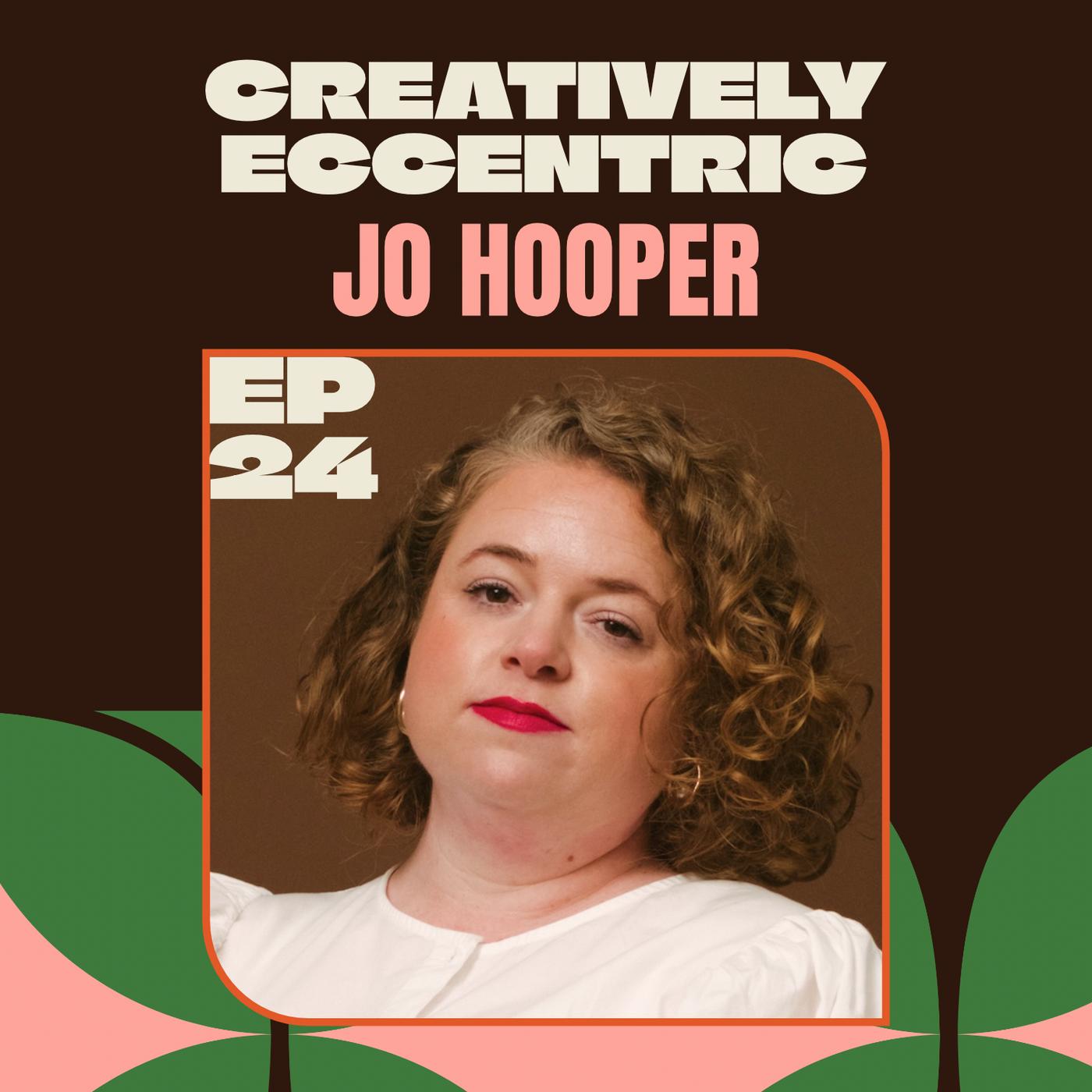
Heather Ebanks: Today's guest is Joe Hooper, a business coach challenging the idea that success has to come at the cost of your health, happiness, or your entire personality. She is known for her blunt but loving work wake up calls, helping creatives and business owners stop glorifying burnout and start building lives that actually feel worth living. In this conversation, we get into the pressure to constantly be productive. Why so many creatives are quietly overworking themselves into resentment and the uncomfortable truth that a lot of us already know what needs to change. We're just scared to admit it. We talk about boundaries, pricing, hustle culture, Sunday scaries, people-pleasing, and why being deeply in your own lane might be the most powerful thing a creative can do.
Jo Hooper: very important to me that I am honest about my business and my journey and the things that we all or many of us struggle with or think are truths but are actually choices that we have the capacity to make. And for me, it's important that I'm honest about that because otherwise people aren't gonna hear it. Like if you're tiptoeing around a subject, like, maybe it would be a bit better for you if maybe you weren't working 24 hours a day. Like, that is not my style at all. I've certainly had a messy journey. I, yeah, I think, again, it's important to me to...
Heather Ebanks: Mm. Yeah. Yeah.
Jo Hooper: not apologize for the unconventional choices that I make. Obviously, whenever you make a mistake or you hurt someone unintentionally or I'm absolutely okay with apologizing, but I'm not going to apologize for my, choices that I make other people maybe think are odd or strange or not normal.
Heather Ebanks: Yeah, so like a lot of people's careers, it's not always straightforward, not always linear. What's something that didn't make sense at the time, but now makes perfect sense to you now looking back on what you've been through?
Jo Hooper: I guess it's intentionally leaving a corporate career that I'd done very well in. So I spent 11 years climbing the corporate ladder in communications and, you know, had hit a big goal, which was to get a head of comms job by the time I was 30, was on track to, you know, have a glittering career. But I actually asked to be made redundant.
Heather Ebanks: Mm.
Jo Hooper: at 31 because I'd basically had two mental health crises. So at the time, you know, I was walking away from a really good salary, a really good career that I'd spent 10 years building. But now, and you know, almost immediately after I knew that it was the right decision because I just couldn't have continued to work in the way that I was and not become really ill. And that's when I started my
Heather Ebanks: Hmm. Mm-hmm.
Jo Hooper: business.
Heather Ebanks: I know there's lots of, coaching out there, et cetera, is there anyone you specifically are targeting with the work that you do?
Jo Hooper: So I guess I tend to work with people who either fall into two camps. One is people who are starting a business and want to make sure that it doesn't take over their lives, make them miserable, burn them out. Or another group is people who've run their business for a long time and it has started to take over their lives, burn them out and they want to shift.
Heather Ebanks: Mm. Mm. Mm.
Jo Hooper: So yeah, I tend to work with people who fall into roughly those two groups. But really, I like to think of myself as a YOLO business coach. You only live once, so why would I work my way through it when I could live it?
Heather Ebanks: Hmm. What parts of yourself do you have you unapologetically owned to build your business?
Jo Hooper: I think lots of parts of myself and I think I do make and live, I make quite unconventional choices about my life and I think to many others I live an unconventional life. I guess one of the things that was such a big part of starting my business was looking after my mental health and not just looking after my mental health but looking after and protecting the life that I want to live, which is not based solely around work. I don't want to work hard. I don't want to work all the time. I want to be able to travel and explore the world and have experiences that I can't fit in around a nine to five, five day a week job. And being unapologetically honest about that. And I guess for me, another part of or another one of the choices that I make that I'm very honest and open about and does form a part of the way I run my businesses. I choose to be child free. I don't want children. That's not what I want for my life. I want to be free and to explore the world and have experiences and be able to choose how my days, weeks and years look. And that is absolutely a part of the way that I run my business because I don't
Heather Ebanks: Mm. Mm.
Jo Hooper: I want to be free to do what I want to do. And so I don't stack my days full of calls. I don't run 14 different programmes at a time. I don't work with 25 clients at a time. I'm very intentional about how I set up and run my business so that I can live the life that I want to live.
Heather Ebanks: Mm. I think you've touched on this question was about asked you about, and what does life first business actually look like on a day to day? And I think you've mentioned that you're making those steps by being free made those decisions about flexibility in your, in your daily life. So is there any way that these you've separated business from your life or have they kind of seamlessly crossed over in some way?
Jo Hooper: Mm. Mm. Mmm, that's a really good question. I think my business is a part of my life, but I don't want it to be the dominant part. so like in practical ways that I...
Heather Ebanks: Mmm. Yeah.
Jo Hooper: allow myself to put my life first is I simple, simple things. But if you don't do the simple things, then your work, just expands to fit the available time. But I don't have any calls before 10 in the morning. I don't have any calls after four in the afternoon. I only have coaching calls on Tuesdays and Thursdays. I run my group program on a Wednesday. And so
Heather Ebanks: Mm-hmm. Mm.
Jo Hooper: If I want to, can take a long weekend every week, or I can, you know, spend Monday or Friday working my content or in my garden or doing whatever I want to do. And I, I intentionally only have two client calls a day on two days a week because I don't want all of my energy to be taken by work. And if I had more than that, I would feel depleted afterwards. And that's not.
Heather Ebanks: Mm-hmm. Hmm. Yeah. Mm-hmm. Mm.
Jo Hooper: what I want for myself and it's not what I encourage for other people. So yeah, there are kind of parts of my, well, both my business model and my boundaries are designed to give me that life of freedom and flexibility that I want.
Heather Ebanks: Mm-hmm. Yeah, and I think, unfortunately, with the things that we've both gone through, regarding redundancy, on hindsight, you don't realize all the things that you don't want in your career, you had to go through and then you just had to unpack that and say, kind of zoom out and say, make a list, what do I want, what I don't want, regards to being a life and a business combined.
Jo Hooper: Hmm. Hmm.
Heather Ebanks: That does take time and you seem to be doing that definitely and making those steps and making the relevant changes when necessary.
Jo Hooper: Yeah, and I think, you know, we're taught as a society that work is the most important thing about us, that that is what we do. We work for 40 plus years of our lives so that we can have a little bit of life around the edges. And so, which is mental to me, but... And so we often don't think about, OK, what do I want my day to look like?
Heather Ebanks: Mm-hmm. Hmm. Yeah. Mm. Mm.
Jo Hooper: do I really wanna be having
Heather Ebanks: Mm.
Jo Hooper: eight calls a day? We just assume that that's what we have to do or that that's the way that we have to work to earn the money we wanna make or achieve the things we wanna achieve. And especially when you work for yourself, everything is in your control. If I just wanted to have one call a week, I could. I'd have to think about how else I was gonna earn my money and price it accordingly, but everything is in my control. So.
Heather Ebanks: Mm. Yeah. Hmm. Mm. Mm.
Jo Hooper: We don't have to work the way that society and capitalism has taught us we do. We can think about, as you say, how do I want my days to be, how do I want my weeks to be,
Heather Ebanks: what are people do you think sacrificing without realizing it in the name of success
Jo Hooper: life. Like they're letting their lives, so many of us are letting our lives pass us by without recognising that we have any power to do anything about that and we do, especially when we run our own businesses, we have so much more power, control and choice than we realise. And you know, people that I work with are
Heather Ebanks: you Mm. Mm.
Jo Hooper: I see it all the time and it really hurts me when people are like, oh, I took Friday off so I'm working on a Sunday. You don't have to. Why are you doing that? You don't have to. You've just decided that that's what you're gonna do. You don't have to do that. working late into the evening because this client missed their deadline and now I have to work to catch up. No, no, no, you don't have to do that. You've decided that that's what you're gonna do.
Heather Ebanks: Yeah. Mm.
Jo Hooper: And I know that sounds quite as if I'm shaming people and I'm absolutely not. My work is radically non-judgmental. Shame gets us nowhere. And so I'm in no way shaming people. But what I'm doing is saying, be honest with yourself, recognise the power and the choices that you have and make good ones. Stop making bad ones that make you miserable.
Heather Ebanks: Mm-hmm.
Jo Hooper: and mean that you're working in the evenings in front of the teddy, that mean that you're making up time when you don't need to, that mean that you're working with clients who make you fucking miserable when you don't have to. Like everything in your business is in your control. Everything is your choice. So make ones that work for you.
Heather Ebanks: Yeah. Yeah, definitely. And it's hard to see the forest for the trees, you're in the thick of it. And, and you have to unlearn those unfortunate bad habits that people have been told and you've been conditioned to do, especially in a working environment. I think maybe it's that fear of, if I don't, especially if you work for an organization, if I say or speak out of term with that, you will I lose my job? You know, because we know that the industry of work is very fragile.
Jo Hooper: Yeah. Mm. Mmm. Yeah.
Heather Ebanks: Yeah, definitely.
Jo Hooper: Yeah, yeah, it is. It just feels like there are so many layers of oppression basically that are keeping us working in this way. There's the kind of capitalist notion that your productivity is the most important thing about you and that your work is the most important thing about you. There's the patriarchal expectations of women in particular who have been taught that we should be pliant and kind and selfless and nurturing and always say yes.
Heather Ebanks: Mm-hmm. Mm. Hmm. Mm.
Jo Hooper: And so we overwork to feel that we're fulfilling that role. There's of course other intersections of oppression where, you know, people of color have it even harder and those other systems of oppression are pushing people down even further. Ableism that again is like, well, if you can't work 12 hours a day, then you're not as valuable as someone who can. Like there are all of these...
Heather Ebanks: Hmm Mm. Hmm.
Jo Hooper: things pressing down on us that making us believe that we have to fit into this tiny little box that the world has taught us we have to. And I know that this sounds almost flippant in a way, but you can choose not to. Like you don't have to adhere to what the patriarchy says you should do. You don't have to fade into the background. You don't have to work nine to five when you work for yourself in particular.
Heather Ebanks: Hmm. Hmm. Mm-hmm.
Jo Hooper: And so we do actually get to choose to a large extent, some of those things are outside of our choice. We do get to choose whether we adhere to those expectations or not.
Heather Ebanks: I know people who want to listen in the public thinking, oh, that's all very well, Joe. But I've got, you know, commitments, I've got responsibility. I think you mentioned wasting, if you were saying wasting their lives working all the time, if maybe you repeatedly said that, why do you think people or creatives refuse to admit, you know, that they're wasting their lives working all the time?
Jo Hooper: Mm. I think there's maybe a few factors. One I think is because... Maybe people don't believe it can be different. and maybe don't know how to get there and make it different. And, you know, I'm not, I'm not like, I'm just going to waft this sage at you and then it's all going to be better. Or we're not just going to say these mantras and then it'll all be better. Yes, there is an aspect of like believing that it can be better and believing that you don't have to work in certain ways. But then we figure out, okay, well, what's the business model that allows that to be possible? Like,
Heather Ebanks: Mmm. Mm.
Jo Hooper: If you don't want to be trading time for money, how do we turn your business into project-based or package-based? How do we sell packages instead of time? What can we turn into a service in your business that you don't have to be there to deliver? And what boundaries do we need to put around those things so that you're not overworking? And what pricing needs to be in place to make sure that you can earn the money you want to make in the time you want to work? I get it. It feels like a...
Heather Ebanks: Mm. Hmm.
Jo Hooper: mountain to climb to go from constantly having to overwork to make the money that you want to make to being able to work few hours and probably make more money in an easier way so that you can live your life. But there is a clear set of things that need to be changed to get there. What you believe about work and how you relate to it, what your business model looks like, what your pricing looks like, what your boundaries are. And
Heather Ebanks: Mm. Mm.
Jo Hooper: So I think part of it is, or one of the factors might be people don't believe that it can be different and don't necessarily know how to make it different. And that's kind of what I try and help people achieve. And then something I see a lot, particularly in creatives is, but I love it. but I love it. So it's fine. I don't mind working evenings. I just love it. You don't have to choose between loving your work and having time to live.
Heather Ebanks: Hmm. Mm. Hmm.
Jo Hooper: There's the, you know, I know it's a cliche, but the starving artist mentality of, oh, but it's like, I'm never going to get paid much for my creative work. I'm doing it because I love it. And that doesn't have to be true. You don't have to think that way. You don't have to price that way. You don't have to have your business model set up in that way. But if we keep telling ourselves, oh, I just love it. And so it doesn't matter that I'm not making enough from it, or it doesn't matter that I'm
Heather Ebanks: Mm. Mm. Hmm. Mm.
Jo Hooper: you know, feeling a bit resentful of it, because I love it. I love what I do. You don't have to choose between loving it and being compensated for it so that you can live and enjoy your life.
Heather Ebanks: Hmm. Hmm. you've talked about that on social media with with your come of your courses that you've talked about the pricing part of it. And I think I was quite interested in your Instagram, you sort of call it 10 unexpected things you needed to know about pricing. You gave it like in a 10 10 bullet points of reality of, you know, kind of like a shock to the bow, like, right, this is how it is, you know, you know,
Jo Hooper: Hehehehehe Ha ha ha ha!
Heather Ebanks: reality check and I really enjoyed that. So I was going to actually do a little kind of a play on what your Instagram post was about. I'm going to change it slightly. So if you just bear with me, know, feel free to interject and, you know, participate. And I've changed it. I said, I'm going to read it out here literally. said, Joe's Instagram post, 10 uncomfortable truths creatives need to hear about their work if you're done playing small.
Jo Hooper: Cool. Go on then. Go.
Heather Ebanks: I'm just going to read them out. So feel free to, you know, participate.
Jo Hooper: Yeah. I love, I love your version, by the way. I love that title. This is when I'm like, I can always up my creative game when it comes to my words.
Heather Ebanks: Yeah, exactly. The first one I've got for you is, if no one's noticing your work, you're probably playing it too safe. Any thoughts on that one?
Jo Hooper: Yeah, yeah, I think well, it makes me think about myself and my own marketing and my content. I'm a very honest, straightforward person, as hopefully you can see through my content and through talking to me. But what I've noticed, so I've been in business seven years now. And I feel like I've really in the last year,
Heather Ebanks: Mm. Mm.
Jo Hooper: started to be to amp up that side of myself even more so I've never been one for playing it safe, but I think I've really...
Heather Ebanks: Mm.
Jo Hooper: gone even more unsafe in the last year and I have noticed that it's really resonating with more people and it's finding more people what I'm saying so I'm totally on board with that one. I think I'm gonna like all of these, just put them out there.
Heather Ebanks: Hmm. Yeah. Cool. Next one is, you don't need to be liked, you need to be remembered.
Jo Hooper: Heather, you're speaking my language. You've definitely made these better. Yeah, I totally agree. Like, so I don't often, but I do get people trolling me under my content, particularly when I ad spend behind it. Or so I wrote a piece for Stylist a couple of weeks ago and I shared a reel about that and what I said in Stylist and some, and it was about working myself into two breakdowns in corporate.
Heather Ebanks: You Well, that yeah. yeah, I saw that, yeah. Mm.
Jo Hooper: and someone commented saying like, I think you fabricated this to drum up interest. And I was like, I'm sorry, you think I pretended that I had two mental health crises to get interested in my business. And I quite enjoy like having a bit of what I find funny banter with trolls because, or know, people who disagree with me, because I don't say or do anything that I don't believe is right and true. And...
Heather Ebanks: Hmm. Wow. It's a bait. Mm.
Jo Hooper: Absolutely, if someone kind of responded with a point that was like, have you thought about this? And I hadn't, I would be like, interesting. Thank you. I am going to go away and think about it. I would have a proper informed conversation with them. But when someone says something like, you've just made this up to drum up business, I'm absolutely, I have no problem whatsoever going toe to toe with those people and doing it in what I find a funny way. So yeah, I don't really care.
Heather Ebanks: Mmm. you Mm. Mm.
Jo Hooper: that that guy doesn't like me. No exactly and do you know the funniest thing the one thing that it said on that guy's I'm assuming it's a man that person's Instagram profile was God bless us all and I was like but not me.
Heather Ebanks: Yeah. They probably don't even follow you anyway. They just, you know, like it wasn't, don't know your backstory. Okay. yeah, another one for you. Trying to appeal to everyone is why your work feels invisible.
Jo Hooper: Yeah. Oh. Yeah, I mean, I find this a hard one. Well, no. Okay. I'm gonna try and backtrack and make some actual sense there. I do find that a hard one because, for me personally, I feel like everyone who is working in the world could benefit from hearing some of the things I have to say. But equally, I do agree that if you're trying to make a point,
Heather Ebanks: Mm. Mm.
Jo Hooper: that will resonate with everyone, it will resonate with no one because a point or a piece of work needs to have something, some level of specificity in there for someone to see themselves in it or to resonate with it. And so yeah, this is definitely something that I've grappled with is like, I wanna talk to everyone.
Heather Ebanks: Mm. Hmm.
Jo Hooper: but I do need to be specific and talk to that person so that they understand that I'm speaking to them. So I do understand that that's true, but it is something that I still struggle with.
Heather Ebanks: Mm-hmm. another one for you. Stop watering down yourself to fit into spaces you've outgrown.
Jo Hooper: Yeah, could not love that one anymore. Yeah, run away from those spaces that you've outgrown and live wild and free and dance around wherever you want to be. Don't keep on trying to force your beautiful star-shaped peg into that stupid old square hole. No one ever thrived trying to do that and it's bloody boring and painful. Totally agree with that one.
Heather Ebanks: Mm. Yeah. Hmm. Yes. Next one is being consistent means nothing if you're consistently hiding.
Jo Hooper: Oh, she said it. Yeah, yeah. If you're consistently silent, then you're consistently doing nothing. I think I'm absolutely, as you can imagine, not about holding yourself to, know, if it comes to our marketing, like 10 posts a day, every day, I'm not into this whole 75 hard thing. Like, I'm not into beating yourself up to get something done.
Heather Ebanks: Mm. Hmm
Jo Hooper: I'm not into shaming ourselves or making ourselves so guilty for anything.
Heather Ebanks: Mm.
Jo Hooper: But yes, if we run a business, have to market our business. And if we don't market it, no one's gonna buy anything from us. if no one buys anything from us, then we're not gonna be able to keep running it or paying our bills. But find out what motivates you. Don't like try and guilt, fear, shame yourself into doing something that feels really hard. Find what motivates you and find how you can make it easier. So I did an experiment in like the last few months of 2025, which was...
Heather Ebanks: Mm. Exactly, yeah. Hmm.
Jo Hooper: I'm just gonna create loads of content, but every bit of content needs to be fun. I need to enjoy creating it. I need to think that it's fun or funny. And honestly, it revolutionized the way that I create content because now I find it easy and I find it fun. And if it's not fun, I'm not gonna post it, but I've got loads of other fun ideas that I can run with. So for me, I needed to find when it came to my marketing, I needed to find the fun.
Heather Ebanks: Mm. Mm. Hmm. Hmm. Hmm. Hmm. Mm.
Jo Hooper: And that was what motivated me. But if I'm telling myself, you need to create a piece of content every day, then that is not gonna motivate me. I'm not motivated by stick, I'm motivated by carrot. biscuits.
Heather Ebanks: Mm. Hmm. And as I say, don't own any of the audience that you're on social media, it's on your websites. And so you've got to preserve that, know, all that energy that you put into creating those reels and those posts. Like you say, at least you're going to make it fun and engaging, not just for the audience, but also, like you say, for yourself too. Definitely. Another one for you. Your creative voice isn't lost. It's buried under...
Jo Hooper: Yeah. Mmm. Yeah, absolutely.
Heather Ebanks: Approval Seeking
Jo Hooper: I think it's buried under so much. It's buried under, yeah, seeking approval from others, trying to be who you think others want you to be or the world of work wants you to be, trying to work the hours that the world of work says that you should, like buried under resentment for clients not paying you enough or overworking you or it's, yeah, I think.
Heather Ebanks: Hmm. Mm. Mm.
Jo Hooper: especially when you are a creative, it's more important than ever to protect that because that is your creativity is what makes you the money but is you know a huge part of your life and your soul and your heart and your enjoyment and let's not let that be crushed by the weight of work in general.
Heather Ebanks: the next one is you don't need more inspiration. You need to say what you actually think.
Jo Hooper: Yeah, yeah, totally agree. Again, like unapologetically saying what you think has done me a lot of good. Not so much in my corporate career, but in my self-employed life. Yeah, absolutely. And you know, like when you're kind of scrolling Instagram or TikTok or whatever, being like, I just need to find the right hook. I just need to find the right hook.
Heather Ebanks: you Mm. You Mm.
Jo Hooper: really what is it that you want to say at its absolute foundation? Say that.
Heather Ebanks: Mm. Hmm. Hmm. Yeah, most people want the human side of social media. They don't want, you know, so with AI, et cetera. But I think people want to see what your personality is like behind all those reels, et cetera, to find out your opinions is what makes it part of your personality.
Jo Hooper: Yeah. Yes. Yeah, especially like so for me, obviously coaching someone is like a very close, vulnerable relationship for the person being coached and for myself as well because I give a lot of myself. And so people, think it's really important that people know what they're going to get before they ever get on an intro call with me or come into one of my programs because
Heather Ebanks: Mm. Mm.
Jo Hooper: I want them to feel absolutely certain that I'm the person they want to work with. And similarly, if you're a photographer or a graphic designer or anyone running a kind of service sort of business, your clients are going to want to know what it's like to work with you and they're going to...
Heather Ebanks: Mm-hmm. Mm-hmm.
Jo Hooper: You know, I see all this content advice all the time that's like, stop posting what you have for breakfast and what you're reading. And I'm like, do post what you have for breakfast and what you're reading. That's the stuff I'm really interested in. Like, I can find the how to do X anywhere. I wanna know what you're reading. I'm interested.
Heather Ebanks: you you Yeah, and if you, it's, shows character and you know, behind the scenes, obviously you only disclose what you, how much as you want to in your personal life. And, you know, if you just do the same old cookie cutter, this is my business report. This is what I'm doing in my office. And it gets a bit samey samey. Yeah, exactly. So people want to see the human.
Jo Hooper: Mm. Boring. Yeah. Show me what you're having for breakfast. Show me what the plants are like in your garden. I'm interested in all of that.
Heather Ebanks: Hmm. We're all nosy anyway. We want to know people's been up to behind the scenes. Exactly. Well, another one for you. The algorithm isn't the problem your fear of being seen is.
Jo Hooper: Exactly! That's the stuff we're really here for. Now, I love this one because it drives me bananas when people are like, the algorithm's out to get me. It's like, no, it's not. No, it's not. And also, no one cares. It drives me insane when people moan about the algorithm or moan about their own business on their own business channel. Your clients don't need to see that. Your potential clients don't need to see that. That's for your WhatsApp chat, not for your.
Heather Ebanks: Mm. Mm-hmm.
Jo Hooper: Instagram stories. Again, I feel like there's a whole list of things that are going on there that's, yes, it's not just fear of the algorithm or the unknown or how it works, but fear of being honest and what people might say and whether anyone might respond or there are so many fears, I think, that are associated with being seen or putting yourself out there or, but at the end of the day,
Heather Ebanks: Mm-hmm. Yeah.
Jo Hooper: If you want to run a business, you have to tell people what you do so that they can see you and buy your stuff. And so we have to find ways to make that easier and more palatable for ourselves in terms of like not being so activated and triggered by it. And for me, part of that has been doing it loads and kind of desensitizing myself to...
Heather Ebanks: Mm. Mm-hmm. Mm-hmm. Hmm. Mm-hmm.
Jo Hooper: All of it, desensitizing myself to my own voice and my own face and seeing myself all the time and desensitizing myself to people disagreeing with me or not being interested in my content or the, what I found is the more that I.
Heather Ebanks: Hmm. Mm-hmm.
Jo Hooper: The more that I say the less important each little thing, each little piece of content or each email is because it doesn't have to do everything for you because you're doing lots of different things.
Heather Ebanks: Hmm. And also with the algorithm, it's also important to step outside of that algorithm and find ways of being seen offline as well and being face to face with them going back to being, you know, personable.
Jo Hooper: Yes, yeah. Mm, yeah, and I found, I currently live just outside Cardiff. For two years before that, I lived very rurally in very far west Wales. And so I didn't really go to many events or meet up with many people or really see other humans that much. And now I live much closer to friends who also run their own businesses. I live closer to lots of events. And so in the last sort of eight months, have gone to, I have seen other humans much more. And it's really surprised me how many times I've gone to an event and someone's been like, I know you from Instagram or, I really like it. know, basically people knowing who you are and you realise, wow, there are humans on the end of those likes or on the end of those DMs. There are people in the world who,
Heather Ebanks: Mm. Hmm.
Jo Hooper: see what I do and like it. And I found that a real boost and a real kind of wake up call, as you say, to really get out from behind my laptop on my phone screen and go and talk to actual real humans in person is dreamy.
Heather Ebanks: Mm. Mm. Hmm. Mm. Okay, brilliant. Number nine we're onto now. No one's coming to validate you. Get on with it and move anyway.
Jo Hooper: Come on. I love that. I feel like that I need that on my wall ever because I Will thank you guys regards. Yeah, I think something that
Heather Ebanks: Take it! Go ahead! You
Jo Hooper: Something that I found myself talking to clients about a lot recently is how when you feel like you crave external validation, people liking your content, people telling you you're doing a good job, people making you feel good or better about yourself, actually that external validation never works. Because people can tell you hundreds of times that you're doing great or they like this or they like that.
Heather Ebanks: Mm. Mm.
Jo Hooper: But unless you can receive it and accept it and hold it, it's never gonna work. And that's about building intrinsic validation and feeling able to say to yourself, you did a really good job there. I'm proud of me. Because yeah, so many of us feel that we crave validation, but what we actually crave is intrinsic validation. So one of my goals this year, Heather, is to feel proud of myself every day.
Heather Ebanks: Mm-hmm. Mm-hmm. Mm-hmm. Mm. Mm. Mm-hmm.
Jo Hooper: I know that that's not like a very business coachy goal, but I don't think I have many traditional business coachy goals for myself. So one of the things I do is in my journal each day is write a few things I'm proud of myself for. that's like, it's building a neural muscle in my brain that is teaching myself to validate myself so that I don't...
Heather Ebanks: Mm. Hmm. Mm. Hmm.
Jo Hooper: feel that I need that external validation and that when I do get it, I can receive it and hold it.
Heather Ebanks: Mm-hmm. Hmm, that's good advice. I think I need to do that myself because I'm kind of doing like a reflection of all the things I've done. And you know, like a tick box exercise, but that's not what validation is. I think I need to go more deeper into like, what I'm actually good at and what I'm proud of with myself. You never give myself much credit as individuals, we always like looking for the next thing. So yeah, that's good advice. Definitely.
Jo Hooper: Mm. Mm. Yeah. Yeah, exactly. And that kind of what I did thing, for me that is so one of one of the kind of underlying beliefs or or or bits of conditioning that I think doesn't benefit us is that our product to be productive is to be brilliant. Like that's the highest value is for us to be productive people, which is literally just capitalism.
Heather Ebanks: Hmm. Hmm.
Jo Hooper: woven straight through our minds to be like, keep producing, keep producing, keep buying, keep selling. And you know, obviously we have to buy and sell things to live. I'm not suggesting that we live in a cashless society where we trade sheep for food, but I don't think we have to keep perpetuating that belief in ourselves that productivity is the most important thing. And so I, yeah, I personally don't do a kind of what have I done.
Heather Ebanks: Mm-hmm. Mm. You Mm-hmm. Yeah.
Jo Hooper: But yeah, I think about what am I proud of. And for me, that's really helping.
Heather Ebanks: Mm-hmm. Yeah. Brilliant. I'm definitely going to take note of that. Definitely go start validating myself. Cool. This is the final one. Number 10. When you fully back yourself, your work gets louder, clearer and impossible to ignore.
Jo Hooper: Yay! Okay go on. yes, that's another one that I need on my wall and totally agree with and love. And yeah, I think especially like totally backing yourself, I think that is something that can and does shift over time. Like what backing myself looked like five years ago is different to what it looks like today. And I guess because, you know, your goals and aspirations shift and what you want shifts. But yeah, if you believe that you can do the thing, you will take action to make the thing happen and you will do the thing. That will become manifest. But if you don't believe that you can do the thing, you will tell yourself you can't do the thing, you won't take action to do the thing. And so I, yeah, I am a big believer in what you believe about yourself and what you tell yourself is true, has a massive impact on what you're able to.
Heather Ebanks: Mm. Mm.
Jo Hooper: do or have in your life or your business. So I love that.
Heather Ebanks: Mm. Excellent. Another one to put on your wall.
Jo Hooper: Yeah I know I need a bigger wall.
Heather Ebanks: Yes. Well, that was my version of your Instagram post about 10 unexpected things you need to know about pricing,
Jo Hooper: I loved it.
Heather Ebanks: if someone is listening to this episode and is secretly exhausted by a life they chose, what would you say to them right now?
Jo Hooper: Hmm. I would say to yourself, say to them, give yourself some grace. Don't be beating yourself up because that isn't gonna help you change anything. I would say take a pause in any way that you can, whether that's, you know, having 10 minutes to yourself every morning to just think, ponder, journal, or whether that's taking yourself off on a little solo trip to have time to yourself, whatever's feasible and accessible to you. have a little pause and start to think of two things. What are the things that aren't feeling right? And the simplest way to think about that is like, what makes you want to groan or grimace or put your head in your hands? And it can be small moments or examples because from small moments and examples patterns emerge. And then start to think about
Heather Ebanks: Mm. Mm-hmm.
Jo Hooper: Okay, well, what do I want? And that's, I think, the harder question. Because sometimes when we're so mired in what we don't want, it's really hard to imagine what we do want. And so give yourself some time to come to that answer. And then it's looking at like, okay, well, how do I get from one to the other? What are the small shifts that I can make that will have the biggest impact? for example, if you
Heather Ebanks: Mm-hmm.
Jo Hooper: And I hear this with literally every client I think I've ever worked with. If there's one client that is making you feel miserable, taking up all of your time, it never feels worth the money that they're paying you, get rid of them. Obviously there's financial feasibility to think about and that might not be possible right now or you might need to sign one other client right now or to be able to say goodbye to that one. But what can you do? What change can you make?
Heather Ebanks: Mm. Mm.
Jo Hooper: that will have the biggest positive impact on you the quickest. And then when you've sort of started to recognise, okay, well, these are the things that I do want, the question that I ask myself all the time, and I recommend it to clients as well is, what one action can I take that will get me the closest, the quickest to the thing that I want? Because often we kind of...
Heather Ebanks: Hmm Mm-hmm. Mm.
Jo Hooper: get caught up in like busy work or doing stuff that we're telling ourselves will make a difference. But it's not necessarily the thing that is gonna make the difference because we're almost scared of it or we can't see it. So yeah, give yourself a bit of grace and start to think about what is you don't want and what you do want and what actions can take you.
Heather Ebanks: Mm. Hmm.
Jo Hooper: closest, the quickest of the thing that you do want.
Heather Ebanks: Mm. brilliant advice as always. so Joe, if anybody wanted to reach out to you and contact you via social handles support you in your business, how would they do that?
Jo Hooper: Yeah. So I'm GetWildlyFree on Instagram and I'm also, by the time this comes out, I would have started my YouTube channel. I'm Joe Is WildlyFree on YouTube and I'm sharing like vlogs and kind of advice over there. So yeah, come and have a chat. I would love to chat to you.
Heather Ebanks: Yeah. Mm.
Jo Hooper: And I know that sounds quite as if I'm shaming people and I'm absolutely not. My work is radically non-judgmental. Shame gets us nowhere. And so I'm in no way shaming people. But what I'm doing is saying, be honest with yourself, recognise the power and the choices that you have and make good ones. Stop making bad ones that make you miserable.
Heather Ebanks: Mm-hmm.
Jo Hooper: like many self-employed people, I feel like I've just made up my job. my name's Jo Hooper. am a business coach who is far more interested in helping you live a lovely life than build a business that takes over it. So I help people to run amazing businesses, but also...
Heather Ebanks: Mm.
Jo Hooper: run those businesses around their life instead of having their life around their work.
Heather Ebanks: Today's guest is Joe Hooper, a business coach challenging the idea that success has to come at the cost of your health, happiness, or your entire personality. She is known for her blunt but loving work wake up calls, helping creatives and business owners stop glorifying burnout and start building lives that actually feel worth living. In this conversation, we get into the pressure to constantly be productive. Why so many creatives are quietly overworking themselves into resentment and the uncomfortable truth that a lot of us already know what needs to change. We're just scared to admit it. We talk about boundaries, pricing, hustle culture, Sunday scaries, people-pleasing, and why being deeply in your own lane might be the most powerful thing a creative can do.
Jo Hooper: very important to me that I am honest about my business and my journey and the things that we all or many of us struggle with or think are truths but are actually choices that we have the capacity to make. And for me, it's important that I'm honest about that because otherwise people aren't gonna hear it. Like if you're tiptoeing around a subject, like, maybe it would be a bit better for you if maybe you weren't working 24 hours a day. Like, that is not my style at all. I've certainly had a messy journey. I, yeah, I think, again, it's important to me to...
Heather Ebanks: Mm. Yeah. Yeah.
Jo Hooper: not apologize for the unconventional choices that I make. Obviously, whenever you make a mistake or you hurt someone unintentionally or I'm absolutely okay with apologizing, but I'm not going to apologize for my, choices that I make other people maybe think are odd or strange or not normal.
Heather Ebanks: Yeah, so like a lot of people's careers, it's not always straightforward, not always linear. What's something that didn't make sense at the time, but now makes perfect sense to you now looking back on what you've been through?
Jo Hooper: I guess it's intentionally leaving a corporate career that I'd done very well in. So I spent 11 years climbing the corporate ladder in communications and, you know, had hit a big goal, which was to get a head of comms job by the time I was 30, was on track to, you know, have a glittering career. But I actually asked to be made redundant.
Heather Ebanks: Mm.
Jo Hooper: at 31 because I'd basically had two mental health crises. So at the time, you know, I was walking away from a really good salary, a really good career that I'd spent 10 years building. But now, and you know, almost immediately after I knew that it was the right decision because I just couldn't have continued to work in the way that I was and not become really ill. And that's when I started my
Heather Ebanks: Hmm. Mm-hmm.
Jo Hooper: business.
Heather Ebanks: I know there's lots of, coaching out there, et cetera, is there anyone you specifically are targeting with the work that you do?
Jo Hooper: So I guess I tend to work with people who either fall into two camps. One is people who are starting a business and want to make sure that it doesn't take over their lives, make them miserable, burn them out. Or another group is people who've run their business for a long time and it has started to take over their lives, burn them out and they want to shift.
Heather Ebanks: Mm. Mm. Mm.
Jo Hooper: So yeah, I tend to work with people who fall into roughly those two groups. But really, I like to think of myself as a YOLO business coach. You only live once, so why would I work my way through it when I could live it?
Heather Ebanks: Hmm. What parts of yourself do you have you unapologetically owned to build your business?
Jo Hooper: I think lots of parts of myself and I think I do make and live, I make quite unconventional choices about my life and I think to many others I live an unconventional life. I guess one of the things that was such a big part of starting my business was looking after my mental health and not just looking after my mental health but looking after and protecting the life that I want to live, which is not based solely around work. I don't want to work hard. I don't want to work all the time. I want to be able to travel and explore the world and have experiences that I can't fit in around a nine to five, five day a week job. And being unapologetically honest about that. And I guess for me, another part of or another one of the choices that I make that I'm very honest and open about and does form a part of the way I run my businesses. I choose to be child free. I don't want children. That's not what I want for my life. I want to be free and to explore the world and have experiences and be able to choose how my days, weeks and years look. And that is absolutely a part of the way that I run my business because I don't
Heather Ebanks: Mm. Mm.
Jo Hooper: I want to be free to do what I want to do. And so I don't stack my days full of calls. I don't run 14 different programmes at a time. I don't work with 25 clients at a time. I'm very intentional about how I set up and run my business so that I can live the life that I want to live.
Heather Ebanks: Mm. I think you've touched on this question was about asked you about, and what does life first business actually look like on a day to day? And I think you've mentioned that you're making those steps by being free made those decisions about flexibility in your, in your daily life. So is there any way that these you've separated business from your life or have they kind of seamlessly crossed over in some way?
Jo Hooper: Mm. Mm. Mmm, that's a really good question. I think my business is a part of my life, but I don't want it to be the dominant part. so like in practical ways that I...
Heather Ebanks: Mmm. Yeah.
Jo Hooper: allow myself to put my life first is I simple, simple things. But if you don't do the simple things, then your work, just expands to fit the available time. But I don't have any calls before 10 in the morning. I don't have any calls after four in the afternoon. I only have coaching calls on Tuesdays and Thursdays. I run my group program on a Wednesday. And so
Heather Ebanks: Mm-hmm. Mm.
Jo Hooper: If I want to, can take a long weekend every week, or I can, you know, spend Monday or Friday working my content or in my garden or doing whatever I want to do. And I, I intentionally only have two client calls a day on two days a week because I don't want all of my energy to be taken by work. And if I had more than that, I would feel depleted afterwards. And that's not.
Heather Ebanks: Mm-hmm. Hmm. Yeah. Mm-hmm. Mm.
Jo Hooper: what I want for myself and it's not what I encourage for other people. So yeah, there are kind of parts of my, well, both my business model and my boundaries are designed to give me that life of freedom and flexibility that I want.
Heather Ebanks: Mm-hmm. Yeah, and I think, unfortunately, with the things that we've both gone through, regarding redundancy, on hindsight, you don't realize all the things that you don't want in your career, you had to go through and then you just had to unpack that and say, kind of zoom out and say, make a list, what do I want, what I don't want, regards to being a life and a business combined.
Jo Hooper: Hmm. Hmm.
Heather Ebanks: That does take time and you seem to be doing that definitely and making those steps and making the relevant changes when necessary.
Jo Hooper: Yeah, and I think, you know, we're taught as a society that work is the most important thing about us, that that is what we do. We work for 40 plus years of our lives so that we can have a little bit of life around the edges. And so, which is mental to me, but... And so we often don't think about, OK, what do I want my day to look like?
Heather Ebanks: Mm-hmm. Hmm. Yeah. Mm. Mm.
Jo Hooper: do I really wanna be having
Heather Ebanks: Mm.
Jo Hooper: eight calls a day? We just assume that that's what we have to do or that that's the way that we have to work to earn the money we wanna make or achieve the things we wanna achieve. And especially when you work for yourself, everything is in your control. If I just wanted to have one call a week, I could. I'd have to think about how else I was gonna earn my money and price it accordingly, but everything is in my control. So.
Heather Ebanks: Mm. Yeah. Hmm. Mm. Mm.
Jo Hooper: We don't have to work the way that society and capitalism has taught us we do. We can think about, as you say, how do I want my days to be, how do I want my weeks to be,
Heather Ebanks: what are people do you think sacrificing without realizing it in the name of success
Jo Hooper: life. Like they're letting their lives, so many of us are letting our lives pass us by without recognising that we have any power to do anything about that and we do, especially when we run our own businesses, we have so much more power, control and choice than we realise. And you know, people that I work with are
Heather Ebanks: you Mm. Mm.
Jo Hooper: I see it all the time and it really hurts me when people are like, oh, I took Friday off so I'm working on a Sunday. You don't have to. Why are you doing that? You don't have to. You've just decided that that's what you're gonna do. You don't have to do that. working late into the evening because this client missed their deadline and now I have to work to catch up. No, no, no, you don't have to do that. You've decided that that's what you're gonna do.
Heather Ebanks: Yeah. Mm.
Jo Hooper: And I know that sounds quite as if I'm shaming people and I'm absolutely not. My work is radically non-judgmental. Shame gets us nowhere. And so I'm in no way shaming people. But what I'm doing is saying, be honest with yourself, recognise the power and the choices that you have and make good ones. Stop making bad ones that make you miserable.
Heather Ebanks: Mm-hmm.
Jo Hooper: and mean that you're working in the evenings in front of the teddy, that mean that you're making up time when you don't need to, that mean that you're working with clients who make you fucking miserable when you don't have to. Like everything in your business is in your control. Everything is your choice. So make ones that work for you.
Heather Ebanks: Yeah. Yeah, definitely. And it's hard to see the forest for the trees, you're in the thick of it. And, and you have to unlearn those unfortunate bad habits that people have been told and you've been conditioned to do, especially in a working environment. I think maybe it's that fear of, if I don't, especially if you work for an organization, if I say or speak out of term with that, you will I lose my job? You know, because we know that the industry of work is very fragile.
Jo Hooper: Yeah. Mm. Mmm. Yeah.
Heather Ebanks: Yeah, definitely.
Jo Hooper: Yeah, yeah, it is. It just feels like there are so many layers of oppression basically that are keeping us working in this way. There's the kind of capitalist notion that your productivity is the most important thing about you and that your work is the most important thing about you. There's the patriarchal expectations of women in particular who have been taught that we should be pliant and kind and selfless and nurturing and always say yes.
Heather Ebanks: Mm-hmm. Mm. Hmm. Mm.
Jo Hooper: And so we overwork to feel that we're fulfilling that role. There's of course other intersections of oppression where, you know, people of color have it even harder and those other systems of oppression are pushing people down even further. Ableism that again is like, well, if you can't work 12 hours a day, then you're not as valuable as someone who can. Like there are all of these...
Heather Ebanks: Hmm Mm. Hmm.
Jo Hooper: things pressing down on us that making us believe that we have to fit into this tiny little box that the world has taught us we have to. And I know that this sounds almost flippant in a way, but you can choose not to. Like you don't have to adhere to what the patriarchy says you should do. You don't have to fade into the background. You don't have to work nine to five when you work for yourself in particular.
Heather Ebanks: Hmm. Hmm. Mm-hmm.
Jo Hooper: And so we do actually get to choose to a large extent, some of those things are outside of our choice. We do get to choose whether we adhere to those expectations or not.
Heather Ebanks: I know people who want to listen in the public thinking, oh, that's all very well, Joe. But I've got, you know, commitments, I've got responsibility. I think you mentioned wasting, if you were saying wasting their lives working all the time, if maybe you repeatedly said that, why do you think people or creatives refuse to admit, you know, that they're wasting their lives working all the time?
Jo Hooper: Mm. I think there's maybe a few factors. One I think is because... Maybe people don't believe it can be different. and maybe don't know how to get there and make it different. And, you know, I'm not, I'm not like, I'm just going to waft this sage at you and then it's all going to be better. Or we're not just going to say these mantras and then it'll all be better. Yes, there is an aspect of like believing that it can be better and believing that you don't have to work in certain ways. But then we figure out, okay, well, what's the business model that allows that to be possible? Like,
Heather Ebanks: Mmm. Mm.
Jo Hooper: If you don't want to be trading time for money, how do we turn your business into project-based or package-based? How do we sell packages instead of time? What can we turn into a service in your business that you don't have to be there to deliver? And what boundaries do we need to put around those things so that you're not overworking? And what pricing needs to be in place to make sure that you can earn the money you want to make in the time you want to work? I get it. It feels like a...
Heather Ebanks: Mm. Hmm.
Jo Hooper: mountain to climb to go from constantly having to overwork to make the money that you want to make to being able to work few hours and probably make more money in an easier way so that you can live your life. But there is a clear set of things that need to be changed to get there. What you believe about work and how you relate to it, what your business model looks like, what your pricing looks like, what your boundaries are. And
Heather Ebanks: Mm. Mm.
Jo Hooper: So I think part of it is, or one of the factors might be people don't believe that it can be different and don't necessarily know how to make it different. And that's kind of what I try and help people achieve. And then something I see a lot, particularly in creatives is, but I love it. but I love it. So it's fine. I don't mind working evenings. I just love it. You don't have to choose between loving your work and having time to live.
Heather Ebanks: Hmm. Mm. Hmm.
Jo Hooper: There's the, you know, I know it's a cliche, but the starving artist mentality of, oh, but it's like, I'm never going to get paid much for my creative work. I'm doing it because I love it. And that doesn't have to be true. You don't have to think that way. You don't have to price that way. You don't have to have your business model set up in that way. But if we keep telling ourselves, oh, I just love it. And so it doesn't matter that I'm not making enough from it, or it doesn't matter that I'm
Heather Ebanks: Mm. Mm. Hmm. Mm.
Jo Hooper: you know, feeling a bit resentful of it, because I love it. I love what I do. You don't have to choose between loving it and being compensated for it so that you can live and enjoy your life.
Heather Ebanks: Hmm. Hmm. you've talked about that on social media with with your come of your courses that you've talked about the pricing part of it. And I think I was quite interested in your Instagram, you sort of call it 10 unexpected things you needed to know about pricing. You gave it like in a 10 10 bullet points of reality of, you know, kind of like a shock to the bow, like, right, this is how it is, you know, you know,
Jo Hooper: Hehehehehe Ha ha ha ha!
Heather Ebanks: reality check and I really enjoyed that. So I was going to actually do a little kind of a play on what your Instagram post was about. I'm going to change it slightly. So if you just bear with me, know, feel free to interject and, you know, participate. And I've changed it. I said, I'm going to read it out here literally. said, Joe's Instagram post, 10 uncomfortable truths creatives need to hear about their work if you're done playing small.
Jo Hooper: Cool. Go on then. Go.
Heather Ebanks: I'm just going to read them out. So feel free to, you know, participate.
Jo Hooper: Yeah. I love, I love your version, by the way. I love that title. This is when I'm like, I can always up my creative game when it comes to my words.
Heather Ebanks: Yeah, exactly. The first one I've got for you is, if no one's noticing your work, you're probably playing it too safe. Any thoughts on that one?
Jo Hooper: Yeah, yeah, I think well, it makes me think about myself and my own marketing and my content. I'm a very honest, straightforward person, as hopefully you can see through my content and through talking to me. But what I've noticed, so I've been in business seven years now. And I feel like I've really in the last year,
Heather Ebanks: Mm. Mm.
Jo Hooper: started to be to amp up that side of myself even more so I've never been one for playing it safe, but I think I've really...
Heather Ebanks: Mm.
Jo Hooper: gone even more unsafe in the last year and I have noticed that it's really resonating with more people and it's finding more people what I'm saying so I'm totally on board with that one. I think I'm gonna like all of these, just put them out there.
Heather Ebanks: Hmm. Yeah. Cool. Next one is, you don't need to be liked, you need to be remembered.
Jo Hooper: Heather, you're speaking my language. You've definitely made these better. Yeah, I totally agree. Like, so I don't often, but I do get people trolling me under my content, particularly when I ad spend behind it. Or so I wrote a piece for Stylist a couple of weeks ago and I shared a reel about that and what I said in Stylist and some, and it was about working myself into two breakdowns in corporate.
Heather Ebanks: You Well, that yeah. yeah, I saw that, yeah. Mm.
Jo Hooper: and someone commented saying like, I think you fabricated this to drum up interest. And I was like, I'm sorry, you think I pretended that I had two mental health crises to get interested in my business. And I quite enjoy like having a bit of what I find funny banter with trolls because, or know, people who disagree with me, because I don't say or do anything that I don't believe is right and true. And...
Heather Ebanks: Hmm. Wow. It's a bait. Mm.
Jo Hooper: Absolutely, if someone kind of responded with a point that was like, have you thought about this? And I hadn't, I would be like, interesting. Thank you. I am going to go away and think about it. I would have a proper informed conversation with them. But when someone says something like, you've just made this up to drum up business, I'm absolutely, I have no problem whatsoever going toe to toe with those people and doing it in what I find a funny way. So yeah, I don't really care.
Heather Ebanks: Mmm. you Mm. Mm.
Jo Hooper: that that guy doesn't like me. No exactly and do you know the funniest thing the one thing that it said on that guy's I'm assuming it's a man that person's Instagram profile was God bless us all and I was like but not me.
Heather Ebanks: Yeah. They probably don't even follow you anyway. They just, you know, like it wasn't, don't know your backstory. Okay. yeah, another one for you. Trying to appeal to everyone is why your work feels invisible.
Jo Hooper: Yeah. Oh. Yeah, I mean, I find this a hard one. Well, no. Okay. I'm gonna try and backtrack and make some actual sense there. I do find that a hard one because, for me personally, I feel like everyone who is working in the world could benefit from hearing some of the things I have to say. But equally, I do agree that if you're trying to make a point,
Heather Ebanks: Mm. Mm.
Jo Hooper: that will resonate with everyone, it will resonate with no one because a point or a piece of work needs to have something, some level of specificity in there for someone to see themselves in it or to resonate with it. And so yeah, this is definitely something that I've grappled with is like, I wanna talk to everyone.
Heather Ebanks: Mm. Hmm.
Jo Hooper: but I do need to be specific and talk to that person so that they understand that I'm speaking to them. So I do understand that that's true, but it is something that I still struggle with.
Heather Ebanks: Mm-hmm. another one for you. Stop watering down yourself to fit into spaces you've outgrown.
Jo Hooper: Yeah, could not love that one anymore. Yeah, run away from those spaces that you've outgrown and live wild and free and dance around wherever you want to be. Don't keep on trying to force your beautiful star-shaped peg into that stupid old square hole. No one ever thrived trying to do that and it's bloody boring and painful. Totally agree with that one.
Heather Ebanks: Mm. Yeah. Hmm. Yes. Next one is being consistent means nothing if you're consistently hiding.
Jo Hooper: Oh, she said it. Yeah, yeah. If you're consistently silent, then you're consistently doing nothing. I think I'm absolutely, as you can imagine, not about holding yourself to, know, if it comes to our marketing, like 10 posts a day, every day, I'm not into this whole 75 hard thing. Like, I'm not into beating yourself up to get something done.
Heather Ebanks: Mm. Hmm
Jo Hooper: I'm not into shaming ourselves or making ourselves so guilty for anything.
Heather Ebanks: Mm.
Jo Hooper: But yes, if we run a business, have to market our business. And if we don't market it, no one's gonna buy anything from us. if no one buys anything from us, then we're not gonna be able to keep running it or paying our bills. But find out what motivates you. Don't like try and guilt, fear, shame yourself into doing something that feels really hard. Find what motivates you and find how you can make it easier. So I did an experiment in like the last few months of 2025, which was...
Heather Ebanks: Mm. Exactly, yeah. Hmm.
Jo Hooper: I'm just gonna create loads of content, but every bit of content needs to be fun. I need to enjoy creating it. I need to think that it's fun or funny. And honestly, it revolutionized the way that I create content because now I find it easy and I find it fun. And if it's not fun, I'm not gonna post it, but I've got loads of other fun ideas that I can run with. So for me, I needed to find when it came to my marketing, I needed to find the fun.
Heather Ebanks: Mm. Mm. Hmm. Hmm. Hmm. Hmm. Mm.
Jo Hooper: And that was what motivated me. But if I'm telling myself, you need to create a piece of content every day, then that is not gonna motivate me. I'm not motivated by stick, I'm motivated by carrot. biscuits.
Heather Ebanks: Mm. Hmm. And as I say, don't own any of the audience that you're on social media, it's on your websites. And so you've got to preserve that, know, all that energy that you put into creating those reels and those posts. Like you say, at least you're going to make it fun and engaging, not just for the audience, but also, like you say, for yourself too. Definitely. Another one for you. Your creative voice isn't lost. It's buried under...
Jo Hooper: Yeah. Mmm. Yeah, absolutely.
Heather Ebanks: Approval Seeking
Jo Hooper: I think it's buried under so much. It's buried under, yeah, seeking approval from others, trying to be who you think others want you to be or the world of work wants you to be, trying to work the hours that the world of work says that you should, like buried under resentment for clients not paying you enough or overworking you or it's, yeah, I think.
Heather Ebanks: Hmm. Mm. Mm.
Jo Hooper: especially when you are a creative, it's more important than ever to protect that because that is your creativity is what makes you the money but is you know a huge part of your life and your soul and your heart and your enjoyment and let's not let that be crushed by the weight of work in general.
Heather Ebanks: the next one is you don't need more inspiration. You need to say what you actually think.
Jo Hooper: Yeah, yeah, totally agree. Again, like unapologetically saying what you think has done me a lot of good. Not so much in my corporate career, but in my self-employed life. Yeah, absolutely. And you know, like when you're kind of scrolling Instagram or TikTok or whatever, being like, I just need to find the right hook. I just need to find the right hook.
Heather Ebanks: you Mm. You Mm.
Jo Hooper: really what is it that you want to say at its absolute foundation? Say that.
Heather Ebanks: Mm. Hmm. Hmm. Yeah, most people want the human side of social media. They don't want, you know, so with AI, et cetera. But I think people want to see what your personality is like behind all those reels, et cetera, to find out your opinions is what makes it part of your personality.
Jo Hooper: Yeah. Yes. Yeah, especially like so for me, obviously coaching someone is like a very close, vulnerable relationship for the person being coached and for myself as well because I give a lot of myself. And so people, think it's really important that people know what they're going to get before they ever get on an intro call with me or come into one of my programs because
Heather Ebanks: Mm. Mm.
Jo Hooper: I want them to feel absolutely certain that I'm the person they want to work with. And similarly, if you're a photographer or a graphic designer or anyone running a kind of service sort of business, your clients are going to want to know what it's like to work with you and they're going to...
Heather Ebanks: Mm-hmm. Mm-hmm.
Jo Hooper: You know, I see all this content advice all the time that's like, stop posting what you have for breakfast and what you're reading. And I'm like, do post what you have for breakfast and what you're reading. That's the stuff I'm really interested in. Like, I can find the how to do X anywhere. I wanna know what you're reading. I'm interested.
Heather Ebanks: you you Yeah, and if you, it's, shows character and you know, behind the scenes, obviously you only disclose what you, how much as you want to in your personal life. And, you know, if you just do the same old cookie cutter, this is my business report. This is what I'm doing in my office. And it gets a bit samey samey. Yeah, exactly. So people want to see the human.
Jo Hooper: Mm. Boring. Yeah. Show me what you're having for breakfast. Show me what the plants are like in your garden. I'm interested in all of that.
Heather Ebanks: Hmm. We're all nosy anyway. We want to know people's been up to behind the scenes. Exactly. Well, another one for you. The algorithm isn't the problem your fear of being seen is.
Jo Hooper: Exactly! That's the stuff we're really here for. Now, I love this one because it drives me bananas when people are like, the algorithm's out to get me. It's like, no, it's not. No, it's not. And also, no one cares. It drives me insane when people moan about the algorithm or moan about their own business on their own business channel. Your clients don't need to see that. Your potential clients don't need to see that. That's for your WhatsApp chat, not for your.
Heather Ebanks: Mm. Mm-hmm.
Jo Hooper: Instagram stories. Again, I feel like there's a whole list of things that are going on there that's, yes, it's not just fear of the algorithm or the unknown or how it works, but fear of being honest and what people might say and whether anyone might respond or there are so many fears, I think, that are associated with being seen or putting yourself out there or, but at the end of the day,
Heather Ebanks: Mm-hmm. Yeah.
Jo Hooper: If you want to run a business, you have to tell people what you do so that they can see you and buy your stuff. And so we have to find ways to make that easier and more palatable for ourselves in terms of like not being so activated and triggered by it. And for me, part of that has been doing it loads and kind of desensitizing myself to...
Heather Ebanks: Mm. Mm-hmm. Mm-hmm. Hmm. Mm-hmm.
Jo Hooper: All of it, desensitizing myself to my own voice and my own face and seeing myself all the time and desensitizing myself to people disagreeing with me or not being interested in my content or the, what I found is the more that I.
Heather Ebanks: Hmm. Mm-hmm.
Jo Hooper: The more that I say the less important each little thing, each little piece of content or each email is because it doesn't have to do everything for you because you're doing lots of different things.
Heather Ebanks: Hmm. And also with the algorithm, it's also important to step outside of that algorithm and find ways of being seen offline as well and being face to face with them going back to being, you know, personable.
Jo Hooper: Yes, yeah. Mm, yeah, and I found, I currently live just outside Cardiff. For two years before that, I lived very rurally in very far west Wales. And so I didn't really go to many events or meet up with many people or really see other humans that much. And now I live much closer to friends who also run their own businesses. I live closer to lots of events. And so in the last sort of eight months, have gone to, I have seen other humans much more. And it's really surprised me how many times I've gone to an event and someone's been like, I know you from Instagram or, I really like it. know, basically people knowing who you are and you realise, wow, there are humans on the end of those likes or on the end of those DMs. There are people in the world who,
Heather Ebanks: Mm. Hmm.
Jo Hooper: see what I do and like it. And I found that a real boost and a real kind of wake up call, as you say, to really get out from behind my laptop on my phone screen and go and talk to actual real humans in person is dreamy.
Heather Ebanks: Mm. Mm. Hmm. Mm. Okay, brilliant. Number nine we're onto now. No one's coming to validate you. Get on with it and move anyway.
Jo Hooper: Come on. I love that. I feel like that I need that on my wall ever because I Will thank you guys regards. Yeah, I think something that
Heather Ebanks: Take it! Go ahead! You
Jo Hooper: Something that I found myself talking to clients about a lot recently is how when you feel like you crave external validation, people liking your content, people telling you you're doing a good job, people making you feel good or better about yourself, actually that external validation never works. Because people can tell you hundreds of times that you're doing great or they like this or they like that.
Heather Ebanks: Mm. Mm.
Jo Hooper: But unless you can receive it and accept it and hold it, it's never gonna work. And that's about building intrinsic validation and feeling able to say to yourself, you did a really good job there. I'm proud of me. Because yeah, so many of us feel that we crave validation, but what we actually crave is intrinsic validation. So one of my goals this year, Heather, is to feel proud of myself every day.
Heather Ebanks: Mm-hmm. Mm-hmm. Mm-hmm. Mm. Mm. Mm-hmm.
Jo Hooper: I know that that's not like a very business coachy goal, but I don't think I have many traditional business coachy goals for myself. So one of the things I do is in my journal each day is write a few things I'm proud of myself for. that's like, it's building a neural muscle in my brain that is teaching myself to validate myself so that I don't...
Heather Ebanks: Mm. Hmm. Mm. Hmm.
Jo Hooper: feel that I need that external validation and that when I do get it, I can receive it and hold it.
Heather Ebanks: Mm-hmm. Hmm, that's good advice. I think I need to do that myself because I'm kind of doing like a reflection of all the things I've done. And you know, like a tick box exercise, but that's not what validation is. I think I need to go more deeper into like, what I'm actually good at and what I'm proud of with myself. You never give myself much credit as individuals, we always like looking for the next thing. So yeah, that's good advice. Definitely.
Jo Hooper: Mm. Mm. Yeah. Yeah, exactly. And that kind of what I did thing, for me that is so one of one of the kind of underlying beliefs or or or bits of conditioning that I think doesn't benefit us is that our product to be productive is to be brilliant. Like that's the highest value is for us to be productive people, which is literally just capitalism.
Heather Ebanks: Hmm. Hmm.
Jo Hooper: woven straight through our minds to be like, keep producing, keep producing, keep buying, keep selling. And you know, obviously we have to buy and sell things to live. I'm not suggesting that we live in a cashless society where we trade sheep for food, but I don't think we have to keep perpetuating that belief in ourselves that productivity is the most important thing. And so I, yeah, I personally don't do a kind of what have I done.
Heather Ebanks: Mm-hmm. Mm. You Mm-hmm. Yeah.
Jo Hooper: But yeah, I think about what am I proud of. And for me, that's really helping.
Heather Ebanks: Mm-hmm. Yeah. Brilliant. I'm definitely going to take note of that. Definitely go start validating myself. Cool. This is the final one. Number 10. When you fully back yourself, your work gets louder, clearer and impossible to ignore.
Jo Hooper: Yay! Okay go on. yes, that's another one that I need on my wall and totally agree with and love. And yeah, I think especially like totally backing yourself, I think that is something that can and does shift over time. Like what backing myself looked like five years ago is different to what it looks like today. And I guess because, you know, your goals and aspirations shift and what you want shifts. But yeah, if you believe that you can do the thing, you will take action to make the thing happen and you will do the thing. That will become manifest. But if you don't believe that you can do the thing, you will tell yourself you can't do the thing, you won't take action to do the thing. And so I, yeah, I am a big believer in what you believe about yourself and what you tell yourself is true, has a massive impact on what you're able to.
Heather Ebanks: Mm. Mm.
Jo Hooper: do or have in your life or your business. So I love that.
Heather Ebanks: Mm. Excellent. Another one to put on your wall.
Jo Hooper: Yeah I know I need a bigger wall.
Heather Ebanks: Yes. Well, that was my version of your Instagram post about 10 unexpected things you need to know about pricing,
Jo Hooper: I loved it.
Heather Ebanks: if someone is listening to this episode and is secretly exhausted by a life they chose, what would you say to them right now?
Jo Hooper: Hmm. I would say to yourself, say to them, give yourself some grace. Don't be beating yourself up because that isn't gonna help you change anything. I would say take a pause in any way that you can, whether that's, you know, having 10 minutes to yourself every morning to just think, ponder, journal, or whether that's taking yourself off on a little solo trip to have time to yourself, whatever's feasible and accessible to you. have a little pause and start to think of two things. What are the things that aren't feeling right? And the simplest way to think about that is like, what makes you want to groan or grimace or put your head in your hands? And it can be small moments or examples because from small moments and examples patterns emerge. And then start to think about
Heather Ebanks: Mm. Mm-hmm.
Jo Hooper: Okay, well, what do I want? And that's, I think, the harder question. Because sometimes when we're so mired in what we don't want, it's really hard to imagine what we do want. And so give yourself some time to come to that answer. And then it's looking at like, okay, well, how do I get from one to the other? What are the small shifts that I can make that will have the biggest impact? for example, if you
Heather Ebanks: Mm-hmm.
Jo Hooper: And I hear this with literally every client I think I've ever worked with. If there's one client that is making you feel miserable, taking up all of your time, it never feels worth the money that they're paying you, get rid of them. Obviously there's financial feasibility to think about and that might not be possible right now or you might need to sign one other client right now or to be able to say goodbye to that one. But what can you do? What change can you make?
Heather Ebanks: Mm. Mm.
Jo Hooper: that will have the biggest positive impact on you the quickest. And then when you've sort of started to recognise, okay, well, these are the things that I do want, the question that I ask myself all the time, and I recommend it to clients as well is, what one action can I take that will get me the closest, the quickest to the thing that I want? Because often we kind of...
Heather Ebanks: Hmm Mm-hmm. Mm.
Jo Hooper: get caught up in like busy work or doing stuff that we're telling ourselves will make a difference. But it's not necessarily the thing that is gonna make the difference because we're almost scared of it or we can't see it. So yeah, give yourself a bit of grace and start to think about what is you don't want and what you do want and what actions can take you.
Heather Ebanks: Mm. Hmm.
Jo Hooper: closest, the quickest of the thing that you do want.
Heather Ebanks: Mm. brilliant advice as always. so Joe, if anybody wanted to reach out to you and contact you via social handles support you in your business, how would they do that?
Jo Hooper: Yeah. So I'm GetWildlyFree on Instagram and I'm also, by the time this comes out, I would have started my YouTube channel. I'm Joe Is WildlyFree on YouTube and I'm sharing like vlogs and kind of advice over there. So yeah, come and have a chat. I would love to chat to you.
