
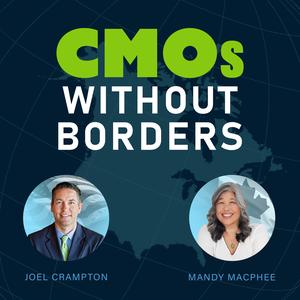

Joel Crampton: I'm Joel Crampton, I help financial advisors, RIAs, and wealth managers replace scattered marketing with strategic systems that boost AUM and production volume. ⁓ Welcome to CMOs Without Borders.
Mandy: That's a great start to this podcast with me just a terrible size. it, it's a good, it's a good segue into the conversation. We're to be talking about today in CMOs without borders. And, talking about, yeah, why are we both so exhausted? ⁓ Why did start with, ⁓
Joel Crampton: Yeah. Why both so exhausted? ⁓ It's a good exhaustion though. It comes from too much work, which when you're running your own business and you've got too much business coming at you, that's a good problem to
Mandy: It's a great problem to have, right? So today in CMO's Without Borders, we're gonna talk about the life of a fractional CMO, what's keeping us up at night, what we have, what are the great things that we're doing, new innovations, all those things.
Joel Crampton: Yep. Common pain points that we hear from the people that connect with us needing our assistance. It's pretty common across the board, regardless of really the industry. mean, everyone's experiencing the same pressures from the world with AI. It's impacting everything. That's always a hot topic, but, every business wants more business. and usually it some good marketing to get them there. So that's why they are talking to us.
Mandy: Yeah, totally. ⁓ I'll by saying what a fractional chief marketing officer does. ⁓ ⁓ a full-time CMO does for one company, fractional CMOs do the exact same thing for multiple companies at the same time. So just like fractional, hate calling it part-time, Joel. It is fractional, fractional work and spending part of your time, not part-time, part of your time ⁓ on businesses at once. ⁓ But difference between a fractional CMO ⁓ and external marketing consultant is we sit on the inside. ⁓ We beside the founder, beside the CEO, part of executive team and are accountable. ⁓
Joel Crampton: Mm-hmm.
Mandy: for the businesses KPIs and growth, just as much as the CTO, the CFO, the CEO are accountable for growth, which is very different to an agency or a marketing consultant who is often on the outside.
Joel Crampton: Yeah, and I think the fractional model is becoming prolific throughout the world Companies have just seen that their payrolls are inflated and that's usually the one of the biggest expenses that they have So they're looking for ways to cut costs become more efficient Realizing that even at that c-suite level Maybe they don't need people full-time. So it's not just marketing that's being outsourced there's ⁓ CTOs and fractional HR and compliance and operations and the fractional CFO might be the first position that became fractional, at least from my awareness. ⁓ so I think the CMOs, the marketing people are the last to jump on that pain wagon, which ⁓ actually should be the first. Cause if you think about the average tenure of a CMO at a company is the shortest tenure of anybody in the C-suite for lots reasons, but the way that the fractional model works now is exactly what most businesses need. They still need that marketing and leadership, but just not full time. And I also hate the term part time too. but when we call it fractional, I mean, people have to understand that we're only working with them for maybe ⁓ one of our work week or one fourth. Like that's where you get the fractional. So we're maybe working with four or five or six different firms, but during that fraction of the time we are locked in, we are focused on the things that needs to happen within an organization from a marketing perspective, we're dialed in and we're still accessible, even if we're not in their business every single day. In this world where we're often working remotely, we're no different than any other teammates. So I'm on Slack channels. with the firms that I'm helping. I'm in emails, I have Gmail addresses that are as part of that company's domain. So we're as connected as any other employee.
Mandy: When you think about the connection though, and you think about ⁓ we're doing as fractionals, ⁓ do believe that we do have a short tenure. ⁓ if we're growing the company to the expanse that we want them to grow, eventually you're growing out of a fractional and you might need a full-time VP, a full-time director, a full-time ⁓ CMO. So my goal with every company is to get them to that point. It might take two years, ⁓ it might take more, but it is to get them to the point where they've outgrown me and they now need that full-time person.
Joel Crampton: Absolutely. mean that's a measure of success that we've done our job well that the company's grown large enough that they do need somebody full-time and we can still continue working with that company just in a different capacity. We could be the advisor or the coach to the person they bring on board that does handle more that marketing director type level or marketing manager somebody that sits within the office if they have in-person presence, but they still need somebody to be that liaison between the executive team and themselves. So because they are so connected to the everyday goings-ons with the companies, the tactics and other things that they're trying to implement, they're still heads down in the weeds and they still need somebody to be elevated that can speak both languages.
Mandy: Yeah, for sure. So when you think about being a fractional CMO, Joel, what are some of the things that are, know, tell me about your day, tell me about your week and what you're doing in the week.
Joel Crampton: Yeah. can tell you I'm working too many hours. ⁓ that's what I'm doing during the week, ⁓ the weekends too. but hopefully it's just ⁓ temporary. but I don't know, like I love what I do. So even if I'm working at evenings, it doesn't feel like work. ⁓ And alternative is I'm not sitting on the couch watching TV. So feeling productive. so, take my dogs for walks throughout the day, still going to the gym, but.
Mandy: Yeah, me too.
Joel Crampton: I'm working ⁓ and it good. mean, ⁓ you like it's a fractional, you run your own business. So I'm now better able to understand the burden that the companies that I'm supporting have undergone in their growing pain days in the early years ⁓ of the led typically, they're starting from nothing ⁓ and ⁓ they're to this business. And so ⁓ me started my fractional business. ⁓
Mandy: Thank you.
Joel Crampton: Much more understand the pain and the challenges and the joys of the success that come with building something that people really resonate with and Frankly, we'll pay you for I mean that's that's even as much as I love what I do I typically don't want to work for free. No. Yeah, my so my day is Typically I block out time on my calendar for the clients that I work with not that I'm charging by the hour essentially, but
Mandy: Yeah.
Joel Crampton: When I say I'm gonna work with them for seven, 10 hours a week, I at least wanna have some focus time that I don't have any other phone calls come in. can get two or three hours of focused work done specifically for that company so you can get in the flow, the rhythm. There's no mental switching between one client versus other. So I'd typically block out time and always have standing calls each week with the executive team. So we have check-in calls just to touch base on. happenings within the marketing department and the different programs and activities and strategies that are in place that keeps me connected to the firms that I'm supporting so that they feel like I am part of the team and that's generally my week to week flow.
Mandy: Yeah, I'll add one thing to that. And ⁓ what I do as well as block off time for my own business development and networking, ⁓ because if don't have a continue lead flow in, then you're relying ⁓ on ⁓ existing that you have so that ⁓ when a outgrows you, ⁓ you won't that lead flow behind you to get that new company in the door to replace the one that you've just outgrown.
Joel Crampton: And it's a very important point because the firms that we're helping, those founders, the partners, principals, whoever's leading the company, they work so much in the business that sometimes they forget to work on the business. And we're certainly guilty of the same. So unless you specifically block out time in your calendar for business development or prospecting or administrative things, those things just get pushed aside, whether it's in the evenings or weekends or two or three weeks down the road or months down the road. then. Eventually a client might leave you and then you're stuck with a big hole and you do and at that time now you've got the time to do the business of Elm and prospecting that you should have been doing all along so As much as we all like to take on as many clients as we can we have to understand that This is a business, Priorities change with the clients that we're working with the financial advisors that I'm working with, they have a big roster of clients. So the ⁓ the likelihood of all their clients leaving at one time is very low. But so kind of the same way when we're working with several different clients at a time. That's one of the reasons that I decided to go fractional is I'm not a W2 employee. So if my employer has a change of direction in their business and they let me go, which has happened many times in my career, I don't have to then spend six months looking for a job. So by Diversifying the types of companies that I'm working with the multiple streams of income that certainly Causes me a lot less stress knowing that if one company does decide to change direction or they do hire somebody full-time and my engagement drops down then I'm not completely ⁓ the streets eating ramen
Mandy: Yeah, somebody asked me the other day, would I ever go back to a full time position for a mid or large size corporation? I said, ⁓ not. ⁓ not. love the, that my clients ⁓ I work with, I love the size of the companies. They're much smaller as we grow and the participation and the partnership that happens at that smaller organization ⁓ to is way more rather than. ⁓ in large corporations ⁓ being little cog in the wheel, didn't appreciate that. So absolutely would not go back to corporate. And, the joy that you were talking about, my joy is in and around working with those small businesses, ⁓ working, ⁓ having the ability, necessarily capacity. Those are two different things. ⁓ The ability to say, you know I'm gonna take all of Friday off or, I wanna go away for ⁓ at this specifically. I can do that now. I can decide when and where I spend my time and the flexibility is just amazing.
Joel Crampton: Yeah, I completely agree. The further I get away from that W-2 roll, the less of a draw it has on me because it's a false sense of security. I mean, you do get a regular paycheck when you're working with a corporation, but that regular paycheck can end at any given time. There are so many layoffs still happening nowadays. I mean, just here in Kansas City, big organization laid off a bunch of people, people that I know personally, and they got good severance, but that severance is going to run out. the market is still tough. People get laid off. It's going to, especially the higher up in your career, you are there. It's going to take you six months, 12 months to find a job. So, hopefully we've, hopefully we've, we've taken a path that we don't have to worry about that anymore.
Mandy: I heard it. Yeah, I heard an alarming number the other day when I was at the AI in Action Conference held by Framework VentureCap. Someone in that conference, one of the speakers said 192 million jobs will be lost by 2030 to AI. We saw it with Amazon and Oracle laying off 20 to 40,000 people.
Joel Crampton: Yeah, that's that was the company here in Kansas City. Yeah, here in Kansas City. That was Oracle. They they bought a company called Cerner, which is a big health tech company based in Kansas City several years ago. And yeah, just laid off. it thirty thousand people?
Mandy: Yeah. Yeah. Yeah. So, that's an alarming number to AI. So I, it's funny. I'm, I'll be doing a, ⁓ a post. It'll be out by the time this podcast gets out, but I ⁓ have post out saying ⁓ I wrong. Cause last year I was saying, you know what? You're not going to lose your job to AI if you change your, the way that you work. now ⁓ I've changed my because with agentic AI being getting more prevalent over, especially over the, since the beginning of 2025, so the last three, four months, it has become so efficient to use agentic AI now through Claude, Claude code, Claude cowork, that it is creating so much efficiency. And if you don't learn, how to get those day-to-day tasks off your plate, learn to work with and create those efficiencies and work in a different manner, yeah, 192 million jobs are gonna be lost.
Joel Crampton: I assume that's worldwide, right? That's not, or is that in the United States? mean, or North America or what, what is, I assume that's worldwide, but yeah.
Mandy: I'm assuming it's worldwide as well. actually can't tell you, but I assume it's worldwide. It's a big number, regardless. It's a big number, under 92 million. I just told my kids, I sent my kids a note and I said, I said, time to change the way you work and join the evolution of change when it comes to AI. Figure out.
Joel Crampton: So it's a big number. Yeah. Yeah. Big number. Yeah.
Mandy: how you can function in the future using AI as part of your job and part of your career.
Joel Crampton: What I think is so interesting is you and I use AI in our businesses every single day. And a lot of times it's running in the background. We've set it up, like you said, agentic systems. Um, and we, do it to stay competitive, um, because if we're not going to use it, our peers might, um, say with our organizations that we support, we try to implement AI systems within their business and their processes to make them more efficient and keep them competitive. but the interesting thing is I've got kids in high school. And the level of disdain that they have for AI is palpable. Like you can just feel how much they dislike it. And I just don't, maybe because they're not exposed to it in the business environments because they're still in high school and they don't job as a bunch of freeloaders, but they, every time I talk about using AI, they were just like, ⁓ dad, you just gotta stop using it. Like it's, it's terrible. And I go, well, I need to use it to stay competitive and put food on the table. But I wonder if once they get into the workforce that they might change their tune or maybe it's maybe that's a shift coming up from, from that younger generation. I don't know. I went to this business competition and more of like a shark tank where they, ⁓ in their business classes, they had to create products and businesses and none of them were using AI as part of their business model. was just flabbergasting to me because I'm in it all day long with my business.
Mandy: Yeah, I think that, with the younger generation with Gen Z, ⁓ they are from generative AI and chat GPT. ⁓ And up until the beginning of last year, ⁓ generative wasn't great. It was producing a lot of errors, a lot of mistakes, ⁓ a of ⁓ inconclusive ⁓ and information. ⁓ But changed so much over the last, 14, 16 months and the revolution of it over that period has been so substantial. It is way more accurate. You still have to question it. You still have to apply judgment to it. But the accuracy of it is much better than it was a year ago. And then with the rise of agentic AI and that coming to the forefront now, It can do so much for you that I don't think the kids are experimenting with yet. They don't have a good use case to experiment with agentic AI yet.
Joel Crampton: Yeah, I completely see your point there. Yeah, it's a ever evolving world and the pace has become so fast with the new models being updated. mean, there's just two new models coming out with both Anthropic and OpenAI and they just made the announcement that they're not even rolling it out to the public yet because supposedly it's too powerful and exposes too many holes in cybersecurity. I don't know if that's still marketing ploy or if it really is that powerful, but the fact that they're coming out with new models every couple of months now and the ⁓ the OpenAI or Anthropic, they won't release something until that model is better than their competitors. And so they just keep doing this like leapfrog ⁓ and just quickens the pace of development in these AI systems.
Mandy: Yeah, I think, with ⁓ Anthropic, had to relaunch my cloud, my cloud desktop almost every day for the last week or so because of the fixes and the changes and everything that's just happening so quickly. ⁓ I'm relaunching it's asking me to relaunch ⁓ almost every to keep up with the fixes and the changes that they've made. But we've gone off on a tangent. ⁓
Joel Crampton: Yes.
Mandy: Tell me, Jill, how are you using agentic AI today to help your clients as a fraud?
Joel Crampton: I, I'm not using it nearly as broadly as you are Mandy. You're certainly one of those early adopters. I'm using this part of my business more, more so like content creation, graphic design, um, compiling data, very elementary, I guess, when it comes to what these systems can actually do. So more so it's on me because I just haven't had the focus or time to put into actually understanding them as much as other people have. Maybe I just haven't found that use case. So I'm doing it certainly for my clients so that I can be more productive in what I am able to deliver from a marketing standpoint. I work in a financial advisor world typically. So a lot of those firms ⁓ are slow adopt any sort of new technology. There's always outliers ⁓ firms that being led by founders who are ⁓ so tech They're implementing all these different technologies and agentic AI is another tools within ⁓ their processes. But far wide, the financial services industry generally is way behind the curve and the fact that many of them don't have email marketing programs in place, much less agentic AI helping them expand their process and service offering to their clients. I think they're certainly leaning on me to help implement that into their business. And some of the platforms that they are using for client management ⁓ starting to incorporate more AI into the platform service offerings like AI note taking and task creation and management. Those are some of the things that I'm seeing just in bedded into those CRM or customer management platforms. But that's as much as I've seen within my business and in the businesses that I serve.
Mandy: Yeah. Okay, let me give you some use cases that you can try out. Let me give you some. Okay, the first one, I created an automation that scrapes all of my email invoices on a monthly basis and drops them into QuickBooks for me ⁓ and records the expense so that all I need to go in to do now, or my assistant needs to go in and do, is click
Joel Crampton: Lay it on me, Mandy. Yeah. Yeah.
Mandy: Yes, yes, yes, yes, yes. Right? And click it through and just approve all the expenses that have gone through. ⁓ ⁓ ⁓ efficiency for me because now I don't have to go through all of, ⁓ my assistant doesn't have to go through all of my emails, find all of the invoices for the month, ⁓ them in manually into QuickBooks, ⁓ the right categorization, the right tax, ⁓ rate. et cetera, it's all done for her, which is fantastic.
Joel Crampton: Yeah. But how much time do you that saves you?
Mandy: That saves me, I don't know, like it was an activity that this is my first use case. It was an activity I hate doing. I hate doing my expenses.
Joel Crampton: Uh-huh. So maybe it didn't take you much time. It's just something you hated to do. So yeah. Yeah.
Mandy: It, I hated doing it. So man, hate doing it. I'm not going to do it anymore. Let's get AI to do it. Yeah. I would say that it saves me a good hour or two of time per month, right. In trying to find everything. Right. That, that adds up. ⁓ the second thing I did for my business is I trained Claude. I created a skill for Claude and trained it on my brand ⁓
Joel Crampton: There you go. Yeah. Okay. Yeah, okay. It's not a lot, but it adds up. Yeah. Yeah. Yeah. Mm-hmm.
Mandy: my colors, my logo, my tone, my voice, my messaging, my book. It's all in there now. So that if I say to Claude, create ⁓ statement of work ⁓ under the illumination brand, it will just do it under all of my brand ⁓ ⁓ It creates ⁓ it ⁓ it creates all sorts of things under my brand. ⁓
Joel Crampton: Mm-hmm. Mm-hmm.
Mandy: in my tone, there is, I've knocked out all of the AI speak out of my brand messaging so that it's producing things that sound like me now. That saves a ton of time in ⁓ materials, ⁓ when it comes to presentations. So when I'm doing a ⁓ strategy, a presentation for one of my clients, ⁓ it needs to be in the illumination brand, ⁓ produces the whole presentation deck. So I iterate with it, with the content, get all the content right in Claude, and then I say produce the presentation under the Illumination brand, and in 10 minutes as it iterates through it, I've got a full 20, 30, 40 page presentation doc, beautifully aligned to my brand. It's great, that one.
Joel Crampton: Yeah, I've done something similar to that as well. I tend to use chat tpt more, but I'm certainly switching between that and Claude and Jim and I, and even using Manus for PowerPoint creations. So, I'm, using all the different tools, ⁓ not on the Claude Bainwagon. I think every tool is better at something than the other is ⁓ Claude made leaps and bounds this year for
Mandy: for sure.
Joel Crampton: for sure. And I don't know, it, it, when I have it write like me and I tell it to write like me, it doesn't, maybe because I've used chat TPT to write so much that it knows me better and I just haven't trained Claude enough. But I think the advice I would give to anybody is just find one platform that is comfortable for you and don't worry about switching back and forth. Like, like I was saying, like they're, they're going to continue to leapfrog and get better at whatever they're doing. And by the time you switch over to a new platform and learn that one, your old platform is gonna be better. And so I think just pick one, run with it, but feel free to try out others and see if it's better for your business and it produces the type of content that you're trying to create. Yeah.
Mandy: Sure, Claude's my go-to, but I still use ChatGPT sometimes. I still use Perplexity, and I'm definitely using Gemini for creative imagery and creative as well, because Gemini, NanoBanana and Gemini, their creative tool is the best I've seen out there. So, absolutely. And there's a ton of other automations I have. I've got research reports that I produce. I've got LinkedIn.
Joel Crampton: Mm-hmm.
Mandy: reports that I produce, reports on my clients doing ⁓ ⁓ ⁓ research on prospects. ⁓ all done using AI and saves me so much time ⁓ in ⁓ But I'm doing for my clients is even more important when it comes to AI and using agentic AI. ⁓ I finished an analysis report ⁓ for of my companies ⁓ that took a look, I built a full analysis plan for ⁓ Google Analytics ⁓ Google Ads. ⁓ I ⁓ in, took a look at all of the analysis and did the full analysis for me, ⁓ me some great insights and great results. Now, it's only as good as the judgment you're putting into it. I've had to iterate with it over the last two days, I've iterated it.
Joel Crampton: Mm-hmm.
Mandy: with it so many times now that it's got to keep reproducing and reproducing, but that's where your judgment comes in to do that. But in the past, Joel, that type of analysis would have taken what, two, three, four weeks? To do that type of analysis in totality, it took me two days to do it.
Joel Crampton: ⁓ yeah. Mm-hmm. Yeah. Yeah. think given a large blocks of data information, whether it be text or, ⁓ like analytics coming from GA four or like just, it's a large language model. It's able to take in these big blocks of information, condense it into bite-sized pieces. that that's, that's its main role. ⁓ the agentic piece is just part of that. It's pulling in.
Mandy: That's right.
Joel Crampton: information from different areas and bringing that into collectively and still kind of creating some sort of output. But yeah, I'm constantly, I wouldn't say battling with these systems, but I know what I wanted to do and it has still limitations that it can overcome. I'm finally, a lot of times I just get fed up with it just go figure it out myself. Like if I'm working on websites and I needed something to change and it like I'm dropping in all the HTML code. I'm giving the source code to all the websites. telling them, I'm saying here's WordPress, like here's the setup I have and it's still just can't get it there. so it, mean, it's graded as it's just, it's not perfect, you know, it's still in its infancy. So I think, yeah, just using it as part of your daily flow, you'll get better at prompting it over time. It'll get better. And yeah, I think.
Mandy: 100%.
Joel Crampton: I don't like it. don't see a of my clients. What's that?
Mandy: You just start using it, I think. The key is to just start using it. Try it out. The efficiencies that it's creating for my business and for my clients specifically, I'm able to deliver more for my clients. And the question is, I deliver more and continue to work as hard as I'm working? Or do I... Do I use AI to be more efficient to take so that I have a better work-life balance? I think it's a little bit of both to be honest with you. But I am delivering more for my clients more than expected. I am more hands-on than I expected because I can be with AI. Whereas, in the past last year I would have said I only do strategy, ⁓ somebody needs to do all of the execution. ⁓
Joel Crampton: Mm-hmm. Yep. Mm-hmm.
Mandy: I'm now able to do some of that execution. I'm now able to write and do HubSpot and develop HubSpot reports with the use of AI. I'm now able to prototype websites to get it closer to a developer to code it. ⁓ I'm to do all sorts of other things to ⁓ be hands-on with my clients than I would have been in the past.
Joel Crampton: Mm-hmm. Yeah. And I think that's something else that continues to differentiators our service from a potential, like a consultant who does only work in strategy and doesn't get into the executions. And that's certainly where a fractional CMO, at least how I operate bridges that gap. So we can certainly come up with a strategy, but the executions generally the hard part. And if we can get that ball rolling, get that execution started, then ⁓ maybe can bring in a marketing coordinator, somebody that. ⁓ has very little depth of knowledge in marketing, but they can be taught to use these AI tools that we've now put in place and can take that ball and keep running with it while we go focus on other things. So that's typically how I work as well. I'd love looking at the overall strategy. What do we need to put in place? Create that 12 month marketing plan, start getting it executed, getting a place and then using either a human, like a marketing coordinator or an AI tool to then keep that campaign rolling in a very efficient manner. yeah, I think, I think without AI tools, I don't think I could be delivering the level of service that I'm delivering to my clients. Um, and I, I think, I think we, again, we would just like you said, I think we would still be stuck at that strategy level and, and, and ultimately I don't like, I don't like just doing the strategy. I like to get my hands dirty and get in the weeds and tinker around and figure out better ways to improve these processes.
Mandy: I definitely know. I definitely know. Yeah.
Joel Crampton: When you're only at that strategy level, it's hard to see areas of improvement because you're not actually in it and living in it. And so, yeah, that's, that's what, that's what keeps me excited is, love marketing. I love what I do. I don't ever want to ⁓ be completely from the day-to-day things. ⁓ I think lose sight of ⁓ the challenges the business. And that's how we stay connected with the firms that we service is that we are connected. ⁓
Mandy: There do.
Joel Crampton: really in depth, ingrained, embedded into their firm because of the way that we operate hands-on with a lot of these things.
Mandy: Yeah, sure do. There's something that tweaked my curiosity that you said earlier on in our conversation. You said you talked a little bit about taking on too many clients ⁓ what's the right level of clients to service? I know you are weekends. I'm working night and weekends. I've got a level of clients with an assistant. that I'm managing at the same time as doing business development. What's your take? What's your take on, do you have too many clients? Do you need more? Do you want more? And if you do want more, what are you gonna do to ensure that you can take on the capacity?
Joel Crampton: Well, you always have to maintain the level of service that you promise when you're first talking with a prospective client. I think that's important for any professional service provider out there. When you're in that initial trial, having conversations, people have expectations. And so I always want to meet those expectations and over deliver as well. But if I ever feel like the level of service is going down with the clients that I'm serving and I'm not meeting the expectations that I set for myself, which are usually a lot higher than my clients expectations of me, then something will definitely change. But at this point, I think, I think what happens is I have ⁓ clients and there's so much that I want to do for them. And knowing that I've got these AI tools backing me up, I feel like I can do more. And so I'm. putting more on my plate than they are expecting me to. So I think I'm just doing more than I should be doing maybe for the level of engagement that we originally set out to and companies are not, mean, I don't wanna say taking advantage, but they're saying, okay, Joel, if you wanna go do that, great. We're gonna continue paying you this and if you wanna do more than fantastic. So I think it's more, I need to do better at managing. my output and understanding that I also need to have a life outside of work. But I don't know. It's like I said earlier, it's, it's fun. I really enjoy what I do. It doesn't feel like work, if I'm working in the evenings or weekends and like during the NCAA basketball tournament. mean, I had the games plan on another screen while I was working. So I'm really good at multitasking. Um, so yeah, I think I could certainly take on more clients. Um, but we'll get to a point where I'll have to be efficient enough where I've got systems backing me up. I've got people and processes. I've got marketing contractors that I can farm some workout to as needed or implement AI systems to take over some of these menial tasks that don't necessarily need my level of marketing mastery to execute on. But I'm always strategy first, so I'm always gonna lead. The strategy within the company is I'm always going to be that point of contact that face that shows up every week and is having those conversations with executive leadership teams. So that will be something I never remove from the process. the companies that I'm working with don't really care how those sausages made or what gets done. They just want it to get done. So, if it's executed by somebody else other than me, as long as it's a high quality level of work. I think they're happy with that. So yeah, so what about you? I mean, you're just as busy as I am.
Mandy: Yeah. Yeah. You I think you touched on work-life balance, right? Last weekend was the first weekend I took off in, I don't know how long, maybe Christmas. ⁓ And I didn't open my laptop at all last weekend for the first time in I don't know how long, which is crazy. So getting that needed rest and recuperating is really, really important. from my perspective, I'm going to scale my company ⁓ as grow with clients. ⁓ I always be the fractional CMO for my clients. ⁓ The that I receive in the background will grow ⁓ with ⁓ So will always be the head, the lead, the one doing the strategy, the one doing creating new innovations and new ideas for my clients. I will have a team behind me to help support the number of clients. And that's what I say in my book, as, ⁓ yeah, we take a look at, the foundations and how you build the foundations of marketing and how you build your team ⁓ within a marketing and within a company, how do you build your team? ⁓ I'm doing exactly I'm advising my founders to do. ⁓ As you scale, build your team up. So as I get more clients, I'll be hiring more people to support me in the background, which will just give my clients more comfort that I am always there to support them. I'm the face, I'm the face of the company.
Joel Crampton: Yep, with me. It's ⁓ gonna be the case as long as I am running this business. ⁓ I think again, that's maybe what differentiates us maybe from our ⁓ is a lot of times you get these agencies and ⁓ don't have that connection with the founder of the agency. You're maybe passed off to ⁓ account manager who maybe is good at strategy but isn't that executive level presence. that has formed the agency and maybe doesn't connect as well with the executive leadership teams. So, ⁓ I think that'd be kind of a different trader that we could point out as well. I think another point you talked about building up a team around you and it's exactly what founders need to do ⁓ is hire people that better ⁓ at whatever the job is than they are. So for me, I enjoy graphic design. I'm not the greatest at it. And so that's one thing that I will always farm out work to is to the specialist, same with marketing as a function in general. And a lot of these founders, the partners or principals that have started these firms that we support, they're not marketing experts in. That's exactly why they hire people like you and me, because we are those marketing experts and they understand that they need to pass that to somebody else.
Mandy: Yes. and zy- Yeah, getting into the weeds, getting into the project management and creating project management templates and making sure that we're on track. Using sprints, that's not me. I'm not good at that. So I'll hire, so as soon as I have the opportunity, I'm gonna be hiring someone else to put that hat on for me and my clients.
Joel Crampton: So tell me about some of the clients that you are working with. What kind of companies are they? And what kind of companies are you looking to work with?
Mandy: I love it. Yeah, I love it. Yeah, FinTech is my niche and I do mainly B2C FinTech, but I do B2B, I do B2B2C. So I really look at FinTech companies, but that doesn't, so I target them and I hyper target them. Just like I tell my clients to niche down, I'm niching down as well. That doesn't mean I'm not getting other clients.
Joel Crampton: Mm-hmm. Mm-hmm.
Mandy: So I've got a research company right now that I work with. I've got a not-for-profit. I've got a team building company. I have wealth management in my stream. I've got gold and silver in my stream and I've got FinTech as well. So I've got a very diverse ⁓ set of clients are coming to me even though I've niched down to FinTech. I manage all of, more than that.
Joel Crampton: Yeah, I'm the same way. Diversity is key. It keeps things interesting. Marketing is marketing no matter what industry you're in really. So what usually works in one will work on the other. But I'm saying with you, most of my marketing is niche down to financial advisors, but that's not the only types of firms that I'm working with. And even within financial advisors, there's lots of different levels. There's firms ranging from small, single, solo advisors of 30 million assets all the way up to 500 million plus in that and assets under management. So there's quite a large variety within wealth management. But again, I'm open to working with any firms that are in the financial services world, whether that be an advisor or an RA or a platform for IRAs or service providers that service the financial advisors. So I can open to anything, but yeah.
Mandy: Thank Isn't the diversity exhilarating, Joel? Yeah, I love the diversity of my culture.
Joel Crampton: It is so fun. Yeah. Yeah. And that's one of reasons I became a fractional CMO is because you get to work with all kinds of different companies, not just one.
Mandy: Yeah, that's right. That's right. Last year I worked with an EdTech company and that was my first time working with education technology ⁓ ⁓ were building a tool off of AI. So ⁓ that was so much fun to just work in a completely different industry. ⁓ marketing principles still applied, especially when it comes to promoting technology. ⁓ It still applied, it was the exact same marketing principles, but learning a new industry like education technology, that was so fun.
Joel Crampton: Well, we've come to the end of our show. I hope everybody enjoyed learning a little bit more about a day in the life of a fractional CMO. Until next time, it's always fun just riffing on marketing. I I enjoy the conversation. I don't know if anybody else will, but this is really about us and not them. So I'm glad we had the chance to talk.
Mandy: Yeah. Even if we're the only two that listened to it, Joel, we're all good. Thanks everyone for tuning in.
Joel Crampton: That's okay, you know. All right, talk to you Mandy. Bye.
Mandy: Mandy McPhee. ⁓ I a fractional chief marketing officer and work with founders who are doing too ⁓ and need someone to turn their scattered marketing into system that actually drives results.
Mandy: That's a great start to this podcast with me just a terrible size. it, it's a good, it's a good segue into the conversation. We're to be talking about today in CMOs without borders. And, talking about, yeah, why are we both so exhausted? ⁓ Why did start with, ⁓
Joel Crampton: Yeah. Why both so exhausted? ⁓ It's a good exhaustion though. It comes from too much work, which when you're running your own business and you've got too much business coming at you, that's a good problem to
Mandy: It's a great problem to have, right? So today in CMO's Without Borders, we're gonna talk about the life of a fractional CMO, what's keeping us up at night, what we have, what are the great things that we're doing, new innovations, all those things.
Joel Crampton: Yep. Common pain points that we hear from the people that connect with us needing our assistance. It's pretty common across the board, regardless of really the industry. mean, everyone's experiencing the same pressures from the world with AI. It's impacting everything. That's always a hot topic, but, every business wants more business. and usually it some good marketing to get them there. So that's why they are talking to us.
Mandy: Yeah, totally. ⁓ I'll by saying what a fractional chief marketing officer does. ⁓ ⁓ a full-time CMO does for one company, fractional CMOs do the exact same thing for multiple companies at the same time. So just like fractional, hate calling it part-time, Joel. It is fractional, fractional work and spending part of your time, not part-time, part of your time ⁓ on businesses at once. ⁓ But difference between a fractional CMO ⁓ and external marketing consultant is we sit on the inside. ⁓ We beside the founder, beside the CEO, part of executive team and are accountable. ⁓
Joel Crampton: Mm-hmm.
Mandy: for the businesses KPIs and growth, just as much as the CTO, the CFO, the CEO are accountable for growth, which is very different to an agency or a marketing consultant who is often on the outside.
Joel Crampton: Yeah, and I think the fractional model is becoming prolific throughout the world Companies have just seen that their payrolls are inflated and that's usually the one of the biggest expenses that they have So they're looking for ways to cut costs become more efficient Realizing that even at that c-suite level Maybe they don't need people full-time. So it's not just marketing that's being outsourced there's ⁓ CTOs and fractional HR and compliance and operations and the fractional CFO might be the first position that became fractional, at least from my awareness. ⁓ so I think the CMOs, the marketing people are the last to jump on that pain wagon, which ⁓ actually should be the first. Cause if you think about the average tenure of a CMO at a company is the shortest tenure of anybody in the C-suite for lots reasons, but the way that the fractional model works now is exactly what most businesses need. They still need that marketing and leadership, but just not full time. And I also hate the term part time too. but when we call it fractional, I mean, people have to understand that we're only working with them for maybe ⁓ one of our work week or one fourth. Like that's where you get the fractional. So we're maybe working with four or five or six different firms, but during that fraction of the time we are locked in, we are focused on the things that needs to happen within an organization from a marketing perspective, we're dialed in and we're still accessible, even if we're not in their business every single day. In this world where we're often working remotely, we're no different than any other teammates. So I'm on Slack channels. with the firms that I'm helping. I'm in emails, I have Gmail addresses that are as part of that company's domain. So we're as connected as any other employee.
Mandy: When you think about the connection though, and you think about ⁓ we're doing as fractionals, ⁓ do believe that we do have a short tenure. ⁓ if we're growing the company to the expanse that we want them to grow, eventually you're growing out of a fractional and you might need a full-time VP, a full-time director, a full-time ⁓ CMO. So my goal with every company is to get them to that point. It might take two years, ⁓ it might take more, but it is to get them to the point where they've outgrown me and they now need that full-time person.
Joel Crampton: Absolutely. mean that's a measure of success that we've done our job well that the company's grown large enough that they do need somebody full-time and we can still continue working with that company just in a different capacity. We could be the advisor or the coach to the person they bring on board that does handle more that marketing director type level or marketing manager somebody that sits within the office if they have in-person presence, but they still need somebody to be that liaison between the executive team and themselves. So because they are so connected to the everyday goings-ons with the companies, the tactics and other things that they're trying to implement, they're still heads down in the weeds and they still need somebody to be elevated that can speak both languages.
Mandy: Yeah, for sure. So when you think about being a fractional CMO, Joel, what are some of the things that are, know, tell me about your day, tell me about your week and what you're doing in the week.
Joel Crampton: Yeah. can tell you I'm working too many hours. ⁓ that's what I'm doing during the week, ⁓ the weekends too. but hopefully it's just ⁓ temporary. but I don't know, like I love what I do. So even if I'm working at evenings, it doesn't feel like work. ⁓ And alternative is I'm not sitting on the couch watching TV. So feeling productive. so, take my dogs for walks throughout the day, still going to the gym, but.
Mandy: Yeah, me too.
Joel Crampton: I'm working ⁓ and it good. mean, ⁓ you like it's a fractional, you run your own business. So I'm now better able to understand the burden that the companies that I'm supporting have undergone in their growing pain days in the early years ⁓ of the led typically, they're starting from nothing ⁓ and ⁓ they're to this business. And so ⁓ me started my fractional business. ⁓
Mandy: Thank you.
Joel Crampton: Much more understand the pain and the challenges and the joys of the success that come with building something that people really resonate with and Frankly, we'll pay you for I mean that's that's even as much as I love what I do I typically don't want to work for free. No. Yeah, my so my day is Typically I block out time on my calendar for the clients that I work with not that I'm charging by the hour essentially, but
Mandy: Yeah.
Joel Crampton: When I say I'm gonna work with them for seven, 10 hours a week, I at least wanna have some focus time that I don't have any other phone calls come in. can get two or three hours of focused work done specifically for that company so you can get in the flow, the rhythm. There's no mental switching between one client versus other. So I'd typically block out time and always have standing calls each week with the executive team. So we have check-in calls just to touch base on. happenings within the marketing department and the different programs and activities and strategies that are in place that keeps me connected to the firms that I'm supporting so that they feel like I am part of the team and that's generally my week to week flow.
Mandy: Yeah, I'll add one thing to that. And ⁓ what I do as well as block off time for my own business development and networking, ⁓ because if don't have a continue lead flow in, then you're relying ⁓ on ⁓ existing that you have so that ⁓ when a outgrows you, ⁓ you won't that lead flow behind you to get that new company in the door to replace the one that you've just outgrown.
Joel Crampton: And it's a very important point because the firms that we're helping, those founders, the partners, principals, whoever's leading the company, they work so much in the business that sometimes they forget to work on the business. And we're certainly guilty of the same. So unless you specifically block out time in your calendar for business development or prospecting or administrative things, those things just get pushed aside, whether it's in the evenings or weekends or two or three weeks down the road or months down the road. then. Eventually a client might leave you and then you're stuck with a big hole and you do and at that time now you've got the time to do the business of Elm and prospecting that you should have been doing all along so As much as we all like to take on as many clients as we can we have to understand that This is a business, Priorities change with the clients that we're working with the financial advisors that I'm working with, they have a big roster of clients. So the ⁓ the likelihood of all their clients leaving at one time is very low. But so kind of the same way when we're working with several different clients at a time. That's one of the reasons that I decided to go fractional is I'm not a W2 employee. So if my employer has a change of direction in their business and they let me go, which has happened many times in my career, I don't have to then spend six months looking for a job. So by Diversifying the types of companies that I'm working with the multiple streams of income that certainly Causes me a lot less stress knowing that if one company does decide to change direction or they do hire somebody full-time and my engagement drops down then I'm not completely ⁓ the streets eating ramen
Mandy: Yeah, somebody asked me the other day, would I ever go back to a full time position for a mid or large size corporation? I said, ⁓ not. ⁓ not. love the, that my clients ⁓ I work with, I love the size of the companies. They're much smaller as we grow and the participation and the partnership that happens at that smaller organization ⁓ to is way more rather than. ⁓ in large corporations ⁓ being little cog in the wheel, didn't appreciate that. So absolutely would not go back to corporate. And, the joy that you were talking about, my joy is in and around working with those small businesses, ⁓ working, ⁓ having the ability, necessarily capacity. Those are two different things. ⁓ The ability to say, you know I'm gonna take all of Friday off or, I wanna go away for ⁓ at this specifically. I can do that now. I can decide when and where I spend my time and the flexibility is just amazing.
Joel Crampton: Yeah, I completely agree. The further I get away from that W-2 roll, the less of a draw it has on me because it's a false sense of security. I mean, you do get a regular paycheck when you're working with a corporation, but that regular paycheck can end at any given time. There are so many layoffs still happening nowadays. I mean, just here in Kansas City, big organization laid off a bunch of people, people that I know personally, and they got good severance, but that severance is going to run out. the market is still tough. People get laid off. It's going to, especially the higher up in your career, you are there. It's going to take you six months, 12 months to find a job. So, hopefully we've, hopefully we've, we've taken a path that we don't have to worry about that anymore.
Mandy: I heard it. Yeah, I heard an alarming number the other day when I was at the AI in Action Conference held by Framework VentureCap. Someone in that conference, one of the speakers said 192 million jobs will be lost by 2030 to AI. We saw it with Amazon and Oracle laying off 20 to 40,000 people.
Joel Crampton: Yeah, that's that was the company here in Kansas City. Yeah, here in Kansas City. That was Oracle. They they bought a company called Cerner, which is a big health tech company based in Kansas City several years ago. And yeah, just laid off. it thirty thousand people?
Mandy: Yeah. Yeah. Yeah. So, that's an alarming number to AI. So I, it's funny. I'm, I'll be doing a, ⁓ a post. It'll be out by the time this podcast gets out, but I ⁓ have post out saying ⁓ I wrong. Cause last year I was saying, you know what? You're not going to lose your job to AI if you change your, the way that you work. now ⁓ I've changed my because with agentic AI being getting more prevalent over, especially over the, since the beginning of 2025, so the last three, four months, it has become so efficient to use agentic AI now through Claude, Claude code, Claude cowork, that it is creating so much efficiency. And if you don't learn, how to get those day-to-day tasks off your plate, learn to work with and create those efficiencies and work in a different manner, yeah, 192 million jobs are gonna be lost.
Joel Crampton: I assume that's worldwide, right? That's not, or is that in the United States? mean, or North America or what, what is, I assume that's worldwide, but yeah.
Mandy: I'm assuming it's worldwide as well. actually can't tell you, but I assume it's worldwide. It's a big number, regardless. It's a big number, under 92 million. I just told my kids, I sent my kids a note and I said, I said, time to change the way you work and join the evolution of change when it comes to AI. Figure out.
Joel Crampton: So it's a big number. Yeah. Yeah. Big number. Yeah.
Mandy: how you can function in the future using AI as part of your job and part of your career.
Joel Crampton: What I think is so interesting is you and I use AI in our businesses every single day. And a lot of times it's running in the background. We've set it up, like you said, agentic systems. Um, and we, do it to stay competitive, um, because if we're not going to use it, our peers might, um, say with our organizations that we support, we try to implement AI systems within their business and their processes to make them more efficient and keep them competitive. but the interesting thing is I've got kids in high school. And the level of disdain that they have for AI is palpable. Like you can just feel how much they dislike it. And I just don't, maybe because they're not exposed to it in the business environments because they're still in high school and they don't job as a bunch of freeloaders, but they, every time I talk about using AI, they were just like, ⁓ dad, you just gotta stop using it. Like it's, it's terrible. And I go, well, I need to use it to stay competitive and put food on the table. But I wonder if once they get into the workforce that they might change their tune or maybe it's maybe that's a shift coming up from, from that younger generation. I don't know. I went to this business competition and more of like a shark tank where they, ⁓ in their business classes, they had to create products and businesses and none of them were using AI as part of their business model. was just flabbergasting to me because I'm in it all day long with my business.
Mandy: Yeah, I think that, with the younger generation with Gen Z, ⁓ they are from generative AI and chat GPT. ⁓ And up until the beginning of last year, ⁓ generative wasn't great. It was producing a lot of errors, a lot of mistakes, ⁓ a of ⁓ inconclusive ⁓ and information. ⁓ But changed so much over the last, 14, 16 months and the revolution of it over that period has been so substantial. It is way more accurate. You still have to question it. You still have to apply judgment to it. But the accuracy of it is much better than it was a year ago. And then with the rise of agentic AI and that coming to the forefront now, It can do so much for you that I don't think the kids are experimenting with yet. They don't have a good use case to experiment with agentic AI yet.
Joel Crampton: Yeah, I completely see your point there. Yeah, it's a ever evolving world and the pace has become so fast with the new models being updated. mean, there's just two new models coming out with both Anthropic and OpenAI and they just made the announcement that they're not even rolling it out to the public yet because supposedly it's too powerful and exposes too many holes in cybersecurity. I don't know if that's still marketing ploy or if it really is that powerful, but the fact that they're coming out with new models every couple of months now and the ⁓ the OpenAI or Anthropic, they won't release something until that model is better than their competitors. And so they just keep doing this like leapfrog ⁓ and just quickens the pace of development in these AI systems.
Mandy: Yeah, I think, with ⁓ Anthropic, had to relaunch my cloud, my cloud desktop almost every day for the last week or so because of the fixes and the changes and everything that's just happening so quickly. ⁓ I'm relaunching it's asking me to relaunch ⁓ almost every to keep up with the fixes and the changes that they've made. But we've gone off on a tangent. ⁓
Joel Crampton: Yes.
Mandy: Tell me, Jill, how are you using agentic AI today to help your clients as a fraud?
Joel Crampton: I, I'm not using it nearly as broadly as you are Mandy. You're certainly one of those early adopters. I'm using this part of my business more, more so like content creation, graphic design, um, compiling data, very elementary, I guess, when it comes to what these systems can actually do. So more so it's on me because I just haven't had the focus or time to put into actually understanding them as much as other people have. Maybe I just haven't found that use case. So I'm doing it certainly for my clients so that I can be more productive in what I am able to deliver from a marketing standpoint. I work in a financial advisor world typically. So a lot of those firms ⁓ are slow adopt any sort of new technology. There's always outliers ⁓ firms that being led by founders who are ⁓ so tech They're implementing all these different technologies and agentic AI is another tools within ⁓ their processes. But far wide, the financial services industry generally is way behind the curve and the fact that many of them don't have email marketing programs in place, much less agentic AI helping them expand their process and service offering to their clients. I think they're certainly leaning on me to help implement that into their business. And some of the platforms that they are using for client management ⁓ starting to incorporate more AI into the platform service offerings like AI note taking and task creation and management. Those are some of the things that I'm seeing just in bedded into those CRM or customer management platforms. But that's as much as I've seen within my business and in the businesses that I serve.
Mandy: Yeah. Okay, let me give you some use cases that you can try out. Let me give you some. Okay, the first one, I created an automation that scrapes all of my email invoices on a monthly basis and drops them into QuickBooks for me ⁓ and records the expense so that all I need to go in to do now, or my assistant needs to go in and do, is click
Joel Crampton: Lay it on me, Mandy. Yeah. Yeah.
Mandy: Yes, yes, yes, yes, yes. Right? And click it through and just approve all the expenses that have gone through. ⁓ ⁓ ⁓ efficiency for me because now I don't have to go through all of, ⁓ my assistant doesn't have to go through all of my emails, find all of the invoices for the month, ⁓ them in manually into QuickBooks, ⁓ the right categorization, the right tax, ⁓ rate. et cetera, it's all done for her, which is fantastic.
Joel Crampton: Yeah. But how much time do you that saves you?
Mandy: That saves me, I don't know, like it was an activity that this is my first use case. It was an activity I hate doing. I hate doing my expenses.
Joel Crampton: Uh-huh. So maybe it didn't take you much time. It's just something you hated to do. So yeah. Yeah.
Mandy: It, I hated doing it. So man, hate doing it. I'm not going to do it anymore. Let's get AI to do it. Yeah. I would say that it saves me a good hour or two of time per month, right. In trying to find everything. Right. That, that adds up. ⁓ the second thing I did for my business is I trained Claude. I created a skill for Claude and trained it on my brand ⁓
Joel Crampton: There you go. Yeah. Okay. Yeah, okay. It's not a lot, but it adds up. Yeah. Yeah. Yeah. Mm-hmm.
Mandy: my colors, my logo, my tone, my voice, my messaging, my book. It's all in there now. So that if I say to Claude, create ⁓ statement of work ⁓ under the illumination brand, it will just do it under all of my brand ⁓ ⁓ It creates ⁓ it ⁓ it creates all sorts of things under my brand. ⁓
Joel Crampton: Mm-hmm. Mm-hmm.
Mandy: in my tone, there is, I've knocked out all of the AI speak out of my brand messaging so that it's producing things that sound like me now. That saves a ton of time in ⁓ materials, ⁓ when it comes to presentations. So when I'm doing a ⁓ strategy, a presentation for one of my clients, ⁓ it needs to be in the illumination brand, ⁓ produces the whole presentation deck. So I iterate with it, with the content, get all the content right in Claude, and then I say produce the presentation under the Illumination brand, and in 10 minutes as it iterates through it, I've got a full 20, 30, 40 page presentation doc, beautifully aligned to my brand. It's great, that one.
Joel Crampton: Yeah, I've done something similar to that as well. I tend to use chat tpt more, but I'm certainly switching between that and Claude and Jim and I, and even using Manus for PowerPoint creations. So, I'm, using all the different tools, ⁓ not on the Claude Bainwagon. I think every tool is better at something than the other is ⁓ Claude made leaps and bounds this year for
Mandy: for sure.
Joel Crampton: for sure. And I don't know, it, it, when I have it write like me and I tell it to write like me, it doesn't, maybe because I've used chat TPT to write so much that it knows me better and I just haven't trained Claude enough. But I think the advice I would give to anybody is just find one platform that is comfortable for you and don't worry about switching back and forth. Like, like I was saying, like they're, they're going to continue to leapfrog and get better at whatever they're doing. And by the time you switch over to a new platform and learn that one, your old platform is gonna be better. And so I think just pick one, run with it, but feel free to try out others and see if it's better for your business and it produces the type of content that you're trying to create. Yeah.
Mandy: Sure, Claude's my go-to, but I still use ChatGPT sometimes. I still use Perplexity, and I'm definitely using Gemini for creative imagery and creative as well, because Gemini, NanoBanana and Gemini, their creative tool is the best I've seen out there. So, absolutely. And there's a ton of other automations I have. I've got research reports that I produce. I've got LinkedIn.
Joel Crampton: Mm-hmm.
Mandy: reports that I produce, reports on my clients doing ⁓ ⁓ ⁓ research on prospects. ⁓ all done using AI and saves me so much time ⁓ in ⁓ But I'm doing for my clients is even more important when it comes to AI and using agentic AI. ⁓ I finished an analysis report ⁓ for of my companies ⁓ that took a look, I built a full analysis plan for ⁓ Google Analytics ⁓ Google Ads. ⁓ I ⁓ in, took a look at all of the analysis and did the full analysis for me, ⁓ me some great insights and great results. Now, it's only as good as the judgment you're putting into it. I've had to iterate with it over the last two days, I've iterated it.
Joel Crampton: Mm-hmm.
Mandy: with it so many times now that it's got to keep reproducing and reproducing, but that's where your judgment comes in to do that. But in the past, Joel, that type of analysis would have taken what, two, three, four weeks? To do that type of analysis in totality, it took me two days to do it.
Joel Crampton: ⁓ yeah. Mm-hmm. Yeah. Yeah. think given a large blocks of data information, whether it be text or, ⁓ like analytics coming from GA four or like just, it's a large language model. It's able to take in these big blocks of information, condense it into bite-sized pieces. that that's, that's its main role. ⁓ the agentic piece is just part of that. It's pulling in.
Mandy: That's right.
Joel Crampton: information from different areas and bringing that into collectively and still kind of creating some sort of output. But yeah, I'm constantly, I wouldn't say battling with these systems, but I know what I wanted to do and it has still limitations that it can overcome. I'm finally, a lot of times I just get fed up with it just go figure it out myself. Like if I'm working on websites and I needed something to change and it like I'm dropping in all the HTML code. I'm giving the source code to all the websites. telling them, I'm saying here's WordPress, like here's the setup I have and it's still just can't get it there. so it, mean, it's graded as it's just, it's not perfect, you know, it's still in its infancy. So I think, yeah, just using it as part of your daily flow, you'll get better at prompting it over time. It'll get better. And yeah, I think.
Mandy: 100%.
Joel Crampton: I don't like it. don't see a of my clients. What's that?
Mandy: You just start using it, I think. The key is to just start using it. Try it out. The efficiencies that it's creating for my business and for my clients specifically, I'm able to deliver more for my clients. And the question is, I deliver more and continue to work as hard as I'm working? Or do I... Do I use AI to be more efficient to take so that I have a better work-life balance? I think it's a little bit of both to be honest with you. But I am delivering more for my clients more than expected. I am more hands-on than I expected because I can be with AI. Whereas, in the past last year I would have said I only do strategy, ⁓ somebody needs to do all of the execution. ⁓
Joel Crampton: Mm-hmm. Yep. Mm-hmm.
Mandy: I'm now able to do some of that execution. I'm now able to write and do HubSpot and develop HubSpot reports with the use of AI. I'm now able to prototype websites to get it closer to a developer to code it. ⁓ I'm to do all sorts of other things to ⁓ be hands-on with my clients than I would have been in the past.
Joel Crampton: Mm-hmm. Yeah. And I think that's something else that continues to differentiators our service from a potential, like a consultant who does only work in strategy and doesn't get into the executions. And that's certainly where a fractional CMO, at least how I operate bridges that gap. So we can certainly come up with a strategy, but the executions generally the hard part. And if we can get that ball rolling, get that execution started, then ⁓ maybe can bring in a marketing coordinator, somebody that. ⁓ has very little depth of knowledge in marketing, but they can be taught to use these AI tools that we've now put in place and can take that ball and keep running with it while we go focus on other things. So that's typically how I work as well. I'd love looking at the overall strategy. What do we need to put in place? Create that 12 month marketing plan, start getting it executed, getting a place and then using either a human, like a marketing coordinator or an AI tool to then keep that campaign rolling in a very efficient manner. yeah, I think, I think without AI tools, I don't think I could be delivering the level of service that I'm delivering to my clients. Um, and I, I think, I think we, again, we would just like you said, I think we would still be stuck at that strategy level and, and, and ultimately I don't like, I don't like just doing the strategy. I like to get my hands dirty and get in the weeds and tinker around and figure out better ways to improve these processes.
Mandy: I definitely know. I definitely know. Yeah.
Joel Crampton: When you're only at that strategy level, it's hard to see areas of improvement because you're not actually in it and living in it. And so, yeah, that's, that's what, that's what keeps me excited is, love marketing. I love what I do. I don't ever want to ⁓ be completely from the day-to-day things. ⁓ I think lose sight of ⁓ the challenges the business. And that's how we stay connected with the firms that we service is that we are connected. ⁓
Mandy: There do.
Joel Crampton: really in depth, ingrained, embedded into their firm because of the way that we operate hands-on with a lot of these things.
Mandy: Yeah, sure do. There's something that tweaked my curiosity that you said earlier on in our conversation. You said you talked a little bit about taking on too many clients ⁓ what's the right level of clients to service? I know you are weekends. I'm working night and weekends. I've got a level of clients with an assistant. that I'm managing at the same time as doing business development. What's your take? What's your take on, do you have too many clients? Do you need more? Do you want more? And if you do want more, what are you gonna do to ensure that you can take on the capacity?
Joel Crampton: Well, you always have to maintain the level of service that you promise when you're first talking with a prospective client. I think that's important for any professional service provider out there. When you're in that initial trial, having conversations, people have expectations. And so I always want to meet those expectations and over deliver as well. But if I ever feel like the level of service is going down with the clients that I'm serving and I'm not meeting the expectations that I set for myself, which are usually a lot higher than my clients expectations of me, then something will definitely change. But at this point, I think, I think what happens is I have ⁓ clients and there's so much that I want to do for them. And knowing that I've got these AI tools backing me up, I feel like I can do more. And so I'm. putting more on my plate than they are expecting me to. So I think I'm just doing more than I should be doing maybe for the level of engagement that we originally set out to and companies are not, mean, I don't wanna say taking advantage, but they're saying, okay, Joel, if you wanna go do that, great. We're gonna continue paying you this and if you wanna do more than fantastic. So I think it's more, I need to do better at managing. my output and understanding that I also need to have a life outside of work. But I don't know. It's like I said earlier, it's, it's fun. I really enjoy what I do. It doesn't feel like work, if I'm working in the evenings or weekends and like during the NCAA basketball tournament. mean, I had the games plan on another screen while I was working. So I'm really good at multitasking. Um, so yeah, I think I could certainly take on more clients. Um, but we'll get to a point where I'll have to be efficient enough where I've got systems backing me up. I've got people and processes. I've got marketing contractors that I can farm some workout to as needed or implement AI systems to take over some of these menial tasks that don't necessarily need my level of marketing mastery to execute on. But I'm always strategy first, so I'm always gonna lead. The strategy within the company is I'm always going to be that point of contact that face that shows up every week and is having those conversations with executive leadership teams. So that will be something I never remove from the process. the companies that I'm working with don't really care how those sausages made or what gets done. They just want it to get done. So, if it's executed by somebody else other than me, as long as it's a high quality level of work. I think they're happy with that. So yeah, so what about you? I mean, you're just as busy as I am.
Mandy: Yeah. Yeah. You I think you touched on work-life balance, right? Last weekend was the first weekend I took off in, I don't know how long, maybe Christmas. ⁓ And I didn't open my laptop at all last weekend for the first time in I don't know how long, which is crazy. So getting that needed rest and recuperating is really, really important. from my perspective, I'm going to scale my company ⁓ as grow with clients. ⁓ I always be the fractional CMO for my clients. ⁓ The that I receive in the background will grow ⁓ with ⁓ So will always be the head, the lead, the one doing the strategy, the one doing creating new innovations and new ideas for my clients. I will have a team behind me to help support the number of clients. And that's what I say in my book, as, ⁓ yeah, we take a look at, the foundations and how you build the foundations of marketing and how you build your team ⁓ within a marketing and within a company, how do you build your team? ⁓ I'm doing exactly I'm advising my founders to do. ⁓ As you scale, build your team up. So as I get more clients, I'll be hiring more people to support me in the background, which will just give my clients more comfort that I am always there to support them. I'm the face, I'm the face of the company.
Joel Crampton: Yep, with me. It's ⁓ gonna be the case as long as I am running this business. ⁓ I think again, that's maybe what differentiates us maybe from our ⁓ is a lot of times you get these agencies and ⁓ don't have that connection with the founder of the agency. You're maybe passed off to ⁓ account manager who maybe is good at strategy but isn't that executive level presence. that has formed the agency and maybe doesn't connect as well with the executive leadership teams. So, ⁓ I think that'd be kind of a different trader that we could point out as well. I think another point you talked about building up a team around you and it's exactly what founders need to do ⁓ is hire people that better ⁓ at whatever the job is than they are. So for me, I enjoy graphic design. I'm not the greatest at it. And so that's one thing that I will always farm out work to is to the specialist, same with marketing as a function in general. And a lot of these founders, the partners or principals that have started these firms that we support, they're not marketing experts in. That's exactly why they hire people like you and me, because we are those marketing experts and they understand that they need to pass that to somebody else.
Mandy: Yes. and zy- Yeah, getting into the weeds, getting into the project management and creating project management templates and making sure that we're on track. Using sprints, that's not me. I'm not good at that. So I'll hire, so as soon as I have the opportunity, I'm gonna be hiring someone else to put that hat on for me and my clients.
Joel Crampton: So tell me about some of the clients that you are working with. What kind of companies are they? And what kind of companies are you looking to work with?
Mandy: I love it. Yeah, I love it. Yeah, FinTech is my niche and I do mainly B2C FinTech, but I do B2B, I do B2B2C. So I really look at FinTech companies, but that doesn't, so I target them and I hyper target them. Just like I tell my clients to niche down, I'm niching down as well. That doesn't mean I'm not getting other clients.
Joel Crampton: Mm-hmm. Mm-hmm.
Mandy: So I've got a research company right now that I work with. I've got a not-for-profit. I've got a team building company. I have wealth management in my stream. I've got gold and silver in my stream and I've got FinTech as well. So I've got a very diverse ⁓ set of clients are coming to me even though I've niched down to FinTech. I manage all of, more than that.
Joel Crampton: Yeah, I'm the same way. Diversity is key. It keeps things interesting. Marketing is marketing no matter what industry you're in really. So what usually works in one will work on the other. But I'm saying with you, most of my marketing is niche down to financial advisors, but that's not the only types of firms that I'm working with. And even within financial advisors, there's lots of different levels. There's firms ranging from small, single, solo advisors of 30 million assets all the way up to 500 million plus in that and assets under management. So there's quite a large variety within wealth management. But again, I'm open to working with any firms that are in the financial services world, whether that be an advisor or an RA or a platform for IRAs or service providers that service the financial advisors. So I can open to anything, but yeah.
Mandy: Thank Isn't the diversity exhilarating, Joel? Yeah, I love the diversity of my culture.
Joel Crampton: It is so fun. Yeah. Yeah. And that's one of reasons I became a fractional CMO is because you get to work with all kinds of different companies, not just one.
Mandy: Yeah, that's right. That's right. Last year I worked with an EdTech company and that was my first time working with education technology ⁓ ⁓ were building a tool off of AI. So ⁓ that was so much fun to just work in a completely different industry. ⁓ marketing principles still applied, especially when it comes to promoting technology. ⁓ It still applied, it was the exact same marketing principles, but learning a new industry like education technology, that was so fun.
Joel Crampton: Well, we've come to the end of our show. I hope everybody enjoyed learning a little bit more about a day in the life of a fractional CMO. Until next time, it's always fun just riffing on marketing. I I enjoy the conversation. I don't know if anybody else will, but this is really about us and not them. So I'm glad we had the chance to talk.
Mandy: Yeah. Even if we're the only two that listened to it, Joel, we're all good. Thanks everyone for tuning in.
Joel Crampton: That's okay, you know. All right, talk to you Mandy. Bye.
Mandy: Mandy McPhee. ⁓ I a fractional chief marketing officer and work with founders who are doing too ⁓ and need someone to turn their scattered marketing into system that actually drives results.
