


ABOUT THIS EPISODE
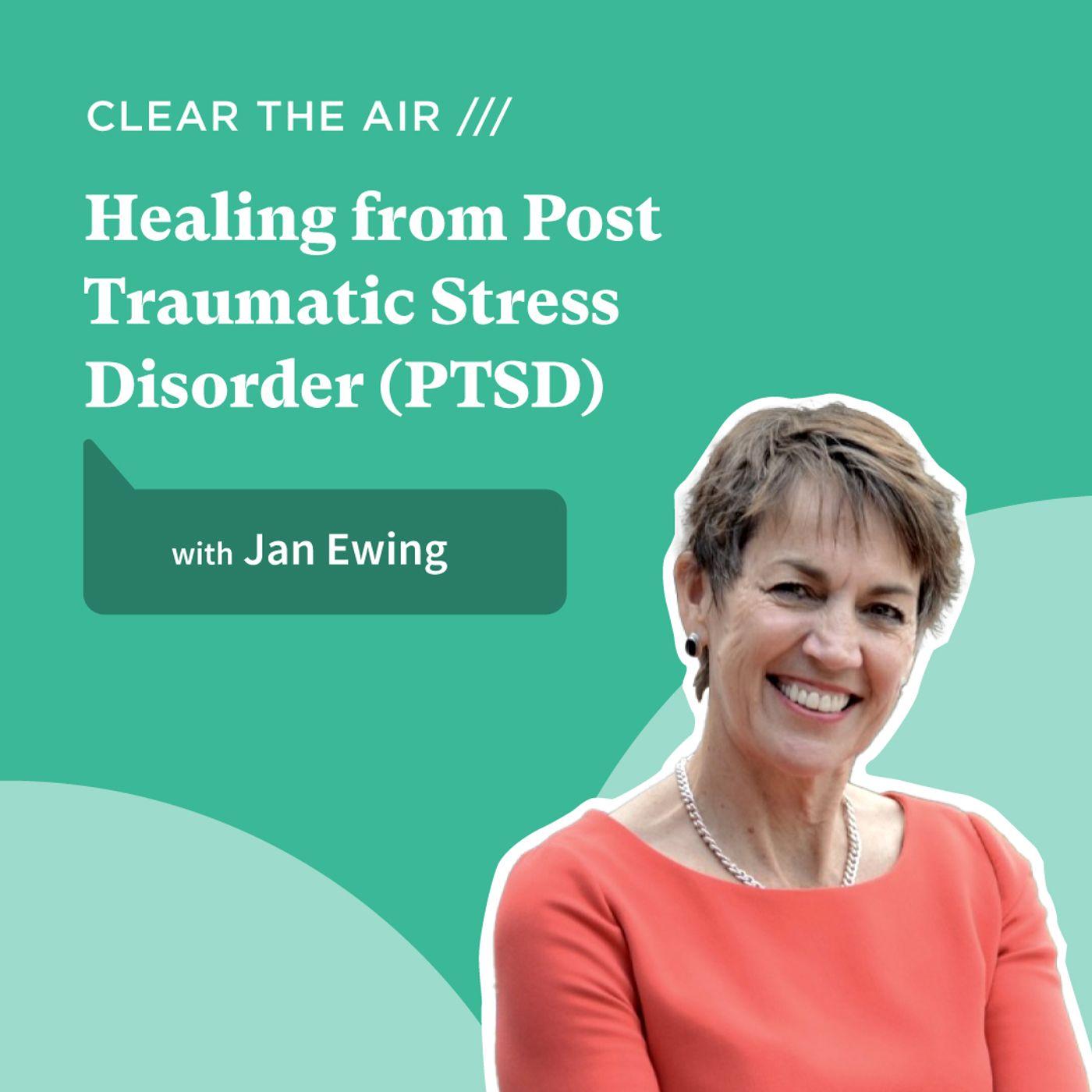
Trauma can take many forms, from single shocking events affecting a whole community to deeply personal experiences that unfold over time during childhood. We’ll explore how different types of trauma, such as traumatic brain injury, post-traumatic stress disorder (PTSD), and more can negatively impact our behaviour, relationships, and resilience later in life. Understanding how it affects us can be one of the first steps toward recovery. In this episode, we will uncover what really happens to the brain and body after trauma and what evidence-based interventions that help people rebuild their lives looks like in practice.
Our guest today is Dr Jan Ewing is a highly respected Clinical Neuropsychologist and Clinical Psychologist with over 40 years of experience specialising in trauma, brain injury, and complex psychological disorders. As a Fellow for the Australian Psychological Society, the Australian Society for the Study of Brain Impairment and the International Society for the Study of Trauma & Dissociation (ISSTD), Jan is recognised internationally for her expertise in understanding how trauma impacts the brain and behaviour. She has trained thousands of mental health professionals across Australia and served for more than 15 years as an educator at the University of Queensland. Jan also sits on the advisory panel for the Blue Knot Foundation, supporting adult survivors of childhood abuse.
In this episode, we dive deep into answering the following thorny questions.
00:00 - Intro
2:30 - How Jan became an expert in trauma recovery?
3:35 - Post Traumatic Stress Disorder (PTSD) and Trauma definitions.
6:30 - What happens to the brain during a traumatic event?
12:00 - How training helps with choosing whether to fight, flight, freeze or faint to survive during a traumatic event?
15:15 - When is it safe for the brain to re-regulate? 17:30 - What are PTSD symptoms? 21:40 - How long does it take to re-regulate the brain?
25:15 - What can we do to support someone after a traumatic event?
29:30 - What is the “window of tolerance” and how does it determine how easily you are triggered by trauma?
32:20 - What is a body memory, and how is it present even when you have amnesia of the trauma? 36:00 - The 3 phases of trauma processing that are part of recovery.
40:45 - How to identify someone has a history of trauma and how to best support them?
46:50 - How to help someone increase their window of tolerance? 48:45 - The different types of trauma.
51:00 - The difference between stress and trauma.
52:10 - Is full recovery possible after a traumatic event?
55:50 - Why is EMDR considered best practice for treating trauma?
59:00 - The role of shame in trauma.
1:01.15 - How can we tackle shame in order to speed up recovery?
1:03.40 - Why avoidance is the biggest barrier to trauma recovery?
1:04.30 - What is Jan’s one wellbeing practice?
Learn more about Jan https://www.linkedin.com/in/jan-ewing-7865712a/
Learn more about Clearhead https://www.myclearhead.com/
English
United States
TRANSCRIPT 🔗
Are you the producer of this podcast?
Add a podcast transcript
Need Audio-to-Text?
Transcribe with Listen411 in Just 60 Seconds
OTHER EPISODES IN THIS PODCAST

Family relationships can be some of the most supportive parts of our lives, but can be incredibly challenging when they are toxic. In this episode, we dive into what toxic family members really look like, and what to do about it. If you ever wanted to find a way forward when your relationships have…
What if leadership wasn’t just about authority, decisions, or overseeing tasks done, but about developing powerful interpersonal relationships to inspire and influence?In this episode, we will explore how Relational Leadership focuses on cultivating trust and connection. We’ll share practical tips …

Despite living in a world filled with freedom, convenience, and choice, many of us still feel unhappy, lonely, and unfulfilled. Why is that, and what can evolutionary psychology teach us about who we are, where we come from, and what makes us happy? This episode explores how our most basic psycholo…

For most of us, pain subsides fairly quickly as we recover from injury. For some, however, pain persists, making it challenging to return to our normal, full-functioning capacity. In some cases, chronic pain may develop due to stress, or even for unexplained reasons. However, due to the stigma and …
Disclaimer: The podcast and artwork embedded on this page are from Clearhead, which is the property of its owner and not affiliated with or endorsed by Listen Notes, Inc.
EDIT
Thank you for helping to keep the podcast database up to date.
