

Speaker A
00:00:00
When I think about leadership, I don't limit that only to the top levels of the organization.
Speaker A
00:00:07
I think that everyone within the organization is and can be a leader.
Speaker A
00:00:11
It could be the leader of the project that's on your desk.
Speaker A
00:00:13
It could be a leader of the team that you're working on.
Speaker A
00:00:15
It could be a leader of the initiative that you've undertaken, or it can be simply a leader of how you manage your energy as you show up into your everyday work.
Speaker A
00:00:25
The leading the self, so to speak.
Speaker B
00:00:29
Hey, friends, welcome to the Changing Work podcast.
Speaker B
00:00:32
We are so glad you're here.
Speaker A
00:00:34
My name is Nick.
Speaker B
00:00:35
And I'm Scott.
Speaker A
00:00:36
And this is the podcast where we talk about changing work from the inside out.
Speaker B
00:00:40
So if you're into making the workplace and the world a better experience via conscious business practices, stick around.
Speaker B
00:00:47
This is for you.
Speaker B
00:00:50
Hey, Stephen, Good morning.
Speaker A
00:00:51
Hey, good morning, Scott.
Speaker A
00:00:52
How are you?
Speaker B
00:00:54
I'm doing well.
Speaker B
00:00:54
We are.
Speaker B
00:00:55
I know.
Speaker B
00:00:55
We're both in California.
Speaker B
00:00:56
We have the.
Speaker B
00:00:57
The dawn patrol here in California, bright and early.
Speaker A
00:01:00
Bring it on.
Speaker A
00:01:01
Yeah.
Speaker B
00:01:02
So thank you for getting up.
Speaker B
00:01:04
I appreciate you.
Speaker B
00:01:06
Let me just read a little bit about Stephen, then we'll get into it.
Speaker B
00:01:09
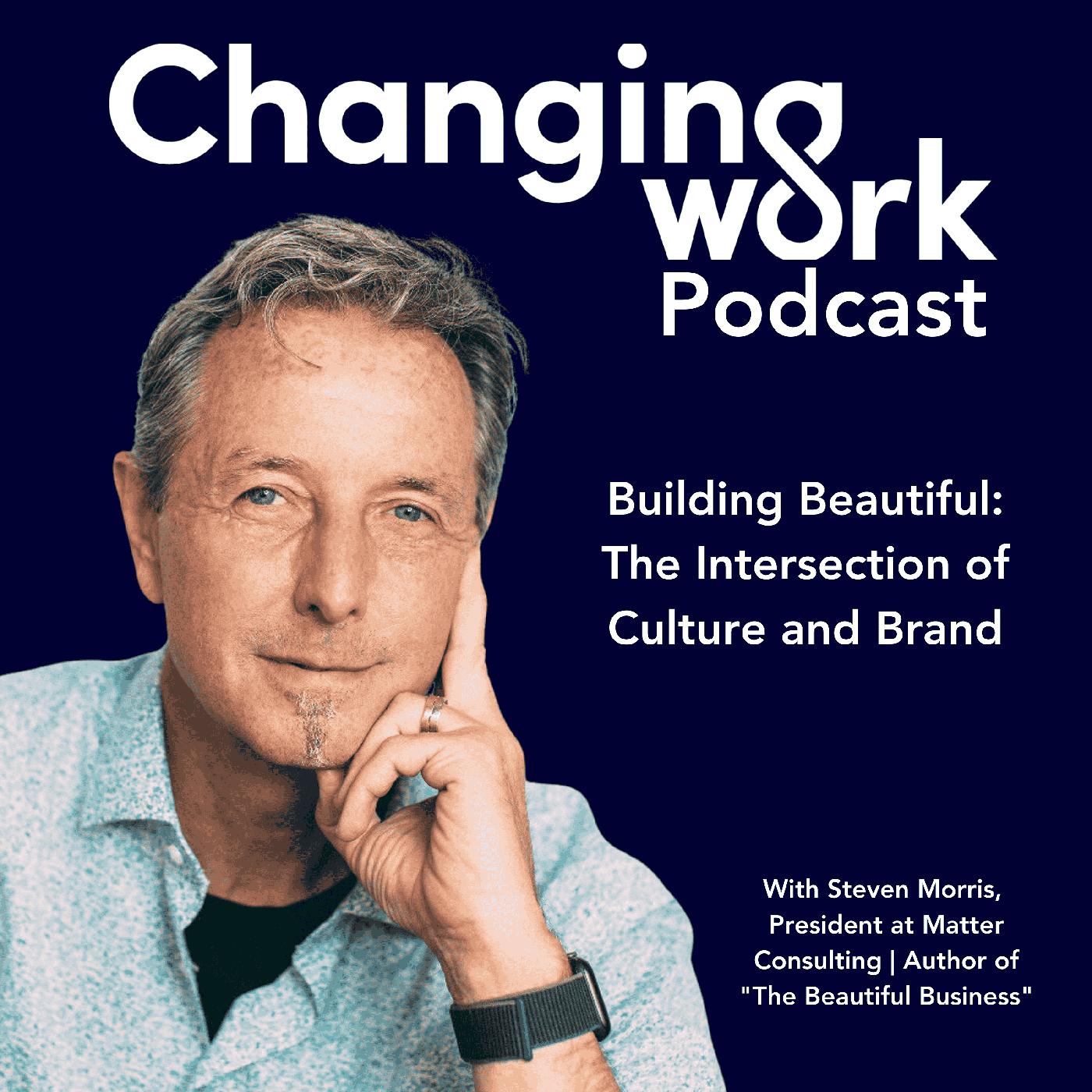
So Stephen Morris, an ever curious life seeker, brand and culture building expert, and author of the Beautiful business with nearly 30 years of entrepreneurial experience.
Speaker B
00:01:20
He served as a trusted Advisor to over 3,000 business leaders and evolved more than 250 brands and cultures, helping them to be unignorable, magnetic, and sustainable companies.
Speaker B
00:01:33
This part I love.
Speaker B
00:01:35
Stephen's a bit of a Renaissance man.
Speaker B
00:01:36
His diverse interests include meditation, fine art, painting, surfing, and beekeeping.
Speaker B
00:01:43
Yes.
Speaker B
00:01:44
Good morning, Stephen.
Speaker A
00:01:45
Good morning.
Speaker A
00:01:46
Thank you, Scott.
Speaker A
00:01:47
I'm so glad to be here.
Speaker B
00:01:49
And the work behind you is this part of your own oil painting?
Speaker B
00:01:53
This is your.
Speaker A
00:01:54
Both of these are my works.
Speaker A
00:01:55
Yeah.
Speaker A
00:01:56
This one's not so new, a couple years old.
Speaker A
00:01:59
This one's freshly painted, just a couple months old.
Speaker B
00:02:03
I love it.
Speaker B
00:02:03
I love it.
Speaker B
00:02:05
And it may be obvious, maybe not, but what's one thing that makes your heart light up?
Speaker A
00:02:11
Oh, goodness.
Speaker A
00:02:12
Just one thing.
Speaker A
00:02:17
In.
Speaker A
00:02:17
In the relevancy for this conversation, I would say the thing that makes my heart light up most is serving businesses to help them evolve to their highest potential.
Speaker A
00:02:29
And typically that means taking organizations to what they conceive as their next level and helping the people within those organizations realize a sense of wholeness in their work.
Speaker A
00:02:41
So I'll keep that at that.
Speaker B
00:02:43
Very good.
Speaker B
00:02:44
So one of the things we talk about is conscious business and conscious leadership.
Speaker B
00:02:50
What do those terms mean to you?
Speaker B
00:02:51
Do you have a Definition that you like or an idea around it that you like?
Speaker A
00:02:56
Yeah, I think they're there.
Speaker A
00:02:59
They can be very complicated terms to define whatever consciousness means to an individual.
Speaker A
00:03:05
We can get on one end of the spectrum.
Speaker A
00:03:07
It sway fairly to the woo end of the spectrum with which I actually have no problem with.
Speaker A
00:03:14
But really, I think that the more grounded, pragmatic perspective of that which speaks to most business leaders is to be conscious and aware.
Speaker A
00:03:22
And by aware, I mean self aware self awareness of what your own motivations are.
Speaker A
00:03:31
There's two sides to self awareness, one of which is the internal self awareness, which defines to a large extent to what extent do I understand the values, my purpose in life, what drives me, what motivates me, et cetera.
Speaker A
00:03:46
And then the other side of self awareness has to do with the external self awareness, which really examines to what extent do I have an awareness of how I'm affecting the people around me as I move through the world, as I work with people, as I team up with my team members, as I motivate them as a leader, how am I affecting them?
Speaker A
00:04:05
And I think consciousness or conscious leader is aware of both that internal state and the external effect of that, that internal state.
Speaker A
00:04:14
And they, they are constantly working on themselves.
Speaker A
00:04:17
So I think a conscious business is allowing that, inviting that, encouraging that, and empowering that with everyone within the team.
Speaker A
00:04:26
And by the way, even when I think about leadership, I don't, I don't limit that only to the top levels of the organization.
Speaker A
00:04:35
I think that everyone within the organization is and can be a leader.
Speaker A
00:04:38
It could be the leader of the project that's on your desk.
Speaker A
00:04:41
It could be a leader of the team that you're working on.
Speaker A
00:04:43
It could be a leader of the initiative you've undertaken, or it can be simply a leader of how you manage your energy as you show up into your everyday work.
Speaker A
00:04:53
Leading the self, so to speak.
Speaker B
00:04:56
That is beautiful.
Speaker B
00:04:57
You know, one of the things I know you do, or at least in the past, you've kept bees.
Speaker B
00:05:02
Yeah, I'm a little jealous because I don't have.
Speaker B
00:05:04
I don't have space, or maybe I'm.
Speaker B
00:05:06
Maybe I'm not allowed at home to have bees.
Speaker A
00:05:09
It does require space.
Speaker A
00:05:10
Yeah.
Speaker B
00:05:12
And so I'm curious what lessons you've learned from bees, you know, as it relates to our topic or maybe at all.
Speaker A
00:05:20
Right.
Speaker A
00:05:21
Well, so as I sit looking out right now at my office sits on this beautiful place called Lopez Canyon, which is a southern finger off of Penasquitos Canyon, a famous canyon here in San Diego, where I Live and we're blessed to, to have enough property where I can keep bees out here.
Speaker A
00:05:39
And I've keep kept hives for many years.
Speaker A
00:05:43
The lessons, well begins with humility because they are fierce and awesome wild creatures that I love the term keeping bees because it speaks more about stewardship rather than, and caring for something rather than, you know, having to make something happen within it.
Speaker A
00:06:06
They, they are very productive in their, on their own.
Speaker A
00:06:10
The beauty of the hive quite frankly is the systems in which they do their work.
Speaker A
00:06:18
Every bee within the hive has their role.
Speaker A
00:06:21
They understand what that role is.
Speaker A
00:06:23
They can adopt and adapt to the roles of those around them.
Speaker A
00:06:29
So certainly collaboration, coordination and utter focus on what is my job to do within the particular hive has been highly instrumental in terms of a life learning lesson.
Speaker A
00:06:43
But because there's many different roles within the hive, how they operate as a symbiotic system is quite elegant.
Speaker A
00:06:53
Think about an orchestra that really has a kind of a hands off conductor called the queen.
Speaker A
00:07:00
So in the orchestral world you see the person with the baton in the front of the room, but really it's, they're not really playing any instrument, they're playing the orchestra.
Speaker A
00:07:11
The hive kind of operates in the same way.
Speaker A
00:07:13
So you have all these different roles that are, you know, collectors and keepers and you know, nurse, nurse to the queen type of roles, things like that.
Speaker A
00:07:23
A lot of mating happens within the role, the roles of the hive.
Speaker A
00:07:28
And I will say on a side note that men are not particularly valuable valued within the hive itself other than for reproductive.
Speaker A
00:07:35
I won't get too much into that and say talk about that metaphorically, but the, their ability to coordinate their efforts and be utterly protective and adapt to the circumstances around them.
Speaker A
00:07:50
So here we are in spring and they're in a very productive time.
Speaker A
00:07:54
We're just coming out of winter because we're on the edge of spring or just the very front at the edge of spring.
Speaker A
00:07:59
And not that we have harsh winters here in San Diego, but they still go into a dormant state.
Speaker A
00:08:04
And so they can protect their resources.
Speaker A
00:08:06
And the hive works to collaborate and cooperate one another with one another so that they understand what they're all doing.
Speaker A
00:08:14
And so they work in lock step.
Speaker A
00:08:16
They communicate through pheromones and through signals and they keep each other in order.
Speaker A
00:08:22
They, they, you know, when someone is not doing their job, there's rather harsh retribution that that tends to happen.
Speaker A
00:08:32
And I will say that there's one really beautiful role within the hive that I think corporate America and organizations should think about.
Speaker A
00:08:41
And it's the role of what I call the checker.
Speaker A
00:08:45
And so the role of the checker is, is they sit at the front of the hive and first and foremost their, their job is to make sure no bees from other hives are coming to take their stores.
Speaker A
00:08:56
So their, their, their first role is to protect the h, is to welcome the bees from the hive from outside, you know, in their collection.
Speaker A
00:09:08
And they inspect what they've collected and they check them for things like mites and diseases and things like that so that it's both a welcoming and it's a, hey, are you okay?
Speaker A
00:09:18
Like, are you okay?
Speaker A
00:09:19
Did you run into anything?
Speaker A
00:09:20
Then they also, the bee that returns to the hive, this gets in a little bit of geekery here.
Speaker A
00:09:26
The bee that returns to the hive then does this little dance where it indicates where they found pollen sources.
Speaker A
00:09:32
So then that checker then tells other people through their pheromones, other people, other bees through their pheromones where like stores of pollen might be.
Speaker A
00:09:43
And then the last thing is that they check to make sure that they're okay and healthy and then, and the big welcome back into it.
Speaker A
00:09:50
So it'd be really interesting if organizations adopted some type of role, or maybe it's the leader's role to do all of those things to ensure first and foremost the safety of the hive.
Speaker A
00:10:01
Secondarily, check on the player who just went out, came back in, are you okay?
Speaker A
00:10:05
What did you collect?
Speaker A
00:10:06
What did you learn?
Speaker A
00:10:07
And then take care of them as they come back into the hive because they can travel at a three mile distance, which is a lot for a little tiny bee.
Speaker A
00:10:15
And they need, they need nourishment now.
Speaker A
00:10:18
So that's just some of the few lessons that I've learned from hives.
Speaker B
00:10:23
We could totally spend this whole time talking on that.
Speaker A
00:10:26
Totally.
Speaker B
00:10:27
For sure.
Speaker B
00:10:28
So you wrote this book, the Beautiful Business.
Speaker B
00:10:31
Tell me a little bit about the philosophy behind it.
Speaker A
00:10:34
Yeah, I think in our Western culture, probably the first most important thing to do is define what I mean by beauty.
Speaker A
00:10:43
Because in Western culture we tend to think as beauty as this physical aesthetic or outward appearance of something.
Speaker A
00:10:52
And while a beautiful business can include that, I really am talking about more the full spectrum beauty, which leans into the Japanese aesthetic principles of beauty, which would include harmony, things that are aligned with the laws of nature, belonging, connection to nature, integrity within the system, or the thing itself.
Speaker A
00:11:14
And in this full spectrum beauty, it has much more to do with how someone experiences something, such as a company or person or piece of art, rather than how simply it looks like.
Speaker A
00:11:29
So if you think about that in the context of the world of business, you know, a company that has harmony in the way that people work together is really important.
Speaker A
00:11:38
This is.
Speaker A
00:11:39
Would be an attribute of a beautiful business curiosity in the way that an organization thinks about their innovation, their problem solving, their human to human connection, their presence.
Speaker A
00:11:50
Curiosity is required for presence integrity in what they say and what they do.
Speaker A
00:11:57
So if they are making promises to a set of audiences, that could be internal promises to their customers, it could be external promises to their, excuse me, in internal promises to their employees or external promises to their customers, to what extent are they living up to them?
Speaker A
00:12:16
What are their core values?
Speaker A
00:12:17
How are they dealing with the things like the sustainability efforts or their community, their environment, politically issue, political issues?
Speaker A
00:12:27
How are they taking a stand for their own belief system?
Speaker A
00:12:31
So the really the core tenant behind the beautiful business, which really is tethered to the work that I do, is that there's nothing more powerful than a united group of souls ignited in a common cause with love at the core.
Speaker A
00:12:45
So when these folks are united together, and here I'm talking about the culture and the team, they're operating as a unified force now.
Speaker A
00:12:57
It doesn't mean everyone is the same, and it doesn't mean there's not dissent and things like that.
Speaker A
00:13:02
And Scott, you know from your musical background that harmony is not just everyone singing the same G note at the same time or playing the same G note.
Speaker A
00:13:11
It's made of slight differences is why diversity is really important when it comes to harmony.
Speaker A
00:13:17
And then when people.
Speaker A
00:13:18
So when those united people come together from diverse perspectives, it creates this sense of harmony.
Speaker A
00:13:24
And then when they ignite behind their purpose or their cause or their mission with love at the core.
Speaker A
00:13:31
And we could talk about what love means or what I think love means in the world of business, then all of a sudden they become a very, not just unignorable, but formidable force that can do a lot of good, make a lot of change, create a lot of impact.
Speaker B
00:13:47
Cool.
Speaker B
00:13:48
So I'm thinking about, you know, a leader who's listening to this and saying, well, that all sounds good, right?
Speaker B
00:13:56
Harmony is better than the other distraction and, you know, at each other's throats.
Speaker B
00:14:04
But where do I start?
Speaker B
00:14:06
Like, if you're gonna do an assessment with me and figure out the, the key things for me to.
Speaker B
00:14:11
To start doing as a leader, where do I start?
Speaker A
00:14:14
Yeah, yeah.
Speaker A
00:14:16
The.
Speaker A
00:14:16
The.
Speaker A
00:14:16
There's three places to start.
Speaker A
00:14:20
I think about beauty.
Speaker A
00:14:22
The core alignment definition of beauty has to do with integrity.
Speaker A
00:14:27
And so when a business leader thinks about, well, how do I.
Speaker A
00:14:31
Where do I start?
Speaker A
00:14:32
There's one of three ways to start, but they all end up in the same thing.
Speaker A
00:14:36
So imagine, if you can, a room that has three doors in it.
Speaker A
00:14:40
And door number one into this room is what we call the brand door.
Speaker A
00:14:44
And the brand door, in very, very simple terms is how are we perceived by the outside world and how is that outside world believe in what, what, what we're saying about ourselves and how do they feel about what that belief system is?
Speaker A
00:14:58
So it has to do with perception.
Speaker A
00:14:59
And so when a company reaches out to me and they say we have a brand problem, typically that means they have a perception problem or they're having a challenge around attracting an audience.
Speaker A
00:15:11
So that's door number one.
Speaker A
00:15:14
Door number two is, excuse me, is the culture door.
Speaker A
00:15:18
And the culture door has to do with the, obviously the people within the organization.
Speaker A
00:15:24
So in a business leader that might reach out to me and say, we have a problem, we have a culture problem, we need to get alignment and we need to get greater engagement in what our workforce is and how we're doing it, then they enter into door number two.
Speaker A
00:15:38
Door number three is what we call the business strategy door, which is really the vision, the purpose, where is the company going?
Speaker A
00:15:44
What is our strategic plan for the next period of time?
Speaker A
00:15:48
And all of them, in my mind, end up in the same, same room because they're frankly an interlocking system.
Speaker A
00:15:54
So your business strategy defines where you're going, how you're doing it, what you're going to be doing next.
Speaker A
00:16:01
Your people are the ones that are going to be innovating, creating and creating the sustainability so that whatever that strategic plan or vision is actually gets executed in the way that that is working.
Speaker A
00:16:15
And then the brand has to do with how are we perceived by the outside world and how do we attract more of the right customers.
Speaker A
00:16:23
So when those three things are integrated together, then you have this unified system or a business of integrity.
Speaker A
00:16:31
So to your question, I think a business should start with where their biggest pain points are.
Speaker A
00:16:38
So if their pain points have to do with their culture or their business strategy or with their brand, that's where you begin, and then you go through and continue them.
Speaker A
00:16:47
And I have a framework that I work with organizations to do is once you begin to solve, say, the brand problem, then you begin to integrate the cultural elements, and then you also begin to bolt and ensure that the business strategy is bolstered within that.
Speaker B
00:17:02
Love it.
Speaker B
00:17:04
In the book, you talk about magnetism as an element of a beautiful business.
Speaker B
00:17:09
What do you mean by that, yeah.
Speaker A
00:17:12
So I'll give you a converse example of the way that most marketers tend to work.
Speaker A
00:17:19
So Scott, if you've recently done any Internet search for let's say a new guitar or a pair of hiking boots or something like that, and all of a sudden like you've done your search and then you're just.
Speaker A
00:17:32
Everywhere you go online, you're tracked and followed.
Speaker B
00:17:36
Yeah.
Speaker A
00:17:37
By brand.
Speaker B
00:17:38
Even after I bought the hiking boots, I still get ads for years about the hiking boots.
Speaker A
00:17:42
Exactly right.
Speaker A
00:17:44
So that is what I call chasing customers.
Speaker A
00:17:47
And yes, there's a lot of data to support that.
Speaker A
00:17:50
There's viability to that and it can be very, very effective.
Speaker A
00:17:54
I believe that most companies should invest more time into attracting customers rather than chasing them.
Speaker A
00:18:00
And I'm, and I'm not saying that I'm not an advocate for doing online marketing and really good data driven marketing from a digital standpoint.
Speaker A
00:18:09
I am talking about creating an aura or an attraction element around your business so they become unignorable and ultimately magnetic.
Speaker A
00:18:19
So when you get out of the business or begin to step out of the business of chasing customers, you can create a strong center that articulates through typically through story driven marketing that defines how you can attract people.
Speaker A
00:18:34
And the more better you are at that storytelling process, the more magnetized you become.
Speaker A
00:18:42
John o' Donoghue, the, the late great poet and philosopher, I think he would be a philosopher poet, in that order, said that, you know, beauty is one of these attributes that is unignorable by the human species.
Speaker A
00:18:58
When we're truly drawn to something, then it becomes unignorable to us.
Speaker A
00:19:03
We can actually can't get it out of our mind.
Speaker A
00:19:06
And so when we think about magnetism as a power to attract, when we develop this aura around the beautiful business, you then attract not just any customer, but the right customers.
Speaker A
00:19:18
And the right customers, typically the ones that understand the value based stories that you're telling to your customers to be.
Speaker A
00:19:27
And they're the ones that are going to say, oh, I like what they're saying, I like how they're saying it, I like what they're doing, I like what people are talking about with them.
Speaker A
00:19:36
And, and I become then magnetically attracted to that particular brand or product.
Speaker B
00:19:43
Very interesting.
Speaker B
00:19:45
I'm really interested in this one because we're trying to do it in our own business and this idea of attraction versus promotion is so alive and I think it's tricky to figure out how to do this.
Speaker B
00:20:00
Do you think it's mostly an attitude or is it mostly in the actions that we would take that are different.
Speaker A
00:20:06
It's a great question.
Speaker A
00:20:08
I think it's a bit of both.
Speaker A
00:20:10
So I think about marketing as storytelling and it's storytelling that has to do with who we are, what we do, how we do it.
Speaker A
00:20:21
And great storytelling from a marketing standpoint has a built in promise.
Speaker A
00:20:27
And that built in promise has a value.
Speaker A
00:20:30
It's a valuable promise.
Speaker A
00:20:33
So all kinds of science out there that says the more company states a valuable promise and then delivers on that valuable promise through their story based marketing, the more likely they are to attract and actually convert the right types of customers.
Speaker A
00:20:49
So, you know, promotion tends to have sort of this negative connotation to it.
Speaker A
00:20:55
So if, if one were to switch the idea or the term of promotion to marketing as storytelling, then all of a sudden the pressure is off to having like, we have to promote, we have to promote, we have to promote rather than.
Speaker A
00:21:10
No, we simply have to tell stories about who we are and what we do and how it's powerful and how it's valuable for you.
Speaker A
00:21:18
And sometimes it's not the brand that tells those stories, it's the people who have used the product and or service who tell those stories.
Speaker A
00:21:26
We call them endorsements that talk about, you know what, When I had this experience with, you know, this particular organization, it affected my world.
Speaker A
00:21:34
It was so good.
Speaker A
00:21:35
It was, you know, phenomenal in this way and that way and let them tell the stories.
Speaker A
00:21:40
Now that could be seen as promotion, which is totally fine.
Speaker A
00:21:44
You are still promoting your product or your service.
Speaker A
00:21:47
But if you replace just mentally the act of marketing, this storytelling, then you land on the question, well, what is sales?
Speaker A
00:21:58
Because that's the next step in the continuum.
Speaker A
00:22:02
So what is sales is?
Speaker A
00:22:05
My definition of sales is either helping or serving.
Speaker A
00:22:08
And so in the storytelling definition, when you get into the sales conversations, you're just talking about, here's how I can help you, here's how I can serve you, and it's all promise based.
Speaker A
00:22:18
Here are the promises that we make to you as a potential customer.
Speaker A
00:22:23
Here in the past is how we've delivered on those customer promises.
Speaker A
00:22:27
And don't take our word for it.
Speaker A
00:22:29
Allow you know, our customer testimonials, or even put me in touch with a customer that has had a great experience.
Speaker A
00:22:36
So I think, you know that this mindset of shifting from the standard definitions of say, promotion or even marketing is an incredibly helpful way to help you think differently about how you go about marketing, promotion and even selling what you do.
Speaker B
00:22:56
I know that you talk about in your work and your Book, not just growth, you know, thinking about sales, but evolution, which feels more organic and natural and I guess beautiful.
Speaker B
00:23:07
But tell me about the difference between the two.
Speaker A
00:23:10
Yeah, I, I think we're in a capitalist culture that is driven by typically quarter to quarter growth if you're a publicly held company.
Speaker A
00:23:20
And I think there's a lot of pressure put on organizations to do that and enable growth within the team or with or for the organization.
Speaker A
00:23:30
Typically growth in revenue, growth and profits.
Speaker A
00:23:33
I don't actually know that that's the healthiest thing for the world of business because there are times when, you know, if you, if you think about the laws of nature, for instance, there are times when we should, we should hunker down and, you know, save our winter stores and go inward and it's like bees.
Speaker A
00:23:54
Yeah, exactly.
Speaker A
00:23:55
Or trees or you know, really any healthy ecosystem and really assess who are we, what are we doing, how do, what are we innovating next?
Speaker A
00:24:05
And things of that nature.
Speaker A
00:24:07
So, you know, if, if an organization's on the constant habit trail wheel of constant growth, it is a drive, drive, drive for more, more and more type of, of business.
Speaker A
00:24:21
Evolution, on the other hand, is a holistic and sustainable way to see the way a company operates in its now and in its future state.
Speaker A
00:24:31
Now, evolution can include growth, but evolution really has to do with evolving the entire organization so it can meet the future needs, the future wants, the future wishes, the future unmet desires of an organ or a set of customers that exist out into the world.
Speaker A
00:24:51
So when a company shifts its mindset into an evolution based strategy, they then rise the tide of the entire organization which really is required for any type of growth.
Speaker A
00:25:04
And then they can evolve who they actually are and how they're serving the customers around them so that they have much more sustainable growth from not just a short term and long term.
Speaker A
00:25:16
And their side benefits of that would also include employee retention, the manners of innovation, sustainability practices, governance, even, you know, caring for ethics.
Speaker A
00:25:27
You take a company like, you know, Ben and Jerry's who's, you know, grown exponentially over the years, but they're very much an evolving type of organization that takes a stand for all kinds of social issues as they go about the work of doing, you know, creating beautiful, high end, delicious, you know, ice cream.
Speaker B
00:25:48
Beautiful.
Speaker B
00:25:49
So all these, you know, in your renaissance man ideals with the painting and the bees and the surfing, how do you, how have you integrated those into your work or how have those things informed the work that you do?
Speaker A
00:26:05
Yeah, well, I, I think there's two ways to talk about that, you know, there's personal ways which I'm very happy to talk about and there, then there's a, a way to think about this from what a business leader actually is and how it evolved, how they evolved.
Speaker A
00:26:21
So I believe, you know, very high level that any business, in order to evolve to its next, next level, the leaders need to evolve within the organization.
Speaker A
00:26:30
And that leadership evolution has less to do with.
Speaker A
00:26:34
They need more training and spreadsheets, they need more training in systems and processes.
Speaker A
00:26:39
I believe leaders need to evolve from a personal, maybe spiritual and maybe even psychological standpoint.
Speaker A
00:26:47
And the more that they do so, the more that they're permitted to bring their whole self to work and they empower other people to do the same.
Speaker A
00:26:54
So the reason I paint is because I can't not paint.
Speaker A
00:26:57
And I find it to be an incredibly cathartic process.
Speaker A
00:27:01
It informs and helps me practice things like innovation, creativity, risk taking, noticing, which all apply by the way to the professional world.
Speaker A
00:27:12
You know, the surfing for me is a practice of being absolutely present with what is there.
Speaker A
00:27:19
Acknowledging the reality of the big waves that sometimes I'll surf, out, paddle out into understanding that I cannot control every part of that situation.
Speaker A
00:27:28
But I am going to put myself in situations where I'm going to challenge myself and perform my best at those situations.
Speaker A
00:27:38
And I think there's also a rolling with the environment that the waves, the conditions and those types of things help me understand and face that particular reality.
Speaker A
00:27:49
And you know, the beekeeping is just, it's partially caring for the environment but it's also, you know, the bees have taught me, as we've already covered a little bit of that, so much about how we as human beings can work together in a harmonized system, a synchronized system to create sweet, a delicious sweet and beautiful life.
Speaker B
00:28:10
Love it.
Speaker B
00:28:11
Stephen, if people want to continue the conversation with you, where do they find you?
Speaker B
00:28:15
What, where do they go?
Speaker A
00:28:17
Yeah, one very simple source.
Speaker A
00:28:19
My website is matter m a t t e r co co.
Speaker A
00:28:23
It's not.com so it's matterco.com my company is matter Consulting and on there they can find out about my, my most recent book the Beautiful Business.
Speaker A
00:28:33
And I have a blog of about 30000 people that all kinds of people read that there's several hundred articles that they can check me out there.
Speaker B
00:28:43
Beautiful.
Speaker B
00:28:45
And any last advice for aspiring conscious business leaders?
Speaker A
00:28:50
Yeah, well, I hope all business leaders are heading towards the conscious business leader path.
Speaker A
00:28:57
I will go back and double down on the.
Speaker A
00:29:00
Develop your own high degree of self awareness and that is the internal understanding of, of who you are, what drives you.
Speaker A
00:29:07
Envelop that within your organization and then understand your external self awareness.
Speaker A
00:29:13
Double down on really what matters.
Speaker A
00:29:15
Because we're here in life to make significant impact.
Speaker A
00:29:18
And I think the world of our society in the state that we're in, more and more people are looking to business leaders to lead the way.
Speaker A
00:29:26
And this could be small businesses or large businesses.
Speaker A
00:29:29
We have lost our trust in large institutions.
Speaker A
00:29:32
So perhaps it is now business leaders and especially conscious business leaders that are going to lead the way to help us heal our society, grow ourselves, and become much more of a beautiful culture.
Speaker B
00:29:44
Amazing.
Speaker B
00:29:45
Last question, Steven.
Speaker B
00:29:47
What gives you hope?
Speaker A
00:29:51
I think because I stay very closely connected to the world of business, I see more and more business leaders doing what we would both consider or running what we would both consider conscious businesses.
Speaker A
00:30:06
And this gives me great hope for our future.
Speaker A
00:30:10
So I would double down on that.
Speaker A
00:30:12
And I applaud business leaders who are, you know, maybe taking the risk to develop conscious business practices.
Speaker A
00:30:21
And it gives me hope that there's so many more people that are embracing these philosophies and integrating them not just into the work, but into their everyday lives.
Speaker B
00:30:33
Well, thank you.
Speaker B
00:30:34
Thank you for the work that you're doing.
Speaker B
00:30:35
Thank you for helping create beautiful businesses, beautiful leaders, a beautiful life, and thank you for being you.
Speaker A
00:30:42
Oh, thank you, Scott.
Speaker A
00:30:43
It was a pleasure.
Speaker B
00:30:45
Appreciate your time.
00:00:00
When I think about leadership, I don't limit that only to the top levels of the organization.
Speaker A
00:00:07
I think that everyone within the organization is and can be a leader.
Speaker A
00:00:11
It could be the leader of the project that's on your desk.
Speaker A
00:00:13
It could be a leader of the team that you're working on.
Speaker A
00:00:15
It could be a leader of the initiative that you've undertaken, or it can be simply a leader of how you manage your energy as you show up into your everyday work.
Speaker A
00:00:25
The leading the self, so to speak.
Speaker B
00:00:29
Hey, friends, welcome to the Changing Work podcast.
Speaker B
00:00:32
We are so glad you're here.
Speaker A
00:00:34
My name is Nick.
Speaker B
00:00:35
And I'm Scott.
Speaker A
00:00:36
And this is the podcast where we talk about changing work from the inside out.
Speaker B
00:00:40
So if you're into making the workplace and the world a better experience via conscious business practices, stick around.
Speaker B
00:00:47
This is for you.
Speaker B
00:00:50
Hey, Stephen, Good morning.
Speaker A
00:00:51
Hey, good morning, Scott.
Speaker A
00:00:52
How are you?
Speaker B
00:00:54
I'm doing well.
Speaker B
00:00:54
We are.
Speaker B
00:00:55
I know.
Speaker B
00:00:55
We're both in California.
Speaker B
00:00:56
We have the.
Speaker B
00:00:57
The dawn patrol here in California, bright and early.
Speaker A
00:01:00
Bring it on.
Speaker A
00:01:01
Yeah.
Speaker B
00:01:02
So thank you for getting up.
Speaker B
00:01:04
I appreciate you.
Speaker B
00:01:06
Let me just read a little bit about Stephen, then we'll get into it.
Speaker B
00:01:09
So Stephen Morris, an ever curious life seeker, brand and culture building expert, and author of the Beautiful business with nearly 30 years of entrepreneurial experience.
Speaker B
00:01:20
He served as a trusted Advisor to over 3,000 business leaders and evolved more than 250 brands and cultures, helping them to be unignorable, magnetic, and sustainable companies.
Speaker B
00:01:33
This part I love.
Speaker B
00:01:35
Stephen's a bit of a Renaissance man.
Speaker B
00:01:36
His diverse interests include meditation, fine art, painting, surfing, and beekeeping.
Speaker B
00:01:43
Yes.
Speaker B
00:01:44
Good morning, Stephen.
Speaker A
00:01:45
Good morning.
Speaker A
00:01:46
Thank you, Scott.
Speaker A
00:01:47
I'm so glad to be here.
Speaker B
00:01:49
And the work behind you is this part of your own oil painting?
Speaker B
00:01:53
This is your.
Speaker A
00:01:54
Both of these are my works.
Speaker A
00:01:55
Yeah.
Speaker A
00:01:56
This one's not so new, a couple years old.
Speaker A
00:01:59
This one's freshly painted, just a couple months old.
Speaker B
00:02:03
I love it.
Speaker B
00:02:03
I love it.
Speaker B
00:02:05
And it may be obvious, maybe not, but what's one thing that makes your heart light up?
Speaker A
00:02:11
Oh, goodness.
Speaker A
00:02:12
Just one thing.
Speaker A
00:02:17
In.
Speaker A
00:02:17
In the relevancy for this conversation, I would say the thing that makes my heart light up most is serving businesses to help them evolve to their highest potential.
Speaker A
00:02:29
And typically that means taking organizations to what they conceive as their next level and helping the people within those organizations realize a sense of wholeness in their work.
Speaker A
00:02:41
So I'll keep that at that.
Speaker B
00:02:43
Very good.
Speaker B
00:02:44
So one of the things we talk about is conscious business and conscious leadership.
Speaker B
00:02:50
What do those terms mean to you?
Speaker B
00:02:51
Do you have a Definition that you like or an idea around it that you like?
Speaker A
00:02:56
Yeah, I think they're there.
Speaker A
00:02:59
They can be very complicated terms to define whatever consciousness means to an individual.
Speaker A
00:03:05
We can get on one end of the spectrum.
Speaker A
00:03:07
It sway fairly to the woo end of the spectrum with which I actually have no problem with.
Speaker A
00:03:14
But really, I think that the more grounded, pragmatic perspective of that which speaks to most business leaders is to be conscious and aware.
Speaker A
00:03:22
And by aware, I mean self aware self awareness of what your own motivations are.
Speaker A
00:03:31
There's two sides to self awareness, one of which is the internal self awareness, which defines to a large extent to what extent do I understand the values, my purpose in life, what drives me, what motivates me, et cetera.
Speaker A
00:03:46
And then the other side of self awareness has to do with the external self awareness, which really examines to what extent do I have an awareness of how I'm affecting the people around me as I move through the world, as I work with people, as I team up with my team members, as I motivate them as a leader, how am I affecting them?
Speaker A
00:04:05
And I think consciousness or conscious leader is aware of both that internal state and the external effect of that, that internal state.
Speaker A
00:04:14
And they, they are constantly working on themselves.
Speaker A
00:04:17
So I think a conscious business is allowing that, inviting that, encouraging that, and empowering that with everyone within the team.
Speaker A
00:04:26
And by the way, even when I think about leadership, I don't, I don't limit that only to the top levels of the organization.
Speaker A
00:04:35
I think that everyone within the organization is and can be a leader.
Speaker A
00:04:38
It could be the leader of the project that's on your desk.
Speaker A
00:04:41
It could be a leader of the team that you're working on.
Speaker A
00:04:43
It could be a leader of the initiative you've undertaken, or it can be simply a leader of how you manage your energy as you show up into your everyday work.
Speaker A
00:04:53
Leading the self, so to speak.
Speaker B
00:04:56
That is beautiful.
Speaker B
00:04:57
You know, one of the things I know you do, or at least in the past, you've kept bees.
Speaker B
00:05:02
Yeah, I'm a little jealous because I don't have.
Speaker B
00:05:04
I don't have space, or maybe I'm.
Speaker B
00:05:06
Maybe I'm not allowed at home to have bees.
Speaker A
00:05:09
It does require space.
Speaker A
00:05:10
Yeah.
Speaker B
00:05:12
And so I'm curious what lessons you've learned from bees, you know, as it relates to our topic or maybe at all.
Speaker A
00:05:20
Right.
Speaker A
00:05:21
Well, so as I sit looking out right now at my office sits on this beautiful place called Lopez Canyon, which is a southern finger off of Penasquitos Canyon, a famous canyon here in San Diego, where I Live and we're blessed to, to have enough property where I can keep bees out here.
Speaker A
00:05:39
And I've keep kept hives for many years.
Speaker A
00:05:43
The lessons, well begins with humility because they are fierce and awesome wild creatures that I love the term keeping bees because it speaks more about stewardship rather than, and caring for something rather than, you know, having to make something happen within it.
Speaker A
00:06:06
They, they are very productive in their, on their own.
Speaker A
00:06:10
The beauty of the hive quite frankly is the systems in which they do their work.
Speaker A
00:06:18
Every bee within the hive has their role.
Speaker A
00:06:21
They understand what that role is.
Speaker A
00:06:23
They can adopt and adapt to the roles of those around them.
Speaker A
00:06:29
So certainly collaboration, coordination and utter focus on what is my job to do within the particular hive has been highly instrumental in terms of a life learning lesson.
Speaker A
00:06:43
But because there's many different roles within the hive, how they operate as a symbiotic system is quite elegant.
Speaker A
00:06:53
Think about an orchestra that really has a kind of a hands off conductor called the queen.
Speaker A
00:07:00
So in the orchestral world you see the person with the baton in the front of the room, but really it's, they're not really playing any instrument, they're playing the orchestra.
Speaker A
00:07:11
The hive kind of operates in the same way.
Speaker A
00:07:13
So you have all these different roles that are, you know, collectors and keepers and you know, nurse, nurse to the queen type of roles, things like that.
Speaker A
00:07:23
A lot of mating happens within the role, the roles of the hive.
Speaker A
00:07:28
And I will say on a side note that men are not particularly valuable valued within the hive itself other than for reproductive.
Speaker A
00:07:35
I won't get too much into that and say talk about that metaphorically, but the, their ability to coordinate their efforts and be utterly protective and adapt to the circumstances around them.
Speaker A
00:07:50
So here we are in spring and they're in a very productive time.
Speaker A
00:07:54
We're just coming out of winter because we're on the edge of spring or just the very front at the edge of spring.
Speaker A
00:07:59
And not that we have harsh winters here in San Diego, but they still go into a dormant state.
Speaker A
00:08:04
And so they can protect their resources.
Speaker A
00:08:06
And the hive works to collaborate and cooperate one another with one another so that they understand what they're all doing.
Speaker A
00:08:14
And so they work in lock step.
Speaker A
00:08:16
They communicate through pheromones and through signals and they keep each other in order.
Speaker A
00:08:22
They, they, you know, when someone is not doing their job, there's rather harsh retribution that that tends to happen.
Speaker A
00:08:32
And I will say that there's one really beautiful role within the hive that I think corporate America and organizations should think about.
Speaker A
00:08:41
And it's the role of what I call the checker.
Speaker A
00:08:45
And so the role of the checker is, is they sit at the front of the hive and first and foremost their, their job is to make sure no bees from other hives are coming to take their stores.
Speaker A
00:08:56
So their, their, their first role is to protect the h, is to welcome the bees from the hive from outside, you know, in their collection.
Speaker A
00:09:08
And they inspect what they've collected and they check them for things like mites and diseases and things like that so that it's both a welcoming and it's a, hey, are you okay?
Speaker A
00:09:18
Like, are you okay?
Speaker A
00:09:19
Did you run into anything?
Speaker A
00:09:20
Then they also, the bee that returns to the hive, this gets in a little bit of geekery here.
Speaker A
00:09:26
The bee that returns to the hive then does this little dance where it indicates where they found pollen sources.
Speaker A
00:09:32
So then that checker then tells other people through their pheromones, other people, other bees through their pheromones where like stores of pollen might be.
Speaker A
00:09:43
And then the last thing is that they check to make sure that they're okay and healthy and then, and the big welcome back into it.
Speaker A
00:09:50
So it'd be really interesting if organizations adopted some type of role, or maybe it's the leader's role to do all of those things to ensure first and foremost the safety of the hive.
Speaker A
00:10:01
Secondarily, check on the player who just went out, came back in, are you okay?
Speaker A
00:10:05
What did you collect?
Speaker A
00:10:06
What did you learn?
Speaker A
00:10:07
And then take care of them as they come back into the hive because they can travel at a three mile distance, which is a lot for a little tiny bee.
Speaker A
00:10:15
And they need, they need nourishment now.
Speaker A
00:10:18
So that's just some of the few lessons that I've learned from hives.
Speaker B
00:10:23
We could totally spend this whole time talking on that.
Speaker A
00:10:26
Totally.
Speaker B
00:10:27
For sure.
Speaker B
00:10:28
So you wrote this book, the Beautiful Business.
Speaker B
00:10:31
Tell me a little bit about the philosophy behind it.
Speaker A
00:10:34
Yeah, I think in our Western culture, probably the first most important thing to do is define what I mean by beauty.
Speaker A
00:10:43
Because in Western culture we tend to think as beauty as this physical aesthetic or outward appearance of something.
Speaker A
00:10:52
And while a beautiful business can include that, I really am talking about more the full spectrum beauty, which leans into the Japanese aesthetic principles of beauty, which would include harmony, things that are aligned with the laws of nature, belonging, connection to nature, integrity within the system, or the thing itself.
Speaker A
00:11:14
And in this full spectrum beauty, it has much more to do with how someone experiences something, such as a company or person or piece of art, rather than how simply it looks like.
Speaker A
00:11:29
So if you think about that in the context of the world of business, you know, a company that has harmony in the way that people work together is really important.
Speaker A
00:11:38
This is.
Speaker A
00:11:39
Would be an attribute of a beautiful business curiosity in the way that an organization thinks about their innovation, their problem solving, their human to human connection, their presence.
Speaker A
00:11:50
Curiosity is required for presence integrity in what they say and what they do.
Speaker A
00:11:57
So if they are making promises to a set of audiences, that could be internal promises to their customers, it could be external promises to their, excuse me, in internal promises to their employees or external promises to their customers, to what extent are they living up to them?
Speaker A
00:12:16
What are their core values?
Speaker A
00:12:17
How are they dealing with the things like the sustainability efforts or their community, their environment, politically issue, political issues?
Speaker A
00:12:27
How are they taking a stand for their own belief system?
Speaker A
00:12:31
So the really the core tenant behind the beautiful business, which really is tethered to the work that I do, is that there's nothing more powerful than a united group of souls ignited in a common cause with love at the core.
Speaker A
00:12:45
So when these folks are united together, and here I'm talking about the culture and the team, they're operating as a unified force now.
Speaker A
00:12:57
It doesn't mean everyone is the same, and it doesn't mean there's not dissent and things like that.
Speaker A
00:13:02
And Scott, you know from your musical background that harmony is not just everyone singing the same G note at the same time or playing the same G note.
Speaker A
00:13:11
It's made of slight differences is why diversity is really important when it comes to harmony.
Speaker A
00:13:17
And then when people.
Speaker A
00:13:18
So when those united people come together from diverse perspectives, it creates this sense of harmony.
Speaker A
00:13:24
And then when they ignite behind their purpose or their cause or their mission with love at the core.
Speaker A
00:13:31
And we could talk about what love means or what I think love means in the world of business, then all of a sudden they become a very, not just unignorable, but formidable force that can do a lot of good, make a lot of change, create a lot of impact.
Speaker B
00:13:47
Cool.
Speaker B
00:13:48
So I'm thinking about, you know, a leader who's listening to this and saying, well, that all sounds good, right?
Speaker B
00:13:56
Harmony is better than the other distraction and, you know, at each other's throats.
Speaker B
00:14:04
But where do I start?
Speaker B
00:14:06
Like, if you're gonna do an assessment with me and figure out the, the key things for me to.
Speaker B
00:14:11
To start doing as a leader, where do I start?
Speaker A
00:14:14
Yeah, yeah.
Speaker A
00:14:16
The.
Speaker A
00:14:16
The.
Speaker A
00:14:16
There's three places to start.
Speaker A
00:14:20
I think about beauty.
Speaker A
00:14:22
The core alignment definition of beauty has to do with integrity.
Speaker A
00:14:27
And so when a business leader thinks about, well, how do I.
Speaker A
00:14:31
Where do I start?
Speaker A
00:14:32
There's one of three ways to start, but they all end up in the same thing.
Speaker A
00:14:36
So imagine, if you can, a room that has three doors in it.
Speaker A
00:14:40
And door number one into this room is what we call the brand door.
Speaker A
00:14:44
And the brand door, in very, very simple terms is how are we perceived by the outside world and how is that outside world believe in what, what, what we're saying about ourselves and how do they feel about what that belief system is?
Speaker A
00:14:58
So it has to do with perception.
Speaker A
00:14:59
And so when a company reaches out to me and they say we have a brand problem, typically that means they have a perception problem or they're having a challenge around attracting an audience.
Speaker A
00:15:11
So that's door number one.
Speaker A
00:15:14
Door number two is, excuse me, is the culture door.
Speaker A
00:15:18
And the culture door has to do with the, obviously the people within the organization.
Speaker A
00:15:24
So in a business leader that might reach out to me and say, we have a problem, we have a culture problem, we need to get alignment and we need to get greater engagement in what our workforce is and how we're doing it, then they enter into door number two.
Speaker A
00:15:38
Door number three is what we call the business strategy door, which is really the vision, the purpose, where is the company going?
Speaker A
00:15:44
What is our strategic plan for the next period of time?
Speaker A
00:15:48
And all of them, in my mind, end up in the same, same room because they're frankly an interlocking system.
Speaker A
00:15:54
So your business strategy defines where you're going, how you're doing it, what you're going to be doing next.
Speaker A
00:16:01
Your people are the ones that are going to be innovating, creating and creating the sustainability so that whatever that strategic plan or vision is actually gets executed in the way that that is working.
Speaker A
00:16:15
And then the brand has to do with how are we perceived by the outside world and how do we attract more of the right customers.
Speaker A
00:16:23
So when those three things are integrated together, then you have this unified system or a business of integrity.
Speaker A
00:16:31
So to your question, I think a business should start with where their biggest pain points are.
Speaker A
00:16:38
So if their pain points have to do with their culture or their business strategy or with their brand, that's where you begin, and then you go through and continue them.
Speaker A
00:16:47
And I have a framework that I work with organizations to do is once you begin to solve, say, the brand problem, then you begin to integrate the cultural elements, and then you also begin to bolt and ensure that the business strategy is bolstered within that.
Speaker B
00:17:02
Love it.
Speaker B
00:17:04
In the book, you talk about magnetism as an element of a beautiful business.
Speaker B
00:17:09
What do you mean by that, yeah.
Speaker A
00:17:12
So I'll give you a converse example of the way that most marketers tend to work.
Speaker A
00:17:19
So Scott, if you've recently done any Internet search for let's say a new guitar or a pair of hiking boots or something like that, and all of a sudden like you've done your search and then you're just.
Speaker A
00:17:32
Everywhere you go online, you're tracked and followed.
Speaker B
00:17:36
Yeah.
Speaker A
00:17:37
By brand.
Speaker B
00:17:38
Even after I bought the hiking boots, I still get ads for years about the hiking boots.
Speaker A
00:17:42
Exactly right.
Speaker A
00:17:44
So that is what I call chasing customers.
Speaker A
00:17:47
And yes, there's a lot of data to support that.
Speaker A
00:17:50
There's viability to that and it can be very, very effective.
Speaker A
00:17:54
I believe that most companies should invest more time into attracting customers rather than chasing them.
Speaker A
00:18:00
And I'm, and I'm not saying that I'm not an advocate for doing online marketing and really good data driven marketing from a digital standpoint.
Speaker A
00:18:09
I am talking about creating an aura or an attraction element around your business so they become unignorable and ultimately magnetic.
Speaker A
00:18:19
So when you get out of the business or begin to step out of the business of chasing customers, you can create a strong center that articulates through typically through story driven marketing that defines how you can attract people.
Speaker A
00:18:34
And the more better you are at that storytelling process, the more magnetized you become.
Speaker A
00:18:42
John o' Donoghue, the, the late great poet and philosopher, I think he would be a philosopher poet, in that order, said that, you know, beauty is one of these attributes that is unignorable by the human species.
Speaker A
00:18:58
When we're truly drawn to something, then it becomes unignorable to us.
Speaker A
00:19:03
We can actually can't get it out of our mind.
Speaker A
00:19:06
And so when we think about magnetism as a power to attract, when we develop this aura around the beautiful business, you then attract not just any customer, but the right customers.
Speaker A
00:19:18
And the right customers, typically the ones that understand the value based stories that you're telling to your customers to be.
Speaker A
00:19:27
And they're the ones that are going to say, oh, I like what they're saying, I like how they're saying it, I like what they're doing, I like what people are talking about with them.
Speaker A
00:19:36
And, and I become then magnetically attracted to that particular brand or product.
Speaker B
00:19:43
Very interesting.
Speaker B
00:19:45
I'm really interested in this one because we're trying to do it in our own business and this idea of attraction versus promotion is so alive and I think it's tricky to figure out how to do this.
Speaker B
00:20:00
Do you think it's mostly an attitude or is it mostly in the actions that we would take that are different.
Speaker A
00:20:06
It's a great question.
Speaker A
00:20:08
I think it's a bit of both.
Speaker A
00:20:10
So I think about marketing as storytelling and it's storytelling that has to do with who we are, what we do, how we do it.
Speaker A
00:20:21
And great storytelling from a marketing standpoint has a built in promise.
Speaker A
00:20:27
And that built in promise has a value.
Speaker A
00:20:30
It's a valuable promise.
Speaker A
00:20:33
So all kinds of science out there that says the more company states a valuable promise and then delivers on that valuable promise through their story based marketing, the more likely they are to attract and actually convert the right types of customers.
Speaker A
00:20:49
So, you know, promotion tends to have sort of this negative connotation to it.
Speaker A
00:20:55
So if, if one were to switch the idea or the term of promotion to marketing as storytelling, then all of a sudden the pressure is off to having like, we have to promote, we have to promote, we have to promote rather than.
Speaker A
00:21:10
No, we simply have to tell stories about who we are and what we do and how it's powerful and how it's valuable for you.
Speaker A
00:21:18
And sometimes it's not the brand that tells those stories, it's the people who have used the product and or service who tell those stories.
Speaker A
00:21:26
We call them endorsements that talk about, you know what, When I had this experience with, you know, this particular organization, it affected my world.
Speaker A
00:21:34
It was so good.
Speaker A
00:21:35
It was, you know, phenomenal in this way and that way and let them tell the stories.
Speaker A
00:21:40
Now that could be seen as promotion, which is totally fine.
Speaker A
00:21:44
You are still promoting your product or your service.
Speaker A
00:21:47
But if you replace just mentally the act of marketing, this storytelling, then you land on the question, well, what is sales?
Speaker A
00:21:58
Because that's the next step in the continuum.
Speaker A
00:22:02
So what is sales is?
Speaker A
00:22:05
My definition of sales is either helping or serving.
Speaker A
00:22:08
And so in the storytelling definition, when you get into the sales conversations, you're just talking about, here's how I can help you, here's how I can serve you, and it's all promise based.
Speaker A
00:22:18
Here are the promises that we make to you as a potential customer.
Speaker A
00:22:23
Here in the past is how we've delivered on those customer promises.
Speaker A
00:22:27
And don't take our word for it.
Speaker A
00:22:29
Allow you know, our customer testimonials, or even put me in touch with a customer that has had a great experience.
Speaker A
00:22:36
So I think, you know that this mindset of shifting from the standard definitions of say, promotion or even marketing is an incredibly helpful way to help you think differently about how you go about marketing, promotion and even selling what you do.
Speaker B
00:22:56
I know that you talk about in your work and your Book, not just growth, you know, thinking about sales, but evolution, which feels more organic and natural and I guess beautiful.
Speaker B
00:23:07
But tell me about the difference between the two.
Speaker A
00:23:10
Yeah, I, I think we're in a capitalist culture that is driven by typically quarter to quarter growth if you're a publicly held company.
Speaker A
00:23:20
And I think there's a lot of pressure put on organizations to do that and enable growth within the team or with or for the organization.
Speaker A
00:23:30
Typically growth in revenue, growth and profits.
Speaker A
00:23:33
I don't actually know that that's the healthiest thing for the world of business because there are times when, you know, if you, if you think about the laws of nature, for instance, there are times when we should, we should hunker down and, you know, save our winter stores and go inward and it's like bees.
Speaker A
00:23:54
Yeah, exactly.
Speaker A
00:23:55
Or trees or you know, really any healthy ecosystem and really assess who are we, what are we doing, how do, what are we innovating next?
Speaker A
00:24:05
And things of that nature.
Speaker A
00:24:07
So, you know, if, if an organization's on the constant habit trail wheel of constant growth, it is a drive, drive, drive for more, more and more type of, of business.
Speaker A
00:24:21
Evolution, on the other hand, is a holistic and sustainable way to see the way a company operates in its now and in its future state.
Speaker A
00:24:31
Now, evolution can include growth, but evolution really has to do with evolving the entire organization so it can meet the future needs, the future wants, the future wishes, the future unmet desires of an organ or a set of customers that exist out into the world.
Speaker A
00:24:51
So when a company shifts its mindset into an evolution based strategy, they then rise the tide of the entire organization which really is required for any type of growth.
Speaker A
00:25:04
And then they can evolve who they actually are and how they're serving the customers around them so that they have much more sustainable growth from not just a short term and long term.
Speaker A
00:25:16
And their side benefits of that would also include employee retention, the manners of innovation, sustainability practices, governance, even, you know, caring for ethics.
Speaker A
00:25:27
You take a company like, you know, Ben and Jerry's who's, you know, grown exponentially over the years, but they're very much an evolving type of organization that takes a stand for all kinds of social issues as they go about the work of doing, you know, creating beautiful, high end, delicious, you know, ice cream.
Speaker B
00:25:48
Beautiful.
Speaker B
00:25:49
So all these, you know, in your renaissance man ideals with the painting and the bees and the surfing, how do you, how have you integrated those into your work or how have those things informed the work that you do?
Speaker A
00:26:05
Yeah, well, I, I think there's two ways to talk about that, you know, there's personal ways which I'm very happy to talk about and there, then there's a, a way to think about this from what a business leader actually is and how it evolved, how they evolved.
Speaker A
00:26:21
So I believe, you know, very high level that any business, in order to evolve to its next, next level, the leaders need to evolve within the organization.
Speaker A
00:26:30
And that leadership evolution has less to do with.
Speaker A
00:26:34
They need more training and spreadsheets, they need more training in systems and processes.
Speaker A
00:26:39
I believe leaders need to evolve from a personal, maybe spiritual and maybe even psychological standpoint.
Speaker A
00:26:47
And the more that they do so, the more that they're permitted to bring their whole self to work and they empower other people to do the same.
Speaker A
00:26:54
So the reason I paint is because I can't not paint.
Speaker A
00:26:57
And I find it to be an incredibly cathartic process.
Speaker A
00:27:01
It informs and helps me practice things like innovation, creativity, risk taking, noticing, which all apply by the way to the professional world.
Speaker A
00:27:12
You know, the surfing for me is a practice of being absolutely present with what is there.
Speaker A
00:27:19
Acknowledging the reality of the big waves that sometimes I'll surf, out, paddle out into understanding that I cannot control every part of that situation.
Speaker A
00:27:28
But I am going to put myself in situations where I'm going to challenge myself and perform my best at those situations.
Speaker A
00:27:38
And I think there's also a rolling with the environment that the waves, the conditions and those types of things help me understand and face that particular reality.
Speaker A
00:27:49
And you know, the beekeeping is just, it's partially caring for the environment but it's also, you know, the bees have taught me, as we've already covered a little bit of that, so much about how we as human beings can work together in a harmonized system, a synchronized system to create sweet, a delicious sweet and beautiful life.
Speaker B
00:28:10
Love it.
Speaker B
00:28:11
Stephen, if people want to continue the conversation with you, where do they find you?
Speaker B
00:28:15
What, where do they go?
Speaker A
00:28:17
Yeah, one very simple source.
Speaker A
00:28:19
My website is matter m a t t e r co co.
Speaker A
00:28:23
It's not.com so it's matterco.com my company is matter Consulting and on there they can find out about my, my most recent book the Beautiful Business.
Speaker A
00:28:33
And I have a blog of about 30000 people that all kinds of people read that there's several hundred articles that they can check me out there.
Speaker B
00:28:43
Beautiful.
Speaker B
00:28:45
And any last advice for aspiring conscious business leaders?
Speaker A
00:28:50
Yeah, well, I hope all business leaders are heading towards the conscious business leader path.
Speaker A
00:28:57
I will go back and double down on the.
Speaker A
00:29:00
Develop your own high degree of self awareness and that is the internal understanding of, of who you are, what drives you.
Speaker A
00:29:07
Envelop that within your organization and then understand your external self awareness.
Speaker A
00:29:13
Double down on really what matters.
Speaker A
00:29:15
Because we're here in life to make significant impact.
Speaker A
00:29:18
And I think the world of our society in the state that we're in, more and more people are looking to business leaders to lead the way.
Speaker A
00:29:26
And this could be small businesses or large businesses.
Speaker A
00:29:29
We have lost our trust in large institutions.
Speaker A
00:29:32
So perhaps it is now business leaders and especially conscious business leaders that are going to lead the way to help us heal our society, grow ourselves, and become much more of a beautiful culture.
Speaker B
00:29:44
Amazing.
Speaker B
00:29:45
Last question, Steven.
Speaker B
00:29:47
What gives you hope?
Speaker A
00:29:51
I think because I stay very closely connected to the world of business, I see more and more business leaders doing what we would both consider or running what we would both consider conscious businesses.
Speaker A
00:30:06
And this gives me great hope for our future.
Speaker A
00:30:10
So I would double down on that.
Speaker A
00:30:12
And I applaud business leaders who are, you know, maybe taking the risk to develop conscious business practices.
Speaker A
00:30:21
And it gives me hope that there's so many more people that are embracing these philosophies and integrating them not just into the work, but into their everyday lives.
Speaker B
00:30:33
Well, thank you.
Speaker B
00:30:34
Thank you for the work that you're doing.
Speaker B
00:30:35
Thank you for helping create beautiful businesses, beautiful leaders, a beautiful life, and thank you for being you.
Speaker A
00:30:42
Oh, thank you, Scott.
Speaker A
00:30:43
It was a pleasure.
Speaker B
00:30:45
Appreciate your time.
