

00:00:00
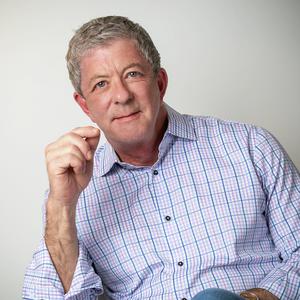
Speaker 1: It's 7-0-6 on a Friday. Always extra special on a Friday, just being Friday, but it's even better when I get to look up over the board here and see my friend Peter Bronson.
00:00:10
Speaker 2: Hey, Brian.
00:00:10
Speaker 1: It is always awesome having you here, man.
00:00:13
Speaker 2: It's always awesome to be with you, buddy.
00:00:14
Speaker 1: And for the bottom of my heart, I want to thank you for all the joy and pleasure I got out of reading your books over the years.
00:00:19
Speaker 2: Oh, thank you.
00:00:20
Speaker 1: Just you're a great writer, weaving the story. this narrative that you create, you'll create a premise upon which to spring forth all the information about local history. And we're going to dive into some of Peter's books today because they are awesome Christmas gift ideas for folks in the tri-state because they're typically focused on local history and stories from the local community. But first off, let me remind folks, he is a, he's in addition to being an author and of course, story journalist here in Cincinnati, Peter Bronson has a website called chili dog, press.com. which is a great place to get his book. So if you're thinking about Christmas gifts, head on over there right now, chili dog, press.com, get all of them. But also you, you publish local authors and other authors. Yes, I do. And how often do you approach with a book?
00:01:04
Speaker 2: I mean, Oh, constantly.
00:01:06
Speaker 3: I've never advertised, but it's mainly word of mouth. So people publish a book and everybody says, how did you do that?
00:01:11
Speaker 4: Yeah.
00:01:11
Speaker 3: And they say, well, I know a guy and that's me. So I've at any time, I've got five or six of these book projects going. I've got about seven going right now. Everything from children's books to biographies to really exciting books, novels. Some are things that you didn't know about Cincinnati. People have done some amazing things in town, and so it's pretty cool.
00:01:34
Speaker 1: Oh, it's got to be. I guess being in the position of being the publisher, you have to choose which ones you are willing to put forth some effort and some money to back and print and publish, and wading through that seems maybe the more challenging component of it. I mean, you think about publishers who passed up certain books over the years that ended up becoming global bestsellers. How did I miss that opportunity? Why didn't I sign that band? The Beatles were in here and I thought they sucked. But that's a difficult position and challenging because you have to deliver the bad news to somebody who poured their heart and soul out over some manuscript.
00:02:06
Speaker 3: Well, mostly the customers, when they see how hard it is to write a book, if they're coming to me and they're saying, I'm going to write this book and they don't have a manuscript finished, a lot of times they find out it's a lot harder than they think. The discipline, others find that the journey is the whole point of it. It's that the writing of the book, especially if it's a biography or something about their past, they find it very therapeutic because it just brings up all these memories and everything starts to come into sharp focus again. One thing leads to another. And by the time we're done, I coach them with their writing and I show them how to improve it and bring them along. In many cases, others don't need that kind of help. But when they're finished, they're just super ecstatic about the journey as much as the book.
00:02:54
Speaker 1: That's terrific. But here's the stumbling block you're going to have to run into now. We live in a world with artificial intelligence. I can probably go to ChatGPT or something else right now and say, please prepare a 40-page biography on, I don't know, pick a figure, Abraham Lincoln, just randomly pulling out.
00:03:13
Speaker 4: Right.
00:03:14
Speaker 1: And it'll do that.
00:03:14
Speaker 4: It will.
00:03:14
Speaker 1: It will. And it will read pretty damn good. Of course, I would always recommend, if you're ever doing that in your business most notably, a fact check what it came up with. But beyond that, college professors are dealing with this with term papers. Oh, absolutely. How can you determine if someone hands you a manuscript whether or not it's their work product or artificial intelligence?
00:03:34
Speaker 2: Well, first I ask.
00:03:35
Speaker 3: Um, and I have not published anything that was AI created, but I'm beginning to look at some projects that are AI assisted.
00:03:43
Speaker 2: For example, illustrations. Oh my gosh. The illustrations that can be created by AI are unbelievable. They're like Norman Rockwell level.
00:03:52
Speaker 1: Yes.
00:03:52
Speaker 3: Now you can't find an illustrator that's going to do a children's book at that level of, of, um, aesthetic quality, uh.
00:04:00
Speaker 2: For any reasonable price.
00:04:02
Speaker 3: So these people can go and get their real illustrations made by AI and a, I'm like, well, okay, as long as you tell the reader, as long as it's full disclosure and you're transparent that AI was used in this, that's okay with me, at least so far. I think one thing that you're hitting on, though, is very interesting, which is I think it's an unacknowledged secret right now that copyright is a thing of the past, that there is no such thing as intellectual property.
00:04:30
Speaker 1: That's one of the arguments the creators of intellectual property are making because, hey, Chat GPT, you just absorbed my entire book, fiction, nonfiction or otherwise, and you made it part of your learning model or your language model. You can't do that without paying me.
00:04:44
Speaker 2: Exactly.
00:04:45
Speaker 3: So if I was to plug in a certain question about one of my books, something that I discovered that is unique to my book, I can get that back from AI and I know they just took it right out of my book.
00:04:55
Speaker 4: Yes.
00:04:56
Speaker 3: And there's no acknowledgement. It doesn't say where that came from. You know, let's face it. There are book buyers for AI platforms now that are going around buying up all the used books and ancient books they can find.
00:05:09
Speaker 4: I know.
00:05:10
Speaker 3: And feeding them into this wood chipper, which is basically a vast sponge that soaks up everything in these books. It doesn't matter if it's an instruction manual for a 1903 vacuum cleaner or something. They will absorb all this and then just feed it back to you. And so, hey, where's the intellectual property?
00:05:29
Speaker 2: There is none.
00:05:30
Speaker 1: There isn't. Speaking of Aldous Huxley, it's a brave new world. It is. We are living in completely uncharted territory. And quite frankly, I'm just kind of the mindset. I lean more lewd. I know how efficient this will make things. I also appreciate the fact that, well, you talented artists out there are not going to have a job as an illustrator anymore.
00:05:51
Speaker 2: I know. It's such a shame.
00:05:53
Speaker 3: And, you know, the whole thing about taking the property and everything. Well, the other thing that's alarming right now is there was a piece in The Wall Street Journal last week reviewing a book called The Death of Literacy. And what we're seeing is that people, high school kids, college kids, they don't read books.
00:06:11
Speaker 1: They don't.
00:06:12
Speaker 2: You can poll them. When's the last time you read a book? And they'll say never.
00:06:15
Speaker 1: And if you ask a child at the Cincinnati Classical Academy the last time they read a book, they'd say, what, a half hour ago before class started? Yeah.
00:06:22
Speaker 3: But if you don't read books, if you just listen to them on audio, for example, or if you just get reviews and AI summaries, what it does, it damages your ability for critical thinking.
00:06:34
Speaker 1: Yes.
00:06:35
Speaker 3: Most of our intellectual critical thinking comes from reading, from being able to make an argument because we've read them, from absorbing facts in an active way, not something that just spilled them out for you.
00:06:49
Speaker 2: And I just worry about that.
00:06:51
Speaker 1: Well, I do too. And the other component of that, you have to have the logic and critical thinking skills, and that does come in large part from reading. But then you also have to have the communication skills to put pen to paper and And write. Yes. And you can't do that.
00:07:07
Speaker 2: If you can't do that.
00:07:08
Speaker 1: No one can do that anymore. Plus, in the text world we live in, it's abbreviations, it's just little blurbs that are supposed to mean something that's remotely connected to the English language. It is a new language.
00:07:21
Speaker 2: Yeah.
00:07:22
Speaker 3: And when you think about it, if you look at what's going on in the world, for example, the rise of socialism and communism.
00:07:28
Speaker 2: And now.
00:07:29
Speaker 3: You go, what is wrong with those young people that they think this is acceptable? Don't they know history?
00:07:33
Speaker 1: No, they don't.
00:07:34
Speaker 2: Because they don't read. They haven't read the books.
00:07:37
Speaker 3: They haven't seen Solzhenitsyn's Gulag Archipelago or anything like that.
00:07:44
Speaker 2: They just don't know.
00:07:45
Speaker 1: Well, and they're also not being taught it. Even if they want to sit in a room and absorb what the teacher is telling them by way of propaganda, if you aren't getting information about the nation's history— And you're not inclined to go and read it independently. You're never going to get it. Next thing you know, you think socialism and communism are great concepts.
00:08:01
Speaker 4: Uh-huh.
00:08:02
Speaker 2: Exactly. You know, that's a great segue. Do we have a minute?
00:08:05
Speaker 1: Well, I'll tell you what. No, we're going to use that as a little tease to bring you back and talk about your recent trip. Is that the direction we're going?
00:08:12
Speaker 3: No, I was going to tell you about what's going on at Indian Hill High School on October 22nd. when we are going to introduce the exciting side of history to a lot of local high school students and the community.
00:08:23
Speaker 1: Okay, well, it's 7.15 right now. We'll get the details on that, and then we'll let the listeners know why it is, I thought, you were going to be talking about socialism and communism, why you were going to go down the road of your recent trip.
00:08:33
Speaker 2: Oh, yeah.
00:08:34
Speaker 1: Considering the European Union is coming unglued. More with Peter Bronson at 7.15. 7.25, you can find us here at CD Talk Station. Bronson with Peter Bronson. Everybody in Cincinnati loves Peter Bronson. If you read one of his books, you'll know why. And, of course, those who remember his days at the Enquirer, we still miss you, man.
00:08:53
Speaker 2: Oh, thank you very much.
00:08:54
Speaker 3: And I can testify that not everybody loved me.
00:08:58
Speaker 1: Well, you obviously survived a lot of challenges over the years. So we thought you did a good job as the editorial director over at the Enquirer. And, boy, sure couldn't they use you now, Peter Bronson. Anyway, you were talking about the Indian Hill event. Get some flesh on the bones of that, and then also we're going to pivot over to your trip to Paris and London, which is what I thought you were talking about.
00:09:19
Speaker 2: You bet.
00:09:20
Speaker 3: So this is part of the Indian Hill Historical Society's author series, and they do this every year. And as you know with my books, my intention has always been to focus on our local history and show people that history can be exciting.
00:09:34
Speaker 4: Oh, yeah.
00:09:35
Speaker 3: It doesn't have to be textbooks of dates and places and treaties and so forth. So my books really go in that direction to try and make history accessible and exciting and fun to read, especially for young people. And this is a great event because the whole intention is that we're going to spend the whole day at Indian Hill High School and Cincinnati Country Day speaking to kids in high school about history and telling them some of these stories from my book called Promise Land.
00:10:02
Speaker 1: Promise Land. Outstanding book. Not a time in history that I would really enjoy being in this particular area, Peter.
00:10:10
Speaker 4: No.
00:10:10
Speaker 1: The horrors of living in the greater Cincinnati area during the settler days cannot be understated.
00:10:16
Speaker 3: The 1780s, 1790s were a very perilous place for new settlers in Ohio, especially in the Miami slaughterhouse. That was the name that was given to it by the settlers because of the local Shawnee and Miami tribes were We're so brutal and so hostile to new settlement here. But so anyway, we're going to have an evening event on Thursday, October 22nd, as well as the daytime talks. And that's at 7 p.m. at Indian Hill High School. The door is open at 630.
00:10:49
Speaker 2: It is free.
00:10:51
Speaker 1: Great.
00:10:51
Speaker 2: Open to the public.
00:10:53
Speaker 3: We will talk about promised land and the exciting history of Cincinnati's early days and how that contributed to the expansion of our nation and was the key. to the development of our country going west.
00:11:06
Speaker 1: Oh, yeah. It's hard to think, you know, in these early times that this was like the edge of civilization here.
00:11:13
Speaker 2: Yeah, yeah.
00:11:14
Speaker 1: And that you had to pretty much stay in these little forts that they built because lurking in the woods literally right outside the fort are a bunch of Indians who would love nothing more than to slaughter you.
00:11:24
Speaker 2: Exactly.
00:11:25
Speaker 1: Along with the British that would pay them.
00:11:27
Speaker 3: Yeah, the British were using them as their proxy army, not unlike what Iran does with Hamas. They're paying them with, they'll give them $ 100 for a live hostage and $ 50 for every scalp they collect from these settlers. And so about 1,500 people were taken in a three-year period. Daughters, wives, children. If you were lucky, they would march you all the way from Cincinnati to Detroit where they would sell you to the British. You could be a slave for the British, which is what they used you for. You might never see your family again. Most people did not. If you're less lucky, they might kill you on the spot if you resisted, or they might take you back to their village and torture you for three or four days for the amusement of the entire tribe.
00:12:14
Speaker 1: Yeah, and torture is really a delicate or an easy way of describing what you actually had to experience. It is.
00:12:23
Speaker 4: Brutal.
00:12:24
Speaker 1: Merciless torture.
00:12:25
Speaker 2: Very creative.
00:12:26
Speaker 1: Yeah.
00:12:27
Speaker 3: In inflicting unbelievable levels of pain for days.
00:12:30
Speaker 1: At a time. That is in The Promised Land, just part of The Promised Land, How the Midwest Was Won, Cincinnati History, Queen City of the West. It's right there. I'm looking at your Amazon link. Of course, you can get the books there. But again, ChiliDogPress.com. Get that book and Also, you know, I think my favorite is the Sin City book. Oh, yeah. Forbidden Fruit, Sin City's Underworld, and the Supper Club, the Inferno from the Beverly Hills Supper Club. That is fascinating. Real quick, since I brought it up, you can easily dispatch or dispense with the topic, but your trip to Paris and London, I just wanted to know. Because we're getting all kinds of reports out of notably Paris and France, generally speaking, about the riots.
00:13:06
Speaker 2: Yeah, the riots were going when we were there.
00:13:08
Speaker 1: That's what it's going to ask. Were they?
00:13:09
Speaker 2: Yes, they were. I didn't see much for the actual rioting.
00:13:12
Speaker 3: What I saw is a bunch of high school kids loitering around a high school where they had taken all the dumpsters they could find on the street and pushed them in front of the high school door like this was some kind of big barricade. And, you know, the irony of this is, again, goes back to literacy. People have forgotten. This is echoes of the French Revolution. The French Revolution is still destroying Europe. If you ask people over there, the guides we saw, I asked them this question. How come these cathedrals, these beautiful monuments to faith, are mostly empty today except for tourists? They're not used for worship anymore. And they said that began with the French Revolution. Religion was declared to be a superstition. Many churches were destroyed. Many of the relics and records in those churches were burned. And that's when Europe began, especially in France, to lose its faith.
00:14:06
Speaker 1: Yeah.
00:14:06
Speaker 3: And you see what a disaster that was, how people were terrified. It was a reign of terror, a reign of error politically for decades. And now people are turning back to that as if, you know, this is what we want, power to the people.
00:14:23
Speaker 1: Well, you know, it was a real eye-opener when the Pope showed up and the hundreds of thousands— flooded the streets in support of him to see him. It's like, wait a second, you still have people who are people of faith there? Yes. I didn't think those folks exist anymore. I guess they just keep their mouths shut because they don't want to be ostracized, criticized, or otherwise lampooned.
00:14:45
Speaker 2: Yeah, sort of like conservatives in this country.
00:14:47
Speaker 1: You got that right, Peter Bronson. And on that comedic note, let's take a quick break here at 726 F55K or CD Talk Station. More with Peter Bronson coming up. Zimmer, heating and air conditioning, that is the Trust Talk Station. 7.30 on a Friday, an extra special Friday with Peter Bronson in studio. Check out his whole lineup of books. Again, his publishing company is ChiliDogPress.com. You get the full Peter Bronson author lineup. Behind the Lines, The Untold Story of the Cincinnati Riots. Promised Land, How the Midwest Was Won, which we were just talking about. Magical History Tour, Murder, Mystery, and Buried History. That is a fun, fun read. That's your most recent book, isn't it?
00:15:23
Speaker 2: It is, yeah. A collection of short stories.
00:15:26
Speaker 1: And that's the one that you explained about the old medical college here in the city of Cincinnati?
00:15:29
Speaker 2: Yes, the Body Snatchers.
00:15:30
Speaker 1: Oh, that's a fun place to have been.
00:15:33
Speaker 4: Yay!
00:15:34
Speaker 1: Off to school, Mom!
00:15:35
Speaker 2: They called them the Resurrection Men.
00:15:37
Speaker 1: Oh, Lord Almighty. The stench of that place.
00:15:39
Speaker 2: Oh, my gosh.
00:15:40
Speaker 1: Oh, the horror, the body parts.
00:15:42
Speaker 3: And then they would dig up the bodies, and they weren't always fresh, but the first thing they'd do would strip it. And then sell the clothes to unsuspecting people.
00:15:49
Speaker 1: These are medical students and physicians that are teaching medical students.
00:15:53
Speaker 3: And the body snatchers that they're paying. And these people would buy the clothes and go, man, that smells bad.
00:15:58
Speaker 1: Yeah, definitely. And then, of course, the Forbidden Fruit book, which I said, not in our town, I didn't mention, not in our town, the Queen City versus the King of Smut. The Hustler.
00:16:10
Speaker 4: Yeah.
00:16:11
Speaker 1: Larry Flint.
00:16:12
Speaker 2: Absolutely.
00:16:13
Speaker 1: That was us, man.
00:16:14
Speaker 2: That was us.
00:16:14
Speaker 1: Cincinnati Art Museum and who was it that prosecuted him? That was Siles. Siles, yes.
00:16:19
Speaker 3: And Cincinnati was in the crosshairs nationally as being this kind of backwater of prudes and Catholics and religious people and uptight Midwesterners who just couldn't get with it to understand how liberating pornography was.
00:16:37
Speaker 1: Yeah.
00:16:37
Speaker 2: So that's really what it was all about.
00:16:38
Speaker 1: Well, the bar has been lowered so much since then. I mean, there is not a human being that sits in a prosecutor's office that would ever consider prosecuting for the Mapplethorpe photographs.
00:16:49
Speaker 2: Yeah, yeah.
00:16:50
Speaker 1: Which, that just shows the de-evolution, doesn't it?
00:16:54
Speaker 2: It does. Our standards have declined steeply.
00:16:57
Speaker 3: But you know, you got to take your hat off, I think, and tip it to the people who stood up against that and said, this is not the direction we want to go for our community, for our children.
00:17:08
Speaker 2: We don't want this pornography.
00:17:09
Speaker 3: We don't want these creeps that bring it to town and the adult bookstores and all the other garbage that comes with it.
00:17:15
Speaker 1: Of course. But now you can stream it 24-7 in the comfort of your own home.
00:17:20
Speaker 2: It's all on your phone.
00:17:21
Speaker 1: Everywhere. You have billions and billions and billions and billions of dollars in hits at those porn sites all the time. Sad. This is where we are.
00:17:29
Speaker 3: Oh, yeah.
00:17:29
Speaker 1: I guess we can all call it that. Forbidden Fruit, like I said, I think is my favorite. Sin City's Underworld and the Supper Club Inferno. Everything that was going on in northern Kentucky, Newport, generally speaking, Covington area, it was a hotbed of depravity. It was. Speaking of springing over from pornography to prostitution, one of the sins that was going on over in northern Kentucky.
00:17:52
Speaker 2: They called it Little Mexico.
00:17:53
Speaker 1: Little Mexico. Murders.
00:17:55
Speaker 3: Murders. They had a hitman who admitted killing more than 100 people in Newport. So, yeah, there was a lot of that going on.
00:18:03
Speaker 4: Yeah.
00:18:03
Speaker 1: It still amazes me that of all places in the world, little northern Kentucky, Newport, Covington area, generally speaking, would be basically the next biggest mob capital of the world outside of, what, Chicago or New York?
00:18:15
Speaker 2: Yeah, Chicago, New York. I mean, we had all those mobs were here.
00:18:18
Speaker 3: Chicago and New York mobsters came to Cincinnati because this was kind of their Switzerland. It was run by the Cleveland mob, but they were wise enough not to pick fights with those guys if they wanted a piece of the action.
00:18:29
Speaker 4: Yeah.
00:18:30
Speaker 2: So it was wilder than I ever imagined.
00:18:33
Speaker 1: Okay, and on that note, as we get ready to go to another break, the writing process you were referring to earlier, you coach new writers through it. What drew you to writing this particular book? Was it the mob activities connection with ultimately the Beverly Hills Supper Club burning down, which you draw the lines directly from point A to point B in the book Forbidden Fruit? Was it the idea that we had gangsters and mobsters and gambling in northern Kentucky? Did someone say something out loud? And you're like, you know what? I need to investigate and write a book on that. How did that work? How did you come up with that particular book?
00:19:06
Speaker 2: That's a great question.
00:19:07
Speaker 3: Well, one of the things is when you come to a newspaper, and I've been around the country to several, when you come to a new newspaper in your career, people are glad to fill you in on all the local mythology, the big stories that happened.
00:19:19
Speaker 2: You know.
00:19:20
Speaker 3: And so I heard about this mob empire in Newport when I came to the Enquirer, and I kind of always dismissed it as, you know, some punks who thought they were mobbed up, but it didn't seem like a Cincinnati thing. So then when I got to look into it, especially when I started looking into the Beverly Hills Supper Club, that's when I got really fascinated because what people thought happened and what the record shows actually happened did not match up. So I was eager to get in and really dig into it.
00:19:48
Speaker 1: And the corruption that you reveal in the book, it's heart-wrenching when you think about the destruction of the evidence that occurred immediately after the fire, the fact that the law enforcement was involved in the cover-up, the governor of Kentucky was involved.
00:20:06
Speaker 3: I mean, I got to admit, I was very skeptical that a cover-up of that scale could could sustain itself. But then when you look, you find out that, for example, the whole commission that was set up by the governor, all but one person were completely compromised and were arrested later or their careers were destroyed with scandal. They were caught with their, you know, close mob connections. It just it is kind of a dismaying, but also a fascinating and exciting story.
00:20:35
Speaker 1: No question about it. To the extent people think, well, we've only gotten into this level of corruption in modern times.
00:20:41
Speaker 4: No.
00:20:41
Speaker 1: I would suggest, and that's a great illustration of it, there was a lot more corruption as the further you go back in history.
00:20:48
Speaker 4: Yes.
00:20:48
Speaker 1: There wasn't real-time documents. You couldn't read what they were legislating or arguing about real-time online. You couldn't trace their activities with ring cameras and cell phone cameras and catch them in awkward positions and document it real-time. None of that existed. Right. Which- allows corruption to flourish behind the scenes.
00:21:07
Speaker 3: You know, another thing that we've talked about before, but which was surprising to me, is that if you wanted to learn anything about the mob activity in Newport, you had to go to the Lexington or the Louisville papers because Cincinnati papers wouldn't touch it.
00:21:19
Speaker 2: Why is that?
00:21:20
Speaker 3: Because the who's who of Cincinnati was spending a lot of time in the adult playground over there, going to the illegal casinos, the brothels, everything else.
00:21:30
Speaker 2: And you just didn't step on those toes.
00:21:33
Speaker 1: No, you didn't. Get you in trouble doing that, wouldn't it? Yeah. Just a little bit. Sting around more with the Talk Station. It is 742 at 55 KRC Talk Station. Brian Thomas with Peter Bronson in studio. Jet, get his books. Again, I keep reminding folks, great Christmas presents. You know, it's not an expensive endeavor. Go to ChiliDogPress.com. Get one of them. All of them will be great reads, I assure you. And over the break, I was asking Peter what his favorite book was of all the many books he's written. Again, all historic, all related to the greater Cincinnati area in some way, shape, or form. And it didn't shock me, the book that you came up with, Peter, which is?
00:22:15
Speaker 2: The Man Who Saved Cincinnati.
00:22:16
Speaker 1: The Man Who Saved Cincinnati. Yeah, I love that one. And that is amazing. Roughly, where were we in the period of time? Remind my listeners who that man was because there's that sub-story in there that is really an amazing thing.
00:22:27
Speaker 3: The youngest general in the Union Army during the Civil War at that time in 1862. He was called the scapegoat of Shiloh because Grant unfairly blamed him for Grant's mistakes at Shiloh. And then he became the savior of Cincinnati when Cincinnati was attacked by 10,000 Confederates, an army that came up from Lexington to burn and loot and steal everything and hold the city for ransom. If the Confederates had been able to take Cincinnati, that would have been the only northern city taken by the South during the Civil War. And it would have completely changed our history. We would have divided the Union Army into two halves. They would have taken control of the Ohio River. And Abraham Lincoln could never get reelected, having lost the sixth biggest city in the country.
00:23:13
Speaker 1: Oh, astute observation there, Peter. Didn't really ever give that a whole lot of thought.
00:23:17
Speaker 2: Yeah.
00:23:18
Speaker 3: But the man who came to save Cincinnati arrived at midnight while the mayor of Cincinnati was ready to wave the white flag and surrender to the south. And he said, put that flag away. We're going to fight. And they said, well, we don't have cannons. We don't have soldiers. They had sent them all south to a big battle they were expecting. And he said, Cincinnati will defend itself. So he issued a martial law proclamation that every able-bodied man must show up the next morning with a shovel or a musket. And they all marched him across a bridge that was built in three days across the Ohio River. That was the first one. And they took him into the hills of northern Kentucky where they built this network of defenses. And Lew Wallace saved Cincinnati.
00:24:01
Speaker 1: How about that? And the really cool story out of that, and I'd never heard of it before, that you wrote about and I read about in the book, is the Black Brigade.
00:24:10
Speaker 3: Yes, that's a fantastic story. So the mayor of Cincinnati was a copperhead, meaning he sympathized with the South. And he took advantage of this turmoil to send his police out with bayonets to round up all the free black men in Cincinnati. This was free on this side of the river, but the Kentucky side of the river was a slave state. He rounded him up and marched him across the bridge into a slave state, meaning they were now vulnerable to being seized as slaves again.
00:24:39
Speaker 2: And some were.
00:24:41
Speaker 3: And when Lew Wallace heard about this, he blew his stack and he sent one of his top officers across the river to round him up, brought him back. And they told him in a big gathering, they said, listen, we're very sorry what happened. We're not going to let this happen again. But we really could use your help to defend the city. Well, they expected nothing after being treated that way and herded like animals with bayonets. So 300 went home that night. The next morning, 700 returned. It always gives me chills when I think about that.
00:25:10
Speaker 1: And that's because- And this is before the internet when you could get word out to everybody. I guess they got word out quickly.
00:25:15
Speaker 2: I love that.
00:25:16
Speaker 3: You can just imagine how people are going house to house. They were saying, we have a chance to fight under our own flag to free our brothers and sisters in slavery. And they showed up, 700 showed up, and they were put out on the spear tip of our defense.
00:25:32
Speaker 1: That's amazing. Kind of like sort of Paul Revere-esque. Yeah. The Confederates are coming. The Confederates are coming. Grab your arms. We're going to go and kick some serious ass.
00:25:41
Speaker 2: Yeah.
00:25:43
Speaker 3: And these men, as part of this project, I put the roster together. of their, the unit, the black brigade is on my website. If you go to chili dog, press.com and noodle around there, you'll find it. And it lists the names of all these men who served in that. And some went on to serve in the brigade that was featured in the movie glory.
00:26:03
Speaker 2: Yeah.
00:26:04
Speaker 3: Um, and because they weren't eligible to serve in the army and in Ohio, but Massachusetts was allowing black soldiers.
00:26:12
Speaker 2: So some of them did that.
00:26:14
Speaker 3: And, uh, They had great glory and service in the Civil War, and it's just one of the great stories that Cincinnati has forgotten, which should make us very proud of this city.
00:26:24
Speaker 1: Absolutely, and I think every time you have been in the studio since you wrote that book, I brought that up for that very reason. It's new. It was new information for me, and it shouldn't have been. Don't go away. More with Peter Brown. Talk Station. 751 at 55KRCD Talk Station. Before we return our Now, last segment with Peter Bronson. Let us do what we always do at this time of week. Tiffany Green, Officer Green from the Cincinnati Police Department Crime Stoppers Unit with the Crime Stopper Bad Guy of the Week. Welcome back, Officer Green. God bless you and all law enforcement officers. Who are we looking for today?
00:26:56
Speaker 4: Thank you, Brian, and good morning. The Cincinnati Police District 4 is looking for Joshua Malik Payne.
00:27:03
Speaker 1: Mr.
00:27:03
Speaker 4: Payne is wanted for aggravated burglary and misdemeanor domestic violence. Police say on September 7th of 2026, Mr. Payne forced entry into the victim's residence and physically assaulted the victim. Joshua Malik Payne is a black male. He's 25 years old. He's 6 foot and 160 pounds. Joshua Malik Payne has no known arrest history and was last known to live on Handel Lane in Green Hills. If anyone has information on where police can find Joshua Malik Payne, please call Crime Stoppers at 513-352-3040 or submit a tip online at crime-stoppers.us.
00:27:44
Speaker 1: You will remain anonymous. You'll be eligible for a cash reward if your tip leaves to an arrest. And, of course, you'll be doing the greater Cincinnati area a real service. I don't like guys that engage in domestic violence. Officer Green, thank you so much. His photograph, his mugshot, rather, is on the 55KRC. iHeart website. dot-com webpage so my listeners can take a look at them and drop the dime if they have something that will lead to an arrest. Thank you, Officer Green. God bless you. Have a great weekend. Back to Peter Bronson. Peter Bronson. Yes, sir. I had asked you earlier before we went on air if you currently are writing a book, not releasing one this year.
00:28:21
Speaker 2: No, I'm not.
00:28:22
Speaker 3: What I'm doing instead for Christmas promotions or sales is I'm doing a box set of five books. This is all from Forbidden Fruit through Not in Our Town, The Man Who Saved Cincinnati, Promised Land, and then the latest one, Magical History Tour. The five books come in a really nice little box, and they're five books for the price of four, plus shipping. So that'd be about $ 80 for five books and all Cincinnati history.
00:28:50
Speaker 1: Fantastic. I understand that when you do book signings, they sell like hotcakes.
00:28:54
Speaker 2: They do.
00:28:55
Speaker 3: I can't get enough of them there. They just disappear right away. So I'm very optimistic that this is the kind of thing people will like, especially for friends and family who love Cincinnati and don't know some of these great stories about our history.
00:29:08
Speaker 1: No doubt about it. And some really good stories. Hey, the Magical History Tour, that one's the one where you have a discussion of the Fen-Fen litigation.
00:29:15
Speaker 2: Yes, yes.
00:29:17
Speaker 1: Oh, and I thanked you specifically for that because, you know, you can say anything you want about Stan Chesley. I can't find a single positive thing to say about him. He was a philanthropist. He did some nice things for the city.
00:29:30
Speaker 3: With ill-gotten gains, maybe, toward the end of his life there?
00:29:35
Speaker 2: I'd say so, Brian.
00:29:36
Speaker 3: But just read the story, Feeding Frenzy and uh magical history tour it's pretty amazing.
00:29:41
Speaker 1: You're going to love all of the books Peter writes, and that's why it's a great thing to get the box set. You're going to have the box set on your website soon.
00:29:47
Speaker 2: Yes, I'm hoping to get that up in the next week.
00:29:49
Speaker 1: Well, now you have incentive to do so because people are going to want it. Yeah, thank you for that. It's chili.press.com. Joe Strecker is going to put a link on the blog page, 55kc. iheart. com. So this conversation, the links to his website, and your ability to get the book, which I, trust me, whoever you give it to is going to be just really appreciative of it. So do that. Peter Brunson, you're always welcome in this studio.
00:30:07
Speaker 2: Thank you, Brian.
00:30:07
Speaker 1: I'm taking you up on your lunch. We're going to have lunch together real soon.
00:30:10
Speaker 2: Absolutely.
00:30:11
Speaker 1: Good morning to my mom, who I know is listening in this final parting thought. She really enjoyed your speech over on the west side. Thank you very much. She was there in attendance, and I think she maybe even stopped in and said hello to you. Oh, yeah, yeah. Very nice. Appreciate you doing that.
00:30:25
Speaker 2: Nice lady.
00:30:26
Speaker 1: And one more time, the Indian Hill?
00:30:28
Speaker 3: Indian Hill Historical Society on Thursday, October 22nd. Doors open at 630. The program begins at 7, and it is free to the public.
00:30:37
Speaker 1: Show up. Be there. Peter Bronson will do this again soon, I hope. Folks, don't go away. Janice Heisel, she's from the Epoch Times. She wrote an article about these.
