WEBVTT
00:00:04.240 -->
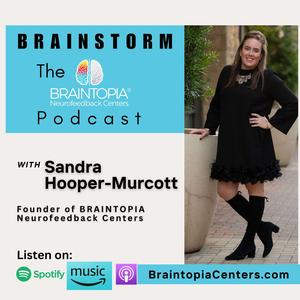
00:00:12.880Welcome to Brainstorm, the Braintopia Podcast, hosted by Sandra Hooper Murcott, founder of Brain Topia Neurofeedback Center.
00:00:13.199 -->
00:00:22.719With locations across the Dallas Fort Worth area, BrainTopia helps children, teens, and adults improve brain function through advanced neurofeedback brain training.
00:00:22.879 -->
00:00:35.600On this podcast, we explore the science of brain health and real-world solutions for symptoms linked to anxiety, ADHD, sleep challenges, emotional regulation, and cognitive performance.
00:00:35.920 -->
00:00:42.479This is Brainstorm, where understanding your brain is the first step toward lasting change.
00:00:46.880 -->
00:00:54.159Trauma leaves a measurable imprint on the brain, but neurofeedback offers a path toward restoring balance.
00:00:54.399 -->
00:00:55.280Welcome back, everyone.
00:00:55.359 -->
00:01:03.280I'm Chelsea Earlywine, co-host and producer here again with Sandra Hooper Mercott, founder of Braintopia Neurofeedback Centers.
00:01:03.439 -->
00:01:07.040Sandra, how are you feeling as we're about to jump into this next topic?
00:01:07.359 -->
00:01:09.040I'm super excited about this one.
00:01:09.200 -->
00:01:09.519Good.
00:01:09.599 -->
00:01:10.640All right, Sandra.
00:01:10.799 -->
00:01:13.200Let's explore this important subject.
00:01:13.359 -->
00:01:18.319How does trauma affect brain patterns and how can neurofeedback support healing?
00:01:19.120 -->
00:01:19.359Great.
00:01:19.519 -->
00:01:23.519Okay, so let's talk first about trauma and how that shows up on a brain map.
00:01:23.840 -->
00:01:28.640So trauma is, I mean, we call it complex trauma because it is that just that.
00:01:28.799 -->
00:01:34.079It is complex and it can come in various forms and it can be very hard to detect.
00:01:34.560 -->
00:01:42.079So we can see that in and some of the some trauma that happens can happen before birth even occurs.
00:01:42.400 -->
00:01:44.159So I'm an adoptive mom.
00:01:44.319 -->
00:01:46.319That's something I'm I'm very proud to share.
00:01:46.560 -->
00:01:54.560And we are, we love working with adopted kids because we see that some of that trauma that happens is just inherent from when they were in utero, even.
00:01:55.040 -->
00:02:01.439And so we really look at when we get a brain map, we're looking for a couple things when it comes to trauma.
00:02:01.760 -->
00:02:05.439The first is that are they processing things effectively?
00:02:05.599 -->
00:02:09.280And processing happens in the back of our brain in something called the occipital lobes.
00:02:09.599 -->
00:02:18.960And so the first, the first measure, kind of the first thing that we're looking at, if trauma may be present, is does the occipital lobe show evidence of dysregulation?
00:02:19.360 -->
00:02:47.439And if they do, if it does, if those areas of the brain do, the next thing we look at is is inflammation showing up because sometimes when the brain is, well, often when the brain is feeling like there is a sense of danger or a threat, which is what trauma causes, then we go into fight or flight mode, our brain gets dysregulated, and so then inflammation is happening potentially because we're our brain wants to protect itself.
00:02:47.680 -->
00:02:57.120And so we look at that marker, and then on our map, there actually is a location on what's called the defunction page that shows evidence of potential past trauma.
00:02:57.280 -->
00:03:18.879And so we can look at these areas and see exactly where that is is showing up in the brain, how that is manifesting as either too fast brainwave activity, meaning an anxiety response, or too slow brainwave activity, which means the central nervous system has been in this high anxiety state for so long that now it's just kind of in shutdown mode and needs to give itself a break.
00:03:18.960 -->
00:03:20.639And so it shows low activity.
00:03:20.800 -->
00:03:33.759So there's there's no one way that we can say this is how trauma shows, but after seeing so many maps and working with so many people who are showing evidence of trauma, we can pick those things out pretty quickly once we see their brain map.
00:03:34.319 -->
00:03:35.520That's so fascinating.
00:03:35.680 -->
00:03:43.280So, Sandra, how does something like uh chronic stress or hypervigilance typically show up in a QEG brain map?
00:03:43.759 -->
00:03:44.080Great.
00:03:44.319 -->
00:03:51.599So chronic stress we will see when we see typically high or very low um alpha wave activity.
00:03:51.840 -->
00:03:54.560Um and so we we can see that pretty quickly.
00:03:54.719 -->
00:03:57.199It's also in the frontal lobe in our delta and theta.
00:03:57.360 -->
00:04:11.840Those are all of our slow moving brain waves, where where they're supposed to be in slow organized patterns and shows our brain's neuroplasticity and able its its ability to come in and out of, you know, I get a stressor and then I'm able to calm back down into calm organized patterns.
00:04:12.080 -->
00:04:25.360When those are very high, they will show that the brain just stays in that hypervigilant state, and which is that frontal lobe on the right side, and it's just really hard to get back down into an organized pattern.
00:04:25.439 -->
00:04:34.480So after a while, our brain just lives there and says, this is, I guess, how it is, and this is how I'm going to stay, which then leads us to this fight or flight response all the time.
00:04:34.560 -->
00:04:35.600And so we want to help.
00:04:35.759 -->
00:04:53.839What neurofeedback does is helps the brain to learn how to take the trigger because we can't stop the triggers, they're going to be in our lives, but how to take the trigger and then be able to, you know, go back down into that organized pattern and into that calming pattern in a much faster and then more effective way.
00:04:54.160 -->
00:04:54.399Yeah.
00:04:54.480 -->
00:04:56.480So I want to unpack that a little bit more.
00:04:56.639 -->
00:05:02.560Tell me, tell me more about how the neurofeedback helps the brain shift out of that survival mode.
00:05:02.879 -->
00:05:03.279Right.
00:05:03.600 -->
00:05:09.519So when we are getting audio and visual stimulation in our brain, it's making us respond to something.
00:05:09.680 -->
00:05:11.439So we're getting that all the time, right?
00:05:11.600 -->
00:05:18.399Whether we're hearing honking horns when we're driving or whether we're seeing um light, you know, fluctuating back and forth.
00:05:18.560 -->
00:05:22.160That's why some people are so sensitive to strobe lights or different things like that.
00:05:22.480 -->
00:05:24.560Because our brain is having to process that.
00:05:24.879 -->
00:05:31.519So what neurofeedback is doing is putting us in a situation where we have to respond, right?
00:05:31.680 -->
00:05:37.759And it, but our brain is going to respond in the exact same ways that it's a it like it loves patterns, right?
00:05:37.839 -->
00:05:43.120So whether it's a good pattern or a bad pattern, our brain is going to stay there unless we act upon it to make some kind of change.
00:05:43.360 -->
00:05:56.160So what neurofeedback's doing is as we're getting this constant audio and visual stimulation, it's making our brain respond, training it to like the good patterns and to want to change the patterns that are not desirable.
00:05:56.399 -->
00:06:05.199So when the brightness is high and the sound is high on the on the television during a neurofeedback session, that is a reward to the brain that says we're in good patterns, we want to stay in this pattern.
00:06:05.360 -->
00:06:08.560So the brain is quite literally learning that this is what I want to be in.
00:06:08.879 -->
00:06:12.000If the brightness goes down and the sound goes down, our brain doesn't like that.
00:06:12.160 -->
00:06:14.800That is not what it enjoys by nature.
00:06:14.959 -->
00:06:17.600And so it's telling the brain, this is not a good pattern.
00:06:17.680 -->
00:06:21.839And so we want to go back to what we were just, you know, a couple seconds ago.
00:06:22.000 -->
00:06:31.680And so, quite literally, 30 sessions of that and 30 minutes each session is training the brain to take in the stimuli and then respond in the way that it's intended to.
00:06:32.000 -->
00:06:33.439And it's passive for all of us.
00:06:33.519 -->
00:06:37.600As we're going through our sessions, we don't have to think about that, which is so wonderful.
00:06:37.680 -->
00:06:41.279It is, it's just an automatic response that our brain knows knows how to do.
00:06:41.600 -->
00:06:55.920And so that that is quite literally the magic of neurofeedback is it's training it to do what it knows it should do anyway, but has for different environmental, metap metabolic, functional, or psychological reasons, has gotten out of the correct pattern.
00:06:56.240 -->
00:06:57.600Oh, that is so fascinating.
00:06:57.759 -->
00:07:03.759So, Sandra, what improvements do clients often report as their brain pattern starts to regulate?
00:07:04.160 -->
00:07:14.240So the biggest thing that I know, I can speak to this as um when I first started my own neurofeedback is the the triggers still come, but the response is different.
00:07:14.399 -->
00:07:20.879And I remember that here's a great story to show that I have not, knock on wood, I have not been in a car accident before.
00:07:21.120 -->
00:07:25.600But about two months after I started my own neurofeedback therapy, I got rear-ended.
00:07:25.680 -->
00:07:26.480And it wasn't bad at all.
00:07:26.560 -->
00:07:28.480Like it didn't even leave a mark on my car.
00:07:28.800 -->
00:07:36.800But my OCD um self would have in the past just gone off the deep end and been like, I gotta get a new car.
00:07:36.959 -->
00:07:39.120I can't keep this because there's a scratch on here now.
00:07:39.199 -->
00:07:42.399Like I was, I would have just become totally dysregulated.
00:07:42.639 -->
00:07:53.360And so when that happened, we pulled over, I went and looked at my car, noticed that there was nothing there, um, was talking to the lady who was super, you know, sorry and apologetic about it.
00:07:53.680 -->
00:07:58.959And I would have the old Sandra would have just gone off the deep end on her, which I'm not proud of.
00:07:59.199 -->
00:08:03.920But this case, I looked, like I said, I looked at the car, saw that there was no issue, and said, you know, it's okay.
00:08:04.000 -->
00:08:06.959Let's let's exchange uh insurance info just in case.
00:08:07.279 -->
00:08:08.560But I I think we're fine.
00:08:08.800 -->
00:08:09.920And she was just like, what?
00:08:10.000 -->
00:08:15.839And I went, I mean, I called my husband after on the way home, and I'm like, I I think what in the world is going on?
00:08:16.160 -->
00:08:16.639Who am I?
00:08:16.720 -->
00:08:16.879Yeah.
00:08:17.120 -->
00:08:17.600Who am I?
00:08:17.680 -->
00:08:19.439Yeah, what is who is this person?
00:08:19.519 -->
00:08:24.399And so what it showed me is that I was able to take in stimuli that wasn't necessarily good.
00:08:24.560 -->
00:08:28.560Obviously, that's not something we want to happen, but I didn't have to go off the deep end.
00:08:28.639 -->
00:08:35.919Like I I went into a place of I'm gonna take this in, process it, and then give a logical instead of emotional response.
00:08:36.080 -->
00:08:44.480And so that helped that helped me to understand that I was able to take in stimuli and process it in the correct way that I was supposed to instead of going off the deep end.
00:08:44.559 -->
00:08:45.600So that's really what it does.
00:08:45.679 -->
00:08:57.600It it helps us to be able to take in the triggers, understand what's going on, respond to it in whatever way, but then it's not going to be necessarily just this dysregulated response.
00:08:57.919 -->
00:08:59.759Oh, wow, that is so interesting.
00:08:59.919 -->
00:09:05.200Thank you for sharing your vulnerable story about uh yeah, your experience.
00:09:05.279 -->
00:09:06.879That's really helpful to hear.
00:09:07.039 -->
00:09:12.080So, Sandra, how does neurofeedback complement other trauma-informed therapies?
00:09:12.399 -->
00:09:12.879Yes.
00:09:13.120 -->
00:09:21.440So we are we do a lot of work in one of our locations uh that has counselors who are who do all of do such extensive trauma work.
00:09:21.600 -->
00:09:43.120And what they will say is for some clients, not for every client, but for some clients, they if they're not able to access some of the emotion around what they're feeling, um, if they don't understand why they're feeling what they are, they will come to neurofeedback first and get that functional work that just kind of opens up the pathways to be able then to go into talk therapy or other modalities and have it be that much more effective.
00:09:43.279 -->
00:09:46.399So EMDR is one of the things that we love.
00:09:46.559 -->
00:09:47.919I love that therapy myself.
00:09:48.000 -->
00:09:49.039I've used it myself.
00:09:49.279 -->
00:10:04.960But if you're not able to access the emotion that is necessary for that, then they those therapists will send people to Braintopia and have them do neurofeedback first and then go and do the EMDR because it opens those pathways to be able to process their emotion and why they're feeling what they are.
00:10:05.120 -->
00:10:08.480So we always say we are not in competition with any anyone else.
00:10:08.720 -->
00:10:18.320We can do the functional work prior to um or in conjunction with what they're already doing to just make everything that they're working on with their other modalities that much better.
00:10:18.639 -->
00:10:18.960Wow.
00:10:19.200 -->
00:10:20.399Oh, that's very interesting.
00:10:20.559 -->
00:10:22.720Well, thank you so much for sharing all of that.
00:10:22.879 -->
00:10:28.480We're out of time today, but thank you for sharing such compassionate and insightful information.
00:10:28.720 -->
00:10:31.600We appreciate that, and we'll see you on the next episode.
00:10:35.360 -->
00:10:39.360You've been listening to Brainstorm, the BrainTopia podcast.
00:10:39.519 -->
00:10:51.360If you or someone you love is struggling with symptoms associated with anxiety, ADHD, sleep issues, or focus challenges, neurofeedback may offer a safe, non-invasive path forward.
00:10:51.519 -->
00:11:05.840To learn more about Braintopia Neurofeedback Centers and our locations across the Dallas Wortworth area, visit BrainTopiaCenters.com or call 972-640-7022.
00:11:06.320 -->
00:11:14.080That's BraintopiaCenters.com or 972-640-7022.
00:11:14.559 -->
00:11:15.840Thank you for listening.
00:11:16.080 -->
00:11:17.759We'll see you next time.