WEBVTT
00:00:00.400 -->
00:00:07.120You know that moment where your heart's racing, your thoughts are spiraling, and everything in you just wants to bail.
00:00:07.120 -->
00:00:13.199Maybe it's a social event, a phone call, or even just sending that email you've been dreading.
00:00:13.199 -->
00:00:16.079Your brain's like, let's not.
00:00:16.079 -->
00:00:21.039And suddenly cleaning the fridge feels more appealing than human interaction.
00:00:21.039 -->
00:00:32.079If that sounds familiar, according to today's guest, that urge to escape is actually your invitation, not to run away, but to lean in.
00:00:32.079 -->
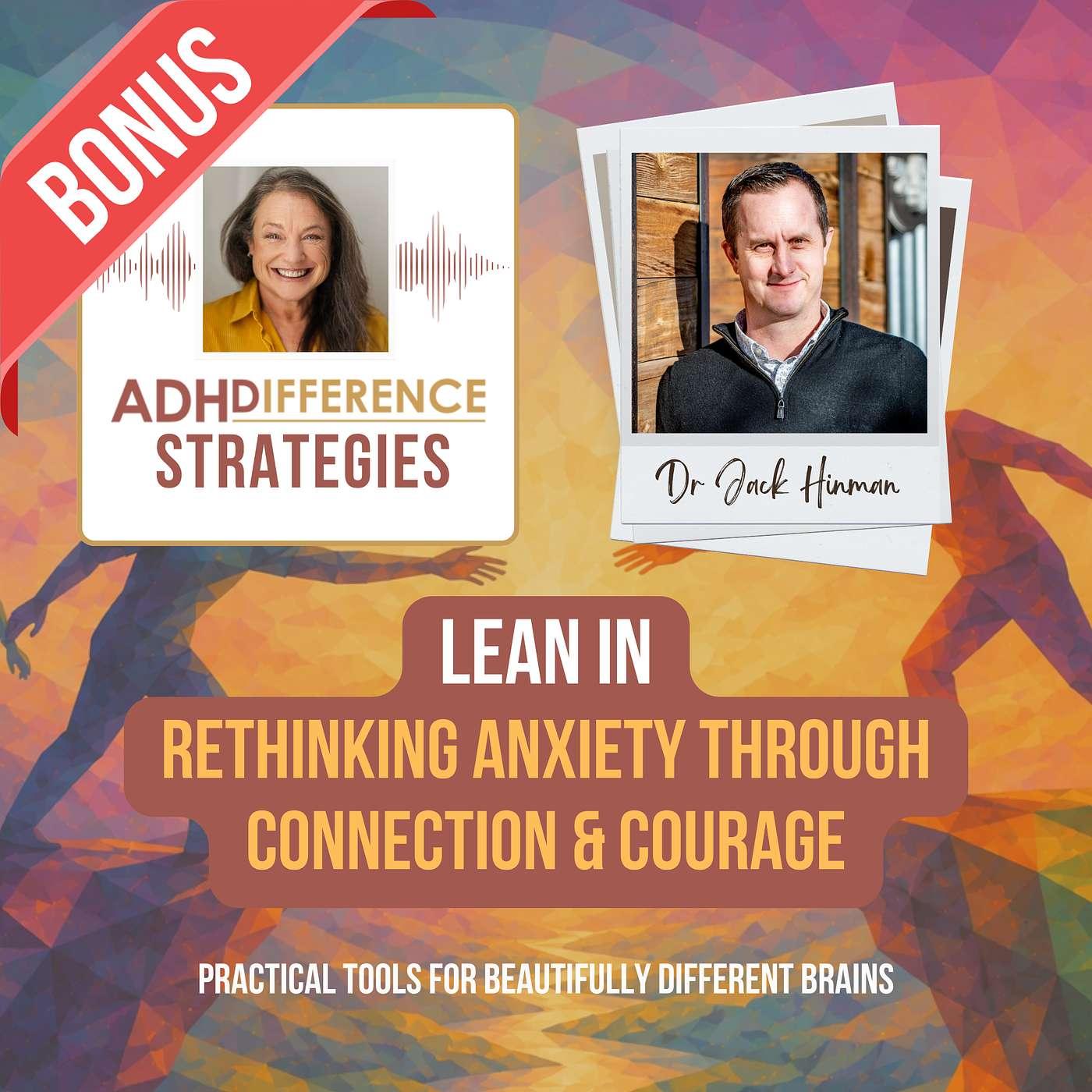
00:00:39.280Welcome to ADH Difference Strategies.
00:00:39.280 -->
00:00:45.119I'm Julie Legg, your host, author of The Missing Piece and an ADHD advocate.
00:00:45.119 -->
00:00:54.960Over the years, I've had the privilege of speaking with incredible guests, unpacking real-life strategies, mindsets, and tools for navigating ADHD.
00:00:54.960 -->
00:00:58.960This bite-size series brings those insights together.
00:00:58.960 -->
00:01:02.240Short, practical, and ready to use.
00:01:02.240 -->
00:01:25.120Lean in.
00:01:25.120 -->
00:01:28.000Before we get into it, I'm going to let Dr.
00:01:28.000 -->
00:01:31.920Hinman explain part of this in his own words.
00:01:32.959 -->
00:01:37.519You cannot grow unless you feel discomfort.
00:01:37.519 -->
00:01:48.799And which means like reaching out to somebody or introducing yourself, making connections is going to feel uncomfortable.
00:01:48.799 -->
00:01:53.120You have to get outside your comfort zone to build connection.
00:01:53.120 -->
00:01:56.079You have to get outside your comfort zone to grow.
00:01:56.079 -->
00:02:02.799And we really have to stop pathologizing typical anxiety.
00:02:02.799 -->
00:02:04.000Anxiety is bad.
00:02:04.000 -->
00:02:05.599No, anxiety is good.
00:02:05.599 -->
00:02:07.200Like it is okay.
00:02:07.200 -->
00:02:08.719That's where you're going to grow.
00:02:09.280 -->
00:02:11.199Anxiety isn't the enemy.
00:02:11.199 -->
00:02:14.879It's not something to suppress, fix, or hide.
00:02:14.879 -->
00:02:17.280It's something to learn from.
00:02:17.280 -->
00:02:22.719He says, when you feel anxiety, we should lean into relationships.
00:02:22.719 -->
00:02:27.680Sitting in your anxiety teaches what you like and don't like.
00:02:27.680 -->
00:02:30.400ADHD brains feel big.
00:02:30.400 -->
00:02:38.080We're wired for emotional intensity, reactivity, and a slightly wobbly relationship with uncertainty.
00:02:38.080 -->
00:02:43.360So when anxiety shows up, and it will, it's no surprise.
00:02:43.360 -->
00:02:50.080Our instinct is to shut down, self-isolate, or ghost the world until the storm passes.
00:02:50.080 -->
00:02:58.159But here's the thing: avoidance feels good short term, but it steals our growth long term.
00:02:58.159 -->
00:03:01.280Anxiety actually has something to say.
00:03:01.280 -->
00:03:06.240It can reveal boundaries, desires, discomforts, and values.
00:03:06.240 -->
00:03:08.639It can show us what matters.
00:03:08.639 -->
00:03:14.719And when you lean into connection, even just a little, you're building emotional tolerance.
00:03:14.719 -->
00:03:19.360You're telling your brain, hey, this is uncomfortable, but I can handle it.
00:03:19.360 -->
00:03:21.759I'm safe and I'm still here.
00:03:21.759 -->
00:03:28.240And that is huge for ADHDers who often doubt their capacity to cope.
00:03:28.240 -->
00:03:32.000Emotional regulation in ADHD.
00:03:32.000 -->
00:03:38.639Well, studies show that ADHD is tied to challenges, recognizing and regulating intense emotions.
00:03:38.639 -->
00:03:44.560So it makes sense that anxiety hits harder and sticks around longer.
00:03:44.560 -->
00:03:49.759But the research also tells us that connection supports regulation.
00:03:49.759 -->
00:03:54.000Real in-person connection calms the nervous system.
00:03:54.000 -->
00:04:01.759Whether it's a friend, a partner, or someone who just gets you, social support literally reduces stress.
00:04:01.759 -->
00:04:09.039ADHD as you have strong interpersonal relationships, show lower levels of anxiety and depression.
00:04:09.039 -->
00:04:11.680Co-regulation is a thing.
00:04:11.680 -->
00:04:19.120You know when you're spiraling and someone else's calm energy sort of pulls you out of it, it's not magic, it's co-regulation.
00:04:19.120 -->
00:04:26.800Your brain responds to the accused, the steady voice, the warm eye contact, the safe presence.
00:04:26.800 -->
00:04:32.399It helps shift your body out of vital flight and back into calm.
00:04:32.399 -->
00:04:41.600The bottom line is ADHDs often struggle with self-soothing, but co-regulation gives us another way, a better way.
00:04:41.600 -->
00:04:45.759When is the right time to lean in?
00:04:45.759 -->
00:04:51.600Well, pretty much any time anxiety tries to run the show, but let's name a few.
00:04:51.600 -->
00:05:09.120When your brain starts spiraling before a social interaction, when you feel the pull to isolate or ghost your group chat, when you're full of shame but don't know how to express it, when you're emotionally fried and just want to disappear.
00:05:09.120 -->
00:05:16.959These are the moments to pause, not to panic or to push yourself, but to lean in imperfectly and bravely.
00:05:16.959 -->
00:05:20.160You don't need a therapist in your back pocket.
00:05:20.160 -->
00:05:22.160You just need a few micro moves.
00:05:22.160 -->
00:05:24.720Prioritize face-to-face time.
00:05:24.720 -->
00:05:26.639It doesn't have to be deep.
00:05:26.639 -->
00:05:32.800A coffee, a dog walk, a five-minute chat, real present speats, perfect timing.
00:05:32.800 -->
00:05:36.560Make eye contact even briefly.
00:05:36.560 -->
00:05:45.759I know eye contact can feel like an emotional MRI, but even a glance can activate cluster circuits in the brain.
00:05:45.759 -->
00:05:48.800Let it be awkward.
00:05:48.800 -->
00:05:50.560You don't need the perfect script.
00:05:50.560 -->
00:05:52.240You don't have to sparkle.
00:05:52.240 -->
00:05:55.360Just show up, breathe, and be human.
00:05:55.360 -->
00:05:58.000Watch and listen.
00:05:58.000 -->
00:06:02.560Pay attention to tone, energy, and facial expressions.
00:06:02.560 -->
00:06:05.120That's how we learn social cues.
00:06:05.120 -->
00:06:07.600Not from a textbook, but from people.
00:06:07.600 -->
00:06:10.800Seek co-regulation.
00:06:10.800 -->
00:06:15.040When you feel dysregulated, borrow someone else's calm.
00:06:15.040 -->
00:06:21.040That might be a friend, a partner, a pet, even a podcast host.
00:06:21.040 -->
00:06:22.399Dr.
00:06:22.399 -->
00:06:24.879Jack Hinman puts it beautifully.
00:06:24.879 -->
00:06:28.639He says, you cannot grow unless you feel discomfort.
00:06:28.639 -->
00:06:32.959And that doesn't mean pushing through panic or ignoring your limits.
00:06:32.959 -->
00:06:40.480It means recognizing anxiety as part of the process and choosing connection over escape.
00:06:40.480 -->
00:06:53.839So the next time anxiety whispers, maybe just pause instead, breathe, reach out and remind yourself, I can feel this and still be okay.
00:06:53.839 -->
00:06:57.759Connection is the strategy and presence is the power.
00:06:57.759 -->
00:07:00.079You don't have to face it alone.
00:07:00.079 -->
00:07:02.639A big thanks again to Dr.
00:07:02.639 -->
00:07:09.040Jack Hinman for sharing his perspective and for being part of the broader ADHD ifference conversation.
00:07:09.040 -->
00:07:13.759If you'd like to hear more from that episode, head over to our main series.
00:07:13.759 -->
00:07:20.959You'll be looking for season two, episode 34, to hear more of his ADHD insights.
00:07:20.959 -->
00:07:23.199Links are in the show notes.
00:07:23.199 -->
00:07:28.879Thanks for tuning in for more practical tools for beautifully different brains.
00:07:28.879 -->
00:07:31.120Hit the subscribe button.