

ABOUT THIS EPISODE
Welcome to a special series on the acquisition talk podcast that gives you an audiobook tour of my research project titled, Programmed to Fail: The Rise of Central Planning in Defense Acquisition 1945 to 1975. I’m Eric Lofgren of the Baroni Center for Government Contracting at George Mason University. You can find this book for free and over 1,300 blog posts on my website, https://AcquisitionTalk.com.
In this chapter of Programmed to Fail, we dive into how complex order in the real world emerges from simple and iterative systems of nonlinear interactions. The umbrella term of complex adaptive systems is used to describe self-organizing systems of emergent order that adapt to an uncertain environment. While these properties are not in general desirable for weapon systems that humans use in the field, they are certainly desirable properties for the defense acquisition system as much as they are for market economies.
In this chapter, we trace John Boyd’s work from weapon systems design into complexity theory that leverages Godel’s incompleteness theorem, Heisenberg’s uncertainty principle, and the second law of thermodynamics. We find that the only realistic way to generate a system that exhibits complex behaviors beyond the foresight of any individual is to build from the bottom-up according to simple rules. Tacit coordination based on local conditions can then give rise to emergent order, a process not appreciated by advocates of top-down planning and built into the foundations of the Planning-Programming-Budgeting System. While complexity theories have started to penetrate the philosophy of military operations, we are still at the early stages of appreciating these ideas in the world of defense acquisition.
This podcast was produced by Eric Lofgren. You can follow me on Twitter @AcqTalk and find more information at https://AcquisitionTalk.com
English
United States
TRANSCRIPT 🔗
Are you the producer of this podcast?
Add a podcast transcript
Need Audio-to-Text?
Transcribe with Listen411 in Just 60 Seconds
SEARCH PAST EPISODES
Search past episodes of Acquisition Talk.
OTHER EPISODES IN THIS PODCAST
In this episode of Programmed to Fail, we explore how accounting costs do not reveal the value being generated in the production process and cannot be used, on their own, as a guide for specific choices. Cost is not an objective reality, particularly to those who know the vagaries of cost accountin…
In this episode of Programmed to Fail, we discuss the integral role of rivalrous competition in the discovery of knowledge and the growth of technology. It finds that policy maker's dreams about single best plans and pre-coordinating service behavior to avoid duplication, competition, and overlap i…
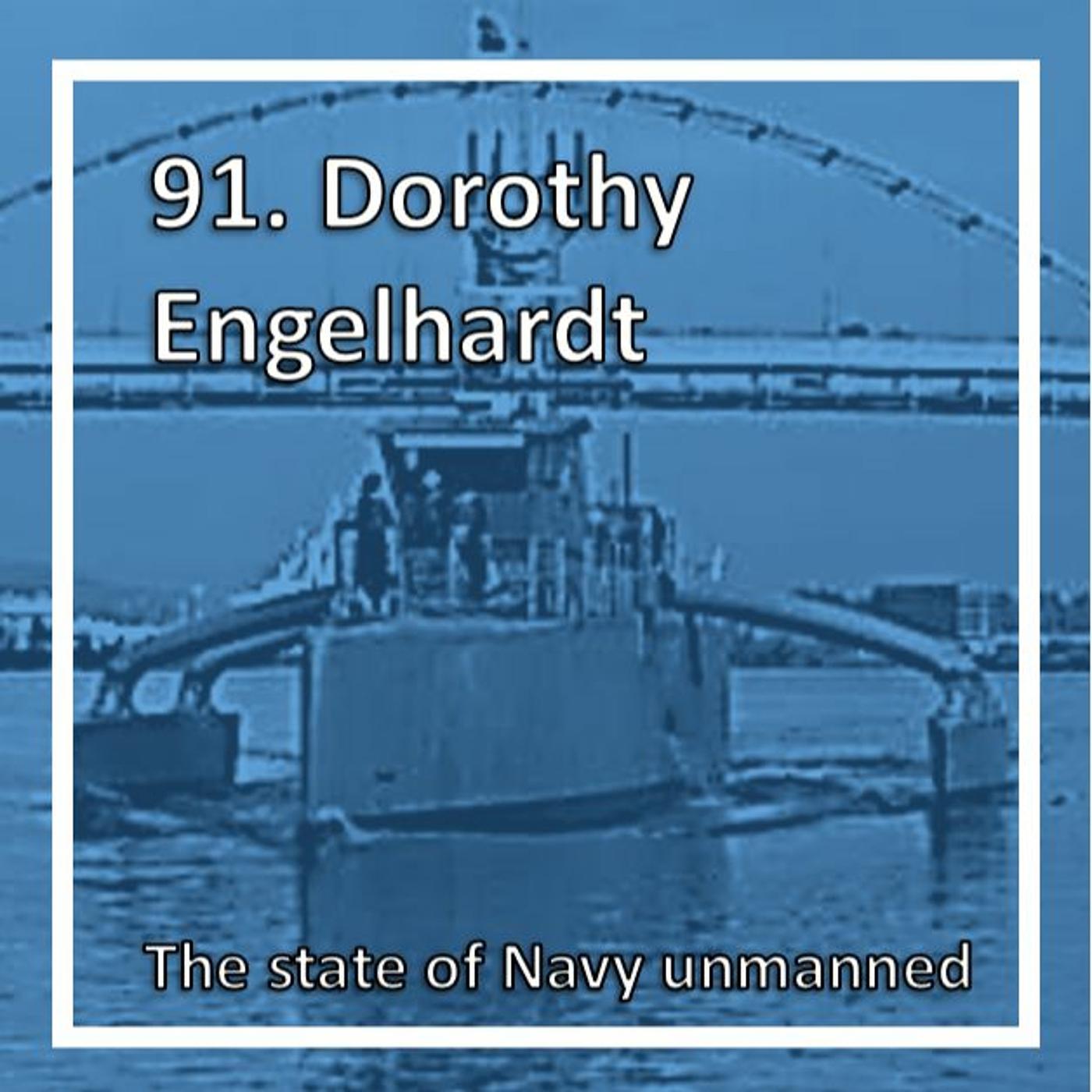
In this episode of the Acquisition Talk podcast, Dorothy Engelhart joins me to discuss unmanned surface and underwater vessel development in the United States Navy. Dorothy is the Director of Unmanned Systems in the Deputy Assistant Secretary of the Navy for ships, and she has been in this role si…
In this episode, we take a look at the history of the the defense innovation process and compare it to processes in Western Europe and the Soviet Union. It also discusses the origins of the 5000-series regulations for acquisition and the stage-gate theory of development. It includes a case study on…
Disclaimer: The podcast and artwork embedded on this page are from Eric Lofgren, which is the property of its owner and not affiliated with or endorsed by Listen Notes, Inc.
EDIT
Thank you for helping to keep the podcast database up to date.
