

ABOUT THIS EPISODE
Welcome to a special series on the acquisition talk podcast that gives you an audiobook tour of my research project titled, Programmed to Fail: The Rise of Central Planning in Defense Acquisition 1945 to 1975. I’m Eric Lofgren of the Baroni Center for Government Contracting at George Mason University. You can find this book for free and over 1,300 blog posts on my website, AcquisitionTalk.com.
In this episode, we take a look at the history of the unification of the armed forces under a single Department of Defense. Even today, we hear calls for the elimination of duplication, competition, and overlap between the military services. Proponents believe that military affairs can be brought into a state of perfection.
But could you imagine if the government decided that only IBM could build computers, only Ford could build cars, and only AT&T could provide telecommunications? It’s pretty clear that innovation would have been stopped in its tracks.
The following provides an overview of two chapters: first, how calls for centralization resulted in unification of the armed forces, and second, the seeds of program budgeting which was intended to be the administrative tool of centralized decision makers.
This podcast was produced by Eric Lofgren. You can follow me on Twitter @AcqTalk and find more information at AcquisitionTalk.com
In this episode, we take a look at the history of the unification of the armed forces under a single Department of Defense. Even today, we hear calls for the elimination of duplication, competition, and overlap between the military services. Proponents believe that military affairs can be brought into a state of perfection.
But could you imagine if the government decided that only IBM could build computers, only Ford could build cars, and only AT&T could provide telecommunications? It’s pretty clear that innovation would have been stopped in its tracks.
The following provides an overview of two chapters: first, how calls for centralization resulted in unification of the armed forces, and second, the seeds of program budgeting which was intended to be the administrative tool of centralized decision makers.
This podcast was produced by Eric Lofgren. You can follow me on Twitter @AcqTalk and find more information at AcquisitionTalk.com
English
United States
TRANSCRIPT 🔗
Are you the producer of this podcast?
Add a podcast transcript
Need Audio-to-Text?
Transcribe with Listen411 in Just 60 Seconds
SEARCH PAST EPISODES
Search past episodes of Acquisition Talk.
OTHER EPISODES IN THIS PODCAST
Welcome to a special series on the acquisition talk podcast that gives you an audiobook tour of my research project titled, Programmed to Fail: The Rise of Central Planning in Defense Acquisition 1945 to 1975. I’m Eric Lofgren of the Baroni Center for Government Contracting at George Mason Universi…
Welcome to a special series on the acquisition talk podcast that gives you an audiobook tour of my research project titled, Programmed to Fail: The Rise of Central Planning in Defense Acquisition 1945 to 1975. I’m Eric Lofgren of the Baroni Center for Government Contracting at George Mason Universi…
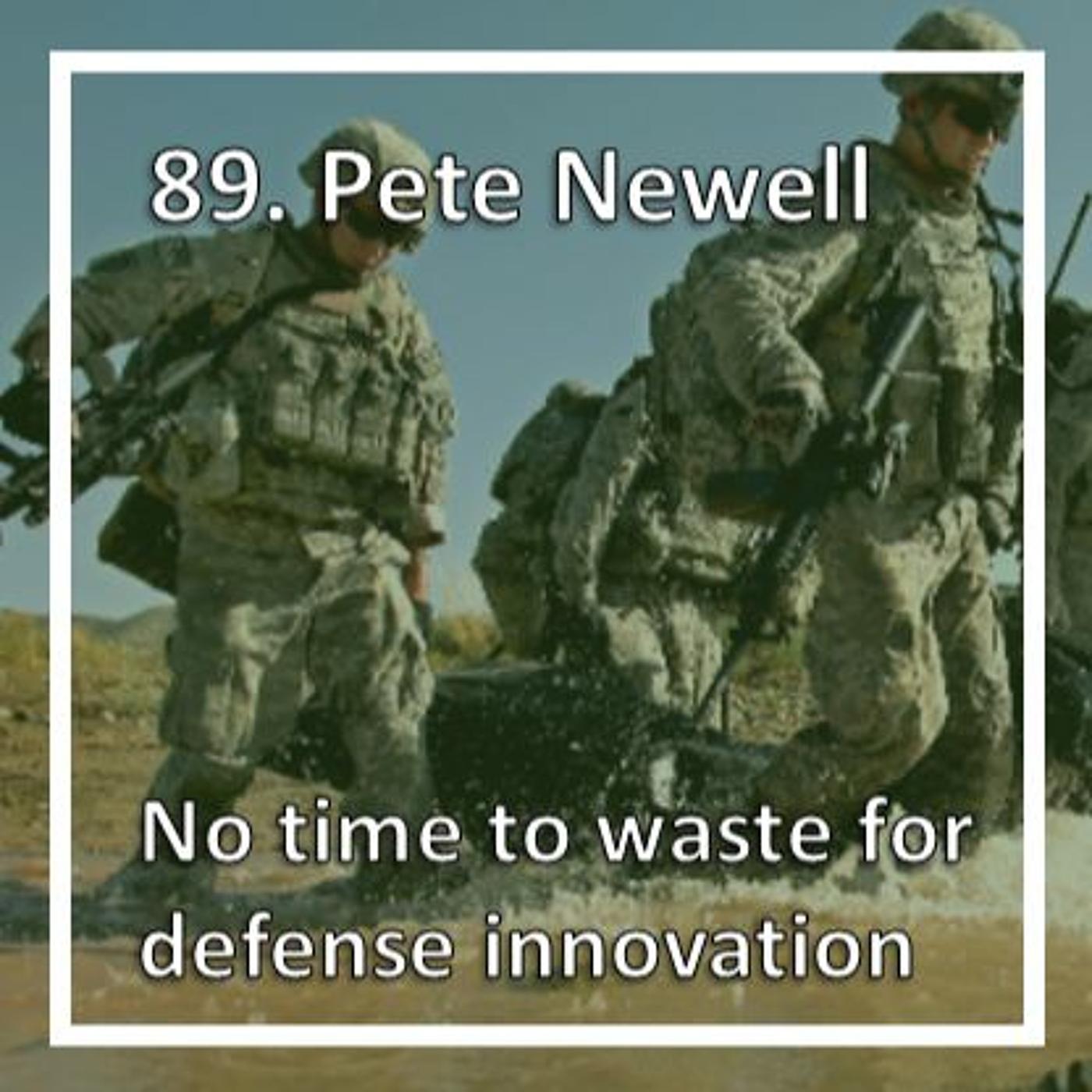
I was pleased to have Pete Newell back on the Acquisition Talk podcast to discuss the urgency of getting innovative defense prototypes into the field and working with partner nations. Pete is founder and CEO of BMNT Inc., a global technology advisory firm, co-founder of Hacking 4 Defense, and a ret…

Balloon bloodlust, the epic military history of balloons, the fate of US-China relations, and how balloon expertise can help you on Hinge
What on Earth is a Chinese spy balloon doing over the US? To discuss, we have William “Balloon Guy” Kim of The Marathon Initiative, Eric Lofgren of Acquisition T…
Disclaimer: The podcast and artwork embedded on this page are from Eric Lofgren, which is the property of its owner and not affiliated with or endorsed by Listen Notes, Inc.
EDIT
Thank you for helping to keep the podcast database up to date.
