

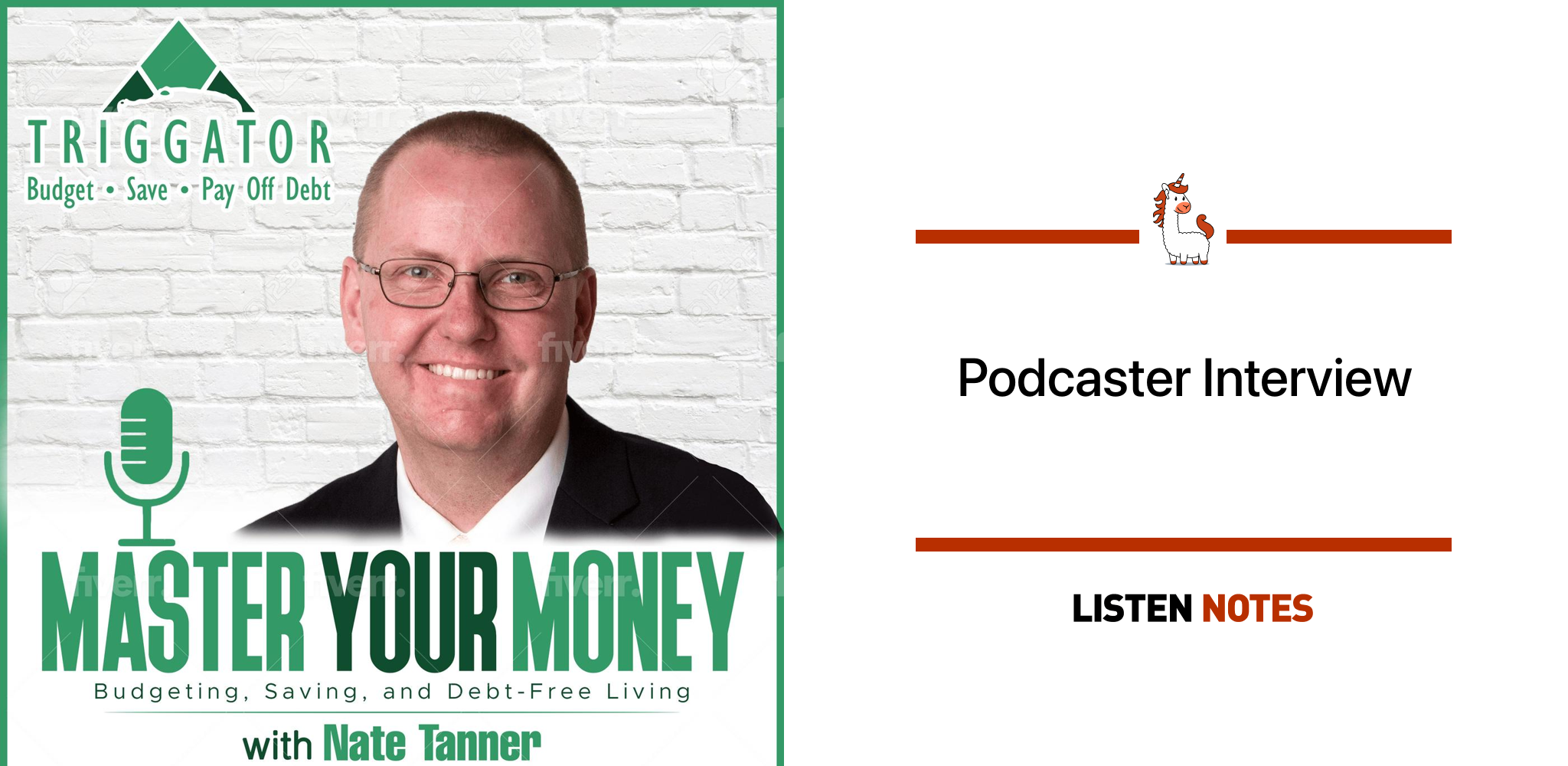
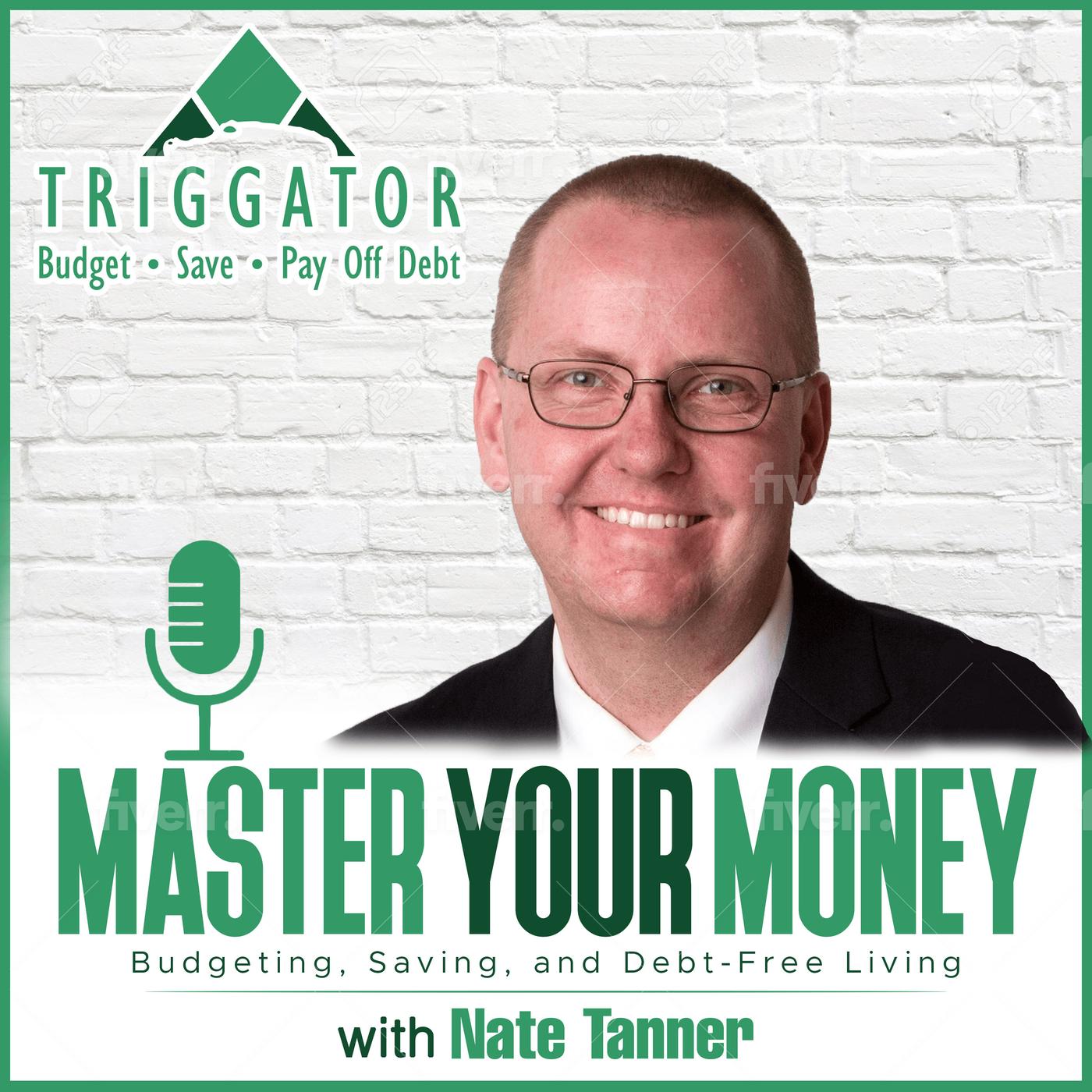
► Tell us about you and your podcast
I'm Nate Tanner — husband, father, lifelong learner, and just a little bit of a personal finance nerd. I hold one and seven-eighths undergraduate degrees and an MBA, and I'm the co-creator of the Triggator Triangle Framework and CEO of Triggator. But more than any title, I find genuine joy in helping people worry about money less and enjoy life more.
That's exactly what Master Your Money: Budgeting, Saving, and Debt-Free Living is built around. Using the Triggator Triangle — Budget, Save, Pay Off Debt — we help listeners build real systems, solid habits, and actionable plans that create a path to financial peace of mind.
We don't do traditional monthly budgets here. We build paycheck-based Spending Plans where every dollar has a job and does that job with as little friction as possible. On the savings side, we focus on Peace of Mind Funds — covering emergencies, non-monthly expenses, and the things in life that bring real joy. And when it comes to debt, we believe every listener deserves a personalized plan. Whether that's the debt snowball, the avalanche method, or tackling an emotionally charged debt first — the end goal is always the same: elimination.
Our listeners are as diverse as the financial journeys we cover — ranging from ages 25 to 50, spanning singles fresh out of college, young couples, growing families, and everyone in between. Some are in financial survival mode, looking for a lifeline. Others are stable and ready to start building real wealth. What they all share is a desire to take the next step — and the Triggator Triangle gives them a framework grounded in principles that work regardless of where they're starting from.
► Why & how did you start this podcast?
The journey to Triggator and this podcast was a long one — with plenty of personal financial bumps along the way.
My wife and I married in our very early twenties. From about 18 to 21, I did what a lot of young adults do — made some genuinely stupid mistakes with money. The pain and stress that came from those early decisions became so real and so deep that we made a decision together: we were going to learn everything we could about how money actually worked. We wanted the peace of mind that comes from bills being paid, savings growing, and that awful consumer debt finally gone.
As we figured it out, we started noticing the same struggles in the people around us. Friends, neighbors, people in our circle — expressing how their budgets never seemed to work, how a surprise car repair would completely derail them, how they always had too much month left at the end of the money. So we started coaching them. Helping them build Spending Plans. Walking alongside them. And as we watched things change in their lives, we found real joy in that journey together.
That joy became a mission. If we could help the people in our circle, why not share it with as many people as possible? Master Your Money was born on April 7th, 2025 — six years in the making and a lifetime of learning. The framework had been living in our heads and in the lives of the people we'd coached for years. The podcast was simply the moment we decided to stop keeping it to ourselves.
As for podcasts — yes, I listen constantly. It's one of my favorite ways to learn, and honestly, it felt like the most natural way to have the kind of real, honest money conversation I'd always wished someone had with me when I was just starting out.
► How'd you find the time and funding to do this podcast?
Master Your Money is entirely self-funded. No debt, no third-party investors, no strings attached. We teach that those who understand interest earn it and those who don't, pay it — and that principle applies to more than just a bank account. When someone else is funding your vision, you're paying a price, whether you see it on a statement or not. They set the terms. They influence the direction. But when you own something outright, you are in the driver's seat. You control the journey. That's exactly where we want to be.
As the show grows, we're open to partnering with sponsors who genuinely align with our mission — but on our terms, in our own time, and never at the cost of the message.
Time is the harder question — and the more honest one. Family comes first, always. Add the responsibilities of building a business, and every hour has to count for something.
When the podcast launched on April 7th, 2025, the original goal was daily episodes. And for a stretch, we delivered. But as we coached more people and dug deeper into the real struggles our listeners faced, something became clear: the tools people needed to actually build their Spending Plans and systems simply didn't exist — at least not in the way we envisioned them.
As a software engineer, I had already built a small-scale version for my own use. But others needed it too. So I made a difficult call — I shifted my focus toward building something that could scale and help everyone, not just the people in my immediate circle. Producing four or more hours of podcast content daily while simultaneously building a financial technology platform wasn't sustainable. The podcast had to slow down so something bigger could be built.
That something bigger is now live and with it, we're returning to regular episode production, ready to share the Triggator Triangle with as many people as possible.
The wait made the mission clearer. And now we're just getting started.
► What do you gain from podcasting?
Right now, Master Your Money carries no sponsorships and generates no podcast revenue. And honestly — that's intentional. The podcast isn't about monetization. It's about the message.
What I gain from podcasting is something far more valuable than a sponsorship check. I've seen firsthand what money stress does to people. I know what it feels like to hit your windshield trying to kill a spider — true story — and suddenly have a broken windshield problem and a financial problem at the same time. I know what it's like to pull into your garage after a late night of hard work, hear that spring snap on the way down, and feel that sinking combination of exhaustion and dread when you realize you have no idea how you're going to cover it. Those moments are stressful enough on their own. Compounding them with financial anxiety turns them into something that breeds real anger, real sadness, and real fear.
I podcast because I believe nobody should have to feel that way. As a devout Christian, I'm guided by the principle found in Matthew 25 — that what we do for those around us, we do unto God. As I've followed that counsel and poured into the lives of others through this show, I've found a joy and fulfillment that no revenue figure could replicate.
The mission is simple: help as many people as possible worry about money less and enjoy life more.
If the right sponsor — one who genuinely shares that vision — comes along as the show grows, I'm open to that conversation. But the podcast will never become a vehicle for revenue at the expense of the people it exists to serve.
► How does your podcasting process look like?
If you've listened to the show, you already know — at Triggator, we love a good plan. The A-Team would be proud.
Episode planning starts with the listeners themselves. As emails come in with questions, concerns, and real-life stories, I start building a picture of what people are actually wrestling with. That listener feedback is gold. From there I layer in what's happening in the world — news, law changes, economic shifts, social media trends, the latest financial fad that needs a solid stress test. Nothing makes it onto the show unless it genuinely serves the listener. Episodes are planned five at a time, which keeps production moving without sacrificing intentionality.
On the production side, we have a small but talented team — a dedicated editor, an artwork creator, and a scripting assistant. I am heavily involved in the script writing process. Probably to the occasional frustration of the team. But the words matter, the message matters, and I'm not willing to let that part go.
The podcast is distributed through Captivate.fm to Apple Podcasts, Spotify, and many others. Hardware is handled through a professional studio setup, keeping the audio clean and consistent for every episode. One thing I am personally proud of is that we have developed an SDK for automated episode creation and upload on Captivate.fm that we have shared at no cost for any who would like to use it. It is available on GitHub.
As for guests — we've had one in studio so far, and we welcome more. But there's a standard every guest has to meet: they're here to serve the listener, not pitch a product. Every single episode — guest or no guest — delivers something the listener can act on today. We close every show with a Daily Challenge for exactly that reason. A guest who shows up just to say "buy my book to find out more" isn't the right fit for this audience. Our listeners deserve better than that — and we make sure they get it.
► How do you market your show?
Marketing Master Your Money is a team effort. We have a dedicated social media manager who handles a mix of paid ads, boosted content, and organic growth across our platforms. Our weekly newsletter is another key touchpoint — subscribers get episode updates, financial tips, and a direct line into everything happening at Triggator.
Our primary homes are Apple Podcasts and Spotify, and listener acquisition is fairly evenly split between the two. We also have a small but loyal group who tune in directly through the Triggator website and a handful of smaller platforms. Every listener counts — regardless of where they find us.
We're also in the middle of an exciting transition to video and YouTube distribution. I'll be completely transparent about that one — like most people, I'm not exactly in love with the sound of my own voice, and watching myself on camera is somehow even worse. But here's the thing: this message matters too much to let my own discomfort get in the way. If someone finds this show for the first time because they stumbled across a YouTube video instead of browsing Apple Podcasts, and it changes how they handle their next paycheck — that's worth every uncomfortable moment in front of a camera. So I push past it, every single time.
The goal is simple: show up wherever our listeners are, deliver something worth their time, and let the message do the work. Word of mouth remains one of our most powerful growth drivers — and honestly, that tells us everything we need to know about whether the content is resonating.
► What advice would you share with aspiring (new) podcasters?
Stay true to your message. Practice what you preach. And don't compromise for clicks.
Money is a tool — and it amplifies who we really are. When it becomes the sole motivator, things start to slip. You chase the viral moment. You write the clickbait headline. You make moves that aren't in the best interest of your audience. And when that happens, you lose something that no revenue figure can buy back — your integrity.
I take my cues from my third great-grandfather, Karl G. Maeser, founder of Brigham Young University. He was once asked what he meant by the phrase "word of honor." His answer has become our family creed: "Place me behind prison walls — walls of stone ever so high, ever so thick, reaching ever so far into the ground — there is a possibility that in some way or another I might be able to escape; but stand me on the floor and draw a chalk line around me and have me give my word of honor never to cross it. Can I get out of that circle? No, never! I'd die first."
That is the standard. Honor and integrity cannot be purchased, and they are the true measure of a person — and of a podcast.
On the practical side — read, listen, and keep learning. Audiobooks have been invaluable to me, covering everything from studio setup and scripting to marketing and audience growth. The podcasting space has incredible resources if you're willing to seek them out. But none of it matters if you don't first know exactly what you stand for and why. Start there. Build everything else on top of that foundation — and don't let anyone, or anything, pull you across the chalk line.
► Where can we learn more about you & your podcasts?
The best place to start is the podcast hub at https://triggator.com/podcast — every episode lives there, along with show notes, resources, and the Daily Challenge from each episode.
From there, head to triggator.com to learn more about the Triggator Triangle framework, download the free Triggator eBook, and explore the Triggator Budgeting Tool — our paycheck-based financial planning app that just launched. If you're ready to take the next step and want a personal walkthrough, you can also grab one of the limited Founder's Fast-Track Setup Sessions there — a free one-on-one call where we build your first Spending Plan together inside the app.
You can find us and follow along on all the major social platforms:
X: https://x.com/triggator
Facebook: https://facebook.com/triggator
Instagram: https://instagram.com/triggator
We post tips, real-life money wins, episode updates, and the kind of behind-the-scenes content that doesn't make it into the show.
And if you have a question, a story, or something you'd love to hear covered on the podcast — I genuinely want to hear from you.
Email me directly at podcast@triggator.com.
Listener questions and real-life stories are some of the best fuel for future episodes, and I read every single one.
However you find us — welcome. The mission is the same everywhere we show up: help you worry about money less and enjoy life more.