

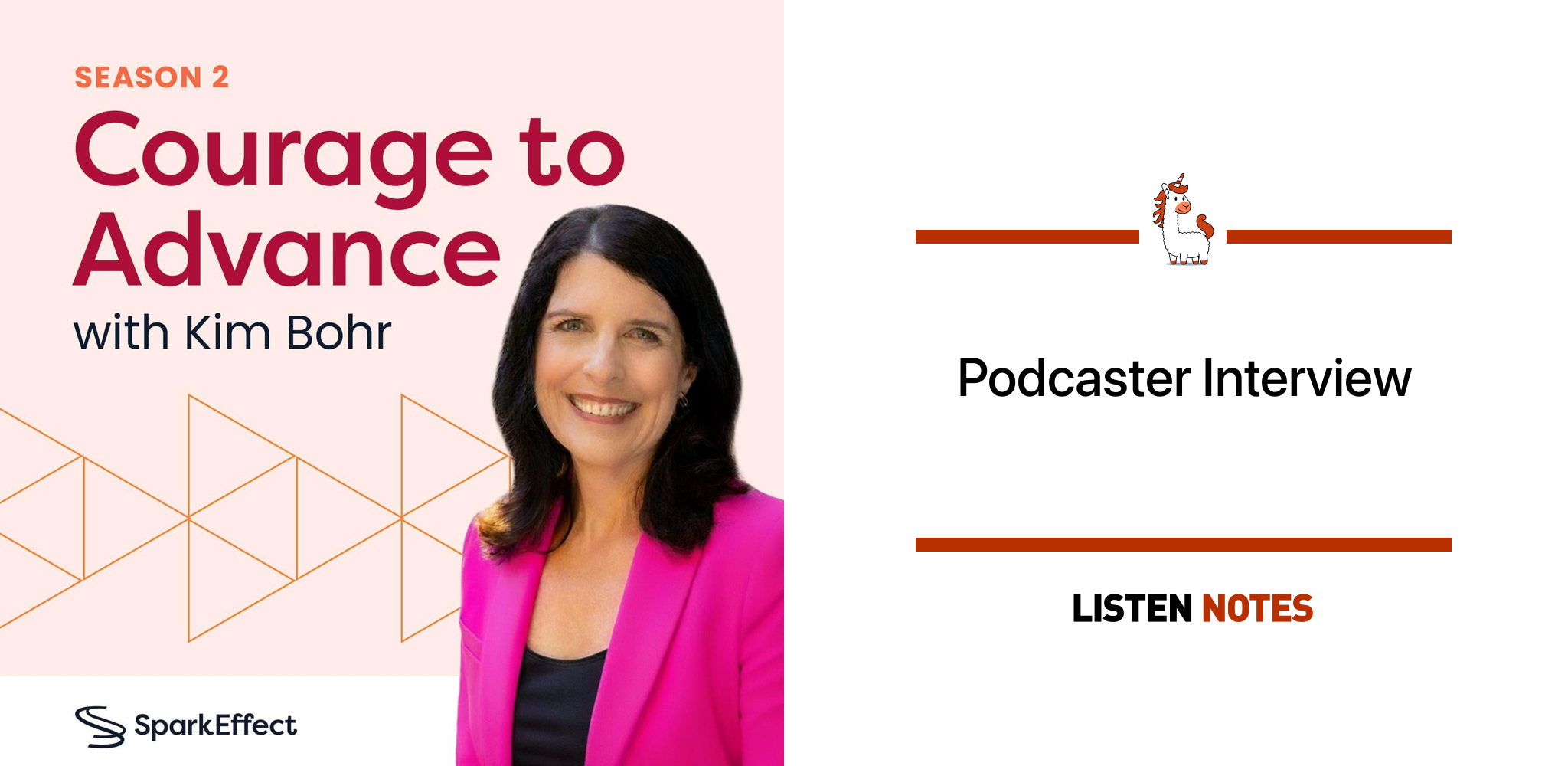
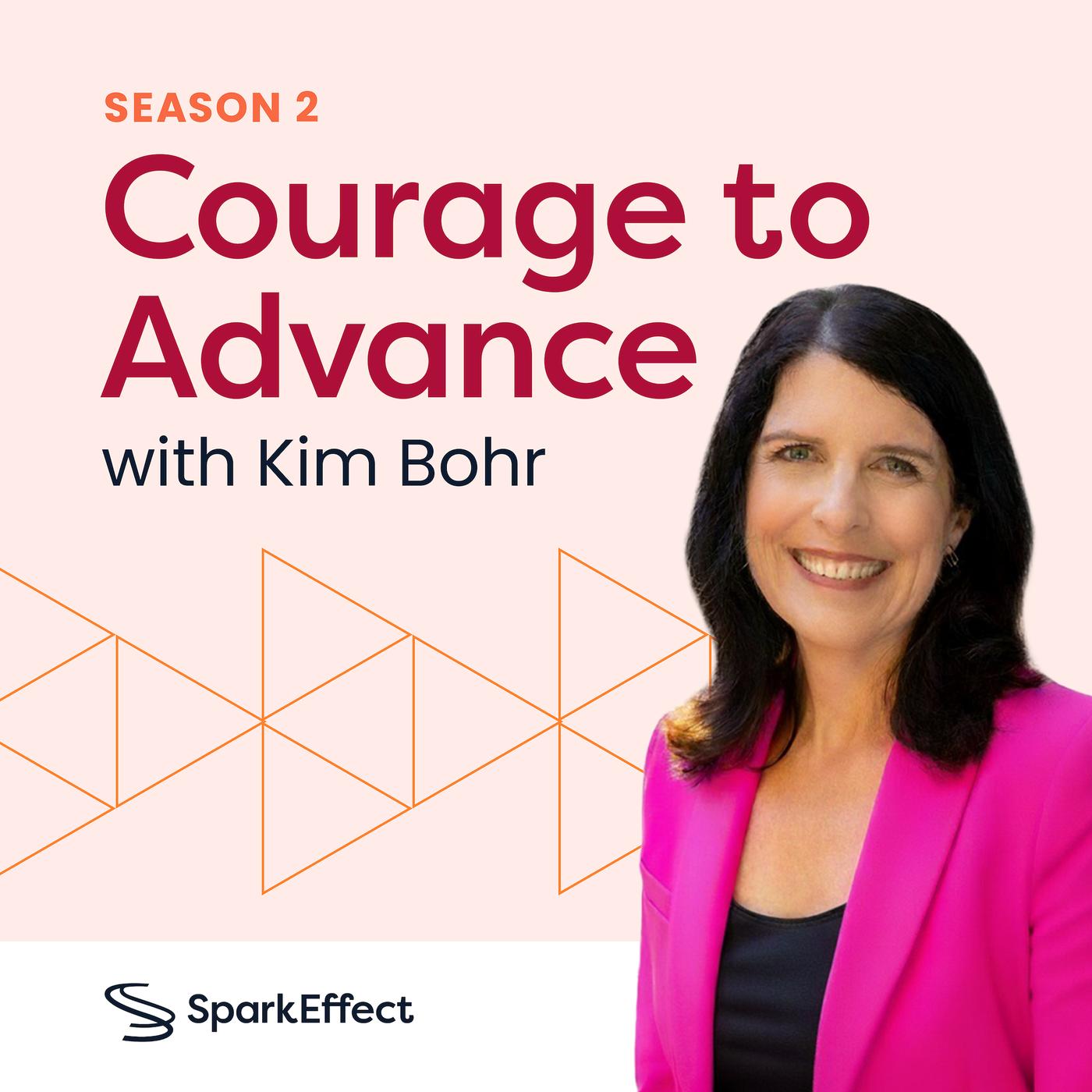
► Tell us about you and your podcast
I'm Kim Bohr, President & CEO of SparkEffect, a leadership coaching and organizational development firm. I've spent my career studying what makes organizations resilient, and the answer keeps coming back to the same thing: trust.
Our proprietary Trust in Turbulence research tells a stark story. 71% of organizations faced significant disruption in the past 24 months. Only 36% emerged stronger. The difference wasn't strategy. It wasn't technology. It was trust, specifically the capacity to stretch trust during disruption without breaking it. We call that SparkEffect Trust Elasticity™.
Courage to Advance features the executives from that 36%. Leaders who are redesigning work from the inside out, rejecting legacy systems, building human-centered cultures, and proving that bold leadership actually works. We go beyond the highlight reel. Every conversation explores what they refused to accept about traditional corporate life, how they actually restructured their systems and culture, and how they're influencing other leaders to do the same.
These aren't future-of-work predictions. These executives are already rewriting the rules.
Our listeners are senior leaders and executives, CHROs, CEOs, and culture-builders who feel the tension between how organizations have always operated and how they know they need to operate now. They're hungry for real, in-the-trenches case studies. They want to see what bold leadership looks like in practice, not in theory. And they want permission to build the organization they know is possible.
Courage is contagious. That's the movement we're building.
► Why & how did you start this podcast?
I've always believed that the best leadership insights don't come from textbooks. They come from real conversations with people who have done hard things and are willing to talk honestly about how.
Podcasting felt like the right medium because it creates space for that kind of depth. A 30-minute conversation with the right executive can shift how another leader thinks about what's possible in their organization. That's what we're after.
Our initial goals were straightforward: build SparkEffect's authority in trust, culture, and executive development, and create a platform that gives voice to leaders who are doing things differently. Not a content marketing checkbox. A genuine thought leadership platform that documents a new archetype of executive.
We launched our first season with a production partner to get the foundation right. This January we took full ownership of the show, producing and publishing independently for the first time. Season one taught us a lot about what our listeners respond to and what conversations have the most impact. We're building on that now with a clearer focus, a tighter format, and guests who connect directly to our trust research.
We're still early. But the feedback from listeners and guests has confirmed that this kind of honest, research-backed leadership conversation fills a real gap. There are a lot of leadership podcasts. There aren't many that treat trust as the strategic asset it actually is.
► How'd you find the time and funding to do this podcast?
Podcasting works for us because it serves multiple goals at once. Every episode we produce is also a business development conversation, a piece of thought leadership content, a social media asset, and a contribution to the body of research we're building around trust and organizational resilience. When a single investment of time creates that much value, it stops feeling like extra work and starts feeling like core work.
We release three episodes a month. Our production process runs end to end inside SparkEffect, with dedicated team members owning each stage from guest coordination through editing, publishing, and social distribution. We record remotely over Zoom, which makes it easy to bring in executives from anywhere without adding friction to their schedule. Having that infrastructure in place is what makes the cadence sustainable alongside everything else we do.
We work with an external editor for audio and video production, which keeps the quality consistent without requiring us to build that capability in house. Beyond that, our costs are the software and tools we use to run our production and marketing operations. We fund the show ourselves through our team, our editor, and our tech stack. It's not a massive budget. It's a focused one.
The honest answer on time is that it requires real commitment, especially from me as the host. Recording, preparing, and showing up fully for every conversation takes priority. But the return is worth it. Guests become relationships. Relationships become referrals. And every conversation advances the thinking we're doing at SparkEffect around trust elasticity and what it actually takes to lead through disruption.
► What do you gain from podcasting?
We don't take sponsorships. Courage to Advance is funded entirely by SparkEffect, and we intend to keep it that way. The moment you introduce outside sponsors, you introduce competing interests. Our only interest is in having the most honest, substantive conversations possible with leaders who are doing remarkable things. That independence is worth protecting.
What we gain from podcasting is harder to put a number on but easier to feel.
Every guest conversation is a masterclass. I'm sitting down with executives who have done things most leaders only talk about, and I get to ask them exactly how. That's an extraordinary learning opportunity, and it sharpens my own thinking as a coach and as a leader.
The relationships are real. Guests become part of our network in a meaningful way. They refer clients. They recommend other guests. They show up at our events. The podcast creates a reason to reach out to people we genuinely want to know, and it gives them a reason to say yes.
And the credibility compounds. Every episode we publish is evidence that SparkEffect is serious about trust as a field of study, not just a consulting talking point. We're building a body of work that positions this firm as the authority on trust, culture, and human-centered leadership. That's the long game, and the podcast is one of the most important tools we have for playing it.
We're early in our growth. But the foundation is solid and the momentum is real.
► How does your podcasting process look like?
Our production process is fully systematized, which is what makes three episodes a month sustainable without sacrificing quality.
We record all interviews remotely over Zoom or a similar platform, which removes the logistical barriers for busy executives. The conversation feels natural and the quality holds up well for both audio and video distribution.
For tools, we host on Podbean, manage our guest pipeline and production workflow in Monday.com, and handle all of our marketing and contact management through HubSpot. Our external editor handles audio and video post-production, and we distribute social assets across LinkedIn and YouTube in addition to all major podcast platforms.
Guest sourcing is intentional. We look for executives who have done something genuinely courageous, leaders who have rejected a traditional corporate assumption and built something better in its place. Some guests come through our sales team's network, some through referrals from previous guests, and some through our own research into organizations that are doing interesting things around trust, culture, and human-centered leadership.
Preparation matters a lot to me as a host. Before every conversation I review the guest's background, their organization's story, and any public work they've done. I want to walk in knowing enough to ask the questions that get past the surface. Our format gives every conversation a natural arc: what they refused to accept, how they actually changed it, and what they want other leaders to understand.
The goal is always the same. Leave the listener with something they can take back into their own organization.
► How do you market your show?
Our marketing is integrated into everything we do at SparkEffect, which is intentional. The podcast isn't a standalone content project. It's a distribution engine for our research, our philosophy, and our point of view on trust and leadership.
LinkedIn is our strongest channel by far. Our audience lives there. After every episode drops we publish content on Kim's LinkedIn that goes beyond a simple "new episode" announcement. We lead with a real insight or tension from the conversation, something that makes a leader stop scrolling and think. That's where we see the most engagement and the most direct traffic back to the show.
We also promote every episode to our email list through HubSpot, reaching current clients, past clients, and warm contacts who are already familiar with SparkEffect's work. That audience tends to convert well because they already trust the brand.
Guests are one of our most valuable marketing channels. When a guest shares their episode with their own network, that's warm, targeted traffic we couldn't buy. We make it easy for them by providing share-ready assets and suggested language so there's no friction.
We distribute on all major platforms including Spotify, Apple Podcasts, and Podbean, and we publish video clips to YouTube and LinkedIn to extend the reach of each conversation beyond the audio format.
We're early enough in our growth that we're still building the data picture on where listeners come from. What we know is that the combination of LinkedIn, email, and guest networks drives the most meaningful engagement. Quality of the listener matters as much as quantity when your audience is senior executives.
► What advice would you share with aspiring (new) podcasters?
The thing nobody tells you upfront is that consistency is the whole game. Not perfection. Not the best equipment or the most polished editing. Showing up every single time, on schedule, with a conversation worth having. That's what builds an audience and that's what builds credibility.
A few things I've learned that weren't obvious at the start:
Systems matter more than inspiration. We produce three episodes a month sustainably because we built a real production infrastructure, not because we wing it. Monday.com, HubSpot, a dedicated editor, clear ownership of every stage. If you're serious about podcasting, build the machine first.
Your guests are your marketing. The best thing that can happen after an episode drops is the guest sharing it with their network. Make that easy for them. Give them the link, the graphic, suggested language. Remove every possible barrier. Their audience is exactly the audience you want.
Transcripts are underrated. Adding transcripts to your episodes makes your content searchable in ways audio never will be. It's one of the highest return, lowest effort things you can do for long term discoverability.
Don't chase downloads early. Chase quality. One conversation that shifts how a listener thinks about their organization is worth more than a thousand passive plays. Know who you're talking to and talk to them specifically.
And finally, give it time. We started in January and we're still building. The compounding effect of consistent, quality content is real, but it doesn't happen overnight. Trust the process and keep going.
► Where can we learn more about you & your podcasts?
We'd love to connect.
Courage to Advance is available on all major podcast platforms including Spotify, Apple Podcasts, and Podbean. New episodes drop three times a month.
To learn more about SparkEffect and our Trust in Turbulence research, visit sparkeffect.com. You'll find our frameworks, coaching philosophy, and the data behind everything we talk about on the show.
Follow Kim Bohr on LinkedIn for episode releases, trust research insights, and thought leadership content between episodes. It's the most active place we show up consistently and where the best conversations happen.
https://www.linkedin.com/in/kimbohr/ or the company page https://www.linkedin.com/company/sparkeffect/ - also on instagram and facebook and youtube!
For guest inquiries, partnership opportunities, or to learn more about SparkEffect's executive coaching and organizational development work, reach out directly through sparkeffect.com or email to Kim.bohr@sparkeffect.com
If you're a leader who is redesigning work from the inside out and you think your story belongs on Courage to Advance, we want to hear from you. Courage is contagious. Come add yours to the conversation.