


O TYM ODCINKU
Apply to work with a Muscle Intelligence Coach → https://muscleintelligence.com/apply
Most people add peptides, stem cells, and supplements in the wrong order. Dr. Alexander Grinberg is the doctor other doctors call when a complex patient wants to try these treatments before the clinical trials are finished, and he says the first step isn't a treatment. It's finding out what's already wrong. Grinberg is an integrative medicine physician in San Francisco with 35+ years in clinical practice, immunology research, and biotech. Ben Pakulski asks him how all of it actually fits together, and his answer is a system rather than a protocol. Read your labs for high-normal and low-normal, not just "in range." Run the extended panels. Get a whole-body MRI and cancer markers before anything regenerative. Fix what's out of balance before you go after longevity. Then he gets specific about supplements: why six to eight at a time is his limit, why he rotates them by body system every month, what megadoses of vitamin D really do, and the popular mitochondrial supplement that can make reflux worse. He also explains "supplement exhaustion," which is what happens when you keep pushing your body after it's already improved. The second half is the new science, explained by someone who uses it on patients:- Epigenetics, explained as how loud your genes get played
- How peptides reach your DNA, and what thymus peptides do to your immune cells
- The six generations of stem cells, why Muse cells are different, and the risk that comes with repeat mesenchymal stem cell injections
- Stem cells vs. secretomes vs. exosomes (a city, a house, and a pitcher of water), and why exosomes can reach the brain when cells can't
- Klotho, a protein discovered in 1997 that tracks with every major killer, and what he's seeing with klotho peptides and kidney function in biohackers
- The one word on a "normal" blood panel that Grinberg reads differently from most doctors, and the test it tells him to order next
- The two checks he wants done before anyone touches peptides or stem cells (they have nothing to do with whether the treatment works)
- How many supplements is too many, why you should let your body keep a 20 to 30 percent improvement instead of pushing further, and the mitochondrial supplement people take with the exact condition it makes worse
- Which generation of stem cells we're on now, why the label on the vial isn't enough, and the machine that shows what you're actually injecting
- Why he thinks the young-plasma results were really about klotho, and what happens to regenerative treatments when you raise klotho first
Język angielski
Stany Zjednoczone
TRANSKRYPCJA 🔗
Are you the producer of this podcast?
Add a podcast transcript
Need Audio-to-Text?
Transcribe with Listen411 in Just 60 Seconds
WYSZUKAJ MINIONE ODCINKI
Wyszukaj minione odcinki Muscle Intelligence — Longevity, Training & Human Performance with Ben Pakulski.
INNE ODCINKI W TYM PODCASCIE

Work with a Muscle Intelligence Coach: https://www.muscleintelligence.com/apply/
Dr. Nathan Bryan has spent 25 years researching nitric oxide, the gas your body produces to open blood vessels and move oxygen into every cell you have. In this conversation he explains why production drops roughly…
Apply to work with a Muscle Intelligence Coach → https://muscleintelligence.com/apply
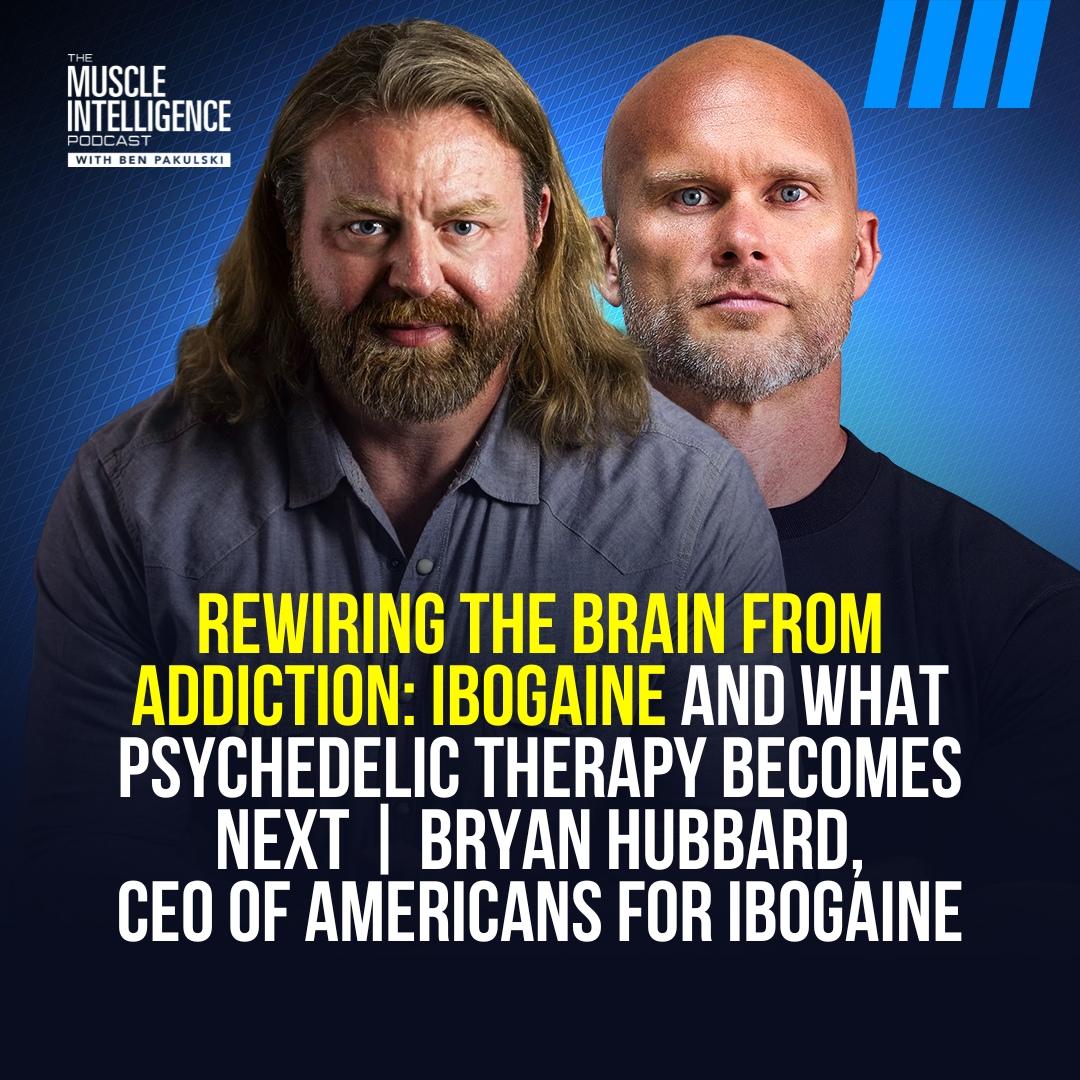
W. Bryan Hubbard is the CEO of Americans for Ibogaine, the organization he co-founded with former Texas Governor Rick Perry, and the reason ibogaine is now inside an FDA drug development pathway. He is also a con…
Apply to work with a Muscle Intelligence Coach → https://muscleintelligence.com/apply
What does success actually mean? In this solo episode of the Muscle Intelligence Podcast, Ben Pakulski redefines it: not a number, a title, or a physique, but how fully you show up in every domain of your life, m…
Want help designing your training, nutrition, and recovery around the way your body and brain actually work? Apply to work with the Muscle Intelligence coaching team → MuscleIntelligence.com/apply
Wharton neuroscientist Dr. Michael Platt has spent his career studying how the brain makes decisio…
Zastrzeżenie: Podcast i grafika osadzone na tej stronie pochodzą z Ben Pakulski, który jest własnością jego właściciela i nie jest powiązany ani wspierany przez Listen Notes, Inc.
EDYTUJ
Dziękujemy za pomoc w aktualizowaniu podcastowej bazy danych.
