

O TYM PODKAŚCIE 🔗
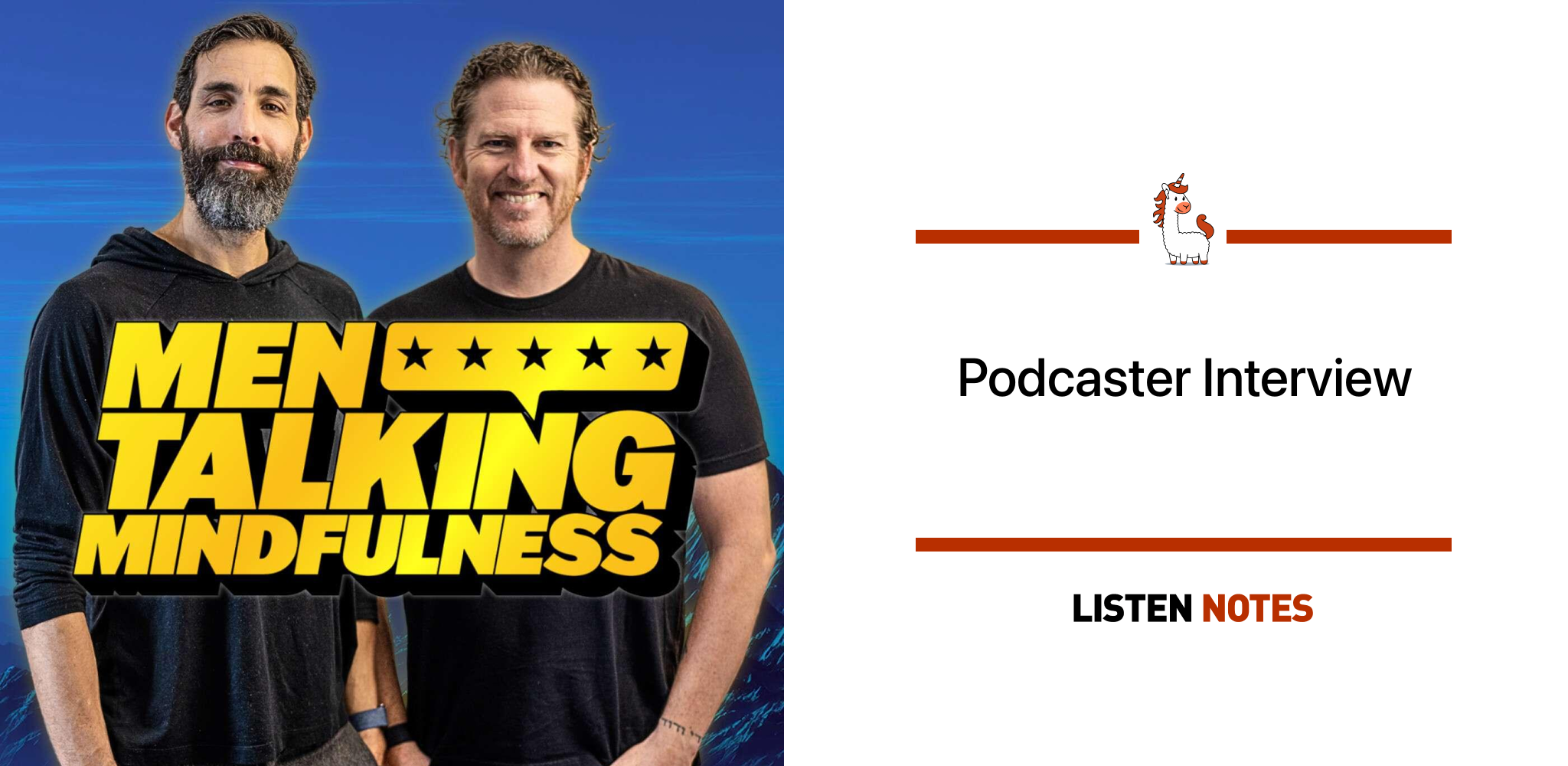
This show is for men who are doing fine on paper and know something is still off. Leaders, operators, veterans, tradesmen, dads... anyone carrying real pressure and tired of pretending it isn’t there. Every week Jon and Will sit down with psychiatrists, performance coaches, combat veterans, authors and everyday men to talk honestly about what we are all dealing with and what actually helps. Stress, sleep, anger, loneliness, focus, fatherhood, faith, testosterone, grief, burnout, and the daily practices that help a man come back to himself. No posturing. No lectures. Real conversations, real tools, and a mindfulness practice you can actually use.
Past guests include Jocko Willink, Mark Divine, Howard Behar, Rich Diviney, Dr. James Doty, Steven Pressfield, John Eldredge, and Dr. Mark Gordon.
Jon served 24 years in the Navy, 17 of them as a SEAL, and now teaches mindfulness and meditation to leaders in construction, engineering, manufacturing and defense. Will has taught yoga and mindfulness in New York City for nearly two decades and strips the fancy words away so the practices stick. Together they co-founded Focus Now Training and the Awareness to Action community.
If you have been told to meditate and never understood why it should matter to you, start here. Mindfulness will not make your stress disappear. It changes your relationship with it. That is the whole game.
Find the full back catalog, show notes and ways to work with Jon and Will at mentalkingmindfulness.com. Join the community at awareness2action.com.
W TYM PODKAŚCIE 🔗
NAJNOWSZY ODCINEK 🔗

WYSZUKAJ MINIONE ODCINKI
POPRZEDNIE ODCINKI 🔗


WYSZUKAJ MINIONE ODCINKI
PODCAST ZOSTAŁ ZGŁOSZONY
TEN PODCAST JEST WYSZUKIWANY...
WYWIAD Z PODCASTEREM
► Tell us about you and your podcast
I'm Jon Macaskill. I spent 24 years in the Navy, 17 of them as a SEAL, and I retired as a Commander. I enlisted in 1996 as a parachute rigger, went to the Naval Academy, and deployed to Iraq, Afghanistan, off the coast of Somalia and Panama. Somewhere in the back half of that career I found mindfulness and meditation, mostly because I had run out of other ideas. I came home with a post traumatic stress injury and a marriage and kids who needed a man who could actually be in the room. Meditation is what got me there. Now I teach it to leaders in construction, engineering, manufacturing and defense, I keynote, I coach, and I wrote a book called Dial In Your Leadership.
My co-host is Will Schneider. Will is a yoga and mindfulness teacher in New York City with nearly two decades of teaching, a biology degree, and he's a Stanford University Ambassador of Compassion through their CCARE program. He is the guy who strips the fancy words out of the practices so they actually stick. Together we co-founded Focus Now Training and the Awareness to Action community.
Men Talking Mindfulness is a weekly show on men's mental health, mindfulness, meditation, physical health and leadership. Every Monday we sit down with psychiatrists, performance coaches, combat veterans, authors and everyday men and talk honestly about what we are all dealing with and what actually helps. Stress, sleep, anger, loneliness, fatherhood, testosterone, grief, burnout, and the daily practices that bring a man back to himself. No posturing and no lectures.
Our listeners are men between about 25 and 60 who are doing fine on paper and know something is still off. Leaders, operators, veterans, tradesmen, dads. A surprising number of women listen too, usually because they want to understand the men in their lives, and some of our best reviews come from them.
► Why & how did you start this podcast?
Neither of us set out to be podcasters. In 2020 Will and I were speaking monthly about our mindfulness and meditation practices, challenges we were having, and insights we were having, we realized that others might want to listen to these same conversations. The show started as a way to have that conversation out loud and let other men listen in.
I'd been listening to a lot of podcasts myself, mostly long-form interviews, and I noticed that the ones that actually changed how I lived were the ones where the hosts were honest about their own mess. So that was the bar from day one. We talk about our own stuff first.
The initial goal was small. Reach a few hundred guys who would never walk into a yoga studio or a meditation retreat and give them something they could use on a Monday. Our first episode went out in early 2020, and the gap between deciding to do it and publishing was a matter of weeks, not months. We were not polished and we did not wait to be. Looking back, that was the right call. Six years and more than 470 episodes later we're still going, and the mission hasn't moved: help men turn awareness into action.
► How'd you find the time and funding to do this podcast?
We release one full episode every Monday, plus shorter episodes in between. The main episodes are 45 to 70 minutes. From booking to publishing, a full episode takes several hours of combined work: prep and research on the guest, the recording itself, then editing, show notes, artwork and distribution.
Early on we did everything ourselves, and it showed. The thing that saved the show was bringing on a producer, Robert Lopez at Crates Audio, who handles the editing and the production side so Will and I can focus on the conversations and the business around them. Our team now also includes Leo, who helps vet guests.
Time is the honest challenge. This is not a hobby for either of us. The podcast sits inside a working business, Focus Now Training, where we deliver corporate training, keynotes and coaching, so the show is both the front door and a product in its own right. We protect the recording slots on the calendar the same way we'd protect a client meeting.
On money, the show is funded by the business and by sponsors. Our costs are production, hosting on Transistor, recording on Riverside, the website, and the tools around marketing. We spend roughly $3k a month.
► What do you gain from podcasting?
Yes, we take sponsors, and we also sell our own things through the show: the Awareness to Action community and course, corporate training through Focus Now Training, and keynote speaking. The first sponsorship came after we had built a consistent weekly cadence and a real audience, and it came from a company that was already listening rather than from a cold pitch.
Today sponsors mostly come inbound through our media kit at mentalkingmindfulness.com/work-with-us, and through relationships we build with guests and their companies. We are picky. If we would not use it ourselves, it does not get read on the show.
The bigger gain isn't the money, though. The podcast has put me in a room with people I never would have met, from Jocko Willink and Mark Divine to Howard Behar, Steven Pressfield and Dr. James Doty. Several of those conversations became friendships. It has also been the best education I've had in men's mental health, hormones, sleep, trauma recovery and leadership, because I get to ask experts the questions I actually have. And it built the audience that lets Will and me do the work we love full time. Our LinkedIn following, our newsletter, our community and our speaking all grew out of the show.
► How does your podcasting process look like?
Recording: Riverside, remote, which is almost every episode since Will is in New York and I'm in Colorado. We record video and audio so each episode goes to YouTube as well as the audio platforms.
Hosting and distribution: Transistor
Editing and production: Robert Lopez at Crates Audio handles the edit, mastering and publishing.
Website: Go High Level, with a newsletter on Substack.
Show prep: we build an episode prep document for every guest with researched questions and context notes drawn from their book or their work, so the conversation goes somewhere the guest has not been asked to go a hundred times already.
Guests come from four places. Inbound pitches through the guest form on our site, which we get a lot of and screen hard. People we meet through LinkedIn, where I have a large following. Referrals from past guests, which are the best ones. And our own reading, where one of us finishes a book and says we have to talk to this person. Leo helps vet the pitches so Will and I only see the ones worth a conversation.
Every episode opens with a short mindful moment, usually a single breath or a minute of grounding, and we protect the silence in that part of the show in the edit. That is on purpose. If you teach presence, the show should practice it.
► How do you market your show?
LinkedIn is by far our biggest channel. I have around 145,000 followers there and I post almost every day, so a lot of our listeners find the show because they already follow the ideas. Apple Podcasts and Spotify search bring in the rest, along with YouTube, where the full video episodes and clips live.
We also run a weekly newsletter, Your Thursday Three Things, on Substack, and that is probably the most reliable channel we have because those readers already trust us. Instagram is newer for us and leans lighter and funnier than LinkedIn.
The thing we've learned is that every guest is a marketing channel if you make it easy for them. We send each guest the episode links, the clips and a few ready-to-post lines, and we ask them to share it and to leave a rating. Most do.
We don't have a clean acquisition breakdown. If I had to guess, the majority of new listeners come through LinkedIn and guest shares, with platform search filling in behind that.
► What advice would you share with aspiring (new) podcasters?
Start ugly. We named an episode that, because it is the most important thing we have learned. Our early episodes were rough and we published them anyway, and that momentum is the only reason the show exists today. If you wait until it's polished you will wait forever.
Have a co-host, or at least a partner. Will and I have talked each other out of quitting more than once. The show would have died in year two if either of us had been doing it alone.
Pick a lane and own it. Men talking about mindfulness was a narrow idea in 2020 and it is the reason people can find us.
Get a producer as soon as you can afford one, even part time. The hours you spend editing are hours you are not spending on guests, content and your audience.
Treat your guests like gold and make it easy for them to share. They are your best marketing.
Resources I'd point new podcasters to: the Listen Notes podcaster interviews, because reading how other people actually built their shows beats any course. Riverside and Transistor both have solid learning material. And honestly, go listen to the first five episodes of any show you admire. Everyone starts ugly.
► Where can we learn more about you & your podcasts?
Podcast website: https://mentalkingmindfulness.com
Apple Podcasts: https://podcasts.apple.com/us/podcast/id1536077981
Spotify: https://open.spotify.com/show/3mjWLc7OER9Y6ZTj0fl5BJ
YouTube: https://www.youtube.com/@mentalkingmindfulness
Instagram: https://www.instagram.com/mentalkingmindfulness
LinkedIn (show): https://www.linkedin.com/company/men-talking-mindfulness
Newsletter: Your Thursday Three Things on Substack, via mentalkingmindfulness.com
Community and course: https://awareness2action.com
Corporate training and speaking: https://focusnowtraining.com
Jon: https://jonmacaskill.com and https://www.linkedin.com/in/jonmacaskill
Will: https://www.linkedin.com/in/will-schneider-nyc
Email: info@mentalkingmindfulness.com
