
O TYM ODCINKU
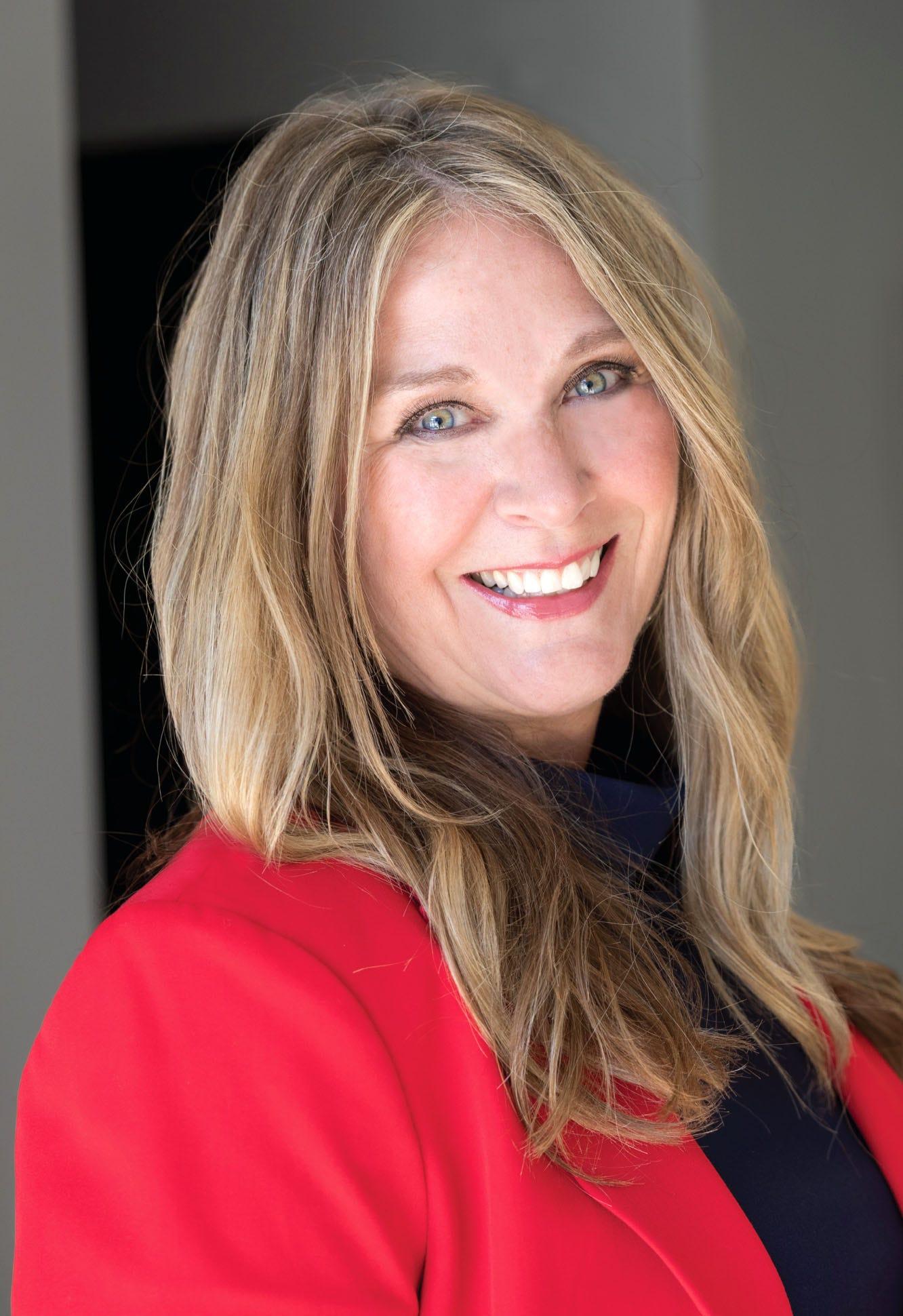
Representative Tesa Schwans of South Dakota House District 9, a cosmetologist and small business owner, joins Dave Roetman to discuss her legislative work. Schwans describes serving on the Teacher Compensation Review Board, whose recommendations included reviewing salary formulas and expanding teacher apprenticeship programs. She recalls her HB 1232, which clarified that salon workers can share booth space, and plans bills to update cosmetology laws and streamline license reciprocity. Citing her interest in mental health and addiction prevention, she discusses an Encompassing Youth Forum and concerns from superintendents about SB 70 and SB 73. She also explains Governor Rhoden’s decision to opt into the federal scholarship tax credit, allowing donors to give $1,700 to approved scholarship organizations starting in January 2027, and her role on the Correctional Rehabilitation Task Force.
Topics: Teacher Compensation Review Board, teacher apprenticeships, cosmetology licensing, license reciprocity, booth sharing, mental health and addiction, juvenile justice reform, SB 70 and SB 73, scholarship tax credit, school choice, Correctional Rehabilitation Task Force
HB 1232 - modify requirements relating to the operation of salons and booths and to declare an emergency. Passed and signed in 2025
Teacher Compensation Review Board Committee - Link to docs
South Dakota Teacher Apprenticeship Pathway - Document link
Gov. Rhoden Announces Correctional Rehabilitation Task Force Members
Correctional Rehabilitation taskforce - KELO news (video)
Correctional Rehabilitation Task Force meeting - video of meeting
Tesa Schwans - LRC link to bills and committees
Full transcript
About this transcript: It was machine-transcribed in-house and then edited for readability. Filler words and false starts are removed, and the meaning is unchanged. [?] marks a word or phrase we’re unsure of. Timestamps are approximate.
[00:00]
Dave Roetman: This is the Making Waves Podcast. My name is Dave Roetman. We’re here with Tesa Schwans, District 9 representative. Welcome, Tesa.
Tesa Schwans: All right, thank you. Thank you so much for having me today. I really appreciate being here.
Dave Roetman: We’re at the Makers Exchange in Tea [?]. This is kind of a cool place.
Tesa Schwans: Yes, I love to shop here.
Dave Roetman: It’s got a lot of good stuff. They have a lot of good food and a lot of little businesses where they exchange a lot of.
Tesa Schwans: Local products. Yep, and I love my small businesses. Definitely love coming here. Awesome.
Dave Roetman: Tell us what committees you’re on.
Tesa Schwans: Right now I currently serve on Commerce and Energy Committee and the Education Committee.
Dave Roetman: All right. And any other committees you’ve been serving on or interim on?
Tesa Schwans: Over the summer, I was asked to be on the Teacher Compensation Review Board Committee and do some studies reviewing teachers and their pay schedule, how they’re paid, where the teachers are seeing the biggest losses in K-12, and where they’re losing the most teachers. And what we can do to research the data and statistics that are leading to some of these teachers leaving the industry.
Dave Roetman: Could you dig down on that a little bit? What recommendations have you made? What did you find out? We had three meetings over the summer.
Tesa Schwans: Some of the recommendations that were made were just to look at some of the salary metrics, some of the formulas for the teacher salary and the average compensations to expand opportunities that for teachers professional development and to look at the apprenticeship programs that Dr. DeYoung is doing out of DSU. All of the strides that they’ve been making in that part of the program to get more teachers on board that don’t want a traditional four-year route of becoming a teacher.
So it’s been really inspirational to see his programs. So that was really great. That’s fascinating.
Dave Roetman: My mom used to teach a little bit, and so did one of my aunts. And back in the day, you graduate from high school, and then you go to a finishing school, which is basically two years where they taught you how to teach. But theoretically speaking, you have 12 years of education. There’s no reason why somebody with 12 years of education, high school graduate, can’t teach eighth graders. Yes.
Tesa Schwans: Yes, and what I understand from the apprentice program is that they allow them to work part-time and then as they’re working part-time they get to work towards their degree and by the time they’re done with their degree by doing this apprenticeship program. They’re then able to get hired on by the district that they were already working with. So what it does is it creates some stability to the areas that they live in and it creates a need or it helps...
Get the need met within those areas that we’re already losing some of the teachers in that field.
Dave Roetman: So it’s been very positive. I’m going to speculate here. I’m going to guess that you get teachers that don’t have all the student debt load either. Right. Correct.
Tesa Schwans: Yep. And so, which is a win-win for both. So you have somebody that comes into the industry wanting to teach very passionate not that you know out of a four-year you’re not because of course you are but people that cannot take the traditional four-year route because of other circumstances that have come up in their lives this has been a great opportunity for them to get teachers into the profession on a different track.
So that’s been really great.
Dave Roetman: That sounds very innovative. What kind of bills are going to be bringing in the future of next legislative session?
Tesa Schwans: That’s a very good question. Being a cosmetologist and a small business owner, there is a series of bills that I want to bring forward this next legislative session. Just to back up a little bit, last session I brought House Bill 1232 and it was a bill that was really geared towards sharing your booth space in a salon setting. So for example if you have a station in the salon and you work a certain amount of hours and you wanted to have somebody else come in and work the opposite hours that you are you can now do that.
That is written in law that you do have the ability to share your workspace without having to have extra square footage that you have to add or any type of extra plumbing that you need to add in with that extra square footage and in with that extra space. So it was really a right to work issue and being able to share that space and be able to have people that wanted to work on a part-time basis be able to have that opportunity as well to share that space and to share that expense so it was a it was a big win.
Dave Roetman: That’s really great but i’m sitting here a little bit boggle i wasn’t that allowed in the first place was that always the case.
Tesa Schwans: Well and interesting enough it was something that was happening but the way that some of the law were written it was written to where the understanding and the interpretation was that you had to add more square footage in order to do that and we just think that that’s it wasn’t necessarily something that we needed to do it was something that we really already had the right to do we just needed to reiterate that okay win for freedom yes win for freedom absolutely okay What other bills have you passed or what are you going to address here in the future?
[05:00]
A lot of the bills that I’ll be bringing forward will really have to do with cosmetology just because the laws and regulations that have been written in that part of our codified law really needs a lot of work. I mean they really haven’t been updated since 1974. And so some of the, so some of the laws and rules and promulgated rules are just a little outdated so we just need to update some of the rules and regulations that are following in those parameters.
So for example, reciprocity, the ability to move here from one state to another and be able to have the right to work right away and having the hours, making sure that the hours are crossing over, making sure that the licenses that were coming from other states that they’re able to transfer here and do it in a way that’s going to be more streamlined and is more easily accessible. And that really comes on the heels of some issues that we had had facing some reciprocity issues this last year.
So we really want to make sure that it’s streamlined, it’s clear, it’s concise, and it’s very direct on what the intentions are for when you come to work in South Dakota and having reciprocity.
Dave Roetman: Get the government out of the way so people can work and make a living. Yes, yes.
Tesa Schwans: And another thing I’d love to do with that is make sure that the work hours experience that you’ve had in other states is if you were licensed and you’re moving to our state that some of those work hours can be utilized into reciprocity hours.
Dave Roetman: What are you really passionate about as a legislation? What do you want to dig into?
Tesa Schwans: This has been such a great experience to really lean into where your heart really feels that you’re able to make the biggest and most significant changes. In the cosmetology world, it’s not just about doing hair and having somebody sitting in your chair. It’s about that contact. It’s about the connection that you feel with your client. Doing hair kind of helps build you up for a lot of communication and dealings with people on the emotional level on a psychological level on a spiritual level and so you get to deeper connection with those people that sit in your chair which has led me to a deeper passion which I knew I always had but never really knew how to get into this without a four-year degree and that’s dealing with mental health and the addiction and prevention and what it looks like in our society on a daily.
On a daily schedule, like what does that look like? Part of my passion is looking at the preventative side of it. What can we do as a society to look at the prevention agencies that we have in South Dakota right now? How can we help create some awareness to that so that we can help the next generation to have more grounded family structures and family values that are going to really help preserve and protect the unit of the family.
Dave Roetman: The foundation of societies are families.
Tesa Schwans: Yes yes and i definitely agree with that i think that the addiction rates across the state when you look at the amount of incarcerations and potential incarcerations that could happen the upticks with addiction pretty much go hand-in-hand That in a lot of case. I think that’s not even in question anymore. Yeah, and so, you know what comes first does addiction come first and then mental health or does mental health come first and then addiction So they kind of go hand in hand And so over the summer I decided to do my own deeper dive into a facility that’s in my district, which is in District 9, and it’s called Brighter Transitions and Falls Academy.
And they are a preventative care facility that has Department of Corrections kids, and it also has DSS kids all on the same campus. And so after talking to the executive director out there, it really sparked my interest of doing a deeper study into what we can do as elected officials to help create awareness to this situation and issue that we’re facing in the state of South Dakota.
Dave Roetman: Do you think this is going to lead to policy changes or maybe some bills that you might bring?
Tesa Schwans: I think it could potentially lead to some policy changes. Over the summer, we helped to encourage Encompassing Youth Forum, which myself, Senator Hohn [?], Representative Baxter, Representative Soye, Representative Northrup [?], and myself all kind of got together and helped create this Encompassing Youth Forum.
[10:00]
And it was pretty evident that some of the issues that we’re looking at is some legislation on SB 70 and SB 73 has to do a lot with juvenile reform. So there could possibly be some legislation that could come the House or the Senate this next session, that could start dealing with some of the inconsistencies that we have within that. SB 70 keeps coming up. Could you, just for.
Dave Roetman: The sake of our listeners, briefly talk about SB 70 and what that is and how it’s relevant? Yes.
Tesa Schwans: SB 70 is legislation that was brought, I want to say about five years ago. So it was, yeah, it was before I was really paying attention to a lot of this. And from my understanding it’s legislation that was brought forward. The SB 70 is more for the adult level and the SB 73 is more for the juvenile level. And it was created to put certain parameters in place to be a little bit more gentle on crime.
It was promising, if I recall.
Dave Roetman: Reduced incarceration because they’re going to reform the system a little bit and they’re going to help with addiction treatment and doing all kinds of things. Trying to resolve issues before putting people in prison. Right. And it’s not really had the effect that they intended.
Tesa Schwans: Right. And so what they’re finding is that... The inconsistencies of being able to get them help sooner than later is part of the problem so what happens is then the crime escalates and it gets a little bit more intense so by the time they get a handle on it they’re already on the trajectory for incarcerations as far as getting legislation across the desk i hope there’s going to be somebody that’s way better than me that’s going to bring the legislation to address some of this.
Dave Roetman: I’ve heard SB 70 come up often enough and I think that a lot of legislators realize that something needs to be done to make some changes to it. Yes.
Tesa Schwans: And I think SB 73 is the other one as well which during our Encompassing Youth Forum it was brought up actually by the superintendents and some of the superintendents expressed their concern about SB 73. 73 and what it’s doing to the uptick of behavioral issues in our.
Dave Roetman: Schools. It’s leaving a lot of superintendents, the school administrators, to deal with issues and problematical students and crime that justice is not dealing with. Right. And there’s a lot told in the bag. Yes. And nothing’s told about that, understandably.
Tesa Schwans: Yes, and that’s exactly right. From our understanding through the superintendents was that they want to do their part and they want to do their best but again it’s very hard to split your attention when you’re trying to focus on education and then now you’re having to focus a lot on behavioral issues and emotional instability and that kind of led a little bit to my teacher compensation review board this summer and that was a little bit of the questioning that we had in the Teacher Compensation Review Board, which is how can we address some of the behavioral issues?
Are the behavioral issues some of the reasons why the teachers are leaving, or is it because of the pay structure? Those were some of the recommendations that they needed to find out through the Department of Education to do some deeper research and find out what those recommendations look like.
Dave Roetman: Obviously something needs to be done. Yes. I understand that in the news that there’s something that the federal government has done and the state government has discussed about scholarships. Tell us about that.
Tesa Schwans: President Trump recently got the Big Beautiful Bill [inaudible].
Dave Roetman: [inaudible] you can give your money to a local scholarship fund and get that deducted from your taxes. Yes. Yes.
Tesa Schwans: So it was just brought across the desk of Governor Rhoden on November 14th of this month that he has opted into that program that donors in South Dakota are able to give $1,700. To the approved scholarship organizations for a 100% non-refundable tax credit. This will start in January of 2027.
Dave Roetman: That is awesome. Yeah. I much prefer that the money go directly to a program then go through Washington DC bureaucrats.
Tesa Schwans: Absolutely, and the fact that you as a taxpayer get that as a credit on your taxes is a win for everybody. So it’s a win for school choice and it’s a win for you as a taxpayer to get a credit.
Dave Roetman: And we’ll put a link to that in this post so that people can see it for themselves and it’s going to be in.
[15:00]
Tesa Schwans: 2027. Yep, it says January 2027. This money will fund scholarships for families to use on a variety of educational purposes and it will help them. And support as they discover what opportunities are going to work best for their kids.
Dave Roetman: Wow, so thank you to Governor Rhoden. Yes.
Tesa Schwans: And a big thank you to President Trump on that as well. Of course.
Dave Roetman: You were also on the Task Force for Rehabilitation of Prisoners. Yes.
Tesa Schwans: Yes, I was actually selected. I am one of 30 that was selected for the Correctional Rehabilitation Task Force. We had our first meeting in November, so it was a really interesting dynamic to the meeting with 30 people sitting and listening. That’s a large committee listening to the ideas and recommendations that that we could potentially push forward as we’re seeking new pathways to reform re and re.
Dave Roetman: Take on this issue because right now our systems failing. Yes. Yes and.
Tesa Schwans: Earlier when I was talking about the preventative care aspect to it it’s so multifaceted that you have the prevention care aspect you have the reform care which includes part of prevention but it also includes reform within the institutions itself yes and it also includes re-entry programs that when they do get back into society that we have a brand new man that knows his worth and knows what he is able to accomplish on his own and be successful and not have the recidivism rates going back up.
Dave Roetman: I like the way you put that. I believe in redemption, but you have to give people an opportunity. If they have no other choices, then they’re not going to be able to succeed.
Tesa Schwans: And honestly, if you know me, you know that I’m very faithful. I am very rooted in discernment of what it is that God is calling me to do and what. I can do and do my part as a citizen and the position that I am in, that’s what always comes to me is redemption. Who of us deserves redemption? And who are we to judge who deserves redemption? And so what is it that we can do to help these broken men?
That have done some bad things. And I’m not saying that what they did was right because there is a lot of victims out there that don’t even get an opportunity to maybe have a voice anymore. But what we should look at as a society is how can we make a change from something negative that’s happened and how can we take that and try and do something good from something bad that’s happened.
Dave Roetman: Tesa, what are your final thoughts?
Tesa Schwans: I have a lot of thoughts, so it’s hard to actually make them a final thought, but I’ll try to give it a try. I really think that as a newly elected representative for the House, that I’m really committed to fighting for the values that align with South Dakota. And encompass our integrity, the honesty, the compassion and the fortitude of the people in my district and the state of South Dakota and the legislation that I support and the legislation that I want to bring coming across the House and the Senate this next session.
My final thoughts are really, what can we do as a collective group of conservative Republicans to come together to solidify our message and make our statements of what it is that we see as the future for South Dakota and make it stronger together.
Dave Roetman: Thank you for being with us. You bet. Thank you. This has been the Making Waves podcast. My name is Dave Roetman. We’ve been here with Tesa Schwans of District 9. Thank you.
This is a public episode. If you would like to discuss this with other subscribers or get access to bonus episodes, visit daveroetman.substack.com