1
00:00:00,000 -->
00:00:07,260
Jason Wallace: Brian, hello and
welcome to the gaming with
2
00:00:07,260 -->
00:00:09,780
science podcast where we talk
about the science behind some of
3
00:00:09,780 -->
00:00:10,560
your favorite games.
4
00:00:12,120 -->
00:00:14,940
Brian: Today, we're going to
discuss primates by green
5
00:00:14,940 -->
00:00:22,040
butterfly games. Hey, welcome
back to gaming with science.
6
00:00:22,040 -->
00:00:25,700
This is Brian. This is Jason.
And wait, we've got some other
7
00:00:25,700 -->
00:00:26,240
people here.
8
00:00:26,240 -->
00:00:27,740
Will and David, you're back!
9
00:00:27,740 -->
00:00:28,640
Will: We're back.
10
00:00:28,640 -->
00:00:30,020
David: Can't get rid of us,
11
00:00:30,020 -->
00:00:33,080
Brian: no. Well, not that we
would want to actually, this
12
00:00:33,080 -->
00:00:36,260
whole reason that this entire
episode happened is actually
13
00:00:36,260 -->
00:00:38,240
your fault, so please explain
yourself.
14
00:00:38,600 -->
00:00:41,900
David: Oh, that's true. We this
game was sent to us. We were
15
00:00:41,900 -->
00:00:44,300
sent it as a gift from one of
our listeners, yeah, oh, we
16
00:00:44,300 -->
00:00:46,220
should have, we should have
looked up who it was that sent
17
00:00:46,220 -->
00:00:48,320
it to us. That would have been
really good to get the name.
18
00:00:48,580 -->
00:00:50,260
Jason Wallace: Thank you,
anonymous. Listener of another
19
00:00:50,260 -->
00:00:50,800
podcast,
20
00:00:54,220 -->
00:00:56,680
Brian: common descent. Listener,
whoever you are, thank you and
21
00:00:56,680 -->
00:00:59,800
make yourself known. You guys
got a game, and you said, Well,
22
00:00:59,800 -->
00:01:02,220
we know some people who want to
play, who like to play science
23
00:01:02,220 -->
00:01:04,920
games, and you approached us,
which is totally different,
24
00:01:04,920 -->
00:01:07,140
because that's not how this
works around here. We usually
25
00:01:07,140 -->
00:01:08,640
have to chase people down.
26
00:01:08,540 -->
00:01:12,380
David: We got the gift. I think
it, I think we received it
27
00:01:12,380 -->
00:01:15,380
shortly after the last time we
recorded with you guys.
28
00:01:15,380 -->
00:01:16,280
Brian: Oh, wow.
29
00:01:16,280 -->
00:01:19,520
David: And it was a really cool
because it's the it's a perfect
30
00:01:19,520 -->
00:01:22,220
game for your podcast?
31
00:01:22,700 -->
00:01:23,900
Brian: Absolutely.
32
00:01:24,020 -->
00:01:30,560
David: We thought it would be
super fun, and so, yeah, it was
33
00:01:30,560 -->
00:01:31,034
one of the first things we did
is we said, hey, do you guys
34
00:01:31,034 -->
00:01:31,087
want to play this you want to
come back and play this game
35
00:01:31,087 -->
00:01:31,096
with us?
36
00:01:31,096 -->
00:01:31,685
Brian: Yep, and we did, and it
was fun. And we even did it the
37
00:01:31,685 -->
00:01:34,805
weekend of the museum meetup at
Fernbank, which, again, is going
38
00:01:34,805 -->
00:01:37,445
to date this episode, but
whatever, that's fine. We're
39
00:01:37,445 -->
00:01:40,625
releasing this episode that will
also be our episode that's
40
00:01:40,625 -->
00:01:44,045
closest to Darwin Day. So it's
also a good game for Darwin Day.
41
00:01:44,045 -->
00:01:47,225
So I'm excited to talk about
this game. It has a huge amount
42
00:01:47,225 -->
00:01:49,745
of science content, and I'm
excited about the conversation
43
00:01:49,745 -->
00:01:52,925
we're going to get to have about
primates and how they're weird.
44
00:01:53,045 -->
00:01:55,670
But before we get into that, why
don't we do a little bit of
45
00:01:55,670 -->
00:01:58,000
science banter? Anything you
guys would like to talk about?
46
00:01:58,300 -->
00:02:00,240
Will: One that's on my mind
because I literally just
47
00:02:00,240 -->
00:02:03,240
finished taking notes on it for
one of our news sections, which
48
00:02:03,240 -->
00:02:06,480
will come out before this. So it
won't be, I won't be spoiling
49
00:02:06,480 -->
00:02:11,460
our news. There was a study on
dung beetles that have evolved
50
00:02:11,460 -->
00:02:16,260
to be necrophageous. So eating
dead bodies,
51
00:02:16,000 -->
00:02:18,040
Brian: Did they roll them up
into little balls?
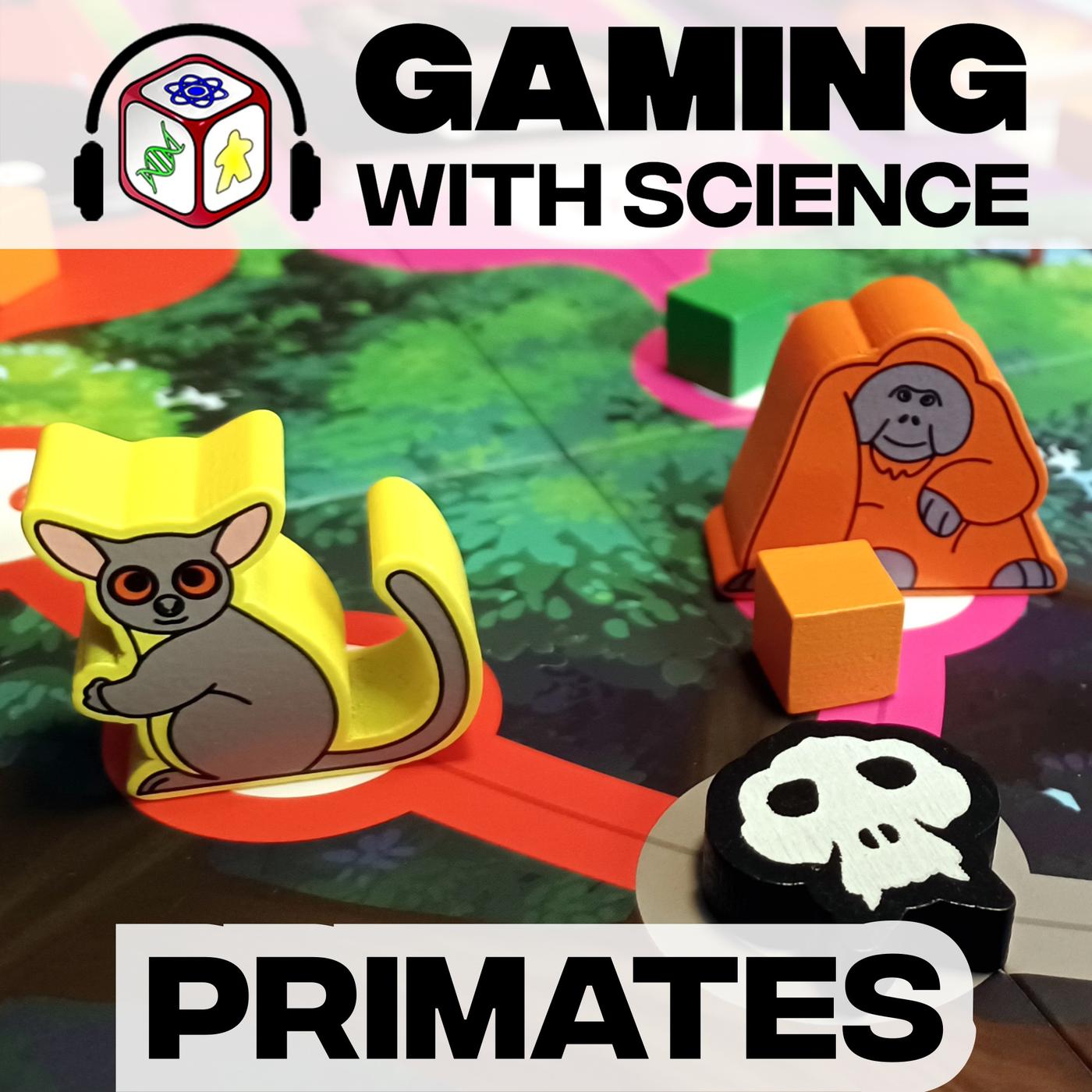
52
00:02:18,000 -->
00:02:21,180
Will: Yeah. And this is a thing
that I was aware of. We talked
53
00:02:21,180 -->
00:02:23,760
about this in the decomposing
episode, there are beetles that
54
00:02:23,760 -->
00:02:28,440
basically roll up a bit of a
meatball and roll it away, bury
55
00:02:28,440 -->
00:02:30,420
it and let their young feet off
of it,
56
00:02:30,600 -->
00:02:30,960
Brian: okay,
57
00:02:30,960 -->
00:02:33,360
Will: instead of dung, yeah,
meatballs.
58
00:02:33,360 -->
00:02:35,880
Brian: That's a different
meaning of meatball. Yep.
59
00:02:37,020 -->
00:02:39,840
Will: And there was, there's a
group of dung beetles that have
60
00:02:39,840 -->
00:02:45,645
evolved to do this, and they
studied it by finding those
61
00:02:46,005 -->
00:02:47,145
underground
62
00:02:48,225 -->
00:02:48,945
Brian: meat?
63
00:02:48,480 -->
00:02:54,420
Will: open like like like
burrows that they used to there
64
00:02:54,420 -->
00:02:59,820
are Ichnofossils, trace fossils
of these burrows that have
65
00:02:59,820 -->
00:03:02,280
preserved. And you can tell
which kind of beetle does it,
66
00:03:02,280 -->
00:03:05,220
because they build the burrow
differently. And so they were
67
00:03:05,220 -->
00:03:07,920
able to figure out the timing of
the evolution. Because
68
00:03:07,920 -->
00:03:12,525
originally the idea was that,
well, when the big herbivores
69
00:03:12,525 -->
00:03:16,425
that the dung beetles were
eating the dung of died, they
70
00:03:16,425 -->
00:03:21,105
had to switch to something else.
And so during the megafaunal
71
00:03:21,105 -->
00:03:25,245
extinction not too long ago in
our earth's history. That must
72
00:03:25,245 -->
00:03:28,605
have been when the beetles
switched over. But when they
73
00:03:28,605 -->
00:03:31,305
looked at the dating, it found
out no they were eating meat
74
00:03:31,305 -->
00:03:35,790
well before the big herbivores
started dying out. So what it
75
00:03:35,790 -->
00:03:39,150
seemed is more likely, is there
were so many herbivores and so
76
00:03:39,150 -->
00:03:43,290
much dung and so many dung
beetles that competition for
77
00:03:43,290 -->
00:03:45,570
some dung beetles to have to
start doing something
78
00:03:45,570 -->
00:03:48,630
differently, because there was
too much competition and too
79
00:03:48,630 -->
00:03:52,710
much to go around. So the
herbivores now were just feeding
80
00:03:53,010 -->
00:03:56,850
dung beetles while alive and
then flesh eating dung beetles
81
00:03:56,850 -->
00:03:57,450
while dead.
82
00:03:59,040 -->
00:04:01,920
Brian: What an unusual form of
niche partitioning, and also
83
00:04:02,400 -->
00:04:04,020
meatball trace fossils!
84
00:04:04,320 -->
00:04:06,420
David: Yes, yeah. Cool.
85
00:04:06,480 -->
00:04:09,540
Jason Wallace: So which, which
megafauna mass extinction. Was
86
00:04:09,540 -->
00:04:12,360
this? Is this like dinosaur mass
extinction, or is this like
87
00:04:12,420 -->
00:04:14,220
10,000 years ago mass
extinction?
88
00:04:14,220 -->
00:04:17,700
Will: Yeah, yeah. The 10,000 the
10,000 years ago with the
89
00:04:18,000 -->
00:04:22,760
mammal, megafauna, mass
extinction. This was a study
90
00:04:22,760 -->
00:04:25,940
focused on South America. So
this would have been a lot of
91
00:04:26,240 -->
00:04:29,480
the American big animals that
would have been these dung
92
00:04:29,480 -->
00:04:32,180
beetles, would have been living
alongside of, of, like big
93
00:04:32,180 -->
00:04:34,760
marsupials and things like that.
94
00:04:35,719 -->
00:04:39,139
Brian: Were there coprophagous
organisms that are known from,
95
00:04:39,139 -->
00:04:42,639
like the Jurassic I know we like
to talk about how sauropods must
96
00:04:42,639 -->
00:04:46,119
have been crazy ecosystem
engineers, but they must have
97
00:04:46,119 -->
00:04:48,519
been producing huge amounts of
waste.
98
00:04:49,560 -->
00:04:56,460
David: There are dung beetle
fossils in coprolites in the
99
00:04:56,460 -->
00:05:01,680
fossil record. I think they go
back to the Mesozoic, although
100
00:05:01,680 -->
00:05:04,680
I'm off the top of my head, I'm
not sure. But there are specific
101
00:05:04,680 -->
00:05:08,940
there are dung ball fossils,
like coprolites that are
102
00:05:08,940 -->
00:05:12,885
specifically rolled up into
balls and have often dung beetle
103
00:05:12,885 -->
00:05:14,205
larval burrows inside
104
00:05:14,205 -->
00:05:19,005
Brian: interesting. So I would
be it would be absolutely insane
105
00:05:19,005 -->
00:05:22,065
if basically, the origin of dung
beetles corresponds with
106
00:05:22,065 -->
00:05:23,325
sauropods. Because, of course,
107
00:05:25,965 -->
00:05:29,325
Will: when it's like someone was
definitely doing the job, I just
108
00:05:29,325 -->
00:05:32,205
don't know which group of
insects it was, because how
109
00:05:32,205 -->
00:05:33,645
could you not take advantage of
that?
110
00:05:33,645 -->
00:05:35,685
Brian: All right, what about
you, Jason, you said you found
111
00:05:35,685 -->
00:05:36,105
the thing too.
112
00:05:37,005 -->
00:05:38,805
Jason Wallace: Yes. So I was
looking at things about
113
00:05:38,805 -->
00:05:43,950
primates, and I found one about
humans recently, which were
114
00:05:43,950 -->
00:05:48,930
primates. So that counts. This
was a recent one on our peak
115
00:05:48,930 -->
00:05:52,110
energy expenditure. So
basically, there's the question
116
00:05:52,110 -->
00:05:56,070
of, what is the capacity for
human like endurance, like, how
117
00:05:56,070 -->
00:06:00,315
much, many calories can you
actually burn sustainably? And
118
00:06:00,315 -->
00:06:03,735
so they took a bunch of like,
high endurance performance
119
00:06:03,735 -->
00:06:05,955
athletes, like people that are
doing all sorts of crazy
120
00:06:05,955 -->
00:06:10,755
endurance feats, and they gave
them a bunch of labeled heavy
121
00:06:10,755 -->
00:06:14,535
labeled isotopes, okay, heavy
hydrogen, heavy oxygen. So they
122
00:06:14,535 -->
00:06:15,495
could trace it, you
123
00:06:15,420 -->
00:06:17,760
Brian: got to have that nice,
sweet heavy water.
124
00:06:15,420 -->
00:06:20,400
Jason Wallace: Yes. So and
again, I don't know all the
125
00:06:20,400 -->
00:06:23,340
details, suffice to say, let
them determine how much they
126
00:06:23,340 -->
00:06:27,900
were metabolizing, how much they
were how many calories they were
127
00:06:27,900 -->
00:06:31,740
burning. And they found that for
these extreme athletes, the
128
00:06:31,740 -->
00:06:35,880
limit was about two and a half
times their basal rate. So your
129
00:06:35,880 -->
00:06:38,565
basal metabolic rate is how much
your body burns when you're just
130
00:06:38,625 -->
00:06:41,745
lying there. It's how much it
takes to pump your heart and to
131
00:06:41,745 -->
00:06:46,125
breathe and to maintain your
organs and such, and they've
132
00:06:46,125 -->
00:06:49,485
known that. So in short bursts,
you can go up to like, 10 times
133
00:06:49,485 -->
00:06:52,605
that amount if you're doing like
a super, like a super endurance
134
00:06:52,605 -->
00:06:55,845
run, like, I know someone who
did a 24 hour run. I think he's
135
00:06:55,845 -->
00:06:57,105
a little crazy, but he did it.
136
00:06:57,105 -->
00:06:59,145
Brian: I'm sorry. What?
137
00:06:59,565 -->
00:07:02,190
Jason Wallace: you run for 24
hours. That's that's the goal.
138
00:07:02,190 -->
00:07:02,790
No You don't
139
00:07:03,480 -->
00:07:06,240
David: thank you. I don't want
to run. I don't want to run for
140
00:07:06,240 -->
00:07:08,100
24 seconds. Yeah.
141
00:07:08,880 -->
00:07:10,320
Jason Wallace: The thing is,
when you do that, you're
142
00:07:10,320 -->
00:07:14,280
actually burning calories faster
than you can metabolize them in
143
00:07:14,280 -->
00:07:17,460
you cannot digest food fast
enough to replace those
144
00:07:17,460 -->
00:07:20,420
calories. So that's not
sustainable. So they found that
145
00:07:20,420 -->
00:07:22,700
over the course of like six
months, as these people were
146
00:07:22,700 -->
00:07:25,220
doing their hyper endurance
stuff, it averaged out to about
147
00:07:25,220 -->
00:07:28,880
two and a half times, and that
when they were performing their
148
00:07:28,880 -->
00:07:32,060
really high endurance stuff,
they subconsciously cut down on
149
00:07:32,060 -->
00:07:35,000
other things like fidgeting or
walking around or other stuff.
150
00:07:35,000 -->
00:07:39,380
So they cut back on their other
caloric expenditure in order to
151
00:07:39,380 -->
00:07:42,220
keep it to about that amount.
And the hypothesis is that
152
00:07:42,220 -->
00:07:45,400
that's about as fast as you can
actually metabolize calories,
153
00:07:45,400 -->
00:07:48,580
because it takes calories to
digest your food. And the
154
00:07:48,580 -->
00:07:51,520
thought is that about two and a
half times your basal rate is
155
00:07:51,520 -->
00:07:56,140
probably as much as you can
physically ingest and absorb at
156
00:07:56,140 -->
00:07:59,320
your peak. And so that's the
hypothesis anyway. Obviously,
157
00:07:59,320 -->
00:08:01,440
there's other stuff to be
proven, but they they seem to
158
00:08:01,440 -->
00:08:03,720
have done some good work. So,
okay, this is the limit of how
159
00:08:03,720 -->
00:08:06,060
far over the long term you can
actually burn
160
00:08:07,020 -->
00:08:10,140
David: Interesting, interesting.
Bad news for speedsters.
161
00:08:10,600 -->
00:08:13,900
Jason Wallace: Yeah, then you
just tap into the speed force.
162
00:08:13,900 -->
00:08:15,000
And that's a force, a source of
infinitre energy right?
163
00:08:15,660 -->
00:08:19,200
David: This is why the Flash has
the Speed Force is to overcome
164
00:08:19,200 -->
00:08:21,800
force is actually physiological
limitations? Yes,
165
00:08:28,820 -->
00:08:31,700
I'd be fascinated to know, and I
don't know how we would do this,
166
00:08:31,760 -->
00:08:35,420
but to see what that kind of
study would find in other
167
00:08:35,420 -->
00:08:40,480
species, is their version of
this? Different? Are they able
168
00:08:40,480 -->
00:08:43,720
to maintain a higher activity
level.
169
00:08:44,020 -->
00:08:47,740
Brian: So I think the best
surrogate for this study is
170
00:08:47,740 -->
00:08:49,060
probably cats.
171
00:08:49,960 -->
00:08:53,020
David: Yeah, well, and dogs are
interesting. I was gonna say
172
00:08:53,020 -->
00:09:00,520
dogs, because cats, even modern,
even wild cats, are not very
173
00:09:00,520 -->
00:09:06,340
active animals like lions are
famous for they sleep like 18
174
00:09:06,340 -->
00:09:10,540
hours a day or something, right?
They really are "rest most of
175
00:09:10,540 -->
00:09:14,725
the day and then do some bursts
of activity". Dogs, I think,
176
00:09:14,725 -->
00:09:17,245
would be an excellent
comparison, because dogs
177
00:09:17,245 -->
00:09:21,745
actually have a lot of the same
physical adaptations as humans,
178
00:09:21,985 -->
00:09:26,545
for mobility and for traveling
and for covering long distances.
179
00:09:26,545 -->
00:09:31,165
They're cursorial animals, as we
are. And dogs would also be
180
00:09:31,165 -->
00:09:33,865
nice, because you can train a
dog to do whatever you need it
181
00:09:33,865 -->
00:09:36,205
to do for this.
182
00:09:36,325 -->
00:09:38,725
Brian: Cursorial means running?
183
00:09:39,250 -->
00:09:43,270
David: Cursorial means adapted
for running. So horses are
184
00:09:43,270 -->
00:09:49,690
cursorial dogs and wolves, all
canines are cursorial and common
185
00:09:49,690 -->
00:09:54,910
adaptations you see across those
three groups include large lung
186
00:09:54,910 -->
00:10:00,535
capacity certain types of
thermoregulatory. Very you know,
187
00:10:00,535 -->
00:10:07,195
we sweat, dogs pant, these very
particular adaptations for
188
00:10:07,195 -->
00:10:11,935
maintaining body temperature and
the shape of our legs. Dogs,
189
00:10:11,935 -->
00:10:16,675
horses and humans, all have very
long legs that tend to also be
190
00:10:16,675 -->
00:10:20,755
very thin. One of my favorite
things to compare if you if you
191
00:10:20,755 -->
00:10:23,740
have a cat and a dog handy, and
you look at the shape of the
192
00:10:23,740 -->
00:10:28,660
limbs and a cat and a dog, dog
legs almost all the muscles up
193
00:10:28,660 -->
00:10:33,340
on the top, and then it becomes
this stick toward the end. And
194
00:10:33,340 -->
00:10:39,880
the fingers on the paws are long
and in and narrow. The foot is
195
00:10:39,880 -->
00:10:45,385
sort of long and narrow. If you
look at a cat, their arms tend
196
00:10:45,385 -->
00:10:49,405
to be muscular all the way down.
Their arms are much more
197
00:10:49,405 -->
00:10:53,785
flexible and their paws are a
little bit wider and shorter,
198
00:10:54,205 -->
00:10:57,865
because cats are grapplers.
Yeah, cats are using their arms
199
00:10:57,865 -->
00:11:04,645
to wrestle and grab and pull dog
arms are really built to do one
200
00:11:04,645 -->
00:11:08,005
thing, and that is to walk. That
is to move. And they're really
201
00:11:08,000 -->
00:11:13,460
Jason Wallace: And so humans
would be the only cursorial
202
00:11:08,005 -->
00:11:08,785
efficient at it.
203
00:11:13,460 -->
00:11:16,700
primate. Yes, like I've seen
other primates try to run, it
204
00:11:16,700 -->
00:11:17,900
doesn't work out so well.
205
00:11:18,500 -->
00:11:22,640
David: No, we are actually.
There's a bunch of hypotheses
206
00:11:22,640 -->
00:11:28,040
that we are specifically adapted
for running, not just for
207
00:11:28,040 -->
00:11:32,720
walking on two feet, but that
some of the anatomy of our
208
00:11:32,720 -->
00:11:37,820
especially our lower bodies, is
specific, not good for walking,
209
00:11:37,820 -->
00:11:41,285
but specifically good for
running. We are running adapted
210
00:11:41,285 -->
00:11:42,065
primates.
211
00:11:42,360 -->
00:11:44,280
Brian: Well, I don't think we
could ask for a better
212
00:11:44,280 -->
00:11:46,800
transition into the discussion
to this game, so I think we
213
00:11:46,800 -->
00:11:49,740
should take advantage of that
and and start talking about
214
00:11:49,740 -->
00:11:52,620
primates the board game. I'm
going to start by introducing
215
00:11:52,620 -->
00:11:55,020
the game. We're going to, you
know, deal with that particular
216
00:11:55,020 -->
00:11:57,300
challenge and how the game
works. And then we're going to
217
00:11:57,300 -->
00:12:01,440
jump into a conversation about
what is a primate, where did
218
00:12:01,440 -->
00:12:04,920
they come from, and how do we
relate to the rest of them? As
219
00:12:04,920 -->
00:12:10,425
you know, weird, very weird,
bipedal primates. Okay, so
220
00:12:10,545 -->
00:12:14,685
primates is a game that was
designed by Derek Coons. I
221
00:12:14,745 -->
00:12:18,885
looked this person up a little
bit. So he is a graduate of
222
00:12:18,885 -->
00:12:22,245
Miami University in Ohio,
another computer scientist
223
00:12:22,245 -->
00:12:24,945
person who made his way into
board games, but actually was
224
00:12:24,945 -->
00:12:29,190
one of the founding members of
Mercy for Animals, so very
225
00:12:29,190 -->
00:12:32,790
interested in sort of animal
rights and that aspect, which
226
00:12:32,790 -->
00:12:36,030
actually you can see some of
that reflected in the game. So
227
00:12:36,090 -->
00:12:38,970
I'm not sure what inspired the
creation of primates, but I'm
228
00:12:38,970 -->
00:12:42,630
very glad that it did, because
this is an incredibly detailed
229
00:12:42,630 -->
00:12:46,170
game about primates and primate
evolution. So what does the game
230
00:12:46,170 -->
00:12:50,670
look like? You have a it's a
very space hungry game. Let's
231
00:12:50,670 -->
00:12:53,595
start with that, like when we
all sat down to play, it took
232
00:12:53,595 -->
00:12:56,655
the majority of the table to
sort of just lay this out. And
233
00:12:56,655 -->
00:13:00,675
there's a reason for that. You
have a large, beautifully
234
00:13:00,675 -->
00:13:05,055
illustrated, simplified
phylogenetic tree of the history
235
00:13:05,055 -->
00:13:09,495
of primates. It's split down
into six major branches. The
236
00:13:09,495 -->
00:13:12,255
reason that the board is so big
is you've got six different
237
00:13:12,255 -->
00:13:15,315
groupings of primates, and these
are regular playing playing,
238
00:13:15,495 -->
00:13:18,180
regular size playing cards. So
you can kind of imagine, if
239
00:13:18,180 -->
00:13:20,580
you're going to stack up six of
these side by side, it's just
240
00:13:20,580 -->
00:13:24,180
going to take up some space. You
have slightly oversized cards as
241
00:13:24,180 -->
00:13:27,660
well that are going to represent
extinct primates. So the tree is
242
00:13:27,660 -->
00:13:29,880
split into six groups. We're
going to come back and we're
243
00:13:29,880 -->
00:13:32,520
going to talk about all those
groups later. In more detail,
244
00:13:32,640 -->
00:13:36,660
you've got oversized, chunky,
wooden meeples representing, I'm
245
00:13:36,660 -->
00:13:39,165
trying to remember what all of
them were. There's an orangutan,
246
00:13:39,165 -->
00:13:42,945
for sure. I think there's a bush
baby. There's definitely a lemur
247
00:13:42,945 -->
00:13:45,585
in there at some point. Or maybe
it was a tarsier, I don't know.
248
00:13:45,585 -->
00:13:49,545
I'm sure they were trying to
pull from across the primate
249
00:13:49,545 -->
00:13:50,265
family tree.
250
00:13:50,360 -->
00:13:52,460
Jason Wallace: I will say the
meeples are the best part of
251
00:13:53,180 -->
00:13:57,140
this game. They are the most
adorable meeples I've ever seen.
252
00:13:57,000 -->
00:14:01,920
Brian: They are very good. So
the board is a phylogenetic tree
253
00:14:01,920 -->
00:14:04,860
of primates and how they relate
to one another, but it's also
254
00:14:04,860 -->
00:14:08,640
representing a real, physical
tree at the same time. So the
255
00:14:08,640 -->
00:14:10,860
goal of the game is to take your
little meeples, and you're
256
00:14:10,860 -->
00:14:14,220
moving them up the branches to
the top of each of these six
257
00:14:14,220 -->
00:14:18,240
different extant primate
families. When you get to the
258
00:14:18,240 -->
00:14:21,585
top, you get to take one of the
cards that is there, and that
259
00:14:21,585 -->
00:14:24,465
card will represent a member of
that family, and usually will
260
00:14:24,465 -->
00:14:29,145
tie it to a specific ability. So
for instance, orangutans, if you
261
00:14:29,145 -->
00:14:32,685
get the orangutan card under the
great apes, it has an ability
262
00:14:32,685 -->
00:14:35,625
called tree swaying, which lets
you jump from branch to branch
263
00:14:35,685 -->
00:14:38,385
on the phylogenetic tree, which
we think is a wonderful
264
00:14:38,385 -->
00:14:42,705
representation of that ability.
There may be things that are
265
00:14:42,705 -->
00:14:44,910
affecting their ability to
collect food, or stuff like
266
00:14:44,910 -->
00:14:50,250
that. Positioned on the tree,
you'll have little primate skull
267
00:14:50,250 -->
00:14:53,490
icons that are representing
extinct primates along those
268
00:14:53,490 -->
00:14:56,430
different lineages. And you're
also going to populate with
269
00:14:56,430 -->
00:14:59,370
different sort of food tokens.
And there are, I think it's
270
00:14:59,370 -->
00:15:03,570
animal protein, there's plants,
fruits, and then there's like a
271
00:15:03,570 -->
00:15:06,129
wild card that's supposed to be,
like, saps or exudates or
272
00:15:06,129 -->
00:15:08,955
something like that. I think
it's a wild card because
273
00:15:08,955 -->
00:15:11,235
sometimes you're licking
honeydew, which is just what
274
00:15:11,235 -->
00:15:15,735
comes out of the back of an
insect. So it's kind of
275
00:15:15,735 -->
00:15:18,375
vegetable, it's kind of animal,
it's both. It's a wild card,
276
00:15:18,795 -->
00:15:20,235
Jason Wallace: post processed
vegetable.
277
00:15:20,480 -->
00:15:24,620
Brian: Yeah so let's see the
movement of your primates up the
278
00:15:24,620 -->
00:15:28,220
tree is actually something where
you it is a roll to move, kind
279
00:15:28,220 -->
00:15:32,000
of it's still very strategically
choice. It's not Candy Land. So
280
00:15:32,000 -->
00:15:35,000
you're going to roll three dice.
They have either one, two or
281
00:15:35,000 -->
00:15:38,060
three on them. You can either
move all three of your little
282
00:15:38,060 -->
00:15:42,080
primate meeples on different
branches, or you can move, use
283
00:15:42,080 -->
00:15:45,305
two dice and move one of your
your meeples, an extra far
284
00:15:45,305 -->
00:15:47,825
distance. When you get to the
top of the tree, you get to
285
00:15:47,825 -->
00:15:51,245
collect a card. The only other
mechanic is, if you rest, you
286
00:15:51,245 -->
00:15:54,365
can get these bonus cards. And a
lot of those have this sort of
287
00:15:54,365 -->
00:15:56,525
if you think about Mercy for
Animals, a lot of those are
288
00:15:56,525 -->
00:15:59,885
about legislation to protect
animals or to protect primates.
289
00:15:59,885 -->
00:16:02,705
Or that's where you'll also get
your set mechanics where you're
290
00:16:02,885 -->
00:16:06,024
trying to collect. You'll get
extra points for collecting all
291
00:16:06,024 -->
00:16:08,810
of the primates from China, or
something like that, or other
292
00:16:08,810 -->
00:16:12,050
sort of interesting groupings.
When you collect those, there's
293
00:16:12,050 -->
00:16:14,810
this secondary track called the
heart track. You can also get
294
00:16:14,810 -->
00:16:18,410
points from that. Most of your
points are going to come from
295
00:16:18,470 -->
00:16:21,830
collecting your primates at the
top, collecting your little
296
00:16:21,830 -->
00:16:26,570
bonus primate sets and your
heart track that runs across the
297
00:16:26,570 -->
00:16:30,335
bottom. And I think that's all
the ways you get points in this
298
00:16:30,335 -->
00:16:32,195
game. Jason, what am I
forgetting?
299
00:16:32,855 -->
00:16:35,315
Jason Wallace: No, I think that
mostly covers it. You've got
300
00:16:35,315 -->
00:16:37,895
your your primary points you get
from picking up the various
301
00:16:37,955 -->
00:16:41,495
extant or extinct primates.
You've got your bonuses, you've
302
00:16:41,495 -->
00:16:44,315
got the heart track, and I think
you may have some bonuses for
303
00:16:44,315 -->
00:16:47,255
food at the end. You haven't
eaten, but you use the food to
304
00:16:47,255 -->
00:16:50,315
buy various other things. So
it's a resource, but it's also
305
00:16:50,315 -->
00:16:51,275
worth points at the end.
306
00:16:51,635 -->
00:16:52,067
Brian: Yeah, usually that's
true. Whenever there's some
307
00:16:52,067 -->
00:16:52,088
resource, they usually throw a
couple extra points. If you got
308
00:16:52,088 -->
00:16:55,220
a bunch of those sitting around,
usually it's only going to be
309
00:16:55,220 -->
00:17:01,220
there to help break ties. You're
never gonna win a game from
310
00:17:01,220 -->
00:17:03,500
hoarding a bunch of like, food
cubes.
311
00:17:03,980 -->
00:17:06,260
Will: I don't can attest that's
where most of my points came
312
00:17:06,560 -->
00:17:09,020
from. When we played, that was
where most of my points were
313
00:17:09,020 -->
00:17:11,540
from. Was my leftover food. Oh,
okay.
314
00:17:11,540 -->
00:17:15,086
Brian: But actually, this is the
different from when we played
315
00:17:15,086 -->
00:17:15,905
holotype. Because I think you
spanked everybody in holotype.
316
00:17:16,325 -->
00:17:19,265
Yes, that one, I did well. But I
think in this version, I think
317
00:17:19,265 -->
00:17:22,685
David spanked everybody if I'm,
if I'm remembering correctly,
318
00:17:22,805 -->
00:17:25,925
David: I think me, Jason and I,
I feel if I remember correctly,
319
00:17:25,925 -->
00:17:27,605
we were sort of neck and neck,
320
00:17:27,605 -->
00:17:29,285
Jason Wallace: yeah, and I
honestly don't remember which
321
00:17:29,285 -->
00:17:31,745
one of us was ahead. I also
don't. I think the difference
322
00:17:31,745 -->
00:17:35,405
was like, Yeah, David and I were
up ahead, and then the rest, you
323
00:17:35,405 -->
00:17:36,485
other two were way behind.
324
00:17:36,485 -->
00:17:42,590
Brian: Sorry, I was just
enjoying the game. That's my
325
00:17:42,590 -->
00:17:46,430
That's the excuse I always get
for why I lose pretty much every
326
00:17:46,430 -->
00:17:46,910
time we play.
327
00:17:47,930 -->
00:17:49,910
David: We sat down before we
played. Brian was like, I
328
00:17:49,910 -->
00:17:59,150
haven't played in a while. So
the classic video gaming excuse,
329
00:17:59,270 -->
00:18:01,730
Brian: yeah, this controller is
clearly broken.
330
00:18:03,170 -->
00:18:04,910
Will: I'm not used to this kind
of controller.
331
00:18:05,920 -->
00:18:08,800
Brian: So we were playing where
if you were putting your meeple
332
00:18:08,860 -->
00:18:11,320
along the traffic, you were
running up a thing, you'd pick
333
00:18:11,320 -->
00:18:13,600
up all the food along that
track. That's how we were
334
00:18:13,600 -->
00:18:18,460
playing the game. That is wrong,
by the way. It's the only reason
335
00:18:18,460 -->
00:18:21,280
I know it's wrong. And
unfortunately, this is just rule
336
00:18:21,280 -->
00:18:24,880
books are hard to write. There's
a card that I found, and it's
337
00:18:24,880 -->
00:18:28,585
actually for the cheek pouch,
which is in an Old World monkey
338
00:18:28,585 -->
00:18:31,405
trait, which gives you the
ability to pick up all of the
339
00:18:31,405 -->
00:18:34,585
food as you go by, which is the
only way that I found out that
340
00:18:34,585 -->
00:18:35,605
we were doing that wrong.
341
00:18:35,725 -->
00:18:37,705
Jason Wallace: Yeah, we looked
at the rule book for like, two
342
00:18:37,705 -->
00:18:40,585
minutes trying to figure that
out and compare wording at one
343
00:18:40,585 -->
00:18:43,045
place and another. So I'm going
to put that down to poor wording
344
00:18:43,045 -->
00:18:44,245
in the wording in the rule book.
345
00:18:44,245 -->
00:18:46,105
Brian: I mean, like I said, rule
books are hard to write. They
346
00:18:46,105 -->
00:18:50,005
just are. It was very clear that
you had to stop on the location
347
00:18:50,005 -->
00:18:53,650
of where an extinct creature was
located to pick it up. It was a
348
00:18:53,650 -->
00:18:56,110
little less clear about if you
had to do that for food. But
349
00:18:56,110 -->
00:18:59,050
evidently, you were have to, you
have to actually choose to stop
350
00:18:59,050 -->
00:19:02,050
to collect the food. You don't
just get it for walking by it.
351
00:19:02,470 -->
00:19:04,570
David: That's interesting,
because that would have changed
352
00:19:04,570 -->
00:19:07,090
it quite all. You would have
ended up with a lot less food.
353
00:19:08,170 -->
00:19:12,070
Another thing that I maybe you
mentioned this, the game has a
354
00:19:12,070 -->
00:19:13,390
set number of turns.
355
00:19:13,390 -->
00:19:15,535
Brian: It's only 10 rounds in a
4-player game.
356
00:19:15,535 -->
00:19:19,735
David: It's only 10 rounds. And
that was one of that was part of
357
00:19:19,735 -->
00:19:22,795
the logic. Why we figured, oh,
it must be you pick up the food
358
00:19:22,795 -->
00:19:26,515
as you go, because otherwise
you're really food is a really
359
00:19:26,515 -->
00:19:27,475
limited resource.
360
00:19:27,600 -->
00:19:30,300
Brian: You'd have to be much
more strategic and purposeful
361
00:19:30,300 -->
00:19:32,880
about your movement. But even
then, it seems like you would
362
00:19:32,880 -->
00:19:35,640
really struggle to get some of
those more expensive cards. Like
363
00:19:35,640 -->
00:19:38,280
you'd have to actively go for
them. Like, I think the
364
00:19:38,280 -->
00:19:41,520
Gigantopithecus card, I think
you're using your food to buy
365
00:19:41,520 -->
00:19:43,680
these extincts that are out
there.
366
00:19:43,860 -->
00:19:46,260
David: right, I wouldn't have
been able to steal it from will.
367
00:19:46,680 -->
00:19:48,480
Will: No, no, that's right. A
better game.
368
00:19:51,040 -->
00:19:53,680
Brian: I do say that honestly,
with the board game, as long as
369
00:19:53,680 -->
00:19:56,440
everybody's playing by the same
rules, it's fine, right? And we
370
00:19:56,440 -->
00:19:58,720
were definitely all playing by
the same rules, it just would
371
00:19:58,720 -->
00:19:59,920
have been a little different.
372
00:20:00,540 -->
00:20:04,020
Will: Yeah, yeah. Just been a
lower point point total at the
373
00:20:04,020 -->
00:20:06,120
end, but the gameplay would have
been the same,
374
00:20:06,360 -->
00:20:08,400
Jason Wallace: yeah, for sure.
And I will say, like, the
375
00:20:08,940 -->
00:20:12,120
gameplay on this is pretty
straightforward. It's like, once
376
00:20:12,120 -->
00:20:15,480
you set up everything, like you,
you roll your dice, you move
377
00:20:15,480 -->
00:20:19,560
your primates, you kind of, you
can aim for some things and try
378
00:20:19,560 -->
00:20:22,700
to get them certain ways and
such. But it's, there's it's not
379
00:20:22,700 -->
00:20:26,120
a super complex game. It's like,
we've had some games on the
380
00:20:26,120 -->
00:20:30,020
podcast that are very
complicated. I'm thinking like
381
00:20:30,080 -->
00:20:33,920
Earth or genotype is fairly
complex, even in terms of just
382
00:20:33,920 -->
00:20:37,400
how the game plays out. This is
a fairly simple game, roll the
383
00:20:37,400 -->
00:20:40,840
dice, move your primates, pick
up cards. Doesn't take long to
384
00:20:40,840 -->
00:20:41,800
kind of figure it out.
385
00:20:41,000 -->
00:20:45,500
Brian: And like all the best
games, the game is fun, and the
386
00:20:45,500 -->
00:20:48,320
learning happens by accident,
because when you flip through
387
00:20:48,380 -->
00:20:52,580
entire deck of like, Oh, these
are all Old World monkeys. These
388
00:20:52,580 -->
00:20:54,740
are how they're related to one
another, and this is how they're
389
00:20:54,740 -->
00:20:57,560
related to Gibbons, and this is
how they're related to this. And
390
00:20:57,560 -->
00:20:59,840
these are the extinct things
that came on their line. And
391
00:20:59,840 -->
00:21:03,680
here are the things that they
eat. You're just gonna learn
392
00:21:03,680 -->
00:21:06,005
that by playing primates. I
mean, I'm getting ahead of
393
00:21:06,005 -->
00:21:09,245
myself, because I'm gonna come
back to I'm already making my
394
00:21:09,245 -->
00:21:12,545
argument for why i What kind of
grade you might be predicting
395
00:21:12,545 -->
00:21:14,705
this game is gonna get when we
get to that part of the
396
00:21:14,705 -->
00:21:18,605
conversation. But we have two
paleontologists on this podcast,
397
00:21:18,605 -->
00:21:21,785
and we have a game that is about
evolution, Earth history and
398
00:21:21,785 -->
00:21:25,085
extinct primates. So Will,
David, I would like to if it's
399
00:21:25,085 -->
00:21:28,685
okay, we can start talking about
the science here. Can you tell
400
00:21:28,730 -->
00:21:31,790
me about the history of
primates, and in particular, the
401
00:21:31,790 -->
00:21:34,610
primate niche and its history?
402
00:21:35,660 -->
00:21:39,620
David: Sure, primates, so in the
grand sort of picture of
403
00:21:39,620 -->
00:21:44,380
evolution, mammals get their
start around 200 million years
404
00:21:44,380 -->
00:21:47,320
ago, right at the beginning of
the age of dinosaurs. And
405
00:21:47,320 -->
00:21:51,760
primates get their start after
the age of dinosaurs. So
406
00:21:51,760 -->
00:21:55,420
primates, from our evidence from
the fossil record and also
407
00:21:55,420 -->
00:22:00,600
evidence from the genetic
comparisons with other species,
408
00:22:00,780 -->
00:22:05,700
it looks like primates really
sort of came into their own
409
00:22:06,180 -->
00:22:11,580
around 60, 65 million years ago,
in the aftermath of the mass
410
00:22:11,580 -->
00:22:17,340
extinction that ended the Age of
Dinosaurs, the earliest primates
411
00:22:17,340 -->
00:22:23,300
were closely related and very
similar to some early rodents,
412
00:22:23,360 -->
00:22:27,560
and this sort of group of
mammals that were relatively
413
00:22:27,560 -->
00:22:32,900
small, probably some tree
climbing ability, right? There
414
00:22:32,900 -->
00:22:36,740
are a lot of rodents today.
There are a lot of carnivorans,
415
00:22:36,740 -->
00:22:41,800
things like raccoons, that are
not fully tree dwellers, but
416
00:22:41,800 -->
00:22:45,220
they're able very comfortably to
go up and down, in and out of
417
00:22:45,220 -->
00:22:51,040
trees. Early primates, including
groups like the plesiodapiforms,
418
00:22:51,040 -->
00:22:55,780
which are considered to be maybe
the earliest primates, maybe
419
00:22:55,780 -->
00:23:02,460
cousins of the earliest primates
were beginning to develop these
420
00:23:02,520 -->
00:23:07,740
arboreal adaptations, right,
anatomical specializations for
421
00:23:07,740 -->
00:23:11,520
spending almost all your time in
the trees
422
00:23:11,840 -->
00:23:13,280
Will: compared to squirrels a
lot?
423
00:23:13,280 -->
00:23:15,680
Brian: Yeah, I was just about to
say, like, I've always heard
424
00:23:15,680 -->
00:23:18,800
that, like our oldest primate
ancestors were more like
425
00:23:18,800 -->
00:23:20,780
squirrels than anything else.
426
00:23:21,200 -->
00:23:24,740
David: Yeah, and squirrels are a
great comparison, because they
427
00:23:24,740 -->
00:23:29,420
are extremely arboreal A and B.
You know, being a tree dweller
428
00:23:29,420 -->
00:23:35,120
full time has the benefits of
being able to navigate an
429
00:23:35,120 -->
00:23:39,380
environment that not many other
animals can navigate, being able
430
00:23:39,380 -->
00:23:43,780
to get up off the ground and
away from the many dangers that
431
00:23:43,780 -->
00:23:47,020
can be present on the ground.
Squirrels are a really
432
00:23:47,020 -->
00:23:50,860
interesting comparison, because
squirrels are uniquely adapted
433
00:23:50,860 -->
00:23:56,260
for going up and down trees.
Squirrels are famously able to
434
00:23:56,260 -->
00:24:02,040
run, just run straight up and
down a tree. Their I think their
435
00:24:02,040 -->
00:24:06,660
wrists turn outward in a way
that most animals don't. Okay,
436
00:24:06,660 -->
00:24:11,880
so squirrel, it's you think of
like a raccoon will climb sort
437
00:24:11,880 -->
00:24:14,340
of up and they're grabbing and
they're stepping kind of the way
438
00:24:14,340 -->
00:24:18,240
we would. Squirrels can fully
just run vertically.
439
00:24:18,420 -->
00:24:21,560
Brian: That's true. They kind of
sprint up a tree you don't see
440
00:24:22,520 -->
00:24:26,720
Will: they can also sprint down
the tree. Yeah, they can just
441
00:24:26,720 -->
00:24:30,680
move. And their feet also can
kind of rotate, so that they
442
00:24:30,680 -->
00:24:36,500
have hands and feet going in all
four directions, so they just
443
00:24:36,500 -->
00:24:41,200
have a four direction grip on
the tree, and can just Velcro to
444
00:24:41,200 -->
00:24:41,440
it.
445
00:24:41,740 -->
00:24:46,840
David: Okay, I won't even run
down the stairs. Squirrels are
446
00:24:46,840 -->
00:24:47,800
really impressive.
447
00:24:48,340 -->
00:24:50,920
Brian: So those early primates,
did they have sort of what we
448
00:24:50,920 -->
00:24:54,820
would consider like the primate
hand setup, or the early version
449
00:24:54,820 -->
00:24:57,100
of that, with the fingers and
opposable thumb?
450
00:24:57,600 -->
00:25:01,440
David: Yes, I believe off the
top. Top of my head, I believe
451
00:25:01,440 -->
00:25:06,600
in early primates, we see
evidence for the at least the
452
00:25:06,600 -->
00:25:11,700
beginnings of grasping hands
like we have, which, again, not
453
00:25:11,700 -->
00:25:14,100
unique to primates, right?
Raccoons have that a lot of
454
00:25:14,100 -->
00:25:19,320
rodents have, that the
beginnings of specialization for
455
00:25:19,320 -->
00:25:24,525
plant eating. Early primates
were going after plant foods. I
456
00:25:24,525 -->
00:25:30,405
want to say long and probably
prehensile tails are something
457
00:25:30,405 -->
00:25:34,725
that shows up very early on.
There is also genetic evidence
458
00:25:34,725 -->
00:25:40,425
to suggest that enhanced color
vision is something that is
459
00:25:40,485 -->
00:25:44,370
evolved deep in the primate
family tree. Most mammals have
460
00:25:44,370 -->
00:25:48,030
relatively limited color vision,
not black and white, but
461
00:25:48,150 -->
00:25:50,370
basically, most mammals are
effectively color
462
00:25:50,370 -->
00:25:52,950
Jason Wallace: red, green, color
blind,
463
00:25:52,950 -->
00:25:55,710
David: color blind, red, green,
color blind. Primates are
464
00:25:55,710 -->
00:25:59,490
unusual. Primates are not we
have three we're trichromatic,
465
00:25:59,490 -->
00:26:04,170
right? We can very clearly see
reds, greens, blues, etc. That
466
00:26:04,170 -->
00:26:07,950
seems to be something most most
of us, yes, present company
467
00:26:08,055 -->
00:26:13,515
excluded. That's another thing
that evolved early on, possibly
468
00:26:13,515 -->
00:26:18,375
to help identify fruits and
other food stuffs that would be
469
00:26:18,375 -->
00:26:19,215
up in the trees.
470
00:26:19,840 -->
00:26:23,980
Brian: So our nocturnal mammal
ancestors presumably lost one
471
00:26:23,980 -->
00:26:28,060
three color cones, and actually,
mammals had to re evolve like
472
00:26:28,060 -->
00:26:32,860
basically, through gene
duplication and adaptation, have
473
00:26:32,860 -->
00:26:37,300
re evolved the ability to see in
three colors, if you look at
474
00:26:38,320 -->
00:26:42,820
like birds, for instance, never
lost that original trichromy.
475
00:26:43,719 -->
00:26:47,919
David: Most vertebrate animals
have better color vision than
476
00:26:48,219 -->
00:26:52,119
really that we do right.
Reptiles tend to be three or
477
00:26:52,119 -->
00:26:57,399
four right, trichromat or
tetrachromat. A lot of insects
478
00:26:57,519 -->
00:27:00,279
have better color vision. A lot
of fish have better color
479
00:27:00,399 -->
00:27:03,479
mammals really did downgrade in
that regard.
480
00:27:03,960 -->
00:27:06,900
Brian: We had to get it back. We
had to Panda our thumb
481
00:27:06,900 -->
00:27:09,360
back.Pandas thumb our way to
trichromy.
482
00:27:10,200 -->
00:27:12,480
Will: And some people have
hypothesized that that may be
483
00:27:12,480 -->
00:27:17,220
why, compared to like reptiles
and birds and insects, why
484
00:27:17,220 -->
00:27:18,540
mammals are so dull, colored.
485
00:27:18,540 -->
00:27:19,560
Brian: Oh, why we're so boring
486
00:27:19,560 -->
00:27:23,340
Will: that you don't get a lot
of brightly red and blue and
487
00:27:23,340 -->
00:27:28,260
yellow mammals, because it's not
as useful for us compared to
488
00:27:28,260 -->
00:27:32,400
those other animals that can see
the vibrance of those colors
489
00:27:32,400 -->
00:27:35,385
much better than the average
mammal. So you get a lot of
490
00:27:35,445 -->
00:27:36,525
brown mammals.
491
00:27:36,705 -->
00:27:38,565
Brian: and that's why mammals
are so stinky.
492
00:27:41,380 -->
00:27:45,340
David: And also, if you think
about what are some of the
493
00:27:45,400 -->
00:27:49,120
exceptions mammals that are
using Reds and Blues for
494
00:27:49,120 -->
00:27:53,860
display, it's primates, right?
It's baboons, it's mandrills,
495
00:27:53,860 -->
00:27:55,660
it's things like that, yeah,
496
00:27:55,960 -->
00:27:58,540
Jason Wallace: okay, so you say
that the primates really got
497
00:27:58,540 -->
00:28:03,300
their start right after the
after the dinosaur extinction,
498
00:28:03,720 -->
00:28:06,360
which immediately brings to
mind, like, Okay, that sounds
499
00:28:06,360 -->
00:28:10,140
like they are occupying a niche
that got vacated as part of that
500
00:28:10,140 -->
00:28:12,060
extinction. Is that correct?
501
00:28:12,480 -->
00:28:14,760
Brian: I mean, what was there
before? Like, there were large
502
00:28:14,760 -->
00:28:17,340
herbivores and large carnivores
and burrowing things and all
503
00:28:17,340 -->
00:28:21,260
kinds of things. Like, was there
a primate niche before primates,
504
00:28:21,260 -->
00:28:24,860
or did they invent the niche
alongside with the development
505
00:28:24,860 -->
00:28:26,660
of angiosperm trees?
506
00:28:27,740 -->
00:28:33,020
David: Well, that is you've hit
on. The key point here is that
507
00:28:33,020 -->
00:28:36,680
part of what probably allowed
them to evolve was the loss of
508
00:28:36,680 -->
00:28:39,860
large herbivores and the loss of
large carnivores, which meant
509
00:28:39,860 -->
00:28:44,600
that there was food to be eaten
and safety to be found. But
510
00:28:44,600 -->
00:28:49,805
also, there is evidence to
suggest that before the dinosaur
511
00:28:49,805 -->
00:28:55,265
extinction, forests tended to be
more open environments because
512
00:28:55,265 -->
00:28:59,465
you had all these big herbivores
clearing space and stomping
513
00:28:59,465 -->
00:29:04,385
through the forest. Okay, we see
evidence for denser, closed
514
00:29:04,385 -->
00:29:09,545
canopy forests becoming more
common after that extinction,
515
00:29:09,845 -->
00:29:14,870
and that was probably a huge
boon for animals like primates
516
00:29:15,290 -->
00:29:19,490
who live in the trees and are
specifically adapted for moving
517
00:29:19,490 -->
00:29:20,630
between trees.
518
00:29:20,300 -->
00:29:23,720
Brian: I guess that makes sense
when your average herbivore is
519
00:29:23,720 -->
00:29:25,700
the size of an elephant or
larger
520
00:29:26,840 -->
00:29:30,920
David: Yeah, yeah, you don't get
a lot of closed canopy those
521
00:29:30,920 -->
00:29:32,060
animals stomping around.
522
00:29:32,720 -->
00:29:35,120
Will: And you need that. You
need that closing of the canopy
523
00:29:35,120 -->
00:29:38,480
to be able to just be a canopy
dweller. Otherwise, you're going
524
00:29:38,480 -->
00:29:40,900
to have to go up and down trees.
525
00:29:41,260 -->
00:29:45,100
David: And there are several
lineages of gliding, Mesozoic
526
00:29:45,100 -->
00:29:45,760
mammals.
527
00:29:46,200 -->
00:29:49,560
Brian: Interesting, interesting.
So another thing, I was looking
528
00:29:49,560 -->
00:29:52,380
through the book, and I didn't
realize this, every one of the
529
00:29:52,380 -->
00:29:54,900
little spaces on the
phylogenetic tree has a letter
530
00:29:54,900 -->
00:29:57,600
and a number, and we were trying
to figure it out. And so, like
531
00:29:57,600 -->
00:30:01,500
we decoded what the letters
mean. They're. Coded to the name
532
00:30:01,500 -->
00:30:04,140
of that lineage, of that
particular branch, including,
533
00:30:04,260 -->
00:30:07,260
you know, before the splits that
occurred, there's also, they're
534
00:30:07,260 -->
00:30:11,445
numbered one through seven. And
I found out in the book that has
535
00:30:11,445 -->
00:30:16,845
a meaning too, in fact, the it's
tied to the to the era in which
536
00:30:16,845 -->
00:30:20,445
that extinct creature would have
been found, like, if it has the
537
00:30:20,445 -->
00:30:23,685
number six or seven. It's from
the Quaternary within the last
538
00:30:23,685 -->
00:30:26,025
which is the most recent 5
million years. The most recent
539
00:30:26,985 -->
00:30:29,685
anything in five was the
Neogene, and anything prior to
540
00:30:29,685 -->
00:30:33,585
that would have been the
Paleogene, 66 million to 23
541
00:30:33,630 -->
00:30:37,770
million. So it's actually also
synchronized to time, which is,
542
00:30:37,830 -->
00:30:40,290
I suppose, great when you're
getting your extinct it shows
543
00:30:40,290 -->
00:30:43,290
you exactly on what branch and
exactly what time period it has
544
00:30:43,290 -->
00:30:46,890
to be in right as you're going
up through it. We've got a bunch
545
00:30:46,890 -->
00:30:49,230
of different families of
primates to talk about, and I
546
00:30:49,230 -->
00:30:51,870
really don't know how we want
to, how we want to narrow it
547
00:30:51,870 -->
00:30:54,870
down. I did think one thing I
wanted to point out is one of
548
00:30:54,915 -->
00:30:58,515
the families is tarsiers. And I
looked through the tarsier
549
00:30:58,515 -->
00:31:01,335
cards, because the cards have
different abilities based on
550
00:31:01,335 -->
00:31:03,855
what the different creatures,
the different primates in that
551
00:31:03,855 -->
00:31:07,575
group are. There was only one
ability for tarsiers. It was
552
00:31:07,575 -->
00:31:10,395
leaping. There was the only
thing that they mentioned was
553
00:31:10,395 -->
00:31:14,355
leaping. Our tars So, so what is
a tarsier?
554
00:31:14,460 -->
00:31:16,860
Will: Tarsiers are really like
they're one of my favorite
555
00:31:16,860 -->
00:31:17,940
groups of primates.
556
00:31:18,440 -->
00:31:21,680
Jason Wallace: Are they? The
oldest branch I'm looking here
557
00:31:21,680 -->
00:31:24,500
at the board, but I don't have a
good image of it.
558
00:31:24,800 -->
00:31:27,620
Brian: I think the oldest was
actually and they did the wet
559
00:31:27,620 -->
00:31:31,100
nosed primates, which is
combining lemurs as well as
560
00:31:31,220 -->
00:31:34,100
lorises and Bush babies, into a
larger group,
561
00:31:34,580 -->
00:31:42,640
Will: yes, and I don't know
which member of them like has,
562
00:31:42,640 -->
00:31:45,880
but it does look like tarsiers,
probably is, is one of the
563
00:31:45,880 -->
00:31:47,560
oldest, if not the oldest
564
00:31:48,580 -->
00:31:52,360
David: lemurs in in true
primates. So the closest
565
00:31:52,360 -->
00:31:56,500
cousins, living cousins of
primates, are colugos, which are
566
00:31:56,500 -->
00:32:00,480
just outside the group, which
are gliders. Then lemurs are the
567
00:32:00,480 -->
00:32:03,900
out group. So they are the
earliest branch of living
568
00:32:03,900 -->
00:32:09,720
primates, lemurs, lorises and so
on. Then it's tarsiers, sort of
569
00:32:09,720 -->
00:32:14,520
the next branch in. And then
everything with everything
570
00:32:14,520 -->
00:32:17,760
beyond tarsiers is monkeys. Then
you're your New World monkeys,
571
00:32:17,760 -->
00:32:21,080
your Old World monkeys. So
tarsiers are the closest
572
00:32:21,080 -->
00:32:25,280
primates to monkeys without
being monkeys, and then lemurs
573
00:32:25,280 -->
00:32:27,200
are one more step out from
there,
574
00:32:27,900 -->
00:32:32,700
Brian: and all the lemurs are in
Madagascar. There are no are all
575
00:32:32,700 -->
00:32:33,840
the lemurs in Madagascar?
576
00:32:33,840 -->
00:32:35,700
David: Yes, I believe that's
true.
577
00:32:36,260 -->
00:32:38,840
Brian: Okay, so unlike
marsupials, where we do have the
578
00:32:38,840 -->
00:32:42,940
occasional possum who's running
around there somewhere, like all
579
00:32:42,940 -->
00:32:45,940
of the lemurs are found in one
place, and their closest
580
00:32:45,940 -->
00:32:49,000
relative, the lorises and the
bush babies, are a little bit
581
00:32:49,000 -->
00:32:50,560
more distributed than that,
right?
582
00:32:50,560 -->
00:32:54,580
David: Yes, yeah. They're in
broader Africa, I believe, yeah.
583
00:32:54,120 -->
00:33:00,000
Will: And there are, there are
some in Asia that I don't know,
584
00:33:00,000 -->
00:33:00,960
which specifically.
585
00:33:00,000 -->
00:33:05,760
Brian: The Loris is the only,
okay, it's the only venomous
586
00:33:05,760 -->
00:33:09,540
primate is the slow Lori. So
that's just, it's weird claim to
587
00:33:09,540 -->
00:33:13,620
fame, and lemurs do all kinds of
insane things. And I mean, I
588
00:33:13,620 -->
00:33:16,320
wish we probably can't really
spend, like, a ton of time on
589
00:33:16,320 -->
00:33:18,960
it, but the front of the box is
the aye aye, which is one of my
590
00:33:18,960 -->
00:33:23,400
favorite primates, which is
absolutely freaky little lemur
591
00:33:23,400 -->
00:33:27,765
that is basal even to the rest
of the lemurs, and is is a
592
00:33:27,765 -->
00:33:33,225
primate that is doing the same
ecological job as a woodpecker.
593
00:33:34,965 -->
00:33:36,525
Jason Wallace: Tell me about
this. You guys kept talking
594
00:33:36,525 -->
00:33:46,007
about its freaky fingers and
stuff, and I have no idea what
595
00:33:41,500 -->
00:33:45,886
Will: I will happily take this
one, because this is one of my I
596
00:33:45,963 -->
00:33:50,734
love primates. They're so cool.
The Aye Aye is a lemur, but it
597
00:33:46,007 -->
00:33:46,020
you're talking about. So explain
this, please.
598
00:33:50,811 -->
00:33:55,428
is extremely specialized. They
hunt for grubs underneath the
599
00:33:55,505 -->
00:34:00,354
bark of trees, and they do this
using very sensitive ears and a
600
00:34:00,431 -->
00:34:05,125
very sensitive finger that they
tap on the bark. Their middle
601
00:34:05,202 -->
00:34:10,050
finger has elongated into this
very thin, very still dexterous,
602
00:34:10,127 -->
00:34:14,821
and it's actually almost like
ball jointed at the base. It is
603
00:34:14,898 -->
00:34:19,516
extremely dexterous. And they
tap on the bark and listen for
604
00:34:19,593 -->
00:34:24,287
hollow spaces. And when they
find one, they have these rodent
605
00:34:24,364 -->
00:34:29,135
like front teeth that they then
gnaw a hole into the burrow or
606
00:34:29,212 -->
00:34:33,906
cavity where the grub is. And
then they use that long finger,
607
00:34:33,983 -->
00:34:38,601
which has a hooked nail on the
end, to reach in and fish out
608
00:34:38,678 -->
00:34:43,372
the grub, and then in eat it and
move on to the next one. And
609
00:34:43,449 -->
00:34:47,604
that's very much what
woodpeckers do. Woodpeckers find
610
00:34:47,681 -->
00:34:52,222
spots where grubs are going to
be in the wood. Bore into it
611
00:34:52,299 -->
00:34:56,993
with their beak, you know, Peck
into it. They're woodpecking,
612
00:34:57,070 -->
00:35:01,918
and then they have their tongue
is long and barbed. To fish out
613
00:35:01,995 -->
00:35:04,920
the prey. So it's very similar system.
614
00:35:05,160 -->
00:35:08,400
Brian: So they're both highly
derived, and they hit on very
615
00:35:08,400 -->
00:35:11,520
different solutions to the same
problem based on their starting
616
00:35:11,520 -->
00:35:12,360
materials.
617
00:35:12,360 -->
00:35:17,040
David: Yeah, the third finger.
So it is the third it's the
618
00:35:17,040 -->
00:35:20,700
middle finger that they're using
to do it. And my favorite thing
619
00:35:20,700 -->
00:35:26,820
to it's, it's very, very long.
It is this unusually creepy
620
00:35:26,820 -->
00:35:31,140
looking finger. There was a
paper that came out recently
621
00:35:31,380 -->
00:35:40,305
that got a video footage of Aye
Ayes picking their nose, putting
622
00:35:40,305 -->
00:35:46,965
that finger all the way to the
base, the full finger, all the
623
00:35:46,965 -->
00:35:52,125
way up in there, to get as much
reach as they can, yep, into the
624
00:35:52,185 -->
00:35:53,205
into the throat.
625
00:35:54,380 -->
00:35:56,540
Brian: I'm gonna shout out
another podcast here weird and
626
00:35:56,540 -->
00:35:59,600
dead, because they did a whole,
the whole episode on the freaky
627
00:35:59,600 -->
00:36:01,460
fingers and the nose picking.
628
00:36:01,580 -->
00:36:03,200
David: Oh, just, Oh, that's
great.
629
00:36:03,300 -->
00:36:05,580
Brian: Oh, absolutely, of course
they did. That's their whole
630
00:36:05,580 -->
00:36:09,300
jam, right? Gross, the gross
things in biology and evolution
631
00:36:09,300 -->
00:36:13,680
that nobody wants to talk about.
There was even some discussion
632
00:36:13,680 -->
00:36:16,500
of, why do they do this? It's
like, I don't know, humans do it
633
00:36:16,500 -->
00:36:18,960
too. Why do humans do it?
634
00:36:18,960 -->
00:36:21,360
Will: one of those of, like,
super weird for us to think
635
00:36:21,360 -->
00:36:23,820
about doing it. I bet it feels
amazing,
636
00:36:24,600 -->
00:36:26,760
David: like a Q tip in the ear.
Yeah, just
637
00:36:28,440 -->
00:36:30,765
Will: No, itch, you can't get to
Yeah.
638
00:36:35,420 -->
00:36:38,300
Brian: All right, so we said New
World and Old World monkeys.
639
00:36:38,420 -->
00:36:42,460
Okay, so we got to talk about
this. We got monkeys in South
640
00:36:42,460 -->
00:36:46,600
America and we got monkeys in
Eurasia. Those are different
641
00:36:46,600 -->
00:36:49,180
groups of monkeys, right?
642
00:36:49,240 -->
00:36:53,320
David: Yes. Generally speaking,
New World monkeys are in the new
643
00:36:53,320 -->
00:36:56,860
world the Americas Old World
monkeys are on the other half of
644
00:36:56,860 -->
00:36:57,220
the world,
645
00:36:57,660 -->
00:37:00,960
Brian: okay, but they're not
okay. They but you said, because
646
00:37:00,960 -->
00:37:03,660
of that, phylogenetically, that
means that everything between
647
00:37:03,660 -->
00:37:06,420
them is also, if we're going to
call monkeys a group, that means
648
00:37:06,420 -->
00:37:10,500
everything in between them is
also a monkey, right? So they
649
00:37:10,500 -->
00:37:13,560
share a common answer with each
other. But like, where did they
650
00:37:13,620 -->
00:37:17,160
come from? And where did the new
to the new world? Are we? Are we
651
00:37:17,160 -->
00:37:20,280
doing some insane rafting to get
monkeys to the new world?
652
00:37:20,280 -->
00:37:22,185
Will: Yeah, that does seem like
what happened
653
00:37:22,185 -->
00:37:23,805
Jason Wallace: That's exactly
what we're doing. Oh, so this
654
00:37:23,805 -->
00:37:26,565
is, this is not like breakup of
Gondwana land or whatever.
655
00:37:26,565 -->
00:37:28,785
Brian: No, it wouldn't, because
the continents were already
656
00:37:28,785 -->
00:37:30,405
split before primates existed.
657
00:37:30,840 -->
00:37:34,320
David: Yep, yeah, yeah. The
earliest monkeys in the
658
00:37:34,320 -->
00:37:38,160
Americas, I think, are
Oligocene, so like 30 something
659
00:37:38,160 -->
00:37:42,120
million years ago, I think, is
where, where they are, which is
660
00:37:42,360 -->
00:37:47,520
way after the Atlantic Ocean was
nice and wide by that point,
661
00:37:47,640 -->
00:37:51,660
okay, and all the evidence
suggests that the ancestors of
662
00:37:51,660 -->
00:37:55,065
New World monkeys rafted across
the ocean at some point.
663
00:37:55,065 -->
00:37:56,205
Will: Yeah, from Africa.
664
00:37:56,320 -->
00:37:59,440
Brian: There's a ridiculous
story to be told there about the
665
00:37:59,440 -->
00:38:02,580
monkeys that rafted across the
Atlantic and didn't die.
666
00:38:02,940 -->
00:38:06,600
David: There's a chapter in
Riley Black's latest book when
667
00:38:06,600 -->
00:38:10,800
the earth was green that depicts
a scene of this exact thing
668
00:38:10,800 -->
00:38:11,220
happening.
669
00:38:11,540 -->
00:38:12,500
Brian: Okay, crazy.
670
00:38:12,500 -->
00:38:15,140
Jason Wallace: You got to figure
out if there was some group of
671
00:38:15,140 -->
00:38:18,740
monkeys that managed to raft all
the way across. There are many,
672
00:38:18,740 -->
00:38:19,940
many more that didn't.
673
00:38:20,780 -->
00:38:21,740
Will: Oh, yeah,
674
00:38:23,100 -->
00:38:26,760
David: it probably happened
multiple times. This is also
675
00:38:27,360 -->
00:38:31,020
rodents did the same thing. So
there are the group, I think
676
00:38:31,020 -->
00:38:34,500
it's caviamorphs. The group that
is includes like capybaras and
677
00:38:34,500 -->
00:38:38,400
porcupines. New World
porcupines, also appear to have
678
00:38:38,400 -->
00:38:42,060
rafted across around the same
time. So for any listeners who
679
00:38:42,120 -->
00:38:45,120
are baffled by what we're
talking about, a thing that we
680
00:38:45,165 -->
00:38:49,185
see happening pretty regularly
in the modern world is you will
681
00:38:49,185 -->
00:38:55,725
get, like a storm, will tear a
chunk of forest off or
682
00:38:55,725 -->
00:38:59,625
something, and then you end up
with, like a log and a mat of
683
00:38:59,625 -->
00:39:05,985
vegetation, just a big, just a
big chunk of floating Trees and
684
00:39:05,985 -->
00:39:10,350
leaves and vegetative matter
that often has animals in it.
685
00:39:10,350 -->
00:39:14,670
And those rafts can go anywhere.
And if they make landfall
686
00:39:14,670 -->
00:39:19,650
somewhere, those creatures can
then crawl off and, you know, go
687
00:39:19,650 -->
00:39:24,150
find food and shelter somewhere
where they are this there is
688
00:39:24,270 -->
00:39:27,450
good evidence to suggest that
many times throughout Earth
689
00:39:27,450 -->
00:39:31,875
history, this process has been
responsible for taking a group
690
00:39:31,875 -->
00:39:34,815
of animals to a part of the
world that was new to them,
691
00:39:35,415 -->
00:39:38,655
Brian: interesting, So then the
the ocean currents must have a
692
00:39:38,655 -->
00:39:41,535
huge I wonder if you can infer
certain things about ocean
693
00:39:41,535 -->
00:39:45,375
currents. So, for instance,
placentals in in Australia
694
00:39:45,435 -->
00:39:51,195
didn't happen. So nothing rafted
and survived. But then do New
695
00:39:51,195 -->
00:39:53,715
World monkeys? Did they go
through some kind of crazy
696
00:39:53,715 -->
00:39:56,880
bottleneck where basically all
New World monkeys are descended
697
00:39:56,880 -->
00:39:59,820
from, like 50 monkeys who got
there at a certain time or. You
698
00:39:59,940 -->
00:40:02,460
said there have been multiple
instances of rafting?
699
00:40:02,520 -->
00:40:06,420
David: Yes, yeah, I think, I
think that's from genetic
700
00:40:06,420 -->
00:40:09,240
evidence. Now, we're a little
bit outside of my familiarity,
701
00:40:09,240 -->
00:40:16,200
but it seems like there are
multiple origins of New World
702
00:40:16,200 -->
00:40:19,620
monkeys, which probably means
that at least a couple of
703
00:40:19,620 -->
00:40:22,220
different populations rafted
over.
704
00:40:24,340 -->
00:40:26,320
Brian: Let's see. Okay, so
that's our New World monkeys,
705
00:40:26,320 -->
00:40:28,960
and this is our spider monkeys,
our howler monkeys, our
706
00:40:28,960 -->
00:40:33,820
capuchins, like all what there's
owl monkeys, which I saw, were
707
00:40:33,820 -->
00:40:37,060
the only nocturnal monkeys in
the new world. We got lots of
708
00:40:37,060 -->
00:40:39,460
nocturnal primates everywhere
else, but at least in the New
709
00:40:39,460 -->
00:40:42,400
World monkeys, it's just those
ones. But then we got our Old
710
00:40:42,400 -->
00:40:45,340
World monkeys, and I didn't
realize baboons are actually in
711
00:40:45,340 -->
00:40:47,725
the Old World monkeys. So of
course, it makes sense, because
712
00:40:47,725 -->
00:40:51,505
that's where they're from. Do
baboons? Okay? Monkeys have
713
00:40:51,505 -->
00:40:54,265
tails. This is kind of what we
would consider the trait of
714
00:40:54,265 -->
00:40:57,685
something being a monkey, is
that has a tail, right? And I
715
00:40:57,685 -->
00:41:01,465
think we were talking about the
color stuff, was it you guys who
716
00:41:01,465 -->
00:41:05,665
were telling me about the bright
blue and red in a mandrill is
717
00:41:05,665 -->
00:41:07,045
not pigments.
718
00:41:07,680 -->
00:41:13,440
David: Yes, yes, structural,
yeah, animals generally can't do
719
00:41:13,560 -->
00:41:17,940
blue pigments. So pigments are
molecules in the cells that
720
00:41:17,940 -->
00:41:22,880
express different colors. Uh,
mammals can't do red, and
721
00:41:22,940 -->
00:41:27,200
animals, I'm pretty sure animals
in general, can't do blue. And
722
00:41:27,200 -->
00:41:31,880
so blue is structural. The
actual structure of the skin or
723
00:41:31,880 -->
00:41:37,460
scales or feathers refracts
light to make it appear blue.
724
00:41:38,240 -->
00:41:44,920
And red in mammals is blood.
It's just the tissue becomes
725
00:41:44,920 -->
00:41:47,380
flushed with blood very close to
the surface.
726
00:41:47,380 -->
00:41:50,860
Brian: So other examples of
structural colors, you'd say
727
00:41:50,860 -->
00:41:53,680
animals, and that even extends
to insects, a butterfly's blue
728
00:41:53,680 -->
00:41:57,460
wings are the shape of the
scales, sort of refracting the
729
00:41:57,460 -->
00:42:00,480
light to make it blue, the same
way that the sky is blue because
730
00:42:00,480 -->
00:42:03,420
it's reflect, refracting the
light in such a way to bounce it
731
00:42:03,420 -->
00:42:04,800
around and create blue.
732
00:42:05,280 -->
00:42:09,120
Will: Your blue birds and stuff
like that are also like, if you
733
00:42:09,120 -->
00:42:12,000
put them in the wrong light,
they would stop looking blue,
734
00:42:12,000 -->
00:42:15,600
because it's just a trick of the
light.
735
00:42:17,820 -->
00:42:20,540
Brian: Okay, so at this point,
there are two groups that we
736
00:42:20,540 -->
00:42:23,120
have not talked about, that are
represented in the primate
737
00:42:23,120 -->
00:42:25,880
family tree, in the game
primates. Obviously, it's more
738
00:42:25,880 -->
00:42:28,820
complicated and more diverse
than this, and that is the
739
00:42:28,820 -->
00:42:31,460
Gibbons and the great apes, or
the gibbons I've also heard
740
00:42:31,460 -->
00:42:34,520
called as the lesser apes, which
seems really mean to make a
741
00:42:34,520 -->
00:42:37,700
whole group just to put one
thing into as well everybody,
742
00:42:37,700 -->
00:42:40,520
but not you. You can be your own
side.
743
00:42:41,000 -->
00:42:44,740
David: I think historically,
they were considered great apes.
744
00:42:45,040 -->
00:42:48,700
And then at some point, as more
evidence accumulated, we
745
00:42:48,700 -->
00:42:51,160
realized that they were an out
group. And so that's when they
746
00:42:51,160 -->
00:42:54,700
got their own name, the lesser
apes, which is a disservice,
747
00:42:54,700 -->
00:42:56,200
because Gibbons are awesome.
748
00:42:56,740 -->
00:43:00,180
Will: I feel like someone who
came up with that name was one
749
00:43:00,180 -->
00:43:03,420
who would who was extremely
jealous of their ball joint
750
00:43:03,540 -->
00:43:08,220
wrists and went, let's call them
the lesser apes that'll put them
751
00:43:08,220 -->
00:43:09,000
in their place.
752
00:43:09,300 -->
00:43:11,700
David: Sounds like they were
named by a great ape.
753
00:43:11,000 -->
00:43:16,160
Brian: There's a lot of that
going around. We really have to
754
00:43:16,160 -->
00:43:21,620
do something about that. Gibbons
are also they're specialist in
755
00:43:21,620 -->
00:43:25,100
their form of movement, right?
The brachiation? Like, that's
756
00:43:25,100 -->
00:43:27,800
there they are. Like, I guess
there are. There are other
757
00:43:27,800 -->
00:43:30,860
primates that do it, but nobody
does it as well. Or is it really
758
00:43:30,860 -->
00:43:33,200
just a Gibbon thing? First of
all, what is it? What is
759
00:43:33,200 -->
00:43:33,980
brachiation?
760
00:43:34,520 -->
00:43:39,620
Will: Brachiation is a primate
specialty in many ways. We can
761
00:43:39,620 -->
00:43:43,180
brachiate So that is being able
to hang from your arms and swing
762
00:43:43,900 -->
00:43:48,220
and use your arm as the lever
you're swinging by.
763
00:43:48,600 -->
00:43:51,360
David: When you do the monkey
bars on the playground you go
764
00:43:51,360 -->
00:43:53,100
from hand to hand that's
brachiation.
765
00:43:53,280 -->
00:43:59,460
Brian: gotcha monkey bars or
rings, so basically, like half
766
00:43:59,460 -->
00:44:01,320
of gymnastics, exactly.
767
00:44:01,380 -->
00:44:05,280
Will: Like that's that's all
brachiation. Uh, other great
768
00:44:05,280 -->
00:44:08,820
apes are also very good at
orangutans are brachiators, and
769
00:44:08,820 -->
00:44:12,960
they are also primarily tree
dwellers. They spend very little
770
00:44:12,960 -->
00:44:18,840
time on the ground. Gibbons,
though, are not only tree
771
00:44:18,840 -->
00:44:22,940
specialists and extremely good
brachiators. They're like fast
772
00:44:23,120 -->
00:44:30,740
like Gibbons can chase a bird
down in the trees, and they are
773
00:44:30,740 -->
00:44:34,640
moving with such speed and
precision that it just is not
774
00:44:34,640 -->
00:44:37,220
comparable to any other group
that's doing it, except for,
775
00:44:37,220 -->
00:44:40,040
like, you know, spider monkeys,
that move but they're not moving
776
00:44:40,040 -->
00:44:41,740
in the way Gibbons are moving,
777
00:44:41,000 -->
00:44:43,760
Brian: because theyre cheating,
they've got an extra limb.
778
00:44:44,440 -->
00:44:50,080
Will: Yeah, exactly Gibbons are
insanely acrobatic, and it's,
779
00:44:50,140 -->
00:44:54,520
it's and because they're
primates, half the time it looks
780
00:44:54,520 -->
00:44:58,300
like it's just for fun, because
they are just doing more than
781
00:44:58,300 -->
00:45:02,800
they definitely needed to do to
get. From A to B, and watching a
782
00:45:02,800 -->
00:45:05,380
given with the zoomies is
fantastic.
783
00:45:06,060 -->
00:45:08,460
David: They have zoomies in
three dimensions.
784
00:45:08,580 -->
00:45:14,940
Will: Yes, absolutely. They put
the Z and zoomies. They use that
785
00:45:14,940 -->
00:45:15,720
Z axis.
786
00:45:16,560 -->
00:45:19,620
David: Well, it's an interesting
point to make, because we've
787
00:45:19,620 -->
00:45:22,340
been talking about how primates
are these tree dwelling
788
00:45:22,340 -->
00:45:26,480
specialists, but there are
several different methods among
789
00:45:26,480 -->
00:45:32,360
primates about how they do this,
right? Great apes do not have
790
00:45:32,540 -->
00:45:37,580
tails, right? Gibbons have an
actual ball and socket, wrist
791
00:45:37,580 -->
00:45:43,120
joint. They have these
incredibly flexible arms, so
792
00:45:43,120 -->
00:45:47,380
they're great at swinging and
brachiating. Orangutans are good
793
00:45:47,380 -->
00:45:52,240
brachiators, but they also do,
like, what I think is called,
794
00:45:52,300 -->
00:45:56,680
like scramble climbing where
they are going. They're reaching
795
00:45:56,680 -->
00:46:01,740
across branches. They're sort of
crawling through the trees with
796
00:46:01,740 -->
00:46:06,240
all four limbs at once? Yes, a
lot of monkeys have prehensile
797
00:46:06,240 -->
00:46:11,340
tails, so they're effectively
climbing with five limbs. Lemurs
798
00:46:11,640 -->
00:46:16,560
are unusual in that they tend to
be they're often vertical
799
00:46:16,560 -->
00:46:20,100
climbers, so their body is sort
of upright while they're
800
00:46:20,100 -->
00:46:24,380
climbing. And they're also
leapers. They jump from tree to
801
00:46:24,380 -->
00:46:29,420
tree and branch to branch. Okay,
so even among primates, you have
802
00:46:29,480 -->
00:46:33,980
different styles of climbing and
getting across and through
803
00:46:33,980 -->
00:46:34,640
trees.
804
00:46:34,760 -->
00:46:37,160
Brian: Gotcha, which was that
tarsier thing, that sort of like
805
00:46:37,160 -->
00:46:39,920
state that leaps, that leap,
that way of leaping through
806
00:46:39,920 -->
00:46:40,360
trees?
807
00:46:40,720 -->
00:46:43,720
David: Yes, which is part of
why, when lemurs are on the
808
00:46:43,720 -->
00:46:45,340
ground, they hop,
809
00:46:46,620 -->
00:46:48,960
Brian: which is very fun. If
you've ever seen zaboomafoo,
810
00:46:48,960 -->
00:46:55,560
it's the Yes. It's a fun like
sideways crab bouncing, yes,
811
00:46:56,280 -->
00:46:58,260
with their hands held up in the
air.
812
00:46:58,260 -->
00:47:01,260
Will: Yeah. They're no longer
good at walking around on flat
813
00:47:01,260 -->
00:47:04,200
ground. They are made for
trunks.
814
00:47:04,540 -->
00:47:07,900
Brian: Okay? Gibbons also lack a
tail, right? Like, if we were to
815
00:47:07,900 -->
00:47:10,300
say, like, the thing that we
sort of ties all the apes
816
00:47:10,300 -->
00:47:12,880
together is that the tail has
been, I guess, do we just say
817
00:47:12,880 -->
00:47:14,920
it's lost, or just extremely
reduced,
818
00:47:15,660 -->
00:47:21,380
David: it's effectively lost?
Yes, I don't think any apes have
819
00:47:21,500 -->
00:47:26,300
a functional tail at all, even
when, like humans, occasionally,
820
00:47:26,300 -->
00:47:30,380
a person will be born with a
tail. But tail is in quotes
821
00:47:30,380 -->
00:47:35,120
because it's really just like an
act, like a little nub, okay, at
822
00:47:35,120 -->
00:47:36,260
the base of the spine.
823
00:47:37,220 -->
00:47:40,540
Brian: So tail loss is that
actually, okay? Wait, is it tail
824
00:47:40,540 -->
00:47:43,780
just an extension of the is a
tail made up of vertebra, or is
825
00:47:43,780 -->
00:47:45,100
it a different set of bones?
826
00:47:45,160 -->
00:47:48,460
David: It is, it is vertebrae.
It's often differently shaped
827
00:47:48,460 -->
00:47:52,300
vertebrae. So you can tell in a
lot of animals, if you're
828
00:47:52,300 -->
00:47:55,360
looking at a tail vertebra
versus, you know, trunk or neck.
829
00:47:55,960 -->
00:47:58,720
Brian: Is that a snake? Is that
a snake thing, too? David, yes,
830
00:47:58,720 -->
00:47:59,200
snake.
831
00:47:59,200 -->
00:48:02,220
David: You can see, you can
identify a tail vertebra by
832
00:48:02,220 -->
00:48:08,220
itself. Yeah, a tail is actually
defined by being an extension of
833
00:48:08,220 -->
00:48:15,480
the trunk, okay, past the butt
that is made of bones and
834
00:48:15,480 -->
00:48:19,260
muscle, but there's no organs
with it. Okay, interesting. So
835
00:48:19,260 -->
00:48:22,340
all of our organs are in the
body wall, like within the core
836
00:48:22,340 -->
00:48:26,180
of the body. A tail is an
extension of the body, muscles,
837
00:48:26,180 -->
00:48:29,960
vertebrae, but no more organs,
and it is beyond the butt.
838
00:48:30,680 -->
00:48:35,060
Will: This is why a lot of your
arthropods that have tails
839
00:48:35,060 -->
00:48:38,480
aren't actually like a scorpions
tail is just its abdomen. A
840
00:48:38,480 -->
00:48:41,080
scorpion poops out of the tip of
its tail right before the
841
00:48:41,080 -->
00:48:45,520
stinger? Oh, no, yep, the
stinger tail is full of organs
842
00:48:45,640 -->
00:48:49,420
that. So that is not actually a
tail. That is just a long body
843
00:48:49,960 -->
00:48:52,720
that has been made into a tail
like structure.
844
00:48:53,740 -->
00:48:56,320
Brian: I am. There's that
horrible pun that I'm building
845
00:48:56,320 -->
00:48:58,540
in my head, and I haven't
finished it. So anybody feel
846
00:48:58,540 -->
00:49:01,000
free to pick this up. But it's
like bed butt and beyond
847
00:49:06,160 -->
00:49:07,840
but anyway, so, so it's
848
00:49:07,840 -->
00:49:09,820
David: Bod butt and beyond, yes.
849
00:49:09,960 -->
00:49:11,460
Brian: There we go, body butt
and beyond.
850
00:49:13,260 -->
00:49:19,020
So we actually then prime we,
because we are also apes and
851
00:49:19,020 -->
00:49:21,900
graded specifically, have
literally lost vertebra, like
852
00:49:22,140 -->
00:49:24,840
it's just, it's just gone, like
we don't make them anymore.
853
00:49:26,760 -->
00:49:27,780
David: we've also lost teeth,
854
00:49:28,440 -->
00:49:29,520
Brian: yeah, I guess that's
true.
855
00:49:29,700 -->
00:49:31,440
Will: Yeah, shortened our snouts
down.
856
00:49:31,759 -->
00:49:32,719
David: Okay? Dental count,
857
00:49:33,380 -->
00:49:35,960
Brian: so we have fewer teeth
than other other great apes, or
858
00:49:35,960 -->
00:49:37,160
just other primates,
859
00:49:37,279 -->
00:49:40,279
David: other mammals, okay,
other mammals.
860
00:49:41,600 -->
00:49:46,000
Brian: So great apes that you
know, I bonobos and chimps are
861
00:49:46,000 -->
00:49:48,460
considered separate now, right?
I know that they weren't when I
862
00:49:48,460 -->
00:49:51,100
was young, but now we consider
them two different species,
863
00:49:51,060 -->
00:49:54,360
David: Yes, yes, they're both in
the same genus. They're Pan
864
00:49:51,100 -->
00:49:51,520
correct?
865
00:49:54,540 -->
00:49:59,280
Okay, so chimps and bonobos are
our closest cousins. So the
866
00:49:59,280 -->
00:50:03,900
great ape tree. Is orangutans on
the outside, right the early
867
00:50:03,900 -->
00:50:08,160
branch, then gorillas, then
chimps and bonobos, and then
868
00:50:08,700 -->
00:50:13,320
side by side with chimps and
bonobos is humans, the hominins.
869
00:50:13,920 -->
00:50:18,360
Will: And we can see there that
the great apes arrive from best
870
00:50:18,360 -->
00:50:18,960
to worst.
871
00:50:22,020 -->
00:50:25,220
David: Yeah, no, that's you
pretty much got it. Primates
872
00:50:25,760 -->
00:50:30,320
prime, like a, like a pop, a
successful film franchise. They
873
00:50:30,380 -->
00:50:33,620
really nailed it on the first
one, and then they just been
874
00:50:33,920 -->
00:50:36,080
trying and failing ever since
875
00:50:36,000 -->
00:50:39,600
Will: I like the sequel.
Gorillas, real cool. The sequel
876
00:50:39,600 -->
00:50:42,600
is good. I lost interest after
that.
877
00:50:43,180 -->
00:50:46,180
Brian: Hey, man, I love
orangutans, right? I think we
878
00:50:46,180 -->
00:50:49,060
might have a little bit of
redhead bias over here,
879
00:50:51,580 -->
00:50:54,760
Will: but long arms and red hair
makes me biased. I don't know,
880
00:50:56,680 -->
00:50:59,260
Brian: but the one thing I like,
Okay, so let's actually look at
881
00:50:59,260 -->
00:51:01,800
how it's represented in the
game. So remember, every one of
882
00:51:01,800 -->
00:51:04,020
these creatures that's in the
game has a card that's
883
00:51:04,020 -->
00:51:08,220
associated with it. They have
basically a portraiture of a
884
00:51:08,220 -->
00:51:11,820
representative of that species.
So there is several different
885
00:51:12,000 -->
00:51:16,320
subspecies of chimpanzee,
gorillas, orangutans, and each
886
00:51:16,320 -->
00:51:19,020
of those have a different
abilities. Now, in great apes,
887
00:51:19,020 -->
00:51:23,000
there is a card for human. It is
not one portrait. It's actually
888
00:51:23,000 -->
00:51:25,760
a collection of portraits. There
is no ability that's
889
00:51:25,760 -->
00:51:28,580
specifically associated with
humans. There is no benefit to
890
00:51:28,580 -->
00:51:29,960
collecting the human card.
891
00:51:32,840 -->
00:51:35,300
David: You can be human and
you're you just get an extra
892
00:51:35,300 -->
00:51:37,700
feet and that's it. You don't
have any special abilities.
893
00:51:37,700 -->
00:51:40,240
Jason Wallace: I mean, given how
many specialized adaptations we
894
00:51:40,240 -->
00:51:42,040
have. I think that's an
oversight.
895
00:51:42,480 -->
00:51:45,900
Brian: I think it was clearly
not it was it. It was an active,
896
00:51:45,900 -->
00:51:49,140
conscious choice. It's like we
are not going to pick a person
897
00:51:49,140 -->
00:51:52,500
to represent all of humanity,
and we are not going to pick an
898
00:51:52,500 -->
00:51:55,440
ability that represents all of
humanity. We're just, we're
899
00:51:55,440 -->
00:51:58,440
basically kicking it down the
curb. We're not dealing with it.
900
00:51:58,440 -->
00:52:00,900
Here's your human you're in the
great apes. You can collect it
901
00:52:00,900 -->
00:52:03,600
if you want. I don't think
there's any bonus points that
902
00:52:03,600 -->
00:52:05,805
lets you get you get for
collecting humans. It's like, we
903
00:52:05,805 -->
00:52:10,245
can't leave them out, because
that's wrong, but we're also not
904
00:52:10,245 -->
00:52:12,465
gonna let them be the same as
everything else.
905
00:52:12,465 -->
00:52:14,625
Jason Wallace: You make it sound
like they were so grudgingly
906
00:52:14,625 -->
00:52:15,285
included.
907
00:52:15,345 -->
00:52:19,365
Brian: It's like, I think they
were, I kind of, I'm not
908
00:52:19,365 -->
00:52:22,005
kidding, yeah, I think we're
like, well, we can't leave them
909
00:52:22,005 -->
00:52:24,885
out, but we're not going to put
them in the game in the same
910
00:52:25,545 -->
00:52:25,665
way.
911
00:52:25,720 -->
00:52:29,560
David: I think the choice to
have a collage instead of a
912
00:52:29,560 -->
00:52:32,980
single portrait image is an
excellent choice. Yeah, I think
913
00:52:33,040 -->
00:52:36,160
that's that's always that's such
a difficult because once you
914
00:52:36,160 -->
00:52:38,800
start talking about humans,
you're in culture territory, and
915
00:52:38,800 -->
00:52:43,720
you're in modern culture, and
how do you pick a single living
916
00:52:43,720 -->
00:52:47,920
culture to represent the entire
species that you make it a
917
00:52:47,920 -->
00:52:52,465
collage, you skip that issue
like doing an ancient human
918
00:52:53,005 -->
00:52:56,305
might have been the only way to
get around that of like and even
919
00:52:56,305 -->
00:53:00,865
then, if you're depicting them
as they once lived, yes, are you
920
00:53:00,865 -->
00:53:05,725
in? Are they based on particular
demographics, living human? How
921
00:53:05,725 -->
00:53:06,625
are you but
922
00:53:07,800 -->
00:53:14,280
Brian: you're forgetting. The
obvious solution is, you make
923
00:53:14,280 -->
00:53:14,931
them yellow. You just go
Simpsons,
924
00:53:14,931 -->
00:53:15,918
David: that's true. Or Lego,
yes, you just make it a lego
925
00:53:15,918 -->
00:53:16,000
person.
926
00:53:16,680 -->
00:53:18,780
Jason Wallace: I think we could
have had some special abilities,
927
00:53:18,780 -->
00:53:22,100
tool use, endurance running.
That's true.
928
00:53:22,399 -->
00:53:25,399
Brian: Actually, you're right.
Bipedalism actually would have
929
00:53:25,399 -->
00:53:27,979
been a very easy thing to go
with, which is worth talking
930
00:53:27,979 -->
00:53:31,999
about, because I know we've all
done this. Look at your feet.
931
00:53:31,999 -->
00:53:36,619
They are hands, I'm sorry, and
it's weird, like primates have
932
00:53:36,619 -->
00:53:40,779
four hands, and we tried to turn
those hands into feet, and we
933
00:53:40,779 -->
00:53:45,639
walk weird. So weird compared to
everything. I don't, yes, what
934
00:53:45,639 -->
00:53:48,939
else can you say this? Humans
walk weird. We just do,
935
00:53:49,120 -->
00:53:51,400
Will: yeah, no, I absolutely
think that should have been the
936
00:53:51,400 -->
00:53:54,340
ability, and it could, it could
have had some mobility thing of
937
00:53:54,340 -->
00:53:58,780
like, you get to you get to re
roll a low dice when you want to
938
00:53:58,780 -->
00:54:01,800
move, and you get to move
farther, because you're a long
939
00:54:01,800 -->
00:54:05,100
distance traveler, like that's
what humans are good at.
940
00:54:05,600 -->
00:54:09,680
David: If I didn't know you
mentioned the cheek pouch thing,
941
00:54:09,680 -->
00:54:12,080
you could also have done the
same thing with that, because
942
00:54:14,720 -->
00:54:15,620
your hands are free,
943
00:54:15,860 -->
00:54:18,020
Brian: yeah, for sure, yeah.
944
00:54:18,020 -->
00:54:21,200
Will: I definitely think that's
a little bit of an oversight. I
945
00:54:21,440 -->
00:54:26,120
can, I'd like the DND mentality.
I get potentially where they
946
00:54:26,120 -->
00:54:28,460
were coming from, but that
definitely feels like it's
947
00:54:28,760 -->
00:54:29,060
missing.
948
00:54:29,120 -->
00:54:32,180
Brian: Yeah, I think, you know,
bipedal and tool using
949
00:54:32,180 -->
00:54:34,640
specialists. I mean, that's
just, I mean, that's, that's
950
00:54:34,640 -->
00:54:36,920
what we are. You gotta explain
well. And there's a couple other
951
00:54:36,920 -->
00:54:43,720
things, like highly vocal humans
are incredibly vocal. But you
952
00:54:43,720 -->
00:54:47,080
know, not everybody I understand
why they didn't do it. So I
953
00:54:47,080 -->
00:54:49,900
guess, okay, I'm already into my
nitpick territory. You could
954
00:54:49,900 -->
00:54:55,420
have given humans something,
right? Yes, okay, that is pretty
955
00:54:55,420 -->
00:54:58,360
much in terms of the science we
have now crossed the family tree
956
00:54:58,360 -->
00:55:01,320
of primates more or less. We
have talked about each of the
957
00:55:01,320 -->
00:55:04,200
different groups and a little
bit of a weirdness on each of
958
00:55:04,200 -->
00:55:07,560
them. Is there something that
you guys saw in the game that
959
00:55:07,560 -->
00:55:09,780
you'd like to talk about, that
we haven't talked about?
960
00:55:10,200 -->
00:55:15,060
Will: I like that the cards
focused in on the diverse array
961
00:55:15,060 -->
00:55:18,660
of things that primates eat and
would give like, here's a food,
962
00:55:18,660 -->
00:55:23,300
here's some of the primates that
eat this food and focus in on
963
00:55:23,360 -->
00:55:27,440
that because we, I think very
often it's primates are often
964
00:55:27,440 -->
00:55:30,920
very good generalists in that
they're not, you know, they're
965
00:55:30,920 -->
00:55:35,420
not known as picky eaters, but
they do have a wide range of
966
00:55:35,420 -->
00:55:39,620
specialties. And you get things
like gorillas, which are
967
00:55:40,520 -->
00:55:45,760
herbivores, like, mostly, they
are specialized for, you know,
968
00:55:45,760 -->
00:55:48,940
grazing effectively, like, not
like a cow does, but they are
969
00:55:48,940 -->
00:55:55,720
eating bamboo and tough foliage,
which is a very specialized
970
00:55:55,720 -->
00:55:59,920
herbivore of a primate. So we
just, I like that they emphasize
971
00:55:59,920 -->
00:56:03,480
the diet more to be like they're
they're not all just eating the
972
00:56:03,480 -->
00:56:06,900
typical stuff that you think of
a monkey eating or us eating.
973
00:56:06,900 -->
00:56:09,000
They're eating a wide variety of
stuff.
974
00:56:09,420 -->
00:56:11,880
Brian: They're not eating
bananas. I don't think bananas
975
00:56:11,880 -->
00:56:13,800
in the game, actually. Yeah,
they didn't.
976
00:56:13,800 -->
00:56:16,140
David: I think on the
Kickstarter page they say there
977
00:56:16,140 -->
00:56:17,340
are no bananas in this game.
978
00:56:19,860 -->
00:56:21,560
Brian: There were plenty of
insects though,
979
00:56:22,100 -->
00:56:25,940
David: yes, and and I it was
really cool because it meant
980
00:56:25,940 -->
00:56:29,960
that you'd pick a food card, and
the food card would be like a
981
00:56:29,960 -->
00:56:34,220
real plant with a scientific
name and a portrait. And it
982
00:56:34,220 -->
00:56:37,400
means that this game about
primates isn't just about
983
00:56:37,400 -->
00:56:40,780
primates. No, there's also some
plants in there, there's some
984
00:56:40,840 -->
00:56:47,380
insects, and I think that that
is both fun because right you're
985
00:56:47,380 -->
00:56:50,560
learning even more stuff. You're
learning things beyond primates,
986
00:56:50,860 -->
00:56:55,900
but it also really drives home a
really important part about
987
00:56:55,900 -->
00:57:00,160
studying ecology and evolution,
which is that you can't just
988
00:57:00,160 -->
00:57:05,340
study primates, because primates
live alongside other species,
989
00:57:05,400 -->
00:57:09,780
and they eat other species, and
they in order to fully
990
00:57:09,780 -->
00:57:13,440
understand any group of animals,
you also have to know about
991
00:57:13,500 -->
00:57:16,860
other species, because that's
their predators or their prey or
992
00:57:16,860 -->
00:57:17,340
whatnot.
993
00:57:17,520 -->
00:57:19,260
Jason Wallace: For me, I want to
talk a bit about the bonus
994
00:57:19,260 -->
00:57:21,620
cards, because we didn't
actually get to see that many
995
00:57:21,620 -->
00:57:24,740
due to the nature of the game. I
don't think you see that many of
996
00:57:24,740 -->
00:57:27,440
the bonus cards in any given
game. It's a thick stack of
997
00:57:27,500 -->
00:57:32,120
cards, but this is where you
have a lot of the the other side
998
00:57:32,120 -->
00:57:35,060
about primates. So I'm looking
on the Kickstarter here. It has
999
00:57:35,060 -->
00:57:38,120
things like fission fusion,
which is a certain thing that
1000
00:57:38,660 -->
00:57:42,160
groups of chimps, I think, will
do in terms of restructuring
1001
00:57:42,400 -->
00:57:47,080
their social networks and such,
but it's also where you get a
1002
00:57:47,080 -->
00:57:51,100
lot of how we interact with
primates. You mentioned there's
1003
00:57:51,280 -->
00:57:55,000
like protective legislation,
there's a wildlife veterinarian
1004
00:57:55,000 -->
00:57:57,880
card. There's other things there
that are showing how humans are
1005
00:57:57,880 -->
00:58:00,780
interacting with primates. And
since they're all bonus cards.
1006
00:58:00,780 -->
00:58:02,760
They're probably the good ways
we are interacting with
1007
00:58:02,760 -->
00:58:06,120
primates. I doubt that there is
a habitat destruction card or a
1008
00:58:06,180 -->
00:58:07,080
bushmeat card.
1009
00:58:07,620 -->
00:58:09,960
Brian: Probably not on the
probably not on the heart track.
1010
00:58:09,960 -->
00:58:13,680
No, I think that that would be a
weird, weird way to get points
1011
00:58:13,680 -->
00:58:14,040
for
1012
00:58:15,540 -->
00:58:18,900
David: well, and Brian mentioned
the sort of passive learning.
1013
00:58:18,900 -->
00:58:23,240
And there are cards that are
like China, right? Primates that
1014
00:58:23,240 -->
00:58:26,240
live in China. And it's just a
list of primates that live in
1015
00:58:26,240 -->
00:58:29,300
China. And I had a moment, I
don't remember, I might have
1016
00:58:29,360 -->
00:58:31,940
been the China it was one of
those cards. I had a moment
1017
00:58:31,940 -->
00:58:34,340
sitting there, and I looked at
one of those cards and I went,
1018
00:58:34,340 -->
00:58:36,980
Oh, I didn't know that species
lived in in that part of the
1019
00:58:36,980 -->
00:58:39,920
world. Oh, that's cool. And
that's, you know, that was a
1020
00:58:39,920 -->
00:58:41,440
thing that I learned along the
way,
1021
00:58:42,080 -->
00:58:44,540
Jason Wallace: I think the other
thing to throw out is that this
1022
00:58:44,540 -->
00:58:50,240
is probably the best, the best
cited game that we have. Not the
1023
00:58:50,240 -->
00:58:52,400
others are citing it. But if you
look at the back of the rule
1024
00:58:52,400 -->
00:58:55,280
book, we talk about showing your
work and showing your sources.
1025
00:58:55,940 -->
00:58:58,940
You said, every single card has
a citation link to it.?
1026
00:58:59,000 -->
00:59:02,480
Brian: As near as I could tell.
This game, this board game, has
1027
00:59:02,480 -->
00:59:06,605
an extensive references cited
section that is longer than many
1028
00:59:06,605 -->
00:59:10,685
review papers, every card, every
dietary card, every behavior,
1029
00:59:10,685 -->
00:59:15,305
every everything seems to be
linked to a an appropriate
1030
00:59:15,305 -->
00:59:18,365
citation. I actually, I'm
curious what citation format
1031
00:59:18,365 -->
00:59:23,045
they used. I didn't check that
the Chicago style,
1032
00:59:24,740 -->
00:59:26,900
Jason Wallace: but it does mean
that they did a lot of work to
1033
00:59:26,900 -->
00:59:30,260
make sure it's accurate. We talk
about hard science versus soft
1034
00:59:30,260 -->
00:59:32,600
science games. This is
definitely a hard science game.
1035
00:59:32,600 -->
00:59:37,880
They wanted to be true to the
actual science out there, to the
1036
00:59:37,880 -->
00:59:40,840
actual reality, while also
making a game that was fun to
1037
00:59:40,840 -->
00:59:41,080
play.
1038
00:59:41,439 -->
00:59:44,499
David: I was reflecting on this
while we were talking, you know,
1039
00:59:44,499 -->
00:59:47,259
going over the rules and such.
The last time we were on your
1040
00:59:47,259 -->
00:59:52,959
podcast, we had played holotype.
And holotype is really a game
1041
00:59:52,959 -->
00:59:57,159
where the mechanics of the game
are capturing the scientific
1042
00:59:57,159 -->
01:00:01,379
process. Yes, right. It's
gamified. But it is very much
1043
01:00:01,439 -->
01:00:04,739
you know you're doing the things
that actual scientists do.
1044
01:00:05,160 -->
01:00:08,160
Brian: Holotype is about being a
paleontologist.
1045
01:00:08,280 -->
01:00:16,140
David: Yeah, this game is an
interesting approach, because
1046
01:00:16,320 -->
01:00:21,140
the mechanics aren't trying to
be one to one with primate
1047
01:00:21,140 -->
01:00:25,940
ecology or evolution. So
instead, the primate
1048
01:00:25,940 -->
01:00:32,360
evolutionary tree is the setting
for a game that is built to take
1049
01:00:32,360 -->
01:00:39,260
place in that setting we talked
during playing that the tree
1050
01:00:39,260 -->
01:00:44,740
that is the game board is both a
evolutionary tree of primates
1051
01:00:44,740 -->
01:00:48,400
and a physical, actual tree,
right? Like you can climb
1052
01:00:48,400 -->
01:00:52,420
between the branches and stuff,
and in terms of scientific
1053
01:00:52,420 -->
01:00:55,660
representation, that doesn't
make any sense, right? That is
1054
01:00:55,660 -->
01:00:59,620
not an accurate way to depict
either of those things, but it
1055
01:00:59,620 -->
01:01:06,960
makes a game out of this real
scientific depiction of primate
1056
01:01:06,960 -->
01:01:09,660
evolution. And I thought, I
think they did a really
1057
01:01:09,720 -->
01:01:13,860
excellent job balancing. You
made a game where all of the
1058
01:01:13,860 -->
01:01:18,180
pieces are scientific things,
yeah, as opposed to a game where
1059
01:01:18,180 -->
01:01:21,260
you're like, true, the game is
you're traveling through primate
1060
01:01:21,260 -->
01:01:23,540
evolution. That's not really
what they've done here. They
1061
01:01:23,540 -->
01:01:26,480
just made a game out of the
pieces of primate evolution.
1062
01:01:26,660 -->
01:01:29,420
Brian: The goal of the game is
to learn about primates. The
1063
01:01:29,420 -->
01:01:31,340
goal is to learn about primates.
1064
01:01:31,000 -->
01:01:33,760
Jason Wallace: Yeah, it reminds
me a lot about periodic which we
1065
01:01:33,760 -->
01:01:37,660
did a few episodes back where
It's a game where your board is
1066
01:01:37,660 -->
01:01:41,020
the periodic table. The game is
not about the periodic table.
1067
01:01:41,020 -->
01:01:45,280
That's just the the tableau on
which you are playing. Here we
1068
01:01:45,280 -->
01:01:49,060
have the primate evolutionary
tree. Is the game board, even
1069
01:01:49,060 -->
01:01:52,180
though it's the game itself, the
playing of the game is not about
1070
01:01:52,180 -->
01:01:55,120
that. That is the setting in
which you're doing everything.
1071
01:01:54,025 -->
01:01:59,065
David: And I really like that. I
thought that that was really
1072
01:01:59,065 -->
01:01:59,485
fun.
1073
01:02:00,385 -->
01:02:02,785
Will: Another thing I really
liked that they I liked that
1074
01:02:02,785 -->
01:02:06,805
they included extinct primates
in it, not only because Are they
1075
01:02:06,805 -->
01:02:11,605
part of primate evolution, but
from a paleo perspective,
1076
01:02:11,905 -->
01:02:15,865
extinct primates get talked
about very rarely. That's true
1077
01:02:15,925 -->
01:02:16,525
among
1078
01:02:17,065 -->
01:02:18,850
Brian: outside of Homo outside
of humans,
1079
01:02:18,910 -->
01:02:21,850
Will: yeah, exactly outside of
us and outside of, like, some
1080
01:02:21,850 -->
01:02:25,150
big names like Gigantopithecus
and stuff like that, which
1081
01:02:25,150 -->
01:02:27,730
Brian: is everybody's poster
child for Bigfoot, right?
1082
01:02:27,780 -->
01:02:31,920
Will: Yeah exactly. Yeah. Most
of your fossil primates just
1083
01:02:31,920 -->
01:02:34,680
look like another primate to
most people, like, unless you
1084
01:02:34,680 -->
01:02:38,400
know what you're looking at.
It's just a different kind of
1085
01:02:38,400 -->
01:02:43,680
monkey, a different kind of, you
know, lemur and you don't get
1086
01:02:43,680 -->
01:02:49,440
the wooly, you know, baboons and
the saber toothed gorillas,
1087
01:02:49,500 -->
01:02:53,985
like, you don't get these
oddball fossil primates that
1088
01:02:53,985 -->
01:02:56,565
stand out so much that they get
attention from the general
1089
01:02:56,565 -->
01:02:59,385
public. So I like that they were
included, because I was even
1090
01:02:59,385 -->
01:03:02,445
having moments of like, Oh, hey,
neat. I have never heard of this
1091
01:03:02,445 -->
01:03:05,745
guy because I'm not a primate
specialist, so I don't know any
1092
01:03:05,745 -->
01:03:08,745
names outside of the couple of
famous ones, like gorilla lemurs
1093
01:03:08,745 -->
01:03:13,650
and stuff like that. So it was
fun getting to see some of that
1094
01:03:13,650 -->
01:03:17,370
and have a little more
appreciation for a fossil
1095
01:03:18,090 -->
01:03:22,170
assemblage that doesn't usually
get much public attention.
1096
01:03:23,680 -->
01:03:26,200
Brian: It is. It is really nice,
yeah, because, I mean, what is
1097
01:03:26,200 -->
01:03:30,340
the point of a phylogenetic
tree? If you're not going to
1098
01:03:30,340 -->
01:03:31,918
talk about how you got from here
to there, it's not just extants,
1099
01:03:31,918 -->
01:03:32,000
right?
1100
01:03:32,000 -->
01:03:36,500
David: well, and that's also how
you build, you know, you were
1101
01:03:36,500 -->
01:03:40,480
talking about how the different
stops along the way on the tree
1102
01:03:40,480 -->
01:03:44,380
are representative of
evolutionary divergence points
1103
01:03:44,620 -->
01:03:47,680
and point times throughout the
evolutionary history of the
1104
01:03:47,680 -->
01:03:51,160
group. The way we know those
times and those points is by
1105
01:03:51,160 -->
01:03:53,200
looking at fossils, yes,
1106
01:03:54,460 -->
01:03:56,440
Jason Wallace: and this is
another case where there's way
1107
01:03:56,440 -->
01:03:59,620
more of those cards in the deck
than you will ever get through
1108
01:03:59,620 -->
01:04:03,480
in a single game, just based on
how much food you have to spend,
1109
01:04:03,480 -->
01:04:06,240
how you have to land exactly on
the right spot for them. It's
1110
01:04:06,240 -->
01:04:10,380
like, we maybe only went through
like, what, five to eight
1111
01:04:10,560 -->
01:04:12,540
extinct primate cards the entire
game.
1112
01:04:13,020 -->
01:04:16,020
David: Yeah, I was gonna say, I
wanna, I wanna say we only ended
1113
01:04:16,020 -->
01:04:19,740
up purchasing like, three or
four between the four of us.
1114
01:04:19,740 -->
01:04:22,460
Brian: They're expensive, and we
weren't even doing it correctly,
1115
01:04:22,460 -->
01:04:22,700
right?
1116
01:04:24,560 -->
01:04:26,240
Jason Wallace: There's a decent
number of them there, and
1117
01:04:26,240 -->
01:04:28,760
they're include like extinct
homo species. I remember seeing
1118
01:04:28,760 -->
01:04:30,140
Australopithecus was on there.
1119
01:04:30,500 -->
01:04:34,640
David: So also we mentioned it
here and there, but I just want
1120
01:04:34,640 -->
01:04:38,180
to give one additional shout out
to the ability cards, because
1121
01:04:38,240 -->
01:04:43,840
all of the ability cards are a
real life adaptation of primates
1122
01:04:43,900 -->
01:04:47,380
turned into a fun game mechanic,
right? It's leaping and it's
1123
01:04:47,380 -->
01:04:50,860
climbing through the trees and
food sharing and cheek pouches.
1124
01:04:51,160 -->
01:04:57,040
And I think that that's such a
fun again, it's gamifying real
1125
01:04:57,040 -->
01:04:59,560
world scientific information.
And I think that that's really
1126
01:04:59,560 -->
01:04:59,740
cool.
1127
01:04:59,740 -->
01:05:01,620
Jason Wallace: Yeah. It's in a
way that makes sense, because
1128
01:05:01,620 -->
01:05:05,040
sometimes we've seen cards in
other games where, like, they
1129
01:05:05,040 -->
01:05:08,460
have the name and the ability
doesn't really have any logical
1130
01:05:08,460 -->
01:05:11,160
connection to the thing it's
representing. But in this case,
1131
01:05:11,340 -->
01:05:14,160
they did a pretty good job of
matching that. Oh, I can
1132
01:05:14,160 -->
01:05:17,340
understand how this mechanic
represents leaping. So like,
1133
01:05:17,340 -->
01:05:21,080
leaping lets you, like, jump
over other spaces or something
1134
01:05:21,080 -->
01:05:24,740
like that. And this branch
swinging lets you swing from one
1135
01:05:24,740 -->
01:05:27,440
side to another. And there's
other things about being able,
1136
01:05:27,440 -->
01:05:30,740
like, if you're a certain food
specialist, then you can steal
1137
01:05:30,740 -->
01:05:32,540
the food, or take extra food or
something,
1138
01:05:32,540 -->
01:05:35,720
Brian: get some food. The social
abilities that you'd see a lot
1139
01:05:35,720 -->
01:05:38,900
of those in the great apes would
translate to that social track,
1140
01:05:38,900 -->
01:05:41,800
that heart track, right? It's
like, oh, it's a social bond. So
1141
01:05:41,800 -->
01:05:44,620
we're going to let you move up
that track in a different way.
1142
01:05:44,620 -->
01:05:48,280
It's like, it's the it's a great
way of finding your real thing.
1143
01:05:48,460 -->
01:05:51,160
What is a fun way of
representing the metaphor in
1144
01:05:51,160 -->
01:05:53,680
what we're doing? And does it
make perfect scientific sense?
1145
01:05:53,680 -->
01:05:57,160
No, but it makes sort of a it's
good for the vibes, right?
1146
01:05:58,060 -->
01:06:00,660
Will: Well, it's also
satisfying. Because, like, not
1147
01:06:00,660 -->
01:06:06,000
only does it convert to gameplay
that is like, Aha, now I get to
1148
01:06:06,000 -->
01:06:09,660
do a cool thing, but it feels
like that also emphasizes, yeah,
1149
01:06:09,900 -->
01:06:11,460
that's what this group's good
at.
1150
01:06:12,020 -->
01:06:14,600
Brian: It's the role play. The
role play is fun. You get to
1151
01:06:14,600 -->
01:06:17,720
pretend that you are one of the
primates, right?
1152
01:06:17,780 -->
01:06:21,620
Will: you get to really
appreciate the specializations
1153
01:06:21,740 -->
01:06:24,620
of, like, yeah, like, you, you
got to be a tarsier, or for a
1154
01:06:24,620 -->
01:06:27,560
moment, so you got to jump like
crazy. Because those things are
1155
01:06:27,560 -->
01:06:30,740
like, like, watching a tarsier
move around is like watching a
1156
01:06:30,740 -->
01:06:34,340
frog. It just goes, and it's
gone, and then it just lands
1157
01:06:34,340 -->
01:06:38,105
somewhere else and clings to the
and it's just, they're so cool
1158
01:06:38,105 -->
01:06:41,525
at it. I like that. The
abilities were emphasizing the
1159
01:06:41,525 -->
01:06:43,925
cool stuff that the primates can
do.
1160
01:06:44,980 -->
01:06:49,660
David: And I, I think that this
style of game you because this
1161
01:06:49,660 -->
01:06:52,900
is a game where there isn't a
goal of the game, right? You can
1162
01:06:52,900 -->
01:06:55,660
collect points in a variety of
different ways. There's
1163
01:06:55,660 -->
01:07:00,900
different abilities. Everyone's
game is a little bit different.
1164
01:07:00,900 -->
01:07:03,840
Like everyone is collecting
different abilities, collecting
1165
01:07:03,840 -->
01:07:07,200
different cards, there's
multiple ways to accumulate
1166
01:07:07,200 -->
01:07:10,860
points, which I think is a
perfect style of game for, a
1167
01:07:10,860 -->
01:07:12,720
game about evolution,
1168
01:07:12,000 -->
01:07:14,700
Brian: about you got different
solutions, different niches that
1169
01:07:14,700 -->
01:07:16,860
you can occupy
1170
01:07:17,200 -->
01:07:19,840
David: exactly there's different
there's different paths to
1171
01:07:19,840 -->
01:07:23,380
success. And I think that that's
a perfect if this had been a
1172
01:07:23,380 -->
01:07:28,180
game where there was one goal
and everyone was striving for
1173
01:07:28,180 -->
01:07:33,100
this one specific thing to do, I
think it would have been less
1174
01:07:33,340 -->
01:07:35,380
cohesive with the content.
1175
01:07:34,880 -->
01:07:37,914
Brian: It wouldn't have felt
like primates. Okay, well, let's
1176
01:07:37,971 -->
01:07:41,174
move on. Let's do our nitpick
corner. So I already talked
1177
01:07:41,230 -->
01:07:44,715
about mine, and my nitpick is
that they didn't give humans any
1178
01:07:44,771 -->
01:07:47,918
kind of special ability, even
though there are some very
1179
01:07:47,974 -->
01:07:51,403
obvious options, like even just
bipedalism, would have been a
1180
01:07:51,459 -->
01:07:54,943
clear biological thing that you
could put on humans. So that's
1181
01:07:55,000 -->
01:07:58,203
my nitpick. Did anybody else
have anything else you don't
1182
01:07:58,259 -->
01:08:01,744
have to nitpick. Nitpicking is
fun nitpicking. You know, we've
1183
01:08:01,800 -->
01:08:05,003
already mentioned, from my
perspective, I take a lot from
1184
01:08:05,060 -->
01:08:08,656
gaming with science, from Silver
Screen science. So this is your
1185
01:08:08,713 -->
01:08:12,028
little opportunity to have a
rant about something about the
1186
01:08:12,085 -->
01:08:15,120
game that maybe you thought
could have been different.
1187
01:08:15,420 -->
01:08:17,280
Jason Wallace: And got to say,
like, if we talking a game about
1188
01:08:17,280 -->
01:08:19,320
primates, nitpicking is totally
on brand.
1189
01:08:19,000 -->
01:08:24,220
David: Absolutely we are picking
nits. The only thing that comes
1190
01:08:24,220 -->
01:08:27,880
to mind because I didn't think
about this ahead of time because
1191
01:08:27,880 -->
01:08:32,200
I forgot, but the first thing
that comes to mind is, I think
1192
01:08:32,200 -->
01:08:36,220
it would be cool if there was
more variety of meeples
1193
01:08:36,220 -->
01:08:40,900
available. So there are four
meeples, as we mentioned, each
1194
01:08:40,900 -->
01:08:45,265
one is a different type of
primate on the tree. And this
1195
01:08:45,265 -->
01:08:48,985
came up the last time we were on
the show. I love the role play
1196
01:08:48,985 -->
01:08:53,845
aspect. Like I my meeple was the
bush baby when we were playing,
1197
01:08:54,085 -->
01:08:57,685
and I happened to be because of
where we I was sitting relation
1198
01:08:57,685 -->
01:09:00,805
to the board. I was near the
bush baby side of the tree, and
1199
01:09:00,805 -->
01:09:04,165
I couldn't really see very well
the opposite side of the board,
1200
01:09:04,285 -->
01:09:06,790
so I said, All right, I'm just
going to focus on this side,
1201
01:09:06,850 -->
01:09:10,210
because this is my tree, and I'm
the bush baby, and that's cool.
1202
01:09:10,450 -->
01:09:13,750
And I think if there were also
meeples, because there's only
1203
01:09:13,750 -->
01:09:16,450
four different types of meeples,
and there's six nodes on the
1204
01:09:16,450 -->
01:09:16,690
tree,
1205
01:09:16,690 -->
01:09:19,330
Brian: yeah, there's six.
bracnhes like, there's six tips
1206
01:09:19,330 -->
01:09:19,750
on the tree.
1207
01:09:19,750 -->
01:09:22,750
David: So, and at the very
least, it'd be cool to have one
1208
01:09:22,750 -->
01:09:26,410
for each of the branches. But
also, if there was a gorilla
1209
01:09:26,410 -->
01:09:29,335
option, and if there was a
variety, I think that would be
1210
01:09:29,335 -->
01:09:32,335
cool. I think that'd be fun.
This is a light nitpick, because
1211
01:09:32,335 -->
01:09:34,735
I don't, it didn't actually take
away from the game, but I think
1212
01:09:34,735 -->
01:09:35,635
that'd be a fun thing
1213
01:09:35,479 -->
01:09:38,905
Brian: to have. This is a this
is, honestly, this isn't a
1214
01:09:38,780 -->
01:09:49,040
David: I wouldn't be surprised
if there is that, or if it was
1215
01:09:38,974 -->
01:09:42,949
nitpick. This is a marketing
idea. Selling expansion packs
1216
01:09:43,017 -->
01:09:46,239
with the new meeples and the new
player boards.
1217
01:09:49,040 -->
01:09:53,360
like a stretch goal or something
on the Kickstarter, because that
1218
01:09:53,360 -->
01:09:53,840
would be cool.
1219
01:09:53,840 -->
01:09:57,860
Will: The only thing that comes
to mind for me was that, and we
1220
01:09:58,580 -->
01:10:02,525
it, we would have to play again
with the actual rules. But if
1221
01:10:02,525 -->
01:10:05,645
you're are only going to pick up
food when you land on it, that
1222
01:10:06,005 -->
01:10:09,185
seems like it's going to be even
more difficult to get extinct
1223
01:10:09,545 -->
01:10:15,305
cards. Yeah, and the fact that
you have to land on the space
1224
01:10:15,305 -->
01:10:20,705
that the extinct primate is on
to even get the chance to buy it
1225
01:10:21,785 -->
01:10:24,485
like and this is purely just,
I'm a paleontologist, I want to
1226
01:10:24,485 -->
01:10:26,930
get the extinct cards. And it
feels like there's a lot of
1227
01:10:26,930 -->
01:10:32,210
barriers in the way to getting
the extinct cards I want. I
1228
01:10:32,210 -->
01:10:36,110
that's so it's it's more just
now. But the cards I'm excited
1229
01:10:36,110 -->
01:10:39,110
to get are the ones that I have
to go through multiple hoops to
1230
01:10:39,110 -->
01:10:45,095
even get a chance to maybe get
them if I have the food that I
1231
01:10:45,095 -->
01:10:48,095
need when I'm able to land on
that space
1232
01:10:48,240 -->
01:10:49,680
Jason Wallace: and David doesn't
beat you by a turn
1233
01:10:49,680 -->
01:10:53,520
Will: Exactly. There's lots of
hoops. David is one of the
1234
01:10:53,520 -->
01:10:54,060
hoops.
1235
01:10:54,180 -->
01:10:57,540
David: This is how both games.
So far, it seems that my
1236
01:10:57,540 -->
01:11:00,480
preferred way to play a game
like this is to roleplay as a
1237
01:11:00,480 -->
01:11:01,920
character and troll Will,
1238
01:11:04,320 -->
01:11:11,460
Brian: hey, I'm feeling very
seen right now, you know, but it
1239
01:11:11,460 -->
01:11:13,800
obviously didn't hurt you. I
think you did really well,
1240
01:11:13,800 -->
01:11:14,100
David,
1241
01:11:14,099 -->
01:11:16,439
David: but actually it was a
winning strategy this time.
1242
01:11:16,439 -->
01:11:17,339
Yeah, for sure.
1243
01:11:17,840 -->
01:11:20,360
Brian: Trolling Will is always
willing. Was always a winning
1244
01:11:20,360 -->
01:11:20,900
strategy.
1245
01:11:21,380 -->
01:11:23,540
Will: You win if you win and you
win if you don't.
1246
01:11:24,680 -->
01:11:27,380
Brian: Why are you buying the
extinct primates with? Why are
1247
01:11:27,380 -->
01:11:30,200
we collecting food to buy
extinct primates? The extinct
1248
01:11:30,200 -->
01:11:34,280
primates don't need any food.
They're already dead.
1249
01:11:34,400 -->
01:11:38,780
David: Yeah? Need to. You need
to use food to pay your
1250
01:11:38,780 -->
01:11:39,800
excavators.
1251
01:11:39,920 -->
01:11:42,340
Brian: Oh, okay with all that
insect protein,
1252
01:11:42,880 -->
01:11:45,400
David: yes, that's exactly
there's no money in the game
1253
01:11:45,400 -->
01:11:46,120
honeydew.
1254
01:11:47,080 -->
01:11:53,140
Brian: What about you, Jason?
You got anything to pick out?
1255
01:11:53,000 -->
01:11:55,160
Jason Wallace: My only nitpick
is also that humans aren't
1256
01:11:55,160 -->
01:11:58,520
special. It's like, Oh, come on.
So
1257
01:11:59,000 -->
01:12:02,420
Will: Well, it's definitely got
a little bit of this is one of
1258
01:12:02,420 -->
01:12:05,540
my common complaints that comes
up with like, people recognize
1259
01:12:05,540 -->
01:12:07,760
the superpowers that cats have
all the time, that you know,
1260
01:12:07,760 -->
01:12:09,680
they can see in the dark, and
they're agile, and they have
1261
01:12:09,680 -->
01:12:13,100
claws, and then dogs are just
dogs so much of the time that
1262
01:12:13,100 -->
01:12:16,280
people don't recognize that.
It's like they have one of the
1263
01:12:16,280 -->
01:12:20,945
most powerful sense of smells on
our planet. They also have night
1264
01:12:20,945 -->
01:12:25,745
vision, and they are incredibly,
incredible stamina runners. So,
1265
01:12:25,745 -->
01:12:29,225
like, I think humans are getting
a little bit of treatment. It's
1266
01:12:29,225 -->
01:12:32,225
like, well, it's a human what
can they do? So many things
1267
01:12:32,000 -->
01:12:33,860
Brian: I'm winggling the fingers
on my hands in front of the
1268
01:12:33,860 -->
01:12:36,440
camera right now. Like, here,
that's a thing. That's a very
1269
01:12:36,440 -->
01:12:37,160
important thing.
1270
01:12:37,520 -->
01:12:41,980
Will: We created a piano, which
is all about us. It's just going
1271
01:12:41,980 -->
01:12:47,200
to the 10 the 11 on how
dexterous we are, just showing
1272
01:12:47,200 -->
01:12:51,460
off. Yeah, like we are
incredibly cool animals. It's
1273
01:12:51,460 -->
01:12:55,960
just very easy to get bored with
it because we're around us all
1274
01:12:55,960 -->
01:12:59,380
the time. Yeah, and I feels like
one of those cases,
1275
01:12:59,720 -->
01:13:03,020
Brian: I guess Gibbons got the
that crazy brachiation ability.
1276
01:13:03,020 -->
01:13:06,020
It's like, we're doing that with
our fingers, right? Yeah, yeah,
1277
01:13:06,020 -->
01:13:11,300
yeah. Like, okay. Well, let's
move on to grades. We are going
1278
01:13:11,300 -->
01:13:14,300
to combine fun grade and science
grade, so you can just do them
1279
01:13:14,300 -->
01:13:17,300
back to back. I think I've
already made it really obvious
1280
01:13:17,300 -->
01:13:21,980
that I think this is a pure A on
science for me and for fun, I
1281
01:13:22,385 -->
01:13:25,205
I'm just gonna knock it down
just a little bit as an A-,
1282
01:13:26,525 -->
01:13:29,525
because I don't, maybe that's
not even fair. No, I'm gonna
1283
01:13:29,525 -->
01:13:32,405
stick with the A-. I just want
to play this game more, which
1284
01:13:32,405 -->
01:13:34,445
maybe that means I should
actually be giving it an A I
1285
01:13:34,445 -->
01:13:37,805
don't know. Because if, for me,
if my grading is, how often do I
1286
01:13:37,805 -->
01:13:40,865
want to pull it out and play it
like I actually from this
1287
01:13:40,865 -->
01:13:43,685
conversation alone, I want to
play this a couple more times.
1288
01:13:43,685 -->
01:13:45,470
Jason, can we play this a couple
more times?
1289
01:13:45,840 -->
01:13:46,440
Jason Wallace: Yes, we can.
1290
01:13:46,440 -->
01:13:47,820
Brian: Okay, thank you.
1291
01:13:48,940 -->
01:13:51,160
All right. What about you?
Jason? What do you think?
1292
01:13:51,720 -->
01:13:54,960
Jason Wallace: So I will also
give it an A for science. I mean
1293
01:13:54,960 -->
01:13:59,940
that citation list alone is
should merit an A, but also just
1294
01:13:59,940 -->
01:14:04,740
the quality of the depictions
and being accurate in the little
1295
01:14:04,740 -->
01:14:07,320
things that don't have to be
accurate, like the letters and
1296
01:14:07,320 -->
01:14:11,820
numbers for the points, the
spaces on the board which they
1297
01:14:11,820 -->
01:14:14,280
don't like come out right and
tell you this, they're just
1298
01:14:14,280 -->
01:14:17,085
there. But you can dig, and you
can find the information if you
1299
01:14:17,085 -->
01:14:20,685
want it. I think definitely a
for science. I would put it at a
1300
01:14:20,745 -->
01:14:24,825
B to a B+ for play. I also want
to play it again, but I want to
1301
01:14:24,825 -->
01:14:27,165
play it again to see all the
components I didn't get to see
1302
01:14:27,165 -->
01:14:31,545
the first time. I actually felt
that the depth of strategy was
1303
01:14:31,785 -->
01:14:37,305
shallower than I like that the
decision points were relatively
1304
01:14:37,305 -->
01:14:41,670
simple, and so I prefer more
strategic depth in my games than
1305
01:14:41,670 -->
01:14:44,550
I felt I got out of this. I
think it's a beautiful game. I
1306
01:14:44,550 -->
01:14:49,470
think it was fun to play. I just
think I would probably get bored
1307
01:14:49,470 -->
01:14:51,210
of it after a few go arounds.
1308
01:14:51,280 -->
01:14:54,820
Brian: Was it a little bit too
random for you? Basically, no,
1309
01:14:54,820 -->
01:14:55,600
not, but
1310
01:14:55,960 -->
01:14:58,060
Jason Wallace: not that.
Actually, it's just that the
1311
01:14:58,060 -->
01:15:00,660
decision points, I think, are
relatively. Because you have
1312
01:15:00,660 -->
01:15:03,900
this one board that's actually
fairly small, and there's only,
1313
01:15:03,900 -->
01:15:08,100
there's literally only six paths
you can go up. It's there's not
1314
01:15:08,100 -->
01:15:10,560
that many things I have to
balance to figure out what is
1315
01:15:10,560 -->
01:15:14,340
the optimal play this time, it
rarely felt like I had to make a
1316
01:15:14,340 -->
01:15:16,980
decision between here are three
different things I want, and I
1317
01:15:16,980 -->
01:15:19,740
can only pick one of them. It
was usually like, oh, that's the
1318
01:15:19,740 -->
01:15:22,340
best choice. That's the best
choice. That's the best choice.
1319
01:15:22,820 -->
01:15:25,400
Brian: Now I'm curious, because,
like I said, the tarsiers only
1320
01:15:25,400 -->
01:15:27,740
have one ability. So if you
definitely want a leaping
1321
01:15:27,740 -->
01:15:31,940
ability card, all you need to do
is go up that tarsier route. You
1322
01:15:31,940 -->
01:15:34,940
have one for sure. I don't know
that's a winning strategy, but
1323
01:15:34,940 -->
01:15:36,200
it is a reliable one.
1324
01:15:38,820 -->
01:15:41,880
Will: I think my, my grade I
think would be close to Jason's
1325
01:15:41,880 -->
01:15:46,680
of A, A+ for science. I'm so
blown away by how well they did
1326
01:15:46,860 -->
01:15:51,240
and the attention. And it's a
love letter to primatology, like
1327
01:15:51,240 -->
01:15:58,680
it's, it's just there's so many
cool details and neat examples
1328
01:15:58,680 -->
01:16:04,185
that they put in there, and then
fun wise, it's, yeah, I think
1329
01:16:04,185 -->
01:16:09,765
somewhere in the Bs, I had fun.
I enjoyed it, but I did not feel
1330
01:16:10,305 -->
01:16:16,065
like, oh, what's the word I'm
looking for? Like, like, pumped
1331
01:16:16,065 -->
01:16:20,625
for my turn. Like it was, it was
very much like, I'll just roll
1332
01:16:20,685 -->
01:16:26,490
and I guess I'll see what
happens. Yeah, cuz, like, I if I
1333
01:16:26,490 -->
01:16:30,930
move with all of them, then that
very much decides what I can do.
1334
01:16:31,170 -->
01:16:35,490
There's not a lot, there's not,
like, a huge number of paths,
1335
01:16:35,490 -->
01:16:40,170
and so much can happen between
my turns that there's no point
1336
01:16:40,170 -->
01:16:43,290
in, like, planning what I'm
gonna do, because The food I was
1337
01:16:43,290 -->
01:16:47,115
gonna get got grabbed, the
extinct one I was gonna get got
1338
01:16:47,115 -->
01:16:51,555
grabbed. So I'm just gonna roll
in, and then I will just apply
1339
01:16:51,555 -->
01:16:57,075
numbers, and then turns over so,
like, it there was, I wasn't
1340
01:16:57,075 -->
01:17:01,095
invested in my turn of, like,
Oh, let's see. I've been, I've
1341
01:17:01,095 -->
01:17:04,755
been planning this, or I've
been, you know, getting ready
1342
01:17:05,835 -->
01:17:08,640
the same way that, like, like,
holotype, where I felt like I
1343
01:17:08,640 -->
01:17:11,640
was, like, all right, I'm aiming
for something. I've got a goal
1344
01:17:11,640 -->
01:17:15,600
in mind, and I'm working toward
that over multiple turns. This
1345
01:17:15,600 -->
01:17:19,260
one was just where the dice roll
is and land is what happens.
1346
01:17:19,000 -->
01:17:22,060
Jason Wallace: Yeah, the fact
that there's no private hand
1347
01:17:22,060 -->
01:17:25,240
probably makes, probably
contributes to that, just
1348
01:17:25,240 -->
01:17:27,760
because you can't have, like,
Oh, this is my thing I'm working
1349
01:17:27,760 -->
01:17:31,300
towards. And no one else can
take this from me. Like,
1350
01:17:31,360 -->
01:17:40,480
everything's out on the board.
It's like, if you don't grab it
1351
01:17:40,600 -->
01:17:41,179
this turn, someone can grab it
before your next turn. What
1352
01:17:41,179 -->
01:17:41,280
about you David?
1353
01:17:41,280 -->
01:17:41,686
David: I am gonna, I'm at this
point, saying the same things
1354
01:17:41,686 -->
01:17:42,925
that everybody else has said, I
think A for science Absolutely,
1355
01:17:42,985 -->
01:17:44,065
extremely well
1356
01:17:44,065 -->
01:17:44,785
Brian: consensus,
1357
01:17:45,320 -->
01:17:48,980
David: put together and then
play, yeah, I'd say a B, maybe a
1358
01:17:48,980 -->
01:17:54,140
B+. I think it was fun. I think
that it's an enjoyable game to
1359
01:17:54,140 -->
01:17:57,260
play the same way that, like a
beautiful looking video game is
1360
01:17:57,260 -->
01:18:01,940
fun to play because I get to
look at it and it's great. I
1361
01:18:01,940 -->
01:18:08,465
think that there, I agree with
some of what Jason was saying,
1362
01:18:08,465 -->
01:18:12,485
that it feels like my decision
making opportunities are a bit
1363
01:18:12,485 -->
01:18:17,285
limited in this game, that there
are things that it would be fun
1364
01:18:17,285 -->
01:18:19,865
to do, like the extinct primates
would be fun to go for, but
1365
01:18:19,865 -->
01:18:25,385
there's not really much of a way
to plan for that. Also, like
1366
01:18:25,385 -->
01:18:29,345
Jason said, I wish there were
ways to see more options in the
1367
01:18:29,345 -->
01:18:34,190
game with the primates, the
extinct primates, with the bonus
1368
01:18:34,190 -->
01:18:38,090
cards, you for the most part,
there's a handful of them
1369
01:18:38,090 -->
01:18:40,970
available. There's not a lot of
ways to dig through them. You
1370
01:18:40,970 -->
01:18:44,810
don't get them very often. So
the game feels and then there's
1371
01:18:44,810 -->
01:18:48,710
all very limited. There's only
10 rounds, yeah, yeah. And I
1372
01:18:48,710 -->
01:18:52,310
found myself, as the game was
getting close, I was kind of
1373
01:18:52,310 -->
01:18:56,675
bummed that we were almost done,
because I wanted to be able to
1374
01:18:56,675 -->
01:19:00,215
explore more and do more and
build up more resources and
1375
01:19:00,215 -->
01:19:00,575
stuff.
1376
01:19:01,740 -->
01:19:05,040
Brian: That you'd have to play
this game many times to really
1377
01:19:05,040 -->
01:19:07,500
get to see everything the game
has to offer. Yeah, I feel
1378
01:19:07,500 -->
01:19:11,220
Will: like I'd want to play it
for way more than 10 rounds. But
1379
01:19:11,220 -->
01:19:15,780
if I played it again, I'd just
just break the round cap and do
1380
01:19:15,780 -->
01:19:16,680
it multiple times.
1381
01:19:17,219 -->
01:19:19,559
Brian: Just keep, take the
rounds out. Just keep shuffling
1382
01:19:19,559 -->
01:19:20,219
the diet cards.
1383
01:19:20,219 -->
01:19:24,379
Will: Just keep, yeah, and then
just when we we've hit hit a
1384
01:19:24,379 -->
01:19:25,519
time, we feel like we're done.
1385
01:19:26,720 -->
01:19:30,860
David: All that said, I think
that it is a really nice game. I
1386
01:19:30,860 -->
01:19:35,480
think that I sometimes I find
myself I get overwhelmed with a
1387
01:19:35,480 -->
01:19:39,020
board game, if there's too many
options to be made, or if it's
1388
01:19:39,020 -->
01:19:44,260
too strategy based or too
competitive, then it can start
1389
01:19:44,260 -->
01:19:47,920
to feel a little bit less
accessible or a little bit more
1390
01:19:47,920 -->
01:19:52,240
stressful. So I do like a game
where there this is an easy game
1391
01:19:52,240 -->
01:19:55,360
to play casually, true, right? I
don't. I'm not. I don't feel
1392
01:19:55,360 -->
01:19:58,900
like I'm having to put in a
whole lot of thought to it. I
1393
01:19:58,900 -->
01:20:03,456
don't feel like. I'm having to
worry about getting scooped or
1394
01:20:03,456 -->
01:20:09,156
somebody you know, running away
with it. It does feel a bit more
1395
01:20:09,216 -->
01:20:11,076
friendly and accessible in that
way.
1396
01:20:11,420 -->
01:20:14,480
Will: Yeah, well, because you
can't really play like a wrong
1397
01:20:14,480 -->
01:20:18,380
strategy if you are moving your
primates up the tree, you will
1398
01:20:18,380 -->
01:20:21,200
eventually get to the end of the
tree and get a primate right,
1399
01:20:21,980 -->
01:20:26,360
even if you're just moving them
and rolling dice and like, you
1400
01:20:26,360 -->
01:20:30,740
will get primates. You're not
You're not going to be just
1401
01:20:30,740 -->
01:20:33,860
shooting yourself in the foot,
because it's like, well, you you
1402
01:20:33,860 -->
01:20:38,105
didn't do this, so you just
don't get that thing that you
1403
01:20:38,105 -->
01:20:42,485
were aiming for. You will get
primates. You will get cards. So
1404
01:20:42,845 -->
01:20:46,925
even just playing it as as
un-strategically as possible, by
1405
01:20:46,925 -->
01:20:49,985
the end of the game, you're
gonna have four or five primate
1406
01:20:49,985 -->
01:20:52,565
cards that you will be your
little collection. And that's
1407
01:20:52,565 -->
01:20:53,165
still fun.
1408
01:20:53,780 -->
01:20:59,000
David: I would be interested to
play this game with kids. Sure.
1409
01:20:59,540 -->
01:21:02,600
I think that because, like Jason
said, it's not there's there's,
1410
01:21:02,600 -->
01:21:05,000
there's a bunch of different
parts to this game, but the
1411
01:21:05,000 -->
01:21:07,760
actual gameplay is pretty
straightforward and simple to
1412
01:21:07,760 -->
01:21:12,380
understand. There's not a lot of
detailed strategy, but it is.
1413
01:21:12,380 -->
01:21:15,080
There's a lot of fun in it.
There's a lot of really cool
1414
01:21:15,080 -->
01:21:18,425
pictures, and there's a lot of
really evocative abilities, and
1415
01:21:18,425 -->
01:21:22,145
you have your meeples, which are
big and very visually exciting.
1416
01:21:22,445 -->
01:21:26,045
I think that it feels like it's
a fun family game.
1417
01:21:26,345 -->
01:21:28,985
Jason Wallace: Yeah, I could
see, I almost feel like middle
1418
01:21:28,985 -->
01:21:33,605
school would be a good area for
this, because it's they'd have
1419
01:21:33,605 -->
01:21:37,085
enough strategic complexity, and
they'd be able to really get it.
1420
01:21:37,265 -->
01:21:39,021
Whereas, if you play this with
like, an eight year old, like,
1421
01:21:39,021 -->
01:21:41,750
okay, there's just a bunch of
monkeys and such, but an eight
1422
01:21:41,750 -->
01:21:44,990
year old, like an eighth grade
or something, then it's like
1423
01:21:44,990 -->
01:21:47,330
gateway primatology. And so
1424
01:21:48,800 -->
01:21:56,300
Brian: primatology, not even
once. All right, um, you know
1425
01:21:56,300 -->
01:21:59,360
what? We may not have time to do
this, but I did want to ask, and
1426
01:21:59,360 -->
01:22:02,360
I'm sorry, I know we're already
running long. Do you guys have a
1427
01:22:02,360 -->
01:22:05,300
favorite game or just a game
that you really like? Because
1428
01:22:05,300 -->
01:22:08,480
we've been asking people that I
know we're already over, do you
1429
01:22:08,480 -->
01:22:10,865
have a board game or it doesn't
have to be a board game, and it
1430
01:22:10,865 -->
01:22:14,465
doesn't have to be a favorite,
but what's a game that you like?
1431
01:22:15,780 -->
01:22:18,120
Will: I don't have a sciencey
one that comes right doesn't
1432
01:22:18,120 -->
01:22:18,480
have to be
1433
01:22:18,480 -->
01:22:20,700
Brian: a science game. We
literally had, like Monopoly or
1434
01:22:20,700 -->
01:22:21,500
something like
1435
01:22:22,640 -->
01:22:25,220
Will: the one that I've played,
like, like board game I've
1436
01:22:25,220 -->
01:22:28,400
played recently that I haven't
gotten to play it as much as I
1437
01:22:28,400 -->
01:22:30,860
want to, but I've gotten to play
the number of times with a
1438
01:22:30,860 -->
01:22:34,220
number of people, and I really
like it is a the alien board
1439
01:22:34,220 -->
01:22:39,560
game, the escape the Nostromo,
something the Nostromo, which is
1440
01:22:39,680 -->
01:22:44,500
the first movie, Alien movie as
a board game. Each person takes
1441
01:22:44,500 -->
01:22:47,440
control of one of the crew
members who has their own
1442
01:22:47,740 -->
01:22:51,880
ability, and then the alien is
an auto unit that moves toward
1443
01:22:51,880 -->
01:22:52,960
the nearest player.
1444
01:22:53,560 -->
01:22:56,440
Brian: It's a true monster. It's
just responding to stimuli
1445
01:22:56,800 -->
01:23:02,220
Will: exactly so you are just
trying to get tasks done. And
1446
01:23:02,220 -->
01:23:04,740
it's great because it's very
this. You're fighting the
1447
01:23:04,740 -->
01:23:09,000
ticking clock because, like, one
of the end things is the self
1448
01:23:09,000 -->
01:23:12,540
destruct sequence gets
activated. So you now have this
1449
01:23:12,540 -->
01:23:17,520
many rounds before everything
goes off. And it's got this very
1450
01:23:17,520 -->
01:23:22,400
fun. We all are working like
it's your turn next you should
1451
01:23:22,400 -->
01:23:25,220
go do this, because then I can
do this. And if you get if you
1452
01:23:25,220 -->
01:23:27,620
get this to them, they can get
it to me, and I can build the
1453
01:23:27,620 -->
01:23:30,920
thing. And it's, we're planning
five turns ahead, because we've
1454
01:23:30,920 -->
01:23:36,320
got seven turns left. And it
feels like the movie. It feels
1455
01:23:36,320 -->
01:23:39,440
like it captures the movie
really well. And I love it.
1456
01:23:39,440 -->
01:23:41,380
Brian: It sounds really fun.
Actually,
1457
01:23:41,740 -->
01:23:42,460
David: it's called fate
1458
01:23:42,000 -->
01:23:45,120
Will: Fate of the Nostromo.
There we go.
1459
01:23:45,300 -->
01:23:47,400
Jason Wallace: Yeah, I've played
nemesis, which is basically
1460
01:23:47,400 -->
01:23:51,240
alien with the serial numbers
filed off. And it's also fun. It
1461
01:23:51,240 -->
01:23:53,160
sounds like it plays similarly.
Actually.
1462
01:23:55,380 -->
01:23:57,660
Brian: I might need to go to the
board game cafe and see if they
1463
01:23:57,660 -->
01:23:59,100
have that. That sounds like a
lot of fun.
1464
01:23:59,760 -->
01:24:00,480
Will: It's great.
1465
01:24:00,480 -->
01:24:02,640
Jason Wallace: How about you?
David,
1466
01:24:03,620 -->
01:24:07,280
David: um, I the first thing
that comes to mind is a game
1467
01:24:07,340 -->
01:24:10,820
that I played once, many years
ago, that I've been thinking
1468
01:24:10,820 -->
01:24:15,560
about ever since, which was
called Pitchstorm, which is a
1469
01:24:15,560 -->
01:24:20,060
game where the whole premise is
it has sort of the that apples
1470
01:24:20,060 -->
01:24:23,900
to apples thing where one person
is the judge and the all the
1471
01:24:23,900 -->
01:24:25,100
other players are,
1472
01:24:25,100 -->
01:24:26,240
Brian: oh, it's like a party
game.
1473
01:24:26,000 -->
01:24:30,680
David: It's a party game,
absolutely. But the premise is
1474
01:24:31,040 -->
01:24:36,740
that you're pitching movie ideas
to, you know, a studio or
1475
01:24:36,740 -->
01:24:41,000
whoever, and you just have to,
like, improvise studio ideas,
1476
01:24:41,000 -->
01:24:43,580
and then, or improvise movie
ideas. And as you're pitching
1477
01:24:43,580 -->
01:24:48,920
it, they can throw out cards to
like, modify your prompt, and
1478
01:24:48,920 -->
01:24:50,585
you have to adjust it on the fly
1479
01:24:50,585 -->
01:24:52,025
Brian: so you get like, studio
notes,
1480
01:24:52,025 -->
01:24:55,145
David: basically, yeah, it was
so much fun. It was just like a
1481
01:24:55,145 -->
01:25:00,185
fun, goofy improv party game.
And I played it one time. Time
1482
01:25:00,185 -->
01:25:03,005
at a friend's wedding, and that
was the only time I played it,
1483
01:25:03,005 -->
01:25:06,665
and I had a great time. I think
I did really well at it, which
1484
01:25:06,665 -->
01:25:11,945
helps, that helped me to enjoy
it, and that, yeah, that game
1485
01:25:11,945 -->
01:25:14,630
was, it was super fun, and I've
been thinking about it for the
1486
01:25:14,630 -->
01:25:18,230
last or 10 years, or however
long that's been okay.
1487
01:25:18,300 -->
01:25:21,560
Brian: So now all those common
descent listeners that have come
1488
01:25:21,560 -->
01:25:24,800
to the podcast, you know what to
send to their PO Box, right?
1489
01:25:24,300 -->
01:25:28,620
Jason Wallace: Theyre gonna get
47 copies of pitchstorm,
1490
01:25:29,940 -->
01:25:31,380
David: and then I'll sell them.
1491
01:25:33,420 -->
01:25:35,340
Brian: It's all a con, guys,
1492
01:25:35,640 -->
01:25:37,920
David: exactly. This is just a
pyramid scheme.
1493
01:25:40,040 -->
01:25:42,880
Brian: All right. Well, now that
we've revealed that we should
1494
01:25:42,880 -->
01:25:48,040
probably go ahead and wrap up
the podcast. Thanks guys, thank
1495
01:25:48,040 -->
01:25:49,120
you for coming on.
1496
01:25:49,840 -->
01:25:53,860
David: Oh, come find us. We are
hosts of a podcast called common
1497
01:25:53,860 -->
01:25:57,340
descent, which is a podcast
about paleontology, evolution
1498
01:25:57,340 -->
01:26:00,720
and the history of life on
earth. Every episode, we tackle
1499
01:26:00,720 -->
01:26:04,560
the main topic suggested by our
audience, and we also talk about
1500
01:26:04,560 -->
01:26:08,340
science news. And occasionally
we do little side discussions
1501
01:26:08,340 -->
01:26:11,580
where we talk about science and
movies, and we speculatively
1502
01:26:11,580 -->
01:26:16,500
evolve monsters during October,
we actually, if this is coming
1503
01:26:16,500 -->
01:26:20,840
out around Darwin Day, we will
be timing perfect. Actually, the
1504
01:26:20,840 -->
01:26:23,840
timing is pretty great because
we will be in the midst of
1505
01:26:23,840 -->
01:26:27,020
releasing a special series in
February where we'll be
1506
01:26:27,020 -->
01:26:28,760
speculatively evolving Pokemon.
1507
01:26:30,460 -->
01:26:33,520
Brian: This is pok-E. The
series. Is it going to be four
1508
01:26:33,520 -->
01:26:34,120
Pokemon?
1509
01:26:34,760 -->
01:26:37,400
David: We will be doing five
episodes where we will be
1510
01:26:37,400 -->
01:26:41,320
specifically evolved into
speculatively evolving legendary
1511
01:26:41,320 -->
01:26:41,860
Pokemon.
1512
01:26:42,260 -->
01:26:46,400
Brian: Oh, fantastic. Okay, all
right. Well, everybody look
1513
01:26:46,400 -->
01:26:49,040
forward to that. Go listen to
Common Descent. Go listen to
1514
01:26:49,040 -->
01:26:52,340
Pok-E. I'm gonna wrap it up
there. Listeners, I hope you
1515
01:26:52,340 -->
01:26:54,680
have a great month and great
games.
1516
01:26:55,000 -->
01:26:56,740
Jason Wallace: And as always,
have fun playing dice with the
1517
01:26:56,740 -->
01:26:57,820
universe. See ya.
1518
01:26:57,820 -->
01:27:02,040
Brian: This has been the gaming
of a Science Podcast copyright
1519
01:27:02,040 -->
01:27:05,460
2026 listeners are free to reuse
this recording for a non
1520
01:27:05,460 -->
01:27:08,040
commercial purpose, as long as
credit is given to gaming of
1521
01:27:08,040 -->
01:27:10,860
science. This podcast is
produced with support from the
1522
01:27:10,860 -->
01:27:13,260
University of Georgia. All
opinions are those of the hosts,
1523
01:27:13,260 -->
01:27:16,080
and do not imply endorsement by
the sponsors. If you wish to
1524
01:27:16,080 -->
01:27:18,420
purchase any of the games that
we talked about, we encourage
1525
01:27:18,420 -->
01:27:21,140
you to do so through your
friendly local game store. Thank
1526
01:27:21,140 -->
01:27:23,300
you and have fun playing dice
with the universe.