


Bee Murray: Hello and welcome to the Bee Formless Flow Driven CEO Podcast where we ⁓ reshaping life, leadership and business. I can never get the first bit right every time I introduce It's me too. Believe me, me too. My intro, because I get so nervous in the beginning. I don't know I don't. I just get tongue-tied. I don't know what's going on, but it is Friday here. But I'm welcoming to the show today Ben Reid. Welcome to the show, Ben. Hey there. How's it going? Yeah, good. How are you? Fellow podcaster. would say a wannabe, but yeah, I fiftied the episodes out. My niche sales and marketing podcast, if you guys like Lee Jen in GTM B2B, that is my niche. ⁓ yeah, I'll humble. ⁓ It's not hermosy like podcast yet. that's okay. We have to start somewhere, don't we? That's the whole point of it all, right? Exactly. But even crazier, you are... so in the past right now and I am so much more in the future because it's here in Las Vegas. It's like, I think it's like 2 15 p.m. and here I am Friday and it's 9 15 a.m. That is wild in itself because I could tell you about what Friday is like and what happened Thursday evening. You could tell me about your Thursday and you know, we could compare notes on the past. what's funny you say that is I just came back from Brazil ⁓ I like to live part of my my year in Brazil. love Brazilian culture. And Carnival was last week and ⁓ their time zone is hours ahead of Pacific Standard, which is what I'm at. And it's two hours ahead of Eastern Standard. like zones matter. It's just ⁓ like a lifestyle stress level. I am so much happier in that time zone just because I can wake up at 10 and everybody has hasn't even woken up yet. So like I'm all about the time zone discussion. Me too. Me too. It's hard when I, you know, do travel overseas and I'm trying to keep up with the Australian time zone because it's just wild. Like my worst was when I was in South Africa once. And honestly, the calls I had back in Australia to keep the mix on certain things going, I was just like, it was around the clock and it's impossible because who, yeah, I need a good time zone where, you know, everyone is still asleep and you can, you can just do whatever you need to do. I ⁓ ⁓ But it's fun, but let's get into, excuse me, a little bit about you and you have quite a lot to share with us. So you're the founder and CEO of Rev Ops and I am intrigued how you came up with that name as well. I have a thought, but I will get, I'll find out what you, where it came about. It's a GTM Rev Ops, a data platform that centralizes lead, lists, integrations, and reporting so B2B teams can scale outbound without the chaos. You conceived it two years ago. It's very, very new. I'll let you explain because it's only just recently you went public in July of 2025. So super recent, super new. I'll let you explain all of that. But you're also the co-founder of NextGen Sales Systems. They've got the hat on as well. And obviously for your podcast, you're the host of next gen sales leader, leaders, sorry. And you focus on practical systems for pipeline and revenue. you previously served, but you are currently ⁓ ⁓ for chief revenue officer, your fractional chief revenue officer of well site navigator. My goodness. And ⁓ Let me just explain a little bit about that. So Chief Revenue Officer versus a financial CFO, you can just tell me, just testing myself here. The differences, and there is actually a difference, is a Chief Revenue Officer ⁓ on the sales, marketing, and the go-to-market versus a financial officer who focuses purely on the numbers. I'm going to hand it over to you, Hope got it right. Thank you. I feel like I need to stop doing some things. There's too much going on in my life. ⁓ Yeah, so RevvOps is the software. NextGen is a ⁓ revenue operations agency. The ⁓ RevOps ⁓ a whole discipline. So it's literally called revenue operations. most don't even know what that is. So ⁓ this kind of into the world of sales and marketing acronyms, which are super boring. So I'm not going to bore everybody. But in short, there's a whole discipline of what do you do to go generate RevvOps. And that question is answered by a chief revenue officer, people within his team and revenue operations is a subsection that whole discipline. it's think of revenue operations like the technical data management dashboard jockey BI tool using guy in the revenue team. So you've got your salespeople, you got your creative marketers who come up with a bunch of fun videos and ads to run and then. You have a performance marketer who does the analysis and A-B testing on ad creative and landing pages. Revenue operations is somebody who sits more on the sales side, but also bleeds into the marketing side where they're able to connect all the systems together and tell a story of what the heck is working and not working. So I can go further, but I'll pause. Do you have any questions about that? I'd like you to a little bit, to be honest, because I like this whole system. It's like you're, you're interconnecting every aspect of if you like, of the pieces that make up the revenue. And just stopped at a really critical point where you're like, I can't remember what you just- Yeah, yeah, I'll go, I'll keep going. So, ⁓ so let me give you a hook, ⁓ so ⁓ that up the rest of the discussion. Do you for a fact deeply understand what you're doing right now across all things that you're doing? And maybe you do because maybe your business isn't where it was before your sale, that big, big, big exit that you had. And maybe, I don't know, you can tell me. So if you're a smaller founder, this might not be applicable. But if you're at some revenue range, you're probably doing multiple channels, you're probably trying some social media, some podcasts, newsletters, some ads. If that's true for you, I don't know if it is. Do you know precisely what is working the best and is what is not working? Do you know where to allocate more budget or pull back on stuff at this moment? It's a good question because I feel like that's exactly what I need to focus on right now in terms of, yeah, I do podcasting. do, you know, I haven't done any newsletters this year, but I purposely though haven't because I was waiting to start them in ⁓ It's going to happen in March. ⁓ But you know, there's a lot of different channels that I'm across, in terms of effort, reward and where the actual revenue, strongest revenue is, that's probably where I need to get focused and be clearer. And you're to say something about, well, that's what this platform system can do to understand where is the most critical effort required or reward so that you're not ⁓ Sparing yourself too thin, but also you're not kind of, it's like channel, like it's like communication channels, right? You can be across everything, but it's the ability to get focused. Is that what you're about to tell me? So the tagline of the website is, literally it says know what drives revenue across your outbound tools. I think like the basic idea is simple, is we're doing all this work ⁓ we're creating podcasts and content and LinkedIn, and we're sending ads. But ultimately, it's very difficult to just know what truly drives results. And if you realized, hey, there's actually a whole part of what I'm doing that is not optimal, then you could change and you could make a better decision. ⁓ happens, I think, with marketers and with business people, I put myself in this category, is default to what is fun and comfortable. ⁓ And we can't precisely put our finger on what is moving the needle, we're just like, ⁓ we'll just keep doing what we're doing. the truth is, is that there's probably some ⁓ set of activities that you're doing that are causing 98 % of your result, and just blind to that reality. So you spend 80 to 90 % of ⁓ your on these other activities, when if you just eliminated them or downsized them or tested them in different ways, you could actually ⁓ double triple revenue over the next 12 months. versus what you're doing now. So a simple way to think about it is you have a budget, let's say it's $20,000 a month in marketing, and you're allocating that right now. You might have an agency, you might have somebody who does some editing for you, maybe you have a social media manager, you're spending money. And so the question is, are you spending that money the best way you possibly can? And if the answer is no, it's not just a loss of the budget, it's actually a loss of the return on investment. ⁓ maybe you can get a ⁓ return on that. Maybe a 20X, but you can't know if you're not measuring. And so we solved the problem of answering that question. So how do you measure it? a deep question. Without getting too technical, it's ⁓ do you measure it? ⁓ it's really simple. You connect ⁓ events, which is ⁓ deals, essentially in a CRM. And we're talking about B2B here for anybody who's listening. So ⁓ to business, you're selling. ⁓ typically higher ticket deals and you have a CRM. And so some people use HubSpot, some people use Salesforce. There's new tools like Adio and Close ⁓ and smaller tools like that. But you're putting your deals into these CRMs and you're seeing them close. But you're doing a lot of things outside of the CRM too, right? So you might be doing cold email, you might be doing some paid ads, you might be doing some LinkedIn messages, you might be doing some content marketing across the platforms. So there's all these different things happening in the world that never actually make it into the CRM. And those things at the top of the funnel are actually what drive the initial demand into the CRM. And then you go through a sales process, you call the person, you set a meeting, you send a proposal, you win a deal, but you never know where that actually originated from and all the activities that led to it. So what we do is we simply connect all of those other activities. to the thing that happened in the CRM, so you can tell a very clean story of, all of my results are actually coming from this podcast, or all of my results are actually coming from a mix between my LinkedIn messages and that cold email campaign I've been sending every single week. And now you can say, well, I'm actually gonna downsize on some of the paid ads I've been doing because my cost to acquire a customer is actually 20 % better on the other channels. And so now you've just saved a bunch of money on that spend. You can allocate, you can go deeper into the other channel and you can boost revenue. So it's a way of like turning the knobs on what works. Yeah. I mean, what comes up for me as well is like, you you think about these performance based market is like, it's very, that's, that's very different to chief, obviously chief revenue officer, but is that like, mean, cause I'm trying to get my head around. Yeah. Let me, let me like paint the picture. So, And this is a very easy thing to get lost in because there are, depending upon the size of the company, there are different expectations of what a revenue team looks like. So if you're just a founder by yourself, then it's you. You are the cook, the janitor, you're the CRO, the CMO, the CFO. I love you called out Janitor because you sometimes are the janitor when you're on your own. exactly. Think about it less in terms of titles, but more in terms of the function and the role that the person does in the company. So in the beginning, you're not doing revenue attribution and analysis the way I'm describing it, because you're just trying to get a customer, right? It's like the only thing you should be focusing on is do I have a good offer? Is my pricing correct? Is my packaging relatively correct? And can I fulfill the most basic services? So in my, actually have a whole course in school. It's called next gen sales systems. It's in a school community. You can sign up and there's this whole free course that I give called, launch your offer. And the only thing I tell people to do is go find three beach heads, go and, ⁓ just don't even tell them what your offer is. Just ask them what their number one problem is and the mom tests. You can Google the mom test right now. It's a free PDF, but it teaches you how to ask questions without biasing people towards your offer. that's a much different of a business than say somebody who ⁓ has 10 clients or somebody who then has say 100 clients or 5,000 clients. So I'm giving that context because the answer I give completely changes based upon the stage of business somebody's at. So for me, like let's just come up with a certain example I can fit within that. So let's say you have a couple million dollars in revenue, let's say that you were founder led up until this point, which means you've closed the deals and managed the deals, and now you're ready to scale up and you wanna go to the next level. It's difficult as you know, to go from that founder led type of stuff to now building a sales organization, building a marketing organization, and then scaling up to the next set of revenue, maybe five million or 10 million or 20 million. And so ⁓ order to do that, typically you professionalize the revenue function. So you hand it off to say a sales leader. Now, many founders typically just find a sales guy and they're like, here's a CRM, go play with it. And that might be fine for your first million. That's totally reasonable. At some point, you're gonna have to add more bodies to the seeds. So you add another salesperson and another salesperson, another marketer. Now there's a coordination problem and there's a... measuring problem of is Becky in marketing and Frank as an SDR actually getting a return on investment for their ⁓ that we're spending on them. So if I give a sales guy, say a $4,000, $5,000 a month base to make calls, and then he gets a 10 % commission on closed deals and he makes 120,000 a year, he should be like chief revenue officer lens would say he should be making five times what they call on target earnings. which means he should be returning around $600,000 for his spend. So now if you haven't gone through this whole process before, you're just like, are you closing deals? Are you closing deals? that's basically your optimization as the founder. What a chief revenue officer does, what a ⁓ coming in like me, a fractional, would come into your business and say, okay, look, here's the most basic. sales process you need to follow. Here's the most basic metrics that matter. Here's the steps that have to go along the process of closing this deal for your market. Here's what we should be saying across each parts of this funnel. Here's how our sales presentation should go. This is how we should structure along with the marketer and offer. There's a lot of strategic I was about to say, strategic just came up for me and then you meant you... Yeah, it's a strategic role within the team. Ben, how new is, like, is this like, is this role as like Chief Revenue Officer? Is that like, has it been around for like forever in a day? Or is it more, is it something that's coming like more and more into businesses now, like in terms of just the need from a ROI perspective? And if I think about where I'm going with you, see is like, you can have so many different systems and so many different processes, but I say it all the time, but it's just so disconnected and everyone's in their own little silo or their own little world and no one's looking up as such and actually what you're talking about here. And so generally you've got this CFO and no disrespect to the CFO, but they're not necessarily across or understanding the intricacies of what you're talking about here. How new is this role? Like, has it been around forever? Is it something that is becoming more and more? required from it in the B2B space. Yeah, I I'm probably like wrong in terms of the exact period of time, but I didn't really start hearing the chief revenue officer role come into the world until around like the 2015s, I might be so wrong on this by the way. So like, if anybody's like, dude, it's been around since 1985, fine. Like I'm not claiming I haven't heard it either, that's why I'm asking. I just remember, I'm just going off my own experience. I remember everybody called it the VP of Sales, VP of Marketing, Chief Marketing Officer. that was typically what I heard. And then I started hearing more and more Chief Revenue Officer come out around 2015s. But again, maybe that's just because of who I circulated with. Maybe it was already existing. What I found is that revenue as a function is typically in larger businesses. It's typically in a 20 million plus annual ⁓ type because you typically would just have in a more junior business, a director of sales or a director of marketing or a marketing manager or something like that. They would tasked with the responsibility of you know, coming up with basic strategy and basic, you know, campaigns and basic attribution of saying, did this work? Are we testing right? So the reason you would need a chief revenue officer is because you have subsections below them. You have marketing, you have sales, you might even in some organizations have product underneath marketing, which is underneath revenue. And this is a whole debate. Like even in the product world, you have a product manager. And then you have like a, ⁓ product designer. You can have ⁓ a technical leader, like a lead engineer or CTO. But there's a real debate just in the product world of does a product manager, does product sit underneath marketing or tech? you talk to people in Silicon Valley who are focused on the tech orientation, they're going to say it falls underneath the CTO. If you're in different part of the world, then you might say, okay, that's actually more of a marketing function to define that product. So I'm giving that, it sounds like very like in the weeds around like, what do you call stuff? But there actually really is like an evolution of That's what I'm getting at. Yeah, There's an evolution of business. Like I've been talking to people about it. I was actually in a book a while ago, like the need for a chief critical officer in terms of- can't remember if it was critical or not, but like just from a board perspective, someone coming, it wasn't critical because that's horrible. It was, can't think of the word now, but like, you know, like coming in and calling it out, like in terms of, ⁓ know, from a board perspective, just calling out the BS, it can quite often happen on a board at times and just, ⁓ was it? But anyway, and then there was another one, the chief. questions officer, like in terms of asking critical questions and things like that. I just think we're at an interesting point in time in terms of evolution of roles and not just titles for the sake of titles, but like how we're looking at business from a holistic sense versus just this department does this, this department does that, know, and those traditional ways of, you know, I guess, reviewing businesses and how do you optimize businesses to get the ROI. for it to succeed. I just think it's really interesting time and so hence my question. There's a real quick follow up on that. What's happened in the GTM world, GTM stands for go to market. so in B2B sales and marketing outbound is a pretty important ⁓ role. in B2C it's mostly like paid media ⁓ and social. Whereas in B2B outbound, cold calling, cold LinkedIn, cold email, it's important. And so as a core function of the go-to-market strategy is list building. And so you have to go and come up with an ideal customer profile, who hasn't heard of that, it's some people call it avatar, avatars, ⁓ or personas is word. So when you have that, it is a deep analysis of demographics, who they are, their sex, their location, their... age range, ⁓ their family, their political affiliations, their psychographics, like what are their core values and what do they believe and what are their dreams? And so you come up with that and then you come up with a deep list to go prospect. And this is for your cold calls and your LinkedIn. In the past, you would hire like a list building team or you would go to Apollo or Zoom info and you would just pay your $20,000 subscription. Typically somebody on the team, like a team lead would go pull down a list and then you would start blasting away. Apollo became a billion dollar business on that promise. Log in, go ahead and search for people. There's my list. Let's go send some emails. That was like really the go-to-market strategy of 2015 to 2022, essentially. In the last several years, the world has been turned on its head with AI, which has really allowed for list building at scale, fully automated. So in the past, you'd hire a team of Filipinos or overseas people. three bucks, four bucks an hour, you would take your list and they would go in Google Sheets and enrich it for you and then you'd go load it to your CRM. Now you can use tools like Clodcode, Clay, Cursor, and there's hundreds of these things popping up. And you can go pull your list for a fraction of the cost through APIs, it fully, ⁓ be much more precise in your targeting. And all that's happened the last couple of years. which has then this company, this billion dollar company, Unicorn out of Silicon Valley called Clay, coined a term called GTM engineer. And the whole reason this was like a standard kind of marketing play where they're creating a category, which is like in the past, there was never this way to pull from all these tools and work in one system, right? And so they coined the term. and they marketed the hell out of it and they literally created a whole new category called GTM engineer. so that's where all those clay people come from. So it's just an example. ⁓ love it. I love it. Like I'm constantly thinking about the new world and what it looks like. And this is right up my alley. I to switch it up. I want to talk a little bit about failure. It's complete shift. I know a lot about that. Yeah, well, we're talking about don't we all don't we all but when you put in for the part and I always ask this question, I think I might shake up the question a little bit this year, but you you what's one unique insight or lived experience when it comes to life leadership and or business and you said to me and I love these insights I'm getting by the way, there's a whole book or something coming out of these but you said embracing failure as a teacher has been my biggest lesson. It's not about avoiding mistakes, but learning how to pivot and adapt quickly. I'm assuming this is to do with being founder of a couple of different, founder and founder of a couple of different businesses or is this just like, tell us a little bit about why you gave me that response and view on failure. Yeah. So I, I don't remember saying that, but I, sounds like something I would say. so This is being honest. Everyone does this. They was like, ⁓ did I actually say that? I'm like, yeah, you did. It's very insightful. So here's take on failure is that It is a very good thing that I have failed as much as I have failed. Because if I had succeeded, even to the fraction of the degree to which I wanted to, I would be an asshole. I'm just gonna say that. Like, I think I would have been arrogant. I think that I would have missed out on a lot of nuance around who I am as a being on planet Earth. ⁓ think I needed to be humbled. I think I needed to... introspect and look at what was causing me to And generally have, there's a great book called Carol Dweck, which is the growth mindset. And there's basically two options. the ⁓ limited mindset and then there's the growth mindset. And the growth mindset is all failure is just a means through for learning and falling forward and just building up. and introspection, reflection, and then the limited mindset is if I fail, it's a reflection on me as a human being and I am, it's bad and I'm shamed and this is just reconfirming all these things that I thought badly about myself. And so as a result, people that have a limited mindset, there's a whole world, I mean, I'd say most human beings on planet earth fall into this category, that they avoid feedback, they avoid hard things, they avoid taking action because If they do it, it actually proves to themselves that they suck and they're bad, ⁓ which is like the definition of shame. And so I think I naturally had an inclination towards truth seeking, is I just wanted to know what I was of. And I also wanted to know, ⁓ and I also to succeed. And I found through the process of trying to succeed that I was wrong most of the time. almost embarrassingly wrong. And I also found that it wasn't an intellectual problem. I wasn't limited intellectually. I was limited from good judgment and discernment. And it turns out in business, most choices and decisions are not purely intuitive or logical for whatever reason. There's just, there's this great quote of newer levels, ⁓ devils. What works at one phase of the company, like I was talking about with the founders, doesn't work at the different phase that you grow up on. And each phase has some weird counterintuitive trick. You're like, what do you want? So for me, good. No, I was going to say that is such a pivotal point for me because each phase of a business is just scaling. You hit a point where you're like, huh? Like it's just. Yeah, I don't know. There's some things super interesting there. Like I could have, I could tell you every phase of the business of, know, the last business that I scaled in that point, you've just, you've just like called out. could tell you every of the 13 years of when I was in that business. It's very interesting that you call that out. what was it, I mean, for you, was it, was it intuitive once you got to the next stage or was it like I described, was it like, Oh, that's weird. That's, I didn't expect that to be the unlock of the next phase or like, I'm curious on your. It was a bit of both, to be honest. There was sometimes I was like, you know, let's use COVID for example, like either business was we were like flying. We were like, I don't know if you've ever heard the term purple patch. We were like, everything we were touching was purple patches. just, everything you're touching is turning into gold. Like we were winning everything. I would love to experience that once in my life. were winning everything. Like we were on fire and you know, like right. just before that March or February of 2020. And then next thing like in within a second, like I'm hearing about, we're hearing about this thing. I mean, COVID's ages ago now, but like we're hearing about this thing overseas and it's like, Oh yeah, that's far away. Like, and then next thing it's like, well, so that was, you couldn't, there was nothing there. Like it was just like, and then the business just went from zh to zh like that in a heartbeat and scaling up versus scaling down. Much prefer the scaling up model. It's the worst. But, and then other times in the business intuitively, it's like if we don't, you know, it's like I was saying to you pre-show, you and I were talking a little bit quickly about Mercury retrograde, we won't go there because that's a different conversation. But I think there's some times where you have a sixth sense or intuition, go, yeah, okay, like we're going to hit our next, you know, kind of stride or something in the business is about to go off in a good way or a bad way. I think you can sometimes know them and that's going to happen. And there was times in the business where I was like, all right, we need to pivot here or shift here or do this now. Like nip the problem in the bud before it becomes a big problem. Does that make sense? don't know if I'm Yeah. mean, there's a great Hermosy quote, which is probably not his quote. He just said it and so now I'm going to say it, which is the number one role of the CEO is to find the biggest constraint in the business and allocate resources to solve for it. And so The number one skill in determining the biggest constraint is discernment and judgment. so judgment discernment ⁓ is a function of experience and intuition and taste. And I think the better the CEO and the better the leader, the better they can perceive reality and what's going to happen next to make the next decision. yeah, ⁓ mean, that sounds what you were doing. Absolutely. Okay. So next question for you, Brazil. me ask one more point on the failure point, because I think it's actually the most important. Good. Okay. Keep going. Let's keep going with failure. So like, I think one of my ⁓ colleagues, ⁓ part of the Tiger 21 group, which is a, ⁓ I think have to have like a net worth of like $10 million to be in there. And the reason mentioned that is that You would think, okay, everybody who has a net worth of $10 million or greater, some people have half a billion, a billion dollars in that group. They're all super next level, right? They're just super evolved people. They're super capable. They're just like the top of the food chain. this always been my intuition, but he confirmed this and he's like, look, the thing I've learned the most after spending time with all these people is that... the vast, vast, vast, vast majority of people that reach that level. It happened because of some form of just right place, right time, luck. And the problem is, is that most people who get to that place psychologically, like you reach the end of the rainbow and you're like, ⁓ my God, I did it. You then conclude that you therefore are special and there's something about you, some built-in like je ne sais quoi that just makes you just glow. you poop rainbows, you know, and it warps a person's sense of reality. And then the trend of that after that first experience is they go on to do additional things. They might change industry, they might start a new venture, and they might try to like angel invest or stock trade or whatever. And very often what happens, it's like winning the lottery. It's like there's a disillusionment period as they come down from it where they realize they make a bunch of bad investments. They fail out their second business and everyone sees the Elon Musk's of the world that just go boom, crush, boom, crush, invest all my money back into it, crush, all of a sudden you're going to Mars. That's like a very, that's one in a eight billion type of experience as obviously as we can see. So I think the reason I bring that up is that I think that there's a great quote, I don't know if it's Reid Hoffman or who said it, but he basically said, everything is luck driven. Oh no, it's Peter Thiel. He said in like this quote where he was speaking to a group of people at a conference, everything is luck driven. there's a great quote from Elon Musk where he says, if there's one superpower I could have in the world, it's to be lucky. And ⁓ I just think ⁓ just important to know is just, and this is something obvious to me, is that. you can be brilliant. You can have everything that you need to succeed. The right personality type, the right drive, the right network, and you can still fail miserably. And then the guy who's just like, I'm gonna push this button, and he just is at the right elevator to go up to meet God at the right time. That's weird. ⁓ meet Elon Musk at the right time. He's just there at the right time and he gets put into the right room and he networks and he's on this different path. So I don't know. I say that to say that there's two reasons I say it. One is don't think that people are above you. There's a great quote from Barack Obama where he says he got into this like world leaders level where he would meet these people and he was just kind of disappointed in the caliber person. He thought he would meet like, yeah, yeah, yeah. Yeah. And so, ⁓ there's, that's one thing is don't put people above you. But number two is, and I think this is an important idea is that It's not necessarily good to succeed like that too early. And you might say, well Ben, you're just rationalizing your own failure. And maybe I am, I don't know. But I do think the thing that seems obvious to me after all my own personal development is that, and this is kind of Maslow's hierarchy of needs type of stuff, is that self-actualization is the top of the heap for a reason. People want to personally develop. There's a... a big study on values and the number one value that persists over time for all people is personal development and growth. ⁓ ⁓ just that having, I think I just became a person I like to be around. I like being in my own mind at this point because I'm much more stoic, I'm much more reflective, I'm much more measured, I'm much more realistic. Do I have a long way to go? Yes. But if I had succeeded wildly, you know, I just think it would have been a dark place. And it's a very counterintuitive idea, which is don't, you know, be wary what you wish for is where- I agree. Like, no, I mean, I didn't give you my full back story, but I crashed and burned at the end of my, you know, last big, you know, scale up and, you know, fell off a, jumped off a cliff, fell off a cliff, you know, and had to work out who the hell I was because my whole identity was attached to- succeeding at whatever cost and the cost was me. And I didn't know who I was. didn't, I was so not present with my family, you know, my friends, everything. Like it was just work, work, work, work, work. And then I had to work out who the hell I was. And so as much as I hit the top of my game, when you go to the very bottom, You have to like I'd failed myself. I'd failed who I was because my soul was screaming at me for so long, but I was just ignoring it. I was just like, get out of the way, get out of the way sort of thing. And then now, and like listening to you, like, am I where I want to be right now in my business? No, but it's, it's, you only evolve your business or whatever you're doing only evolves as much as you're doing. And I think that even what you're talking about with luck as well. I think luck is absolutely that and I sometimes, you know, it's like, you know, what are they, so what's that quote about the thief of comparison and joy or whatever, when you compare yourself to other people, you just can't, like you just can't, right? But I think luck is also about, you know, like, you know, putting yourself in out of your comfort zone and putting yourself in spaces and places where, you know, opportunity can up, but coming right back to what you just said in terms of. ⁓ you're comfortable with who you are. I said this to someone the other day, I'm at peace. And I think that is when you are connected within, when everything is interconnected, mind, soul, anything is possible. I think that, and yeah, you still have, know, fuck up, my language, but like, you know, things still happen, but you're more comfortable with it because you're like, okay, what have I learned out of that? Like not. You idiot, why would you do that? Instead it's like, what can I take from that? Which comes right back to how you answered the question for the pod. So I think that it's enlightening being able to continue to evolve, to continue to grow. I wouldn't want it to be any ⁓ yeah, ⁓ do people say to you when you fail? ⁓ look back and reflect and it'll be one of the best. as much as it was dire at the time, it'll be one of the most best moments of your life. I can't have a laugh now because I'm like, at the time of some things I'm like, get me out of here as quickly as possible. But now, now I look back and like, no, that was, I had to sit in that. I had to go through that to get to where I am now. You know what I mean? ⁓ no doubt. I think that there's a, don't if this is me thing or if this is a human thing, but I think it is to some degree a human thing, which is that our memory of pain is not great. there's trauma, but mean the acute feeling of the deep stress and cortisol spikes of dealing with some bullshit, I think is largely gone. And I have this very interesting thing where it's like I suffered across multiple businesses. just scaled up to a couple million bucks, hit a wall on the total addressable market, and then just ⁓ there was to go and we collapsed. ⁓ launched a business, spent half a million dollars and realized I missed the market timing and my unit economics were crushed and I just had to go sit on the beach. Those were like ending ⁓ for I think some people. And for me, mean, at the time it felt like that, but I can look back and I can go, ⁓ that was stupid. And I was like, I I have literally $30,000 of ⁓ magnetic sitting in some. storage unit that I just forgot about, right? I literally don't know where it is. It's just like a relic of my past and I laugh at it at this point. So yeah, I think that there's some level of just letting it ⁓ you ⁓ Yeah, 100%, I love it. Then my final question for you, it's quite interesting you brought up the beach. This is such a formless, intuitive conversation, it's always the way. ⁓ Brazil juggle. And the reason I say Brazil and juggling is he said to me at the start of the pod, he spent a lot of half your time in Brazil and you talked around, you know, laughing the time difference, but it's gotta be more to Brazil than that. You seem like, you know, you know, terms of. ⁓ you've got a lot going on in terms of you've got all these different roles you play. You've got two businesses plus you're a fractional, you know, like I can imagine you've got lots of energy as well like me. Hence this conversation is flowing so easily. How do you do it all? And does Brazil does when you go to Brazil, is that the place where you re re center yourself ground yourself? Like how do you juggle it all? And how do you ensure like coming back to failure? Like if we keep like running at pace? things do just fall apart. It's not sustainable. How do you ensure that you get that recovery? I would say that there's a really good book called Ikigai. Have you read that book? What's it called? Ikigai, think it's I-K-I-G-I-A. Let me just double check. yeah, I It's in Japanese. Yeah, no, know the ⁓ very well. Yeah, yeah. So ⁓ it was a whole book. And what they did in this book was they went to Okinawa, Japan, and they went to the northern part of the island where the oldest people on planet Earth all live in like a community of like 2000 people. they basically study these people and interview these people and learn from these people. And book really concluded two key things. Yes, there's diet. Yes, there's some level of physical activity. But the two things that actually mattered most, and this is also covered in the book Outliers as well. But studied ⁓ small, I think was like some place in Pennsylvania where there's long living people that The two primary factors were Ica Guy and ⁓ also the second one was just a deep connection and community with people around you. And so these people have like literally community centers, but it's not like your local suburban Americanized, Westernized community center. It's like a deeply like fun place to be. You wanna go hang out with your buddies. definitely, yeah. And so there's that. Pennsylvania example, they all live in a small farming community where they all get together in a long table and they eat dinner every single Friday and they all go to church on Sunday and it's a very close connected world. The other piece is Ikegai, which is this, everyone has seen the diagram of like the over, it's like a Venn diagram where it overlaps. And it's a form of, you your passion, ⁓ you're good at, what people need in the world, what you can make money at. And there's that centered piece where, It's your meaningful work that gets you to grow as a human being. And it's a vehicle for your own practice of growth. So it's basically go find something that is your Ica guy and ⁓ give it up, even if there's no retiring. And then also go find community. So ⁓ that's What I found with Brazil is I think that This is cliche to say, but I think there's something deeply wrong with American culture. And I'm speaking as an American where I live. when I was 19, I started doing Brazilian Jiu-Jitsu and I started hanging out with some Brazilians and I just noticed there was a different vibe. It was just a cool people, chill, laughing, having fun. like, why are these people so nice? Like, like there's something weird. And so Over the next four to five years, I kept on experiencing these people. And every time I ran into a Brazilian, I'm like, oh, this is gonna be a good time. So finally, I just decided, I think when I was 27, that I had to get down to Brazil. And I booked it, I went down, I had a bunch of friends who were supposed to come with me. We booked some tickets to go down to a carnival in 2017, I think it was. my friends all ditched me. So I was by myself and I went to Brazil by myself and I landed. in the strangest experience happened, a very weird experience, was where I got off the plane my whole body relaxed. This like more woo-woo, so there is actually a cultural element to it, but it was the weirdest thing. was like, ooh, I feel good. Like, what is that feeling? So for me, there was like an energetic thing in the space of Brazil. say. Yeah. And I don't know if it's a human, like it's like ⁓ a thing of people down there, like where they're just all just in a different vibe, that it just... It's just a different experience as a human. I got there and ended up learning Portuguese over the next couple of years. I traveled there many times. My wife is, I've my wife in Rio de Janeiro. My wife's Brazilian. you might have, yeah. Yeah. So I, ⁓ all of to say, I ⁓ have found Brazilian culture is they're about living. They love to be in community. They love to play on the beach and ⁓ play football, and soccer. ⁓ or football as the world calls it. And they love to have a cappuccino and hang out. Their whole culture is ⁓ they don't go into bars and clubs. They spill out onto the streets. And so every Friday people are at these Botecas where they're just ⁓ in the street drinking beer and hanging out. So for all those reasons, it's just a better world to be in for me. Yeah, your energy shifts as well. And you're talking about it. Like, it's interesting. Like, I didn't I know for me, like, you know, I'm a type A personality, like when I go to places like that, I do feel at home because it's just this ability to get back to reconnecting with ourselves and the ability to be present. Oh, my gosh, we could keep talking, Ben, but I am going to let you get back to your day. And I'm going to get back to to my for all the rest of your afternoon and back to my Friday. Sounds good. It's good to speak with you. Yeah, how do we find out? Thank you. And likewise, how do we find out more about you? How do we find out about your podge? How do we find out about Rev-Opps? if you want to watch more of my podcast, it's Next Gen Sales Systems. ⁓ can find it on Spotify or Amazon or any of the major RSS feeds for podcasts. You can find me on LinkedIn, Reed, Benjamin Reed and Rev-Opps or Next Gen Sales Systems will find me on LinkedIn too. ⁓ And then if you want to, if you have problems around the, revenue attribution and you're one of those companies that wants answers, it's just revvyops.com is my software company. It's R-E-V-Y-O-P-S.com. love it. thank you so much. ⁓ conversation for a Friday. So I really appreciate your time. Cool. Great. Thanks so much. Thank you. you.
O TYM ODCINKU
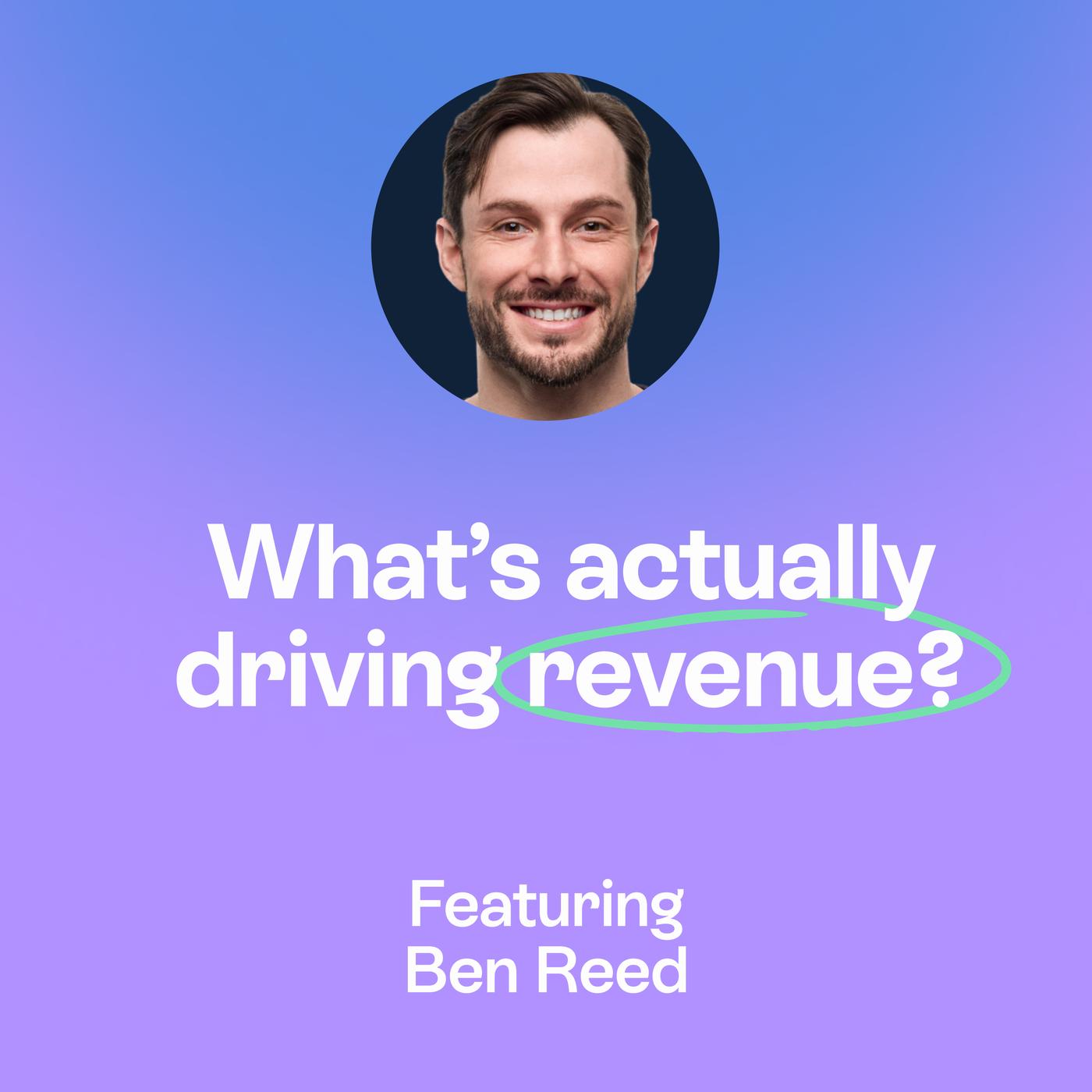
In this episode of the Bee Formless™ Flow Driven CEO Podcast, I sat down with Ben Reed to explore life, leadership and business from the inside out, and what it really means to build growth with more clarity, discernment and less noise. What stayed with me most in this conversation was that Ben was not really talking about systems for the sake of systems, instead about the difference between being busy and actually building something that moves revenue.
Ben shared how RevyOps was born from a very real problem in the B2B world: too many founders and teams are spreading themselves across channels, content, campaigns and tools without truly knowing what is working. Beneath the GTM language, the RevOps conversation and the revenue attribution mechanics, what opened up was something much deeper. Growth is not always about adding more. Sometimes it is about seeing more clearly, asking better questions, and having the discipline to stop doing what feels comfortable when it is no longer serving the bigger goal.
Ben spoke openly about failure, humility and why he is actually grateful he did not succeed too early, because it forced him to develop judgment, self-awareness and a more grounded relationship with himself. He also spoke beautifully about Brazil, Ikigai and community, and how meaningful work and the right environment can shift your whole nervous system. It is built by people who know themselves, trust their discernment and create from a place that feels deeply alive.
The Shape Shift in motion
At the heart of this conversation was a shift from noise, blind hustle and surface activity, to discernment, meaningful systems and clearer truth.
This is how that shift unfolded through the Bee Formless™ methodology:
LEARN (Letting go)
✨ If you do not know what is actually driving revenue, growth becomes guesswork.
✨ Failure can humble you, deepen self-awareness and teach what early success often hides.
✨ Constant activity is not the same as traction.
UNLEARN (Reimagine, create & reshape)
✨ Unlearn the idea that more channels, more tools and more motion automatically mean more growth.
✨ Reimagine RevOps as a clarity function, not just a technical one.
✨ Reshape success away from ego and into discernment, community and meaningful work.
RELEARN (Test & implement)
✨ Build systems that connect effort, attribution and revenue so better decisions can be made.
✨ Ask better questions, find the real constraint and let the data reveal what is true.
✨ Use failure to refine your judgment, not to collapse your confidence.
ACTIVE RECOVERY (Reflect & reset)
✨ Where are you still creating noise when deeper clarity is actually needed?
✨ What are you doing right now that feels productive, yet may not be moving revenue at all?
✨ What would shift if you trusted discernment more than default activity?
About Ben Reed
Ben Reed is the Founder & CEO of RevyOps, a GTM/RevOps data platform helping B2B teams scale outbound without chaos.
Where to find more from Ben
🌐 https://www.revyops.com
🔗 https://www.linkedin.com/in/benjamin-aaron-reed/
💭 Where do you need less noise and more discernment?
If something is shifting for you, begin your Strategic Shape Shift Diagnostic.
https://calendly.com/beeformless/strategicshapeshiftdiagnostic
#revops #gtm #leadership #businessgrowth #beeformless #flowdrivenceo #founderjourney #salessystems #discernment
Język angielski
Stany Zjednoczone
TRANSKRYPCJA 🔗
WYSZUKAJ MINIONE ODCINKI
Wyszukaj minione odcinki Bee Formless™ Flow Driven CEO.
Zastrzeżenie: Podcast i grafika osadzone na tej stronie pochodzą z Belinda (Bee) Murray, który jest własnością jego właściciela i nie jest powiązany ani wspierany przez Listen Notes, Inc.
EDYTUJ
Dziękujemy za pomoc w aktualizowaniu podcastowej bazy danych.
