

O TYM ODCINKU
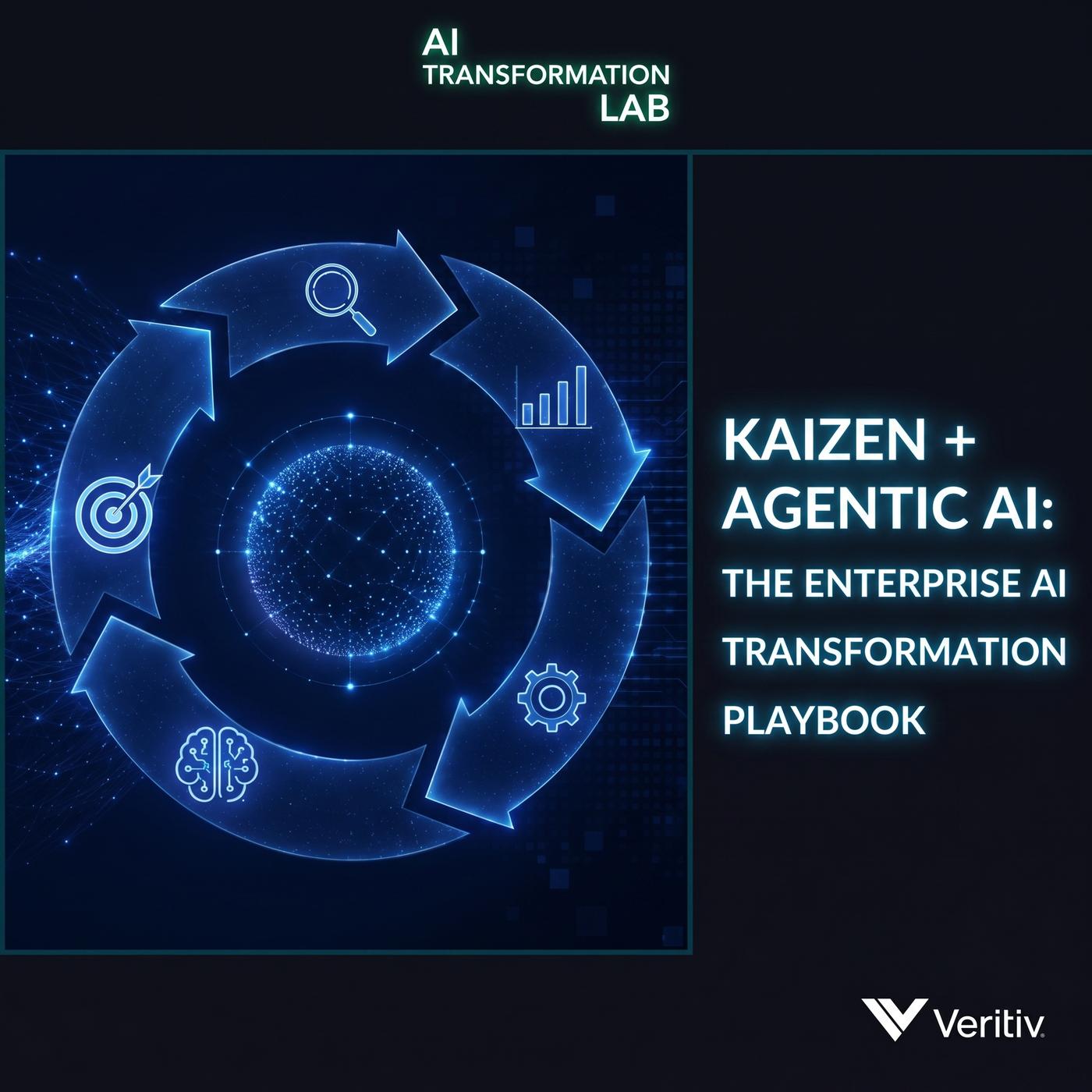
AI won't fix a broken process — it just helps you run it faster. That's the trap most organizations are walking into: pointing powerful agents at workflows that were never worth doing in the first place, and cementing the waste in place.
In this episode, Chris Bradley makes the case that Continuous Improvement is the non-negotiable core of agentic AI. Recorded from Veritiv's Customer Service center in Jacksonville — the day before a three-day Kaizen — he lays out a simple model for bringing AI to any process: three levels, Automate, Improve, and AI-Native Rebuild. Level one paves the cow path. Level two strips the waste with Lean before automating. Level three rebuilds the process from scratch around what agents can now do — and you can't earn it without doing level two first.
He's specific about what an AI-native process looks like in practice: work no human could do, running headless and multithreaded, an agent dropping into an API to do in half a second what a person never could. And he shares the design rule that's mattered most — have agents meet people where they already work, in Salesforce, Slack, or Teams, rather than building a new app nobody wants to learn. The argument is grounded in McKinsey's finding that workflow redesign is the single biggest driver of AI's bottom-line impact — and that only twenty-one percent of organizations have actually done it.
This opens a new arc — from individual fluency to transforming the operational workflows the enterprise runs on.
Two things to try this week included.
Język angielski
Stany Zjednoczone
TRANSKRYPCJA 🔗
Are you the producer of this podcast?
Add a podcast transcript
Need Audio-to-Text?
Transcribe with Listen411 in Just 60 Seconds
WYSZUKAJ MINIONE ODCINKI
Wyszukaj minione odcinki AI Transformation Lab.
INNE ODCINKI W TYM PODCASCIE
Four years of ChatGPT history. Two years of Claude projects. Custom instructions, saved memories, accumulated context built up across thousands of conversations. And then a new harness ships — Cowork, Claude Code, Codex — and suddenly the question isn't which AI do I use. It's how do I move what I'…

In Episode 1, I mentioned a competitive analysis I ran in thirty minutes that would have taken two weeks. A global network analysis — fifty-plus competitor locations, fifteen manufacturing hubs, proximity calculations, coverage gaps, and a full action plan for leadership.
I never finished that stor…
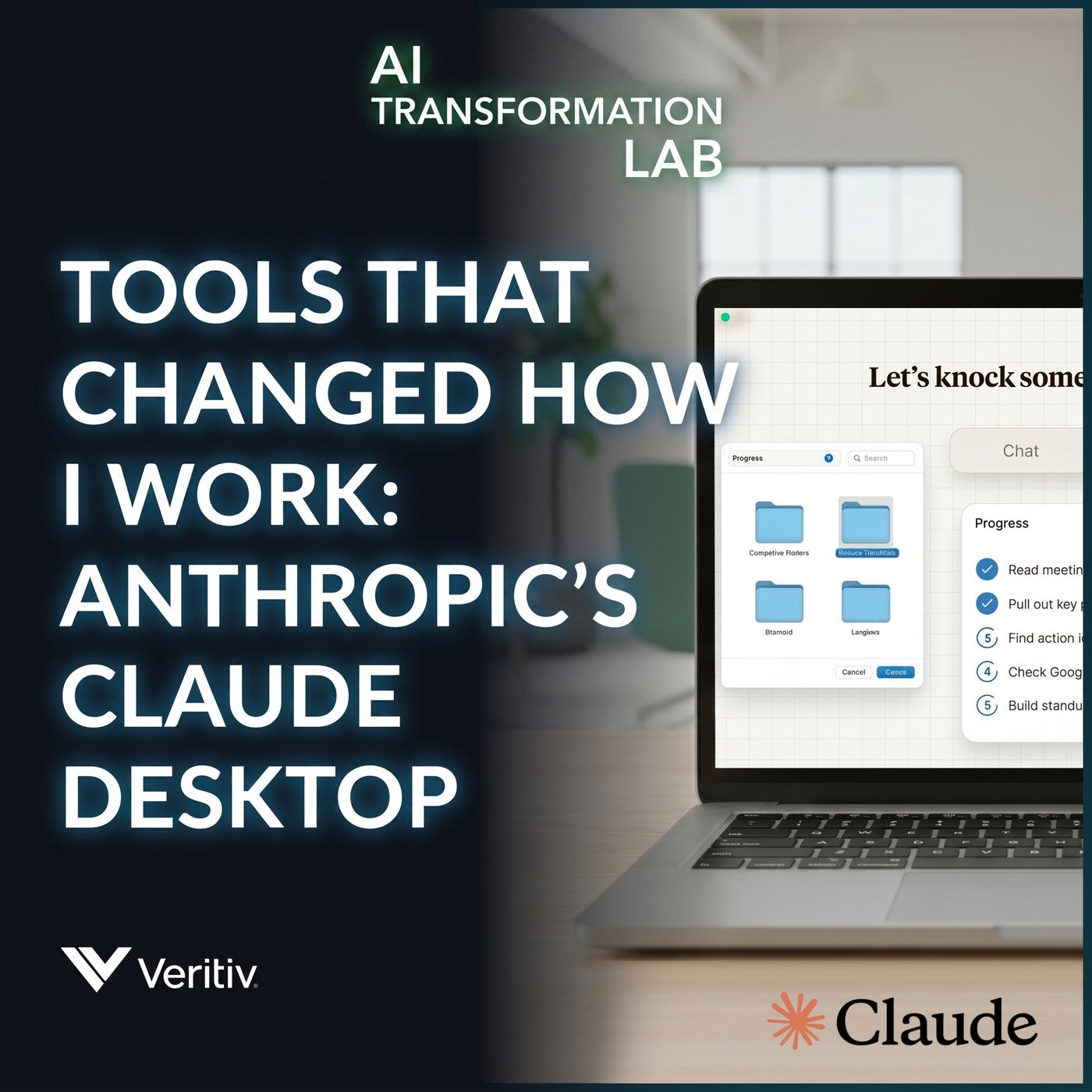
The big three AI labs are all building superapps — but each is packaging them differently. Google blurs everything together inside Antigravity. OpenAI is consolidating into Codex. Anthropic took a third path: three distinct surfaces inside one Claude desktop app — Chat, Cowork, and Code.
In this ep…

On April 16th, OpenAI shipped a capability expansion that turned Codex from a coding tool into a true agentic super app. Computer use, in-app browser, GPT Image 2.0, persistent memory, and a plugin ecosystem of ninety-plus integrations — layered on top of the desktop release from February.
The prac…
Zastrzeżenie: Podcast i grafika osadzone na tej stronie pochodzą z Veritiv, który jest własnością jego właściciela i nie jest powiązany ani wspierany przez Listen Notes, Inc.
EDYTUJ
Dziękujemy za pomoc w aktualizowaniu podcastowej bazy danych.
