


O TYM ODCINKU

BUFFALO, NY — October 8, 2026 — A new #commentary was #published in Volume 18 of Aging on September 12, 2026, titled “Complexity, variability, and the behavioral layer of gerophysics: a commentary on Unfried et al. (2026).”
The commentary proposes expanding the emerging field of gerophysics to include behavioral complexity, offering a way to understand how aging affects the ability to adapt to everyday challenges. The authors argue that measuring changes in movement, physiological rhythms and other behavioral patterns could complement molecular and biological markers of aging, potentially helping researchers identify declining resilience and the transition toward frailty.
The commentary was authored by Jean-Jacques Temprado and Rita Sleimen-Malkoun, both affiliated with Aix Marseille Université, CNRS, and the Institute of Movement Sciences (ISM), Marseille, France. Temprado is also the corresponding author.
Gerophysics is an emerging interdisciplinary field that applies concepts from physics, mathematics and complex systems science to the study of aging. It draws on dynamical systems, entropy, network theory and stochastic processes to understand how biological systems change over time. A recent report from the Global Conference on Gerophysics, discussed by Unfried and colleagues, outlined a framework connecting aging processes across biological scales, from individual cells to the whole organism.
Temprado and Sleimen-Malkoun suggest that this framework could be strengthened by explicitly incorporating behavioral dynamics, particularly how people interact with and adapt to their environments. While molecular and physiological measurements reveal important aspects of aging, behavioral patterns may provide additional information about how effectively the body responds to changing demands in everyday life.
The authors build on earlier research suggesting that healthy physiological and behavioral systems exhibit complex fluctuations across multiple time scales. These patterns are neither entirely random nor perfectly regular. Instead, their variability reflects the flexibility needed to respond to different situations. With aging, this complexity may decline, producing patterns that become either more predictable or more random, potentially indicating a reduced capacity for adaptation.
Full press release - https://www.aging-us.com/news-room/behavioral-complexity-could-offer-new-insights-into-aging-and-frailty
DOI - https://doi.org/10.18632/aging.206421
Corresponding author - Jean-Jacques Temprado - jean-jacques.temprado@univ-amu.fr
Video preview - https://www.youtube.com/watch?v=7v2X8axjdgI
Sign up for free Altmetric alerts about this article -
https://aging.altmetric.com/details/email_updates?id=10.18632%2Faging.206421
Subscribe for free publication alerts from Aging - https://www.aging-us.com/subscribe-to-toc-alerts
Keywords - aging, dynamical systems, complexity, behavior
To learn more about the journal, please visit https://www.Aging-US.com and connect with us on social media at:
Bluesky - https://bsky.app/profile/aging-us.bsky.social
ResearchGate - https://www.researchgate.net/journal/Aging-1945-4589
X - https://twitter.com/AgingJrnl
Facebook - https://www.facebook.com/AgingUS/
Instagram - https://www.instagram.com/agingjrnl/
LinkedIn - https://www.linkedin.com/company/aging/
Reddit - https://www.reddit.com/user/AgingUS/
Pinterest - https://www.pinterest.com/AgingUS/
YouTube - https://www.youtube.com/@Aging-US
Spotify - https://open.spotify.com/show/1X4HQQgegjReaf6Mozn6Mc
MEDIA@IMPACTJOURNALS.COM
Język angielski
Stany Zjednoczone
TRANSKRYPCJA 🔗
Are you the producer of this podcast?
Add a podcast transcript
Need Audio-to-Text?
Transcribe with Listen411 in Just 60 Seconds
WYSZUKAJ MINIONE ODCINKI
Wyszukaj minione odcinki Aging-US.
INNE ODCINKI W TYM PODCASCIE

BUFFALO, NY — October 5, 2026 — Aging is pleased to support the 11th International Cell Senescence Association (ICSA) Conference, taking place November 3–5, 2026, at Seoul National University’s Siheung Convention Center in South Korea.
The conference will bring together researchers from around the…
Aging is commonly associated with the gradual loss of skeletal muscle mass and function. While preserving muscle mass is important, muscle health also depends on the mitochondria that provide energy for contraction and help muscles respond to physical stress. A new study suggests that a protein cal…
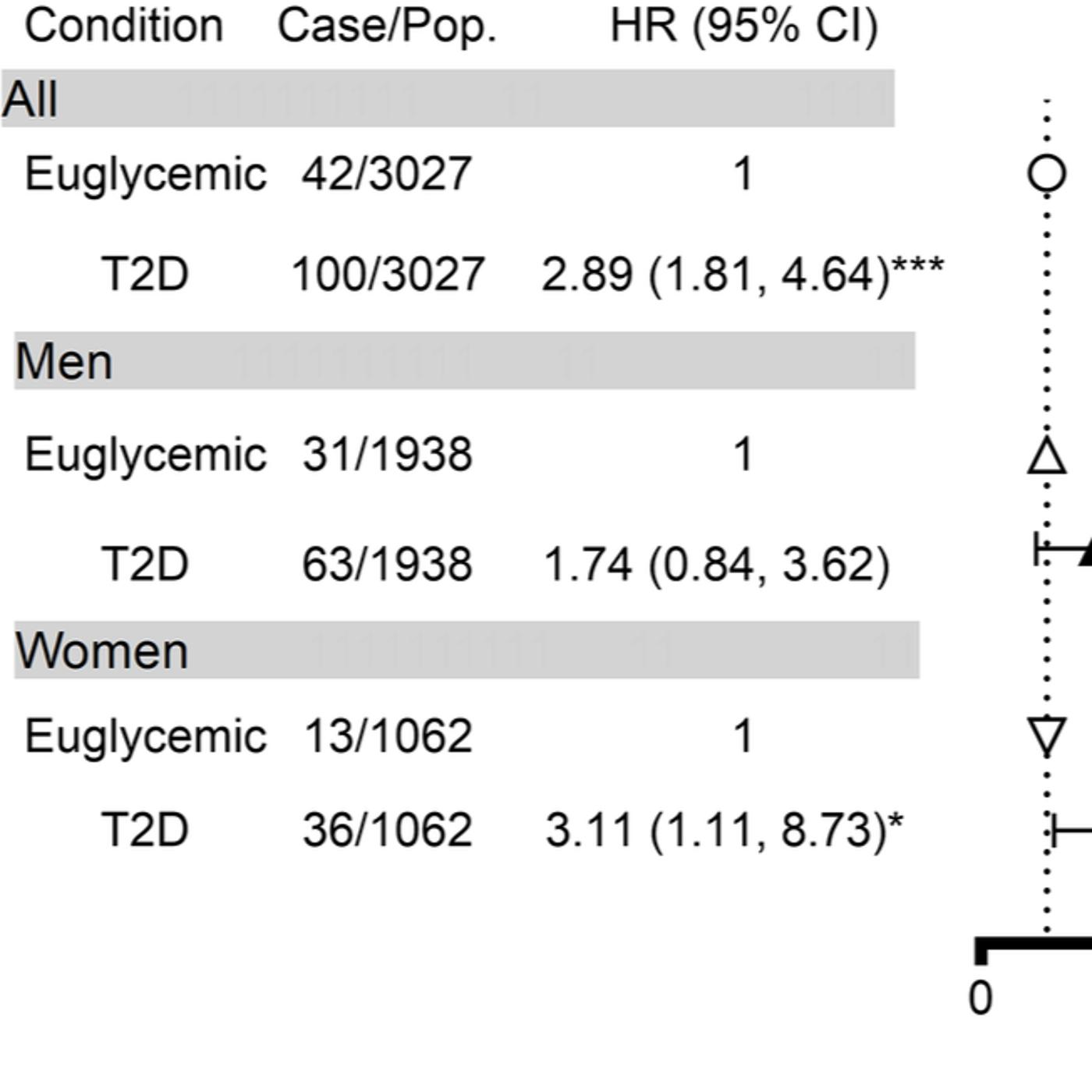
BUFFALO, NY — October 1, 2026 — A new #research paper was #published in Volume 18 of Aging on September 10, 2026, titled “Social determinants of health and risk of dementia in people with and without type 2 diabetes – findings from two large national-scale cohorts.”
The study found that unfavorabl…

BUFFALO, NY — October 6, 2026 — A new #research paper was recently #published in Volume 18 of Aging, titled “Spatially fractionated mini-GRID radiotherapy differentially modulates radiation-induced senescence in murine glioma and normal cells.”
The study found that spatially fractionated mini-GRID…
Zastrzeżenie: Podcast i grafika osadzone na tej stronie pochodzą z Aging Podcast, który jest własnością jego właściciela i nie jest powiązany ani wspierany przez Listen Notes, Inc.
EDYTUJ
Dziękujemy za pomoc w aktualizowaniu podcastowej bazy danych.
