


OVER DEZE AFLEVERING
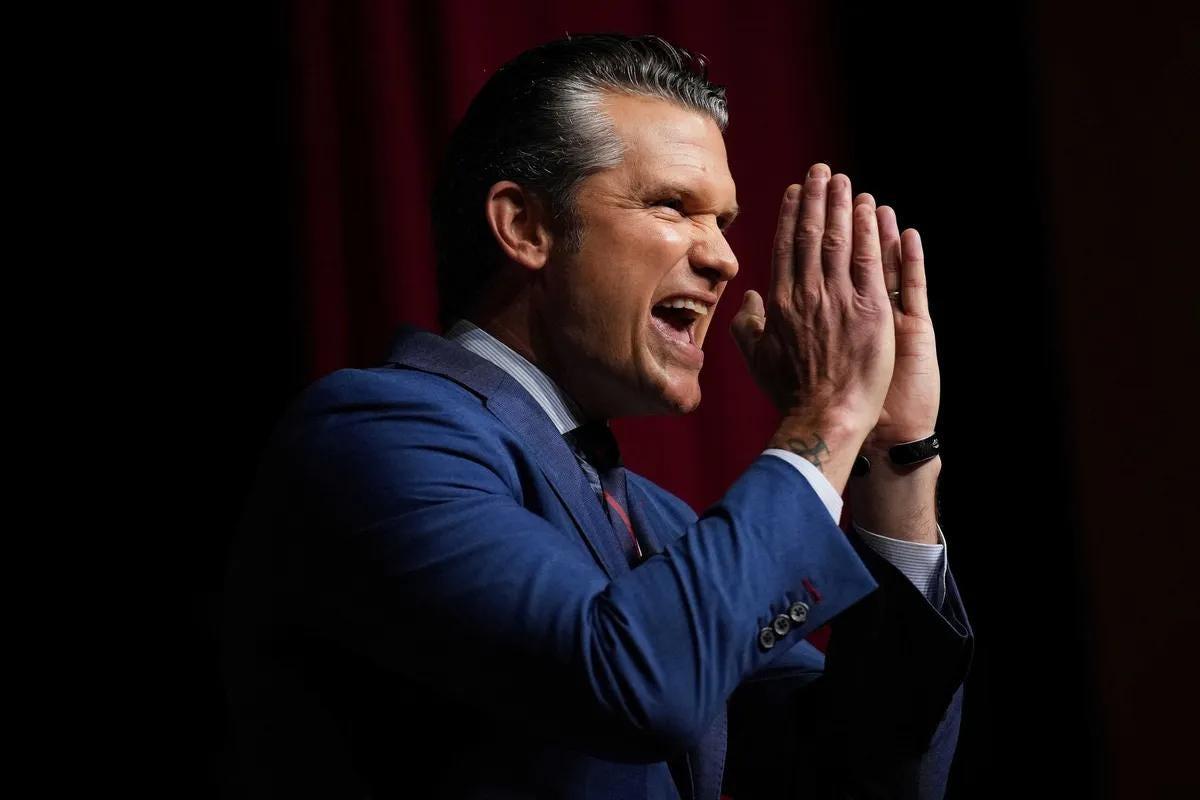
Pete Hegseth speaks to senior military leaders at Marine Corps Base Quantico, Virginia. Andrew Harnik/REUTERS
The Pentagon’s Problem Is Not Pete Hegseth. It Is the Power That Chose Him.
A Revolt Without Accountability
The reported campaign against Defense Secretary Pete Hegseth is being conducted through leaks because the officials around him apparently lack either the authority or the willingness to confront the man protecting him. Michael Wolff describes Pentagon and White House insiders as desperate to remove Hegseth, while President Donald Trump remains the decisive exception. That is the relevant hierarchy: insiders complain, advisers panic, and the president decides.
Incompetence Was Part of the Qualification
The article frames Hegseth’s lack of experience as a liability that may finally cost him his position. Wolff offers a harsher and more useful explanation: it may have helped him get the job.
Help fuel the work. Independent analysis doesn’t fund itself:☕ Buy us a coffee
Trump reportedly wanted a Pentagon chief who would not challenge him. If that account is accurate, Hegseth was not selected despite his limitations but partly because of them. A defense secretary dependent on presidential favor is less likely to exercise independent judgment against the president who elevated him. What looks like a failed appointment may instead be a successful act of institutional subordination.
Gossip Is Not the Scandal
Nicknames such as “Colonel Vodka” and “No Tab Pete,” along with the claim that Hegseth’s wife has become an effective second-in-command inside the Pentagon, make irresistible copy. They also shrink a structural problem into a personality spectacle.
The central issue is not whether Hegseth is strange, embarrassing, or mocked by colleagues. It is that leadership of the Defense Department was reportedly assigned according to personal obedience rather than institutional competence—and that alarmed officials are answering the result with anonymous ridicule. The gossip exposes contempt. It does not substitute for accountability.
The Insiders Enabled What They Now Leak
White House advisers reportedly believe Hegseth should have been fired already and that he has no supporters left beyond Trump. Yet their rebellion appears to consist of feeding damaging material to reporters in hopes that publicity will force the president’s hand.
That is institutional cowardice dressed as resistance. These officials remain close enough to power to shape the narrative but apparently unwilling or unable to attach their names to their warnings. Their leaks may be accurate and important. They also reveal a governing culture in which responsibility is outsourced to scandal because direct opposition carries a personal cost.
The article’s “revolt” framing flatters these insiders. A revolt acts against power. This is a pressure campaign by participants in the same administration that installed and sustained Hegseth.
Patronage Replaces Governance
The scrutiny surrounding Deputy Defense Secretary Steve Feinberg—whose ties to a former CIA officer accused of siphoning government money have raised questions—suggests that the concern is broader than one erratic secretary. The article provides too little evidence to establish wrongdoing by Feinberg. It provides enough to show a department whose senior leadership is generating questions about judgment, associations, and basic fitness.
When loyalty governs appointments, formal qualifications become negotiable and oversight becomes an inconvenience. The resulting failures are then personalized: one bad subordinate, one embarrassing leak, one official who must be sacrificed. That framing protects the selection system and the person at its apex.
The System Is Working as Designed
Hegseth’s reported isolation does not absolve the administration. It clarifies the arrangement. Trump holds the removal power. Trump reportedly valued a defense secretary who would not resist him. Trump continues to protect him despite advisers’ alarm.
The larger pattern is authoritarian personnel management: weaken institutions by placing personal loyalty above independent competence, then force insiders to choose between obedience and anonymous dissent. The chaos is not separate from the concentration of power. It is one of its products.
Removing Hegseth might end one scandal. It would leave intact the political logic that created him.
Thanks to Raw Story
Source: Pete Hegseth faces internal ‘rebellion’ as insiders leak weird conduct: report
Systemic Error is a reader-supported publication. To receive new posts and support my work, consider becoming a free or paid subscriber.
We warned them.We told them.We shouted from the rooftops.We plead.We begged.They didn’t listen.Now, we all will suffer.Y’all know what to do, right?VOTE BLUE! 💙Vote as if your life — nay, our country — depend on it.Because, this time, and every time, it does.
This is a public episode. If you'd like to discuss this with other subscribers or get access to bonus episodes, visit paulstsmith.substack.com/subscribe


