

Tom Noble: You've already
Ben: Yeah.
Tom Noble: done more podcasts than I have.
Ben: I've I've done a few, yeah. Yeah. But yeah, let's go.
Tom Noble: Great. So when I start to fail, you you you pick it up if that's that's okay with you.
Ben: Sounds good. Yeah. Yeah. Let's go for it.
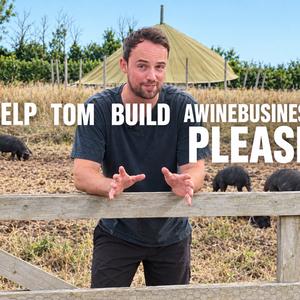
Tom Noble: Hello and welcome to episode two of Help Tom Build a Wine Business, please. Today we have Ben Franks from the Canned Wine Co. Who seems to have quite a a long history in wine. So he's probably the person to ask, How do I build a wine business? So you you started Novel Wines at twenty-two. This is I I did my a quick reading of your LinkedIn account. So you started Novel Wines at twenty-two, which is pretty young for an entrepreneur. So good for you. That worked out well.
Ben: Thank you.
Tom Noble: you did that for You y eight years I think, and then you're now an advisor to a cheese and wine company, which I think is pretty awesome. You gotta go for the pairings. And then you've been doing canned wines for around seven years, and also you are an advisor to a load of wine businesses as well. So welcome to welcome to the show.
Ben: Thank you. What an introduction. yeah, so I you say 22 is young. I think there's a magic to naivety, to be fair, when you're starting out any sort of business. so novel wines was my training wheels, if you like. learning how the wine industry worked. I had no formal wine background, so it was very much do try, fall over, get up, try again. Similar to what you're doing, I suppose.
Tom Noble: a hundred percent.
Ben: This is how novel went.
Tom Noble: Hmm.
Ben: Yeah, and it was it was novel that opened all the doors for me later. So investing into Madison Great, the cheese and wine business, going into I did a bit of spirits work, ran my consultancy alongside everything the whole time so I could dabble in bits and pieces, which is you know, a every entrepreneur has this of shiny thing over there. My consultancy was kind of a vehicle for shiny things and distractions on the side. and
Tom Noble: Absolutely, we all have that. I have it a bit too bad, but
Ben: yeah. I think you spot opportunities and then the entrepreneur or class entrepreneur seems to think they can then go and fix them. And we can't fix them all, but we like to have a good go at, you know, plugging away at a few. And I think that always happens. And then canned was has been really interesting because you're sort of reinventing quite a traditional space. So obviously I was selling bottles for nearly a decade and the canned thing was or seemed big in the US. I don't think it is relatively as big as it is here in the UK now or what we've built. but it's exciting because it's a new way to drink and it's a new way to look at wine. and it was exploding. It was growing at double the rate. novel wines was grown that was too hard to ignore.
Tom Noble: Yeah, fair enough.
Ben: and you know, it's single serve and we'd been bang on about less and less is more and all that sort of thing for ages in the wine industry. but no one was doing anything about it. So we went in on that.
Tom Noble: And you're in Ocado and Waitros as well with it, so you're you're smashing it.
Ben: Yeah, it's a funny thing really, because I mean they're amazing and it's very, very cool to do in White Shows 'cause I worked there when I was a student. So it's a really nice kind of full circle moment. But it's a small part of what we do. We're largely selling to like what I call cue pressure venues, if you know what that means. So like your theatres where you've got an interval and everyone's rushing the bar in twenty minutes. You've got your stadium and you've got half time or pre pre game. queue traffic. You got your beach bars where everyone wants to be back on the beach so they you know they don't like queues. And you're fixing what is essenti effectively a service time challenge in the on trade. But then also one third of all wines shut away and UK hospitality. You know, broken bottles, missing stock, wine going off between closing on a Saturday night and reopening on a Wednesday or whatever. And there had to be a better way to do it. And for us that was cans and kegs, as a solution. Take the waste out. and that becomes the pain point you fix. You know, the emotional reason why we saw it canned was because Simon and I both like a glass of wine, didn't always finish a bottle. We thought we can't be the only people with this problem. Where's all the premium stuff? 'Cause it doesn't exist in small bottles or small cans or didn't six years ago. So we built it ourselves. But That wasn't really what we were solving. We were solving in drink less but better consumer moderation and then waste.
Tom Noble: Hm. Well the solution is obviously finish the bottle.
Ben: That is that is the solution, yeah. If the bottle of wine is good, that does still happen. Like I'm I'm not a can guy who says stop drinking bottled wine. I very much like cans for this, bottles for that, whip out a keg for this if you're having a party or a bag and box or whatever. As long as the wine's good, that's the main thing. It's gonna taste good. People forget about
Tom Noble: However it comes.
Ben: that. Yeah, yeah. It's flavour, right?
Tom Noble: Absolutely.
Ben: I I like I like food and I like drinking wine and to be honest, bursting about novel this doesn't really happen at Cannes, but bursting about running novel wines. We had three hundred and fifty different wines on our list. But it was the fact that you were living the life everyone tries to retire for. You know, you'd go to wine dinners, you'd be taken around the country, you're paid like shit and you make no money, but you are travelling, drinking, relaxing, going to seaside locations, beautiful, sunny vistas, all this amazing stuff happens. And that's wine industry, right?
Tom Noble: Well keep that to yourself because that's why I'm in it as well. I don't want everyone else to know that.
Ben: Well yeah, exactly. Well let's see what the podcast reaches.
Tom Noble: The ten people that listen. They'll they'll join the one issue too. So
Ben: Yeah, that'll get the insight.
Tom Noble: I've got a question for you. So I mean, do you do you know anything about what I'm doing or should I explain it first?
Ben: I mean I do, but you should explain it 'cause you never know, you might get some person who's never met us, you know, hopping on there, yeah.
Tom Noble: To those ten people. Hmm. Fair point. So my aim is to create a wine business. And I'm going around to the top wine-producing countries and finding wines from each, a red, a white, a rose, and a sparkling, bringing them back to the UK, and then building out this range of wines from all around the world. England comes next, Hungary actually will probably come third, and then Italy, Spain, and then you know, th there's all these countries I can go to. And I'm going off to find vineyards that are aren't very well known, don't have a foothold in the UK. The criteria for those vineyards is Great wine, obviously, but they've also got to be nice people and they gotta let me stay at their house for like a few days so I can come and do some marketing. And that sort of shows and then also we we need to chat on WhatsApp because like I figured out that if they don't speak to you on WhatsApp, they're you you're not gonna get anywhere with them. So those are my criteria. And I go around finding these wines, bringing them back to the UK, and it's sort of supposed to be for like I'm not going for the high end market, I'm not going for the low end market, I'm going for right in the middle, and I wanna make like wine more accessible to the common man. So they could they know that if they go to Chateau Noble, the bottle will be good. 'Cause I think a lot of people don't drink that much wine because they don't really know about it. someone said the you know, everyone's first interaction with a bottle of wine is a four pound bottle from Sainsbury's and they go off wine. I don't I think, you know, let's let's get around that and let's let's do something different. So Chateau Noble, there it is. Everyone buy, invest, whatever you want to do. And that's pretty much what the goal is to build that business. And having you on as someone who's built a wine business and has a consultancy. How should I do it? That that that's the open ended question you didn't ask you said I shouldn't do. But what I want to ask is what you think of the concept firstly, and then we can like dive into how you started versus like how I've started and what I should do. And you know, I I can tell you some of the problems that I've got right now because there are some pretty big ones, and then hopefully you can tell me how to solve them. And I'll spend the rest of the week doing that.
Ben: Sounds good. I mean problem solving I like. That's always that's always a good good place to look. well I mean ev everyone likes that concept. We all want everyone in the wine industry wants people to drink more wine and to discover the same excitement and passion that we found in drinking it, right? it's how you bring those people into into the sector. You'll find l the problem is You don't just have a saturated market in wine where I mean, especially in the UK, you have more choice, abundance of choice than almost any other market, even the US in this country, with wines from everywhere at every different price point. but you also now have this saturation of debate around how do you get Gen Z to drink more wine, how do you get young people to drink more wine, why are older people drink less wine. Why is everyone drinking less wine? Why are the vineyards being turfed up? You know, what what's going wrong in wine? so you get you can easily get into tons and tons of content of why people do and don't drink wine, and then the data will report back to you whatever you sort of want it to. You know, if you're going in and going, this is what my hypothesis is, and here's a load of saturated data, you just pick the bits at work and then justify your business case. I I learnt at novel. And it's the only way I think you really learn where wine works is that if I didn't sell, I couldn't pay myself. So and you posted recently about this about putting the wine on your credit card and trying to find a way to pay it down, right? If you buy something, you gotta sell it. And at novel, we were doing unpronounceable grapes from weird and wonderful countries at a mid tiers to premium price point. that no one ever told me they wanted. Apart from myself working on weight shows and thinking, the Bulgarian one's particularly good and it's eight quid and no one's doing this. And it was that no one's really in this space, white space opportunity bit. That didn't mean there was a market, 'cause I hadn't gone out and proven that other people felt the same. So when we started we did a crowdfunder only for five K. But the point of the five K was we weren't allowed to get any friends or family into it, it would have to be strangers. And if we could raise 5k for strangers for the idea, then it's got some sort of legs. So we went and did markets and things and got out in person and put product in front of people and said, Are you interested? Here's our crowdfunder. We eventually raised it in two weeks, so it was quite quick. But we started the first so we ran it for a month, but the first two weeks we tried to do it online. And no nobody paid any attention to a twenty one, twenty two year old trying to flog his wine at that point.
Tom Noble: Is that it is that for the Kickstarter actually selling the wine?
Ben: that that was Kickstarter. and then when we raised that five K, I then took out twenty grand on a startup loan government backed thing. So I don't know if it's still there. It probably is, but you could pay it off over five years. It did take me five years to pay it back. But with that twenty five K we spent it importing a load of weird and wonderful wines and we'd picked this date to launch the first ninety wines. So it was we booked the Hilton Hotel in Bath, big ground floor area. And we said we'd we'd sell tickets and we'd put every wine we imported on for people to taste. Half of it was imported, half of it was UK merchants. But all weird and wonderful. We sold out that tasting 300 tickets to people, friends, family, people didn't know. We'd raised the money and bought the wine and gone back to zero. We had no money left by the time this event kicked off. But because all these people came and because we went quality first, we sold. A load of wine and then it turned into a business plan. So it's very much that young sort of, well, I'll just do it and see what happens. If it goes wrong, then I'm paying back a loan for five years out of whatever job I get afterwards. and if it goes right, then we're on something. and then it turned into eight years and five decanter retailer awards and really, really good press. It never quite really hit. I guess financial sustainability, but it did build a lot of opportunity for me. But that's how we started was we just went and did it and proved it through genuine purchase from customers, and getting stock literally in front of people. we did have a year about two years later where we spent a huge amount of money on social media when the Facebook ads were kind of good, whereas now they're really expensive unless you know what you're doing, but And even then they probably are, but we did a huge amount of spend because we were building at that point the Majestic for Weird Wine, so loads of online sales, loads of spend on Facebook. We have Robbie Williams's events team doing our Facebook ads, which is stupid, because we didn't need that. and we we grew massively. This is pre pandemic, but We grew completely at a massive loss because of what we were spending on acquiring customs.
Tom Noble: And this is pre Brexit as well.
Ben: Pre-Brexit, yeah, coming in, after the Brexit vote, obviously, but pre-January twenty twenty when it sort of hit. and then I think just before COVID we started to go into wholesale and diversify. So we we opened a shop in twenty nineteen, we started wholesale twenty twenty, good timing, and and our retail online shop was doing all right. And then obviously COVID happened. That whole momentum of three months of wholesale just died. All the restaurants closed. And we thought we're in trouble. But then obviously what happened was wine was essential and novel then took off because everyone shopped local. So suddenly we went from I think we're about three percent Bath based customers, despite being in Bath, to then being about fifty percent because everyone wanted to buy from your neighbour. What was interesting was as soon as everyone went back to normal, that all went. you know, the whole shop local thing pretty much died as much as people thought they were keen supporters of that, you know, as soon as it's inconvenient, they don't. but we had enough momentum at that point that novel then could keep going. and because we'd launched canned wine, me and Simon three months before the pandemic as well. There was a lot of redoing business plans and working out where things actually fit because we launched Cannes to go into festivals and retail originally. And then we came out of the pandemic as a on trade specialist selling to venues and museums and theatres and all this sort of stuff. So you have to be able to pivot and the wine industry at large doesn't pivot. The small businesses
Tom Noble: Yeah.
Ben: trying to grow pivot quite rapidly. but you've got
Tom Noble: Yeah, figure that one out pretty quickly. The wine industry is an interesting one.
Ben: Yeah. Yeah. It is, isn't it? Yeah. How have you found the wine industry?
Tom Noble: So ba don't know what to say on here. The the best two ends of the industry for me are the customers and the vineyards. Everything in the middle, it's like well I I and I am a middleman, pretty much, but everything else is a bit like that they're they're messing up mess messing up like that they're fucking over the farmers and then they're sort of fucking over the customers as well. So it's like there should be a route directly between them both. and I think that is is what should be, and that's sort of what I'm trying to provide. But, you know, when you bring in I do think that awards have a massive place, but you know, when someone comes in and, you know, has a certain taste and like, you know, they say they don't like someone's wine, it basically destroys them. You know, it it should be the end customer that you know decides. And we have all this thing about no one like people don't like to be spoken down to about the wine, but then whenever I speak to anyone they're like they listen to recommendations. So everyone says they don't like the system that's been created. And everyone also with those reports you were saying about you know Gen Z dr drinking differently. I don't think they are. Like I've seen reports that said they aren't and like you know if if you think people are drinking less wine, walk down the street on a Friday in a town. People are not drinking less wine. People are drinking wine. It's just wine businesses are are doing it wrong, probably. I don't know how. I I'm still trying to figure this one out, but a lot of people are drinking wine.
Ben: Yeah, I think like like I say, you pick the data that supports whatever but because yeah,
Tom Noble: Yeah, yeah, exactly. And people want to complain about something.
Ben: exactly. And the reason why the wine industry struggles is you sort of touched on it is but I think what's missing on that is consumer gets screwed over, farmer, viticulturist, winemaker, etc. get screwed over. But actually the middle people screwing over themselves anyway, because there's soon as you get any depth of wine industry trading, because the only the only pure way to protect margin at the sort of farmer level and at the consumer level is to land it and the person who lands it is the person who sells it to the consumer. Because then there's one person in the middle who's bringing it in and selling it to the endpoint. and in that scenario you can protect both sides. And you also control the market 'cause you're the person who owns that. As yeah. As soon as you go into other stuff, retail with supermarkets. Yeah.
Tom Noble: Yeah. In theory in theory that sounds great. But the problem that I've got is I and this is this is the struggle I'm going through at the moment. Like I started, I launched on LinkedIn, which which as D to C wine, you know, is it the best place to launch? Probably not. But it's worked. I've sold two hundred bottles, which is amazing. I think it's a miracle I managed to do that. Then it that's sort of like gone off a bit because the people that supported it for my journey have have supported me and that's amazing and I'm really thankful to them. But then you know I got a a million impressions two weeks ago on LinkedIn. Great, right? That did that sold two bottles of wine. So th this thing isn't it's it's not going the way I hoped. So that and that that's fine because they people originally bought it for the story. So what what next? It needs to be more to to consumers. Now, the D D C going through socials, it works. The fact I've actually sold wine on TikTok still baffles me to this day. But that needs to scale. And that seems to be the only route, because I don't really want to go down the route of paid ads because Everything I've heard from I've done paid ads before. I've ended up paying a load of money and it's not worked out. Like I get six pound profit on the wine, which is just for me at the moment, but it will eventually go to to staff and scaling. You know, I need to be selling that. You know, the ads need to cost me less than six pounds. And I don't think that'll happen for a while. So then I'm looking down the route of TikTok shop, which I'm hopefully you're gonna get on as one of the first wine sellers, which I think is amazing, because they sort over flat waterfuck up, I think. and then I've got
Ben: Yeah.
Tom Noble: wholesale as well, like coming. But then it's like then I've what you've just said, then the the margins go and you know, it'll still be fine and I could sell a lot of volume. And I almost see that as like a marketing play more than anything to get the wine out there. But yeah, th that's the problem that I have at the moment. It's like, how do I grow and keep people coming to the website? Because, you know, postage is an issue. It why would you buy my wine when you could buy why would you buy a seventeen pound bottle of wine from me with seven pound postage on it when you could buy a twenty five pound bottle of wine, twenty four pound bottle of wine from the supermarket for the same price, pretty much, wouldn't you? So like Therein lies the issue. So what wha what should I do?
Ben: Yeah, and to be to be to to be completely brutal, right? Your seventeen pound
Tom Noble: Brutal honesty is the only honesty I want.
Ben: your your seventeen pound bottle of wine exists in a in a choice for the customer of thousands of seventeen pound bottles of wine. And the and the real struggle we have is actually the quality of wine generally across the board, even at the lower level where the you know, trade offs are being made on volume, is decent quality. You know, the the years of actually bad und drinkable wine, they're they're sort of gone because you can't get away with it anymore. So when you've got a 17 pound bottle of wine and a new brand and you're new to market, all that digital stuff's really important. But people are buying from you to be honest at this stage. They were on LinkedIn, they'll continue on TikTok. but you have to go back to the fundamental of wine which is It's gotta be put in front of people. They've got to taste it, they've got to see it, they've got to try it, they've got to meet you. And the way you build any wine brand, same in spirits, probably in beer as well, is you you really use that your stock as your golden asset. So you're importing wines at the beginning, not necessarily because you wanna turn that into well, you do wanna turn into a profit, but you're not going to. You're importing wines at the beginning to put them in front of people, be it events, tastes, do tastings everywhere, collaborate because piggybacking other people's audiences is the cheapest way you'll grow the brand quickly. so go do collaborations with really cool food brands that align with you that can put you in a room and you okay, you're giving the wine and your time for free, but you might get another five, six customers out there who order regularly because they see your TikTok two weeks later or whatever. But Wine is fundamentally a product that needs to get bright in front of people, it needs to be opened, it needs to be tasted. You can't, for example, build a canned wine business where you're six pound retail without getting lots and lots of people to taste it because no one will give you the thumbday.
Tom Noble: Yeah.
Ben: You can't sell a Hungarian ferment that no one's well, back then no one had heard of unless you get people to taste it. Weird all sorts of unpronounced stuff that you just have to put in front of people. Taste for the first time. Babylon
Tom Noble: So you're saying
Ben: Storen were very good at this. So you heard of that brand, the South African brand, Babylon Storm. They do like the Chelsea Flower Shea. They got a the big new estate in Somerset. They own that same kind of family business. but they were really, really good about getting bottles in front of people regularly, tasting, tasting, tasting. And they get a fan following, a real dedicated fan who tell all their friends, you should definitely buy Chateau Noble, you need to build your table, best one I've had in ages, etc. That's what you need.
Tom Noble: I haven't seen your name pop up on the store.
Ben: Not yet. Well, convince me. Convince me, right?
Tom Noble: Which is fair enough, given I've just messaged you and asked you to do my podcast. I will actually send you a bottle. y you get to pick which one you want and I'll send you one.
Ben: Well you're you're we're at an event tonight. I think you're going. I'm I'm there, so I'll taste it. Yeah, Bristol Beacon.
Tom Noble: really? w had I known that, we would have done it in purse. So you're actually trying the wine tonight?
Ben: I I I I only looked today, so yeah, I'll be there later. So I'll taste I'll taste it. I'll let you know. Watch to watch this face.
Tom Noble: Huh. Okay, well Cool. Well you'll yeah you you'll try the wine tonight and I'll I'll bring you a bottle. Yeah, so I was about to say, yeah, if Boots on the ground
Ben: Yeah, thank you.
Tom Noble: is like the what I should be doing for the first few so I I've sold two hundred, I got about two hundred ish left. I d I I like my wine, I drink my wine, I've drunk a few bottles of my wine, so that they're also going. But I should probably get so they're in a warehouse right now. I should probably get a few back because like eighteen bottles are going out tonight. Which is fine. I was thinking about as I well, you know, I I I I also had to air a message to see if I'm selling it or not. If I am selling it, I don't have any way to take payments, so everyone's getting it free. So but yeah, anyway, boots on the ground, that should be the policy for the first five four hundred bottles which I've got. And then afterwards maybe Kickstarter.
Ben: Yeah, and and yeah, and primarily y you you on the ground 'cause that's what people buy from at the beginning. which I realise is a time drain but it it it is essential. But also like
Tom Noble: But it but it's also what you said, like that's being in the wine industry, it it's it's the dream. Like the the s the things that I got sorry to cut you off, the things that I've I've got going on, like I'm off to Guernsey next week to hand deliver a bottle to a VC, where I'm gonna ask him about funding of the business. And then I'm also off to Hungary. Of a few vineyards have paid for my flights to go out there. And then the really cool one is someone invited me to their wedding, some random dude on LinkedIn. I'm now going to his wedding to give him some wine. And give out samples on the day, which I think is the most bizarre thing ever. But I I get these opportunities. So you're saying to keep pushing on them, keep pushing on me, and use me as a vehicle to get wine tasting into people's hands however I can.
Ben: Yeah, exactly. At that the beginning that's the way you build the foundations and then you bring other like minded people into your team and they can help grow. But until you've got that swell of ground recommendations and people doing that, the only way to manufacture that purely in a digital online space or through distribution is with lots of capital behind you. So that's when you need investment, etc. But you you
Tom Noble: Hm. No one's given me capital.
Ben: Yeah, and until you get, you know somewhere down the road. I mean I've raised a lot of money for wine businesses and my own and others
Tom Noble: I kind of don't want to.
Ben: as well. yeah, I mean I would say if you can avoid it, don't
Tom Noble: I have another question for you. I have another question for but I th they're in the fridge, so can you give me one second? This is
Ben: Yeah, no worries.
Tom Noble: I'll show you this tonight as well. But I put a poll out. I put a pol poll poll out, saying like what are the issues with like no I I I posted two things. I what are the issues with people buying wine? And then also I said like let's be real, everyone, why is no one buying my wine? And I got a hundred and seventy responses. Some quite brutal. Someone said, You sound like you're sat in your mum's basement crying to go viral, which was I'm gonna print that one out and put it, you know, in a fi picture frame. But one of the big things that came back is people don't know what the tastes like. Which like i is very understandable. So I thought, well, how can I fix that? Do something completely different. So then I I g this these this company actually reached out to me a while ago and I ignored them. But then I actually thought, well actually that's a good idea. So they sell they put your wine into bags. I'm sure you've probably
Ben: Yeah.
Tom Noble: seen this before. They put it into bags and then you get this little bag of wine which you know it's it's not the worst. It doesn't do anything to the the wine or make it any worse. Cut it open, first one I opened, I spilt. Sounds like I'm trying to sell for them. But I was thinking what I do is, well, if people aren't buying the bottles of wine, I list these, like I I send them a load of bottles to put my wine in these, and then they will then I'll have like a hundred of these maybe, and then I'll put on the website for three quid, I will send you one. And if you don't like it, you'll get your money back. What do you think about that? That's I'm I'm just
Ben: Nice, yeah. Yeah, I like it, it's cool.
Tom Noble: going through all the problems and trying to solve them.
Ben: Yeah, I mean Ecosip, that company, Alex's company, is really cool. I like those guys
Tom Noble: you know him straight away then.
Ben: a lot. And yeah, and they're their quality control is fab, so you get actually pretty much light for light from the bottle. So that the really smart way of doing it is with those guys. I think one one way that really boomed in the pandemic was three virtual tastings, you know, you didn't want to send a whole bottle, so you sent those out to lots of people. And they're great for advent calendar as well. If you wanted to build something for Christmas, you can put those into
Tom Noble: my avid calendar's a bottle a day.
Ben: Yeah, well there you go, you can have two tiers, but
Tom Noble: So if you think this is a good company and good idea, why have why are you not sending out it? Or obviously I guess Cans is different because it's a less like
Ben: Yeah, ca can cans are small enough. And, you know, I think at novels point when I met Alex and EcoSip and that sort of stuff, we were selling enough wine anyway that we we didn't need to do that unless we were doing tastings. I think a really good way to do that stuff is to kind of get that crowd behind you. but the bit you're missing by sending that out is that connection with you because the customer still has the same problem, which is even if they like the wine. And it's sending quid or whatever. There's lots of other yeah, sign
Tom Noble: Sign them. There you go.
Ben: them a bit of personalization. That really does work. I mean, when we're sending wines out to journalists, we always put personal notes. We've met a lot of them, so we'll say, remember when we blah blah, whatever. And all that extra bit, you're like five times more likely to get press mention if you do that than if you just send them something. and you should do those notes to the You know when a Times photographer says we need a bottle shot or something? Still put the note in there. I know they're not the person who wrote the article, but they're probably doing loads of products. They might, they might.
Tom Noble: Times haven't got in touch yet. Okay. So Yeah, I haven't been written about yet. But okay, so my plan is what I'm hearing is boots on the ground. F
Ben: Yeah.
Tom Noble: firstly give you a taste of the wine tonight. Boots on the ground. work off the back of my personal brand to get wine into people's hands at i at physical events. And then I I d look look into this. Do you reckon it's a good s like I don't see anyone else doing this? Which always to me means two things, like it's bad or everyone's like doesn't wanna do it because it seems weird. I wanna go pretty counterculture it with the wine industry anyway. Yeah. 'Cause that looks
Ben: Yeah, I think an anything
Tom Noble: horrible.
Ben: anything new and price approachable. Three quid all your money back if you don't like it. I imagine you sell those really quickly. Yeah, and then the other thing is is trying to bring all that into into your brand. You said you had new labels coming for for the brand as well. Cool.
Tom Noble: yeah. I'll show you tonight what they look like. But it's it's it's a funny one because someone said to me, I think it was a label designer, so th these are the the labels of the current bottle and they said, You've really messed up here because these labels are are too good. Now, these aren't amazing by any stretch. They're like a four out of ten. But they but they said like what you should have done is a one out of ten. And made them like just really crap. And I was like, I've really I should have. Because these are the first four fifty, then afterwards I changed, but I should have just Because the very first label is just the the Chateau Mares I got it from. Just that crossed out. And I should have just like handwritten all the just drawn all the labels myself. So I really messed up there. But you know, y you live and learn. But the next labels,
Ben: Yeah.
Tom Noble: yeah, that they're I think they look good. You you'll have to you know, make make your own assessment tonight, but it it's it was it's been going through a process because like how do it every bottle is a collaboration. Like I'm trying to make it, you know, but because it's like I'm half of it and that wine is half of it. So I need to get myself and the story in and the personalization in there. So like w we've done it in a in quite a fun way. I I think it's good. I'll you we'll see tonight. But like we I think we've solved that one. And that leads on to the next stage of what the brand is. I redesigned the website because I think the website's I think it's a miracle anyone's actually bought the wine on that that thing. And then redesign that and then yeah, bring in some more wines. I'm I'm keen for you to try some of I'll bring in all my English wines with me as well. So you can taste them.
Ben: Okay, cool.
Tom Noble: I get so many samples in that I don't know what to do with them. So I'm gonna bring a lot of them tonight.
Ben: an another another great benefit of the wine trade So all I was
Tom Noble: what was I asking you?
Ben: saying on subscriptions was when you've got enough to do three different wines every other month, so like six countries worth, then you got something compelling for the that segment that is that adventurous consumer thing who'll stay subscribed because you probably aren't doing the toilet well subscriber sort of model. So you'd have to have a real super fan of I mean we have subscriptions on Kant, but we have only fifteen or sixteen schools. So, you know, we don't expect that to have a huge lifetime.
Tom Noble: Hm. So what is like the the right range size?
Ben: Well, as a someone who likes wine, the inclination will go bigger and have choice. I think for someone growing a business, your smart play is to keep it tight, high quality and focus on building best of that few brands. So rather than going in subscriptions, I think there's lots of opportunity in having well placed, well positioned wines that people can go back and order regularly at their own interval dispense, whatever. I reckon if you got a French range and English range, maybe two more and then you get it to a million quid and then you look at what you're gonna do next still.
Tom Noble: I need to do more because the thing is th it's the marketing. And an a another thing
Ben: Yeah.
Tom Noble: actually that I'm not too sure on, like it's
Ben: Yeah.
Tom Noble: the first it's changing. It's not gonna be French red, French white, and French rose. There'll be like Bordeaux whites, Bordeaux red. Because
Ben: Yeah.
Tom Noble: I think that then then it means I can expand the range a bit a bit more. And also it means that th there are so many other wines that are really good. Like France has so much good wine. So I I wanna
Ben: Yeah.
Tom Noble: like bring that in somehow. So
Ben: You should do the the parcel thing then. Y you know, this might be what you're playing to already, which is where w if you bring on a batch of wine, but the point is it's always limited. So you you don't guarantee that you're gonna permanently stock anything. You then have you know you can then always be introducing new wines because once the stuff's sold, it's sold and it's gone. And that keeps it really interesting for the crowd that follow you then because you'll have new landing all the time. And it also keep you focused because novel got up to three hundred and fifty skis and it became a victim of its own you never managed to chase down profitability because of the volume of stock you had to hold, to fulfil everything that you wanted to fulfil, made it quite a beast to wrestle with at that.
Tom Noble: So do five hundred of each. Or something like I don't know. Okay.
Ben: Yeah. Yeah, something like that. Yeah. And then when they're gone they're gone. And then people f fight for it, you know?
Tom Noble: It's shame though, because I really like the vineyard owner of these two. He's a legend. And I I if I meet these vineyard owners and they make like genuinely great wine, I I see it as more of a gimmick to to get rid of them and find someone else's rather than keep them on. Because I'll be doing an episode of of YouTube. Like my my goal is to make like Clarkson's farm for businesses. Like if I can make a YouTube episode, like of of me sat with him at his house, we have a week together, meet his kids, I don't know, something like that. And like that will always live on the internet and I'll always sell this wine. But like I yeah, I guess then it comes to a the issue of stock control. But if I'm buying, you know, a load of wine, that that's when I incorporate a company in France, right, by the border and just get it filled with consistent I'm sure someone's thought of that of that before, but I don't know. But like then we we figured that out when
Ben: Yeah, I mean
Tom Noble: it comes to
Ben: if if you like that vineyard, then that still plays into the same business model bit of if you're gonna build a massive amount of content around it, your focus and ability to grow that trio of Bordeaux wines to something big is only going to be better if you then only have three or four other countries. Whereas if you're then trying to do Clarkson's farm for I don't know, let's say thirty, forty producers. you probably never get round to doing it right and then something falls away. The parcel methods you could keep the stuff that sells and drop the stuff that wasn't so good. And then you've still got that limited edition stuff, but you've got a core list as well, which would be
Tom Noble: That's just me trying to be a human versus a businessman. you say parcel?
Ben: parcels, yeah. Yeah, like parcel releases, limited edition, that sort stuff. Yeah, I think being a human's great, but at the end of the day everyone forgets on the goodwill bit that you need financial sustainability for vineyard importer and consumer for anything to exist and have impact back because we're a capitalist economy. I mean there's a lovely version of everything that could exist if money wasn't involved essentially.
Tom Noble: so you're one of those realists?
Ben: I I'm I'm a jaded realist after fifteen years of entrepreneurs. yeah.
Tom Noble: Yeah, and the why yeah, fair enough. So what so my my plan then based on this conversation is boots on the ground, go out and meet people, get those samples in as well, keep marketing the way I'm doing, keep it to three range three ranges. Well, get to that three range and then just keep going the way I'm going.
Ben: Yeah, I think the big thing is focus, quality, and then people, people, people. Try and build it offline as well as online because in the early days of wine, that's that's super important and that'll set you up above competitors in the space and also get you selling through the volume quicker. Like four hundred bottles, if you're doing a decent number of tastings, you should get through that every couple of weeks with the right kind of crowd.
Tom Noble: Yeah, I have I'm coming to realise that actually because I held a wine tasting in the park here and one person
Ben: Yeah.
Tom Noble: came, which you know, that that's one more than I thought would come. And then they bought four bottles. So a hundred percent success rate. And then I've got I'm gonna do some more
Ben: There you go, yeah. That's good hitway. Yeah, nice.
Tom Noble: ones here as well. as well. So okay.
Ben: Perfect, there you go.
Tom Noble: Yeah. A any more advice before we finish? Like w like what what what do I do next? Like it's open end.
Ben: Which is next. I mean, keep doing this. I mean, if you're gonna like go conquer the wine world and do something different, you need to know what everyone's doing, right? what gems you can pick out, but also what you push against and do your own thing. I think one of the best ways to build a great wine business is to not know. and go and find out.
Tom Noble: That is kind of like the whole idea behind this podcast. Which I I you know, I got called out for not knowing enough about wine. I do, like I I'm a I'm a four out of ten, for sure I'm not a zero out of ten. I know what a good wine is. But like I wanna interview a wine bar to be like, should I do it? I actually messaged him earlier and he's like, No, I'll tell you not to do it. I Well great, that's kind of what I want to hear. And then like I I got a vineyard manager, and then ca a few people who own like big vineyards, some I got some great guests coming. And it's just yeah, just asking about what I'm doing and what I should do and I think it's a really nice to learn it as we go.
Ben: Yeah, brilliant. I'll I'll be a fan, I'll watch along and I'll taste it tonight and then maybe I'll buy a few bottles, you know? There you go. On a brow. Yeah, sounds good.
Tom Noble: you better. You better please. Awesome. Well thanks so much for coming on and I will see you in like four hours. Was it two? Yeah, I'll see
Ben: See you then. Yeah.
Tom Noble: you in three hours time. Thanks so much. See ya.
Ben: Hi, cheers Tom. Nice to chat.
Tom Noble: Bye.
Ben: Yeah.
Tom Noble: done more podcasts than I have.
Ben: I've I've done a few, yeah. Yeah. But yeah, let's go.
Tom Noble: Great. So when I start to fail, you you you pick it up if that's that's okay with you.
Ben: Sounds good. Yeah. Yeah. Let's go for it.
Tom Noble: Hello and welcome to episode two of Help Tom Build a Wine Business, please. Today we have Ben Franks from the Canned Wine Co. Who seems to have quite a a long history in wine. So he's probably the person to ask, How do I build a wine business? So you you started Novel Wines at twenty-two. This is I I did my a quick reading of your LinkedIn account. So you started Novel Wines at twenty-two, which is pretty young for an entrepreneur. So good for you. That worked out well.
Ben: Thank you.
Tom Noble: you did that for You y eight years I think, and then you're now an advisor to a cheese and wine company, which I think is pretty awesome. You gotta go for the pairings. And then you've been doing canned wines for around seven years, and also you are an advisor to a load of wine businesses as well. So welcome to welcome to the show.
Ben: Thank you. What an introduction. yeah, so I you say 22 is young. I think there's a magic to naivety, to be fair, when you're starting out any sort of business. so novel wines was my training wheels, if you like. learning how the wine industry worked. I had no formal wine background, so it was very much do try, fall over, get up, try again. Similar to what you're doing, I suppose.
Tom Noble: a hundred percent.
Ben: This is how novel went.
Tom Noble: Hmm.
Ben: Yeah, and it was it was novel that opened all the doors for me later. So investing into Madison Great, the cheese and wine business, going into I did a bit of spirits work, ran my consultancy alongside everything the whole time so I could dabble in bits and pieces, which is you know, a every entrepreneur has this of shiny thing over there. My consultancy was kind of a vehicle for shiny things and distractions on the side. and
Tom Noble: Absolutely, we all have that. I have it a bit too bad, but
Ben: yeah. I think you spot opportunities and then the entrepreneur or class entrepreneur seems to think they can then go and fix them. And we can't fix them all, but we like to have a good go at, you know, plugging away at a few. And I think that always happens. And then canned was has been really interesting because you're sort of reinventing quite a traditional space. So obviously I was selling bottles for nearly a decade and the canned thing was or seemed big in the US. I don't think it is relatively as big as it is here in the UK now or what we've built. but it's exciting because it's a new way to drink and it's a new way to look at wine. and it was exploding. It was growing at double the rate. novel wines was grown that was too hard to ignore.
Tom Noble: Yeah, fair enough.
Ben: and you know, it's single serve and we'd been bang on about less and less is more and all that sort of thing for ages in the wine industry. but no one was doing anything about it. So we went in on that.
Tom Noble: And you're in Ocado and Waitros as well with it, so you're you're smashing it.
Ben: Yeah, it's a funny thing really, because I mean they're amazing and it's very, very cool to do in White Shows 'cause I worked there when I was a student. So it's a really nice kind of full circle moment. But it's a small part of what we do. We're largely selling to like what I call cue pressure venues, if you know what that means. So like your theatres where you've got an interval and everyone's rushing the bar in twenty minutes. You've got your stadium and you've got half time or pre pre game. queue traffic. You got your beach bars where everyone wants to be back on the beach so they you know they don't like queues. And you're fixing what is essenti effectively a service time challenge in the on trade. But then also one third of all wines shut away and UK hospitality. You know, broken bottles, missing stock, wine going off between closing on a Saturday night and reopening on a Wednesday or whatever. And there had to be a better way to do it. And for us that was cans and kegs, as a solution. Take the waste out. and that becomes the pain point you fix. You know, the emotional reason why we saw it canned was because Simon and I both like a glass of wine, didn't always finish a bottle. We thought we can't be the only people with this problem. Where's all the premium stuff? 'Cause it doesn't exist in small bottles or small cans or didn't six years ago. So we built it ourselves. But That wasn't really what we were solving. We were solving in drink less but better consumer moderation and then waste.
Tom Noble: Hm. Well the solution is obviously finish the bottle.
Ben: That is that is the solution, yeah. If the bottle of wine is good, that does still happen. Like I'm I'm not a can guy who says stop drinking bottled wine. I very much like cans for this, bottles for that, whip out a keg for this if you're having a party or a bag and box or whatever. As long as the wine's good, that's the main thing. It's gonna taste good. People forget about
Tom Noble: However it comes.
Ben: that. Yeah, yeah. It's flavour, right?
Tom Noble: Absolutely.
Ben: I I like I like food and I like drinking wine and to be honest, bursting about novel this doesn't really happen at Cannes, but bursting about running novel wines. We had three hundred and fifty different wines on our list. But it was the fact that you were living the life everyone tries to retire for. You know, you'd go to wine dinners, you'd be taken around the country, you're paid like shit and you make no money, but you are travelling, drinking, relaxing, going to seaside locations, beautiful, sunny vistas, all this amazing stuff happens. And that's wine industry, right?
Tom Noble: Well keep that to yourself because that's why I'm in it as well. I don't want everyone else to know that.
Ben: Well yeah, exactly. Well let's see what the podcast reaches.
Tom Noble: The ten people that listen. They'll they'll join the one issue too. So
Ben: Yeah, that'll get the insight.
Tom Noble: I've got a question for you. So I mean, do you do you know anything about what I'm doing or should I explain it first?
Ben: I mean I do, but you should explain it 'cause you never know, you might get some person who's never met us, you know, hopping on there, yeah.
Tom Noble: To those ten people. Hmm. Fair point. So my aim is to create a wine business. And I'm going around to the top wine-producing countries and finding wines from each, a red, a white, a rose, and a sparkling, bringing them back to the UK, and then building out this range of wines from all around the world. England comes next, Hungary actually will probably come third, and then Italy, Spain, and then you know, th there's all these countries I can go to. And I'm going off to find vineyards that are aren't very well known, don't have a foothold in the UK. The criteria for those vineyards is Great wine, obviously, but they've also got to be nice people and they gotta let me stay at their house for like a few days so I can come and do some marketing. And that sort of shows and then also we we need to chat on WhatsApp because like I figured out that if they don't speak to you on WhatsApp, they're you you're not gonna get anywhere with them. So those are my criteria. And I go around finding these wines, bringing them back to the UK, and it's sort of supposed to be for like I'm not going for the high end market, I'm not going for the low end market, I'm going for right in the middle, and I wanna make like wine more accessible to the common man. So they could they know that if they go to Chateau Noble, the bottle will be good. 'Cause I think a lot of people don't drink that much wine because they don't really know about it. someone said the you know, everyone's first interaction with a bottle of wine is a four pound bottle from Sainsbury's and they go off wine. I don't I think, you know, let's let's get around that and let's let's do something different. So Chateau Noble, there it is. Everyone buy, invest, whatever you want to do. And that's pretty much what the goal is to build that business. And having you on as someone who's built a wine business and has a consultancy. How should I do it? That that that's the open ended question you didn't ask you said I shouldn't do. But what I want to ask is what you think of the concept firstly, and then we can like dive into how you started versus like how I've started and what I should do. And you know, I I can tell you some of the problems that I've got right now because there are some pretty big ones, and then hopefully you can tell me how to solve them. And I'll spend the rest of the week doing that.
Ben: Sounds good. I mean problem solving I like. That's always that's always a good good place to look. well I mean ev everyone likes that concept. We all want everyone in the wine industry wants people to drink more wine and to discover the same excitement and passion that we found in drinking it, right? it's how you bring those people into into the sector. You'll find l the problem is You don't just have a saturated market in wine where I mean, especially in the UK, you have more choice, abundance of choice than almost any other market, even the US in this country, with wines from everywhere at every different price point. but you also now have this saturation of debate around how do you get Gen Z to drink more wine, how do you get young people to drink more wine, why are older people drink less wine. Why is everyone drinking less wine? Why are the vineyards being turfed up? You know, what what's going wrong in wine? so you get you can easily get into tons and tons of content of why people do and don't drink wine, and then the data will report back to you whatever you sort of want it to. You know, if you're going in and going, this is what my hypothesis is, and here's a load of saturated data, you just pick the bits at work and then justify your business case. I I learnt at novel. And it's the only way I think you really learn where wine works is that if I didn't sell, I couldn't pay myself. So and you posted recently about this about putting the wine on your credit card and trying to find a way to pay it down, right? If you buy something, you gotta sell it. And at novel, we were doing unpronounceable grapes from weird and wonderful countries at a mid tiers to premium price point. that no one ever told me they wanted. Apart from myself working on weight shows and thinking, the Bulgarian one's particularly good and it's eight quid and no one's doing this. And it was that no one's really in this space, white space opportunity bit. That didn't mean there was a market, 'cause I hadn't gone out and proven that other people felt the same. So when we started we did a crowdfunder only for five K. But the point of the five K was we weren't allowed to get any friends or family into it, it would have to be strangers. And if we could raise 5k for strangers for the idea, then it's got some sort of legs. So we went and did markets and things and got out in person and put product in front of people and said, Are you interested? Here's our crowdfunder. We eventually raised it in two weeks, so it was quite quick. But we started the first so we ran it for a month, but the first two weeks we tried to do it online. And no nobody paid any attention to a twenty one, twenty two year old trying to flog his wine at that point.
Tom Noble: Is that it is that for the Kickstarter actually selling the wine?
Ben: that that was Kickstarter. and then when we raised that five K, I then took out twenty grand on a startup loan government backed thing. So I don't know if it's still there. It probably is, but you could pay it off over five years. It did take me five years to pay it back. But with that twenty five K we spent it importing a load of weird and wonderful wines and we'd picked this date to launch the first ninety wines. So it was we booked the Hilton Hotel in Bath, big ground floor area. And we said we'd we'd sell tickets and we'd put every wine we imported on for people to taste. Half of it was imported, half of it was UK merchants. But all weird and wonderful. We sold out that tasting 300 tickets to people, friends, family, people didn't know. We'd raised the money and bought the wine and gone back to zero. We had no money left by the time this event kicked off. But because all these people came and because we went quality first, we sold. A load of wine and then it turned into a business plan. So it's very much that young sort of, well, I'll just do it and see what happens. If it goes wrong, then I'm paying back a loan for five years out of whatever job I get afterwards. and if it goes right, then we're on something. and then it turned into eight years and five decanter retailer awards and really, really good press. It never quite really hit. I guess financial sustainability, but it did build a lot of opportunity for me. But that's how we started was we just went and did it and proved it through genuine purchase from customers, and getting stock literally in front of people. we did have a year about two years later where we spent a huge amount of money on social media when the Facebook ads were kind of good, whereas now they're really expensive unless you know what you're doing, but And even then they probably are, but we did a huge amount of spend because we were building at that point the Majestic for Weird Wine, so loads of online sales, loads of spend on Facebook. We have Robbie Williams's events team doing our Facebook ads, which is stupid, because we didn't need that. and we we grew massively. This is pre pandemic, but We grew completely at a massive loss because of what we were spending on acquiring customs.
Tom Noble: And this is pre Brexit as well.
Ben: Pre-Brexit, yeah, coming in, after the Brexit vote, obviously, but pre-January twenty twenty when it sort of hit. and then I think just before COVID we started to go into wholesale and diversify. So we we opened a shop in twenty nineteen, we started wholesale twenty twenty, good timing, and and our retail online shop was doing all right. And then obviously COVID happened. That whole momentum of three months of wholesale just died. All the restaurants closed. And we thought we're in trouble. But then obviously what happened was wine was essential and novel then took off because everyone shopped local. So suddenly we went from I think we're about three percent Bath based customers, despite being in Bath, to then being about fifty percent because everyone wanted to buy from your neighbour. What was interesting was as soon as everyone went back to normal, that all went. you know, the whole shop local thing pretty much died as much as people thought they were keen supporters of that, you know, as soon as it's inconvenient, they don't. but we had enough momentum at that point that novel then could keep going. and because we'd launched canned wine, me and Simon three months before the pandemic as well. There was a lot of redoing business plans and working out where things actually fit because we launched Cannes to go into festivals and retail originally. And then we came out of the pandemic as a on trade specialist selling to venues and museums and theatres and all this sort of stuff. So you have to be able to pivot and the wine industry at large doesn't pivot. The small businesses
Tom Noble: Yeah.
Ben: trying to grow pivot quite rapidly. but you've got
Tom Noble: Yeah, figure that one out pretty quickly. The wine industry is an interesting one.
Ben: Yeah. Yeah. It is, isn't it? Yeah. How have you found the wine industry?
Tom Noble: So ba don't know what to say on here. The the best two ends of the industry for me are the customers and the vineyards. Everything in the middle, it's like well I I and I am a middleman, pretty much, but everything else is a bit like that they're they're messing up mess messing up like that they're fucking over the farmers and then they're sort of fucking over the customers as well. So it's like there should be a route directly between them both. and I think that is is what should be, and that's sort of what I'm trying to provide. But, you know, when you bring in I do think that awards have a massive place, but you know, when someone comes in and, you know, has a certain taste and like, you know, they say they don't like someone's wine, it basically destroys them. You know, it it should be the end customer that you know decides. And we have all this thing about no one like people don't like to be spoken down to about the wine, but then whenever I speak to anyone they're like they listen to recommendations. So everyone says they don't like the system that's been created. And everyone also with those reports you were saying about you know Gen Z dr drinking differently. I don't think they are. Like I've seen reports that said they aren't and like you know if if you think people are drinking less wine, walk down the street on a Friday in a town. People are not drinking less wine. People are drinking wine. It's just wine businesses are are doing it wrong, probably. I don't know how. I I'm still trying to figure this one out, but a lot of people are drinking wine.
Ben: Yeah, I think like like I say, you pick the data that supports whatever but because yeah,
Tom Noble: Yeah, yeah, exactly. And people want to complain about something.
Ben: exactly. And the reason why the wine industry struggles is you sort of touched on it is but I think what's missing on that is consumer gets screwed over, farmer, viticulturist, winemaker, etc. get screwed over. But actually the middle people screwing over themselves anyway, because there's soon as you get any depth of wine industry trading, because the only the only pure way to protect margin at the sort of farmer level and at the consumer level is to land it and the person who lands it is the person who sells it to the consumer. Because then there's one person in the middle who's bringing it in and selling it to the endpoint. and in that scenario you can protect both sides. And you also control the market 'cause you're the person who owns that. As yeah. As soon as you go into other stuff, retail with supermarkets. Yeah.
Tom Noble: Yeah. In theory in theory that sounds great. But the problem that I've got is I and this is this is the struggle I'm going through at the moment. Like I started, I launched on LinkedIn, which which as D to C wine, you know, is it the best place to launch? Probably not. But it's worked. I've sold two hundred bottles, which is amazing. I think it's a miracle I managed to do that. Then it that's sort of like gone off a bit because the people that supported it for my journey have have supported me and that's amazing and I'm really thankful to them. But then you know I got a a million impressions two weeks ago on LinkedIn. Great, right? That did that sold two bottles of wine. So th this thing isn't it's it's not going the way I hoped. So that and that that's fine because they people originally bought it for the story. So what what next? It needs to be more to to consumers. Now, the D D C going through socials, it works. The fact I've actually sold wine on TikTok still baffles me to this day. But that needs to scale. And that seems to be the only route, because I don't really want to go down the route of paid ads because Everything I've heard from I've done paid ads before. I've ended up paying a load of money and it's not worked out. Like I get six pound profit on the wine, which is just for me at the moment, but it will eventually go to to staff and scaling. You know, I need to be selling that. You know, the ads need to cost me less than six pounds. And I don't think that'll happen for a while. So then I'm looking down the route of TikTok shop, which I'm hopefully you're gonna get on as one of the first wine sellers, which I think is amazing, because they sort over flat waterfuck up, I think. and then I've got
Ben: Yeah.
Tom Noble: wholesale as well, like coming. But then it's like then I've what you've just said, then the the margins go and you know, it'll still be fine and I could sell a lot of volume. And I almost see that as like a marketing play more than anything to get the wine out there. But yeah, th that's the problem that I have at the moment. It's like, how do I grow and keep people coming to the website? Because, you know, postage is an issue. It why would you buy my wine when you could buy why would you buy a seventeen pound bottle of wine from me with seven pound postage on it when you could buy a twenty five pound bottle of wine, twenty four pound bottle of wine from the supermarket for the same price, pretty much, wouldn't you? So like Therein lies the issue. So what wha what should I do?
Ben: Yeah, and to be to be to to be completely brutal, right? Your seventeen pound
Tom Noble: Brutal honesty is the only honesty I want.
Ben: your your seventeen pound bottle of wine exists in a in a choice for the customer of thousands of seventeen pound bottles of wine. And the and the real struggle we have is actually the quality of wine generally across the board, even at the lower level where the you know, trade offs are being made on volume, is decent quality. You know, the the years of actually bad und drinkable wine, they're they're sort of gone because you can't get away with it anymore. So when you've got a 17 pound bottle of wine and a new brand and you're new to market, all that digital stuff's really important. But people are buying from you to be honest at this stage. They were on LinkedIn, they'll continue on TikTok. but you have to go back to the fundamental of wine which is It's gotta be put in front of people. They've got to taste it, they've got to see it, they've got to try it, they've got to meet you. And the way you build any wine brand, same in spirits, probably in beer as well, is you you really use that your stock as your golden asset. So you're importing wines at the beginning, not necessarily because you wanna turn that into well, you do wanna turn into a profit, but you're not going to. You're importing wines at the beginning to put them in front of people, be it events, tastes, do tastings everywhere, collaborate because piggybacking other people's audiences is the cheapest way you'll grow the brand quickly. so go do collaborations with really cool food brands that align with you that can put you in a room and you okay, you're giving the wine and your time for free, but you might get another five, six customers out there who order regularly because they see your TikTok two weeks later or whatever. But Wine is fundamentally a product that needs to get bright in front of people, it needs to be opened, it needs to be tasted. You can't, for example, build a canned wine business where you're six pound retail without getting lots and lots of people to taste it because no one will give you the thumbday.
Tom Noble: Yeah.
Ben: You can't sell a Hungarian ferment that no one's well, back then no one had heard of unless you get people to taste it. Weird all sorts of unpronounced stuff that you just have to put in front of people. Taste for the first time. Babylon
Tom Noble: So you're saying
Ben: Storen were very good at this. So you heard of that brand, the South African brand, Babylon Storm. They do like the Chelsea Flower Shea. They got a the big new estate in Somerset. They own that same kind of family business. but they were really, really good about getting bottles in front of people regularly, tasting, tasting, tasting. And they get a fan following, a real dedicated fan who tell all their friends, you should definitely buy Chateau Noble, you need to build your table, best one I've had in ages, etc. That's what you need.
Tom Noble: I haven't seen your name pop up on the store.
Ben: Not yet. Well, convince me. Convince me, right?
Tom Noble: Which is fair enough, given I've just messaged you and asked you to do my podcast. I will actually send you a bottle. y you get to pick which one you want and I'll send you one.
Ben: Well you're you're we're at an event tonight. I think you're going. I'm I'm there, so I'll taste it. Yeah, Bristol Beacon.
Tom Noble: really? w had I known that, we would have done it in purse. So you're actually trying the wine tonight?
Ben: I I I I only looked today, so yeah, I'll be there later. So I'll taste I'll taste it. I'll let you know. Watch to watch this face.
Tom Noble: Huh. Okay, well Cool. Well you'll yeah you you'll try the wine tonight and I'll I'll bring you a bottle. Yeah, so I was about to say, yeah, if Boots on the ground
Ben: Yeah, thank you.
Tom Noble: is like the what I should be doing for the first few so I I've sold two hundred, I got about two hundred ish left. I d I I like my wine, I drink my wine, I've drunk a few bottles of my wine, so that they're also going. But I should probably get so they're in a warehouse right now. I should probably get a few back because like eighteen bottles are going out tonight. Which is fine. I was thinking about as I well, you know, I I I I also had to air a message to see if I'm selling it or not. If I am selling it, I don't have any way to take payments, so everyone's getting it free. So but yeah, anyway, boots on the ground, that should be the policy for the first five four hundred bottles which I've got. And then afterwards maybe Kickstarter.
Ben: Yeah, and and yeah, and primarily y you you on the ground 'cause that's what people buy from at the beginning. which I realise is a time drain but it it it is essential. But also like
Tom Noble: But it but it's also what you said, like that's being in the wine industry, it it's it's the dream. Like the the s the things that I got sorry to cut you off, the things that I've I've got going on, like I'm off to Guernsey next week to hand deliver a bottle to a VC, where I'm gonna ask him about funding of the business. And then I'm also off to Hungary. Of a few vineyards have paid for my flights to go out there. And then the really cool one is someone invited me to their wedding, some random dude on LinkedIn. I'm now going to his wedding to give him some wine. And give out samples on the day, which I think is the most bizarre thing ever. But I I get these opportunities. So you're saying to keep pushing on them, keep pushing on me, and use me as a vehicle to get wine tasting into people's hands however I can.
Ben: Yeah, exactly. At that the beginning that's the way you build the foundations and then you bring other like minded people into your team and they can help grow. But until you've got that swell of ground recommendations and people doing that, the only way to manufacture that purely in a digital online space or through distribution is with lots of capital behind you. So that's when you need investment, etc. But you you
Tom Noble: Hm. No one's given me capital.
Ben: Yeah, and until you get, you know somewhere down the road. I mean I've raised a lot of money for wine businesses and my own and others
Tom Noble: I kind of don't want to.
Ben: as well. yeah, I mean I would say if you can avoid it, don't
Tom Noble: I have another question for you. I have another question for but I th they're in the fridge, so can you give me one second? This is
Ben: Yeah, no worries.
Tom Noble: I'll show you this tonight as well. But I put a poll out. I put a pol poll poll out, saying like what are the issues with like no I I I posted two things. I what are the issues with people buying wine? And then also I said like let's be real, everyone, why is no one buying my wine? And I got a hundred and seventy responses. Some quite brutal. Someone said, You sound like you're sat in your mum's basement crying to go viral, which was I'm gonna print that one out and put it, you know, in a fi picture frame. But one of the big things that came back is people don't know what the tastes like. Which like i is very understandable. So I thought, well, how can I fix that? Do something completely different. So then I I g this these this company actually reached out to me a while ago and I ignored them. But then I actually thought, well actually that's a good idea. So they sell they put your wine into bags. I'm sure you've probably
Ben: Yeah.
Tom Noble: seen this before. They put it into bags and then you get this little bag of wine which you know it's it's not the worst. It doesn't do anything to the the wine or make it any worse. Cut it open, first one I opened, I spilt. Sounds like I'm trying to sell for them. But I was thinking what I do is, well, if people aren't buying the bottles of wine, I list these, like I I send them a load of bottles to put my wine in these, and then they will then I'll have like a hundred of these maybe, and then I'll put on the website for three quid, I will send you one. And if you don't like it, you'll get your money back. What do you think about that? That's I'm I'm just
Ben: Nice, yeah. Yeah, I like it, it's cool.
Tom Noble: going through all the problems and trying to solve them.
Ben: Yeah, I mean Ecosip, that company, Alex's company, is really cool. I like those guys
Tom Noble: you know him straight away then.
Ben: a lot. And yeah, and they're their quality control is fab, so you get actually pretty much light for light from the bottle. So that the really smart way of doing it is with those guys. I think one one way that really boomed in the pandemic was three virtual tastings, you know, you didn't want to send a whole bottle, so you sent those out to lots of people. And they're great for advent calendar as well. If you wanted to build something for Christmas, you can put those into
Tom Noble: my avid calendar's a bottle a day.
Ben: Yeah, well there you go, you can have two tiers, but
Tom Noble: So if you think this is a good company and good idea, why have why are you not sending out it? Or obviously I guess Cans is different because it's a less like
Ben: Yeah, ca can cans are small enough. And, you know, I think at novels point when I met Alex and EcoSip and that sort of stuff, we were selling enough wine anyway that we we didn't need to do that unless we were doing tastings. I think a really good way to do that stuff is to kind of get that crowd behind you. but the bit you're missing by sending that out is that connection with you because the customer still has the same problem, which is even if they like the wine. And it's sending quid or whatever. There's lots of other yeah, sign
Tom Noble: Sign them. There you go.
Ben: them a bit of personalization. That really does work. I mean, when we're sending wines out to journalists, we always put personal notes. We've met a lot of them, so we'll say, remember when we blah blah, whatever. And all that extra bit, you're like five times more likely to get press mention if you do that than if you just send them something. and you should do those notes to the You know when a Times photographer says we need a bottle shot or something? Still put the note in there. I know they're not the person who wrote the article, but they're probably doing loads of products. They might, they might.
Tom Noble: Times haven't got in touch yet. Okay. So Yeah, I haven't been written about yet. But okay, so my plan is what I'm hearing is boots on the ground. F
Ben: Yeah.
Tom Noble: firstly give you a taste of the wine tonight. Boots on the ground. work off the back of my personal brand to get wine into people's hands at i at physical events. And then I I d look look into this. Do you reckon it's a good s like I don't see anyone else doing this? Which always to me means two things, like it's bad or everyone's like doesn't wanna do it because it seems weird. I wanna go pretty counterculture it with the wine industry anyway. Yeah. 'Cause that looks
Ben: Yeah, I think an anything
Tom Noble: horrible.
Ben: anything new and price approachable. Three quid all your money back if you don't like it. I imagine you sell those really quickly. Yeah, and then the other thing is is trying to bring all that into into your brand. You said you had new labels coming for for the brand as well. Cool.
Tom Noble: yeah. I'll show you tonight what they look like. But it's it's it's a funny one because someone said to me, I think it was a label designer, so th these are the the labels of the current bottle and they said, You've really messed up here because these labels are are too good. Now, these aren't amazing by any stretch. They're like a four out of ten. But they but they said like what you should have done is a one out of ten. And made them like just really crap. And I was like, I've really I should have. Because these are the first four fifty, then afterwards I changed, but I should have just Because the very first label is just the the Chateau Mares I got it from. Just that crossed out. And I should have just like handwritten all the just drawn all the labels myself. So I really messed up there. But you know, y you live and learn. But the next labels,
Ben: Yeah.
Tom Noble: yeah, that they're I think they look good. You you'll have to you know, make make your own assessment tonight, but it it's it was it's been going through a process because like how do it every bottle is a collaboration. Like I'm trying to make it, you know, but because it's like I'm half of it and that wine is half of it. So I need to get myself and the story in and the personalization in there. So like w we've done it in a in quite a fun way. I I think it's good. I'll you we'll see tonight. But like we I think we've solved that one. And that leads on to the next stage of what the brand is. I redesigned the website because I think the website's I think it's a miracle anyone's actually bought the wine on that that thing. And then redesign that and then yeah, bring in some more wines. I'm I'm keen for you to try some of I'll bring in all my English wines with me as well. So you can taste them.
Ben: Okay, cool.
Tom Noble: I get so many samples in that I don't know what to do with them. So I'm gonna bring a lot of them tonight.
Ben: an another another great benefit of the wine trade So all I was
Tom Noble: what was I asking you?
Ben: saying on subscriptions was when you've got enough to do three different wines every other month, so like six countries worth, then you got something compelling for the that segment that is that adventurous consumer thing who'll stay subscribed because you probably aren't doing the toilet well subscriber sort of model. So you'd have to have a real super fan of I mean we have subscriptions on Kant, but we have only fifteen or sixteen schools. So, you know, we don't expect that to have a huge lifetime.
Tom Noble: Hm. So what is like the the right range size?
Ben: Well, as a someone who likes wine, the inclination will go bigger and have choice. I think for someone growing a business, your smart play is to keep it tight, high quality and focus on building best of that few brands. So rather than going in subscriptions, I think there's lots of opportunity in having well placed, well positioned wines that people can go back and order regularly at their own interval dispense, whatever. I reckon if you got a French range and English range, maybe two more and then you get it to a million quid and then you look at what you're gonna do next still.
Tom Noble: I need to do more because the thing is th it's the marketing. And an a another thing
Ben: Yeah.
Tom Noble: actually that I'm not too sure on, like it's
Ben: Yeah.
Tom Noble: the first it's changing. It's not gonna be French red, French white, and French rose. There'll be like Bordeaux whites, Bordeaux red. Because
Ben: Yeah.
Tom Noble: I think that then then it means I can expand the range a bit a bit more. And also it means that th there are so many other wines that are really good. Like France has so much good wine. So I I wanna
Ben: Yeah.
Tom Noble: like bring that in somehow. So
Ben: You should do the the parcel thing then. Y you know, this might be what you're playing to already, which is where w if you bring on a batch of wine, but the point is it's always limited. So you you don't guarantee that you're gonna permanently stock anything. You then have you know you can then always be introducing new wines because once the stuff's sold, it's sold and it's gone. And that keeps it really interesting for the crowd that follow you then because you'll have new landing all the time. And it also keep you focused because novel got up to three hundred and fifty skis and it became a victim of its own you never managed to chase down profitability because of the volume of stock you had to hold, to fulfil everything that you wanted to fulfil, made it quite a beast to wrestle with at that.
Tom Noble: So do five hundred of each. Or something like I don't know. Okay.
Ben: Yeah. Yeah, something like that. Yeah. And then when they're gone they're gone. And then people f fight for it, you know?
Tom Noble: It's shame though, because I really like the vineyard owner of these two. He's a legend. And I I if I meet these vineyard owners and they make like genuinely great wine, I I see it as more of a gimmick to to get rid of them and find someone else's rather than keep them on. Because I'll be doing an episode of of YouTube. Like my my goal is to make like Clarkson's farm for businesses. Like if I can make a YouTube episode, like of of me sat with him at his house, we have a week together, meet his kids, I don't know, something like that. And like that will always live on the internet and I'll always sell this wine. But like I yeah, I guess then it comes to a the issue of stock control. But if I'm buying, you know, a load of wine, that that's when I incorporate a company in France, right, by the border and just get it filled with consistent I'm sure someone's thought of that of that before, but I don't know. But like then we we figured that out when
Ben: Yeah, I mean
Tom Noble: it comes to
Ben: if if you like that vineyard, then that still plays into the same business model bit of if you're gonna build a massive amount of content around it, your focus and ability to grow that trio of Bordeaux wines to something big is only going to be better if you then only have three or four other countries. Whereas if you're then trying to do Clarkson's farm for I don't know, let's say thirty, forty producers. you probably never get round to doing it right and then something falls away. The parcel methods you could keep the stuff that sells and drop the stuff that wasn't so good. And then you've still got that limited edition stuff, but you've got a core list as well, which would be
Tom Noble: That's just me trying to be a human versus a businessman. you say parcel?
Ben: parcels, yeah. Yeah, like parcel releases, limited edition, that sort stuff. Yeah, I think being a human's great, but at the end of the day everyone forgets on the goodwill bit that you need financial sustainability for vineyard importer and consumer for anything to exist and have impact back because we're a capitalist economy. I mean there's a lovely version of everything that could exist if money wasn't involved essentially.
Tom Noble: so you're one of those realists?
Ben: I I'm I'm a jaded realist after fifteen years of entrepreneurs. yeah.
Tom Noble: Yeah, and the why yeah, fair enough. So what so my my plan then based on this conversation is boots on the ground, go out and meet people, get those samples in as well, keep marketing the way I'm doing, keep it to three range three ranges. Well, get to that three range and then just keep going the way I'm going.
Ben: Yeah, I think the big thing is focus, quality, and then people, people, people. Try and build it offline as well as online because in the early days of wine, that's that's super important and that'll set you up above competitors in the space and also get you selling through the volume quicker. Like four hundred bottles, if you're doing a decent number of tastings, you should get through that every couple of weeks with the right kind of crowd.
Tom Noble: Yeah, I have I'm coming to realise that actually because I held a wine tasting in the park here and one person
Ben: Yeah.
Tom Noble: came, which you know, that that's one more than I thought would come. And then they bought four bottles. So a hundred percent success rate. And then I've got I'm gonna do some more
Ben: There you go, yeah. That's good hitway. Yeah, nice.
Tom Noble: ones here as well. as well. So okay.
Ben: Perfect, there you go.
Tom Noble: Yeah. A any more advice before we finish? Like w like what what what do I do next? Like it's open end.
Ben: Which is next. I mean, keep doing this. I mean, if you're gonna like go conquer the wine world and do something different, you need to know what everyone's doing, right? what gems you can pick out, but also what you push against and do your own thing. I think one of the best ways to build a great wine business is to not know. and go and find out.
Tom Noble: That is kind of like the whole idea behind this podcast. Which I I you know, I got called out for not knowing enough about wine. I do, like I I'm a I'm a four out of ten, for sure I'm not a zero out of ten. I know what a good wine is. But like I wanna interview a wine bar to be like, should I do it? I actually messaged him earlier and he's like, No, I'll tell you not to do it. I Well great, that's kind of what I want to hear. And then like I I got a vineyard manager, and then ca a few people who own like big vineyards, some I got some great guests coming. And it's just yeah, just asking about what I'm doing and what I should do and I think it's a really nice to learn it as we go.
Ben: Yeah, brilliant. I'll I'll be a fan, I'll watch along and I'll taste it tonight and then maybe I'll buy a few bottles, you know? There you go. On a brow. Yeah, sounds good.
Tom Noble: you better. You better please. Awesome. Well thanks so much for coming on and I will see you in like four hours. Was it two? Yeah, I'll see
Ben: See you then. Yeah.
Tom Noble: you in three hours time. Thanks so much. See ya.
Ben: Hi, cheers Tom. Nice to chat.
Tom Noble: Bye.
